


Hispanic Heritage Resources
Join us as we celebrate Hispanic heritage and honor the diverse histories, cultures, achievements, and contributions of Hispanic and Latino communities and individuals. This page offers a variety of resources, including materials for educators, recorded lectures, and program opportunities at the New York State Museum and throughout the state.
National Hispanic Heritage Month is observed from September 15 to October 15. Its origin dates back to 1968 when it was initially established as Hispanic Heritage Week by President Lyndon B. Johnson. Later, in 1988, President Ronald Reagan expanded it to a monthlong celebration. This month of special recognition coincides with the independence days of several Latin American countries. September 15 marks the anniversary of independence for Costa Rica, El Salvador, Guatemala, Honduras, and Nicaragua. Mexico and Chile celebrate their independence days on September 16 and September 18, respectively.
Related Programs
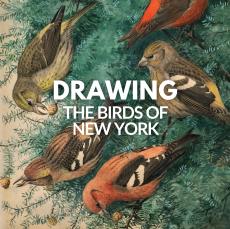
Drawing the Birds of New York: A Fuertes Scavenger Hunt & Sketching Adventure
- Bird Hall
Statewide Hispanic Heritage Month Events
New York State Hispanic Heritage Month Events
Discover Hispanic Heritage History Events taking place at museums and historical societies across New York State.
Arts, Culture, and Ongoing Exhibits

A Spanish Coin on a Revolutionary War gunboat?
When archaeologists uncovered the remains of a 1770s American gunboat in Manhattan in 2010, they discovered an intriguing piece of its story hidden beneath the planks: a silver coin minted in Mexico in 1758.
How it came to rest aboard the vessel—and who may have carried it—remains a mystery. Was it tucked into a sailor’s pocket, exchanged along the waterfront, or lost amid the turmoil of war? More than 250 years later, this small object offers a tantalizing glimpse into the lives of the people connected to the gunboat.
See the reconstructed vessel, and discover its remarkable story in Revolutionary New York, now on view.
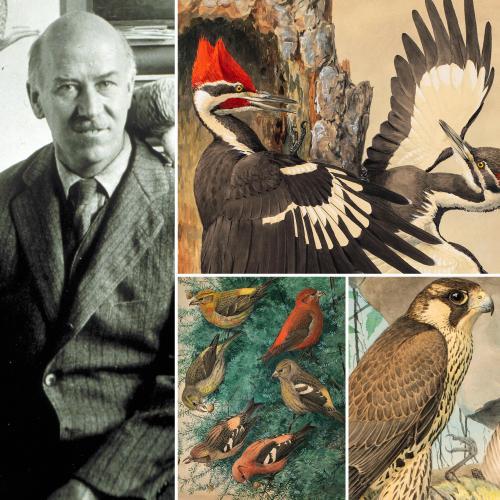
In the Spotlight: Louis Agassiz Fuertes
Louis Agassiz Fuertes (1874–1927) was an ornithologist, artist, and illustrator of Puerto Rican heritage who, in 1904, was commissioned by then New York State Museum Director, John Mason Clarke, to provide illustrations for an extensive research study on the state's bird species. Fuertes's collaboration with Elon Howard Eaton, who conducted the extensive research and wrote the text, resulted in the two-volume publication, Birds of New York.
Discover more about how Fuertes's illustrative work not only contributed to the scientific community but also helped inspire a wider interest in bird and nature conservation throughout New York.
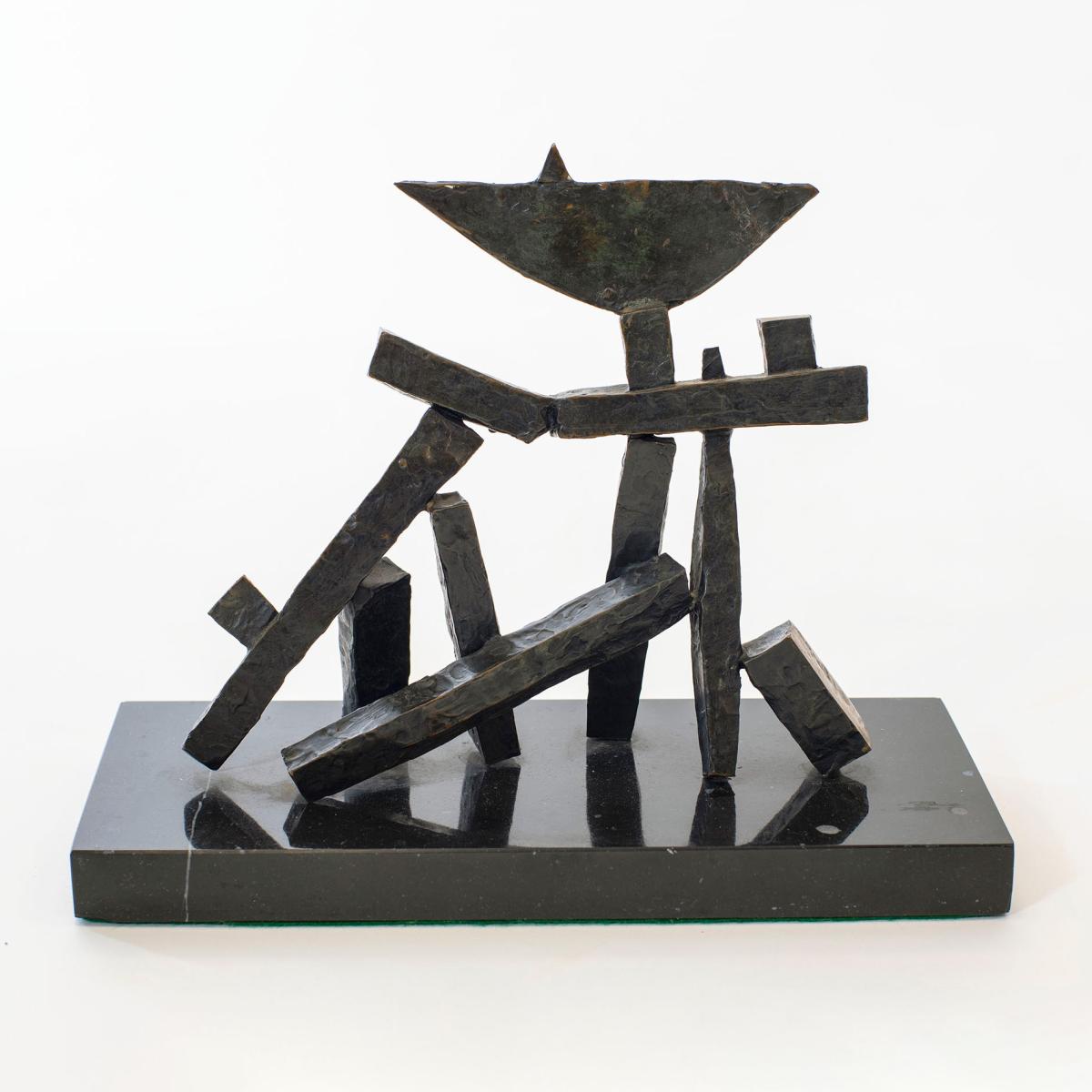
Edward Chavez (1917–1995)
Abstraction, n.d.
Bronze
NYSM, Historic Woodstock Art Colony: Arthur A. Anderson Collection
Edward Chavez
Born in New Mexico and descended from Spanish settlers, Edward Chavez spent most of his career based in Woodstock, New York. His upbringing in the West informed his art, however, and he returned often over the course of his life. He produced murals, easel paintings, prints, sculpture, and jewelry, much of which was inspired by his travels. During the Depression he painted murals for federal programs in Nebraska, Colorado, and Texas in his own twist on a social realist style. After WWII, he embraced a more abstract approach and also began to work in sculpture. Abstraction is one of his subtly textured non-representational bronzes based on precariously balanced geometric forms.
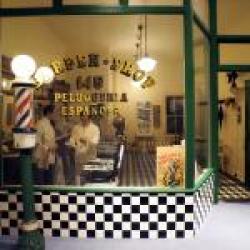
Ongoing Exhibition: The Gutierrez Barber Shop
In 2005, the NYSM acquired the fixtures and contents of the Gutierrez Barbershop to create this ongoing exhibition in New York Metropolis Hall. Established in New York City in 1929 by Antonio Gutierrez who emigrated from Spain, the barbershop served a vital role as a place where where people of diverse backgrounds could feel a sense of belonging.

Highlights from the Collection
The History and Historic Archaeology collections at the New York State Museum document New York’s diverse history from the 17th century through the present day. The objects below are a few examples that help tell the histories of those with Hispanic and/or Latino ancestry in New York. View all »
Celebrate in Color!
Download and decorate two special coloring sheets—one in English and one in Spanish—designed to honor this vibrant cultural celebration.


Video Presentations & CTLE
Pedro A. Regalado is Assistant Professor of History at Stanford University where he researches and teaches the history of race, immigration, planning, and capitalism in urban America. His first book, Nueva York: Making the Modern City, is a history of New York City’s Latinx community during the 20th century, from the “pioneers” who arrived after World War I to the panoply of Latinx people who rebuilt the city in the wake of the 1975 fiscal crisis. Across a range of topics, from urban renewal to the rise of Latinx bankers, US military operations in Central America to drug workers who repurposed tenement buildings, Nueva York demonstrates how the democratic ideals of the city hinged, in large part, on the experiences of Latinx New Yorkers.
CTLE Credit (1.5 hour): Link to Online Form for All That Has Disappeared
New York City’s Latinx small-business owners were frequent victims of urban renewal “slum clearance” during the 1950s. By the next decade, they wielded the federal War on Poverty to reimagine the relationship between government and Latinx New Yorkers, brokering between them to address hunger, public health, and the plight of credit-starved entrepreneurs. This lecture explores the history of Gotham’s Latinx storefronts—especially bodegas—during this transition. It reveals what their overlooked experiences teach us about the power of place in shaping community. It also offers new insights into how Latinx business owners helped to transform the trajectory of postwar New York.
CTLE Credit (1 hour): Link to Online Form for The Bodega, with Historian Pedro A. Regalado
Additional Resources from the Office of Cultural Education
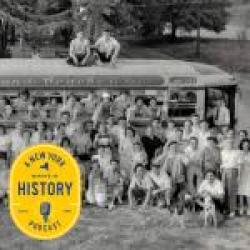
A New York Minute in History Podcast: Las Villas
Learn about an enclave of restaurants, bars, and resorts that catered to predominately Latin American clientele near the Catskill Mountains. As more and more Latinos immigrated to New York City for work, they began to look to places outside the city for recreation and to connect with other Spanish-speaking tourists. By the mid-1950s there were 50 resorts in the Plattekill area that focused on Spanish-speaking visitors.
New York State Archives
Hispanic history and culture is present throughout the year in the thousands of documents available through ConsidertheSourceNY.org. However, we invite you to visit the Archive's Hispanic Heritage page for direct access to highlighted resources centering the history of Hispanic Americans in New York State.
New York State Library
The NYS Library has resources celebrating Hispanic culture and history in New York State. Ask a Librarian for help exploring Hispanic heritage resources and history at the NYS Library!
New York State Library: Talking Book and Braille Library
Resources celebrating Hispanic heritage are available at your library! The NYS Talking Book and Braille Library (TBBL) is a free library service for eligible residents of upstate New York who are unable to use standard print materials due to a visual, physical, or reading disability. The TBBL collection is similar to what’s found in a large public library, including popular fiction and nonfiction titles, as well as informational and recreational materials for all ages and tastes. Learn more about TBBL services and sign up at their website!

PBS Learning Media
Access the Hispanic Culture & History folder featuring curated classroom resources from PBS LearningMedia. These multimedia support materials teacher-created, standards aligned, and free for use with K-12 learning environments.