

NEW YORK STATE MUSEUM GRADUATE RESEARCH FELLOWSHIPS
The New York State Museum offers a limited number of renewable, annual fellowships to graduate students pursuing Ph.D. degrees in anthropology, biology, earth sciences, and history at the University at Albany, Binghamton University, and the State University of New York College of Environmental Science and Forestry. These fellowships provide full tuition coverage and salary support. As part of the program, students participate in fieldwork, laboratory research, and collections-based projects at the State Museum and are expected to incorporate research on existing Museum collections and/or expand the collections in their dissertations.
To apply for the NYSM Graduate Fellowship, please contact the specific museum staff member you are interested in working with to discuss available opportunities. Information about staff research interests can be found in the links provided under each department section below.
For additional information on the Museum and the NYSM Graduate Fellowship program contact:
Dr. Robert S. Feranec - Director of Research & Collections
robert.feranec@nysed.gov
(518) 474-5819
Dr. Jennifer Lemak - Chief Curator of History
jennifer.lemak@nysed.gov
(518) 474-5842
Anthropology (Archaeology) & Ethnography
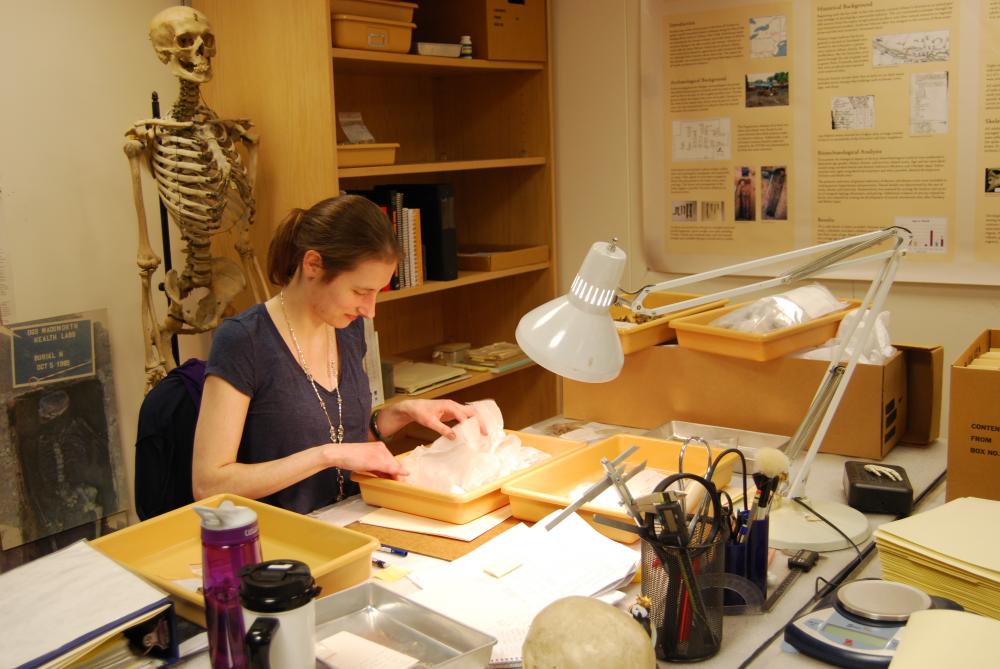
The focus of anthropology at the State Museum is on interpreting the nature and results of human activity in and around New York. Anthropological research at what would become the New York State Museum was initiated in 1847, when the Regents expanded the State Cabinet of Natural History to include an Historical and Antiquarian Collection. Today, an active program of field and collections-based research in historic and prehistoric archaeology, biological anthropology, ethnohistory, and ethnography continues under staff members, museum research associates, interns, and visiting researchers.
The Museum’s anthropological collections incorporate prehistoric and historic archaeological, ethnographic, and human osteological materials. The archaeological collection is the most complete in existence for New York State.
Learn more:
Anthropology (Archaeology)
https://www.nysm.nysed.gov/research-collections/archaeology
Ethnography
https://www.nysm.nysed.gov/research-collections/ethnography
Biology
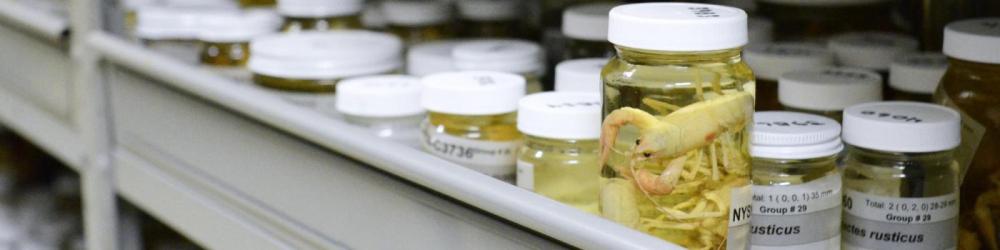
The focus of biological research at the State Museum is on the study of living organisms. Its work includes biological surveys of defined geographic areas and ecosystems, phylogenetic (evolutionary) and nomenclatural studies of taxonomic groups, and studies of relationships between organisms and their environments. In addition, research results are used to help solve current environmental problems. The group includes researchers in the disciplines of botany, entomology, ichthyology, malacology, mammalogy, mycology, and ornithology.
Major biology collections at the Museum include ichthyology, entomology, vascular plants, mycology, bryology, ornithology, and mammalogy.
Learn more: https://www.nysm.nysed.gov/research-collections/biology
Geology
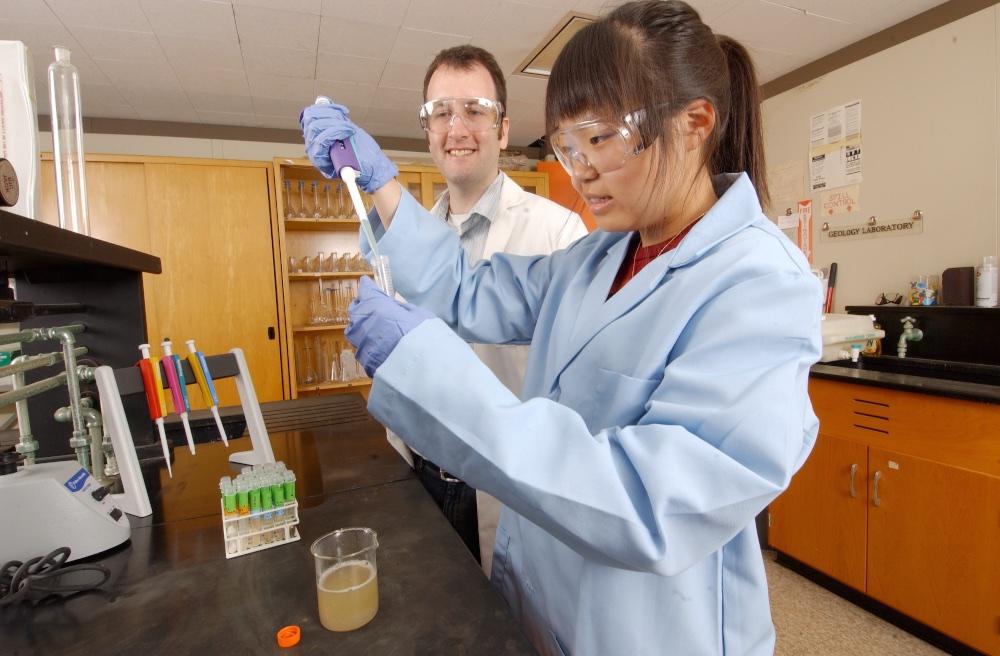
The focus of geology at the State Museum is on the history of New York's physical landscape as well as the interpretation of the regional and global controls on the early history and evolution of the natural environment and life in New York. It includes research on physiography and geology. This group includes researchers in the disciplines of physical geology, geochemistry, geomorphology, stratigraphy, structural geology, and mineralogy, whose work contributes to understanding the rock and fossil succession in New York State and related regions. This unit is also mandated to preserve and assure access to the Museum's paleontology and subsurface collections and databases.
Major geology collections at the Museum include mineralogy, stratigraphy, Quaternary landscape materials, and deep rock cores and well cuttings.
Learn more: https://www.nysm.nysed.gov/research-collections/geology
History
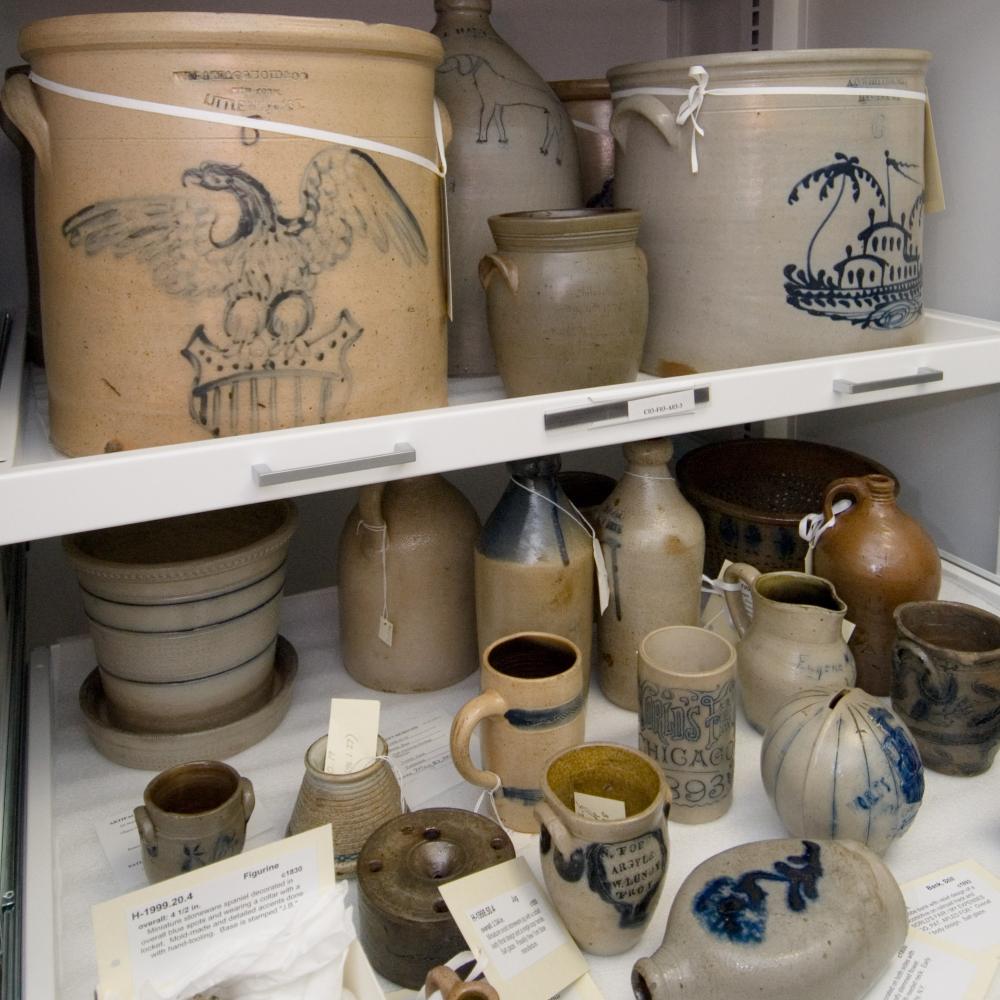
The History Department at the New York State Museum is responsible for the stewardship and interpretation of a collection comprising over five million artifacts, which collectively illuminate the history of New York State. Through research, the department disseminates historical knowledge via scholarly publications, curated exhibitions, public programs, and digital platforms. Collaboration is integral to the department’s mission, as it engages with academic scholars, municipal historians, curators, archivists, librarians, and the broader public to contextualize and preserve the state’s historical narratives while strategically expanding its collections for future study.
In addition to these initiatives, the department manages the editorial responsibilities of the New York History Journal, a peer-reviewed publication by Cornell University Press dedicated to advancing scholarship on New York State's history. The department also organizes the New York History Conference, an annual event that brings together academics, public historians, museum professionals, and educators to foster interdisciplinary dialogue and showcase new research on the state’s historical significance.
The New York State Museum’s History Collections are extensive, ranging from an 18th-century colonial Dutch furniture to a Norden bombsight from World War II to a print by African American artist Romare Bearden. The collections include significant holdings on the Shakers, decorative arts, mental health, 9/11, the Attica prison uprising, the Woodstock Art Colony, decorated stoneware, political memorabilia, New York State-manufactured goods, and the circus. These artifacts tell the stories of New York State’s people. To better manage these collections, they are categorized into social history, political history, cultural history, and economic history.
Fellows can engage with the Museum’s collections or propose topics that help expand the scope of the historical collections. Students in history that have completed their coursework and qualifying doctoral examinations are preferred.
Learn more: https://www.nysm.nysed.gov/research-collections/history
Paleontology
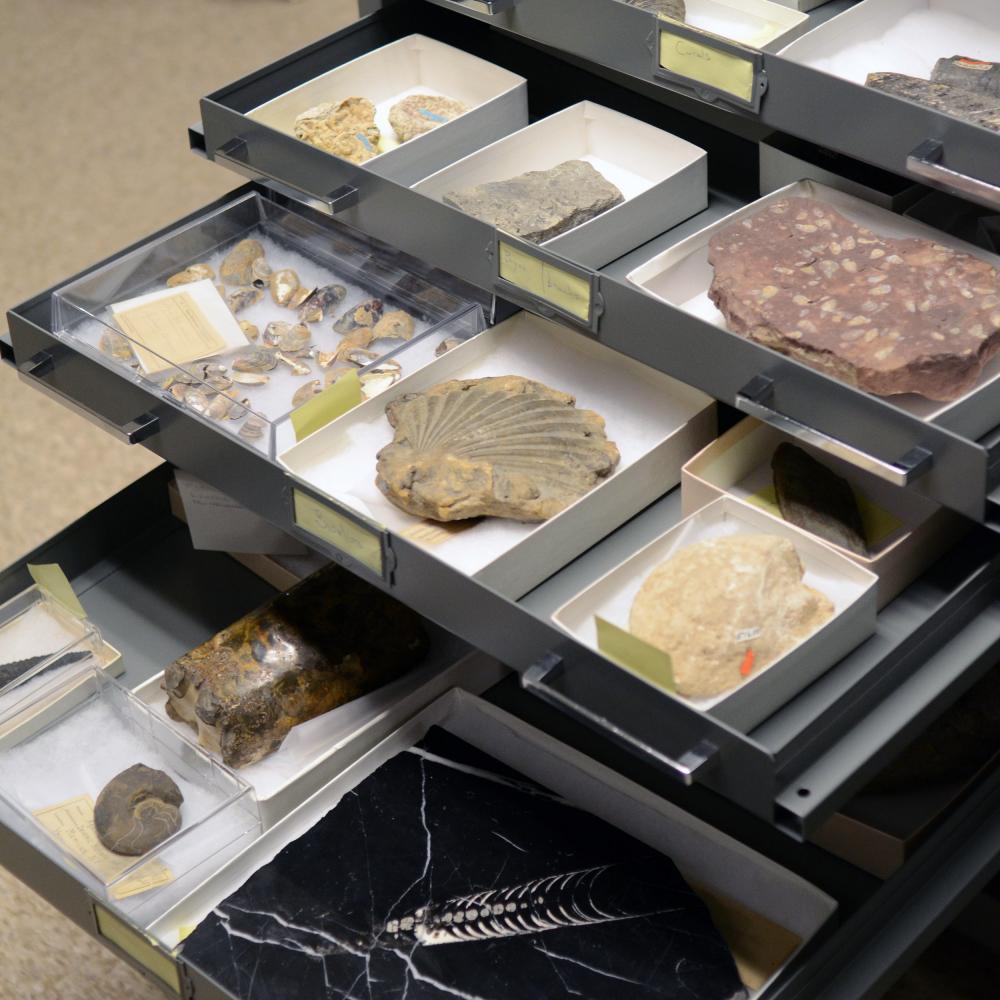
The study of fossils in New York State has a long, rich history that even dates to pre-colonial times when native people discovered the tusks and bones of mastodons and made observations to explain the massive creatures. European explorers recognized the significance of these finds and the smaller but more numerous fossils of ancient sea creatures like trilobites, brachiopods, crinoids, and corals. The establishment of the State Cabinet of Natural History, the pre-cursor to the New York State Museum, provided a center for research and a formal place for the storage of the fossils that record the ancient history of New York. These fossils are used to identify the ages of the rocks they are found in, for reconstructing ancient environments, and to understand the functions and evolutionary relationships of the organisms themselves, for example. Paleontology staff have focused research across the 1.1 billion years represented by the fossils of New York in biostratigraphy, climatology, biogeochemistry, paleobiology, paleoecology, taxonomy, and systematics.
The State Museum has significant, world-class and historic paleontology collections in paleobotany, invertebrate paleontology, and Pleistocene vertebrate paleontology.
Learn more: https://www.nysm.nysed.gov/research-collections/paleontology