
Dr. John P. Hart

Curator Emeritus
john.hart@nysed.gov
518-474-3895

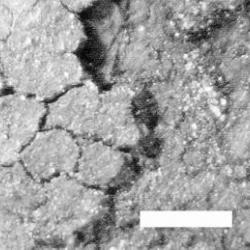
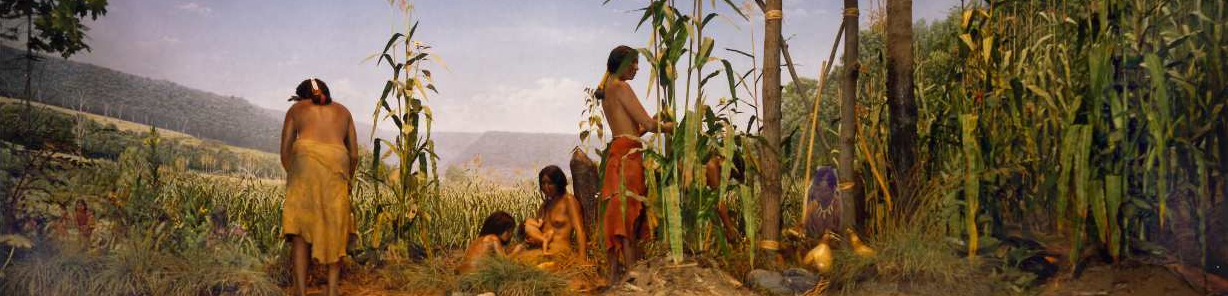
My research has focused primarily on the histories of maize, bean, and squash in New York and the greater Northeast and the interactions of human populations with these crops. Through collaborations with numerous colleagues both at the Museum and other institutions, this research resulted in new understandings of these histories and interactions. A primary focus has been on charred cooking residues adhering to the interior surfaces of pottery sherds in the collections of the Museum. These residues contain microfossil evidence (phytoliths, starch, lipids) of the plants cooked in the pots. In addition the residues can be directly radiocarbon dated through accelerator mass spectrometry. These methods and techniques have provided new evidence that is radically altering our understandings of the histories of agriculture in New York State. Theory building to develop understandings of these new histories is another focus. This research has broad implications for Native American history in New York and the greater Northeast.

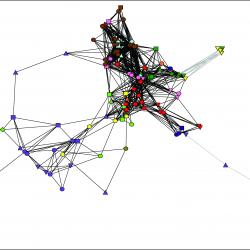
Most recently I have been working with colleagues on Social Network Analyses (SNA) of northern Iroquoian sites dating from A.D. 1350 to 1650. SNA is a formal graphing method, which in archaeology is used to identify relationships between sites based on similarities of artifact assemblages. This research is helping to build new understandings of interactions between village populations and how these interactions changed through time during the last centuries before and then after European involvements.
Publications

2010

R. Feranec, N. Garcia, J. Arsuaga, J. Diez 2010, Understanding the Ecology of Mammalian Carnivorans and Herbivores from Valdegoba Cave (Burgos, Northern Spain) Through Stable Isotope Analysis, Palaeogeography, Palaeoclimatology, Palaeoecology 297, 263-272. 10.1016/j.palaeo.2010.08.006

2009

R. Feranec 2009, Implications of Radiocarbon Dates from Potter Creek Cave, Shasta County, California, USA, Radiocarbon 51, 931-936.
R. Feranec 2009, Evolution of Ecology in Mammals. Legacy: The Magazine of the New York State Museum 4, 13
J. Cryan, R. Feranec, J. Kirchman 2009, Evolution Every Day. Legacy: The Magazine of the New York State Museum 4, 10-11
R. Feranec, L. DeSantis, B. MacFadden 2009, Effects of Global Warming on Ancient Mammalian Communities and Their Environments, Plos One 4, e5750. doi:10.1371/journal.pone.. 10.1371/journal.pone.0005750
R. Feranec, A. Paytan, E. Hadley 2009, Stable Isotopes Reveal Seasonal Competition for Resources Between Late Pleistocene Bison (Bison) and Horse (Equus) from Rancho La Brea, Southern California, Paleogeography, Paleoclimatology, Paleoecology 271, 153-160. 10.1016/j.palaeo.2008.10.005
R. Feranec, N. Garcia, J. Arsuaga, J. de Castro, C. Carbonell 2009, Isotopic Analysis of the Ecology of Herbivores and Carnivores from the Middle Pleistocene Deposits of the Sierra de Atapuerca, Northern Spain, Journal of Archaeological Science 36, 1142-1151. 10.1016/j.jas.2008.12.018
J. Hart, R. Feranec, W. Lovis, G. Urquhart 2009, Non-linear Relationship Between Bulk d13C and Percent Maize in Carbonized Cooking Residues and the Potential of False-negatives in Detecting Maize, Journal of Archaeological Science 36, 2206-2212. 10.1016/j.jas.2009.06.005

2008

R. Feranec 2008, Using Stable Isotopes as an Additional Tool to Understand Ancient Human Environments, Coloquios de Paleontologia 58, 7-11.
R. Feranec, J.L. Blois, E.A. Hadly 2008, Environmental Influences on Spatial and Temporal Patterns of Body-size Variation in California Ground Squirrels (Spermophilus beecheyi), Journal of Biogeography 35, 602-613. 10.1111/j.1365-2699.2007.01836.x