
Dr. John P. Hart

Curator Emeritus
john.hart@nysed.gov
518-474-3895

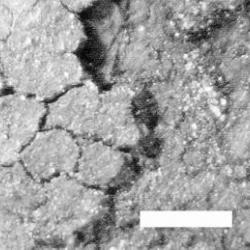
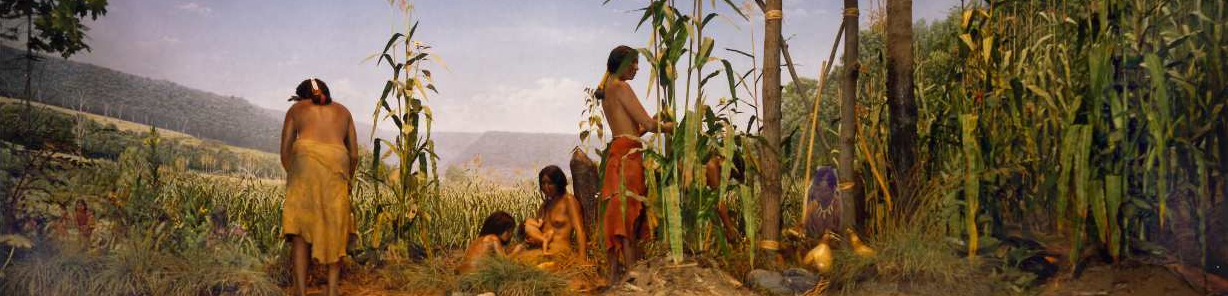
My research has focused primarily on the histories of maize, bean, and squash in New York and the greater Northeast and the interactions of human populations with these crops. Through collaborations with numerous colleagues both at the Museum and other institutions, this research resulted in new understandings of these histories and interactions. A primary focus has been on charred cooking residues adhering to the interior surfaces of pottery sherds in the collections of the Museum. These residues contain microfossil evidence (phytoliths, starch, lipids) of the plants cooked in the pots. In addition the residues can be directly radiocarbon dated through accelerator mass spectrometry. These methods and techniques have provided new evidence that is radically altering our understandings of the histories of agriculture in New York State. Theory building to develop understandings of these new histories is another focus. This research has broad implications for Native American history in New York and the greater Northeast.

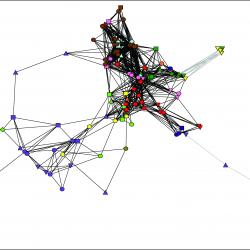
Most recently I have been working with colleagues on Social Network Analyses (SNA) of northern Iroquoian sites dating from A.D. 1350 to 1650. SNA is a formal graphing method, which in archaeology is used to identify relationships between sites based on similarities of artifact assemblages. This research is helping to build new understandings of interactions between village populations and how these interactions changed through time during the last centuries before and then after European involvements.
Publications

2024

Z. Liu, T. Algeo, S. Arefifard, W. Wei, C. Brett, E. Landing, S. Lev 2024, Testing the salinity of Cambrian to Silurian epicratonic seas, Journal of the Geological Society 2024, 2023-217. 10.1144/jgs2023-217
E. Landing, G. Geyer, S. Westrop, T. Wotte 2024, Unconformity-bounded rift sequences in Terreneuvian-Miaolingian strata of the Caledonian Highlands, Atlantic Canada: Comment, Geological Society of America Bulletin 136, 3472–3478. 10.1130/B37005.1
E. Landing, M. Webster, S. Bowser 2024, Terminal Ediacaran-Late Ordovician evolution of the NE Laurentia palaeocontinent: rift–drift-onset of Taconic orogeny, sea-level change, and ‘Hawke Bay’ onlap (not offlap), Geological Society, London, Special Publications 542, . 10.1144/SP542-2023-4
E. Landing, A. Bartholomew 2024, Stark’s Knob: A New Plate TectonicsModel—First Volcano Described from a Subducting Plate Margin, GSA Today 34, 30–33. 10.1130/GSAT10.1130/GSATG114GH.1
D. Keppie, J. Keppie, E. Landing 2024, A tectonic solution for the Early Cambrian palaeogeographic enigma, Geological Society, London, Special Publications 542, 167-177. 10.1144/SP542-2022-355
F. Neuweiler, M. Mueller, B. Walter, E. Landing, E. Landing, A. Beranoaguirre, C. Sendino, L. Amati, S. Kershaw 2024, Spongy-looking microfabrics in the earliest named stromatolite represent deep burial alteration and incipient metamorphism, Scientific Reports 14, . 10.1038/s41598-024-83359-7
E. Landing, M. Johnson 2024, Stromatolites and Their “Kin” as Living Microbialites in Contemporary Settings Linked to a Long Fossil Record, Journal of Marine Science and Engineering 12, 2127. 10.3390/jmse12122127
E. Landing, A. Bartholomew 2024, Lester Park: Global "Type Locality" for Stromatolite Fossils, GSA Today 34, 8-12. 10.1130/GSAT10.1130/GSATG117GH.1

2023

E. Landing, B. Kroger, S. Westrop, G. Geyer 2023, Proposed Early Cambrian cephalopods are chimaeras, the oldest known cephalopods are 30 m.y. younger, Communications Biology 6, 32. 10.1038/s42003-022-04383-9
E. Landing, M. Schmitz, S. Westrop, G. Geyer 2023, U-Pb zircon dates from North American and British Avalonia bracket the Lower–Middle Cambrian boundary interval, with evaluation of the Miaolingian Series as a global unit, Geological Magazine , 1-27. 10.1017/S0016756823000729