

Broad Financial Center
Historical Archaeology
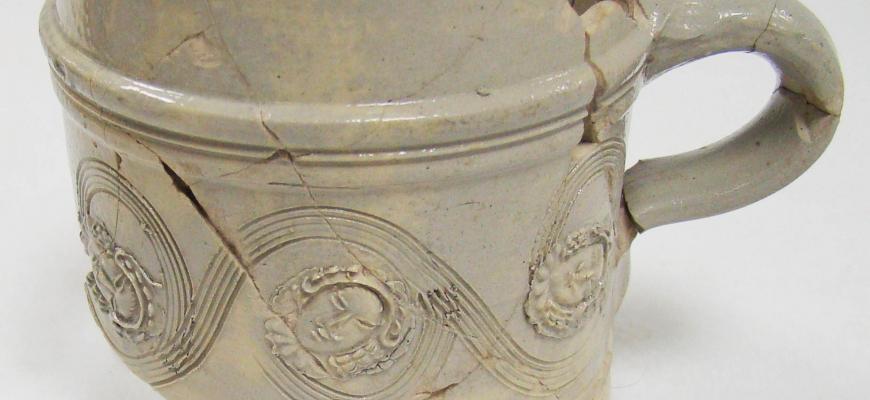
Broad Financial Center collection comes from an excavation conducted during the early 1980s on the block bounded by Whitehall, Pearl, Bridge, and Broad streets in lower Manhattan. This site was located on the original 17th century island of Manhattan as opposed to landfill or man-made land. Excavation revealed deposits and features dating from the Dutch settlement of New Amsterdam through the mid-19th century. There are materials associated with the c. 1650 warehouse of tobacco merchant and slave trader Augustine Heermans, including a 1590 Dutch token (the oldest European artifact excavated in New York) and domestic deposits from 17th and early 18th century inhabitants of the block. Significant components from the collection include the privy of the first doctor of the Dutch West India Company named Dr. Hans Kiersted and his wife Sarah, who was Peter Stuyvesant’s Native American interpreter; a c. 1680 basket filled with Native American and European goods including delft tiles, hand-wrought nails, wampum, glass trade beads, thimbles and pins, 17 marbles of various sizes and a possible wooden game board. English Colonial artifacts include 7,000 fragments of 17th and 18th century clay tobacco pipes made at the Robert Tippet shop in Bristol, England, and probably shipped to a local tavern on the block, a sword guard, candle snuffer, candlestick holder, and a delft posset pot. Many other domestic materials date to Federalist and Jacksonian New York. More than 61,000 artifacts are contained in this collection.
- Kiersted privy: 17th century.
- Augustine Heerman’s warehouse: 17th century.
Greenwich Mews
Historical Archaeology
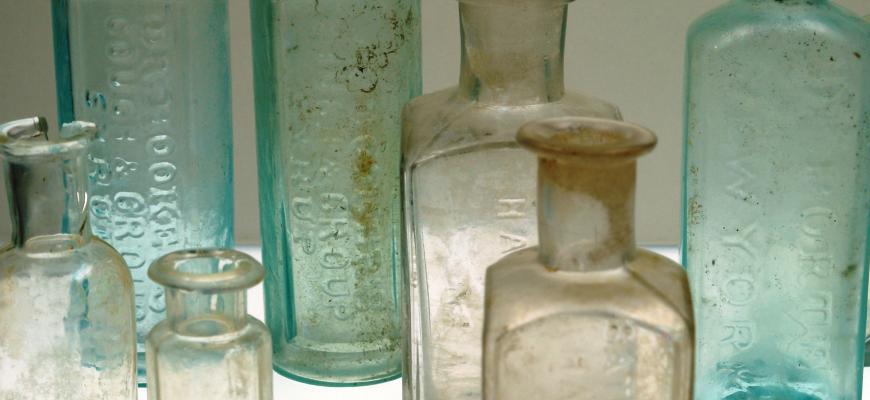
The Greenwich Mews collection includes three large domestic deposits recovered from two 19th century privies excavated on Greenwich Street in Manhattan. One assemblage was from privy no.1 at 689 Greenwich Street and was deposited after 1868. The house at 689 Greenwich Street was occupied by seafood merchants, and a mason during the 1870s and 1880s. A second assemblage consists of the upper layers of privy no.2 at 691 Greenwich Street, deposited c. 1880. The two-family house was then occupied by the families of a milk-dealer and a clerk. The large domestic deposit from the lower levels of privy no. 2, were deposited after 1851. This deposit represents three consecutive single family occupations by the families of a merchant (1840s-1850s), a mahogany dealer (1850s) and a butcher (1870s). Objects include chamber pots, spittoons, bone toothbrushes, coins, a profusion of pitchers, numerous medicine, perfume and hair-dye bottles (some with ingredients still inside), cold cream and ointment pots, cologne bottles, a glass bird feeder, cruets, candlesticks, and stoneware storage vessels. Ambrotypes (an early method of photography) were also recovered, one of which, dating to c. 1860, was conserved and reproduced. Locks of hair were also found between the framing and the matting of several ambrotypes. The total artifact count is more than 5,000 for this collection.
- Privy at 689 Greenwich Street: 1868-1880s.
- Privy at 691 Greenwich Street, context 1: 1851-1870s.
- Privy at 691 Greenwich Street, context 2: ca. 1880.
Sullivan Street
Historical Archaeology
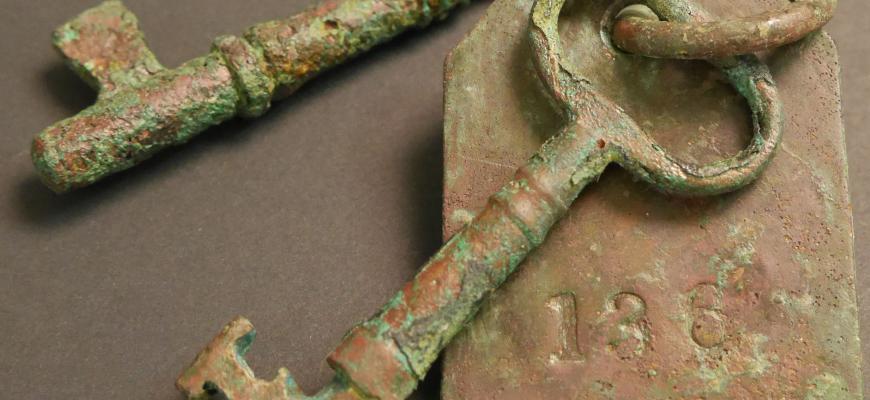
The Sullivan Street collection includes approximately 200,000 artifacts recovered from Manhattan. One important domestic assemblage illustrates the upper middle-class lifestyle of wealthy Dr. Benjamin Robson whose house faced Washington Square. Robson is thought to be the prototype of Dr. Roper, one of the protagonists in the novel “Washington Square” by Henry James. Domestic artifacts include perfume bottles, tortoise shell combs, a hair brush and hair ornaments, baking dishes, and a pressing iron. Also found in this spectacular assemblage is a child’s presentation mug, (“A Present from Carolina”), slate pencils and writing slates, champagne bottles, coffee beans, shell and bone buttons, and bone button blanks (for making buttons). Two other important upper middle-class assemblages in this collection are from the privy associated with Francis Sage, a wealthy commission flour merchant and another linked to Edward Tailer, a New York City broker. In contrast, a stone-lined privy dating from 1850-century 1880 was attributed to members of the working class, and was probably used by a glassmaker and his family and by an English artist. By the 1880s, the building associated with the privy housed unskilled workers.
- Robson family house/privy: 1841 – 1860s.
- Francis Sage house/privy: 19th century.
- Edward Tailer house/privy: 1828 – 1903.
- Working-class privy: 1850 – ca. 1880
Betsey Prince Site
Historical Archaeology
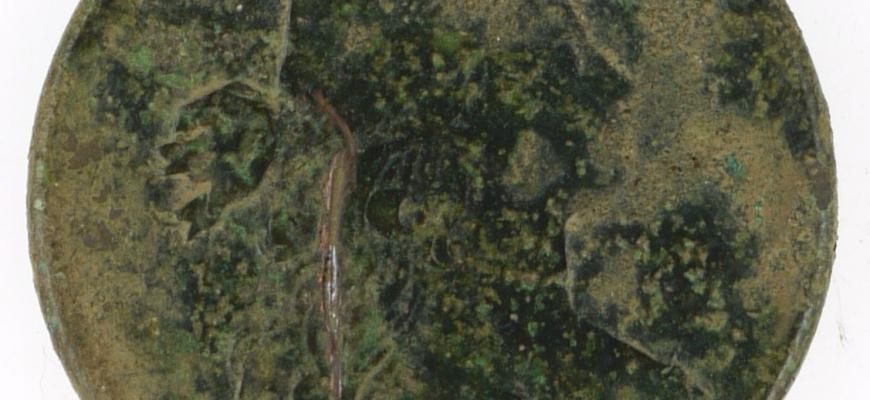
The Betsey Prince collection consists of over 8,000 artifacts recovered from the late 18th to early 19th century household of Prince Jessup and his wife Betsey in Brookhaven Long Island. Jessup was among several free African Americans who owned houses in the area during the first two decades of the 19th century. Betsey Prince remained in the house following her husband’s death in the 1810s until the 1830s. The collection includes a wide variety of household artifacts dating from 1800 to the 1830s. The Betsey Prince collection represents a rare assemblage of material culture from a free African American household in New York State.
SUCF/SUNY 600 Parking Garage/ State University Construction Fund
Historical Archaeology

Excavations at this site, located east of Dean Street and south of Maiden Lane in Albany, unearthed a French and Indian War stockade line, waterfront bulkheads, and numerous foundations, privies, wells, cisterns, drains, and other features associated with 18th-19th century warehouses, shops, taverns, homes, and boarding houses. There are 176,000 artifacts in this collection. Artifacts within the collection range in date from about 1740 to 1900.
Sub Component
Stewart Deans Lot
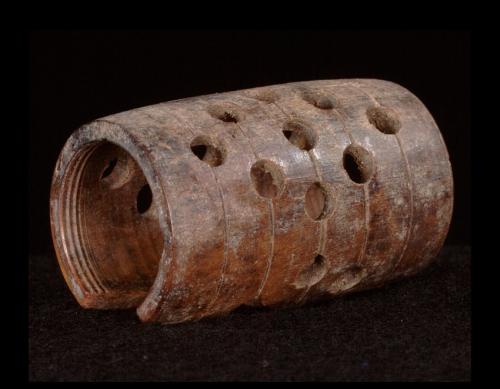
The merchant and Revolutionary War hero Stewart Dean owned one of the waterfront lots excavated by archaeologists. After the war, he built a 60-foot sloop, Experiment, which he took on a trading voyage to China in 1785. This was the second vessel from the United States to make the trip to the important trading port of Canton with tar, furs, ginseng, wine, “Jamaica spirits”, tobacco, and other items and Dean returned with tea, silk, and 26 chests of China teacups and saucers. Artifacts from China, such as porcelain, a sandware teapot, and a cricket cage were among the items found at this site along with British and European manufactured goods.
- Stone Collar over Wooden Barrel Well/Privy: 1785-ca.1800, 4,973 artifacts.
- Stewart Dean’s house foundation: 1760-1780, 151 artifacts.
Eights’ Lot
Abraham Eights was born in New York City in 1740s where he was trained as a sail-maker. He moved to Albany in 1769 and was married the following year. He acquired his waterfront lot next door to Stewart Dean in 1775 where he manufactured and mended sails for boats all along the Hudson River as far south as New York City. Eights was among the 94 men who signed the constitution of the Sons of Liberty, in reaction to the passage of the Stamp Act and served in the military during the Revolutionary War, while supplying the Continental Army with sails and provisions. In 1790 his household consisted of 4 white males over 16, 8 females, and two slaves. He was appointed Dock Master in 1812 and continued in this position until his death in 1820 at age 74.
- Privy: 1800-1820, 2,362 artifacts.
Boarding House Privies
The original owner of this waterfront lot was William James, a merchant and grandfather to the well-known author Henry James. In the 1820s, his heirs subdivided the lot into 9 rental properties that shared a large outhouse. Two of these properties were boardinghouses which primarily served transient workers and laborers. The house at 37 Dean Street was run by a widowed German immigrant, Elizabeth Roff, in the 1830s and an Irish immigrant named Philip Duffy from 1855 until 1861. Another Irish immigrant named Thomas Kearnan, operated a boarding at neighboring 35 Dean Street from 1855 until 1865. Occupants of the boardinghouse included European immigrants, especially from Ireland and Germany who arrived between 1830 and 1860. Over 21,000 artifacts were recovered from the two boardinghouse privies, including dominoes, die, a harmonica, glass inkwells, marbles, doll parts, and a cowry shell engraved with a love poem. Also found was a perforated temperance medallion labeled “The STATE OF NEW YORK”.
- The Common Wooden Privy: 1840-1860, 20,668 artifacts.
- The Common Stone Privy: 1830-1840, 918 artifacts.
Other Features and Deposits
- Organic Fill Near Stockade: 1760s, 3081 artifacts.
- Artifact Deposit: 1850s-1900, 181 artifacts.
- Artifact Deposit Associated with the Stockade: 1750s, 221 artifacts.
- Early Stockade Construction: 18th century, 285 artifacts.
- Stockade Surface, Selected contexts: 1740s-1750s, 8338 artifacts.
- Transitional Surface prior to 1760s Stockade Construction, Selected contexts: Pre-1760s, 356 artifacts.
- Waterfront Construction Surfaces, Selected contexts: 1760s, 199 artifacts.
- Surface, selected contexts: 1760s, 129 artifacts.
- River Bottom, Selected contexts: 1760s, 424 artifacts.
- Three Barrel Cistern: ca. 1750, 86 artifacts.
- Archibald Craig’s Cistern: ca. 1840, 857 artifacts.
- Christopher Beekman’s Privy: 1800-1810, 1,897 artifacts.
- Widow Benedict’s Privy: 1800-1820, 589 artifacts.
- John Tayler’s Privy: 1800-1820, 1517 artifacts.
- The Lemet-Olmsted Privy: 1810-1820, 100 artifacts.
- Allen Brown’s Privy: 1815-1830, 9,651 artifacts.
- Cowan and Cobb’s Privy: 1820-1830, 2,024 artifacts.
- Possible Stone Lined Privy: 1850-1900, 1,162 artifacts.
- Brick Drain: 19th century, 80 artifacts.
- Wooden Drain: ca. 1760, 152 artifacts.
- Possible Midden: 19th century, 1,474 artifacts.
- Quoin support for waterfront bulkhead: 1760s, 1,537 artifacts.
- Possible Midden: 1850-1900, 58 artifacts.
- Pit Feature: 1850-1900, 392 artifacts.
- Stacked Rigging for waterfront bulkhead: 1780s, 15 artifacts.
- Vertical-pile Waterfront Bulkhead: 1780s, 566 artifacts.
- Fill Deposit in Waterfront Bulkhead: 1760s, 324 artifacts.
- Wooden Stockade: 1750s, 2,154 artifacts.
- Early Waterfront Bulkhead: 1750s, 129 artifacts.
- Waterfront bulkhead Feature: 1760s, 53 artifacts.
- Builder’s Trench for Stockade: 1750s, 31 artifacts.
- Fill and Building Debris within the Demilune: 1750s, 358 artifacts.
- Wooden Feature Possibly Associated with Demilune: 1750s, 702 artifacts.
- Planks for building foundation: 19th century, 487 artifacts.
- Possible Drain through the Stockade: 1750s, 292 artifacts.
- Stone Building Foundation: 1870s, 84 artifacts.
- Early Waterfront Bulkhead: 1750s, 66 artifacts.
- Dog Burial: 1750s, 372 artifacts.
- Cobblestone fill within the Demilune: 1750s, 3,934 artifacts.
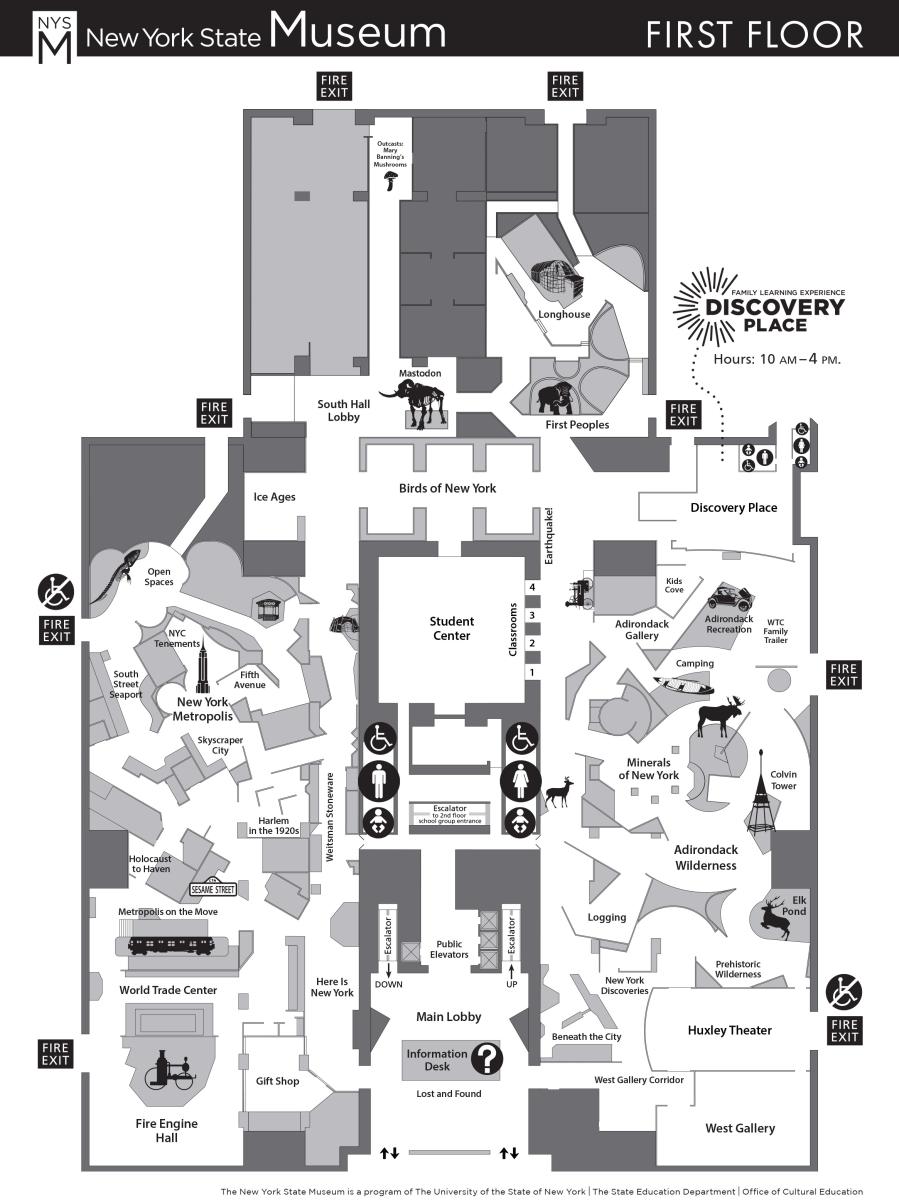
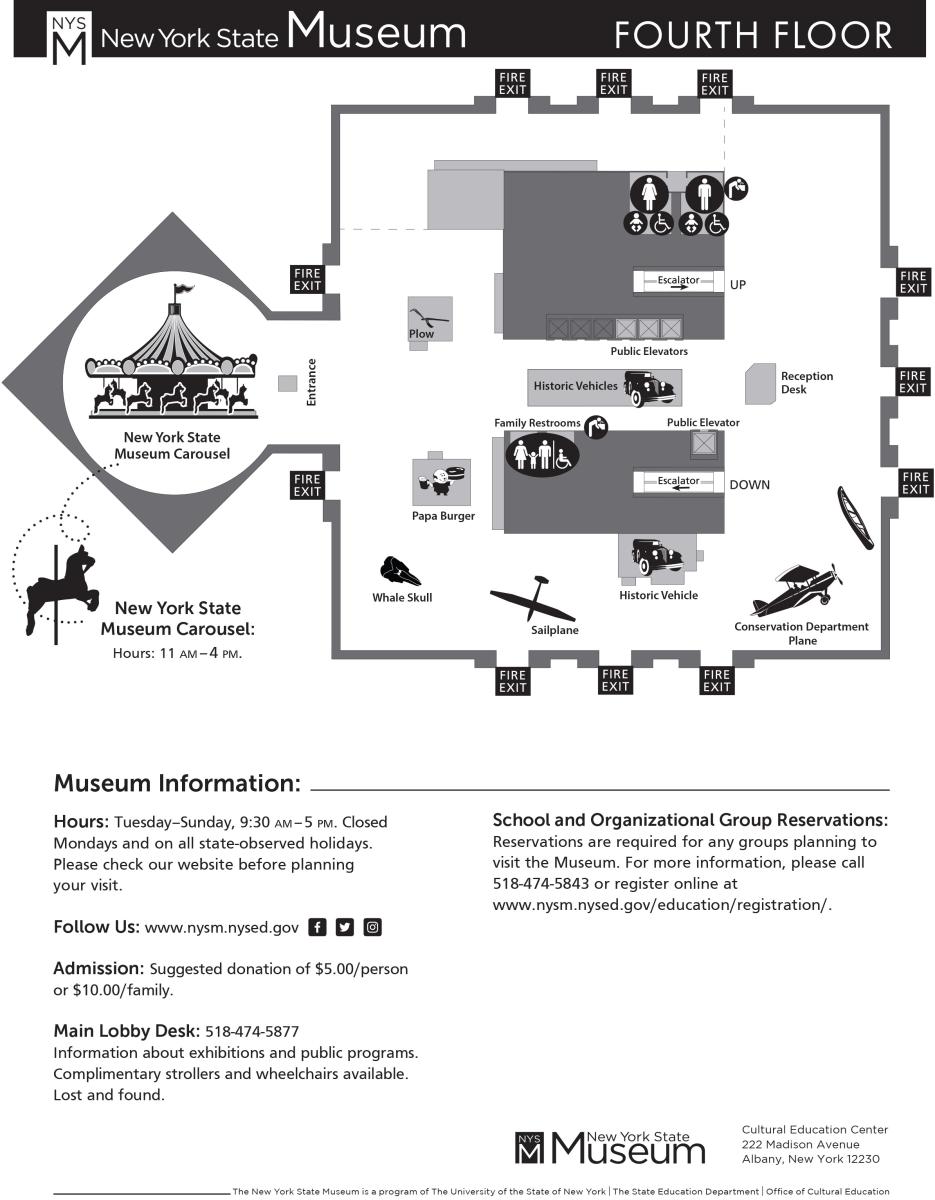
Download the Museum Map
State Museum Announces Programs to Commemorate 14th Anniversary of September 11th
The New York State Museum has announced its program schedule to commemorate the 14th anniversary of September 11, 2001. The program schedule follows:
9/11 and Tom Junod's "The Falling Man"
Friday, September 11 | 7:00 – 8:00pm
New York State Museum, Huxley Theater
Richard Drew's photograph of "The Falling Man" has become an iconic representation of the victims of the terrorist attacks on the World Trade Center on September 11, 2001. In 2003, Tom Junod's article, "The Falling Man" was published in Esquire. Listen to a reading of the article by Junod and hear about the story behind the photo and the search for the man pictured in it. There will be a question and answer session following the reading. NOTE: Prior to the reading from 6:00 – 7:00pm, attendees can view the State Museum's exhibition "World Trade Center: Rescue, Recovery, Response" and talk with Museum Director, Mark Schaming.
Registration is recommended, but not necessary: email nicole.lafountain@nysed.gov or call (518) 474-0575. Junod is a 1980 alumnus of the University at Albany. This program is sponsored jointly by the University at Albany and the New York State Museum.
Film Screening: The Citizen
Sunday, September 13 | 2:00 – 3:45pm
New York State Museum, Huxley Theater
Yearning to leave behind his life of misfortune in the Middle East, Ibrahim Jarrah wins the U.S. Green Lottery for a chance to become an American citizen. He arrives in New York City the day before September 11 and the events of the terrorist attacks forever shapes the struggles he faces on his journey to capture the American dream.
Creative Art Day: The World Trade Center: Rescue Recovery Response
Sunday, September 20 | 1:00 – 3:00pm
New York State Museum
Families are welcome to join a Museum art instructor for a creative activity based on the Museum's World Trade Center exhibition.
Film Screening: The Second Day
Sunday, September 20 | 3:30 – 4:30pm
New York State Museum, Huxley Theater
This documentary film is done by a child who was attending his second day of kindergarten a few blocks from the World Trade Center on September 11. At age 11, Brook Peters decided to make a film about September 11 and its aftermath to give his fellow students and teachers a chance to share their experiences.
The State Museum is a program of the New York State Education Department's Office of Cultural Education. Located on Madison Avenue in Albany, the Museum is open Tuesday through Sunday from 9:30 a.m. to 5 p.m. It is closed on Thanksgiving, Christmas and New Year's Day. Admission is free. Further information about programs and events can be obtained by calling (518) 474-5877 or visiting the Museum website.
###
Phone: (518) 474-1201
Late Prehistoric Interaction and Exchange
This research project has focused on reconstructing the interaction patterns of Early Late Prehistoric groups across eastern and central New York by examining the stylistic and trace element composition of ceramic vessels and other lithic materials. By comparing the compositional profiles of ceramic sherds and chipped stone tools with similar profiles from known clay and lithic source materials, I have attempted to link areas of manufacture and discard within larger valley corridors allowing archaeologists to reconstruct the movement of settlements and trade of objects across the region. The results of this research suggest that Early Late Prehistoric groups were not procuring materials from deposits located a significant distance from their settlement. Instead, many materials appear to have been procured from local deposits that can be found within a 10-20 kilometer radius of the site. The large number of “locally” manufactured containers found also argues against the long distance movement of villages during this period.
Related Publications
Rieth, C.B. and E. Horton
2010 Stylistic and Technological Analyses of Ceramic Vessels from the Bailey site, Onondaga County, New York. In Preserving Technology and Understanding the Past, pages 5-14, edited by Christine Sternberg Patrick, pages 5-14. New York State Museum Record Volume 1, Albany, New York.
Rieth, C. B., Rafferty, S. and D. Zaputo
2007 A Trace Element Analysis of Ceramics from the Pethick Site, Schoharie County, New York. North American Archaeologist 28(1):58-81.
Rafferty, S., C. Wood, and C. B. Rieth
2007 A Trace Element Analysis of Lithics in New York State. North American
Archaeologist 28(2):169-181.
Rieth, C. B.
2004 Cordage, Fabrics and their Use in the Manufacture of Early Late Prehistoric Ceramics in New York. Chapter prepared for edited volume entitled Perishable Material Culture in the Northeast, edited by Penelope Ballard Drooker, pages 129-142. New York State Museum Bulletin 500. The University of the State of New York, The State Education Department, Albany, New York.
Rieth, C.B.
2002 Analyzing Style and Technology in the Eastern Woodlands. Chapter in edited volume entitled Materials Issues in Art and Archaeology, edited by Pamela Van Diver, James Druzik, and Jennifer Mass. Proceedings of the Material Research Society, Volume 712, pages 213-220. Electronic version also available at http://www.mrs.org/publications/epubs/proceedings/fall2001/ii/.
Rieth, C. B.
2002 Early Late Prehistoric Settlement: A View from Central Pennsylvania. Chapter in edited volume entitled Northeast Subsistence and Settlement Change: A.D. 700-1300, edited by John P. Hart and Christina B. Rieth. New York State Museum Bulletin No. 496.
Rieth, C.B.
2002 Early Late Prehistoric Subsistence and Settlement Diversity in the Southern Tier of New York. Chapter in edited volume entitled Northeast Subsistence and Settlement Change: A.D. 700-1300, edited by John P. Hart and Christina B. Rieth. New York State Museum Bulletin No. 496.
Project Manager
Schoharie Valley Settlement and Subsistence
Since 2002, museum scientists and researchers from the Department of Anthropology at the University of Albany, SUNY have completed archaeological excavations at sites in the Schoharie Valley containing components dating from approximately 6,000 B.C. to the early 19th century. Supplemental investigations conducted as part of cultural resource management investigations have also added to our understanding of the region. The results of this work have produced new information that can be used to refine chronology and reconstruct prehistoric land use and settlement patterns in the region. Botanical and faunal remains have contributed to our understanding of early subsistence strategies in the valley while the recovery of ceramic and lithic objects have provided information about changes in the resource procurement and manufacturing techniques of these groups. Student dissertation projects related to mapping site locations in the valley using GIS, reconstructing site use through an analysis of micro-artifacts, and micro-wear analysis of lithic artifacts are on-going and are expected to contribute to the our understanding of the occupation of the valley.
Related Publications
Rafferty, S. M., C.B. Rieth, and S. Moragne
2014 Prehistoric Occupations at the Pethick Site, Schoharie County, New York. Eastern States Archaeological Federation Bulletin, Volume 42.
Rieth, C.B.
2014 Cultural Resources Site Examination Report of the Vroman I and II Sites, Town of Schoharie, Schoharie County, New York. New York State Museum Cultural Resources Survey Program Bulletin 7.
Rieth, C.B.
2012 Settlement and Subsistence at a Middle Woodland Camp in Eastern New York. North American Archaeologist 133:81-106.
Rieth, C. B.
2010 Reanalyzing Scale in the Eastern Woodlands: The View from Eastern New York. Chapter in edited volume entitled Iroquoian Archaeology and Analytical Scale, edited by Laurie Miroff and Timothy Knapp. University of Tennessee Press, Nashville.
Rieth, C. B.
2008 The Catskill I and II Sites: Two Upland Camps in Eastern New York. Submitted to the The Bulletin, Journal of the New York State Archaeological Society 123:27-35.
Rieth, C. B.
2008 Early Woodland Settlement and Land Use in Eastern New York. Journal of Middle Atlantic Archaeology 24:153-166.
Rafferty, S., C. Wood, and C. B. Rieth
2007 A Trace Element Analysis of Lithics in New York State. North American Archaeologist 28(2):169-181.
Rieth, C. B. (w/ contributions by N. Asch Sidell)
2004 Cultural Resources Data Recovery Report of Mitigation of the Schoharie Creek II Site, Town of Schoharie, Schoharie County, New York. Report prepared for the New York State Department of Transportation by the New York State Museum.
Rieth, C. B.
2002 Archaeological Excavations at the Smith-Holloway 4 Site: Results of the 2002 and
2003 Field Season. Report prepared for the New York State Museum and the University
at Albany, SUNY.
Rieth, C.B. and S. Moragne
2007 Cultural Resources Reconnaissance Survey Report for PIN 9306.17.121, Route
7/30A/Zicha Road, Town of Schoharie, Schoharie County, New York. Report prepared for
the New York State Department of Transportation and the Federal Highway
Administration, Albany.
Rieth, C.B.
2002 Cultural Resources Site Examination Report for the Johnstone and Webster Sites, Town of Sharon and Seward, Schoharie County, New York (PIN 9111.18.121). Report prepared for the New York State Department of Transportation, Albany.
Rieth, C. B.
2002 Cultural Resources Data Recovery Report of Mitigation of the Schoharie Creek II Site, Town of Schoharie, Schoharie County, New York. Report prepared for the New York State Department of Transportation by the New York State Museum.
Rieth, C.B.
1999 Cultural Resources Site Examination Report of the Vrooman # 1 and #2 Sites, PIN 9125.05.122, Routes 30 and 30A, Town of Schoharie, Schoharie County, New York. Report prepared for the New York State Department of Transportation, Albany.
Rieth, C. B.
1998 Site Examination Report for the Schoharie Creek I and II Sites, Town of Schoharie, Schoharie County, New York. Report prepared for the New York State Department of Transportation, Albany.
Rieth, C. B.
1996 Cultural Resources Reconnaissance Survey for Rte 7, Town of Central Bridge, Schoharie, New York (PIN 9306.56.122). Report prepared for the New York State Department of Transportation, Albany.
Rieth, C. B.
1996 Cultural Resources Reconnaissance Survey Report for Route 10, Hamlet of Baird’s Corners, Town of Jefferson, Schoharie County, New York (PIN 9095.56.121). Report prepared for the New York State Department of Transportation, Albany
Northeast Ceramic Technology
This research project is designed to examine the technological changes in the manufacture of ceramic vessels and address issues related to the choices that groups make in manufacturing such objects. As part of this project, I have been comparing the ceramic assemblages from two contemporary horticultural hamlets near Syracuse and Central Bridge, New York to assess differences in pottery manufacture and the role that access to high and low quality resources (ie. clays, temper) played in the choices that potters made in forming the containers. The effects of the use of different local tempering materials on the stability and formation of container were examined through a pilot project conducted in 2008. Replication experiments conducted as part of this pilot project provided important insights into why non-local resources (particularly non-local materials used as temper) may have been selected and preferred over local materials.
Related Publications
Rieth, C.B.
<a href=" http://www.saa.org/CurrentResearch/pdf/saa_cro_168_Late_Prehistoric_Cer…">2013 Late Prehistoric Ceramic Technology in the Northeast. Current Research On-Line.</a>
Rieth, C. B. and E. Horton
2010 A Stylistic and Technological Analysis of Late Woodland Vessels from the Bailey Site, Onondaga County, New York. In the Iroquois Conference Proceedings, 2001-2005 edited by Christine Patrick, New York State Museum Bulletin Series.
Rieth, C. B. and E. Horton
<a href="http://www.saa.org/CurrentResearch/pdf/saa_cro_168_Late_Prehistoric_Cer…">2008 Cultural Resources Data Recovery Report for the Bailey and Thomas-Kahn Site, Town of Belgium, Ondaga ondaga County, New York. Co-authored with E. Horton, prepared for the New York State Department of Transportation and the Federal Highway Administration, Albany.</a>
Rieth, C. B.
2008 Technological Analysis of Iroquoian Ceramic Manufacture from New York. Paper presented for symposium entitled Methodological Advances in Iroquoian Ceramic Manufacture, Annual Meeting of Canadian Archaeological Association, Peterborough, Ontario.
Rieth, C. B., R. Morgan, J. Lattimer, S. Rafferty, and S. Moragne
2008 Experimental Archaeology and Pottery Manufacture: A Case Study from the Schoharie Valley, New York. Paper presented for organized symposium entitled Experimental Archaeology, organized by William Schindler and Timothy Messner for the Annual
Rieth, C.B.
1995 A Comparison of Ceramic Vessels from Four Clemson Island Sites in the Upper Susquehanna River Valley. Manuscript on file, Pennsylvania State Museum and Historical Commission, Harrisburg.
Rieth, C.B.
1995 Ceramic Variation During the Carpenter Brook Phase: An Analysis of the Spatial & Temporal Movement of Ceramic Vessels Throughout the Upper Susquehanna River Valley. Ms. on file, Yager Museum, Oneonta.
Systematics
Systematics is one of the least glamorous but most important fields of study in both biology and paleontology. In order to accurately document diversity within a group of organisms, their classification must be as detailed as possible. A large portion of my research time is spent conducting cladistic analyses, not only to understand the evolutionary relationships among trilobites, but to ensure that we are counting genera accurately for paleoecological assessments.
Late Ordovician Faunal Change in the Taconic Foreland Basin
One of my main interests is explaining the faunal turnover in the Katian (Late Ordovician) of the Taconic foreland basin in New York. The King’s Falls limestone (Sandbian) of the Trenton Group is a highly fossiliferous, light gray, nearly pure limestone that contains a diverse fauna including brachiopods, trilobites, bryozoa, pelmetazoans, and corals. As the King’s Falls grades upward into the Sugar River Formation, diversity decreases along with an increased influx of terrigenous material and gradual darkening of the limestone. This shift in lithology has been interpreted to represent an environmental change from warm, tropical conditions to a cooler, possibly oxygen poor environment due to upwelling of deeper water onto the platform. Another possible explanation for the faunal turnover involves the influx of siliciclastic sediment from the Taconic highlands to the east. My goal is to try to identify which factors likely had the greatest effect on the faunas.
State Museum Adds Newly Acquired Artifacts to World Trade Center Exhibition
The New York State Museum today announced the addition of new artifacts to the World Trade Center: Rescue, Recovery, Response exhibition. The "Response" case now features the story of St. Paul's Chapel, a place of refuge used by emergency responders and recovery workers following the September 11th World Trade Center attacks. On display through August 21, 2016, St. Paul's: A Place of Refuge features a pew from St. Paul's Chapel, a selection of images, and a video titled "The Spirit of St. Paul's" that chronicles the chapel's time as a respite area.
A selection of World Trade Center artifacts that were recovered at the site in the weeks after September 11th, then preserved at Hangar 17 at John F. Kennedy International Airport, will also be on exhibit, including: a fiberglass Tweety Bird from the Warner Brothers store located on the concourse level of the World Trade Center, an antenna fragment from the World Trade Center's North Tower, and a table and chair from the Commuter Café located on the concourse level of the World Trade Center. These artifacts have never been on public display.
"Earlier this year, the Museum acquired two pews that were used when St. Paul's Chapel served as a relief center for emergency responders and recovery workers following the September 11th World Trade Center attacks," said State Museum Director Mark Schaming. "These artifacts from this historic church resonate with the history of the days after September 11, 2001. We are also exhibiting for the first time a selection of artifacts from the World Trade Center site that were recovered and preserved at JFK Airport's Hangar 17 since 2002. The Board of Regents and the State Museum are honored to share these artifacts with the public and hope visitors leave the exhibition with a deeper understanding of the impact of September 11th."
Located just a few hundred yards from the World Trade Center, St. Paul's Chapel survived the collapse of the Twin Towers on September 11, 2001. Built in 1766, it is one of the oldest churches in New York City and has been a place of refuge during difficult times throughout the City's history, witnessing the American Revolution and the Great Fire of New York in 1835. Following the September 11th attacks, St. Paul's served as a relief site for police, firefighters, emergency responders, and recovery workers. For eight months it was open around the clock to provide workers with food, physical therapy, and a place for rest and reflection.
In late September 2001, the Port Authority of New York and New Jersey (PANYNJ) appointed a committee tasked with making recommendations for the salvage of objects from the World Trade Center site. These objects would be archived for possible inclusion in future memorials or cultural institutions. The vast quantity of material set aside by the committee was stored at Hangar 17 at John F. Kennedy International Airport. In the fourteen years since the attacks of September 11, 2001, the New York State Museum has collaborated extensively with the PANYNJ. Many of the State Museum's most significant pieces relating to the World Trade Center and September 11th were acquired through the Port Authority's World Trade Center Archive Project at Hangar 17.
Photos from the exhibition are available here: http://www.nysm.nysed.gov/PRkit/2015/StPauls/.
The State Museum is the nation's largest repository of artifacts recovered from the World Trade Center site after September 11, 2001. Artifacts are rotated through the Museum's permanent World Trade Center exhibition, which opened in September 2002. The Museum also supports other institutions nationwide and around the world with World Trade Center-related exhibitions.
The State Museum is a program of the New York State Education Department's Office of Cultural Education. Located on Madison Avenue in Albany, the Museum is open Tuesday through Sunday from 9:30 a.m. to 5 p.m. It is closed on Thanksgiving, Christmas and New Year's Day. Admission is free. Further information about programs and events can be obtained by calling (518) 474-5877 or visiting the Museum website.
###
Phone: (518) 474-1201
Links to Online Archaeology Resources
New York State Archaeology Resources
New York State Archaeological Association (NYSAA)
New York Archaeological Council (NYAC)
New York State Historic Preservation Office (SHPO)
U.S. National & Federal Archaeology Resources
National Park Service History & Culture Programs
National Center for Preservation Technology & Training
Advisory Council on Historic Preservation (ACHP)
National Trust for Historic Preservation
Professional Archaeological Organizations
American Anthropological Association (AAA)
Society for American Archaeology (SAA)
Society for Historical Archaeology (SHA)
Register of Professional Archaeologists (RPA)
American Cultural Resources Association (ACRA)
The National Preservation Institute (NPI)
General Archaeology Resources
Iroquois Indian Museum
Florida Museum of Natural History – on-line type collections of historic period ceramics (1492-1850)
National Museum of the American Indian
The University of Pennsylvania Museum of Archaeology and Anthropology
Archaeology Educational Resources
Smithsonian Institution’s Education and Museum Studies Program
National Park Service-Teaching with Museum Collections
Dig: The Archaeology Magazine for Kids
Society for American Archaeology (SAA) Archaeology and Public Education
History of the Cultural Resources Survey Program
The Cultural Resources Survey Program (CRSP) has been in existence since 1958 as an applied research program of the New York State Museum. The first cultural resource surveys were performed for the State Historic Trust under the direction of former state archaeologist Dr. William Ritchie and William A. Fenton, Assistant Commissioner of the New York State Museum and Science Service. Beginning in 1959, highway surveys were conducted for the New York State Department of Public Works to help them meet their compliance needs as part of the Federal-Aid Highway Act and the Highway Revenue Act of 1956.
Program guidance provided by the United States Department of Commerce for the preservation of archaeological and paleontological salvage call for the preservation for public use of "historical and prehistoric sites, buildings, and objects of national significance for the inspiration and benefit of the people of the United States" (Policy and Procedure Memorandum 20-7 1959:1). Robert Funk, who would succeed Ritchie as director of the program in 1965, Marian White and Charles Hays were among the first highway salvage archaeologists employed by the New York State Museum.
The program was formally organized as the Highway Salvage Program in 1963 through agreement between the New York State Education Department and the NYS Department of Public Works. From 1963 to 1977, the program would focus almost exclusively on large-scale surveys and the salvage for new highway construction through the southern tier and Hudson Valley of New York. The goal of these surveys was to identify and excavate, and recover "Indian artifacts" before their loss through construction (Funk 1968:1-2). In addition to in-house staff, archaeologists from local universities, historic societies, and museums became important consulting program partners. Early efforts by the University of Buffalo, Harpur College (Binghamton University), Rochester Museum, Syracuse University, the Nassau County Museum of Natural History, and the Buffalo and Erie County Historical Society resulted in the identification of many important sites including Roundtop, Engelbert, Zawatski Terrace, Comfort, Cottage, and Castle Garden.
From Salvage to Survey…
The Highway Salvage Program was re-named the Cultural Resources Survey Program in 1979 to take into account the growing nature of the program and the need to complete non-highway surveys for other agencies such as the Department of Correctional Services, the Office of Parks, Recreation, and Historic Preservation, and the New York State Department of Naval Affairs. Between 1979 and 1989, the program went through a significant period of growth with hundreds of miles of proposed highway corridor, canal alignment and railroad right of way being surveyed and scores of previously undocumented prehistoric and historic sites being identified.
Thousands of artifacts were recovered representing cultural activity from nearly 10,000 B.C. to the present. In addition, non-artifactual data on these sites have been collected and are preserved as detailed field notes, maps and charts. Information on standing structures dating from the late 18th through early 20th centuries were also inventoried and reported, increasing the architectural inventory files at the NYSM and the NYS Office of Parks, Recreation, and Historic Preservation. During this period, approximately 700 archaeological and 650 architectural reports were produced providing the Department of Transportation and other contracting agencies with the scientific basis for determining which sites require protection and what means of protection would be most appropriate.
Survey staff has played an increasingly significant role in the identification and preservation of cultural resources in the state since 1989. The program is not only able to conduct effective field investigations on short notice over a wide area of the State, it is also able to effectively draw on the resources of the State Library and State Archives in developing its documentary research reports. The range of cultural resource studies undertaken by staff reflects the range of cultural resource research areas in which the program has become involved. These studies range from an architectural inventory of a 19th century urban neighborhood in Troy, Rensselaer County, where standing structures were the primary focus, to an historical reconstruction project in Comstock, Washington County, where documentary sources were used to recreate on paper a tiny 19th century village that was completely wiped out by the enlargement of the Old Champlain Canal a century ago. Nearby, an archaeological study of a vacant lot in the City of Cohoes produced evidence of an 18th century Dutch house site, and underneath it, an intact Native American site dating back over 4,000 years.
Not Only Archaeology…
In addition to archaeological studies, the survey completes architectural surveys and HABS/HAER studies of architectural properties when the existing landscape is modified. A recent architectural survey near Glenville, Schenectady County produced two unique examples of architectural resources. Conifer Park, a residential treatment center, was originally built as a tuberculosis sanatorium in 1927. An architectural drawing dated that year shows that the brick building remained fairly unaltered for eighty years. This building is not only historically important as a rare example of a tuberculosis hospital still standing, but also as a structure built in the Spanish Eclectic architectural style, a style more likely to be seen in Florida and the Southwest. Also discovered, was a buried trolley bridge with two arches (one for the north line, the other for the south line). Built in 1904, this bridge carried the Boston and Maine Railroad over the trolley tracks of the Schenectady Railroad Company. The trolleys traveled between Schenectady and Ballston until 1941, and the bridge was buried shortly thereafter. This bridge is an important historical resource as one of the last surviving intact features of the trolley company.
For the Public...
An important component of the scientific study of these resources is the need to disseminate information about these studies to the public. Each year, staff disseminates information about survey projects through the preparation of brochures, publications in peer-review journal articles, exhibits, field and lab open houses, and lectures. The New York State Museum's Cultural Resources Survey Program Bulletin Series is designed to publish the results of exemplary reports produced by the program. Internship programs allow students to learn about cultural resource management and stewardship of the archaeological record.
Bibliography
Funk, R.E. 1968 Highway Salvage Archaeology: 1963-1968. Unpublished Manuscript, Archaeological Files of the Cultural Resources Survey Program, New York State Museum, Albany, New York.
Funk, R.E. 1985 Division of Historical and Anthropological Sevices-5 Year Report (1980-1985) for the Public Archaeology Section. Unpublished Manuscript, Cultural Resources Survey Program, New York State Museum, Albany, New York.
United States Department of Public Works 1959 Policy and Procedure Memorandum for the Salvage of Archaeological and Paleontological Resources. Policy Memorandum 20-7:1-2.
CRSP Field Archaeology
Archaeological Field Research
Archaeological sites are only one category of cultural resources, but the vast majority of the CRSP’s projects do involve archaeology. Most of these projects are reconnaissance surveys to determine if, in fact, any archaeological sites are within a project’s area of potential effects (APE). Through a combination of historical and environmental background research, field investigations, and analysis – the goal of the CRSP’s field archaeology is to identify, preserve, and record the state’s archaeological resources for future research.
In some respects, cultural resource archaeology differs from traditional or academic research archaeology. Since the goal for cultural resource archaeologists is preservation, the emphasis is on the identification and assessment of archaeological resources rather than thorough excavation and interpretation of sites. In this sense, cultural resource archaeologists often “stop” just where traditional archaeologists “begin” – with the discovery of an archaeological site.
Archaeology is a destructive process, since the excavations that create a record of a site do so through effectively dismantling it. The intent of cultural resource management is preservation and conservation of archaeological resources. We excavate only as much as is necessary to determine the presence, nature, dimensions, integrity, and age of a site. Full excavations are conducted only when a site cannot be avoided and left in place. Even then, the emphasis is primarily on thorough recording of the site for more extensive analysis by researchers in the future.
Another difference is that while many archaeologists typically specialize in a specific geographic region or historical period, cultural resource archaeologists need to be generalists. A broad knowledge of the whole history of human activity in an area is needed for this type of archaeology. Whether a project area contains traces of a Native American camp from several thousands of years ago, a colonial-era settler’s cabin, or a late-19th century industrial mill – cultural resource archaeologists in the field need enough expertise to identify the artifacts and features of any type of site from any period of history.
Background Research & Screening
Most of the time, archaeological fieldwork actually begins in the library. The preliminary research for a project helps to see what might be found in a project area and to suggest what methods are likely to be most effective for the fieldwork. The background research involves a study of the local history, review of historical maps of the area, a search for known archaeological or historic properties in the vicinity, and a review of the environmental setting (including soil types, hydrography, and geology) of the project area. Working from this kind of information, a research and testing strategy is designed to reasonably ensure that any archaeological resources in the study area are found and identified.
Even with the most thorough background research, one can never know for sure whether there are or aren’t archeological resources present in an area. Sites are quite often found in unexpected places, so the only way to really find out is to go out into the field and start digging…
Phase I — Reconnaissance Survey
Sometimes referred to as a “Phase One Survey” or simply “Survey”, a Reconnaissance Survey is intended to do just that – to explore an area that may be affected by a state project, and to see what (if anything) is in the area that has the potential to be of historical or archaeological importance. The most common way of doing so is to dig a grid of shovel test pits (STPs) across the area.
STPs are small round units (40 centimeters diameter, less than a foot and a half) that are excavated by hand, and dug down through the various layers of soil until a “sterile” layer is reached – often to depths of between 2 and 4 feet on most occasions. A “sterile” soil layer is, in this sense, one that contains no artifacts or evidence of human activity and is a naturally occurring part of soil formation (i.e. a sub-soil “B-Horizon” that generally predates human occupation in an area).
The STPs are typically spaced 50 feet apart, which works out to an area sample of 16 STPs per acre. This sampling interval is close enough to be most likely to catch at least a glimpse of any buried archaeological resources, while still being as efficient as possible with the amount of work needed to test an area. The testing interval is shortened to 25 feet or less when artifacts are found or in a location where a site is strongly suspected (for example: near a map-documented structure or in an area where known sites are nearby).
Notes are recorded for each STP that document the depths and descriptions of the soils encountered, what (if any) artifacts are found, and general observations about the pit and its surroundings (e.g. “on a lawn” or “lots of crushed gravels present in the first layer”). Any artifacts found are collected and bagged, then labeled with the STP number and in what soil layer they were found (i.e. the “provenience” of the artifact). These field notes and collections provide the lead archaeologist with all the pertinent information to determine whether the cultural material and features found (if any) warrant a designation as an archaeological site.
If a site is found, then the question becomes whether the site is intact and/or significant enough to be eligible for the State or National Registers of Historic Places. This usually involves more research and digging…
Phase II – Site Examination and Evaluation
A Site Examination or “Phase Two” Survey is meant to gather enough archaeological data to decide if a site is “significant” and to clarify the horizontal and vertical limits of the site’s area. The significance of an archaeological site is basically determined by whether the site has archaeological integrity (i.e. it remains largely intact) and whether it can provide historical information about the place, region, or people associated with the site. The spatial limits of the site are important for planning the other projects in the area in order to avoid affecting the site any more than necessary.
A site examination typically involves excavating more STPs at a smaller interval than during the survey, and excavating a small number of larger excavation units and/or trenches to expose parts of the site for closer study of its soil layers and features (e.g. a foundation or hearth). Again, all of these excavations are carefully recorded and mapped and all the artifacts collected and catalogued by provenience.
The intent of these test excavations is assessment, rather than interpretation, of an archaeological site. In a site examination, only a small percentage of the site’s area is tested intensively. Since the preferred outcome of cultural resource archaeology is to leave the site in place, a limited sample allows the archaeologists to make a determination about the integrity and significance of a site without removing more of the site’s resources than is minimally necessary.
In some situations, however, there is no way to avoid the site and leave it undisturbed. If the site has been determined to be eligible for the State or National Register of Historic Places and it cannot be avoided, then the site needs to be excavated and recorded in full.
Phase III – Data Recovery and Site Mitigation
Data recovery is a long and slow process, requiring extensive field excavations and exhaustive historical research. More often, some form of site mitigation is proposed that minimizes (i.e. mitigates) the effects of construction on the site as a whole. This could mean excavating part of the site while changing the construction plans to avoid the rest, or possibly coming up with some way to protect the site from the construction by designing around it or “capping” it with some protective barrier. These decisions are made through a process of consultation between the government agencies involved, professional archaeologists, and the public and other people that may have some special interest in the site (e.g. the local community, related families, and Native descendents or representatives).
A Data Recovery (or “Phase III”) is what most people think of as “real” archaeology – large area blocks of units, grids and survey lines stretched across a site, and lots of dirt being meticulously and methodically excavated and recorded. The intent of a data recovery excavation is the full recording of any and all archaeological data from a site that would otherwise be lost. If a site goes to this phase of excavation, it means that the site is both historically significant and unavoidably threatened by construction. In these situations, the only recourse is to create as thorough a record of the site as possible.
While surveys and site examinations are intend to find and evaluate a site, a data recovery is meant to create as full an archaeological record of a site as can be done. This is accomplished through large-scale excavations of areas of interest identified in the prior phases combined with broad historical research on the location and its inhabitants. For historical sites, this can mean researching all available deed and census data related to the sites historical owners, old documents and letters, maps, newspaper articles, and any other references that can be found. For Native sites, it includes historical and archaeological reports about the site’s and regions prehistoric inhabitants and their way of life, consultation with tribal descendents, and comparisons with similar sites found throughout the state.
The intent of all of this work is to provide future researchers with any and all information they might need to analyze and interpret the site, since the site itself will no longer be available.
CRSP Archaeology Lab
The Cultural Resources Survey Program’s Archaeology laboratory oversees the processing of all the artifacts that are excavated in the field. It is the Archaeology Lab’s responsibility to process the artifacts and records produced by CRSP projects to comply with the standards of the Museum’s Anthropology department and provide a thorough artifact analysis for CRSP’s reports. The CRSP lab produces invaluable data for further scholarly research, as well as knowledge for the general public through CRSPexhibits.
Artifact Processing
The CRSP’s Lab responsibility begins when the bags of artifacts collected from archaeological fieldwork are brought back to the museum. A lab technician will put the bags in numerical order and record the provenience information onto a Bag List form, which helps track which stage the artifacts had been processed and which lab staff performed the task. A provenience is the specific location within an archaeological site where an object (artifact) was found, and each provenience is given a label during excavation (see Field Archaeology) . These provenience labels are the key to relating an artifact to its original location. At all steps of the laboratory processing, special care is taken to make sure that artifacts and their provenience information are kept together.
The next step is cleaning the artifacts. Most of the artifacts are cleaned by using water and brushes (either toothbrushes or paintbrushes). There are, however, a few types of artifacts that are dry brushed or left alone such as charcoal, fabrics, prehistoric pottery, or any object that appears too fragile and may be more damaged if it comes into contact with water. The artifacts are put into trays to dry and labeled with original provenience information, and the label from the original artifact bag is cut out and placed with the artifacts.
Identifying and Cataloging the Collections
The most important step in the lab process is the identification of the artifacts. The cataloguer analyzes and records the material make up of the artifact as well as noting any distinguishing traits such as shape, decoration style, manufacturer’s marks, wear use marks, and so forth. The information is entered into a database using letter-code system developed by the CRSP lab staff through the years that standardizes the basic descriptions and categorizes the objects by material, type, use, and identification. The code list provides uniformity within the catalogue so that a certain type of item is not identified by different descriptions and simplifies the analysis and interpretation of the collection. An artifact inventory report is then generated for the project director of the excavation.
The goal of the cataloguer is to procure as much information as possible from the artifacts in order to present a detailed report that will help the project directors interpret their projects. The artifact catalogue can help determine if there are any sites in a project area; and if so, how many? The artifacts can also indicate the type of site being excavated – a domestic household, a commercial site (i.e. tavern, blacksmith shop), or maybe a prehistoric seasonal camp. The artifact report provides date ranges as to when a site was occupied, and if the occupation was continuous or interrupted with periods of abandonment.
Artifacts can show the changes that have occurred over time at a site like architectural additions to a house or a tavern that was later converted into a house. The cataloguer’s research can help ascertain the economic status of the site’s resident (site with many high-end artifacts vs. cheap and readily available artifacts), trade routes (goods made locally or regionally versus imported goods from great distances), possibly their diet (varied diet that includes beef, pork, chicken and wild game vs. wild game only), as well as answer a host of other questions. The identification and research completed on the artifacts is integral in understanding the history of the site.
The artifacts are then re-bagged by each provenience. Within each provenience the artifacts are bagged according to their material type – i.e. all metal into one bag, ceramics into another bag, etc. All the information on the original bag label is put on each of the archival plastic bags and all the bags within each provenience are put into one bag with the original bag label included.
Accessions and Collections
If the artifacts are associated with a site, they may become part of the permanent research collections of the museum - a process called accessioning. An Accession Form will be filled out and given to Anthropology Collections which in return give us an accession number: e.g. "A2007.01". The ‘A’ stands for Archaeology, the '2007' is the year the CRSP lab staff requested the accession number, and '.01' is the next sequential number that a site was entered into the Anthropology Collection database.
In addition to this accession number the CRSP lab staff will add unique provenience numbers and specimen numbers for items being accessioned. Provenience numbers are a sequential order of numbers given to each excavation unit and level (for example Unit 1, Level 1 is given a provenience number 1, Unit 1, Level 2 is given provenience number 2, and so on). A Specimen number is given to each artifact entry in sequential order within each provenience. The specimen numbering starts over again with each new level. By combining the accession, provenience, and specimen numbers a reference index is created to link an item to its available archaeological provenience record.
The site is also given a New York State Museum number (NYSM#) which is an identification number supplied by the CRSP office. The artifact bags are sequentially ordered in archival boxes and all related paperwork associated with the site is collected and organized into archival folders. In addition, a digital copy and a printed hardcopy of the artifact report is made. Then the site with all its artifacts and paperwork is moved into the Anthropology Collections for future researchers.
Public Programs
The Cultural Resources Survey Program's Archaeology Lab participates in various public outreach programs throughout the year in the promotion of archaeology. The CRSP lab provides tours for high-school and college groups, as well as interested groups from other institutions. In addition, during the state's annual Archaeology Month, the lab offers a behind-the-scenes tour to the public in which the lab directors give presentations on the procedures and the research that is involved in processing artifacts.
The lab also designs exhibits using artifacts recovered from excavated sites that best illustrates the history of the sites occupation. These exhibits are displayed during Archaeology Month, as well as within the New York State Museum itself. The lab provides technical assistance and advice to callers or visitors who have inquiries about artifacts history or care. Additionally, the Archaeology lab field questions from the landowners' from whose property the artifacts are excavated. The Archaeology Lab programs and policies help assist with the State Education Department and New York State Museum's mission of educating the public and ensuring the data that CRSP generates is accessible to the general public.
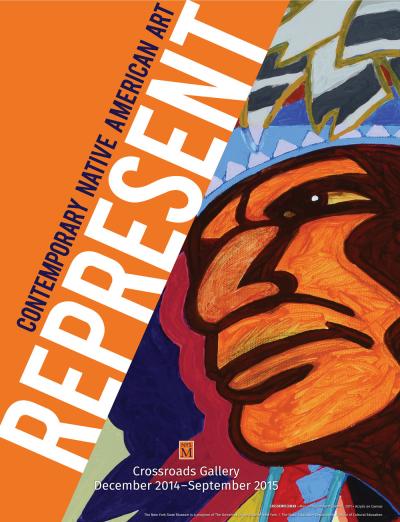
Represent: Contemporary Native American Art


Ongoing Exhibition
Despite centuries of outside influence, the Native People of New York State are culturally and governmentally distinct and today remain deeply proud of this designation. While language, values, ceremony, and physical territory unite and define these communities, their most accessible expressions are found in the fine and traditional arts.
Recent acquisitions to the New York State Museum’s Contemporary Native American Art Collection from the Mohawk, Onondaga, Cayuga, Seneca, Tuscarora, and Shinnecock Nations include beadwork, basketry, painting, sculpture, and ceramics. Together, they weave an inspiring story of adaptation, resiliency, community, and investment in the future.
Online Feature
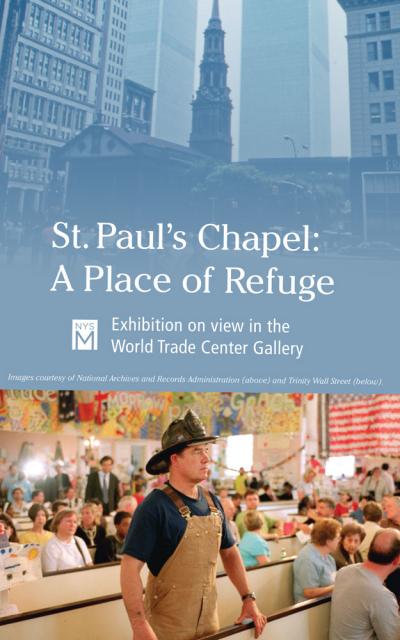
St. Paul's Chapel: A Place of Refuge
Ongoing Exhibition
Located just a few hundred yards from the World Trade Center, St. Paul's Chapel miraculously survived the collapse of the Twin Towers on September 11, 2001 and for eight months served as a relief site for police, firefighters, emergency responders, and recovery workers.
In 2015, the New York State Museum received two pews from St. Paul's Chapel that were used during the time the chapel served as a relief center. The pew exhibited shows damage and distress caused by the heavy equipment worn by workers as they sought a place to sit or lie down, and is symbolic of the long, difficult days recovery workers endured. Photographs and an excerpt from the film The Spirit of St. Paul's provide additional context to show how the chapel operated as a relief site.
9/11

The New York State Museum is home to the largest and most comprehensive collection of artifacts pertaining to the September 11, 2001, terrorist attacks on the World Trade Center. The collection encompasses materials from the World Trade Center, including building materials and objects of daily office life; a significant number of artifacts pertaining to the heroic efforts of first responders; fragments of the aircraft; and material documenting the tremendous global response to the attacks.
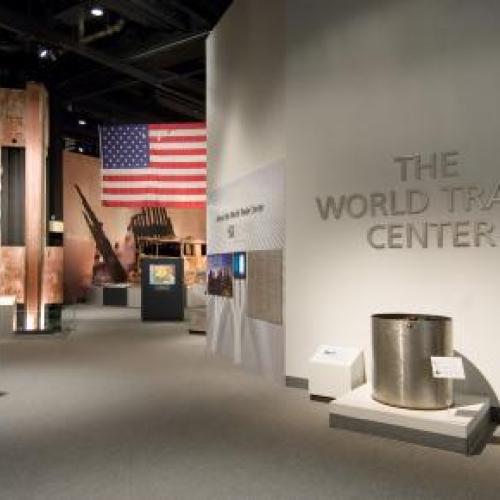
This ongoing exhibition includes many objects, images, videos, and interactive stations documenting this tragic chapter in New York and America's history.
Education
Political History
As an agency of the New York State Department of Education, the history of education in New York is a significant component of the New York State Museum’s collections. Materials range from furniture and portraits of New York State Education Commissioners and Board of Regents, to materials found in the classroom such as desks and textbooks.
Electoral Politics
Political History
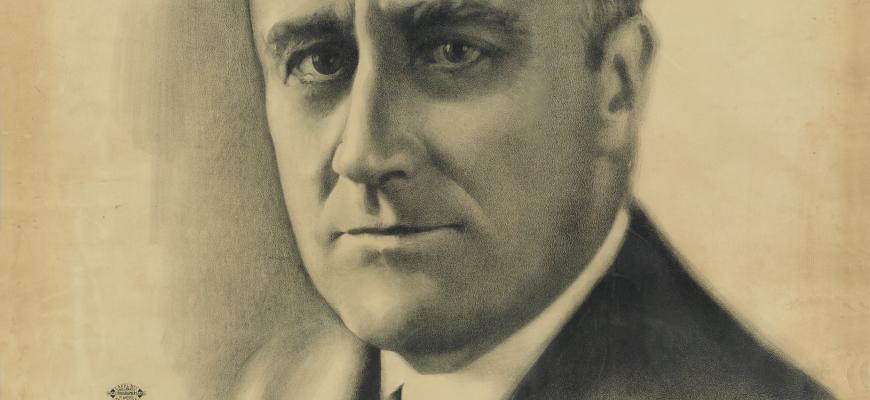
Politics has played a critical role in the rise of the Empire State. Six men–Martin Van Buren, Millard Fillmore, Chester A. Arthur, Grover Cleveland, Theodore Roosevelt, and Franklin Roosevelt–have been elected President of the United States. Other prominent American politicians and leaders hailed from New York as well. Electoral politics are a significant story in New York State History. Ephemera from political parties, election campaigns, candidates, and supporters comprise a significant element in the collections of the New York State Museum.
Law
Political History
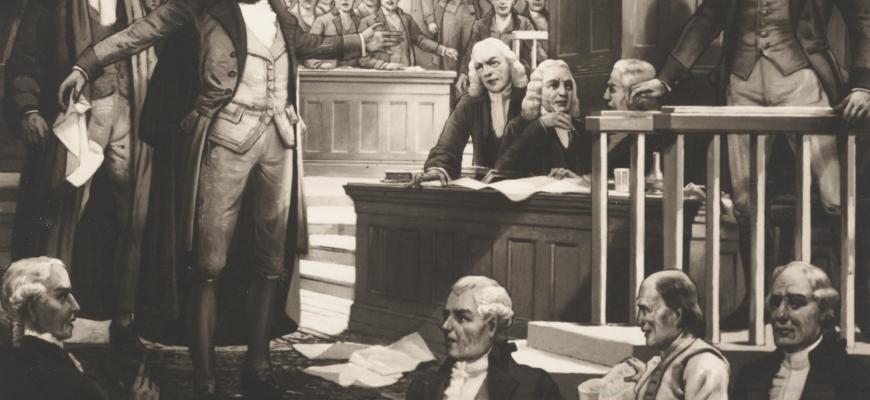
The law collections of the New York State Museum incorporate artifacts pertaining to both the creation of laws as well as the enforcement of them – from desks and materials used by New York State Legislators, to firearms, badges, and accoutrements from police agencies across New York State.
Military
Political History
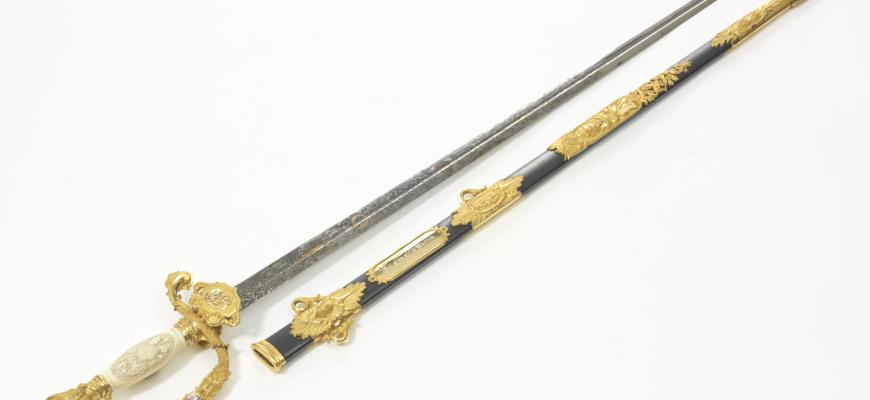
The New York State Museum’s military history collection spans the breadth of New York State history and contains materials from colonial era conflicts through the American Revolution, Civil War, both World Wars, and the most recent operations of the 21st Century. Encompassing military uniforms, firearms, and accoutrements, the museum’s military history collection seeks to interpret the role that New York’s citizenry has played as members of the National Guard, U.S. Army, Navy, Air Force, Marine Corps, and Coast Guard.
Political Movements
Political History
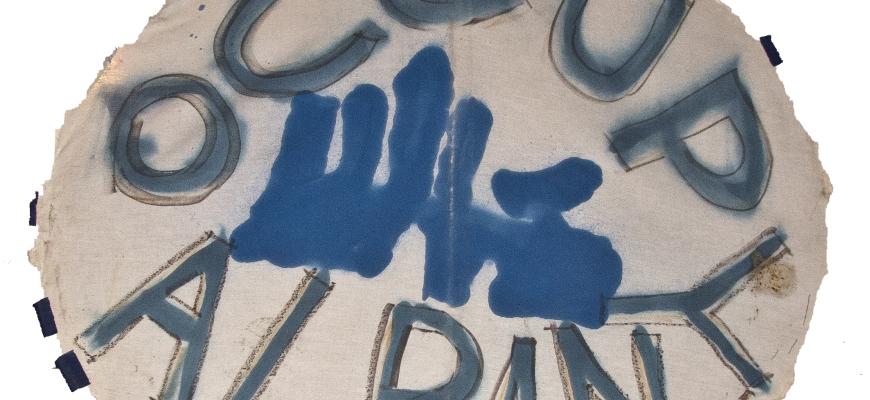
New York has been the birthplace of numerous political movements, and New Yorkers have emerged as leaders in a variety of causes including abolition, temperance, women’s suffrage, and more. The New York State Museum’s collection contains ephemera and artifacts from these historical movements and the people that drove them.
State Agencies
Political History
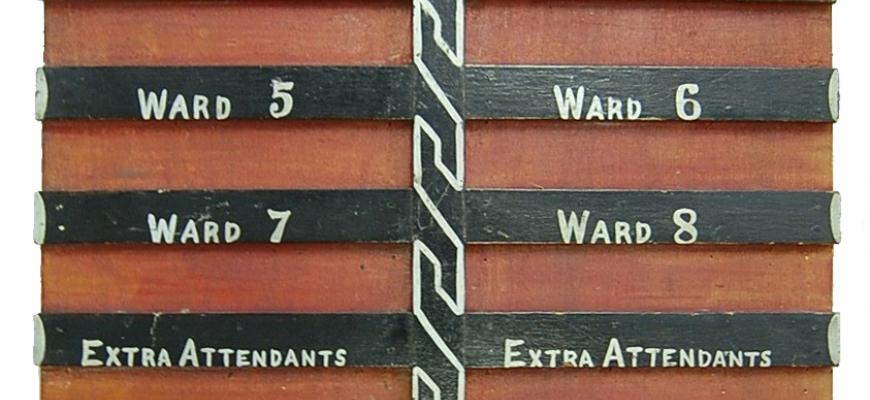
The New York State Museum is mandated under New York State Education Law as the historical repository for all state agencies. Collections include materials from the Department of Environmental Conservation, Department of Transportation, New York State Police, and significant materials from New York State Prisons and Mental Health Facilities.
Mineral Systematics
The purpose of this project is to diversify the number of New York mineral species; find new species; and understand their distribution, association, composition, origin, and petrologic significance. Until recently the project has focused on the amphibole- and tourmaline-group minerals, but there is also ongoing research on other mineral groups.
Kimberlite-like rocks from central New York
The New York kimberlite-like dikes are part of a larger north-south belt of kimberlitic intrusions on the western flank of the Appalachian mountain belt that extends from Tennessee to Quebec. These dikes are of particular interest to North American geologists because they provide the only direct information on the nature of the mantle and lower crust in the Appalachian interior, and they are the only expressions of Mesozoic magmatism in the region. Their age, origin, and relationship to plate tectonic processes are still poorly known or understood. At the completion of this study, using field observation and geochemical analyses, we hope to know more about the age and origin of these unusual rocks.
Pegmatites of New York
The pegmatites of New York, mostly of NYF-type, occur in calc-silicates in the Adirondack Lowlands and in the metasedimentary sequences south and east of the Marcy anorthosite (1155 Ma) in the Highlands. The study of the mineral distribution and the trace element geochemistry within the pegmatite bodies is used to understand their petrogenesis and internal evolution. The U-Pb geochronology is applied to constrain the timing of igneous, metamorphic, and deformational events associated with Shawinigan, Ottawan, and Rigolet orogenesis.
Rare Earth Element (REE) and yttrium mineral potential of New York
Though REE deposits are abundant in many countries, China has dominated production over the past 20 years. Despite containing only 37% of proven global REE reserves, China provides 97% of the world’s supply. New and revised sources of REE and yttrium are needed in order to balance the need of the high-tech industries. The mineralogical survey of New York State shows three potential sources for the REE and yttrium minerals: Grenville-age magnetite-fluorapatite, pegmatite, and vein deposits and occurrences. A Museum team of scientists and research associates will do mixed mapping and analytical work to substantiate the REE and yttrium sources of New York.
Geochronology
The goals of this project are to determine the radiometric ages of the rocks from the Adirondack Mountains, their relationships, and deformations through the use of zircon, titanite, monazite U-Pb geochronology, and Lu-Hf isotope systematics.
State Museum Announces Publication of the Illustrated Book "Art for the People: Decorated Stoneware from the Weitsman Collection"
The New York State Museum has announced the publication of its new book, Art for the People: Decorated Stoneware from the Weitsman Collection, featuring the Museum’s extensive collection of decorated stoneware. The book, available in limited quantity and distributed by RIT Press, is now available for purchase for $75.
Art for the People highlights more than 230 stoneware pieces from the Weitsman Collection at the New York State Museum. The book has over 340 color photographs of uniquely decorated stoneware vessels, including jugs, crocks, pitchers, and jars. The artful designs on the 19th century stoneware are considered to be prime examples of American folk art; many stoneware pieces are oversized and decorated with elaborate and unusual cobalt blue designs. A portion of the proceeds from the book’s sales will benefit the New York State Museum. The book is available for purchase through RIT Press (585-475-6766 or RIT Press); a limited number of books will also be on sale in the Museum Gift Shop.
"The Weitsman collection is America’s premier collection of decorated stoneware and we’re proud to make it available to all," said State Museum Director Mark Schaming. "The Board of Regents and the State Museum are grateful that Adam Weitsman’s passion and generosity has allowed us to preserve, study, exhibit and now publish this remarkable collection of New York decorated stoneware."
The New York State Museum is home to the Weitsman Stoneware Collection, comprised of more than 370 pieces of decorated stoneware from the nineteenth century. Stoneware was the basic utilitarian ware of the time and served many useful functions, primarily in the preparation, storage and serving of food. New York State was one of the leading producers of stoneware because of its excellent transportation network. The state’s canal and turnpike systems made it possible to ship the raw materials and finished products throughout the state, allowing New York to become a leading force in stoneware production.
Adam Weitsman began his stoneware collection in 1980 at the age of eleven and has continued collecting stoneware ever since. In 1996, he began donating his collection to the New York State Museum. In 2008, the State Museum opened the exhibition "Art for the People: Decorated Stoneware from the Weitsman Collection", featuring a selection of approximately 40 pieces from the collection, most of which had never been publicly displayed. Today, the Museum regularly rotates the stoneware on display, giving visitors the opportunity to experience the variety and uniqueness of the collection.
Technical information about the book: John L. Scherer, Art for the People: Decorated Stoneware from the Weitsman Collection (Albany: New York State Museum, 2015), hardcover with dust jacket, 10.5" wide x 14.5" high, 296 pages, 341 full color photographs, ISBN 1-55557-276-6. Distributed by RIT Press, 585-475-6766.
Art for the People is distributed by RIT Press, the scholarly book publishing enterprise at the Rochester Institute of Technology. For information and to place orders call 585-475-6766, visit their website or email LMDWML@RIT.EDU.
The State Museum is a program of the New York State Education Department’s Office of Cultural Education. Located on Madison Avenue in Albany, the Museum is open Tuesday through Sunday from 9:30 a.m. to 5 p.m. It is closed on Thanksgiving, Christmas and New Year's Day. Admission is free. Further information about programs and events can be obtained by calling (518) 474-5877 or visiting the Museum website.
Phone: (518) 474-1201
Re-Examining the Earth's Oldest Trees
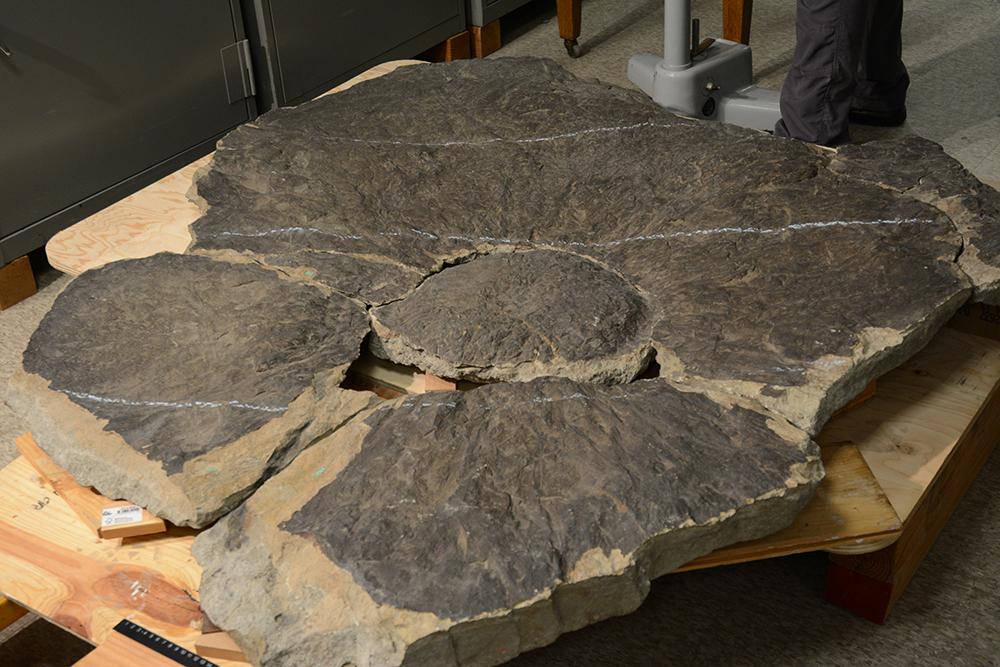
Did you know that fossils of the Earth's oldest trees are part of the State Museum's collections? In the late 19th century, scientists uncovered evidence of the world's oldest known forest in Gilboa, NY (Schoharie County). Since then, the Museum has collected a variety of specimens from the site, including tree stumps and other forest plants.
The Gilboa trees, called Eospermatopteris, date back to the Devonian Period (roughly 380 - 385 million years ago). Eospermatopteris was one of the first plants on Earth to have a tree-like form. It resembled a fern - there was no wood on the tree - and grew to be about 30 feet tall.
One Gilboa tree stump specimen includes the underside of a stump with impressions of the roots mixed together with tiny plants called lycopods. It was on display in the mid-1900s when the State Museum was located in the State Education Building on Washington Avenue. When the Museum moved to its current location in the Cultural Education Center on Madison Avenue, the specimen had to be broken into pieces to move it to its new space.
Earlier this year, Frank Mannolini, a collections technician at the Museum, reassembled the specimen. Conservation techniques and technology has improved significantly since the 1970s, and researchers from the United Kingdom and SUNY Binghamton re-examined the specimen again and learned new information that will be published in an upcoming paper on the tree root systems in the Devonian Period.
State paleontologist Lisa Amati says that this demonstrates the importance of keeping collections. "Technology is constantly improving and we're able to use new technology today that was not available half a century ago," she said. "The original discovery of the Gilboa tree forest was incredibly significant and, thanks to new technology, we continue to learn more from the Gilboa specimens today."
African American
Social History
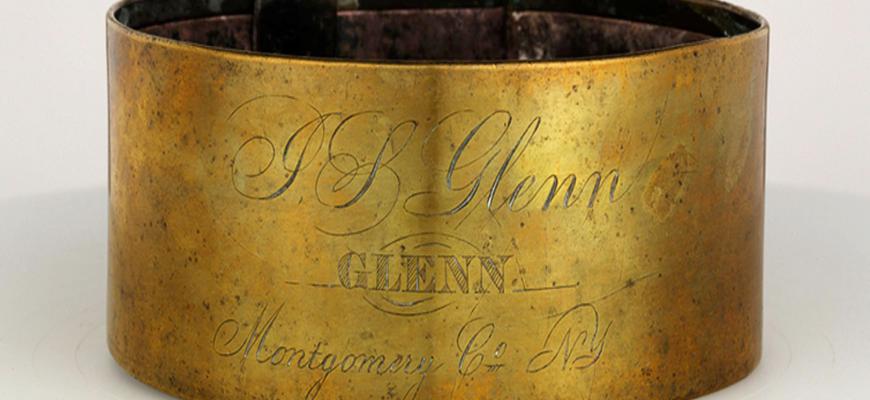
The New York State Museum’s African American history collection covers the 18th through the 21st centuries. This collection documents slavery in the state, abolition efforts, military accomplishments, civil rights activities, as well as the lives of everyday African Americans living in New York State. Current research on this topic includes the Great Migration to New York State.
Ethnic and Immigrant History
Social History

New York is a state of immigrants. As early as the 1640s, when New Amsterdam had fewer than one thousand residents, eighteen different languages were being spoken on the streets. By the mid-19th century more immigrants came through New York City than anywhere in the county. Even today recent immigrants choose to make New York State home. Our collections include objects used and made by immigrants as well as objects made for immigrants.
Women's History
Social History
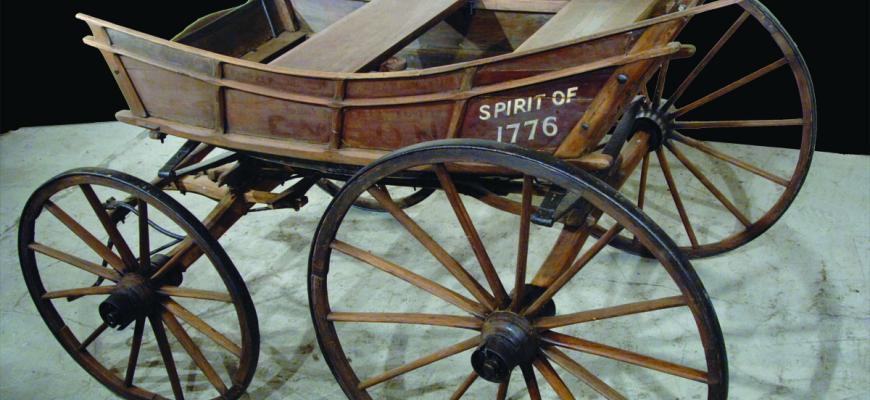
The women’s rights movement began in Seneca Falls, New York in 1848 when Elizabeth Cady Stanton, Lucretia Mott, and one hundred supporters signed the Declaration of Sentiments asserting that “all men and women are created equal.” Women in the state finally won the vote in 1917 and continued working toward the 19th Amendment and equal rights throughout the 20th century. The New York State Museum holds artifacts from the early 20th century suffrage campaigns and efforts toward the Equal Rights Amendment. Additionally, the Museum has artifacts that depict the lives of women living in New York in the 18th through 21st centuries.
Agriculture
Economic History
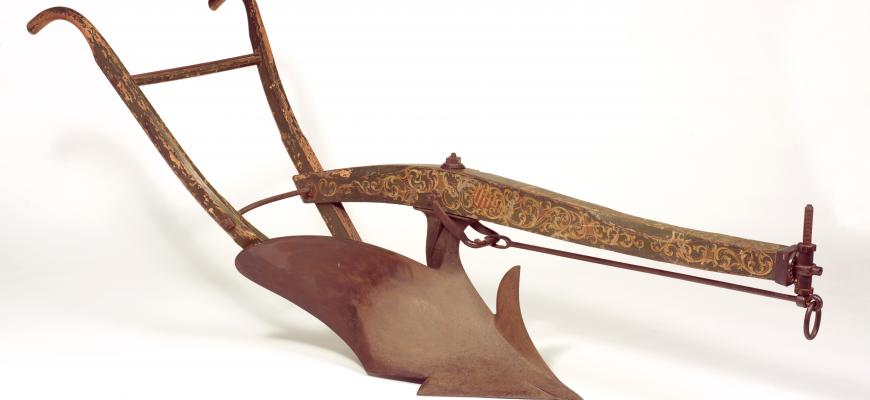
The New York State Museum’s agriculture collection includes various farming implements from the colonial period to more recent times. From shovels to large threshing machines, the collection covers most aspects of harvesting the land. A highlight of this collection includes materials from the New York State Agricultural Society which was formed in the late 18th century to improve the condition of agriculture, horticulture, and the household arts within the state through the use of new scientific procedures and methods. The artifacts collected through this society came to the New York State Museum in 1901 and became the basis for the Historical Collection.
Business and Industry
Economic History
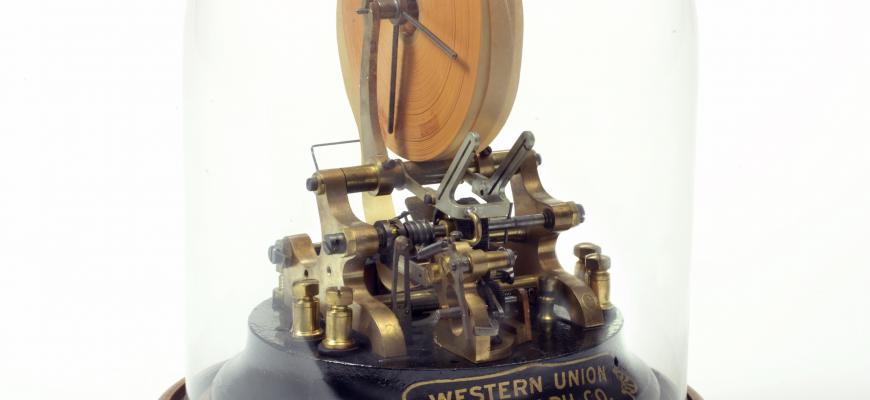
Home of one of the economic capitals of the world, New York State has an extensive business and industrial past. The State Museum’s collections reflect that variety with items relating to small businesses, the stock exchange, industrial pursuits, a vast collection of products made in New York State and the machines and tools used to make them.
Fire Fighting
Economic History
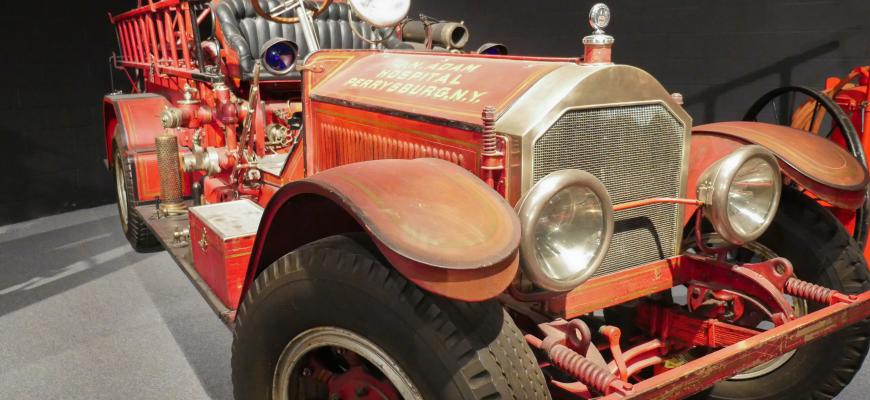
The New York State Museum fire collections include items that were made and/or used in New York State to fight fires. Our collections also include ephemera and equipment used by fire departments. A majority of our fire protection vehicles are on display in Fire Engine Hall in the museum. Some highlights including early hand engines, chemical carts, steam engines, and motorized fire engines.
Science and Technology
Economic History
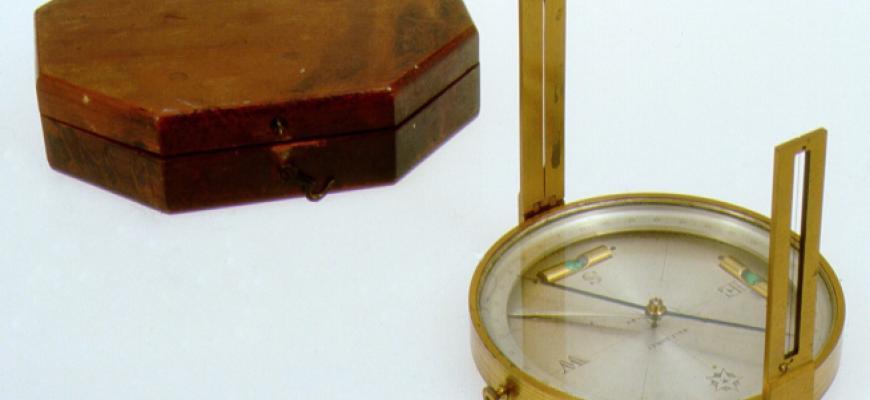
Science and Technology play an integral part in the lives of all New Yorkers. Our collections reflect more than two centuries of innovation and people’s efforts to make life better through science and technology. Our collections include items produced in New York and the tools used to make them. One of our largest collections, the science and technology collection, includes experimental and finished products. Some highlights include the Joseph Henry collection, the Gurley Instrument Collection, Electronic Equipment from a Cold War bunker, and TV and Radio Studio equipment.
Transportation
Economic History
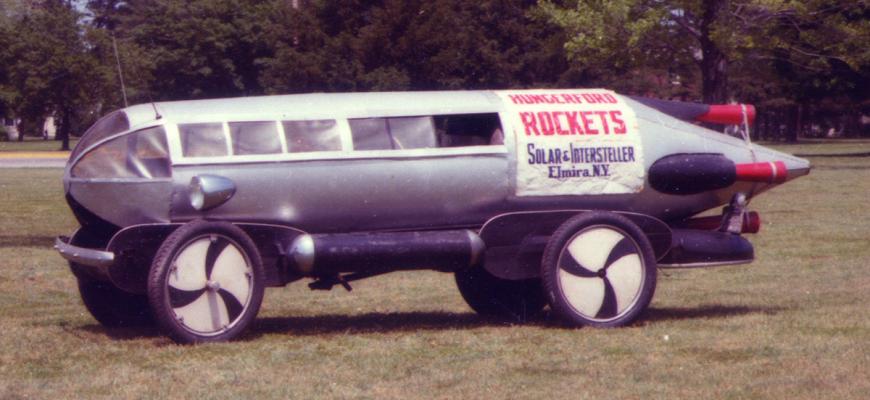
New York’s geography has placed its citizens in the forefront of many of the advances in transportation over the centuries. Starting with the Hudson and Mohawk Rivers trade routes, New Yorkers opened up the vast resources of the United States. The Erie Canal made New York the Empire State and New York City the financial capital of the 19th century. The vast network of railroads and highways kept commerce and people flowing throughout the state. The airports and highways of today continue the tradition of giving New Yorkers the freedom to travel and move their goods quickly and efficiently. The collection of the New York State Museum includes items related to the various transportation corridors as well as examples of vehicles made in New York. We have cars, racing vehicles, trucks, motorcycles, bicycles, steam rollers, signs, boats, a plane, horse drawn vehicles, and various items from the support industries that relate to transportation, including the façade of an art deco gas station. We also have oral histories, scrapbooks, and photographs relating to the construction and use of New York’s transportation corridors.
State Museum Opens "The Coast & the Sea" Art Exhibition
The New York State Museum will open a new exhibition, The Coast & the Sea: Marine and Maritime Art in America, featuring a variety of marine and maritime artwork from the New-York Historical Society on October 24, 2015. On display through February 21, 2016, the exhibition features more than 50 paintings, many of which depict New York State scenes including the Port of New York and the Hudson River.
The paintings, ranging in date from 1750 to 1904, are by eminent artists including Thomas Birch, John Frederick Kensett, J. Francis Silva, and Carlton T. Chapman. Highlights include paintings of famous sea battles, portrayals of ships in storms, post-Civil War paintings of seaside and port, and portraits of naval heroes and pioneering merchants. Several maritime artifacts will also be on exhibit, include an engraved whale's tooth scrimshaw from the mid-19th century and a silver presentation tureen commemorating acts of bravery during the War of 1812.
“The Board of Regents and the State Museum are pleased to host this exhibition from the New-York Historical Society,” said State Museum Director Mark Schaming. “Over the next several months, thousands of visitors will have the opportunity to view this extraordinary exhibition and learn more about New York and the nation’s early history through this special collection of marine and maritime art.”
The State Museum is a program of the New York State Education Department’s Office of Cultural Education. Located on Madison Avenue in Albany, the Museum is open Tuesday through Sunday from 9:30 a.m. to 5 p.m. It is closed on Thanksgiving, Christmas and New Year's Day. Admission is free. Further information about programs and events can be obtained by calling (518) 474-5877 or visiting the Museum website.
Phone: (518) 474-1201
State Land Permits
The Section 233 Permit Program provides for archeological and paleontological research on state lands and is coordinated by the State Museum. This program is mandated by Education Law and protects public cultural and geological resources. Proposals for access to state lands for research purposes are reviewed and permits issued in conjunction with other state agencies. Most applications relate to diving activities and this program provides effective protection for many recently discovered underwater sites in New York.
Recently the Museum participated in an interagency initiative to create precedent setting submerged history diving preserves of several sunken French and Indian War vessels in Lake George. As an aspect of Education Law Section 233, staff also provide interagency consultation on the management of historic collections on State property.
People have occupied portions of New York State for over 10,000 years. Only the last few decades of this long and complex period are thoroughly recorded and well understood. The only way we can come to know and appreciate the one hundred centuries that came before is through archeology. If we can find the remains left behind of the sites these people inhabited, the tools they used, the constructions they created, and even of the people themselves, we can finally reveal the way life was in New York hundreds and thousands of years ago.
Yet the archeological record that remains hidden in the ground is a fragile record. It is finite and nonrenewable. Once destroyed, it can never be duplicated, and once the information these sites contain is lost, it can never be recreated. Every time the ground is disturbed, whether by natural or human events, the potential loss of these endangered resources increases. Almost daily some part of our common archeological heritage is damaged or lost, often unintentionally, by the actions we come to accept as part of everyday modern life.
To help prevent such losses on land under its own control, the State of New York enacted Section 233 of the Education Law in 1958. The intent of this law was to protect these "publicly owned" cultural resources "both for scientific and for educational and historic purposes." This law represents the interests of all the people of New York in their common heritage and protects their rights to benefit from the scientific and educational values preserved in these resources for all time to come.
Section 233 has three major components. First, it protects archeological sites and "objects of historic interest" from damage by preventing artifact removal from state lands without written permission. Second, it provides a program of archeological study permits by which serious students of our cultural past may pursue scientific studies on archeological resources on state lands. And third, it requires of anyone who unexpectedly discovers such objects on state lands to report it to the appropriate persons.
Section 233 is part of Education Law and is mandated to the State Education Department in recognition of the very strong educational motives which underwrote the original intent of this archeological preservation effort. The administration of Section 233 is delegated within the Education Department to the New York State Museum, because "scientific specimens and collections, works of art, objects of historic interest and similar property . . . owned by the state . . . shall constitute the collections of the state museum." Responsibility for the management of publicly owned cultural resources under Section 233 falls to the State Museum's Historical and Anthropological Surveys, which have expertise and longstanding research traditions in these areas.
1. All scientific specimens and collections, works of art, objects of historic interest and similar property appropriate to a general museum, if owned by the state and not placed in other custody by a specific law, shall constitute the collections of the state museum. The state museum shall be the custodian of the collections, shall perform standard curatorial, research and educational activities and a director appointed by the regents shall constitute its head.
2. Any scientific collection made by a member of the museum staff during his term of office shall, unless otherwise authorized by resolution of the regents, belong to the state and form a part of the state museum.
3. The state of New York, through its legislative authority accepts the provisions of section one hundred twenty of the federal-aid highway act of nineteen hundred fifty-six (70 Stat. 374) relating to the salvage of archaeological and paleontological objects, including ruins, sites, Indian burial grounds, buildings, artifacts, fossils or other objects of antiquity having national significance from an historical or scientific standpoint, and empowers and directs the commissioner of education to make agreements with appropriate state departments or agencies and such agency or agencies as the federal government may designate to carry out the purposes of such provision of law.
4. Except as otherwise provided in subdivision three of this section, no person shall appropriate, excavate, injure or destroy any object of archaeological and paleontological interest, situated on or under lands owned by the state of New York, without the written permission of the commissioner of education. A violation of this provision shall constitute a misdemeanor. The discovery of such objects shall be forthwith reported to the commissioner by the state department or agency having jurisdiction over such lands.
5. Permits for the examination, excavation or gathering of archaeological and paleontological objects upon the lands under their respective jurisdictions may be granted by the heads of state departments or other state agencies to persons authorized by the commissioner of education for the purposes of the state museum and state science service, with a view to the preservation of any such objects worthy of permanent preservation and, in all cases, to the acquisition and dissemination of knowledge relating thereto.
L.1947, c. 820; amended L.1958, c. 121, eff. March 6, 1958.
23 U.S.C.A. § 170.
Educational Regulations Part 180
Section 180.1 Loan of Material.
Scientific specimens and collections may be loaned to scientific institutions, museums, libraries or other responsible organizations or to qualified scientists engaged in research, upon terms and conditions to be set forth in an agreement between the department acting through the Assistant Commissioner of State Museum and Science Service and the organization or individual requesting the loan.
180.2 Archeological and paleontological permits.
(a) Permits valid for a period not exceeding one year for the examination or gathering of paleontological objects on specified lands for specified periods may be issued by the Assistant Commissioner for State Museum and Science Service to the appropriate department of recognized universities, research institutions, government surveys, colleges and museums.
(b) Permits valid for a period not exceeding one year for examination, excavation or gathering of paleontological objects issued to the foregoing named institutions shall be valid for use by authorized staff and members of the faculty, student assistants and graduate students of such institutions.
(c) Permits vaid for a period not exceeding one year for examination, excavation or gathering of archeological objects on specified lands for specified periods may be issued by the Assistant Commissioner for State Museum and Science Service to qualfiied individual members of the staffs of recognized universities, research institutions, colleges or museums and shall be valid only for use by the individuals to whom they are issued.
(d) Permits valid for a period not exceeding one year may also be granted to individuals not affiliated with the above institutions but who are professionally competent in the opinion of the Assistant Commissioner for State Museum and Science Service.
(e) Permits valid for a period not exceeding one year may also be granted to individuals for the examination, excavation and collection of marine fossils on specified lands for specified periods.
(f) Discoveries in the follwoing categories shall be reported to the State Museum: evidence of human remains, bones, burials, pottery, village sites, buildings, and large masses of fossil plants and fossil reefs. All other marine fossils are unrestricted and may be collected by holders of permits without first reporting to the State Museum.
(g) Permits issued under the provisions of this Part may be revoked at any time.
Educational Regulations Part 181
Archives and History
Stautory authority: Education Law Section 207
Section 181.1 Loan of Material.
Historical objects and collections, paintings, and other art forms may be loaned to educational institutions, historical societies, museums, libraries or other responsible organizations for study and exhibition, upon terms and conditions to be set forth in an agreement between the department acting through the State Historian and the organization or individual requesting the loan.
181.2 Permits for survey and retrieval of objects of historical interest.
(a) Permits, valid for a period not exceeding one year, to survey and retreive objects of historical interest situated on or under State property, may be issued to qualified public agencies, historical societies, museums, other educational institutions and individuals.
(b) Discovery and retrieval of objects of historical interest on State property shall be reported to the Commissioner of Education.
(c) Permits issued under the provisions of this Part may be revoked at any time.
The legislation generally describes the protected resources as "any object of archeological or paleontological interest." In general, objects deposited on state lands that are less than 50 years old are not considered to be of "archeological interest." However, there may be specific collecting policies that prevent the removal of such objects of even relatively recent vintage (such as in State Parks or State Historic Sites). Archeological sites in which deposits of spatially related objects exist can reveal a great deal about the events which created these sites and are clearly "of archeological interest." Certain types of isolated objects may also be of significance even if not associated with any particular site. Before removing any object that appears to be in isolation, consult with the State Museum. Many apparently isolated objects are in fact merely the exposed portion of a buried site that would be damaged if surface materials were continually collected as they become exposed.
Archeological sites on state owned lands fall into two major categories: land sites and underwater sites. Land sites are most frequently thought of as "Indian" sites. The thousands of years of Native prehistory in New York, from Paleo-Indian migratory bands to the Iroquois and Algonkian farmers encountered by the first explorers, represents one of the most important components of our archeological heritage. Since there was virtually no written record created of these prehistoric times, archeological studies represent the only means of coming to know our prehistoric predecessors. But there is also a great deal to be learned from the remains of Colonial habitations, military sites, transportation systems, and the more common archeological resources that represent the Historic Period. In spite of volumes of documentation, historians still find many areas of our past that cannot be fully understood without the archeological data contained in sites of these more recent times. A significant portion of these irreplaceable land sites are situated on some form of state land.
Underwater sites are also on state lands, only these are submerged lands, covered by navigable bodies of water. Very few bodies of water in New York State are privately owned, and even small lakes and ponds that are completely surrounded by private lots may still be public waterways. Such public waterways and the lands beneath them are under the jurisdiction of the State, and therefore any archeological resources resting on these bottomlands are under the protection of Section 233.
For the most part, these submerged resources are represented by sunken ships and boats and the sites of cultural materials associated with such sinkings. The data on nautical technology and maritime history that is so often missing from libraries and archives can only be found in the sites of original vessels from the period of interest, be it prehistoric canoes, batteaux of the colonial period, great fighting ships of the American Revolution and the War of 1812, or the vessels of commerce of the 19th century canal-boat and lake-freighter era.
But even deposits of what many would term "garbage" that lie on our lake bottoms can reveal as much about the people that created them as can modern books full of words and pictures. The deep refuse deposits alongside docks and commercial establishments can reveal more about the business of business than the paper records that may or may not be preserved.
A permit granted under Section 233 is an authorization to collect or excavate archeological materials on state lands. Given the mandate to preserve and protect these resources for their scientific and educational value, the State Museum only grants permits for projects that are consistent with the standards and goals of scientific research.
Permits are required for any activity that will "appropriate, excavate, injure, or destroy any object of archeological or paleontological interest, situated on or under lands owned by the State of New York." Under the regulations of the Commissioner of Education, reconnaissance survey projects may also require a permit, even though no excavation of any site is proposed. Even though some land survey involves little more than walking around, and most underwater surveys involve little more than swimming or boating, having a survey permit on file opens up a dialogue between the surveyor and the State Museum through which they can exchange information. It also places others on notice that the applicant has a prior interest in the survey area. In lieu of a formal permit for non-contactinvestigations, where no physical disturbance of the site is proposed, the State Museum offers the option of registering the survey with a simple one-page form. This is particularly useful in identifying the researcher's intent to study an area and helps avoid conflicts that may arise later.
Title to the bed of numerous bodies of water is held in trust for the people of the State of New York under the jurisdiction of the Office of General Services. Visit their website to apply for access to these lands.
Permits are usually granted to professional archeologists associated with institutions which have a tradition of solid research and the facilities to support the project. At the data recovery stage, preservation facilities and qualified conservation staff are critical to the success of the project. The applicant must be able to comply with the State Museum's policies regarding acquisition, preparation, and care of collections.
However, individuals may apply, particularly at the survey stage, to conduct data gathering and identification studies. Even though not professional archeologists nor affiliated with a museum, university, or other institution, such researchers can make a significant contribution to the knowledge of our archeological heritage, particularly in the realm of underwater resources. Such studies are most effective if they use field data to resolve questions arising from documentary sources or reveal new historical data relating to past events. Activities designed merely to retrieve artifacts are not usually considered appropriate on archeological sites that belong to the public. Site preservation is a priority in the management of these resources for the benefit of all New York residents.
Once a completed application is received by the State Museum, it will be reviewed by an interagency panel to determine whether the proposal merits approval. The State Museum is responsible for the approval of applications in terms of their scientific research design and the ability of the project to comply with museum policies regarding State-owned collections. Consultation with the interagency panel assists the State Museum with this review and also provides compliance with other state laws regarding impacts to cultural resources.
If approved by the State Museum, the application is sent to the state agency which actually administers the land on which the project will take place. For example, a permit to investigate a shipwreck in Lake Champlain would require approval by the State Education Department, but also approval by the Office of General Services, which administers New York's submerged lands. In some cases the proposed research design may be perfectly acceptable, but the project may interfere with other priorities the managing agency has in terms of use of that land.
If the application is approved by both agencies, and is in compliance with all other state or federal requirements for the protection of cultural resources, the signed permit will be returned to the applicant. Normally the review and approval process takes about 45 days if all the necessary information is available.
Unless otherwise requested, the term of the project will be assumed to be for one year. The term of the permit will be for one year from the date of final approval.
By law, material on or under any land belongs to the landowner, whether the land is public or private. On public lands this material belongs to the state or federal agency that manages the property, and their permission is required before this material can be removed or disturbed. Where these items are of "historic interest," additional protection is afforded them under Section 233. Permission for the disturbance or removal of these objects of "historic interest" is obtained through the permit process described above.
Removal of objects during an approved Section 233 permit does not alter their ownership, and they remain the property of the state agency which administers the land in the interest of the residents of New York, along with any records generated as part of the research project. Under Section 233 the care and preservation of these "objects of historic interest" is usually delegated to the New York State Museum. Therefore, any collections derived from a permitted activity on state lands must be made and prepared in accordance with the State Museum's policies regarding collections acquisition and care. For the purpose of study, a loan of the collections resulting from a permitted project will automatically be made to the applicant for a period up to one year (depending upon the size and scope of the project) after the end date of the permit. Extensions of this loan may be requested, as necessary, from the State Museum.
It is the policy of the State Museum to encourage the general public to become interested in local history and prehistory. To aid in this educational effort, the State Museum frequently arranges for loans of collections for exhibition to secure and responsible institutions. Requests for such loans should be made to the State Museum.
Because the purpose of the management of public archeological resources is to preserve these resources for all the residents of New York, present and future, and to create educational benefit from these resources through controlled scientific study, it would be inappropriate to release artifacts from integrated archeological sites to private ownership or sale. The possible benefits such sale might seem to provide in support of scientific research would not equal the negative consequences such a policy would produce. In some cases, however, isolated objects which lack historic interest for one reason or another may be released from public ownership if requested in writing.
In no case should any form of excavation or disturbance be undertaken on state land without first seeking and obtaining permission, even when it is believed that the objects to be collected are not of "historic interest." The judgement of "historic interest" can only be made by the interagency permit panel.
When archeological sites on public lands are damaged or destroyed, everyone loses a part of our shared heritage, spanning over 10,000 years of human history. The greatest loss falls to our children and to unborn generations who will inherit a State in which the opportunities to see, appreciate, and investigate our archeological resources will be greatly diminished.
No state agency, no governmental program, no law can protect these irreplaceable resources unless people interested in seeing this part of their heritage preserved make a conscious commitment to contribute to this effort.
How To Apply
Completely fill-out the application coversheet.
The contact name is to be legally responsible for the scientific operations of the project. Normally this person is the principal investigator and usually is also a professional archeologist, geologist or paleontologist. If the researcher represents an organization, it is usually preferable to have the permit issued to the researcher rather than to the corporate head of the organization.
Attach all supporting documentation
Please provide this in PDF format.
Documentation on what the site is, i.e., its age, type, function, history and condition.
[Permits to excavate or remove artifacts or specimens from a site will normally not be given until complete documentary research on the site has been completed. The application letter should reflect the findings of that documentary research and should indicate how the project design reflects what is already known about the site from prior research.]
This includes:
- Non-contact survey methodology and recording [if proposed].
- Excavation of non-cultural or sterile overburden and recording [if proposed].
- Excavation of cultural or geological deposits, exposure and recovery of objects or specimens, mapping and data recording [if proposed].
[Permits are given for research purposes, and proposals should include a research design appropriate to current professional standards and the scope of the project. More complex projects with a greater potential impact on archeological or paleontological resources will require more detailed proposals and research design information. It is advisable to have the proposal reviewed by a professional archeologist, geologist or someone with specific expertise in the type of project being proposed. Their letter of evaluation should accompany the application.]
Plans for, and facilities to support, the conservation, cataloging, storage and analysis of excavated and collected materials.
[All excavated and collected materials should be maintained in a stable state for study and prepared for storage using applicable standards of the New York State Museum. You may obtain additional information on those standards, including fees associated with permanent curation (if any), by contacting us using the address data at the top of this page.]
Proposal and estimated time frame for submission of a preliminary and final research report and any plans to submit results for publication.
[Annual reports on the progress of the project, and at its completion, are expected to be filed in a timely manner with the New York State Museum.]
A portion of a USGS topographic map, DOT Planimetric map, or navigation chart showing the location and boundaries of the project study area. Be sure the map is identified as to type, source, scale and date of publication.
Email or mail all documents to:
Christina Rieth
New York State Museum
Cultural Education Center 3118
Empire State Plaza
Albany, New York 12230
Phone: (518)402-5975
Image Use & Digital Media Requests
The New York State Museum's holdings include over 15 million artifacts, specimens, photographs, and related materials.
The New York State Museum assumes that a request for an image of any item from the NYSM’s collection is for personal use only.
Permission for Use
Any reproduction of images distributed by the New York State Museum, in any form or medium—print, film, digital, photographic, etc.—for whatever purpose requires the State Museum's permission.
If an image is to be publicly distributed or published in any form or medium – print, photocopy, digital, film, etc. – an Image Use & Digital Media Request Form must be submitted to nysmimagereq@nysed.gov and the New York State Museum must be formally and prominently credited.
If the request is approved, a Reproduction and Rights Agreement will be sent back for review and signature.
If new studio photography is required turnaround time will depend on workload of the New York State Museum staff photographer. Every effort will be made to honor deadlines.
Forms and Supporting Documentation:
For Inquiries and Questions:
New York State Museum Celebrates New York State History Month in November
The New York State Museum will celebrate New York State History Month in November with a variety of free public programs for children, families and adults.
“November is New York State History Month,” said State Education Commissioner MaryEllen Elia. “Across the state, New Yorkers of all ages can learn about the Empire State’s history at museums, libraries and cultural institutions. The Board of Regents and I invite everyone – students, teachers, families – to attend a history program in their community and learn more about New York State history.”
“To understand New York is to understand America. New York State History Month is a great time for New Yorkers to celebrate our state’s extraordinary history,” said State Museum Director Mark Schaming. “The State Museum, along with thousands of cultural institutions across the state, is pleased to offer a variety of history programs for the community during New York State History Month.”
Below is a schedule of free New York State History Month programs at the State Museum.
Cinema Sunday: Grand Central Station
November 1, 2:00pm
A film chronicling the history of New York City’s Grand Central Station.
Conversation with a Curator: 10 Minute Talk
Thursday, November 5 & 12 at 1:00pm | Sunday, November 15 at 12:30pm | Thursday, November 19 at 11:00am
Participate in a quick conversation with a historian and curator about an artifact that is especially unique or intriguing.
Creative Art Day: Represent: Contemporary Native American Art
November 8, 1:00 – 3:00pm
Families are welcome to participate in a creative art activity based on the Museum’s contemporary Native American art exhibition.
The Brothers Vonnegut Talk Presented by Author Ginger Strand
November 19, 7:30pm
Author Ginger Strand will talk about her new book, The Brothers Vonnegut. This talk is a featured public event of the Researching New York Conference.
A Day in the Life of the Shakers
November 28, 1:00 – 4:00pm
Children and families can get a glimpse into what life was like for Shaker children in this special Shaker Kids Space program.
Weitsman Stoneware Collection Lecture and Book Signing
November 29, 1:00 – 2:30pm
Senior historian emeritus John Scherer will discuss the recently published book Art for the People: Decorated Stoneware from the Weitsman Collection, featuring the Museum’s extensive stoneware collection. Books will be available for purchase through the Museum Shop.
Shaker Weaving Project
November 29, 2:00 – 4:00pm
Families are invited to create a placemat using Shaker weaving methods.
The Museum has also created a website to celebrate New York State History Month: http://exhibitions.nysm.nysed.gov/historymonth/. The website features a schedule of State Museum History Month programs, educational resources, and a “New York Minutes” feature which includes a New York State history fact of the day for every day in November.
In 1997, November was established as New York State History Month by the New York State Legislature. The goal was “to celebrate the history of New York state and recognize the contributions of state and local historians”. New York State History Month represents the opportunity for historians, museums, and cultural institutions to highlight the importance of New York State’s history through public programs, exhibitions and other learning opportunities.
The New York State Museum is a program of the New York State Education Department's Office of Cultural Education. Located on Madison Avenue in Albany, the Museum is open Tuesday through Sunday from 9:30 a.m. to 5 p.m. It is closed on Thanksgiving, Christmas and New Year's Day. Admission is free. Further information about programs and events can be obtained by calling (518) 474-5877 or visiting the Museum website.
Phone: (518) 474-1201
Cultural agencies that do not qualify as a museum or historical society with collections are not eligible for a charter. If the organization is nonprofit, organized for the promotion of science, literature, art, history, or other department of knowledge, and is educational in any way; for example preservation groups, or friends groups for museums, historical societies or historic sites, and wishes to incorporate, it may petition for the issuance of a Regents certificate of incorporation. This instrument constitutes official recognition that the organization's purposes are of educational or cultural value. It is a permanent form of incorporation. These organizations are not authorized to own or hold collections, as defined in section 3.27 (a)(7) of Regents Rules, except to borrow items owned by other institutions for brief periods of time for purposes of study or short-term, temporary exhibition.
Most important of the many advantages of incorporation is that the educational organization becomes a legal entity. Title to the assets is held in the name of the education corporation and is thus protected from falling into the hands of individual members in the event the organization should dissolve. Another important advantage of incorporation is that it makes the organization eligible to apply to the United States Internal Revenue Service as a non-profit, tax exempt education corporation under section 501 (C) (3) of the Internal Revenue Code. This is important to a nonprofit corporation because money raised from dues, admission charges and gifts would otherwise be considered taxable income. This exemption also encourages contributions since donors may deduct such gifts from their personal income taxes. Finally, incorporation gives an education organization the prestige and recognition of being a member of The University of the State of New York.
Regents Certificate of Incorporation Directions
Applying for a Regents Certificate of Incorporation
In New York State museums, historical societies and educational corporations are incorporated by the State Education Department/ Board of Regents. A museum, historical society or educational corporation that does not own or intend to own a collection may apply for a Regents Certificate of Incorporation.
A museum or educational corporation that does own or intend to own a collection does not qualify for a Regents Certificate of Incorporation. These organizations should apply for a Provisional Charter.
Steps to Apply for a Regents Certificate of Incorporation
Step 1: A board of trustees must be formed for the creation of a new museum or educational corporation. The board can have no more than one third of its members related by birth, marriage, or domicile.
Step 2: An application for a Regents Certificate of Incorporation can be submitted to the Board of Regents. A sample petition and the required Cultural Organization Questionnaire can be downloaded as one file at the following link or at the end of this document: http://www.nysm.nysed.gov/chartering/museum
Step 3: The petition and board resolution must be completed, signed and notarized by the board members in the following way:
-Petition: Notarized signature from the Board President and Secretary (or any two officers) or three-fourths of the board of trustees.
Step 4: The Cultural Agency Questionnaire should be completed, and the supporting documentation outlined on page ten of the questionnaire should be compiled. The supporting documentation includes:
-Constitution and/or By-Laws
-List of Trustees
-Code of Ethics
-List of all Board Committees
-List of Positions, hours per week of employees and salaries, if applicable
-Resumes of professional staff members if organization’s operating budget is greater than $100,000, if applicable
-Copy of the organization’s IRS tax-exempt letter, if applicable
-Budget or list of potential expenditures
Step 5: The petition (the original and two copies), a check for $100 made out to the New York State Education Department, the Cultural Agency Questionnaire and supporting documentation should be mailed to the Office of Counsel at:
New York State Education Department, Office of Counsel
89 Washington Ave., Room 148 EB, Albany, NY 12234
Step 6: The application will be reviewed by the Office of Counsel and the Chartering Program at the New York State Museum. Upon completion of both reviews, and assuming all the paperwork is in order, the application will be added to a future Regents Agenda to be voted on. It can take two to three months for an application to be reviewed, added to an Agenda and be voted on during a Regents Meeting.
An educational corporation may apply to amend their Regents Certificate of Incorporation at any time. Possible amendments to an educational corporation's Regents Certificate of Incorporation include the:
- Corporate Name
- Corporate Purposes
- Corporate Address
- Number of Trustees
Steps to Amend the Regents Certificate of Incorporation
Step 1: The decision to amend must be agreed upon by the board of the educational corporation with a three-fourths majority vote.
Step 2: An application to Amend the Regents Certificate of Incorporation can be submitted to the Board of Regents. A sample petition and board resolution can be downloaded below.
Step 3: The petition and board resolution must be completed, signed, and notarized by the board members in the following way:
- Petition: Notarized signature from the Board President and Secretary (or any two officers) or three-fourths of the board of trustees.
- Board Resolution: Signed by the Board Secretary
Step 4: The petition (the original and two copies), board resolution (the original and two copies), and a check for $60 made out to the New York State Education Department should be mailed to the Office of Counsel at:
New York State Education Department, Office of Counsel
89 Washington Avenue, Room 148 EB, Albany, NY 12234
Step 5: The application will be reviewed by the Office of Counsel and the Chartering Program at the New York State Museum. Upon completion of both reviews, and assuming all the paperwork is in order, the application will be added to a future Regents Agenda to be voted on. It can take two to three months for an application to be reviewed, added to an Agenda, and be voted on during a Regents Meeting.
Dissolving an educational corporation's Regents Certificate of Incorporation means the organization is ending operations and wishes to formally end the terms of their Regents Certificate of Incorporation.
An educational corporation might decide to dissolve due to a lack or membership or money, or because the organization formed for a specific purpose that has been completed or is no longer relevant. Dissolving a Regents Certificate of Incorporation requires an act of the Regents.
Steps to Dissolve
Step 1: The decision to dissolve must be agreed upon by the board of the educational corporation with a three-fourths majority vote.
Step 2: An application must be sent to the Board of Regents to dissolve the corporation. A sample petition, board resolution, and tax affidavit can be downloaded below.
Step 3: The petition, board resolution, and tax affidavit must be completed, signed and notarized by the board members in the following way:
- Petition: Notarized signatures from the Board President and Secretary (or any two officers) or three-fourths of the board of trustees.
- Board Resolution: Signed by the Board Secretary
- Tax Affidavit: Notarized signatures from the Board President and Secretary
Step 4: The petition (the original and two copies), board resolution (original and two copies), tax affidavit (original and two copies), and a check for $60 made out to the New York State Education Department should be mailed to the Office of Counsel at:
New York State Education Department, Office of Counsel
89 Washington Avenue, Room 148 EB, Albany, NY 12234
Step 5: The application will be reviewed by the Office of Counsel and the Chartering Program at the New York State Museum. Upon completion of both reviews, and assuming all the paperwork is in order, the application will be added to a future Regents Agenda to be voted on. It can take two to three months for an application to be reviewed, added to an Agenda, and be voted on during a Regents Meeting.
A corporation to which a certificate of incorporation has been issued may represent itself as "Incorporated under the New York State Education Law." In no case, however, may it claim chartered status.
If you are considering applying to change your incorporation type (turning a Provisional or Absolute Charter into a Regents Certificate of Incorporation) please contact charters@nysed.gov.
Contact Chartering
Chartering Program
New York State Education Department
C/o Lauren Lyons
Room 3023, Cultural Education Center
Albany NY 12230
Phone: (518) 486-3843
charters@nysed.gov
A museum or historical society with collections that wishes to organize as a nonprofit private education corporation must do so by petitioning the Board of Regents for the issuance of a charter. A charter is granted by the Board of Regents as an instrument of incorporation to a museums and historical societies with collections that satisfy Regents standards of organizational and educational quality. These standards are consistent with professionally accepted principles and practices as adopted by the American Alliance of Museums and the American Association for State and Local History. To achieve them usually takes a period of development. For that reason chartering is a two-step process, from provisional to absolute charter. Museums and historical societies with collections are organized by people who have responsibility for collections of artistic, scientific and historical objects, or the desire to acquire such collections, and the potential or actual resources to preserve them. Since the collections are the principal assets of museums and historical societies with collections, the primary concern of any group organizing museums and historical societies with collections is to safeguard the existing collections and those to be acquired.
Since the primary obligation of museums and historical societies with collections is to assemble, preserve and interpret its collections, the housing of the collection is of the utmost importance. The organizing committee must determine if it has an adequate facility or the resources to acquire the space necessary to assemble, catalog, preserve and exhibit its collections. There must be room not only for exhibitions, but environmentally sound and secure space to store that portion of the collections not on exhibit.
After museums or historical societies with collections have organized, it may wish to incorporate. Most important of the many advantages of incorporation is that museums and historical societies with collections becomes a legal entity. Title to the organization's collections is held in the name of the organization. It is thus protected from falling into the hands of the individual trustees in the event the museum or historical society with collections should dissolve.
Another important advantage of incorporation is that it makes museums and historical societies with collections eligible to apply to the United States Internal Revenue Service as a nonprofit, tax exempt education corporation under Section 501(C)(3) of the Internal Revenue Code. This is important to an organization, because money raised from admission charges or gifts would otherwise be considered taxable income. The exemption also encourages financial contributions and donations to the collections since donors may deduct the donation from their personal income tax.
Finally, incorporation by the Board of Regents gives museums and historical societies with collections the prestige and recognition of being a member of The University of the State of New York.
The New York State Board of Regents (“the Regents”) charters museums in New York State as educational corporations and has governing authority over these incorporated organizations. In 2011, the Regents approved an amendment to its Rules regarding deaccession policies, including the practice of deaccessioning and the use of funds resulting from such practice.
Recently, there had been some confusion in the museum field regarding deaccessioning regulations. The Regents Rules are in alignment with the American Alliance of Museums (AAM) Code of Ethics for Museums that remain in place.
The relevant Regents Rules are listed below:
Title 8 of the Official Compilation of Codes, Rules and Regulations of the State of New York
§3.27
(a) Definitions.
(10) Deaccession means: (a) removing an object from an institution's collection or (b) the act of recording/processing a removal from an institution's collection.
(5) Facilities. The institution shall:
(e) Deaccession. The criteria and process (including levels of permission) used for determining what items are to be removed from the collections, and a statement limiting the use of any funds derived therefrom in accordance with subparagraph (vii) below;
(iv) ensure that collections or any individual part thereof and the proceeds derived therefrom shall not be used as collateral for a loan;
(v) ensure that collections shall not be capitalized; and
(vi) ensure that proceeds derived from the deaccessioning of any property from the institution's collection be restricted in a separate fund to be used only for the acquisition, preservation, protection or care of collections. In no event shall proceeds derived from the deaccessioning of any property from the collection be used for operating expenses or for any purposes other than the acquisition, preservation, protection or care of collections.
(7) Deaccessioning of collections. An institution may deaccession an item in its collection only in a manner consistent with its mission statement and collections management policy and where one or more of the following criteria have been met:
(i) the item is inconsistent with the mission of the institution as set forth in its mission statement;
(ii) the item has failed to retain its identity;
(iii) the item is redundant;
(iv) the item's preservation and conservation needs are beyond the capacity of the institution to provide;
(v) the item is deaccessioned to accomplish refinement of collections;
(vi) it has been established that the item is inauthentic;
(vii) the institution is repatriating the item or returning the item to its rightful owner;
(viii) the institution is returning the item to the donor, or the donor's heirs or assigns, to fulfill donor restrictions relating to the item which the institution is no longer able to meet;
(ix) the item presents a hazard to people or other collection items; and/or
(x) the item has been lost or stolen and has not been recovered.
Museum Reporting Requirements
§3.27 & §3.30
Each institution shall file with the commissioner an annual report, in a form prescribed by the commissioner, which records the educational and cultural activities of the institution and presents an accurate statement of all financial operations. Each institution shall include in its annual report a list of all items or item lots deaccessioned in the past year and all items or item lots disposed of in the past year.
More Information on Deaccessioning
NYSED
2011 Amendment of Regents Rule §3.27, Relating to Museum Collections Management Policies
https://www.regents.nysed.gov/meetings/2011/2011-02-12
American Alliance of Museums (Direct Care of Collections)
https://www.aam-us.org/programs/ethics-standards-and-professional-practices/direct-care-of-collections/
Association of Art Museum Directors 2020 Resolution regarding Deaccessions (AAMD)
https://aamd.org/for-the-media/press-release/aamd-board-of-trustees-approves-resolution-to-provide-additional
In New York State museums, historical societies and educational corporations are incorporated by the State Education Department/ Board of Regents. A museum, historical society or educational corporation that owns, or intends to own a collection may apply for a charter. There are two types of charters: Provisional and Absolute. Provisional Charters are granted before Absolute Charters. Provisional Charters have a term of five years after which the Provisional may be extended or an application for an Absolute Charter may be submitted.
A museum or educational corporation that does not own or intend to own a collection does not qualify for a charter. These organizations should apply for a Regents Certificate of Incorporation.
Steps to Apply for a Provisional Charter
Step 1: A board of trustees must be formed for the creation of a new museum or educational corporation. The board can have no more than one third of its members related by birth, marriage, or domicile.
Step 2: An application for a Provisional Charter can be submitted to the Board of Regents. A sample petition and the required Cultural Agency Questionnaire can be downloaded below.
Step 3: The petition must be completed, signed, and notarized by the board members in the following way:
- Petition: Notarized signatures from the Board of Trustees. A minimum of five signatures is required.
Step 4: The Cultural Agency Questionnaire should be completed, and the supporting documentation listed on page ten of the questionnaire should be compiled. The supporting documentation includes:
- Constitution and/or By-Laws
- List of Trustees
- Code of Ethics
- Emergency/Disaster Plan
- List of all Board Committees
- List of positions, hours per week of employees, and salaries, if applicable
- Resumes of professional staff members if organization's operating budget is greater than $100,000, if applicable
- Copy of the organization's IRS tax-exempt letter, if applicable
- Budget or list of potential expenditures
- Copy of the organization's Collection Management Policy
Step 5: The petition (original and two copies), a check for $100 made out to the New York State Education Department, the Cultural Agency Questionnaire, and supporting documentation should be mailed to the Office of Counsel at:
New York State Education Department, Office of Counsel
89 Washington Avenue, Room 148 EB, Albany, NY 12234
Step 6: The application will be reviewed by the Office of Counsel and the Chartering Program at the New York State Museum. Upon completion of both reviews, and assuming all the paperwork is in order, the application will be added to a future Regents Agenda to be voted on. It can take two to three months for an application to be reviewed, added to an Agenda, and be voted on during a Regents Meeting.
All chartered organizations should apply for exemption status at the New York State Charities Bureau here.
8 NYCRR 3.27 defines the regulations set for organizations that petition the NY Board of Regents for both the provisional and the absolute charter.
An Absolute Charter application may be submitted if the museum or educational corporation at the end of the term of their Provisional Charter. Absolute Charter application have additional qualifications that must be met in the following areas:
- Personnel
- Finances
- Facilities
- Collections
- Exhibitions
- Programs
To determine if your organization qualifies for an Absolute Charter review the Museum Association of New York's Standards and Best Practices document located at the bottom of this section, under the sample documents.
Steps to Apply for an Absolute Charter
Step 1: At the end of the five-year term for which a Provisional Charter is granted a museum or educational corporation may apply for an Absolute Charter. To determine if your organization qualifies for an Absolute Charter review the Standards and Best Practices document above.
Step 2: An application for an Absolute Charter can be submitted to the Board of Regents. A sample petition and board resolution, and the required Cultural Agency Questionnaire can be downloaded below.
Step 3: The petition and board resolution must be completed, signed, and notarized by the board members in the following way:
- Petition: Notarized signatures from the Board President and Secretary (or any two officers) or three-fourths of the board of trustees,
- Board Resolution: Signed by the Board Secretary
Step 4: The Cultural Agency Questionnaire should be completed, and the supporting documentation outlined on page ten of the questionnaire should be compiled. The supporting documentation includes:
- Constitution and/or By-Laws
- List of Trustees
- Code of Ethics (including a Conflict of Interest Policy and a Whistleblower Policy)
- Emergency/Disaster Plan
- List of all Board Committees (including Finance and Collections Committees)
- List of positions, hours per week or employees and salaries if organization's operating budget is greater than $100,000, if applicable
- Resumes of professional staff members if organization's operating budget is greater than $100,000, if applicable
- Copy of the organization's IRS tax-exempt letter
- Current Budget
- Copy of the organization's Collection Management Policy
Step 5: The petition (the original and two copies), board resolution (original and two copies), a check for $60 made out to the New York State Education Department, the Cultural Agency Questionnaire, and supporting documentation should be mailed to the Office of Counsel at:
New York State Education Department, Office of Counsel
89 Washington Avenue, Room 148 EB, Albany, NY 12234
Step 6: The application will be reviewed by the Office of Counsel and the Chartering Program at the New York State Museum. Upon completion of both reviews, and assuming all the paperwork is in order, the Chartering Program at the New York State Museum will reach out to schedule a site visit of the museum or educational corporation.
Step 7: Upon completion of the site visit, the application will be added to a future Regents Agenda to be voted on. It can take two to three months for an application to be reviewed, added to an Agenda, and be voted on during a Regents Meeting.
8 NYCRR 3.27 defines the regulations set for organizations that petition the NY Board of Regents for both the provisional and the absolute charter.
A Provisional Charter has a term of five years. At the end of the term a museum or educational corporation may choose to apply for an Absolute Charter if they fulfill the requirements to do so. If not, the museum or educational corporation may apply to extend their Provisional Charter for an additional five years.
Steps to Extend the Provisional Charter
Step 1: At the end of the Provisional Charter's five-year term a museum or educational corporation may apply to extend their Provisional Charter.
Step 2: An application to Extend the Provisional Charter can be submitted to the Board of Regents. A sample petition and board resolution can be downloaded below.
Step 3: The petition and board resolution must be completed, signed, and notarized by the board members in the following way:
- Petition: Notarized signature from the Board President and Secretary (or any two officers) or three-fourths of the board of trustees.
- Board Resolution: Signed by the Board Secretary
Step 4: The petition (the original and two copies), board resolution (original and two copies), and a check for $60 made out to the New York State Education Department should be mailed to the Office of Counsel at:
New York State Education Department, Office of Counsel
89 Washington Avenue, Room 148 EB, Albany, NY 12234
Step 5: The application will be reviewed by the Office of Counsel and the Chartering Program at the New York State Museum. Upon completion of both reviews, and assuming all the paperwork is in order, the application will be added to a future Regents Agenda to be voted on. It can take two to three months for an application to be reviewed, added to an Agenda and be voted on during a Regents Meeting.
A museum or educational corporation may apply to amend their Provisional or Absolute Charter at any time during the Charter's term. Possible amendments to a museum or educational corporation's charter include the:
- Corporate Name
- Corporate Purposes
- Corporate Address
- Number of Trustees
Steps to Amend the Charter
Step 1: The decision to amend must be agreed upon by the board of the museum or educational corporation with a three fourths majority vote.
Step 2: An application to Amend the Charter can be submitted to the Board of Regents. A sample petition and board resolution can be downloaded below.
Step 3: The petition and board resolution must be completed, signed, and notarized by the board members in the following way:
- Petition: Notarized signature from the Board President and Secretary (or any two officers) or three-fourths of the board of trustees.
- Board Resolution: Signed by the Board Secretary.
Step 4: The petition (the original and two copies), board resolution (original and two copies), and a check for $60 made out to the New York State Education Department should be mailed to the Office of Counsel at:
New York State Education Department, Office of Counsel
89 Washington Avenue, Room 148 EB, Albany, NY 12234
Step 6: The application will be reviewed by the Office of Counsel and the Chartering Program at the New York State Museum. Upon completion of both reviews, and assuming all the paperwork is in order, the application will be added to a future Regents Agenda to be voted on. It can take two to three months for an application to be reviewed, added to an Agenda and be voted on during a Regents Meeting.
Definitions:
Merger: Two or more corporations combine. The corporate existence of one continues and the existence of the other(s) terminates.
Consolidation: Two or more corporations combine. The corporate existence of both original corporations terminates, and a new corporation begins.
Museums or educational corporations might decide to merge or consolidate to combine resources, or services. Merging or consolidating chartered museums or educational corporations requires an act of the Regents.
Steps to Merge/Consolidate
Step 1: The decision to dissolve must be agreed upon by the board of the museum or educational corporation with a three-fourths majority vote from each board.
Step 2: An application to formally merge/consolidate can be submitted to the Board of Regents. A sample petition and certificate of approval can be downloaded below.
Step 3: The petition and certificate of approval must be completed, signed, and notarized by the board members in the following way:
- Petition: Notarized signature of two Board Officers from each corporation
- Certificate of Approval: One certificate for each corporation. Notarized signatures of Chairman and Secretary
Step 4: The petition (the original and two copies), certificate of approval (the original and two copies), and a check for $100 made out to New York State Education Department is to be sent to the Office of Counsel at:
New York State Education Department, Office of Counsel
89 Washington Avenue, Room 148 EB, Albany, NY 12234
Step 5: The application will be reviewed by the Office of Counsel and the Chartering Program at the New York State Museum. Upon completion of both reviews, and assuming all the paperwork is in order, the application will be added to a future Regents Agenda to be voted on. It can take two to three months for an application to be reviewed, added to an Agenda and be voted on during a Regents Meeting.
The merging/consolidation process is governed by New York State Education Law §223 and §216-a.
Dissolving a museum or educational corporation's charter means the organization is ending operations and wishes to formally end the terms of their charter.
A museum or educational corporation might decide to dissolve due to a lack of membership or money, because the organization formed for a specific purpose that has been completed or is no longer relevant. Dissolving a chartered museum or educational corporation requires an act of the Regents.
Please read the New York State Education Department's Statement on Museum Deaccessioning here.
Steps to Dissolve
Step 1: The decision to dissolve must be agreed upon by the board of the museum or educational corporation with a three-fourths majority vote.
Step 2: An application must be sent to the Board of Regents to dissolve the corporation. A sample petition, board resolution, and tax affidavit can be downloaded below.
Step 3: The petition, board resolution, and tax affidavit must be completed, signed, and notarized by the board members in the following way:
- Petition: Notarized signatures from the Board President and Secretary (or any two officers) or three-fourths of the board of trustees.
- Board Resolution: Signed by the Board Secretary
- Tax Affidavit: Notarized signatures from the Board President and Secretary
Step 4: The petition (the original and two copies), board resolution (the original and two copies), tax affidavit (the original and two copies), and a check for $60 made out to the New York State Education Department should be mailed to the Office of Counsel at:
New York State Education Department, Office of Counsel
89 Washington Avenue, Room 148 EB, Albany, NY 12234
Step 5: The application will be reviewed by the Office of Counsel and the Chartering Program at the New York State Museum. Upon completion of both reviews, and assuming all the paperwork is in order, the application will be added to a future Regents Agenda to be voted on. It can take two to three months for an application to be reviewed, added to an Agenda and be voted on during a Regents Meeting.
Step 6: After being notified of the voting results the corporation should make an application to the Supreme Court within three months of the dissolution to direct the disposition of any remaining assets. The petition should be applied to the Supreme Court in the judicial district of the museum or educational corporation.
Go to the following website and select the county in which the museum or educational corporation's corporate address is: https://www.nycourts.gov/courts/cts-outside-nyc-SUPREME.shtml
Make sure the petition is duly verified and includes all the assets, their location and estimated value, and ascertainable debts.
Collections (including books, objects of art or objects of historical significance etc.) still held by the petitioning museum or educational corporation should be transferred to libraries, museums or educational institutions willing to accept them.
If the current charter of the museum or educational corporation includes a provision outlining the disposition of assets in the event of dissolution, that provision should be followed by the court as far as possible.
Any surplus monies, after the payments of debts and dissolution fees, can be directed by the court to be given to any educational, religious, benevolent, charitable, or other not-for-profit organization that the trustees of the museum or educational corporation indicate in their petition (as approved by the court).
During the process of dissolving the Board of Trustees will remain in office of the purpose of settling the museum or educational corporation's affairs.
The dissolution process is governed by the New York State Education Law §220.
If you are considering applying to change your incorporation type (turning a Provisional or Absolute Charter into a Regents Certificate of Incorporation) please contact charters@nysed.gov.
For additional sample petitions and information about Assumed Names, Foreign Education Corporations or other needed NYSED Consents request click here: NYSED Office of Counsel.
Contact Chartering
Chartering Program
New York State Education Department
C/o Lauren Lyons
Room 3023, Cultural Education Center
Albany NY 12230
Phone: (518) 486-3843
charters@nysed.gov
EDUCATION LAW § 233. State Museum; collections made by the staff
1. All scientific specimens and collections, works of art, objects of historic interest and similar property appropriate to a general museum, if owned by the state and not placed in other custody by a specific law, shall constitute the collections of the state museum. The state museum shall be the custodian of the collections, shall perform standard curatorial, research and educational activities and a director appointed by the regents shall constitute its head.
2. Any scientific collection made by a member of the museum staff during his term of office shall, unless otherwise authorized by resolution of the regents, belong to the state and form a part of the state museum.
3. The state of New York, through its legislative authority accepts the provisions of section one hundred twenty of the federal-aid highway act of nineteen hundred fifty-six (70 Stat. 374) relating to the salvage of archaeological and paleontological objects, including ruins, sites, Indian burial grounds, buildings, artifacts, fossils or other objects of antiquity having national significance from an historical or scientific standpoint, and empowers and directs the commissioner of education to make agreements with appropriate state departments or agencies and such agency or agencies as the federal government may designate to carry out the purposes of such provision of law.
4. Except as otherwise provided in subdivision three of this section, no person shall appropriate, excavate, injure or destroy any object of archaeological and paleontological interest, situated on or under lands owned by the state of New York, without the written permission of the commissioner of education. A violation of this provision shall constitute a misdemeanor. The discovery of such objects shall be forthwith reported to the commissioner by the state department or agency having jurisdiction over such lands.
5. Permits for the examination, excavation or gathering of archaeological and paleontological objects upon the lands under their respective jurisdictions may be granted by the heads of state departments or other state agencies to persons authorized by the commissioner of education for the purposes of the state museum and state science service, with a view to the preservation of any such objects worthy of permanent preservation and, in all cases, to the acquisition and dissemination of knowledge relating thereto.
L.1947, c. 820; amended L.1958, c. 121, eff. March 6, 1958.
23 U.S.C.A. § 170.
Educational Regulations Part 180
Section 180.1 Loan of Material.
Scientific specimens and collections may be loaned to scientific institutions, museums, libraries or other responsible organizations or to qualified scientists engaged in research, upon terms and conditions to be set forth in an agreement between the department acting through the Assistant Commissioner of State Museum and Science Service and the organization or individual requesting the loan.
180.2 Archeological and paleontological permits.
(a) Permits valid for a period not exceeding one year for the examination or gathering of paleontological objects on specified lands for specified periods may be issued by the Assistant Commissioner for State Museum and Science Service to the appropriate department of recognized universities, research institutions, government surveys, colleges and museums.
(b) Permits valid for a period not exceeding one year for examination, excavation or gathering of paleontological objects issued to the foregoing named institutions shall be valid for use by authorized staff and members of the faculty, student assistants and graduate students of such institutions.
(c) Permits vaid for a period not exceeding one year for examination, excavation or gathering of archeological objects on specified lands for specified periods may be issued by the Assistant Commissioner for State Museum and Science Service to qualfiied individual members of the staffs of recognized universities, research institutions, colleges or museums and shall be valid only for use by the individuals to whom they are issued.
(d) Permits valid for a period not exceeding one year may also be granted to individuals not affiliated with the above institutions but who are professionally competent in the opinion of the Assistant Commissioner for State Museum and Science Service.
(e) Permits valid for a period not exceeding one year may also be granted to individuals for the examination, excavation and collection of marine fossils on specified lands for specified periods.
(f) Discoveries in the follwoing categories shall be reported to the State Museum: evidence of human remains, bones, burials, pottery, village sites, buildings, and large masses of fossil plants and fossil reefs. All other marine fossils are unrestricted and may be collected by holders of permits without first reporting to the State Museum.
(g) Permits issued under the provisions of this Part may be revoked at any time.
Educational Regulations Part 181
Archives and History
Stautory authority: Education Law Section 207
Section 181.1 Loan of Material.
Historical objects and collections, paintings, and other art forms may be loaned to educational institutions, historical societies, museums, libraries or other responsible organizations for study and exhibition, upon terms and conditions to be set forth in an agreement between the department acting through the State Historian and the organization or individual requesting the loan.
181.2 Permits for survey and retrieval of objects of historical interest.
(a) Permits, valid for a period not exceeding one year, to survey and retreive objects of historical interest situated on or under State property, may be issued to qualified public agencies, historical societies, museums, other educational institutions and individuals.
(b) Discovery and retrieval of objects of historical interest on State property shall be reported to the Commissioner of Education.
(c) Permits issued under the provisions of this Part may be revoked at any time.
After School Programs

After-school is a busy time of day at the New York State Museum! On average, 40 young people, ages 8-18, converge on the Museum from a variety of Albany City schools. The State Museum has always been a magnet for urban youth with its central location, free admission and intriguing exhibits.
In 1987, the Museum introduced one of the first programs of its kind and targeted the needs of Albany City school children. Focused on the city’s most underserved neighborhoods, the Museum Club and Discovery Squad programs were designed to encourage young people to enjoy learning through interactive, hands-on activities. A friendly, diverse staff and informal approach encourages students to explore, discover and challenge themselves in this unique, educational environment.
Nearly 4,500 kids have benefited from the services offered each weekday afternoon. The fun, holistic approach to learning and life have made the Museum Club and Discovery Squad programs a favorite educational resource for kids, families, social workers, teachers and school principals in the City of Albany.
For more information on the After-School programs, please contact Stephanie Miller, Director of Youth Services at 518-486-1420 or nysmafterschool@nysed.gov
The Museum Club is an educational enrichment program that serves Albany children, ages 8-13. A diverse staff creates a welcoming, informal atmosphere that encourages kids to embrace mutual respect and to believe in themselves as they explore the Museum’s resources together. Children are encouraged to inquire and express their thoughts and feelings while gaining confidence in a supportive, youth-oriented environment.
ENRICHMENT PROGRAMS inspire kids to explore their world through object-based, hands-on activities. Programs compliment core curricula while increasing each child’s motivation for learning through fun-filled, thematic programs.
MUSEUM CLUB ENCOURAGES KIDS THROUGH:
- continued learning while helping or teaching others
- career development and improving communication skills
- goal setting and practicing critical thinking skills
- working as a team and learning to embrace and explore differences
- developing research and study skills in preparation for college
DAILY MUSEUM CLUB ACTIVITIES INCLUDE:
- homework, tutoring and academic support
- emphasis on the development of study skills & good study habits
- learning through fun, interactive programming with the use of Museum objects, exhibits, collections, research labs and through the expertise of Museum personnel
- communication with families, teachers, social workers to foster a team approach
The Museum Club is an educational enrichment program that serves Albany children, ages 8-13. A diverse staff creates a welcoming, informal atmosphere that encourages kids to embrace mutual respect and to believe in themselves as they explore the Museum’s resources together. Children are encouraged to inquire and express their thoughts and feelings while gaining confidence in a supportive, youth-oriented environment.

ENRICHMENT PROGRAMS inspire kids to explore their world through object-based, hands-on activities. Programs compliment core curricula while increasing each child’s motivation for learning through fun-filled, thematic programs.
MUSEUM CLUB ENCOURAGES KIDS THROUGH:
- continued learning while helping or teaching others
- career development and improving communication skills
- goal setting and practicing critical thinking skills
- working as a team and learning to embrace and explore differences
- developing research and study skills in preparation for college
DAILY MUSEUM CLUB ACTIVITIES INCLUDE:
- homework, tutoring and academic support
- emphasis on the development of study skills & good study habits
- learning through fun, interactive programming with the use of Museum objects, exhibits, collections, research labs and through the expertise of Museum personnel
- communication with families, teachers, social workers to foster a team approach
The Discovery Squad is the work-based learning extension of the Museum Club program. Teens, ages 14-18 from Albany’s lower income neighborhoods are encouraged to continue learning in a comfortable, supportive environment while building their capacity to become healthy, well-rounded adults. Teens serve as mentors to younger Club kids while developing professional skills from adult mentors. Students acquire job training, receive academic and personal support, explore higher education opportunities and gain confidence as they serve the Museum in various work environments.
WORK-BASED LEARNING empowers teens to explore careers and professions, while instilling confidence through guided mentoring. Teens earn much-needed stipends while helping younger Museum Club kids with schoolwork; interpreting exhibits for the public; assisting in laboratories or other professional departments; or conducting floor demonstrations in the Museum. These valuable work experiences often lead teens to internships and additional work opportunities throughout the school year or summer months.
D-SQUAD ENCOURAGES TEENS TO:
- continue learning while helping or teaching others
- develop career and communication skills
- pursue goal-setting and critical thinking skills
- work as a team and learn to embrace and explore differences
- develop research and study skills in preparation for college
DAILY D-SQUAD ACTIVITIES INCLUDE:
- tutoring and academic support
- Regents, SAT, college preparation
- informal counseling/coaching as needed
- professional development opportunities such as job training, visits to work sites, internships and team-building activities
- exploration of adolescent issues through community workshops; global issues through Museum programming, team discussions and community service projects
Since 1987, nearly 4,500 young people have benefited both academically and personally.
Students stay at the Museum, year-after-year. Many begin as children in the Museum Club and mature into Discovery Squad teens.
100 percent graduation rate for D-Squad teens, who enter their senior year while in the program!
93 percent college admission rate for D-Squad teens (most are the first in their family to attend college)
Improved academic achievement. The longer a student is in the program, the more their grades improve. All students are required to produce report cards and progress reports. Study skills, reading levels and an overall interest in learning develops as young people experience education in an informal, hands-on, interactive environment that encourages individual achievement, mutual respect and cooperation. Teams are formed as Museum staff, students, parents, teachers, social workers and principals work together for a child’s success!
Teens develop a renewed interest in education and other fields which often leads to specific college and career choices.
Social skills blossom through community service projects; participation in Museum events, receptions and programs; mentoring other students; working together on experiments, projects and on trips; sharing their knowledge with Museum visitors.
The Museum Club has been acknowledged by the local chapter of the NAACP for “enhancing the quality of life for youth in the Capital District.”
On a national level, the Museum Club was recognized by the President’s Committee on the Arts and the Humanities for “innovative, educational programs that offer opportunities for children and youth to learn new skills, expand their horizons and develop a sense of self, well-being and belonging.”