

Furniture
Decorative Arts

The Furniture Collection covers the period 1680 to 1950, and includes many labeled examples by New York cabinetmakers. Among those New York City cabinetmakers represented are: Thomas Burling, Michael Allison, Richard Allison, Duncan Phyfe, Joseph Meeks and Sons, John and Joseph W. Meeks, Alexander Roux, George Platt, George Hunzinger, Leon Marcotte, and others. Upstate cabinetmakers represented in the collections are from localities across New York State encompassing every region. Furniture by Roycroft, Gustav Stickley, and L. and J. G. Stickley represents the Arts and Crafts Movement. The Shaker furniture collection which was donated to the Museum by the Shakers themselves comes largely from the Watervliet, Mt. Lebanon, and Groveland Communities.
Stoneware
Decorative Arts
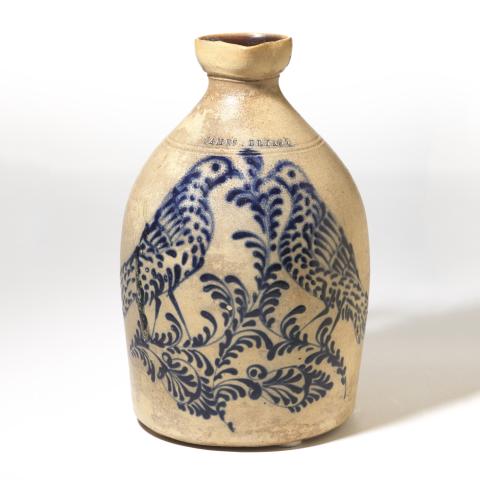
The New York State Museum is home to the Weitsman Stoneware Collection, comprised of more than 370 pieces of decorated stoneware from the nineteenth century. Stoneware was the basic utilitarian ware of the time and served many useful functions, primarily in the preparation, storage and serving of food. New York State was one of the leading producers of stoneware because of its excellent transportation network. The state’s canal and turnpike systems made it possible to ship the raw materials and finished products throughout the state, allowing New York to become a leading force in stoneware production.
Glassware
Decorative Arts
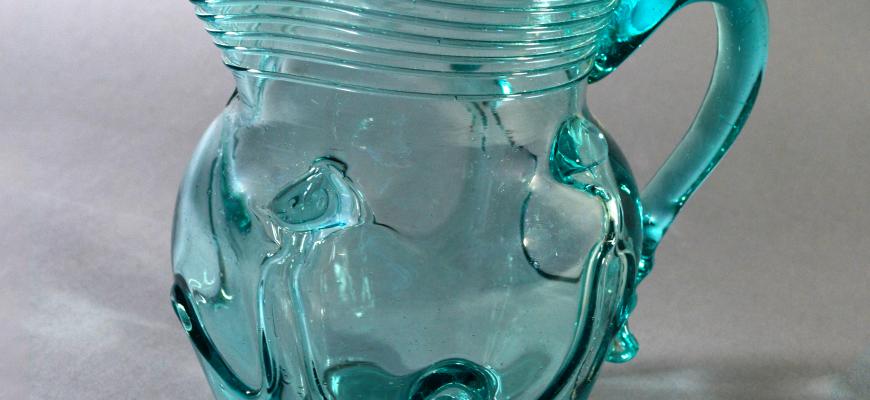
Functional and decorative glassware, both imported and made locally, has been an important feature of homes and businesses throughout New York’s history. New York’s glass making industry continues to produce innovative items and materials, used throughout the world. In addition to a diverse group of items used in New York State, the collection includes scientific and culinary items made by Pyrex (Corning, NY), several examples of lily pad glass, possibly of New York manufacture, a classic Steuben Glass olive dish and glassmaking tools from the Steuben Glass factory, a Tiffany and Company glass and pierced brass desk set, a glass, pitcher, and preserving jar from the Lockport Glass Factory, and a collection of bottles from the late 17th through the late 20th century.
Lighting
Decorative Arts
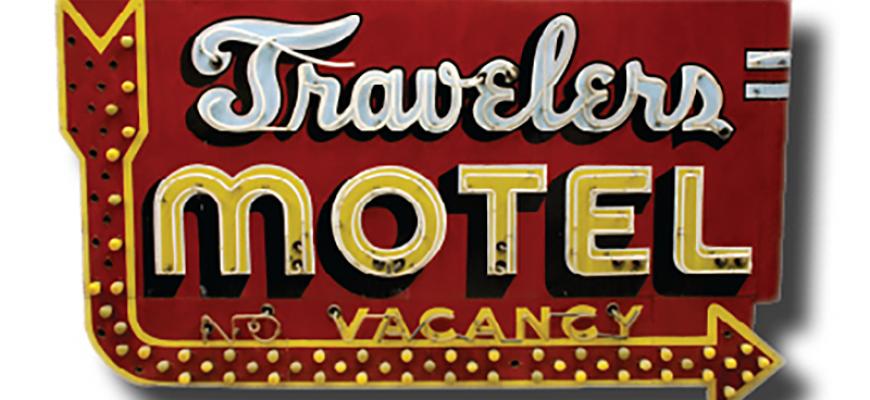
A range of fixtures, lamps, and other devices both pre- and post-electricity are featured in the collection; included are a group of lighted advertising signs.
Ceramics
Decorative Arts
Ceramics, from ornately painted, imported porcelain to the simple design of 20th century restaurant ware, has had a vital role in New York’s homes, businesses, and institutions. 18th and 19th century import ware, including both individual pieces and settings from Staffordshire, Bavaria, and China, is representative of what was found on New York tables. Other highlights include commemorative plates, platters, and cups, featuring landscapes, travel scenes, and events from the 19th and 20th centuries; a collection of New York made Syracuse China, including molds and clay used in the production process, documentary images taken in the early 20th century, and a full set of china which was used aboard the Inspector II, FDR’s boat on the Erie Canal, an extensive collection of 19th century Rockingham Ware, and a set of Iroquois Dinnerware by New York designer Russel Wright.
Silver
Decorative Arts
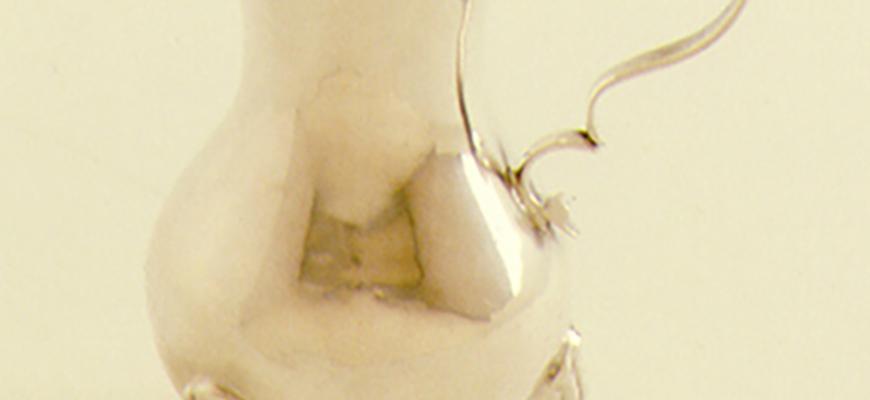
A choice selection of work by New York makers and work owned by New Yorkers from the 18th through 20th centuries is represented in the collection.
Paintings
Fine Art
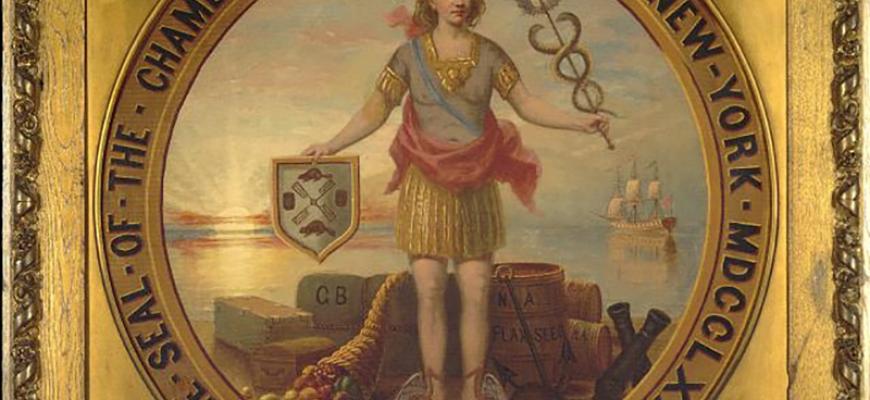
The wide ranging collection is particularly strong in portraits of important New York State dignitaries including over 200 from the New York Chamber of Commerce collection, with examples by Eastman Johnson, Daniel Huntington, John Vanderlyn, and Cecilia Beaux, among others.
Drawings and Prints
Fine Art
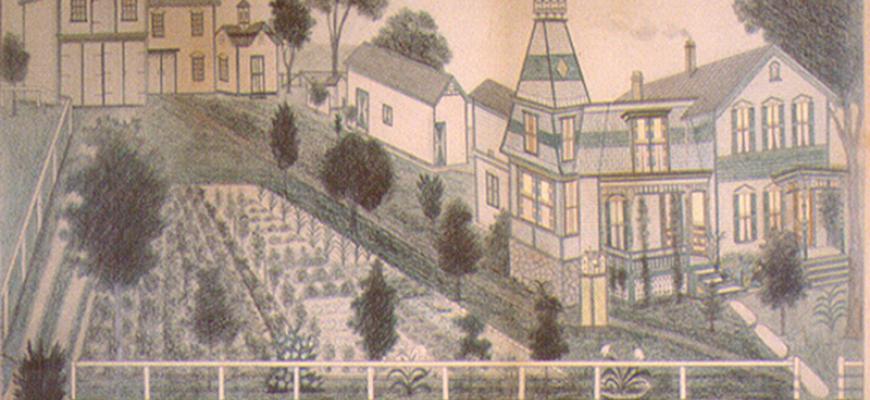
The museum’s holdings focus on nineteenth century drawings, engravings, lithographs, and other works on paper by formally trained and self-taught artists depicting places, events and daily life in New York State and including themes representing agriculture, architecture, industry, transportation, and recreation. Earlier and later material is also included.
Sculpture
Fine Art
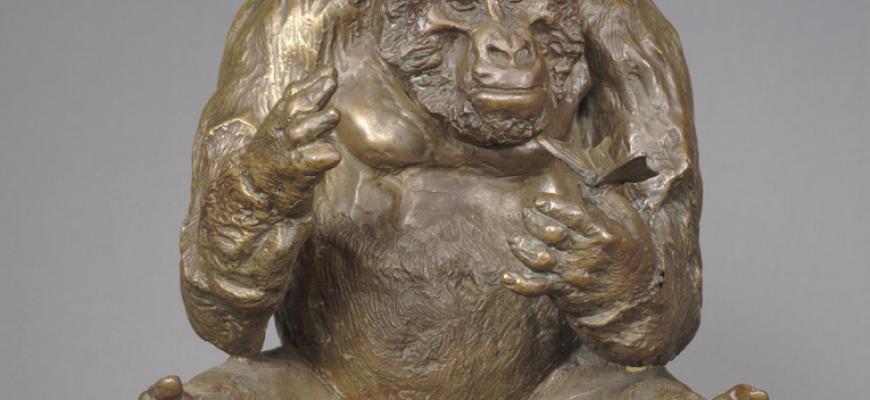
New York State was home to many sculptors, and also produced a great number of commissions for monuments, memorials, and decorative elements on buildings. Artists represented in the New York State Museum include Anna Hyatt Huntington, Daniel Chester French, John Quincy Adams Ward, John Rogers, Leila Usher, K. George Kratina, and Henry DiSpirito. The collection also includes a large number of portrait busts and bas-reliefs of important figures in New York State and United States history.
First Peoples


Ongoing Exhibition
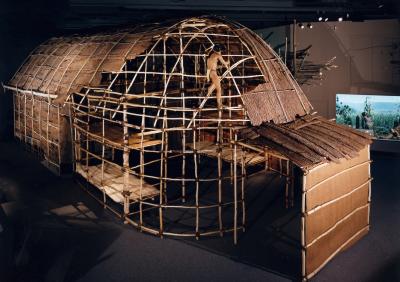
Indigenous people (Native Americans) have lived in what is now New York for at least 13,000 years. Learn about the long and continuous presence of Indigenous people, from the Ice Age to the present through a piece of contemporary artwork, dioramas, and archaeology artifacts, as well as a life-size reconstructed longhouse. This exhibit conveys the changing lifeways of Indigenous peoples from small family/kin-based groups of nomadic hunter-gatherers to settled agriculturalists living in large villages housing hundreds to thousands of people.
Today, there are eight federal and state recognized sovereign Indigenous nations in what is now New York. Additionally, New York City has the largest and most diverse population of Indigenous peoples in the United States and cities throughout New York have urban Indigenous populations.
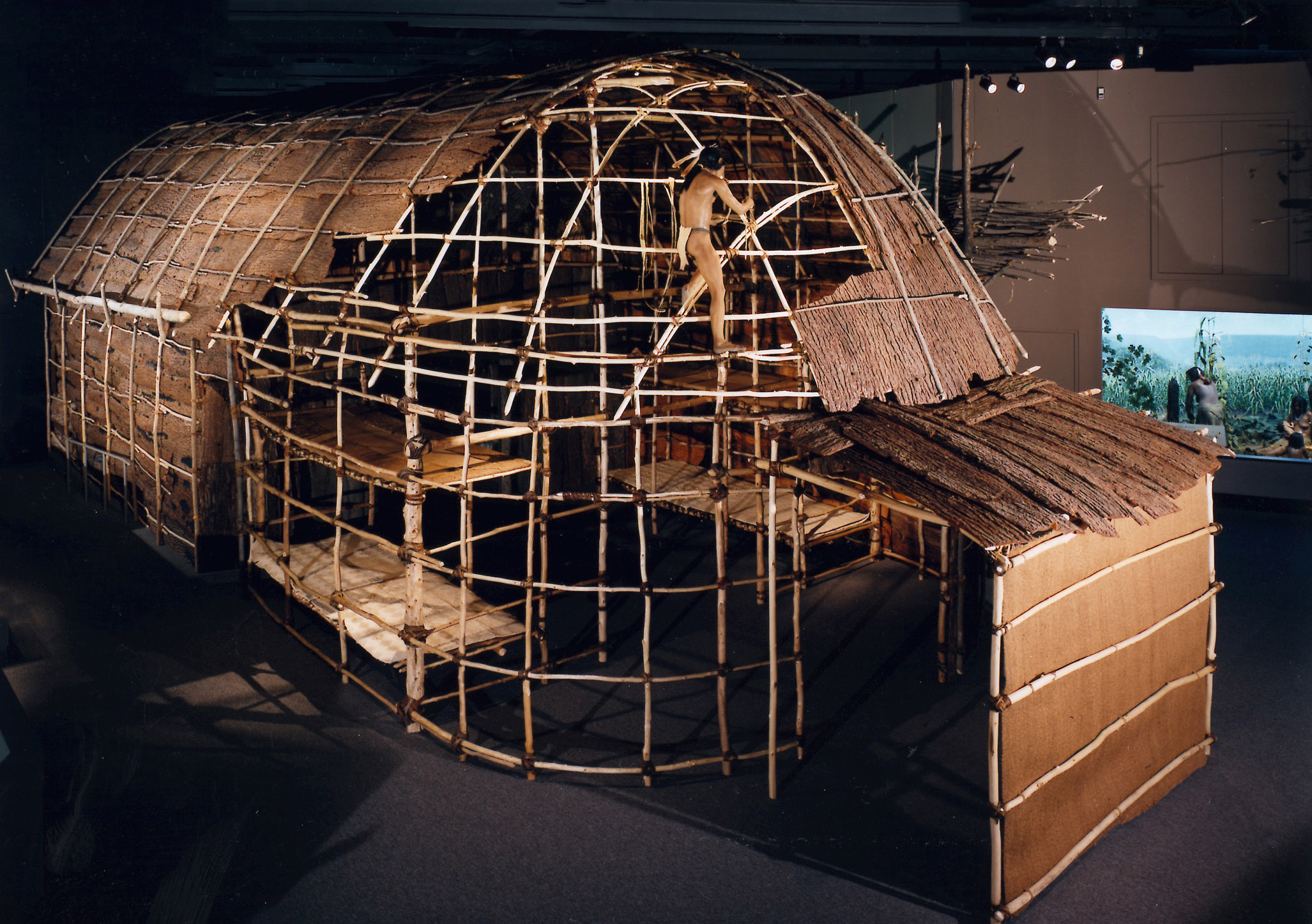
Mohawk Haudenosaunee (Iroquois) Longhouse
Step through the village palisade and enter a reconstructed kanonhsésne (longhouse) to understand what life might have been like for Kanien’keha:ka (Mohawk) peoples shortly before European colonization. Inside the kanonhsésne (longhouse), replica artifacts and clothing illustrate sixteenth century Haudenosaunee material culture, while an audio recording by Delia Cook (Akwesasne Mohawk) tells a wintertime story.
» Learn more about the NYSM's reconstructed kanonhsésne (longhouse) and how to build your own replica!
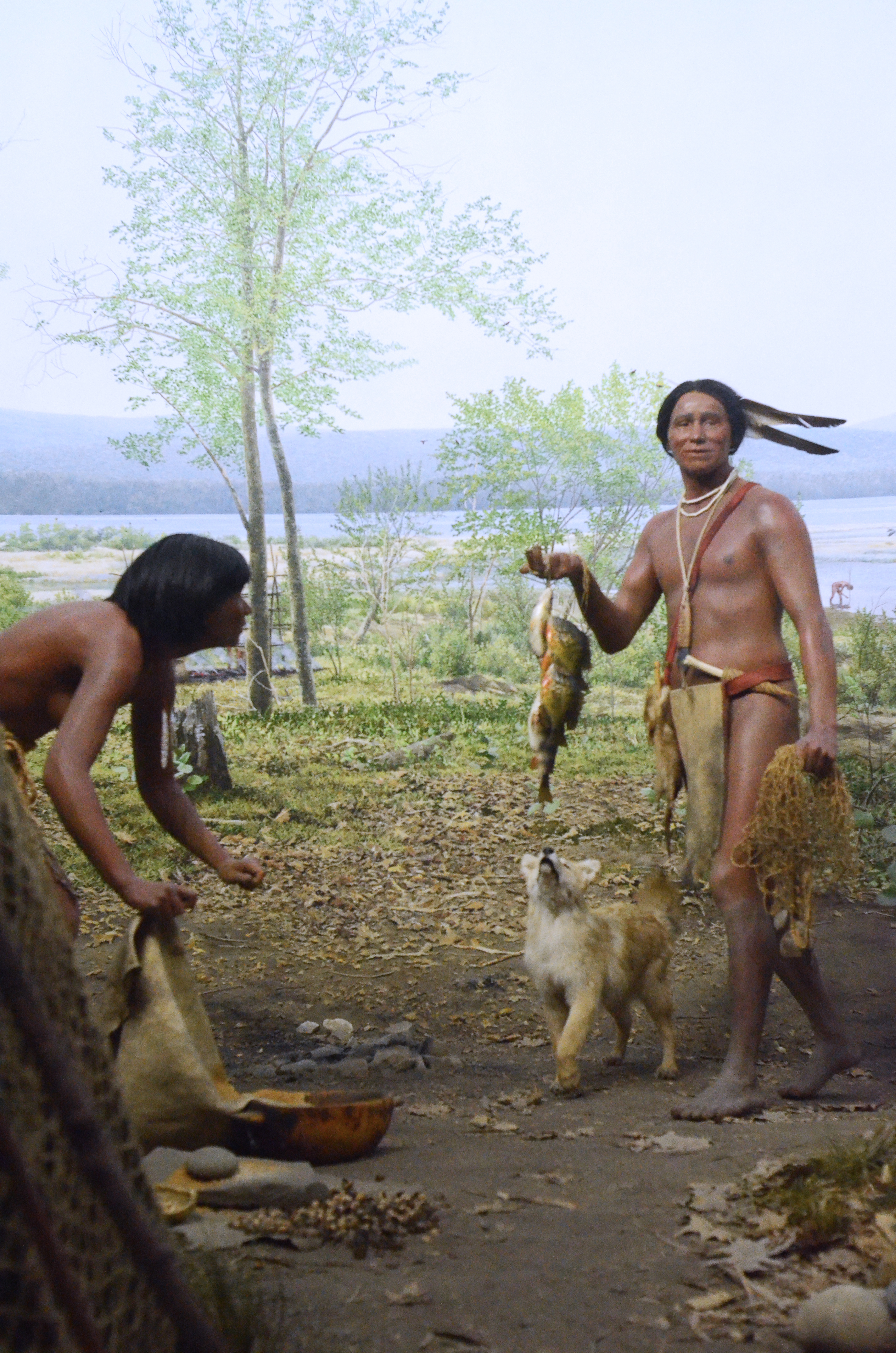
Indigenous Peoples Dioramas
Based on archaeological site excavations by the New York State Museum, three detailed dioramas highlight changes in Native American lifeways and society across the New York region. These interpretive scenes include (1) Ice Age hunters in the Hudson Valley, 13-12,000 years ago, (2) Holocene hunter-gatherers in the Finger Lakes at 2500 BC, and (3) Haudenosaunee (Iroquois) farmers in the Mohawk Valley, circa 1600 A.D.
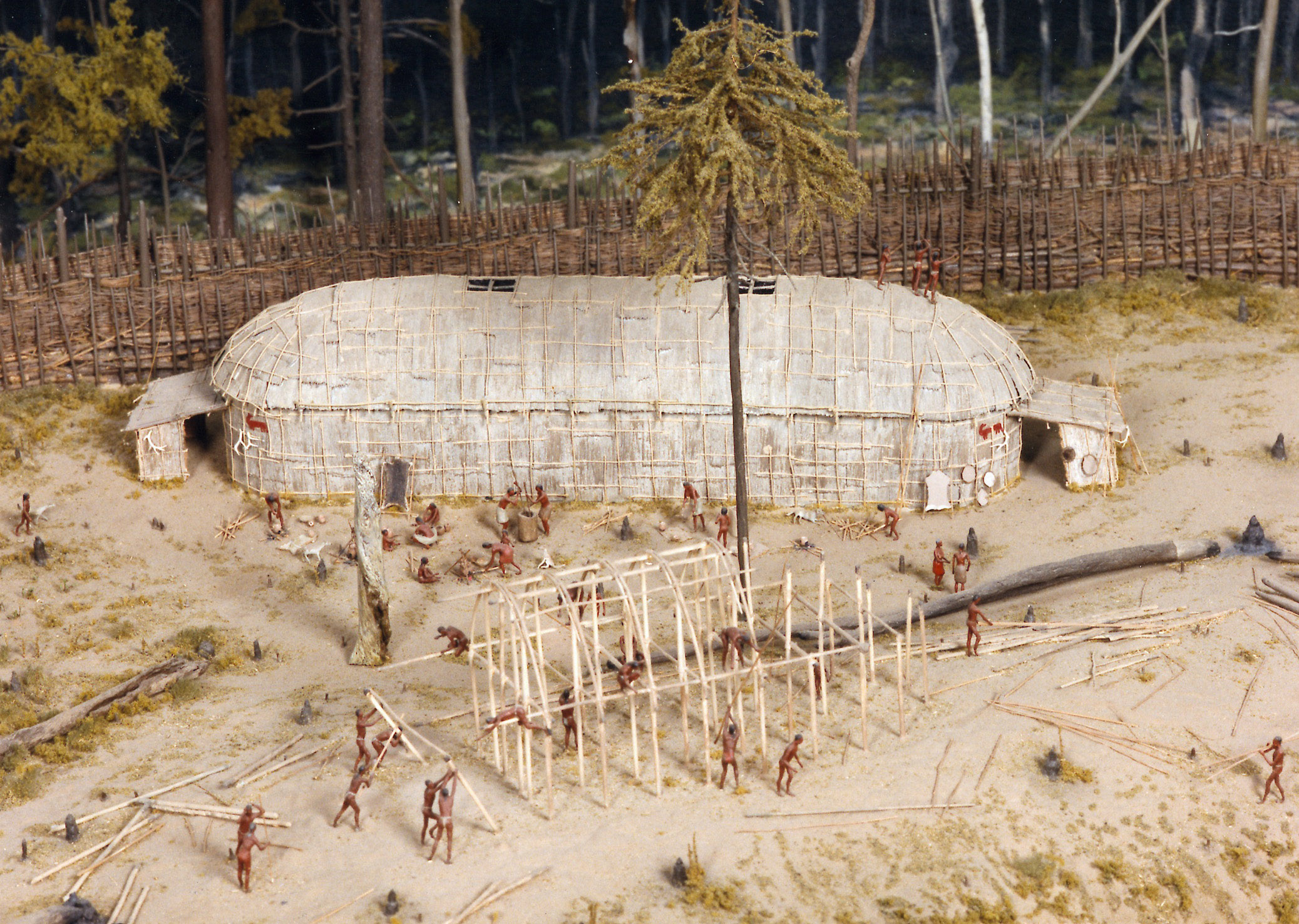
Mohawk Haudenosaunee (Iroquois) Village
400 years ago, Haudenosaunee villages were often located on hilltops for natural defense. This minutely detailed model illustrates the construction of the defensive palisade and longhouses that sheltered the village, and the nearby fields of corn, beans, and squash that sustained these peoples.
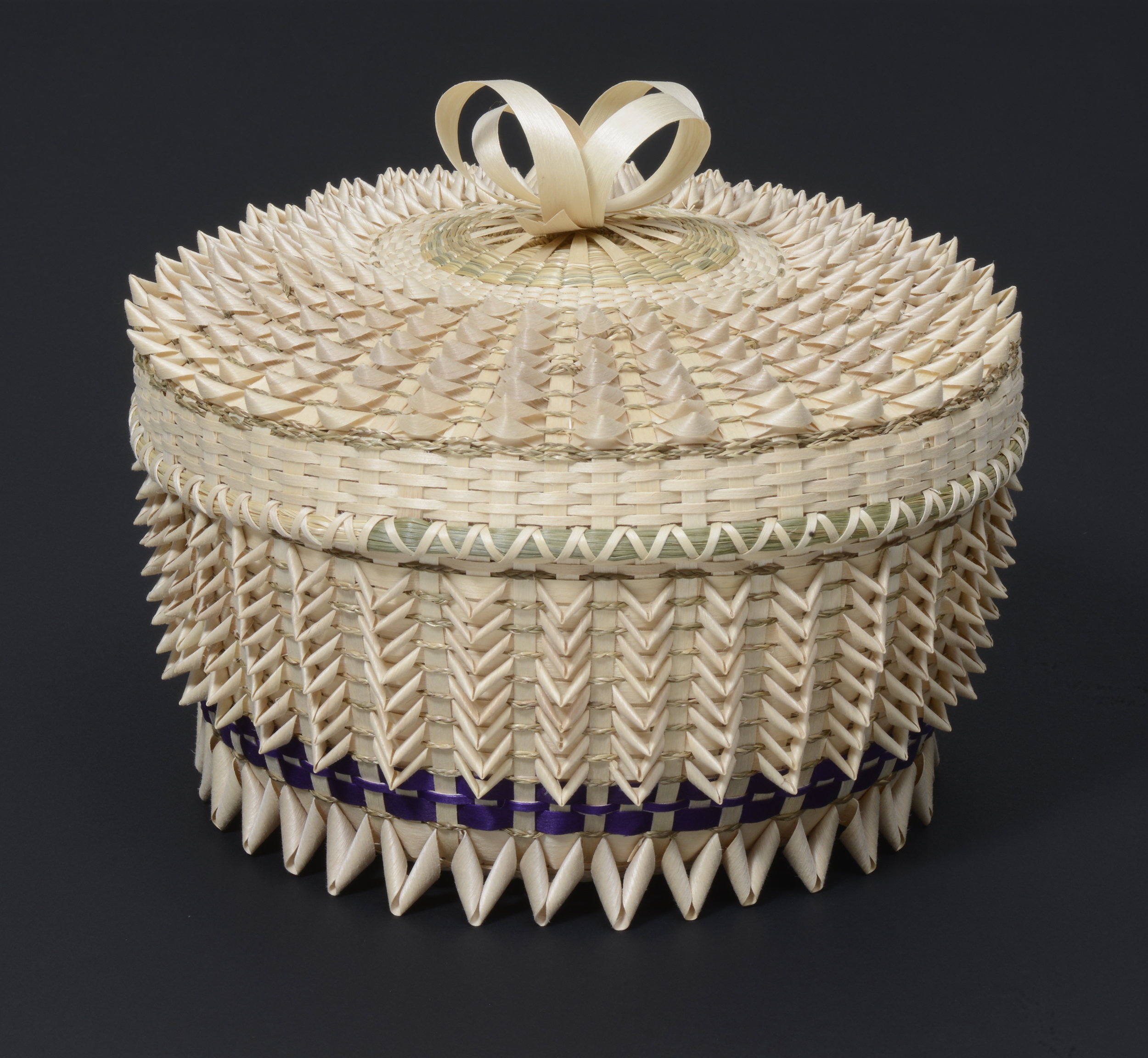
Contemporary Native American Art Collection
The artistry of Native People of New York—represented in the Contemporary Native American Art Collection—celebrates living cultures deeply rooted in tradition. Expressions of adaptation, innovation, community, and belief are represented in a rich variety of forms that help tell the story of Native People today.
» Learn more about the Contemporary Native American Art Collection
Cohoes Mastodon
Ongoing Exhibition
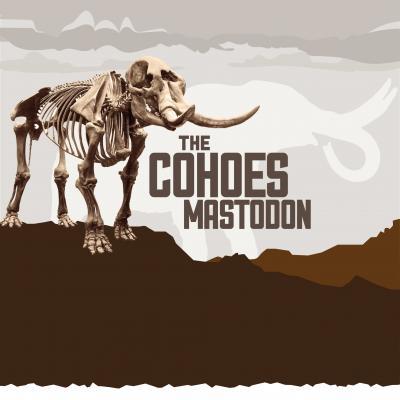
The Cohoes Mastodon was discovered in 1866 during construction of Harmony Mill No. 3 near Cohoes Falls on the Mohawk River. The mastodon's remains were found deeply buried in a large pothole, which had been worn into the bedrock by the swirling action of water and stones at the end of the last Ice Age. Since its discovery in 1866, the Cohoes Mastodon has become one of the State Museum’s treasures. It has been viewed by millions of visitors, from schoolchildren to great-grandparents.
The Cohoes Mastodon was first mounted and displayed in 1867, at Geological and Agricultural Hall in Albany. In 1915, it was moved to the New York State Museum, which opened within the newly built State Education Building. When the State Museum moved to the Cultural Education Center in 1976, the skeleton was dismantled and relocated to the scientific collections until 1997 when it was placed back on display.
View this Exhibit Online!
Visit this online feature to get a front row look at the Cohoes Mastodon! From broken bones and teeth to famine and fierce battles, the life story of this Ice Age behemoth is one for the ages…. the Ice Ages, that is!
Life of the Cohoes Mastodon
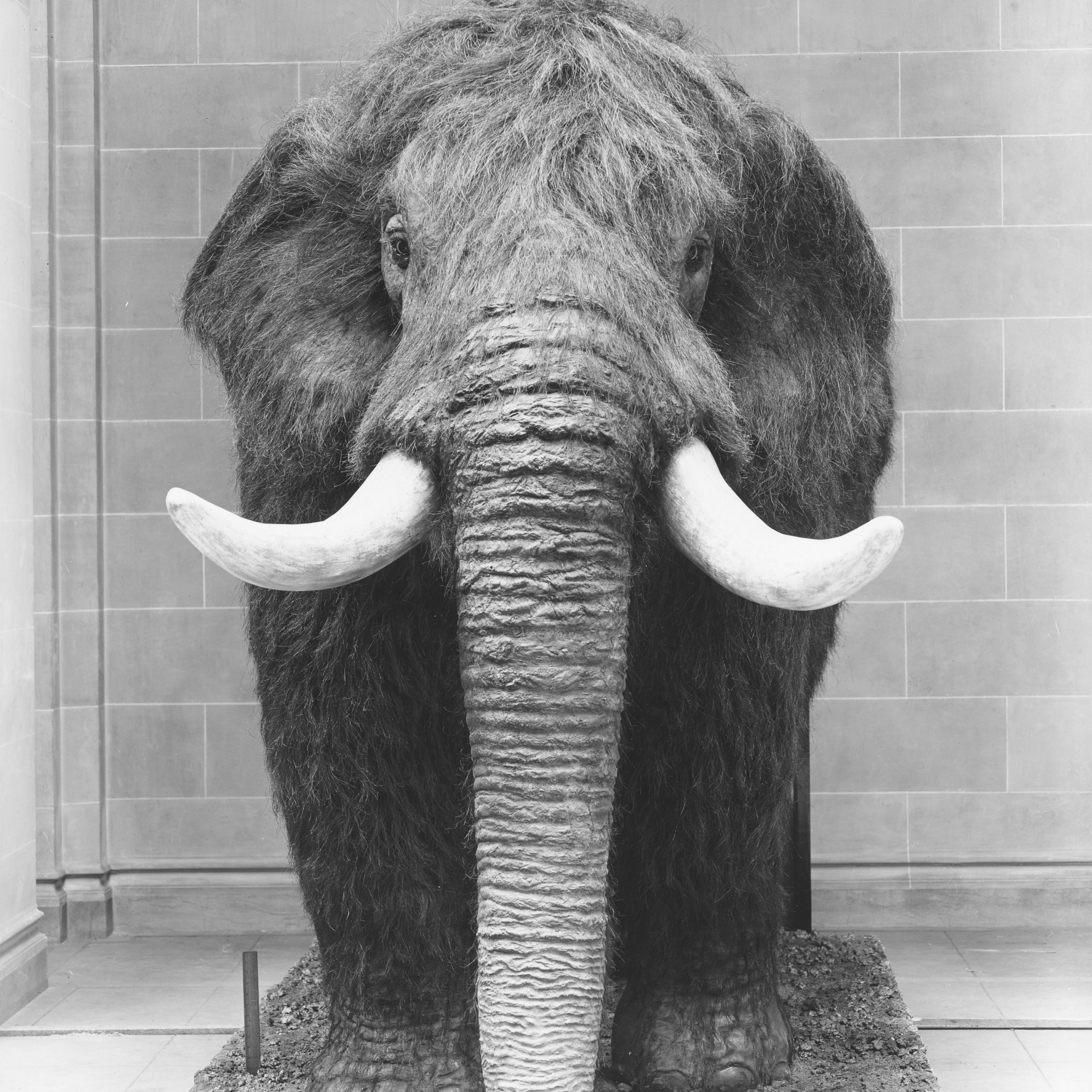
In life, the Cohoes Mastodon stood about eight and one-half feet high at the shoulder, was about fifteen feet long, and weighed between 8,000 and 10,000 pounds. The shape and large size of the bones indicate that the animal was male. We know from carbon dating that the mastodon lived about 13,000 years ago, and based on growth rings in his tusks, he died relatively young at the age of 32 (mastodon life expectancy was approximately 50 years).
Mortal Combat
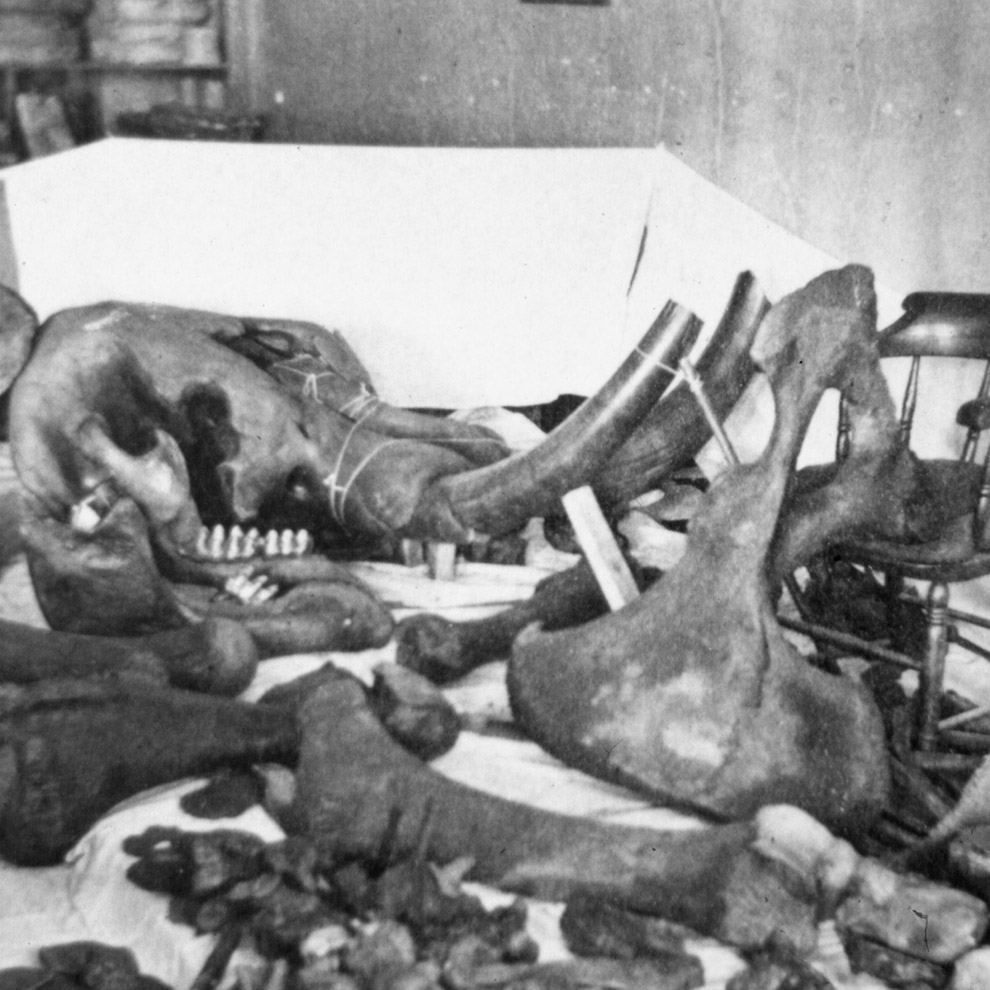
Discover how, through extensive examination of the Mastdon's skeleton, researchers have identified "battle wounds" that contributed to stunted growth and the creature's early demise from a fatal blow to the temple.
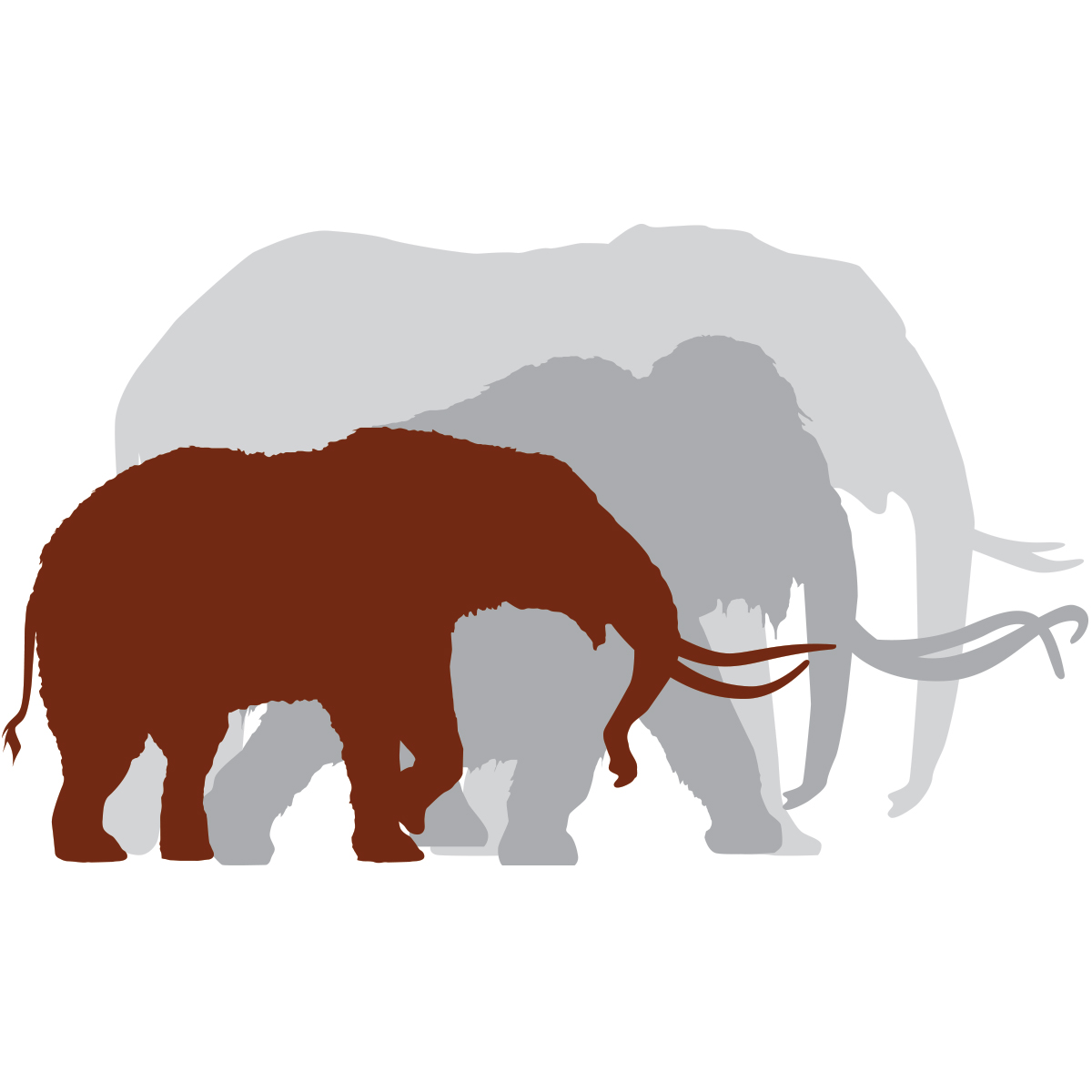
Mastodon or Mammoth?
Learn the distinguishing features that separate a Mastodon from a Mammoth. Although mastodons resembled mammoths (also extinct), they were not closely related mammal species. Mastodons diverged from a common ancestor 15 million years ago, while mammoths and elephants continued on the same evolutionary path for another 11 million years.
Fun Facts: Did you know?!
- A typical mastodon would have been about 8 to 10 feet at the shoulder, and weighed about 4 to 5 tons.
- When he was 11 years old, the Cohoes Mastodon was injured in a Musth Battle which stunted his growth.
- The Cohoes Mastodon also had poorly developed teeth on the right side of his jaw which would have affected his ability to consume food efficiently.
- The Mastodon was discovered by James Hall who became the New York State Museum's first director in 1870.
Related Videos
Related Content
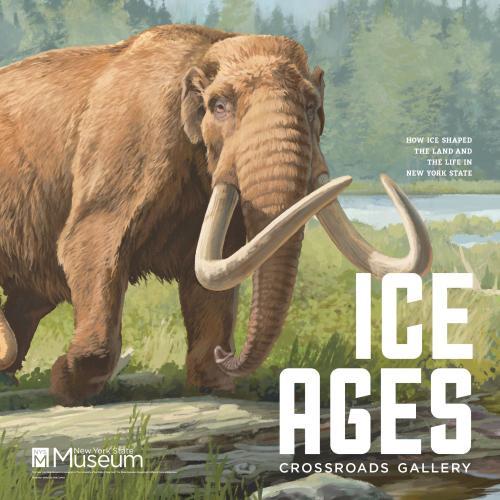
Ice Ages: How Ice Shaped the Land and the Life in New York
Crossroads Gallery
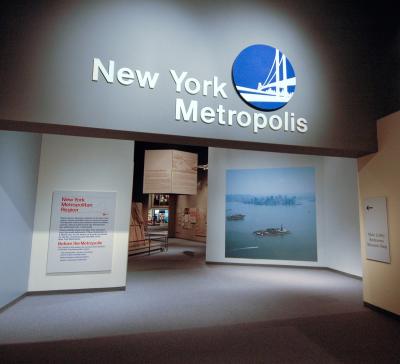
New York Metropolis Hall
Ongoing Exhibition
The history of New York City and its environs is traced as the natural harbor transforms into a bustling port, open spaces become canyons of skyscrapers and wilderness converts to one of the most exciting cities in the world. As the tempo of growth increased, so did the complexity and diversity of the New York Metropolis.
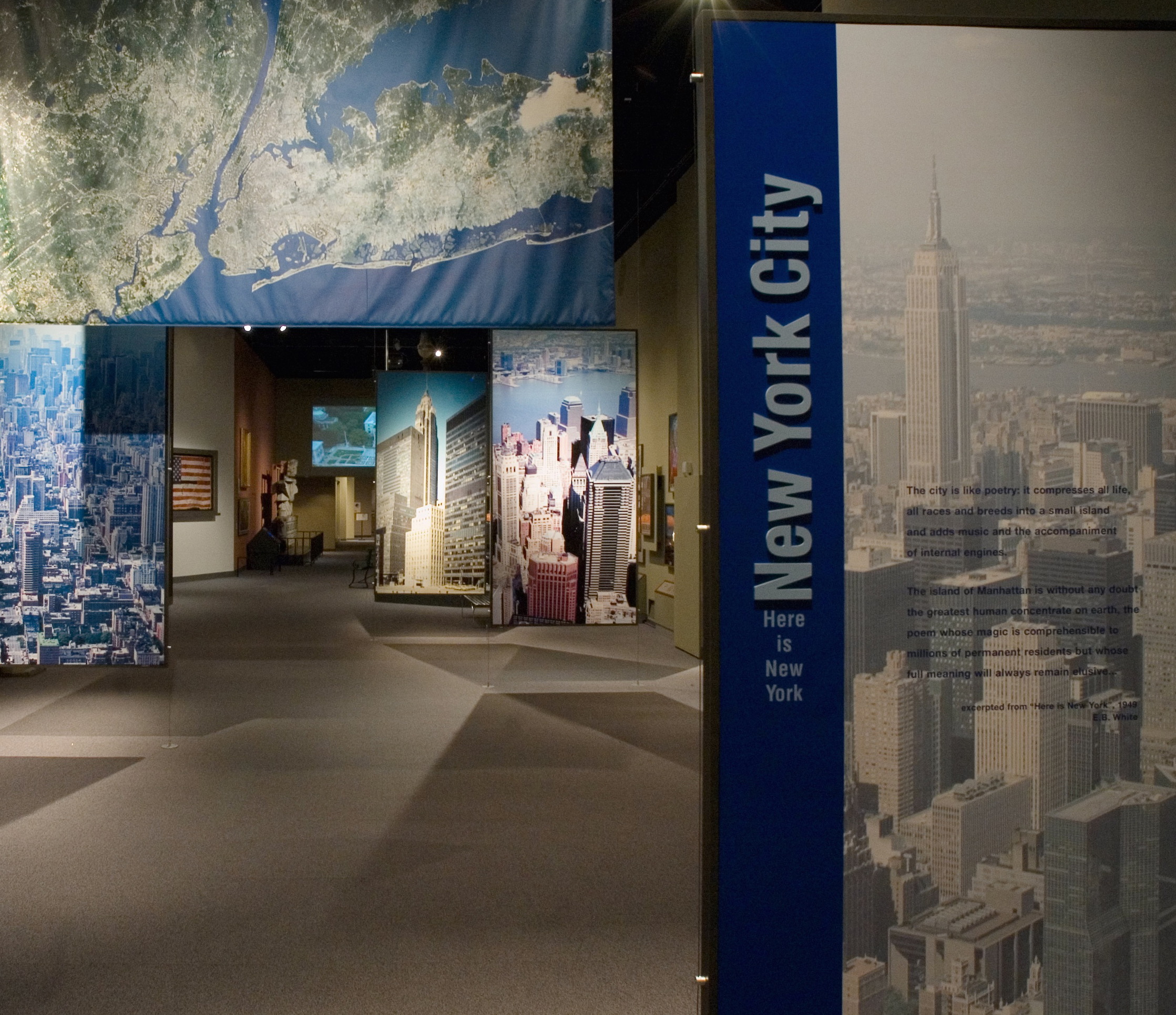
New York City: Here is New York
Explore architecture, transportation, culture and even bedrock geology through art, photographs and more!
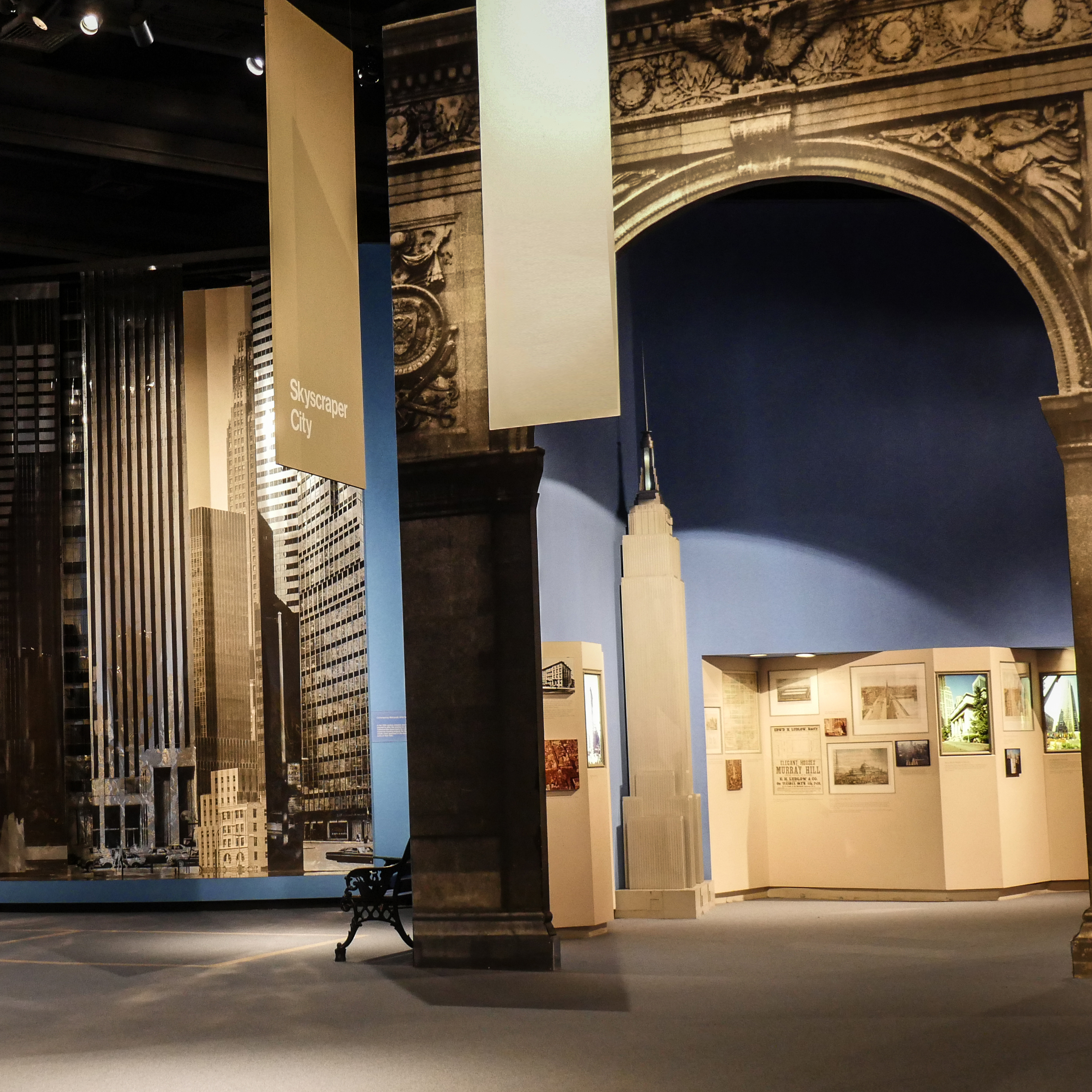
Skyscraper City
Highlights New York City’s rapid growth and changing landscape, the development of new building forms and the impact of new technologies on New Yorkers.
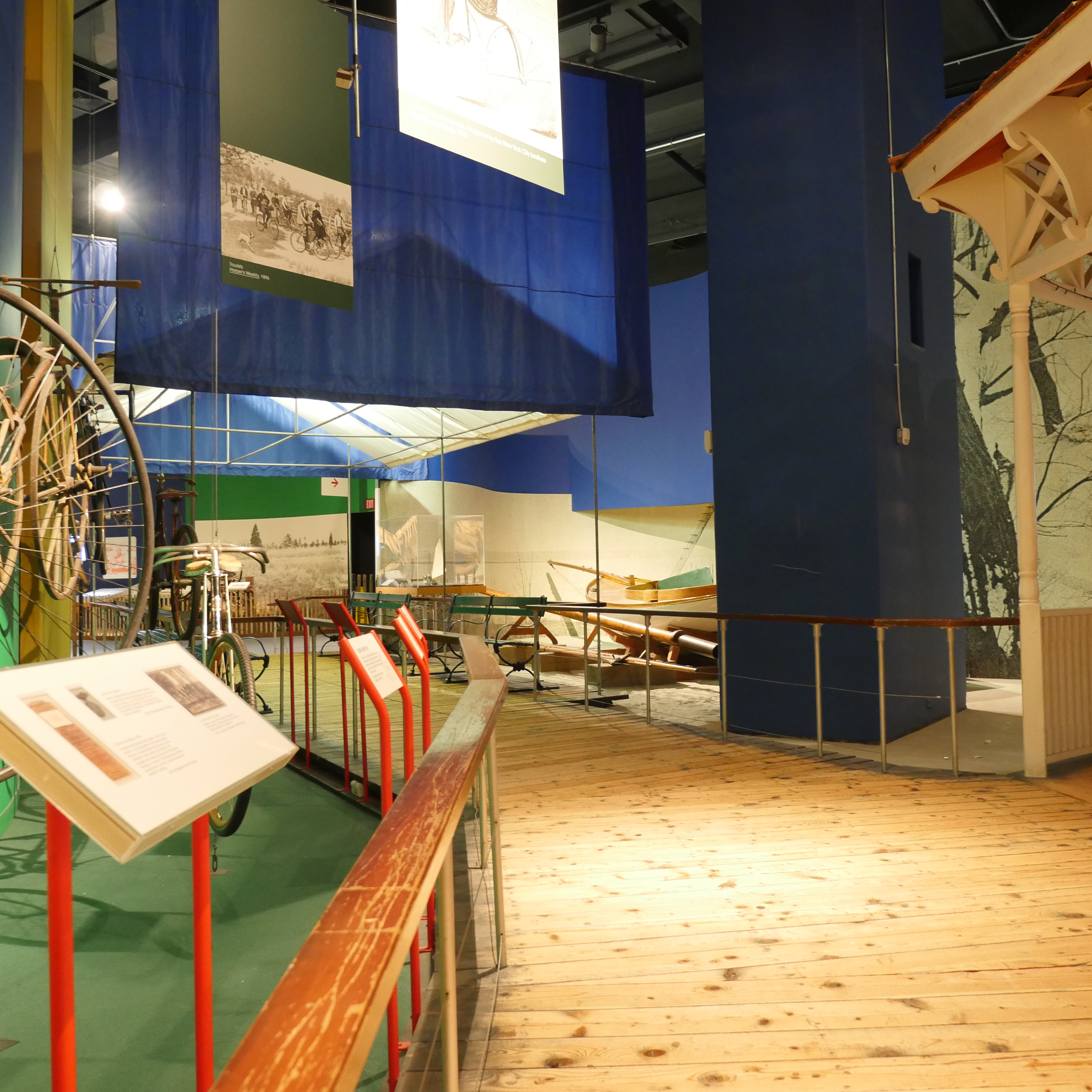
Open Spaces
Examine the region's open spaces including Central Park in Manhattan, Coney Island and the Lower New York Bay, and even a salt marsh wildlife refuge on Long Island!
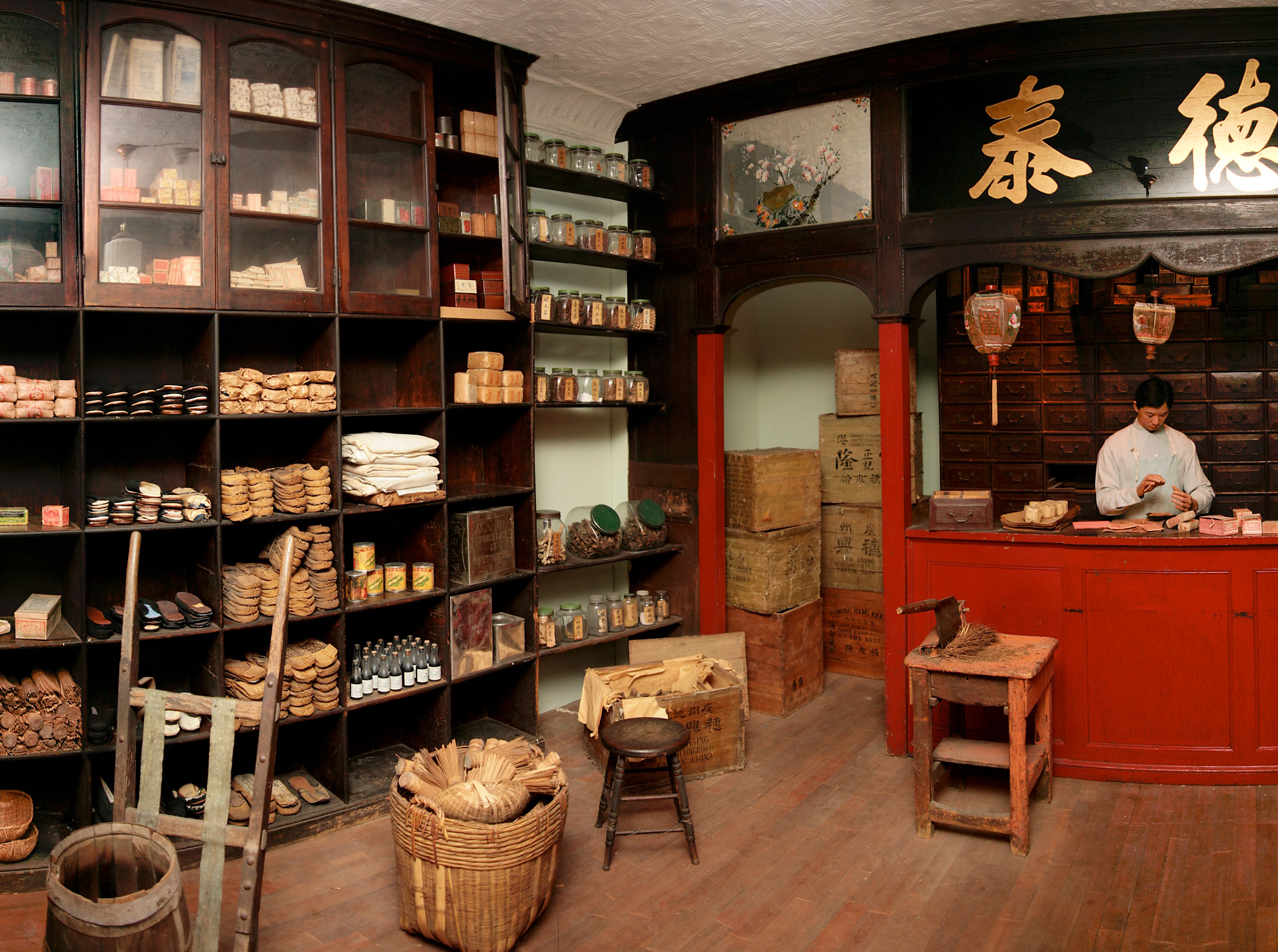
City of Neighborhoods
Travel back in time through notable sites of New York’s past, including Harlem in the 1920s, the Tuck High Chinatown shop, a 1930s West side Barber shop, Ellis Island, and even Sesame Street!
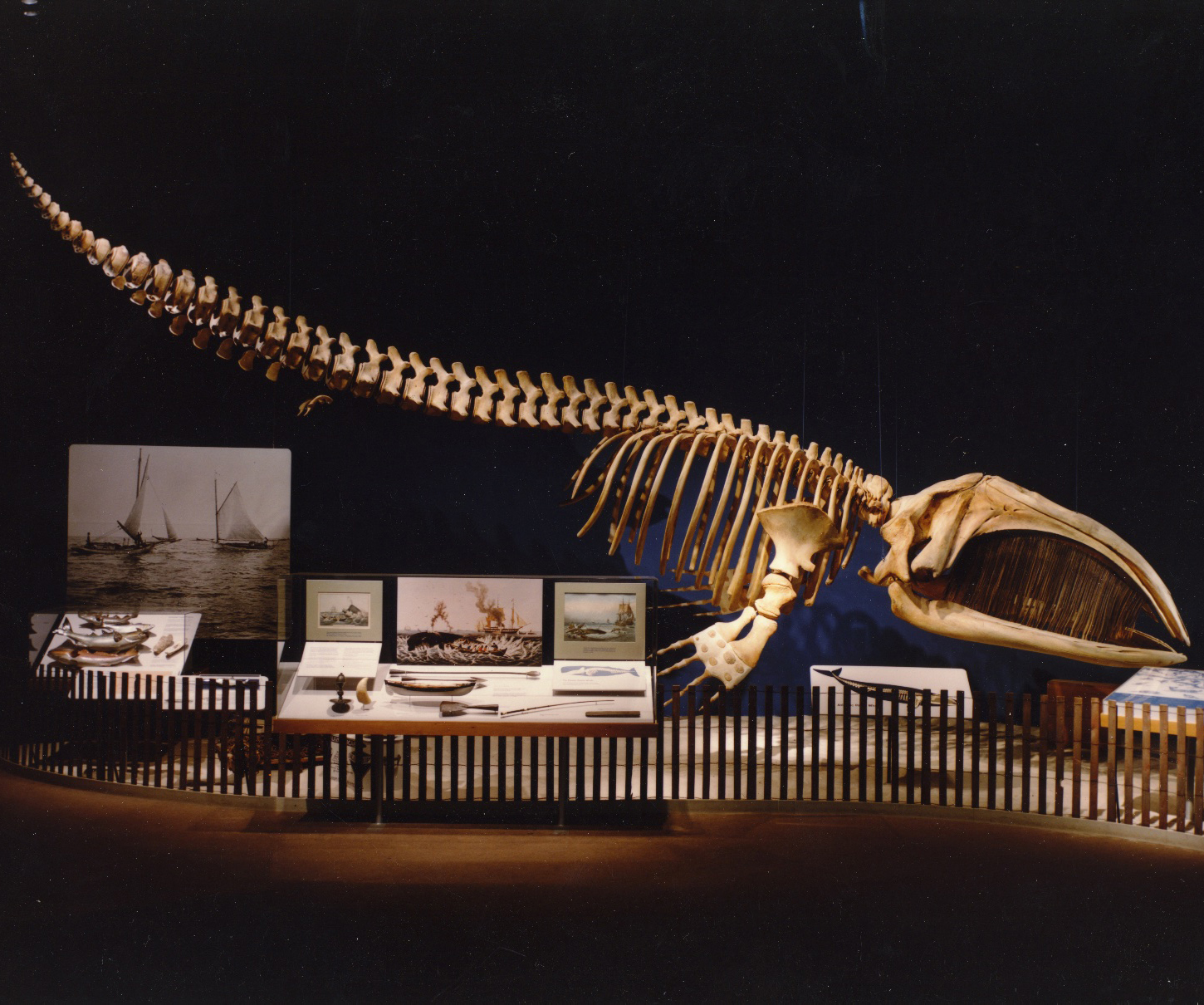
The Port
Engaging stories detail how New York’s natural harbor setting turned into an economic capital bustling with industry.
Fun Facts: Did you know?!
- Coney Island was the most visited amusement park in the world until Disneyland opened in 1955.
- When the A-Train first opened, it only cost 5 cents to ride it!
- The Empire State Building holds the record for consecutive years as the tallest skyscraper (to structural height), for 42 years until it was surpassed by the North Tower of the World Trade Center in 1972.
- The glow from he Great Fire of 1835, which destroyed all of the South Street Seaport, could be seen in Philadelphia, over 110 miles away.
Download Metropolis Hall Teacher Guide (745.69 KB)
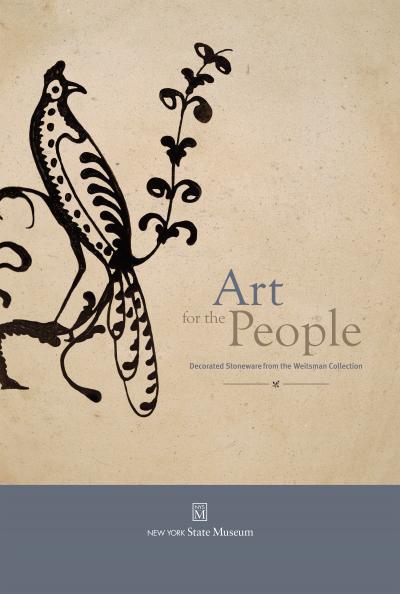
Art for the People: Decorated Stoneware from the Weitsman Collection
This exhibition features 40 uniquely decorated stoneware vessels, including jugs, crocks, pitchers, jars and water coolers. The artful designs on the 19th-century stoneware are today considered to be prime examples of American Folk Art. Most pieces were created in cities and towns across New York State. Many are “presentation pieces” – oversized and frequently decorated with elaborate and unusual cobalt blue designs. Tools used to decorate the stoneware are also included in the exhibition, as well as broadsides, a rare portrait of a potter and photos of potteries and their staffs.
Adam J. Weitsman of Owego acquired all of the stoneware in the exhibition and loaned or donated the pieces to the State Museum. Weitsman began collecting stoneware in 1980 when he was 11 years old. Since then he has scoured New York State and the East Coast, continuing to acquire rare pieces at antique shows, estate sales and auctions. In 1996, he donated his collection of 100 pieces to the State Museum to ensure that the collection would be preserved, studied and appreciated for years to come. Pieces acquired since then form the basis for the current exhibition. Most have never been displayed before.
Fun Facts: Did you know?!
- Among the common decorations of birds and flowers were special presentation pieces, or stoneware made for family members. They featured unusually well-crafted, unique designs.
- In the twentieth century, plastic and aluminum replaced pottery as the chief material for kitchen equipment.
- Although most potters were not trained artists, the whimsical, sometimes crudely incised or cobalt blue decorations they created on stoneware are now appreciated as prime examples of American Folk Art.
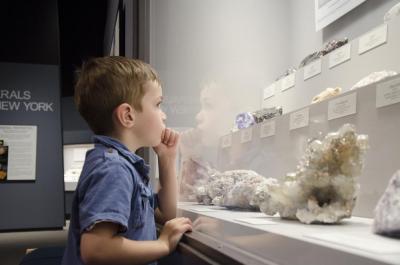
Minerals of New York
Ongoing Exhibition
The gems and minerals on view in Adirondack Hall represent only a small fraction of the exceptional and sometimes extraordinary specimens that make up the State Museum’s vast mineral collection. On display are unique and alluring minerals collected from mines, quarries, road cuts, and outcrops located throughout New York State. We invite you to experience the splendor of New York’s mineral world and all it has to offer.
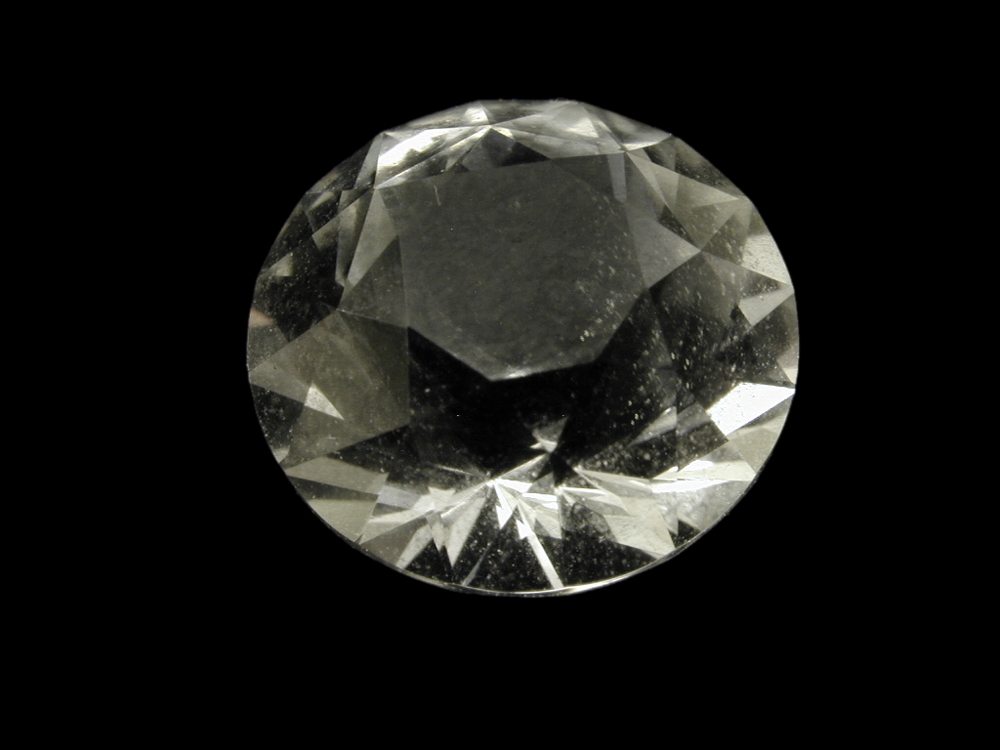
World-Famous Mineral Collections
The New York State Museum houses specimens from several notable sites throughout the state, including 93 mineral species from the Balmat-Edwards mining district in St. Lawrence, super garnets from the Barton Mine in the Adirondack Mountains, and Herkimer diamonds from Herkimer County, New York.
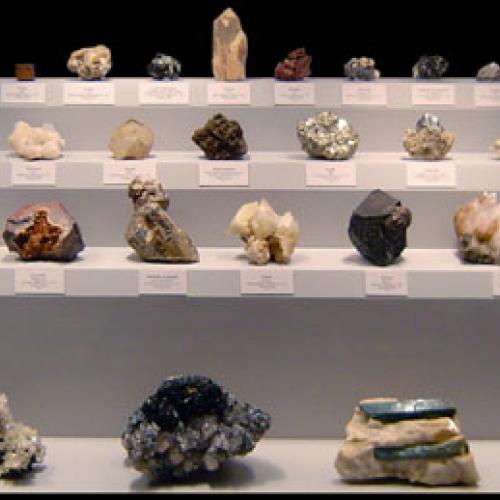
Oren Root Mineral Collection
View select specimens from the Oren Root Collection, one of the earliest mineral collections assembled in the United States. The complete collection, containing over 10,000 specimens, was started in 1834 by Oren Root of Vernon, New York.
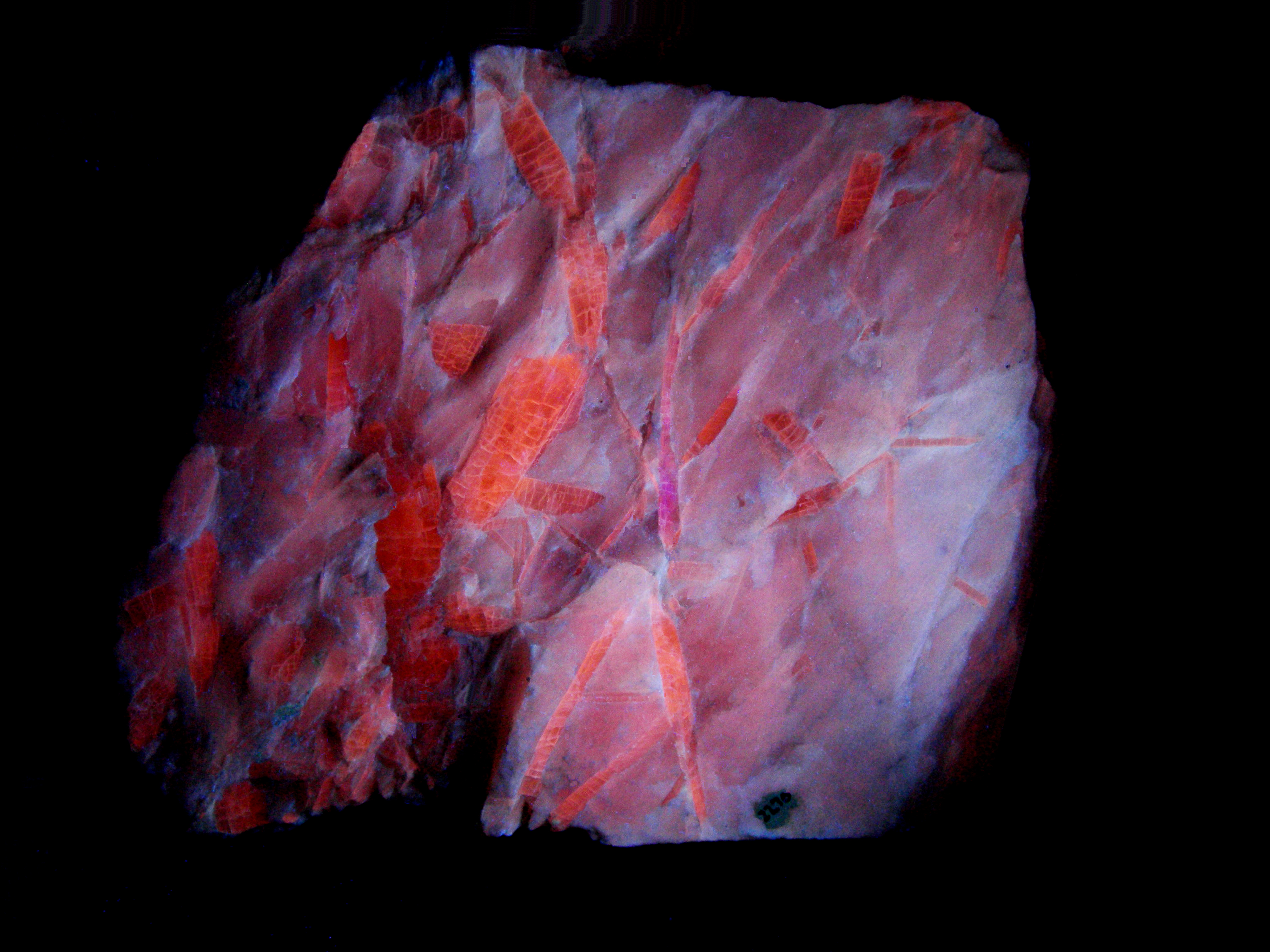
Fluorescent Minerals
Check out these fun fluorescent minerals that glow in the dark! With the push of a button, you can observe how these minerals change when exposed to different spectrums of light.
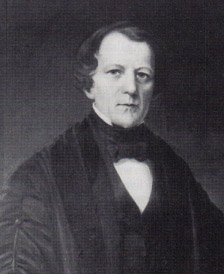
Origins of the NYSM Mineral Collection
In 1836, Governor William Marcy appointed Lewis Caleb Beck as Mineralogist of the Geological Survey of the State. His collection lead to the publication of the Report on the Mineralogy of New York in 1842, and formed the nucleus of our current mineral collection.
Fun Facts: Did you know?!
- The New York State Museum has the world’s largest and most complete collection of New York minerals.
- Herkimer ‘Diamonds’ (quartz) occur in and around Herkimer County, NY. They are named after General Herkimer and are referred to as “diamonds” for their clarity and bright sparkle.
- The pink and purple mineral, tremolite (“hexagonite”), is found only in St. Lawrence County, NY.
- The garnet, generally deep red in color, is New York’s official gemstone. The largest garnet mine in the world, the Barton Mine, is located in the Adirondack Mountains. New York ranks 1st in garnet production in the US and 4th in the world.
- New York is the only state in the US to continuously produce wollastonite, a key ingredient in the production of ceramics and other industrial products.
Related Videos
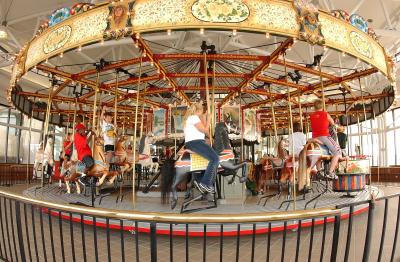
The New York State Museum Carousel
Ongoing Exhibition
Hours of Operation: Tuesday–Sunday, 11 am–4 pm
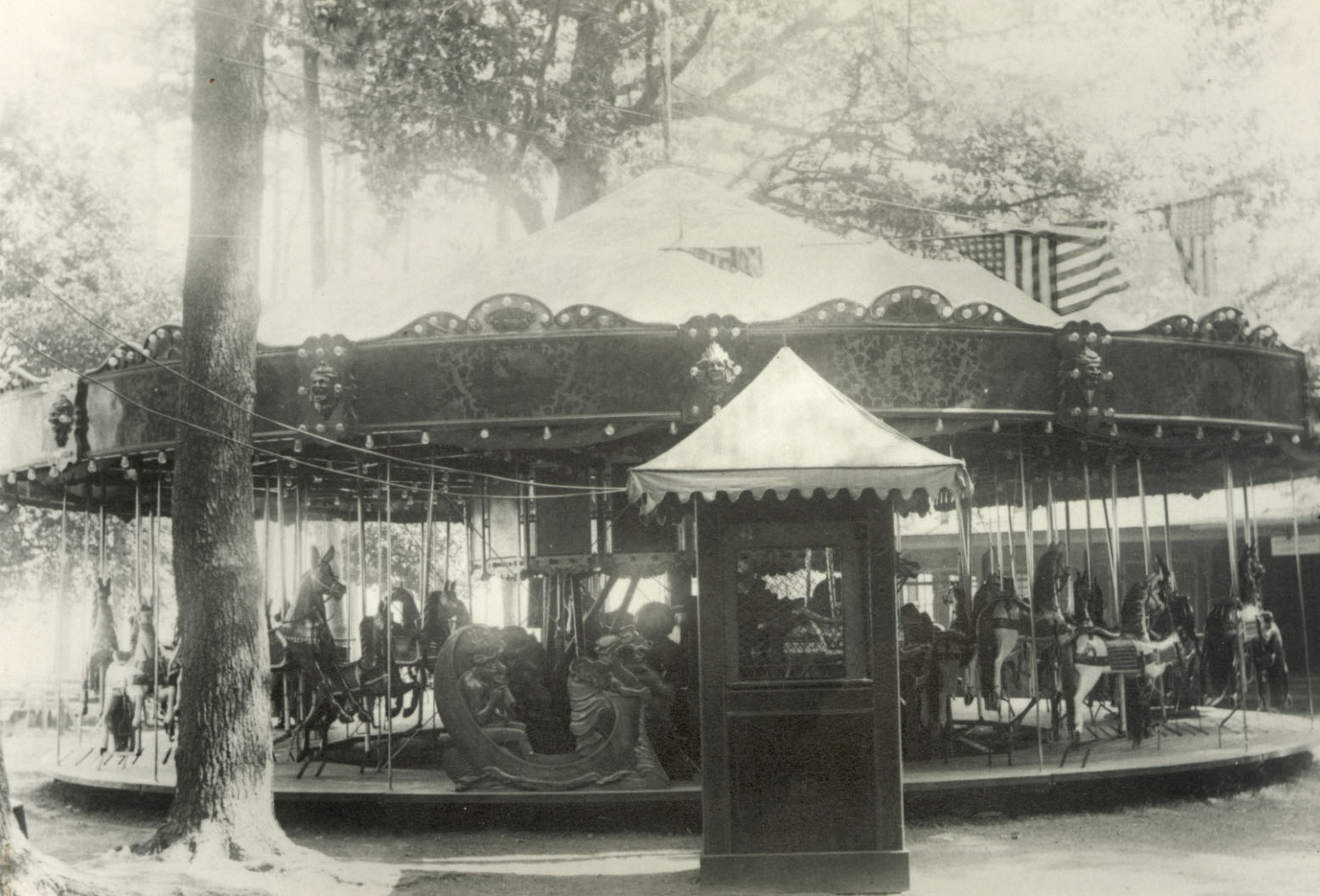
This full-sized carousel, made circa 1914 by the Herschell-Spillman Company of North Tonawanda, New York, represents the heart and soul of amusement rides at the turn of the 20th century. The State Museum is fortunate to have been able to play a role in the preservation—and continued enjoyment—of this example of American folk art and memento of American childhood.
The Carousel is not only an amusement park ride—it’s a piece of history.
To preserve this working artifact, we require a minimum of 10 riders on the Carousel.
With riders evenly distributed, the Carousel can maintain the weighted balance needed to operate smoothly. This helps protect its working parts now, and for generations to come.
Thank you for your patience and partnership in preserving this century-old treasure.
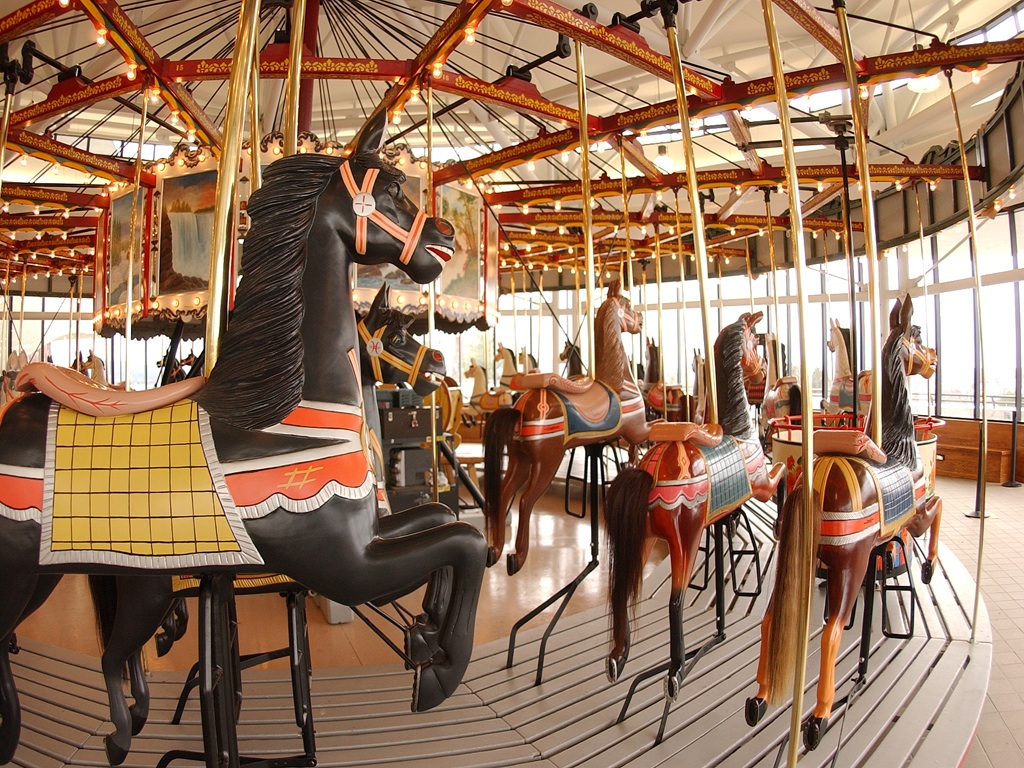
About the Carousel
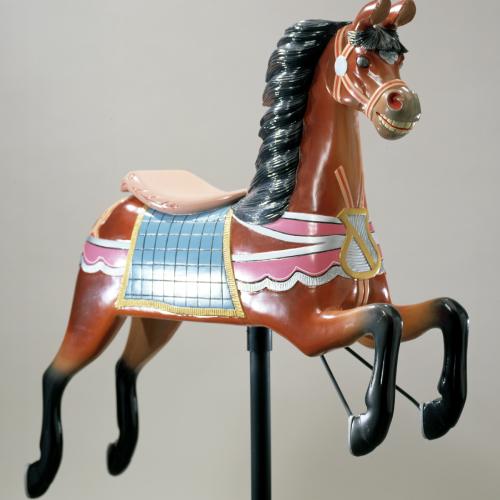
The carousel originally featured forty animals, including 36 horses of three sizes and in various poses, along with two donkeys and two deer. The substitution of other animals for horses was a mark of distinction among carousels, as was the "Neptune's Chariot," a decoratively carved seat. A rocking carriage and a spinning “Love Tub” are also on the carousel. The animals were placed in three rows, with the largest and fanciest animals on the outside. These also featured inset jewels that would glitter when caught by the light. A total of fifty people could ride at one time.
History of the Carousel
The Stadel Brothers of Wellsville, New York, acquired the carousel circa 1914. For years, they operated it on their property for a few weeks after Memorial Day before dismantling it and sending it by train to local fairs around New York’s Southern Tier and into northern Pennsylvania. At the end of the season, it would be returned to Wellsville and stored, in pieces, for the winter. In 1933 the Stadels sold the carousel, and it became the main attraction at Cuba Lake’s Olivecrest Amusement Park, where it operated until 1972.
Purchased by the New York State Museum in March of 1975 from Robert Hopkins of Cuba, New York, the merry-go-round remained in storage at the Museum's collection facility in Rotterdam until it was fully restored and installed in its current location in the newly constructed Terrace Gallery in 2001.
Horses, Donkeys, and Deer!
The carousel’s animals actually pre-date both the machinery and platform by almost twenty-five years, as it was not uncommon for carousel manufacturers to reuse older animals on their new structures. (Herschell-Spillman, for example, didn't start making their first "jumping" mechanism carousel until around 1910.) The animals on this carousel were carved in the 1890s by Charles W. F. Dare of Brooklyn who specialized in the County Fair style of animal carving. The donkeys and deer are extremely rare and few examples of this style remain today. For this reason, the two deer original to the carousel have been removed for safekeeping, as their delicately carved antlers are extremely fragile.
Recent Repairs
Our staff and historic carousel experts are dedicated to preserving this valuable piece of New York State history. Most recently, the carousel underwent maintenance and upgrades, including repairs to the center pole bearings, installation of new hardware to replace aging parts, and the replacement of over 700 incandescent light bulbs with new, energy-efficient LED bulbs.
The New York State Museum Carousel - Timelapse of Repairs
Fun Facts: Did you know?
- In the 1890s there were merry-go-rounds at North Beach, Long Island, Brooklyn, and at Central Park, as well as at locations throughout Upstate New York.
- Today the Herschell-Spillman Carousel Factory in North Tonawanda is on the National Register of Historic Places and operates as the Herschell Carousel Factory Museum.
- Restored Herschell-Spillman carousels are now featured at such places as the Henry Ford Museum in Dearborn, Michigan, and the Strong Museum in Rochester, New York.
Black Capital: Harlem in the 1920s
Ongoing Exhibition
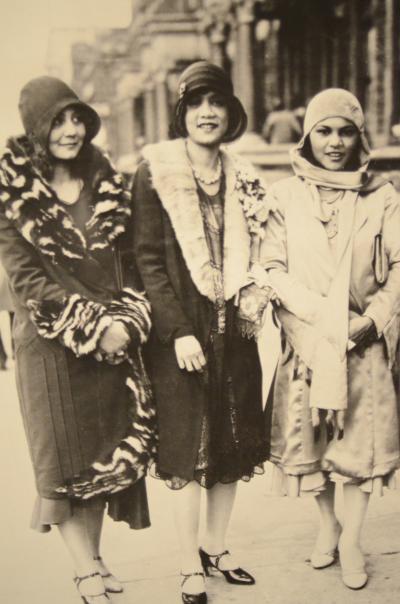
This exhibition celebrates the rich and diverse culture of Harlem, New York. In the 1920s and 1930s, Harlem became a symbol of the African American struggle for civil and economic equality while emerging as a flourishing center of black culture, art and music. The vitality of the cultural, social and political activity of this notable place and time in American history forever altered the encounters of black and white New Yorkers and had far-reaching effects on American society as a whole.
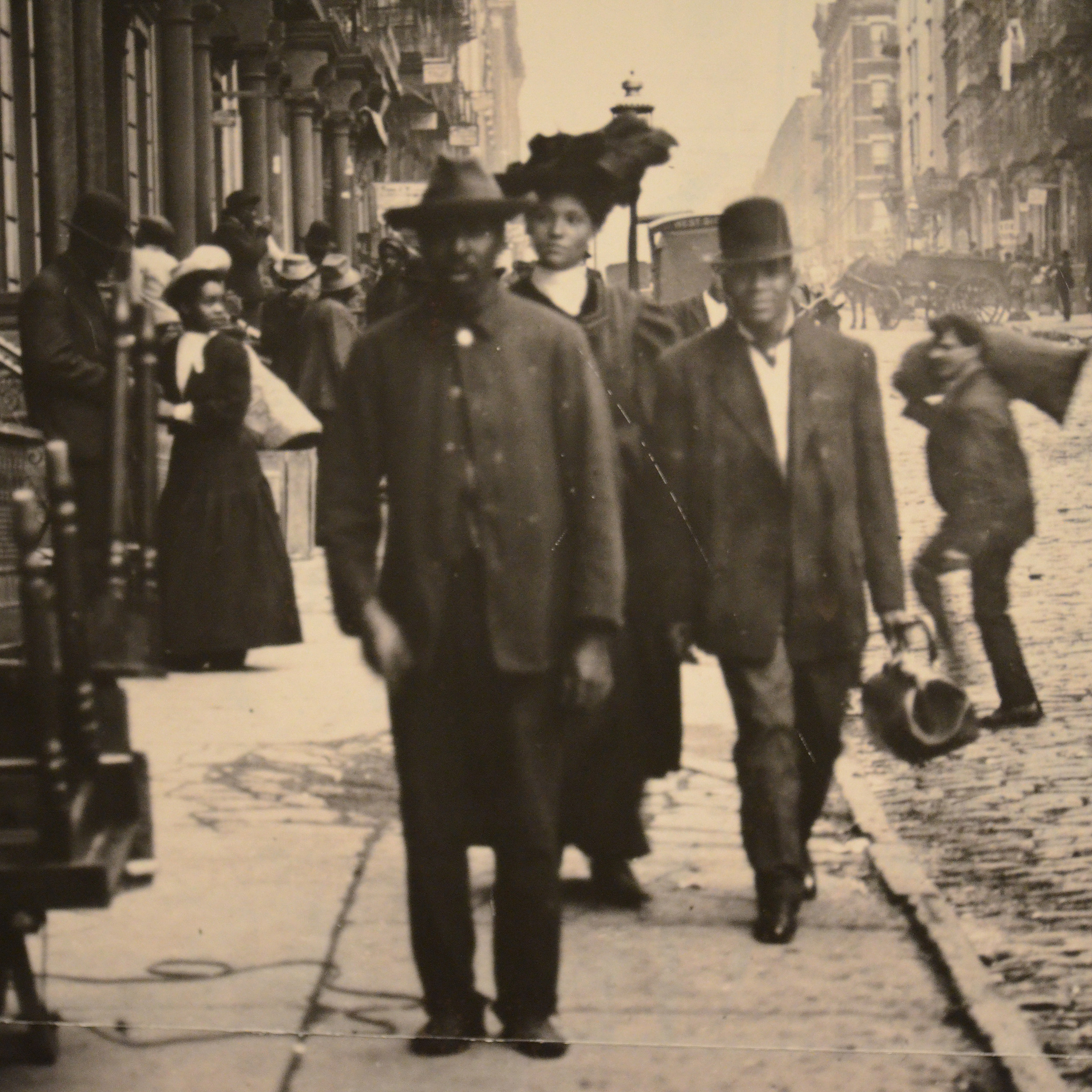
Artifacts, Photographs and More
Historic photographs, archival material, audio and visual components, artifacts and other items portray the twentieth century experiences of black Americans as symbolized by the rich and diverse culture of Harlem in the 1920s.
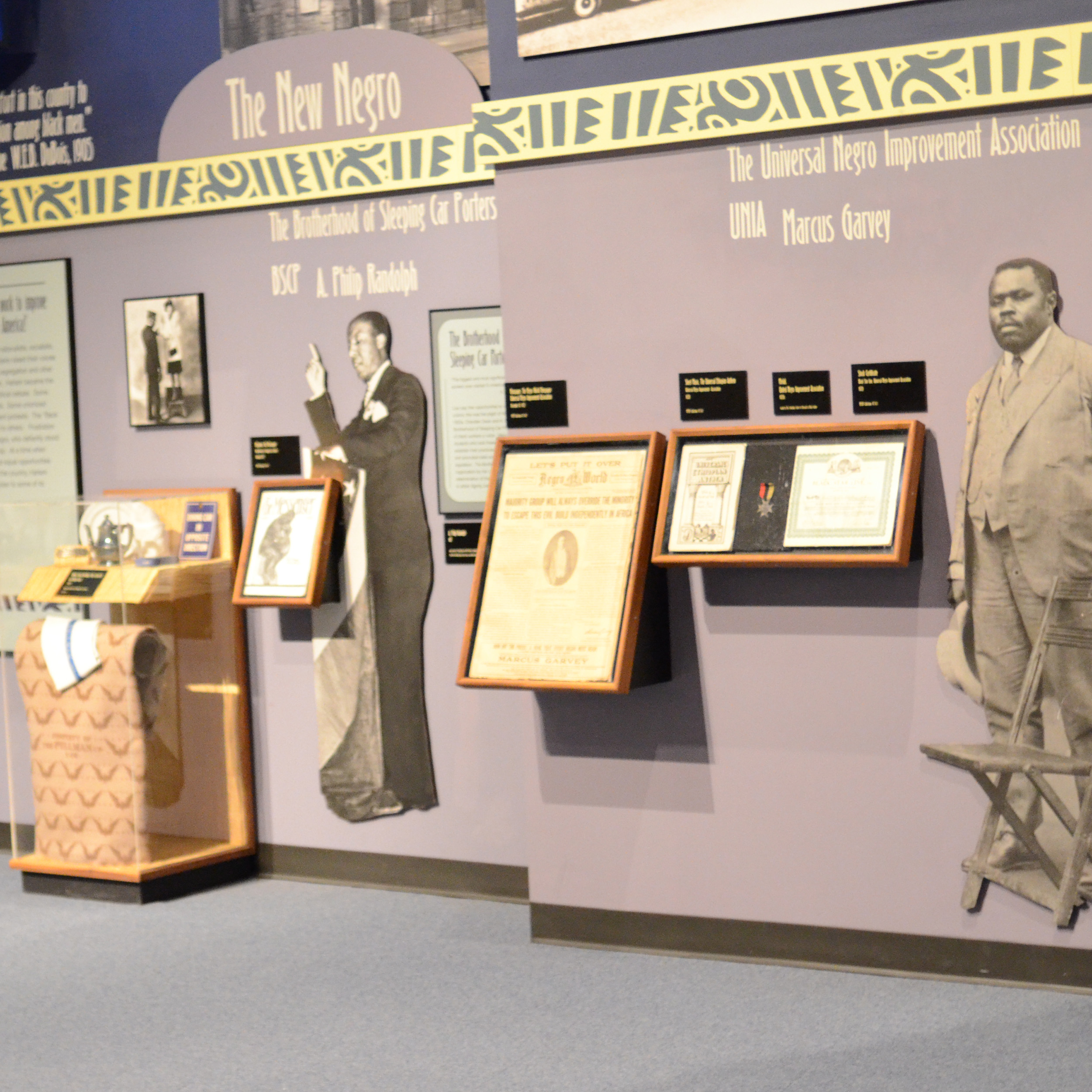
Enduring Institutions
In Harlem a number of established institutions and arising organizations, including "The Black Church", “The Universal Negro Improvement Association,” and “The National Association for the Advancement of Colored People” (NAACP), worked diligently to foster better living conditions and opportunities for Harlemites.
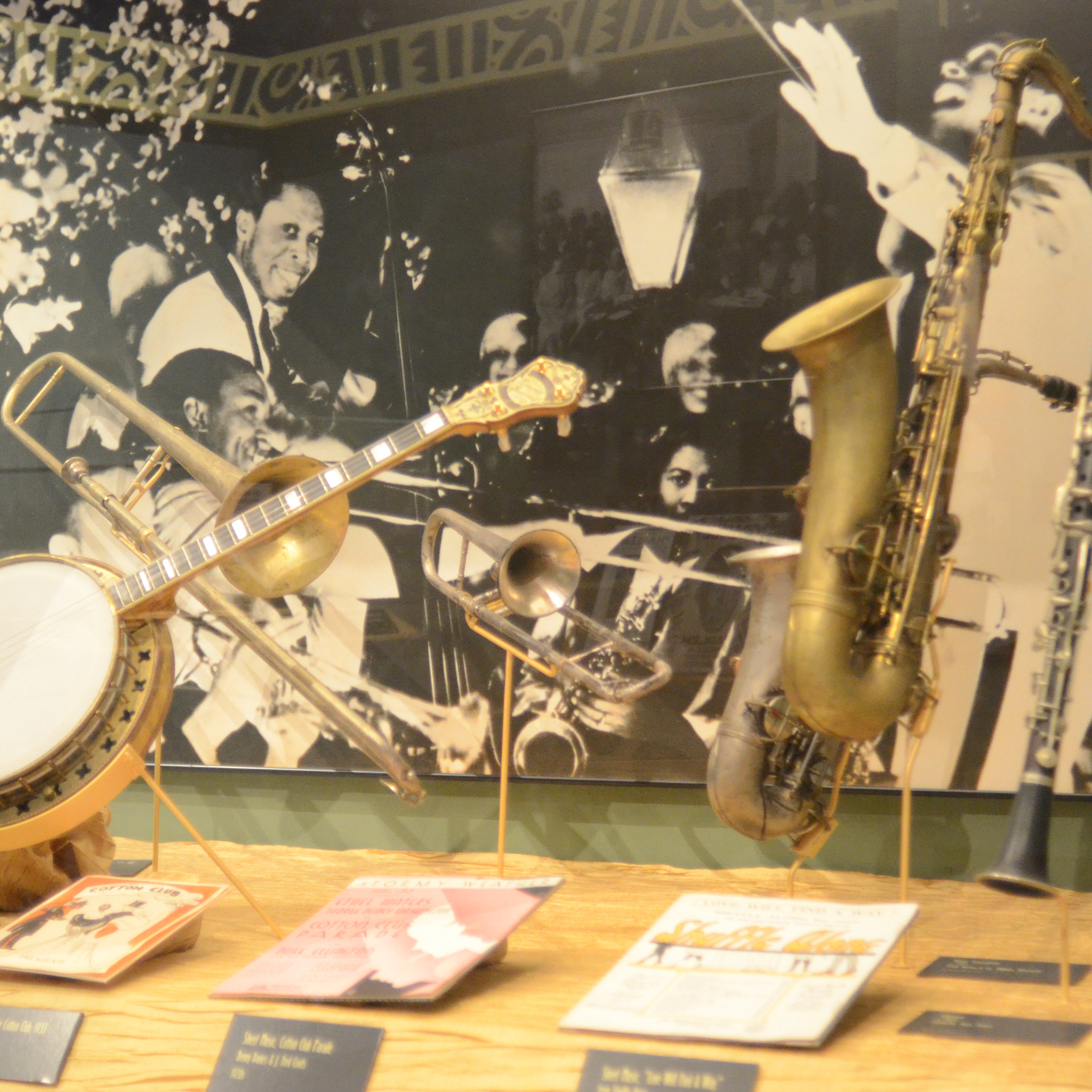
Music and Culture
Via literature, poetry, music and musicals, African American culture spread into the mainstream. Despite much poverty in the lives of many Harlemites, dozens found steady work in various professions in the arts. Harlem also became a highly popular nightclub and entertainment mecca for residents in and outside the burgeoning city.
Fun Facts: Did you know?!
- Located north of Central Park, Harlem was originally settled by the Dutch in 1658 and remained farmland for over 200 years.
- The African American population in Harlem grew over 40% between 1910 and 1930—from 50,000 to over 200,000.
- The Cotton Club, the most famous nightspot in Harlem from 1923 to 1935, was originally a “Whites-only” venue. However, it provided a venue for upcoming African American jazz musicians and artists to share their talents with new audiences.
Beneath the City: An Archaeological Perspective of Albany
Ongoing Exhibition
Beneath the city's streets, sidewalks, backyards, and buildings are layers of soil containing items the former residents made, used, and threw away. Each recovered object reveals a clue about the people who once called the Capital City home.
Albany is a defining artifact of New York society. It is one of the oldest European cities in North America: a permanent settlement was established in 1614 on Castle Island and continuous settlement began in 1624 with the establishment of Fort Orange. The town of Beverwyck, just to the north of Fort Orange, became Albany after the English peacefully took over the Dutch colony in 1664. Albany developed as a Dutch settlement among Native Americans, then it was a Dutch settlement under English rule. This helped to produce a distinctive American city.
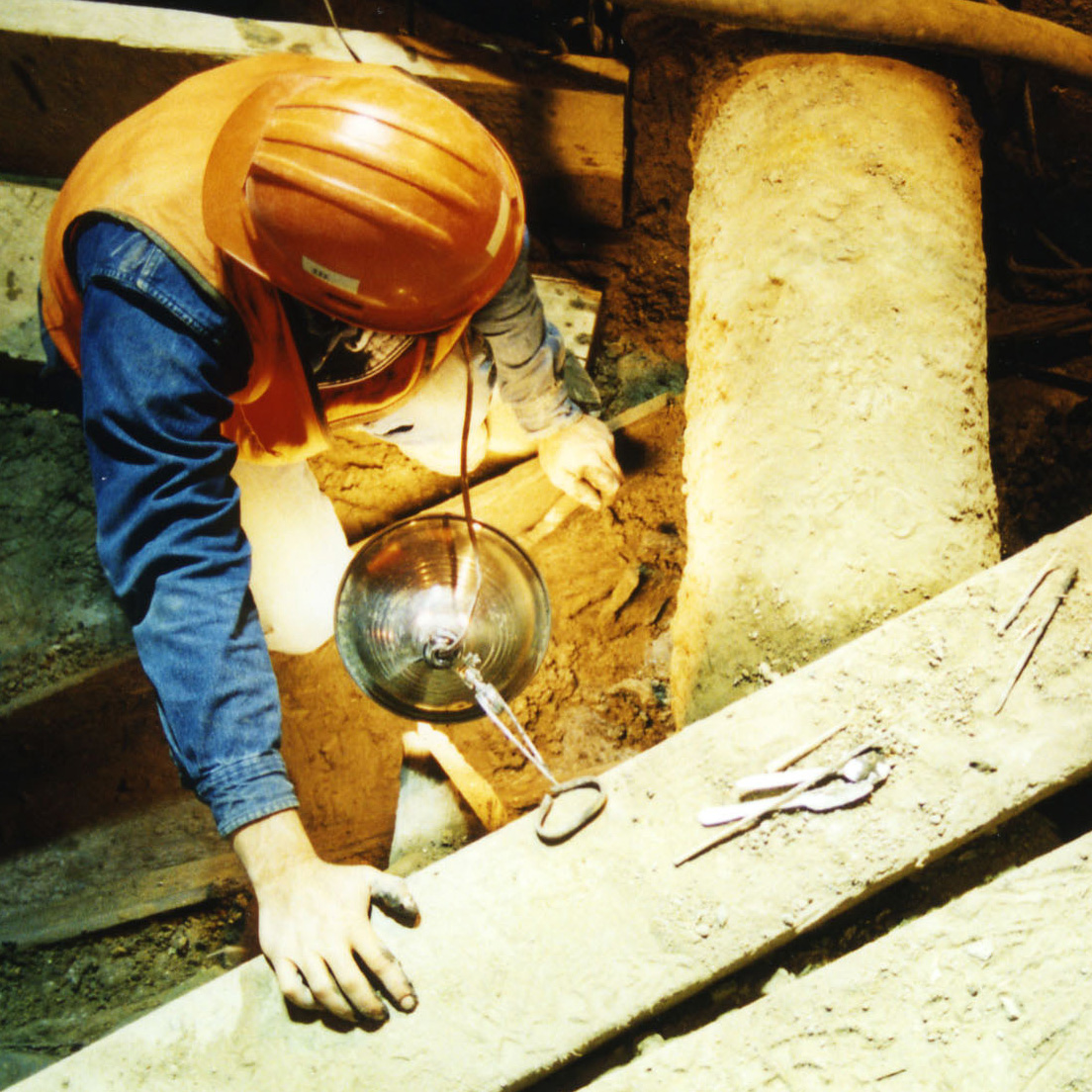
Archaeological Research
Research in Albany demonstrates how archaeology can provide us with a unique way of learning about our past. Some of these discoveries and their meaning in the history of the city and New York State are presented here. They can be seen through the exploration of an early seventeenth century Dutch settlement, an eighteenth century rum distillery, the expansion of the city from the initial settlement, and the daily life of residents in the past.
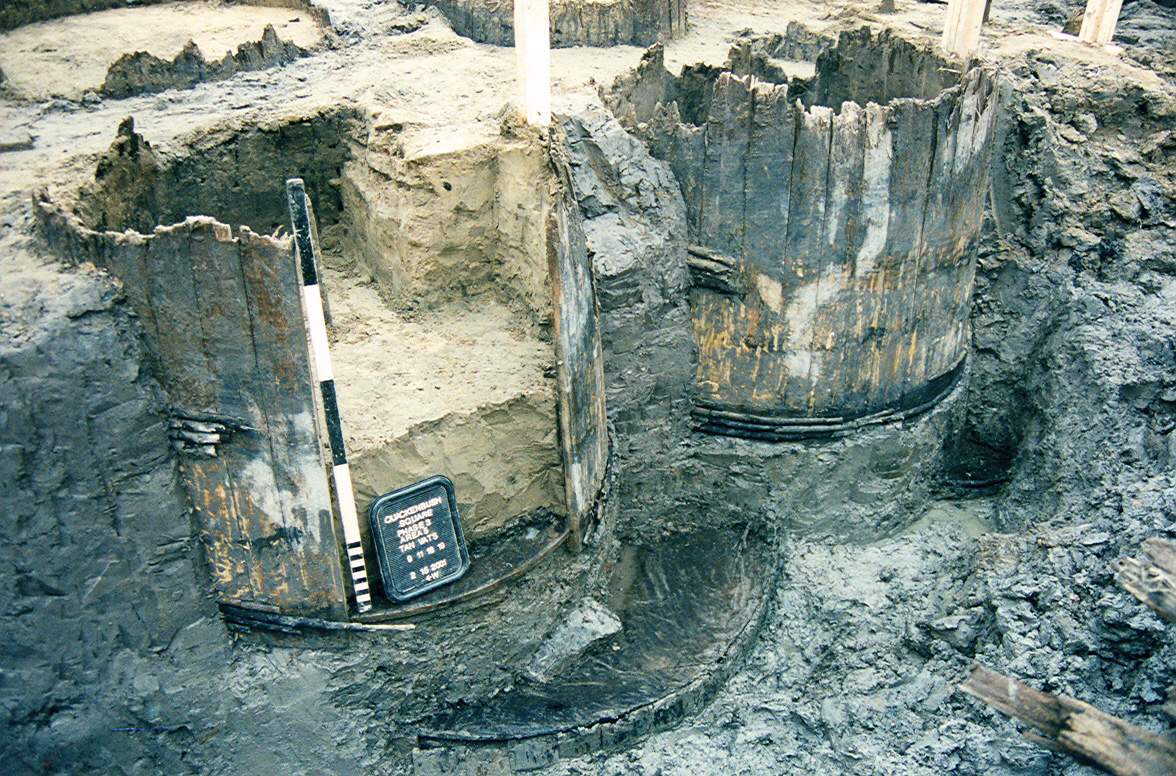
Quackenbush-Douw Distillery
Excavations at the location of a proposed parking lot exposed the remains of a 1750s rum distillery with an astonishing 21 wooden fermentation vats, a wooden piping system and stone bases for two sills. Two of these vats are on display in a climate-controlled case.
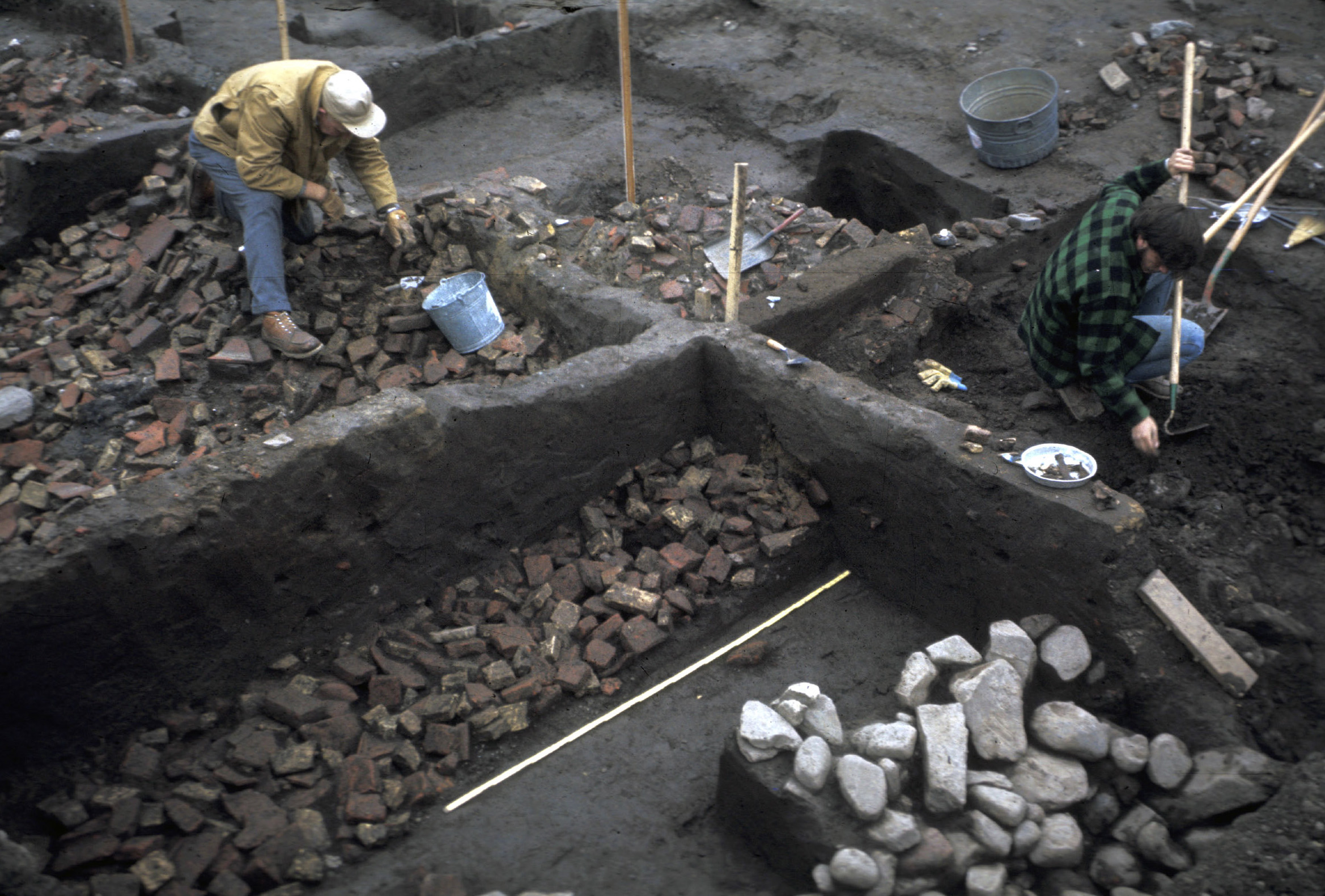
Fort Orange
While city development typically destroys historical sites, evidence of the Dutch-built Fort Orange remained undiscovered for nearly 400 years! Fort Orange was built by the Dutch West India Company in 1624 in the area that would eventually become Albany.
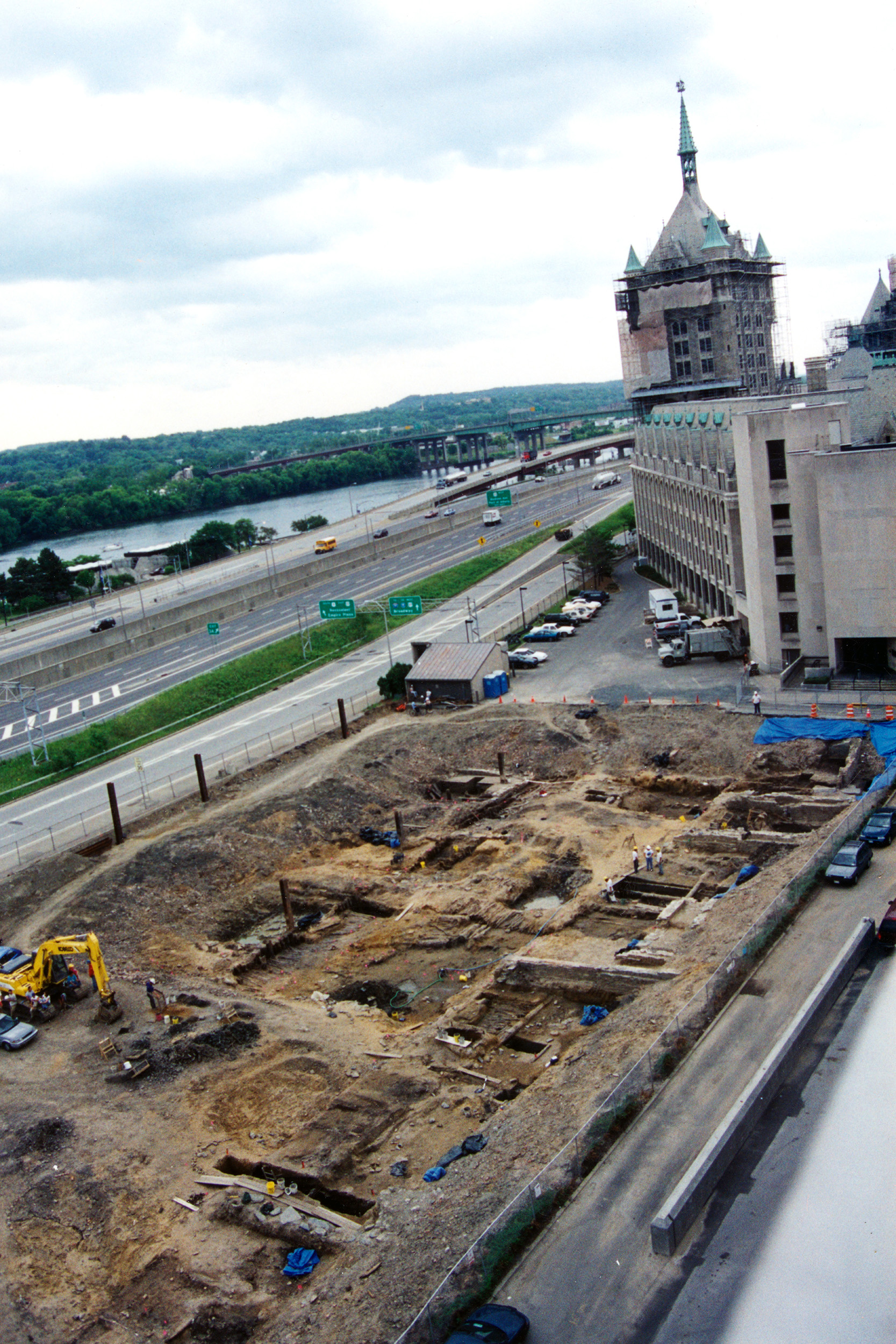
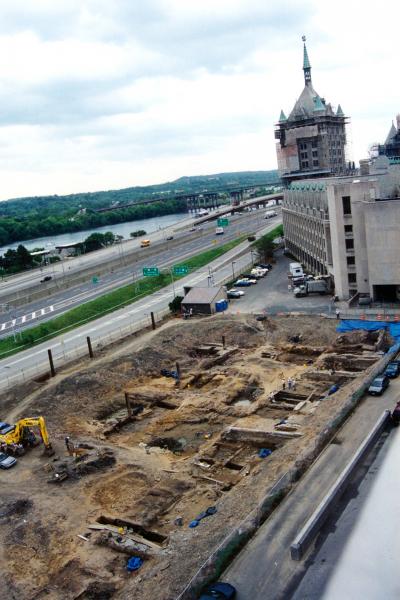
18th-19th Century Waterfront Structures
Excavation at the SUNY Construction Fund Parking Garage site showing remains of 18th and 19th centurywaterfront structures. The Hudson River is in the background. The 17th century river shoreline was located along the street in the lower right.
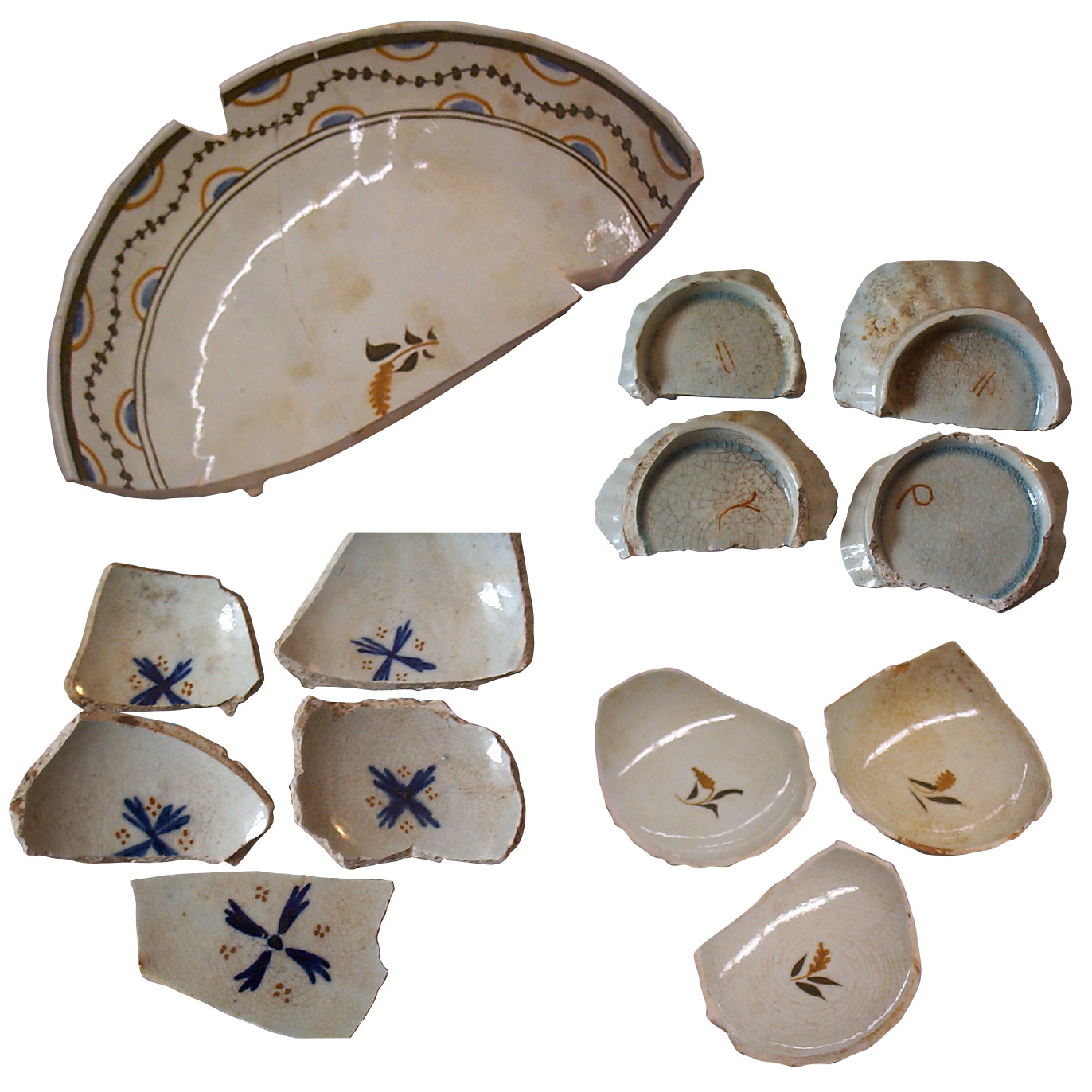
Pottery Dump
Visit a recreation of an unusual pottery dump as archaeologists would have encountered it in the field. The discarded pottery includes types such as English pearlware, undecorated creamware, redware, and Chinese export porcelain.
Prey use and canine development in saber-toothed carnivores
To understand higher-level trophic relationships in ancient ecosystems as well as to understand how evolution of specialized morphology (saber-toothed canines) affects the ecology of carnivores, I have studied the diet of the saber-toothed felid Smilodon, commonly known as the saber-tooth tiger. This research addresses five main questions: (1) How long and how fast do the enlarged canines of Smilodon take to grow; (2) Can specific prey on which Smilodon fed be determined; (3) Does the diet of Smilodon change during the development of its canine; and (4) Do ancient co-occurring carnivorous taxa partition resources?; (5) Does the saber-toothed condition in Smilodon effect its ecology compared to closely related species that do not have saber-teeth? My studies focus on analyzing carbon and oxygen isotope values incorporated in tooth enamel of these carnivores and herbivores from the same fossil locality. First, resource use and partitioning in an herbivore fauna is characterized. If the relationships among herbivores can be discriminated, I can then attempt to determine if the carnivores are focusing their feeding on specific herbivores. Since there is limited fractionation of carbon isotopes between trophic levels carnivores should have isotopic values similar to their prey.
Results obtained so far suggest that Smilodon canines grow in a manner similar to, but also different from, both modern lions and tigers. Smilodon appears to grow its canines by utilizing a quick growth rate and a long growth period. Lions have a slow growth rate, but a long growth period, while tigers have a quick growth rate but a short growth period. Analysis of the fauna from the 1.5 million year old Leisey Shell Pit locality suggests that Smilodon is a generalist. Current research on this topic focuses on understanding the eruption rate of the canine, and determining when the tooth was functional.
Related publications
Feranec, R. S. 2008. Growth Differences in the Saber-Tooth of Three Field Species. Palaios 23:566-569.
Feranec, R.S. 2005. Development, growth rate, and diet determined from isotopic evidence from the adult canine of Smilodon gracilis from the Leisey Shell Pit, Hillsborough County, Florida. Bulletin of the Florida Museum of Natural History 45:369-377.
Feranec, R.S. 2004. Isotopic evidence of sabertooth development, growth rate, and diet from the adult canine of Smilodon fatalis from Rancho La Brea, California. Palaeogeography Palaeoclimatology Palaeoecology 206: 303-310.
Family Fun Day
Each third Saturday of the month, the Museum offers fun for the whole family with games, crafts, and other theme-based activities.

SPRING into the Museum! School Vacation Week: ICE AGE
Spring into action and get ready to explore fun tours and activities that focus on the Ice Age and Mastodons of New York State.
Museum is closed on Monday April 25.
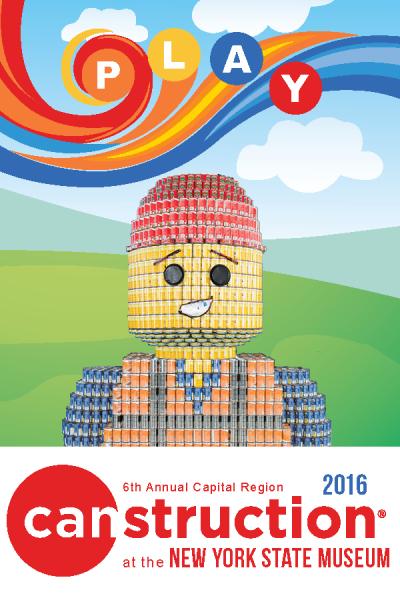
PLAY! 6th Annual Capital Region CANstruction 2016
CANstruction helps feed those in need throughout the Capital Region by inviting the design and construction industry to give back to the communities they help build. Regional design teams have joined forces with The Food Pantries for the Capital District to fight hunger by creating playful sculptures made entirely out of canned goods. Fifteen teams will to create giant structures using canned food items.
You can provide support by dropping canned goods into the bins next to your favorite sculptures to help them win the coveted People’s Choice Award. Each and every can you donate will be given to The Food Pantries for The Capital District along with those used in the structures.
Visit www.capitalregioncanstruction.com to learn more.
New Acquisition: Liquor Chest Used by NYS Soldiers in American Revolution and War of 1812
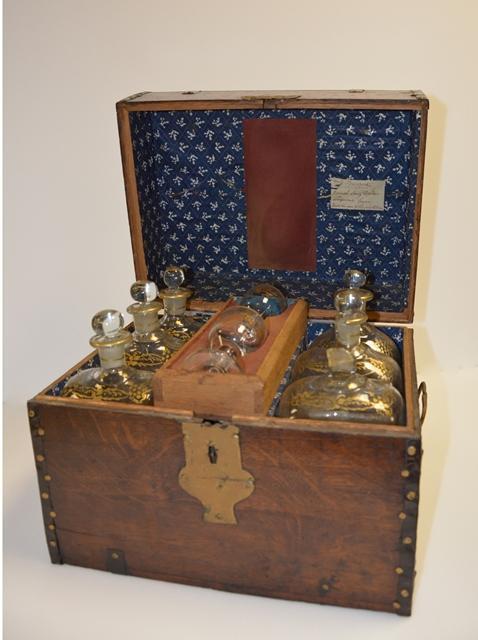
A liquor chest used by soldiers in the American Revolution and the War of 1812 was recently donated to the New York State Museum. The chest was donated by the descendants of Captain Abraham Swartwout (an officer on General George Washington's staff during the American Revolution) and Brigadier General Robert Swartwout (served as the 9th Quartermaster General of the United States Army during the War of 1812).
Brigadier General Robert Swartwout (December 8, 1779 - July 17, 1848) was born in Poughkeepsie, New York, the son of the American Revolutionary War military veteran Captain Abraham Swartwout. He began his military career in the War of 1812 as militia colonel at New York Harbor. Following the death of General Leonard Covington at the Battle of Chrysler's field, he was appointed Brigadier General and 9th Quartermaster General of the U.S. Army on March 21, 1813, by President James Madison through Secretary of War John Armstrong. Later, President James Monroe reappointed him Quartermaster General and he served in that capacity until June 5, 1816.
The liquor chest was used by Abraham and Robert Swartwout. The Museum is proud to acquire the chest as it is a historic artifact that was used by New York State soldiers over two centuries ago.

Label: This campaign style liquor chest has a fitted interior for six bottles of liquor and accompanying glasses. It was presented to Captain Abraham Swartout, a New York officer on General George Washington’s staff, by an unidentified French Army officer.
Credit: New York State Museum, H-2015.30.1 A-R
Researching a Newly Acquired Fish Collection from Long Island
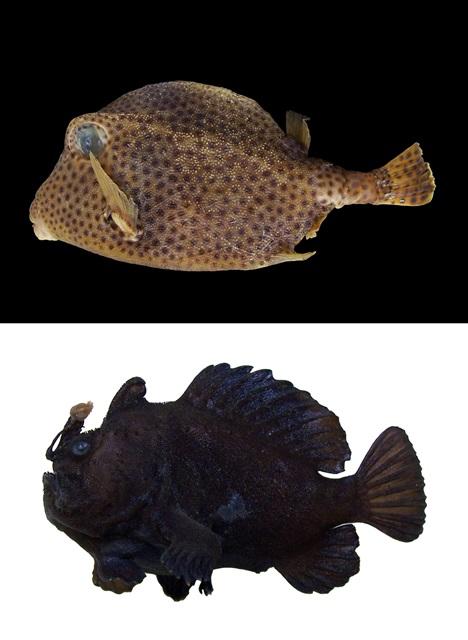
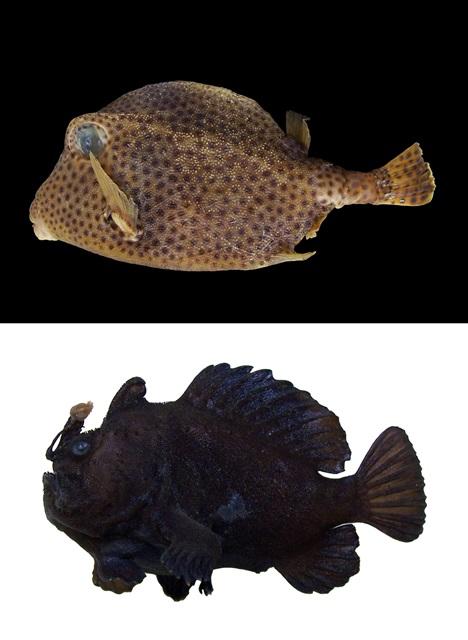
In 2014, the State Museum acquired Dr. Howard Reisman's (emeritus professor at Long Island University) personal collection of fish specimens. The collection has over 2,500 individual specimens, including a substantial number of samples from the marine waters surrounding Long Island.
While identifying and accessioning these specimens, museum scientists discovered that the collection contained representatives of several marine species that had not been recorded in earlier lists of New York marine fishes. These included a species of trunkfish (Lactophrys bicaudalis) that has not previously been found north of Florida as well as a frogfish (Antennarius striatus) whose northernmost range was considered to be southern New Jersey.
Due to the proximity of Long Island to the Gulf Stream, which acts as a conveyor belt for warmer water from southern areas, the bays along the island's southern coast often entrap stray tropical fish larvae that continue their development during warm weather months and die off in the winter. As average yearly temperatures continue to increase, some of these transient species may become permanent fixtures of the fish communities in these bays, although conclusive evidence for this has yet to be obtained and continued monitoring is needed.
An article by Dr. Jeremy Wright, the Museum's curator of ichthyology, and colleagues detailing novel New York species records from the Reisman Collection is in press at the peer-reviewed journal "Northeastern Naturalist" and will be published later in 2016
State Museum Hosts 23rd Annual Gem, Mineral and Fossil Show and Sale on February 13 and 14
The New York State Museum will host the 23rd Annual James Campbell Memorial Gem, Mineral and Fossil Show and Sale on Saturday, February 13 and Sunday, February 14, 2016 from 10:00am – 5:00pm. More than 30 vendors from throughout the region will display and sell gems, minerals, fossils, and jewelry. Admission is $5 (cash only); children ages 12 and under are free.
Museum staff will give guided tours of the Minerals of New York gallery at 2:00pm on February 13 and 14.
The event is co-sponsored by the Capital District Mineral Club and the New York Academy of Mineralogy. All proceeds benefit the Museum’s mineral acquisition fund.
Visit the Museum’s website for more information: http://www.nysm.nysed.gov/programs/minerals/.
The State Museum is a program of the New York State Education Department’s Office of Cultural Education. Located at 222 Madison Avenue in Albany, the Museum is open Tuesday through Sunday from 9:30 a.m. to 5 p.m. It is closed on Thanksgiving, Christmas and New Year's Day. Admission is free. Further information about programs and events can be obtained by calling (518) 474-5877 or visiting the Museum website.
###
Phone: (518) 474-1201
State Museum Hosts 25th Annual New York in Bloom, February 19 - 21, 2016
Spring arrives early at the New York State Museum where visitors will find more than 100 flower displays throughout the Museum February 19 - 21, 2016 for the 25th Annual New York in Bloom, which benefits the Museum's educational programs for children. Admission is $5 (cash only); children ages 12 and under are free.
Garden club members, professional designers, and floral enthusiasts from the Capital Region will create unique floral arrangements that complement the Museum's exhibitions. David Michael Schmidt of Renaissance Floral Design will transform the front window area of the Museum lobby with a colorful display with inspiration from the mobile, Four at Forty-Five by Alexander Calder, that is currently on exhibit in the main lobby.
Other activities include floral design demonstrations and children's programs. A flower market will be open in the main lobby Friday through Sunday from 11:00am - 4:30pm, while supplies last. Nicole’s Special Events and Catering will offer a selection of light luncheon food on the 4th floor of the Museum Friday through Sunday from 11:00am - 3:00pm.
Visit the Museum’s website for more information and a schedule of programs:http://www.nysm.nysed.gov/programs/nybloom/.
Supporters of New York in Bloom are Ambiance Florals and Events, Renaissance Floral Design, and Nicole's Special Events and Catering.
The State Museum is a program of the New York State Education Department’s Office of Cultural Education. Located at 222 Madison Avenue in Albany, the Museum is open Tuesday through Sunday from 9:30 a.m. to 5 p.m. It is closed on Thanksgiving, Christmas and New Year's Day. Admission is free. Further information about programs and events can be obtained by calling (518) 474-5877 or visiting the Museum website.
###
Phone: (518) 474-1201
State Museum Hosts "Celebrate Film in New York" Program; Monthly Cinema Sunday Series Features Popular Movies Shot in Upstate New York
The New York State Museum today announced a new film program series, "Celebrate Film in New York," featuring films shot in upstate New York. Created in partnership with the New York State Governor's Office of Motion Picture & Television Development, the Albany Film Commission and Youth FX, the "Celebrate Film in New York" screenings will be presented as a special focus of the Museum's regular monthly Cinema Sundays film program.
"Celebrate Film in New York" will run for four Sundays beginning with "Muhammad Ali's Greatest Fight" on February 28 in celebration of Black History Month. The series will conclude on May 1 with a presentation of award winning shorts from Albany-based film workshop Youth FX. The Youth FX program is an intensive hands-on program designed to introduce teens aged 14-19 to the artistic and technical process of digital filmmaking by offering a thorough overview of the production process from script to screen. Participants work with experienced media instructors, filmmakers, and artists to learn the various aspects of digital video production such as cinematography, editing, sound, and lighting. In addition to the award winning shorts, the Youth FX presentation will include scenes from "As You Are", a feature film produced by former Youth FX students which premiered at this year's Sundance Film Festival, and is a participant in the New York State Film Production Credit program.
"The State Museum is proud to partner with the Governor's Office of Motion Picture & Television Development, the Albany Film Commission, and Youth FX to offer this special Cinema Sundays series for visitors," said State Museum Director Mark Schaming. "We're also proud to welcome local Youth FX teens as they showcase their award-winning film shorts produced in upstate New York."
"Filmmaking is an important part of both the rich cultural legacy and vibrant economy of New York State," said Gigi Semone, Executive Director of the Governor's Office of Motion Picture & Television Development. "While showcasing the beautiful locations and world-class talent found in the Empire State, these productions also generated a positive economic impact by hiring thousands of people and spending millions of dollars during production, including right here in the Capital Region. The participation of Youth FX points to an exciting future for the next generation of New York-based filmmakers."
"Film Albany is extremely proud to be part of this first-ever initiative with the New York State Governor's Office of Motion Picture & Television Development, the New York State Museum, and Youth FX in showcasing many films that were shot in the Capital Region," said Deborah Goedeke, Albany Film Commissioner and Convention Services Manager at Albany County Convention & Visitors Bureau. "To end Cinema Sundays showcasing the award-winning shorts from the Albany-based film workshop Youth FX is icing on the cake. The future of our industry depends on mentoring and nurturing young, aspiring filmmakers." "Youth FX is excited to be included in the "Celebrate Film in New York" series at the New York State Museum," said Bhawin Suchak, Youth FX Program Director. "This has been a big year for our program and I'm especially excited to see our students grow into professional filmmakers at a time when film production in upstate New York is on the rise."
"Cinema Sundays: Celebrate Film in New York" takes place on the Sundays listed below at 2:00pm. Admission is free. Following is the series line-up:
- Sunday, February 28 at 2:00pm "Muhammad Ali's Greatest Fight" (HBO, 2013)
- Sunday, March 20 at 2:00pm "Robot & Frank" (Samuel Goldwyn Films, 2012)
- Sunday, April 17 at 2:00pm "The Age Of Innocence" (Columbia Picture, 1993)
- Sunday, May 1 at 2:00pm Youth FX Shorts Program + Scenes from "As You Are" (2016)
The State Museum is a program of the New York State Education Department's Office of Cultural Education. Located at 222 Madison Avenue in Albany, the Museum is open Tuesday through Sunday from 9:30 a.m. to 5 p.m. It is closed on Thanksgiving, Christmas and New Year's Day. Admission is free. Further information about programs and events can be obtained by calling (518) 474-5877 or visiting the Museum website.
###
Phone: (518) 474-1201
Cinema Sunday
Cinema Sunday takes place the first Sunday of the month at 2 p.m. This program features documentary film topics on natural and social history, science, ecology, artists and art movements plus a selection of some popular family feature films.
CTLE Professional Development Workshops for Educators
The New York State Museum is an approved provider of Continuing Teacher and Leader Education (CTLE). Through NYSM Workshops, participants gain access to real-world applications, authentic research, and thoughtful lessons that accelerate an understanding of the natural sciences. Since 2001, our PhD-level researches have provided excellent educational opportunities for teachers.
Teacher workshops at the Museum:
- Are aligned with New York State Learning Standards;
- Are led by leading science and history research professionals;
- Encourage hands-on and inquiry-based training opportunities;
- Assist teachers in renewing educational material with current content; and
- Provide CTLE Professional Development clock hours.
Workshop Descriptions:
Anthropology Teacher Workshop
This workshop is a professional-development opportunity for science teachers, especially those who teach biology and environmental science to middle and high school students. Participants will gain valuable insight into the forefront of scientific research happening right here in New York State.
DH Cadwell Earth Science Workshop
Join State Museum geologists at the DH Cadwell Earth Science Workshop and learn more about Earth Science and New York's unique geology. Real world applications of current research address the New York State Learning Standards. Varied presentations, discussions, exercises and field trips will be led by staff geologists. Topics include sedimentary and glacial geology, paleontology, mineralogy, metamorphic and igneous petrology, geological influences on ecology, and more.
Evolution and Ecology Workshop
This workshop is designed for high school and middle school science teachers and addresses New York State Learning Standards. Teachers will learn about current evolutionary theory, recent discoveries, and resources and ideas for effective classroom exercises.
Explore, Learn, Teach
Online CTLE Credit
Educators can earn CTLE credit by watching any of the following webinars and completing the surveys linked below each video. Please allow up to two weeks to receive confirmation of completion.

BrainFood: Unlocking the Secrets of the Gunboat at Ground Zero
1 CTLE credit hour
Unearthed in 2010 beneath the World Trade Center site, this 18th-century gunboat, likely built near Philadelphia in the 1770s and possibly captured by the British, offers a rare glimpse into early American shipbuilding and maritime life. Dr. Warren Riess discusses the vessel’s discovery and historical significance, while Dr. Peter Fix details the meticulous conservation process that brought this remarkable piece of Revolutionary history back to life.

Sanctuary at Fort Ontario: The Story of America’s Only World War II Emergency Refugee Shelter
1 CTLE credit hour
Explore the history of Fort Ontario, the only U.S. government-established shelter for Holocaust refugees during World War II, featuring insights from historian Paul Lear and author Ann Allen, moderated by Aaron Noble.
War on the Water: Looking Beneath the Surface to a Revolutionary Past
0.5 CTLE credit hours
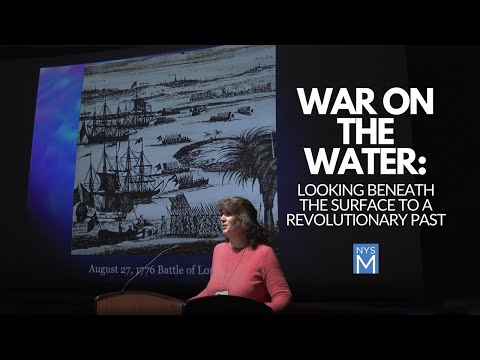
Join Dr. Daria Merwin, Co-Director of the Cultural Resource Survey Program, as she uncovers New York’s maritime history and the hidden archaeological sites of naval battles and waterborne skirmishes that shaped the Revolutionary War and reveal untold stories of America’s struggle for independence.

Opportunities of Dating an Older Woman: Lucy and the Beginnings of Humankind 3.18 Million Years Ago
1.5 CTLE credit hours
Join Dr. Jim Aronson at the New York State Museum for a captivating lecture on the 50th anniversary of Lucy’s discovery, as he recounts the groundbreaking expedition to Hadar, Ethiopia, and reveals how sedimentology helped reconstruct the ancient world of our early ancestors.
The Intersection of Archaeology and Genealogy (3 Part Series)
1.5 CTLE credit hours
Archaeology and genealogy are critical components for understanding our past. Learn how Dr. Paul Huey and Dr. Michael Lucas use these components to help create a more accurate picture of the material culture, architecture, and people of New York.

When the City Stopped: A Lecture with Robert W. Snyder
0.5 CTLE credit hours
Join Manhattan Borough Historian Robert W. Snyder for a powerful lecture on When the City Stopped, his new book that captures the resilience of New York City through firsthand stories of essential workers who faced the early COVID-19 crisis with courage, solidarity, and humanity.
War on the Water: Looking Beneath the Surface to a Revolutionary Past
0.5 CTLE credit hours
Join Dr. Daria Merwin, Co-Director of the Cultural Resource Survey Program, as she uncovers New York’s maritime history and the hidden archaeological sites of naval battles and waterborne skirmishes that shaped the Revolutionary War and reveal untold stories of America’s struggle for independence.

BrainFood: Exploring Mussels in the Adirondack’s Hudson River
0.5 CTLE credit hours
Dr. Denise Mayer takes you on a journey into the world of freshwater mussels, showcasing recent survey efforts in the upper Hudson River from Lake Henderson to Queensbury. Through fieldwork footage, she reveals the crucial role mussels play in maintaining healthy waterways and shares discoveries about their populations in the Adirondacks and downstream.

Warrior of the Revolution: Colonel Louis Cook of the Seven Nations of Canada
1.5 CTLE credit hours
Author Darren Bonaparte explores the remarkable life of Colonel Louis Cook (Akiatonharónkwen), a pivotal yet often overlooked figure of the American Revolution, whose complex alliances and rivalry with Joseph Brant helped shape New York State history.

Culinary Crossroads: A Flavorful Journey with Culinary Historian Lavada Nahon
0.5 CTLE credit hours
Lavada Nahon explores the diverse culinary heritage of New Netherland and early New York, where Dutch, Indigenous, African, English, Jewish, and other traditions merged to create a unique colonial food culture.
The Tuck High Co. Store: From Mott Street to the New York State Museum
0.5 CTLE credit hours
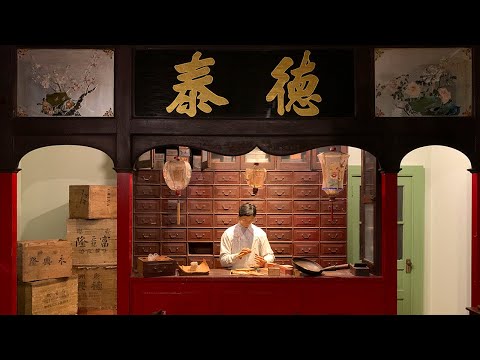
At the time of its closure in 1980, the Tuck High Co. store was the oldest continuously operating business in Manhattan’s Chinatown. Join NYSM Senior Historian and Curator Ashley Hopkins-Benton and Archives specialist Arabella Goodrich to learn more about the store’s history, how and why it came to the NYSM as an exhibition, and about current work to clean and conserve the collections inside.
All That Has Disappeared: Latinxs & Urban Redevelopment, 1937-1962 - Dr. Pedro A. Regalado
1.5 CTLE credit hours
Pedro A. Regalado is an Assistant Professor of History at Stanford University, specializing in race, immigration, planning, and capitalism in urban America. Here, he discusses topics from his book, Nueva York: Making the Modern City, which explores the 20th-century history of New York City’s Latinx community and their role in shaping the city’s democratic ideals amid economic and social transformations.

Art and Photography with Shinnecock Artist Jeremy Dennis
1 CTLE credit hour
Join Shinnecock photographer Jeremy Dennis in this recorded presentation from the artist speaker series, where he explores Indigenous histories on Long Island and the connections between people, land, and nature, coinciding with the New York State Museum exhibit Each One Inspired: Indigenous Art Across the Homelands.

Jack Kelly Presents: God Save Benedict Arnold: The True Story of America’s Most Hated Man
1 CTLE credit hour
Explore the history behind Benedict Arnold’s treason and the events leading up to the capture of Major John André with historian Jack Kelly. Kelly goes beyond Benedict Arnold’s most famous act, treason, to explore his psychology and character, arguing that Arnold was essential to the patriots’ victories before he was a traitor.

Dr. Christopher Minty Presents: Unfriendly to Liberty: Loyalist Networks and the Coming of the American Revolution in New York
1 CTLE credit hour
Discover the complicated history of New Yorkers who remained loyal to Britain during the American Revolution with author Dr. Christopher Minty. Dr. Minty will explore the local politics, factions, institutions, and behaviors that governed Loyalist’s political activities in the buildup to the American Revolution. Minty analyzes these factors to show how New York Loyalists came together to form an organized, politically motivated, and diverse political group.
Dr. Scott Manning Stevens Presents: Paths Forward: Native America and Museums
1.5 CTLE credit hours
Rethink the complicated issues around Native American nations, their histories, and their relationships with museums with Dr. Scott Manning Stevens. Professor Stevens considers the many challenges for museums in overcoming the legacy of misappropriation and misrepresentation of Indigenous cultures.

Panel Discussion: The Continuing Revolution for All New Yorkers
1 CTLE credit hour
Not all New Yorkers experienced the freedoms promised by the American Revolution. Join panelists Paul and Mary Liz Stewart of the Underground Railroad Education Center (UREC), New York State Museum Chief Curator Dr. Jennifer Lemak, and Senior Historian of Social History Ashley Hopkins-Benton as they discuss the ongoing work needed to bring equal rights to all communities. Recorded October 22, 2023. Huxley Theater, New York State Museum.

The Bodega: Place, Urban Redevelopment, and Political Power in Postwar New York with Historian Pedro A. Regalado
1 CTLE credit hour
New York City’s Latinx small-business owners were frequent victims of urban renewal “slum clearance” during the 1950s. By the next decade, they wielded the federal War on Poverty to reimagine the relationship between government and Latinx New Yorkers, brokering between them to address hunger, public health, and the plight of credit-starved entrepreneurs. This lecture explores the history of Gotham’s Latinx storefronts—especially bodegas—during this transition. It reveals what their overlooked experiences teach us about the power of place in shaping community. It also offers new insights into how Latinx business owners helped to transform the trajectory of postwar New York.

Women’s Rights Pioneers Monument
1 CTLE credit hour
Learn about the groundbreaking monument, Women’s Rights Pioneers, the first statue of real women in Central Park, NYC. Made possible through the work of Monumental Women, the monument depicts three historic women’s rights leaders—Susan B. Anthony, Elizabeth Cady Stanton, and Sojourner Truth—all hailing from New York State. Learn about breaking the bronze ceiling in Central Park from Monumental Women president Pam Elam and discover the Women’s Rights Pioneers Monument's process of creation from the monument's sculptor, Meredith Bergmann.
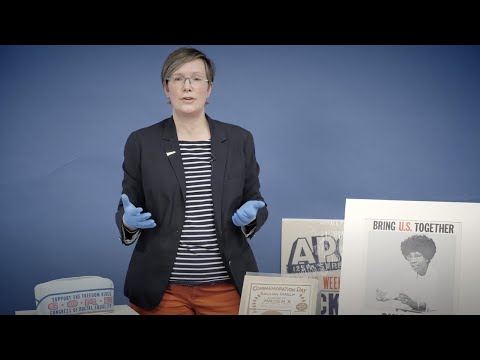
Highlights from the NYSM History Collection: Focus on African American-related Collections
0.5 CTLE credit hours
Join Chief Curator of History Dr. Jennifer Lemak to learn about some of the artifacts in the Museum’s collection that relate to African American history.
Thomas Powell Farmstead: A Virtual Tour of an African American Heritage Site
0.5 CTLE credit hours
This presentation by Dr. Mike Lucas, divided into five segments, provides an overview of the Thomas Powell Homestead site located in Colonie, New York. Dr. Lucas describes the history, layout, and archaeology of the Powell family farmstead through an on-site tour.
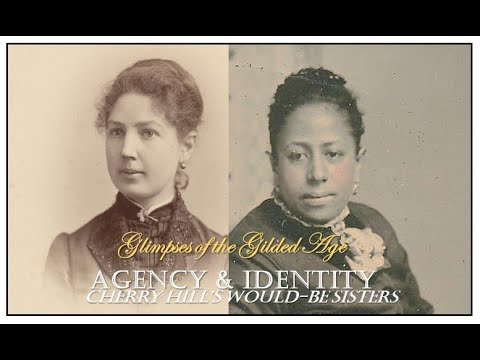
Agency & Identity: Cherry Hill’s Would-Be Sisters
1 CTLE credit hour
Through the clothing, photographs, possessions, and accounts left behind by two Gilded Age women, Historic Cherry Hill’s director of education, Shawna Reilly, explores the lives of Kitty Putnam and Minnie Knapp in terms of their plights, identities, relative vulnerabilities, opportunities, and the choices they made within their prescribed social roles. Each came to Cherry Hill after her mother’s death to be raised by Van Rensselaer descendant Harriet Maria Elmendorf. Both wards, but not quite sisters, Kitty was herself a Van Rensselaer descendant while Minnie was likely descended from an enslaved woman named Dinah Jackson. Each called Harriet Maria “Ma,” but Minnie was raised as a servant, while Kitty would one day become the mistress of Cherry Hill. (Recording of December 1, 2022, presentation at the NYSM.)

Three New York Chinatown Stories at Tuck High
1.5 CTLE credit hours
The Tuck High Company store, sold to the New York State Museum in 1980, embodies tens of thousands of stories about what Chinatown was truly about. Jack Tchen, cross-cultural historian and co-founder of the Museum of Chinese in America, shares three stories interweaving the lives of a tea merchant, a “laundryman,” and the Irish “Mayor of Chinatown” in this Museum presentation.
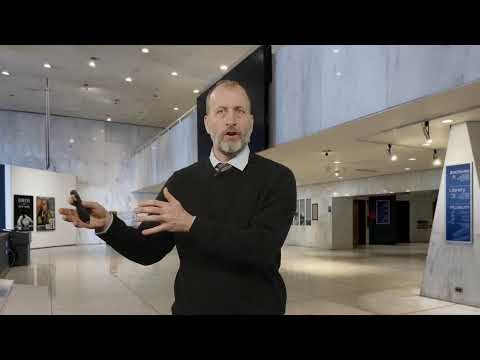
You Are What You Eat: How Chemistry Informs About Ancient Ecosystems
0.8 CTLE credit hours
Dr. Robert S. Feranec, Curator of Pleistocene vertebrate paleontology, will discuss how he uses different chemicals in fossilized teeth and bones to understand how and where ancient animals lived, and how that may have changed over time.

Every Prison Is Attica: A Short Documentary Film by David Kuhn
0.5 CTLE credit hours
This online screening of Every Prison Is Attica, a short documentary film directed and produced by David Kuhn, is followed by a question-and-answer session led by New York State Museum Senior Historian Aaron Noble, curator of the Museum’s exhibit, Open Wounds: The 50-Year Legacy of the Attica Prison Uprising.

The Lives of Enslaved People through the Objects They Left Behind
1.5 CTLE credit hours
Join Dr. Michael Lucas as he explores how artifacts excavated at the 18th-century John Bogart House site in Albany provide insight into enslaved individuals and how they claimed some power and control over their own lives through the manipulation of material objects.

Video Presentation: The Jessup Family: A Free African American Household in Early NY, 1790–1830
0.5 CTLE credit hours
In this video presentation, NYSM archaeologist Michael Lucas discusses artifacts recovered from excavations of the late 18th-century Jessup house in Brookhaven, NY, and what they can tell us about the choices made by the Jessup family as they confronted economic inequality and racism in New York.

A Conversation with Haudenosaunee (Iroquois) Beadwork Artist Karen Ann Hoffman
1 CTLE credit hour
Virtually meet artist Karen Ann Hoffman (Oneida Nation of Wisconsin) and learn about her artwork in the NYSM Contemporary Native Art collection, including a new acquisition, “Bernard, the Buzzard Bag.” Join NYSM Curator of Ethnology Dr. Gwen Saul for a lively conversation on Haudenosaunee (Iroquois) beadwork and how Karen Ann uses beadwork artistry to address issues of sovereignty and human rights, as well as honoring and illustrating Haudenosaunee stories and philosophies.

New Netherland Research and Collections in the Office of Cultural Education
0.8 CTLE credit hours
Join Dr. Charles Gehring, Director of the New Netherland Research Center, Dr. Michael Lucas, State Museum Historic Archaeologist, and Dr. Jennifer Lemak, State Museum Chief Curator of History, as they discuss their research and highlight important documents and artifacts in their respective collections.

Field Trip to the NYSM Entomology Collection
0.5 CTLE credit hours
Join New York State Entomologist, Dr. Timothy McCabe, as he reveals more incredible insects and fun facts on a tour of the NYSM Entomology collection.
360 Gallery Tour: Votes for Women
1 CTLE credit hour
Learn about the history of the suffrage movement in New York State through artifacts on display and highlighted women who led this equal rights movement. Viewers can navigate throughout the space using their touchscreen or mouse.
360 Gallery Tour: A Spirit of Sacrifice: New York State in the First World War
1 CTLE credit hour
Join Senior Historian and Curator Aaron Noble for a tour of the New York State Museum’s World War I Centennial exhibition, “A Spirit of Sacrifice: New York State in the First World War.”
A New York Minute in History Podcast
CTLE Credit (.5 hours)
A New York Minute In History is a production of the New York State Museum, WAMC, and Archivist Media, with support from The William G. Pomeroy Foundation. The podcast is produced by Jesse King and Jim Levulis of WAMC Northeast Public Radio. CTLE is offered for a select number of podcast episodes as listed below:
- Listen: New York’s Anti-Rent Wars
Complete: Online CTLE Form for Anti-Rent Wars - Listen: Radio Cloak and Dagger
Complete: Online CTLE Form for Radio Cloak and Dagger
- Listen: Aaron Mossell and the Struggle to Integrate Lockport’s Schools
Complete: Online CTLE Form for Aaron Mossell, School Integration
- Listen: Ithaca’s Tuskegee Airman
Complete: Online CTLE Form for Tuskegee Airman - Listen: Discovering the Nation’s “Founding Fossils”
Complete: Online CTLE Form for Founding Fossils
- Listen: The Persistence of Dr. Mary Walker
Complete: Online CTLE Form for Dr. Mary Walker
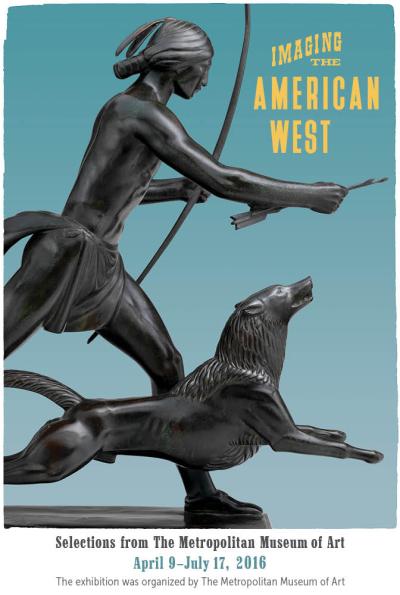
Paul Manship (1885–1966)
Detail of Indian Hunter and His Dog, 1926
Bronze
The Metropolitan Museum of Art, Gift of Thomas Cochran, 1929 (29.162)
Banner Image:
Samuel Colman (1832–1920)
Detail of Spanish Peaks, Southern Colorado, Late Afternoon, 1887
Oil on canvas
The Metropolitan Museum of Art, Gift of H. O. Havemeyer, 1893 (93.21)
Imaging the American West: Selections from The Metropolitan Museum of Art
At the turn of the twentieth century, works of art depicting majestic landscapes, Native Americans, cowboys and cavalry, and animals of the Western plains and mountains were collected eagerly. Through bronze sculptures, paintings, and works on paper, the exhibition Imaging the American West explores the popularity of artworks with American Western themes.
Artists include Albert Bierstadt, Frederic Remington, Charles M. Russell, and Georgia O’Keeffe.
The exhibition was organized by The Metropolitan Museum of Art
Focus on Nature-old
Focus on Nature XV: Natural and Cultural History Illustration
THE CALL FOR ENTRIES FOR FON XV IS NOW OPEN THROUGH OCTOBER 1, 2018. To learn how to submit your artwork for FON XV, please complete the online entry form:
http://collections.nysm.nysed.gov/fon/entries/tabed_panels_style.cfm
Focus on Nature XV will be hosted by the Roberson Museum and Science Center in Binghamton, NY from July 21, 2019 to January 12, 2020.
Since its inception in 1990, the exhibit series Focus on Nature has reflected the standards, materials, and skills of contemporary natural and cultural history illustrators. It has increased awareness of a genre that requires scientific accuracy for publications, interpretive nature centers, as well as many research and educational purposes. During the past 30 years, the materials, media, and subject matter has expanded and the quality of submissions has risen. It now includes some of the best illustrators from around the world.
State Museum, Library, and Archives to Close Saturday, April 23
The New York State Museum, State Library, and State Archives will be closed to the public on Saturday, April 23 due to a scheduled power shutdown to test the emergency power system in the Cultural Education Center building.
The State Museum will reopen on Sunday, April 24. The State Library and Archives will reopen on Monday, April 25.
The State Museum, Library, and Archives are programs of the New York State Education Department’s Office of Cultural Education. They are located at 222 Madison Avenue in Albany. Admission is free. Further information can be obtained by calling (518) 474-5877 or visiting the Office of Cultural Education.
###
Phone: (518) 474-1201
War of 1812
To commemorate the Bicentennial of the War of 1812, the New York State Museum, Archives, and Library present this web feature exhibition in coordination with museums, historic sites, re-enactors and other partner organizations across the state and in Canada.
Online Feature
New York State's Great Places and Spaces Program at the State Museum on January 14
Representatives from state historic sites and cultural institutions will provide educational hands-on activities, unique artifacts to explore, and information about upcoming events during the annual “New York State’s Great Places and Spaces” program on Saturday, January 14 from noon to 4:00 p.m. at the New York State Museum.
Visitors can learn about New York State history through activities and information provided by over 20 state historic sites, museums, and libraries. In addition, The Iron Jacks, a singing group that specializes in songs about U.S. sailors of the Civil War era, will perform at noon and 2:00 p.m. There will also be a guided tour of the Hudson Valley Ruins exhibition at 1:00 p.m. and 3:00 p.m. and a “hands-on” cart of Native Peoples reproduction objects where visitors can get first-hand experience with materials used by the Iroquois in the past and present.
Participating institutions include the Adirondack Museum, Albany Institute of History & Art, Albany Pine Bush, Burden Iron Works, Civil War Round Table, Crailo State Historic Site, Franklin D. Roosevelt Presidential Library & Museum, Historic Cherry Hill, Guilderland Historical Society, Johnson Hall State Historic Site, Knox’s Headquarters State Historic Sites, New Windsor Cantonment, NYS Office of Parks, Recreation & Historic Preservation, Olana State Historic Site, Saratoga National Historical Park, National Museum of Racing & Hall of Fame, Schenectady Historical Society, Schoharie Crossing State Historic Site, U.S. Grant Cottage Historic Site, and U.S. Naval Landing Party.
The State Museum is a program of the New York State Education Department’s Office of Cultural Education. Located at 222 Madison Avenue in Albany, the Museum is open Tuesday through Sunday from 9:30 a.m. to 5:00 p.m. It is closed on Thanksgiving, Christmas, and New Year's Day. Admission is free. Further information about programs and events can be obtained by calling (518) 474-5877 or visiting the Museum website.
Phone: (518) 474-1201
State Museum Opens Ice Ages Exhibition
The New York State Museum today announced the opening of a new long-term exhibition about the Ice Ages in New York State. The exhibition examines the landscape and animals of the Ice Ages in New York and features fossils of Ice Age mammals including mammoths, caribou, moose, and whales.
Over the last two million years, New York has experienced several Ice Ages interspersed with warm periods. Gigantic glaciers covered the state, and then retreated. Each wiped the landscape nearly clean, creating lakes, widening valleys, and rounding mountaintops. Many large Ice Age mammals—including mastodons, woolly mammoths, giant ground sloths, and musk oxen–are now extinct or gone from New York.
“The State Museum is a valuable cultural and educational resource for the public,” said Board of Regents Chancellor Betty A. Rosa. “I encourage teachers to bring students to the Ice Ages exhibition to learn about the history of New York before people were here and glaciers covered the landscape.”
“We’re proud to open the Ice Ages exhibition at the State Museum,” said State Education Commissioner MaryEllen Elia. “From exploring how glaciers work to learning how mastodons once inhabited New York, this exhibition is an excellent educational opportunity for both children and adults.”
“New York looked very different 13,000 years ago as the last Ice Age was ending,” said New York State Museum Director Mark Schaming. “We hope visitors leave the exhibition with a greater understanding of the arctic animals that once inhabited the state and how the Ice Ages left a lasting impact on New York’s landscape.”
Images from the exhibition are available.
The State Museum is a program of the New York State Education Department’s Office of Cultural Education. Located at 222 Madison Avenue in Albany, the Museum is open Tuesday through Sunday from 9:30 a.m. to 5:00 p.m. It is closed on Thanksgiving, Christmas, and New Year's Day. Admission is free. Further information about programs and events can be obtained by calling (518) 474-5877 or visiting the Museum website.
Phone: (518) 474-1201
Rain or Shine....It's Reading Time!
Miss Ann shares her favorite children’s literature followed by an adventure through the Museum galleries. This program is specifically designed for preschoolers, ages 2-4.

10th Annual Capital Region CANstruction: Let's Eat!
CANstruction is an annual exhibit and design competition that connects talented architects, engineers, contractors, and students to imagine and create colossal structures built completely out of canned food items. This year, fourteen structures will be on display on the State Museum’s 4th Floor Terrace to raise awareness of food insecurity in our region. At the close of the display every can will be distributed among 56 local food pantries through the Food Pantries for the Capital District.
You can provide support too. Bring a canned good with you on your visit to see this year’s structures and drop it into the bin next to your favorite structure. This act will help one team win the coveted People’s Choice Award. Together we are one community and one team.
For more information on CANstruction visit http://capitalregioncanstruction.com/
For more information on The Food Pantries for the Capital District visit http://www.thefoodpantries.org/
"Men of Bronze: The Black American Heroes of World War I" Film Screening and Discussion in Buffalo
The public is invited to attend a free film screening and discussion of “Men of Bronze: The Black American Heroes of World War I”, a documentary about the black American soldiers known as the Harlem Hellfighters during World War I, on Friday, February 3 at 1:00 p.m. at the Frank E. Merriweather Library at 1324 Jefferson Avenue, Buffalo. The film will be introduced by New York State Historian Devin Lander. Following the film screening, New York State Museum Senior Historian Aaron Noble will lead a question and answer session.
“Men of Bronze” is the definitive story of the black American soldiers of the 369th Infantry Regiment, known as the "Harlem Hellfighters," who served with the French Army in World War I. Although relegated to non-combat duty by the U.S. Command, the 369th was sent to France and spent more time in front-line trenches than any other American infantry unit. Fighting alongside French, Moroccan and Senegalese soldiers at the campaigns of Champagne-Marne and Meuse-Argonne, the courageous men of the 369th distinguished themselves in some of the fiercest battles of the Great War.
“We’re proud to bring the ‘Men of Bronze’ film program to the Buffalo community during Black History Month,” said Board of Regents member Catherine Collins. “I encourage the public – students and adults alike – to attend the program and learn about the African American soldiers who bravely fought for the nation during World War I.”
This program is sponsored by New York State Board of Regents member Dr. Catherine Collins; New York State Education Department; New York State Museum; Buffalo and Erie County Public Library System; Buffalo Public Schools; Buffalo Public Schools History/Social Studies Department; VA Western New York Healthcare System – Minority Veterans Program; The Links, Incorporated Buffalo Chapter, Erie County Chapter and Niagara Falls Chapter.
The State Museum is a program of the New York State Education Department’s Office of Cultural Education. Located at 222 Madison Avenue in Albany, the Museum is open Tuesday through Sunday from 9:30 a.m. to 5:00 p.m. It is closed on Thanksgiving, Christmas, and New Year's Day. Admission is free. Further information about programs and events can be obtained by calling (518) 474-5877 or visiting the Museum website.
Phone: (518) 474-1201
ArtifactNY
Welcome to Artifact|NY! Artifact|NY is a social media campaign designed to promote the permanent collections of New York State museums. The campaign will feature images of artifacts from permanent collections and the fascinating stories behind these artifacts. Created by Archivist Media in NYC and sponsored by the Museum Association of New York (MANY) in Troy, Artifact|NY will provide an expanded audience for New York State Museums across five social media platforms: Twitter, Facebook, Pinterest, Tumblr, and Instagram. Being featured on Artifact|NY is easy! All that’s required is a description of your museum’s artifact, a short paragraph on the artifact’s main point of interest, and a high–quality image (3000 pixels wide in .jpg format) of the artifact. For example, let’s say Leonardo da Vinci’s Mona Lisa is the artifact you’ve chosen to submit to Artifact|NY. After providing a brief description of the artifact (name, date, etc.), you would briefly explain what makes the artifact so interesting. This story or point of interest should explain the significance of the artifact and provide greater insight into its meaning—in essence, it should present the viewer with something we wouldn’t know just by looking at it. In the case of the Mona Lisa, this could be the theory that da Vinci painted features from his own self-portrait into the face of the woman he depicted. Following your short paragraph, attach a high quality image of the artifact and an additional image if it’s integral to your story—for the Mona Lisa this could be da Vinci’s self-portrait or the underpainting that was reconstructed in 2015. To guide you in the submission process, please visit the Artifact|NY Submission Form. Thank you for your interest in Artifact|NY—we look forward to your submissions!
State Museum Hosts "Brain Food for the Curious" Program Series, 2016 - 2017 Season
New York State Museum historians and scientists will share their knowledge and research in a series of lunchtime talks this fall and winter. “Brain Food for the Curious” will be held select Tuesdays, October through April, from 12:10 – 12:30 p.m. in the Huxley Theater. Each program includes a 20-minute talk with a State Museum historian or scientist followed by a question and answer period. Attendees are encouraged to bring their lunch.
Following is a schedule of “Brain Food for the Curious” talks for the 2016-17 season:
Thomas Cole: Adirondack Painter?
Tuesday, October 11
Learn about Thomas Cole’s neglected Adirondack work by viewing images of his sketches and paintings from his adventures, beginning with his 1826 trip to Lake George that resulted in his Ticonderoga and The Last of the Mohicans paintings.
Something Old, Something New
Tuesday, October 25
Walk down the aisle of history and explore the Museum’s wedding dress collection. Learn how these dresses reveal changes in both the fashion and ritual of wedding garments.
New York’s Presidents and Presidential Contenders
Tuesday, November 8
Six presidents have hailed from New York; another nine have run for the nation’s highest elected office but lost. Explore the history of these New Yorkers and their quests for the White House.
Erie Canal Warehouse
Tuesday, November 22
Learn about the history of an Erie Canal warehouse in Mohawk, NY. Many objects from the warehouse will be featured in the Museum’s upcoming Erie Canal exhibition.
The Origin and Evolution of Birds
Tuesday, December 6
New technologies in genetics have offered scientists new insights into when and how birds evolved. Coupled with a new view of the fossil record, which suggests that birds evolved from dinosaurs, this is a very different picture of bird evolution.
Bowfin Taxonomy and Systematics: Re-Evaluating a Century of Stasis
Tuesday, December 20
Hear about current research efforts to unravel the complex history of the Bowfin, a primitive fish found throughout New York and the Eastern United States.
How Long Does It Take To Build a Landscape? Examples of How New York’s Finger Lakes Developed
Tuesday, January 10
Long recognized as product of glaciation, learn how new research provides context on the origin and antiquity of the Finger Lakes.
Turned to Stone: The Processes of Fossilization
Tuesday, January 24
How do fossils form? Discover the various ways organisms and their activities can become fossilized.
Ecosystems Out Of The Ice Age
Tuesday, February 7
At the height of the Ice Age nearly 25,000 years ago, New York was almost entirely covered in ice. Hear about how ecosystems evolved from the barren land after the Ice Age to what can be seen outside today.
An Update on Fieldwork and Collection-Based Research at Schuyler Flatts, the Nicoll-Sill House, and the Van Schaick Mansion
Tuesday, February 21
Museum archaeologists have been conducting fieldwork at several historic sites in the Albany area. Learn about their findings and plans for 2017.
Deciphering the Still Largely Unknown Geology of the Catskills
Tuesday, March 7
Between mountains to the east and a broad shallow sea to the west, the nearly 400 million year old rocks of today’s Catskills were formed. Still little known, the Devonian-age rocks of the Catskills continue to reveal their secrets.
Introduction and History of the New York State Museum’s Malacology Collection
Tuesday, March 21
Learn about the Museum’s mollusk shell collection and some of the historic acquisitions that have contributed to its breadth.
What Can Apatite Tell Us?
Tuesday, April 4
Apatite is the most common phosphate mineral on earth. Discover how apatite is used in a variety of forms, including in jewelry, hybrid cars, computers, and smartphones.
The State Museum is a program of the New York State Education Department’s Office of Cultural Education. Located at 222 Madison Avenue in Albany, the Museum is open Tuesday through Sunday from 9:30 a.m. to 5:00 p.m. It is closed on Thanksgiving, Christmas, and New Year's Day. Admission is free. Further information about programs and events can be obtained by calling (518) 474-5877 or visiting the Museum website.
Phone: (518) 474-1201
State Museum Opens Empire State Plaza Art Collection Exhibition
The New York State Museum today opened a new exhibition featuring artwork from the Empire State Plaza Art Collection. The People’s Art: Selections from the Empire State Plaza Art Collection is organized in collaboration with the New York State Office of General Services, which curates the Plaza Art Collection. The exhibition features 20 works, including both paintings and sculpture, by 17 artists such as Mark Rothko, Jackson Pollock, Helen Frankenthaler, Franz Kline, David Smith, and Alexander Calder. The exhibition remains on view through September 3, 2017.
“We are proud to partner with the State Office of General Services on this exhibition featuring works from the Empire State Plaza’s world-class modern art collection,” said State Education Commissioner MaryEllen Elia. “This collection belongs to the people of New York State and we’re honored to host this exhibition of artwork that has intrigued Empire State Plaza visitors for the past 50 years.”
“As the proud stewards of the Empire State Plaza Art Collection, we are excited to be partnering with the New York State Museum to celebrate the collection’s 50th anniversary and increase the public’s exposure to these amazing works of art,” State Office of General Services Commissioner RoAnn Destito said. “Several of the pieces that will be on display in the museum were created by painters who were the first American artists to generate a groundbreaking and unique artistic movement that had a worldwide impact. The works created after World War II by the first generation of abstract expressionist artists helped shift the art capital of the world from Paris, where it had been for centuries, right here to New York.”
“Governor Nelson Rockefeller recognized the vital importance of American art and the Plaza Art Collection reflects the greatest public collection of twentieth century works in the nation,” said State Museum Director Mark Schaming. “We are honored to exhibit this selection of many of the best works from the Plaza Art Collection for State Museum visitors to view as never before.”
The Empire State Plaza Art Collection has been heralded as one of the greatest collections of modern American art in any single public site. Beginning in 1965, following a procedure he established decades earlier during the construction of Rockefeller Center in Manhattan, Governor Nelson Rockefeller assembled a commission of art experts to select the works for the Plaza and personally signed off on each acquisition. Funds for the art purchases were allocated as a percentage of the construction cost of each building on the Plaza.
Photos of artwork featured in the exhibition are available.
The State Museum is a program of the New York State Education Department’s Office of Cultural Education. Located at 222 Madison Avenue in Albany, the Museum is open Tuesday through Sunday from 9:30 a.m. to 5:00 p.m. It is closed on Thanksgiving, Christmas, and New Year's Day. Admission is free. Further information about programs and events can be obtained by calling (518) 474-5877 or visiting the Museum website.
###
Phone: (518) 474-1201
Path to Statehood: New York’s Constitutions and the U.S. Constitution
New York’s first constitution (1777) and the United States constitution (1787) established stable governments after the turmoil of the American Revolution. Though Great Britain had no written constitution, its political system profoundly influenced the American constitutions. New Yorkers Alexander Hamilton and John Jay argued forcefully for the U.S. Constitution. Governor George Clinton expressed deep concerns about a too-strong federal government. New York’s ratification of the U.S. Constitution at a convention in Poughkeepsie followed intense debates about government’s powers and citizens’ rights.
New York has had four constitutions, adopted in 1777, 1821, 1846, and 1894. Each was prepared by a convention of delegates. Constitutional conventions in 1801, 1867, 1915, 1938, and 1967 proposed new documents or major amendments, most rejected by the voters. In November 2017 New Yorkers will again decide whether to hold another constitutional convention.
The manuscript texts of New York’s constitutions are “treasure” documents carefully preserved by the New York State Archives.
This exhibition is organized by the New York State Archives.
The New York State Archives is a program of the State Education Department/University of the State of New York
State Museum Celebrates New York State History Month in November
The New York State Museum will celebrate New York State History Month in November with a variety of free public programs for children, families, and adults. The Museum also recently launched a website to share information about historical research, news, and resources.
“History can help us understand our past and shape our future,” said Board of Regents Chancellor Betty Rosa. “New York State History Month is a time to thank the historians across the state – public historians, educators, curators, and professors – who keep history alive and promote the importance of learning about our state’s past. I encourage children of all ages to explore New York’s rich cultural history through resources in your classroom or school, or by visiting a nearby museum or historic site.”
“Events will be held across the state in celebration of New York State History Month,” said State Education Commissioner MaryEllen Elia. “At these events, New Yorkers can learn about the Empire State’s history at museums, libraries and cultural institutions. The Board of Regents and I invite everyone – students, teachers and families – to celebrate New York State History Month by attending a history program in your community.”
“New York State’s history is second to none when it comes to international importance, depth and breadth,” said State Museum Director Mark Schaming. “The State Museum, along with thousands of other museums across the state, is pleased to offer a variety of history programs for visitors to enjoy during New York State History Month.”
“New York State History Month gives us an opportunity to focus on and celebrate our shared past,” said State Historian Devin Lander. “It’s a statewide opportunity to celebrate those working in the field of history, including New York State’s unique matrix of village, town, city, county, and borough historians. These keepers of our collective heritage are some of the most dedicated and knowledgeable municipal workers in local government and provide the invaluable service of preserving, protecting, and promoting New York’s local and state history.”
The following is a schedule of free New York State History Month programs at the State Museum located at 222 Madison Avenue, Albany:
Lunch Bite Gallery Tour: Henry DiSpirito: From Stonemason to Sculptor
November 3 | 12:00 p.m.
Learn about Henry DiSpirito’s training as a sculptor and his work Torso, on view in New York Hall.
Presidential Campaigns: An Election Year History
November 3, 10 & 17 | 6:00 – 8:00 p.m.
This series invites participants to examine, discuss, and enjoy the history of the United States presidential campaigns from 1789 to 2012.
Cinema Sunday: Men Of Bronze
November 6 | 2:00 p.m.
MEN OF BRONZE is a film about the black American soldiers of the 369th combat regiment, known as the "Harlem Hellfighters", who served with the French Army in World War I. Following the screening, there will be a brief Q&A session with Senior Historian Aaron Noble and State Historian Devin Lander.
Brain Food for the Curious: New York’s Presidents and Presidential Contenders
November 8 | 12:10 p.m.
Six presidents have hailed from New York; another nine have run for the nation’s highest elected office but lost. Explore the history of these New Yorkers and their quests for the White House.
Hudson Valley Ruins Lecture and Book Signing
November 12 | 1:00 p.m.
Join photographers Thomas Rinaldi and Robert Yasinsac as they present photographs from the Hudson Valley Ruins exhibition, together with historic images, to tell the story of the region through its ruins.
Preserving the Garden: The Road to Recognizing Historic Woodstock Festival Site
November 13 | 2:00 – 5:00 p.m.
Off-Site Program: Learn about one of the pivotal moments of the 1960s – the Woodstock Music and Art Fair – and the efforts to preserve and secure official historic designation for the festival site. The Museum at Bethel Woods is located at 200 Hurd Road, Bethel, NY.
Creative Art Day: Preparing for St. Nicholas
November 19 | 1:00 – 3:00 p.m.
Learn about the holiday traditions of New York’s Dutch settlers. Discover how St. Nicholas Day was celebrated and make your own ornament.
Family Fun Day: The State Museum’s Carousel Celebration
November 19 | 1:00 – 4:00 p.m.
Learn about the Museum’s historic carousel through fun and educational activities for the whole family.
Behind the Scenes Tour of the Museum’s History Collections
November 20 | 1:00 – 3:00 p.m.
Take a tour of the Museum’s history collections from decorative arts to military to social history. Space is limited; registration is required. Call 518-474-0575 to register.
Brain Food for the Curious: Erie Canal Warehouse
November 22 | 12:10 p.m.
Learn about the history of an Erie Canal warehouse that was located in Mohawk, NY. The Museum’s has numerous objects from the warehouse including a giant windlass/hoist that raised and lowered cargo from wagons and canal boats.
The Museum’s new Office of State History Outreach website is an online portal that provides information about historical research, news, grant opportunities and events happening around New York State. The goal of the website is to provide an online resource for historians throughout the state to learn about the work of fellow historians and identify opportunities for increased coordination and collaboration.
In 1997, the New York State Legislature established November as New York State History Month with the goal “to celebrate the history of New York state and recognize the contributions of state and local historians.” New York State History Month is an opportunity for historians, museums and cultural institutions to highlight importance of New York State’s history through public programs, exhibitions and other learning opportunities.
The State Museum is a program of the New York State Education Department’s Office of Cultural Education. Located at 222 Madison Avenue in Albany, the Museum is open Tuesday through Sunday from 9:30 a.m. to 5:00 p.m. It is closed on Thanksgiving, Christmas, and New Year's Day. Admission is free. Further information about programs and events can be obtained by calling (518) 474-5877 or visiting the Museum website.
Phone: (518) 474-1201

Kids Curate
The votes are in! Visit the State Museum February 24 – 26, 2017 to see what objects are on display for the first exhibition at the museum curated by children across the state!
Throughout November, children voted for their favorite artifacts and specimens in the Museum’s collections to go on display at the first Kids Curate exhibition.
The exhibition will feature the top seven objects with the most votes as well as interactive, family-friendly programming. Children and families can meet with State Museum curators and scientists to learn more about the museum’s vast collections, participate in educational hands-on activities, and enjoy performances by local musical and performing arts groups.
More information about the exhibition and a complete schedule of programs is available here.
State Museum Encourages Kids to Curate a Special Exhibition by Voting for Their Favorite Objects
The most popular objects will be on display in a “Kids Curate” Exhibition in February 2017
Children across the state are invited to “curate” a special three-day exhibition at the New York State Museum by voting for their favorite artifacts and specimens during the month of November. A voting ballot is available on the Museum’s website and in-person at the Museum for children to vote for which objects they want to see in the “Kids Curate” exhibition in February 2017. Voting will close on Wednesday, November 30. The online ballot is available at: http://www.nysm.nysed.gov/kids-curate.
The ballot includes 15 objects from the State Museum’s collections representing various areas including history, biology, paleontology, geology, and ethnography. The seven objects with the most votes will appear in a special exhibition on the 4th floor of the State Museum February 24 – 26, 2017. Children are encouraged to submit their comments on why they voted for a particular object; selected comments will be featured in the exhibition.
“Kids Curate is an interactive way for students across the state to learn about unique historical artifacts, biology specimens, and fossils from the State Museum’s collections,” said Board of Regents Chancellor Betty Rosa. “I invite students to participate in this new program by voting and creating the first Kids Curate exhibition at the State Museum.”
“Kids Curate gives children the opportunity to step into the role of curator and select objects from the Museum’s collections for display,” said State Education Commissioner MaryEllen Elia. “I encourage kids across the state to participate in Kids Curate by voting for your favorite objects during the month of November.”
“From a gigantic yellow jacket nest to a fossilized squid, children have the opportunity to learn about objects in our collections and vote for the ones they want displayed in an exhibition,” said State Museum Director Mark Schaming. “We’re excited to launch this new program that invites kids to create an exhibition that showcases our world-class history and science collections.”
The Kids Curate exhibition in February 2017 will include the seven objects with the most votes as well as interactive, family-friendly programming. Curators, scientists, and historians will also be available to talk to children about the State Museum’s history and science collections and how exhibitions are created. More information about Kids Curate will be announced in early 2017.
The State Museum is a program of the New York State Education Department’s Office of Cultural Education. Located at 222 Madison Avenue in Albany, the Museum is open Tuesday through Sunday from 9:30 a.m. to 5:00 p.m. It is closed on Thanksgiving, Christmas, and New Year's Day. Admission is free. Further information about programs and events can be obtained by calling (518) 474-5877 or visiting the Museum website.
###
Phone: (518) 474-1201
State Archives Opens "The Path to Statehood" Exhibition at the State Museum
The New York State Archives today announced a special limited engagement exhibition at the New York State Museum featuring New York State’s founding documents. The Path to Statehood features New York’s first constitution (1777), journal of the Poughkeepsie Convention (1788), New York’s engrossed copy of the U.S. Constitution (1788), and New York’s current constitution (1894). The exhibition is open November 8 – 27.
“The State Archives cares for more than 200 million documents in its collections,” said Board of Regents Chancellor Betty Rosa. “This exhibition features foundation documents of our state and nation, including the state’s first constitution, which was adopted while the American colonies were fighting for their freedom from Great Britain. I encourage New Yorkers – adults, children, and educators – to visit the exhibition and see the documents that established our State and our nation.”
“The Path to Statehood features some of New York State’s most important treasures, which are preserved in our State Archives,” said State Education Commissioner MaryEllen Elia. “We’re proud to make these historic documents accessible to the public to remind us of our rights as citizens and the commitment of those who helped establish our democracy. These documents provide touchstones to our past and guideposts for our future.”
“These foundation documents are essential for telling the story of our state and its role in establishing the republic,” said State Archivist Thomas Ruller. “We’re proud to make these documents available and are grateful for our role in preserving these treasures for future generations. We invite New Yorkers to see this exhibition, learn how the Empire State was founded, and discover how the State Archives preserves New York’s history.”
New York’s first constitution (1777) and the U.S. Constitution (1787) established stable governments during and after the turmoil of the American Revolution. New Yorkers Alexander Hamilton and John Jay argued forcefully for the U.S. Constitution. Governor George Clinton expressed deep concerns about a too-strong federal government. New York’s ratification of the U.S. Constitution at a convention in Poughkeepsie followed intense debates about government’s powers and citizens’ rights.
New York has had four constitutions, adopted in 1777, 1821, 1846 and 1894. Each was prepared by a convention of delegates. Constitutional conventions in 1801, 1867, 1915, 1938 and 1967 proposed new documents or major amendments, most rejected by the voters. In November 2017 New Yorkers will again decide whether to hold another constitutional convention.
An image of the first page of New York’s engrossed copy of the U.S. Constitution is available here: http://digitalcollections.archives.nysed.gov/index.php/Detail/Object/Show/object_id/10481.
The New York State Archives is a program of the State Education Department’s Office of Cultural Education. Located at 222 Madison Avenue in Albany, the Archives is open Monday through Saturday from 9:30 a.m. to 5 p.m. except on legal holidays. Further information can be obtained by calling (518) 474-8955 or visiting the Archives’ website.
Phone: (518) 474-1201
New Acquisition to the Mineralogy Collection
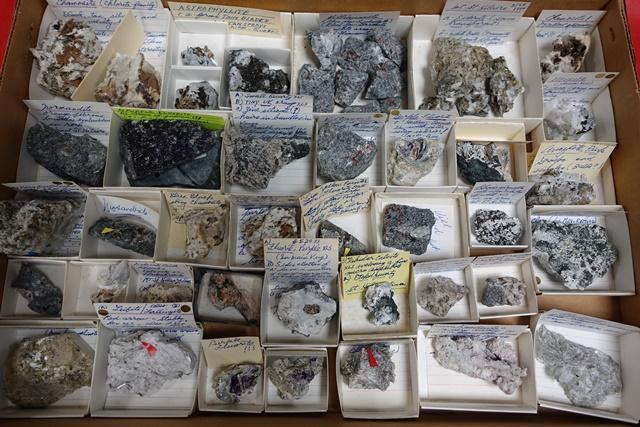
The Museum's mineralogy collection constitutes the world's largest and most complete array of New York State minerals. However, the collection also contains thousands of non-New York specimens, including minerals from Europe, Africa, Asia, and North and South America.
A recent acquisition has added thousands of minerals found in Canadian quarries to the collection. The collection not only includes various common minerals, but also many rare minerals that were found and described for the first time for science in Canada. These minerals include carletonite, weloganite, and hilairite.
Mineralogy staff will sort and catalog the thousands of minerals so that researchers visiting the Museum can use them for study and analysis. Click here for more information about the mineralogy collection.
Free Monthly Saturday Tours of State Education Building and State Capitol to Begin August 12
State Education Commissioner MaryEllen Elia and State Office of General Services Commissioner RoAnn Destito today announced visitors to Albany will now have the opportunity to take free tours of both the State Education Building and the Capitol on the second Saturday of each month, starting August 12. Tours of the Education Building will be offered at 12:30 p.m. and 2:30 p.m., and tours of the Capitol will be given at 11 a.m. and 1 p.m. Each of the tours can accommodate 25 people and reservations are required. Reservations can be made at: www.empirestateplaza.org. Visitors can choose to register for both or either the State Education Building tour and/or the New York State Capitol tour.
“We’re pleased to open the State Education Building for free, regular public tours for the first time,” said Board of Regents Chancellor Betty A. Rosa. “The Education Building was a modern marvel when it was built over 100 years ago and continues to amaze and delight today with its stunning architecture, art and history. I encourage adults, families and students to register for a tour and learn about this grand, historic building.”
“The State Education Building is a magnificent architectural gem and we’re proud to open it to public tours,” said State Education Commissioner MaryEllen Elia. “The building is full of history and intricate details that the public deserves to see and appreciate. We’re also pleased to work with the State Office of General Services to promote this tour and give visitors an opportunity to spend an afternoon exploring the historic State Capitol and State Education Building.”
“We are very pleased to collaborate with our colleagues at the State Education Department to make the best use of public facilities and expand opportunities for the people who come from around the world to see all the wonderful things New York’s capital city has to offer,” State Office of General Services Commissioner RoAnn Destito said. “Tours of the Education Building will nicely complement our award-winning Capitol and Empire State Plaza tours, and I urge everyone to come and see and learn about these architectural gems.”
New York State Museum staff will lead the 45-minute Education Building tour, and visitors will have the opportunity to explore the historic Chancellors Hall, Regents Room and the Rotunda adorned with murals by Albany native Will H. Low. The State Education Building is located at 89 Washington Avenue, Albany. This is the first time the building has been made available for regular public tours since the State Museum and Library were moved from the Education Building to the Cultural Education Center in the 1970s.
State Capitol tours conducted by the State Office of General Services begin at the Empire State Plaza Visitor Center, located on the Concourse level of the Plaza. Highlights of the tour can include the legislative chambers, Hall of Governors, Governor’s Reception Room, Hall of New York, historic staircases and carvings.
The New York State Education Building was designed by renowned New York City architect, Henry Hornbostel, one of 63 architects to submit plans, and was constructed by the Rochester firm R. T. Ford and Company. Construction began in 1908 and the building was dedicated in 1912. At the time, the cost to construct the building amounted to approximately $4 million and covered everything from the purchase of the land to building construction. The Education Building was the first major building constructed in the United States solely as a headquarters for the administration of education. In addition to State Education Department staff, the Education Building originally housed the State Library and State Museum—now currently in the Cultural Education Center.
Sitting atop Albany’s State Street hill, the New York State Capitol has served as the seat of government for New York since the 1880s. The building is a marvel of late 19th century architectural grandeur, built by hand of solid masonry over a period of 32 years.
More information on the history of the State Education Building is available.
Photos of the State Education Building are available.
Visit the Office of General Services website for more information about weekday tours, special exhibits and the history of the Capitol, Empire State Plaza, and the Empire State Plaza Art Collection: www.empirestateplaza.org.
Phone: (518) 474-1201
New Research Shows How Ancient Pottery Reveals Insights on Iroquoian Population's Power in 16th Century
An innovative study published today in the journal Science Advances demonstrates how decorations on ancient pottery can be used to discover new evidence for how groups interacted across large regions. The research, conducted by John P. Hart, Director of Research and Collections at the New York State Museum; Jennifer Birch, Assistant Professor at the University of Georgia; and Christian Gates St-Pierre, Assistant Professor at the University of Montreal, sheds new light on the importance of a little-understood Iroquoian population in upstate New York and its impact on relations between two emerging Native American political powers in the 16th century.
Iroquoians in northeastern North America are best known for the Haudenosaunee (Iroquois) and Wendat (Huron) confederacies in upstate New York and southern Ontario. There are extensive early historic records of both groups. Descendants of these confederacies and their respective nations that remain in these areas today have rich oral traditions that speak to their histories before and after European contact. Archaeology fills out these records through the excavation and analyses of ancestral communities.
Other Iroquoian groups did not persist and, for some, archaeology is the primary means of understanding their histories. One such group occupied the eastern end of Lake Ontario south of the head waters of the St. Lawrence River. Known by archaeologists as the Jefferson County Iroquoians, this group had abandoned their territory by the early 17th century. Archaeologists have pondered their “disappearance” for over a century, asking two primary questions, “why did they disperse” and “where did they go”? However, Hart, Birch and Gates St-Pierre ask a very different question, “what role did the Jefferson County Iroquoians play in Iroquoian social networks”?
Northern Iroquoians made pottery vessels with often complex geometrical decorations, which Hart and his colleagues suggest signaled membership in regional interaction networks. Using social network analysis with a statistic that measured the similarities of pottery decorations between sites, they demonstrate that the Jefferson County Iroquoians played a key role in regional interactions during the 16th century. As brokers between Iroquoian ancestral Haudenosaunee and Wendat groups, the Jefferson County Iroquoians were intermediaries in relationships between these groups. According to Birch, “by focusing on the connections between communities and regions, rather than a single scale of analysis, we are better able to understand how people’s everyday activities relate to the larger-scale social and political histories.”
After the Jefferson County population dispersed in the early 17th century, no other group took the place as “brokers” between Iroquoian people living in New York and Canada. The dispersal of Jefferson County populations effectively ended this brokerage function and may have contributed to the escalation of conflict between the Huron-Wendat and Iroquois confederacies. These results add to a growing literature on the use of network analyses with archaeological data and contribute new insights into processes of population relocation and geopolitical realignment, as well as the role of borderlands and frontiers in non-state societies.
This study is part of an ongoing effort by Hart and colleagues that employs social network analysis to better understand the relationships between Iroquoian populations in New York and Canada. According to Hart, “the past is a much more complex place than ordinarily considered. Our results highlight how our views of the past can be informed through the application of new methods and techniques.”
The paper is available.
Phone: (518) 474-1201
The Rotunda Paintings of the NYS Education Building
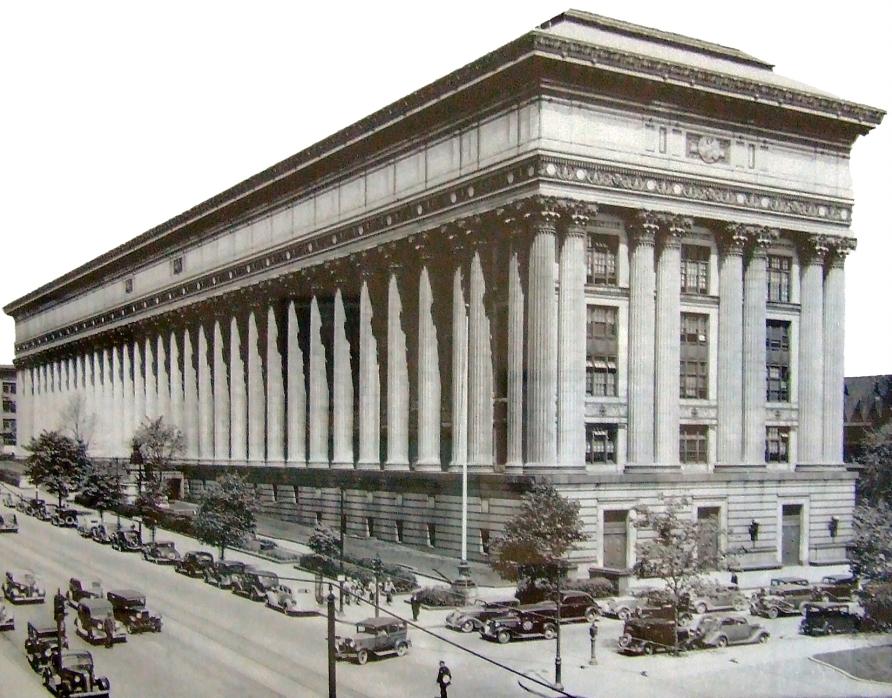
Historic Photo of State Education Building
Photo Credit: New York State Education Department
The New York State Education building, constructed in a grand Neoclassical style between 1908 and 1912, was designed to “impress the popular mind with the important place which education holds in the thought and policies of the Empire State.” Similarly, the thirty-six paintings, created by Albany artist Will Hicok Low, possess a timeless quality of beauty and grace and serve as an architectural accompaniment to the building.
The Paintings
Using figures and symbols from Roman and Greek mythology paired with New York buildings and landscapes, the artist charts major milestones in human progress—in terms of art, science, technology, modernization, liberty, democracy, and quality of life. The earliest panels, such as Architecture, Astronomy & Geography, and Medicine & Chemistry, combine theory and practical skills. Another eight, including Theseus, the Pathfinder, feature modern inventions to show how far humankind had progressed by the early 20th century. The final paintings reflect a patriotic thme, with subjects such as The Standard, The United States Military Academy, and the Shaft of Union. Taken together, these paintings—originally gracing the entrances of the State Library Main Reading Room, the Law Library, and the Periodicals Library—complement the Rotunda’s architectural nobility and its aura of intellectual enlightenment.
The Paintings
Using figures and symbols from Roman and Greek mythology paired with New York buildings and landscapes, the artist charts major milestones in human progress—in terms of art, science, technology, modernization, liberty, democracy, and quality of life. The earliest panels, such as Architecture, Astronomy & Geography, and Medicine & Chemistry, combine theory and practical skills. Another eight, including Theseus, the Pathfinder, feature modern inventions to show how far humankind had progressed by the early 20th century. The final paintings reflect a patriotic thme, with subjects such as The Standard, The United States Military Academy, and the Shaft of Union. Taken together, these paintings—originally gracing the entrances of the State Library Main Reading Room, the Law Library, and the Periodicals Library—complement the Rotunda’s architectural nobility and its aura of intellectual enlightenment.