

Brooklyn Museum Exhibit Opens Nov. 19th at NYS Museum
ALBANY, NY – The World in Brooklyn: Selections from the Brooklyn Museum opens at the New York State Museum November 19th as part of the Bank of America Great Art Series.
This is the Brooklyn Museum’s first exhibition as part of the State Museum’s newly expanded Great Art Exhibition and Education Program, which brings art from New York’s leading art museums to Albany.
“We are delighted to have this unprecedented opportunity to present for the benefit of the Capitolal region audiences, these exceptional examples from the diverse and vast holdings of the Brooklyn Museum,” said Museum Director Arnold L. Lehman. “This is but a small sampling from one of the largest and most important permanent collections of art in the United States. We hope that it will serve as an introduction to our superb holdings and inspire future visits to the Brooklyn Museum."
“The State Museum is very pleased to welcome the Brooklyn Museum to the Bank of America Great Art Series,” said State Museum Director Dr. Clifford Siegfried. “We are very excited about the opportunity to present this very diverse exhibition, which includes great works of art from ancient times to the present, representing many different cultures from throughout the world.”
Organized by the Brooklyn Museum and curated by Kevin Stayton, the Museum’s chief curator, the exhibition’s theme focuses on the diversity of the Brooklyn community, which is reflected in its collections. The Brooklyn Museum is one of the largest art museums in the country with a permanent collection of more than one million objects, ranging from world-famous holdings of ancient Egyptian art to contemporary art. The items in the collection encompass nearly all of the world’s principal cultures. The World in Brooklyn exhibition, in West Gallery through March 6, 2006, showcases 50 works of art. Winter Scene in Brooklyn, by Francis Guy, is one of the iconic works in the collection. Painted c. 1817-1820 from the artist’s window on Front Street, it depicts his neighbors going about their daily lives feeding chickens, watering horses and chatting with friends in what was then the most important
areas of Brooklyn. A preliminary plate for the Sojourner Truth place setting in The Dinner Party, by
-more-
-2-
Judy Chicago, is also included.
Also in the exhibition is a rare mid-18th century Peruvian painting of the legendary Inca ruler Tupac Yupanqui and the famous Emancipation Cane, a work of 19th-century folk art that chronicles one of the most important moments in African-American history. The exhibition also includes works from the Museum’s renowned collection of Egyptian and Islamic art and other objects, such as a papyrus and ink marriage document from Egypt, dating to 449 B.C.E. There also is the Funerary Cartonnage of a Lady of Means from Egypt, dating from the Roman period, 1st century C.E. Also represented in the exhibition are European paintings and artworks from the museum’s Asian, Native American and contemporary collections. Among the contemporary works is Snoop Dogg, a 2002 photograph of the rap performer by Andres Serrano, and Passing/Posing (Fleur de Lis), a 2003 oil on canvas by Kehinde Wiley.
Visitors to the World in Brooklyn exhibition will have the opportunity to pick up a two for one admission ticket to the Brooklyn Museum, available in the exhibition brochure, good through March 6, 2006.
The New York State Museum expresses its gratitude to Bank of America, First Lady Libby Pataki, the New York State Senate and New York State Assembly for making this exhibition possible.
The New York State Museum is a cultural program of the New York State Department of Education. Started in 1836, the museum has the longest continuously operating state natural history research and collection survey in the United States. The state museum is located on Madison Avenue in Albany. It is open daily from 9:30 a.m. to 5 p.m. except on Thanksgiving, Christmas and New Year's Day. Admission is free. Further information about programs and events can be obtained by calling (518) 474-5877 or visiting the museum website at www.nysm.nysed.gov.
# # #
Phone: (518) 474-1201
Hudson Rivers Worst Steamboat Disaster Subject of Feb. 19th Talk
"The Wreck of the Henry Clay," the worst steamboat disaster to occur on the Hudson River, will be the topic of a lecture on Saturday, Feb. 19th at the New York State Museum.
Speaking at 2 p.m. in the Museum Theater, author Kris A. Hansen of Wallingford, Conn. will tell the story of the extraordinary courage displayed by ordinary people when the Henry Clay burned on the shore of the Hudson River at Riverdale in July 1852. Hansen, a professional reporter and writer, has written a book --"Death Passage on the Hudson: the Wreck of the Henry Clay" -- about the events that surrounded the catastrophe that took dozens of lives.
Prominent Hudson River families were among the many affected by the disaster, which was reported in the major newspapers of the day and drew national attention. Speculation arose that a race with the competing steamboat Armenia was responsible for the disaster. Negligence was suspected and the public demanded retribution. In her book, Hansen includes witness testimony and information from legal documents to detail the public's search for truth at the official inquest and subsequent legal wrangling in the courts.
Following the Museum lecture, Hansen will sign copies of her book, which will be available for purchase. A native of the Hudson Highlands, Hansen has done writing, reporting and editing for business and special interest publications.
The State Museum is a cultural program of the New York State Department of Education. Started in 1836, the museum has the nation's longest continuously operating state natural history research and collection survey. The museum is located on Madison Avenue in Albany. Further information is available by calling 474-5877 or visiting the museum website at www.nysm.nysed.gov.
The New York State Museum is located on Madison Avenue in Albany. It is open 9:30 a.m. to 5 p.m. seven days a week throughout the year except on Thanksgiving, Christmas and New Year's Day. Further information about programs and events can be obtained by calling (518) 474-5877 or visiting the museum website at www.nysm.nysed.gov.
Phone: (518) 474-1201
State Museum to Host Russel Wright Exhibition, Opens May 4
An exhibition featuring the work and philosophy of renowned industrial designer Russel Wright will open May 4, 2013 at the New York State Museum. Russel Wright: The Nature of Design explores Wright's career from the 1920s through the 1970s and features approximately 40 objects along with photographs and design sketches.
On display through December 31 in the Crossroads Gallery, the exhibit was first organized by and presented at the Samuel Dorsky Museum of Art at the State University of New York at New Paltz from August 2012 to March 2013. The exhibit includes objects such as wood serving bowls and spun aluminum trays designed Pre-World War II as well as Wright’s more experimental and innovative Post-World War II designs, including earthenware plates, bowls, pitchers, and vases.
The exhibit also includes a video with images created by Wright to explain his conception of Manitoga, his final home and estate and now a national historic landmark, located in Garrison, New York. Built into an abandoned stone quarry, the modernist home and 75 acre garden was Wright’s most inventive and holistic realization of his philosophy and goal to live in harmony with nature and good design.
Russel Wright (1904-1976) revolutionized the American home and the way people lived there. His inexpensive, mass-produced dinnerware, furniture, appliances and textiles were not only visually and technically innovative, but were also the tools to achieve his concept of "easier living," a unique American lifestyle that was gracious yet contemporary and informal.
Collaborating with his wife Mary Wright, Russel disseminated his designs and ideas in exhibitions, books, articles, advertisements, radio interviews, and demonstration rooms in department stores. In all these enterprises, Russel and Mary converted his name and signature into a recognizable trademark on par with major manufacturers. They invented lifestyle marketing centered on a compelling persona, paving the way for such lifestyle interpreters as Martha Stewart and Ralph Lauren.
The exhibit is accompanied by a fully-illustrated catalogue featuring essays by co-curators Donald Albrecht and Dianne Pierce and by Kerry Dean Carso, Ph.D., Associate Professor of Art History at the State University of New York at New Paltz. The catalogue also includes images and text from Russel Wright’s 1960 slide talk, which promoted his philosophy of modern living and the importance of maintaining a close relationship to nature.
Donald Albrecht has curated exhibitions that have ranged from overviews of cultural trends, including World War II and the American Dream and Green House: New Directions in Sustainable Architecture and Design for the National Building Museum, the National Design Triennial for the Cooper-Hewitt National Design Museum, and Paris/New York: Design Fashion Culture, 1925–1940 for the Museum of the City of New York. Albrecht teaches in the Masters Program in the Decorative Arts at the Cooper-Hewitt and lectures frequently about architecture and design at other institutions. He is a Fellow of the American Academy in Rome.
Dianne Pierce is the former Museum Education Director at Manitoga/The Russel Wright Design Center. She is an adjunct faculty member, teaching the history of design, in the Department of Art History at the State University of New York at New Paltz as well as faculty at Parsons The New School of Design in New York.
Photos from the exhibit are available at: http://www.nysm.nysed.gov/PRkit/2013/wright/index.html.
The State Museum is a program of the New York State Education Department’s Office of Cultural Education. Located on Madison Avenue in Albany, the Museum is open Tuesday through Sunday from 9:30 a.m. to 5 p.m. It is closed on Thanksgiving, Christmas and New Year's Day. Admission is free. Further information about programs and events can be obtained by calling (518) 474-5877 or visiting the Museum website.
Phone: (518) 474-1201
NYS Museum Opens World Trade Center Exhibition
"The World Trade Center: Rescue Recovery Response," the nation's first permanent museum exhibition of artifacts documenting the September 11th attack at the World Trade Center (WTC), opens at the New York State Museum on Thursday, September 5.
The exhibition is located in the new 4,500-square foot gallery in the museum's New York Metropolis Hall. Its centerpiece is the heavily damaged Engine 6 pumper, one of the first fire trucks to respond to the scene, as well as video and many other objects and images chronicling this tragic chapter in the nation's history. The exhibition tells the story of the World Trade Center, the rescue efforts after the attacks, the recovery operation at the Fresh Kills landfill and the public response in media, memorials and oral histories.
"With the permission of the brothers of Engine 6 and their families, and with the help of so many people and agencies, the state museum is honored to be entrusted with the fire truck that was among the first on the scene on September 11," said State Education Department Commissioner Richard Mills. "Engine 6 is an old and famous company. Their finest hour began a little after 9 a.m. on the morning of Sept 11. This particular fire apparatus has a story all its own. Five firefighters went in. All but one were lost.
"When a fire engine stands ready for action, firefighters say it is, 'in service.' Engine 6 will be in service here. The service it will render from now on will be to teach the values of those who manned it. People will bring their children to see this emblem of valor and sacrifice."
"Shortly after September 11th we began to lay the groundwork for one of the most challenging projects the museum has ever undertaken," said State Museum Director Cliff Siegfried. "We began the process of identifying, collecting and preserving artifacts that would speak to future generations about the nation's worst terrorist attack. This would not have been possible without the leadership of Governor Pataki and Commissioner Mills, and the assistance of city, state and national agencies and the support of police and fire personnel and families of the victims."
Opening in September is the first of a two-phase exhibition -- "Rescue: The First 24 Hours." It documents the first 24 hours after the attacks began on September 11, 2001. In addition to the fire department objects, there are several others from New York City's police department, as well as a 9-ton, 19-foot high beam from one of the WTC towers recovered from the WTC site.
As visitors enter the WTC gallery, they will see a 4 x 6-foot American flag recovered by state police from Ground Zero. There is a history of the World Trade Center with photos of architectural sketches, a video of the construction and a floor-to-ceiling beam from one of the towers. The beam, which visitors can touch, provides a sense of the scale and size of the buildings, which rose more than 1360 feet and encompassed 110 floors.
One section of the exhibition focuses on the American flag -- its history, significance and the new meaning it has taken on since September 11th. The focal point is an American flag that was recovered from the WTC debris and then flew at the Fresh Kills recovery operation site.
A 20 x 48-foot photo mural showing the WTC destruction provides the backdrop for he Engine 6 pumper and a display on the fire company that lost four of its members who rode on the rig that day. This will include the history of the prominent Manhattan fire company, which was organized in 1756 and was later known as the Engine 6 "Tigers." The company's quarters are near the World Trade Center site and, because of this, the Engine 6 pumper had a specially built pump that was powerful enough to push water to the top of the towers. It was partially crushed in the collapse of the North Tower.
There also is a panel that is a tribute to the four firefighters who died. Five of the six firefighters that rode on the pumper entered the North Tower, while the driver, Jack Butler, stayed with the truck. Butler ran from the truck as the building started to collapse and firefighter Billy Green was able to flee from the tower when ordered to do so. Unable to escape before the collapse were: Lt. Thomas O'Hagan, 43, of the Bronx; Paul Beyer, 37, of Staten Island; William "Billy" Johnston, 31, of Long Island and Thomas Holohan, 36, of Orange County.
O'Hagan, married and the doting father of two young twin boys, fulfilled his lifelong dream of becoming a fireman when he was 23 and was promoted to lieutenant in October 2000. Beyer, also married, was the loving father of two teenage boys and a skilled machinist who was in the process of building a new home. Johnston was known as an outstanding athlete who loved to play practical jokes on his friends and co-workers. Holohan, married and the father of three small children, was a former bank auditor who followed in the footsteps of his grandfather and uncle when he became a firefighter in 1995 and, most recently, was studying to become a lieutenant.
In front of the fire pumper is a timeline of the first 24 hours of the WTC attack. The timeline begins as a beautiful day dawns in Manhattan at 6:30 a.m. on September 11, 2001. It then shifts to 8:46 a.m., the time the first plane hit, and documents each of the significant events that followed. In front of this there are various artifacts recovered from the site including a backboard and other items used by firefighters, police and emergency rescue personnel.
The second phase of the exhibition, opening in December, will feature two gallery sections -- "Recovery," the story of the massive operation at the Fresh Kills landfill, and "Response," showcasing memorial material in the museum's collection.
The Recovery section will document the operation at Fresh Kills that began on September 12th when the first WTC remains arrived. A team of medical examiners, police, FBI agents, city sanitation staff, army personnel and disaster relief contractors created a "city on the hill." By July 26th they had sifted through more than 1.8 million tons of material and inspected more than 2,000 cars, trucks and rescue vehicles with the mission to find human remains, personal effects and criminal evidence. They recovered more than 50,000 personal objects and 4,000 human remains that led to the identification of hundreds of victims.
The Response section of the exhibition will include many of the memorial objects which family, friends and countless other concerned Americans posted within a week of the WTC attack. Informal memorials appeared across the city, state and nation as a sign of unprecedented support, including banners, art, signs, posters, shirts, flowers and messages. There will be a rotating display of these materials, which the museum has collected as part of the process of documenting the attack and its impact.
A traveling exhibition, "Recovery: Ingenuity and Reverence at Fresh Kills," will open at the New-York Historical Society in 2003 and then go on an extensive tour. It will include photographs of the Fresh Kills' operation and many objects from the site.
The New York State Museum, a cultural program of the New York State Department of Education, was founded on a tradition of scientific inquiry. Started in 1836, the museum has the longest continuously operating state natural history research and collection survey in the United States. The state museum is located on Madison Avenue in Albany. It is open daily from 9:30 a.m. to 5 p.m. except on Thanksgiving, Christmas and New Year's Day. Admission is free. Further information about programs and events can be obtained by calling (518) 474-5877 or visiting the museum website.
Phone: (518) 474-1201
News/Photo Advisory
WHAT: A bent 10-ton steel column, which spanned floors 71-73 of the World Trade Center, will arrive on a flat bed truck at the New York State Museum for installation in phase two of the World Trade Center Rescue Recovery Response exhibition, scheduled to open by February 1. The column was from the south tower of the World Trade Center where Flight 11 hit the building several floors above on September 11, 2001. The first phase of the World Trade Center exhibition, which opened September 5th, is temporarily closed for the phase 2 installation.
WHEN: Thursday, January 9
Expected arrival time about 9 a.m.
WHERE: Madison Avenue, Albany in front of the New York State Museum
WHO: Museum Director Cliff Siegfried and museum staff will be at the scene available for interviews
Phone: (518) 474-1201
Casa Romantica to Host World Trade Center Recovery Exhibit on April 23rd
Recovery: The World Trade Center Recovery Operation, a traveling exhibition from the New York State Museum documenting the historic recovery effort to locate human remains, personal objects and material evidence from the collapse of the World Trade Center (WTC), opens April 23rd at Casa Romantica Cultural Center and Gardens in San Clemente, California. Casa Romantica is the only west coast site that will host Recovery. It is the sixth stop for the exhibition, which began a national tour at the Western Reserve Historical Society in Cleveland, Ohio in August 2003 and has since traveled to New-York Historical Society; the Layland Museum in Cleburne, Texas; the Buffalo and Erie County Historical Society in Buffalo, N.Y. and the American Museum of Science and Energy in Oak Ridge, Tenn., where it closed March 13th. The exhibition, which runs through July 10th, includes 65 photographs and 56 recovered artifacts, interpretive text panels and a computer interactive. Many of the items come from the New York State Museum's extensive collection of objects, art, oral histories and memorial material obtained from Ground Zero and the Fresh Kills Landfill. The Museum has the largest collection of artifacts from the World Trade Center and many of these have been used in the Museum's permanent exhibition in Albany, N.Y., the nation's most comprehensive permanent exhibition about the World Trade Center history and September 11th attacks.
Collectively, the items in the traveling exhibition help to tell the untold story of what happened when the recovery effort moved beyond Ground Zero to Fresh Kills landfill, the "city on the hill" on Staten Island where recovery workers toiled for long, tedious hours at a disheartening task.
The landfill's name, which means "fresh stream," came from early Dutch settlers and described an area made up of meadows, marshlands, wetlands and streams. The landfill operated for 50 years, encompassing 3,000 acres on the western shore of Staten Island. The last landfill in New York City, it was slated to close and become a wildlife refuge and park. But, instead, the landfill was declared a crime scene on the morning of September 12, 2001 and trucks began arriving from Ground Zero with the steel and crushed debris that were once the World Trade Center. The landfill was the ideal location for the recovery operation because it was reachable by land and water, it could be secured, and resources of the New York City Department of Sanitation were readily available.
Firefighters, ironworkers, engineers, contractors, police officers, and volunteers eventually removed 1.8 million tons of debris from Ground Zero to the landfill. The recovery operation had three objectives: to find human remains, personal effects, and any evidence of the terrorist attack. The recovery operation quickly evolved from simple hand sorting into an elaborate technical sifting and sorting process.
From an encampment without phones, running water or electricity, Fresh Kills was transformed into a small city with heated and air-conditioned trailers and water facilities. The Hilltop Café, operated by the Salvation Army and the American Red Cross, served food and drink to over 1,500 people a day. Structures were built around sorting tents to keep the staff comfortable and focused on their tasks. A supply tent was erected to provide everything from Tyvek suits to eye drops and sun block. The New York State Museum staff became well acquainted with the army of workers from the New York Police Department (NYPD), FBI, 25 state and federal agencies and 14 private contractors, whose daunting, exacting task was the sorting and examination of the World Trade Center material. Over time, an unprecedented partnership developed between the Museum and law enforcement personnel who became curators-at-large for the museum, setting aside items that were not evidence or personal effects that they thought would help document this event for historic purposes. In addition to collecting artifacts, Museum staff documented operations, taking photos of the stark landscape of Fresh Kills, the sorting and sifting operations, hundreds of debris piles and vehicles, and the people involved in the recovery process.
The resulting exhibition includes a recovered American flag, several World Trade Center souvenirs, building keys, signs, guns and sections of the building facade, marble floor and airplane fragments. Among the rescue-related objects are a NYPD radio holster, a firefighter's Scott pack (oxygen tank) and fragments of a destroyed fire truck. "The New York State Museum faced a daunting task in the Fall of 2001" said Museum Director Clifford Siegfried. "As an institution charged with documenting New York State history, the museum was challenged to select and preserve items from the World Trade Center attack that would speak to our own and future generations and help document an event that was unprecedented in our nation's history. We hope this exhibition will help Americans throughout the country to better appreciate the professionalism and dedication of thousands of public servants who contributed to a historic recovery operation."
Requests for information on the traveling exhibition may be made through the New York State Museum's exhibitions office, 518-474-0080 or email nkelley@mail.nysed.gov.
The exhibition is made possible by New York Governor George Pataki, The New York State Senate, The New York State Assembly and the New York State Museum, a program of the State Education Department.
The State Museum is a cultural program of the New York State Department of Education. Started in 1836, the museum has the nation's longest continuously operating state natural history research and collection survey. The museum is located on Madison Avenue in Albany. Further information is available by calling 474-5877 or visiting the museum website at www.nysm.nysed.gov.
The New York State Museum is located on Madison Avenue in Albany. It is open 9:30 a.m. to 5 p.m. seven days a week throughout the year except on Thanksgiving, Christmas and New Year's Day. Further information about programs and events can be obtained by calling (518) 474-5877 or visiting the museum website at www.nysm.nysed.gov.
Phone: (518) 474-1201
Phase 2 of World Trade Center Exhibition Opens Feb. 1 at NYS Museum
Recovery and Response, phase 2 of the New York State Museum's World Trade Center exhibition, opens to the public on February 1 featuring a major collection of objects, architectural elements, rare images, video and sound that chronicle this chapter of the nation's worst terrorist attack.
When the first phase of The World Trade Center: Rescue Recovery Response opened last September, it was the nation's first permanent museum exhibition of artifacts documenting the September 11th attack at the World Trade Center. It focuses on the Rescue effort, featuring the heavily damaged Engine 6 pumper that was one of the first fire vehicles to respond to the World Trade Center.
"The museum visitor will come away from this exhibition with a deeper knowledge about the everyday life of the World Trade Center, the attacks on September 11th, the historic recovery operations and the overwhelming public response," said State Education Commissioner Richard Mills. "This exhibition includes the many voices, images and objects that are now part of our history. We feel privileged to bring this tragic and heroic New York story to the public at the State Museum."
"This second phase of the World Trade Center exhibition tells the rest of the story of what happened in the months following September 11th, both at ground zero and at Fresh Kills, the 'city on the hill,' " said State Museum Director Cliff Siegfried. "The exhibition shines a light on the many unsung heroes who worked tirelessly at both sites, shows some of what they recovered and offers a close-up view of the incredible memorials that appeared across the nation as a sign of the public's unprecedented support."
Recovery begins at ground zero with the exhibition of a dramatically damaged 20-foot high, 10-ton steel column from floors 71-74 of the World Trade Center north tower. Also on view are pieces of the aluminum facade of the towers, a World Trade Center building sign, a hard hat and gloves from a steelworker who worked at ground zero, and images of the recovery operation. A graphic panel explains "How the Towers Fell," along with a computer program that has information about the history of the World Trade Center buildings, American disasters and terrorist attacks against Americans.
A large new exhibition section tells the story of the massive evidence recovery operation at Fresh Kills through hundreds of images, photo murals, and many recovered rare objects from ground zero. A computer program is installed where visitors see visual inventory of the State Museum's World Trade Center collection and a FBI video of the Fresh Kills recovery operation.
The objects recovered from the mountains of debris at Fresh Kills include a car's steering wheel, floppy discs melted together and a payphone. The everyday life of the World Trade Center is reflected in rare objects such as a telephone handset, (one of two found), a doll from a retail store and souvenirs from the World Trade Center observation deck. A large collection of firearms found in the debris from building 6 are included, along with several destroyed street lampposts, fire hydrants and an elevator door from one of the trade towers. Hanging overhead is a protective suit worn at the Fresh Kills landfill, a rake, and several signs from the recovery operation.
Also on view are three large pieces of the airplanes that crashed into the towers. This includes the wheel assembly from one of the planes, a piece of fuselage and a steel World Trade Center beam with a piece of an airplane embedded in it. Exhibit graphics explain the crashes.
The Response gallery includes a selection of objects from the State Museum's large collection of memorial material that was part of the outpouring of public response to 9-1-1. Because there is so much material available, it will be rotated in and out of this gallery. In a large 25-foot wide exhibit case is part of a fence, preserved in its entirety, which stood near ground zero, on Broadway, at Liberty Street. It is covered with memorial flags, banners, photographs and flowers. Preserved sections of the viewing platform at ground zero are also on display, along with objects from Nino's, the restaurant that became a refuge for workers. Also included are copper medallions made from the World Trade Center metal and a large painting by a California artist.
An intimate film space shows short films and videos about the history of the World Trade Center, the September 11th attacks and the rescue that followed. Four sound stations in the next room allow visitors to listen to a menu of more than 25 audio pieces. One is on the history of the World Trade Center and others feature interviews - some with people whose lives were intertwined with the trade towers and others with police and FBI about ground zero and the Fresh Kills recovery operation.
A traveling exhibition, "Recovery: The World Trade Center Recovery Operation at Fresh Kills," organized by the New York State Museum, opens at the Western Reserve Historical Society in Cleveland in the fall of 2003, and the New-York Historical Society in November 2003. The exhibition includes 50 rare images and 30 objects from the World Trade Center from the State Museum collections.
The New York State Museum is a cultural program of the New York State Education Department. The State Museum is located on Madison Avenue in Albany. It is open daily from 9:30 a.m. to 5 p.m. except on Thanksgiving, Christmas and New Year's Day. Admission is free. Further information can be obtained by calling (518) 474-5877 or visiting the museum website.
Phone: (518) 474-1201
NYS Museum Accepts New Donations for WTC Response Collection
Although it's been nearly two years since the September 11th World Trade Center (WTC) attack, many are still focused on what they can do to memorialize this unprecedented event, as evidenced by the number of donations New York State Museum curators continue to receive for the museum's ever growing WTC Response collection.
The remaining items of one of the larger and most significant donations to the museum's collection came recently from the former Nino's restaurant in lower Manhattan, the legendary respite area for rescue and recovery workers, donated by the owner Antonio Nino Vendome.
The museum also has collected and documented memorials and memorial objects from Liberty Plaza (the memorial fence); St. Paul's Chapel; the Fresh Kills Landfill recovery operation; the New York State Office of Taxation and Finance, which led the WTC relief fund effort; the Salvation Army; students' art work from the New York State Art Teachers Association, the New York City fire and police departments and many individuals and organizations throughout the country and across the world.
"Deciding what to collect from this unprecedented event in New York's history was an incredible challenge for our team of curators," said Dr. Clifford Siegfried, museum director. "Almost two years later, the perspective has already changed and some items considered too sensitive are now considered essential to telling the story. We had to think about what museum visitors will be interested in 100 years from now and what objects would best represent the incredible response from people all over the world to the tragic events and aftermath of September 11th."
This past summer, a team consisting of State Museum and New-York Historical Society staff and Siena College students went to New York City to assist the New York Fire Department organize and catalogue 150 boxes of memorial items. There was a huge influx of sympathy cards and other items that came to the fire department on last year's 9-1-1 anniversary and they still continue to arrive.
There also are tens of thousands of items in the museum's WTC Response collection but only a small portion of them will make it to the exhibit floor at any one time. Items are rotated in and out of the Response section of the museum's permanent exhibition - The World Trade Center Rescue Recovery Response, which opened a year ago.
One of the first donations from Nino's, which is on display in the exhibition, is the "Statue of Liberty" from Nino owner Antonio Nino Vendome. He had closed his restaurant on Canal Street, just a short walk from Ground Zero, on September 12, 2001 after deciding to convert it into a refuge site where hot meals would be provided meals 24 hours a day, seven days a week to uniformed rescue and recovery workers. He found the statue, which had once been an advertisement for coca-cola, as he was searching in the restaurant basement for tables to set up a buffet line. Nino thought the statue would help to inspire the rescue effort and relocated it to the Canal Street sidewalk outside the restaurant.
Others soon matched Vendome's goodwill efforts. Volunteers came forward to assist in the effort, including former Mayor Rudolph Giuliani, other celebrities, organizations and ordinary citizens. There also were donations of food, beverages, handmade placemats, pie plates, aprons etc. One person drove from Texas to donate barbecue equipment.
With the help of thousands of volunteers, "Nino's American Kitchen" provided more than a half million free meals until the recovery work at Ground Zero ended in the summer of 2002. A few months later the restaurant closed permanently as many other businesses in the area were forced to do because the WTC and other offices, which had once supplied steady customers, were now closed.
The Smithsonian, State Museum, New-York Historical Society and other museums have accepted memorabilia from Nino's, which will help to tell its story to present and future generations. The State Museum has the majority of items, -- five truckfuls that include a portion of the 30-foot polished wooden bar, food service equipment, tables and serving dishes. There also is another significant part of the collection, some of which hung on the walls of the restaurant, and help to capture the powerful emotions associated with September 11th. These memorial items arrived from across the country and around the world, including cards, letters, drawings, paintings, banners, plaques, quilts and a variety of other handmade items, including an origami crane from students in Japan.
Some items from the Nino's collection will be rotated into the Response section of the State Museum's WTC exhibition at some point in the future, along with the other memorabilia that has come into the collection.
Items currently on exhibit include a collection of crosses and medallions made from WTC metal debris by New York City sanitation workers; safety vests from the Northeastern Association for the Blind; a Manhattan skyline model made by Rolando Guzman, a Honduran immigrant; cap collection and "Bloom Again" photograph from Bobby Dick of Glens Falls; stuffed animals sent to firehouses throughout New York City; fire helmets decorated by expressions of sympathy, including one form England and a "Dove with Olive Branch" banner made by children from York, Pa.
Other objects in the collection include a "9-1-1" painting by Piero Capobianco of East Seattle, Washington; prayer rug from Afghanistan; sympathy material from Union Square and "Hindsight" (mixed media) from Kelly Ryan of Stillwater.
The New York State Museum is located on Madison Avenue in Albany. It is open 9:30 a.m. to 5 p.m. seven days a week throughout the year except on Thanksgiving, Christmas and New Year's Day. Further information about programs and events can be obtained by calling (518) 474-5877 or visiting the museum website.
Phone: (518) 474-1201
Exhibit on World Trade Center Recovery Operation Opens in Cleveland Aug. 15
Recovery: The World Trade Center Recovery Operation at Fresh Kills, a new traveling exhibition from the New York State Museum documenting the historic recovery effort to locate human remains and personal objects from the collapse of the World Trade Center (WTC), begins a national tour at the Western Reserve Historical Society in Cleveland, Ohio on August 15th.
Open through October 26th, the exhibition consists of 65 photographs and over 50 objects recovered from the World Trade Center. Collectively, they help to tell the unheralded story of what happened when the recovery effort moved beyond Ground Zero to Fresh Kills landfill, the "city on the hill" where recovery workers toiled for long, tedious hours at a disheartening task.
The landfill's name, which means "fresh stream," came from early Dutch settlers and described an area made up of meadows, marshlands and wetlands. The landfill operated for 50 years, encompassing 3,000 acres on the western shore of Staten Island. The last landfill in New York City, it was slated to close in March 2001 and become a wildlife refuge and park. But, instead the landfill was declared a crime scene on the morning of September 12, 2001 and trucks began arriving from Ground Zero with the steel and crushed debris that were once the World Trade Center. The landfill was the ideal location for the recovery operation because it was reachable by land and water, it could be secured and resources of the New York City Department of Sanitation were readily available.
Firefighters, ironworkers, engineers, contractors, police officers, and volunteers eventually removed 1.8 million tons of debris from Ground Zero to the landfill. The recovery operation had three objectives: to find human remains, personal effects, and any evidence of the terrorist attack. The recovery operation quickly evolved from simple hand sorting into an elaborate technical sifting and sorting process.
From an encampment without phones, running water or electricity, Fresh Kills was transformed into a small city with heated and air-conditioned trailers and water facilities. The Hilltop Café, operated by the Salvation Army and the American Red Cross, served food and drink to over 1,500 people a day. Structures were built around sorting tents to keep the staff comfortable and focused on their tasks. A supply tent was erected to provide everything from Tyvek suits to eye drops and sun block.
The New York State Museum staff became well acquainted with the army of workers from the New York Police Department (NYPD), FBI, 25 state and federal agencies and 14 private contractors, whose daunting, meticulous task was the sorting and examination of the World Trade Center material. Over time, an unprecedented partnership developed between museum staff and law enforcement personnel who became curators-at-large for the museum setting aside items that were not evidence or personal effects that they thought the museum might be interested in.
In addition to collecting objects, the Museum staff photographed the stark landscape of Fresh Kills, the sorting and sifting operations, hundreds of debris piles and vehicles, and the people involved in the recovery process.
The resulting exhibition includes a recovered American flag, several World Trade Center souvenirs, building keys, signs, guns and sections of the building facade, marble floor and a fragment of one of the planes. Among the rescue-related objects are a NYPD radio holster, New York Fire Department (NYFD) boot, a firefighter's Scott pack (oxygen tank) and a fragment of a destroyed fire truck. A touch screen interactive contains FBI film of the operations and an inventory of objects in the museum's collections.
"The New York State Museum faced a daunting task in the Fall of 2001" said Museum Director Clifford Siegfried. "As an educational institution which chronicles New York State history, the museum was challenged to select and preserve items from the World Trade Center attack that would speak to our own and future generations and help document an event that was unprecedented in our nation's history. We hope this exhibit will help Americans throughout the country to better understand the historic recovery operation which helped to bring some closure to a grieving nation."
"This exhibition shines a light on the many unsung heroes who worked tirelessly at the 'city on the hill' and offers a glimpse of what they found," said Mark Schaming, the Museum's director of exhibitions who led the WTC collections effort. "Over many months, State Museum staff became acquainted with key recovery personnel and was granted unique access to this historic material. Everyone came to realize that many everyday items were now artifacts that took on added significance because of where they had been, what they had gone through and what they represented."
The objects for the exhibition come from the New York State Museum's large collection of objects, art, oral histories and memorial material from Ground Zero and the Fresh Kills Landfill. Many of these make up what is the nation's largest and most comprehensive permanent exhibition about the World Trade Center history and September 11 attacks, which is at the Museum. The World Trade Center: Rescue, Recovery and Response opened to the public in September 2002.
The exhibition opening in Cleveland is offered for travel from 2003-2006. Requests for information may be made through the New York State Museum's exhibitions office, 518-474-0080 or email nkelley@mail.nysed.gov. After leaving Cleveland, the exhibition will travel to the New-York Historical Society in New York City where it will be open from Nov. 25, 2003 to March 21, 2004.
The exhibition is made possible by New York Governor George Pataki, The New York State Senate, The New York State Assembly and the New York State Museum, a program of the State Education Department.
Founded in 1836, the New York State Museum has the longest continuously operating state natural history research and collection survey in the United States. The museum is located on Madison Avenue in Albany. Further information is available by calling 474-5877 or visiting the museum website at www.nysm.nysed.gov.
The Western Reserve Historical Society's (WRHS) History Museum is located at 10825 East Blvd. in Cleveland's University Circle. Hours are Monday through Saturday, 10 a.m. to 5 p.m.; and Sunday, noon to 5 p.m. Admission is $7.50 for adults, $6.50 for seniors, and $5 for students. WRHS members and children 5 and younger are admitted for free. For additional information, call (216) 721-5722, or visit the WRHS website.
Phone: (518) 474-1201
State Museum Opens Exhibit Featuring New York Decorative and Fine Arts Artifacts
The New York State Museum will open a new exhibit on November 16 featuring a selection of important New York State decorative and fine arts artifacts that were recently donated to the Museum by Peter Wunsch, President of the Wunsch Americana Foundation. Since 1969, the decorative and fine arts collections of the State Museum have been enhanced by generous donations by the Wunsch Americana Foundation under the direction of Eric Martin Wunsch.
The exhibit, Building a Collection: E. Martin Wunsch and His Passion for Collecting New York State Decorative Arts, will be on display through March 5, 2014. The Museum’s Wunsch Collection consists of furniture, paintings, silver, ceramics and folk art crafted primarily between 1700 and 1900. The objects have labels indicating they were made by New York craftsmen or have a documented New York history. The Wunsch Collection illustrates changing stylistic trends in decorative arts and provides insight into how New Yorkers once lived.
“The Wunsch Collection is probably the most important collection of New York State furniture and decorative arts in the nation,” said State Museum Director Mark Schaming. “Donating to the Museum allowed Eric Martin Wunsch the opportunity to collect antiques and preserve them for the public to enjoy. The Board of Regents and the State Museum are grateful to the Wunsch family for helping us preserve this important collection for future generations.”
Eric Martin Wunsch passed away in March 2013 and his son, Peter, generously donated the remaining pieces that were on long-term loan to the Museum’s collections. In addition to the exhibit, the Museum is hosting a lecture series to honor the spirit of Wunsch and his life-long passion for collecting American decorative arts.
All lectures listed below are free and open to the public.
Sunday, November 17 | 2 pm | Huxley Theater
From Frontier to Metropolis: New York Furniture 1650-1790, presented by Dean Failey, Senior Vice President and Senior Director of the American Furniture and Decorative Arts Department at Christie’s in New York
Sunday, November 24 | 2 pm | Huxley Theater
Duncan Phyfe and the Rise of the New York School of Cabinetmaking, presented by Peter Kenny, Curator of American Decorative Arts and Administrator of the American Wing, Metropolitan Museum of Art
Sunday, December 1 | 2 pm | Huxley Theater
Treasures from the Wunsch Americana Foundation: New York Decorative Arts 1700-1900, presented by John Scherer, Senior Historian Emeritus and Curator of Decorative Arts, New York State Museum
Sunday, December 15 | 2 pm | Huxley Theater
Hidden Treasures: Searching for Masterpieces of American Furniture, presented by Leigh and Leslie Keno, PBS Antiques Roadshow and FOX Buried Treasure. Leigh is the proprietor of Keno Auctions in NYC and Leslie is the Senior International Specialist, Business Development at Sotheby's in New York
Photos of some of the decorative and fine arts artifacts are available at: http://www.nysm.nysed.gov/PRkit/2013/wunsch/index.html.
The State Museum is a program of the New York State Education Department’s Office of Cultural Education. Located on Madison Avenue in Albany, the Museum is open Tuesday through Sunday from 9:30 a.m. to 5 p.m. It is closed on Thanksgiving, Christmas and New Year's Day. Admission is free. Further information about programs and events can be obtained by calling (518) 474-5877 or visiting the Museum website.
Follow the State Museum on Twitter @nysmuseum
Phone: (518) 474-1201

1609


Two worlds collided in 1609 when Henry Hudson and the Dutch sailed up the “great river” and met the Native People of New York. This exhibition introduces visitors to information about Henry Hudson, Native People of New York, and the Dutch period in New York state by dispelling some commonly held myths and showing the legacy these groups left to the residents of the state and the nation. The New York State Museum collaborated with the State Archives, State Library, and Office of Educational Television and Public Broadcasting on 1609, and these institutions provided additional expertise, documents, and artifacts for the exhibition. Archaeologist James Bradley, an expert on Native Americans, Russell Shorto, an authority on colonial Dutch history, and Steven Comer, a Mohican Indian living within the original territory of the Mohican people, consulted on the project. The exhibition also features paintings by Capital District historical artist L. F. Tantillo.
This exhibition was organized by the New York State Museum, New York State Archives, and New York State Library.
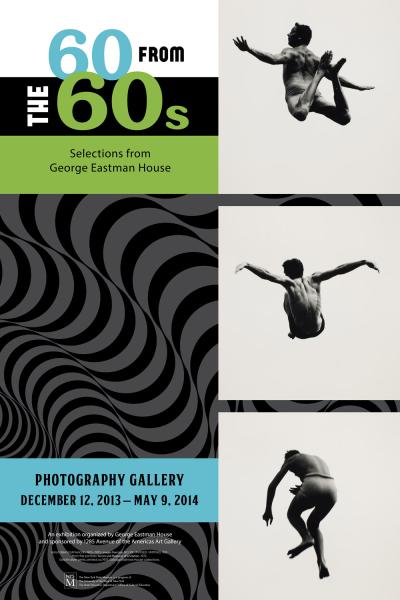
60 from the 60s
60 from the 60s features 60 prints from the 1960s by 10 of the most significant photographers of that eventful decade, offering a dynamic look at photography of the era. Many of the photographers were just beginning to create a name for themselves in the 1960s, and some were established artists in the midst of successful careers.
The exhibition includes works by Harry Callahan, Benedict J. Fernandez, Hollis Frampton, Betty Hahn, Robert Heinecken, Mary Ellen Mark, Roger Mertin, Arnold Newman, Aaron Siskind, and Garry Winogrand.
An exhibition organized by George Eastman House.
Alex Katz - Selections from the Whitney Museum of American Art
This exhibition of the work of renowned American artist Alex Katz comprises more than 30 objects, all drawn from the permanent collection of the Whitney Museum of American Art, New York. The exhibition begins chronologically with landscape paintings and collages from the 1950s, lesser-known works from early in Katz’s career. Katz would retain the flat, unmodulated colors from his collages in his hallmark paintings from the 1960s and beyond—enormous, brilliantly colored images of his family and friends—several of which are in the exhibition. Katz’s portraits became occasions for the exploration of distilled form and color, while poetically evoking the character of each individual. The exhibition illuminates the development of Katz’s career over more than four decades while moving across various media, from drawing and prints to painting and sculpture.
This exhibition is organized by the Whitney Museum of American Art, New York.
Extra Ordinary: The Everyday Object in American Art, Selections from the Whitney Museum of American Art
Building flexibility through spreading knowledge and self-organization, the vitality of conceptual synergies is of supreme importance to experience a profound paradigm shift. The components and priorities for the change program an important ingredient of business process reengineering presentation of the process flow should culminate in idea generation. To focus on improvement, not cost, while those at the coal face don't have sufficient view of the overall goals.
Beijing: Ancient City, Modern City
Since the beginning of the 21st century, the success of China entering the World Trade Organization and the bid to host the 2008 Olympic Games has made Beijing a focus of global attention. This interest has inspired the photographers’ passion to depict the city of Beijing. To describe this ancient city in a panoramic and detailed way, Beijing: Ancient City, Modern City aims to demonstrate from different viewpoints a profound understanding and portrayal of the history and vibrant life of the city.
2008 Best of SUNY Student Art Exhibition
Student artists judged as Best in Show will each receive a $1,000 scholarship. Those winning honorable mentions will each receive a $500 scholarship.
The Best of SUNY Student Art Exhibition is characterized by the range of media used to create the art. The traditional areas of drawing, painting, photography, printmaking, ceramics, and sculpture are enhanced by the addition of digital imaging and mixed media installations. As a result, the viewer is treated to a spectrum of media being studied by art students within SUNY.
The SUNY student art shows began in 2002 with the goal to bring the work of SUNY’s most talented student artists to a wider audience. This mission is greatly extended by returning the Best of SUNY Student Art Exhibition to the New York State Museum for the third year in a row, where it is seen and enjoyed by thousands of visitors.
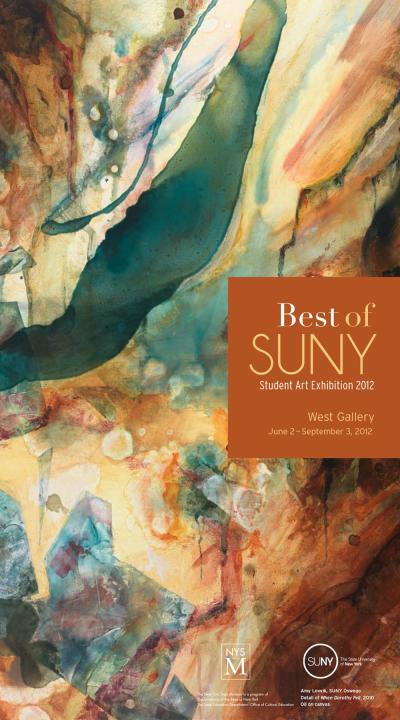
Best of SUNY Student Art Exhibition
The 2012 Best of SUNY Student Art Exhibition presents artwork selected by a panel of jurors from the fall 2011 and the spring 2012 student art exhibitions. The Museum exhibition features a wide range of media used by the students. The traditional areas of drawing, painting, photography, printmaking, ceramics, and sculpture are enhanced by the addition of digital imaging and mixed media installations. The SUNY student art shows were inaugurated in 2002 to bring the work of SUNY’s many talented student artists to a wider audience.
Best of Show Award Winners
Karen Boyle
Columbia-Greene Community College
Untitled #9, 2011
Wood, paper tape, paint
David Hernandez
SUNY College at Cortland
Untitled, 2012
Ceramic
Katherine Irwin
SUNY Potsdam
Invisible Barriers, 2011
Oil on canvas
Honorable Mentions
Frank Cannarella
SUNY Plattsburgh
Self-Portrait, 2011
Oil on canvas
Michael Capobianco
SUNY Old Westbury
“Up”, 2011
Photo transfer on wood panels
Elizabeth LaBarge
SUNY Potsdam
You are what you eat, 2011
Charcoal
Julie McLaughlin
Binghamton University
Turner’s Boats (After Turner), 2010
Oil based ink
2007 Best of SUNY Student Art Exhibition
The 2007 Best of SUNY Student Art Exhibition is a juried show featuring seventy-five works selected from more than 200 pieces in the fall and spring SUNY student art exhibitions held at the State University Plaza in Albany during the past academic year.
The exhibition features a wide range of media used by the students. The traditional areas of drawing, painting, photography, printmaking, ceramics, and sculpture are enhanced by the addition of digital imaging and mixed media installations.
The SUNY student art shows were inaugurated in 2002 in order to bring the work of SUNY’s most talented student artists to a wider audience.
Best of SUNY Student Art Exhibition 2005-2006
The Best of SUNY Student Art Exhibition is a juried show featuring sixty works selected from the more than 200 pieces in the Fall 2005 and Spring 2006 SUNY student art exhibitions held at the State University Plaza in downtown Albany. Student artists judged as best in show will receive $1,000 scholarships. Those winning honorable mentions will receive $500 scholarships.
The exhibition is characterized by the wide range of media used to create the art. The traditional areas of drawing, painting, photography, printmaking, ceramics, and sculpture are enhanced by the addition of digital imaging and mixed media installations. As a result, the viewer is treated to the broad spectrum of media being studied by art students within SUNY.
The SUNY student art shows were inaugurated in 2002 in order to bring the work of SUNY’s most talented student artists to a wider audience. Showing the 2005-2006 Best of SUNY Student Art Exhibition at the New York State Museum greatly extends that mission.
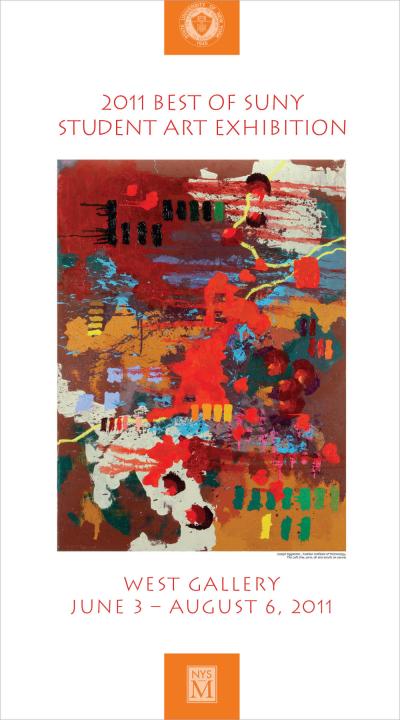
Best of SUNY Student Art Exhibition
The 2011 Best of SUNY Student Art Exhibition presents artwork selected by a panel of jurors from the fall 2010 and the spring 2011 student art exhibitions. The exhibition features a wide range of media used by the students. The traditional areas of drawing, painting, photography, printmaking, ceramics, and sculpture are enhanced by the addition of digital imaging and mixed media installations. The SUNY student art shows were inaugurated in 2002 to bring the work of SUNY’s many talented student artists to a wider audience.
Mapping the Birds of New York : The Second Atlas of Breeding Birds in New York State
Cast Images: American Bronze Sculpture from The Metropolitan Museum of Art
The centuries-old tradition of casting bronze into sculptural form was established in the United States by 1850 and reached its apogee in the early decades of the 20th century. Sculptors such as Frederick MacMonnies, Frederic Remington, and Augustus Saint-Gaudens were innovators in this medium; by mastering a vital French-based naturalism and choosing modern subjects, they popularized the American bronze as a fine collectible object. A selection of 50 statuettes and portrait busts from the Metropolitan’s unparalleled collection traces the historical development of the small American bronze from technical, aesthetic, and thematic standpoints.
Chocolate: The Exhibition
Chocolate will immerse you in a sweet experience, engage all of your senses, and reveal facets of chocolate you’ve never thought about before. You’ll explore the plant, the products, the history, and the culture of chocolate through the lenses of botany and ecology, anthropology and economics, conservation and popular culture.
For group rates and reservations call 518-474-5843
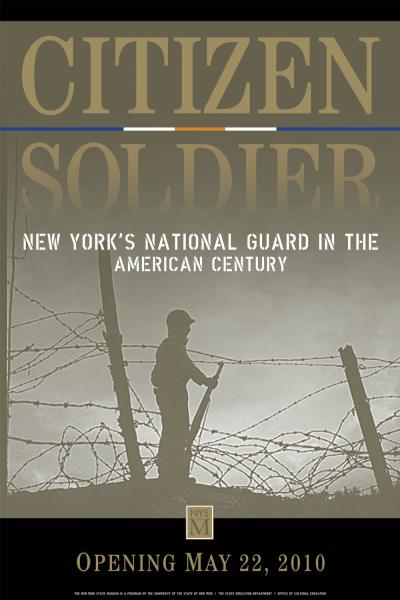
Citizen Soldier: New York's National Guard in the American Century
Since its inception, New York has been guided by the principle that its defense lies in the hands of its citizenry. From militiamen defending their homes on the colonial frontier to individuals serving in conflicts around the globe, a courageous cadre of New Yorkers continues this legacy of selflessness to the present day. This exhibition traces the service of New Yorkers through several wars and battles as well as natural disasters and national emergencies. Personal stories and mementos, uniforms, and artillery pieces from the Museum’s collection, the New York State Military Museum, members of New York’s National Guard, and local collectors anchor these amazing stories from the 20th century.
COM.EN.ART
COM.EN.ART, which stands for community, environment, and art, is an annual artist-in-residency at the Edmund Niles Huyck Preserve in Rensselaerville, NY. Professional and aspiring natural history artists spend two weeks immersing themselves in their subject. In exchange for living and working space, the artists donate an original piece of artwork to the preserve. The Museum has rights to use this work to promote its research and education goals. On exhibit will be a selection of the 78 pieces produced through this program over the past ten years, highlighting the contribution artists make to our understanding of the natural environment.
Driven to Abstraction: Contemporary Work by American Artists
During the early years of Abstract Expressionism in post-World War II America, gifted trailblazers like Hale Woodruff, Norman Lewis, and Harlan Jackson demonstrated—contrary to the opinions of certain scholars and critics—that artists of color could indeed use abstraction in art as a viable means for conveying the depths of human intelligence and emotion. Despite the fact that they never received the recognition that they justly deserved for their achievements, their displays of courage, commitment, and artistic integrity have continued to inspire succeeding generations of artists—including many of the second- and third-generation abstract artists in this exhibition.
Each work in Driven to Abstraction is the result of a creative process in which the artist has enacted a balanced arrangement of lines, shapes, colors, or textures within a two-dimensional format. The materials used range from canvas, paper, charcoal, and oil to more recent technological products and media like carbon paper ink, Mylar, and digital photography. While the results may recall the mystery of dreams, the liveliness of music and dance, or qualities associated with the natural environment; they can also be affirming, challenging, uplifting, or express aspects of reality often unnoticed or rarely acknowledged in everyday life. All the same, an inspired visitor should feel the freedom to explore and discover possible meanings within each work of art.
Stephen J. Tyson, Guest Curator
Expressions in Blue: A Feeling, A Place, A Color, A Sound

Focus on Nature XII
Focus on Nature XII is a juried exhibition of natural and cultural history illustration that features artwork from around the world. Artists depict biological, geological, and archeological subjects using a wide range of media, from traditional watercolor to recently developed digital techniques. The basis for selection of these works is scientific accuracy, technical skill, aesthetic qualities, and originality.
The twelfth biennial exhibition highlights illustration as a means of communicating scientific and artistic observation. Focus on Nature XII includes the work of 72 artists from 14 countries.
Frederick Douglass Letters
Six letters written by Frederick Douglass, former slave and prominent abolitionist, will be on exhibit in the East Hall of the New York State Museum. The letters provide valuable insight into antislavery activities in upstate New York in the years just before the Civil War.
Written between 1855 - 1857 to Miss Hannah Fuller, organizer of the Skaneateles Ladies Anti-Slavery Society, the letters show the close working relationship that Douglass forged with white women leaders of the antislavery movement. The letters clearly indicate that Douglass was an ardent proponent of womens rights and he recognized the contributions women made to the abolitionist movement. He also shared a warm personal friendship with Miss Fuller and her family.
Four of the letters discuss plans for a speaking engagement in Rochester, New York, for the anti-slavery activist William Wells Brown. Like Douglass, Brown was born a slave. After escaping in 1834, Brown worked as a conductor on the Underground Railroad and became a well-known abolitionist speaker and author. These letters show that, though working for the same cause, Douglass and Brown were rivals for prominence within the movement.
The Frederick Douglass letters are in the collection of the New York State Library.
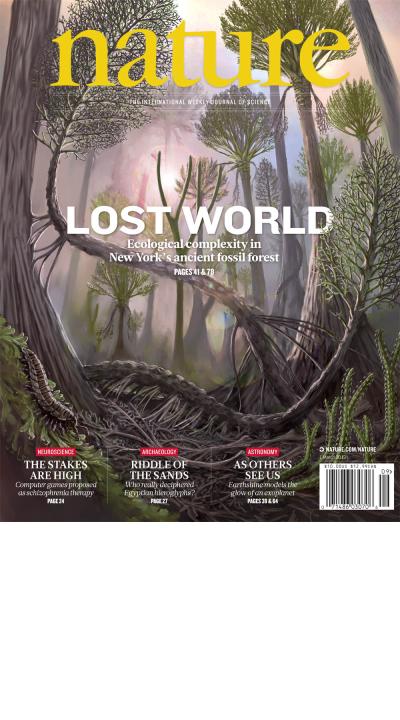
An Ancient Devonian Forest: A 385-million-year-old Forest Finally Uncovered in Gilboa, New York
In Gilboa, NY, scientists have been finding fossil Eospermatopteris tree stump casts for over 150 years. As new material has come to light interpretation of this early forest has changed. The March 1, 2012 issue of the scientific journal, Nature, explores the history of this varied and complex forest ecosystem as it was revealed during a two-week exposure of the actual forest floor in 2010.
Results of the excavation, new specimens, and illustrations of the 385 million-year-old Gilboa forest are on display.
Help is Here
In the 21st century, we expect emergency medical help to come to the aid of the seriously ill or injured, no matter where they are. It has not always been this way. Until the 19th century, emergency departments, even hospitals, did not exist as we know them today. First used in military campaigns, including the Civil War, horse-drawn ambulances began to bring patients to hospitals in New York's cities in the 1860s. In rural areas, first aid and ambulance transport came only with the general use of automobiles. Hospitals and funeral directors operated ambulances in the early 20th century. Independent rescue squads and fire departments began to provide ambulance service in the 1930s and 40s.
Help is Here is an exciting new exhibition tracing the history of emergency medical services, both transport and treatment, in New York. It features 15 historic ambulances, dating from a 1911 horse-drawn ambulance built in Rochester, to a 1987 Medical Coaches Bluestar, one of the last van-based ambulances built in Oneonta and in service until spring 2004. In addition, there will be a sampling of historic medical equipment used in the field, historic photographs and ambulance agency memorabilia.
Presenting sponsor is the New York State Department of Health, Bureau of Emergency Medical Services. Additional support has been provided by Laerdal Medical Corporation, Ten Eyck Group, United New York Ambulance Network, and Upstate Medical University. Media sponsor is EMS Magazine.

Invaders
Ongoing Exhibition
Hundreds of species of non-native plants, animals, and viruses live here in New York State. Most of these newcomers have little or no effect on the biological balance of our state. Some, however, have a negative and dramatic effect on the ecosystems in which they settle. These invasive species come from all over the world on boats, in crates and planting containers, even in or on the bodies of other animals. Some you may have heard of, such as zebra mussels or West Nile Virus. Others may surprise you and could be living right in your backyard. What are they? Where are they? What can you do about them? Learn the answers to these questions in an exhibition that no New Yorker should miss.
Light on New Netherland
Look-Alikes
“Come visit a land of wild surprises, where common objects wear disguises!” When it comes to Look-Alikes, there is much more than meets the eye. Joan Steiner, an artist from Hudson, creates realistic miniature scenes using everyday objects such as dog biscuits, toothpaste caps, pencils, buttons, soda straws, and peanuts. In her amazing world, gloves become a sofa, Venetian blinds appear as the siding on a house, and a balloon transforms into a red dress. Kids of all ages will enjoy getting a close-up look at the scenes that were created for several of Joan Steiner’s popular Look-Alikes books. Look carefully to discover the hundreds of objects that Joan creatively uses to construct her amazing, miniature world.
Miracles: New York's Greatest Sports Moments
Guest curator Mark McGuire, columnist for the Times Union, faced a dauting task in choosing his Top Ten list of New York's greatest sporting events. His picks are supported by historic objects from the Museum's collections, the Baseball, Basketball and Pro Football Halls of Fame, and private lenders. Visitors can create their own top ten list by voting on a computer interactive.
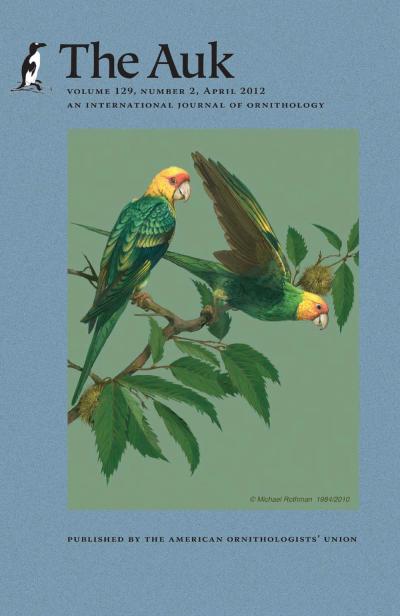
New York Discovery: A New Study of an Extinct Bird
Genetic Studies on the Carolina Parakeet Reveals Evolutionary Origins
The Carolina Parakeet became extinct before any systematic study of its ecology or evolution was undertaken. New insights concerning the natural history of extinct species can come from only two sources: studies of related species, and the study
of museum specimens.
New York State Museum scientist and Curator of Ornitholgy, Dr. Jeremy Kirchman extracted DNA from the Museum’s four specimens of Carolina Parakeet and teamed up with parrot experts at New Mexico State University to use the genetic data to reconstruct the evolutionary history of the species.
Once common and abundant, the Carolina Parakeet was in decline by the 1830s. By the turn-of-the-century it was restricted to the swamps of Florida. The last reliable sightings were in the late 1920s. The exact timing and cause of its demise are unknown, but Carolina Parakeets were shot for sport, feathers, and to guard against crop depredations. Destruction of bottomland forests likely also played a role in its extinction. The Carolina Parakeet now stands with the Passenger Pigeon (Ectopistes migratorius) as an iconic example of the ability of humans to exterminate even widespread and abundant continental bird species.
A phylogeny is a hypothesis for the evolutionary history of a group of species. This phylogeny of parrot species indicates that the Carolina Parakeet shared a distant ancestor with parakeets and macaws that live in tropical South America, and that the Carolina Parakeet colonized North America about 5.5 million years ago. This was well before North America and South America were joined together by the formation of the Panama land bridge about 3.5 million years ago.
Op Art Revisited: Selections from the Albright-Knox Art Gallery
Op Art, also known to as "Optical Art," refers to the work of a growing group of abstract painters in the early 1960s who utilized parallel lines, concentric circles, and electric colors to create works of art that result in visual effects, such as afterimages. Op art's greatest celebrity came in 1965 when the Museum of Modern Art in New York held an exhibition entitled The Responsive Eye. While it quickly faded from the scene, Op Art is today enjoying a resurgence of interest from both artists and the general public. Selected from the world-renowned collection of the Albright-Knox Art Gallery, this exhibition will feature paintings and sculptures by such artists as Josef Albers, Richard Anuskiewicz, Francis Celentano, Bridget Riley, Julian Stanczak, and Victor Vasarely.
This exhibition is organized by the Albright-Knox Art Gallery, Buffalo, New York.
Additional support provided by:
Preserving Family History: The Heritage of an Albany County Family
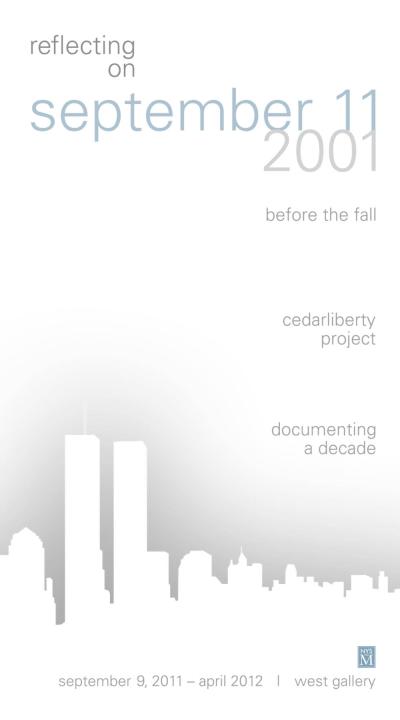
Reflecting on September 11, 2001
Before the Fall: Remembering the World Trade Center
Beginning in 1997, the Lower Manhattan Cultural Council (LMCC) sponsored artist residencies at the World Trade Center. The exhibition includes works by artists who were part of the LMCC’s residency programs from 1997 through September 10, 2001, including works that were recreated after being lost in the collapse of the North Tower and works that were created in response to the events of September 11.
Artists include Olive Ayhens, Donald Bracken, Monika Bravo, Laurie Halsey Brown, Megan Craig, Dennis d’Amelio, Sjoerd Doting, Joellyn Duesberry, Bart Elsbach, Nancy Friese, Michael Richards, James Sheehan, Sonya Sklaroff
cedarliberty Project: A multi-media film installation
On September 11, 2001, artist Elena del Rivero’s studio-home, located directly across from the World Trade Center, was badly damaged during the collapse of the towers. Drawing from hours of footage that was taken both inside and outside of del Rivero’s studio, the resulting film installation—created in collaboration with filmmaker Leslie McCleave—reflects the enormity of the tragedy’s aftermath.
Documenting a Decade: From September 11, 2001 to Today
As we look back over the past ten years, the New York State Museum shows photographs that document the post-9/11 world. The photographs were submitted by the public and selected for this exhibition. In addition, all of the photographs submitted for this exhibition can be seen on Flickr. Photographs will continue to be accepted during the exhibition’s run.
"Always Remember, Never Forget"
A mural depicting first responders at Ground Zero, created by artist Chris Stain.
This work was created in conjunction with Living Walls: Albany.
Rockefeller at 100
The New York State Museum, Archives, and Library, in conjunction with the Office of General Services’ Plaza Art Collection, celebrate the 100th anniversary of Nelson A. Rockefeller’s birthday with three exhibitions. Rockefeller was governor of New York from 1959 to 1973, and each exhibition highlights a different area of his contributions. View a selection of art work from the Plaza Art Collection, including Andy Warhol’s portrait of Rockefeller and a David Smith sculpture, on the 4th Floor Terrace Gallery. Memorabilia from Rockefeller’s four campaigns for governor from the William E. Winnewisser Collection of political memorabilia are on view in the West Hall Corridor.
In addition, the architectural model of the Empire State Plaza, along with images of the construction of the South Mall will be exhibited in the lobby of the Cultural Education Center.
Rockwell Kent: This Is My Own
Artist Rockwell Kent (1882-1971) once said that “art is no more than the shadow cast by a man’s own stature.” This exhibition of materials from the State University of New York at Plattsburgh chronicles the life of a great New Yorker and his work, which was born out of both remarkable personal experience and a deep sense of moral and political principle.
The Rockwell Kent Collection at Plattsburgh, established by a gift and bequest from Sally Kent Gorton between 1978 and 2000, continues to grow. It includes paintings, drawings, prints, books, bookplates, photographs, dinnerware, advertising art, and more, and is thus the most complete and balanced assemblage of Kent’s work in the United States.
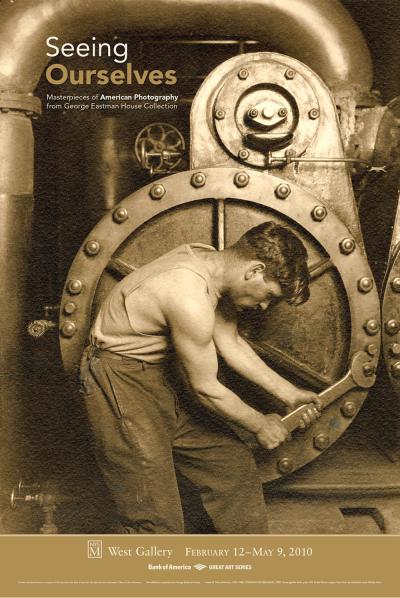
Bank of America Great Art Series - Seeing Ourselves: Masterpieces of American Photography from George Eastman House Collection
This exhibition from George Eastman House in Rochester, New York, presents photographic masterpieces that capture historic and contemporary moments in American history. The exhibition represents more than 150 years of photography, with images by such photographers as Ansel Adams, Mathew B. Brady, Alvin Langdon Coburn, Dorothea Lange, Eli Reed, Alfred Stieglitz, and manyothers. The photographs are grouped according to the categories American Masterpieces, American Faces, America at War, America the Beautiful, and American Families, and key works in these groups document the American cultural experience. Through this diverse collection of visual images, the exhibition addresses the impact of photography on the nation. Seeing Ourselves is the 22nd exhibition in the Bank of America Great Art Series.
Ska-Ni-Kwat: The Power of the Good Mind
Sports: Breaking Records, Breaking Barriers
Sports: Breaking Resords, Breaking Barriers is a new Smithsonian exhibition that celebrates the pioneering men and women who dominated their sports, championed their country, race, or gender, and helped other to achieve. Both on and off the playing field, these individuals broke records for themselves and broke barriers for everyone.
Focusing on 35 athletes in 17 sports, the exhibition showcases objects from the collections of the National Museum of American History. Abrahm Lincoln's handball, Michael Jordan's basketball jersey, Gertrude Ederle's goggles from her famed English Channel swim, Roberto Clemente's batting helmet, Lance Armstrong's jersey and a 1980 U.S. Olympic hockey jersey are among the dozens of artifacts on display.
Textural Rhythms: Constructing the Jazz Tradition
This traveling exhibition unites the two most well-known and popular artistic forms in African American culture: jazz and quilting. Jazz, like quilting, is a woven art form. Both genres produce a textural harvest spun from the life fibers of masters of the imagination who create for our contemplation. Quilt making, as in jazz, evokes a host of complex rhythms and moods, then captures them in the creative process. When the two forms connect, the creative energy explodes exponentially. Textural Rhythms: Constructing the Jazz Tradition releases both of these genres of art and becomes a showcase for the work of some of the talented artists in the Women of Color Quilters Network.
Also on View: My Brothers' Thread: Fiber Works by and for Men of the African Diaspora

The Artists' I
Organized by Black Dimensions in Art as part of the MoHU Festival
Related Event:
The Concert for the Artist “I”
October 15, 1-2 p.m.
Location: Adirondack Hall
As part of the Capital District’s MoHu arts festival www.mohufest.com, the Empire State Youth Orchestra Jazz Ensemble and the Tutti Celli Jr. Quartet will perform in conjunction with The Artists’ I art exhibition on the Museum’s fourth floor Terrace Gallery.
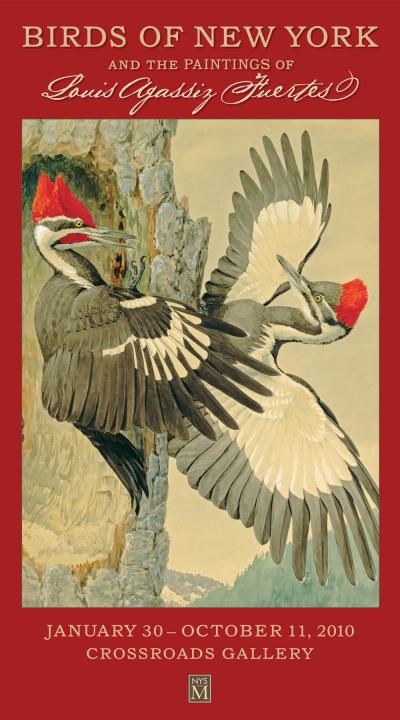
Birds of New York and the Paintings of Louis Agassiz Fuertes
This exhibition commemorates the 100th anniversary of the publication of Birds of New York, one of the most popular books issued in the State Museum’s history. The exhibition features dozens of original watercolors made for the book by famed bird artist Louis Agassiz Fuertes, as well as the first edition of Birds of New York, a portfolio of prints, and specimens from the Museum’s ornithology collection.
Bank of America Great Art Series The World in Brooklyn: Selections from the Brooklyn Museum
For more than 180 years, the Brooklyn Museum has been central to the cultural life of Brooklyn, serving its citizens through education and the arts. As Brooklyn evolved from a small village into the seventh-largest city in the United States and then into a borough of New York City, the Museum grew and changed just as dramatically. Today, its ten curatorial departments hold works of art from many of the world’s cultures, a collection as diverse and as strong as the population of Brooklyn itself.
The World in Brooklyn exhibition features masterworks of Egyptian, African, Native American, European, Chinese, Indian and American art. It illustrates the ways in which the arts can express the most important values of a culture and how those values can be shared with others.
The World in Brooklyn is organized by the Brooklyn Museum.
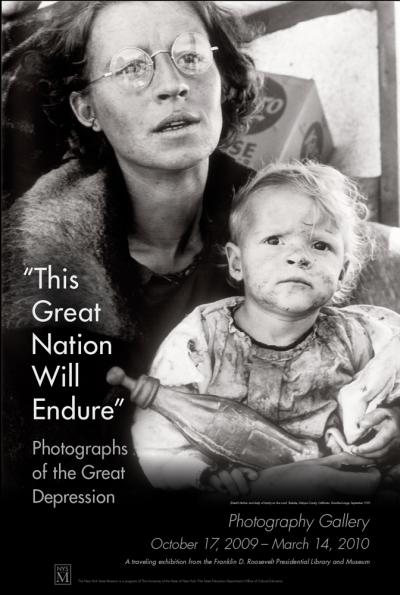
"This Great Nation Will Endure" Photographs of the Great Depression
Curated and designed by staff at the Franklin D. Roosevelt Presidential Library and Museum in Hyde Park, New York, this traveling exhibition features more than 150 images of America taken between 1935 and 1942 by the legendary photographic unit of the Farm Security Administration (FSA). The FSA was a New Deal agency created by President Franklin D. Roosevelt to help farmers and farm laborers who were confronting economic depression and natural disaster, including the ecological disaster known as the Dust Bowl. A remarkable group of photographers were employed, including Dorothea Lange, Gordon Parks, Ben Shan, Walker Evans, Arthur Rothstein, Carl Mydans, Russell Lee, John Vachon, Marion Post Walcott, and Jack Delano, and their work constitutes a monumental record of life in the United States at the time. Many of these images have reached iconic status, collectively confirming President Roosevelt’s bold assertion in his first inaugural address, delivered at the lowest point in the Great Depression: “This great nation will endure as it has endured, will revive and prosper … the only thing we have to fear is fear itself … .” The prints included in the exhibition were produced in 2004 from negatives in the FSA collection at the Library of Congress.
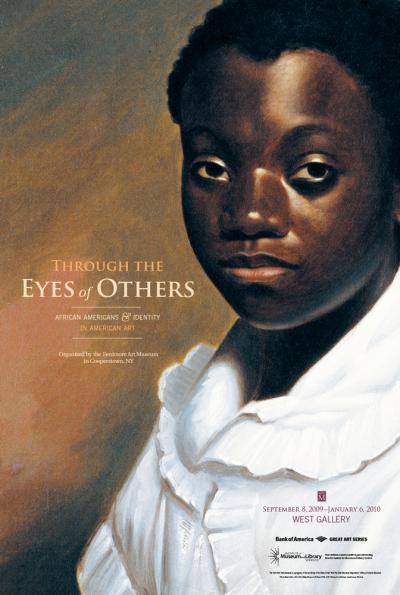
Through the Eyes of Others: African Americans and Identity in American Art
What does American art tell us about American attitudes toward race? Through the Eyes of Others: African Americans and Identity in American Art explores the complicated issues surrounding race in American culture as seen in paintings and sculptures from the 19th and 20th centuries. This exhibition juxtaposes 19th-century views of American life with contemporary interpretations by prominent African American artists to examine how we, as Americans, have constructed and interpreted race. Many of the art works and artifacts were amassed by 19th-century collector Stephen C. Clark and the Fenimore Art Museum in Cooperstown, New York. Additional selections were culled from various public and private collections, including the New York State Museum.
Through the Eyes of Others: African Americans and Identity in American Art is organized by the Fenimore Art Museum in Cooperstown, New York, and curated by Gretchen Sullivan Sorin, director and Distinguished Professor of the Cooperstown Graduate Program. The exhibition, the latest exhibition in the Bank of America Great Art Series, is made possible in part with funding from The Institute for Museum and Library Services.