

Full Steam Ahead: New Erie Canal Panel Exhibition Brings New York State Museum Resources Directly to Schools and Cultural Institutions
Celebrating 200 Years of Innovation, Determination, and Making Waves in American History
High-Resolution Exhibition Files Now Available for Learning Institutions at No Cost!
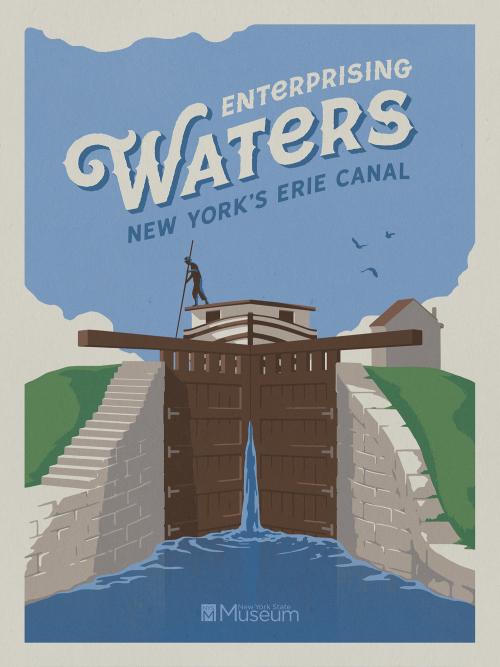
Office of Cultural Education is making history more accessible than ever! Its world-class team of researchers is honoring the 200th anniversary of one of the largest and most remarkable public works projects in American history by bringing the Erie Canal’s legacy directly to New York State schools and other cultural institutions. “Enterprising Waters: New York’s Erie Canal” is an eight-panel exhibition carefully curated by the New York State Museum to bring the astonishing story of the canal to life, celebrating its visionary inception, ambitious construction, and bicentennial commemoration.
Completed on October 26, 1825, the Erie Canal transformed New York into the nation's leading hub of international commerce, reshaping the state's economic and cultural landscape forever. This exhibition explores the canal's remarkable development and its role in establishing New York as the most powerful center of trade in the country.
To further honor the Erie Canal’s storied past and bring the New York State Museum’s unparalleled resources directly to residents across the state, high-resolution digital files of the educational exhibition are now available for institutions interested in sharing the legacy of the iconic waterway with the public.
Interim Deputy Commissioner for Cultural Education, Michael Mastroianni said, "We know it’s not always possible for schools and cultural organizations to visit Albany and experience our new exhibitions in person. That’s why we’re bringing the State Museum to every corner of New York. This exhibition ensures all children, families, and communities across the state can learn and engage with the Erie Canal’s incredible legacy, no matter where they are."
Chief Curator of History Dr. Jennifer Lemak said, “Part of the State Museum’s core mission is to ensure New York’s rich cultural and natural heritage is accessible, regardless of where you are located. “Enterprising Waters: New York’s Erie Canal” helps bring the expertise of Museum historians and curators directly to students and lifelong learners alike. We look forward to seeing this impactful, educational resource used to further celebrate and acknowledge the innovation and determination involved in the creation of the Erie Canal.”
The eight panels are offered in two sizes, 24 inches wide by 36 inches high or 36 inches wide by 48 inches high. While the files are available at no cost, venues are responsible for printing and mounting the panels at their own expense.
In addition, the Museum’s website offers resources for educators, including on the previous exhibit commemorating the bicentennial of the Erie Canal’s construction, which was displayed from September 2017 to July 2020.
Anyone interested in displaying “Enterprising Waters: New York’s Erie Canal” is asked to e-mail the New York State Museum at nysmhistory@nysed.gov.
About the Cultural Education Center
Established in 1836, the New York State Museum is the oldest and largest public museum in the United States. Home to leading scientists, historians, archeologists, and anthropologists, its collections represent the State’s rich cultural and natural heritage from the past and present, including a staggering 20+ million artifacts spanning 1.1 billion years ago to today. Located at 222 Madison Avenue in Albany, the Museum is open Tuesday through Sunday from 9:30 a.m. to 5 p.m. It is closed on the Fourth of July, Thanksgiving, Christmas, and New Year's Day. Admission is free. For additional information, visit the New York State Museum website and subscribe to our newsletter.
The New York State Library, established in 1818, is the largest state library system in the nation and one of the largest research libraries in North America. It oversees a vast network of more than 7,000 libraries statewide. Collections are made available onsite and through a robust interlibrary loan program. The Library’s mission is advanced through several key divisions, including the Research Library, which houses a collection of over 20 million items, the Talking Book and Braille Library, and the Division of Library Development. The Library preserves and maintains invaluable historical collections and works, and serves as a Regional Depository for federal publications. Additionally, the State Library is the official repository of New York State government publications, ensuring their enduring preservation and accessibility for future generations. For more information, please visit the New York State Library website and subscribe to our quarterly newsletter.
Established in 1971, the New York State Archives has amassed one of the most extensive and historically significant state archive collections in the nation. The Archives manages, preserves, and provides open access to over 250 million colonial and New York State records dating back to the 1630s. In addition, the Archives provides records and archival management services to nearly 4,500 counties, cities, towns, villages, school districts, and other local governments across New York State. The Archives offers technical assistance, training, and grants to non-government repositories through the Documentary Heritage Program and Documentary Heritage and Preservation Services for New York (DHPSNY). Researchers can access public records through the Archives’ online Digital Collections or by appointment on the 11th floor of the Cultural Education Center. For more information, please visit www.archives.nysed.gov.
The Archives Partnership Trust, a 501(c)3 organization, works to advance New York State History by making the voices within over 350 years of records accessible, relevant, and heard. Education, preservation, and outreach programs unite scholars, students, and the interested public in the discovery, interpretation, and promotion of our shared history. Programs created and supported by the Trust include: ConsidertheSourceNY.org; Larry J. Hackman Research Residency Program; Student Research Awards; countless preservation projects to help stabilize and rehabilitate fragile records; and outreach programs such as New York Archives Magazine, the Empire State Archives and History Award, and other public education programs. Subscribe to our newsletter to receive timely updates.
The State Museum, State Library, and State Archives are programs of the New York State Education Department’s Office of Cultural Education. Further information about programs and events can be obtained by calling (518) 474-5877 or by visiting the Office of Cultural Education website.
###
(518) 474-1201
Press@nysed.gov
www.nysed.gov
Visit the New York State Museum
Admission
Admission to the New York State Museum and its historic Carousel is free. Your generosity plays a vital role in the success of the Museum’s mission. Suggested donation: $5 per individual and $10 per family.
Parking
Parking is available in the two lots adjacent to the Museum, both accessed from Madison Avenue. Prior to 10:00 a.m., the weekday parking fee is $10. After 10:00 a.m., the weekday parking fee is $5. Parking is free after 2:00 p.m. and on weekends. An additional paid parking visitor lot is available under the Empire State Plaza Concourse.
More Parking Information
Accessibility
The New York State Museum is fully accessible.
The Museum has strollers and wheelchairs for our visitors' comfort and convenience. Please stop at the Main Lobby Desk or call 518-474-5877.
Discovery Place
Currently closed.
Learn about Discovery Place
Carousel
The Carousel is currently closed for maintenance. We apologize for the inconvenience and thank you for your patience.
Gift Shop
Currently closed.
Please contact the State Museum Facilities Coordinator if you have any questions.
Albert Gnidica
albert.gnidica@nysed.gov
(518) 474-0068
Rent the Museum for your next event!
Are you looking to rent a unique space for your downtown Albany event? The New York State Museum offers several spaces for a variety of events – from wedding receptions to conferences and meetings.
From large event spaces like the Fourth Floor Terrace Gallery with sweeping views of the Empire State Plaza and Capitol, to auditorium spaces that seat up to 400 people, the Museum has an ideal space to host your next event.
Because of the uniqueness of our collection and our facility, the Museum does not allow any activity or event that may result in damage or disturbance to the collection or facility. All activities, events or entertainment at the Museum must be appropriate for the facility and be approved in advance by the Museum. Events may not interfere with public use during business hours. Prohibited events include political events and events that, in the opinion of the Coordinator of the Cultural Education Center Facilities, may present a risk to the public, rental facility or exhibits, or may be, in the opinion of NYSED Management, an inappropriate use of the facility.
Note:
- Rates listed below do not include security fees or cleaning fees unless explicitly stated.
- Please contact us for details.
- Combined Spaces: 25% off the lower cost space/spaces
- * denotes that Security and Cleaning fees are included
Catering
The New York State Museum has approved several catering firms available for Museum events. A list of approved caterers is available upon request. All catering arrangements and expenses are the responsibility of the caterer. Alcohol may be served at private Facility Uses. The renter must provide a licensed bar caterer and is responsible for meeting all rules and regulations governing alcohol service. The disorderly use of alcohol or service to minors will not be tolerated.
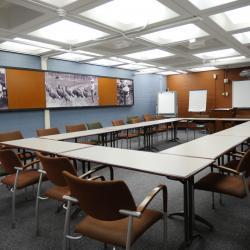
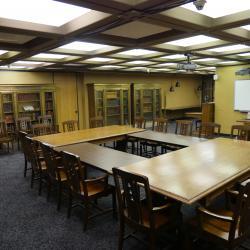
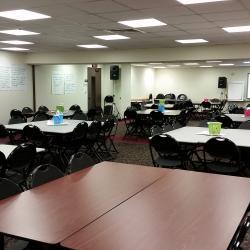
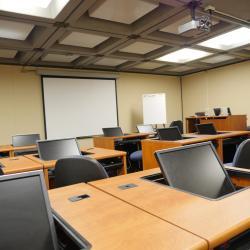
Meeting Rooms
Facilities
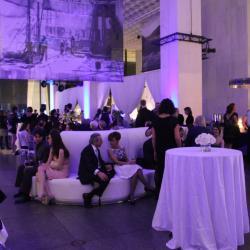
4th Floor Terrace
A dramatic venue appropriate for almost any event, with an amazing view of the Empire State Plaza and Capitol Building. The Terrace is also home to our historic Carousel, which serves as a unique backdrop to any special event. This space is frequently used for wedding receptions, special events, and conferences.
Food Options: Catering Allowed
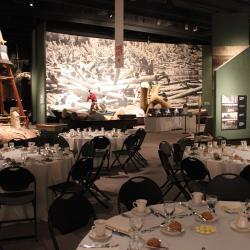
Exhibition Spaces
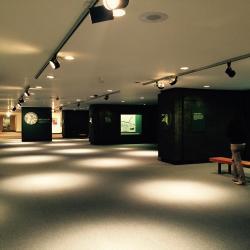
Theatres
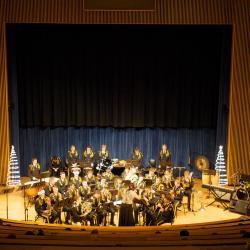
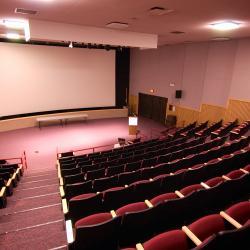
Clark Auditorium
A full sized theater, seating approximately 400. The theater has separate restrooms and easy access from the Empire State Plaza Concourse. The Clark is equipted with a projector, WIFI access and a fully functioning PA system.
Max Occupancy: 400
Accessible Seating: 12 (more w/limited sightlines)
Style of Seating: Stadium ( access from top of aud.)
For More Information Contact:
Albert Gnidica
State Museum Facilities Coordinator
3rd floor, Cultural Education Center
Albany, NY 12230
albert.gnidica@nysed.gov
(518) 474-0068
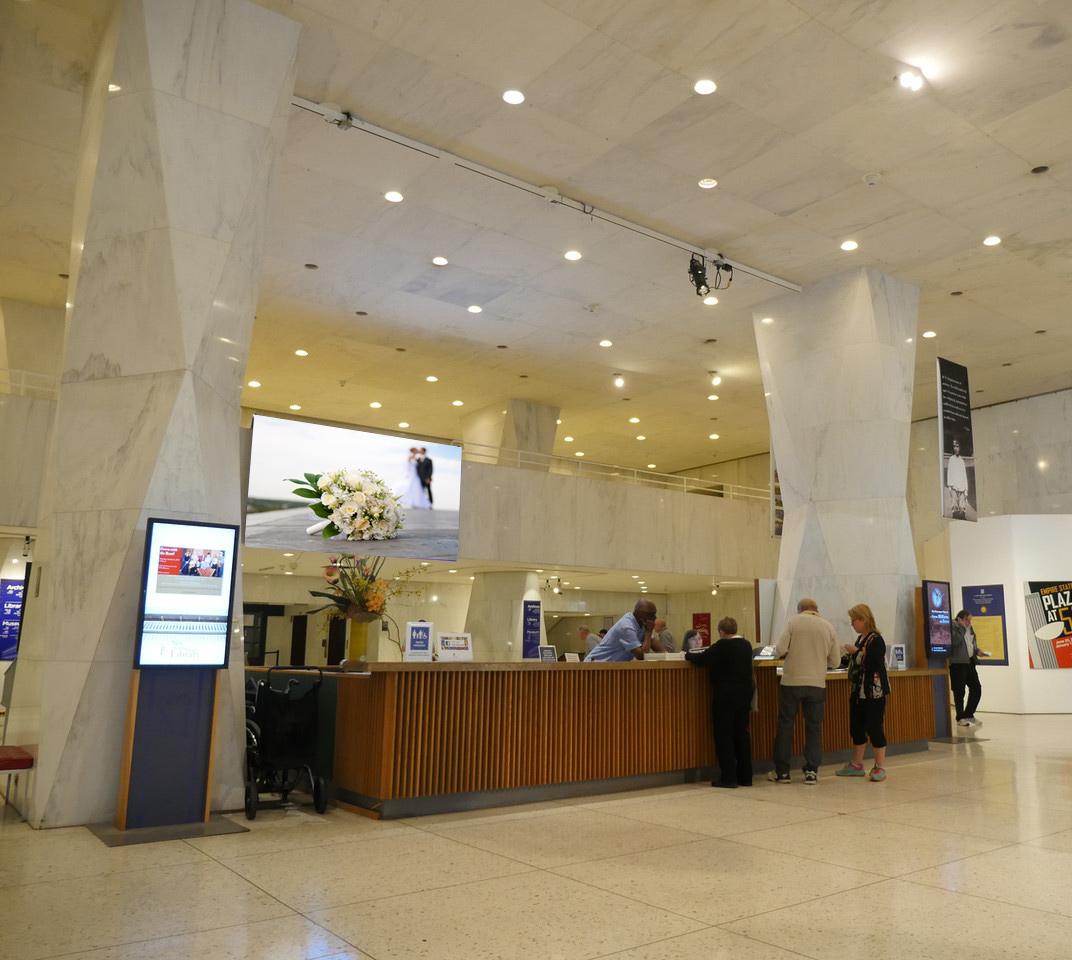
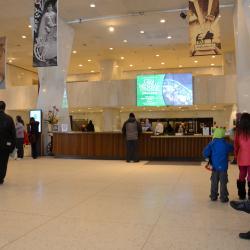
Lobby Video Wall
The large screen located in the Cultural Education Center lobby can display graphics or video to highlight your event. Content must be submitted at least one week prior to your event and approved by Museum staff. The screen can only be used for private events after normal business hours.
Format for screen content:
.MOV 1080p h.264 quicktime video (filesize must be under 750MB)
.JPG 1920x1080 pixels (less than 5 total slides)

The Power of Homestead


Enslavement was a devastating reality for peoples of African and Indigenous descent in New York from the time of the Dutch occupation in the 1620s until the state abolished slavery in 1827. The number of people enslaved in New York rose from 2,256 in 1700 to over 21,000 by 1790. Following their emancipation, many rural families stayed close to where they were formerly enslaved and often maintained close kinship ties leading to the growth of rural neighborhoods throughout the Hudson River Valley during the 19th century.
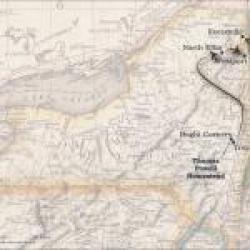
This exhibition highlights the story of the Powell family, beginning with Thomas and Betty Powell, the first generation of the family identified in this long history. The couple were enslaved by the Fonda and Lansing families near Boght Corners north of Albany, New York. They married in the Reformed Dutch Church in 1808 and were free from bondage by 1818 when they purchased a 5-acre tract from their former enslavers. They continued to expand their property over the years and operated the largest African American-owned farm in the Albany area. Thomas, Betty, and their descendants maintained the ownership of a homestead and farm for 140 years while experiencing triumph, tragedy, success, and loss.
No pictures or personal letters about the immediate Powell family or their farm have been found. The family’s story would remain untold without archaeological evidence gathered through careful excavation. Historical Archaeologists from the New York State Museum are uncovering new clues about the lives of 19th century African American farmers in the Capital Region through active field and laboratory research. Images and artifacts from excavations at the Powell site will be on view.
Related Information:
The Power of Homestead Resource Page
Discover an in-depth look at the Powell family’s history. Explore artifacts, past program videos, and articles that illuminate their remarkable legacy.
Discover New York Stories on Screen
Kick off your Tuesday in the Huxley Theater for a fascinating visual journey through our state’s past and present. Watch PBS documentaries, archival footage, and classic films that spotlight New York’s diverse heritage, artistic accomplishments, and scientific milestones.
Revolutionary War Artifacts and Documents From the New York State Museum and State Archives on Display in Tarrytown
"Treason of the Blackest Dye” Features Fidelity Medallion and Unique John André Papers on Display
Exhibit Open from September 25 to December 11 at Pocantico Center
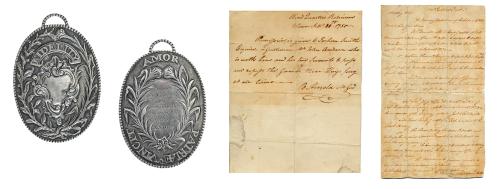
The New York State Archives, Archives Partnership Trust and the New York State Museum, in collaboration with the nonprofit organization Revolutionary Westchester 250, today announced the opening of Treason of the Blackest Dye: The True Story of Arnold, André, and the Three Honest Militiamen Exhibition at The Coach Barn at Pocantico, in Tarrytown, New York. This extraordinary exhibition, open from September 25 until December 11, 2024, tells the story of Benedict Arnold’s betrayal and the remarkable capture of British Army Major John André. It features a few of the most significant Revolutionary War artifacts, including the rarely seen original documents “André Papers,” which are part of the papers of George Clinton, the first governor of the State of New York (1777-1795, 1801-1804), and the only remaining “Fidelity Medallion” in existence.
“Nearly 250 years later, the original “boot papers” will return to Tarrytown for the first time in the exhibition Treason of the Blackest Dye. Partnerships with organizations such as Revolutionary Westchester 250 help facilitate local access to and connection with historical records that tell the story of New York's rich and diverse history,” said New York State Archives Assistant Commissioner Brian Keough.
“The Office of Cultural Education is excited to partner with Revolutionary Westchester 250 and the Pocantico Center to share this important part of New York State and American history. The Treason of the Blackest Dye exhibition shares an important story of loyalty, betrayal, and bravery with the public. Bringing these important artifacts back to Tarrytown, where the capture of Major André took place, adds a layer of significance to this exhibit. Of the three original medallions awarded, only Van Wart’s remains. The other two were stolen from the New York Historical Society in the 1970s and have never been recovered. This makes the return of Van Wart’s medal to Tarrytown, Van Wart's hometown, especially significant for the local community, as it represents an important part of their history coming home,” said New York State Museum Chief Curator of History Dr. Jennifer Lemak.
“Revolutionary Westchester 250 is committed to the mission of building awareness and enthusiasm for the history of the American Revolution era that unfolded in Westchester. Our collaboration with the New York State Museum, State Archives, and the Archives Partnership Trust, and other partners on the Treason exhibit furthers that goal. Additionally, we are thrilled that this collaboration will immerse students from our local schools, visitors from across the state and region and local residents in an exhilarating - and true - chapter of American history,” said President, Revolutionary Westchester 250 Constance M. Kehoe.
“At The Pocantico Center, we often think about the future of our community, but it’s also so instructive to take a look at its past. That these pivotal moments in the American Revolution took place right here in Tarrytown, some even here on the grounds of The Pocantico Center, is astounding. We’re pleased to work with RW250 and other partners to stage Treason of the Blackest Dye,“ said Elly Weisenberg Kelly, Manager of Public Programs and Residencies for the Rockefeller Brothers Fund.
The Continental Congress awarded the Fidelity Medallion to Isaac Van Wart, a Westchester County militiaman who, along with John Paulding and David Williams, captured British Army Major John André on September 23, 1780. The medallion, explicitly created for these three men, was never presented again. It is considered the oldest military decoration in United States military history, preceding the Badge of Military Merit—the precursor to the modern Purple Heart Medal—by nearly two years. The two-sided medal features a Latin inscription that translates to “Love of Country Conquers” on one side and “Fidelity” on the other. After Van Wart’s death, the medallion remained in his family’s custody until 2023, when it was bequeathed to the historical collections at the New York State Museum.
The exhibition marks a pivotal moment in Revolutionary history, telling the remarkable story of how Benedict Arnold’s betrayal was uncovered by three Westchester County militiamen who captured British spy Major John André, exposing Arnold’s treasonous plot to deliver West Point into British hands. The André Papers are documents in the handwriting of General Benedict Arnold, discovered in André’s boot during his capture in Tarrytown. They contained military intelligence about the Continental Army’s positions in the Hudson Highlands. They were the “smoking gun” that sealed Arnold’s fate. The special display provides the public with a rare opportunity for visitors to see the very documents and artifacts that played a key role in one of the most infamous betrayals in American history.
The Fidelity Medallion and André Papers will be on display on opening day, September 25, 2024, after which they will be replaced with a reproduction medal and exact facsimiles throughout the remainder of the exhibit. Other notable artifacts include buttons from the Hessian coat worn by John Paulding, the original Orderly Book with “Treason of the Blackest Dye” written boldly across its pages, and costumes and original cast photos from the AMC series Turn: Washington’s Spies.
The exhibit will be open every Wednesday and select Saturdays from 11:00 a.m. to 3:00 p.m. at The Coach Barn at Pocantico. Special event dates are September 25, 28, and October 2 and 9, 2024.
Revolutionary Westchester 250 (RW250) is a charitable not-for-profit corporation organized to further the purpose of the Semiquincentennial Commission by providing for the observance and commemoration of Westchester County’s pivotal role in the American Revolution, the founding of the United States, and related events.
About The Pocantico Center | Rockefeller Brothers Fund (rbf.org)
Once home to the Rockefeller family, The Pocantico Center’s verdant campus in the scenic hills of the Hudson Valley has been host to some of the most influential leaders, thinkers, and creative minds of the last century. Today, The Pocantico Center is the community-facing extension of the Rockefeller Brothers Fund’s philanthropic mission to advance social change that contributes to a more just, sustainable, and peaceful world. Through a robust slate of programming—including conferences for nonprofit and policy leaders, artist residencies, tours, performances and exhibitions, and educational programs for the community—Pocantico continues to bring together people from near and far to learn, share, and imagine a better future. More at: Rockefeller Brothers Fund
The State Museum and the State Archives are programs of the New York State Education Department’s Office of Cultural Education. Located at 222 Madison Avenue in Albany, the Museum is open Tuesday through Sunday from 9:30 a.m. to 5 p.m. It is closed on the Fourth of July, Thanksgiving, Christmas, and New Year's Day. Admission is free. For additional information, visit the New York State Museum website.
The New York State Archives is the largest repository of state government records in the nation, holding over 280 million records of state and colonial governments dating back to the Dutch colonial period in 1630. The State Archives provides free access to photographs, artifacts, documents, manuscripts, and other materials that tell the story of New York’s history via its Digital Collections on the Archives website.
The New York State Archives Partnership Trust is a statewide non-profit whose mission is to keep over 350 years of New York’s rich and diverse documentary heritage within the New York State Archives accessible and alive through preservation, outreach, education, and statewide partnerships, visit New York State Archives or ConsidertheSourceNY.org.
###
(518) 474-1201
www.nysed.gov
State Museum Celebrates New York State History Month and American Archives Month With Second Annual Family History Day on October 6th
Hands-On Family-Friendly Activities Highlight New York’s Rich Cultural Legacy
Event Highlights 400th Anniversary of New Netherland
The New York State Museum (NYSM) invites families to join the second annual Family History Day on Sunday, October 6th, from 11:00 a.m. to 3:00 p.m., as part of New York State History Month and American Archives Month. This free interactive event offers children, caregivers, families, and adults a chance to learn more about the rich history of New York through hands-on activities, crafts, and educational programming that bring history to life. In honor of the 400th anniversary of the founding of New Netherland, visitors will also learn about the diverse world of New Netherland through the Museum’s exploration station. Attendees will also be able to view rare artifacts from the New York State Museum’s collections and engage with Historians, Archaeologists, and Curators to learn more about their work.
NYSM Chief Curator for History Dr. Jennifer Lemak said, “Family History Day provides an opportunity for our historians to share our incredible collections and stories from the past with children and adults. It is the perfect way to kick off New York History Month, especially since learning about our past will help inform our future.”
New York State Historian Devin Lander said, “New York State’s history plays an important role in the lives and communities of New Yorkers today. We are thrilled to welcome children and their families to the New York State Museum to learn more about our shared history. Family History Day provides an opportunity to make history accessible to younger audiences. We invite children and their families to learn more about their communities’ past, enjoy discovering the history around them, and find their place in preserving and creating history for the future.”
New York Archivist Brian Keough said, “History and Archives Month is a great opportunity to celebrate the importance of family in history. The State Archives is pleased to support genealogy and family history communities by providing access to tools, programs, and resources to explore family and community connections within over 280,000 records. Exploring and preserving family history is a rewarding journey that strengthens connections between past and present generations."
In celebration of Family History Day on Sunday, October 6th, interactive activities and special presentations are planned to highlight the 400th anniversary of New Netherland's founding will include:
11 a.m. to 2 p.m.
- Speak with featured experts from the New York State Archives, New Netherland Research Center, and NYSM Curator of Historical Archaeology Michael Lucas.
- Children and families can participate in traditional games that have been played for over 400 years and create historically inspired crafts to take home.
- Guests can also ride the New York State Museum’s historic 110-year-old carousel.
- Numerous history-focused cultural institutions from the community will also be available to share information about our local history and the fun activities they offer. Each institution will offer unique insights and resources, allowing families to deepen their connection to New York’s rich historical significance. They include the New York State Talking Book and Braille Library, National Bottle Museum, USS Slater, Shaker Heritage Society, Hart Cluett Museum, Warren County Historical Society, Schenectady County Historical Society, New York State Library, New York State Archives, Albany Firefighters Museum, Crailo State Historic Site, and Albany Historical Association.
12 p.m. to 1 p.m.
- Enjoy a special Curator-led tour of “Unveiled: Wedding Wear in New York, 1910s–1940s” with textiles and clothing expert Connie Frisbee Houde, as she offers a glimpse into historical fashion and traditions by highlighting wedding clothes and how these pieces reveal information about both the individuals who wore them and those who made them.
2 p.m. to 3 p.m.
- Join Culinary Historian and interpreter of African American history at the New York State Office of Parks, Recreation & Historic Preservation, Lavada Nahon for a delectable exploration of New Netherland and early New York's rich foodways with her special program, “Culinary Crossroads: A Flavorful Journey Through New Netherland and Early New York” in the Huxley Theater. Food-related Dutch documents and artifacts from the New York State Archives, Library, and Museum will be on display before and during the program.
The following free programs are open to the public and are scheduled for October as part of the broader celebration of New York State History and Archives Month.
- Stop by on Sunday, October 20th, from 2 p.m. to 3 p.m. in the Museum Lobby to learn about Albany's rich history with Dr. Michael Lucas, curator of Historical Archaeology, as he uncovers the layers of our past in this gallery talk, “Albany's Hidden History: An Archaeological Journey Through Time.” Explore the groundbreaking discoveries beneath Albany's streets—from the remnants of Fort Orange, New Netherland's first permanent Dutch settlement, to the remains of the 18th-century Quackenbush-Douw rum distillery. Gain unique insights into the city's evolution through archaeological finds that help us to learn about daily life, trade, and the growth of one of North America's oldest European cities. This presentation will provide a glimpse into the artifacts and stories that shape Albany's legacy.
- Join us for an enlightening lecture on Sunday, October 27th, from 2 p.m. to 3 p.m. in the Huxley Theater, “Warrior of the Revolution: Colonel Louis Cook of the Seven Nations of Canada,” with author Darren Bonaparte, on Colonel Louis Cook, a significant figure in the American Revolution. Known by his Mohawk name, Akiatonharónkwen, Cook defied alliances and played a crucial role in the Continental Army, navigating complex relationships with British and American forces. This lecture will explore his life, his rivalry with Joseph Brant, and his lasting impact on New York State. Don’t miss this opportunity to learn about the story of a man who shaped history through his extraordinary journey.
- New York Archives Magazine Online Speaker Series will feature a virtual event on Tuesday, October 29, 2024, from 12:30 p.m. to 1:30 p.m. Author, constitutional lawyer, and historian of crime, Alex Hortis, will present his latest book, The Witch of New York: The Trials of Polly Bodine and the Cursed Birth of Tabloid Justice. Hortis will take an in-depth look into New York’s legal history and folklore by exploring the fascinating story of Polly Bodine and the rise of tabloid justice in 19th-century New York. This virtual event offers an exciting opportunity for history enthusiasts to engage with the state's rich and sometimes dark past.
The State Museum is a program of the New York State Education Department’s Office of Cultural Education. Located at 222 Madison Avenue in Albany, the Museum is normally open Tuesday through Sunday from 9:30 a.m. to 5:00 p.m. It is closed on the Fourth of July, Thanksgiving, Christmas, and New Year's Day. Admission is free. Further information about programs and events can be obtained by calling (518) 474-5877 or visiting the Museum website.
The New York State Archives holds many of the oldest and most important archival treasures in the nation. The Archives preserves and makes accessible over 250 million records of New York’s State and colonial governments dating from 1630 to the present. The State Archives provides free access to photographs, artifacts, documents, manuscripts, and other materials that tell the story of New York’s history via its Digital Collections on the Archives website.
The Archives Partnership Trust was founded in 1992 to build an endowment and provide project support to enhance humanities programs, increase access to these outstanding treasures, and continue the preservation of New York's historical records. Since its founding, the Partnership Trust, a 501(c)(3) non-profit organization, has supported exceptional projects and programs. These include the Research Residency Program, the Student Research Awards Program(link is external), history conferences, special exhibitions, public education programs, book signings and lectures, publications, teacher training institutes, preservation projects, and more.
The State Museum, State Library, and State Archives are programs of the New York State Education Department’s Office of Cultural Education. Further information about programs and events can be obtained by calling (518) 474-5877 or by visiting the Office of Cultural Education website.
The year 2026 will mark the 250th Anniversary of the Declaration of Independence, the foundational document of the Revolution that occurred between 1775 and 1783 and resulted in the creation of the United States of America. As such, New York State will commemorate this time in our history by recognizing not only the contributions of New Yorkers during the Revolutionary War but also the ongoing efforts over 250 years to advance the ideals of equality and freedom. Through exhibitions, public programs, publications, and events, the commemoration will explore the state’s pivotal role in the evolution of these principles. It will also focus on how New York has been a significant force in those historic moments of change, such as the abolition of slavery, women’s suffrage, the labor movement, and LGBTQ+ rights. For more information, visit the New York State 250th Commemoration Commission webpage.
(518) 474-1201
www.nysed.gov
New York State Museum Announces Return of the Halloween Spooktacular
Sunday, October 27, 2024, Marks First Spooktacular Since COVID
Event Will Feature Hair-Raising Halloween Thrills and Frightfully Fun Family-Friendly Festivities
The New York State Museum is thrilled to announce the return of its beloved Halloween Spooktacular, marking the first celebration of this event since 2020. The spooktacular will take place on Sunday, October 27, 2024, offering visitors a day of spooky, safe, and family-friendly activities for every young goblin and ghoul to enjoy.
This year’s event continues the Museum’s ongoing commitment to expanded programming that enhances the interactive experience for guests of all ages. Museum staff have worked diligently to create a broad offering of Halloween-themed activities, ensuring this year’s spooktacular is fun for the whole family. Note: This program does not provide any candy or snacks.
New York State Museum Director of Education and Visitor Services, Kathryn Weller said, “After a hiatus since the pandemic, we are excited to welcome families back to the Museum for our annual Halloween Spooktacular. This year, we’ve conjured up new activities with something for everyone to enjoy. The Spooktacular has always been a fangtastic event for the museum, and we can’t wait to celebrate with our community once again. Come out for a spooktacular time...if you dare!”
Highlights of the Halloween Spooktacular Include:
- Creepy art projects
- Ghoulish games
- Spooky science specimens
- Dance floor and so much more.
- Costumes are encouraged—there will be a children’s costume parade at 2 p.m. to end the festivities.
For more information on the Halloween Spooktacular, please visit the New York State Museum’s website.
About the Cultural Education Center
Established in 1836, the New York State Museum is the oldest and largest public museum in the United States. Home to leading scientists, historians, archeologists, and anthropologists, its collections represent the State’s rich cultural and natural heritage from the past and present, including a staggering 20+ million artifacts spanning 480 million years ago to today. Located at 222 Madison Avenue in Albany, the Museum is open Tuesday through Sunday from 9:30 a.m. to 5 p.m. It is closed on the Fourth of July, Thanksgiving, Christmas, and New Year's Day. Admission is free. For additional information, visit the New York State Museum website.
The New York State Library is part of the Office of Cultural Education within the New York State Education Department. Visit the New York State Library website for a complete list of upcoming programs. To receive news, resources, and other updates, please subscribe to the quarterly newsletter.
The New York State Archives holds many of the oldest and most important archival treasures in the nation. The Archives preserves and makes accessible over 250 million records of New York’s State and colonial governments dating from 1630 to the present. The State Archives provides free access to photographs, artifacts, documents, manuscripts, and other materials that tell the story of New York’s history via its Digital Collections on the Archives website.
The Archives Partnership Trust was founded in 1992 to build an endowment and provide project support to enhance humanities programs, increase access to these outstanding treasures, and continue the preservation of New York's historical records. Since its founding, the Partnership Trust, a 501(c)(3) non-profit organization, has supported exceptional projects and programs. These include the Research Residency Program, the Student Research Awards Program, history conferences, special exhibitions, public education programs, book signings and lectures, publications, teacher training institutes, preservation projects, and more.
The State Museum, State Library, and State Archives are programs of the New York State Education Department’s Office of Cultural Education. Further information about programs and events can be obtained by calling (518) 474-5877 or by visiting the Office of Cultural Education website.
(518) 474-1201
Press@nysed.gov
www.nysed.gov
New York State Museum Celebrates Sesame Street and Reading Rainbow With Family-Friendly Events
November 10 Birthday Party Will Honor the 55th Anniversary of Sesame Street with Carousel Rides and Themed Activities
November 30 Reading Rainbow Event Will Include Story Time, Crafts, and Screening of Butterfly in the Sky
The New York State Museum is excited to announce celebrations honoring two beloved public broadcasting programs with free, family-friendly events in November. The Museum will host “Happy Birthday Sesame Street!” on November 10 and “A Tribute to Reading Rainbow: Stories, Crafts, and Cinema” on November 30. The events, hosted with the support of WMHT and The RED Bookshelf, will offer an opportunity for visitors of all ages to celebrate their favorite PBS educational programs and to share the love of learning, reading, and creativity.
Happy Birthday Sesame Street!
On November 10th from 1 p.m. – 4 p.m. visitors are invited to a birthday party for Sesame Street’s 55th anniversary. The event will celebrate the 55 years of excellent education through empathy, inquiry, and discovery right at the steps of the New York State Museum’s historic Sesame Street Exhibit. Families can learn more about the history of Sesame Street through art-based activities and a day of creativity in the galleries.
This free event is a collaboration between the New York State Museum and WMHT. Visitors will have the opportunity to visit the Sesame Street exhibit at the New York State Museum, and enjoy Sesame Street-themed activities, including:
- Make and “mail” a birthday card to Sesame Street
- Dance to your favorite Sesame Street hits
- Enjoy a Sesame Street-themed ride on the New York State Museum’s historic Carousel
- Access to PBS Learning Media resources for families to use at home
A Tribute to Reading Rainbow: Stories, Crafts, and Cinema
On November 30th from 11 a.m. to 1:30 p.m., visitors are invited to take part in family-friendly activities celebrating early literacy and the support “Reading Rainbow” brought to young readers. The event promises a nostalgic journey through the pages of Reading Rainbow’s history and a chance to celebrate the power of reading. The free festivities will include:
- Story time from 11 a.m. to 12 p.m. featuring readings from classic Reading Rainbow books
- Crafts centered around creativity and a love for reading
- A screening of the documentary Butterfly in the Sky from 12 p.m. to 1:30 p.m.
- Free books provided by The RED Bookshelf
New York State Educational Television & Public Broadcasting, Jackie Stapleton said, “We’re thrilled to celebrate the good work done through quality programming for our community and especially the generations of early learners who enjoyed and continue to learn from both Sesame Street and Reading Rainbow. New York State Museum’s Sesame Street Exhibit is a favorite for all of our audiences and the perfect place to honor over 50 years of “helping children everywhere grow smarter, stronger, and kinder. PBS is such an important partner in early learning opportunities for younger visitors and their families.”
WMHT Director of Community Engagement and Education Mara Drogan said, “WMHT Public Media is proud to partner with our wonderful neighbors at the New York State Museum for Sesame Street’s 55th birthday! We can’t wait to celebrate with all of you on Sunday, November 10. And don’t forget you can watch, learn and play with Sesame Street every day at wmht.org/kids.”
New York State Museum Director of Community Engagement & Education Kathryn Weller, said, “A focus on literacy with early learners, both in the classroom and at home, is instrumental in building lifelong readers and an important foundation for developing a love of learning. We welcome opportunities for families to celebrate reading and learning together in a fun environment. The New York State Museum provides the opportunity for family families to read and learn together through engaging programming and hands-on activities that inspire.”
About the Cultural Education Center
Established in 1836, the New York State Museum is the oldest and largest public museum in the United States. Home to leading scientists, historians, archeologists, and anthropologists, its collections represent the State’s rich cultural and natural heritage from the past and present, including a staggering 20+ million artifacts spanning 480 million years ago to today. Located at 222 Madison Avenue in Albany, the Museum is open Tuesday through Sunday from 9:30 a.m. to 5 p.m. It is closed on the Fourth of July, Thanksgiving, Christmas, and New Year's Day. Admission is free. For additional information, visit the New York State Museum website.
The New York State Library is part of the Office of Cultural Education within the New York State Education Department. Visit the New York State Library website for a complete list of upcoming programs. To receive news, resources, and other updates, please subscribe to the quarterly newsletter.
The New York State Archives holds many of the oldest and most important archival treasures in the nation. The Archives preserves and makes accessible over 250 million records of New York’s State and colonial governments dating from 1630 to the present. The State Archives provides free access to photographs, artifacts, documents, manuscripts, and other materials that tell the story of New York’s history via its Digital Collections on the Archives website.
The Archives Partnership Trust was founded in 1992 to build an endowment and provide project support to enhance humanities programs, increase access to these outstanding treasures, and continue the preservation of New York's historical records. Since its founding, the Partnership Trust, a 501(c)(3) non-profit organization, has supported exceptional projects and programs. These include the Research Residency Program, the Student Research Awards Program, history conferences, special exhibitions, public education programs, book signings and lectures, publications, teacher training institutes, preservation projects, and more.
The State Museum, State Library, and State Archives are programs of the New York State Education Department’s Office of Cultural Education. Further information about programs and events can be obtained by calling (518) 474-5877 or by visiting the Office of Cultural Education website.
About WMHT
WMHT Public Media located in New York State’s Capital Region, serving Eastern New York and Western New England, is the only locally owned nonprofit, multichannel public communications organization that reaches beyond the traditional broadcasting model to act as a leader by convening arts, culture, learning and civic interests. WMHT works to “Celebrate our diversity while revealing what we have in common.” Find out more at WMHT website.
(518) 474-1201
Press@nysed.gov
www.nysed.gov
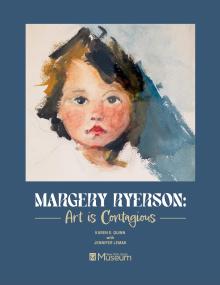
Margery Ryerson: Art is Contagious
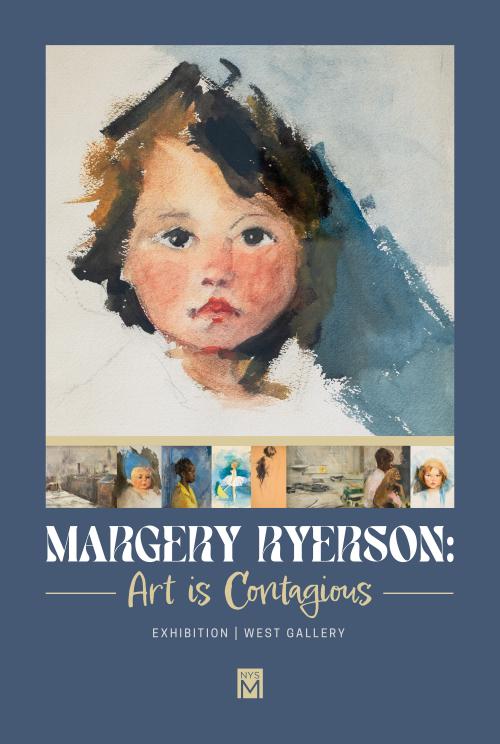
Margery Ryerson (1886–1989), best known for compiling the influential notes of artist Robert Henri, for the 1923 publication, The Art Spirit, was important in her own right as a prolific painter and printmaker whose artistic career spanned an impressive seven decades. Her diverse subjects included landscapes, cityscapes, still lifes, and portraits. She gained critical acclaim for her candid depictions of children, particularly those in settlement houses where she taught. Additionally, Ryerson wrote articles, reviews, and poetry and applied her illustrative skills to books, greeting cards, and calendars. She also led painting demonstrations and exhibited widely at museums, galleries, schools, and churches, establishing a lasting legacy as both an artist and educator.
This exhibition features over 80 artworks and objects, including Ryerson’s oil paintings, prints, and photographs, along with personal items like a paintbrush and a sketchbook. Through her work, the exhibit delves into themes central to Ryerson's life, including the "new immigrant" experience in New York City from 1880–1914 and the role of settlement houses in supporting these communities. Often depicted in her portraits and scenes, these settlement houses provided essential services and served as inspiration for much of her work. Complementing Ryerson’s pieces are artifacts from immigrant life, including cultural items, identification papers, and historical photographs, offering a fuller understanding of the communities that shaped her art.
Lucy and the Beginnings of Humankind: Celebrate the 50th Anniversary of Lucy’s Discovery at the New York State Museum
Join Renowned Geochronologist Dr. Jim Aronson for an Exclusive Lecture on the Groundbreaking Discovery of Lucy and Her World
The New York State Museum invites visitors to a free presentation celebrating the 50th anniversary of the discovery of Lucy, one of the most iconic fossils in the study of human evolution. On Sunday, November 17, 2024, renowned geochronologist Dr. Jim Aronson will present a fascinating look into his pioneering work on the groundbreaking excavation of Lucy's remains in Hadar, Ethiopia.
This engaging event, entitled Opportunities of Dating an Older Woman: Lucy and the Beginnings of Humankind – The Geology and Natural History of How She Lived and Died, will take attendees on a journey through the discovery and analysis of Lucy’s ancient environment. Dr. Aronson, who was part of the team that unearthed the Australopithecus afarensis fossil in 1974, will share firsthand accounts of his experiences in the Afar Triangle and provide insights into the methods he used to reconstruct the world in which Lucy lived—a lush, vibrant ecosystem that stood in stark contrast to the arid landscape of the region today.
Dr. Aronson will also discuss the discovery of the “First Family,” a group of 13 hominins found near Lucy’s remains. This discovery provided information about how these early ancestors of humans lived and died approximately 3.2 million years ago. The lecture will offer new perspectives on how science has uncovered the details of our evolutionary past and celebrate this milestone in paleontological history.
Geochronologist Dr. Jim Aronson said, "Lucy’s discovery was a turning point in our understanding of human origins. It was a privilege to be part of the team that uncovered her remains, and I’m excited to share the incredible story of her discovery and the cutting-edge science that continues to illuminate our evolutionary journey with the visitors of the New York State Museum."
Event: Opportunities of Dating an Older Woman: Lucy and the Beginnings of Humankind – The Geology and Natural History of How She Lived and Died
Date: Sunday, November 17, 2024 | 1:00 PM
Location: Huxley Theater, New York State Museum, Albany, NY
Event Highlights:
- Firsthand accounts from Dr. Jim Aronson, geochronologist and key member of the 1974 discovery team.
- Insights into the paleontological and geological methods used to reconstruct Lucy’s ancient environment.
- A look into the “First Family,” a remarkable group of hominins that provides a glimpse into the lives of early human ancestors.
- A celebration of Lucy's legacy and the profound impact her discovery had on our understanding of human evolution.
About the Cultural Education Center
Established in 1836, the New York State Museum is the oldest and largest public museum in the United States. Home to leading scientists, historians, archeologists, and anthropologists, its collections represent the State’s rich cultural and natural heritage from the past and present, including a staggering 20+ million artifacts spanning 480 million years ago to today. Located at 222 Madison Avenue in Albany, the Museum is open Tuesday through Sunday from 9:30 a.m. to 5 p.m. It is closed on the Fourth of July, Thanksgiving, Christmas, and New Year's Day. Admission is free. For additional information, visit the New York State Museum website.
The New York State Library is part of the Office of Cultural Education within the New York State Education Department. Visit the New York State Library website for a complete list of upcoming programs. To receive news, resources, and other updates, please subscribe to the quarterly newsletter.
The New York State Archives holds many of the oldest and most important archival treasures in the nation. The Archives preserves and makes accessible over 250 million records of New York’s State and colonial governments dating from 1630 to the present. The State Archives provides free access to photographs, artifacts, documents, manuscripts, and other materials that tell the story of New York’s history via its Digital Collections on the Archives website.
The Archives Partnership Trust was founded in 1992 to build an endowment and provide project support to enhance humanities programs, increase access to these outstanding treasures, and continue the preservation of New York's historical records. Since its founding, the Partnership Trust, a 501(c)(3) non-profit organization, has supported exceptional projects and programs. These include the Research Residency Program, the Student Research Awards Program, history conferences, special exhibitions, public education programs, book signings and lectures, publications, teacher training institutes, preservation projects, and more.
The State Museum, State Library, and State Archives are programs of the New York State Education Department’s Office of Cultural Education. Further information about programs and events can be obtained by calling (518) 474-5877 or by visiting the Office of Cultural Education website.
(518) 474-1201
Press@nysed.gov
www.nysed.gov
New York State Museum Opens Exhibition: Margery Ryerson: Art Is Contagious
Exhibition Open November 23, 2024 – September 7, 2025
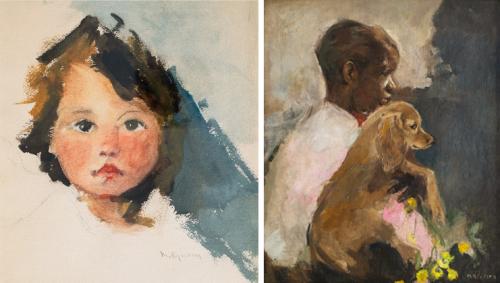
The New York State Education Department is delighted to announce the opening of a new exhibition, Margery Ryerson: Art is Contagious, now open for public viewing at the New York State Museum. This landmark exhibition features more than 80 extraordinary works spanning Margery Ryerson’s illustrious career, including vibrant paintings, delicate watercolors, intricate prints, and evocative drawings. The collection celebrates Ryerson’s deep connections to New York and her remarkable yet understated impact on the art world.
Dr. Jennifer Lemak, Chief Curator of History at the State Museum, said, “We are thrilled to present this first-ever monographic exhibition of Margery Ryerson’s work, much of which is so closely connected with New York’s history. While Ryerson is perhaps best known for co-authoring important and enduring instructional art books, she was also a tremendously gifted painter and printmaker in her own right.”
Ryerson was born in 1886, graduated from Vassar College in Poughkeepsie, New York in 1909, and moved to New York City in 1911, where she lived until her death in 1989 at the age of 102. Ryerson studied under famed art instructors, Robert Henri and Charles W. Hawthorne, and worked with each to compile their classroom lessons into published instructional guides. The book she co-authored with Henri, The Art Spirit, is still in print today, more than 100 years after its publication, and remains one of the most influential books ever written about the nature of art and creativity, the artist's place in society, and the importance of building on what came before.
While Ryerson is widely known within the artworld for her influential writing, she also created beautiful and lasting works of art. Most notably, her depictions of the poor and immigrant children going about their daily activities in New York City’s settlement houses from the 1920’s through the 1940’s beautifully capture this important chapter in our State’s history. The exhibition includes artifacts and information about New York’s settlement houses to help place Ryerson’s work within its historical context.
Works of art by Ryerson are included in the collections of some of the world’s leading museums, including the Smithsonian Institution in Washington, D.C.; the Cleveland Museum of Art; the Brooklyn Museum; the Uffizi Gallery, in Florence, Italy; and the Bibliotheque Nationale, in Paris, France.
The exhibition, located in the New York State Museum’s West Gallery, will be on view from November 23, 2024 to September 7, 2025. Don’t miss this opportunity to experience the brilliance and legacy of Margery Ryerson.
Established in 1836, the New York State Museum is the oldest and largest public museum in the United States. Home to leading scientists, historians, archeologists, and anthropologists, its collections represent the State’s rich cultural and natural heritage from the past and present, including a staggering 20+ million artifacts spanning 480 million years ago to today. Located at 222 Madison Avenue in Albany, the Museum is open Tuesday through Sunday from 9:30 a.m. to 5 p.m. It is closed on the Fourth of July, Thanksgiving, Christmas, and New Year's Day. Admission is free. For additional information, visit the New York State Museum website.
The New York State Library is part of the Office of Cultural Education within the New York State Education Department. Visit the New York State Library website for a complete list of upcoming programs. To receive news, resources, and other updates, please subscribe to the quarterly newsletter.
The New York State Archives holds many of the oldest and most important archival treasures in the nation. The Archives preserves and makes accessible over 250 million records of New York’s State and colonial governments dating from 1630 to the present. The State Archives provides free access to photographs, artifacts, documents, manuscripts, and other materials that tell the story of New York’s history via its Digital Collections on the Archives website.
The Archives Partnership Trust was founded in 1992 to build an endowment and provide project support to enhance humanities programs, increase access to these outstanding treasures, and continue the preservation of New York's historical records. Since its founding, the Partnership Trust, a 501(c)(3) non-profit organization, has supported exceptional projects and programs. These include the Research Residency Program, the Student Research Awards Program, history conferences, special exhibitions, public education programs, book signings and lectures, publications, teacher training institutes, preservation projects, and more.
The State Museum, State Library, and State Archives are programs of the New York State Education Department’s Office of Cultural Education. Further information about programs and events can be obtained by calling (518) 474-5877 or by visiting the Office of Cultural Education website.
(518) 474-1201
Press@nysed.gov
www.nysed.gov
New York State Museum Hosts Sensory-Friendly Learning and Discovery Event in Partnership With “Bring On the Spectrum” for Neurodiverse Families
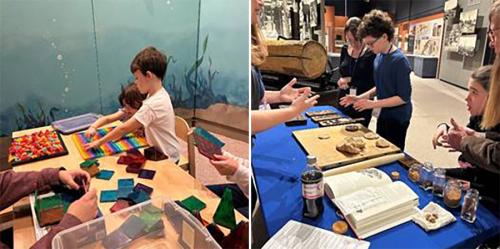
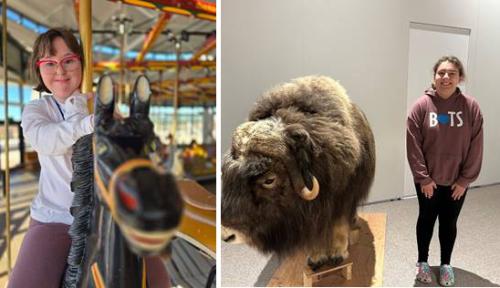
On November 16, the New York State Museum welcomed 100 neurodiverse children and their families for a special day dedicated to creating sensory-friendly and engaging learning experiences. Organized in collaboration with the not-for-profit organization Bring on the Spectrum (BOTS), the event featured tailored activities designed to foster inclusivity, comfort, and engagement for all participants.
As part of a weekend of sensory-friendly programming sponsored by BOTS across Albany, the State Museum offered hands-on artifact exploration, special exhibit tours, science-based activities, and behind-the-scenes “sneak peaks” to explore how exhibits are created. The weekend’s activities aimed to provide accessible experiences for families, enhance community support for audience members, and promote awareness of neurodiversity within the community.
Highlights from the Museum’s Sensory-Friendly Programming included:
- Special rides on the iconic New York State Museum Carousel
- Interactive exploration of People of the Longhouse
- Hands-on fun in the Adirondack Animals Discovery Space
- VIP tour of the Ice Ages exhibit
- Collaborative STEM activity: Skyscrapers Build
- A sensory-adapted “baking” experience inspired by New Netherland "Cookjes”
New York State Museum Director of Community Engagement & Education Kathryn Weller said, “We were thrilled to collaborate with BOTS to offer programming that makes the New York State Museum more inclusive for neurodiverse children and their families. With the great success of programming throughout this special weekend, we are excited to create more ways for visitors to feel welcome and comfortable while they are here. We look forward to offering more inclusive collaborations to support our diverse communities.”
“We are proud to partner with the NYS Museum on a sensory-friendly weekend in Albany County,” said Bring on the Spectrum founder Lisa Audi. “They are our lead partner welcoming out-of-towners to the Capital Region. And we look forward to future collaborative opportunities with them and appreciate their interest in inclusion.”
For more information on the full weekend of events and other community partners, please visit Travel to Albany — Bring on the Spectrum.
About the Cultural Education Center
Established in 1836, the New York State Museum is the oldest and largest public museum in the United States. Home to leading scientists, historians, archeologists, and anthropologists, its collections represent the State’s rich cultural and natural heritage from the past and present, including a staggering 20+ million artifacts spanning 480 million years ago to today. Located at 222 Madison Avenue in Albany, the Museum is open Tuesday through Sunday from 9:30 a.m. to 5 p.m. It is closed on the Fourth of July, Thanksgiving, Christmas, and New Year's Day. Admission is free. For additional information, visit the New York State Museum website.
The New York State Library is part of the Office of Cultural Education within the New York State Education Department. Visit the New York State Library website for a complete list of upcoming programs. To receive news, resources, and other updates, please subscribe to the quarterly newsletter.
The New York State Archives holds many of the oldest and most important archival treasures in the nation. The Archives preserves and makes accessible over 250 million records of New York’s State and colonial governments dating from 1630 to the present. The State Archives provides free access to photographs, artifacts, documents, manuscripts, and other materials that tell the story of New York’s history via its Digital Collections on the Archives website.
The Archives Partnership Trust was founded in 1992 to build an endowment and provide project support to enhance humanities programs, increase access to these outstanding treasures, and continue the preservation of New York's historical records. Since its founding, the Partnership Trust, a 501(c)(3) non-profit organization, has supported exceptional projects and programs. These include the Research Residency Program, the Student Research Awards Program, history conferences, special exhibitions, public education programs, book signings and lectures, publications, teacher training institutes, preservation projects, and more.
The State Museum, State Library, and State Archives are programs of the New York State Education Department’s Office of Cultural Education. Further information about programs and events can be obtained by calling (518) 474-5877 or by visiting the Office of Cultural Education website.
About Bring on the Spectrum
Bring on the Spectrum is a 501(c)(3). Whose mission is to support neurodiverse and neurotypical individuals with opportunities to achieve their best quality of life as a respected member of the Capital Region. They achieve this through social, recreational and lifestyle activities for individuals of all ages and abilities. For more information, please visit Bring on the Spectrum.
(518) 474-1201
Press@nysed.gov
www.nysed.gov
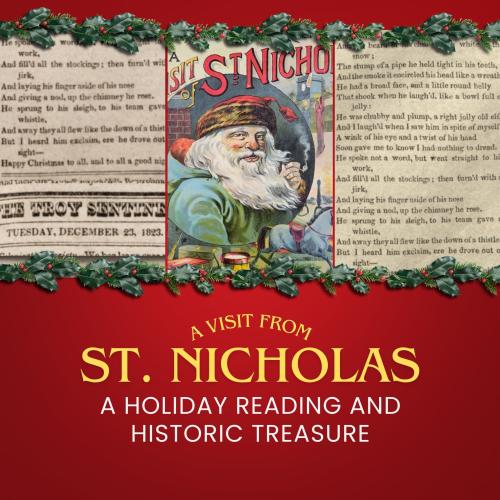
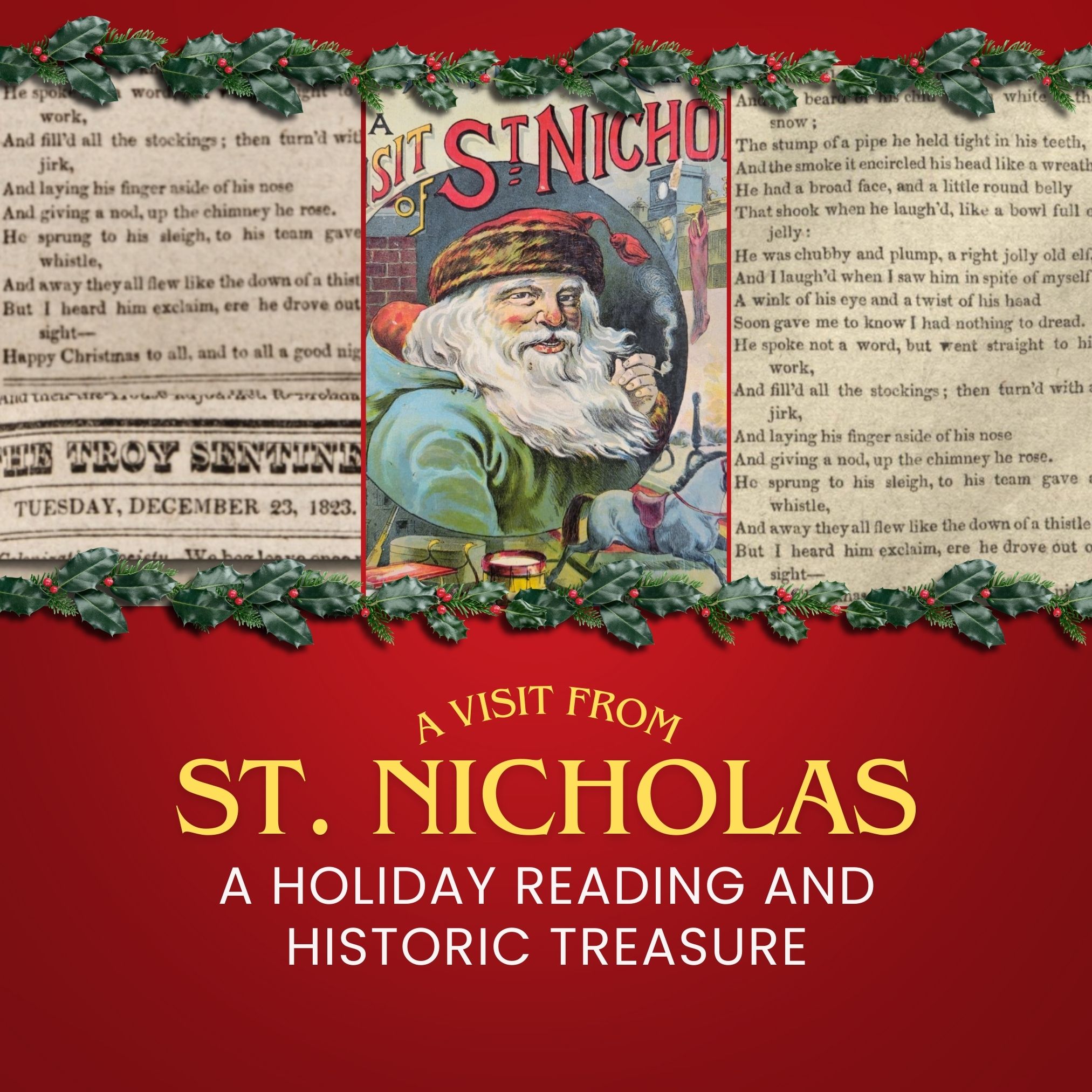
Celebrate the magic of the season with a special read-aloud of ’Twas the Night Before Christmas at the New York State Museum! This cherished holiday tradition comes to life as you explore the fascinating history of the poem with a rare treat—the original 19th-century Troy Daily Sentinel featuring the first-ever printing of this iconic story, courtesy of the New York State Library’s Manuscripts and Special Collections.
After the reading, young visitors can enjoy festive crafts and letter writing to celebrate the holiday spirit. Don’t miss this enchanting event for all ages, blending storytelling, history, and holiday cheer!
Kick off the Kwanzaa season with an inspiring celebration of Umoja (Unity), the first principle of Kwanzaa. This annual event invites the community to honor African American culture, history, and values through a variety of engaging activities.
Explore the African Marketplace, enjoy live drumming, and take part in engaging activities for all ages. From a candle-lighting ceremony to special workshops, there’s something for everyone to enjoy. Admission is free, and we invite you to bring a fruit for the community fruit basket. Don’t miss this joyful celebration of culture and togetherness!
Join us at the New York State Museum for a festive midday countdown on New Year’s Eve! Celebrate the arrival of 2026 with friends and family as we enjoy crafts and activities for all ages. We can’t wait to celebrate with you!
New York State Museum and Library Celebrate 20th Anniversary of the Polar Express With a Day of Holiday Magic!
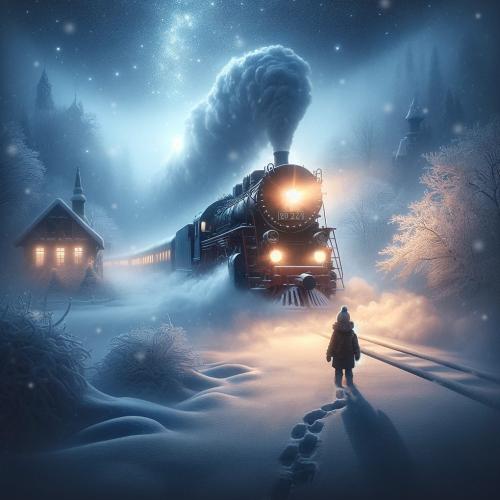
The New York State Museum and New York State Library invite families to embark on a heartwarming holiday journey on December 8, 2024, as they celebrate the 20th anniversary of the beloved film, The Polar Express. Join us for “All Aboard for a Polar Express Adventure!”—a festive day packed with train-themed activities, hands-on crafts, and a special screening of the iconic movie.
Scheduled to coincide with the popular New York State Tree Lighting and Fireworks Festival at the Empire State Plaza, this event is the perfect way to kick off a full day of holiday cheer in Albany. All activities, except for the carousel rides, will take place on the first floor of the State Museum, ensuring a seamless and joyful experience for all attendees.
Event Highlights:
- Ride the Carousel: Enjoy a magical ride on the Museum's historic carousel and make unforgettable holiday memories.
- Discover Railroad History: Explore captivating railroad-themed displays from the New York State Library’s collections, featuring treasures from the Jack Shufelt Collection.
- Get Creative: Unleash your creativity, and get into the holiday spirit with a fun and festive craft activity from 11:00 a.m. to 1:00 p.m.
- Meet Santa Claus: The jolly man himself will make a special appearance to spread joy and holiday cheer!
- The Polar Express Screening: Experience the magic of this beloved holiday classic in the Huxley Theater at 1:00 p.m.
New York State Librarian Lauren Moore said, “The holiday season and the 20th anniversary of The Polar Express provide a wonderful opportunity for visitors to delve into our state’s rich railroad history through the fascinating world of literature and archival treasures. We invite families to explore the Library’s historic collections while creating magical holiday memories together.”
New York State Museum Director of Community Engagement & Education Kathryn Weller said, “We’re thrilled to partner with the New York State Library to bring this festive celebration to life. From carousel rides to crafts and the beloved The Polar Express, this event has something for everyone. It’s a true honor to be part of our State’s holiday traditions and to welcome families for a day of seasonal magic and fun.”
For more information on “All Aboard for a Polar Express Adventure” please visit: All Aboard for a Polar Express Adventure!
About the Cultural Education Center
Established in 1836, the New York State Museum is the oldest and largest public museum in the United States. Home to leading scientists, historians, archeologists, and anthropologists, its collections represent the State’s rich cultural and natural heritage from the past and present, including a staggering 20+ million artifacts spanning 480 million years ago to today. Located at 222 Madison Avenue in Albany, the Museum is open Tuesday through Sunday from 9:30 a.m. to 5 p.m. It is closed on the Fourth of July, Thanksgiving, Christmas, and New Year's Day. Admission is free. For additional information, visit the New York State Museum website.
The New York State Library is part of the Office of Cultural Education within the New York State Education Department. Visit the New York State Library website for a complete list of upcoming programs. To receive news, resources, and other updates, please subscribe to the quarterly newsletter.
The New York State Archives holds many of the oldest and most important archival treasures in the nation. The Archives preserves and makes accessible over 250 million records of New York’s State and colonial governments dating from 1630 to the present. The State Archives provides free access to photographs, artifacts, documents, manuscripts, and other materials that tell the story of New York’s history via its Digital Collections on the Archives website.
The Archives Partnership Trust was founded in 1992 to build an endowment and provide project support to enhance humanities programs, increase access to these outstanding treasures, and continue the preservation of New York's historical records. Since its founding, the Partnership Trust, a 501(c)(3) non-profit organization, has supported exceptional projects and programs. These include the Research Residency Program, the Student Research Awards Program, history conferences, special exhibitions, public education programs, book signings and lectures, publications, teacher training institutes, preservation projects, and more.
The State Museum, State Library, and State Archives are programs of the New York State Education Department’s Office of Cultural Education. Further information about programs and events can be obtained by calling (518) 474-5877 or by visiting the Office of Cultural Education website.
(518) 474-1201
Press@nysed.gov
www.nysed.gov
First Mastodon Discovery in Over 11 Years: Stunning Prehistoric Find Unearthed in Orange County, New York
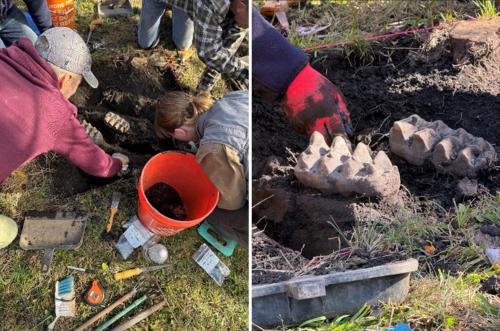
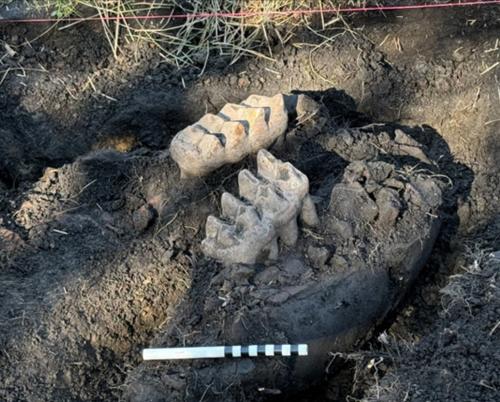
A remarkable discovery in Orange County, New York, has unearthed a complete mastodon jaw, marking the first such find in the State in over 11 years. The jaw, along with additional bone fragments, was recovered by researchers from the New York State Museum and SUNY Orange from the backyard of a residence near Scotchtown, New York. The fossils are scheduled for carbon dating and comprehensive analysis to determine the mastodon’s age, diet, and habitat during its lifetime. Following preservation and scientific analysis, the artifact will be featured in public programming in 2025.
The mastodon jaw, which belonged to an adult individual, was found protruding from the topsoil, capturing the homeowner’s attention and sparking an investigation that will continue to uncover scientific insights for years to come. The discovery began when the homeowner found two teeth concealed by the fronds of a plant on their property. Upon further investigation, the homeowner unearthed two additional teeth just inches underground.
Excavation efforts by Museum and SUNY Orange staff yielded a full, well-preserved mastodon jaw belonging to an adult, as well as a piece of a toe bone and a rib fragment. This significant find will enhance our understanding of the region’s Ice Age inhabitants and highlight the abundance of prehistoric wonders yet to be discovered. With over 150 mastodon fossils found statewide to date—about one-third in Orange County—the area remains New York’s premier hotspot for these ancient relatives of modern elephants.
"The New York State Museum is proud to be home to some of the most talented scientists and researchers in the state and across the nation," said Interim Deputy Commissioner for Cultural Education, Michael Mastroianni. "As stewards of New York’s history, we are dedicated to advancing research that deepens our understanding of the state's natural legacy and ensuring our discoveries continue to inspire future generations. This discovery highlights the Museum's unwavering mission to empower vital scientific research that reveals the profound changes shaping our environment and inspiring actionable steps toward a more sustainable future."
“This discovery is a testament to the rich paleontological history of New York and the ongoing efforts to understand its past,” said Dr. Robert Feranec, director of Research & Collections and curator of Ice Age Animals at the New York State Museum. “This mastodon jaw provides a unique opportunity to study the ecology of this magnificent species, which will enhance our understanding of the Ice Age ecosystems from this region. Fossils are resources that provide remarkable snapshots of the past, allowing us to not only reconstruct ancient ecosystems but also provide us with better context and understanding of the current world around us. Each discovery like this one brings us one step closer to piecing together the full story of New York.”
“When I found the teeth and examined them in my hands, I knew they were something special and decided to call in the experts,” said the resident whose backyard safeguarded this prehistoric treasure. “I'm thrilled that our property has yielded such an important find for the scientific community.”
“While the jaw is the star of the show, the additional toe and rib fragments offer valuable context and the potential for additional research,” said Dr. Cory Harris Chair of SUNY Orange’s Behavioral Sciences Department. “We are also hoping to further explore the immediate area to see if there are any additional bones that were preserved.”
The excavation and study of the mastodon jaw are part of ongoing efforts to document and preserve the rich paleontological heritage of the state. The public is encouraged to report any similar discoveries to the appropriate authorities, as every find has the potential to shed light on the distant past and inspire new generations of scientists and enthusiasts.
About the Cultural Education Center
Established in 1836, the New York State Museum is the oldest and largest public museum in the United States. Home to leading scientists, historians, archeologists, and anthropologists, its collections represent the State’s rich cultural and natural heritage from the past and present, including a staggering 20+ million artifacts spanning 480 million years ago to today. Located at 222 Madison Avenue in Albany, the Museum is open Tuesday through Sunday from 9:30 a.m. to 5 p.m. It is closed on the Fourth of July, Thanksgiving, Christmas, and New Year's Day. Admission is free. For additional information, visit the New York State Museum website.
The New York State Library is part of the Office of Cultural Education within the New York State Education Department. Visit the New York State Library website for a complete list of upcoming programs. To receive news, resources, and other updates, please subscribe to the quarterly newsletter.
The New York State Archives holds many of the oldest and most important archival treasures in the nation. The Archives preserves and makes accessible over 250 million records of New York’s State and colonial governments dating from 1630 to the present. The State Archives provides free access to photographs, artifacts, documents, manuscripts, and other materials that tell the story of New York’s history via its Digital Collections on the Archives website.
The Archives Partnership Trust was founded in 1992 to build an endowment and provide project support to enhance humanities programs, increase access to these outstanding treasures, and continue the preservation of New York's historical records. Since its founding, the Partnership Trust, a 501(c)(3) non-profit organization, has supported exceptional projects and programs. These include the Research Residency Program, the Student Research Awards Program, history conferences, special exhibitions, public education programs, book signings and lectures, publications, teacher training institutes, preservation projects, and more.
The State Museum, State Library, and State Archives are programs of the New York State Education Department’s Office of Cultural Education. Further information about programs and events can be obtained by calling (518) 474-5877 or by visiting the Office of Cultural Education website.
SUNY Orange
SUNY Orange is a community college located in Middletown, New York, offering a wide range of academic programs and serving as a hub for higher education and community engagement in the region. The college's involvement in the mastodon excavation project demonstrates its commitment to fostering scientific exploration and preserving the area's natural heritage.
###
(518) 474-1201
Press@nysed.gov
www.nysed.gov
New York State Museum Brightens the Holidays With a Week of Family-Friendly Events
This holiday season, the New York State Education Department’s Office of Cultural Education invites families to step into a world of festive enchantment! From December 21 through December 31, the State Museum’s “Schools Out/Museum’s In” Holiday Recess programming will offer children and families a week of educational adventures, interactive activities, and joyful celebrations.
Throughout the holiday break begin your visit by exploring the Museum’s rich exhibitions—then make your way to the Visitor Desk to see what’s in store for the day. From beloved holiday readings and lively Kwanzaa festivities to mesmerizing magic lantern shows and a joyous midday New Year’s celebration, there’s something magical awaiting visitors of all ages.
Interim Deputy Commissioner for Cultural Education Michael Mastroianni said, “As the State Museum of the best state in the country, we’re closing out 2024 on a high note and setting the stage for an even brighter 2025! Our commitment to offering engaging, family-friendly programming remains stronger than ever. From celebrating the rich diversity of traditions that make our community unique, to fostering meaningful opportunities for families to connect, learn, and create memories, the Museum remains a trusted and welcoming destination for visitors of all ages. We’re looking forward to a new year filled with even more opportunities to inspire, educate, and bring people together.”
New York State Museum Director of Community Engagement & Education Kathryn Weller said, “We’re thrilled to welcome children and families during the Holiday Recess. Our programs are designed to celebrate our community’s diverse cultures and traditions, making this season a wonderful time for everyone to explore, learn, and create lasting memories together.”
New York State Librarian Lauren Moore said, “The New York State Library is committed to preserving invaluable treasures that document the rich history of our state and its people. We are thrilled to have the opportunity to highlight New York's significant role in this cherished holiday tradition, as we come together with family and friends to read 'Twas the Night Before Christmas.”
Featured Holiday Events Include:
December 21 — A Visit from St. Nicholas & Original Reading of ’Twas the Night Before Christmas:
- Time: 11:00 AM – 12:00 PM
- Location: Adirondack Hall
- Cost: FREE
Celebrate the season’s magic with a heartfelt reading of ’Twas the Night Before Christmas at the New York State Museum. Unwrap the fascinating origins of this classic poem while marveling at a true holiday treasure: the original 201-year-old Troy Daily Sentinel, featuring the very first printing of this iconic tale, courtesy of the NYS Library’s Manuscripts and Special Collections.
After the reading, young visitors can keep the festive spirit alive by crafting letters to Santa at our letter-writing station—there’s even a chance Old Saint Nick himself will stop by to check his list twice! Don’t miss this enchanting event for all ages, blending storytelling, history, and holiday cheer! The NYS Library's copy of the historic Troy Daily Sentinel with the original printing of ’Twas the Night Before Christmas will be on display from Friday, December 20 through December 27.
December 26 — Annual Capital Kwanzaa Celebration
- Time: 4:00 PM – 8:00 PM
- Location: 4th Floor
- Cost: FREE
Embrace the spirit of unity at this vibrant community gathering that kicks off Kwanzaa. Experience the power of live drumming, take part in engaging workshops, browse the African Marketplace, and enjoy a variety of family-friendly activities. Presented in partnership with the African-American Cultural Arts Center of the Capital Region, the Hamilton Hill Arts Center, and the Capital Region Kwanzaa Coalition, this festive event invites everyone to bring a fruit for the community basket—an offering of goodwill and abundance for all.
December 28 — Harambee! Songs and Stories for Kwanzaa
- Time: 11:00 AM – 11:30 AM & 1:00 PM – 2:00 PM
- Location: Adirondack Hall
- Cost: FREE
Join storyteller April Armstrong for a spirited Kwanzaa celebration brimming with song, rhythm, and remarkable folktales drawn from African, Caribbean, and African American traditions. “Harambee!” promises an inspiring, interactive experience that resonates with the cultural richness and shared heritage that define this special time of year.
December 29 — Lanterns of Wonder: A Magic Lantern Showcase
- Time: 11:00 AM – 3:00 PM
- Location: South Lobby
- Cost: FREE
Travel back in time with Elliott & Schlemowitz, masterful magic lanternists who captivate audiences with authentic Victorian and Edwardian lantern slides. Experience the past as it glows to life through these luminous, storytelling images—perfect for anyone eager to glimpse the wonders of bygone eras.
December 31 — New Year’s Day Mid-Day Celebration
- Time: 12:00 PM – 3:00 PM
- Location: Adirondack Hall
- Cost: FREE
Ring in 2025 in spectacular style at the Museum’s mid-day countdown celebration! This family-friendly event is the perfect way to jumpstart your New Year’s festivities with creative crafts, engaging activities, and plenty of countdown excitement. Designed especially for little ones who can’t stay up until midnight, the celebration features multiple thrilling “ball drops” throughout the day, ensuring everyone gets to experience the joy of ringing in the New Year. Gather with loved ones to create lasting memories and welcome 2025 with laughter, cheer, and plenty of festive fun! sp;
For a complete schedule of events, please visit The New York State Museum Public Programs and Events Calendar.
About the Cultural Education Center
Established in 1836, the New York State Museum is the oldest and largest public museum in the United States. Home to leading scientists, historians, archeologists, and anthropologists, its collections represent the State’s rich cultural and natural heritage from the past and present, including a staggering 20+ million artifacts spanning 480 million years ago to today. Located at 222 Madison Avenue in Albany, the Museum is open Tuesday through Sunday from 9:30 a.m. to 5 p.m. It is closed on the Fourth of July, Thanksgiving, Christmas, and New Year's Day. Admission is free. For additional information, visit the New York State Museum website.
The New York State Library is part of the Office of Cultural Education within the New York State Education Department. Visit the New York State Library website for a complete list of upcoming programs. To receive news, resources, and other updates, please subscribe to the quarterly newsletter.
The New York State Archives holds many of the oldest and most important archival treasures in the nation. The Archives preserves and makes accessible over 250 million records of New York’s State and colonial governments dating from 1630 to the present. The State Archives provides free access to photographs, artifacts, documents, manuscripts, and other materials that tell the story of New York’s history via its Digital Collections on the Archives website.
The Archives Partnership Trust was founded in 1992 to build an endowment and provide project support to enhance humanities programs, increase access to these outstanding treasures, and continue the preservation of New York's historical records. Since its founding, the Partnership Trust, a 501(c)(3) non-profit organization, has supported exceptional projects and programs. These include the Research Residency Program, the Student Research Awards Program, history conferences, special exhibitions, public education programs, book signings and lectures, publications, teacher training institutes, preservation projects, and more.
The State Museum, State Library, and State Archives are programs of the New York State Education Department’s Office of Cultural Education. Further information about programs and events can be obtained by calling (518) 474-5877 or by visiting the Office of Cultural Education website.
(518) 474-1201
Press@nysed.gov
www.nysed.gov


Join us for a family-friendly Lunar New Year celebration! Explore the historic Tuck High Co., learn about its rich history, and discover how three generations of the Lee family served their community. Plus, get creative with festive crafts as we welcome the Year of the Horse! Bring the whole family for a fun, hands-on experience of culture, history, and celebration.
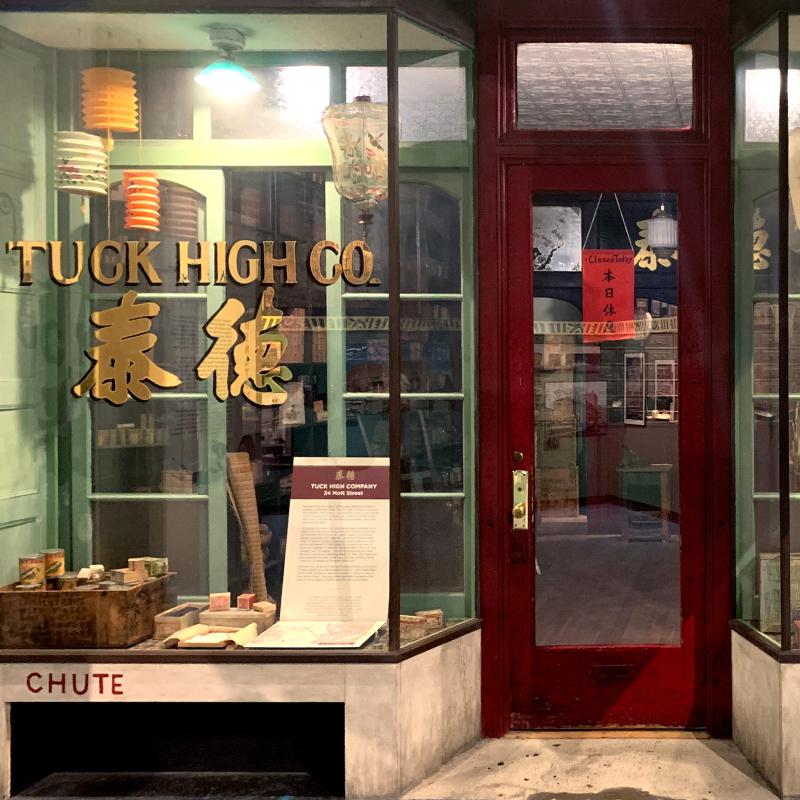
Tuck High Co. Chinatown Store
Ongoing Exhibition
The Tuck High Co. store, founded in 1879 on Mott Street, embodies the resilience, ingenuity, and interconnectedness of New York’s Chinatown. For over a century, this family-run business—owned and operated by three generations of the Lee family—provided more than just dry goods and imports from China. It served as a hub for commerce, culture, and community. Offering everything from kitchen utensils and paper goods to herbal remedies and more, Tuck High supplied daily necessities and cultural touchstones to Chinese immigrants navigating life in a new country.
At the time of its closure in 1980, Tuck High was the oldest continuously operating store in Chinatown. To preserve its significance, the Lee family transferred many of the store's original contents including counters, a cash register, lamps, tools, and receipts to the museum. Also on display are artifacts from two other recently closed stores, Sun Goon Shing Co. and Quong Yee Wo & Co., that reinforce Tuck High's story of adaptation and survival. Discover crates that carried goods across oceans, mail pouches that connected families, and an herbalist’s remedies that healed both body and soul.
Ongoing conservation efforts ensure that this history remains vibrant. Faded papers, textiles, and lanterns will be replaced with new pieces sourced from today’s Chinatown businesses, symbolizing the enduring legacy of community and commerce in Chinatown.
New Exhibition Feature: Singer Industrial Sewing Machine
This Singer industrial sewing machine, ca. 1972, was once a familiar sight in the bustling garment factories of Manhattan’s Chinatown. This particular machine carries two intertwined immigrant stories: first used in a commercial garment factory, it was later repurposed for hobby sewing in a Chinatown apartment, symbolizing both the labor and legacy of a vibrant community.
Virtual Tour of Tuck High Co.
The Tuck High Company store embodies tens of thousands of stories about what Chinatown was truly about. Jack Tchen, cross-cultural historian and co-founder of the Museum of Chinese in America, will share three stories interweaving the lives of a tea merchant, a “laundryman,” and the Irish “Mayor of Chinatown.”
Join NYSM Senior Historian to learn more about the store’s history, how and why it came to the NYSM as an exhibition, and about current work to clean and conserve the collections inside.
Sound the Alarm: New York State Museum Unveils Updated Fire Engine Hall Exhibit With “Fear Not, We Come”
First Refresh in Decades Celebrates Firefighting Innovation, Heritage, and Heroism in New York State
The New York State Museum is proud to announce the opening of “Fear Not, We Come,” an exciting new update to its beloved Fire Engine Hall—first opened in 1978. This revitalized, long-term exhibition now showcases additional artifacts from the Museum’s renowned firefighting collection, tells new stories of people who changed the course of firefighting history, and features updated visuals—including a custom mural—to celebrate the unbreakable spirit of New York State’s fire service across generations.
Carrie Ross, Director of Exhibitions said, “Fear Not, We Come” is both a rallying cry for firefighters and a statement of the Museum’s commitment to illuminating the remarkable heritage of New York’s fire service. We want children, families, and visitors to leave with a deeper understanding of how these brave men and women have tirelessly served—and continue to serve—communities across the state.”
Featuring refreshed signage and newly displayed objects, the updates to Fire Engine Hall are the first to be made to the exhibition in decades. Upon entering the gallery, visitors will encounter a striking, illuminated 1890 fire alarm box lantern, setting the tone for the recent enhancements. “Fear Not, We Come” tells the evolving story of firefighting technology, from hand- and horse-drawn engines to powerful motorized apparatus.
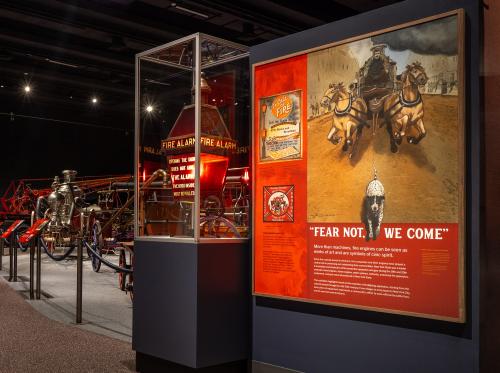
In a nod to the people behind the hoses and helmets, this exhibition goes beyond the machines themselves. Visitors can view the badge of retired FDNY Captain Brenda Berkman and learn about how her actions led to a pivotal step forward for women in diversifying the firefighting ranks. Rare historical images, drawn from the New York State Library’s Manuscripts and Special Collections, offer additional insights into how firefighting has shaped—and been shaped by—New Yorkers’ tireless dedication to public safety.
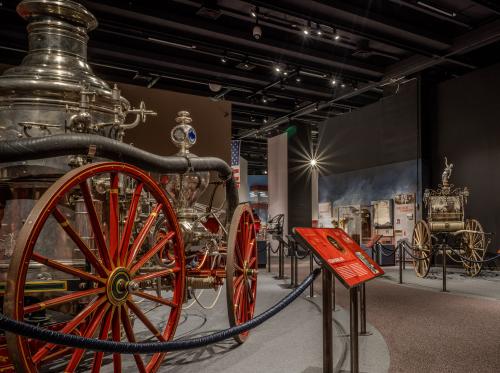
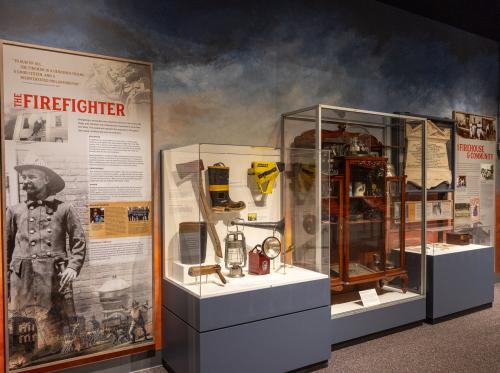
From the colonial era through the mid-20th century, New York State led the way in developing and manufacturing fire protection gear and apparatus. By exploring how fire engines have evolved, and how fire companies have fostered civic pride, “Fear Not, We Come” honors those who have battled blazes to save lives and property for centuries.
Behind the scenes footage, available on the Museum’s website, offers a peek at the custom mural created by Museum staff in 2024 to illuminate this new chapter of Fire Engine Hall. This visual centerpiece underscores the Museum’s commitment to telling the ever-burning story of New York’s firefighting heritage in bold, engaging ways.
“Fear Not, We Come” is now open as a long-term exhibition in Fire Engine Hall at the New York State Museum.
About the Cultural Education Center
Established in 1836, the New York State Museum is the oldest and largest public museum in the United States. Home to leading scientists, historians, archeologists, and anthropologists, its collections represent the State’s rich cultural and natural heritage from the past and present, including a staggering 20+ million artifacts spanning 480 million years ago to today. Located at 222 Madison Avenue in Albany, the Museum is open Tuesday through Sunday from 9:30 a.m. to 5 p.m. It is closed on the Fourth of July, Thanksgiving, Christmas, and New Year's Day. Admission is free. For additional information, visit the New York State Museum website.
The New York State Library is part of the Office of Cultural Education within the New York State Education Department. Visit the New York State Library website for a complete list of upcoming programs. To receive news, resources, and other updates, please subscribe to the quarterly newsletter.
The New York State Archives holds many of the oldest and most important archival treasures in the nation. The Archives preserves and makes accessible over 250 million records of New York’s State and colonial governments dating from 1630 to the present. The State Archives provides free access to photographs, artifacts, documents, manuscripts, and other materials that tell the story of New York’s history via its Digital Collections on the Archives website.
The Archives Partnership Trust was founded in 1992 to build an endowment and provide project support to enhance humanities programs, increase access to these outstanding treasures, and continue the preservation of New York's historical records. Since its founding, the Partnership Trust, a 501(c)(3) non-profit organization, has supported exceptional projects and programs. These include the Research Residency Program, the Student Research Awards Program, history conferences, special exhibitions, public education programs, book signings and lectures, publications, teacher training institutes, preservation projects, and more.
The State Museum, State Library, and State Archives are programs of the New York State Education Department’s Office of Cultural Education. Further information about programs and events can be obtained by calling (518) 474-5877 or by visiting the Office of Cultural Education website.
###
(518) 474-1201
Press@nysed.gov
www.nysed.gov
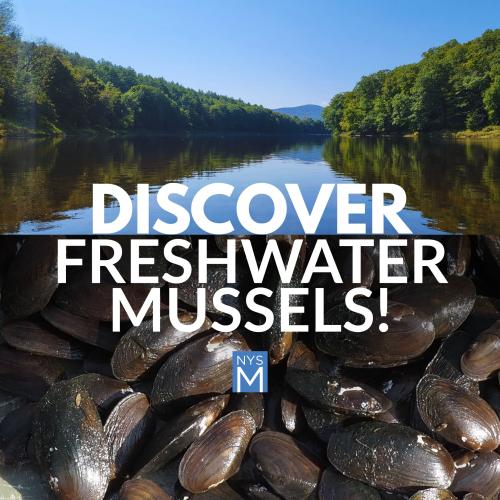
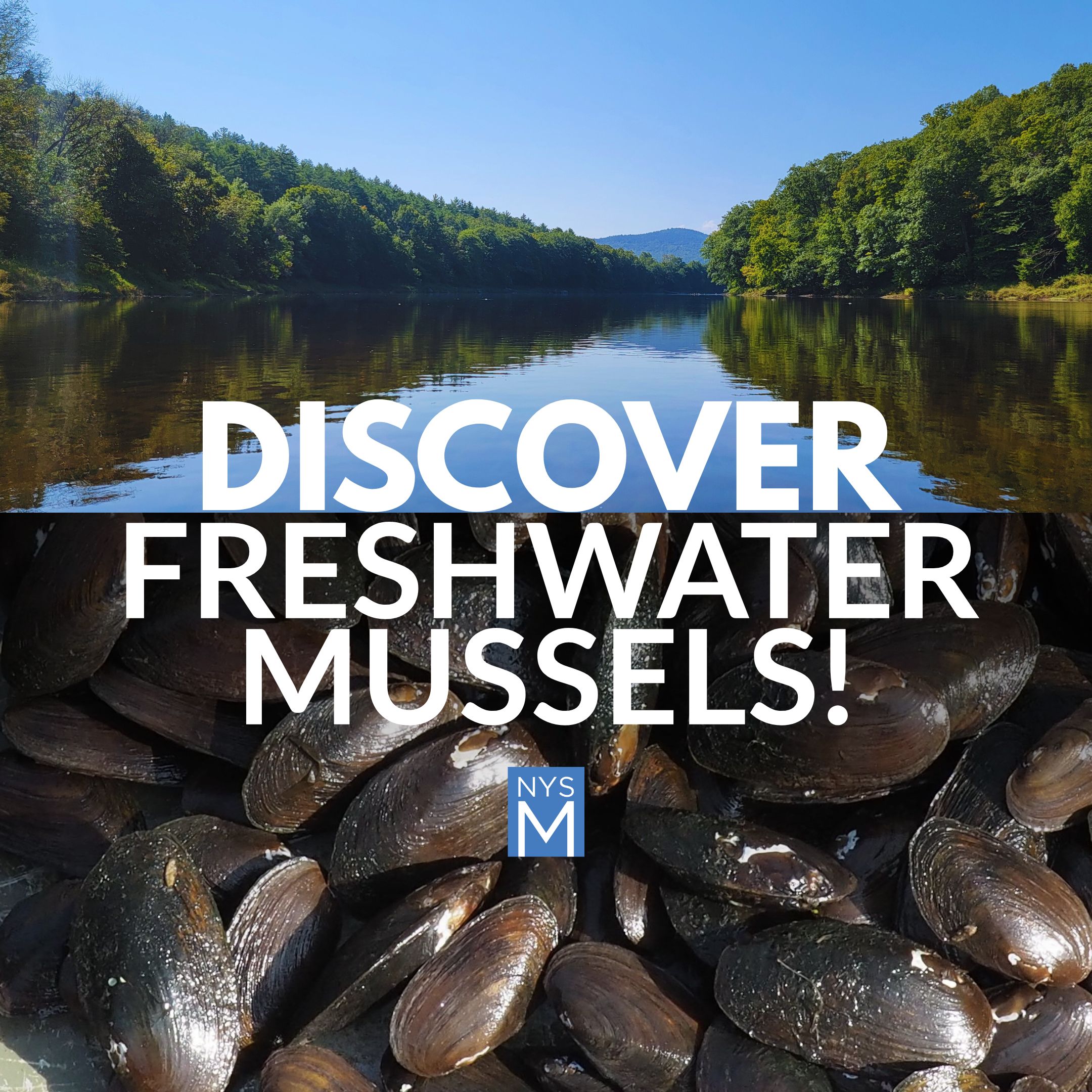
Join Dr. Denise Mayer for a hands-on exploration of freshwater mussels! From exploring a simulated mussel survey pool to identifying native and invasive species, this interactive program brings science to life.
You'll get a close-up look at mussel shells under a microscope, learn how scientists tell their age, and find out why these creatures play such a big role in keeping our rivers and lakes clean. Dr. Mayer, who also leads the Museum’s Field Research Laboratory in Cambridge, will guide you through the tools, techniques, and secrets of mussel research.
Perfect for kids, parents, and curious minds of all ages—this is your chance to discover the hidden gems of our freshwater ecosystems in a hands-on, engaging way. Come play, learn, and see why mussels matter!
New York State Unmarked Burial Site Protection Act
What is it?
- A law to protect all unmarked burial sites in New York State.
- Establishes a process to follow when unmarked graves are found.
- Establishes a Native American Burial Site Review Committee to make decisions about indigenous burial sites.
- Establishes a process for the disposition of non-Native American burial sites.
- Establishes penalties for intentionally disturbing or removing human remains and funerary objects from unmarked burial sites.
WITHIN 4 DAYS
- If the coronor determines the remains are more than 50 years old, notify the State Archaeologist: (518) 474-5812 or send information using this Reporting Form (PDF) to unmarkedburial@nysed.gov
- The State Archaeologist will inform the Native American Burial Site Review Committee.
IMMEDIATELY
- STOP ALL ACTIVITY THAT COULD DISTURB THE SITE AND CALL 911.
- The coroner or medical examiner will examine the human remains and determine if they are more than 50 years old.
WITHIN 10 DAYS
- The State Archaeologist will evaluate the discovery and issue a report to the Committee and property owner (an additional 10 days may be allowed if there are multiple remains).
Link to the Unmarked Burial Site Protection Act
SECTION 171
Discovery and disposition of human remains and funerary objects
Executive (EXC) CHAPTER 18, ARTICLE 7
https://www.nysenate.gov/legislation/laws/EXC/171
If the Burial Site is NOT Native American:
AS SOON AS PRACTICABLE
The State Archaeologist will attempt to identify lineal descendants or culturally-affiliated groups and provide notification.
WITHIN 10 DAYS
Lineal descendants or culturally-affiliated groups will advise the State Archaeologist of the preferred disposition of remains and objects which may include protection of the burial site. The State Archaeologist will consult with the property owner to facilitate the preferred disposition determined by the lineal descendants or culturally-affiliated groups.
WITHIN 10 DAYS OF REPORT
Property owner will notify the State Archaeologist of the preferred disposition, i.e., to protect the burial site or remove the remains and objects. If the lineal descendants or culturally-affiliated groups and the property owner agree about disposition, a plan will be developed for protection of the burial site or removal of the remains. If the lineal descendants or culturally-affiliated groups prefer protection but the property owner prefers removal, the State Archaeologist will establish a plan for removal. Additional consultation or mediation may also occur.
WITHING 90 DAYS
If no action has occurred, the property owner may hire an archaeologist/bioarchaeologist to remove the remains in a respectful manner. The removal may be monitored by the culturally-affiliated group.
If the Burial Site IS Native American:
WITHIN 10 DAYS
The Committee will have stewardship of the human remains and funerary objects and will notify lineal descendants or culturally-affiliated groups.
WITHIN 60 DAYS
Lineal descendants or culturally-affiliated groups will advise the Committee in writing of the preferred disposition. The Committee will consult with the property owner to facilitate the preferred disposition as determined by the lineal descendants or culturally-affiliated groups. If the lineal descendants or culturally-affiliated groups and the property owner agree about disposition, a plan will be developed for protection of the burial site or removal of the remains. If the lineal descendants or culturally-affiliated groups prefer protection but the property owner prefers removal, the Committee will establish a plan for removal. Additional consultation or mediation may also occur.
WITHIN 90 DAYS
If no action has occurred, the property owner may hire an archaeologist/bioarchaeologist to remove the remains. The removal may be monitored by the culturally-affiliated group.
PENALTIES
- Failure to report the discovery of a burial site of human remains or funerary objects is a misdemeanor.
- Intentional defacing or desecration of human remains or funerary objects is a felony.
From Bunker Hill to Ground Zero: A Button’s Journey Through History
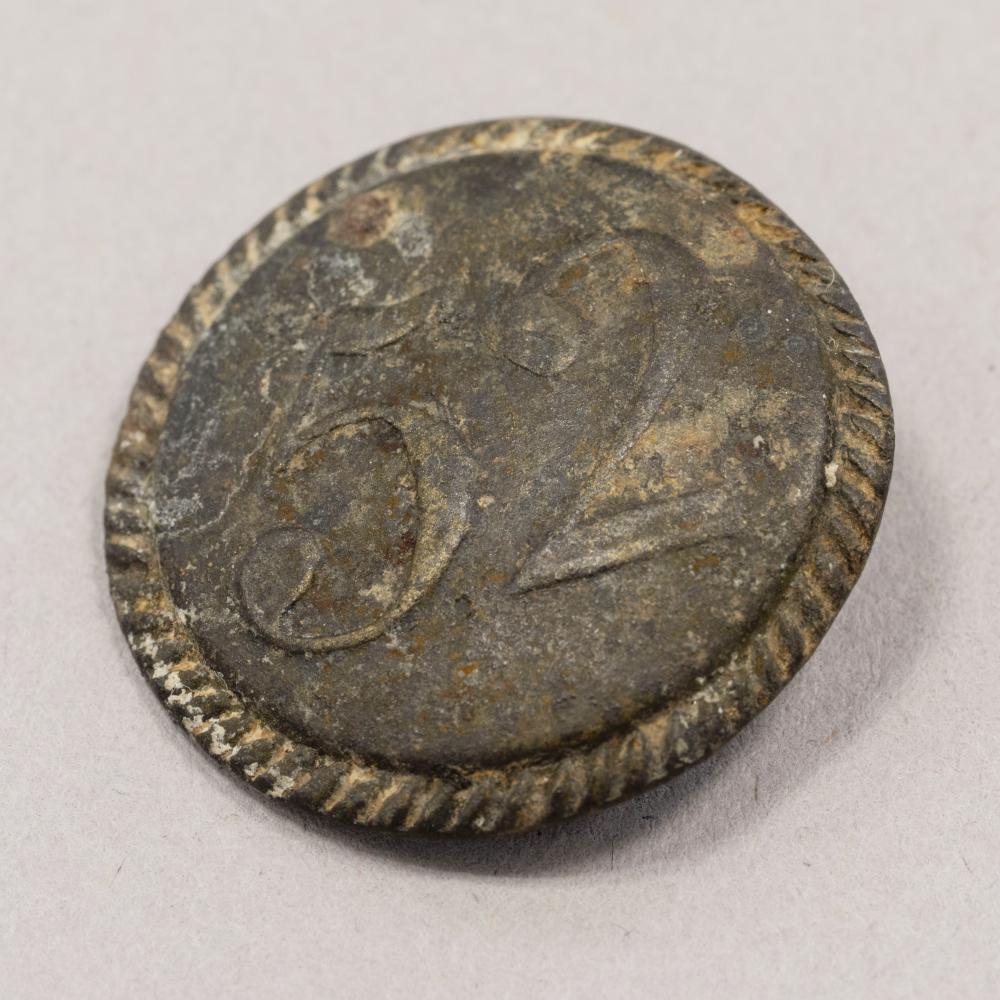
Among the fragments of timber and history uncovered at the World Trade Center site in 2010, archaeologists discovered the remains of an 18th-century wooden gunboat—likely built near Philadelphia in the early 1770s and used during the Revolutionary War. Amid the wreckage, they found an unexpected clue to the vessel’s past: a small, worn military button. At first glance, it seemed ordinary, like one of many buttons commonly used on British military uniforms during the 18th century. But this particular button bore the number “52,” linking it to the 52nd Regiment of Foot, a British infantry unit that played a prominent role in the American Revolution.
The 52nd Regiment is known for its involvement in key early battles, including Lexington and Bunker Hill in 1775. Over the next few years, it was deployed to campaigns in New York and Philadelphia, returning to New York in 1778. The presence of this button within the ship’s timbers offers a compelling thread in the broader story of the vessel’s origin and fate.
Research now suggests that the ship itself was constructed near Philadelphia shortly after 1773. Its design matches the shallow-draft American gunboats built for navigating rivers and harbors during the Revolutionary War. The military nature of the vessel is further supported by the recovery of musket balls, iron canister shot or grape shot, and gun flints from the same site.
Together, these finds suggest a vivid possibility that the ship was originally American, played a role in the war effort, and was later captured by British forces—perhaps even by soldiers of the 52nd Regiment. This single button, no more than an inch in diameter, has become a powerful piece of evidence, demonstrating how even the smallest artifacts can unlock remarkable stories from the past.
Now on View
Don’t miss the chance to see the original military button, along with other everyday 18th-century artifacts recovered from the World Trade Center site, displayed alongside the reconstruction of the Gunboat happening now at the New York State Museum!
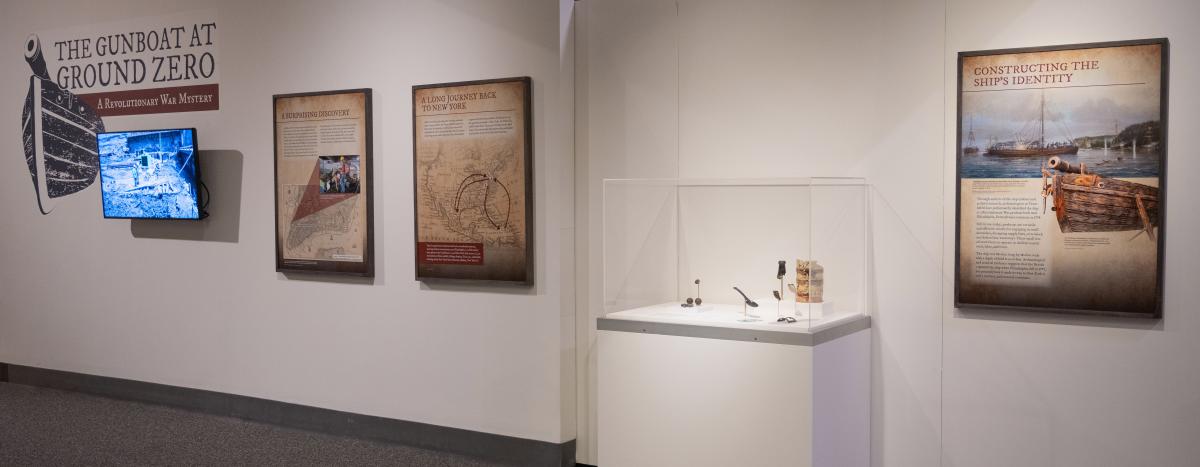
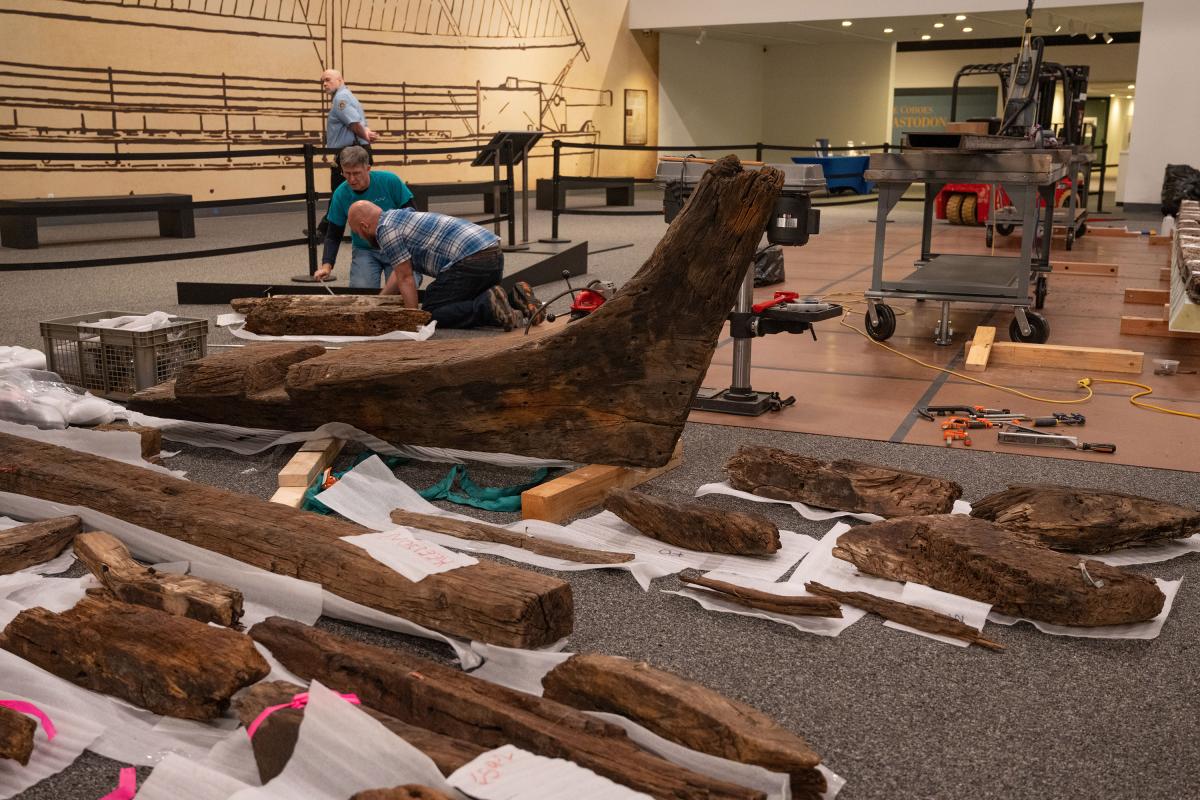
Related Information
What’s Inside? New York State Museum Announces Partnership With Albany Medical Center to CT Scan Dinosaur Egg and Giant Beaver Skull
(Top) New York State Museum’s Hadrosaur dinosaur egg. Credit: New York State Museum; (Bottom) The oldest fossil of the Giant Beaver (Castoroides ohioensis). Credit: New York State Museum
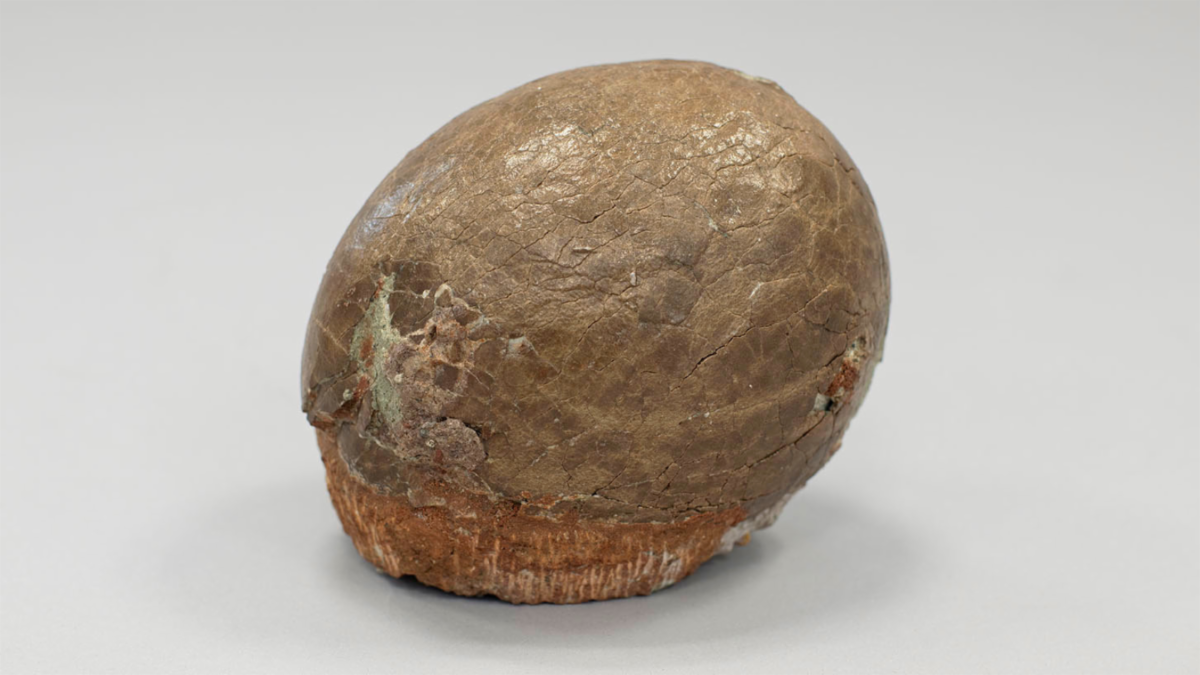
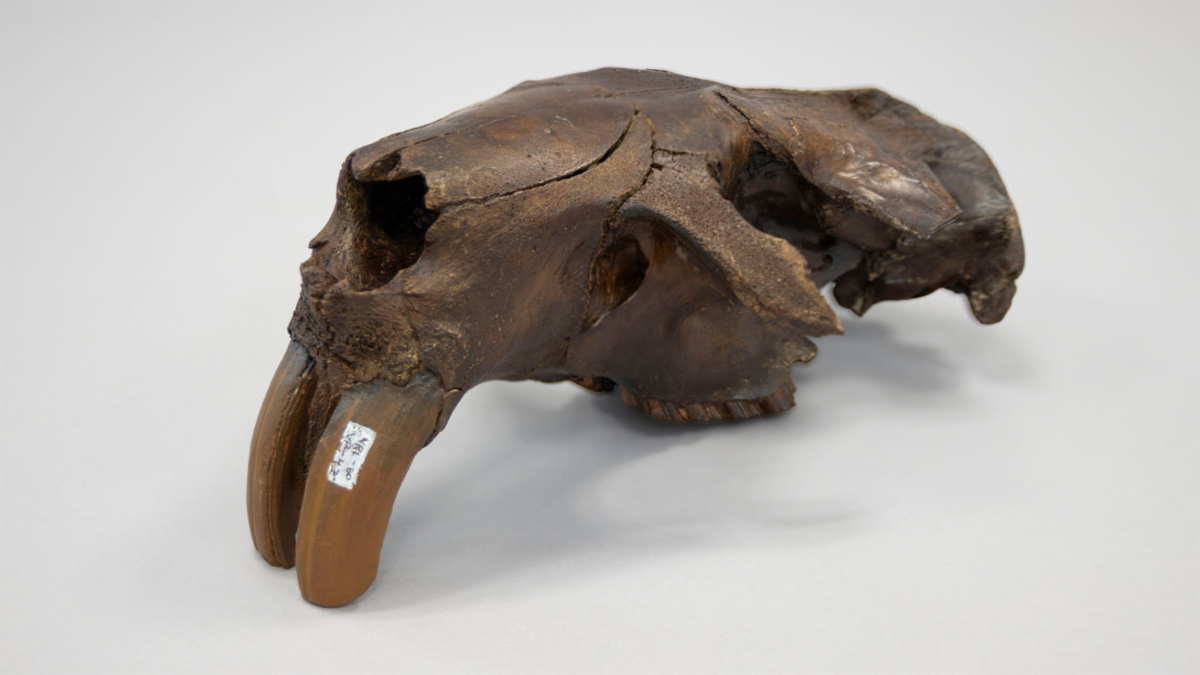
It’s the ultimate prehistoric time capsule—and we’re about to unlock it. The New York State Museum is thrilled to announce its partnership with Albany Medical Center to look inside two of its most awe-inspiring artifacts, including a 70–80 million-year-old dinosaur egg that has captivated tour groups and young learners for years.
Believed to be from a Hadrosaur—a duck-billed dinosaur from the late Cretaceous Period—the egg likely originates from Asia. Roughly the size of a cantaloupe and weighing seven pounds, this fossilized relic has the potential to teach us specific details of the early life of these amazing, extinct creatures, known to have also lived in the Northeastern United States – forging a link between this fossil and our region’s ancient past.
Dr. Robert Feranec, Director of Research and Collections and Curator of Pleistocene Vertebrate Paleontology, said, “While the New York State Museum’s collections contain countless rare artifacts and specimens, there is perhaps none that holds more mysteries to us as the dinosaur egg. Regularly, we are asked, ‘Is there a baby inside?’ Partnering with Albany Medical Center provides us the opportunity to see below the egg’s surface for the first time to answer that question and further our understanding of this incredibly unique specimen stewarded within the Museum’s collections. This analysis could hold information about dinosaur reproduction and embryonic development, for this group of dinosaurs of the late Cretaceous. We are deeply grateful to Albany Medical Center for their partnership and enthusiasm in helping to bring science to life.”
Dominic Zanello, Manager of CT Scan and MRI at Albany Medical Center, said, “Our state-of-the-art imaging supports the best patient care, and as an academic medical center, community partnerships such as those centered around research and discovery are important to our mission. Our 256-slice CT technology—the most advanced imaging capability available in the region—provides three dimensional cross-sections of the artifacts, allowing us to see what’s invisible to the naked eye—layer by layer, detail by detail. It’s a fascinating collaboration between medicine and paleontology that helps uncover details long hidden within these extraordinary objects, and one we are honored to partner on.”
The Museum's dinosaur egg isn’t the only fossil going to the doctor’s office. Also under the digital knife is the skull of a Giant Beaver (Castoroides ohioensis)—an Ice Age mammal that was as large as a modern black bear. The State Museum holds the first described skull and oldest fossil of this extinct species, and for the first time, its internal structure will be digitally examined.
Native to Pleistocene-era New York, giant beavers’ skulls and teeth point to a unique diet and lifestyle. These scans will help scientists better understand this extinct species, its ecology, and how it is different from modern species.
Stay tuned. In the coming weeks, the Museum and Albany Med will share behind-the-scenes footage, scan imagery, and expert analysis of what’s discovered—from the prehistoric to the Pleistocene.
About the New York State Museum
Established in 1836, the New York State Museum is the oldest and largest public museum in the United States. Home to leading scientists, historians, archeologists, and anthropologists, its collections represent the State’s rich cultural and natural heritage from the past and present, including a staggering 20+ million artifacts spanning 1.1 billion years ago to today. Located at 222 Madison Avenue in Albany, the Museum is open Tuesday through Sunday from 9:30 a.m. to 5 p.m. It is closed on the Fourth of July, Thanksgiving, Christmas, and New Year's Day. Admission is free. For additional information, visit the New York State Museum website and subscribe to our newsletter.
About Albany Medical Center
Albany Medical Center, northeastern New York’s only academic medical center, is one of the largest private employers in the Capital Region. It incorporates the 766-bed Albany Medical Center Hospital, which offers the widest range of medical and surgical services in the region, and Albany Medical College, which trains the next generation of doctors, scientists, and other healthcare professionals. It also includes the region’s largest physicians’ practice with 500 doctors. Albany Medical Center works with dozens of community partners to improve the region’s health and quality of life. Albany Medical Center is a member of the Albany Med Health System, which also includes Columbia Memorial Health, Glens Falls Hospital, Saratoga Hospital, and the Visiting Nurses. The region’s largest locally governed health system, it has 1,520 beds, more than 800 physicians, and 125 outpatient locations throughout the Capital Region.
###
(518) 474-1201
Press@nysed.gov
www.nysed.gov
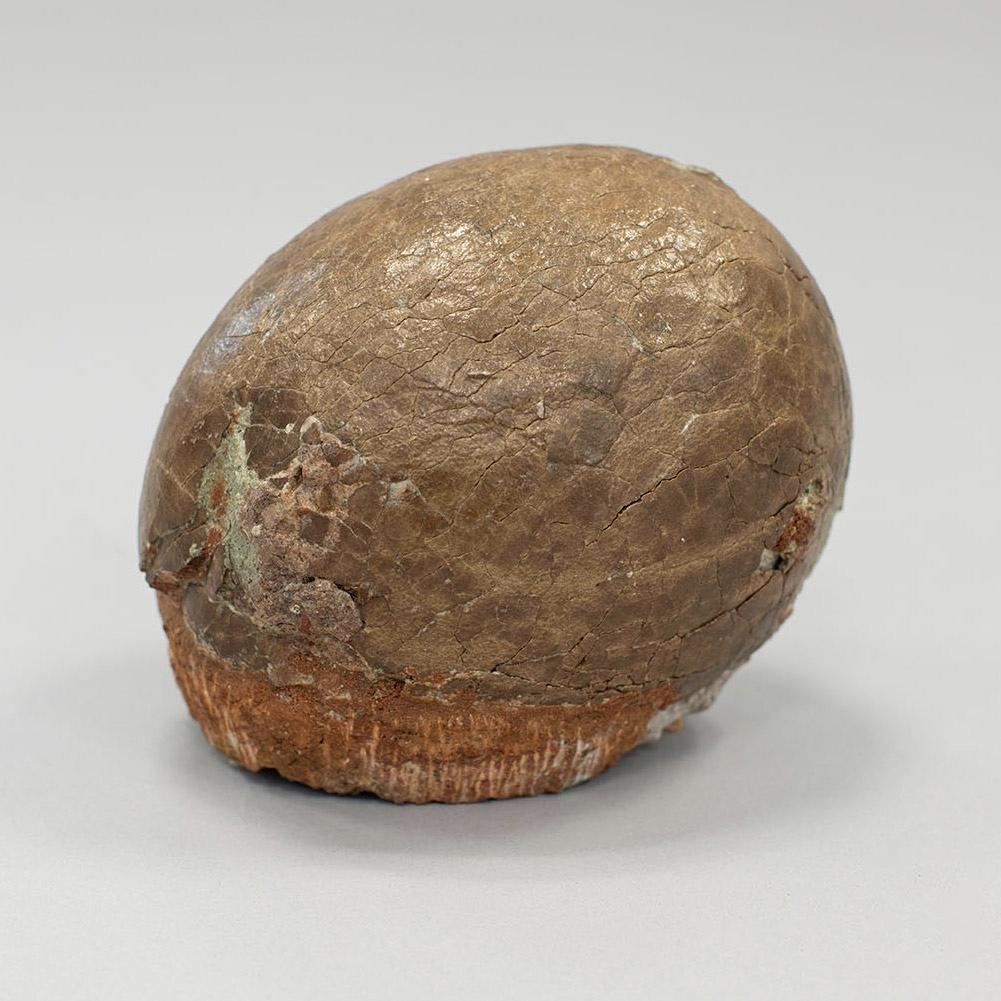
Credit: New York State Museum
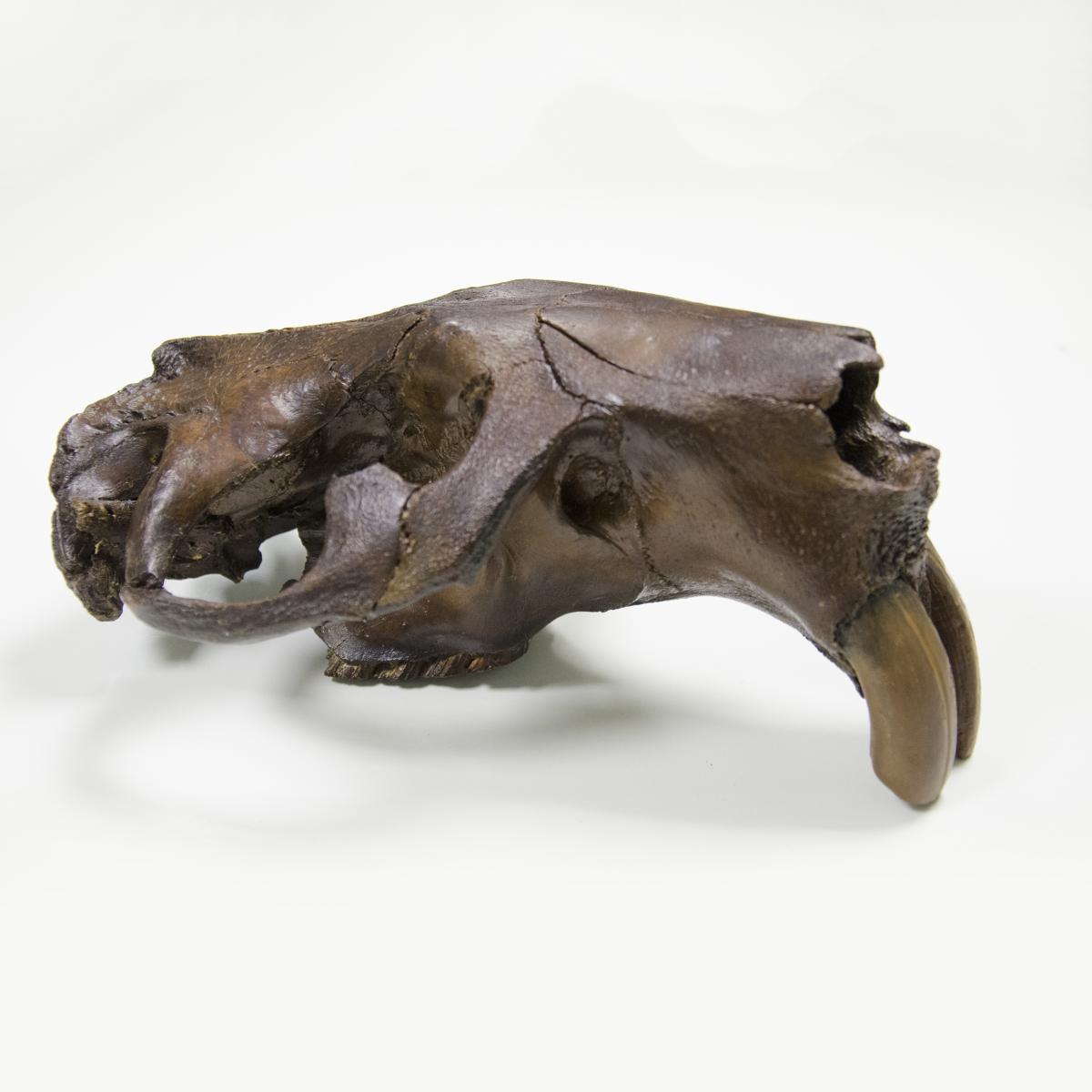
The oldest fossil of the Giant Beaver (Castoroides ohioensis)
Credit: New York State Museum
Peering into the Prehistoric: A Dinosaur Egg and Ice Age Giant Go Under the Scanner
A prehistoric time capsule is about to be opened, and the New York State Museum is at the helm of this thrilling scientific journey! In an unprecedented collaboration with Albany Medical Center, the Museum is preparing to peer inside two of its most captivating fossils using cutting-edge CT scanning technology.
First up: a 70–80 million-year-old dinosaur egg. About the size of a cantaloupe and weighing seven pounds, this remarkable fossil offers a rare glimpse into prehistoric life. Believed to be from a Hadrosaur—duck-billed dinosaurs that roamed the Earth during the late Cretaceous Period—this fossil likely originated in Asia.
Now, for the first time, scientists will look inside this egg to uncover its secrets. Could it contain the remains of an embryo? What might it reveal about dinosaur development and reproduction? Advanced imaging technology will allow researchers to explore these questions without damaging the specimen, bringing new insight into the ancient lives of these remarkable creatures.
But the dinosaur egg isn’t the only fossil heading into the CT suite. Also under the digital microscope is the skull of a Giant Beaver (Castoroides ohioensis)—an enormous Ice Age rodent that once lumbered through Pleistocene-era New York. As big as a modern black bear, this species had unique features that set it apart from today’s beavers, especially in its skull and teeth.
This particular specimen is historic, as it marks the first skull ever described for the species. Scanning it will provide a clearer picture of its internal structure, helping scientists better understand its biology, behavior, and place in the ecosystem of ancient North America.
This remarkable fusion of medical technology and paleontology marks a new chapter in fossil research. Over the coming weeks, the NYSM and Albany Med will reveal behind-the-scenes footage, stunning scan images, and expert interpretations—unlocking secrets that have been hidden for tens of thousands, even millions, of years.
Stay tuned as science brings the ancient world vividly to life.
Benjamin Franklin's Anti-Slavery Petition
Even as Washington remained silent on the issue of slavery, other Founders, including Benjamin Franklin, publicly advocated for the abolition of slavery in the United States. This petition was signed by Franklin and presented to the US Congress in New York City in February 1790.
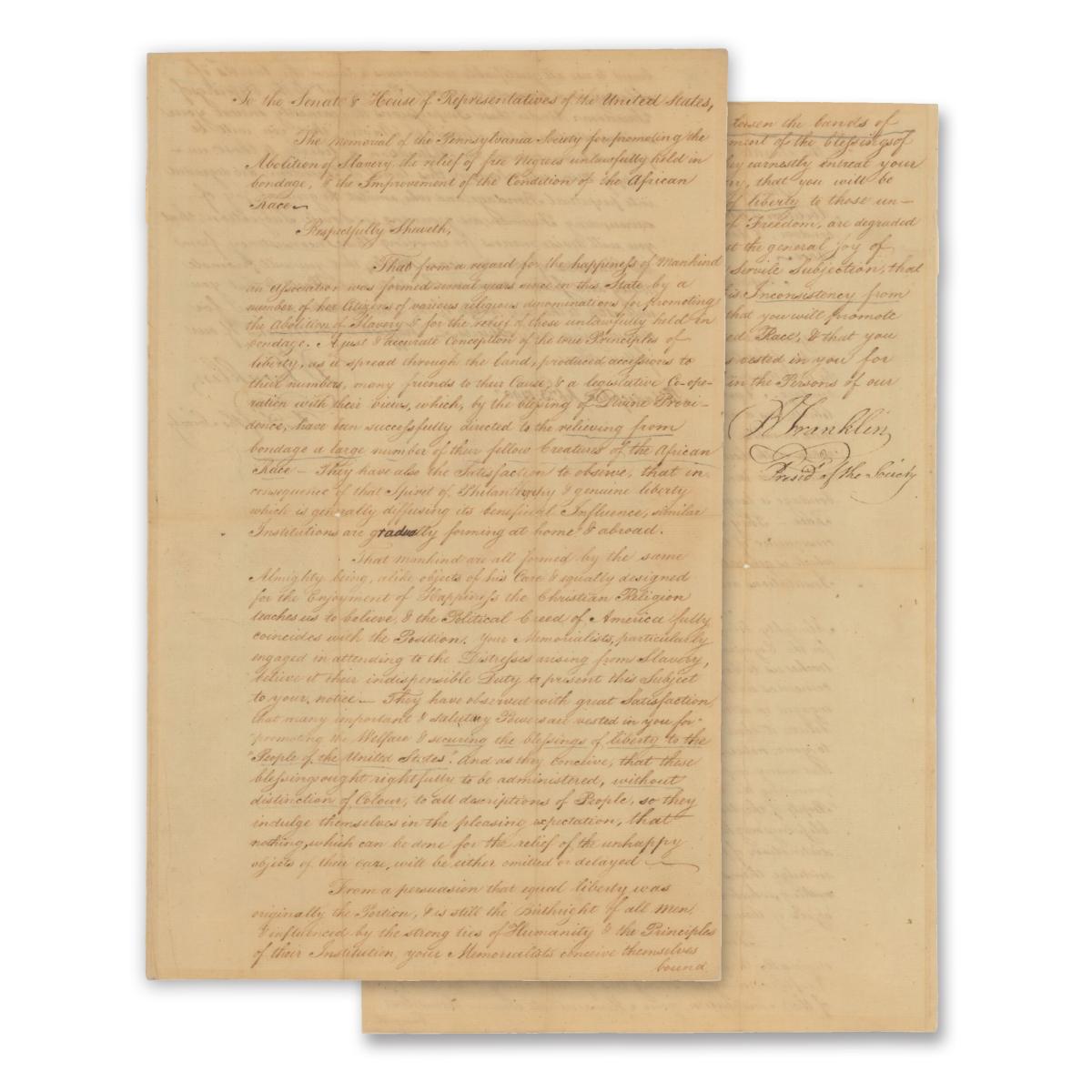
Front and back of Benjamin Franklin's Anti-Slavery Petition, February 1790.
Courtesy of the National Archives
To the Senate & House of Representatives of the United States,
The Memorial of the Pennsylvania Society for promoting the Abolition of Slavery, the relief of free Negroes unlawfully held in bondage, & the Improvement of the Condition of the African Races.
Respectfully Sheweth,
That from a regard for the happiness of Mankind an Association was formed several years since in this State by a number of her Citizens of various religious denominations for promoting the Abolition of Slavery & for the relief of those unlawfully held in bondage. A just & accurate Conception of the true Principles of liberty, as it spread through the land, produced accessions to their numbers, many friends to their Cause, & a legislative Co-operation with their views, which, by the blessing of Divine Providence, have been successfully directed to the relieving from bondage a large number of their fellow Creatures of the African Race. They have also the Satisfaction to observe, that in consequence of that Spirit of Philanthropy & genuine liberty which is generally diffusing its beneficial Influence, similar Institutions are gradually forming at home & abroad. That mankind are all formed by the same Almighty being, alike objects of his Care & equally designed for the Enjoyment of Happiness the Christian Religion teaches us to believe & the Political Creed of America fully coincides with the Position. Your Memorialists, particularly engaged in attending to the Distresses arising from Slavery, believe it their indispensable Duty to present this Subject to your notice. They have observed with great Satisfaction that many important & salutary Powers are vested in you for "promoting the Welfare & Securing the blessings of liberty to the People of the United States." And as they conceive, that these blessings ought rightfully to be administered, without distinction of Colour, to all descriptions of People, so they indulge themselves in the pleasing expectation, that nothing, which can be done for the relive of the unhappy objects of their care, will be either omitted or delayed. From a persuasion that equal liberty was originally the Portion, It is still the Birthright of all men, & influenced by the strong ties of Humanity & the Principles of their Institution, your Memorialists conceive themselves bound to use all justifiable endeavours to loosen the bounds of Slavery and promote a general Enjoyment of the blessings of Freedom. Under these Impressions they earnestly entreat your serious attention to the Subject of Slavery, that you will be pleased to countenance the Restoration of liberty to those unhappy Men, who alone, in this land of Freedom, are degraded into perpetual Bondage, and who, amidst the general Joy of surrounding Freemen, are groaning in Servile Subjection, that you will devise means for removing this Inconsistency from the Character of the American People, that you will promote mercy and Justice towards this distressed Race, & that you will Step to the very verge of the Powers vested in you for discouraging every Species of Traffick in the Persons of our fellow men.
Philadelphia February 3, 1790
B. Franklin
President of the Society
Transcript Source
This transcript was sourced from:
https://www.colorado.edu/herbst/sites/default/files/attached-files/brooks_lunch_seminar_day_1.pdf
George Washington: An American Paradox Exhibition Resources
This page provides transcriptions of original historical documents featured in the exhibit George Washington, an American Paradox. The handwritten documents—many in 18th-century cursive—can be difficult for modern readers to interpret. These transcriptions offer accessible versions of the texts to help visitors engage more deeply with the ideas, contradictions, and lived realities of early America.
George Washington's Farewell Address
In his farewell address, Washington warned of the dangers of sectionalism, political partisanship, and entangling foreign alliances. After 45 years of public service, the 64-year-old Washington sought to retire to his Mount Vernon estate to enjoy “the benign influence of good laws under a free government” while denying such enjoyment to more than 250 enslaved individuals.
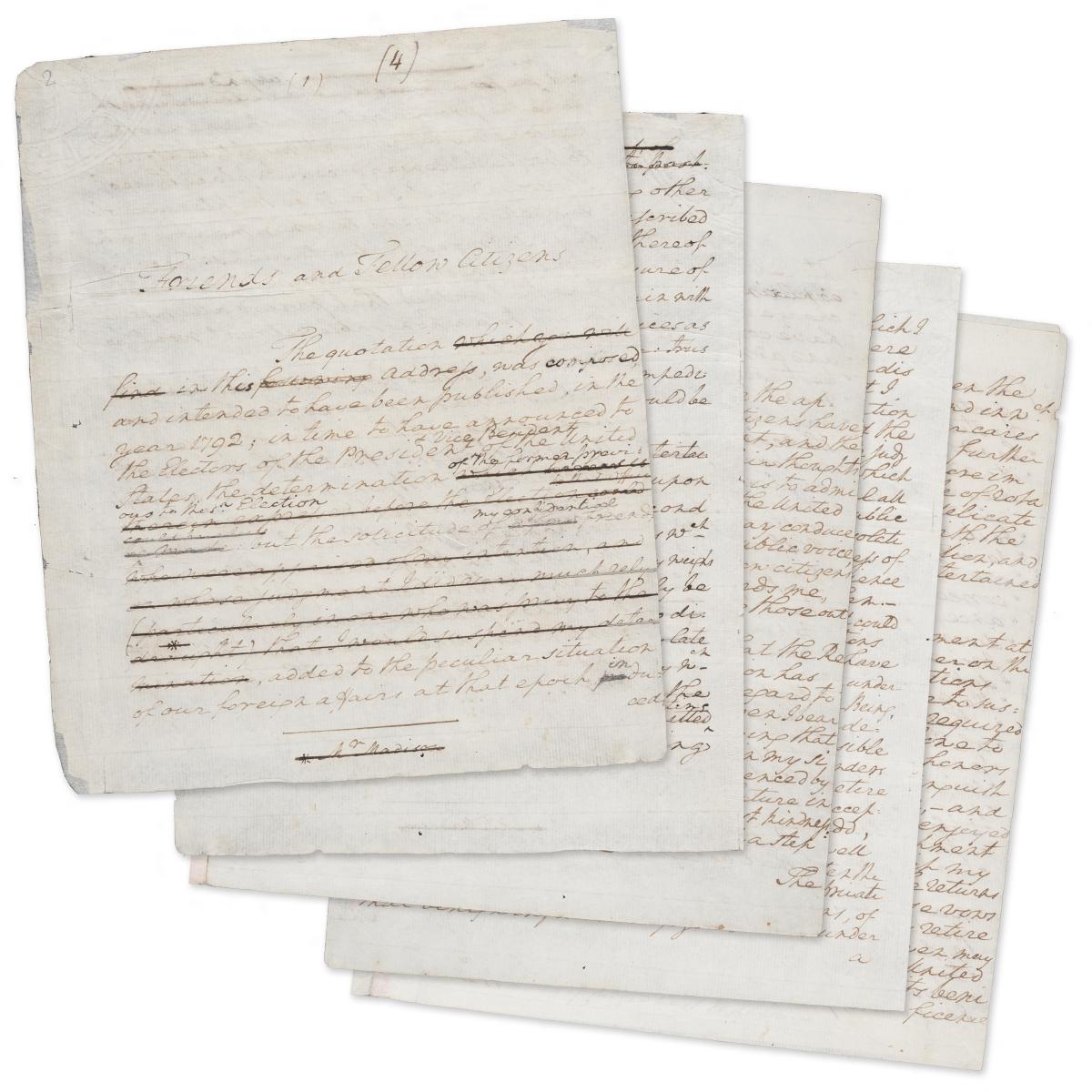
The first five pages of George Washington's 19-page farewell address of 1796.
George Washington Relics, New York State Library
George Washington's Farewell Address was delivered on September 19, 1796. Listen to a portion of the speech recorded in 1913 by Harry E. Humphrey. (Courtesy of the Library of Congress).
Friends and Fellow Citizens
The quotation in this address, was composed, and intended to have been published, in the year 1792; in time to have announced to the Electors of the President & Vice President of the United States the determination of the former previous to the sd Election but the solicitude of my confidential friends, added to the peculiar situation of our foreign affairs at that epoch induced me to suspend the promulgation; lest among other reasons my retirement might be ascribed to political cowardice. In place thereof I resolved, if it should be the pleasure of my fellow citizens to honor me again with their suffrages, to devote such services as I should render, a year or two longer: trusting that within that period all impedements to an honorable retreat would be removed.
In this hope, as fondly entertained as it was conceived, I entered upon the execution of the duties of my second Administration. But if the causes wch produced this postponement had any weight in them at that period it will readily be perceived that there has been no diminution in them since, until very lately, and it will serve to account for the delay wch has taken place in communicating the sentiments which were then committed to writing and are now found in the following words.
“The period which will close the appointment with which my fellow citizens have honoured me, being not very distant, and the time actually arrived, at which their thoughts must be designating the citizen who is to administer the Executive Government of the United States during the ensuing term, it may conduce to a more distinct expression of the public voice, that I should apprize such of my fellow citizens as may retain their partiality towards me, that I am not to be numbered among those out of whom a choice is to be made.
“I beg them to be assured that the Resolution which dictates this intimation has not been taken without the strictest regard to the relation which as a dutiful citizen I bear to my country; and that in withdrawing that tender of my service, which silence in my situation might imply, I am not influenced by the smallest deficiency of zeal for its future interests, or of grateful respect for its past kindness: but by the fullest persuasion that such a step is compatible with both.
“The impressions under which I entered on the present arduous trust were explained on the proper occasion. In discharge of this trust I can only say that I have contributed towards the organization and administration of the Government the best exertions of which a very fallible judgment was capable. For any errors which may have flowed from this source, I feel all the regret which an anxiety for the public can excite; not without the double consolation, however, arising from a consciousness of their being involuntary, and an experience of the candor which will interpret them. If there were any circumstances that could give value to my inferior qualifications for the trust, these circumstances must have been temporary. In this light was the undertaking viewed when I ventured on it. Being, moreover still farther advanced into the decline of life, I am every day more sensible that the increasing weight of years, renders the private walks of it in the shade of retirement, as necessary as they will be acceptable to me. May I be allowed to add, that it will be among the highest as well as purest enjoyments that can sweeten the remnant of my days, to partake, in a private station in the midst of my fellow citizens, of that benign influence of good laws under a free Government, which has been the ultimate object of all my wishes, and in wch I confide as the happy reward of our cares and labours. May I be allowed further to add as a consideration far more important, that an early example of rotation in an office of so high and delicate a nature, may equally accord with the republican spirit of our Constitution, and the ideas of liberty and safety entertained by the people.
“In contemplating the moment at which the curtain is to drop for ever on the public scenes of my life, my sensations anticipate and do not permit me to suspend, the deep acknowledgments required by that debt of gratitude which I owe to my beloved country for the many honors it has conferred on me, for the distinguished confidence it has reposed in me, and for the opportunities I have thus enjoyed of testifying my inviolable attachment by the most steadfast services which my faculties could render. All the returns I have now to make will be in those vows which I shall carry with me to my retirement and to my grave, that Heaven may continue to favor the people of the United States with the choicest tokens of its benificence; that their union and brotherly affection may be perpetual; that the free Constitution which is the work of their own hands, may be sacredly maintained; that its administration in every department, may be stamped with wisdom and with virtue; and that this character may be ensured to it, by that watchfulness over public Servants and public measures, which on one hand will be necessary to prevent or correct a degeneracy; and that forbearance, on the other, from unfounded or indiscriminate jealousies which would deprive the public of the best services, by depriving a conscious integrity of one of the noblest incitements to perform them; that in fine the happiness of the people of America, under the auspices of liberty, may be made compleat, by so careful a preservation, and so prudent a use of this blessing, as will acquire them the glorious satisfaction of recommending it to the affection—the praise—and the adoption of every Nation which is yet a stranger to it.
“And may we not dwell with well grounded hopes on this flattering prospect; when we reflect on the many ties by which the people of America are bound together, and the many proofs they have given of an enlightened judgment and a magnanimous patriotism.
“We may all be considered as the children of one common Country. We have all been embarked in one common cause. We have all had our share in common sufferings and common successes. The portion of the Earth allotted for the theatre of our fortunes, fulfils our most sanguine desires. All its essential interests are the same; whilst its diversities arising from climate from soil and from other local & lesser peculiarities, will naturally form a mutual relation of the parts, that may give the whole a more entire independence than has perhaps fallen to the lot of any other nation.
“To confirm these motives to an affectionate and permanent Union, and to secure the great objects of it, we have established a common Government, which being free in its principles, being founded in our own choice, being intended as the guardian of our common rights—and the patron of our common interests—and wisely containing within itself a provision for its own amendment, as experience may point out its errors, seems to promise every thing that can be expected from such an institution; and if supported by wise Councils—by virtuous conduct—and by mutual and friendly allowances, must approach as near to perfection as any human work can aspire, and nearer than any which the annals of mankind have recorded.
“With these wishes and hopes I shall make my exit from civil life; and I have taken the same liberty of expressing them, which I formerly used in offering the sentiments which were suggested by my exit from military life. If, in either instance, I have presumed more than I ought, on the indulgence of my fellow Citizens, they will be too generous to ascribe it to any other cause than the extreme solicitude which I am bound to feel, and which I can never cease to feel for their liberty—their prosperity—and their happiness.”
Had the situation of our public affairs continued to wear the same aspect they assumed at the time the aforegoing address was drawn I should not have taken the liberty of troubling you—my fellow citizens—with any new sentiment or with a rep[et]ition, more in detail, of those which are therein contained; but considerable changes having taken place both at home & abroad, I shall ask your indulgence while I express with more lively sensibility, the following most ardent wishes of my heart.
That party disputes, among all the friends and lovers of their country may subside, or, as the wisdom of Providence hath ordained that men, on the same subjects, shall not always think alike, that charity & benevolence when they happen to differ may so far shed their benign influence as to banish those invectives which proceed from illiberal prejudices and Jealousy.
That as the Allwise dispensor of human blessings has favored no Nation of the Earth with more abundant & substantial means of happiness than United America, that we may not be so ungrateful to our Creator—So wanting to ourselves—and so regardless of Posterity—as to dash the cup of benificence which is thus bountifully offered to our acceptance.
That we may fulfill with the greatest exactitude all our engagements, foreign and domestic; to the utmost of our abilities whensoever, and in whatsoever manner they are pledged: for in public, as in private life, I am persuaded that honesty will forever be found to be the best policy.
That we may avoid connecting ourselves with the Politics of any Nation, further than shall be found necessary to regulate our own trade; in order that commerce may be placed upon a stable footing—our merchants know their rights—and the government the ground on which those rights are to be supported.
That every citizen would take pride in the name of an American, and act as if he felt the importance of the character by considering that we ourselves are now a distinct Nation the dignity of which will be absorbed, if not annihilated, if we enlist ourselves (further than our obligations may require) under the banners of any other Nation whatsoever. And moreover, that we would guard against the Intriegues of any and every foreign Nation who shall endeavor to intermingle (however covertly & indirectly) in the internal concerns of our country—or who shall attempt to prescribe rules for our policy with any other power if their be no infraction of our engagements with themselves, as one of the greatest evils that can befall us as a People; for whatever may be their professions, be assured fellow Citizens and the event will (as it always has) invariably prove, that Nations as well as individuals, act for their own benefit, and not for the benefit of others, unless both interests happen to be assimilated (and when that is the case there requires no contract to bind them together)—That all their interferences are calculated to promote the former; and in proportion as they succeed, will render us less independant. In a word, nothing is more certain than that, if we receive favors, we must grant favors; and it is not easy to decide beforehand under such circumstances as we are, on which side the balance will ultimately terminate—but easy indeed is it to foresee that it may involve us in disputes and finally in War, to fulfil political alliances. Whereas, if there be no engagement on our part, we shall be unembarassed, and at liberty at all times, to act from circumstances, and the dictates of Justice—sound policy—and our essential Interests.
That we may be always prepared for War, but never unsheath the sword except in self defence so long as Justice and our essential rights, and National respectability can be preserved without it—for without the gift of prophecy, it may safely be presumed, that if this country can remain in peace 20 years longer—and I devoutly pray that it may do so to the end of time—such in all probability will be its population, riches & resources, when combined with its peculiarly happy & remote Situation from the other quarter of the globe—as to bid defiance, in a just cause, to any earthly power whatsoever.
That whensoever, and so long as we profess to be Neutral, let our public conduct whatever our private affections may be, accord therewith; without suffering partialities on one hand, or prejudices on the other to controul our Actions. A contrary practice is not only incompatible with our declarations, but is pregnant with mischief embarrassing to the Administration—tending to divide us into parties—and ultimately productive of all those evils and horrors which proceed from faction—and above all
That our Union may be as lasting as time. for While we are encircled in one band we shall possess the strength of a Giant and there will be none who can make us affraid—Divide, & we shall become weak; a prey to foreign Intriegues and internal discord, and shall be as miserable & contemptible as we are now enviable and happy—And lastly—
That the several departments of Government may be preserved in their utmost Constitutional purity, without any attempt of the one to encroach on the rights or priviledges of another—that the Genl & state governmts may move in their propr Orbits—And that the authorities of our own constituting may be respected by ourselves as the most certain means of having them respected by foreigners. On expressing these sentiments it will readily be perceived that I can have no view now—whatever malevolence might have ascribed to it before—than such as result from a perfect conviction of the utility of the measure. If public servants, in the exercise of their official duties are found incompetent or pursuing wrong courses discontinue them. If they are guilty of mal-practices in office, let them be more ex[em]plarily punished—in both cases the Constitution & Laws have made provision, but do not withdraw your confidence from them—the best incentive to a faithful discharge of their duty—without just cause; nor infer because measures of a complicated nature—which time, opportunity and close investigation alone can penetrate, and for these reasons are not easily comprehended by those who do not possess the means, that it necessarily follows they must be wrong; This would not only be doing injustice to your Trustees, but be counteracting your own essential interests—rendering those Trustees (if not contemptable in the eyes of the world) little better at least than cyphers in the Administration of the government and the Constitution of your own chusing would reproach you for such conduct.
As this Address, Fellow citizens will be the last I shall ever make to you, and as some of the Gazettes of the United States have teemed with all the Invective that disappointment, ignorance of facts, and malicious falsehoods could invent, to misrepresent my politics & affections; to wound my reputation and feelings; and to weaken, if not entirely to destroy the confidence you had been pleased to repose in me; it might be expected at the parting scene of my public life that I should take some notice of such virulent abuse. But, as heretofore, I shall pass them over in utter silence; never having myself, nor by any other with my participation or knowledge, written or published a scrap in answer to any of them. My politicks have been unconcealed; plain and direct. They will be found (so far as they relate to the Belligerent Powers) in the Proclamation of the 22d of April 1793; which, having met your approbation, and the confirmation of Congress, I have uniformly & steadily adhered to—uninfluenced by, and regardless of complaints & the attempts of any of these powers or their partisans to change them.
The Acts of my Administration are on Record. By these, which will not change with circumstances—nor admit of different interpretations, I expect to judge & If they will not acquit me, in your estimation, it will be a source of regret; but I shall hope notwithstanding, as I did not seek the Office with which you have honored me, that charity may throw her mantle over my want of abilities to do better—that the grey hairs of a man who has, excepting the interval between the close of the Revolutionary War, and the organization of the new government—either in a civil, or military character, spent five and forty years—All the prime of his life—in serving his country, be suffered to pass quietly to the grave—and that his errors, however numerous, if they are not criminal, may be consigned to the Tomb of oblivion, as he himself soon will be to the Mansions of Retirement.
To err, is the lot of humanity, and never, for a moment, have I ever had the presumption to suppose that I had not a full proportion of it. Infallibility not being the attribute of Man, we ought to be cautious in censuring the opinions and conduct of one another. To avoid intentional error in my public conduct, has been my constant endeavor; and I set malice at defiance to charge me, Justly, with the commission of a wilful one; or with the neglect of any public duty, which, in my opinion ought to have been performed, since I have been in the Administration of the government. An Administration which I do not hesitate to pronounce—the infancy of the government and all other circumstances considered—that has been as delicate—difficult—& trying as may occur again in any future period of our history. Through the whole of which I have to the best of my judgment, and with the best information and advice I could obtain, consulted the true & permanent interest of my country without regard to local considerations—to individuals—to parties—or to Nations. To conclude, and I feel proud in having it in my power to do so with truth, that it was not from ambitious views; it was not from ignorance of the hazard to which I knew I was exposing my reputation; it was not from an expectation of pecuniary compensation—that I have yielded to the calls of my country; and that, if my country has derived no benefit from my services, my fortune, in a pecuniary point of view, has received no augmentation from my country. But in delivering this last sentiment, let me be unequivocally understood as not intending to express any discontent on my part, or to imply any reproach on my country on that account. The first wd be untrue—the other ungrateful. And no occasion more fit than the present may ever occur perhaps to declare, as I now do declare, that nothing but the principle upon which I set out—and from which I have, in no instance departed—not to receive more from the public than my expences has restrained the bounty of several Legislatures at the close of the War with Great Britain from adding considerably to my pecuniary resources. I retire from the Chair of government no otherwise benefitted in this particular than what you have all experienced from the increased value of property, flowing from the Peace and prosperity with which our country has been blessed amidst tumults which have harrassed and involved other countries in all the horrors of War. I leave you with undefiled hands—an uncorrupted heart—and with ardent vows to heaven for the Welfare & happiness of that country in which I and my forefathers to the third or fourth progenitor drew our first breath.
Transcript Source
Transcript text above (Clean):
https://founders.archives.gov/documents/Washington/05-20-02-0108-0002
PDF Transcript (With original edits) was prepared by the New York State Library
2025 New York History Conference Resource Page
New York State Museum Reveals Scientific Findings From CT Scan of Dinosaur Egg and Giant Beaver Skull
State Museum Partnered with Albany Medical Center to Advance Its Research and Understanding of Two Important Artifacts
Downloadable Photos and Video Can Be Accessed in the Online Press Kit
New York State Museum paleontologists have traveled 70-80 million years into the past in collaboration with radiological experts at Albany Medical Center. The strategic partnership between the two research institutions allowed scientists to take a look inside two of the Museum’s rarest artifacts, including a dinosaur egg believed to be from a Hadrosaur—a duck-billed dinosaur from the late Cretaceous Period, and the skull of a Giant Beaver (Castoroides ohioensis)—an extinct Ice Age mammal that was as large as a modern black bear.
The New York State Museum’s collection holds the first described skull of a Giant Beaver, and while the dinosaur egg likely originates from Asia, this group of dinosaurs was known to have also lived in the Northeastern United States. CT scan technology allowed researchers to digitally examine the internal structure of both artifacts for the first time, providing a detailed look inside without causing any damage to the items.
The CT scan on June 11, 2025, provided Museum paleontologists with a crucial view of the Giant Beaver skull, enhancing their understanding of the extinct mammal in ways previously impossible.
Although the scan of the dinosaur egg did not reveal density differences to confirm an embryo, it suggests the egg is intact. A small internal cavity will be further examined for identification.
Michael Mastroianni, Interim Deputy Commissioner of Cultural Education, said “We are deeply grateful to Albany Med for their partnership and expertise. With their support, we were able to uncover new scientific insights into two of the Museum’s most intriguing specimens. The information gained from these scans will be an invaluable resource for our researchers and educators for years to come. At the New York State Museum, we strive every day to inspire curiosity and connect the public with the wonder of discovery—and collaborations like this help us do so in even more meaningful and powerful ways.”
Dr. Robert Feranec, Director of Research and Collections and Curator of Pleistocene Vertebrate Paleontology, said, “Wednesday’s scan has provided us with valuable insight to better our understanding of the reproduction and embryonic development of these extinct creatures. Our scientists are recognized as some of the best in their fields, but we can only see so much with the naked eye. There is much more we can learn from both the beaver skull and dinosaur egg, with these results acting as momentum pushing us closer to our answers. Collaborations like this are crucial to unlocking and preserving New York State’s past.”
Dominic Zanello, Manager of CT Scan and MRI at Albany Medical Center, said,
“As a research institution, we are happy to partner with our community to lend our expertise in scientific discovery. This was a fascinating project that allowed our team not only to participate in something they don’t see every day, but also to learn more about the advanced capabilities of our leading-edge technology.”
Museum researchers will continue to analyze the scans over the coming weeks and months.
About the New York State Museum
Established in 1836, the New York State Museum is the oldest and largest public museum in the United States. Home to leading scientists, historians, archeologists, and anthropologists, its collections represent the State’s rich cultural and natural heritage from the past and present, including a staggering 20+ million artifacts spanning 1.1 billion years ago to today. Located at 222 Madison Avenue in Albany, the Museum is open Tuesday through Sunday from 9:30 a.m. to 5 p.m. It is closed on the Fourth of July, Thanksgiving, Christmas, and New Year's Day. Admission is free. For additional information, visit the New York State Museum website and subscribe to our newsletter.
About Albany Medical Center
Albany Medical Center, northeastern New York’s only academic medical center, is one of the largest private employers in the Capital Region. It incorporates the 766-bed Albany Medical Center Hospital, which offers the widest range of medical and surgical services in the region, and Albany Medical College, which trains the next generation of doctors, scientists, and other healthcare professionals. It also includes the region’s largest physicians’ practice with 500 doctors. Albany Medical Center works with dozens of community partners to improve the region’s health and quality of life. Albany Medical Center is a member of the Albany Med Health System, which also includes Columbia Memorial Health, Glens Falls Hospital, Saratoga Hospital, and the Visiting Nurses. The region’s largest locally governed health system, it has 1,520 beds, more than 800 physicians, and 125 outpatient locations throughout the Capital Region.
###
(518) 474-1201
Press@nysed.gov
www.nysed.gov
Unlocking Prehistoric Secrets With 21st Century Tools
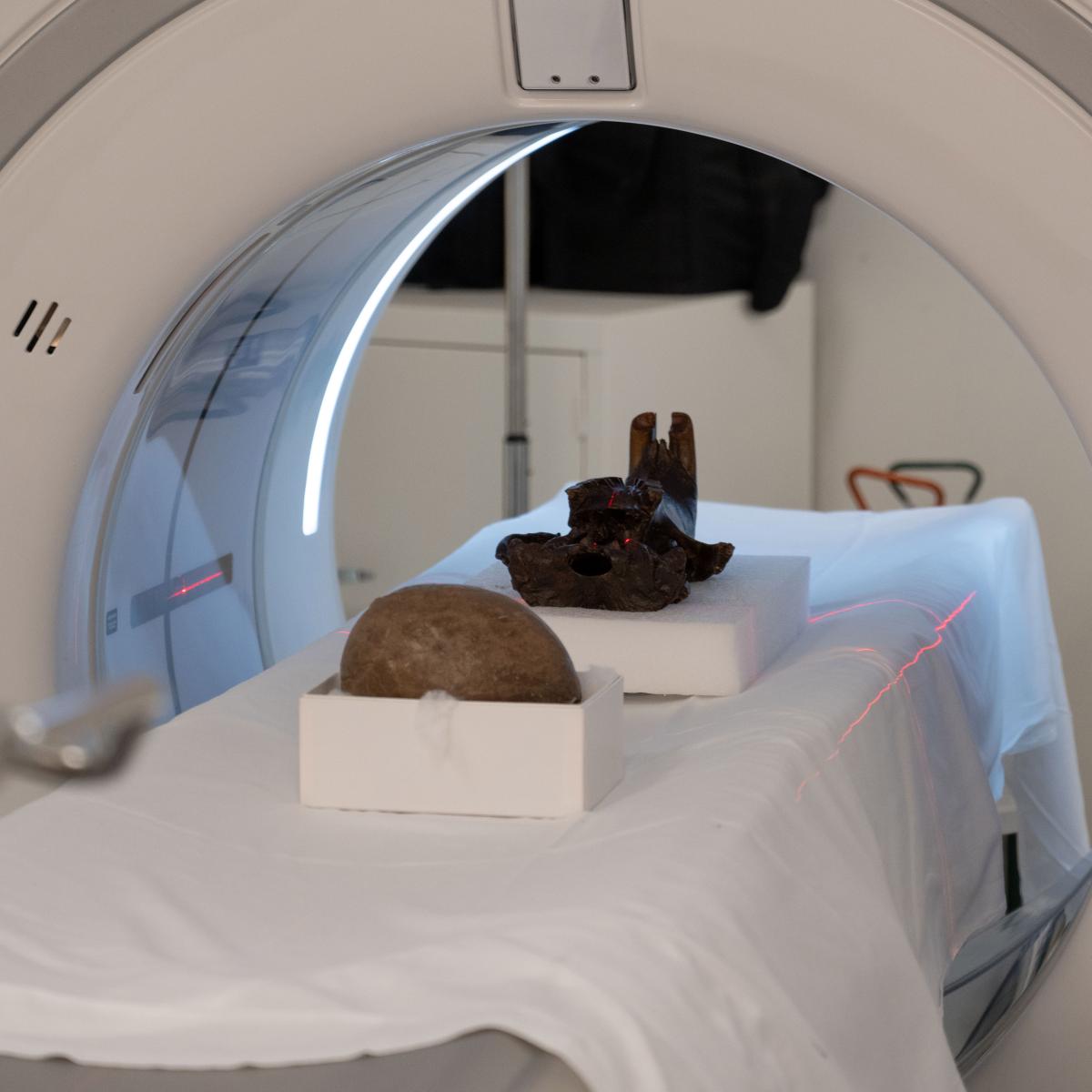
New York State Museum and Albany Medical Center Collaborate on Groundbreaking Paleontological Research
The New York State Museum has partnered with Albany Medical Center to conduct advanced research on two significant artifacts from the Museum’s collection: a dinosaur egg believed to originate from a Hadrosaur and the skull of a Giant Beaver (Castoroides ohioensis), a large extinct mammal from the Ice Age.
Utilizing CT scan technology, paleontologists and radiological experts were able to examine the internal structures of these rare specimens without damaging them. This marks the first time such detailed imaging has been used on these particular artifacts.
The CT scan of the dinosaur egg, which likely originated in Asia but represents a species known to have lived in the Northeastern United States, revealed no definitive evidence of an embryo. However, the scan did indicate that the egg is intact, and a small internal cavity identified during the scan will undergo further analysis.
Meanwhile, scans of the Giant Beaver skull offered answers right away, providing researchers with new anatomical details that were previously inaccessible. As the first described skull of this extinct Ice Age species, the specimen is a key piece in understanding the biology and evolution of the Giant Beaver. The CT data significantly enhances scientific knowledge of the structure of it's skull and teeth and is expected to support ongoing research into its life history and paleoecology.
Ultimately, this unique partnership between museum and hospital exemplifies how interdisciplinary collaborations can expand the scope of scientific discovery. Researchers from both institutions will continue to study the data collected from the scans in the coming weeks and months, with the goal of deepening understanding of prehistoric life and improving educational outreach.
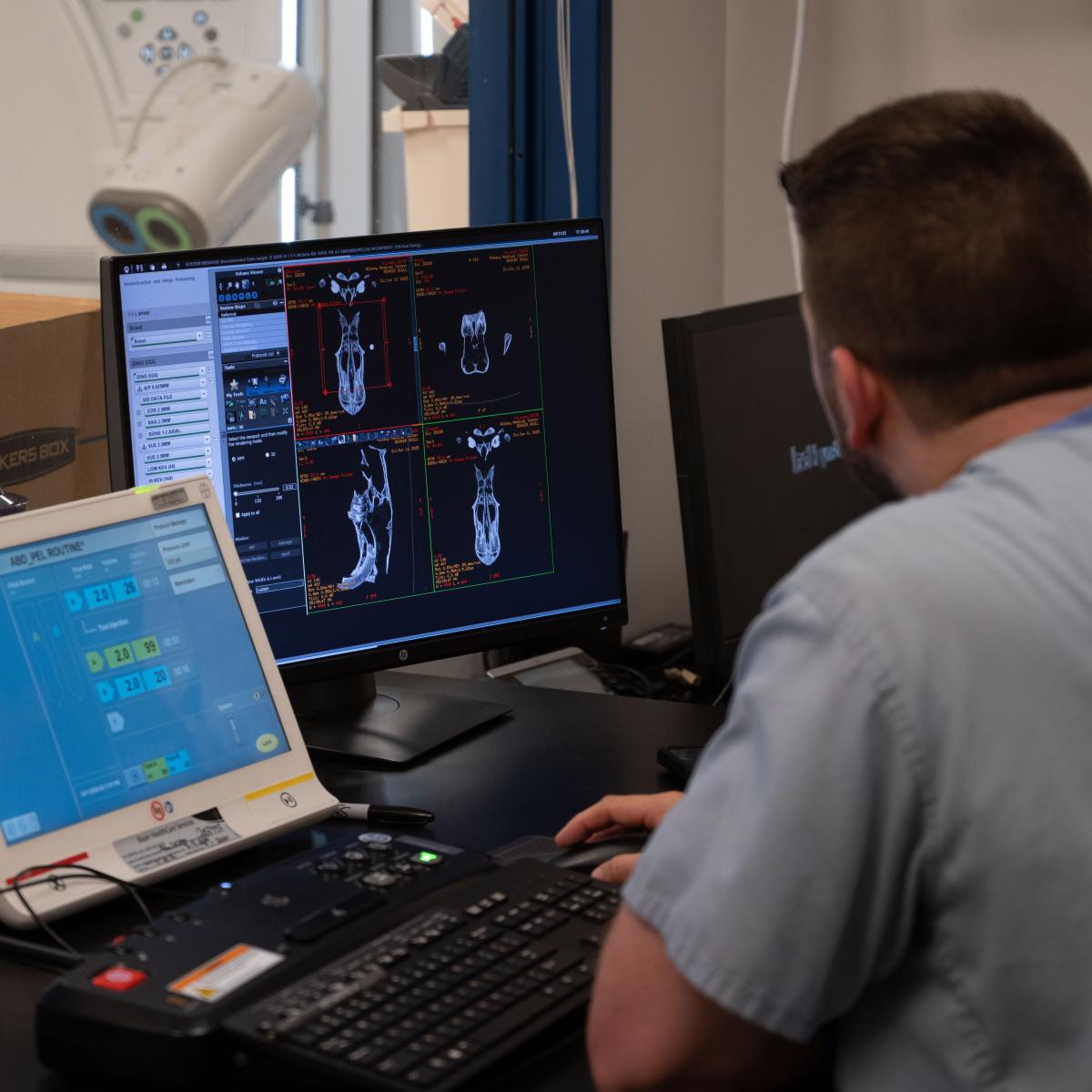
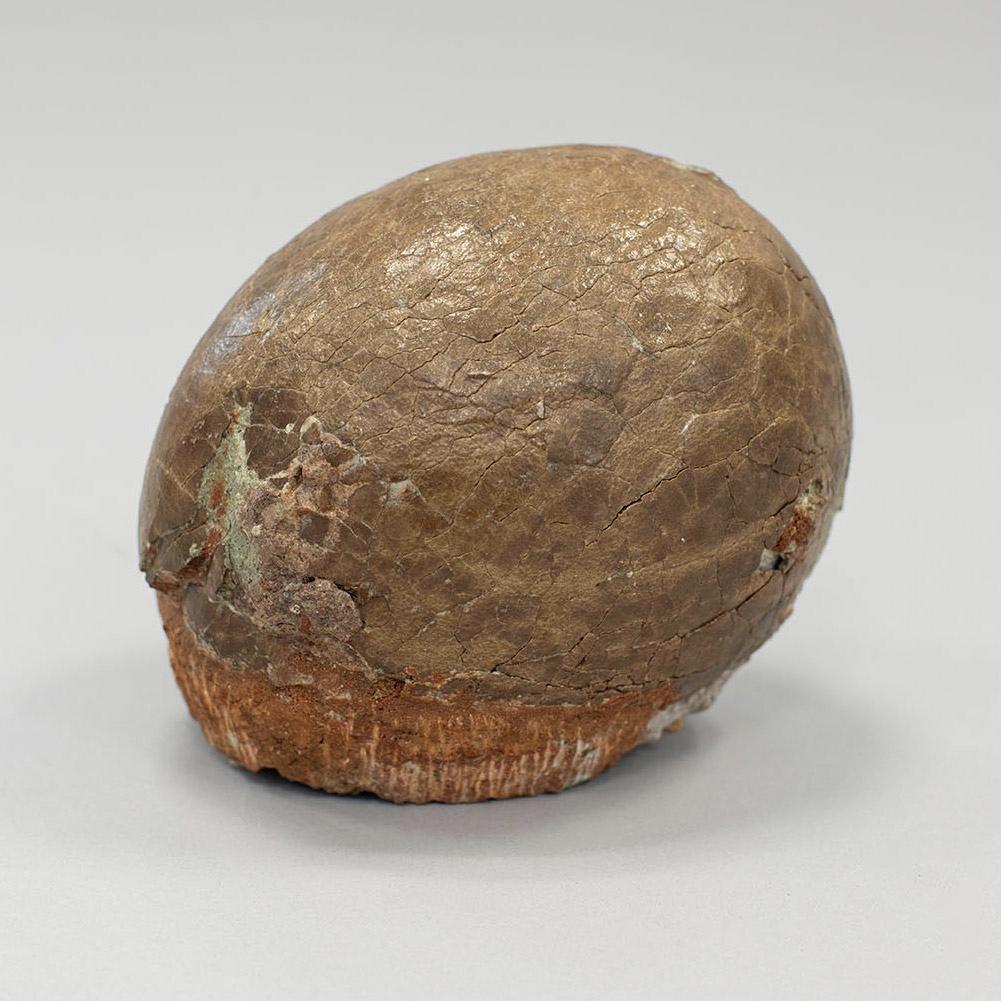
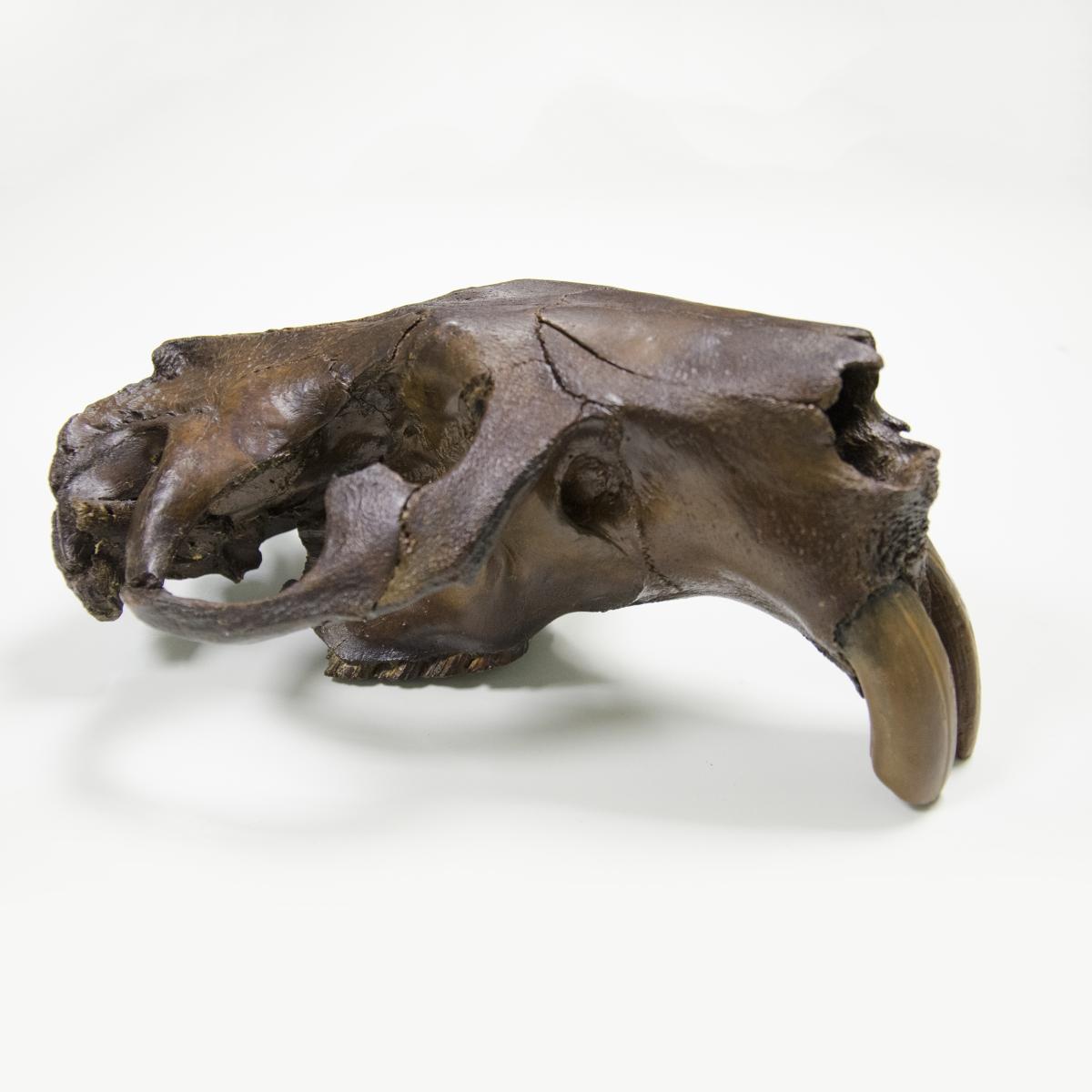
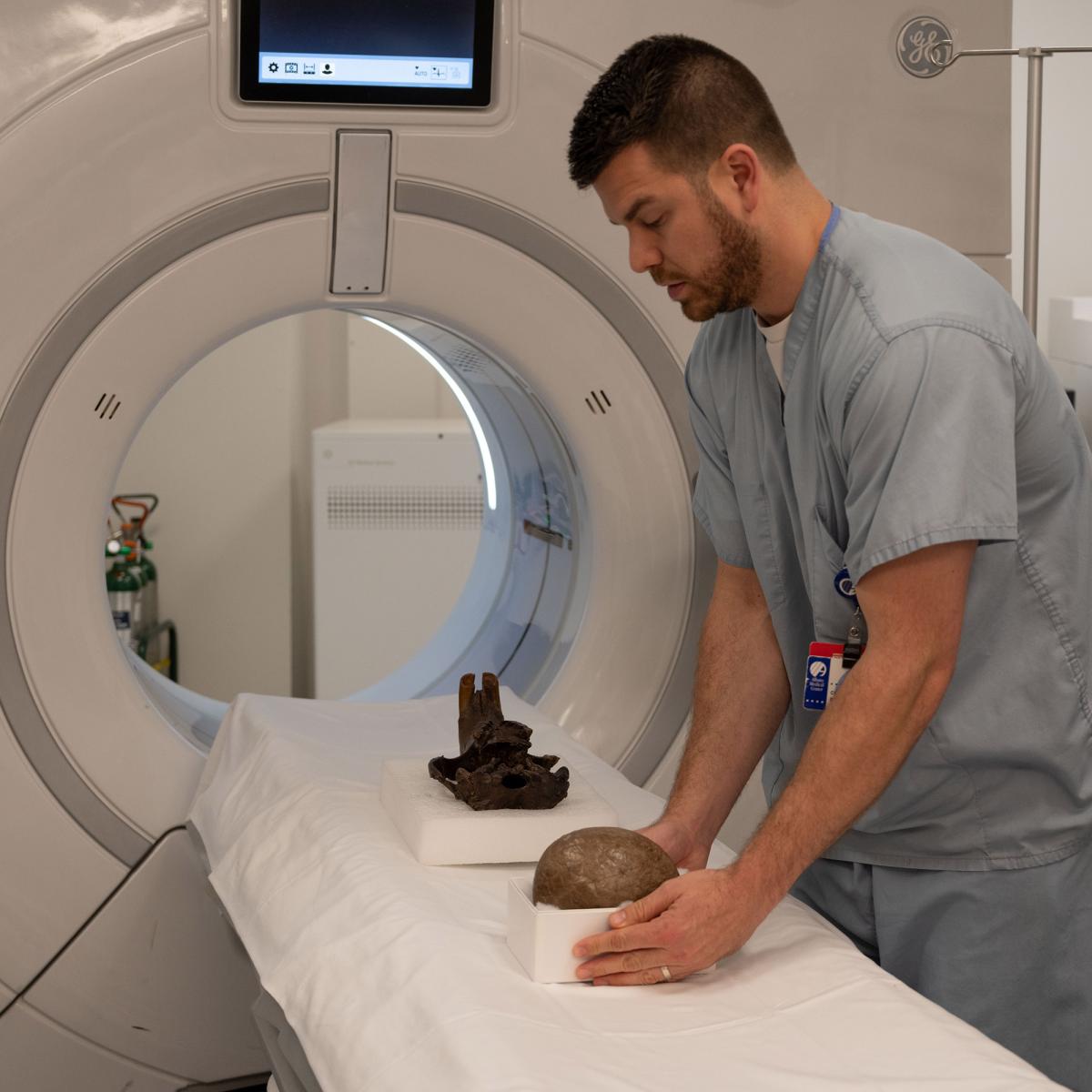
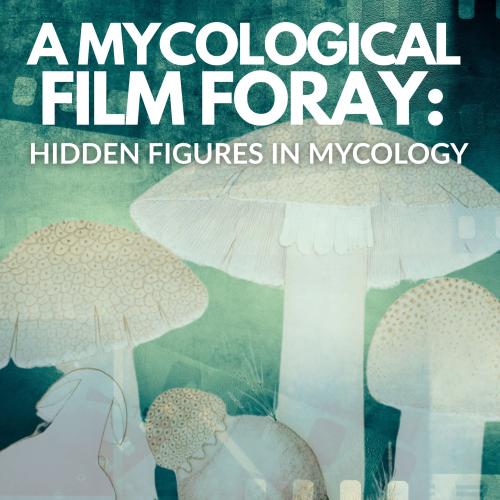
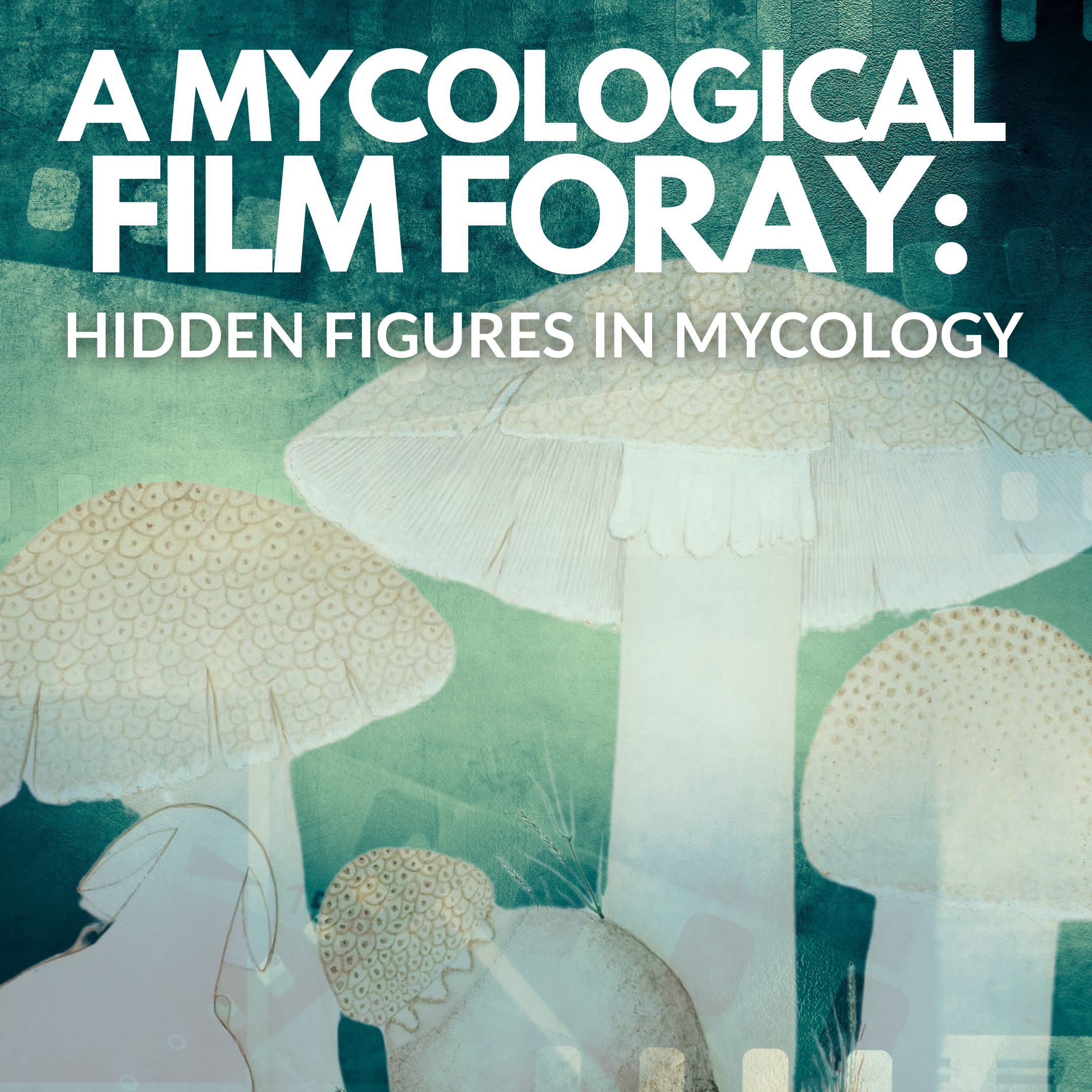
Join us for an hour-long cinematic journey through the overlooked and underground worlds of mycology. This film foray features a curated selection of short films that spotlight lesser-known voices and visionary perspectives in fungal science and culture. From the poetic to the peculiar, each film uncovers the hidden figures who’ve shaped—and are reshaping—how we see the mushrooming world around (and beneath) us.
Featured Films:
- 23 and Mary: A Banning Abecedarium – Maya Han (20 min)
- The Mushroom King – Aaron Fedor (17 min)
- Beneath – Beth Walker (4 min)
- Fly Amanita – David Fenster (5 min)
Don’t miss this special screening inspired by the legacy of Mary Banning and the NYSM’s new exhibition Outcasts: Mary Banning’s World of Mushrooms
Registration recommended: RSVP HERE
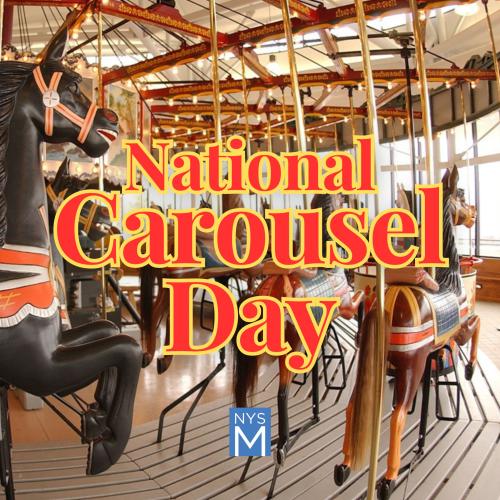
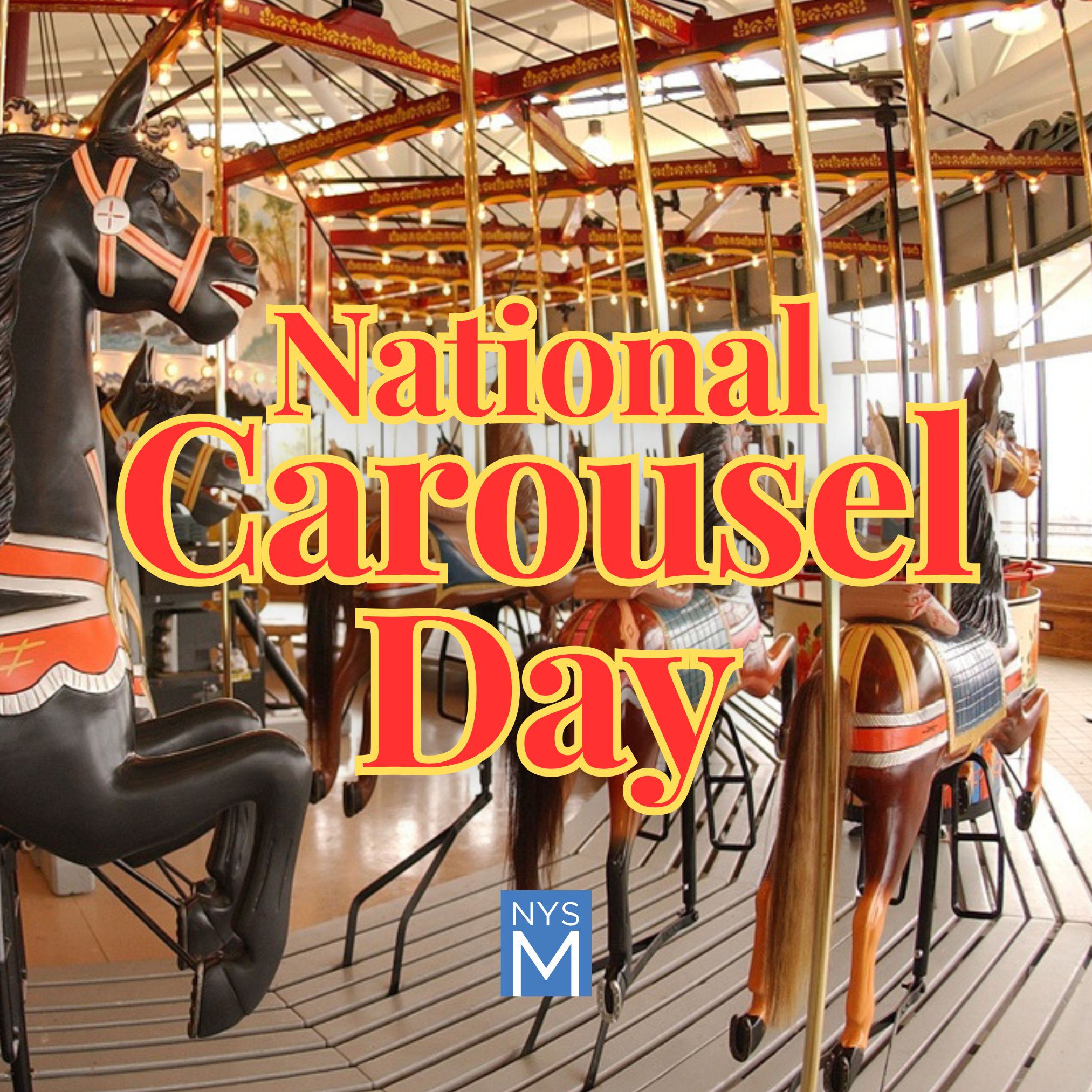
Step right up for a whirl of fun! Join us at the New York State Museum for a joyful celebration of National Carousel Day! Enjoy a morning full of fun with carousel-themed stories, creative crafts, and the chance to ride our historic 111-year-old Herschell-Spillman carousel—a treasure of American folk art and childhood joy. Learn about the carousel’s rich history and the magic of its makers. This free, family-friendly event promises to have kids (and grownups!) spinning with joy.
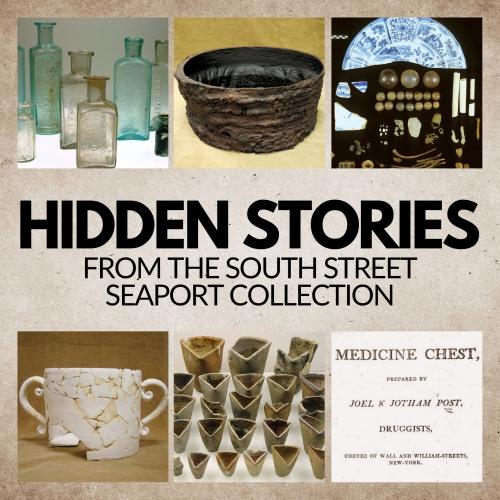
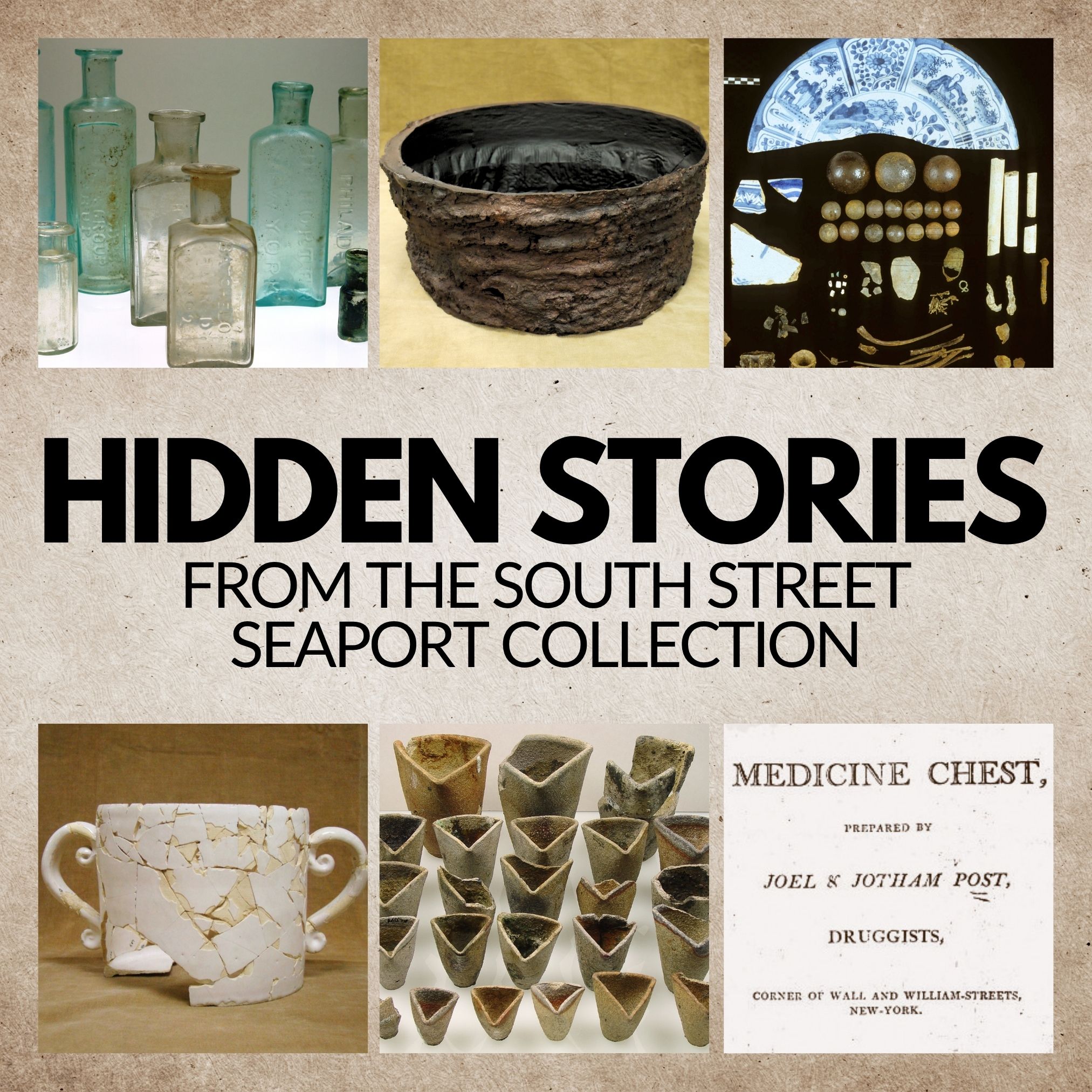
Join Susan Winchell-Sweeney, Anthropology Collections Manager at the New York State Museum, for an exclusive behind-the-scenes tour of the South Street Seaport archaeology collection—a trove of over 2 million artifacts spanning 300+ years of Manhattan’s past.
Gain an insider’s perspective on this extraordinary collection, which includes the largest archaeological assemblage from Dutch New Netherland and discover how its transfer deepens our understanding of early New York City.
From clay pipe fragments smoked by Dutch settlers to broken China cups from mid-19th-century tea sets, Susan will reveal how these seemingly ordinary objects hold extraordinary stories. Learn how even the tiniest artifacts help reconstruct the daily lives of early New Yorkers—and why these mundane fragments remain vital for ongoing research and reinterpretation.
Space is limited. Registration is required: https://www.eventbrite.com/e/hidden-stories-from-the-south-street-seaport-collection-tickets
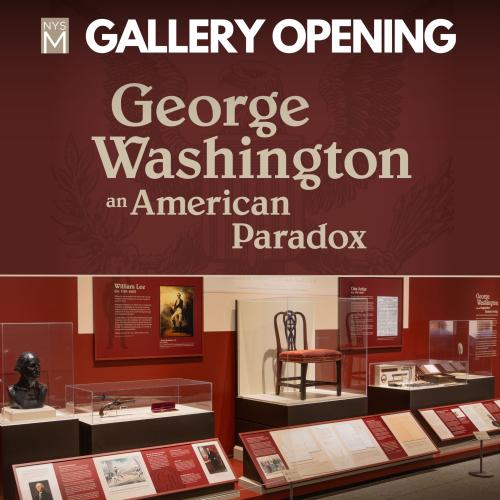
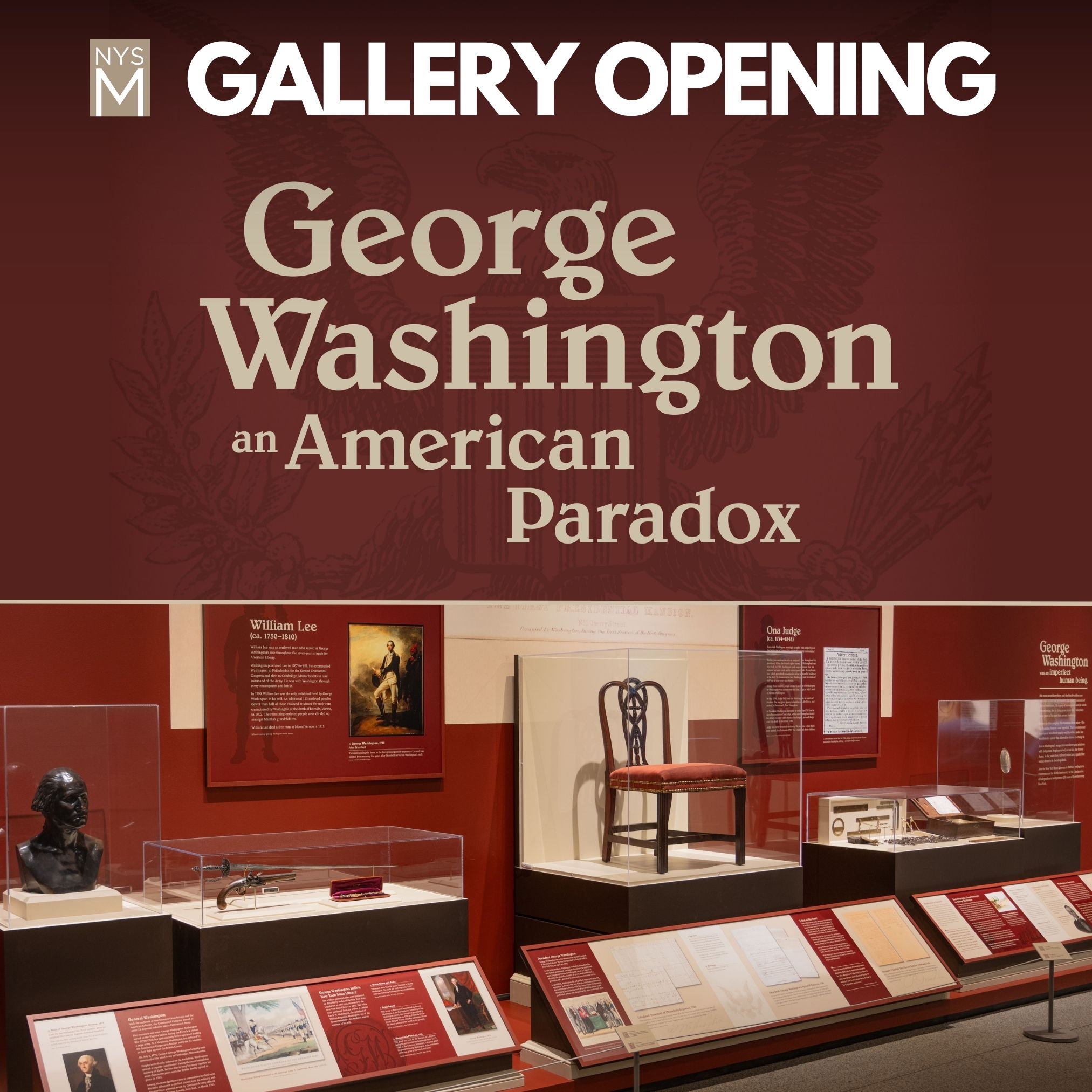
Join us for a reception to celebrate the opening of the New York State Museum’s newest exhibition: George Washington: An American Paradox.
George Washington has been celebrated as a hero of American independence and democracy. A closer look reveals a legacy marked by monumental achievements, but also by profound contradiction. Featuring compelling artifacts and stories, this exhibition highlights the diverse voices that shaped—and were shaped by—New York’s Revolutionary era. Engage with the enduring promises of liberty and freedom and consider how these ideals sparked movements for equality that continue today.
Enjoy light refreshments and a cash bar featuring Common Roots Brewing Company.
Presented by the Albany 250th Commission.
Join Aaron Noble, NYSM Senior Historian and Curator of Political and Military History, for a thought-provoking gallery talk in the museum’s newest exhibition, George Washington: An American Paradox. Discover the complexities behind the icon—how the legacy of America’s first president was shaped by both revolutionary ideals and stark contradictions. Through compelling artifacts and overlooked narratives, explore how New York’s Revolutionary era continues to inspire questions about freedom, equality, and the unfinished work of democracy.
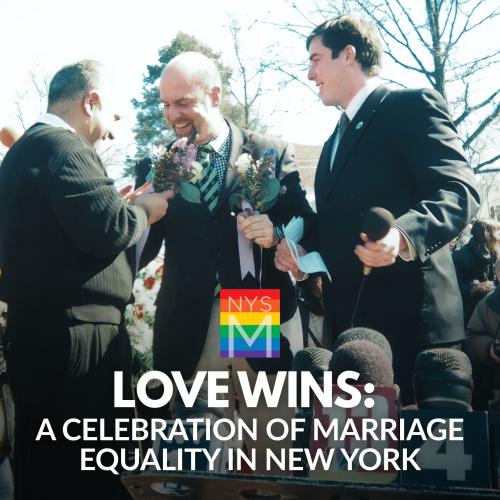
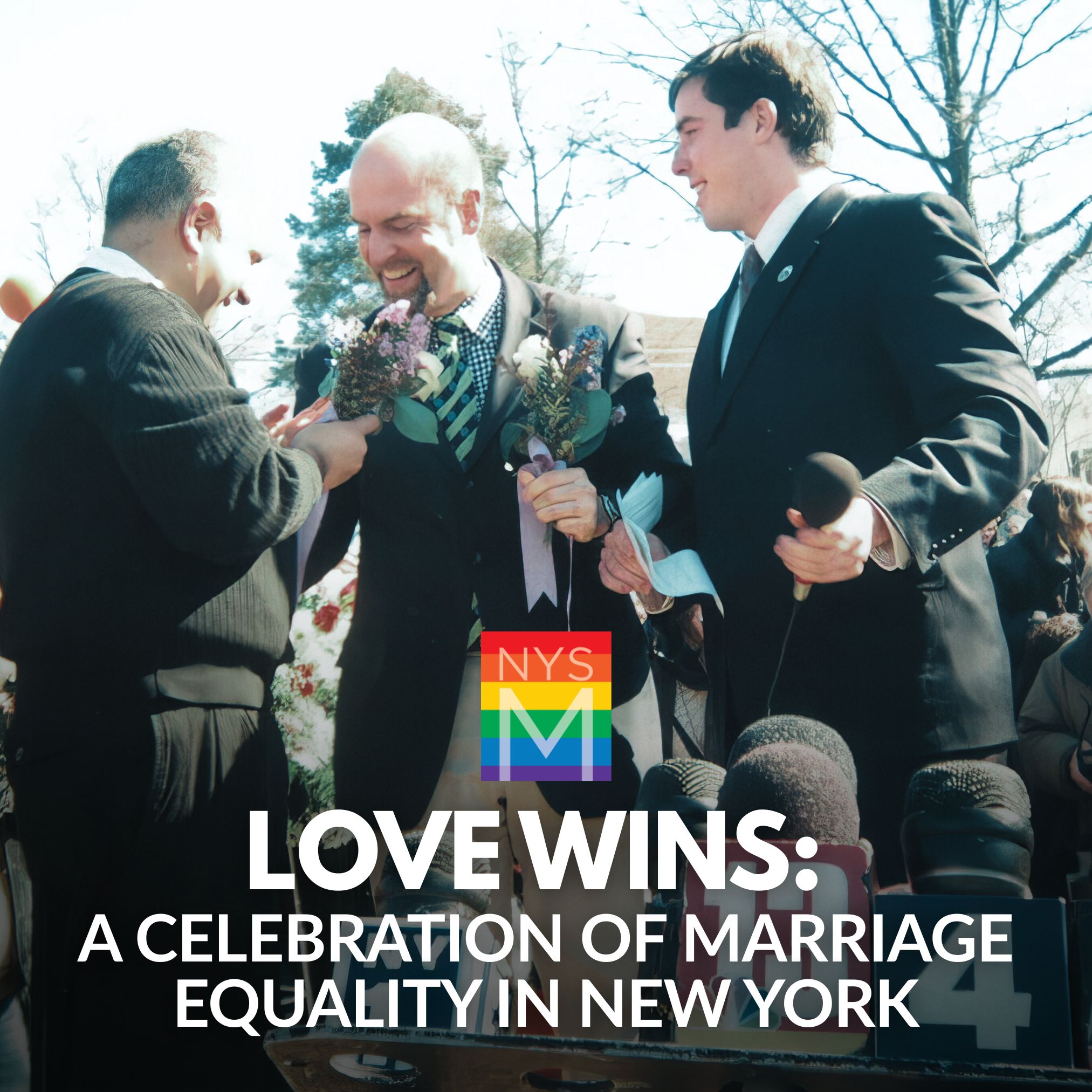
Join us on July 24th to commemorate the historic day in 2011 when New York’s Marriage Equality Act took effect, and same-sex couples across the state were finally able to legally marry. City halls and marriage bureaus opened their doors to joyful celebrations, marking a powerful moment in the ongoing fight for equal rights.
This special program features a screening of I Now Pronounce You Husband & Husband, a short documentary by Stephanie Donnelly about New Paltz Mayor Jason West, who in 2004 defied state law by officiating weddings for two dozen same-sex couples. His actions sparked national attention and helped propel the marriage equality movement forward.
Following the screening, join Ashley Hopkins-Benton, Senior Historian and Curator of Social History, for a guided tour of the New York State Museum’s exhibit New York Pride: The Fight for Marriage Equality, which explores the decades-long struggle for equal marriage rights in New York and its national impact.
12 pm: Film Screening | Huxley Theater
I Now Pronounce You Husband & Husband
12:30 pm: Gallery Tour | New York Metropolis Hall
Explore the exhibit New York Pride: The Fight for Marriage Equality with Ashley Hopkins-Benton
Join us for a special screening of Hallowed Ground, a compelling WCNY documentary that explores four endangered Revolutionary War battlefields in New York State. Through interviews with historians, tribal leaders, archaeologists, and community members, the film uncovers the history and present-day preservation challenges of these pivotal sites—Chemung, Newtown, Fort Ann, and Bennington Battlefield. Discover how these landscapes shaped the course of the American Revolution and continue to offer insight into our nation's past.
Join us for a special screening of New York's Seaway Lighthouses, a captivating WPBS documentary that explores 23 historic lighthouses along New York’s scenic Seaway Trail. Discover the fascinating stories of when and why these beacons were built and learn about the dedicated keepers who ensured their lights continued to shine. From towering landmarks to lesser-known gems, this film offers an illuminating journey through the maritime history of New York’s northern waterways.
Join us for the second of two special screenings of Discovering Jefferson County, a WPBS documentary series tracing the rich history of New York’s North Country.
Part 3: Tourism, Tragedy, and a Pirate: The Thousand Islands attracts visitors from all over the globe, as do the stories of wealthy castle owners, notable politicians, and famous historic figures that made the North Country their home or summer playground—notables like Ulysses S. Grant, author Marietta Holley, and of course, the most infamous pirate in these parts, Bill Johnston.
Part 4: Connections: Roadways, waterways, and an airport brought agriculture and tourism to the forefront in Jefferson County. This final episode brings the construction of the Thousand Islands Bridge, the creation of the St. Lawrence Seaway, the development of various roadways, and the Watertown International Airport.
Join us for a special screening of The Gray Riders, a WSKG documentary chronicling the over 100-year history of the New York State Police. Through rare archival footage, historic photographs, and powerful interviews with past and present troopers, the film traces the origins and evolution of one of the nation’s most respected law enforcement agencies. From its founding in 1917—sparked by a tragic crime and a call for justice—to a century of dedicated service, The Gray Riders honors the legacy, integrity, and enduring mission of the New York State Police.
Join us for the first of two special screenings of Discovering Jefferson County, a WPBS documentary series tracing the rich history of New York’s North Country.
Part 1: The French Connection and Early Settlers explores the early presence of the Oneida, Iroquois, and Algonquin tribes, the arrival of French explorers like Samuel Champlain, and how conflicts such as the Revolutionary War and the War of 1812 shaped the region’s development.
Part 2: Burning, Building, and Rebuilding turns to the rise of Pine Plains—now Fort Drum—and its pivotal role in regional growth. As soldiers and their families settled nearby, towns flourished. Yet the period’s rapid expansion came with setbacks, including devastating fires that consumed timber-built structures like homes, mills, and businesses.
The Treaty of Canandaigua
The Treaty of Canandaigua is one of the earliest treaties establishing peace between the new United States and Native nations as sovereign entities. Among the signatories are Seneca leaders Cornplanter, Red Jacket, and Handsome Lake. Washington's signature is at the bottom.
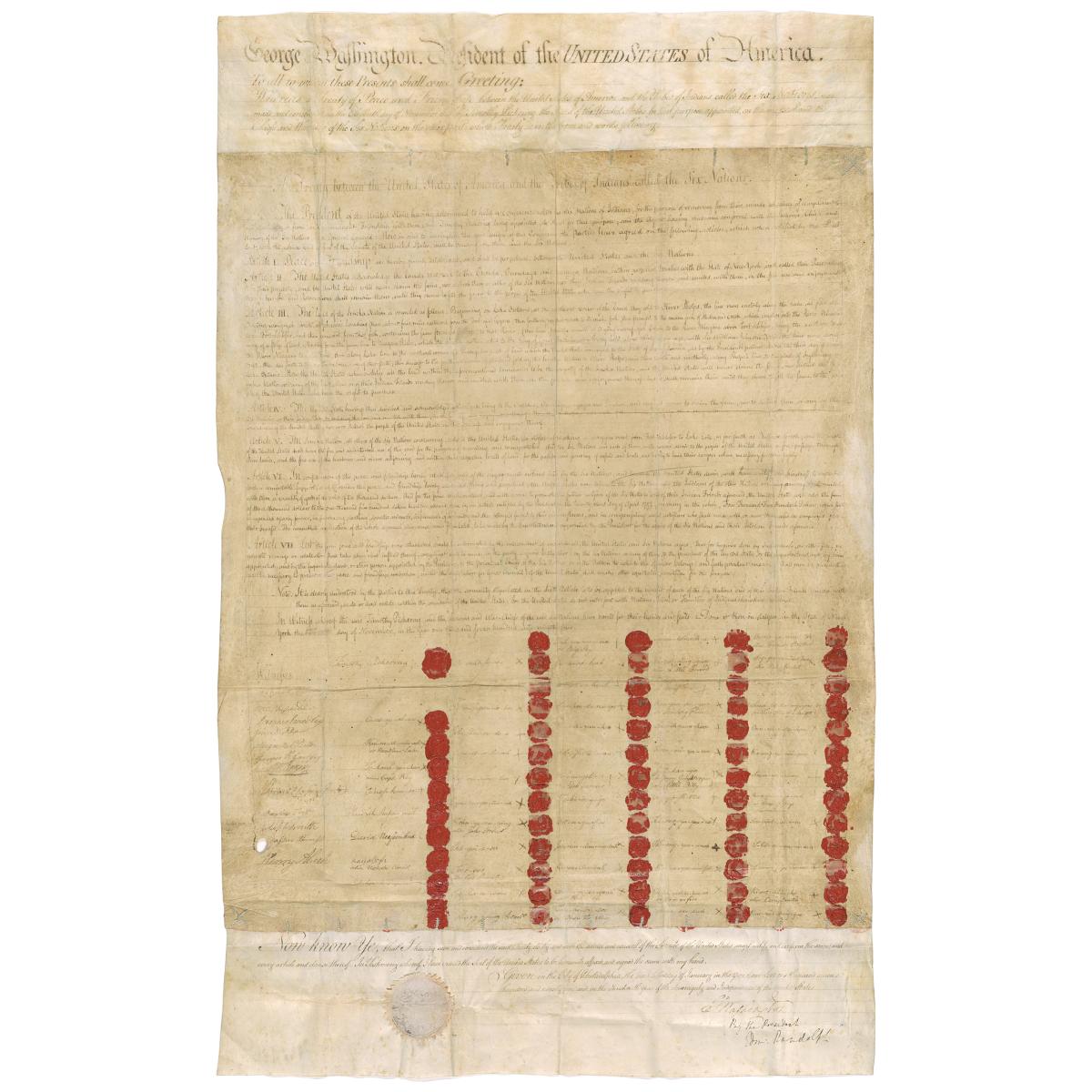
Treaty of Canandaigua, 1794
Courtesy of the National Archives
The President of the United States having determined to hold a conference with the Six Nations of Indians, for the purpose of removing from their minds all causes of complaint, and establishing a firm and permanent friendship with them; and Timothy Pickering being appointed sole agent for that purpose; and the agent having met and conferred with the Sachems, Chiefs and Warriors of the Six Nations, in a general council: Now in order to accomplish the good design of this conference, the parties have agreed on the following articles, which, when ratified by the President, with the advice and consent of the Senate of the United States, shall be binding on them and the Six Nations.
Article I. Peace and friendship are hereby firmly established, and shall be perpetual, between the United States and the Six Nations.
Article II. The United States acknowledge the lands reserved to the Oneida, Onondaga and Cayuga Nations, in their respective treaties with the state of New York, and called their reservations, to be their property; and the United States will never claim the same, nor disturb them or either of the Six Nations, nor their Indian friends residing thereon and united with them, in the free use and enjoyment thereof: but the said reservations shall remain theirs, until they choose to sell the same to the people of the United States who have right to purchase.
Article III. The land of the Seneca nation is bounded as follows: Beginning on Lake Ontario, at the north-west corner of the land they sold to Oliver Phelps, the line run westerly along the lake, as far as O-yong-wong-yeh Creek at Johnson’s Landing-place, about four miles eastward from the fort of Niagara; then southerly up that creek to its main fork, then straight to the main fork of Stedman’s Creek, which empties into the river Niagara, above Fort Schlosser, and then onward, from that fork, continuing the same straight course, to that river; (this line, from the mouth of O-yong-wong-yeh Creek to the river Niagara, above Fort Schlosser, being the eastern boundary of a strip of land, extending from the same line to Niagara River, which the Seneca Nation ceded to the King of Great Britain, at a treaty held about thirty years ago, with Sir William Johnson;) then the line runs along the river Niagara to Lake Erie; then along Lake Erie to the north-east corner of a triangular piece of land which the United States conveyed to the state of Pennsylvania, as by the President’s patent, dated the third day of March, 1792; then due south to the northern boundary of that state; then due east to the south-west corner of the land sold by the Seneca nation to Oliver Phelps; and then north and northerly, along Phelps’ line, to the place beginning on Lake Ontario. Now, the United States acknowledge all the land within the aforementioned boundaries, to be the property of the Seneca nation; and the United States will never claim the same, nor disturb that Seneca nation, nor any of the Six Nations, or their Indian friends residing thereon and united with them, in the free use and enjoyment thereof: but it shall remain theirs, until they choose to sell the same to the people of the United States, who have the right to purchase.
Article IV. The United States having thus described and acknowledged what lands belong to the Oneidas, Onondagas, Cayugas, and Senecas, and engaged never to claim the same, nor to disturb them, or any of the Six Nations, or their Indian friends residing thereon and united with them, in the free use and enjoyment thereof: Now the Six Nations, and each of them, hereby engage that they will never claim any other lands within the boundaries of the United States; nor ever disturb the people of the United States in the free use and enjoyment thereof.
Article V. The Seneca Nation, all others of the Six Nations concurring, cede to the United States the right of making a wagon road from Fort Schlosser to Lake Erie, as far south as Buffalo Creek; and the people of the United States shall have the free and undisturbed use of this road, for the purposes of traveling and transportation. And the Six Nations, and each of them, will forever allow to the people of the United States, a free passage through their lands, and the free use of their harbors and rivers adjoining and within their respective tracts of land, for the passing and securing of vessels and boats, and liberty to land their cargoes when necessary for their safety.
Article VI. In consideration of the peace and friendship hereby established, and of the engagements entered into by the Six Nations; and because the United States desire, with humanity and kindness, to contribute to their comfortable support; and to render the peace and friendship hereby established strong and perpetual; the United States now deliver to the Six Nations, and the Indians of the other nations residing among and united with them, a quantity of goods of the value of ten thousand dollars. And for the same considerations, and with a view to promote the future welfare of the Six Nations, and of their Indian friends aforesaid, the United States will add the sum of three thousand dollars to the one thousand five hundred dollars, heretofore allowed them by an article ratified by the President, on the twenty-third day of April 1792; making in the whole, four thousand five hundred dollars; which shall be expended yearly forever, in purchasing clothing, domestic animals, implements of husbandry and other utensils suited to their circumstances, and in compensating useful artificers, who shall reside with them or near them, and be employed for their benefit. The immediate application of the whole annual allowance now stipulated, to be made by the superintendent appointed by the President for the affairs of the Six Nations, and their Indian friends aforesaid.
Article VII. Lest the firm peace and friendship now established should be interrupted by the misconduct of individuals, the United States and Six Nations agree, that for injuries done by individuals on either side, no private revenge or retaliation shall take place; but, instead thereof, complaint shall be made by the party injured, to the other: By the Six Nations or any of them, to the President of the United States, or the Superintendent by him appointed: and by the Superintendent, or other person appointed by the President, to the principal chiefs of the Six Nations, or of the nation to which the offender belongs: and such prudent measures shall then be pursued as shall be necessary to preserve our peace and friendship unbroken; until the legislature (or great council) of the United States shall make the equitable provision for the purpose.
Note: It is clearly understood by the parties to this treaty, that the annuity stipulated in the sixth article, is to be applied to the benefit of such of the Six Nations and of their Indian friends united with them as aforesaid, as do or shall reside within the boundaries of the United States: for the United States do not interfere with nations, tribes or families, of Indians elsewhere resident.
IN WITNESS WHEREOF, the said Timothy Pickering, and the sachems and war chiefs of the said Six Nations, have hereunto set their hands and seals.
Done at Canandaigua, in the State of New York, in the eleventh day of November, in the year one thousand seven hundred and ninety-four.
Timothy Pickering
Witnesses:
Israel Chapin
William Shepard, Jr.
James Smedley
John Wickham
Augustus Porter
James H. Garnsey
William Ewing
Israel Chapin, Jr.
Interpreters:
Horatio Jones
Joseph Smith
Jasper Parrish
Henry Abeele
Signed by fifty-nine Sachems and War Chiefs of the Six Nations
Canandaigua, New York — November 11, 1794
O-no-ye-ah-nee
Kon-ne-at-or-tee-ooh (Handsome Lake)
To-kenh-you-hau (Capt. Key)
O-nes-hau-ee
Hendrich Aupaumut
David Neessoonhuk
Kanatsoyh (Nicholas Kusik)
Soh-hon-te-o-quent
Oo-duht-sa-it
Ko-nooh-qung
Tos-song-gau-lo-luss
John Sken-en-do-a
O-ne-at-or-lee-ooh (Handsome Lake)
Kus-sau-wa-tau
E-yoo-ten-yoo-tau-ook
Kohn-ye-au-gong (Jake Stroud)
Sha~qui-ea-sa
Teer-oos (Capt. Printup)
Soos-ha-oo-wau
Henry Young Brant
Sonh-yoo-wau-na (Big Sky)
O-na-ah-hah
Hot-osh-a-henh
Kau-kon-da-nai-ya
Non-di-yau-ka
Kos-sish-to-wau
To-he-ong-go
Oo-jau-gent-a (Fish Carrier)
Oot-a-guas-so
Joo-non-dau-wa-onch
Ki-yau-ha-onh
Oo-tau-je-au-genh (Broken Axe)
Tau-ho-on-dos (Open the Way)
Twau-ke-wash-a
Se-quid-ong-guee (Little Beard)
Ko-djeoto (Half Town)
Ken-jau-au-gus (Stinking Fish)
Soo-noh-qua-kau
Twen-ni-ya-na
Jish-kaa-ga (Green Grasshopper, Little Billy)
Tug-geh-shot-ta
Teh-ong-ya-gau-na
Teh-ong-yoo-wush
Kon-ne-yoo-we-sot
Ti-oo-quot-ta-kau-na (Woods on Fire)
Ta-oun-dau-deesh
Ho-na-ya-wus (Farmer’s Brother)
Sog-goo-ya-waut-hau (Red Jacket)
Kon-yoo-tai-yoo
Sauh-ta-ka-ong-yees (Two Skies of Length)
Oun-na-shatta-kau
Ka-ung-ya-neh-quee
Soo-a-yoo-wau
Kau-je-a-ga-onh (Heap of Dogs)
Soo~nooh-shoo-wau
Tha-og-wau-ni-as
Soo-nong-joo-wau
Ki-ant-whau-ka (Corn Planter)
Kau-neh-shong-goo
Transcript PDF
This transcript was sourced from:
https://www.onondaganation.org/government/the-canandaigua-treaty-of-1794/
Tabulated Statement of Household Expenses
This manuscript, in the handwriting of George Washington, documents the household expenses from May 24 to August 24, 1789, in New York City at the start of his first term as President of the United States. Included in the document are expenses for several "Negro servants" - including enslaved seventeen-year-old Ona Judge.
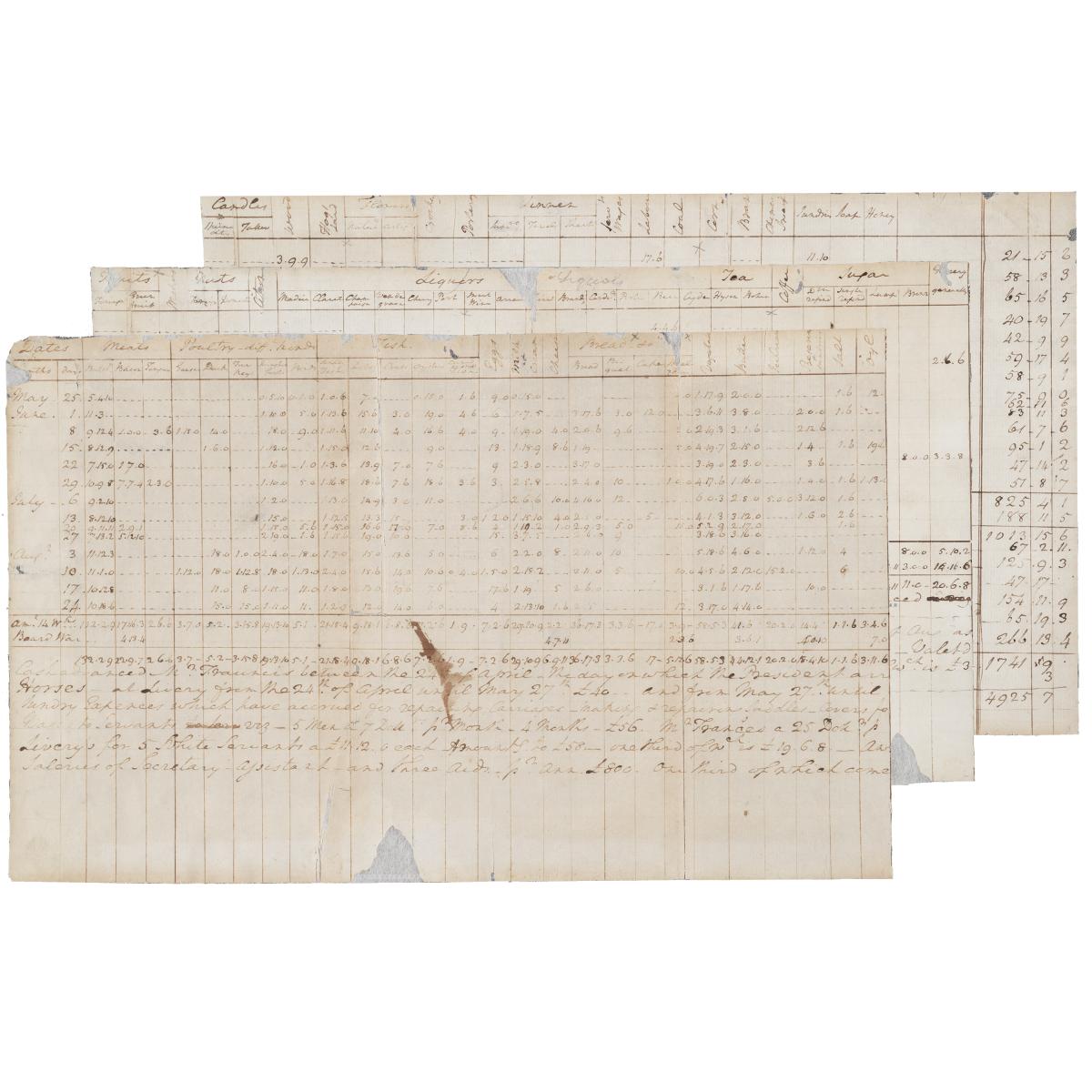
Tabulated Statement of Household Expenses, 1789
George Washington Relics, New York State Library
Transcript PDF
This document has been transcribed to preserve its original formatting. Due to formatting limitations, it cannot be displayed directly on our website. However, it is available for download as a PDF for your convenience.
» Download George Washington's Tabulated Statement of Household Expenses (PDF)
NYS 250th Commemoration Field Guide
In 2026, the United States will mark the 250th anniversary of the Declaration of Independence—a milestone in the nation’s founding and a pivotal chapter in world history. New York played a critical role in both the Revolutionary Era and the centuries that followed. To support meaningful and well-coordinated commemorations across the state, the Association of Public Historians of New York State (APHNYS), in partnership with the Office of State History at the New York State Museum, has created the New York State 250th Commemoration Field Guide. This guide offers themes, ideas, and practical information to assist local and regional planners in honoring this historic anniversary.
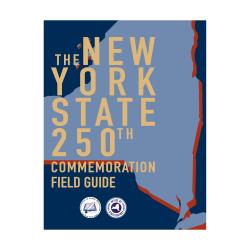
The NYS 250th Commemoration Field Guide (PDF)


Stop by and meet Lauren Lyons, Chartering Coordinator and Assistant to the State Historian at the New York State Museum, for an interactive tabling experience celebrating the diverse world of New York’s museums and historic sites! Learn how museums across the state are officially chartered and discover some of the most unique and surprising institutions in every region.
Love the Cohoes Mastodon? Fascinated by the Haudenosaunee Longhouse? Based on your favorite New York State Museum exhibits, Lauren will help you discover museums and historic sites across the state that connect with your interests. Plus, plan your very own museum road trip—whether it’s a quick local getaway or a statewide journey of discovery!
Perfect for museum lovers, curious travelers, and anyone eager to explore the stories of New York State.
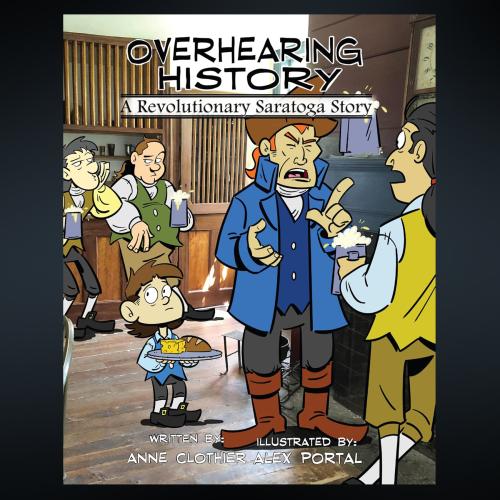
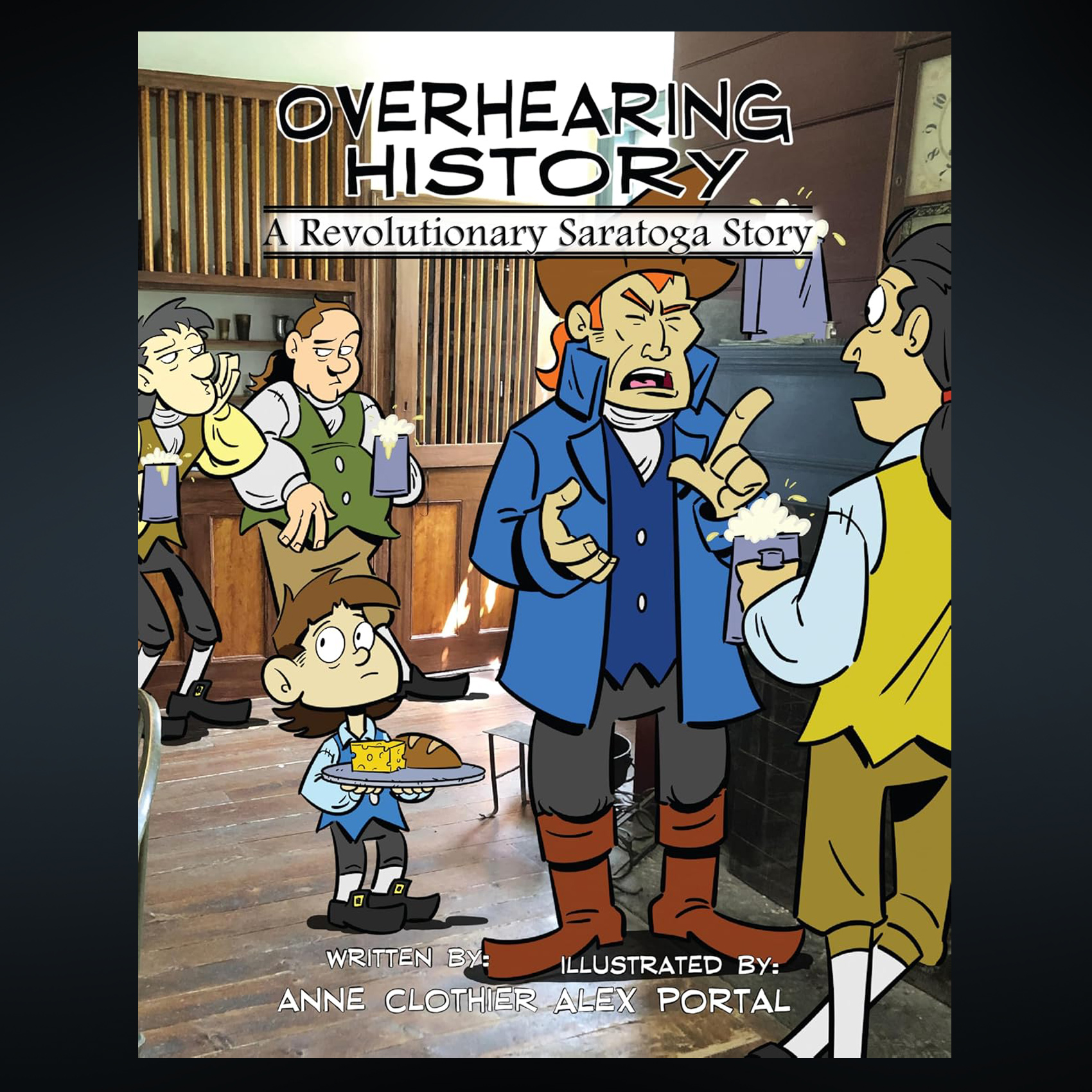
Join us for a special storytime with author Anne Clothier as she reads from her brand-new children’s book, Overhearing History: The First in the Revolutionary Saratoga Story Series. This engaging tale follows 12-year-old Nathaniel, a young boy growing up in the Saratoga District in 1775, as he navigates the rising tensions of a community on the brink of revolution. Through the voices he overhears and the conversations unfolding around him, Nathaniel—and the reader—begin to consider the many perspectives and complexities of life during the American Revolution.
Illustrated by Alex Portal and published with support from Saratoga County and the Campaign for Saratoga250 Inc., this thought-provoking story explores themes of family, community, and the personal impact of historic change. Perfect for young readers and families, this program invites you to reflect on the past and its relevance today through the power of storytelling.
Curious about New York's past? Come uncover the stories behind the state's history— one document at a time! Join us every Thursday at 11:00 a.m. for "Ask an Archivist" at the New York Museum. Each session offers a peek into New York State’s rich and surprising history through carefully chosen original documents, photographs, and videos. An expert archivist will be on hand to share stories, answer your questions, and reveal how we uncover and preserve the past. You never know what fascinating piece of history you’ll discover!
Outside the Box: 20th Century Educational Media, Tools and Programs
Learn about the background material used for the Archive's summer 11th floor display!