

Power of Place
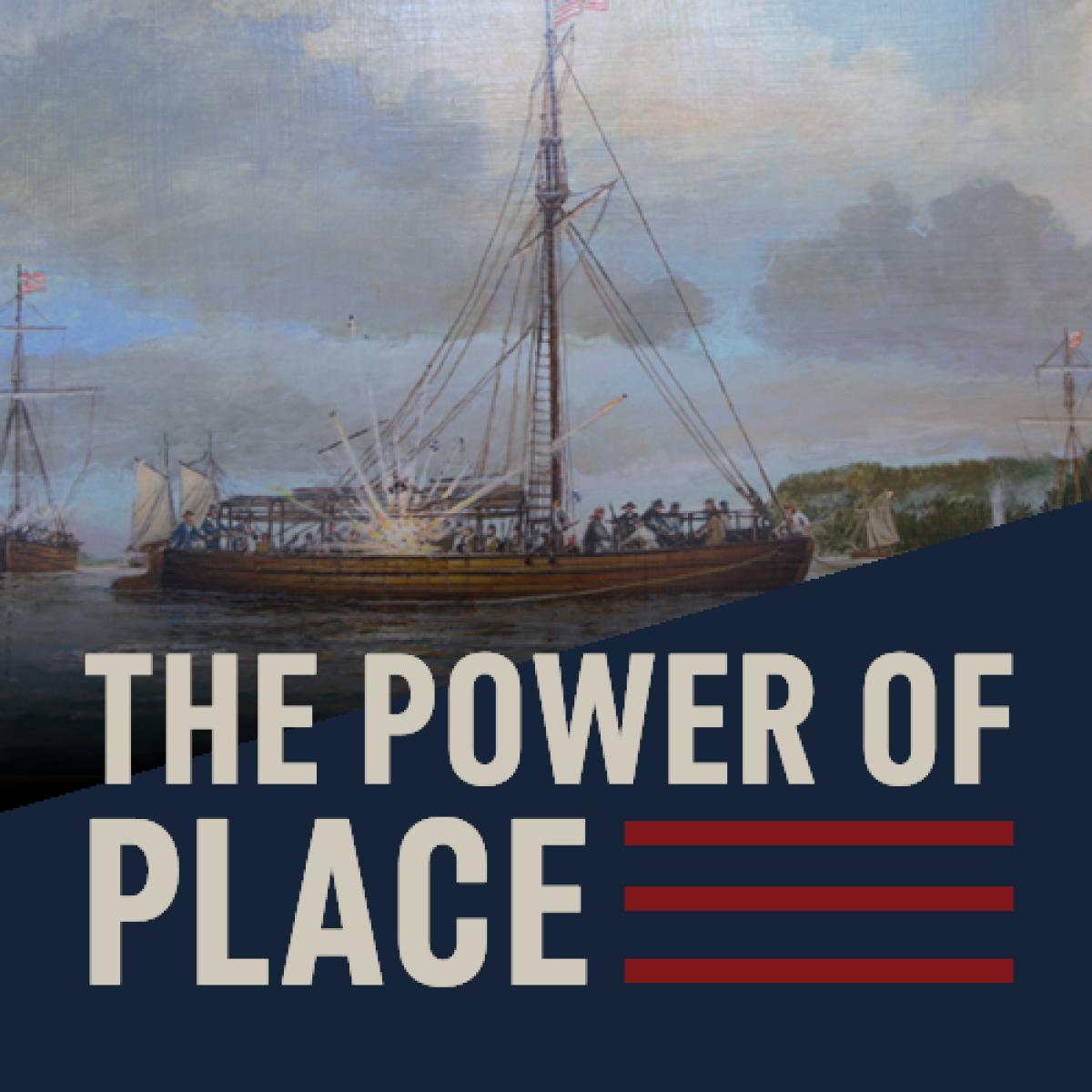
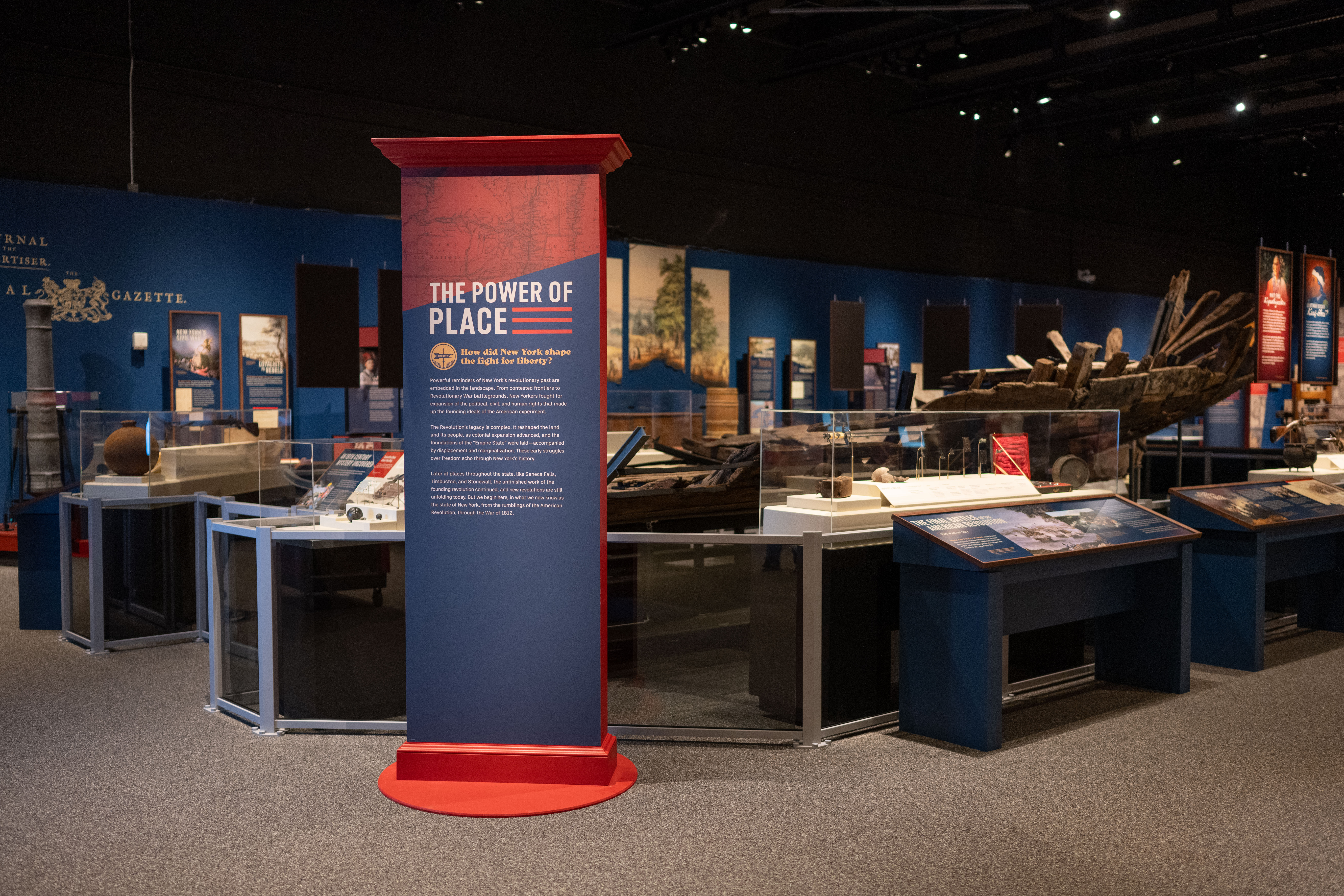
Upon entering the gallery, visitors may choose to go either left or right. However, the design encourages starting on the left, where the “Power of Place” introductory panel appears. The following descriptions follow that path.
An eight-foot-tall freestanding introductory panel stands on the left. Topped with decorative molding and set in a deep crimson circular base, this marks the beginning of a new section—this design feature is repeated throughout the exhibit. A historic map of New England before New York was founded crowns the panel, along with the title “Power of Place” and the question, “How did New York shape the fight for liberty?”
Moving ahead to your left, you’ll find a large wall-mounted monitor with a touchscreen kiosk positioned directly in front. The screen asks: “What was New York?” It displays maps and an accompanying narrative that explores how land was understood and contested before the American Revolution. To the right of the interactive map, a panel explains Indigenous kinship and diplomacy. Next to it are two pieces of featured artwork. Many Trails by Misti Moede (Stockbridge-Munsee Mohican) is an assemblage of cut and layered papers that create the official symbol of the Stockbridge-Munsee Community Band of Mohican Indians. The symbol features a vertical line intersected by two horizontal lines; in between these intersections are two concentric circles. Above the top intersection is an open half circle bisecting the vertical line. The second piece, Hiawatha Belt by Toni Cook (Oneida), is a framed rectangular woven belt, made of tiny cylindrical purple and white beads made out of dyed and undyed clam shell. The central form in the shape of a tree or a flame, as in a council fire, representing Onondaga Nation, the central fire of the Haudenosaunee Confederacy.
At the center of the gallery is the largest feature: a reconstruction of a Revolutionary War-era American gunboat, measuring about 16 by 30 feet. The wood is dark brown with a rough, visible grain and is cradled in a steel mount. It is surrounded by angled interpretive panels and object cases that take visitors on a circular path around the gunboat.
Content includes: a timeline from the 1763 Treaty of Paris to the start of the Revolution in 1775, panels highlighting major campaigns during the American Revolution with accompanying maps showing regions they took place, biographies of nine key figures that are hung on cabled panels, six display cases with related artifacts such as muskets, swords, powder horns, ammunition, and personal items including spoons and buckles.
Beyond the gunboat display is a large, vertical wall graphic featuring a liberty pole and an area where visitors may participate in hands-on activities. There is a four-by-eight-foot wooden artillery sled fitted with a six-pounder cannon that visitors are invited to touch.
The “Power of Place” section concludes with the War of 1812 on the last slant panel that is located around the gunboat.
Powerful reminders of New York’s revolutionary past are embedded in the landscape. From contested frontiers to Revolutionary War battlegrounds, New Yorkers fought for expansion of the political, civil, and human rights that made up the founding ideals of the American experiment.
The Revolution’s legacy is complex. It reshaped the land and its people, as colonial expansion advanced, and the foundations of the “Empire State” were laid—accompanied by displacement and marginalization. These early struggles over freedom echo through New York’s history.
Later at places throughout the state, like Seneca Falls, Timbuctoo, and Stonewall, the unfinished work of the founding revolution continued, and new revolutions are still unfolding today. But we begin here, in what we now know as the state of New York, from the rumblings of the American Revolution, through the War of 1812.
Highlights
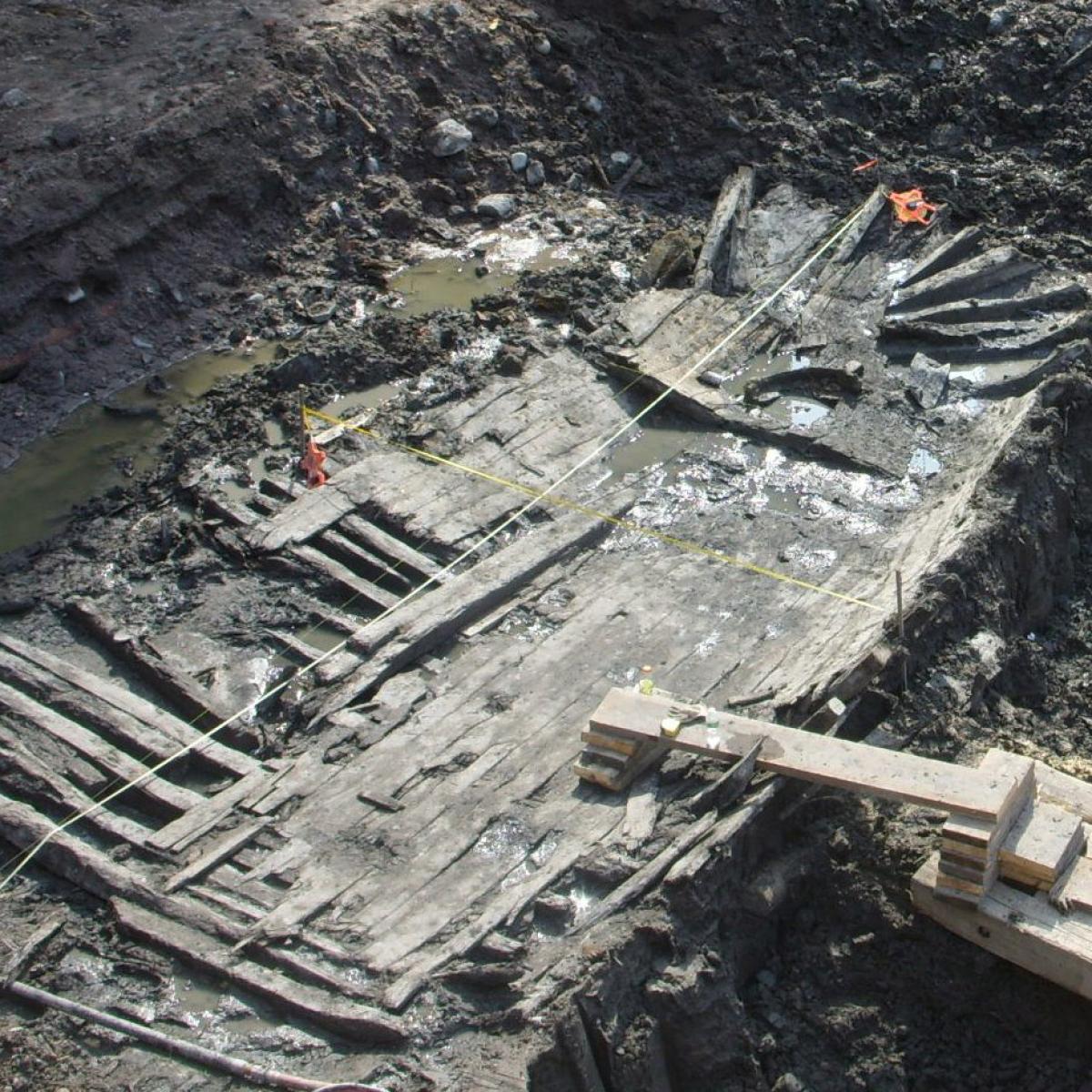
This gunboat is among the very few American-built Revolutionary War-era ships that are known to remain. Evidence suggests that it was built in 1775 and captured by the British when Philadelphia fell in 1777.
New York State Museum A2016.14
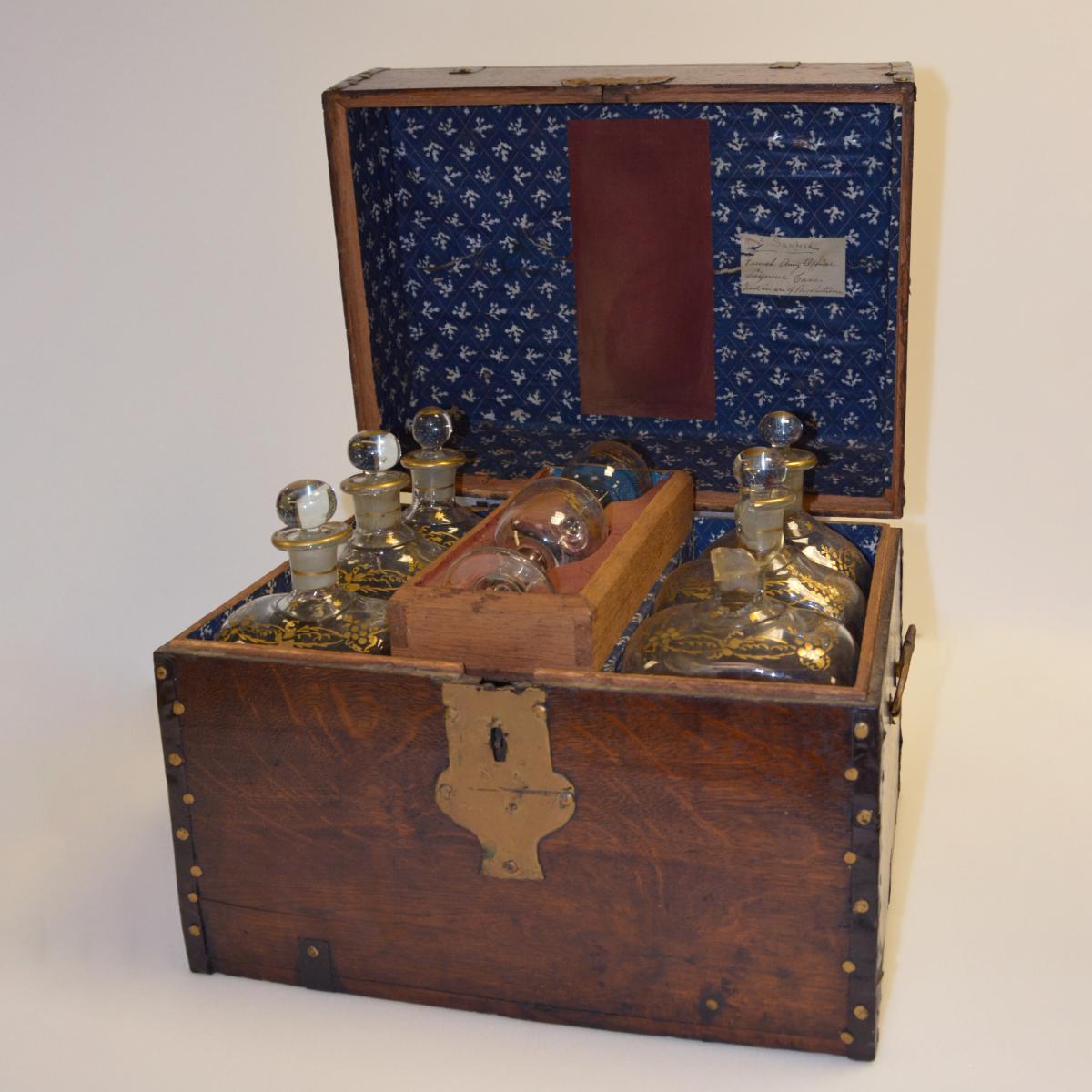
This campaign style liquor chest has a fitted interior for six bottles of liquor and accompanying glasses. It was presented to Captain Abraham Swartout, a New York officer on General George Washington’s staff, by an unidentified French Army officer.
New York State Museum H-2015.30.1 A-R
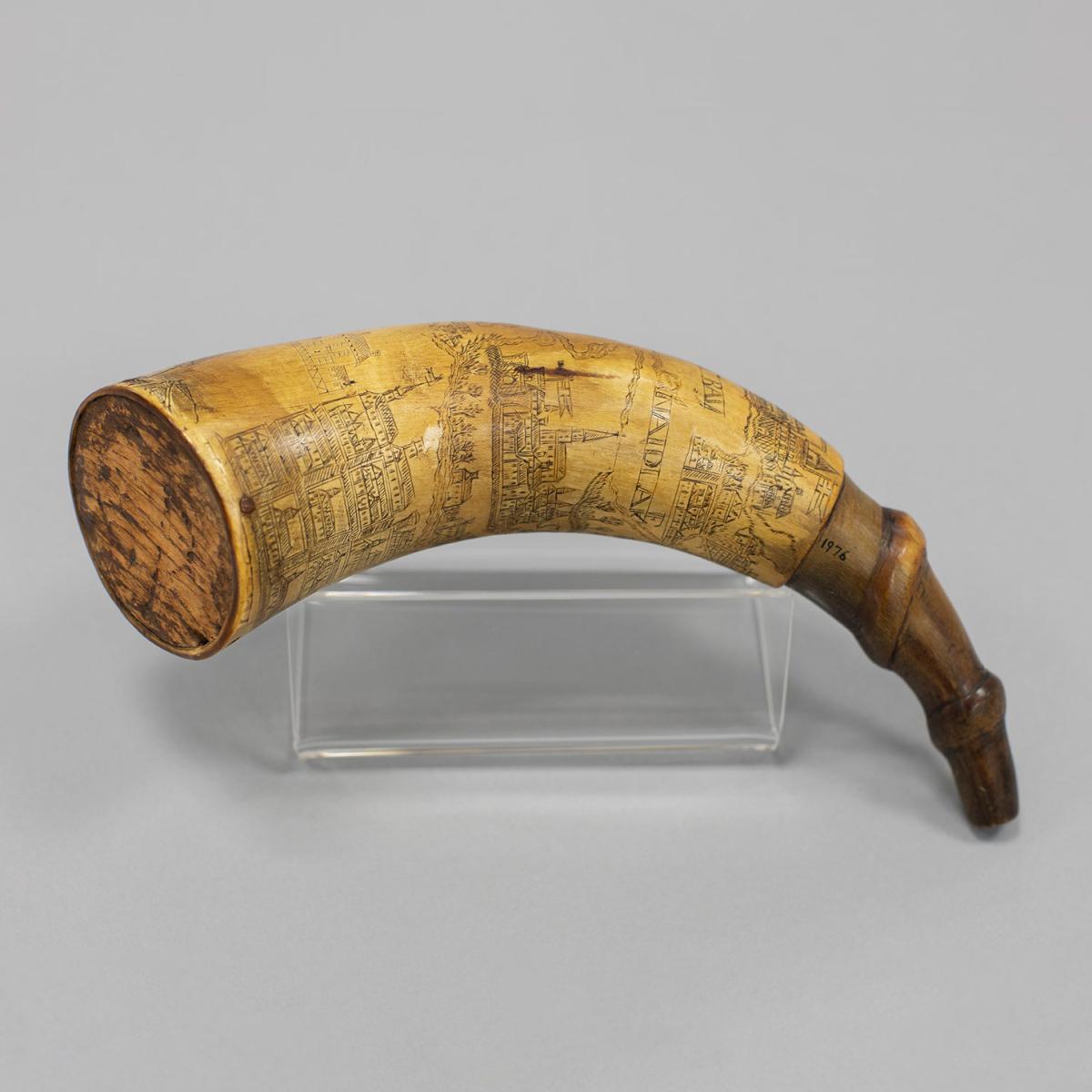
New York State Museum H-1936.12.1
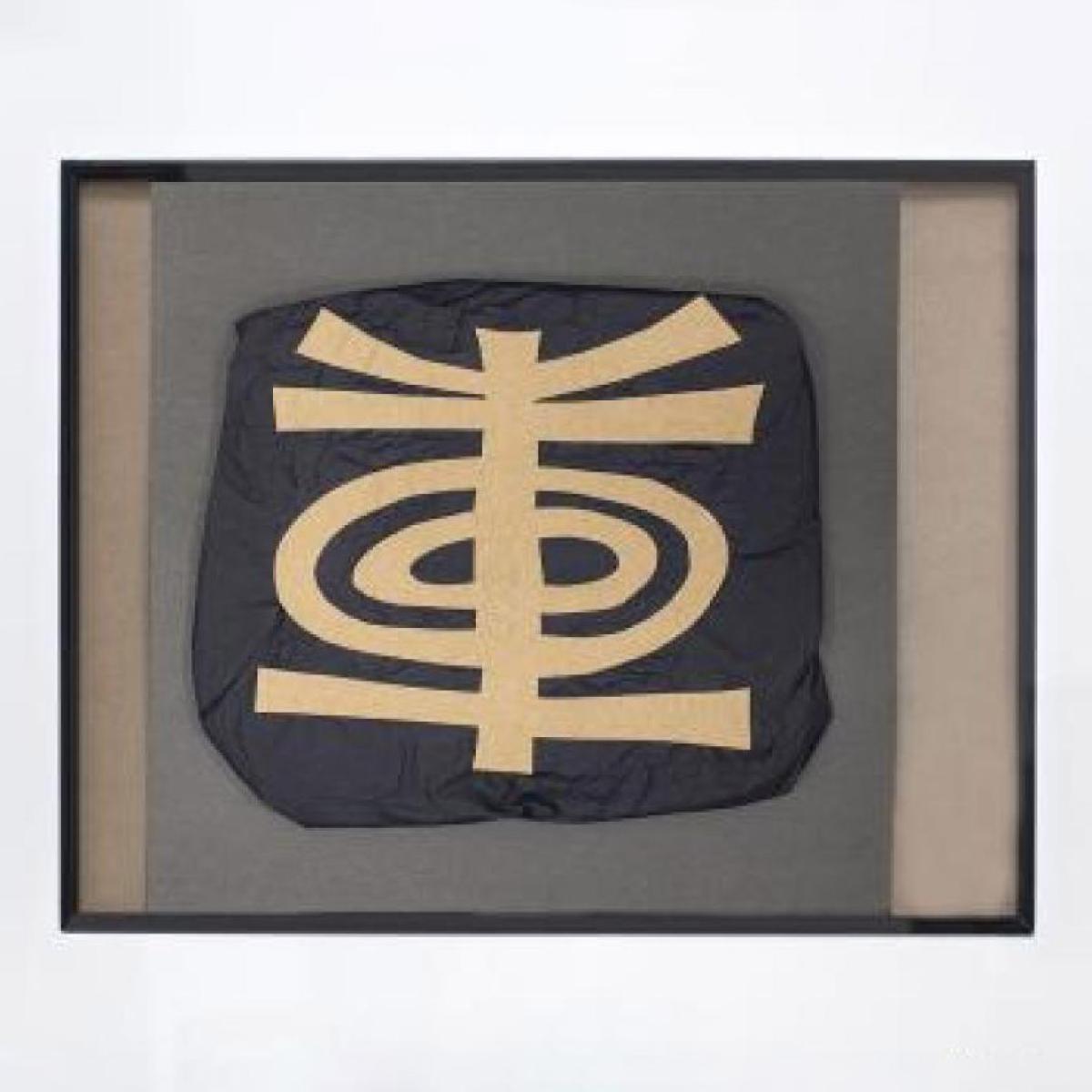
Many Trails, 2023
Misti Moede (Stockbridge-Munsee Mohican) created this cut paper image of “Many Trails,” the official symbol of the Stockbridge-Munsee Community Band of Mohican Indians. The symbol originated with tribal member Edwin Martin and represents the “endurance, strength, and hope” of the Munsee-Mohican people and their post-revolution from their homelands in NY to their current home in Wisconsin.
New York State Museum E-2024.09.1
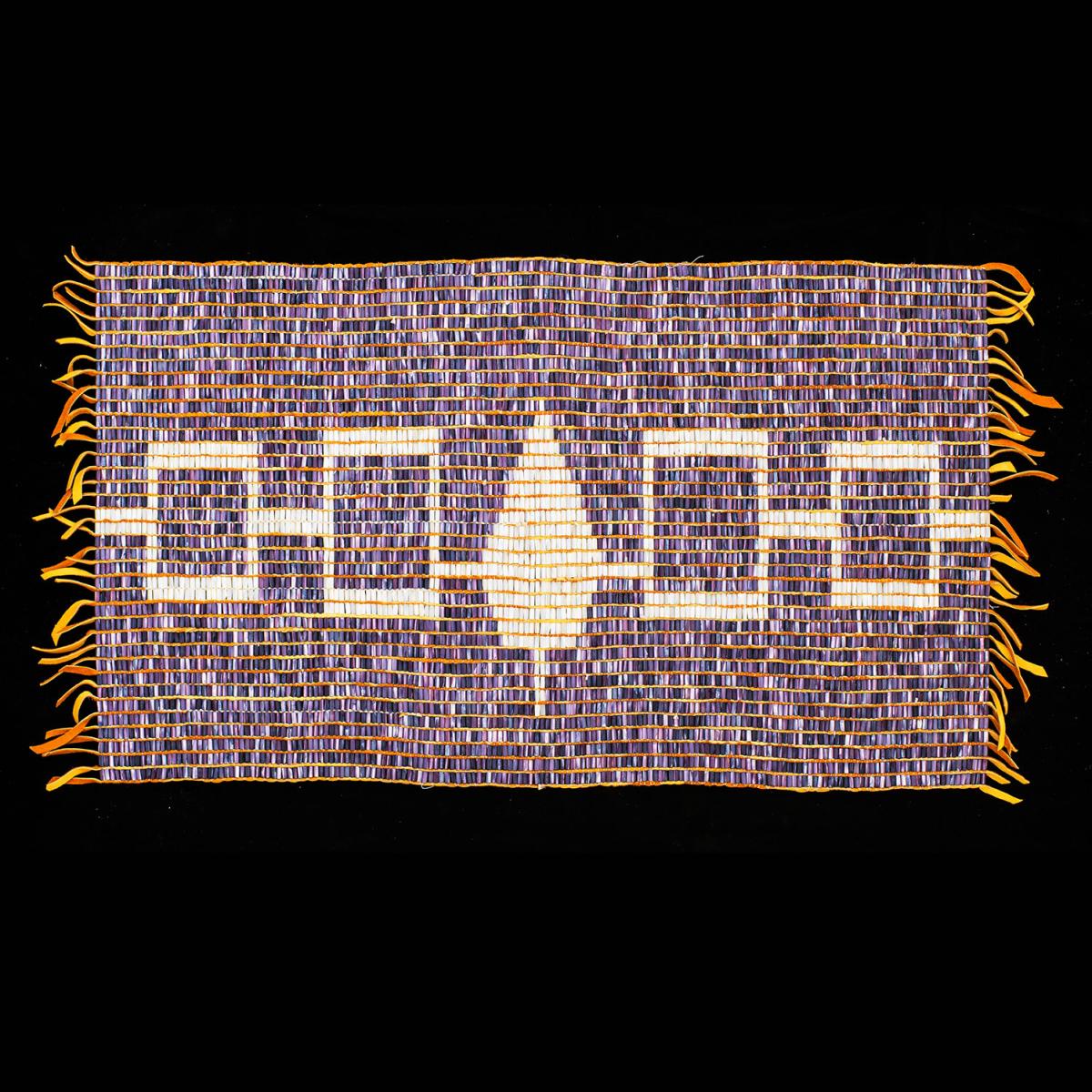
Hiawatha Belt, 2021
Toni Cook (Oneida)
This reproduction belt represents the Haudenosaunee Confederacy, stretching across what is now New York. Each shape represents one of the original five Haudenosaunee Nations, and the center represents the Council Fires at Onondaga Nation. The Tuscarora joined in 1720 and are considered part of the Confederacy today as well.
New York State Museum E-2001.10.01
Additional Resources

The Thanksgiving Address, Ohen:ton Karihwatehkwen: Words Before all Else
Members of the University at Albany’s Indigenous Students Association read the Haudenosaunee Thanksgiving Address.
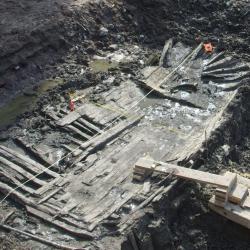
Unlocking the Secrets of the Gunboat at Ground Zero
Explore two expert-led videos featuring Dr. Peter Fix and Dr. Warren Riess on the remarkable 18th-century Revolutionary War–era gunboat unearthed beneath the World Trade Center site in 2010, its historical significance, and the meticulous conservation process that preserved this window into early American maritime history.