

Revolutionary Ideas Over Time
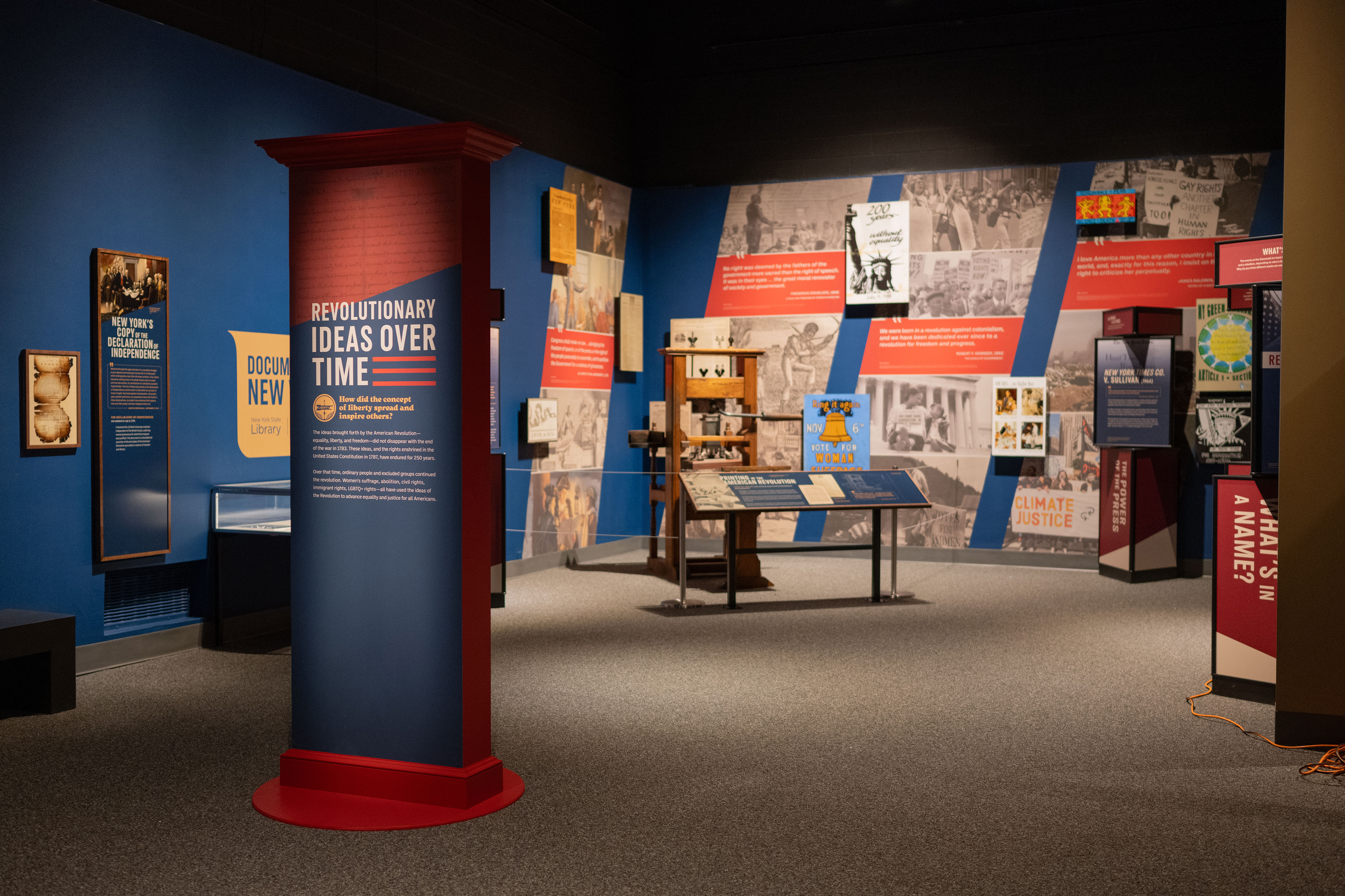
As you enter this section, you will encounter the next tall introductory panel titled “Revolutionary Ideas Over Time.” Below the title, a guiding question asks: “How do the ideas of the American Revolution impact your liberty today?" This section explores how the enduring Revolutionary ideals and the press that amplified them have driven ongoing movements for equality and justice.
Moving forward, the left wall holds a table-height glass display case titled “Documenting New York.” It presents original materials from the New York State Archives and Library. Because these documents are sensitive to light, the documents on display will be changed periodically. You continue through this area on a U-shaped path.
Distributed throughout the gallery are four rotating panel spinners that invite visitors to explore themes such as “Language and Revolutionary Ideals vs. Reality,” “The Power of the Press,” “Revolutionary Legacies,” and “What’s in a Name."
In the back left corner, set at an angle, a full-size‑ replica of an 18th-century printing press is displayed. Extending across the back wall and the adjoining right‑hand wall is a series of four large graphic collages illustrating nearly 250 years of printed communication—broadsides, banners, public notices, and protest graphics. The subjects range widely, including LGBTQ+ rights materials, the ACT UP “Silence = Death” AIDS campaign, anti-abolition‑ broadsides, a 1775 proclamation against rebellion, and women’s suffrage.
Each collage features a red horizontal band across its center containing a quotation. Together, the words of the United States Constitution, Amendment 1 (1791), Frederick Douglass (1860), Robert F. Kennedy (1962), James Baldwin (1955)—underscore themes of free speech, dissent, and civic duty.
The section concludes with a small, angled kiosk with a touchscreen. Visitors can select audio excerpts from three speeches: Martin Luther King Jr.’s 1962 remarks on the Emancipation Proclamation, Franklin D. Roosevelt’s 1941 State of the Union address, and Shirley Chisholm’s 1969 speech advocating for women’s equality. As each excerpt plays, a transcription appears on the screen.
The ideas brought forth by the American Revolution—equality, liberty, and freedom—did not disappear with the end of the war in 1783. These ideas, and the rights enshrined in the United States Constitution in 1787, have endured for 250 years.
Over that time, ordinary people and excluded groups continued the revolution. Women's Suffrage, Abolition, Civil Rights, Immigrant Rights, LGBTQ+ Rights—all have used the ideas of the Revolution to advance equality and justice for all Americans.
Highlights
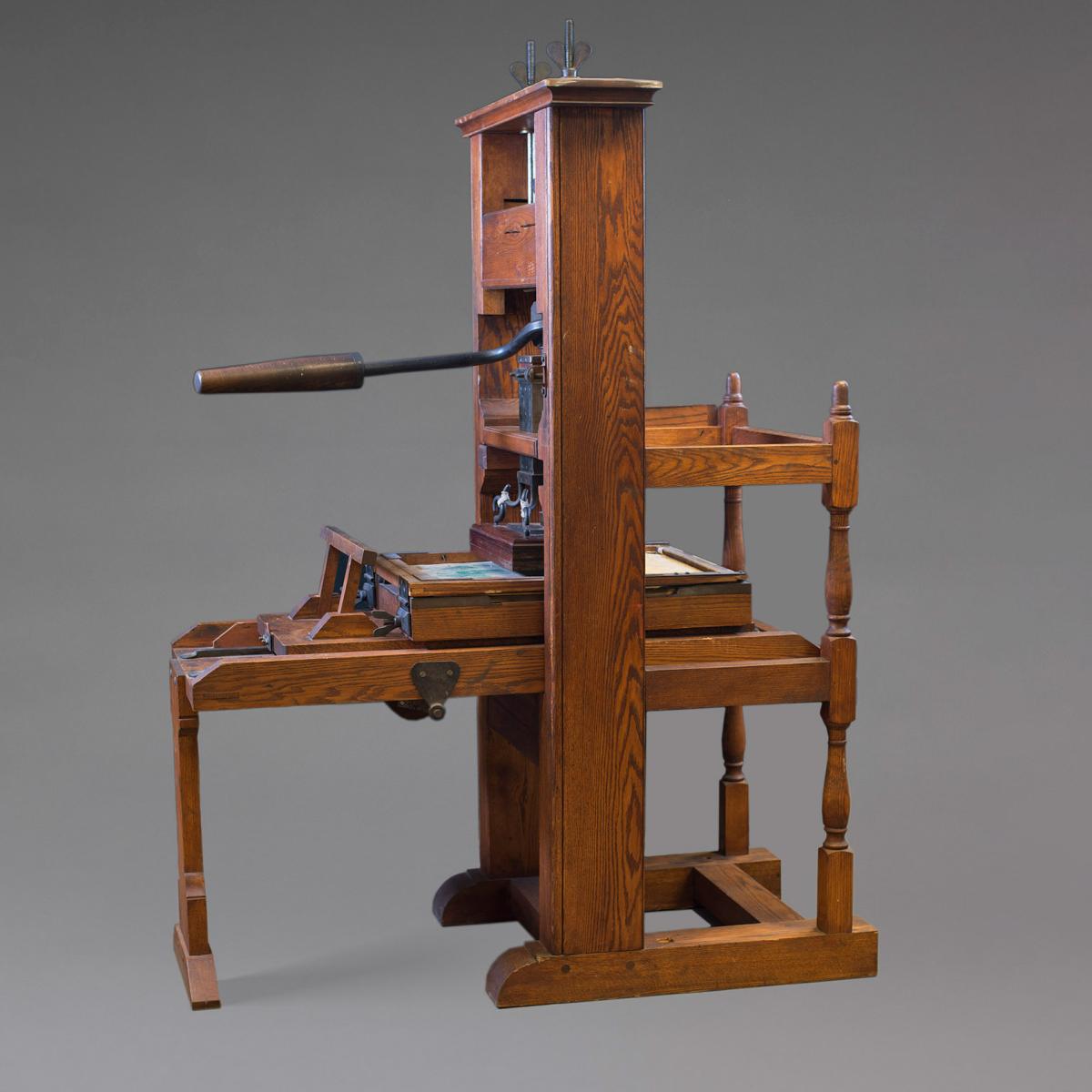
Printing presses were critical during the American Revolution and founding era. Newspapers, broadsides, and pamphlets helped to spread revolutionary ideas throughout the North American colonies, creating a sense of shared identity and common cause among colonists, raising awareness and galvanizing public opinion.
New York State Museum H-1978.10.1
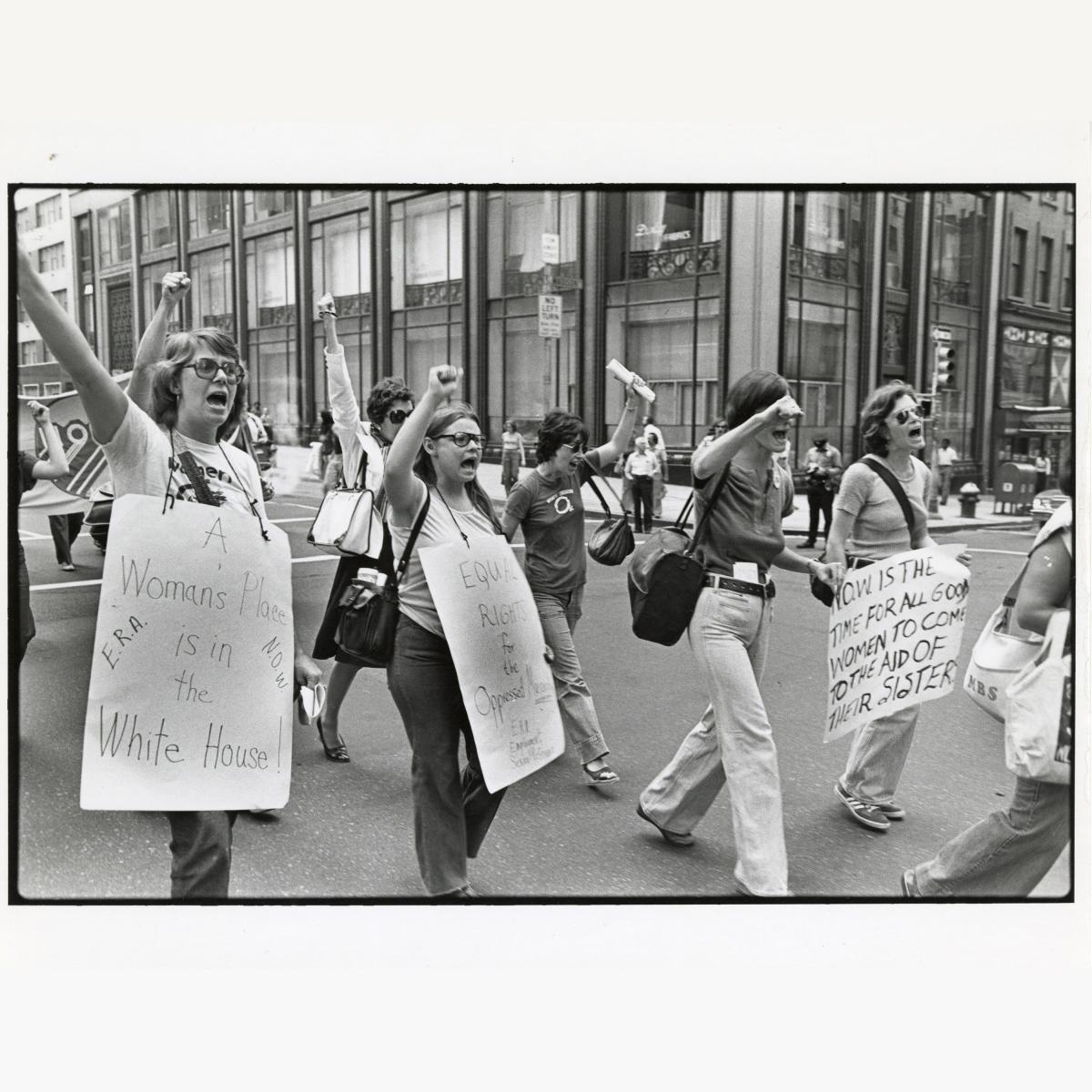
Photograph by Diana Mara Henry
Just as the leaders of the American Revolution took a stand against tyranny, Americans have continued the fight against oppression. The First Amendment to the United States Constitution protects freedom of speech, the press, and the right to peacefully assemble and petition the government, providing a means for working toward equal rights.
Copyright Diana Mara Henry, New York State Museum H-2021.78.177