

Choosing Sides
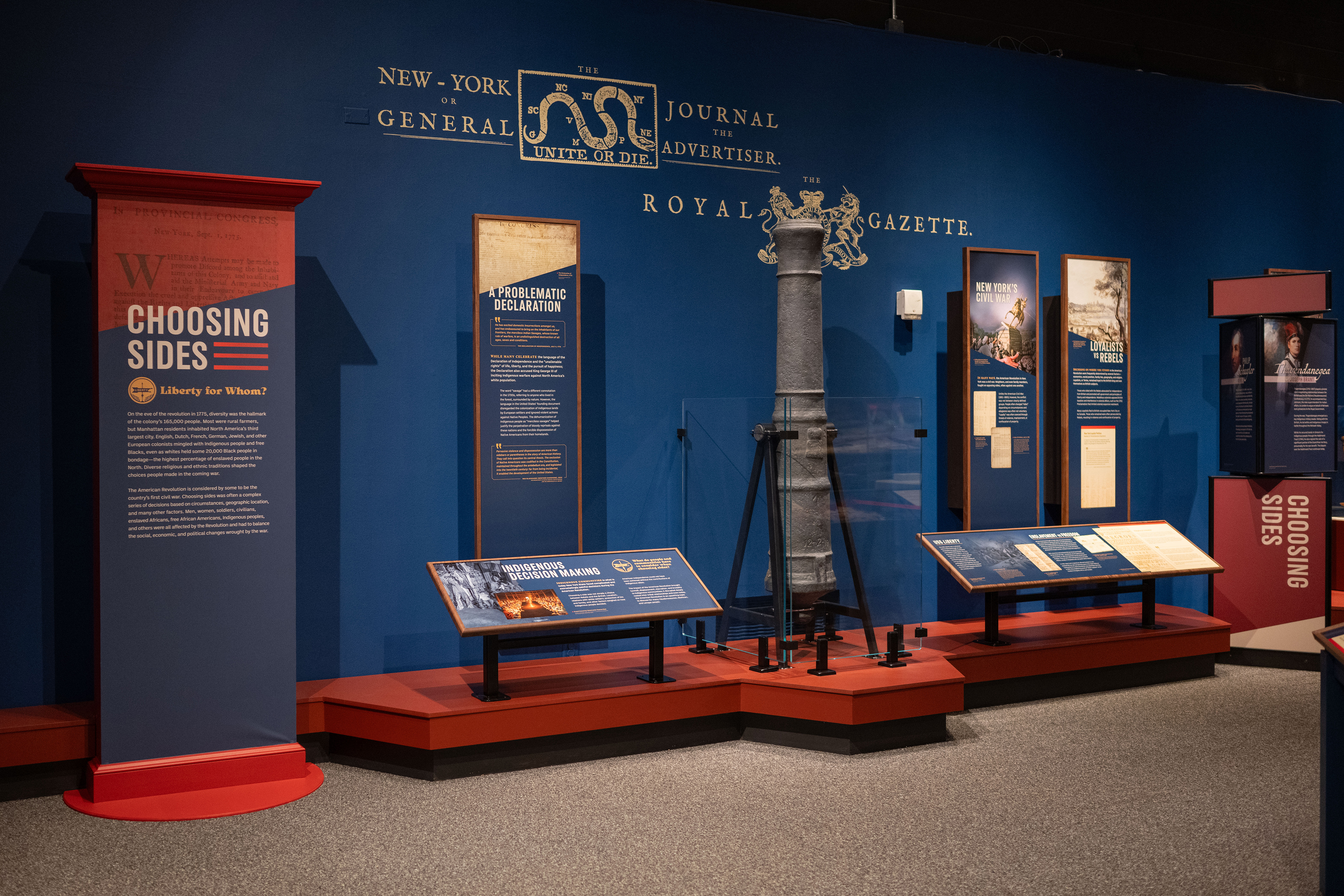
This next section of the exhibit runs along the gallery’s far left wall that runs parallel to the gunboat. It begins with another tall introductory panel. It is titled, “Choosing Sides,” then asks: “Liberty for whom?” Tall graphic text panels are mounted vertically along the wall in a straight row, with angled panels at table height in front.
The content explores how different groups and individuals—including Indigenous nations, Loyalists and Rebels, African Americans, women, farmers—navigated the Revolution’s challenges. Large newspaper graphics highlight the Loyalists vs. Rebels debate. A cannon from the USS Liberty is displayed vertically and is nearly seven feet tall. A large image of a wheat field is located above a blanket chest, a Palatine cradle, and a reproduction flour barrel are displayed. Interactive elements include two spinner panel towers: one features biographies; another discusses spying. Each spinner consists of a movable triangular component that displays a different text panel on each side. Visitors can rotate through these panels.
The section concludes with West Point, featuring a large map of fortifications, the Hudson River chain, facsimiles of the André Papers found on British Major John André upon his capture, and the Van Wart Fidelity Medallion. Together, these panels, objects, and images trace the complexity of choices faced by diverse people during the American Revolution.
On the eve of the revolution in 1775, diversity was the hallmark of the colony’s 165,000 people. Most were rural farmers, but Manhattan residents inhabited North America’s third-largest city. English, Dutch, French, German, Jewish, and other European colonists mingled with Indigenous people and freed Blacks, even as whites held some 20,000 Black people in bondage—the highest percentage of enslaved people in the North. Diverse religious and ethnic traditions shaped the choices people made in the coming war.
The American Revolution is considered by some to be the country’s first civil war. Choosing sides was often a complex series of decisions based on circumstances, geographic location, and many other factors. Men, women, soldiers, civilians, enslaved Africans, free African Americans, Indigenous peoples, and others were all affected by the Revolution and had to balance the social, economic, and political changes wrought by the war.
Highlights
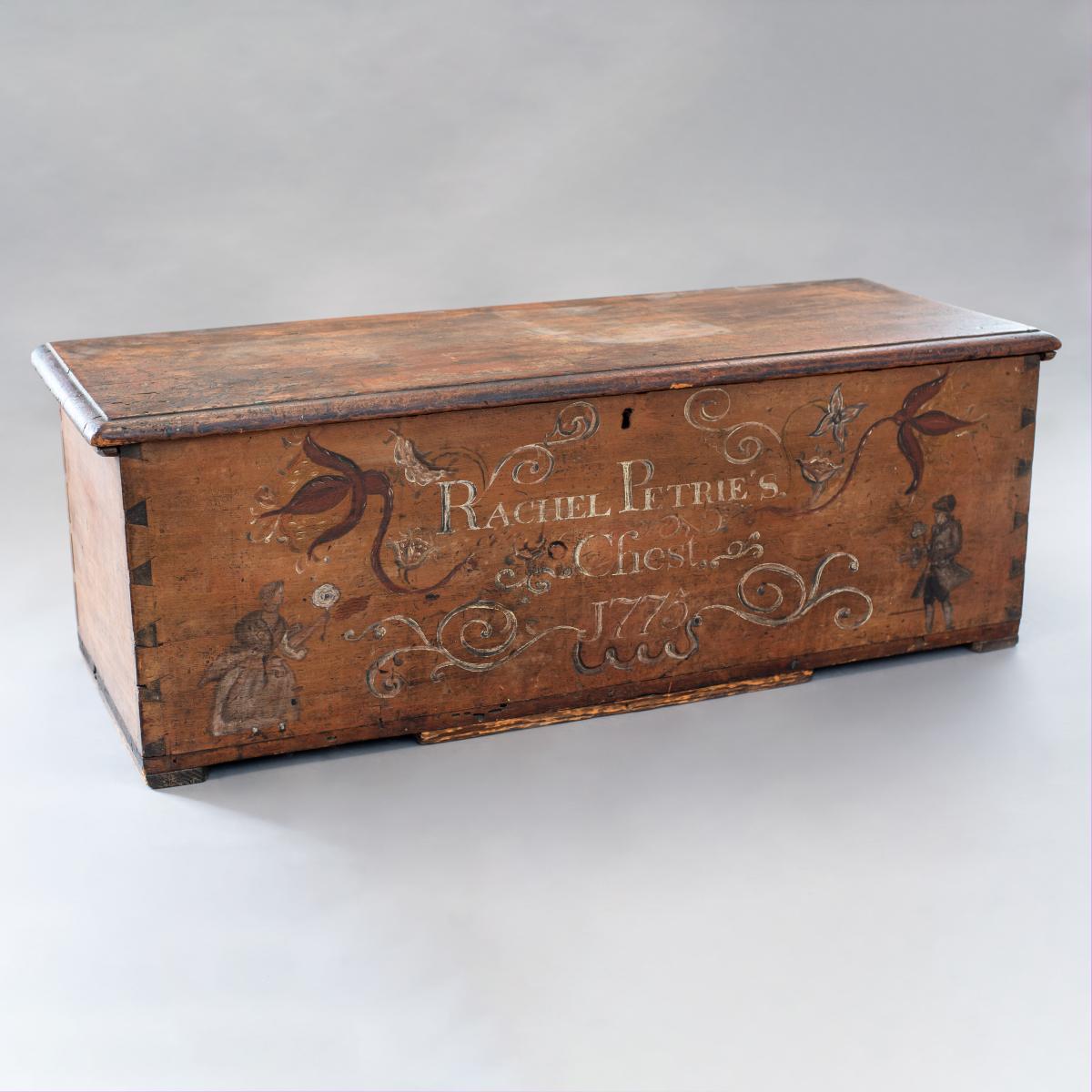
This blanket chest belonged to Rachel Petrie of Linlithgo, Columbia County. Family tradition states that this chest was made by Petrie’s fiancé before he joined New York’s militia at the outset of hostilities.
New York State Museum Collection H-1972.56.1
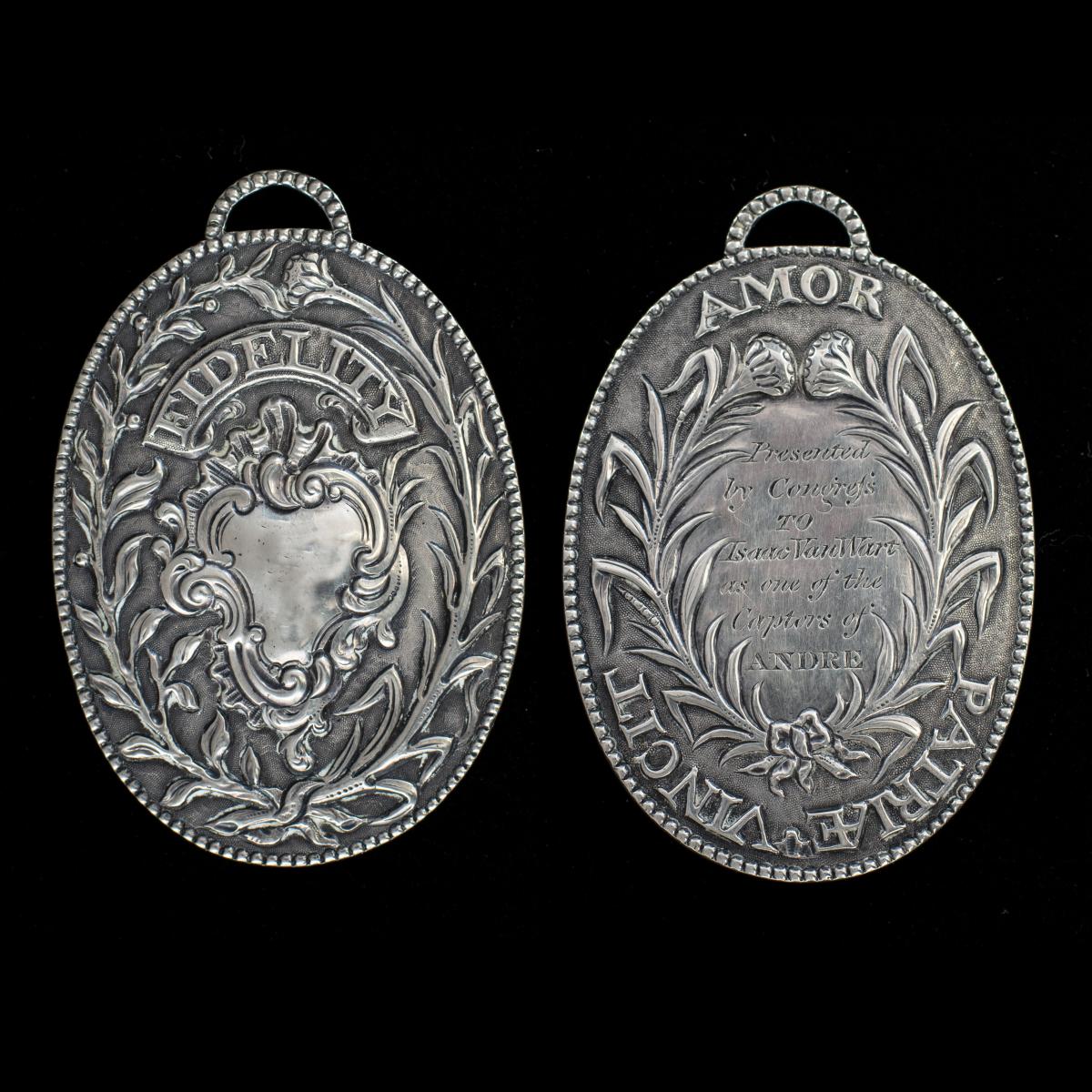
The Fidelity Medallion is the first military medal authorized and presented by the Continental Congress. The medal was created for the three enlisted militiamen who captured John André. The medal featured here was awarded to Isaac Van Wart. Van Wart was born in New York in 1750 and died in Westchester County on May 23, 1828.
Gift of the Estate of Rae Faith Van Wart Robinson, New York State Museum H-2023.4.1
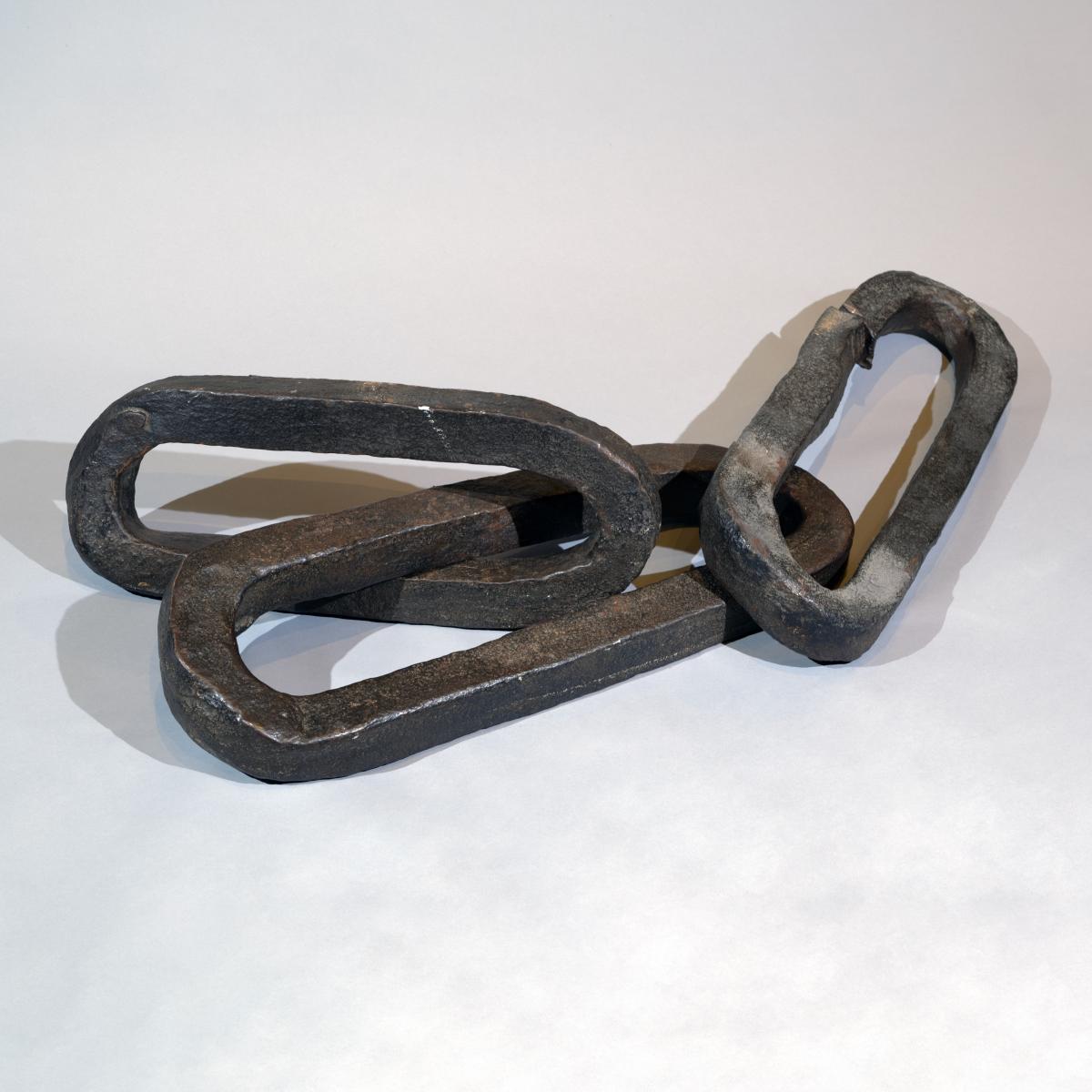
These iron chain links were once part of a chain boom constructed across the Hudson River at West Point to prevent British ships from sailing north from New York City. The chain was forged in 1778 at Sterling Iron Works in Warwick, Orange County, and remained in use until the end of the war in 1783. Each link measures approximately two feet in length and weighs between 140 and 180 pounds.
New York State Museum H-2019.39.3