

Founding the Nation
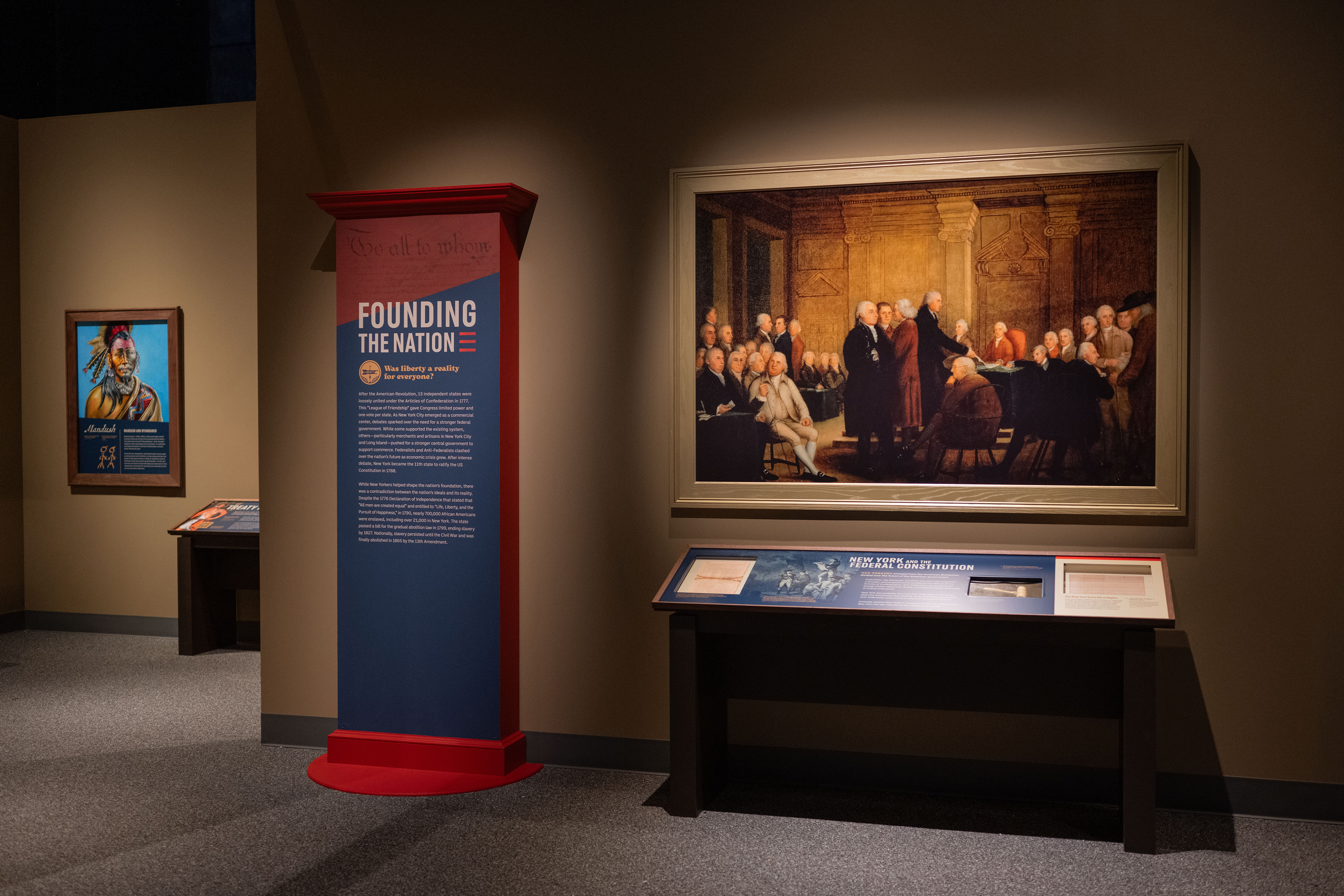
As you move to your right, you encounter another tall introductory panel titled “Founding the Nation,” which asks, “Was liberty a reality for everyone?” This section examines how New Yorkers helped shape the early United States while confronting the contradictions between the nation’s ideals and its realities.
To the right of the introductory panel hangs a large graphic panel of The Congress Voting Independence, showing a meeting room where members of the Continental Congress sit at long tables while several men stand at the center holding documents. The gallery follows an S-shaped path created by tall walls that wind through the space. Along this route is another table-height case titled “Documenting New York,” containing original documents from the New York State Archives and the New York State Library. Large wall panels feature portraits of key figures such as Alexander Hamilton and Gayëtwahgeh (John Abeel, known as Cornplanter), with a replica pipe tomahawk displayed in a case beside Cornplanter’s panel. There are also table-height slant panels that contain interpretive text.
As you continue, you encounter objects, documents, and images tied to early state and federal history, including reproductions of the Treaty of Canandaigua, the New York and Federal constitutions, and the New York Bill of Rights. Notable artifacts include a gavel reportedly used by Walter Livingston, side chairs said to have been used in Federal Hall during George Washington’s inauguration, and Washington’s watch chain and seals. Materials related to treaty making appear throughout, including a roll of muslin treaty cloth gifted to the New York State Museum by the Seneca Nation. Nearby, Indigenous veterans are highlighted through a large contemporary image honoring continued military service, paired with a 1783 quote from Mohegan Chiefs reflecting shared sacrifice. A dedicated display area honors these veterans, featuring a rotating object that will change over the course of the exhibition. A separate treaty-related quote from the US Constitution highlights federal authority over relations with Indigenous nations.
Approaching the end of this section, there is content on illegal state treaties and Indigenous displacement. Large prints of artwork appear nearby, including Honoring the Harvest by Dawn Dark Mountain (Oneida Wisconsin), part of a series commemorating the Treaty of Canandaigua, and The Great Canandaigua Treaty—1794 by Robert Griffing, depicting treaty negotiations held under an oak tree. The gallery path leads to an open space where there are four vertically oriented video screens, with a horizontal screen below displaying a written transcription of the video feature, which also includes sound. Bench seating is available in this space for viewing.
This media feature is introduced on a panel titled “Unfinished Revolutions.” It explores how, over the past 250 years, New York has been a battleground for struggles over freedom, equality, and citizenship—debates that continue today. It brings together five historians, each offering a different perspective on what the Revolution meant for specific groups and how its legacy continues to shape our world.
After the American Revolution, 13 independent states were loosely united under the Articles of Confederation in 1777. This “League of Friendship” gave Congress limited power and one vote per state. As New York City emerged as a commercial center, debates sparked over the need for a stronger federal government. While some supported the existing system, others—particularly merchants and artisans in New York City and Long Island—pushed for a stronger central government to support commerce. Federalists and Anti-Federalists clashed over the nation’s future as economic crisis grew. After intense debate, New York became the 11th state to ratify the US Constitution in 1788.
While New Yorkers helped shape the nation’s foundation, there was a contradiction between the nation’s ideals and its reality. Despite the 1776 Declaration of Independence that stated that “All men are created equal” and entitled to “Life, Liberty, and the Pursuit of Happiness,” in 1790, nearly 700,000 African Americans were enslaved, including over 21,000 in New York. The state passed a bill for the gradual abolition law in 1799, ending slavery by 1827. Nationally, slavery persisted until the Civil War and was finally abolished in 1865 by the 13th Amendment.
Highlights
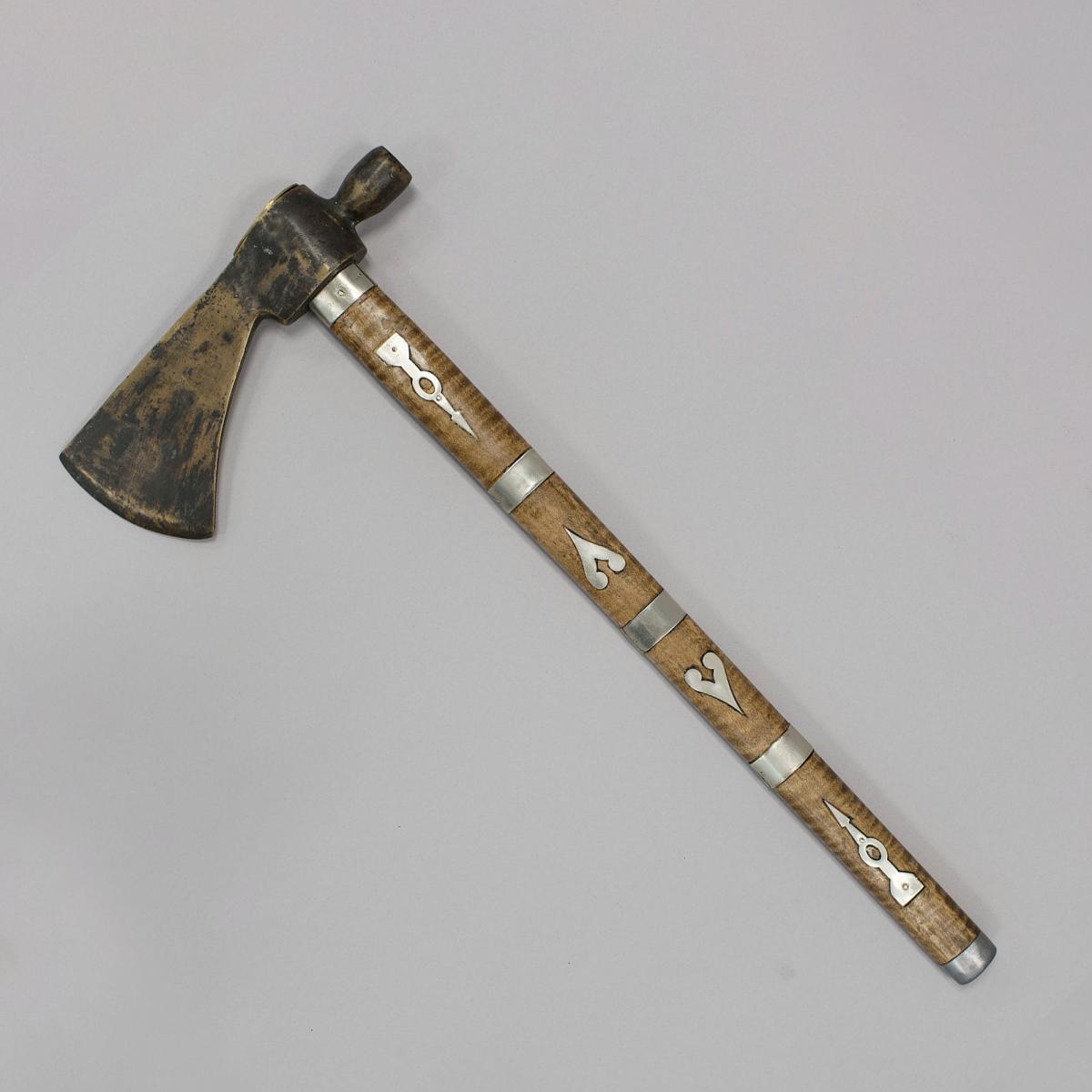
Glenn Zweygardt and Mike Crouse (Seneca Nation)
At all colonial meetings with Indigenous people, gift giving played a prominent part of diplomatic protocol. In 1792 it is believed George Washington presented Cornplanter with a pipe tomahawk. The silver inlay on this replica of Cornplanter’s pipe tomahawk was made by a descendant of Peter Crouse, a Dutch German immigrant taken captive by Seneca as a young boy, around 1778. He lived on Seneca territory for the rest of his life.
New York State Museum E-2025.
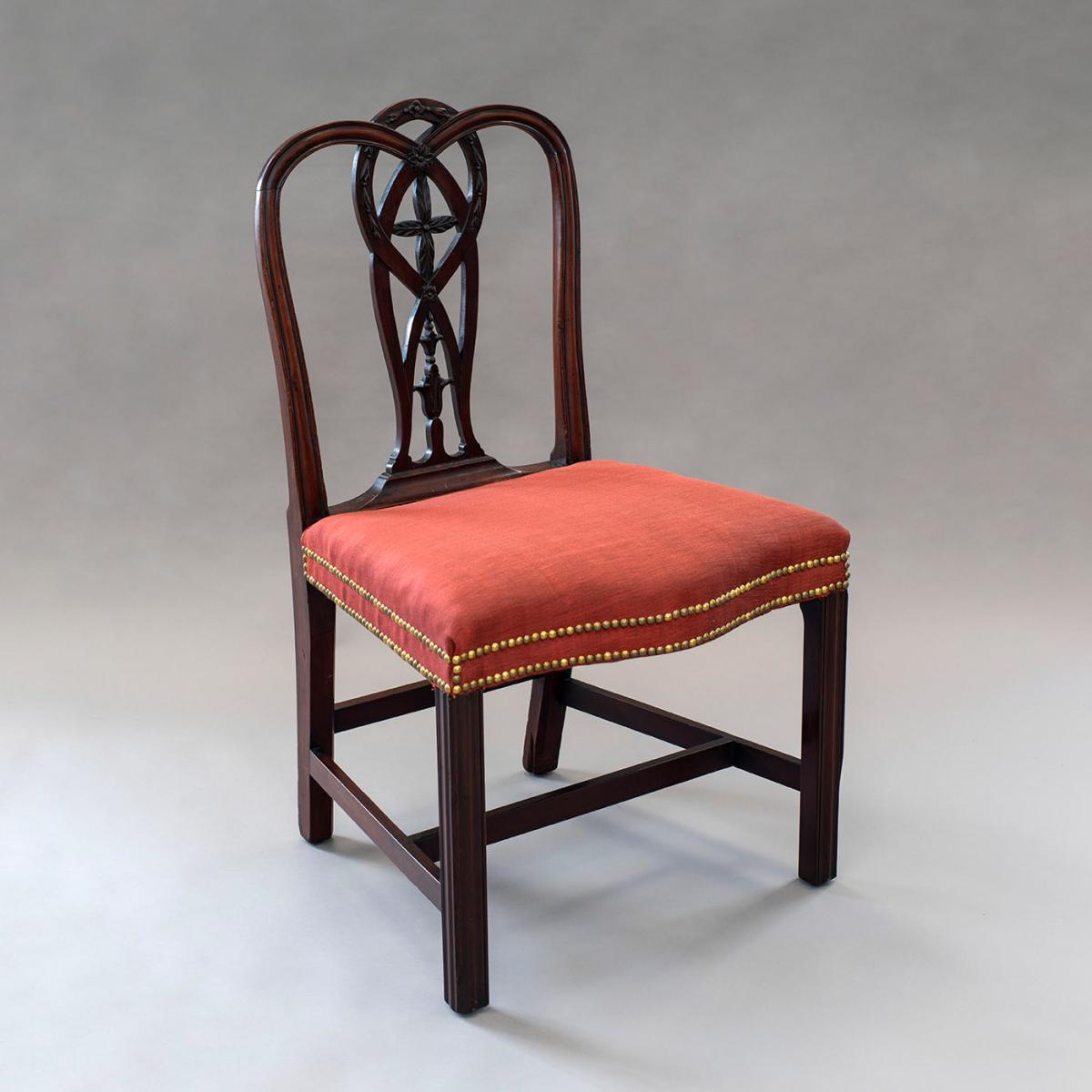
One of a pair of Federal Hepplewhite mahogany side chairs said to have been used in Federal Hall during George Washington’s inauguration.
New York State Museum H-1970.136.3 A
Additional Resources
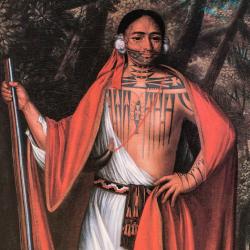
Tattoos with Dr. Hemlock
Sha’kaien’kwarahton is one of the figures depicted in Four Indian Kings of the New World painted by John Verelst in 1710. Discover how recent research by Dr. Kanen'tó:kon Hemlock reveals the cultural meaning and symbolism behind the tattoos within Haudenosaunee traditions.