

Art & Architechture
The New York State Education Building was designed by Henry Hornbostel and built between 1908 and 1912. Its Beaux-Arts style in the Neoclassical tradition, popular in public buildings of the period, reflects an aura of cultured values and intellectual energy. The building is famous for the 36 Corinthian columns on its façade, considered the longest colonnade in the world. The architectural pivot of the building’s interior is its noble Rotunda, which rises from the second to the fifth floor. At the time of its completion, the building symbolized the unification of the State Education Department, and also housed the State Library and State Museum.
Explore this interactive panoramic view taken from the center of the Rotunda. Although the majority of paintings are recessed behind giant corinthian columns, Hope and Contrition are visible on the far left, and Echo and Clio are visible on the far right.
About the Artist
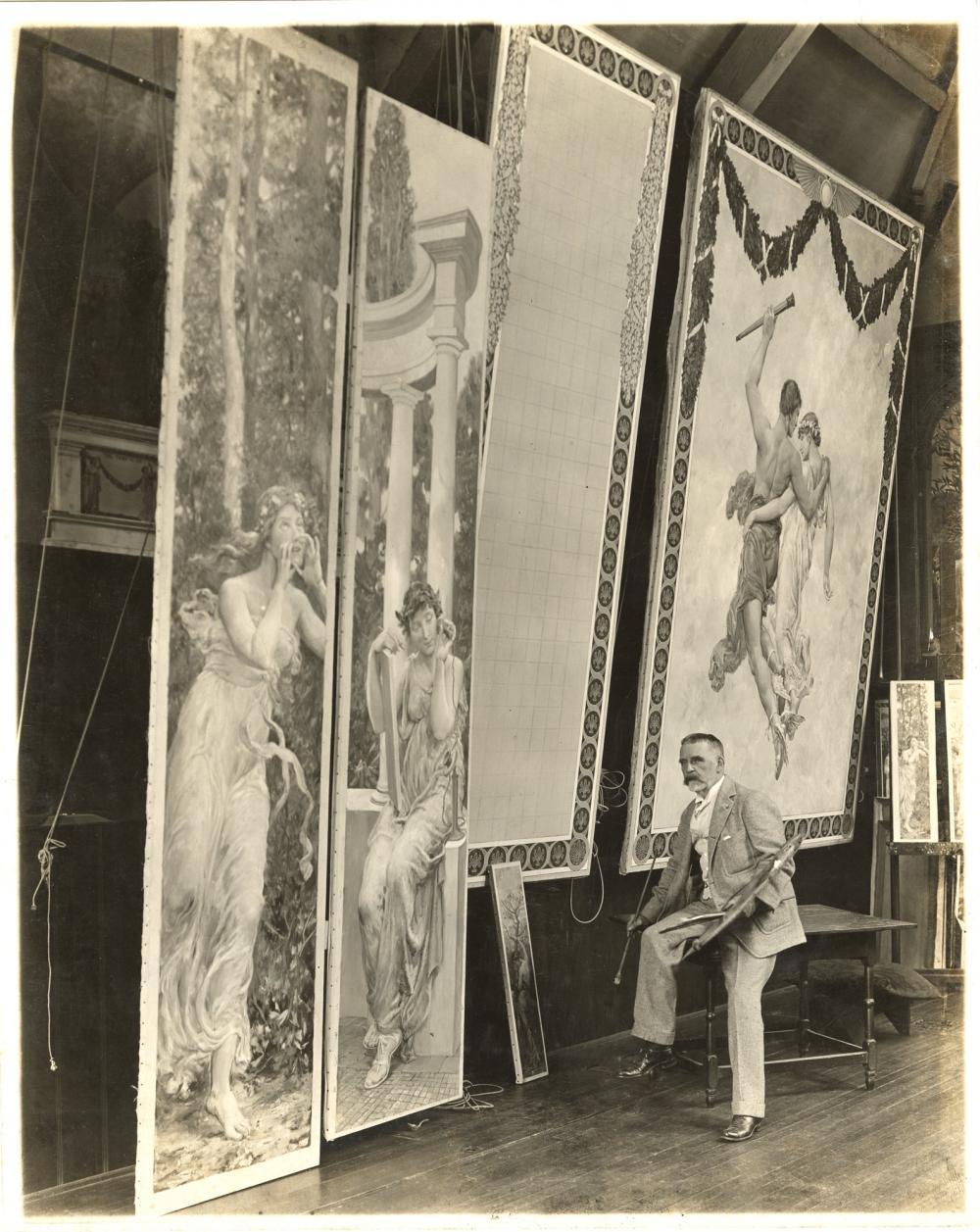
Artist, Will Low, in his studio.
Will Hicok Low (1853-1932) was born in Albany, New York. In his youth, Low supported himself as an illustrator for local newspapers and magazines. At age twenty, he attended the renowned École des Beaux-Arts in Paris and studied under Jean-Léon Gérôme, one of the most important painters from the style known as Academicism. Gérôme inspired Low to incorporate Greek mythology and history in his paintings.
After returning to America, Low turned his attention to decoration to many prominent commissions including ceiling murals and decorations for the famous Waldorf-Astoria Hotel in New York City. Low's Albany roots and experience as a muralist made him a natural choice for the commission. He completed the Rotunda murals from 1913-1918 at his private studio in Bronxville, New York.
State Museum to be Open on Monday, September 11
The New York State Museum will be open to the public on Monday, September 11 from 9:30 a.m. – 5:00 p.m. The State Museum is typically closed to the public on Mondays, but will be open on September 11 to accommodate visitors with interest in visiting the museum’s September 11th exhibition, The World Trade Center: Rescue, Recovery, Response. A guided tour of the exhibition will be held at noon.
The World Trade Center: Rescue, Recovery, Response exhibition details the history of the World Trade Center, the September 11th attacks, the rescue efforts, the recovery operation, and the public response. The exhibition includes many objects, images, videos, and interactive stations documenting this tragic chapter in New York and America's history.
The State Museum is the nation's largest repository of artifacts recovered from the World Trade Center site after September 11, 2001. Artifacts are rotated through the Museum's World Trade Center exhibition, which opened in September 2002. The Museum also supports other institutions nationwide and around the world with World Trade Center-related exhibitions.
More information about the exhibition is available on the Museum's website.
The State Museum is a program of the New York State Education Department’s Office of Cultural Education. Located at 222 Madison Avenue in Albany, the Museum is open Tuesday through Sunday from 9:30 a.m. to 5 p.m. It is closed on Thanksgiving, Christmas, and New Year's Day. Admission is free. Further information about programs and events can be obtained by calling (518) 474-5877 or visiting the Museum website.
Phone: (518) 474-1201
State Museum Acquires Over 100,000 Archaeological Artifacts from Fort Orange and Schuyler Flatts
The New York State Museum today announced the acquisition of over 100,000 archaeological artifacts from Fort Orange and Schuyler Flatts, documenting Dutch and early English settlement of the Albany area in the 17th century. The State Museum plans to open an exhibition featuring artifacts from the Fort Orange and Schuyler Flatts collections in 2018.
Archaeological excavations in the early 1970s under the direction of Dr. Paul Huey resulted in the recovery of 36,000 artifacts from Fort Orange and over 80,000 artifacts from Schuyler Flatts. Among the thousands of artifacts recovered are everyday items such as ceramic plates, tobacco pipes, drinking glasses, firearm parts, and food remains. Trade items in the collection include glass beads, mouth harps, and other items. Together, these two collections tell the story of the first Native Americans who lived in the Upper Hudson Valley for thousands of years before Europeans arrived, interaction between Native people and the first Dutch Colonists, the development of Fort Orange as a trading center, the establishment of Rensselaerswijck, and everyday life in 17th century New Netherland.
“The Fort Orange and Schuyler Flatts collections not only contain important historic artifacts but they are also unique educational resources,” said Board of Regents Chancellor Betty A. Rosa. “We’re proud to own this extraordinary archaeology collection that reflects New York and Albany’s early history and share them with the children and adults of New York State.”
“This comprehensive archaeology collection provides remarkable insight into what life was like in the Albany area over 300 years ago,” said State Education Commissioner MaryEllen Elia. “We’re grateful for the collaboration of the State Office of Parks, Recreation and Historic Preservation for transferring this collection to the State Museum so these artifacts are available for researchers, educators, students, and all people of New York State.”
“We are pleased to work the New York State Museum to advance our shared mission of promoting an understanding of the history of New York,” said Rose Harvey, Commissioner of the New York State Office of Parks Recreation and Historic Preservation. “Combining the collections in the care of the State Museum will create the largest single collection of Dutch cultural artifacts in America; which makes them accessible for research and study, while remaining available for exhibits at our state historic sites and the State Museum.”
“The State Museum has a significant collection of artifacts from archaeological sites in Albany and lower Manhattan that document one of the earliest European settlements in the nation,” said Deputy Commissioner of Cultural Education and State Museum Director Mark Schaming. “Adding the Fort Orange and Schuyler Flatts collections to the Museum’s holdings makes all these rich archaeological collections made by professional archaeologists accessible in one location and serves as an unrivaled research and educational resource in telling the unique history of New York State, New York City, and Albany.”
Fort Orange was established along the Hudson River near present-day Albany by the Dutch West India Company in 1624. The fort was the first permanent settlement in New Netherland and was well-situated to take advantage of the lucrative beaver pelt trade. Dutch officials were eager to populate the new Colony with settlers and bestowed large land grants, called “patroonships”, to individuals who would transport farmers and tradesmen to the colony. The Patroonship of Rensselaerswijck encompassed the entire area around Fort Orange and was by far the most successful of these colonies. One of the chief farms and trade outposts within Rensselaerswijck was established in 1643 by Arent Van Curler on the rich agricultural lands along the Hudson River about 5 miles north of the fort. This stretch of river bottom would later be called Schuyler Flatts after Phillip Pieterse Schuyler who acquired the property in 1672. The Fort Orange and Schuyler Flatts sites are designated National Historic Landmarks.
The Fort Orange and Schuyler Flatts collections were transferred to the New York State Museum by the New York State Office of Parks, Recreation and Historic Preservation. Some of the artifacts remain on public exhibition at Crailo State Historic Site in Rensselaer, Senate House State Historic Site in Kingston, and Schuyler Mansion State Historic Site in Albany.
Photos of artifacts from the Fort Orange and Schuyler Flatts collections are available.
The State Museum is a program of the New York State Education Department’s Office of Cultural Education. Located at 222 Madison Avenue in Albany, the Museum is open Tuesday through Sunday from 9:30 a.m. to 5:00 p.m. It is closed on Thanksgiving, Christmas, and New Year's Day. Admission is free. Further information about programs and events can be obtained by calling (518) 474-5877 or visiting the Museum website.
Phone: (518) 474-1201
On September 12, 1962, the Reverend Dr. Martin Luther King, Jr. delivered a speech in New York City to commemorate the 100th anniversary of the issuance of Abraham Lincoln’s Preliminary Emancipation Proclamation. In a measured but passionate tone, Dr. King reviewed the history of human rights in America, noting that the Declaration of Independence and the Emancipation Proclamation had fallen far short of achieving equality for all of its citizens.
Lamenting the disparity of blacks and whites in every aspect of society, he states, “The Proclamation of Inferiority has contended with the Proclamation of Emancipation, negating its liberating force.” The only way to commemorate the Emancipation Proclamation, he said, “is to make its declaration of freedom real; to reach back to the origins of our nation when our message of equality electrified an unfree world, and reaffirm democracy by deeds as bold and daring as the issuance of the Emancipation Proclamation.”
The centennial of the Civil War occurred in the midst and throes of the Civil Rights Movement. While commemorations and parades honored veterans and military victories, civil rights workers across the nation were protesting segregation, voter intimidation and housing discrimination. New York State Governor, Nelson Rockefeller, charged his state’s Centennial Commission with celebrating the eradication of slavery. Fittingly, New York State owned the only copy of the Preliminary Emancipation Proclamation written in Lincoln’s own hand. A recent discovery at the New York State Museum has revealed the only known audio recording of the Civil War Centennial program, which includes Dr. King’s 26-minute speech honoring Lincoln’s document.
This online presentation allows the viewer to experience an occasion of immense importance in New York State’s and the nation’s history. The recording in the State Museum’s collection is paired with the original speech document in the collection of the State Archives, so that one can hear and read the speech at the same time. The program of the September 12, 1962 commemoration dinner and an article about the speech in the context of the New York Civil War Centennial Commission’s activities is also available. Finally, teachers will find information on how to use this speech in the classroom to enhance their knowledge of this important part of our heritage.
State Museum Opens First Phase of Erie Canal Exhibition on September 16
The New York State Museum will open the first phase of Enterprising Waters: New York’s Erie Canal on September 16. On display through October 20, 2019, the exhibition honors the bicentennial anniversary of the Erie Canal’s construction and features artifacts, images, posters, and documents from the collections of the State Museum, State Archives, State Library, and cultural institutions from across the state.
The first phase of the exhibition explores the circumstances leading up to building the canal, the construction, and the famous “wedding of the waters” that marked the opening of the completed canal in 1825. The exhibit features a gigantic canal warehouse windlass (hoist) with a wooden wheel measuring 14 feet in diameter from Mohawk, NY. The windlass was a pulley mechanism that could easily lift and lower heavy cargo from both sides of the warehouse along the canal with only one or two men. From 1831 through 1866, this windlass operated in the H. G. Root and Company Warehouse in the Village of Mohawk on the Erie Canal. The second phase of the exhibition will open in 2018, which will explore life on the canal, the growth and legacy of the canal, and the barge canal still in use today.
"As we commemorate the bicentennial of the Erie Canal, we celebrate the most influential human-made waterway in American history," said Board of Regents Chancellor Betty A. Rosa. "As America's greatest public works project, the canal had an enormous impact not only on New York State but on the entire nation. This exhibition is a unique educational opportunity for adults, children, and students to learn about the impact of the Canal through historic artifacts, documents and images from the collections of cultural instiuttions throughout the state."
“We’re proud to present an exhibition about the Erie Canal at the State Museum,” said State Education Commissioner MaryEllen Elia. “The exhibition tells the story of the significant role the Erie Canal played in the economic, social and cultural developments of New York and the nation. I encourage educators to use this exhibition to teach our students about one of the greatest engineering feats of the 19th century and how the canal influenced the state, the nation, and the world.”
“We’re pleased to open the first phase of Enterprising Waters: New York’s Erie Canal at the State Museum,” said Deputy Commissioner of Cultural Education and State Museum Director Mark Schaming. “The Erie Canal helped solidify New York as the Empire State and greatly influenced the state and the nation’s transportation, economics, immigration, and trade in the 19th and 20th centuries. As the legacy of the Erie Canal continues to today, this exhibition is an opportunity for visitors to learn about this important chapter in New York’s history.”
“The opening of this compelling exhibit allows many more people to learn about this iconic waterway,” said Brian U. Stratton, New York State Canal Corporation Director. "As we continue the celebration of the Erie Canal’s bicentennial, the State Museum has done a great job of showing how the canal redefined New York, fueled the expansion westward and helped the nation become an industrial superpower.”
“In this year that marks the bicentennial of the groundbreaking for the Erie Canal, we are proud to partner with the New York State Museum to share the story of the Erie Canal's national impact," said Bob Radliff, Executive Director of the Erie Canalway National Heritage Corridor. "We hope museum-goers will enjoy the exhibition and then visit the canal itself to see firsthand this historic and enduring waterway."
The Erie Canal directed the course of New York and American history. When the canal opened in 1825, it unlocked the Western interior for trade and settlement, and made New York City the nation’s most powerful commercial center. As one of the largest public works projects in American history, the Erie Canal also inspired a nationwide transportation revolution. Thousands of people poured into New York to work on or along the canal, or just to pass through. Though the canal would eventually be superseded by the railroad, a heady mixture of innovation and determination, and the industrious seeking and creation of wealth, was cemented in the American character.
Photos of select artifacts and documents in the exhibition are available here.
The State Museum is a program of the New York State Education Department’s Office of Cultural Education. Located at 222 Madison Avenue in Albany, the Museum is open Tuesday through Sunday from 9:30 a.m. to 5:00 p.m. It is closed on Thanksgiving, Christmas, and New Year's Day. Admission is free. Further information about programs and events can be obtained by calling (518) 474-5877 or visiting the Museum website.
###
Phone: (518) 474-1201
Story Art
Enjoy the Museum by listening to a story, exploring objects from the teaching collection and creating a fun art project. This program is designed for toddlers and preschoolers and takes place first Friday of month.
Free Tours of the State Education Building and State Capitol to be Offered Every Saturday
State Office of General Services Commissioner RoAnn Destito and State Education Commissioner MaryEllen Elia today announced that visitors to Albany will have the opportunity to take free tours of both the State Education Building and the Capitol on every Saturday, beginning on October 7, due to the overwhelming popularity of Saturday tours that were being offered once a month.
Tours of the Education Building will be offered at 12:30 p.m. and 2:30 p.m., and tours of the Capitol will be given at 11 a.m. and 1 p.m. Each of the tours can accommodate 25 people and reservations are required. Reservations can be made at the OGS website. Visitors can choose to register for either the State Education Building tour and/or the New York State Capitol tour.
“The popularity of our combined Capitol and Education Building tours became apparent very quickly when we began offering them earlier this summer,” State Office of General Services Commissioner RoAnn Destito said. “We are very pleased to continue our collaboration with the State Education Department to now offer these tours every Saturday so that that weekend visitors will have even more opportunities to see and learn about these amazing historic buildings.”
“The Education Building is full of impressive art and rich history and we’re honored to now share the building with the public during weekly Saturday tours,” said Board of Regents Chancellor Betty A. Rosa. “I encourage people of all ages – adults, children, families – to register for a tour and learn about this grand, historic building.”
“There’s been such great interest in the State Education Building tours that we’re honored to offer the Saturday tours weekly now,” said State Education Commissioner MaryEllen Elia. “The building is an architectural gem that the public deserves to see and appreciate. We’re pleased to work with the State Office of General Services to offer visitors more opportunities to spend an afternoon exploring both the historic State Capitol and State Education Building.”
The award-winning hour-long State Capitol tours conducted by the State Office of General Services on Saturdays begin at the Empire State Plaza Visitor Center, located underground on the North Concourse level of the Plaza between SEFCU and the tunnel to the Capitol. Highlights of the tour can include the legislative chambers, Hall of Governors, Governor’s Reception Room, Hall of New York, historic staircases and carvings.
Sitting atop Albany’s State Street hill, the New York State Capitol has served as the seat of government for New York since the 1880s. The building is a marvel of late 19th century architectural grandeur, built by hand of solid masonry over a period of 32 years.
New York State Museum staff lead the 45-minute Education Building tour, and visitors will have the opportunity to explore the historic Chancellors Hall, Regents Room and the Rotunda adorned with murals by Albany native Will H. Low. The tours start outdoors on the front steps of the State Education Building, which is located at 89 Washington Avenue, Albany. This year marked the first time the building has been made available for regular public tours since the State Museum and Library were moved from the Education Building to the Cultural Education Center in the 1970s. When the monthly State Education Building tours were announced to the public in July, all available reservations were booked within 24 hours.
The New York State Education Building was designed by renowned New York City architect, Henry Hornbostel, one of 63 architects to submit plans, and was constructed by the Rochester firm R. T. Ford and Company. Construction began in 1908 and the building was dedicated in 1912. At the time, the cost to construct the building amounted to approximately $4 million and covered everything from the purchase of the land to building construction. The Education Building was the first major building constructed in the United States solely as a headquarters for the administration of education. In addition to State Education Department staff, the Education Building housed the State Library and State Museum—now currently in the Cultural Education Center.
More information on the history of the State Education Building is available here.
Photos of the State Education Building are available here.
Visit the Office of General Services website for more information about weekday tours, special exhibits and the history of the Capitol, Empire State Plaza, and the Empire State Plaza Art Collection.
Phone: (518) 474-1201
Educator's Guide to Dr. King's 1962 Speech
An Educator's Guide to this online exhibition is a collaborative effort among Museum educators, teachers and archivists designed to provide strategies and resources for teaching about the Civil Rights movement and Dr. Martin Luther King, Jr. By using the online exhibition and the lessons provided here, students will gain insight into Dr. King's ideas and views of the Civil Rights movement.
Educator's Guide Subsections
View and download sections of the guide as separate documents.
Brainfood for the Curious: Short Talks at Lunchtime
Enjoy short, informative virtual talks with State Museum scientists, historians, and curators select Thursdays in January and February! Programs that are available via Zoom require free registration and will be followed by brief Q&A.

Snack-sized Programs from the Past
Our Brainfood programs never expire! Grab some popcorn and catch up on everything you've missed right here.
(January 20, 2022) A Closer Look: New Haudenosaunee (Iroquois) Art at New York State Museum
(January 27, 2022) Building Legitimacy: New York State Architecture and its Classical Grandeur
Votes for Women: Celebrating New York’s Suffrage Centennial honors the centennial of women’s suffrage in New York State and raises awareness of the struggle for equal rights up through the present day. The exhibition features over 250 artifacts from the collections of the State Museum, State Archives, State Library, cultural institutions, and private lenders from across the state.
Votes for Women is organized into three areas: “Agitate! Agitate!” (1776 – 1890); “Winning the Vote” (1890-1920); and “The Continuing Fight for Equal Rights” (1920 – Present). The exhibition begins with the stories of countless women and men who worked for equality in the late 18th and early 19th century, the 1848 women’s rights convention in Seneca Falls, and the subsequent women’s suffrage movement. Visitors will learn how powerful women like Elizabeth Cady Stanton, Carrie Chapman Catt, and Alice Morgan Wright helped lead the “Votes for Women” fight in New York and how New York State passed the referendum for women’s suffrage on November 6, 1917. The exhibition concludes with exploring the continuing fight for equal rights since the passage of the 19th Amendment to the U.S. Constitution in 1919, including the Equal Rights Amendment and the nationally significant role of New York leaders in regard to women’s rights through the present day.
360 Gallery Tour: Votes for Women
Join Chief Curator of History Jennifer Lemak and Senior Historian Ashley Hopkins-Benton for a virtual tour of the exhibition. Learn about the history of the suffrage movement in New York State through artifacts on display and highlighted women who led this equal rights movement. Viewers can navigate throughout the space using their touchscreen or mouse.
Susan B. Anthony (1820-1906)
Activist Speaker
Organize, agitate, educate, must be our war cry… - 1893
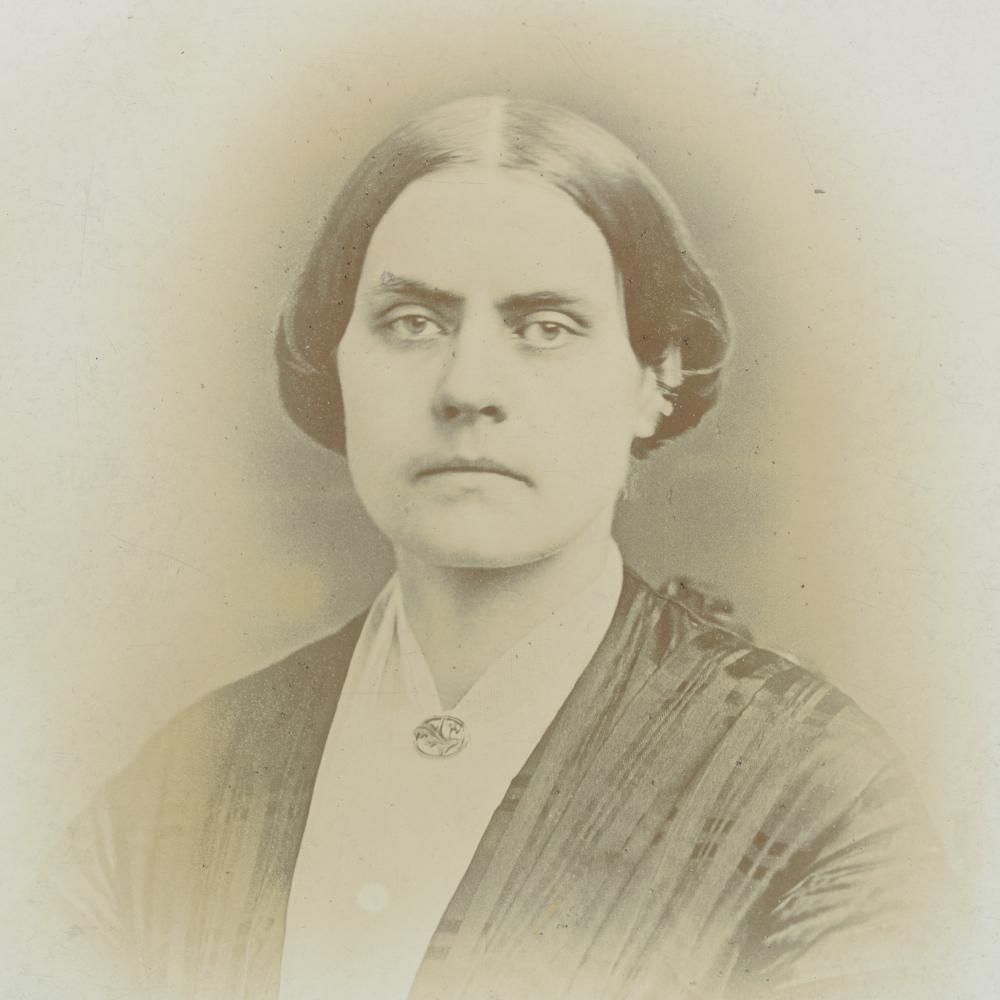
Susan B. Anthony was born in 1820 in Adams, Massachusetts, to a Hicksite Quaker family. They resettled twice, first to Battenville, New York, and then to Rochester, the city Anthony called home for most of her life. The Anthony’s were involved in anti-slavery reform, hosting meetings at their farmhouse and attending conventions. Anthony also worked in the temperance movement, giving speeches on the temperance circuit.
Through her work as a teacher, Anthony quickly became aware of the wage gap between men and women in the profession. Susan’s mother, Lucy Anthony, and sister, Mary Anthony, attended the Rochester women’s right’s convention in 1848, but Susan did not attend. She became involved in women’s rights soon after meeting Elizabeth Cady Stanton in 1851, and eventually put her other reform work to the side to devote her life to the fight for women’s suffrage.
Notable Women
Each of the women below are notable in their contributions to women's suffrage and to securing the dignity and humanity of women who have struggled in a world of prejudice and inequality. Their relentless determination and perserverance in elevating the status of women continue to make an impact in New York and throughout the world.
Lucretia Mott (1793-1880)
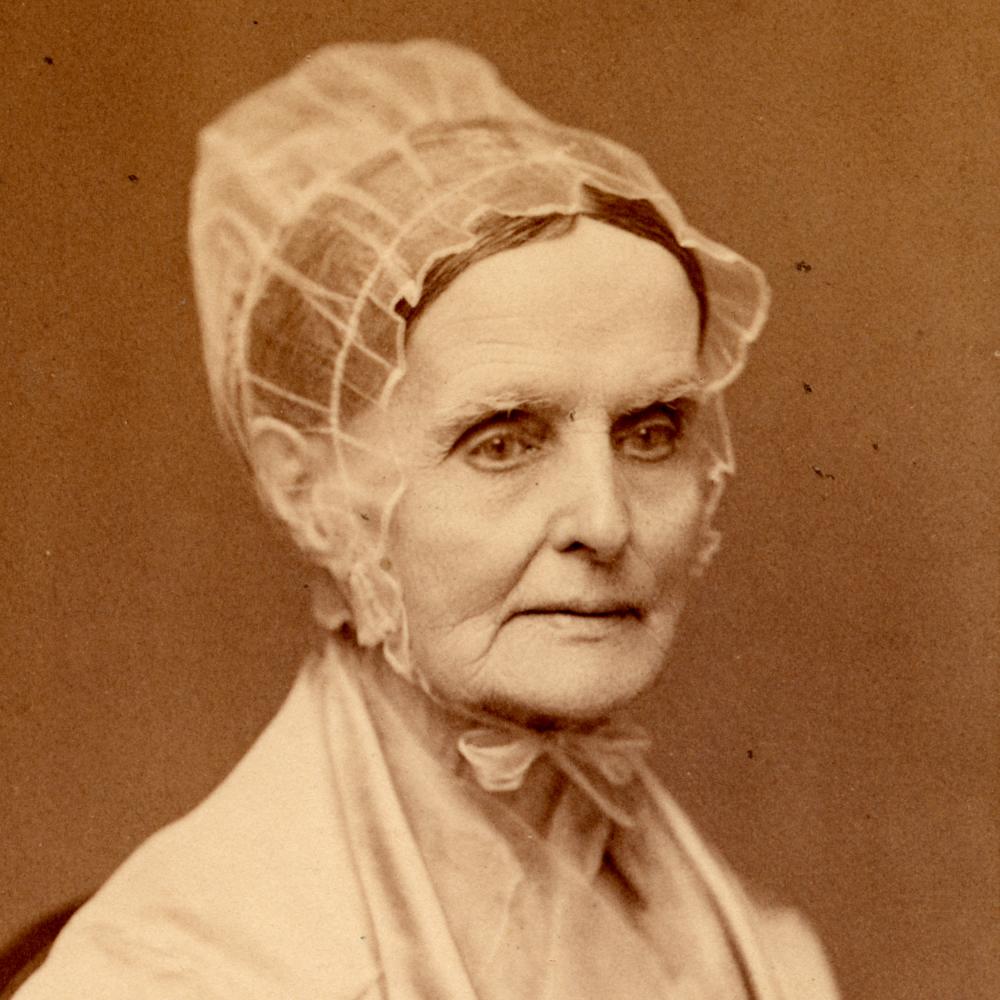
Lucretia Mott
At the 1840 World Anti-Slavery Convention in London, Lucretia Mott and other female delegates were denied the right to speak. Following this experience, Mott focused on both anti-slavery and women’s rights work for the rest of her life.
Mott, a Quaker minister, was already a respected reformer and speaker at the time of the 1848 Seneca Falls Convention—dates for the meeting were chosen to correspond with her visit to central New York, her presence lending weight to the gathering.
Although Mott lived in Philadelphia, she remained deeply involved in the movement in New York through her correspondence with her sister, Martha Coffin Wright, and friends. Mott was chosen to preside over numerous conventions, both local and national.
Sojourner Truth (c. 1797-1893)
Suffrage Advocate
If the first woman God ever made was strong enough to turn the world upside down all alone, these women together ought to be able to turn it back, and get it right side up again! And now they are asking to do it, the men better let them. - 1851
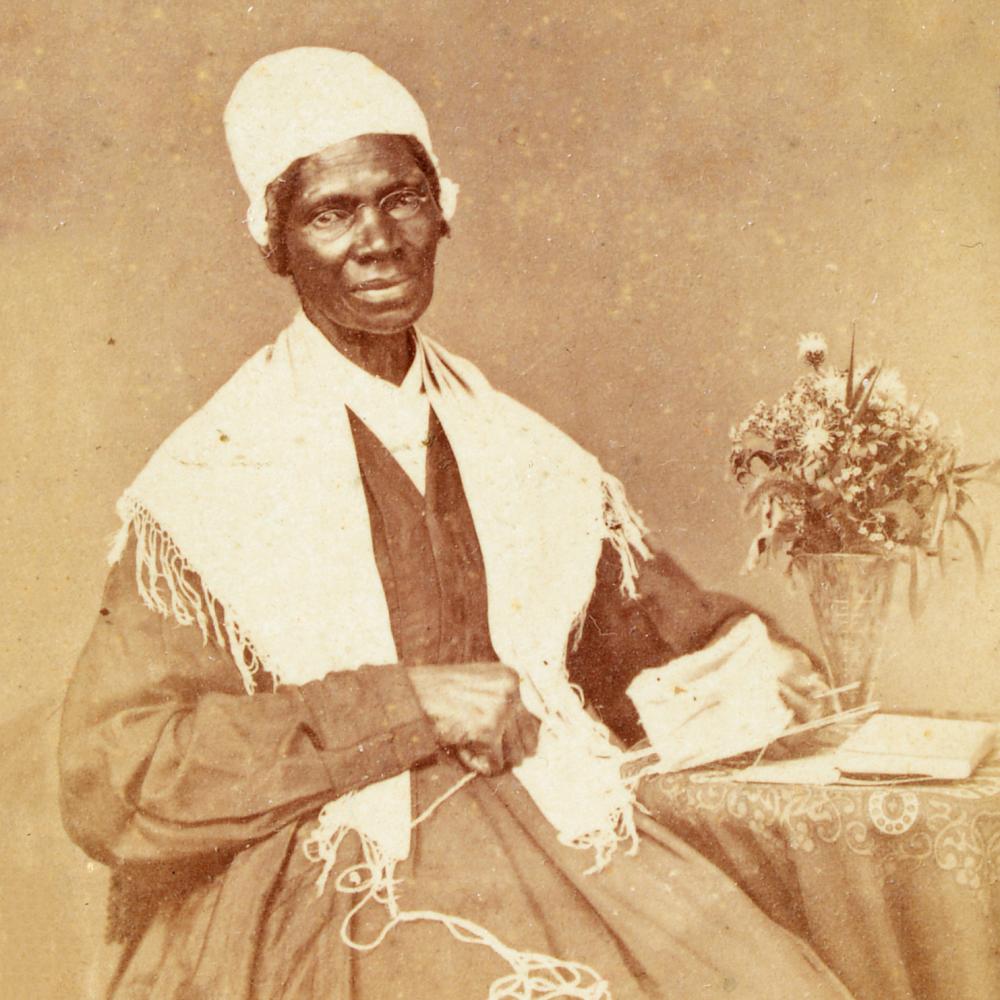
Sojourner Truth
Sojourner Truth was born into slavery as Isabella Baumfree in Ulster County, New York. In 1827, when her master failed to uphold a promise to free her, she escaped, or as she later declared, “I did not run away, I walked away by daylight.” Truth became a preacher, and choose the name by which she is known today.
Truth became active in the abolition movement, and in the 1850s, in the women’s rights movement as well. She is perhaps best known for her speech delivered to the Ohio Women’s Rights Convention of 1851, which carried the message that African American women’s rights should not be ignored.
Elizabeth Cady Stanton (1815-1902)
Women’s Rights Activist & Reformer
We have declared our right to vote—The question now is how shall we get possession of what rightfully belongs to us? -1848
.
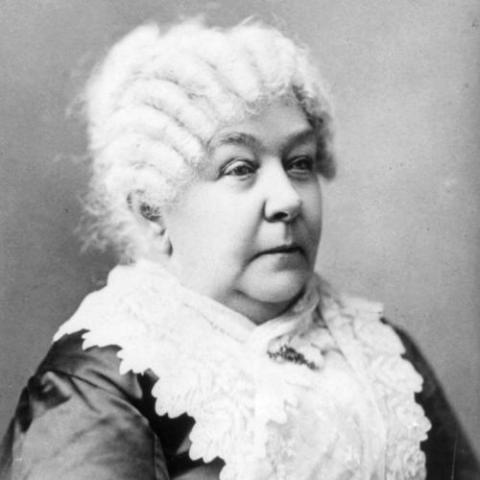
Elizabeth Cady Stanton became aware of the different opportunities for boys and girls by spending time in her father’s law office. She spent hours studying law books, talking with law clerks, and hearing the plight of widows who faced losing all their property (including what they brought into the marriage).
Stanton’s eyes were opened to the world of reform in the home of her cousin, Gerrit Smith, an antislavery reformer. There she met Henry Stanton, in 1839, and the couple travelled to the World Anti-Slavery Convention on their honeymoon in 1840. Stanton saw the treatment of women at the convention as unfair, and turned her anger into her life-long work for the cause of women’s rights.
Harriot Stanton Blatch (1856-1940)
Founder of the WPU
No women in the world are as humiliated in asking for the vote as the American woman. The English, the French, the German Women all appeal to the men of nationality. The American woman appeals to men of twenty-six nationalities. -After the defeat of the 1915 suffrage campaign.
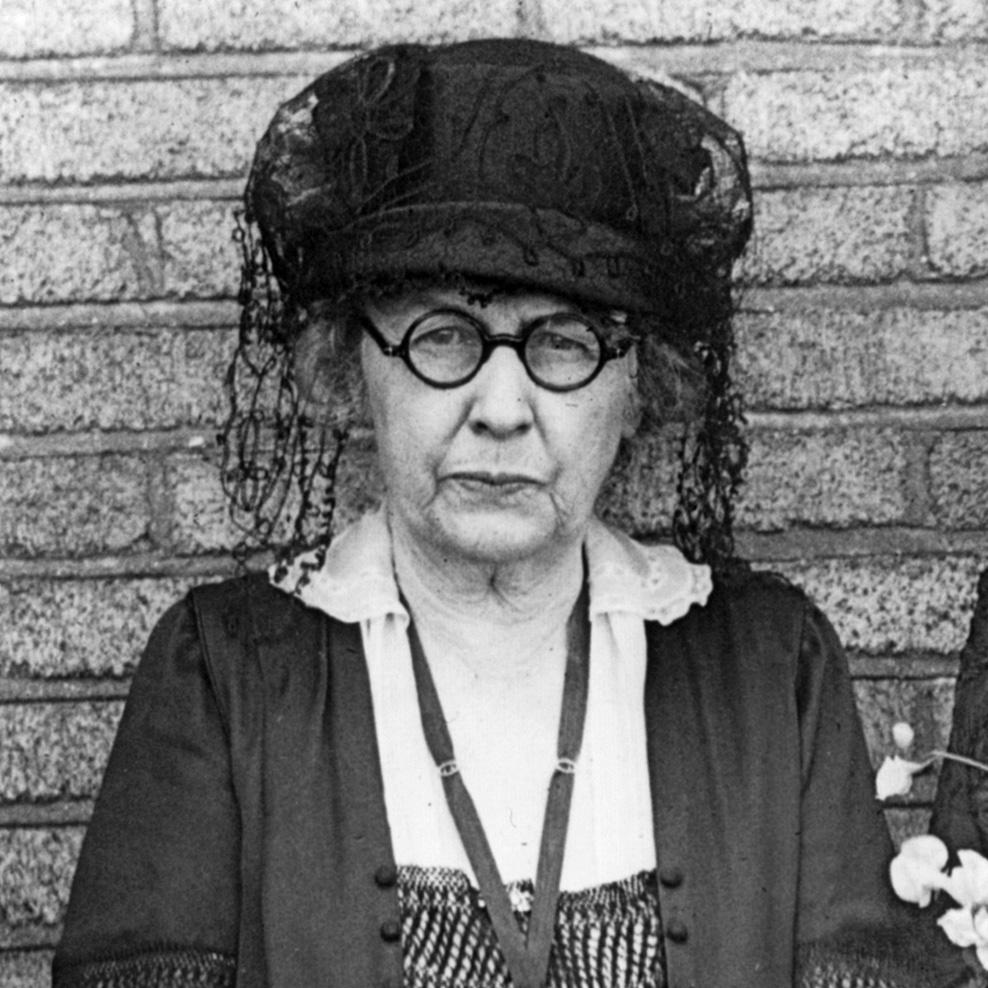
Harriot Stanton Blatch (1856-1940) helped to revolutionize and shape New York State’s suffrage movement from a 19th century movement of upper class, white women to a modern 20th century reform movement involving women from all classes and ethnic backgrounds, except African American women.
Blatch was the second daughter and sixth child of Elizabeth Cady Stanton. Upon graduation from Vassar College in 1878, she travelled the suffrage lecture circuit with her mother and then moved to England where she met and married William Henry Blatch, Jr. While in England, she worked with women-focused reform groups and was heavily influenced by the power of the organized working classes and the militant tactics of the British suffragists.
Blatch returned to the United States in 1902 with her family and settled in New York City. She expected to jump into the suffrage movement, but was shocked to find it clinging to 19th century tactics. Blatch and a small group of women wanted to modernize the movement and soon realized that they had to abandon the traditional NYSWSA and create their own group. The result was the formation of the Equality League of Self-Supporting Women which would later become the Women’s Political Union (WPU).
Carrie Chapman Catt (1859-1947)
President of NAWSA and founder of ESCC
I regard the New York victory as the very greatest victory this movement has ever had in any country. – 1917
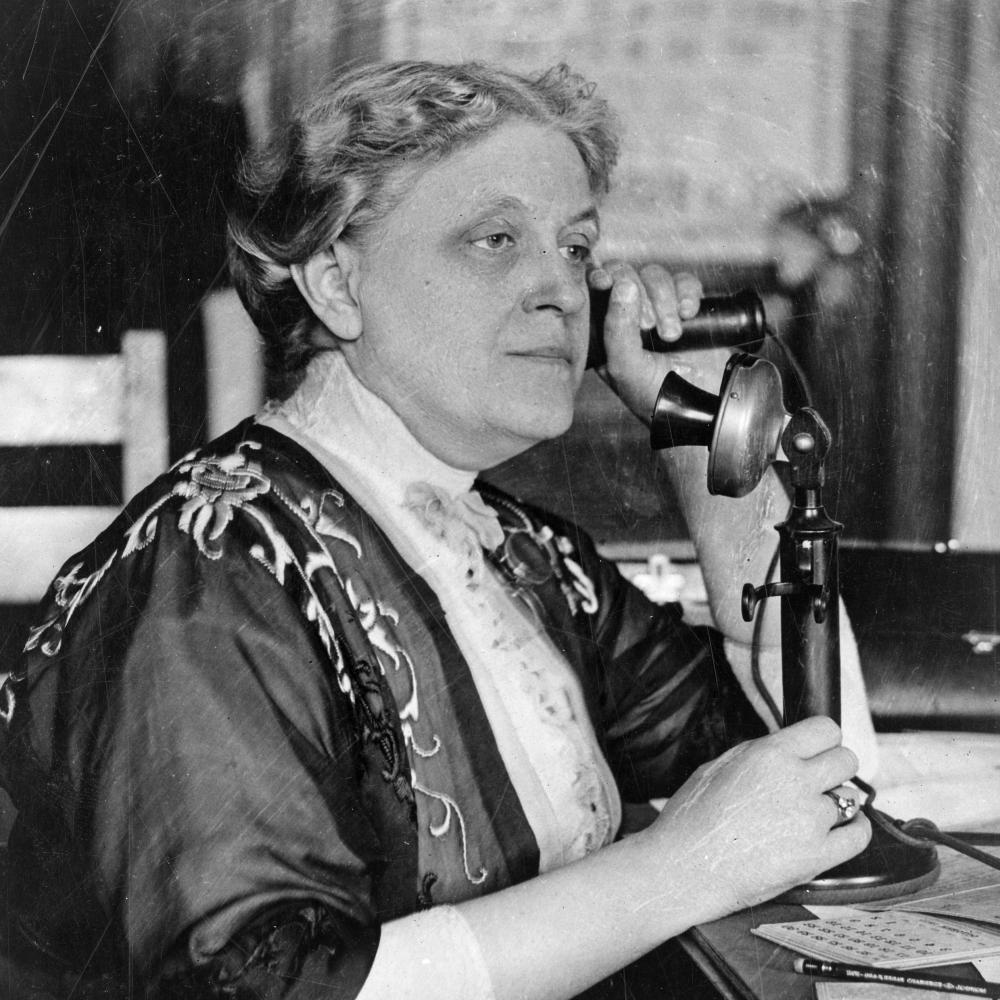
Carrie Chapman Catt was one of the key organizers for women’s suffrage in New York State and at the national level. She grew-up In Iowa where she worked as a teacher to pay for her college tuition. In 1885, she married newspaper editor, Leo Chapman, who died shortly after the couple wed. She soon became interested in suffrage, establishing Political Equality Clubs and serving as the state’s group organizer and secretary. Catt became involved with NAWSA at both the state and national levels. Susan B. Anthony took notice of her organizational and public speaking skills and tapped Catt to succeed her as president of the NAWSA in 1900. After one term in office, she stepped down to care for her ailing second husband, George Catt.
Catt travelled internationally on behalf of women suffrage and then settled in New York City where she became active at the local level. In 1907, she formed the Interurban Suffrage Council which brought together most of the suffrage groups in the City under one umbrella organization. This organization served as the model for Catt’s New York City Woman Suffrage Party which she organized in 1909. The Woman Suffrage Party was the basis for the Empire State Campaign Committee, which launched the unsuccessful campaign for a state constitutional amendment in 1915. This same year Carrie Chapman Catt returned as president of the NAWSA with what she called the Winning Plan to secure the vote in New York State and in turn, use New York’s win to propel the federal amendment forward.
Shirley Chisholm (1924-2005)
U.S. Congresswoman
When I ran for the Congress, when I ran for president, I met more discrimination as a woman than for being black. - 1982

In 1968, Shirley Chisholm became the first African American woman elected to the United States Congress. Prior to this, she served as the New York State assemblywoman from Brooklyn. Her major focus was improving conditions in her community. In Congress Chisolm represented two of the poorest urban communities in the country—Bedford Stuyvesant and Crown Heights, Brooklyn, where the population was predominately black and Puerto Rican.
Chisholm publicly supported the ERA and brought the idea of women’s equality to the House floor and along with other prominent women founded the National Women’s Political Caucus in 1971. A year later, Chisholm ran for president of the United States. She campaigned across the country and succeeded in getting her name on twelve primary ballots. At the Democratic National Convention, she received 152 delegate votes, or 10 percent of the total. While she did not win any primaries, Chisholm believed that her campaign for president was a “catalyst for change.”
Bella Abzug (1920–1998)
Congresswoman and Activist
There are those who say I’m impatient, impetuous, uppity, rude, profane, brash, overbearing. Whether I’m any of these things or all of them, you can decide for yourself. But whatever I am—and this ought to be made very clear at the outset—I am a very serious woman. - 1972
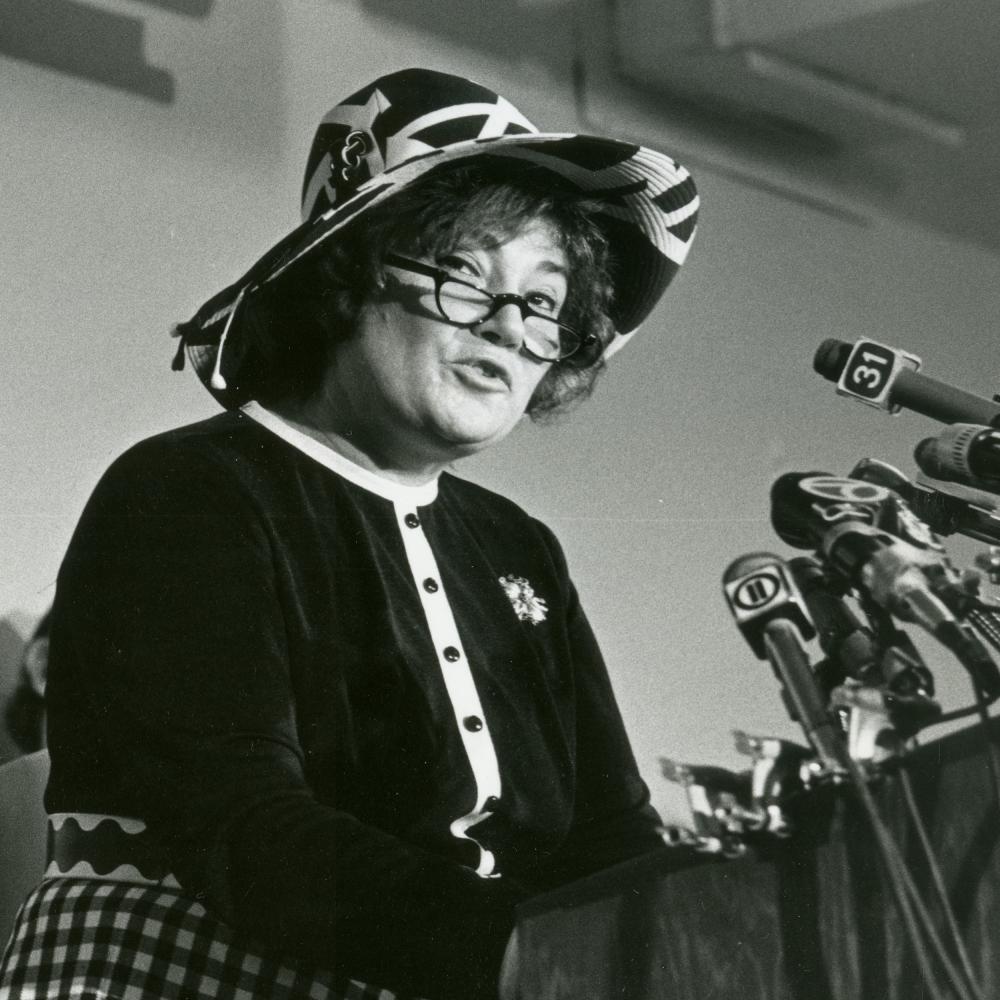
Bella Abzug was a longtime activist and proponent of equal rights for women. She grew up in New York City and became an attorney in the 1940s when few women entered this profession. In the 1960s, she became an anti-war activist, which led to a run for political office in New York City. In 1971, she made her first run and win for Congress on the Democratic ticket. Abzug was a huge supporter of the ERA, gay rights, and a founder of the National Women’s Political Caucus.
Gloria Steinem (1934 - )
Feminist Organizer
Feminism has never been about getting a job for one woman. It’s about making life more fair for women everywhere. It’s not about a piece of the existing pie; there are too many of us for that. It’s about baking a new pie.
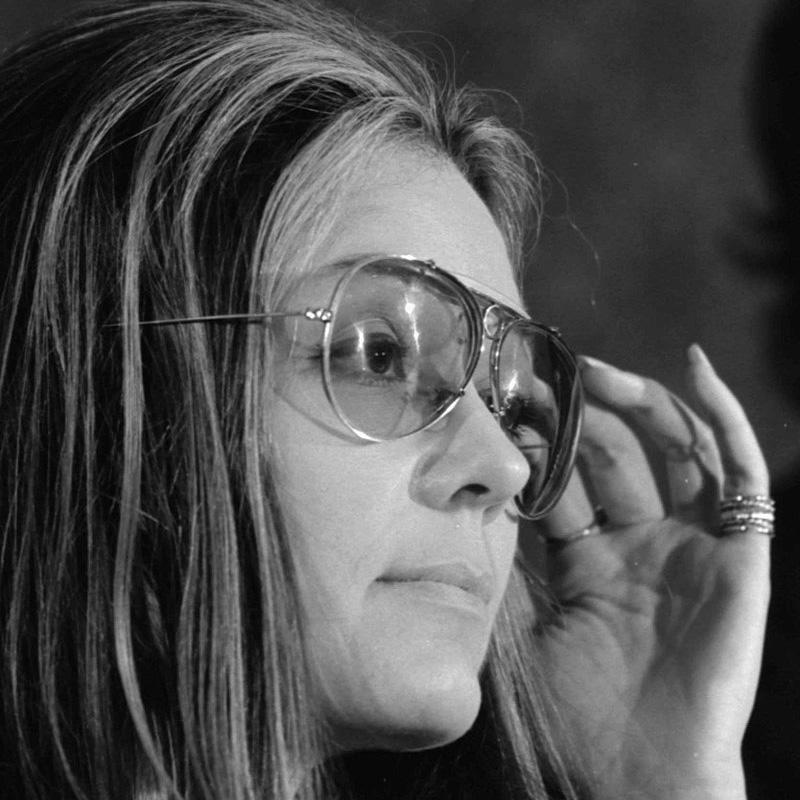
Following study at Smith College, Gloria Steinem traveled in India, where her eyes were opened to political organizing and the importance of listening. Upon her return, she settled in New York City and began her journalism career with her “first serious assignment”: documenting the impact of the birth control pill on the social and professional lives of young women in “The Moral Disarmament of Betty Coed.”
As an activist, Steinem has dedicated her life to travel in order to give talks, to promote feminist causes, including the ERA, and to facilitate discussions amongst diverse groups. In the 1960s and 70s, she travelled to colleges, community centers, and other venues with speaking partners Dorothy Pitman Hughes, Margaret Sloan, and Florynce Kennedy.
Matilda Joslyn Gage (1826-1898)
Editor of National Citizen and Ballot Box
When the American colonies began their resistance to English tyranny, the women- all this inherited tendency to freedom surging in their veins- were as active, earnest, determined and self-sacrificing as the men… - 1881
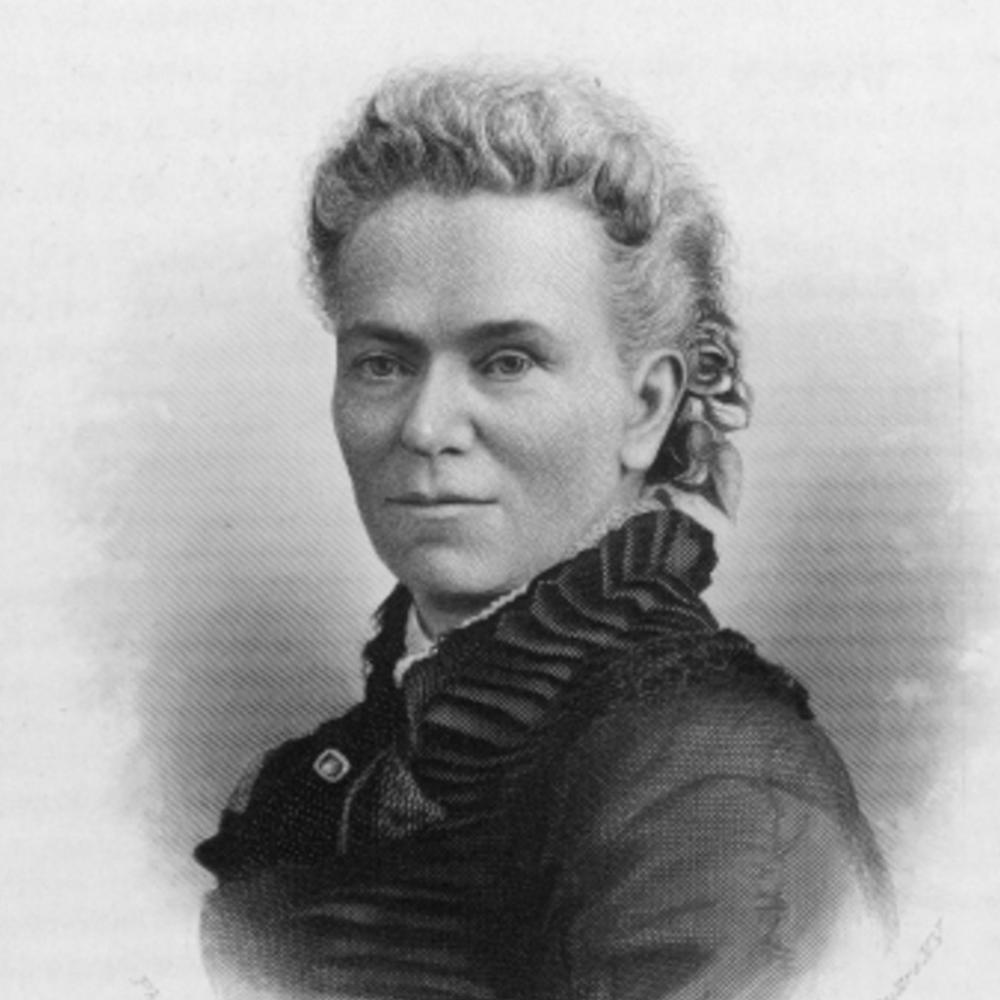
Matilda Joslyn Gage entered the women’s rights movement with a speech at the 1852 National Women’s Rights Convention. Though not anticipated on the program, hers was the only speech of the convention to be reprinted in the paper, with her call to “Let Syracuse sustain her name for radicalism.”
Gage was close with her Native American neighbors, and was adopted by the Haudenosaunee into the Wolf Clan: “I received the name of Ka-ron-ien-ha-wi, or ‘Sky Carrier,’ or She who holds the sky.” While working with the Haudenosaunee, she observed a culture with a vastly different view toward women than her own. Gage and Stanton both wrote of a more equal division of power and labor in Haudenosaunee society, of women’s roles in choosing clan leaders, and of the matrilineal organization of Haudenosaunee families.
Hillary Rodham Clinton (1947 - )
Democratic Nominee for President
Tonight’s victory is not about one person, it belongs to generations of women and men who struggled and sacrificed and made this moment possible. In our country, it started right here in New York, a place called Seneca Falls.” – June 2016 on the occasion of being the first woman declared the presidential nominee from a major political party.

Mary Burnett Talbert (1866 – 1923)
Civil Rights Activist
It should not be necessary to struggle forever against popular prejudice, and with us as colored women, this struggle becomes two-fold, first because we are women and second, because we are colored women.” – 1915
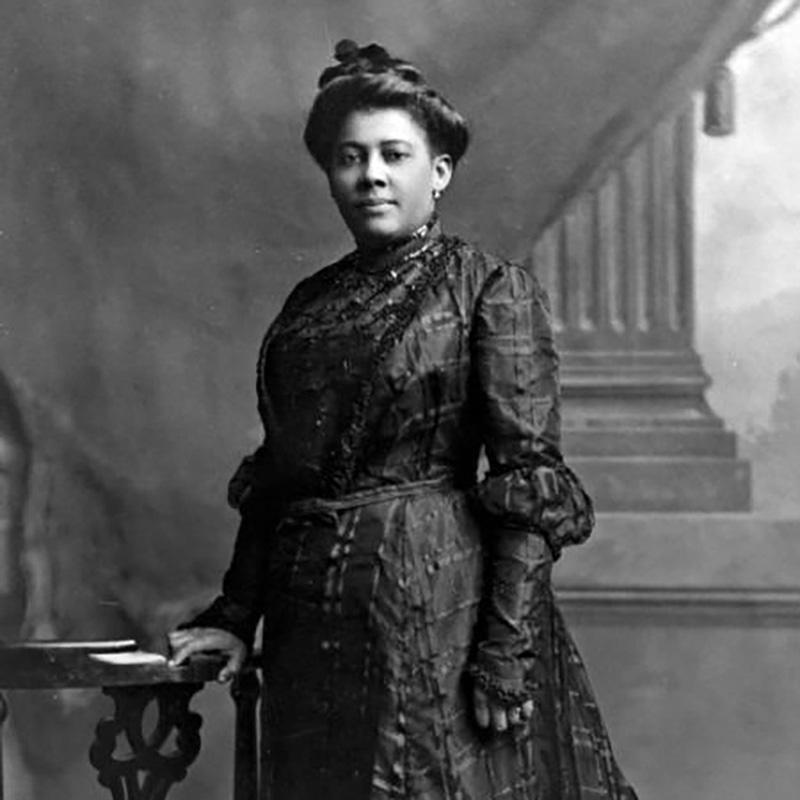
Belva Lockwood (1830-1917)
Presidential Candidate
…not that we shall succeed in the election, but we can demonstrate that a woman may under the Constitution, not only be nominated but elected. - 1884

After becoming a young widow, Belva Lockwood made the difficult decision to leave her young daughter with family to pursue her education. Lockwood and her daughter then moved to Washington, D.C., where, after many rejections, she was admitted to National University Law School. Upon completion of her coursework, she was denied her degree (she finally received it after petitioning President Grant, an ex-officio of the university).
In an 1884 letter to Marietta Stow, editor of The Woman’s Herald of Indiana, Lockwood suggested that the law did not prevent women from being voted for, even if they could not legally vote. This observation gained her the nomination for president of the National Equal Rights Party. Lockwood accepted, with Stow as her running mate. They earned an impressive 4,149 votes, amid reports of votes being dumped, but lost to Grover Cleveland. She ran again in 1888.
Rose Schneiderman (1882-1972)
Labor Organizer
Women in the laundry stand for thirteen or fourteen hours in the terrible steam and heat with their hands in hot starch. Surely those women won’t lose any more of their beauty and charm by putting a ballot in a ballot box once a year than they are likely to lose standing in foundries and laundries all year round. – 1912
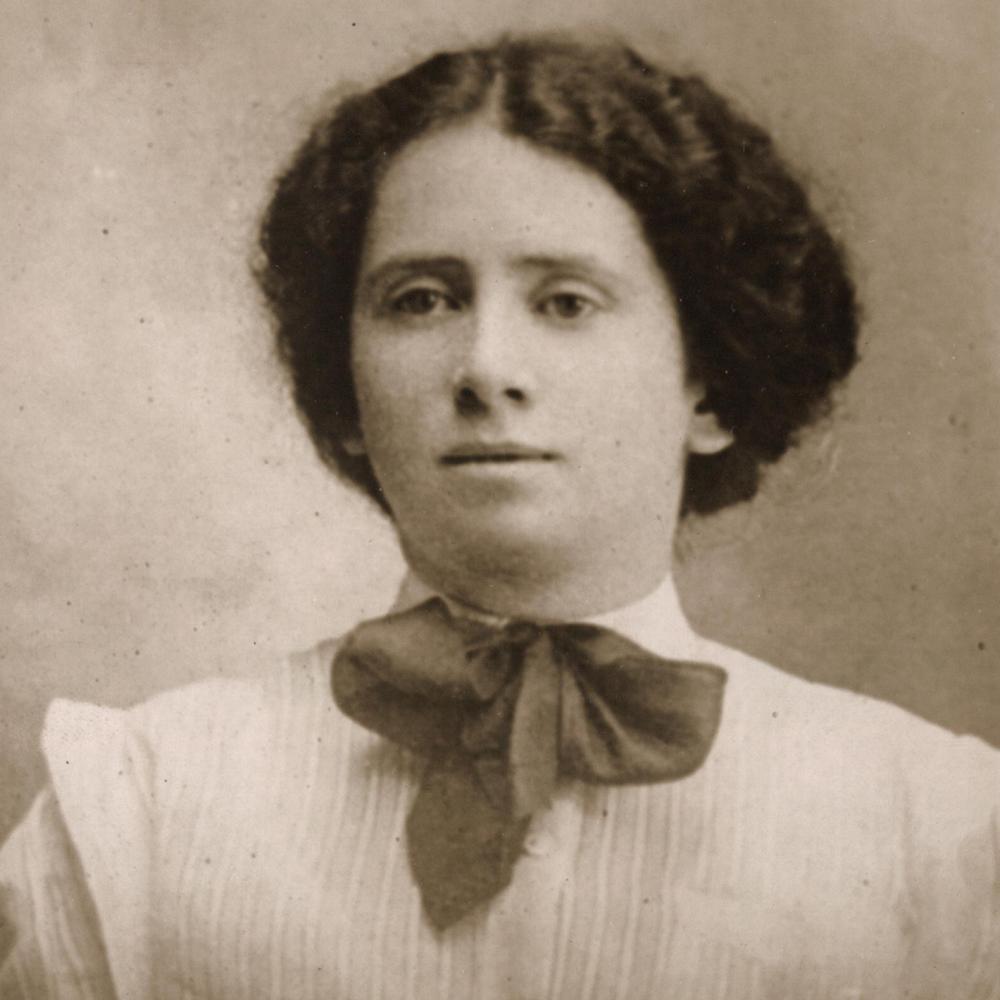
Margaret Sanger (1879-1966)
Women’s Health Advocate
Women should have knowledge about contraception. They have every right to know about their own bodies. – 1931
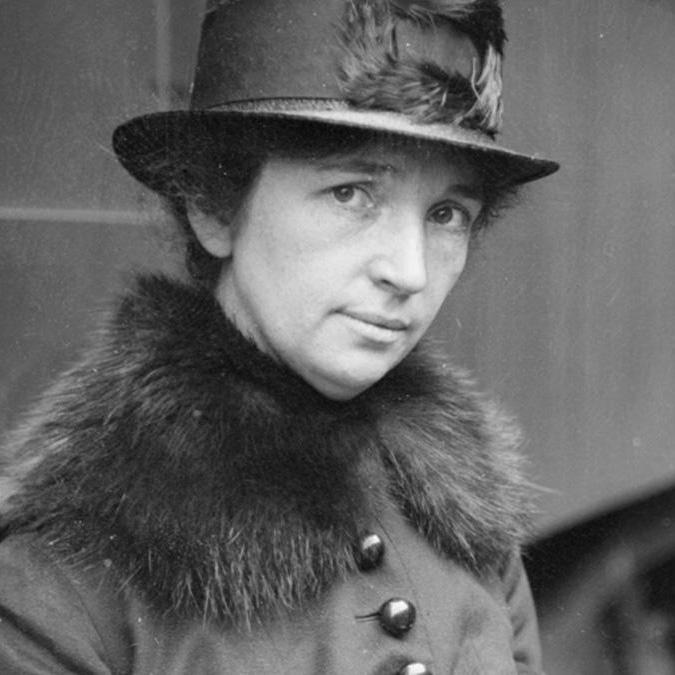
Working as a visiting nurse in New York City, Margaret Sanger saw the tragic circumstances of women who sought illegal and unsafe abortions, and those who remained in poverty due to rapidly growing families. She felt a call to action and “resolved that women should have knowledge of contraception. They have every right to know about their own bodies.”
In 1916, Sanger and her sister, Ethel Byrne, opened a birth control clinic in Brooklyn. Ten days later the clinic was raided, and both Sanger and Byrne served jail time. Byrne brought attention to the cause through a hunger strike in prison.
Educator's Guide and Graphic Organizers
Educators using this guide will know that students depart with a basic understanding of how suffragists and advocates fought for women’s rights in New York, and how these efforts and techniques impacted national women’s rights movements. Students will also gain a sense of empowerment with techniques and strategies that they can use to voice their concerns and advocate for their own causes. Each lesson focuses on using primary resources, including artwork, archival material, and historical artifacts as evidence for students to use to make their own conclusions.
Download: Votes for Women Educator's Guide and Graphic Organizers (PDF)
Exhibition Catalog
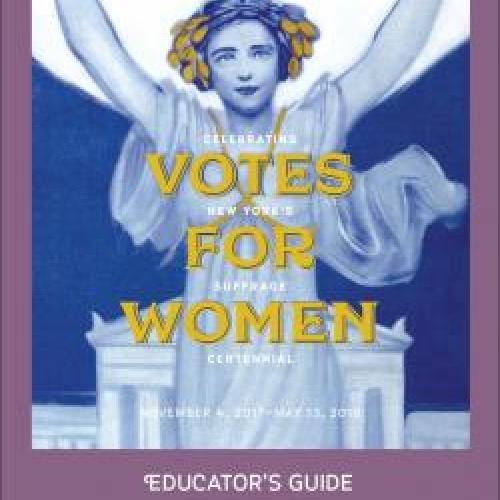
Votes for Women, an exhibition catalog, celebrates the pivotal role the state played in the struggle for equal rights in the nineteenth century, the campaign for New York State suffrage, and the ratification of the Nineteenth Amendment. It highlights the nationally significant role of state leaders in regards to women’s rights and the feminist movement through the early twenty-first century and includes focused essays from historians on the various aspects of the suffrage and equal rights movements around New York, providing greater detail about local stories with statewide significance.
Available for purchase: http://www.sunypress.edu/p-6509-votes-for-women.aspx
Lenders to the Exhibition
Votes for Women will feature collections from the New York State Museum, New York State Library, and the New York State Archives as well as artifacts from historical institutions and private collections across the state.
Albany Institute of History & Art
Alethea Mouzakes
Angela Panzer
Bellevue Alumnae Center for Nursing History Archive,
Center for Nursing at the Foundation
of New York State Nurses
Binghamton University
Bryn Mawr College
Buffalo History Museum
Chautauqua County Historical Society, McClurg Museum
Christine Heller
City of Watervliet
Clinton Historical Society
Coline Jenkins, Elizabeth Cady Stanton Family
Coreen Hallenbeck
Cornell University—PJ Mode Collection of
Persuasive Cartography
Cortland County Historical Society
Diana Mara Henry Photography
Eleanor Roosevelt National Historic Site, Val-Kill
Elizabeth Cady Stanton Trust
Elizabeth Meaders
Fenimore Art Museum Research Library
FDR Presidential Library and Museum
Geneva Historical Society
Howland Stone Store Museum
Keene Valley Library
Kelley Christine Feranec
Kheel Center, Cornell University
Kristen Felsen
Laura Bierman
Lauren Mouzakes
League of Women Voters of New York State
Library of Congress
Linda Underwood Melissa Bochenski
Marissa Marvelli
Marguerite Kearns
Matilda Joslyn Gage Foundation
Ms. magazine
Museum of the City of New York
National Museum of American History, Smithsonian
National Susan B. Anthony Museum & House
National Women’s Hall of Fame
New York Public Library
New York State Archives
New York State Department of Labor
New York State Library
New York State Office of Parks, Recreation, and
Historic Preservation:
Clermont State Historic Site and Lorenzo State
Historic Site
Olivia Brazee
Onondaga Historical Association
Pam Elam
Pamela Skripak
Rochester City Historian
Rochester Historical Society
Ronnie Lapinsky Sax
Scott Reinert
Seneca Falls Historical Society
Sophia Smith Collection, Smith College
Sue Lean
Susan Etu
The Jee Family
University of Rochester, Department of Rare Books
and Special Collections
Valerie Medeiros
Women’s Rights National Historic Park
State Museum Hosts Lunchtime Talk Series "Brain Food for the Curious"
New York State Museum historians and scientists will share their knowledge and research in a series of lunchtime talks this fall and winter. “Brain Food for the Curious” will be held select on Tuesdays in October through March, from 12:10 – 12:40 p.m., in the Huxley Theater. Each program includes a 20-minute talk with a State Museum historian or scientist followed by a question-and-answer period. Attendees are encouraged to bring their lunch.
Following is a schedule of “Brain Food for the Curious” talks for the 2017-18 season:
Ten Thousand Women Descend on Albany: The 40th Anniversary of the New York State Women’s Meeting
Tuesday, October 17
Learn about the New York State Women’s Meeting that was held at the Empire State Plaza on July 8-10, 1977. Planners expected 3,000 attendees, but approximately 10,000 showed up to discuss women’s issues that would then be discussed at the National Women’s Conference in Houston in November 1977.
Is it a Ghost or a Ghoul? Costume vs. Clothing in the New York State Museum’s Collection
Tuesday, October 31
We use the words “clothing”, “costume”, “dress”, and “fashion” to describe what we wear. Explore various examples from the Museum’s history collection, including clothing related to All Hallows’ Eve.
Contemporary Native American Art Collection
Tuesday, November 14
Learn about new acquisitions to the Museum’s Contemporary Native American Art Collection, including photography, basketry, painting and intricately carved woodwork.
Astronauts of Inner-Space: The Millbrook Commune and the ‘60s
Tuesday, November 28
Explore New York’s unique role in the psychedelic ‘60s through the history of the Millbrook Commune, Timothy Leary’s ‘Grounded Space Colony’ housed on a 2,500-acre estate in Dutchess County.
Beyond Global Warming – A Future of a Hyper-warming Earth
Tuesday, December 12
Learn more about climate change as sea levels have risen 10 inches in the last century with the melting of ice sheets and thermal expansion of ocean water.
Pre-Contact and Early-Historic Social Networks in Northern Iroquoia
Tuesday, December 19
Iroquoian pottery is characterized by often complex geometrical designs. Hear about how recent analyses of these designs are changing our understanding of Iroquoian social interactions in New York and southern Ontario.
Archaeological Evidence for Pre-Clovis Occupation of Northeastern North America
Tuesday, January 9
When and how did humans first colonize the Americas? Learn about current theories for the Ice Age peopling of the Americas and archaeological evidence for earliest human occupations of northeastern North America.
The Origin of Life on Earth
Tuesday, January 23
Every year scientists get closer to understanding how life could have evolved on early Earth. Hear how geologic life likely arose and how that process may have taken place.
The Champlain Sea: North America’s Last Inland Sea
Tuesday, February 6
About 10,000 years ago, whales, seals and other sea life made the area now covered by Lake Champlain and the St. Lawrence River their home. Learn about the geology and animals of this unique period in New York history.
Exploring the Fascinating Freshwater Mussels of New York
Tuesday, February 20
Among the most endangered groups of animals on the planet are the freshwater mussels, yet their presence in our lakes and rivers often goes unnoticed. Hear about recent Museum studies that are supporting the restoration and recovery of populations in New York.
Challenges of Geology Fieldwork in the Forested Catskill Mountains
Tuesday, March 6
Scientific researchers often talk about their result, but to gather the data they need, there are sometimes real challenges. Hear about challenges of geological fieldwork in the mountains of New York, including the Catskill Mountains.
A New Look at a Classic Mineral Group: The Amphiboles
Tuesday, March 20
Among the common rock-forming minerals, perhaps no major group is as interesting as the amphibole group. Take a geological tour through the amphibole’s world.
The Marvelous Bird Egg Collection of the New York State Museum
Tuesday, March 27
The Museum’s ornithology collection includes nearly 6,000 sets of bird eggs. Learn how this collection has recently been rehoused and how bird eggs are being used for new research.
The State Museum is a program of the New York State Education Department’s Office of Cultural Education. Located at 222 Madison Avenue in Albany, the Museum is open Tuesday through Sunday from 9:30 a.m. to 5:00 p.m. It is closed on Thanksgiving, Christmas, and New Year's Day. Admission is free. Further information about programs and events can be obtained by calling (518) 474-5877 or visiting the Museum website.
Phone: (518) 474-1201
Kanien’keha:ka (Mohawk) Haudenosaunee (Iroquois) Village
Three dioramas in this exhibit depict life in a Kanien’keha:ka (Mohawk) Haudenosaunee (Iroquois) village about 1600, before European influence greatly changed Haudenosaunee culture. The dioramas include a scale model of a Haudenosaunee village, a section of a reconstructed kanonhsésne (longhouse) complete with furnishing and replica sixteenth-century artifacts, and an agricultural field highlighting the three main crops utilized by the Haudenosaunee. This website presents scenes from these dioramas as well as explanatory text on Haudenosaunee longhouses, village life, and agriculture.
Historian Annual Report Submission Confirmation
Thank you for your submission!
If you have any additional questions, please contact the New York State Historian:
Devin Lander
devin.lander@nysed.gov
State Museum Celebrates New York State History Month in November
The New York State Museum will celebrate New York State History Month in November with a variety of free public programs for children, families and adults. In addition, three temporary exhibitions exploring major events in New York’s history are open at the State Museum: A Spirit of Sacrifice: New York State in the First World War; Enterprising Waters: New York’s Erie Canal; and Votes for Women: Celebrating New York’s Suffrage Centennial (opens November 4).
"As we celebrate New York State History Month in November, we thank public historians, educators and curators across the state who keep New York's history alive," said Board of Regents Chancellor Betty A. Rosa. "Studying our history helps us understand the evolution of our country and the valuable lessons from the past hopefully will guide our future. It's so important for our children and students to understand New York’s history, so we encourage them to participate in History Month programs in their community and visit our state's great cultural institutions such as the State Museum, Library and Archives.”
“We’re proud to celebrate our state’s rich history in November and I encourage all New Yorkers to visit some of our extraordinary cultural institutions, museums, libraries, archives, and historic sites located across New York,” said State Education Commissioner MaryEllen Elia. “I applaud historians and cultural institutions across the state that work every day to preserve, protect and promote our state’s rich heritage for our children and future generations.”
“2017 continues to be a major year for celebrating history in New York State,” said New York State Historian Devin Lander, “History Month provides an opportunity to promote the vital work of historians across the state as well as celebrate major events like the 100th anniversary of Women’s Suffrage in New York, the 100th anniversary of the U.S. entering WWI, and the 200th anniversary of the beginning of construction of the Erie Canal, as well as the 240th anniversary of the first NYS Constitution, the Burning of Kingston and the Battles of Saratoga.”
The following is a schedule of free New York State History Month programs at the State Museum located at 222 Madison Avenue, Albany:
Lunch Bite: Votes for Women Gallery Tour
Monday, November 6 | Noon
Take a lunchtime tour of the Votes for Women: Celebrating New York’s Suffrage Centennial exhibition.
Lunch Bite: Erie Canal Gallery Tour
Tuesday, November 7 | Noon
Take a lunchtime tour of phase one of Enterprising Waters: New York’s Erie Canal exhibition.
A Spirit of Sacrifice Gallery Tour
Saturday, November 11 | Noon
Take a guided tour of A Spirit of Sacrifice: New York State in the First World War exhibition.
The Empire State and the War of Empires, 1917 - 1918
Saturday, November 11 | 1:00 p.m.
University at Albany Professor Richard Fogarty will discuss several aspects of the global war that New Yorkers joined in 1917: World War I.
Revolution Song: A Story of American Freedom – A Lecture and Book Signing by Russell Shorto
Monday, November 13 | 7:00 p.m.
Join author and historian Russell Shorto as he discusses his newest book, Revolution Song: A Story of American Freedom. A book signing will follow.
Brain Food for the Curious: Contemporary Native American Art Collection
Tuesday, November 14 | 12:10 p.m.
Enjoy a short lunchtime talk and learn about the Museum’s Contemporary Native American Art Collection, which includes photography, basketry, painting and intricately carved woodwork.
Hudson Valley Ruins Gallery Tour
Saturday, November 18 | 1:00 p.m. and 3:00 p.m.
Thomas Rinaldi and Robert Yasinsac, photographers and authors of the book Hudson Valley Ruins: Forgotten Landmark of an American Landscape, will present a gallery tour of the exhibition.
Votes for Women Public Reception and Gallery Tour
Sunday, November 19 | 1:00 p.m.
Celebrate the opening of Votes for Women: Celebrating New York’s Suffrage Centennial and take a 1:30 tour of the exhibition with the curators.
Behind the Scenes Tour of the Museum’s History Collection
Sunday, November 19 | 2:00 p.m.
Take a behind-the-scenes tour of the State Museum’s history collection. Space is limited and registration is required by calling 518-474-0575.
Brain Food for the Curious: Astronauts of Inner-Space – The Millbrook Commune and the ‘60s
Tuesday, November 28 | 12:10 p.m.
Enjoy a short lunchtime talk and learn about the history of the Millbrook Commune, Timothy Leary’s ‘Grounded Space Colony’ housed on a 2,500 acre estate in Dutchess County.
In addition, the Museum’s Office of State History Outreach website offers an online portal of information about historical research, news, grant opportunities and events happening around New York State. The website is an online resource for historians throughout the state to learn about the work of fellow historians and identify opportunities for increased coordination and collaboration. The website also offers a New York State History Month promotion kit to encourage cultural institutions and historians statewide to plan and promote public programs in their community. Cultural institutions are encouraged to submit their History Month events and programs for listing on the Office of State History website.
In 1997, the New York State Legislature established November as New York State History Month with the goal “to celebrate the history of New York state and recognize the contributions of state and local historians.” New York State History Month represents the opportunity for historians, museums and cultural institutions to highlight importance of New York State’s history through public programs, exhibitions and other learning opportunities.
The State Museum is a program of the New York State Education Department’s Office of Cultural Education. Located at 222 Madison Avenue in Albany, the Museum is open Tuesday through Sunday from 9:30 a.m. to 5:00 p.m. It is closed on Thanksgiving, Christmas, and New Year's Day. Admission is free. Further information about programs and events can be obtained by calling (518) 474-5877 or visiting the Museum website.
Phone: (518) 474-1201
State Museum Honors 100 Years of Women's Right to Vote with Opening of Exhibit "Votes for Women: Celebrating New York's Suffrage Centennial"
The New York State Museum will open Votes for Women: Celebrating New York’s Suffrage Centennial on November 4. On display through May 13, 2018, the exhibition honors the centennial of women’s suffrage in New York State and raises awareness of the struggle for equal rights through the present day. The exhibition features more than 250 artifacts and images from the collections of the State Museum, State Archives, State Library, cultural institutions, and private lenders from across the state.
“As we celebrate the centennial of women’s suffrage in New York, we reflect on how far we have come and the fight that lies ahead to truly achieve equal rights,” said Board of Regents Chancellor Betty A. Rosa. “This exhibition is a learning opportunity for all of us, especially our children and students, to appreciate the immense contributions that women and men before us have made to champion women’s rights and how it is up to us to continue advocating for equity in our society, in our schools, and in our lives.”
“We are honored to share the story of how women over the course of decades fought so passionately for the right to vote for their daughters, granddaughters, nieces and future generations,” said State Education Commissioner MaryEllen Elia. “Now thousands of visitors to this exhibit will gain a full understanding of this pivotal moment in our history and know that the fight for equal rights did not end in 1917 but continues today.”
Votes for Women is organized into three areas: “Agitate! Agitate!” (1776 – 1890); “Winning the Vote” (1890-1920); and “The Continuing Fight for Equal Rights” (1920 – Present). The exhibition begins with the stories of countless women and men who worked for equality in the late 18th and early 19th century, the 1848 women’s rights convention in Seneca Falls and the subsequent women’s suffrage movement.
Visitors will learn how powerful women like Elizabeth Cady Stanton, Carrie Chapman Catt and Alice Morgan Wright helped lead the “Votes for Women” fight in New York and how New York State passed the referendum for women’s suffrage on November 6, 1917.
The exhibition concludes with exploring the continuing fight for equal rights since the ratification of the 19th Amendment to the U.S. Constitution in 1920, including the Equal Rights Amendment and the nationally significant role New York leaders played in advancing women’s rights through the present day.
“New York women have led the nation when it comes to furthering women’s rights, from the suffragists of 100 years ago to the activists of today, and this exhibit is a powerful way to showcase our rich history,” said Lieutenant Governor Hochul, Chair of the New York Women’s Suffrage Commission. “I hope this exhibit will educate people about the great women who came before us and inspire visitors to continue the quest for equal rights. As we celebrate the upcoming centennial of women’s suffrage here in New York, we must continue to ask ourselves: 100 years from now, how will we be judged and what can we do to help create a more equitable society?”
“New York passed state suffrage in 1917, three years before women were granted the right to vote nationwide with the ratification of the 19th Amendment," said Senator Kirsten Gillibrand. "The New York State Museum’s Votes for Women exhibit will help educate and inspire young people across the state and country about the importance of the women’s suffrage movement in New York history and American history. I encourage all New Yorkers to visit this exhibit and celebrate the women who came together to fight for the fundamental right to vote.”
“Celebrating the centennial anniversary of women’s suffrage here in New York is extremely timely amid today's tense political environment,” said Assemblywoman Crystal D. Peoples-Stokes, Chair of the Legislative Women’s Caucus. “Society would not be what it is without the monumental effort from these trailblazing women. The Votes for Women exhibit at the New York State Museum will teach all visitors, especially students, the integral role that New York women have played throughout our nation's history and the social justice movement. Education, equality and equity are lifelong pursuits and more important than ever.”
“The State Museum is honored to present this exhibition that honors the 100th anniversary of women’s suffrage in New York,” said Deputy Commissioner of Cultural Education and State Museum Director Mark Schaming. “We are grateful to dozens of cultural institutions and private lenders for lending their best artifacts so that this exhibition is truly representative of the fight for women’s suffrage and equality across the state.”
"If New York wins in 1917 the backbone of the opposition will be largely bent if not broken," predicted organizing genius Carrie Chapman Catt a century ago, and she was right,” said Dare Thompson, President of the League of Women Voters of New York State. “The suffrage win here was a huge shot in the arm to the whole national effort, and suffrage for all American women followed faster than even she expected. We are so proud that New York's numerous and inspiring gifts to the 1920 victory include Carrie Catt, who also founded the League of Women Voters to educate these new women voters. And what a pleasure it is to participate in the opening of this special exhibit celebrating all the brave and visionary suffragists.”
The artifacts in the exhibition date from the 19th century through present day. Some key artifacts in the exhibition include:
- Elizabeth Cady Stanton’s writing desk (ca. 1855), on loan from Coline Jenkins, Elizabeth Cady Stanton Family. Stanton’s writing was a powerful tool in the fight for women’s suffrage and she would communicate her ideas in newspaper articles, convention addresses she could not attend in person, and in speeches delivered by Susan B. Anthony.
- Susan B. Anthony’s alligator purse, on loan from the National Susan B. Anthony Museum & House. Prominent women’s rights activist Susan B. Anthony was known for carrying an alligator skin satchel in which she carried her speaking notes, pamphlets, and a copy of the transcript of her 1873 trial for voting.
- Bloomer costume (ca. 1851), on loan from Cortland County Historical Society. This bloomer costume, a symbol of women’s rights, is one of the few known surviving examples from the 19th century.
- “Victory in 1917” poster, on loan from the Howland Stone Store Museum. This poster was recycled from the 1915 New York State campaign. There is evidence of a “7” patch placed over the “5”—changing the date to “1917”.
- Votes for Women Pilgrimage Petition, 1912, on loan from the New York State Library. This petition was carried to Governor Sulzer on the first “suffrage hike” from New York City to Albany. It is signed by well-known women’s rights activists including Harriet May Mills, Helen C. Mansfield, and Mary Garret Hay.
- Bella Abzug Hat and Dress (1970 – 1979), on loan from the Museum of the City of New York. Bella Abzug (1920-1998) was a longtime activist and proponent of equal rights for women, including during her time serving as Congresswoman for New York. Abzug was well-known for her hats and was often quoted as saying: “It’s what’s under the hat that counts!”
- Walkway Over the Hudson Women’s March Banner (2017), from the New York State Museum’s collections. A banner, featuring an image of the Walkway Over the Hudson bridge, carried by four women from Poughkeepsie who participated in the 2017 Women’s March.
An exhibition catalog, published by SUNY Press, is available for purchase for $29.95 at the State Museum Gift Shop or online at SUNY Press' website. In addition, the State Museum will offer free lesson plans for teachers based on the exhibition that empower students to use artifacts and archival material as evidence to explore the struggle for women’s rights from the 19th century through today. The lesson plans and accompanying digital resources will be available later this month on the Museum’s website.
On Monday, November 6, in honor of the 100th anniversary of women winning the right to vote in New York State, the Museum will open the Votes for Women exhibition for visitors (the Museum is normally closed on Mondays); a guided tour will be offered at noon. In addition, a public opening reception for Votes for Women will be held on Sunday, November 19 from 1:00 – 2:30 p.m. The program includes a reception with light refreshments at 1:00 p.m., followed by a guided tour of the exhibition at 1:30 p.m.
Photos of select artifacts and documents in the exhibition are available here.
The State Museum is a program of the New York State Education Department’s Office of Cultural Education. Located at 222 Madison Avenue in Albany, the Museum is open Tuesday through Sunday from 9:30 a.m. to 5:00 p.m. It is closed on the Fourth of July, Thanksgiving, Christmas and New Year's Day. Admission is free. Further information about programs and events can be obtained by calling (518) 474-5877 or visiting the Museum website.
Phone: (518) 474-1201
Holiday Vacation Week
Joins us at the New York State Museum over the holiday vacation to explore the galleries, view exciting exhibitions, and participate in several engaging programs all centered around our great state!
State Museum Hosts Taste NY Holiday Market on December 3
Visitors can shop at 30 “made in New York” food and beverage vendors at the New York State Museum’s Taste NY Holiday Market on Sunday, December 3 from 11:00 a.m. – 4:30 p.m. Admission is free.
Vendors will offer samples and sales of chocolates; cheese; maple and apple products; hand-crafted beer, wine, spirits and cider; and other edible gifts. All participating vendors produce their products in New York State. There will also be cooking demonstrations, educational activities, and a chocolate fountain station courtesy of We Do Fondue and Price Chopper. For more information, including a list of vendors, visit the Museum’s website.
Following is a schedule of demonstrations and educational activities at the event:
The Salvation Army Donut Girl Educational Activity
11:00 a.m. – 4:00 p.m.
A Spirit of Sacrifice: New York in the First World War Exhibition
Suffrage Cookbooks Educational Activity with Senior Historian Ashley Hopkins-Benton
11:00 a.m. – Noon & 1:00 – 2:00 p.m.
Votes for Women: Celebrating New York’s Suffrage Centennial Exhibition
Music by The Golden Notes
Noon
Adirondack Hall Photo Mural
World War I Food Rations Educational Activity with Museum Instructor James Jenkins
1:00 – 2:00 p.m.
A Spirit of Sacrifice: New York in the First World War Exhibition
Cooking Demonstration with Chef Michael Lapi
2:00 – 3:00 p.m.
Adirondack Hall Photo Mural
Erie Canal Food Production Educational Activity with Museum Instructor James Jenkins
3:00 – 4:00 p.m.
Enterprising Waters: New York’s Erie Canal Exhibition
The annual Holiday Tree Lighting and Fireworks Festival at the Empire State Plaza will also be held on December 3.
Taste NY is an initiative that highlights the quality, diversity, and economic impact of New York’s food and beverage industry. Taste NY provides an opportunity for New York growers and producers to receive increased exposure of their products to consumers, restaurateurs, retailers, wholesalers, and distributors.
The State Museum is a program of the New York State Education Department’s Office of Cultural Education. Located at 222 Madison Avenue in Albany, the Museum is open Tuesday through Sunday from 9:30 a.m. to 5:00 p.m. It is closed on the Fourth of July, Thanksgiving, Christmas, and New Year's Day. Admission is free. Further information about programs and events can be obtained by calling (518) 474-5877 or visiting the Museum website.
Phone: (518) 474-1201

Mohawk Haudenosaunee (Iroquois) Longhouse at the New York State Museum
The design of the longhouse reflected the social organization of Haudenosaunee (Iroquois) culture, 300 - 500 years ago. Its architecture and construction are adapted to the raw materials available to the Haudenosaunee in their immediate surroundings, and to the tools and technology in their possession.
Longhouses are exactly that: long houses that have a long, narrow, rectangular shape. They have been built by many different cultures around the world. Long ago, Vikings lived in longhouses; today, some rice-farming people in Borneo live in them. All longhouses have the same general shape but were built with different kinds of materials and by different methods. Longhouses were the traditional homes for many of the farming tribes of American Indians that lived in southern New England, New York, Pennsylvania, and New Jersey. The Haudenosaunee people of upstate New York were among them.
The name Haudenosaunee means "People of the Longhouse." To the Haudenosaunee people, the longhouse meant much more than the building where they lived. The Longhouse was also a symbol for many of the traditions of their society. Five nations formed the original Haudenosaunee (Iroquois) Confederacy. These nations shared a territory they thought of as a large longhouse. The Senecas, who lived in the western end of this territory, were the "Keepers of the Western Door" of the Longhouse. The Mohawks, who lived in the eastern end of the territory, were the "Keepers of the Eastern Door." The Onondagas held the important role of "Keepers of the Central Council Fire and Wampum." To the modern Haudenosaunee people, including the Seneca, Mohawk, and Onondaga who continue to live on their ancestral territories, the Longhouse remains a powerful symbol of the ancient union and is important to many traditions.
Longhouses have another thing in common besides their shape: they were built to serve as a home for a large extended family. An extended family includes a number of family units consisting of parents and children, plus grandparents, aunts, uncles, cousins, etc. In an Haudenosaunee longhouse, there may have been 20 or more families which were all related through the mothers' side, along with the other relatives. All these families belonged to the same clan; each clan in a village had its own longhouse; the clans had branches in other villages. Clans were named for animals and birds; Turtle, Bear, and Hawk are examples. The symbol for the clan was used in decorations of household objects, in tattoos, and on the front of the longhouse.
Members of a clan are all descendants of the same person. In Haudenosaunee clans this person was a woman. All the people in the clan traced their heritage back to her through their female ancestors. Each Iroquois person was born into a clan and remained in that clan for life. Being related, people within a clan could not intermarry; one had to marry someone in a different clan. When a young woman married, her husband came to live in her longhouse, where they would make their new home. When a young man married, he moved away from the longhouse where he'd been raised into his bride's longhouse, but he continued to have close ties with his own clan.
The extended family not only shared the same building for their home, but they also worked together to make their living. The clan was the basic social and economic unit in Haudenosaunee society and the leadership in the clans was through the women, because the kinship followed the mother's bloodline. The women managed the affairs of their longhouse, the farming, and food distribution. They also selected the men who would represent their clan in the tribal council.
Our knowledge of longhouse life comes from three kinds of sources: archeology, Haudenosaunee oral traditions, and descriptions written by early European explorers.
Archeological record:
Our knowledge of longhouses is derived largely from archeological excavations on Iroquoian village sites dating from the 1400s through the 1600s. Excavations on longhouse sites in New York State and adjacent areas of Quebec and Ontario Provinces, and in Pennsylvania, have provided a wealth of information about longhouse lengths, widths, interior spatial organization, and the uses of these spaces.
Haudenosaunee oral language:
Other details about longhouses - from the floor up - are found in the Iroquoian languages themselves. Word lists collected as early as the 1600s preserve names for longhouse parts and uses. Similarly, oral traditions often describe longhouses and longhouse life of long ago.
Descriptions by Europeans:
Firsthand descriptions of longhouses made by European explorers, missionaries, and travelers provide information that adds to the archeological record and the languages and oral traditions of the Iroquoian peoples. Jacques Cartier described Iroquoian longhouse villages that he visited along the St. Lawrence River in the mid-1530s. His is the first written description of Iroquoian longhouses.
The French explorer, Samuel de Champlain, traveled and lived among the Huron Haudenosaunee of Ontario, Canada, in the early 1600s, and left descriptions of longhouses and longhouse life among these people. Other detailed descriptions of Huron Haudenosaunee longhouses were recorded by missionaries, such as Gabriel Sagard-Theodat in the 1620s, and many Jesuit missionaries who also worked among the Hurons and their Iroquoian neighbors in New France in the 1630s and 1640s, and later among the Iroquois of New Netherland/New York though the end of the 1600s.
Descriptions made by these explorers and missionaries record early changes to longhouse and longhouse village architecture introduced by the use of European metal tools, particularly, trade axes, and by Europeans themselves who at times remodeled longhouses for their own and special uses. The most detailed description available to us is that of another Jesuit missionary, Reverend Father Joseph-Francois Lafitau. It dates to the 1720s and was written at the Mohawk Haudenosaunee mission community of Kahnawake, near Montreal.
Later, travelers among the New York Haudenosaunee, like John Bartram and Conrad Weiser, described some of the last of the long-longhouses, built of post, poles, and saplings, and covered in bark. By this date (1740s) many Iroquois were living together in smaller extended families, requiring smaller, or at least shorter longhouse quarters. These were built on the traditional pattern and of traditional materials, while the homes of some neighbors were log cabins of hewn or peeled logs and with bark roofs.
A longhouse has a framework built of posts and poles and is covered with sheets of bark. The following description is based on many different sources of information.
Archeologists explore sites of old Haudenosaunee villages by digging carefully in the upper layers of the soil. At some of these sites, they found traces of many longhouses in the form of circular stains in the earth where wooden posts had once been set as a frame for a longhouse. When the posts rotted away long ago, they left these stains in the soil which are called post molds. The pattern of these post molds makes the outline of the missing longhouse.
Haudenosaunee longhouses ranged in length from 30 to several hundred feet. Archeologists have found the post hole patterns of two longhouses that were 364 feet and 400 feet long: longer than a football field, and even longer than a city block! However, a typical Iroquois longhouse was 180 to 220 feet long. The length of a longhouse was determined by the size of the extended family that would live in it. The larger the family, the longer the longhouse needed to be. As the size of the extended family grew, because of more marriages, the building was enlarged to make room for the expanding population.
Longhouses were almost always about 20 feet wide and 20 feet high despite differences in their length. Seen from one end, the roof line of a typical Haudenosaunee longhouse was rounded rather than peaked. There were two doors for the entire building, one at each end. There were no other doors in the building. We know of one exception to this rule of two doors; one longhouse had an extra door in the middle. Longhouses were symmetrical about a centerline along their length. Inside, the right and left sides were identical. The ends were usually rounded and were used as storage areas, shared by the families living in the longhouse. Some longhouses had flat ends. A flat-roofed shed or porch was built over the doorways at both ends of the longhouse.
The length and interior space of the longhouse was divided up into compartments or apartments, which were 20 feet long. Two families lived in each compartment, one on each side of an aisle that ran down the center. The aisle extended from one compartment to the next and ran the full length of the longhouse. The aisle was 10 feet wide and was a common space used by both families in the compartment.
A fire was placed in the middle of the aisle in the center of each compartment for heating, cooking, and light. Smoke escaped from a hole left in the roof above it. A sheet of bark could be adjusted to cover the smoke hole in bad weather. When the smoke hole was closed, the high ceiling in the building allowed some of the smoke to rise above the living space. The two families shared the fire and the central aisle.
Each family had its own space on one side of the aisle for sleeping and storage of personal items. In the family space, a platform was built a foot or so above the floor to form a bench where they sat, slept and worked. It extended for most of the compartment's length. The platform bench was closed at the ends by partitions. Storage closets filled the spaces along the wall that were not occupied by the benches. Another platform of the same size was built about five feet above the bench like a bunk bed. This shelf completed a cubicle, which was heated by the fire that was in the aisle. The inside of the wall was lined and insulated with woven mats or furs. The benches were also covered with mats and furs for comfort.
The space under the bench generally was used to store firewood. The shelf above it was used to store clothes and other items. Braids of corn and sacks of other foods were hung in the high ceiling space. Other household goods were hung on the walls and partitions.
The forests where the Haudenosaunee lived provided them with plenty of posts, poles and bark that were the basic components of longhouse structure. Because the trunks of the large trees of a virgin forest are much too large to handle without machinery, the Haudenosaunee harvested their materials from second growth forest. Such forests arise in clearings in the old growth forests where the trees were killed by fire or by girdling their trunks. Here small trees grow close together with tall straight trunks that can be fashioned into framework components by merely cutting them to length. The large trees in the adjacent old growth forest could provide bark in large sheets, to be used for covering the structure.
Framework:
The framework of the longhouse started with rows of posts that were set into holes dug into the ground. The posts were set vertically and formed the frames for the outside walls. There were interior posts as well that formed the center aisle. All posts had to be strong and stiff and set firmly in the ground because they were the foundation of the building. Horizontal poles lashed to the posts, both across and along the length of the longhouse, greatly strengthened the structure. The roof was supported by poles that were attached at the tops of the posts and were bent into an arch that reached from one wall across the building to the opposite wall. These roof supports are called rafters. They had to be strong and flexible. Other poles were fastened across the rafters along the length of the longhouse, to make the roof stable. When it was finished, the framework made a grid pattern. This framework was the skeleton of the building to which sheets of bark were attached to complete the roof and walls. The parts of the frame had to be close enough together to support the sheets of bark, which were peeled from large trees. The posts and poles came from small trees (saplings) that were tall and straight. These trees were cut to the proper length and the bark was removed from the posts and poles to reduce insect damage and decay. This bark was peeled off in narrow strips, and was saved for future use.
Different types of trees were used in various parts of the building. For example, a strong, stiff tree would be used for the outer posts. A strong but flexible tree would be used in the curved rafters. The Haudenosaunee probably bent their rafters from freshly cut trees, because green wood is much more flexible than dry.
Fasteners:
Holding the parts of a building together is an essential part of the construction. Modern wooden houses are held together with steel nails, but the Haudenosaunee had no nails. Instead, they tied or lashed their buildings together with long strips of bark, or with ropes made by braiding strips of bark. When the bark is fresh and wet, it is flexible and can be wound around poles and posts to tie them together. When it dries, it shrinks a little and becomes stiff, thereby tightening the joint. Useful strips of bark can be pulled off some trees for a brief period in the spring when the sap is flowing freely. Basswood and hickory trees are good. Because the sap did not flow all year, the Haudenosaunee probably harvested the bark when they could, then kept it under water until needed.
Covering:
The framework of the longhouse was covered with sheets of bark. Trees whose bark could be peeled into large sheets were preferred because big sheets made the job easier. The Haudenosaunee used elm bark if it was available. Bark must be harvested in the spring while the leaves are still small because that is when it is easily peeled off the tree. The sheets must be flattened out and held with weights while they dry to keep them from curling up. A sheet of elm bark that has been flattened and dried is quite strong, like a piece of plywood. The bark of an elm tree has deep grooves or furrows in it that run up and down along the trunk. However, the Haudenosaunee usually lashed the bark to the frame of the longhouse with these groves running horizontally. This probably was done because it was easier to keep the bark flat by pressing it against the vertical posts. There is an eyewitness report of the Haudenosaunee using an adz to smooth out these furrows so that they wouldn't catch the rainwater as it ran down the roof and sides of the longhouse. After the bark was hung on the frame it needed to be held down to keep it flat and to keep the wind from lifting it. The Haudenosaunee put another framework of small poles on the outside of the bark for these purposes.
Provided below are excerpts from historical documents describing the longhouses and villages as they appeared in the early 1600s through the middle 1700s. Archaeologist Dean R. Snow selected, and in some cases, translated the documents* and provided commentary as part of the background material for the Haudenosaunee Longhouse Exhibit at the New York State Museum.
*Notes about References:
Although firsthand descriptions of longhouses were published in the later 1500s and in the 1600s shortly after French, Dutch, and English explorers and missionaries returned home, most of these pamphlets and books are now very rare. Some personal and official accounts were not published at all. Fortunately, during the past century, interest in these descriptions led to their re-publication in English translation, with additional notes provided by their translator and editor. As you can see from the list of references above, Dr. Snow relied upon recent editions of these works, since these are more readily available. It does seem strange, however, to be reading a firsthand description dating to the 1600s of a Haudenosaunee longhouse, and then see that it was published in the 1900s.
It is also important to note that these descriptions use the term "Iroquois" when referring to the Haudenosaunee. "Iroquois" is a term coined by French settlers in the 1600s, as they interacted with Native American tribes in the Northeast.
CHAMPLAIN, 1616 (originally in French)
First translation:
"Their cabins [cabannes] are in the shape of tunnels [tonnelles] or arbors, and are covered with the bark of trees. They are from twenty-five to thirty fathoms long, more or less, and six wide, having a passage-way through the middle from ten to twelve feet wide, which extends from one end to the other. On the sides there is a kind of bench, four feet high, where they sleep in summer, in order to avoid the annoyance of the fleas, of which there are great numbers. In winter they sleep on the ground on mats near the fire, so as to be warmer than they would be on the platform. They lay up a stock of dry wood, with which they fill their cabins, to burn in winter. At the extremity of the cabins there is a space, where they preserve their Indian corn, which they put into great casks made of the bark of trees and placed in the middle of their encampment [au milieu de leur logement]. They have pieces of wood suspended, on which they put their clothes, provisions, and other things, for fear of the mice, of which there are great numbers. In one of these cabins there may be twelve fires, and twenty-four families. It smokes excessively, from which it follows that many receive serious injury to the eyes, so that they lose their sight towards the close of life. There is no window nor any opening, except that in the upper part of their cabins for the smoke to escape.
"This is all that I have been able to learn about their mode of life: and I have described to you fully the kind of dwelling of these people, as far as I have been able to learn it, which is the same as that of all the tribes living in these regions. They sometimes change their villages at intervals of ten, twenty, or thirty years, and transfer them to a distance of one, two, or three leagues from the preceding situation, except when compelled by their enemies to dislodge, in which case they retire to a greater distance, as the Antouhonorons, who went some forty to fifty leagues. This is the form of their dwellings, which are separated from each other some three or four paces, for fear of fire, of which they are in great dread." [Champlain 1907:313-314].
Second translation:
"Their lodges [cabannes] are fashioned like bowers [tonnelles] or arbors, covered with tree-bark, twenty-five to thirty fathoms long more or less, and six wide, leaving in the middle a passage from ten to twelve feet wide which runs from one end to the other. On both sides is a sort of platform, four feet in height, on which they sleep in summer to escape the annoyance of fleas of which they have many, and in winter they lie beneath on mats near the fire in order to be warmer than on top of the platform. They gather a supply of dry wood and fill their cabins with it, to burn in winter, and at the end of these cabins is a space where they keep their Indian corn, which they put in great casks, made of tree-bark, in the middle of their lodge [au milieu de leur logement]. Pieces of wood are suspended on which they put their clothes, provisions and other things for fear of mice which are in great numbers. In one such cabin there will be twelve fires, which make twenty-four households, and there is smoke in good earnest, causing many to have great eye troubles, to which they are subject, even towards the end of their lives losing their sight; for there is no window nor opening except in the roof of their cabins by which, the smoke can escape. This is all that can be said and known of their ways; for I have described to you completely, as far as they may be known, these dwellings of these people, which is also that of all the tribes that dwell in these parts of the country. They sometimes change their village site after ten, twenty, or thirty years, and move it one, two or three leagues from the former spot, if they are not forced by their enemies to decamp and move to a greater distance, as did the Onondagas, some forty to fifty leagues. This is the shape of their dwellings, which are separated from one another about three to four yards for fear of fire which they greatly dread" [Champlain 1929:122-125].
- - - Comment by D. R. Snow - - -
The two preceding translations differ in some important ways, I have compared both with the French transcription that accompanies one of them (Champlain 1929), and have found that the translations are accurate (or at least not misleading except at one crucial point. One translates cabanne as "lodge", the other as "cabin." One chooses "bowers" rather than"tunnels" as a translation for "tonnelles." Neither disagreement obscures meaning. However, the translation of "logement" is critical: one source translates it as "lodge" but the other translates it as "encampment," making the passage seem to mean that the Indians kept their casks of corn outside their houses in the middle of the village. Further, both translators err in translating "milieu" as "middle" rather than "midst." Champlain intended the reader to grasp that bark casks were used to store corn within the houses, but not necessarily in their middles.
SAGARD, 1632 (originally in French)
"As soon as I was seen from our town of Quieuindahian, otherwise called Tequeunonkiaye, a place quite well fortified in their fashion, and capable of containing two or three hundred households [mesnages] in the thirty or forty lodges [Cabannes] in it, there arose so great an uproar throughout the town that everybody left the lodges to come and see me, and so I was brought with great enthusiasm right into the lodge of my savage, and since the crowd was very great in it I was forced to get on top of the platform to escape the pressure of the crowd" [Sagard 1968:70].
"But because our hut had been built out of the proper season the covering consisted of very bad tree-bark that cracked and split all over, so that there was little or no shelter to us against the rain, which fell upon us everywhere, and from which we could get no protection either by day or by night, nor from the snow during the winter, sometime, finding ourselves covered with it when we rose in the morning" [Sagard 1968:81].
"Some of these [villages] are not enclosed or shut in, while the others are fortified by strong wooden palisades in three rows, interlaced into one another and reinforced within by large thick pieces of bark to a height of eight or nine feet, and at the bottom there are great trunks of trees placed lengthwise, resting on strong short forks made from tree-trunks. Then above these palisades there are galleries or watch-towers, which they call Ondaqua, and these they stock with stones in war-time to hurl upon the enemy, and water to put out the fire that might be laid against their palisades. The Hurons mount up to them by means of a ladder, very ill-made and difficult to climb, and defend their ramparts with great courage and skill.
"These twenty-five towns and villages may be inhabited by two or three thousand warriors at the most, without reckoning the ordinary people who may number about thirty or forty thousand souls in all. The chief town formerly contained two hundred large lodges, each filled with many households; but of late, on account of lack of wood and because the land began to be exhausted, it has been reduced in size, divided in two, and rebuilt in another more convenient locality. The towns on their frontiers and nearer to their enemies are always the best fortified, in respect both of their enclosing walls, two lances high or thereabouts, and of their gates and entrances, which are closed with bars and through which one is forced to pass turning sideways and not striding straight in, and also in regard to the site. This they know very well how to choose, taking care that it shall be adjoining some good stream, on a spot slightly elevated and surrounded by a natural moat if possible, and that the circuit of the walls shall be rounded and the town compact, yet with a good space left empty between the lodges and the walls so as to be able the better to fight and defend themselves against the enemies' attacks, without omitting to make sorties as opportunity offers. There are certain districts where they move their towns and villages every ten, fifteen, or thirty years, more or less, and they do so only when they find themselves too far away from wood, which they have to carry on their backs tied up and attached to a collar resting and supported on their forehead; but in winter their custom is to make a kind of sledge which they call Arocha, made of long boards of the wood of the white cedar, on which they put their burden, and with rackets [snowshoes] tied to their feet draw their load over the snow without any difficulty. They move their town or village [also] when in course of time the land is so exhausted that their corn can no longer be grown on it in the usual perfection for lack of manure; because they do not understand cultivating the ground nor putting the seed anywhere else than in the usual holes.
"Their lodges, which they call Ganonchia, are constructed, as I have said, like arcades or garden arbours covered with tree-bark, twenty-five to thirty fathoms long, more or less (for they are not all of equal length), and six in breadth, with a passage down the middle ten to twelve feet wide running from end to the other. At the two sides there is a kind of bench four or five feet high, extending from one end of the lodge to the other, on which they sleep in summer to escape the importunity of the fleas; of these they have a great many both because of their dogs, which supply them in good earnest, and because of the water made there by the children; and in winter they sleep below on mats near the fire for greater warmth, and lie close to one another, the children in the warmest and highest place as a rule and the parents next, and there is no space between them or separation either at the foot or at the pillow, no more above than below, and they make no other preparation for sleeping than to lie down in the same place where they were sitting and to muffle up their head in their robe, without other covering or bed.
"The whole space underneath these benches, which they call Garihagueu and Eindichaguet, they fill with dry wood to burn in winter; but as to the great trunks or logs called Aneincuny, which are used for keeping the fire in by being lifted a little at one end, they pile these in front of their lodges or store them in the porches, which they call Aque. Al1 the women help in collecting this store of wood; it is done in the month of March or April, and by means of this arrangement every household is supplied with what is needed in a few days. They use only very good wood, preferring to go far in search of it rather than to take green wood or what makes smoke; for this reason they always keep up a clear fire with a small quantity of fuel; and if they do not find trees that are quite dry they fell those which have dry branches, breaking these into splinters and cutting them to an equal length, like the faggots in Paris. They do not make up faggots of twigs, nor use the trunks of the biggest trees felled; they leave these to rot on the ground because they have no saw for sawing them up, nor the means of breaking them in pieces unless they are dry and rotten. We were not so particular, and were satisfied with what was nearest to our hut, so as not to spend our whole time in this occupation. In one lodge there are many fires, and at each fire are two families, one on one side, the other on the other; some lodges will have as many as eight, ten, or twelve fires, which means twenty-four families, others fewer, according as they are long or short. There is smoke in them in good earnest, which causes many to have very serious trouble with their eyes, as there is neither window nor opening, except the one in the roof of the lodge through which the smoke escapes. At each end there is a porch, and the principal use of these porches is to hold the large vats, or casks of tree-bark in which they store their Indian corn after it has been well dried and shelled. In the midst of the lodge are suspended two big poles which they call Ouaronta; on them they hang their pots, and put their clothing, provisions, and other things, for fear of mice and to keep the things dry. But the fish, of which they lay in a supply for winter after it is smoked, they store in casks of tree-bark which they cal1 Acha, except Leinchataon, which is a fish they do not clean and which they hang with cords in the roof of the lodge, because if it were packed in any cask it would smell too bad and become rotten at once.
"For fear of fire, to which they are very liable, they often put away in casks their most precious possessions and bury them in deep holes dug inside the lodges, then cover them up with the same earth, and this preserves them not only from fire but also from the hands of thieves, because they have no chest or cupboard in their whole establishment except these little casks. It is true that they rarely wrong one another, but still there are sometimes rascals who commit offences when they think they will not be found out. This happens chiefly in the matter of eatables" [Sagard 1968:91-95].
- - - Comment by D. R. Snow - - -
Sagard apparently copied and embellished Champlain's description, which Champlain published after his 1616 voyage. Sagard repeats Champlain's phrases in the original French word for word, inserting additional detail here and there. Where they agree, they should be treated as one source, not two.
Sagard's estimates of 200-300 households (by which he means family units consisting of a couple and their children) in 30-40 longhouses leads to a minimum of 5 and a maximum of 10 households per longhouse. We know that households came in pairs, each pair sharing a hearth and occupying facing longhouse compartments. Consequently the real range of family units per longhouse must be stated in even numbers, Saguaros figures thus lead to a range of 6-10 compartments and families, or 3-5 hearths per house. Later he says that some longhouses might have as many as 8, l0, or 12 hearths, but these are clearly being cited as unusually long examples. Besides, he appears again to have simply elaborated on a statement borrowed from Champlain.
BREBEUF, in Le Jeune in Jesuit Relations, 1634-1635 (originally in French)
"'Now, in order to testify to you my deep grief and my desire to share in the common misfortune, I have two bins of corn' (they held at least one hundred to one hundred and twenty bushels); I give one of them freely to the whole village"' [JR8:95].
"I cannot better express the fashion of the Huron dwellings than to compare them to bowers or garden arbors,-- some of which, in place of branches and vegetation, are covered with cedar bark, some others with large pieces of ash, elm, fir, or spruce bark; and although the cedar bark is best, according to common opinion and usage, there is, nevertheless, this inconvenience, that they are almost as susceptible to fire as matches" [JR8:105].
"There are cabins or arbors of various sizes, some two brasses [fathoms] in length, others of ten, others of twenty, of thirty, of forty; the usual width is about four brasses, their height is about the same. There are no different stories; there is no cellar, no chamber, no garret. It has neither window nor chimney, only a miserable hole in the top of the cabin, left to permit the smoke to escape" [JR8:107].
- - - Comment by D. R. Snow - - -
Brebeuf seems confused about longhouse lengths. He says that the longhouses are about four fathoms (brasses) in width, and archaeological evidence indicates that his fathom must be about 5.25 feet or 1.6m. It seems unlikely that a house having a width of 21 feet (6.4m) could have a length of only half that width. Perhaps Brebeuf intended to write "twelve" (douze) rather than "two" (deux). Whatever the case, his range of 10-40 fathoms is not problematic, for it suggests lengths ranging from l6m to 64m, lengths that correspond well with archaeologically known cases.
UNKNOWN AUTHORS, in Jesuit Relations (originally in French)
Jesuit Relations, l636
"The largest cabin of the village is set aside for the reception of the company. They do not hesitate to inconvenience themselves for each other on these occasions. The matter is esteemed of such importance that, when a village is built, they purposely put up one cabin much larger than the others, sometimes making it as much as twenty-five or thirty brasses [fathoms] in length" [JR10:181].
Jesuit Relations, 1637
"On this same day the sorcerer Tonneraouanont, who was beginning to play his pranks in this village, and had undertaken to cure the sick, came towards evening to have a sweat in our cabin, to get some knowledge of this disease. They crossed four or five poles in a ring, making a sort of little arbor, which they surrounded with the bark of a tree. They crowded within this, twelve or thirteen of them, almost upon one another. In the middle there were five or six large red-hot stones" [JR13:203].
Jesuit Relations, 1638-1639
"In each cabin there are five fireplaces, and two families at each. Their cabins are made of large sheets of bark in the shape of an arbor, long, wide, and high in proportion; some of them are 70 feet long" [JR15:153].
Jesuit Relations, 1639
"Some of us are charged with forty cabins, --in several of which there are four or five fires, that is, eight or ten families.... " [JR16:243]
Jesuit Relations, 1639-1640
"In the cabins of the Savages, which are in length and form like garden arbors, the fires are in the very middle of their breadth, and there are several fires along its length, according to the number of families and the size of the cabin, usually two or three paces apart" [JR17:175-177].
"They have no sooner arrived at the appointed place than the two parties take their places on opposite sides of the cabin and fill it from top to bottom, above and below the Andichons, --which are sheets of bark making a sort of canopy for a bed, or shelter, which corresponds to that below, which rests upon the ground, upon which they sleep at night. It is placed upon poles laid and suspended the whole length of the cabin" [JR17:203-205].
Jesuit Relations, 1640
"In these five missions there are thirty-two hamlets, and straggling villages, which comprise in all about seven hundred cabins, about two thousand fires, and about twelve thousand persons.
"These villages and cabins were much more populous formerly, but the extraordinary diseases and the wars within some years past, seem to have carried off the best portion: there remaining only very few old men, very few persons of skill and management." [JR19:127].
BRESSANI, Jesuit Relations 1652-1653 (originally in Italian)
"The latter [Huron] build enclosed towns, or fortified strongholds, with crossed stakes, traversed with trunks of trees, to protect themselves from attacks of enemies; and make their cabins 10, 15, 20, 30, or 40 cannes in length, of great pieces of bark supported by beams, which serve to hold up their corn, to dry it in winter. But neither of them [Algonquin or Huron] have any other bed than either some branches of trees, used by the former, or some bark or matting, used by the latter, --without tables, benches, or anything of the kind, the earth or some bark serving them for every purpose" [JR38:247].
LAFITAU, 1724 (originally in French)
"These lodges are also in the form of a vault or arbour. They are five or six fathoms wide, high in proportion and long according to the number of fires. Each fire has twenty or twenty-five more feet in length than those with only one [fire], none ever exceeding thirty or forty feet. Each of these lodges rests on four posts for each fire. These posts are the base and support of the entire structure. Poles are planted all around, that is to say all along the two sides and on the two gable ends, to hold the sheets of elm bark which form the walls and are bound to them with strips made of the inner bast or second bark of white wood [basswood (Tilia americana L.)]. The square frame being raised, the Iroquois make the roof framing with long poles bent in an arc which they cover also with bark sheets a fathom long and from one foot to fifteen inches wide. These bark sheets overlap like slates. They are secured outside with new poles like those which form the arch inside and strengthened again by long pieces of split saplings which run the entire length of the lodge from end to end and are fastened at the ends of the roof on the sides, or on the wings, by pieces of wood cut with crooked ends which are spaced at regular intervals for this purpose.
"The bark sheets are prepared a long time before use. The trees are stripped, after girdling, when the sap is running because that is the best time to peel them. After the outer surface which is too rough is taken off, the sheets are piled compactly on top of each other so that they; do not get badly warped and are allowed to dry in this way. The poles and wood necessary for the construction of the building are prepared in the same way. When the time has come to commence work, the youth of the village are invited and, to encourage them, a feast is given. In less than one or two days, all the work is under way and is being accomplished rather by the number of hands working at it than by the workers' diligence.
"After the body of the building is finished, those interested in it then work, at their leisure, to decorate it inside and make in it the necessary compartments suitable for their habitual uses and needs. The open space in the middle is always the fireplace from which the rising smoke escapes through an opening cut in the top of the lodge directly above, which serves also to admit daylight. These buildings, having no windows at all, are lighted only from above in the same way as the famous Temple of the Rotunda built by Agrippa which is still seen intact in Rome. This opening is closed by one or two movable bark sheets drawn together or back, as is judged suitable, at the times of the heavy rains or certain winds which would cause the smoke to back draught into the lodges and make them very uncomfortable. I am speaking here only of the lodges constructed in the Iroquois form, for those built round and like icehouses have not even openings in the top so that they are much darker and the people in them are always at the mercy of the smoke.
"Along the fires on each side a platform [cubicle] extends twelve to thirteen feet long by five or six feet deep and almost as high. These platforms [cubicles], shut in on all sides, except that of the fire, serve them as beds [to sleep on] and benches to sit on. Reed mats and fur pelts cover the bark which forms the floor of the berths. On this bed, scarcely suited to encourage softness or laziness, the Indians, wrapped in the same clothing which they wore during the day, stretch out without other preparation. For the most part they do not know what it is to use a pillow. Some of them, nevertheless, since they have seen the French way, make one of a piece of wood or a rolled up mat. The most delicate use those made of deer or moose skin but, in a short time, they are so greasy, dirty and disgusting to look at, that only people as dirty as the Indians can make themselves comfortable on them.
"The bottom of the platform [cubicle] on which they lie is at most one foot above the earth. They elevate it this much to avoid dampness. They do not make it any higher because they want to avoid the smoke which is unendurable in the houses when one is standing erect, or is raised a little too high.
"The sheets of bark which cover the platforms [cubicles] above and make the ceiling of the bed, take the place of wardrobe and larder. There, visible to all, they put their dishes and all their little household utensils. Between the berths are placed great bark casks in tun shape, five to six feet high, where they put their maize when it is shelled."
"The Iroquois lodges have exits at the two ends. At each end there is a kind of lobby or separate small apartment and an outer vestibule. "In these lobbies as well as in the free space between the platforms [cubicles], the Iroquois make little cabinets on the two sides where they stow the mats for the young people when the family is large or keep their own when they do not need to be near the fire. These cabinets are raised three to four feet high to keep them free of fleas. Underneath, they put their supply of kindling wood.
"Their outer vestibule is closed with sheets of bark in winter and serves as a woodshed for the heavy wood. In summer, however, they open it on all sides to get fresh air. During the hot season, they put their mats on the flat roof of these vestibules which is not raised as high as their lodges. They lie thus in the open air without minding the dew."
"The doors of the lodges are of moveable sheets of bark hung from above, with neither key nor lock. In the past, nothing was closed in Indian houses. When they were gone a long time on a campaign, they contented themselves with fastening their doors with wooden bars to protect them from the village dogs. During all the centuries before our arrival, they lived in great security and without much distrust of each other. The most suspicious took their most precious possessions to their friends' homes or buried them in holes made for the purpose under their beds or in some part of their lodge where no one knew they were hidden. Now some of them have trunks or little boxes. Others strengthen their lodges at the gables with grossly made planks and install in them wooden doors with bolts bought from the Europeans whose proximity has taught them, often at their own expense, that their property was not always safe.
"They double their doors to protect themselves from cold and smoke and make a sort of second door of blankets of skin or wool. In the usual spells of cold weather their lodges are warm enough, but, when the northeast wind blows and one of those rigorous spells of Canadian weather lasting from seven to eight days on end comes, cold enough to split stones, when the cold has penetrated the lodges, I do not know how they can survive there as little covered as they are, especially those who sleep far from the fires. During the summer, they [the lodges] are cool enough, but full of fleas and bedbugs, and stink very badly when they [the Indians] dry their fish in the smoke" [Lafitau 1977:19-22].
- - - Comment by D. R. Snow - - -
Lafitau depends upon earlier sources, but organizes and expands upon the information. It is unfortunate that the word "platform" is used in the translation quoted here, because it makes his description seem garbled. If the word "cubicle" is substituted where I have indicated in brackets, the confusion disappears. The cubicles are clearly elongated boxes walled on five sides, open only towards the fire. Each is 12-13 feet long, leaving space totaling 8 feet at one end or both ends within the compartment for cabinets and casks for storing corn. If main hearths were spaced an average of 21 feet or 6.4m apart, then compartments must have been similarly long. I am consequently distinguishing between cubicles that took up 2/3 of the lengths of the compartments and the compartments themselves. This makes all the documentary sources and archaeological cases I have seen entirely consistent with one another.
The cubicles were 12-13' long and 5-6' deep, with ceilings 5-6' high and bottoms raised 1' above the earthen floor of the compartment. Few of these dimensions make sense if a two-dimensional platform is envisaged. We know from various sources that the Indians kept firewood under the cubicles and household belongings on top of them. The cubicles did not abut one another end to end because they were shorter than the distances between the fires that warmed them. Thus there were open spaces between the cubicle ends and the partition walls separating compartments, and in these were located storage casks and perhaps other items. Highly detailed archaeological research on an undisturbed site is needed to determine where cubicles were located within compartments and what other uses and activities went on in the spaces between cubicles occupying the same side of a longhouse.
Lafitau and his translator distinguish very usefully between the "lobby", which is an extension of the longhouse beyond the end compartment [used] for storage, and the "vestibule," which is a flat-roofed porch extending beyond the lobby. The lobbies were apparently less heavily built than the main compartments, and served as storage areas, particularly in the winter. The vestibules were still more flimsy, and had light walls that could be removed in summer. The progressively less substantial nature of the structures at the ends of the longhouses explains why archaeologists typically have trouble defining them.
BARTRAM, 1743 (copied as originally written)
"We alighted at the council house, where the chiefs were already assembled to receive us, which they did with a grave chearful complaisance, according to their custom. They shew'd us where to lay our baggage and repose ourselves during our stay with them, which was in the two end apartments of this large house. The Indians that came with us were placed over against us. This cabin is about 80 feet long and 17 broad, the common passage 6 feet wide; and the apartments on each side 5 feet, raised a foot above the passage by a long sapling hewed square and fitted with joists that go from it to the back of the house. On these joists they lay large pieces of bark, and on extraordinary occasions spread matts made of rushes; this favour we had. On these floors they set or lye down every one as he will. The apartments are divided from each other by boards or bark, 6 or 7 foot long, from the lower floor to the upper, on which they put their lumber. When they have eaten their homony, as they set in each apartment before the fire, they can put the bowel over head, having not above 5 foot to reach. They set on the floor sometimes at each end, but mostly at one. They have a shed to put their wood into in the winter, or in the summer to get to converse or play, that has a door to the south. All the sides of the roof of the cabin is made of bark, bound fast to poles set in the ground and bent round on the top or set aflat for the roof, as we set our rafters. Over each fire place they leave a hole to let out the smoak, which in rainy weather they cover with a piece of bark, and this they can easily reach with a pole to push it on one side or quite over the hole. After this model are most of their cabins built.
"The fine vale of Onondago runs north and south, a little inclining to the west, and is near a mile wide, where the town is situated and excellent soil. The river that divides this charming vale is 2, 3 or 4 foot deep, very full of trees fallen across or drove on heaps by the torrents. The town in its present state is about 2 or 3 miles long, yet the scattered cabins on both sides the water are not above 40 in number; many of them hold 2 families, but all stand single and rarely above 4 or 5 near one another; so that the whole town is a strange mixture of cabins interspersed with great patches of high grass, bushes and shrubs, some of pease, corn and squashes, limestone bottom composed of fossils and sea shells" [Bartram 1973:58-59; cf. Bartram 1974:40-41].
WEISER, 1743 (originally in German)
"On the 21st we arrived at Cachiadachse, the first Town of the Onondagoes. About noon I heard that the Messenger I had sent from Oswego had missed his Way and did not arrive there. I therefore immediately sent a Messenger from this place to the Chief Town about five miles off to acquaint the Chiefs of that Nation of my coming with a Message from Onas [the Proprietor of Pennsylvania] on behalf of Assaryquoa [the Governor of Virginia]. They dispatched Messengers that Day to Summon the Council of the Six Nations. My Messenger came back & inform'd me that the House of Annwaraogon was appointed for our Lodging; we set out and arriv'd there at three o'Clock in the Afternoon" [Meiser 1973:115].
"Whilst we were drinking & smoking, news came that a Deputation of the Nanticoke Indians arrived at Cachiadachse from Maryland; the House of Canasetego was ordain'd for them, since the Town House was taken up by Onas & Assaryquoa" [Weiser 1973:119].
- - - Comment by D. R. Snow - - -
Weiser's comments clearly identify the house described and illustrated by Bartram as a special "Town House," presumably a structure built and maintained to house visitors. Its deviation from earlier standard longhouse plans is therefore understandable. It was narrower than traditional longhouses, and contained twice as many cubicles than would have been the case for traditional residential longhouses. The form was traditional in many important respects, but this was a guest house for visitors; Onondaga families now lived in dwellings of a much newer style.
Bartram's description is clear in telling us that the 1743 Onondaga were living in scattered two-family houses. Each was the structural equivalent of the traditional longhouse compartment, which had a central fire and two families sharing it from facing cubicles. Bartram says that some houses had traditional rounded roofs while others had flat gabled roofs in the European style. We can conjecture that the houses designed to hold two families also had gabled roofs. This would be consistent with the pan- Iroquoian trend toward small dispersed cabins built along European 1ines in the middle of the eighteenth century.
The more traditional longhouse used to lodge visitors was 80' long but only 17' wide. Both the 6' passage and the 5' (5.5'?) deep cubicles are less than traditional standards. The floor and ceiling heights of the cubicles were at about the traditional levels, and partitions were also traditional. Thus the traditional longhouse form was retained in somewhat modified form for public and/or ceremonial purposes in 1743, while newer residential structures were rapidly replacing it for most Iroquois families.
References Cited
Bartram, J.
- 1973. A Journey from Pennsylvania to Onondaga in 1743 by John Bartram, Lewis Evans, and Conrad Weiser, Edited by W.J. Bell, Jr., pp. 29-92. Imprint Society, Barre, Massachusetts.
- 1974. Observations on the Inhabitants, Climate, Soil, Rivers, Productions, Animals, and Other Matters Worthy of Notice Made by Mr.John Bartram, in his Travels from Pensilvania to Onondago, Oswego and the Lake Ontario, In Canada. In Selected Works by Eighteenth-Century Naturalists and Travellers, edited by K.B. Sterling, pp. 9-79. Arno Press, New York
Champlain, S. de
- 1907. Voyages of Samuel de Champlain, 1604-1618. Barnes and Noble. New York.
- 1922-1936. The Works of Samuel de Champlain in Six Volumes. Edited by H. P. Biggar. The Champlain Society, Toronto.
JR = Jesuit Relations (pamphlets published by the Jesuits in France to report activities of their members worldwide)
- 1959 The Jesuit Relations and Allied Documents 1610-1791. 73 volumes. Edited by R.G. Thwaites, Pageant, New York.
Lafiteau, J. F.
- 1977. Customs of the American Indians Compared with the Customs of Primitive Times, Vol. 2. Edited by W. N. Fenton and E. L. Moore. Publications of The Champlain Society 49, Toronto.
Sagard-Theodat, G.
- 1968. Sagard's Long Journey to the Country of the Hurons (1632). Edited by G.M. Wrong. Greenwood Press. New York.
Weiser, C.
- 1973. Conrad Weiser's Report of His Journey to Onondaga on the Affairs of Virginia. In A Journey from Pennsylvania to Onondaga in 1743 by John Bartram, Lewis Evans, and Conrad Weiser, Edited by W. J. Bell, Jr., pp. 113-132. Imprint Society, Barre, Massachusetts.
Note: Dr. Snow published an article titled, "The Architecture of Iroquois Longhouses," in which he also discusses the references above and many other firsthand descriptions and illustrations of longhouses. Snow, D. R., 1997, The Architecture of Iroquois Longhouses. Northeast Anthropology. Number 53, p. 61-84
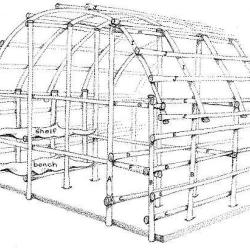
Build Your Own Model of a Haudenosaunee Longhouse
Follow these step-by-step instructions on how to build either a scaled or full-size model of a Haudenosaunee Longhouse. A complete list of materials and floor plans are provided, as well as suggestions on how to build a longhouse of your own design.
Download instructions:
Longhouse Instructions (PDF 5MB)
State Committee on Geographic Names
The State Committee on Geographic Names is established by Education Law within the Education Department to advise the United States Board on Geographic Names on issues relating to place names in New York. The Committee reviews proposals for new place names and maintains data on existing place names. Staff of the State Museum, State Library, State Archives, with one outside scholar serve on the Committee, with activities coordinated by the Museum. Research is often conducted to evaluate proposals for place name changes.
How do you go about changing a place name in New York?
Many of the place names attached to the geography of New York are rooted in the deepest recesses of the past, often with uncertain and ambiguous derivation. Sometimes a place was named because of the way it looked to the people who lived near it, or it may have been named after one of the earliest settlers. Names just seem to have sprung up as they were needed, and frequently historians are hard pressed to explain how or why.
But as standardized maps began to be produced that became the "official" sources of geographic information for the nation, and the world, the need arose for a standardized and equally official set of agreed on names for places and features displayed on those maps
This responsibility was placed with the United States Board on Geographic Names, a branch of the United States Geological Survey (USGS). The USGS established guidelines by which they could
- identify previously unnamed features
- provide official recognition to names in current local usage
- resolve conflicts in name spellings, applications, and local usage
In every state a "geographic names authority" is set up to assist the USGS in this process. The state names authority helps the review of the applications for new names or name changes.
When the application is complete, in accordance with USGS guidelines, the state names authority will review the final proposal and send a recommendation to the USGS Geographic Names Board, either supporting or not supporting the proposal. The USGS Board then places the application on their agenda for a federal-level review meeting, and based on that meeting a decision is made to adopt or deny the proposal.
In New York State, the names authority is "The New York State Committee on Geographic Names."
What is the New York State Committee on Geographic Names?
The New York State Committee on Geographic Names is established as part of the State Education Department, Office of Cultural Education. It is made up of historians, archivists, librarians, geologists, anthropologists, and geographers.
When a proposal is presented for review, this team of professional staff reviews the application and asks for additional documentation where needed. It then meets to come to agreement on the proposal and sends that decision to the federal board.
Some of the pieces of documentation which the state committee looks for include:
- Is there an already existing name for the feature?
- What is the historical origin of the existing name?
- What is the historical justification for the proposed name?
- Is the proposed name in local usage?
- Do local leaders, residents and businesses support the proposed name?
How do I get Started?
If you wish to make an application for a name change, you should contact the U.S. Board on Geographic Names Domestic Names Committee first, here: Instructions for Geographic Names Proposal Submissions
- You should request application forms and guidelines for submitting a geographic names proposal.
- They will send you these forms and a booklet. Read these carefully and be sure to include consultation with local historians, including town and county government historians. Include letters of support or comment from these, as well as local governmental officials, businesses, and residents.
- Follow the online USGS instructions for submission.
Where Can I get More Information?
The USGS has placed a vast amount of very detailed information about the process of obtaining a name change, as well as about the existing place names in the country and how to find them. You can find general information, with links to pages about the policies and procedures for geographic names proposals, at the United States Board on Geographic Names. You can search for a particular place name using a free searching service of the USGS Geographic Names Information System (GNIS).
For more information write:
Brad L. Utter
Senior Historian/Curator
New York State Committee on Geographic Names
New York State Museum
3021 Cultural Education Center
Albany, New York 12230
Native People's Dioramas: The Three Sisters
Who are the "Three Sisters"?
The scene takes place in the 1600s somewhere in the heart of the Mohawk Valley about 30 miles west of the confluence of the Mohawk and Hudson rivers near Troy, N.Y. The view is to the southeast toward the Mohawk River where it flows through a narrows called the Noses, several miles west of Fonda, N.Y. The setting is a day in late August when the corn is beginning to mature. This is the time of the Green Corn Festival, one of the Iroquois' days of thanksgiving.
At first glance the title of this diorama, "The Three Sisters", appears to reference the group of young women working together to tend the crops at the center of the scene. However, the sisters in question aren't actually of the human variety, but rather, refer to the three principal crops of corn, beans, and squash that the Iroquois and other Native American groups in the northeastern United States relied upon for sustinance throughout the year. Since the 1300s, the Iroquois had been planting these three crops together to enable the unique properities of each plant to aid in the growth and development of the others. In this process, known as companion planning, the base of the corn stalks would serve as poles for beans, the roots of the bean plants would nourish the corn by fixing nitrogen in the soil, and the winding vines of the squash would help reduce invasive weeds.
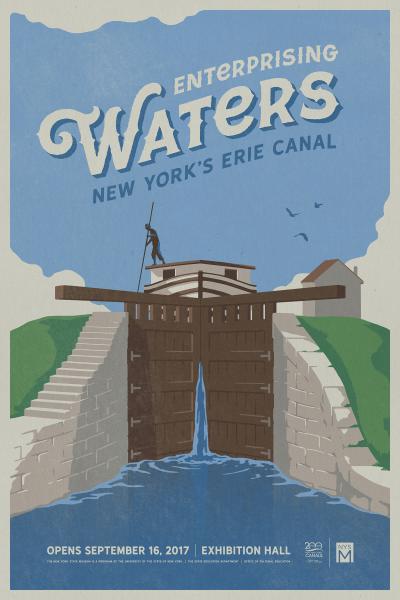
Enterprising Waters: New York’s Erie Canal (Phase Two)


The Erie Canal directed the course of New York and American history. When it opened in 1825, this “boldest and biggest American engineering project of its century” unlocked the Western interior for trade and settlement. Boomtowns sprang up along the canal’s path and New York City, with its deep harbor connecting to the Hudson River, grew to be the nation’s most powerful center of international trade.
One of the largest public works projects in American history, the Erie Canal inspired a nation-wide transportation revolution. Thousands of people poured into New York to work on or along the canal, or just to pass through. Though the canal would eventually be superseded by the railroad, a heady mixture of innovation and determination, and the industrious seeking and creation of wealth, was cemented in the American character.
In honor of the Bicentennial of the Erie Canal’s construction, New York State’s Office of Cultural Education will present this rich story with the first phase of Enterprising Waters: New York’s Erie Canal at the New York State Museum. In collaboration with organizations on the canal corridor and across the state, the State Museum will tell the Erie Canal’s story with unique objects, documents, and images.
Dominating the exhibition space is a gigantic windlass—a pulley mechanism that easily lifted and lowered heavy cargo from both sides of a warehouse with only one or two men. From 1831 through 1866, this windlass operated in the H. G. Root and Company Warehouse in the Village of Mohawk on the Erie Canal. The owners of the warehouse, Humphrey G. and Elias Root, also ran a general store and other small businesses along the canal.
Phase Two of Enterprising Waters continues the story of the Erie Canal with components on the Canal’s growth, politics, industries, social reform, and the Canal legacy.
Related Videos
Enterprising Waters: New York’s Erie Canal
Research culminating in an exhibit about the Erie Canal, one of the largest public works projects in American history and an integral piece of New York State's political, financial and industrial history.
For more information about the exhibit visit: Enterprising Waters: New York’s Erie Canal (Phase One)
24th Annual Gem, Mineral and Fossil Show and Sale at State Museum February 18 and 19
The New York State Museum will host the 24th Annual James Campbell Memorial Gem, Mineral and Fossil Show and Sale on Saturday, February 18 and Sunday, February 19 from 10:00 a.m. – 5:00 p.m. More than 30 vendors from throughout the region will display and sell gems, minerals, fossils and jewelry. Admission is $5 (cash only); children ages 12 and under are free.
Museum staff will give free guided tours of the Minerals of New York gallery at 2:00 p.m. both days of the show. In addition, children can mine for minerals, dig for fossils, and learn about geology and paleontology at the free “Rock & Fossil Fair” in the main lobby from 12:00 p.m. – 3:00 p.m. both days.
The Gem, Mineral and Fossil Show and Sale is co-sponsored by the Capital District Mineral Club and the New York Academy of Mineralogy. All proceeds benefit the Museum’s mineral acquisition fund.
The State Museum is a program of the New York State Education Department’s Office of Cultural Education. Located at 222 Madison Avenue in Albany, the Museum is open Tuesday through Sunday from 9:30 a.m. to 5:00 p.m. It is closed on Thanksgiving, Christmas, and New Year's Day. Admission is free. Further information about programs and events can be obtained by calling (518) 474-5877 or visiting the Museum website.
Phone: (518) 474-1201
State Museum Hosts "Kids Curate" Event February 24 - 26
The New York State Museum will host Kids Curate, the first exhibition at the museum curated by children across the state, February 24 through 26. In addition, families can participate in a variety of educational hands-on activities, meet museum scientists and curators, and enjoy performances by local musical and performing arts groups.
Last November children across the state voted for their favorite artifacts and specimens in the State Museum’s collections to go on display at the first Kids Curate exhibition. The top seven objects with the most votes will be on display including: a 20th century circus dog costume, cleared and stained “see through” catfish, glasses created for a bird in the 19th century, a sea lamprey from the Poestenkill in Troy, a ticket booth from Hoffman’s Playland, a rock concretion that looks like a turtle, and a Native American “strawberry moon” sculpture.
In addition, families and children can meet State Museum scientists and curators, go on scavenger hunt, participate in arts and crafts activities inspired by the Kids Curate exhibition, take a selfie at the photo booth, enjoy a ride on the historic carousel, and attend musical performances. A full schedule of activities is available at: http://www.nysm.nysed.gov/programs/kids-curate.
The State Museum is a program of the New York State Education Department’s Office of Cultural Education. Located at 222 Madison Avenue in Albany, the Museum is open Tuesday through Sunday from 9:30 a.m. to 5:00 p.m. It is closed on Thanksgiving, Christmas, and New Year's Day. Admission is free. Further information about programs and events can be obtained by calling (518) 474-5877 or visiting the Museum website.
Phone: (518) 474-1201
Northern Iroquoian Social Network Analysis
By A.D. 1350, most ceramic pots made by northern Iroquoian potters in New York, southern Ontario, portions of Pennsylvania, and the St. Lawrence River valley of Quebec, were made with collars. These are thickened bands of clay that extend around a pot and up to several down from the pot's lip. Collars were most often used as platforms on which to create often complex designs with many incised or stamped lines. These designs in turn functioned as signals that conveyed information about the pot's user(s); for example, what groups they belonged to. Using a formal graphing method called Social Network Analysis, we can gain new understandings on how people in northern Iroquoia interacted and how those interactions changed over time in the form of signaling networks. Results to date indicate that physical distance was not a major contraint on the similarity of collar designs, that signaling networks crosscut historical ethnic territories, and that signaling networks adapted to accommodate changes in regional socio-political systems.
State Museum Announces Creation of New York State History Advisory Group
The New York State Museum today announced the creation of the New York State History Advisory Group. The group will meet periodically to advise the New York State Historian on issues related to the history field in New York State, including suggestions pertaining to local and municipal historians, academic history, historic preservation, and heritage tourism.
“The history field in New York State is broad and diverse,” said New York State Historian Devin Lander. “I look forward to meeting with the Advisory Group and listening to their suggestions on important history issues and advice on how to raise awareness of the Empire State’s rich history.”
The Advisory Group consists of historians from across the state, including academic and public historians as well as representatives from historical organizations and state agencies. A list of members is available at: http://www.nysm.nysed.gov/common/nysm/files/members_of_history_advisory….
The Advisory Group’s suggestions and recommendations are purely advisory in nature and are nonbinding.
The State Museum is a program of the New York State Education Department’s Office of Cultural Education. Located at 222 Madison Avenue in Albany, the Museum is open Tuesday through Sunday from 9:30 a.m. to 5 p.m. It is closed on Thanksgiving, Christmas, and New Year's Day. Admission is free. Further information about programs and events can be obtained by calling (518) 474-5877 or visiting the Museum website.
Phone: (518) 474-1201
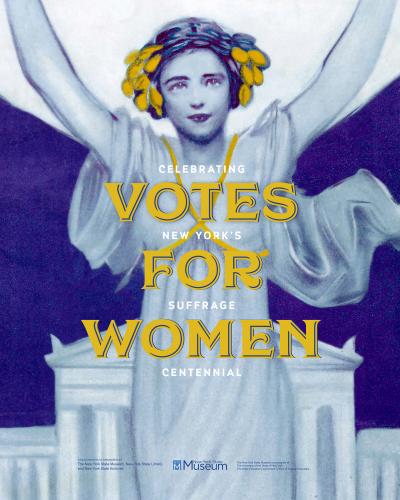
Votes for Women: Celebrating New York’s Suffrage Centennial
The New York State Education Department and the Office of Cultural Education present this large-scale exhibition and companion catalog titled, Votes for Women: Celebrating New York’s Suffrage Centennial, at the New York State Museum between November 4, 2017 and May 13, 2018.
Votes for Women celebrates the centennial of women’s suffrage in New York State and raise public awareness of the struggle for women’s suffrage and equal rights in New York State from the 1848 Seneca Falls Convention through 1917 when New York State granted women the right to vote. The exhibition also addresses the nationally significant role of New York State leaders in regards to women’s rights and the feminist movement through the early 21st century.

Online Feature: Votes for Women
Read extended biographies of notable women and view select artifacts featured in the exhibit. Additional resources provide access to the exhibition catalog and a list of lenders and forthcoming educational resources.
360 Gallery Tour: Votes for Women
Field Trip to the NYSM: Suffrage Wagon & Susan B. Anthony House 2020 Quilt Project
Director of Research and Collections Receives Award for Collections-Based Research


Dr. John Hart, Director of Research and Collections at the New York State Museum, has received the Society for American Archaeology’s 2017 Award for Excellence in Curation, Collections Management, and Collections-based Research and Education.
The award is made only once every 4 years in the collection-based research category and Dr. Hart is the first recipient. The award is presented in special recognition of excellence by an archaeologist or group of archaeologists whose innovative work, or repeated and enduring contributions, have contributed significantly to archaeology and the preservation, documentation, and use of the collections recovered from archaeological investigations.
According to the Society for American Archaeology, Dr. Hart was presented this award for his consistently applied multidisciplinary, cutting-edge, and team-oriented analysis of archaeological collections to ask new and standing questions about the past. In particular, he has led groundbreaking research in microbotanical and absorbed residue studies to understand the origins of food production in the Eastern Woodlands.