

Choosing Sides
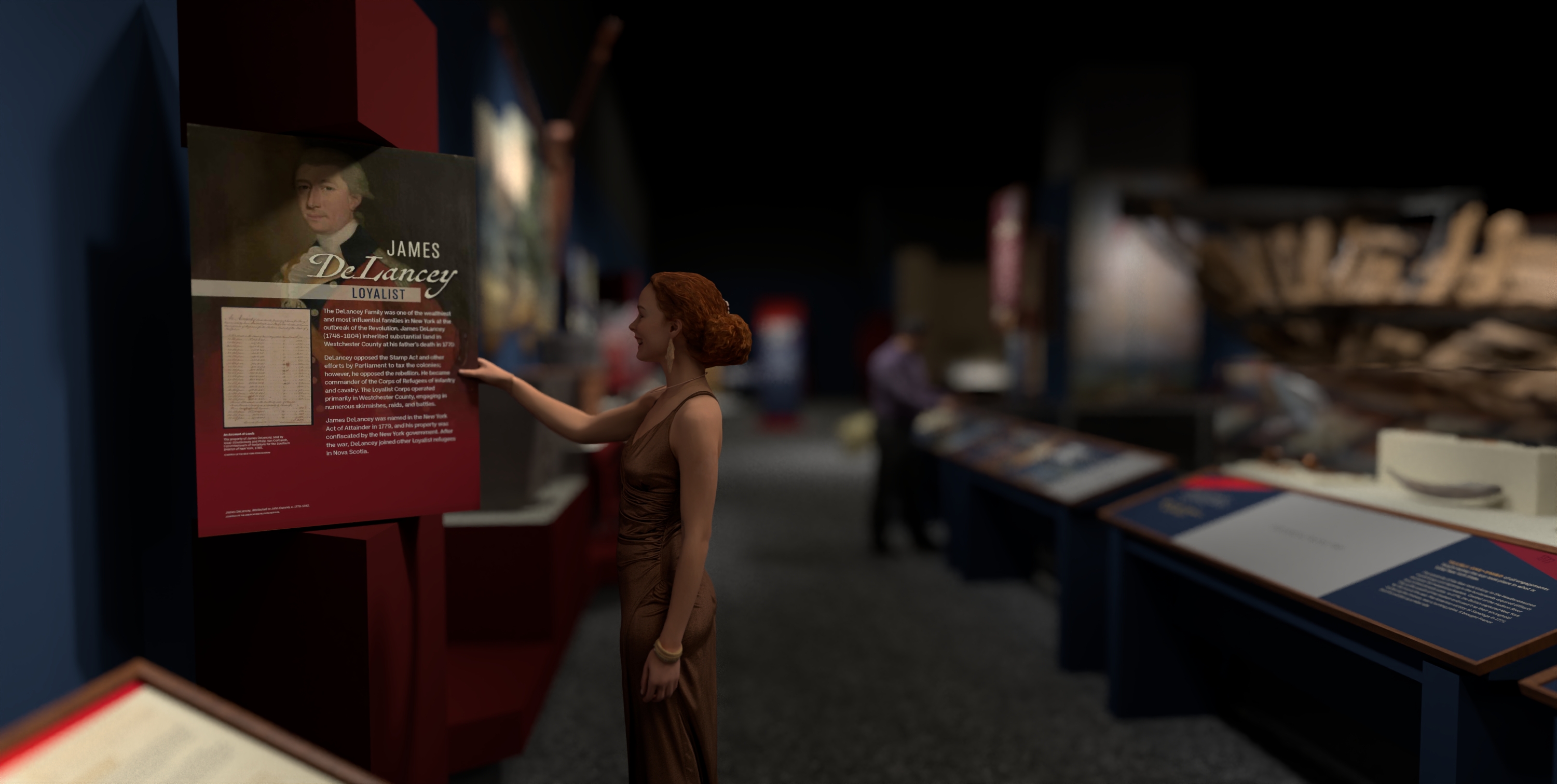
This next section of the exhibit runs along the gallery’s far left wall that runs parallel to the gunboat. It begins with another tall introductory panel. It is titled “Choosing Sides” that asks: “Liberty for whom?” Tall graphic text panel panels are mounted vertically along the wall in a straight row, with angled panels at table height in front.
The content explores how different groups and individuals—including Indigenous nations, Loyalists and Rebels, African Americans, women, farmers—navigated the Revolution’s challenges. Large newspaper graphics highlight the Loyalists vs. Rebels debate. A cannon from the USS Liberty is displayed vertically and is nearly seven feet tall. A large image of a wheat field is located above a blanket chest, a Palatine cradle, and a reproduction flour barrel are displayed. Interactive elements include two spinner panel towers: one features biographies; another discusses spying. Each spinner consists of a movable triangular component that displays a different text panel on each side. Visitors can rotate through these panels.
The section concludes with West Point, featuring a large map of fortifications, the Hudson River chain, facsimiles of the André Papers found on British Major John André upon his capture, and the Van Wart Fidelity Medallion. Together, these panels, objects, and images trace the complexity of choices faced by diverse people during the American Revolution.
On the eve of the revolution in 1775, diversity was the hallmark of the colony’s 165,000 people. Most were rural farmers, but Manhattan residents inhabited North America’s third-largest city. English, Dutch, French, German, Jewish, and other European colonists mingled with Indigenous people and freed Blacks, even as whites held some 20,000 Black people in bondage—the highest percentage of enslaved people in the North. Diverse religious and ethnic traditions shaped the choices people made in the coming war.
The American Revolution is considered by some to be the country’s first civil war. Choosing sides was often a complex series of decisions based on circumstances, geographic location, and many other factors. Men, women, soldiers, civilians, enslaved Africans, free African Americans, Indigenous peoples, and others were all affected by the Revolution and had to balance the social, economic, and political changes wrought by the war.
Highlights
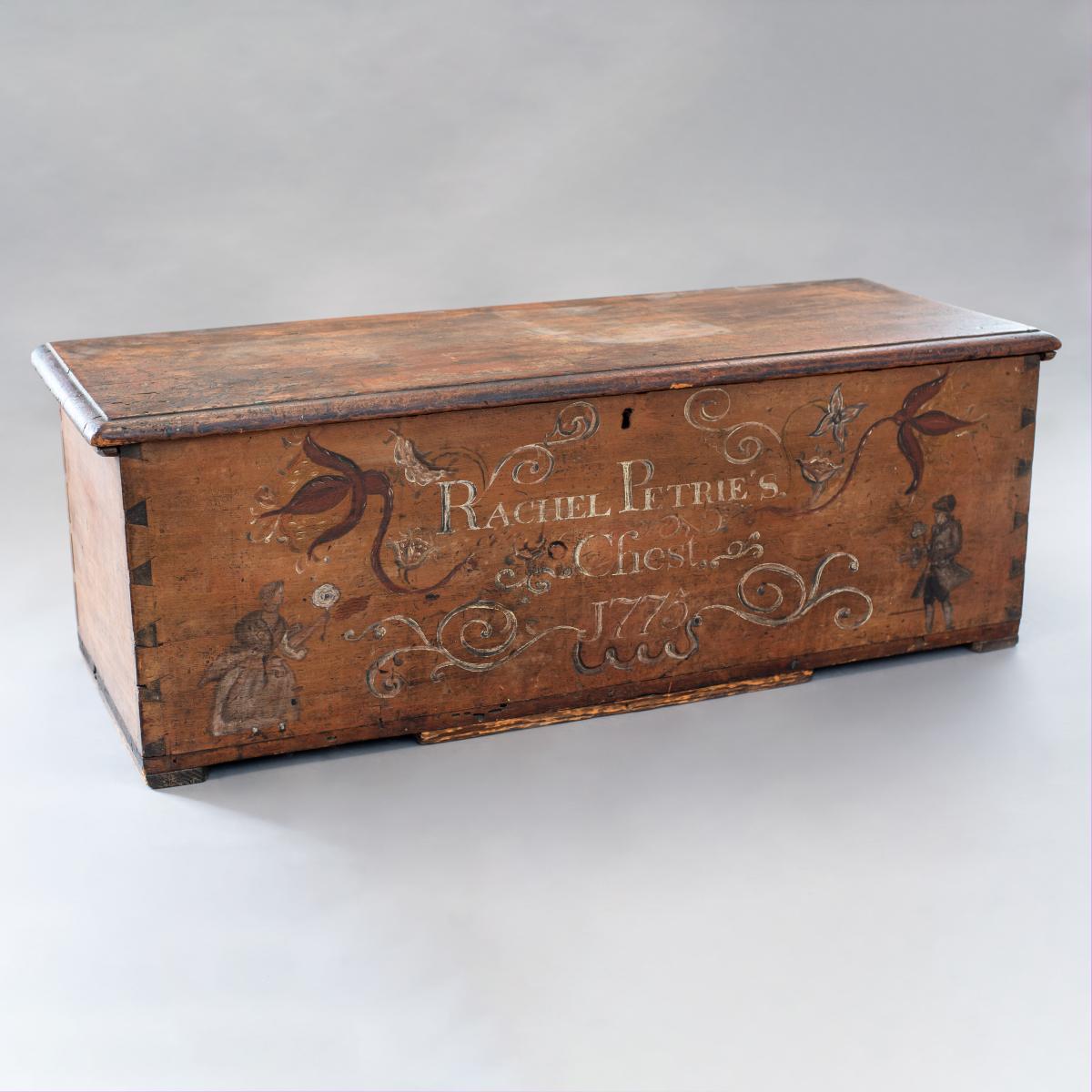
This blanket chest belonged to Rachel Petrie of Linlithgo, Columbia County. Family tradition states that this chest was made by Petrie’s fiancé before he joined New York’s militia at the outset of hostilities.
New York State Museum Collection H-1972.56.1
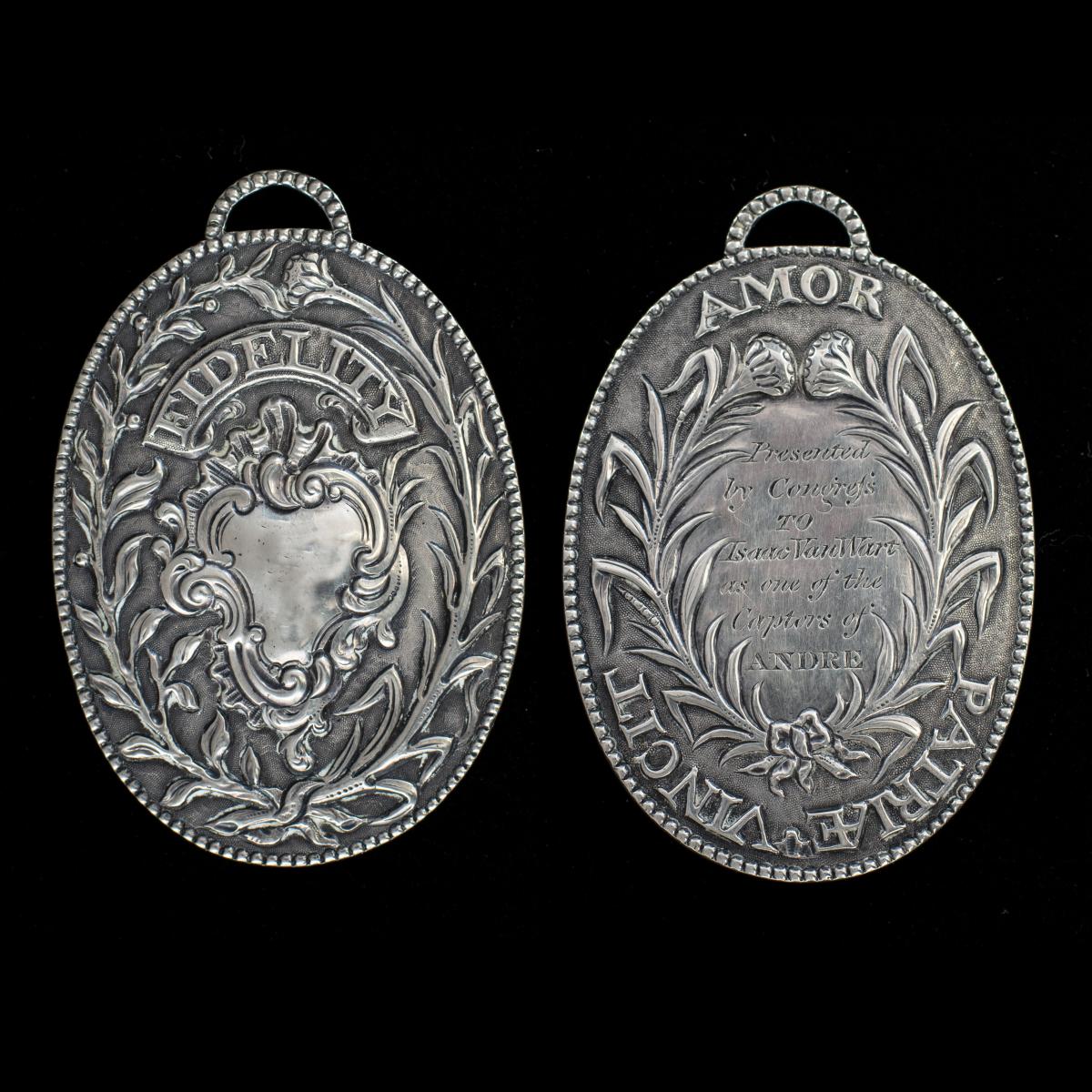
The Fidelity Medallion is the first military medal authorized and presented by the Continental Congress. The medal was created for the three enlisted militiamen who captured John André. The medal featured here was awarded to Isaac Van Wart. Van Wart was born in New York in 1750 and died in Westchester County on May 23, 1828.
New York State Museum H-2023.4.1
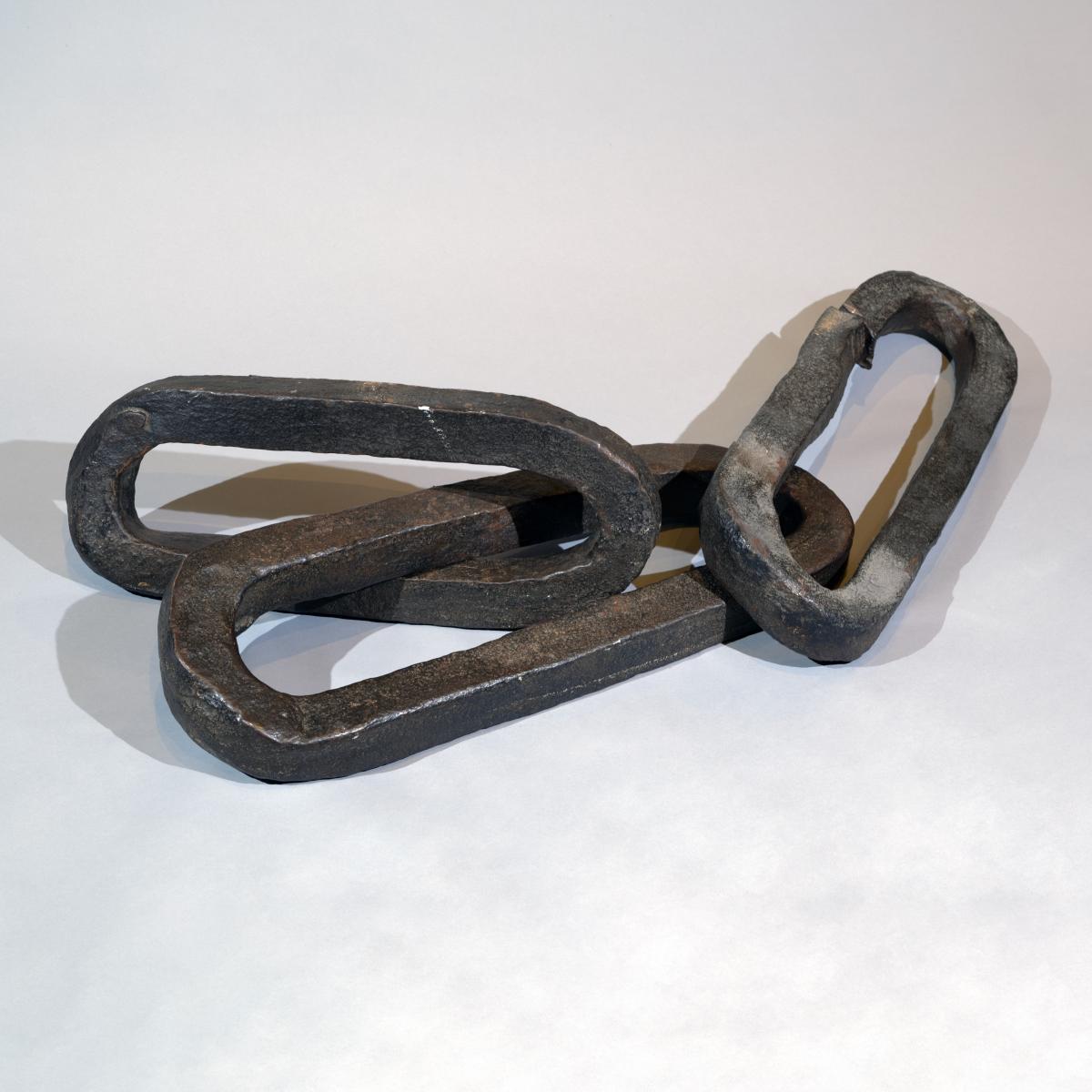
These iron chain links were once part of a chain boom constructed across the Hudson River at West Point to prevent British ships from sailing north from New York City. The chain was forged in 1778 at Sterling Iron Works in Warwick, Orange County, and remained in use until the end of the war in 1783. Each link measures approximately two feet in length and weighs between 140 and 180 pounds.
Introduction
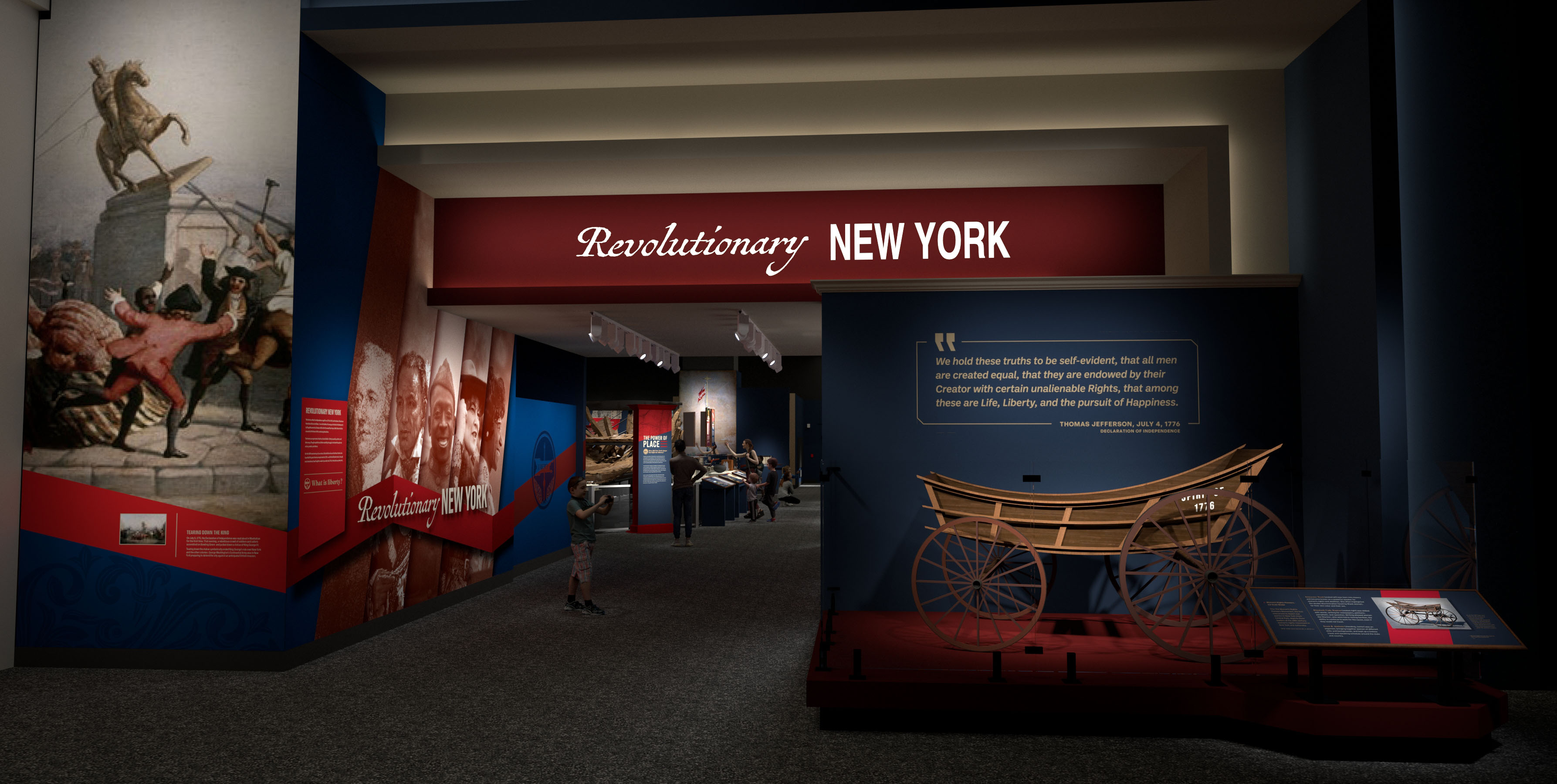
As you move down the corridor outside Exhibition Hall, next to the Cohoes Mastodon skeleton, you will encounter a wooden wagon displayed on a raised platform. This Suffrage Wagon served as a mobile platform for women advocating for voting rights. The wagon is about eight feet long and a little over four feet high. Constructed of wood and supported by four large, spoked wheels with iron rims, it bears the words “Spirit of 1776” painted in white lettering. Inside the wagon, there are two plank bench seats. Behind the wagon is a quote on the wall by Thomas Jefferson from the Declaration of Independence, July 4, 1776: “We hold these truths to be self-evident, that all men are created equal, that they are endowed by their Creator with certain unalienable Rights, that among these are Life, Liberty, and the pursuit of Happiness.”
To the left of the wagon and exhibition entrance is a large wall graphic illustration showing a crowd pulling down a statue of King George. Tearing down the statue symbolically ended his rule over New York and the other colonies.
Above this area, the entrance header has three recessed soffits painted deep blue, cream, and crimson—a color palette continued throughout the exhibit. The lowest soffit displays the title “Revolutionary New York.” Revolutionary appears in an aged script-style font, while New York is featured in a modern, bold sans-serif typeface, establishing the gallery’s design aesthetic that blends historic character with clean, contemporary lines.
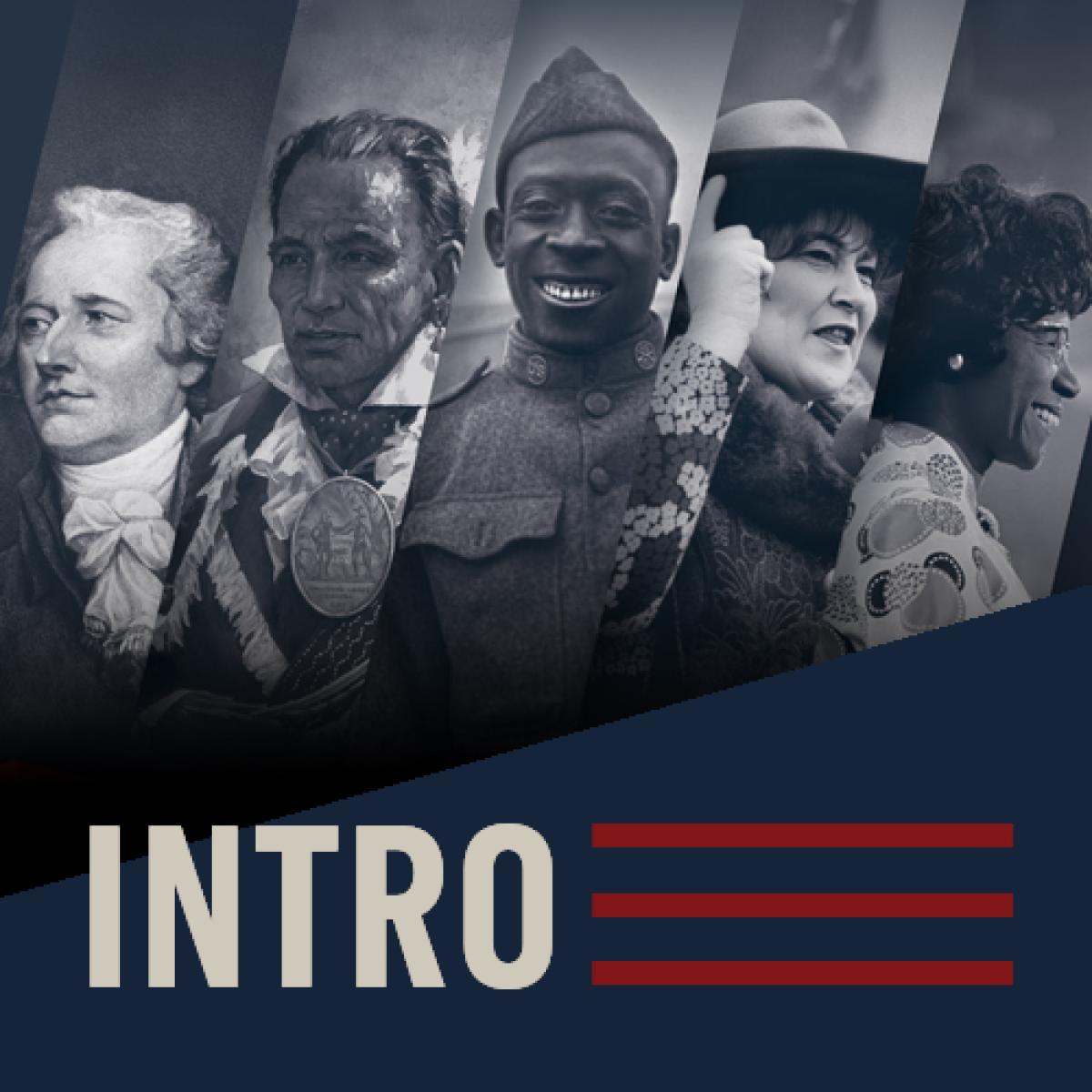
Just inside the entryway, on the left, introductory text presents Revolutionary New York as an exploration of how New Yorkers—from the Revolution through successive social movements to today—have carried forward and interpreted the nation’s founding ideals of liberty, equality, justice, and democracy. The first of a series of dialogic questions is introduced here: “What is liberty?” To the right of this, a large wall graphic presents close-up portraits of influential figures from New York’s revolutionary history—Alexander Hamilton, Red Jacket, Henry Johnson, Bella Abzug, and Shirley Chisholm. They gaze in different directions, engaging visitors and creating a feeling of energy at the entrance.
The overall gallery configuration guides visitors along a broad U-shaped path, subtly encouraging a leftward start that loops back along the far back wall of the space.
Revolutionary New York
The American War for Independence raged from 1775 to 1783, but the ideas of the American Revolution did not end there. From the Battles of Saratoga to the birth of the Women’s Suffrage Movement at Seneca Falls to the Stonewall Uprising in 1969, New York has remained at the heart of this continuing Revolution.
The American experiment is built on shared ideals—liberty, equality, justice, and democracy. Though imperfect and often marked by struggle, it endures through civic action, protest, and reform.
On the 250th anniversary of our nation, this exhibition honors the New Yorkers who launched the great American experiment in 1776—and the bold leaders who, through social revolutions, have fought to make its promises real. This is Revolutionary New York.
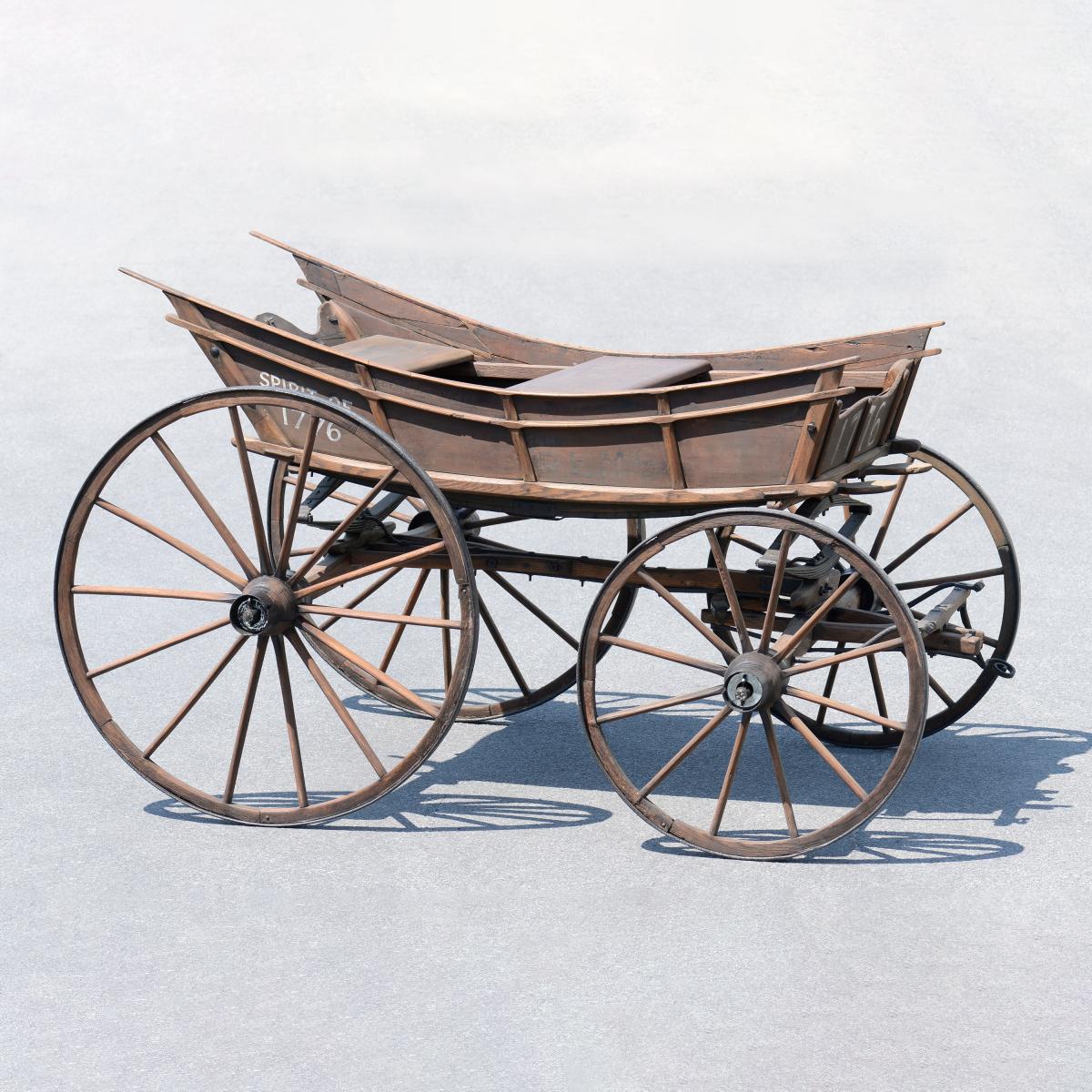
“If taxation without representation was tyranny in 1776, why not in 1913?”
Suffragists equated their cause with that of our nation’s founders. This horse-drawn wagon—used as a prop and speaker platform—was said by suffragists to date to 1776 and belong to Revolutionary Patriots, though the wagon style was not produced before 1820.
In 1913, Edna Kearns and Irene Davidson dressed as minutemen and drove the wagon from New York City to Long Island to deliver leaflets and speeches. Eight-year-old Serena Kearns accompanied them as “Little Liberty.”
New York State Museum H-2007.21.1
Acknowledgments:
As Revolutionary New York commemorates the 250th anniversary of our nation, we honor not only the history of our state and its people but also the partnerships that made this exhibition possible.
We extend our sincere thanks to the New York State Education Department, the New York State Board of Regents, and the New York State 250th Commemoration Commission for their support in bringing this project to life.
The New York State Museum worked closely with partner institutions within the Office of Cultural Education—the New York State Archives and the New York State Library—and collaborated with cultural organizations, historians, and Indigenous Nations to enrich the stories shared here.
This exhibition was developed in consultation with Indigenous Nations through a dedicated Indigenous Advisory Council, as well as staff at the Underground Railroad Education Center. We deeply appreciate the insight, expertise, and partnership these consultants provided.
We are also grateful for our lenders—private individuals, museums, and cultural institutions—for their contributions to this exhibition.
We extend our deepest gratitude to all who contributed their time, knowledge, and resources to make Revolutionary New York possible.
Funding provided by the New York State 250th Commemoration Commission
OCE Partners
Consultants
Indigenous Advisory Council
- Christine Abrams, Tonawanda Seneca
- Wayne Abrams, Tonawanda Seneca
- Darren Bonaparte, St. Regis Mohawk Tribe
- Jeremy Dennis, Shinnecock Indian Nation
- David George-Shongo, Seneca
- Richard Hill, Tuscarora, Six Nations of the Grand River
- Clarissa Jacobs, NYSED Office of Indigenous Education
- Jeremy Johnson, Delaware Tribe of Indians (Lenape)
- Dehowähda•dih - Bradley Powless, Onondaga Nation Eel Clan
- Robin Maxkii, Stockbridge-Munsee Band of Mohican Indians
- Vince Schiffert, Tuscarora Nation
- Stockbridge-Munsee Band of Mohican Indians (citizen)
Underground Railroad Education Center
- Paul Stewart
Mary Liz Stewart
Marcus Anderson
Carmen Bivens
Amelia Paul
Lacey Wilson
American Gunboat Conservation and Reconstruction
- Peter Fix, Center for Maritime Archaeology and Conservation at Texas A&M University
- Funding provided though Lower Manhattan Development Corporation
Film Contributors:
- Darren Bonaparte
- Jennifer Burns
- Frederick Jones
- Pedro Regalado
- Hugh Ryan
- Judy Wellman
The New York State Museum is a program of The University of the State of New York | The State Education Department | Office of Cultural Education.
Revolutionary Ideas Over Time
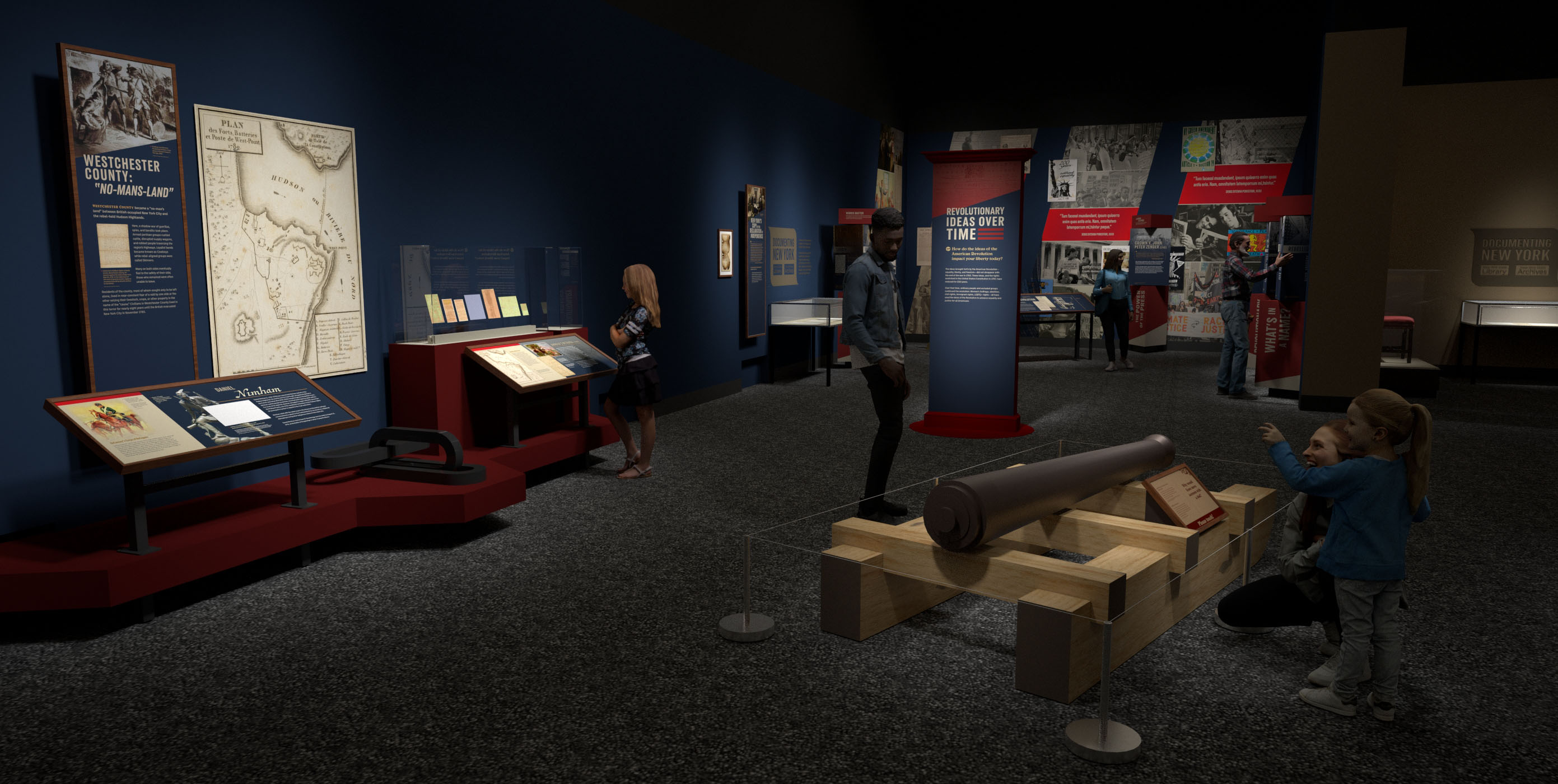
As you enter this section, you will encounter the next tall introductory panel titled “Revolutionary Ideas Over Time.” Below the title, a guiding question asks: “How do the ideas of the American Revolution impact your liberty today? This section explores how the enduring Revolutionary ideals and the press that amplified them have driven ongoing movements for equality and justice.
Moving forward, the left wall holds a table-height glass display case titled “Documenting New York.” It presents original materials from the New York State Archives and Library. Because these documents are sensitive to light, the documents on display will be changed periodically. You continue through this area on a U-shaped path.
Distributed throughout the gallery are four rotating panel spinners that invite visitors to explore themes such as “Language and Revolutionary Ideals vs. Reality,” “The Power of the Press,” “Revolutionary Legacies,” and “What’s in a Name.
In the back left corner, set at an angle, a full-size‑ replica of an 18-century printing press is displayed. Extending across the back wall and the adjoining right‑hand wall is a series of four large graphic collages illustrating nearly 250 years of printed communication—broadsides, banners, public notices, and protest graphics. The subjects range widely, including LGBTQ+ rights materials, the ACT UP “Silence = Death” AIDS campaign, anti-abolition‑ broadsides, a 1775 proclamation against rebellion, and women’s suffrage.
Each collage features a red horizontal band across its center containing a quotation. Together, the words of the United States Constitution, Amendment 1 (1791), Frederick Douglass (1860), Robert F. Kennedy (1962), James Baldwin (1955)—underscore themes of free speech, dissent, and civic duty.
The section concludes with a small, angled kiosk with a touchscreen. Visitors can select audio excerpts from three speeches: Martin Luther King Jr.’s 1962 remarks on the Emancipation Proclamation, Franklin D. Roosevelt’s 1941 State of the Union address, and Shirley Chisholm’s 1969 speech advocating for women’s equality. As each excerpt plays, a transcription appears on the screen.
The ideas brought forth by the American Revolution—equality, liberty, and freedom—did not disappear with the end of the war in 1783. These ideas, and the rights enshrined in the United States Constitution in 1787, have endured for 250 years.
Over that time, ordinary people and excluded groups continued the revolution. Women's Suffrage, Abolition, Civil Rights, Immigrant Rights, LGBTQ+ Rights—all have used the ideas of the Revolution to advance equality and justice for all Americans.
Highlights
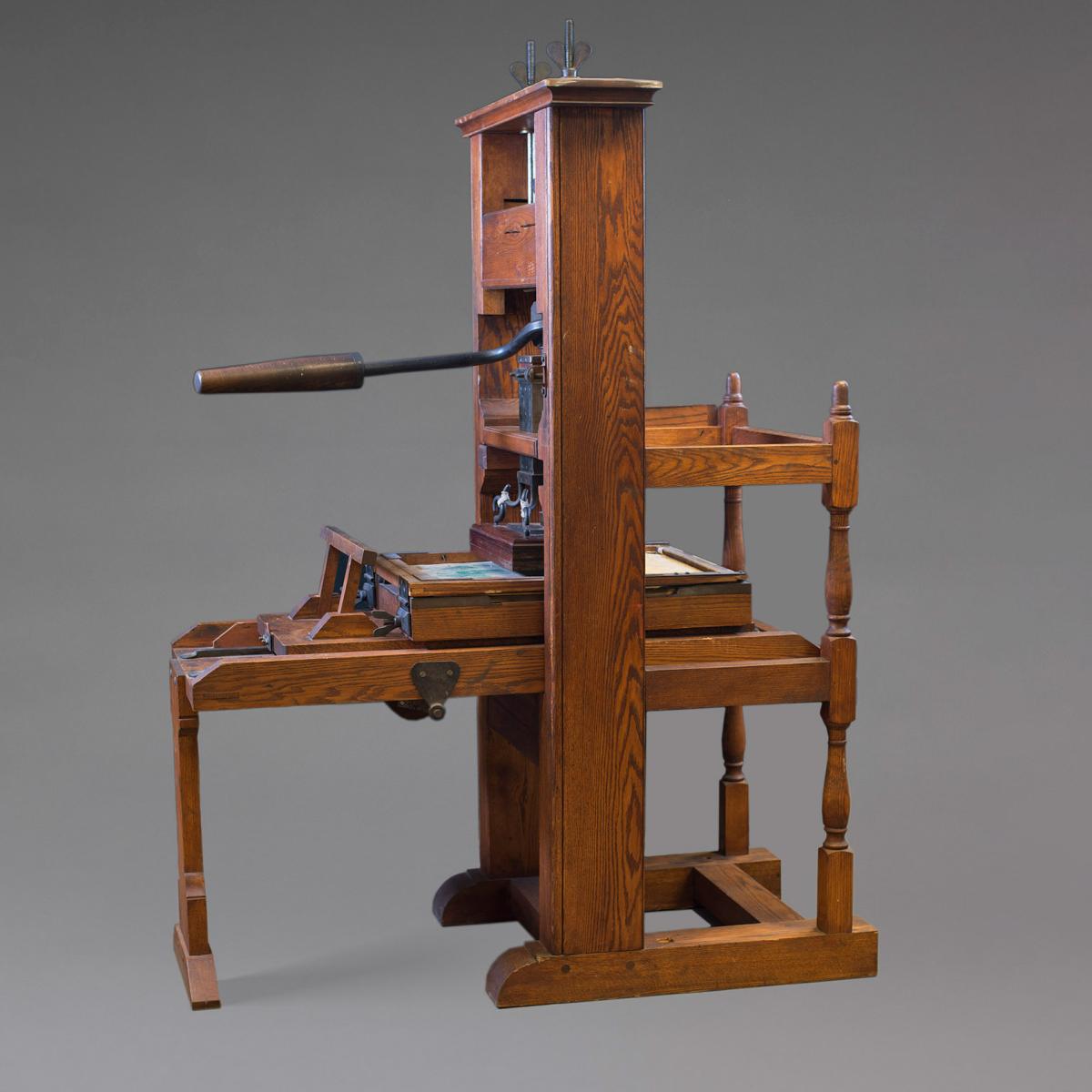
Printing presses were critical during the American Revolution and founding era. Newspapers, broadsides, and pamphlets helped to spread revolutionary ideas throughout the North American colonies, creating a sense of shared identity and common cause among colonists, raising awareness and galvanizing public opinion.
New York State Museum H-1978.10.1
Founding the Nation
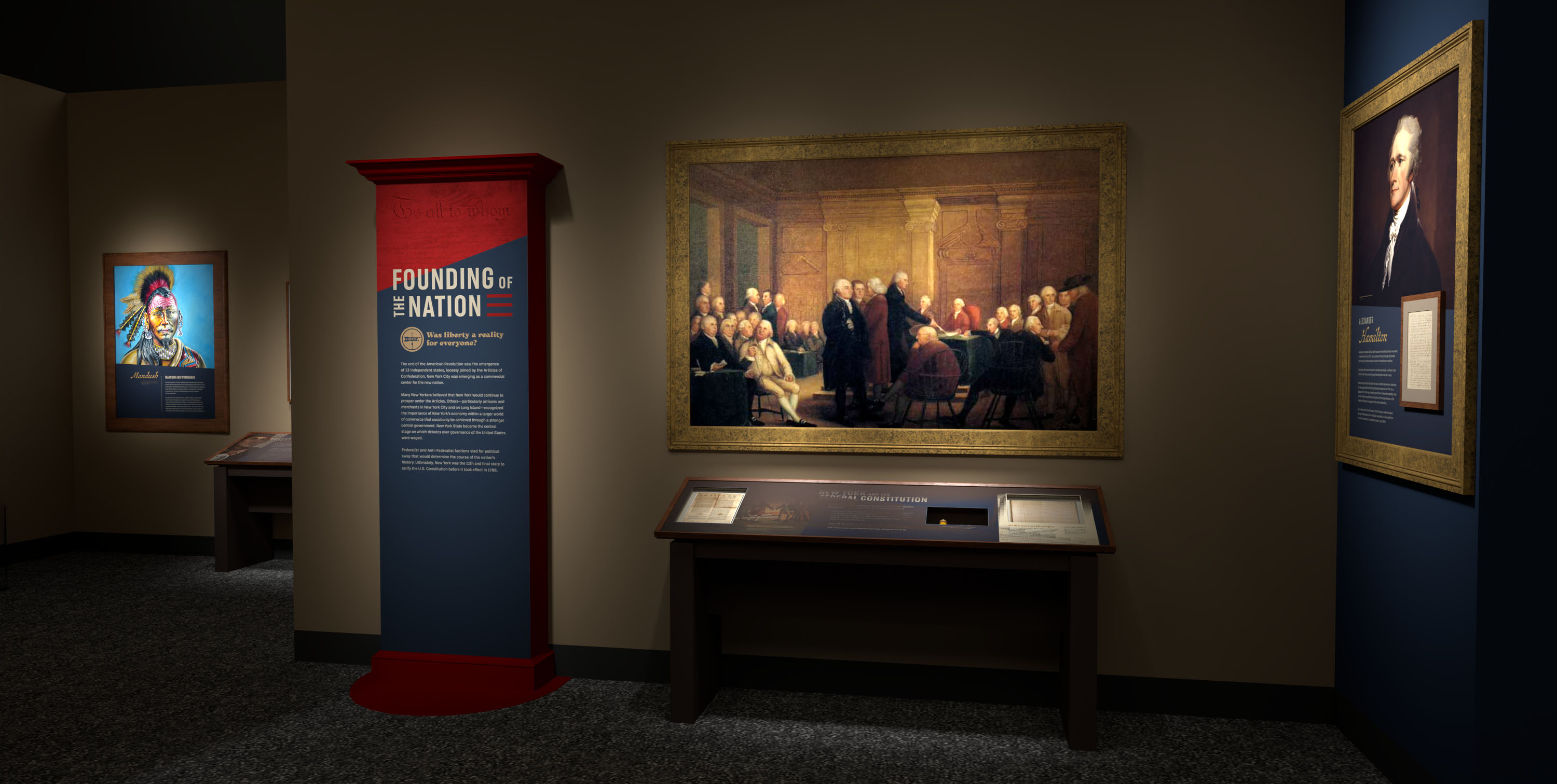
As you move to your right, you encounter another tall introductory panel titled “Founding the Nation,” which asks, “Was liberty a reality for everyone?” This section examines how New Yorkers helped shape the early United States while confronting the contradictions between the nation’s ideals and its realities.
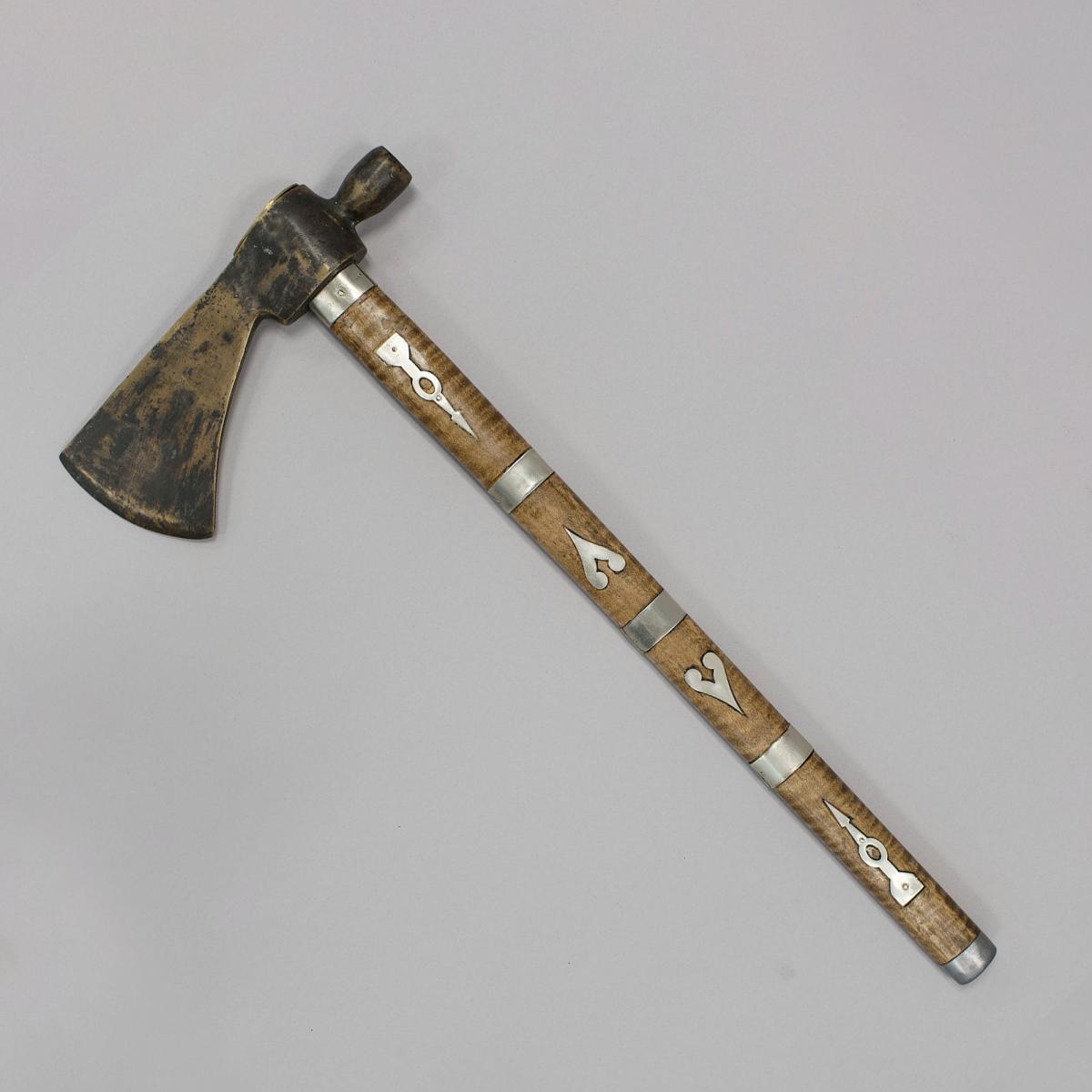
To the right of the introductory panel hangs a large graphic panel of The Congress Voting Independence, showing a meeting room where members of the Continental Congress sit at long tables while several men stand at the center holding documents. The gallery follows an S-shaped path created by tall walls that wind through the space. Along this route is another table-height case titled “Documenting New York,” containing original documents from the New York State Archives and the New York State Library. Large wall panels feature portraits of key figures such as Alexander Hamilton and Gayëtwahgeh (John Abeel, known as Cornplanter), with a replica pipe tomahawk displayed in a case beside Cornplanter’s panel. There are also table-height slant panels that contain interpretive text.
As you continue, you encounter objects, documents, and images tied to early state and federal history, including reproductions of the Treaty of Canandaigua, the New York and Federal constitutions, and the New York Bill of Rights. Notable artifacts include a gavel reportedly used by Walter Livingston, side chairs said to have been used in Federal Hall during George Washington’s inauguration, and Washington’s watch chain and seals. Materials related to treaty making appear throughout, including a roll of muslin treaty cloth gifted to the New York State Museum by the Seneca Nation. Nearby, Indigenous veterans are highlighted through a large contemporary image honoring continued military service, paired with a 1783 quote from Mohegan Chiefs reflecting shared sacrifice. There is a dedicated display area to honor these veterans. A War Mothers blanket from the Delaware Tribe of Indians is the first iteration of this display that will rotate over the course of the exhibit. A separate treaty-related quote from the US Constitution highlights federal authority over relations with Indigenous nations.
Approaching the end of this section, there is content on illegal state treaties and Indigenous displacement. Large prints of artwork appear nearby, including Honoring the Harvest by Dawn Dark Mountain (Oneida Wisconsin), part of a series commemorating the Treaty of Canandaigua, and The Great Canandaigua Treaty—1794 by Robert Griffing, depicting treaty negotiations held under an oak tree. The gallery path leads to an open area which becomes the next exhibit section.
After the American Revolution, 13 independent states were loosely united under the Articles of Confederation in 1777. This “League of Friendship” gave Congress limited power and one vote per state. As New York City emerged as a commercial center, debates sparked over the need for a stronger federal government. While some supported the existing system, others—particularly merchants and artisans in New York City and Long Island—pushed for a stronger central government to support commerce. Federalists and Anti-Federalists clashed over the nation’s future as economic crisis grew. After intense debate, New York became the 11th state to ratify the US Constitution in 1788.
While New Yorkers helped shape the nation’s foundation, there was a contradiction between the nation’s ideals and its reality. Despite the 1776 Declaration of Independence that stated that “All men are created equal” and entitled to “Life, Liberty, and the Pursuit of Happiness,” in 1790, nearly 700,000 African Americans were enslaved, including over 21,000 in New York. The state passed a bill for the gradual abolition law in 1799, ending slavery by 1827. Nationally, slavery persisted until the Civil War and was finally abolished in 1865 by the 13th Amendment.
Highlights
Glenn Zweygardt and Mike Crouse (Seneca Nation)
At all colonial meetings with Indigenous people, gift giving played a prominent part of diplomatic protocol. In 1792 it is believed George Washington presented Cornplanter with a pipe tomahawk. The silver inlay on this replica of Cornplanter’s pipe tomahawk was made by a descendant of Peter Crouse, a Dutch German immigrant taken captive by Seneca as a young boy, around 1778. He lived on Seneca territory for the rest of his life.
New York State Museum E-2025.14
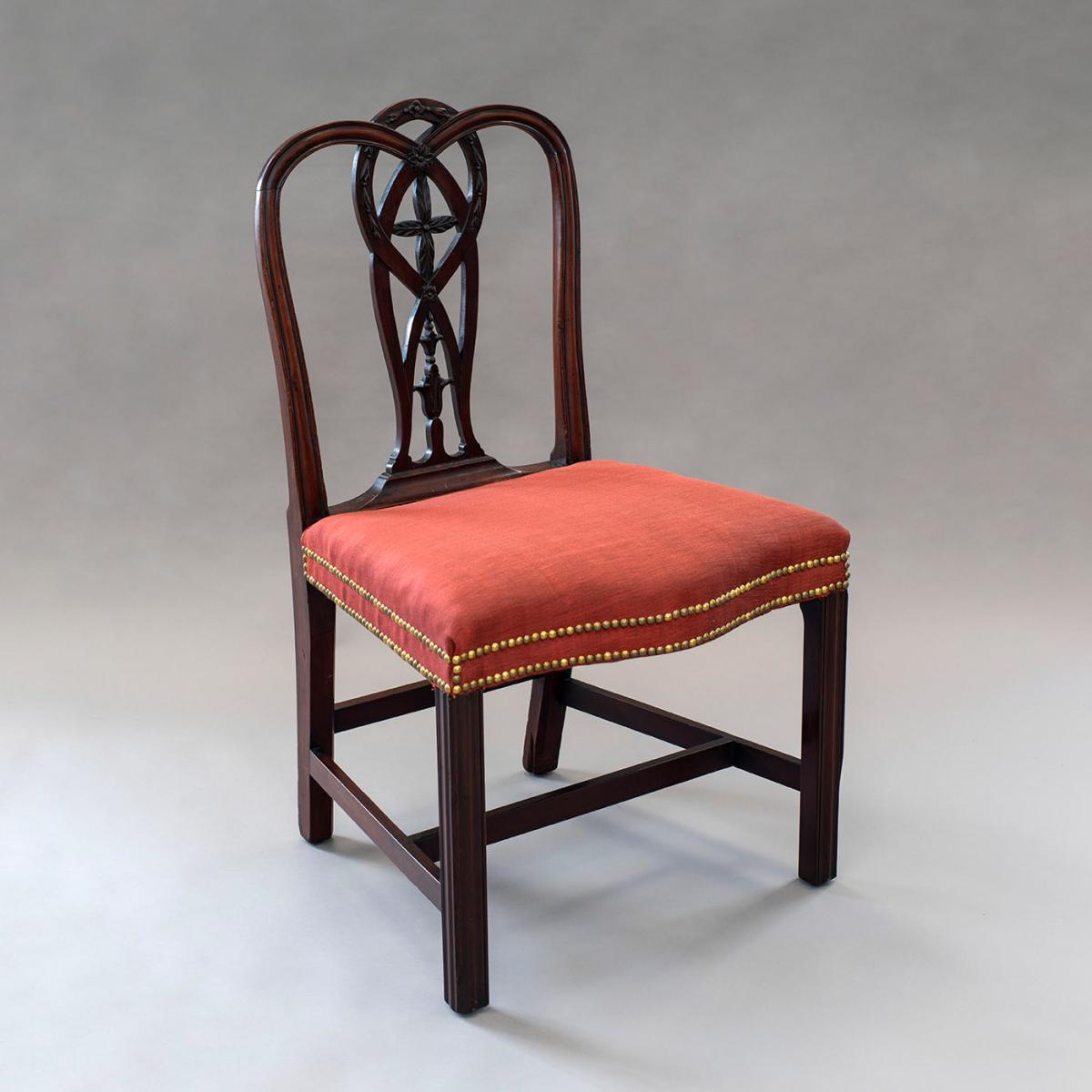
One of a pair of Federal Hepplewhite mahogany side chairs said to have been used in Federal Hall during George Washington’s inauguration.
New York State Museum H-1970.136.3 A
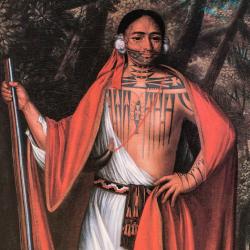
Tattoos with Dr. Hemlock
Sha’kaien’kwarahton is one of the figures depicted in Four Indian Kings of the New World painted by John Verelst in 1710. Discover how recent research by Dr. Kanen'tó:kon Hemlock reveals the cultural meaning and symbolism behind the tattoos within Haudenosaunee traditions.
We the People
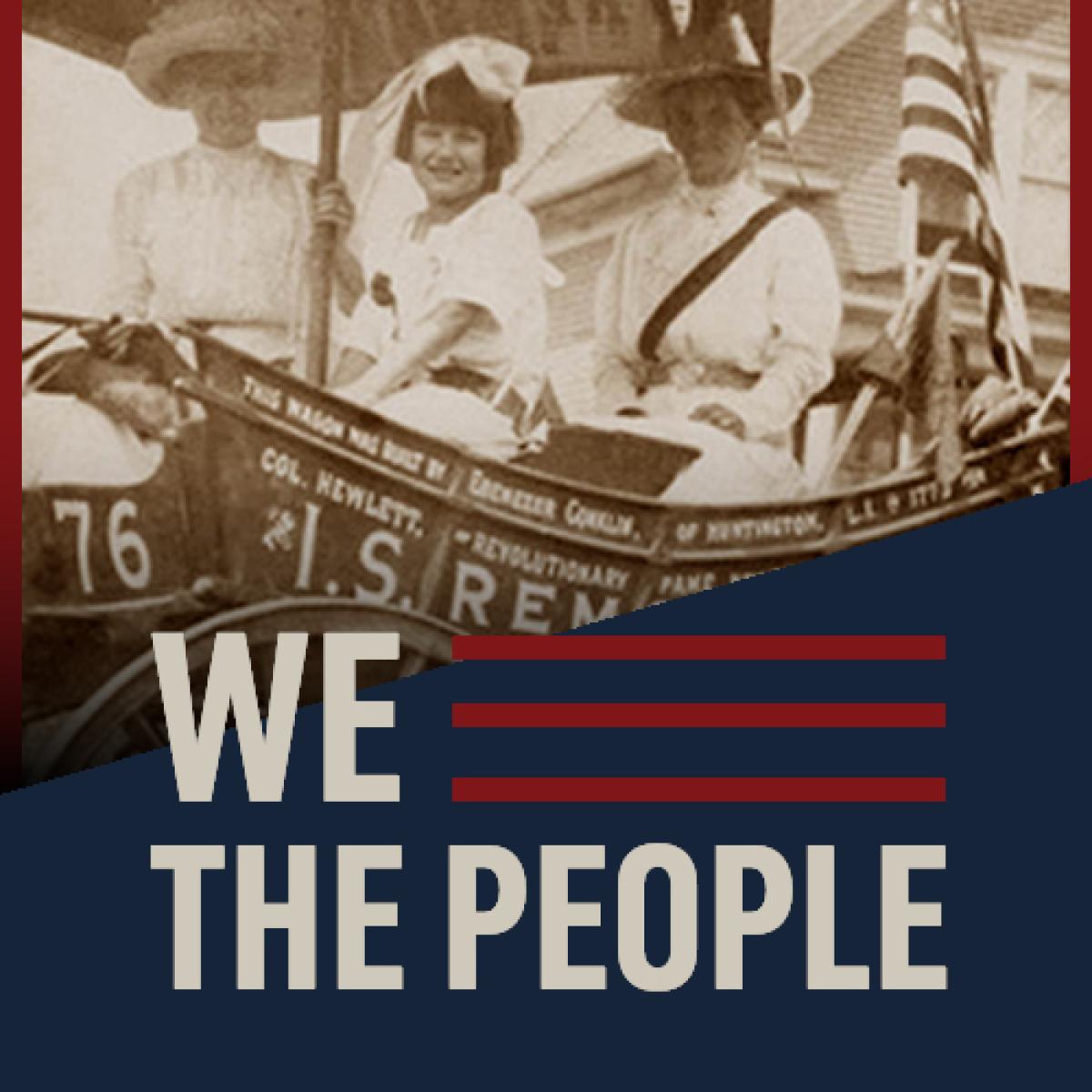
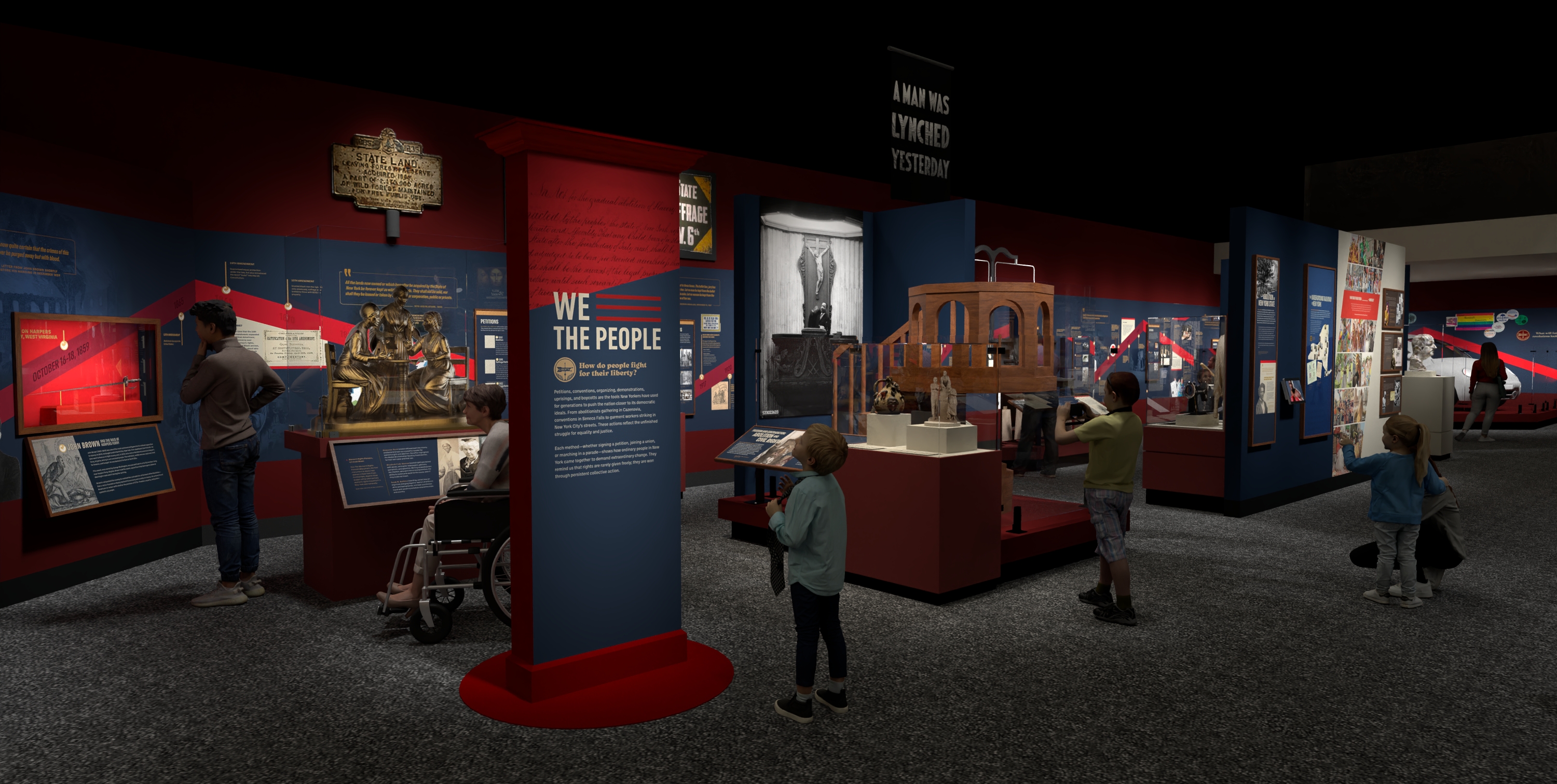
Following the video, visitors enter the final section of the exhibition, titled “We the People. A tall introductory panel poses the question, “How do people fight for their liberty?” This section explores six major movements for social change: Women’s Rights, Abolition and Civil Rights, Labor Rights, Immigration Rights, Environmental Activism, and LGBTQ+ Rights. Each thematic area is anchored by a prominent artifact and supported by additional objects and images, with key moments from each movement placed within a shared legislative timeline.
The timeline stretches nearly 80 feet long across the gallery. A thick red line winds over a dark blue background with imagery, forming a sweeping visual backdrop for the six themes. Beginning in 1799 with the Act for the Gradual Emancipation of Slavery, it traces more than 250 years of activism and social change. Key moments from each thematic area appear along its length, creating a layered approach that allows visitors to explore individual movements while also seeing how they intersect, influence one another, and evolve over time.
The “Women’s Rights” section features a one-third scale model of the Women’s Rights Pioneers Monument, showing Sojourner Truth, Elizabeth Cady Stanton, and Susan B. Anthony together in bronze-colored form that’s approximately three feet tall by four feet wide and is displayed on a pedestal.
Nearby is an area called “Freedom and Contradiction: Abolition and Civil Rights”. It features a dark wooden church pulpit, roughly six feet by six feet. A small media screen shows a reenactor delivering Frederick Douglass’s famous 1852 speech, What to the Slave Is the Fourth of July, written by Douglass and performed by Frederick Jones.
In the “Labor Rights” area, an industrial knitting machine serves as the central object. Measuring more than eight and a half feet tall and six and a half feet wide, the machine is cast and painted, with a four-legged table base and a rectangular top. Two rotary mechanisms extend from the structure, connecting to spools of yarn and emphasizing the machine’s industrial function.
The Immigration Rights section, titled “The American Dream,” includes a sculpted plaster head created by immigrant artist Henry DiSpirito. The sculpture features finely carved facial details and a prominent mustache, while the hair is rendered in a more stylized manner.
Within the “Environmental Activism” area, a highlighted grouping of objects featuring the Bald Eagle motif reflects the bird’s shifting significance—from a symbol of the young American republic to an emblem of conservation as the species itself faced near extinction. The grouping includes a large red coffee mill, nearly three feet tall and two feet wide, decorated with an eagle holding banners bearing the company name Enterprise Mffg. Co. Additional objects include a stoneware crock and pitcher, a wooden clock with painted details, a bronze painted eagle figurine with outstretched wings, and an engraved scrimshaw busk.
Finally, as you return toward the entryway, “LGBTQ+ Rights” is marked by a full-size Volkswagen Beetle painted in bright rainbow-colored stripes, with the word “fagbug” in bold white letters that span nearly the entire side of the car. It is paired with its original silver hood that bears graffiti in red spray paint that reads “U R Gay.”
The exhibition concludes at the end of the timeline, bringing you to the present day and inviting reflection with a final question: “What will future revolutions look like?” From there, the path leads back to the gallery entrance, completing the U-shaped route through the Exhibition Hall.
Petitions, conventions, organizing, demonstrations, uprisings, and boycotts are the tools New Yorkers have used for generations to push the nation closer to its democratic ideals. From abolitionists gathering in Cazenovia, conventions in Seneca Falls to garment workers striking in New York City’s streets. These actions reflect the unfinished struggle for equality and justice.
Each method—whether signing a petition, joining a union, or marching in a parade—shows how ordinary people in New York came together to demand extraordinary change. They remind us that rights are rarely given freely; they are won through persistent collective action.
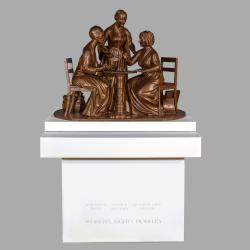
Women's Rights
From the American Revolution through the early 20th century, women who were denied political, educational, professional, and religious equality organized through reform movements to secure the right to vote and ultimately pursued constitutional equality through the Equal Rights Amendment.
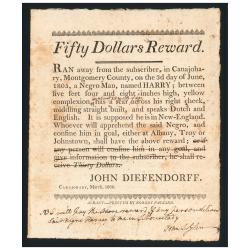
Freedom and Contradiction: Abolition and Civil Rights
From the era of slavery through emancipation and beyond, enslaved people and their allies, many in New York, fought for freedom and civil rights, a struggle that led to the Thirteenth Amendment to the United States Constitution and continues today in the ongoing pursuit of liberty and equality for all.
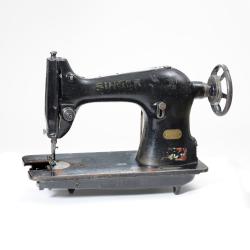
Labor Rights in NYS
From the early 19th century to the present, working people in New York, including immigrants, women, and people of color, have organized for labor rights and social justice, shaping laws and movements that advanced workplace protections, civil rights, and economic equality.
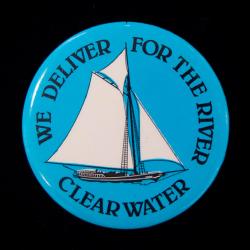
Environmental Activism
From the growth of industry to modern environmental activism, people in New York have worked to protect natural resources and public health, culminating in the 2021 adoption of the Green Amendment to the New York State Constitution guaranteeing the right to clean air, water, and a healthful environment.
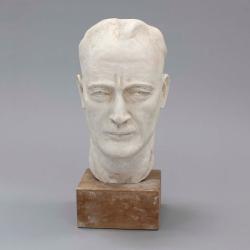
The American Dream
Immigrants to the United States have pursued opportunity, safety, and democracy despite discrimination and hardship, while playing key roles in movements for labor reform and equal rights.
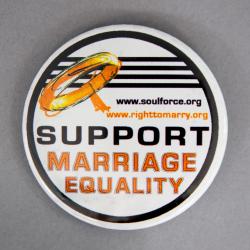
LGBTQ+ Rights
Activists in New York and across the United States have fought for LGBTQ+ rights in courts, legislatures, and communities, a movement commemorated each year during Pride in honor of the Stonewall uprising.
Power of Place
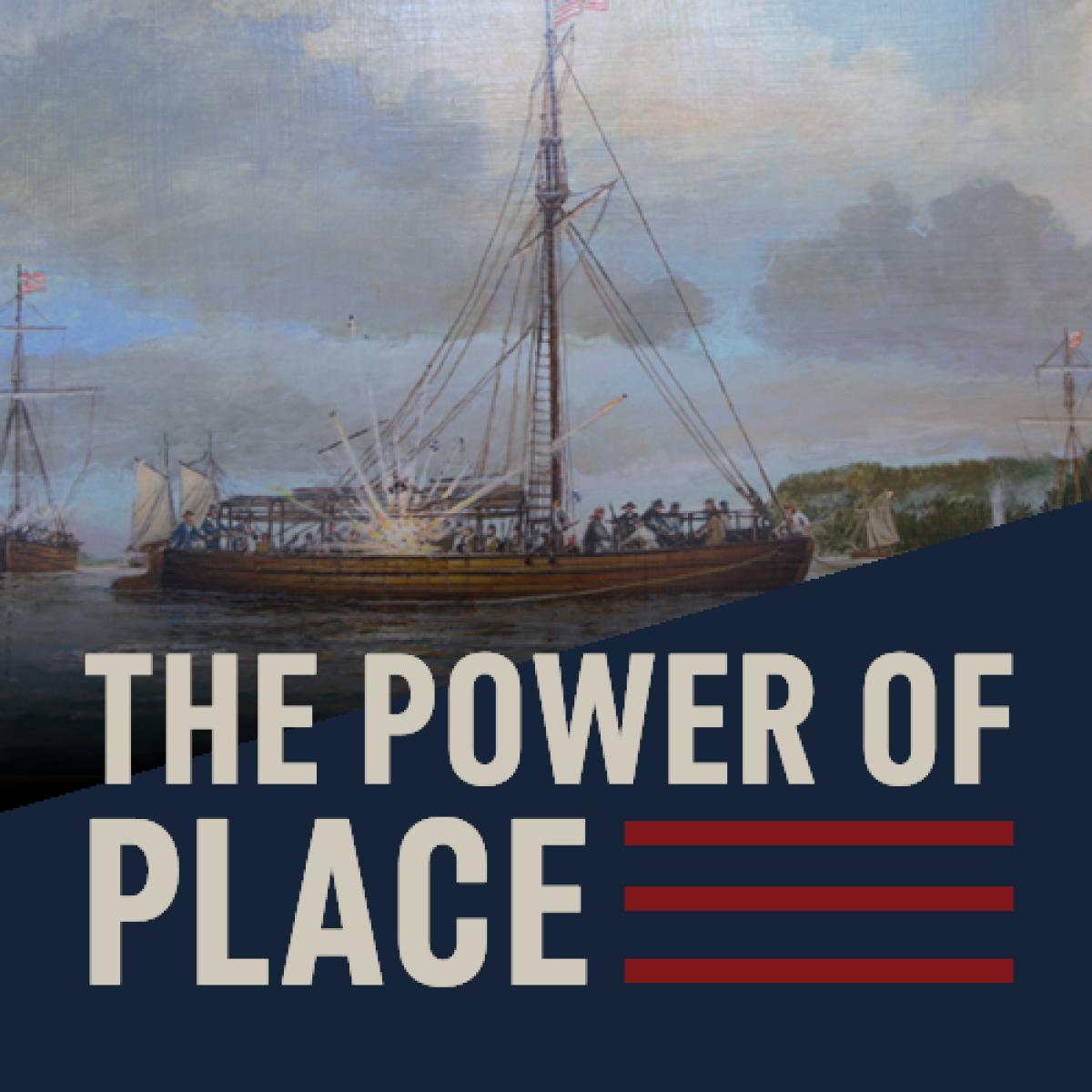
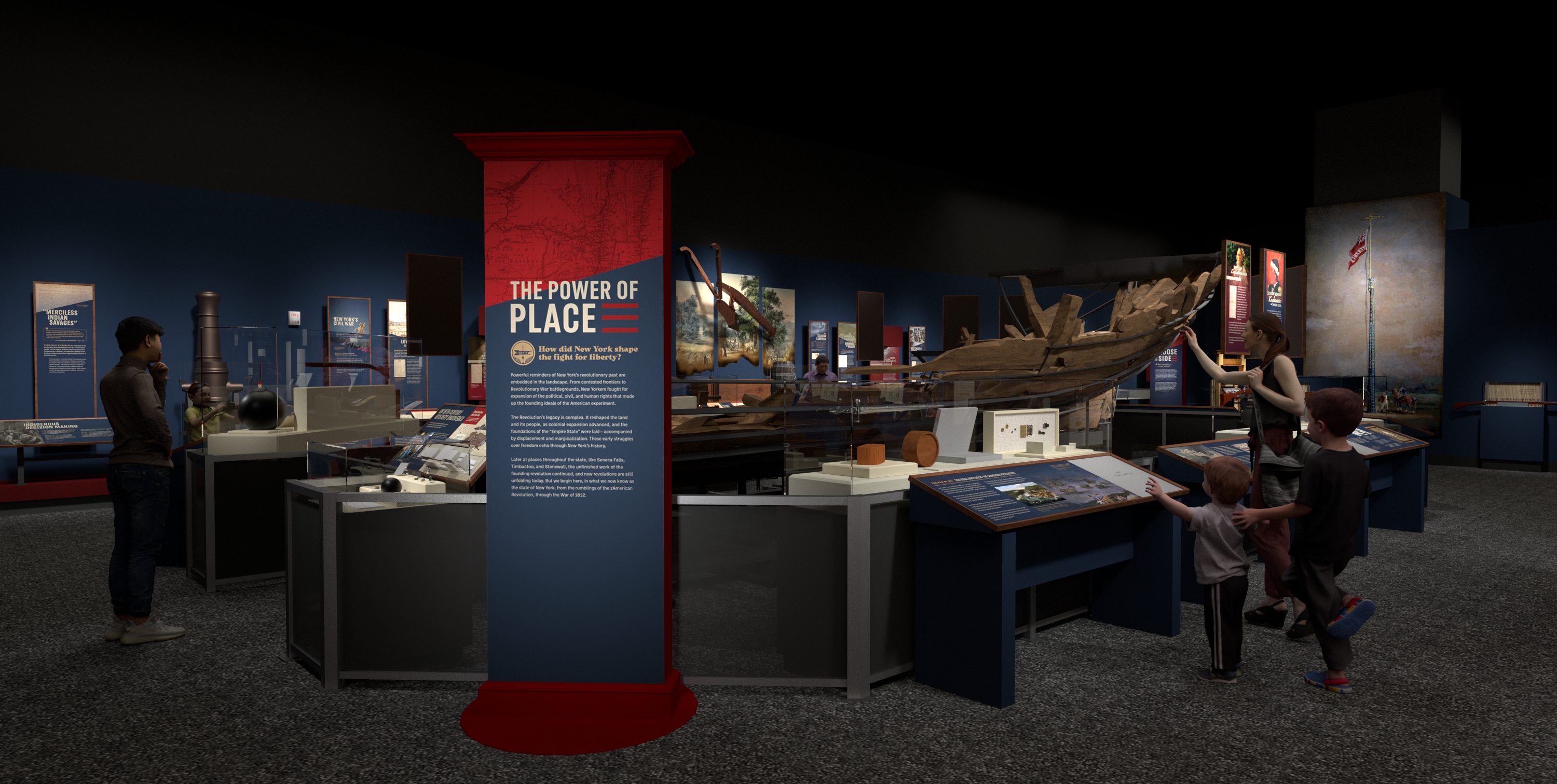
Upon entering the gallery, visitors may choose to go either left or right. However, the design encourages starting on the left, where the “Power of Place” introductory panel appears. The following descriptions follow that path.
An eight-foot-tall freestanding introductory panel stands on the left. Topped with decorative molding and set in a deep crimson circular base, this marks the beginning of a new section—this design feature is repeated throughout the exhibit. A historic map of New England before New York was founded crowns the panel, along with the title “Power of Place” and the question, “How did New York shape the fight for liberty?”
Moving ahead to your left, you’ll find a large wall-mounted monitor with a touchscreen kiosk positioned directly in front. The screen asks: “What was New York?” It displays maps and an accompanying narrative that explores how land was understood and contested before the American Revolution. To the right of the interactive map, a panel explains Indigenous kinship and diplomacy. Next to it are two pieces of featured artwork. Many Trails by Misti Moede (Stockbridge-Munsee Mohican) is an assemblage of cut and layered papers that create the official symbol of the Stockbridge-Munsee Community Band of Mohican Indians. The symbol features a vertical line intersected by two horizontal lines; in between these intersections are two concentric circles. Above the top intersection is an open half circle bisecting the vertical line. The second piece, Hiawatha Belt by Toni Cook (Oneida), is a framed rectangular woven belt, made of tiny cylindrical purple and white beads made out of dyed and undyed clam shell. The central form in the shape of a tree or a flame, as in a council fire, representing Onondaga Nation, the central fire of the Haudenosaunee Confederacy.
At the center of the gallery is the largest feature: a reconstruction of a Revolutionary War-era American gunboat, measuring about 16 by 30 feet. The wood is dark brown with a rough, visible grain and is cradled in a steel mount. It is surrounded by angled interpretive panels and object cases that take visitors on a circular path around the gunboat.
Content includes: a timeline from the 1763 Treaty of Paris to the start of the Revolution in 1775, panels highlighting major campaigns during the American Revolution with accompany maps showing regions they took place, biographies of nine key figures that are hung on cabled panels, six display cases with related artifacts such as muskets, swords, powder horns, ammunition, and personal items including spoons and buckles.
Beyond the gunboat display is a large, vertical wall graphic featuring a liberty pole and an area where visitors may participate in hands-on activities. There is a four-by-eight-foot wooden artillery sled fitted with a six-pounder cannon that visitors are invited to touch.
The “Power of Place” section concludes with the War of 1812 on the last slant panel that is located around the gunboat.
Powerful reminders of New York’s revolutionary past are embedded in the landscape. From contested frontiers to Revolutionary War battlegrounds, New Yorkers fought for expansion of the political, civil, and human rights that made up the founding ideals of the American experiment.
The Revolution’s legacy is complex. It reshaped the land and its people, as colonial expansion advanced, and the foundations of the “Empire State” were laid—accompanied by displacement and marginalization. These early struggles over freedom echo through New York’s history.
Later at places throughout the state, like Seneca Falls, Timbuctoo, and Stonewall, the unfinished work of the founding revolution continued, and new revolutions are still unfolding today. But we begin here, in what we now know as the state of New York, from the rumblings of the American Revolution, through the War of 1812.
Highlights
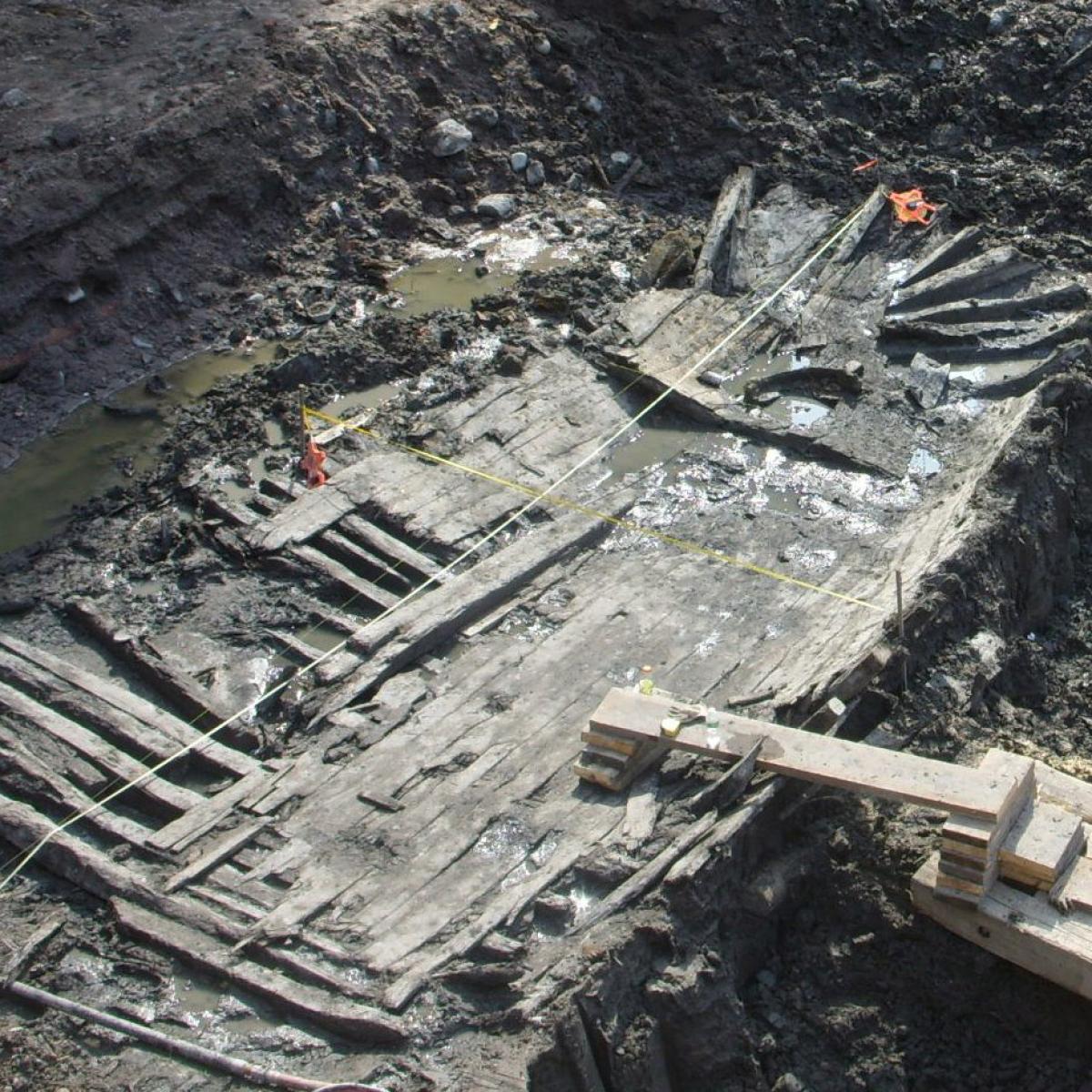
This gunboat is among the very few American-built Revolutionary War-era ships that are known to remain. Evidence suggests that it was built in 1775 and captured by the British when Philadelphia fell in 1777.
Credit: NYSM, A2016.14
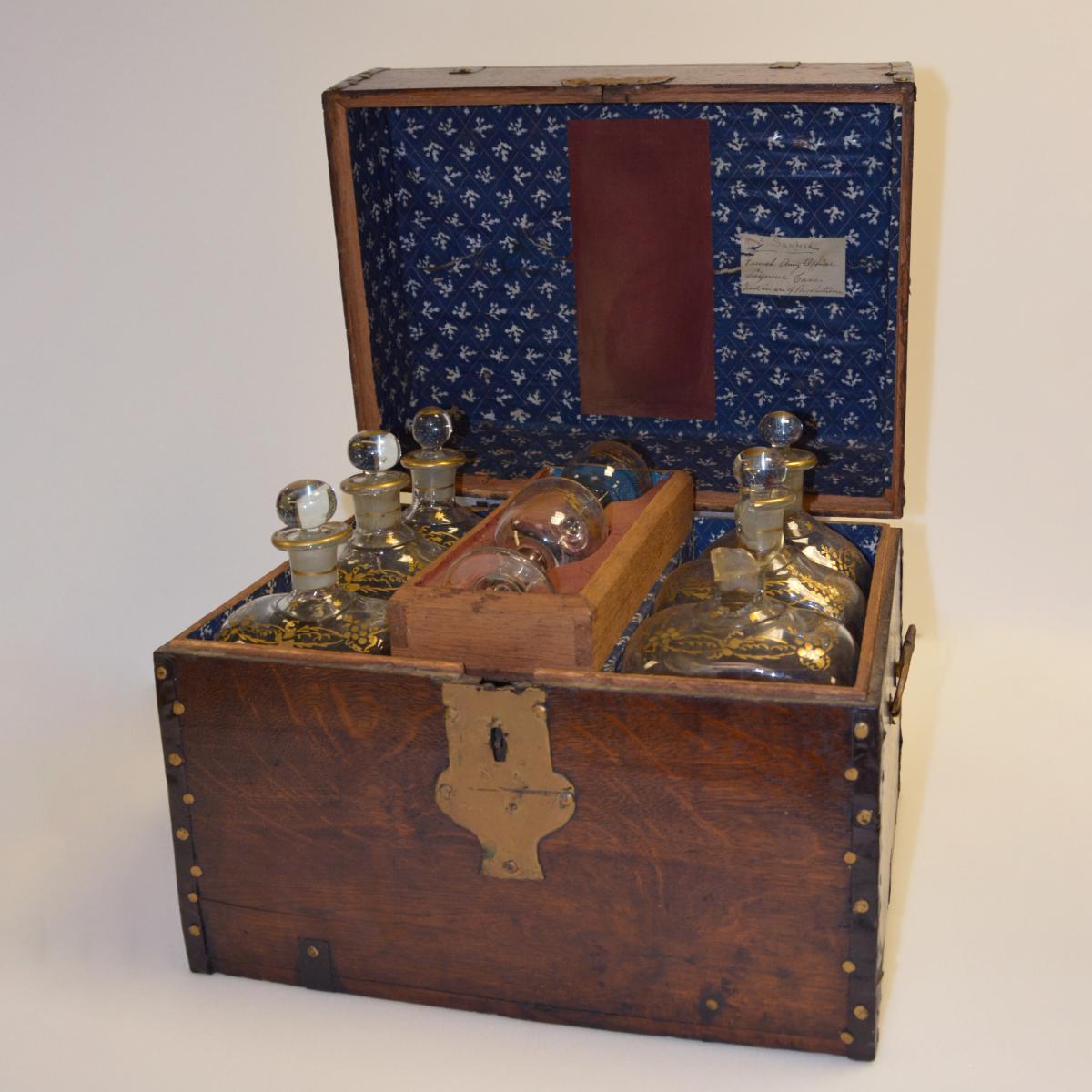
This campaign style liquor chest has a fitted interior for six bottles of liquor and accompanying glasses. It was presented to Captain Abraham Swartout, a New York officer on General George Washington’s staff, by an unidentified French Army officer.
Credit: NYSM, H-2015.30.1 A-R
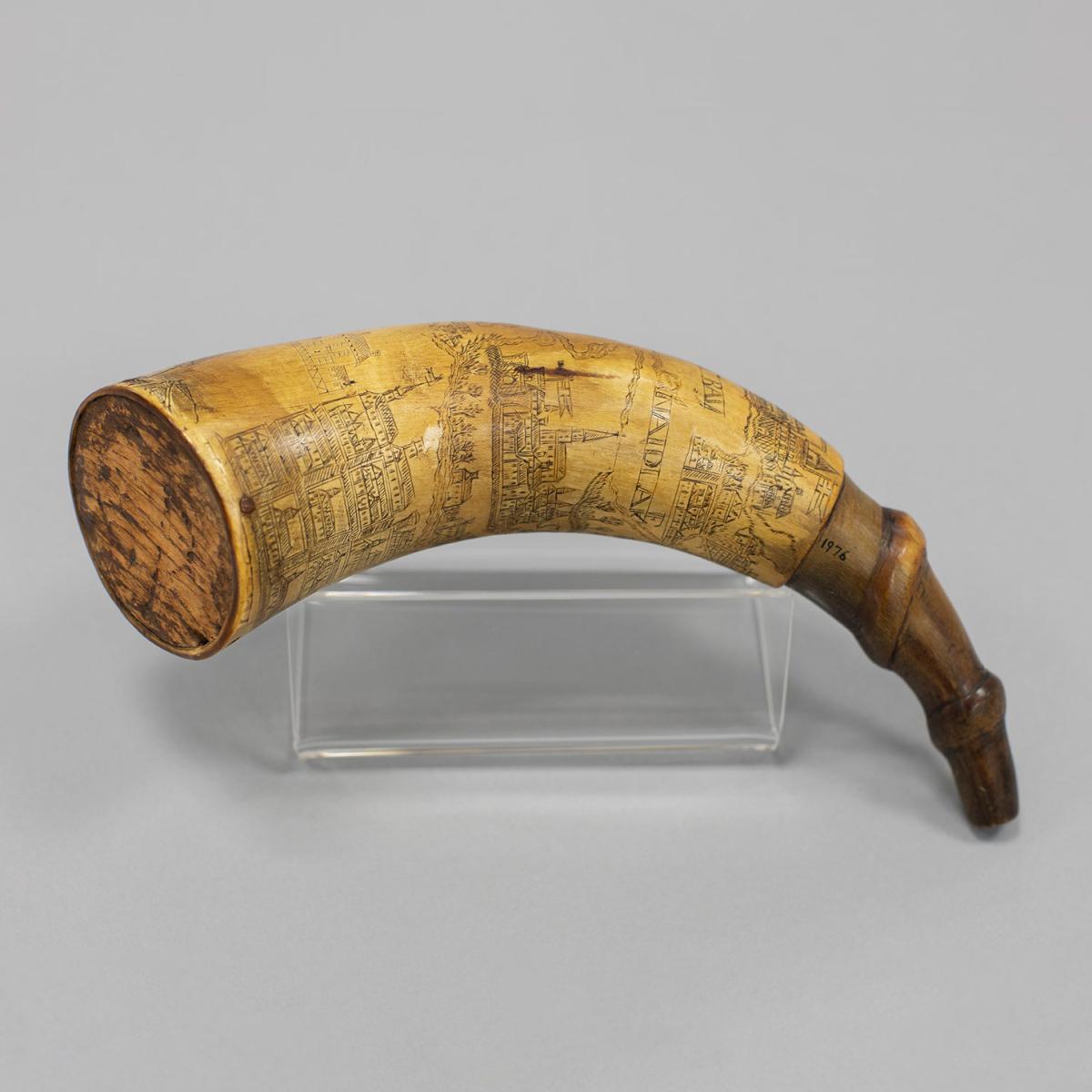
Credit: NYSM, H-1936.12.1
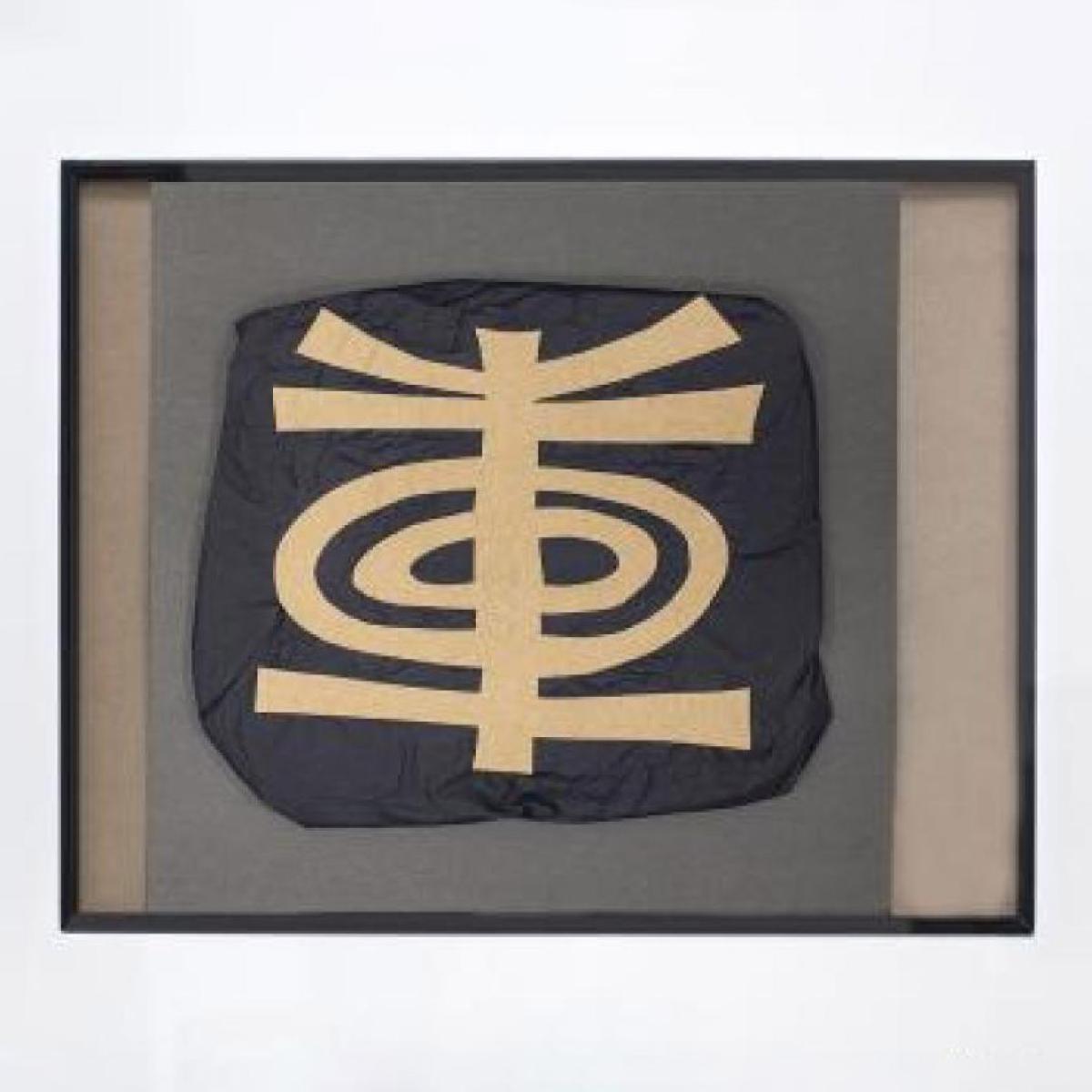
Many Trails, 2023
Misti Moede (Stockbridge-Munsee Mohican)
Layered paper art
Official symbol of the Stockbridge-Munsee Band of Mohican Indians, created by Edwin Martin, the “Many Trails” emblem represents the “endurance, strength, and hope” of the people and their journey to their current home and status as a sovereign Nation on Menominee lands in Wisconsin.
New York State Museum E-2024.09.1
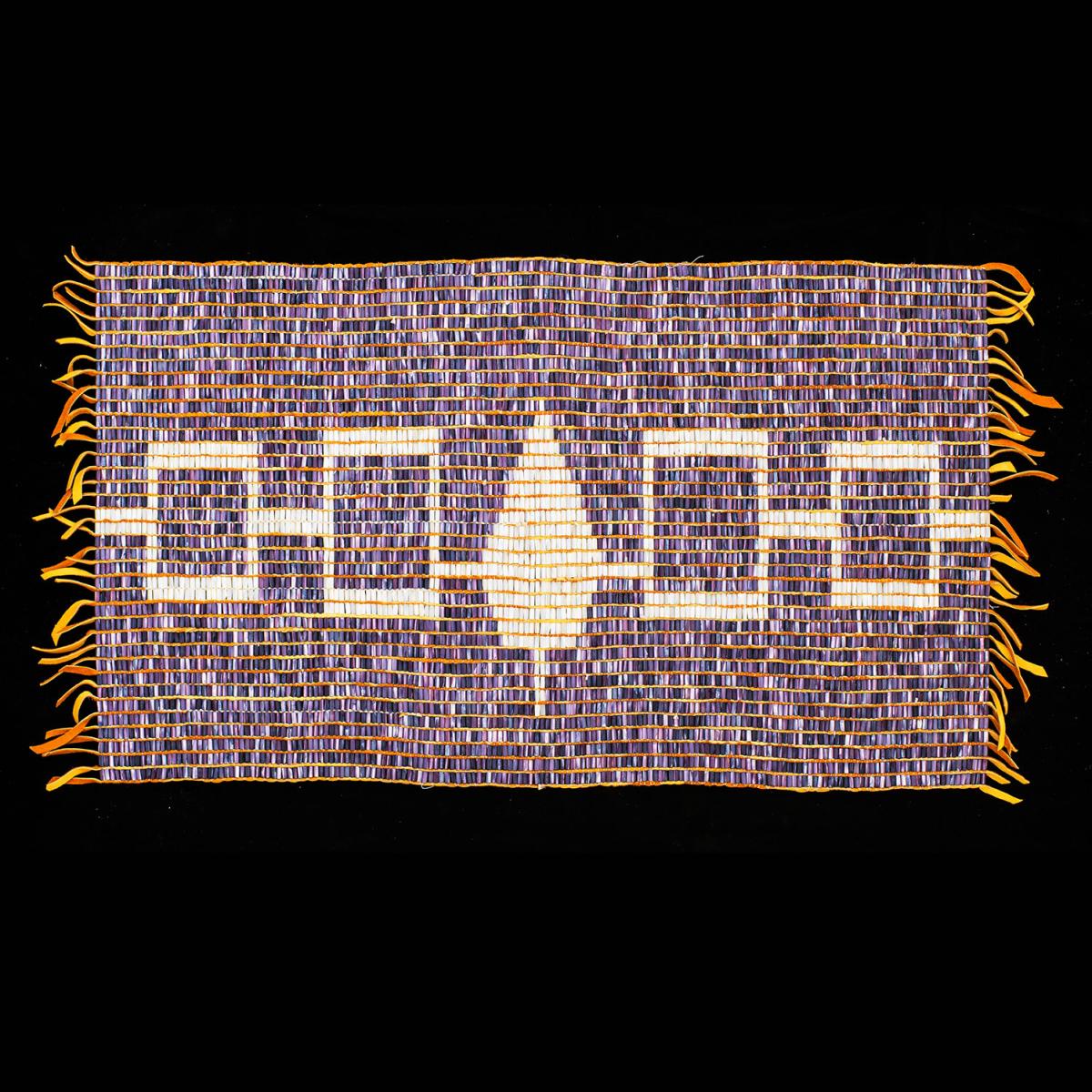
Hiawatha Belt, 2021
Toni Cook (Oneida)
This reproduction belt represents the Haudenosaunee Confederacy, stretching across what is now New York. Each shape represents one of the original five Haudenosaunee Nations, and the center represents the Council Fires at Onondaga Nation. The Tuscarora joined in 1720 and are considered part of the Confederacy today as well.
New York State Museum E-2001.10.01
Additional Resources

The Thanksgiving Address, Ohen:ton Karihwatehkwen: Words Before all Else
Members of the University at Albany’s Indigenous Students Association read the Haudenosaunee Thanksgiving Address.

Unlocking the Secrets of the Gunboat at Ground Zero
Explore two expert-led videos featuring Dr. Peter Fix and Dr. Warren Riess on the remarkable 18th-century Revolutionary War–era gunboat unearthed beneath the World Trade Center site in 2010, its historical significance, and the meticulous conservation process that preserved this window into early American maritime history.
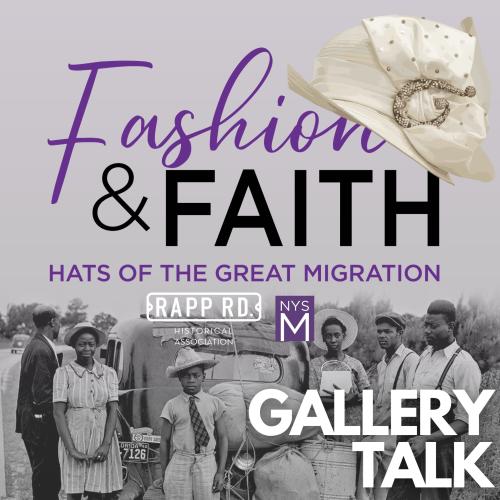
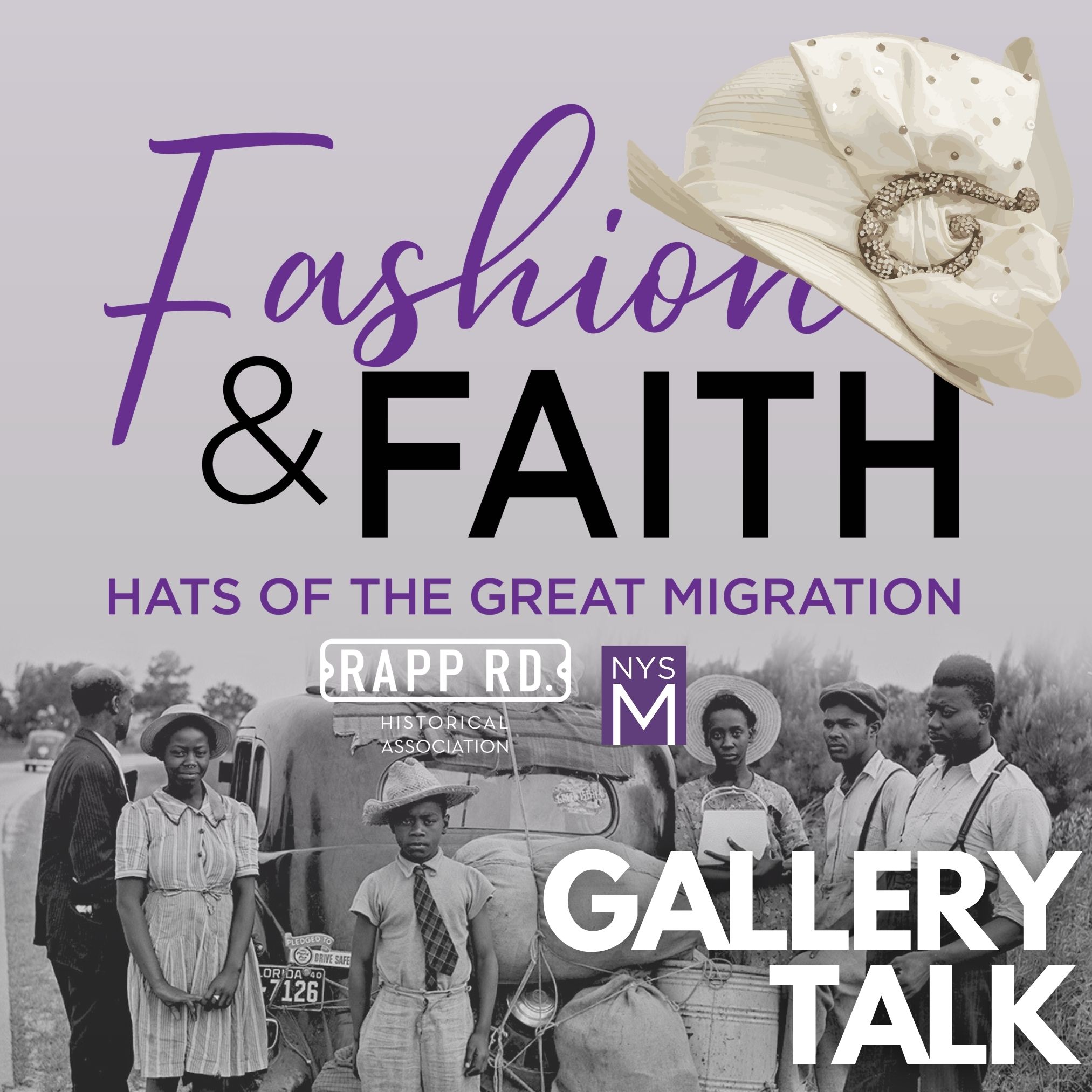
In celebration of Juneteenth, join Dr. Jennifer Lemak and Rapp Road Historical Association for an engaging gallery talk on Fashion and Faith: Hats of the Great Migration. Explore how the hats worn in Black churches during the Great Migration were more than fashion—they were symbols of faith, resilience, and personal identity. Dr. Lemak will share the stories behind these extraordinary “crowns,” highlighting how they reflected the journeys, leadership, and creativity of women who navigated new lives in New York State while holding onto their heritage and hope for the future.
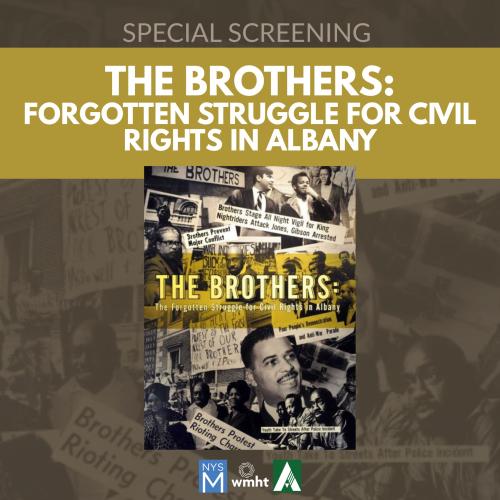
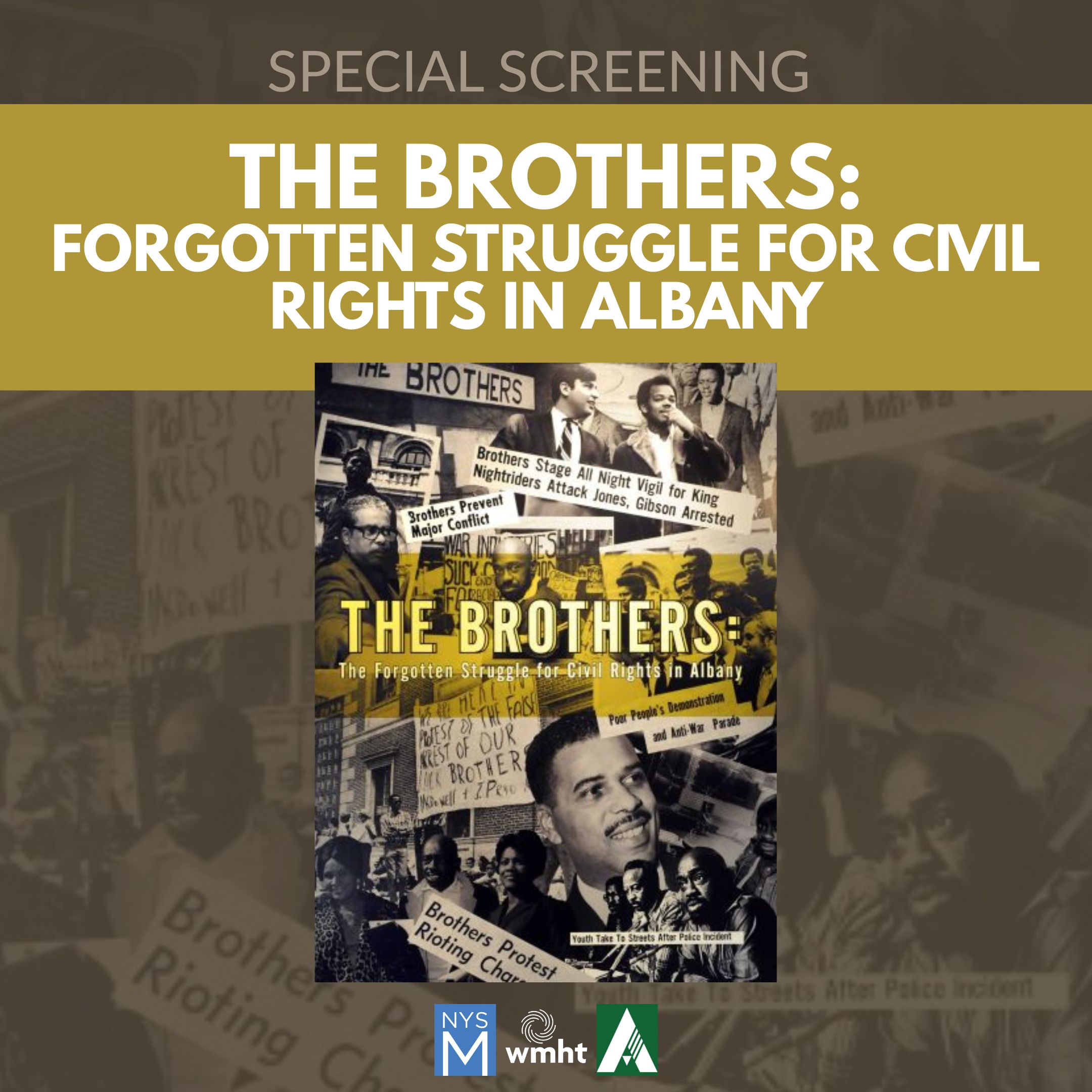
JoJoin State Archivist Brian Keough for an introduction and special screening of the documentary The Brothers: Forgotten Struggle for Civil Rights in Albany (25 minutes).
The film explores The Brothers, a civil rights organization founded in 1966 by working-class African American men from Albany’s Arbor Hill and South End neighborhoods. Formed over a dispute with hiring by local unions, The Brothers was a group which personified the Black power movement in Albany during the mid- to late 1960s. This organization of working class African American men recognized how their community was disenfranchised and led a movement to expose vote buying and election fraud. They used direct action and picketing, and were at odds with not only the city, but frequently clashed with established social welfare and civil rights groups. Predating the Black Panther Party, The Brothers conveyed a militant and revolutionary spirit, but they professed non-violence. They personified a growing black consciousness in Albany, as the events in Albany during 1965–67 demonstrated an aging political machine being challenged by an emerging, grassroots social movement that was fueled by black power and consciousness.
This program was made possible by WMHT.in State Archivist Brian Keough for an introduction and special screening of the
documentary The Brothers: Forgotten Struggle for Civil Rights in Albany (25 minutes).
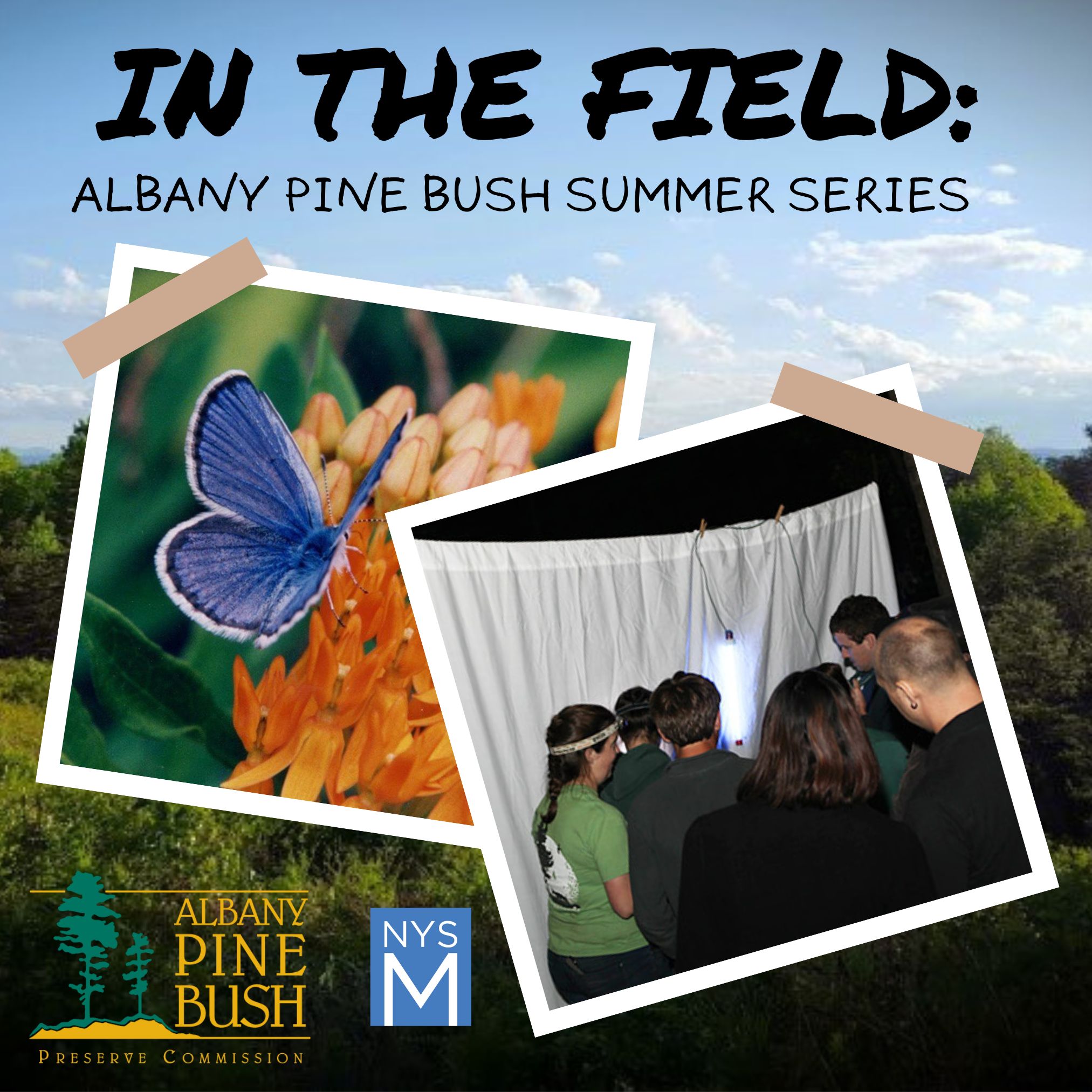
In the Field: Albany Pine Bush Summer Series brings New York State Museum scientists out of the building and into the globally rare pine barrens ecosystem for hands-on exploration. This offsite program series invites participants to experience field science in action through guided walks, demonstrations, and real-time research with Museum experts and Albany Pine Bush staff. Each program offers a unique opportunity to engage with the region’s dynamic ecosystems while learning directly from scientists working in the field.
Moth Mania
This evening program is focused on attracting, observing, and identifying moths in the Albany Pine Bush Preserve—home to one of the most diverse and fascinating moth communities in the Northeast, including many species that have adapted specifically to live in pine barrens. Join Albany Pine Bush staff and NYS Entomologist Dr. Timothy McCabe to spend an evening observing and documenting moths in the preserve. Participants should plan to do some light hiking.
Registration required.
Register for In the Field: Moth Mania
Location:
The Albany Pine Bush
195 New Karner Road
Albany, NY 12205