

Indigenous Activity in the Hudson Highlands
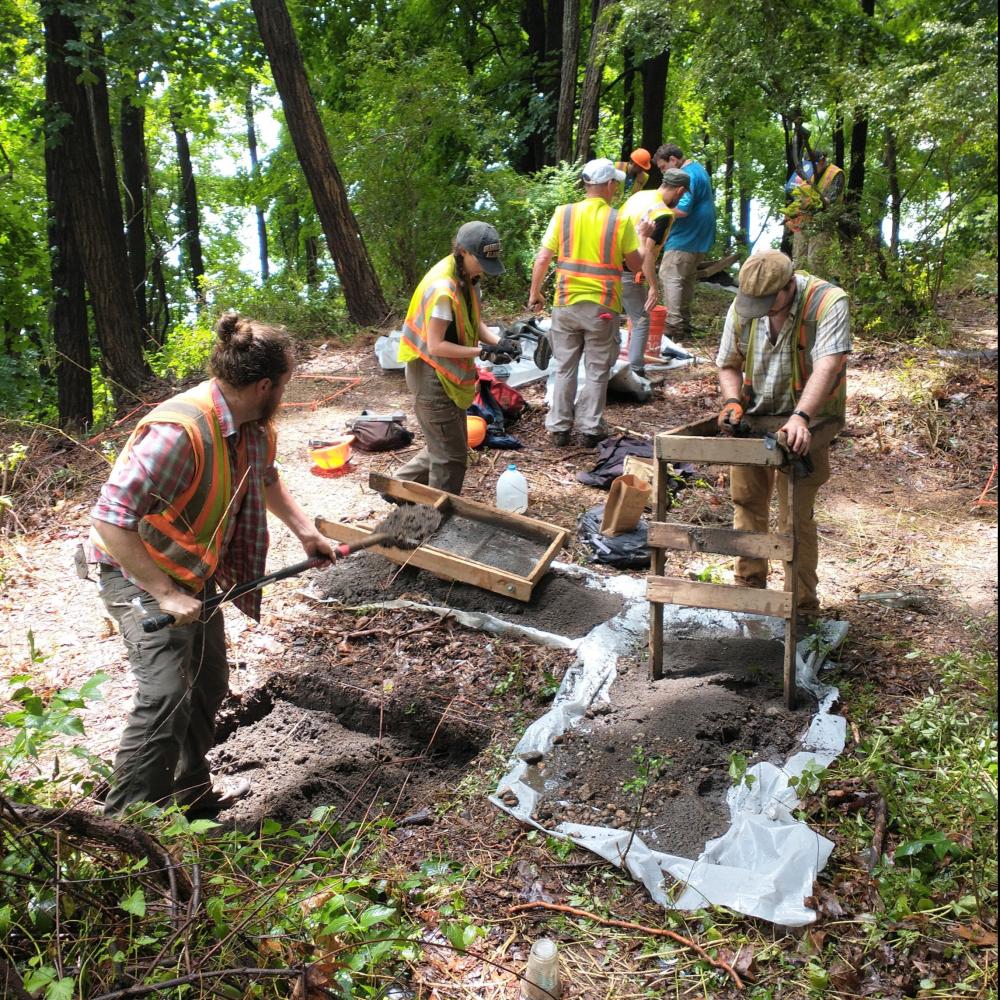
Archaeologists from the NYSM’s Cultural Resource Survey Program kicked off this year’s field season with a survey in the Hudson Highlands in an area overlooking the Hudson River not far from Manitou Mountain. This is within the traditional homeland of the Muh-he-conneok, the People of the Waters That Are Never Still, now the Stockbridge-Munsee Community Band of Mohican Indians.
Traces of indigenous activity were found within the survey area, including a light scatter of quartz and chert flakes produced during stone tool manufacture or resharpening, some objects that appear to be expedient stone tools, an exceptionally well-made quartzite Levanna triangle projectile point, and pottery fragments. Based on the artifacts, the site roughly dates between 500 and 1,000 years old.
Unfortunately, only durable materials like stone and fired clay pottery typically survive in the region’s sandy, acidic soils, so a complete understanding of indigenous activity at the site is beyond reach. Still, the recovery of artifacts speaks to the deep history of settlement along the never-still waters of the Mahicannituck, now Hudson River.
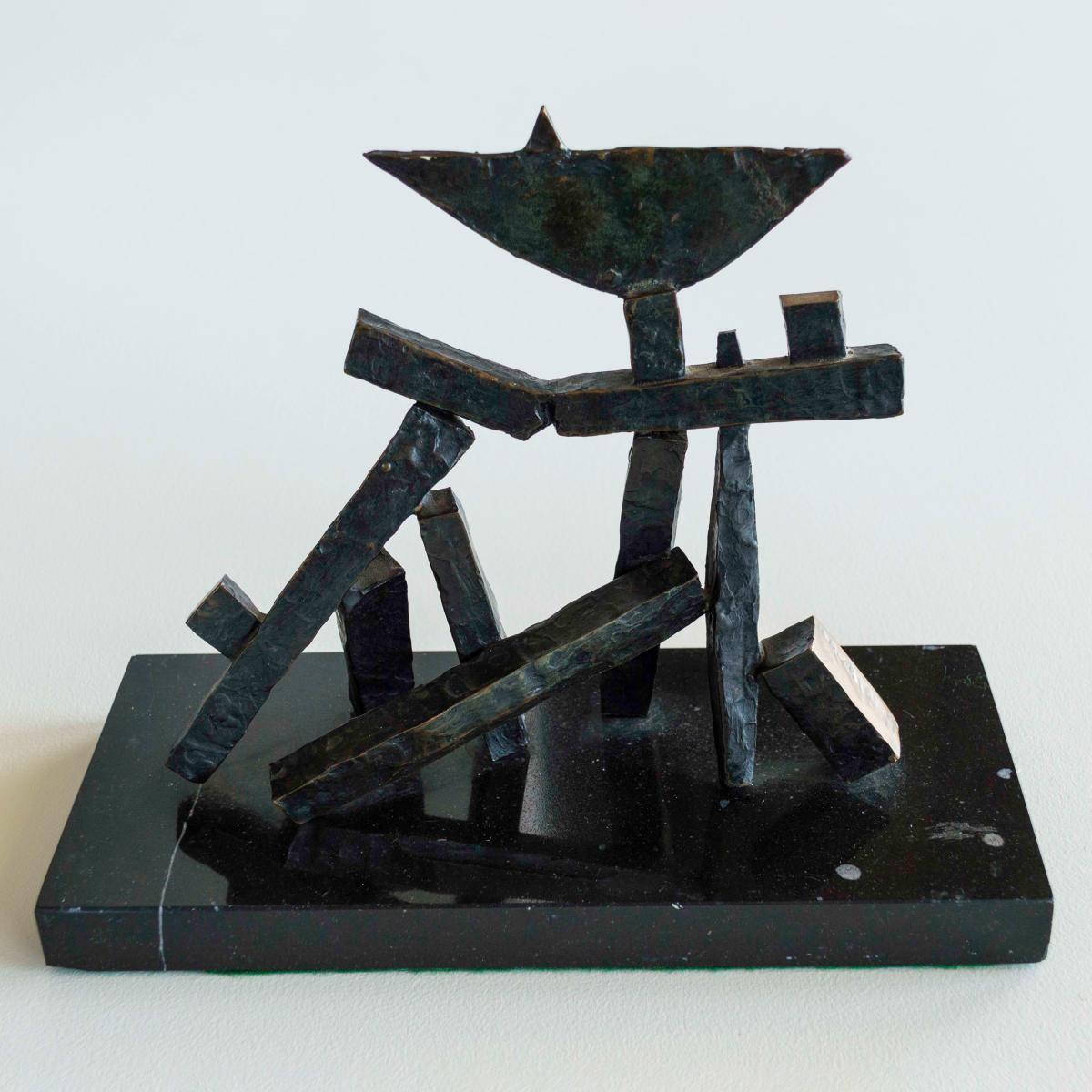

Coupling Indigenous Artwork and Ancient Artifacts
The New York State Museum maintains its extensive material collections for the benefit of individuals and communities across the New York region and beyond. Increasingly, indigenous scholars, artists, and community members are accessing the NYSM's anthropology collections for insights into traditional material culture, creative inspiration, or for ancestral connections through these objects.
Last December, potter and sculptor Natasha Smoke-Santiago of the Mohawk Nation at Akwesasne visited NYSM to examine Haudenosaunee pottery collections from archaeological sites across New York. As artist-in-residence at the Everson Museum in Syracuse, Natasha is collaborating with Garth Johnson, the Everson's curator of ceramics, to develop an exhibit of Natasha's own works that will be coupled with indigenous pottery and pipes from the NYSM archaeological collections. The exhibit is projected to open in spring 2024, and information will be forthcoming on the Everson Museum's website.
You can also see Natasha’s artwork on view now in the NYSM exhibit, “Each One Inspired: Indigenous Art Across the Homelands.” For more information, visit: https://www.nysm.nysed.gov/exhibitions/each-one-inspired
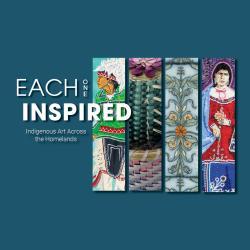
Each One Inspired: Indigenous Art Across the Homelands
The NYSM exhibit Each One Inspired examines the sources of inspiration for Indigenous artists across what is now New York. Featuring over 60 original artworks from the NYSM Contemporary Indigenous Art Collection, the exhibit is on view in the West Gallery through March 31, 2024.
2025 Capital History Day Results
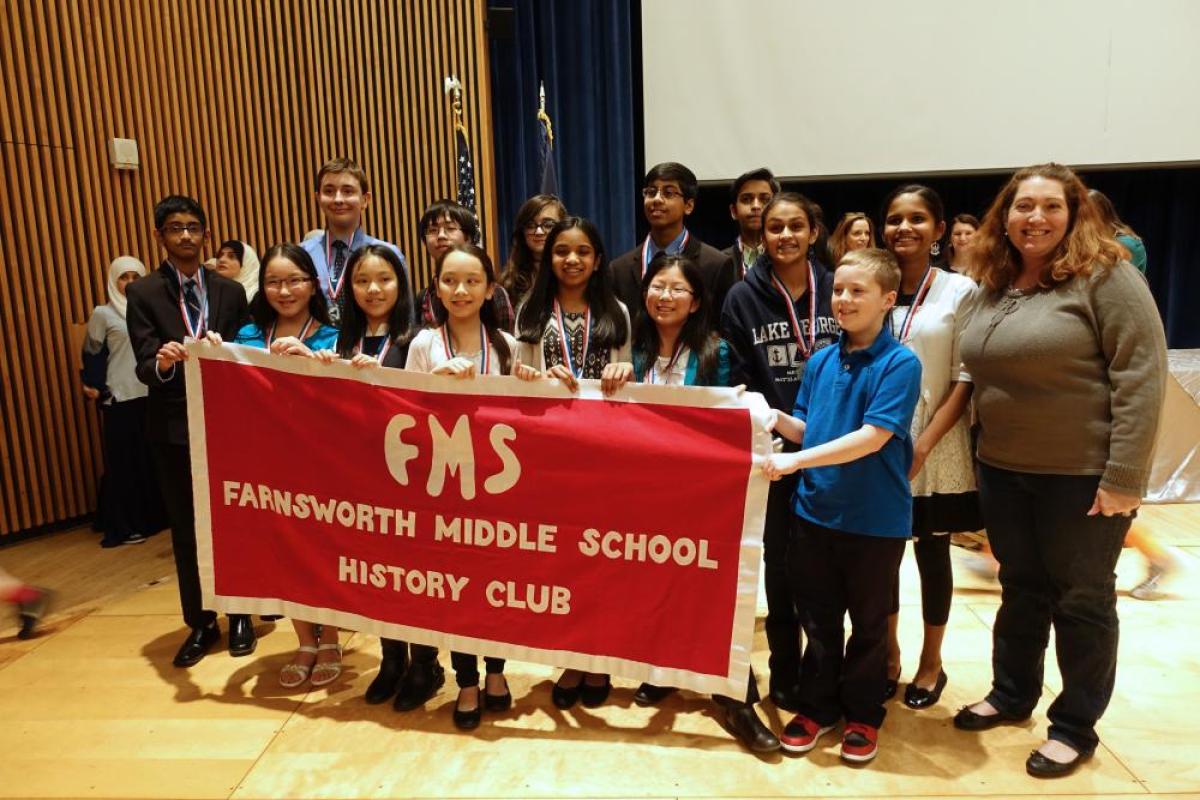
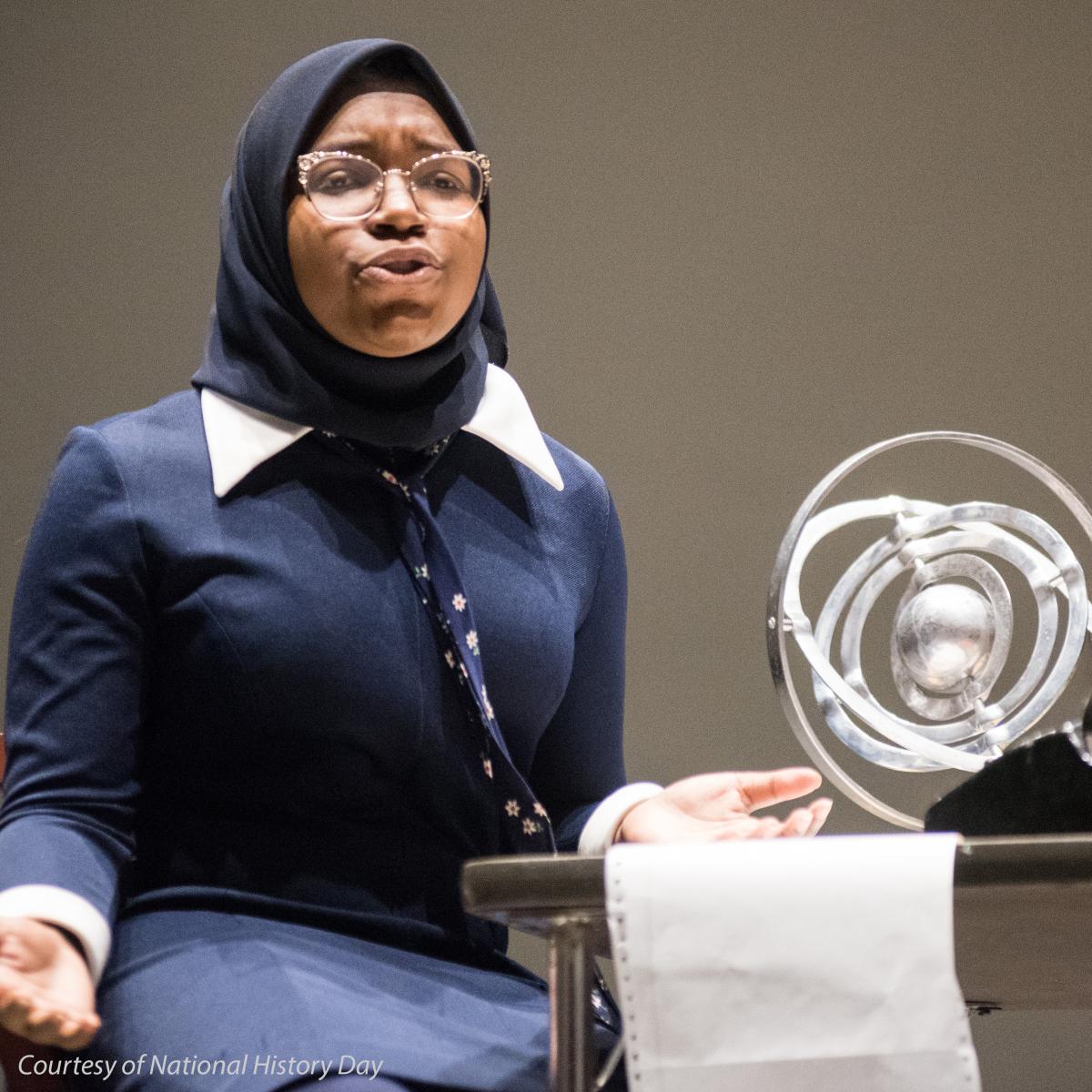
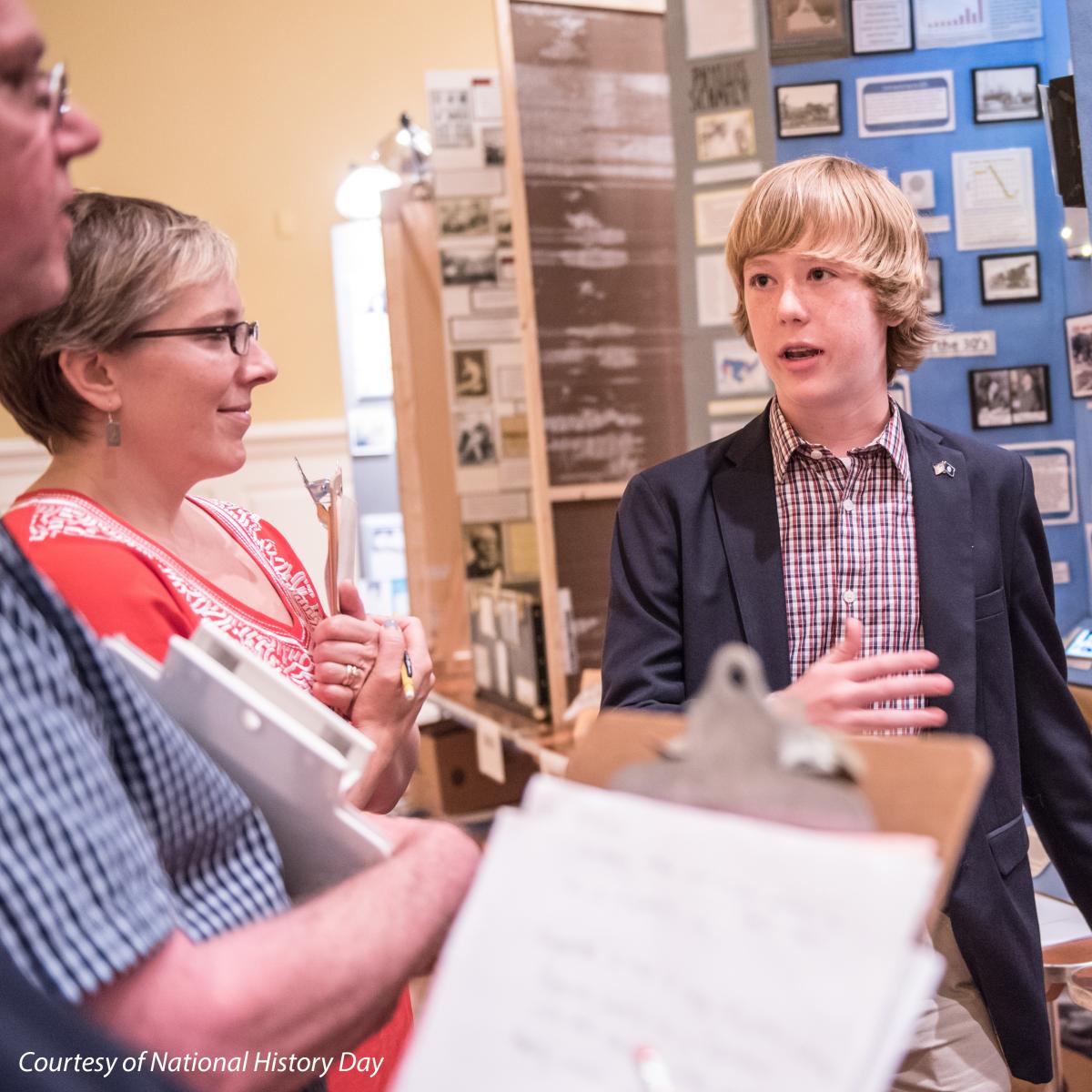
Students from around the Capital Region explored the theme, “Rights & Responsibilities in History” through historical papers, exhibit boards, documentaries, performances, and websites.
Congratulations to all of our Capital Region History Day students. Your projects impressed our judges and are a testament to your hard work, ingenuity, and dedication to the field of history. To all of our students moving on to the New York State History Day Competition, we wish you the best of luck! A huge thank you to all of our volunteer judges for your time and effort!




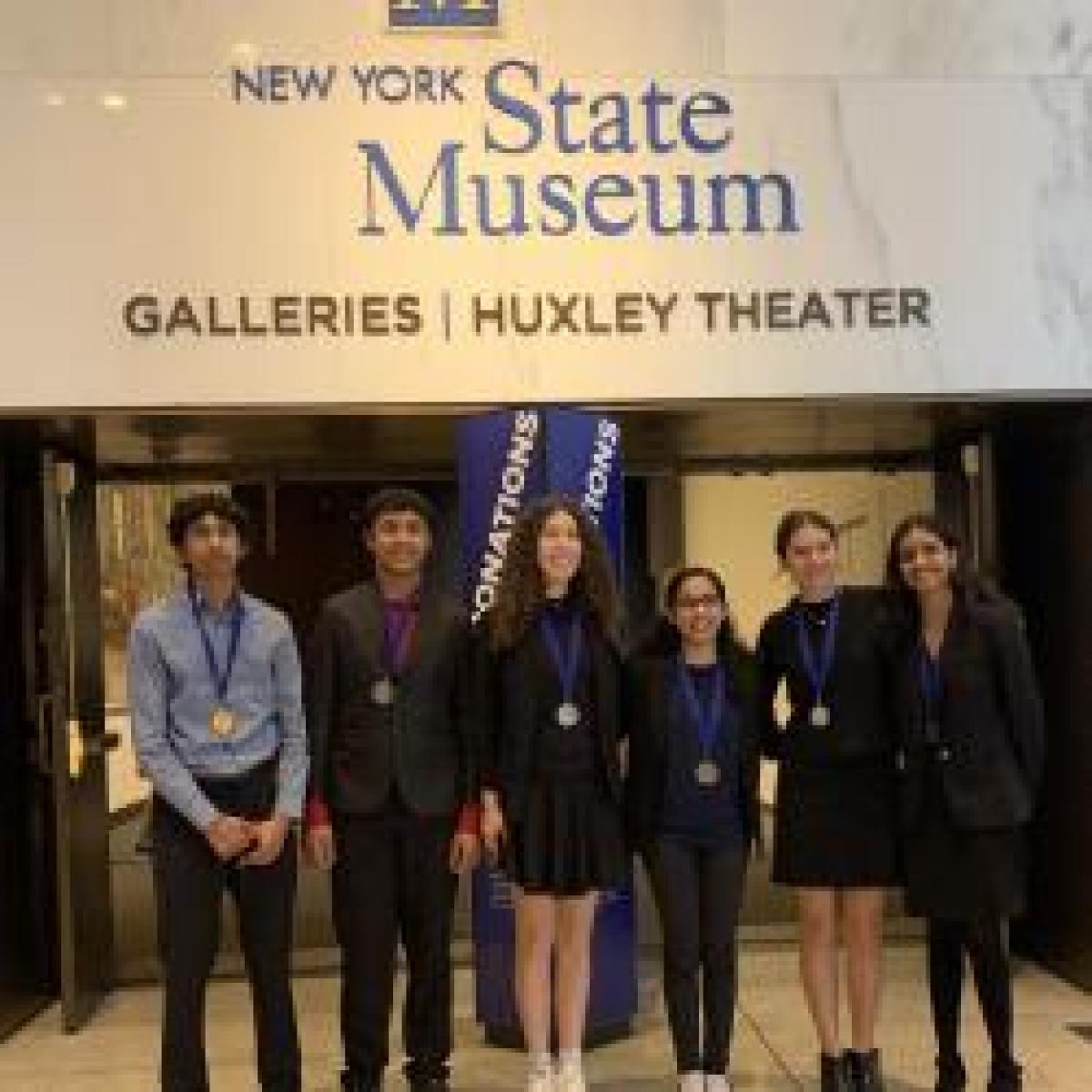

All Regional Capital District Results
Junior Group Documentary
First Place
Entry: #12001
Students: Amy Shiju, Abel Shiju
Title: *America Is No Longer A Melting Pot - The Three Early Immigration Acts*
City: Slingerlands, NY
Affiliate: Farnsworth Middle School
Teacher: Alicia Malanga
Junior Group Exhibit
First Place
Entry: #16001
Students: Ayla Frolish, Annabelle Baj
Title: *Women in the Dutch Resistance*
City: Mechanicville, NY
Affiliate: Mechanicville Junior/Senior High School
Teacher: Shannon Brownell
Senior Group Exhibit
First Place
Entry: #26001
Students: Tanisha Muralimanohar, Maddy Ehrlich, Maria Samuel
Title: *Spoils of the Spoils System*
City: Niskayuna, NY
Affiliate: Muralimanohar Home School
Teacher: Kavitha Muralimanohar
Junior Group Website
Second Place
Entry: #18001
Students: Roger Sheng, Katie Sheng
Title: *The Rights and Responsibilities of the Storming of Bastille*
City: Schenectady, NY
Affiliate: Farnsworth Middle School
Teacher: Alicia Malanga
First Place
Entry: #18002
Students: Isaac Chan, Sophie Jian, Justin Jian
Title: *The Declaration of the Rights of Man and Citizen: Rights and Responsibilities of the French*
City: Schenectady, NY
Affiliate: Farnsworth Middle School
Teacher: Alicia Malanga
Junior Individual Documentary
Third Place
Entry: #11003
Students: Natalia Taglione
Title: *Coequal Combat*
City: Mechanicville, NY
Affiliate: Mechanicville Junior/Senior High School
Teacher: Shannon Brownell
Second Place
Entry: #11002
Students: Aarav Agarwal
Title: *Breaking Barriers: The Americans with Disabilities Act and Its Legacy*
City: Guilderland, NY
Affiliate: Farnsworth Middle School
Teacher: Alicia Malanga
First Place
Entry: #11001
Students: Anika Bhupati
Title: *Work or Play?: Rights to a Childhood*
City: Albany, NY
Affiliate: Farnsworth Middle School
Teacher: Alicia Malanga
Senior Individual Documentary
First Place
Entry: #21001
Students: Ayushmann Mukherjee
Title: *Strange Fruit - The Power of Song in Rights and Responsibilities*
City: Niskayuna, NY
Affiliate: Muralimanohar Home School
Teacher: Kavitha Muralimanohar
Senior Individual Exhibit
Second Place
Entry: #25003
Students: Ava Ehrlich
Title: *Rights and Responsibilities Lost During the Holocaust*
City: Niskayuna, NY
Affiliate: Muralimanohar Home School
Teacher: Kavitha Muralimanohar
First Place
Entry: #25001
Students: Samia Shahzad
Title: *The Hidden Legacy of Pauli Murray*
City: Menands, NY
Affiliate: Bright Hope Academy Center
Teacher: Elizabeth Zahdan
Junior Individual Website
Third Place
Entry: #17003
Students: Ben Xu
Title: *Serving and Destroying: The Age of McCarthyism*
City: Schenectady, NY
Affiliate: Farnsworth Middle School
Teacher: Alicia Malanga
Second Place
Entry: #17001
Students: LeRoyal Amoako
Title: *Auschwitz-Birkenau: The Experiments*
City: Mechanicville, NY
Affiliate: Mechanicville Junior/Senior High School
Teacher: Shannon Brownell
First Place
Entry: #17002
Students: Darshana Saravanakumar
Title: *“It’s Your War”: How The WAAC Paved the Way for Women’s Equality*
City: Guilderland, NY
Affiliate: Farnsworth Middle School
Teacher: Alicia Malanga
Senior Individual Website
First Place
Entry: #27001
Students: Jerome Samuel
Title: *Wired for Change*
City: Schenectady, NY
Affiliate: Muralimanohar Home School
Teacher: Kavitha Muralimanohar
Junior Paper
Second Place
Entry: #10001
Students: Pranusha Appanabhotla
Title: *The Triumph Over Smallpox: Responsibility of Public Health*
City: Clifton Park, NY
Affiliate: Acadia Middle School
Teacher: Matthew Howard
First Place
Entry: #10002
Students: Moksha Pathipati
Title: *End of the Patroon System! The Revolt Carried Out by the Disguised*
City: Albany, NY
Affiliate: Farnsworth Middle School
Teacher: Alicia Malanga
Senior Paper
Third Place
Entry: #20003
Students: Rayn Shook
Title: *An Unjust Incarceration*
City: 12065, NY
Affiliate: Shenendehowa High School
Teacher: Heather Porter
Third Place
Entry: #20004
Students: Alexandra Strasser
Title: *Sacrilege or Salvation? The Enduring Impact of "The Woman's Bible"*
City: Halfmoon, NY
Affiliate: Shenendehowa High School
Teacher: Robert Rider
Second Place
Entry: #20002
Students: Keya Mehta
Title: *The Children’s Charter of 1889: The Evolution of Legal Rights and Responsibilities in Child Welfare*
City: Glenmont, NY
Affiliate: Emma Willard School
Teacher: Maggie Curtin
First Place
Entry: #20001
Students: Gianna Zhang
Title: *The Burden of Freedom: How Chinese Immigrants and the U.S. Government Balanced Rights and Responsibilities in the Chinese Exclusion Era*
City: Loudonville, NY
Affiliate: Shaker High School
Teacher: Karen Ryan
Evolution of Boreal Forest Birds
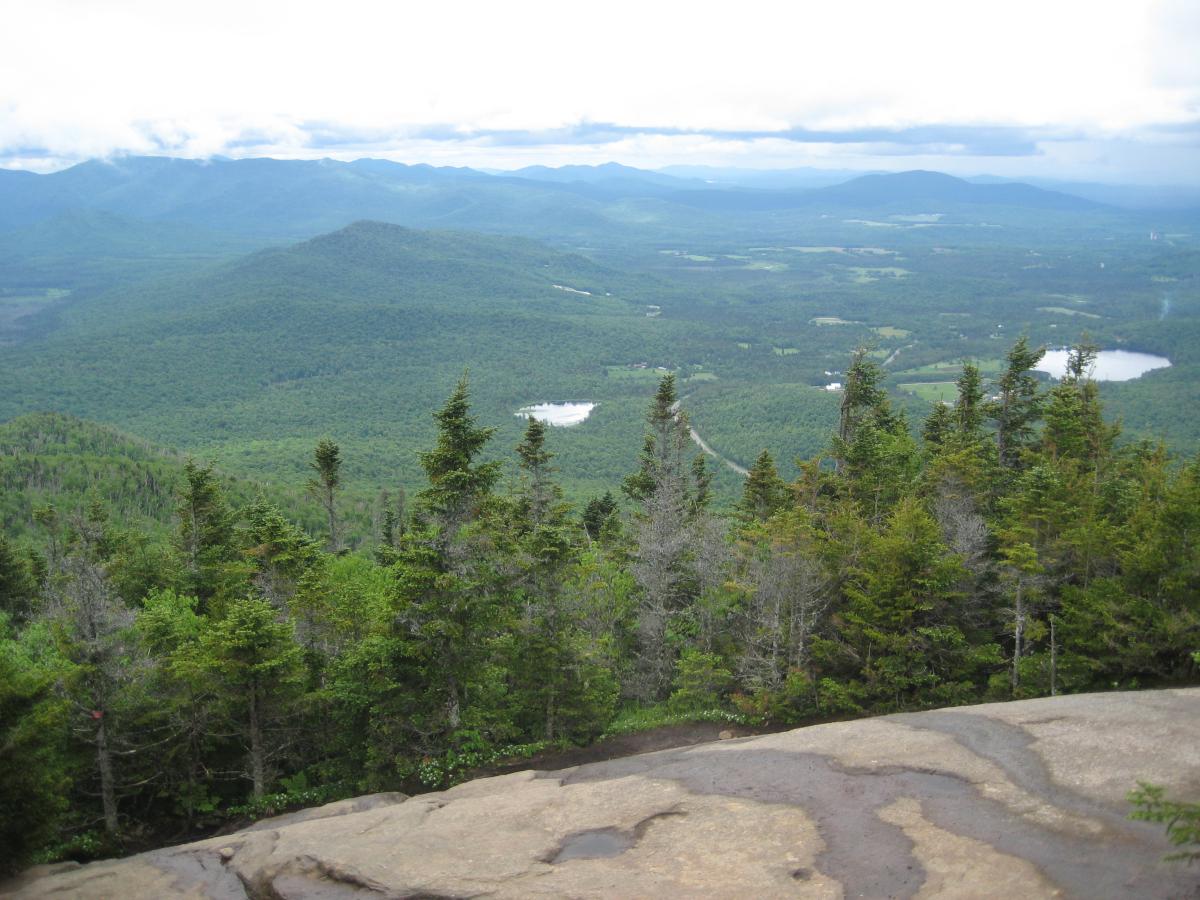
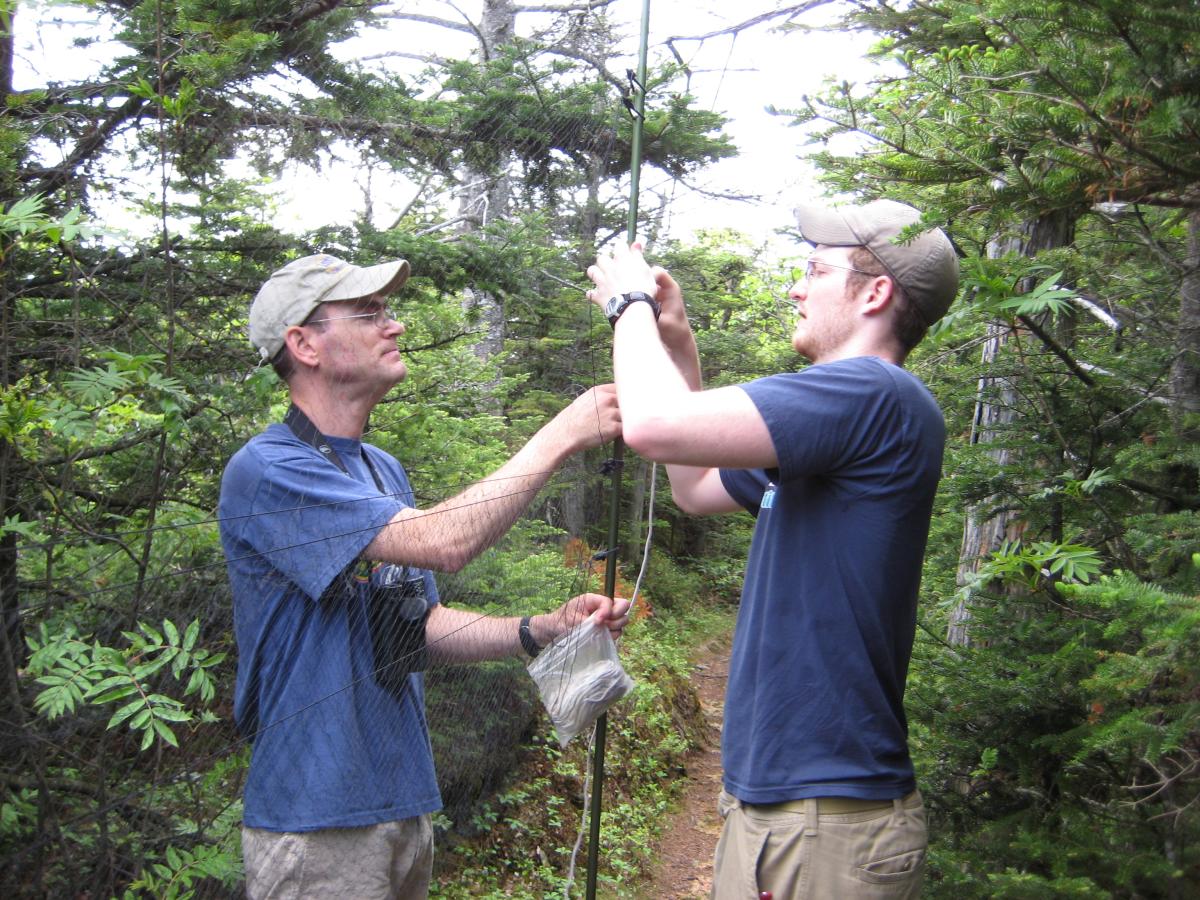
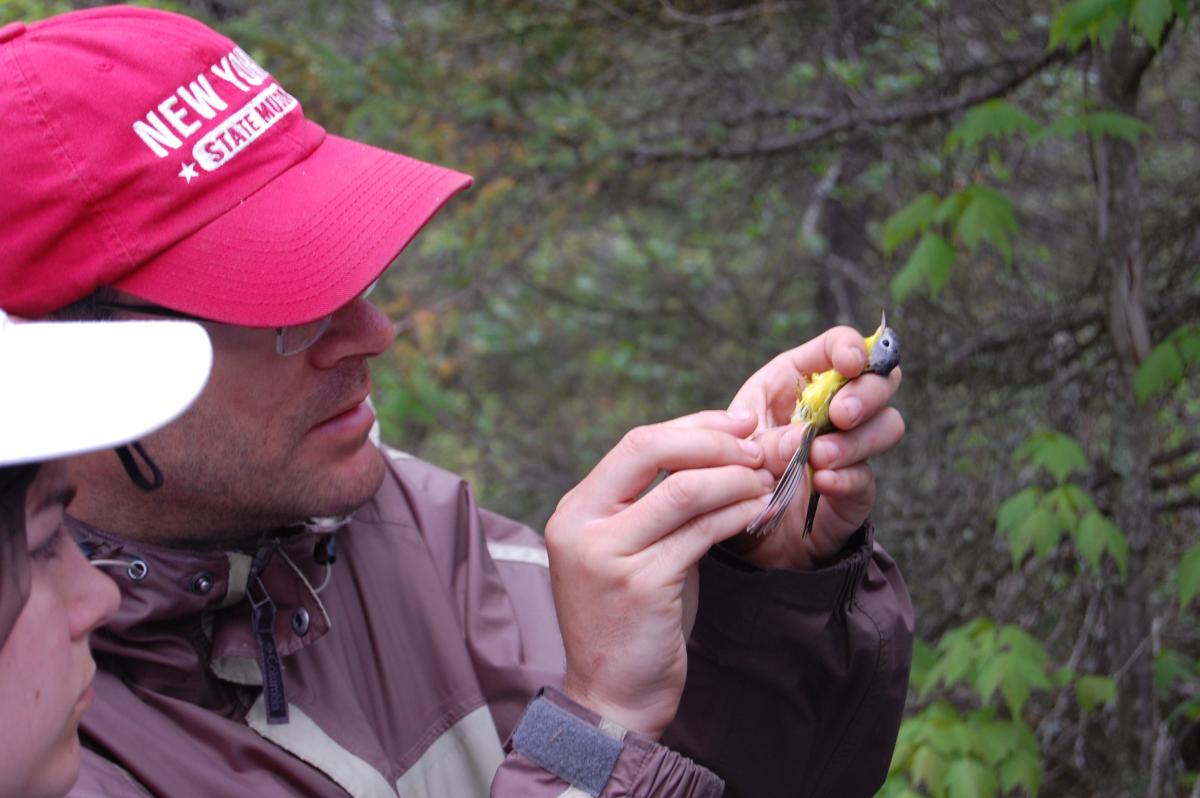
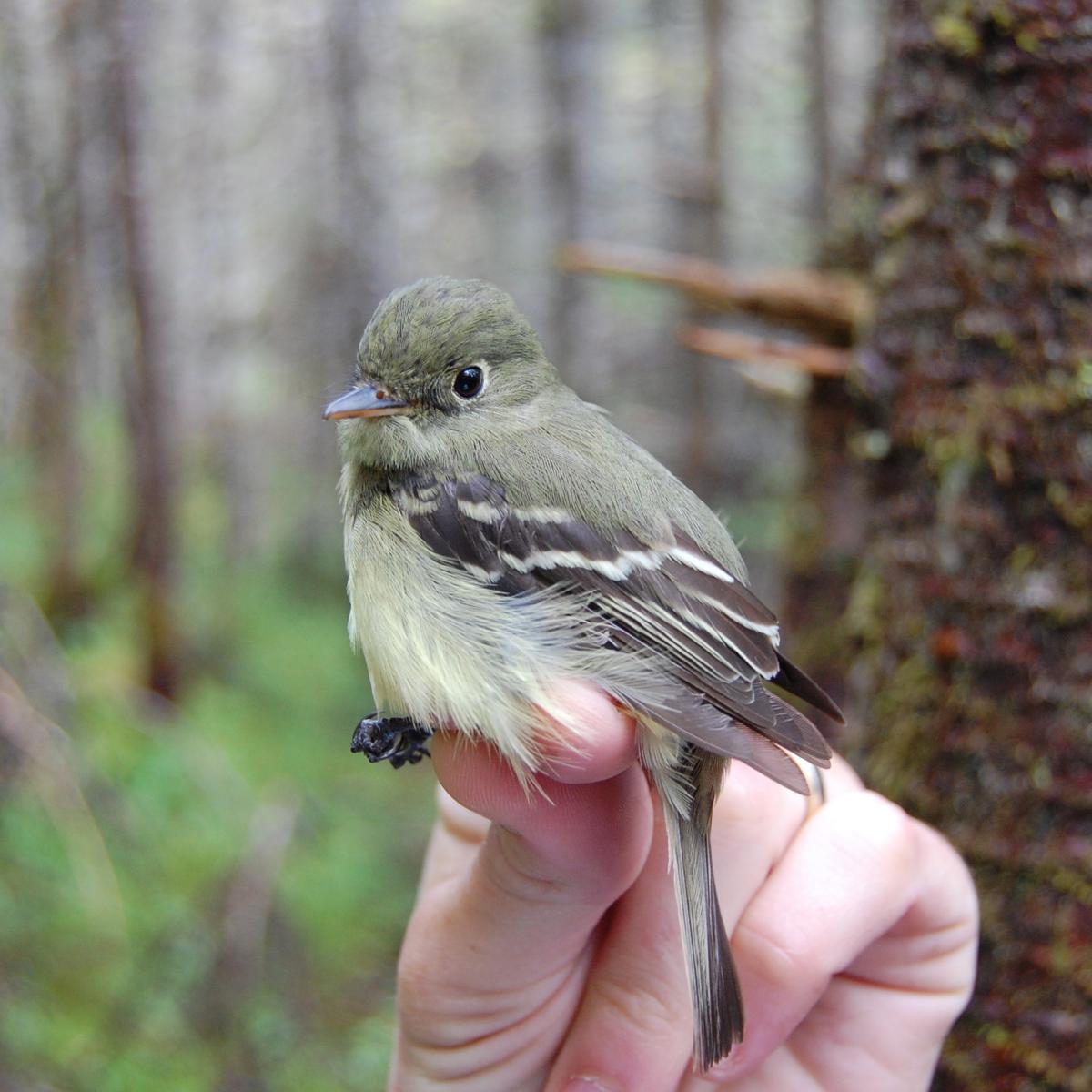
In collaboration with students at the State University of New York at Albany, I am studying several species of birds that breed in “islands” of coniferous (boreal) forest isolated above 3000 feet of elevation in New York’s mountain ranges. High-elevation populations may be imperiled by ongoing climate warming, and we want to know if these populations of Bicknell’s Thrush, Yellow-bellied Flycatcher, and other boreal forest specialists are genetically distinct and evolving independently of one another.
Stratigraphy & Applications of Geochronology to decipher Late Quaternary Events in New York
As the glaciers advanced and retreated across New York State over multiple cycles in the last hundred thousand years, the ice sheets advanced over a previous rugged topography carved into bedrock by rivers and streams. Continental scale glaciers transported copious amounts of sediment and deposited them in locations such as stream valleys. Subsequent glaciations removed some of the sedimentary record left of the previous glaciations, but not all of it, and continued to fill in some low topography.
One of the biggest challenges to studying glacial geology in New York is the complex buried glacial deposits scientists can’t see. Some reports indicate that there is upwards of 1,000 feet of unconsolidated glacial deposits in some locations of New York State. Occasionally, quaternary geologists can get some insight into the thickness and character of glacial deposits (often referred to as drift) from water wells or geotechnical borings, but most often the buried sediment remains obscured from view.
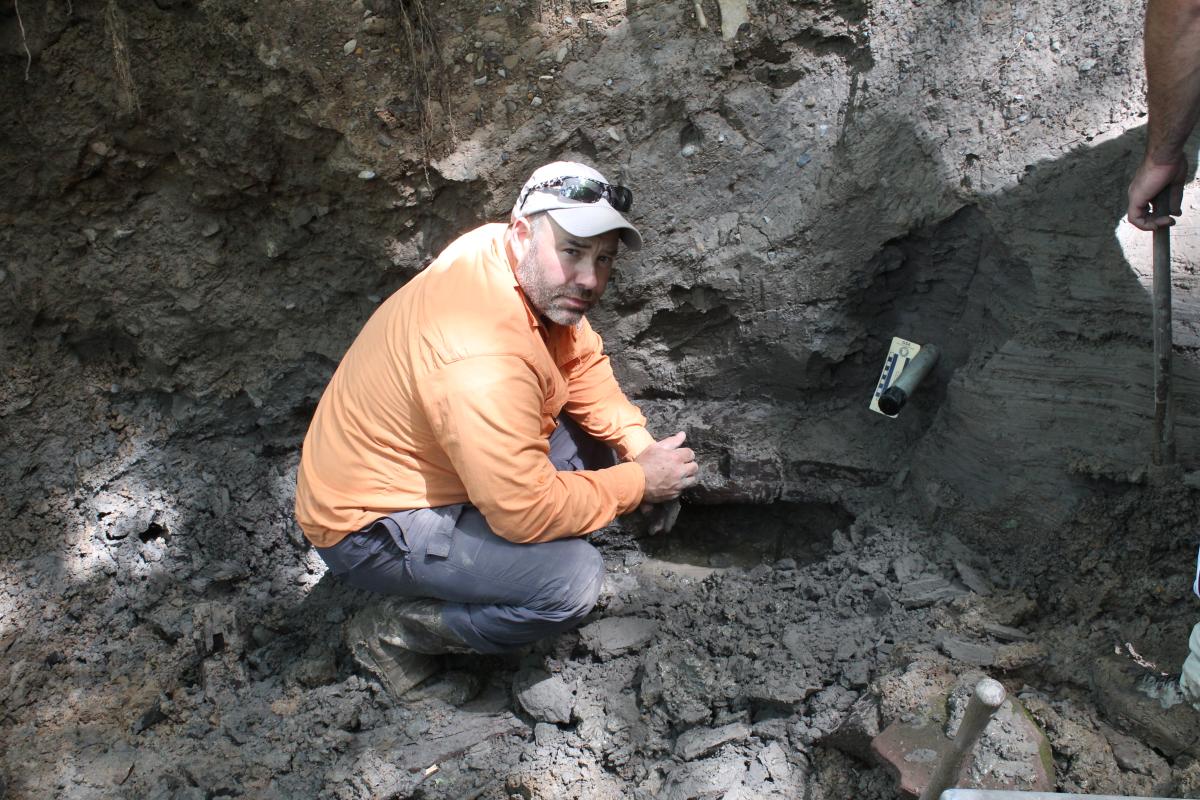
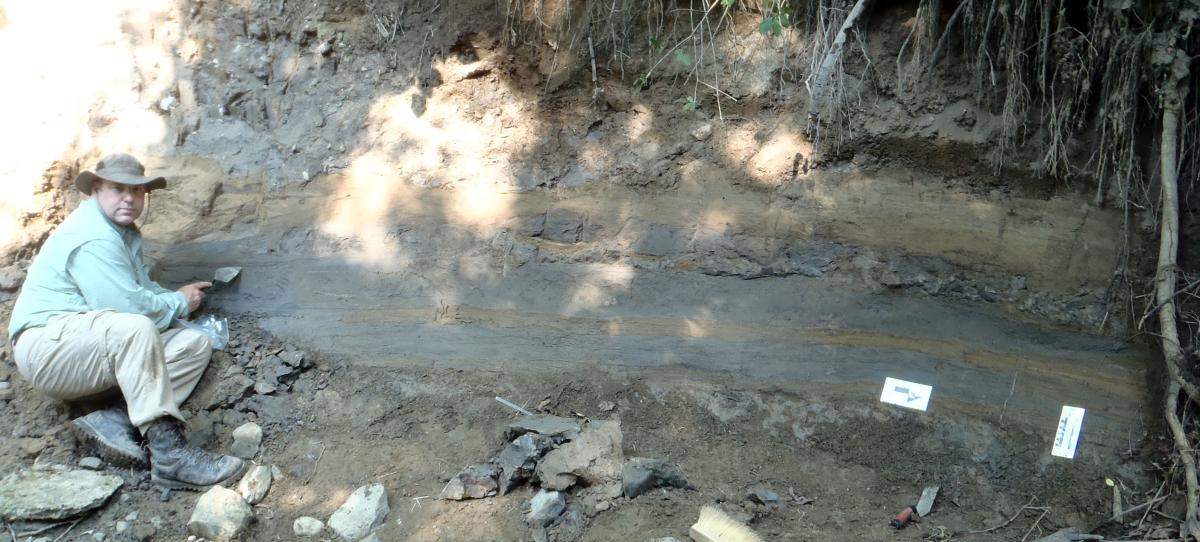
As part of my research program with USGS STATEMAP & the Great Lakes Geological Mapping Coalition, we are utilizing three-dimensional exploration techniques to map and characterize the geologic framework and stratigraphy of buried glacial deposits. This is important because much of the aggregate resources and groundwater aquifers are located in glacial deposits. To explore the glacial stratigraphy, we are utilizing exploration drilling (see methods) and near-surface geophysics methods to map the glacial stratigraphy. We are also working to map and study exposures of glacial sediment. In some cases we can find soils and sediment, such as glacial tills, that were directly deposited from glaciers and provide direct evidence of glaciation.
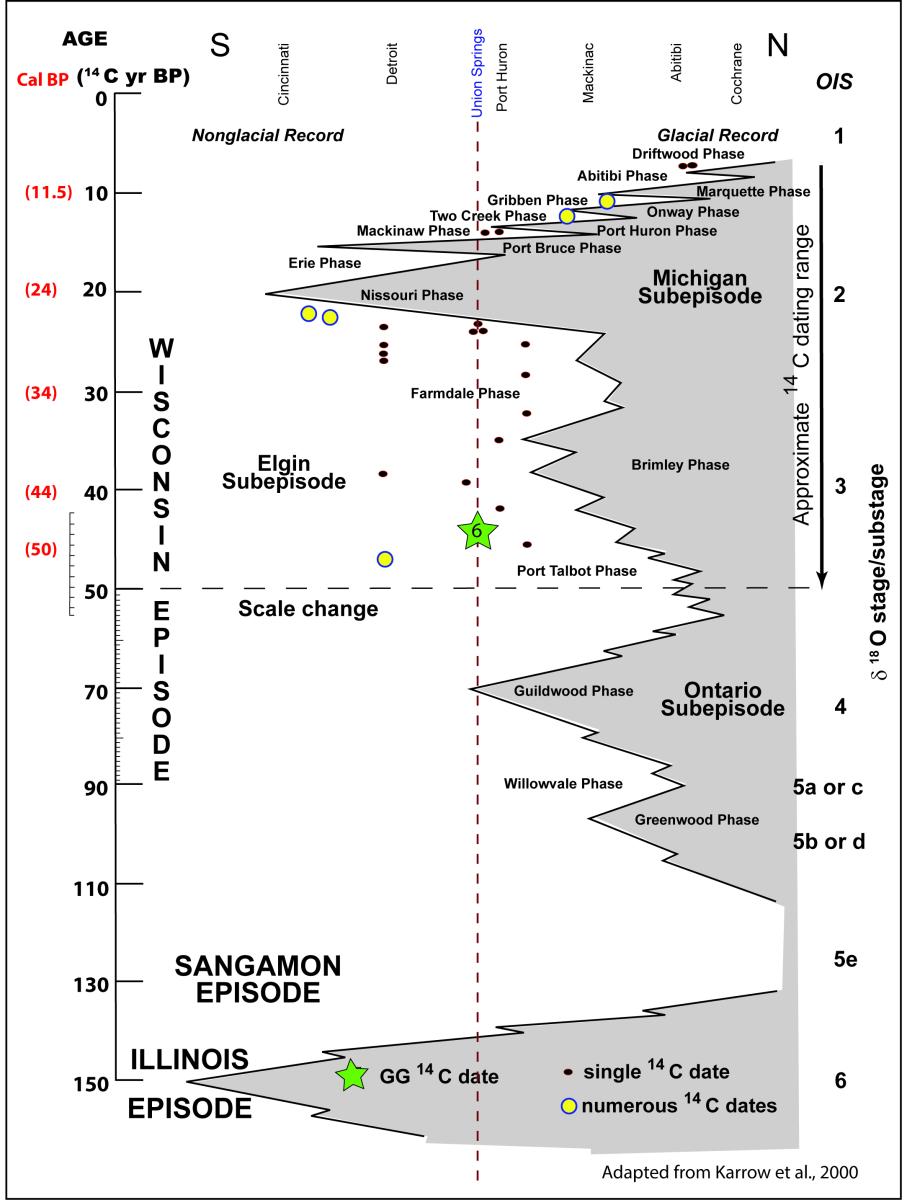
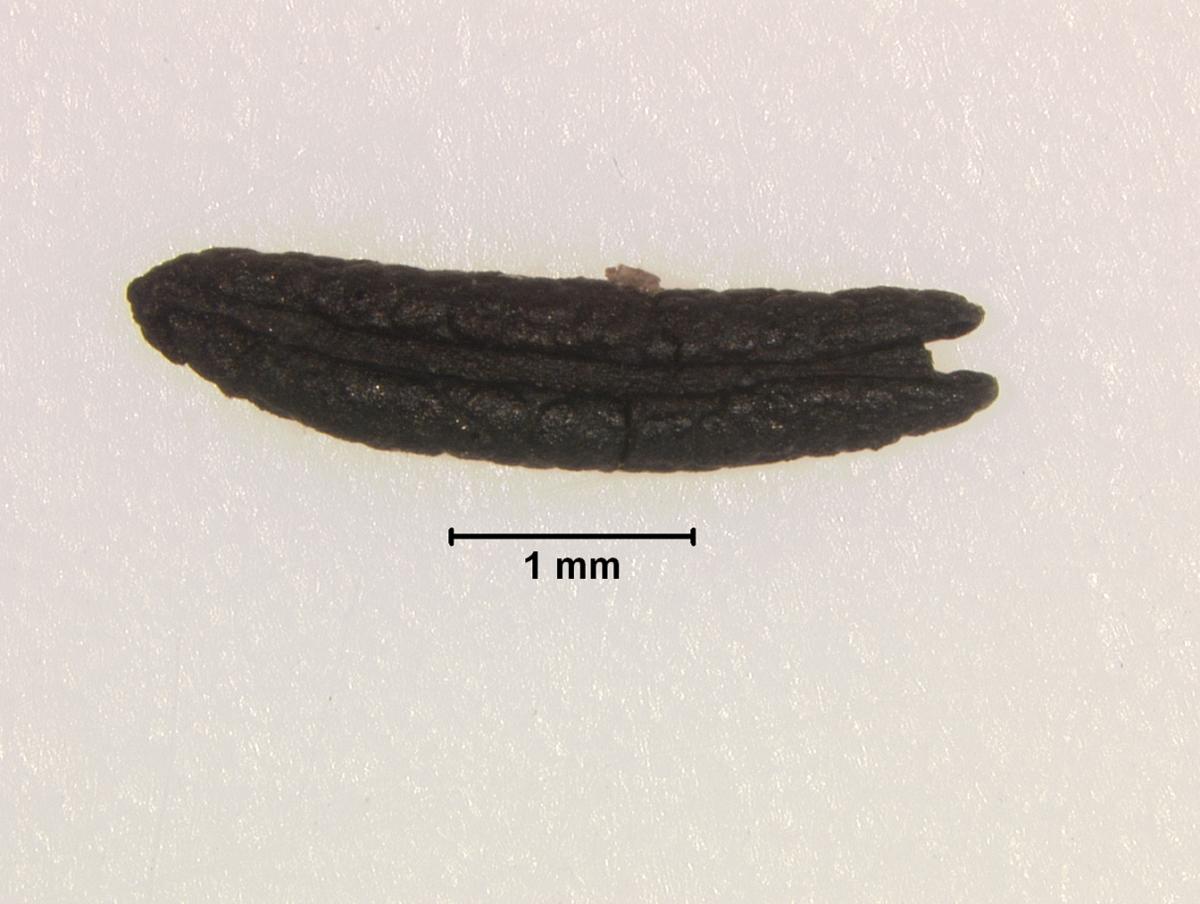
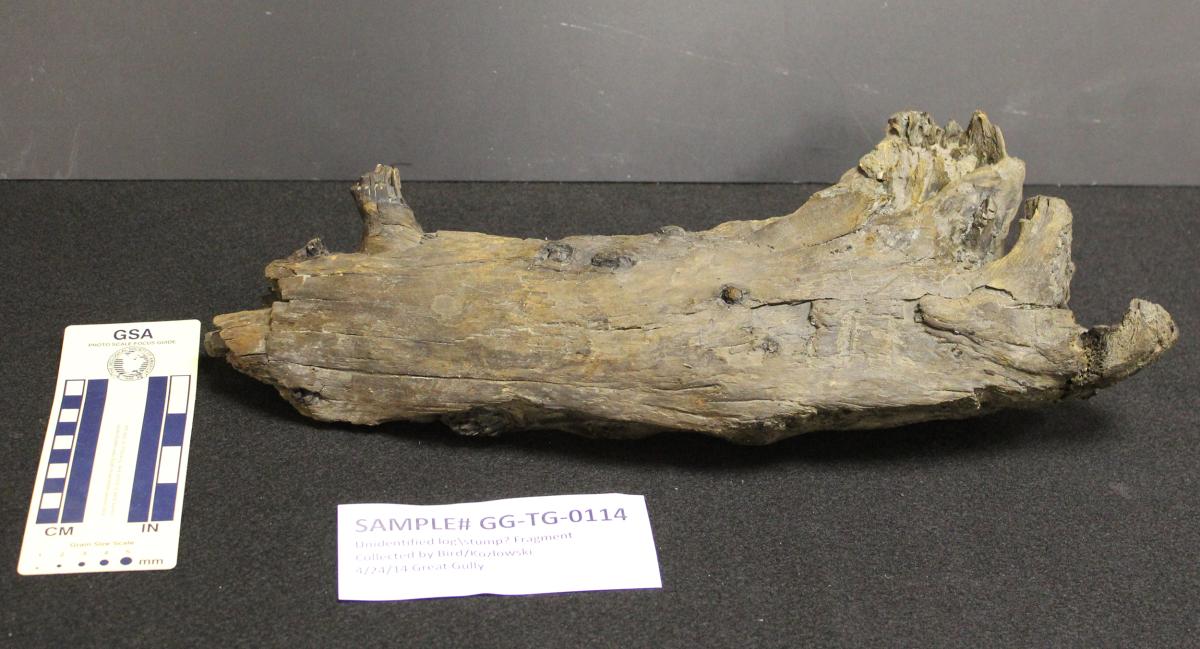
Documenting the stratigraphy provides a context to understand the geologic history preserved in New York. In some instances interglacial (warm periods) deposits containing wood, plant, and animal remains are also preserved and buried in the subsurface. We can utilize geochronological methods, such as radiocarbon dating, to determine the age of deposits back to approximately 50,000 years ago. Recently, we have been utilizing other dating methods such as Optical Stimulated Luminescence (OSL) to date sediments beyond the limits of radiocarbon dating or for sediments that do not contain organic materials for dating. Our ongoing project in Great Gully has used geochronology and lithostratigraphic information to provide a unique basis for a chronostratigraphic record of glacial and non-glacial phases in the Finger Lakes spanning Marine Isotope Stages (MIS) 1-5 (last 90,000 years) and possibly beyond.
Drilling and Coring Methods
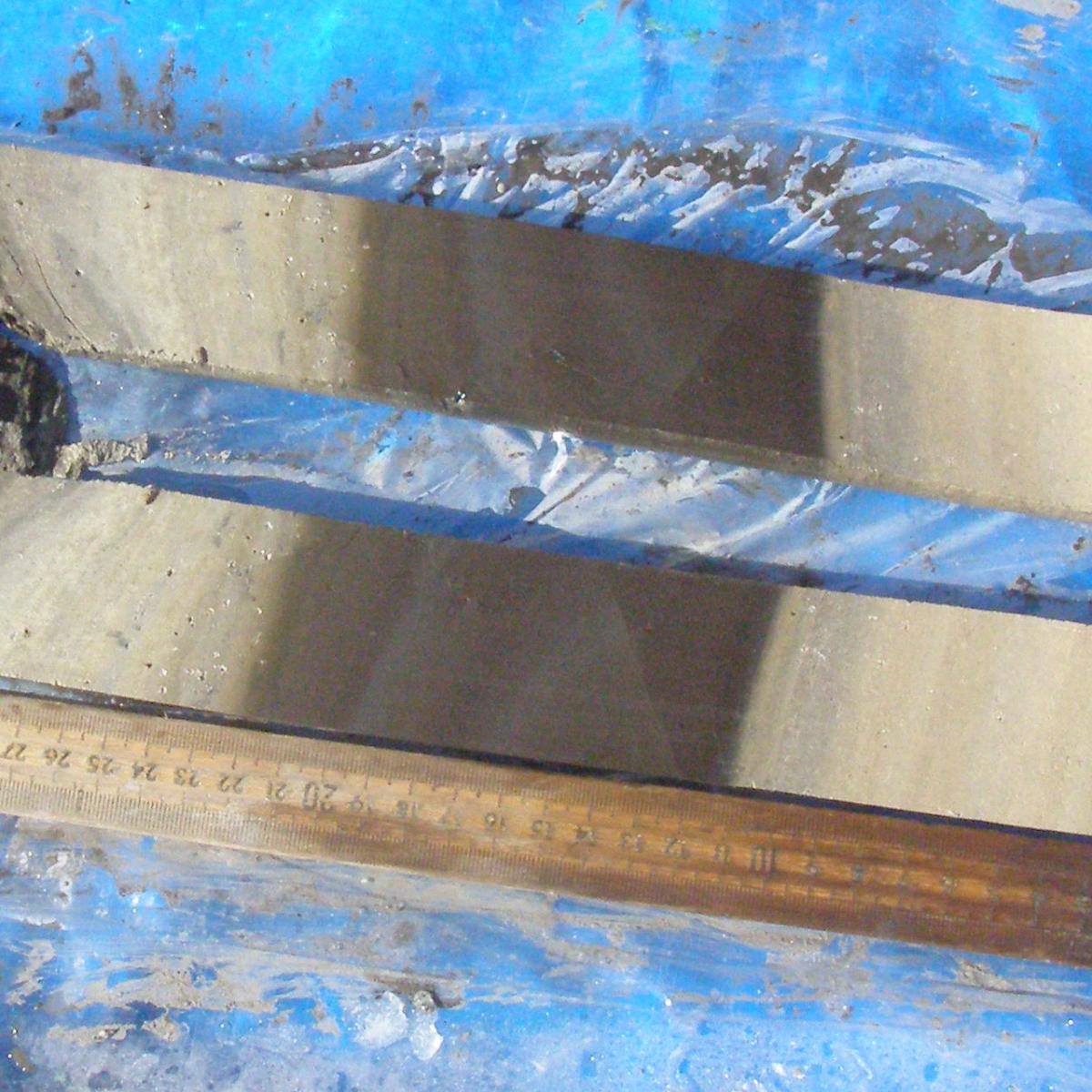
Our coring methods vary in scale and size depending on the research objectives. For coring bogs and lakes, we utilize a Livingstone corer to core laminated and organic sediments and have cored as deep as 15 meters by hand with this method. For other projects we may utilize vibracoring. Our predominant coring methods utilize Geoprobe to collect continuous cores shallower than 23 meters in depth. For deep sections of Quaternary age sediments (greater than 23 meters), we utilize continuous wire-line rotary coring and sonic drilling methods.
Related publications:
Kozlowski, A.L.; Graham, B.L. (Eds), June 2014, Glacial Geology of Cayuga County of the Eastern Finger Lakes: Lakes, Lore and Landforms; Guidebook for the 77th annual Reunion of the Northeastern Friends of the Pleistocene Meeting, Auburn , NY 140 pp.
Feranec, R. S., Franzi, D. A., and Kozlowski, A. L. 2014. A New Record of Ringed Seal (Pusa hispida) from the Late Pleistocene Champlain Sea and Comments on Its Age and Paleoenvironment. Journal of Vertebrate Paleontology 34(1):230-235.
Feranec, R. S., and Kozlowski, A. L. 2012. New AMS Radiocarbon Dates from Late Pleistocene Mastodons and Mammoths in New York State, USA. Radiocarbon 54:275-279.
Feranec, R. S., and Kozlowski, A. L. 2010. AMS Radiocarbon Dates from Pleistocene and Holocene Mammals Housed in the New York State Museum, Albany, New York, USA. Radiocarbon 52(1):205-208.
Ice Margin Chronology
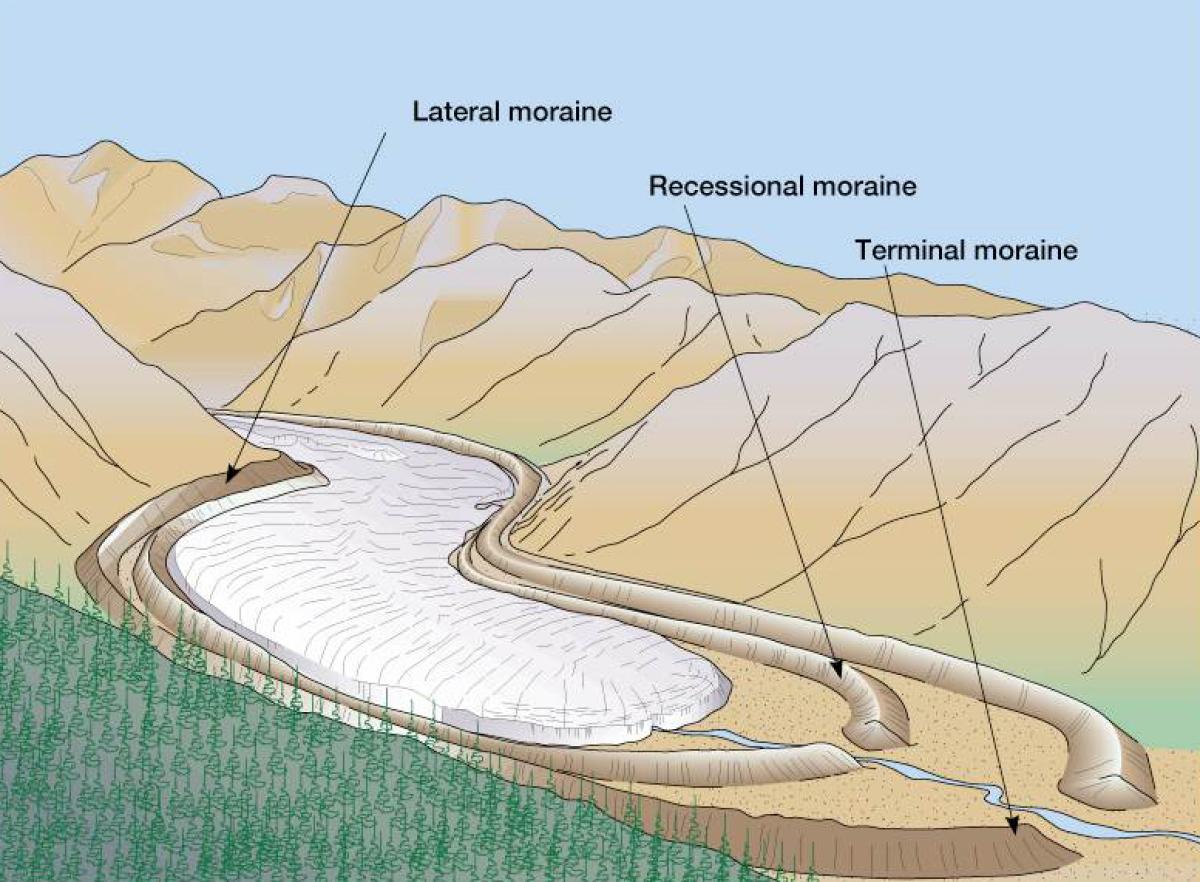
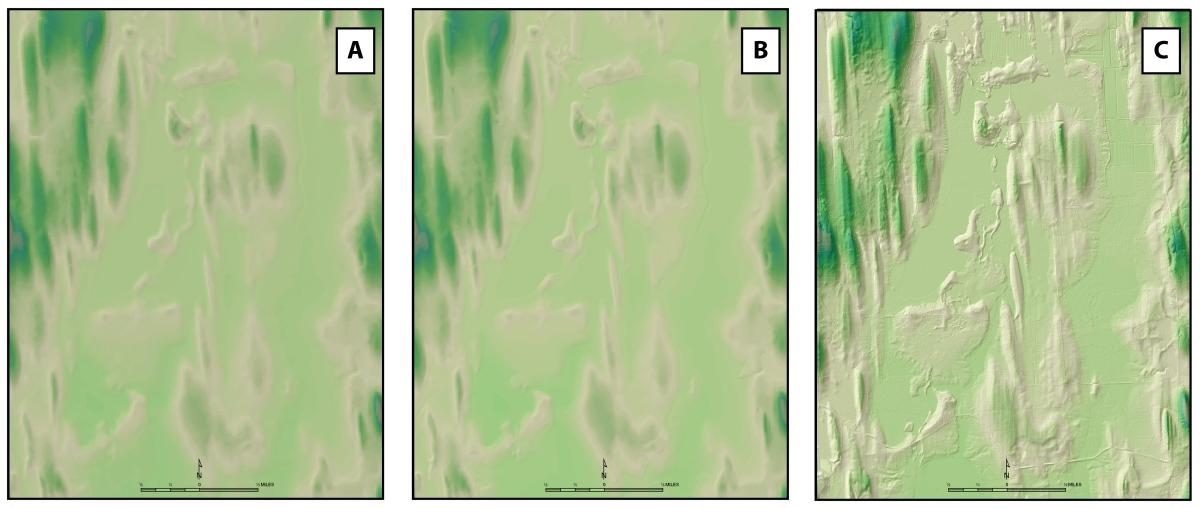
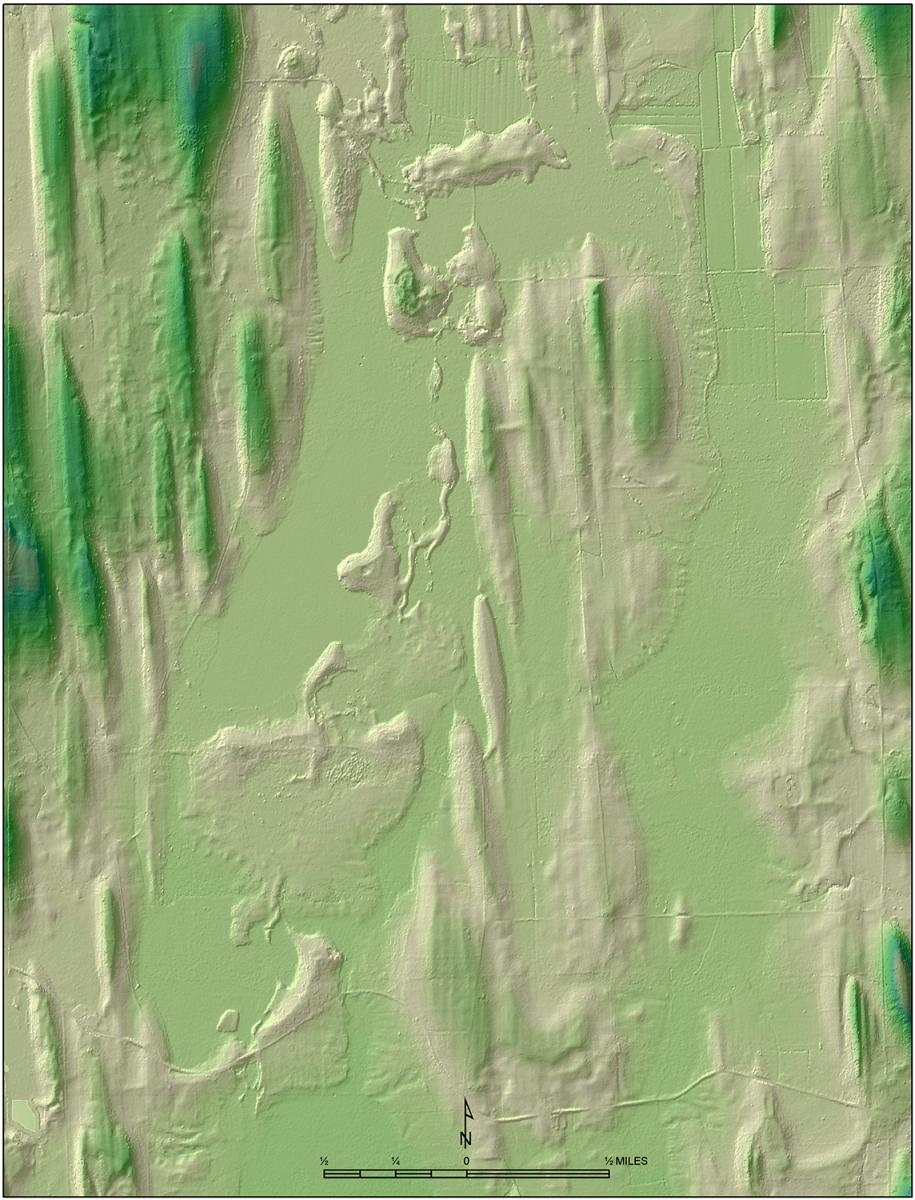
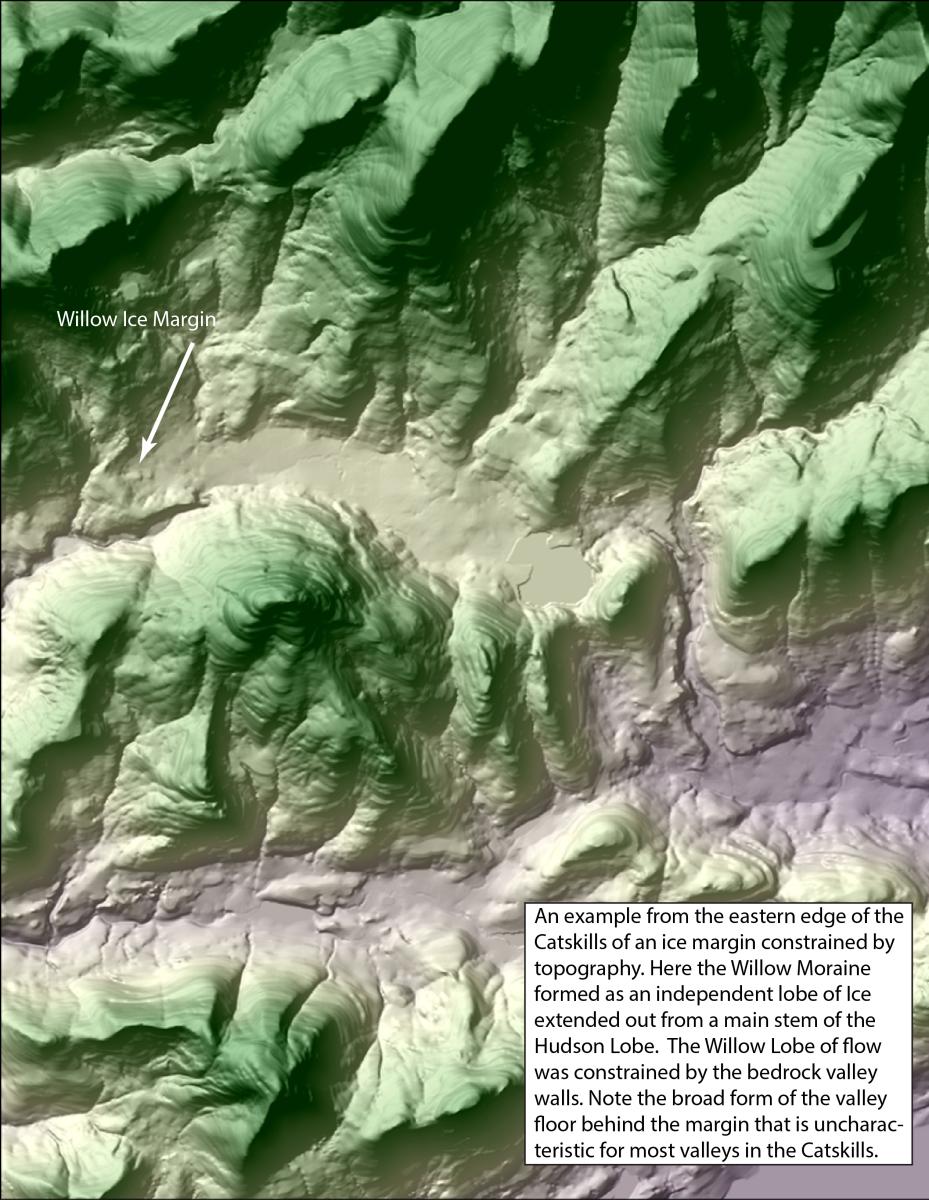
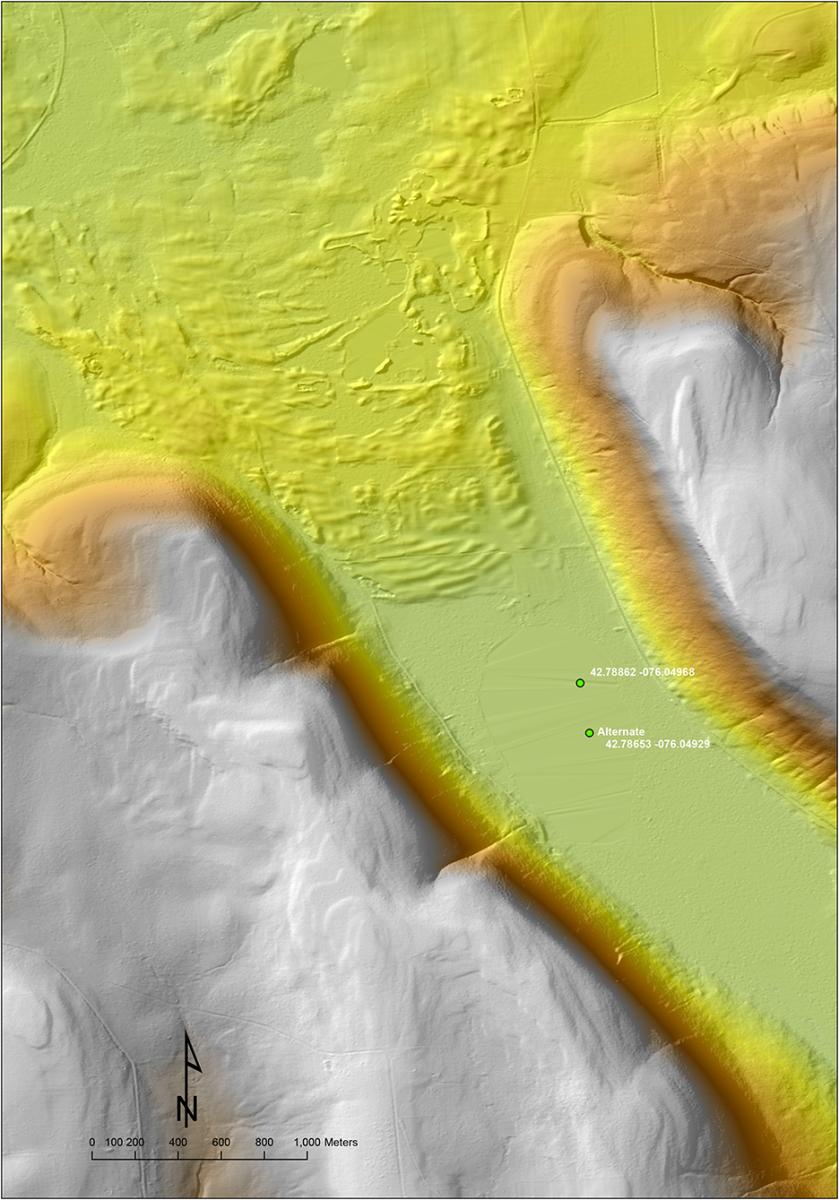
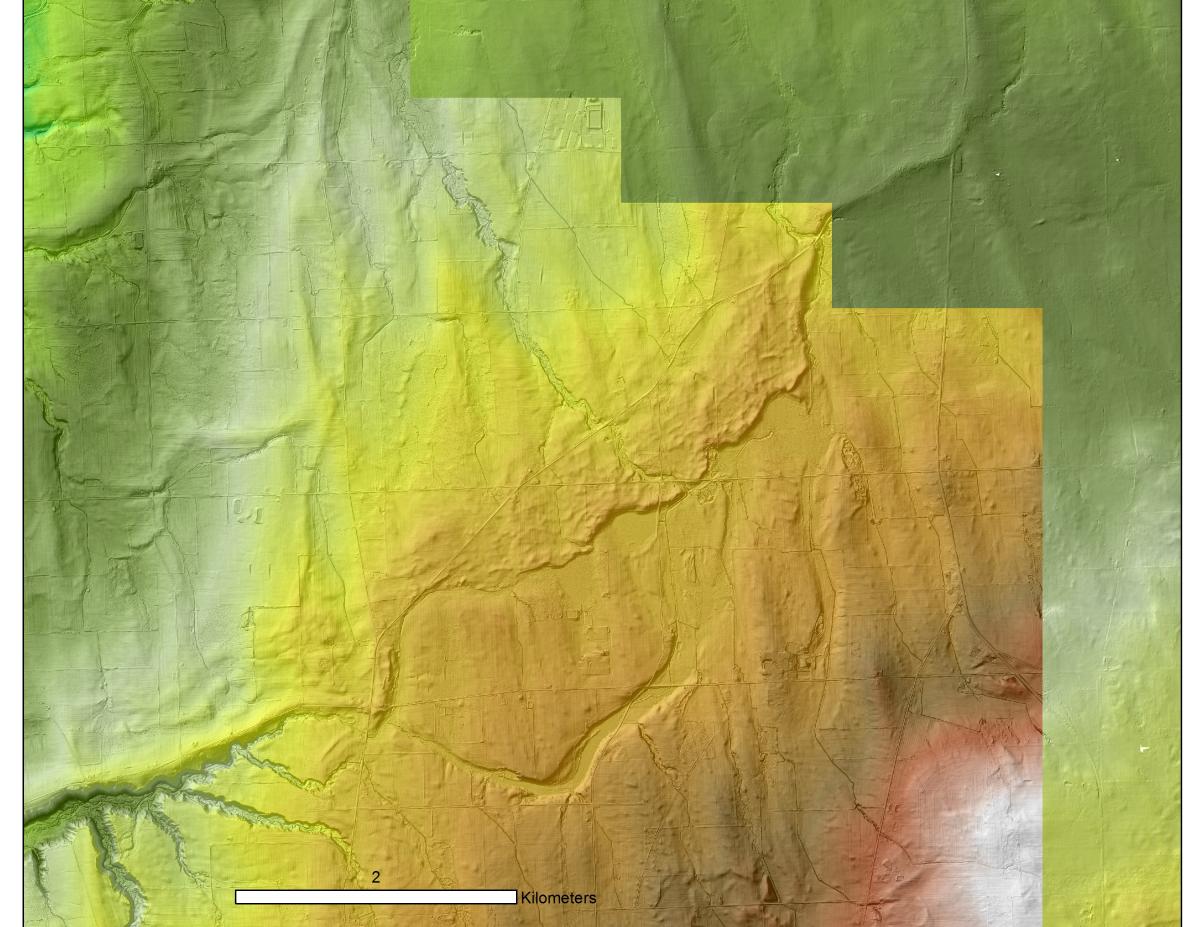
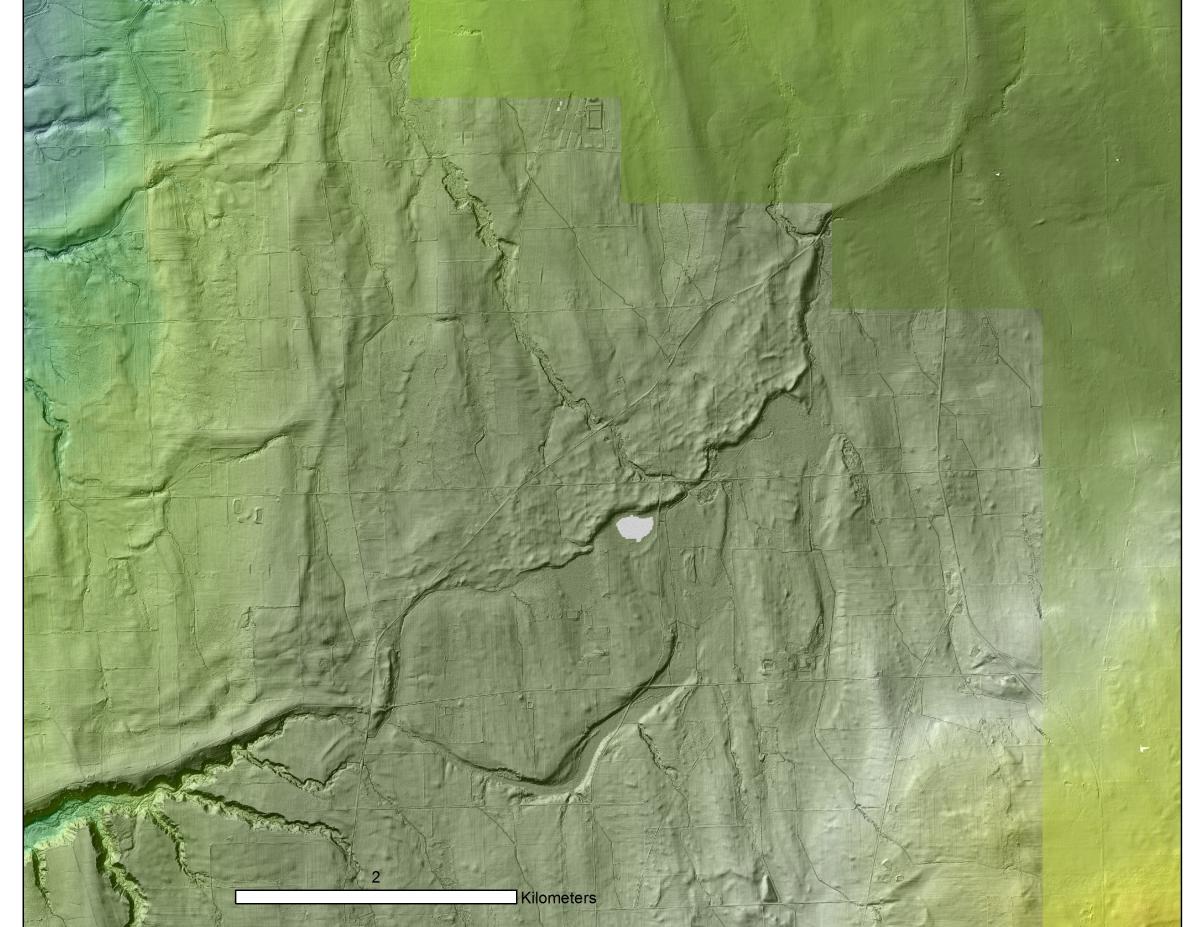
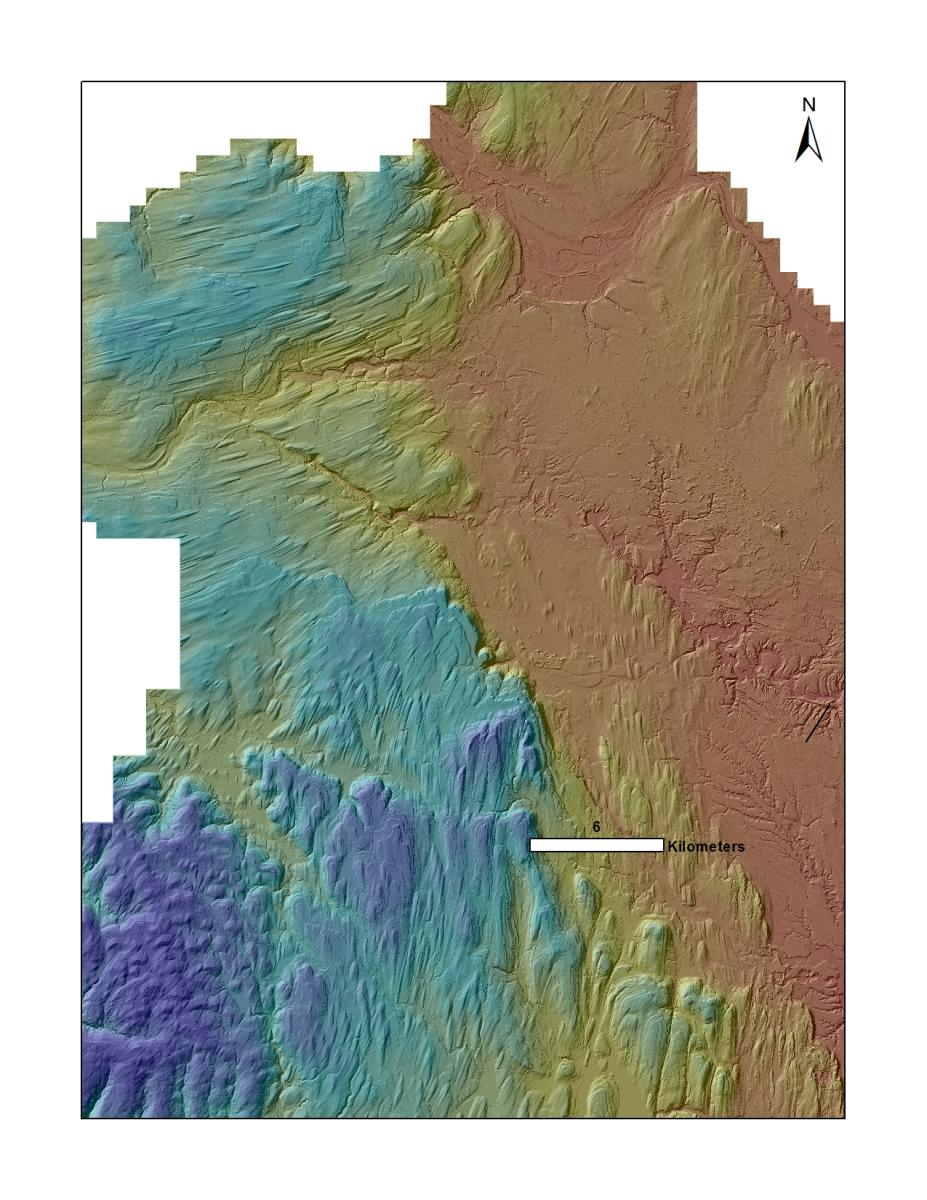
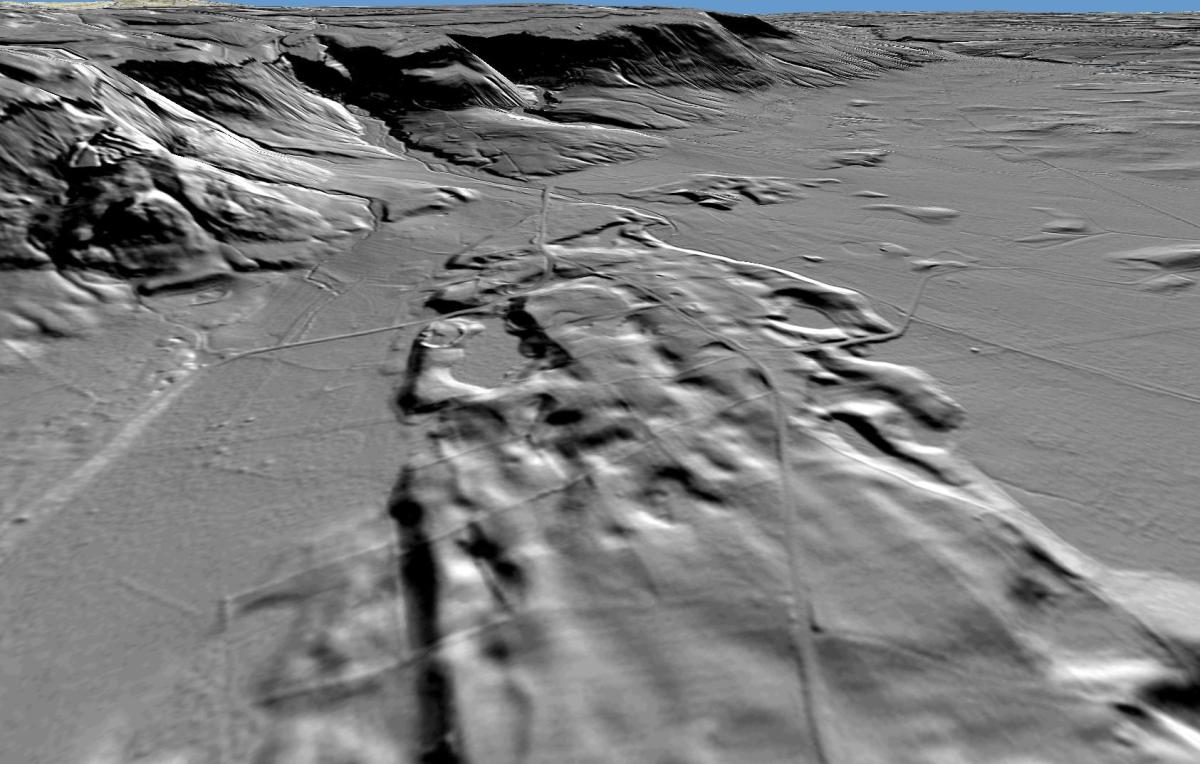
The spatial and temporal patterns of growth and decay of the Laurentide Ice Sheet (LIS) and subsequent lobes of glacial ice is a topic of interest in New York and the Great Lakes region. While scientists know the area has been glaciated repeatedly, the location and timing of ice margins remains poorly constrained in most areas of New York. Understanding where glacial margins were at specific times is important because glacial margins can restrict and block drainage and form large proglacial lake systems. Climate modelers using computers to model ancient climate in order to study climate change need accurate data in order to constrain the extent of former ice sheets in their models. Here in New York we have been mapping the surficial geology produced by glaciers, using high resolution LiDAR imagery to identify glacial landforms and drilling and coring basins and traps in an attempt to decipher when ice margins were being built by glaciers. When we are fairly certain that we have identified a basin or sedimentary trap adjacent to a former ice margin (moraine) that has a direct association, we will drill and core these basins with the hope of recovering organic materials (plant fossils, wood) preserved in the sediment. Using radiocarbon dating on these materials we can assign an age to the ice margin and thus estimate when the glacier margin was present at a particular location.
Related publications
Kozlowski, A.L.; Graham, B.L. (Eds), June 2014, Glacial Geology of Cayuga County of the Eastern Finger Lakes: Lakes, Lore and Landforms; Guidebook for the 77th annual Reunion of the Northeastern Friends of the Pleistocene Meeting, Auburn , NY 140 pp.
Kehew, Alan. E.; Kozlowski, A.L.; Brian C. Bird; Esch, J. M., May 2013, Contrasting Terrains of the Lake Michigan and Saginaw Lobes of the Laurentide Ice Sheet in southern Michigan. In Gillespie, Robert (ed.) Insights into the Michigan Basin: Salt deposits, Impact structure, Youngest Basin Bedrock, Glacial Geomorphology, Dune Complexes, and Coastal Bluff Stability. Geological Society of America Field Trip Guide 31 pp15-36,
Kehew, Alan. E., Esch, J. M., Kozlowski, A. L. and Ewald, S. K. 2011, Glacial landsystems and dynamics of the Saginaw Lobe of the Laurentide Ice Sheet, Michigan , USA, Quaternary International, Vol. 24, no. 22, pp.1-11
Subglacial Landforms and Processes
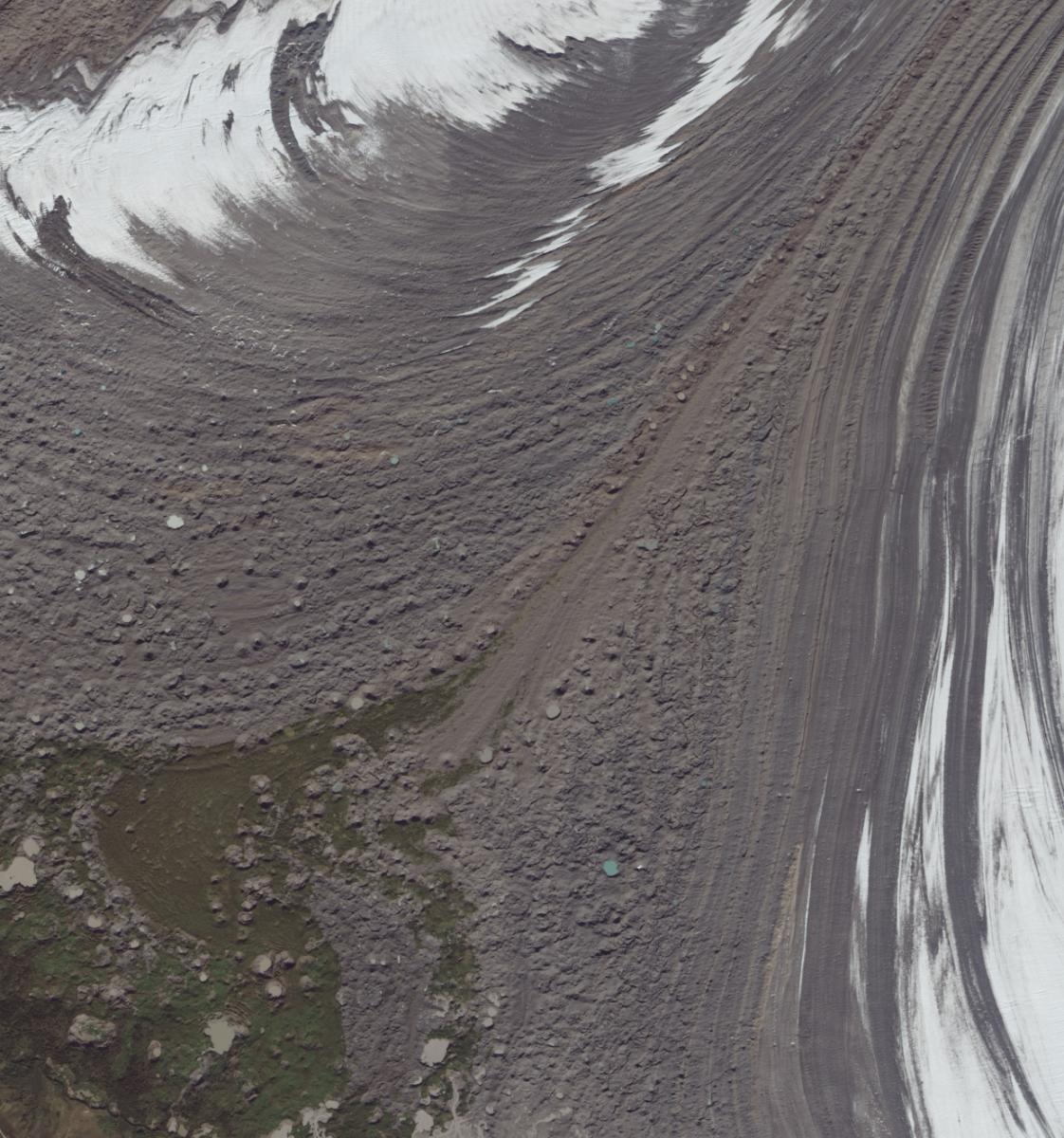
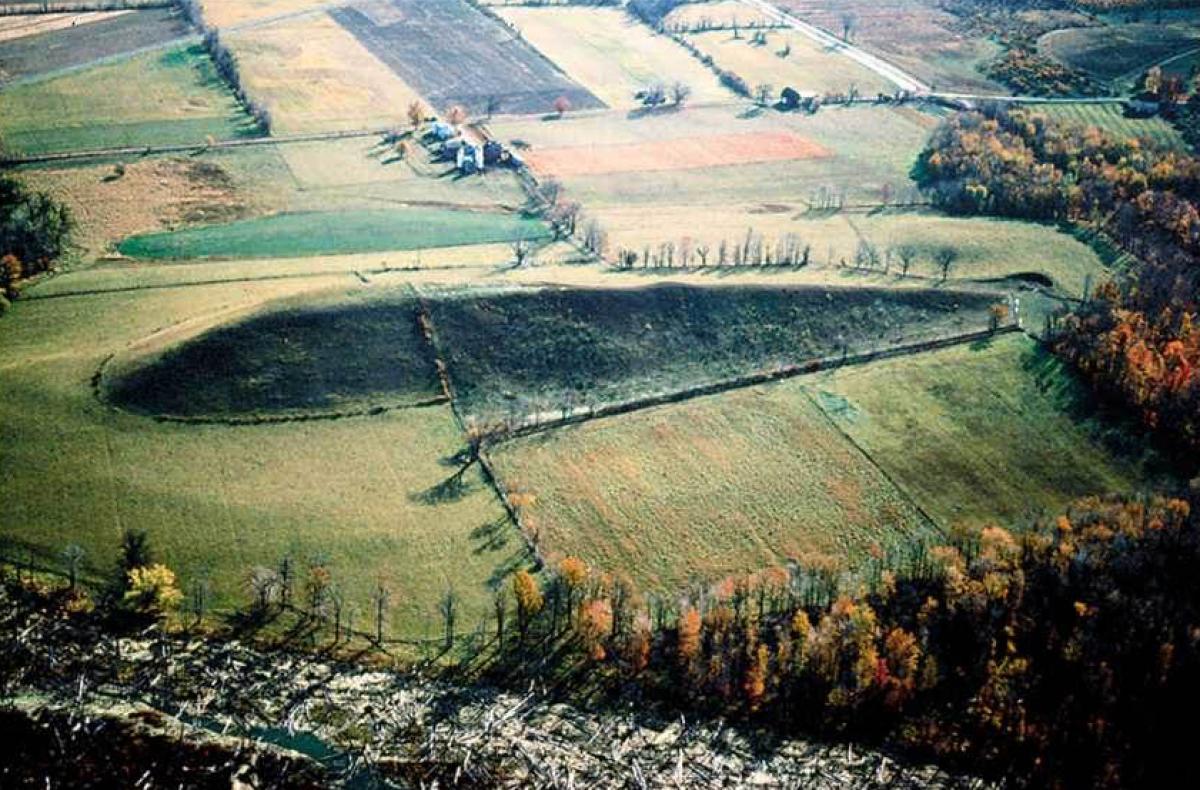
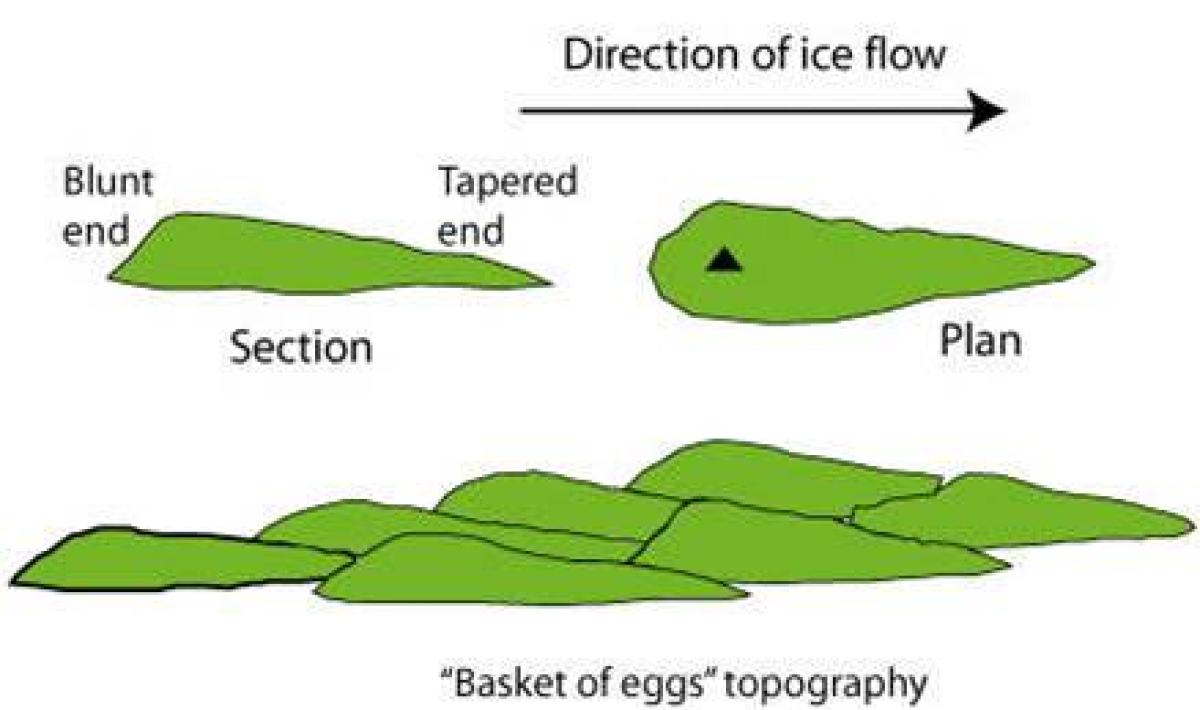
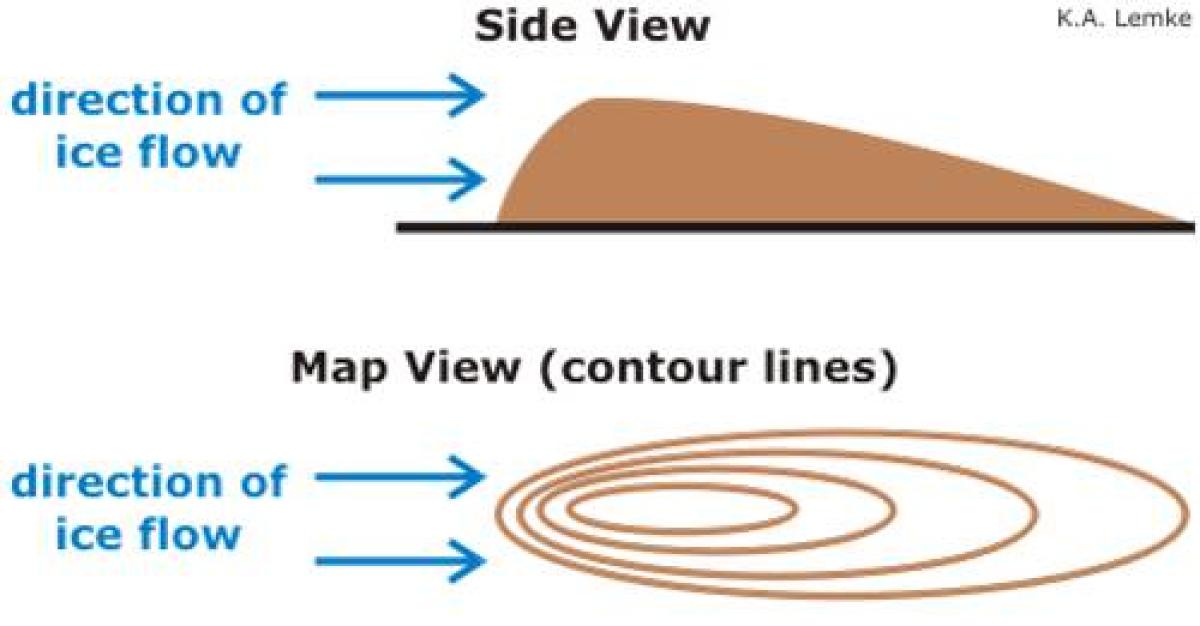
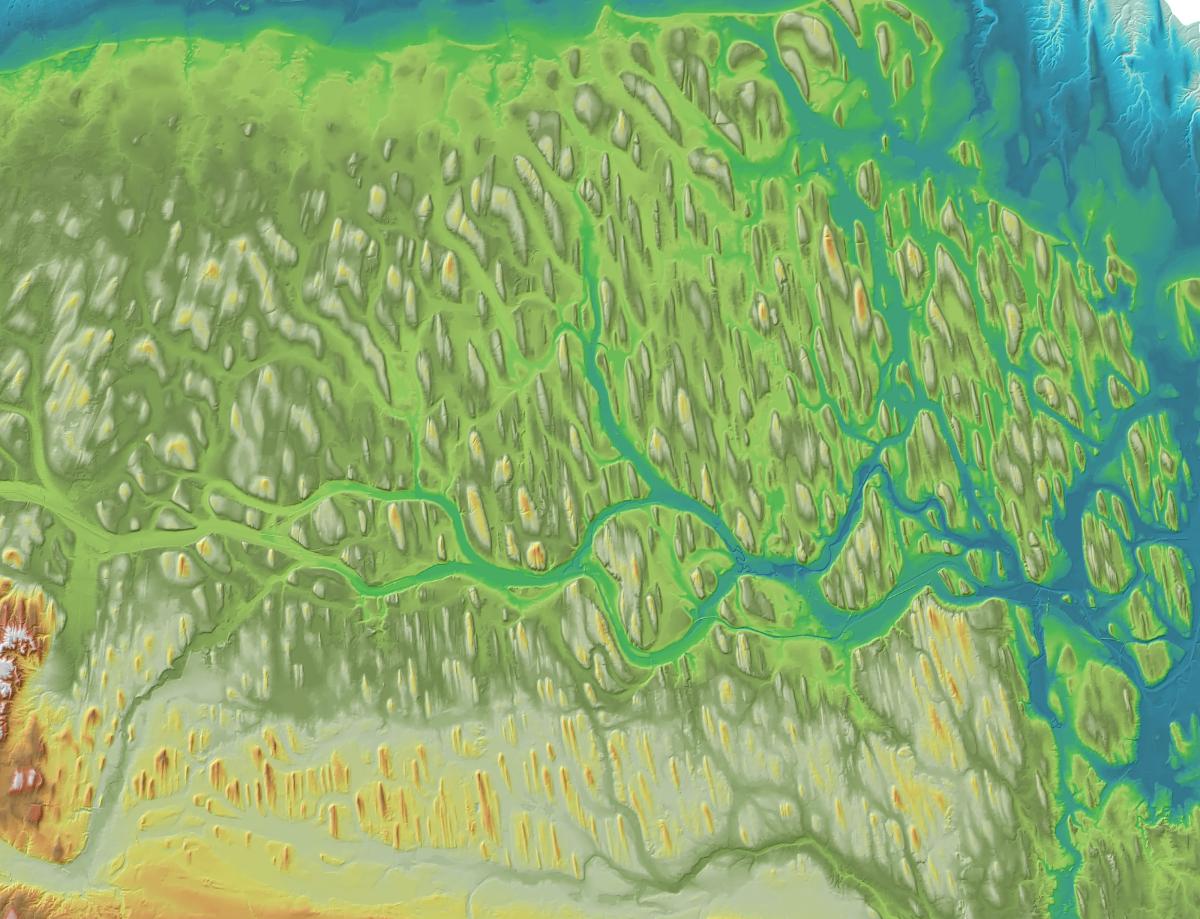
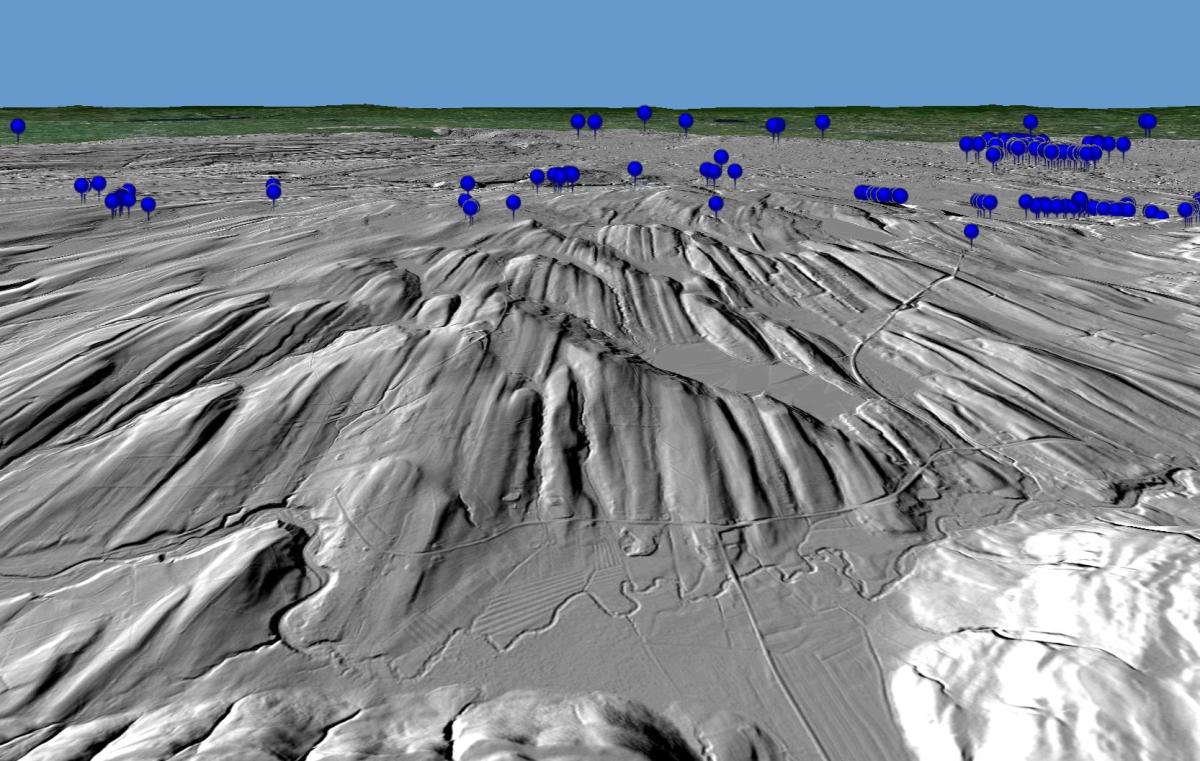
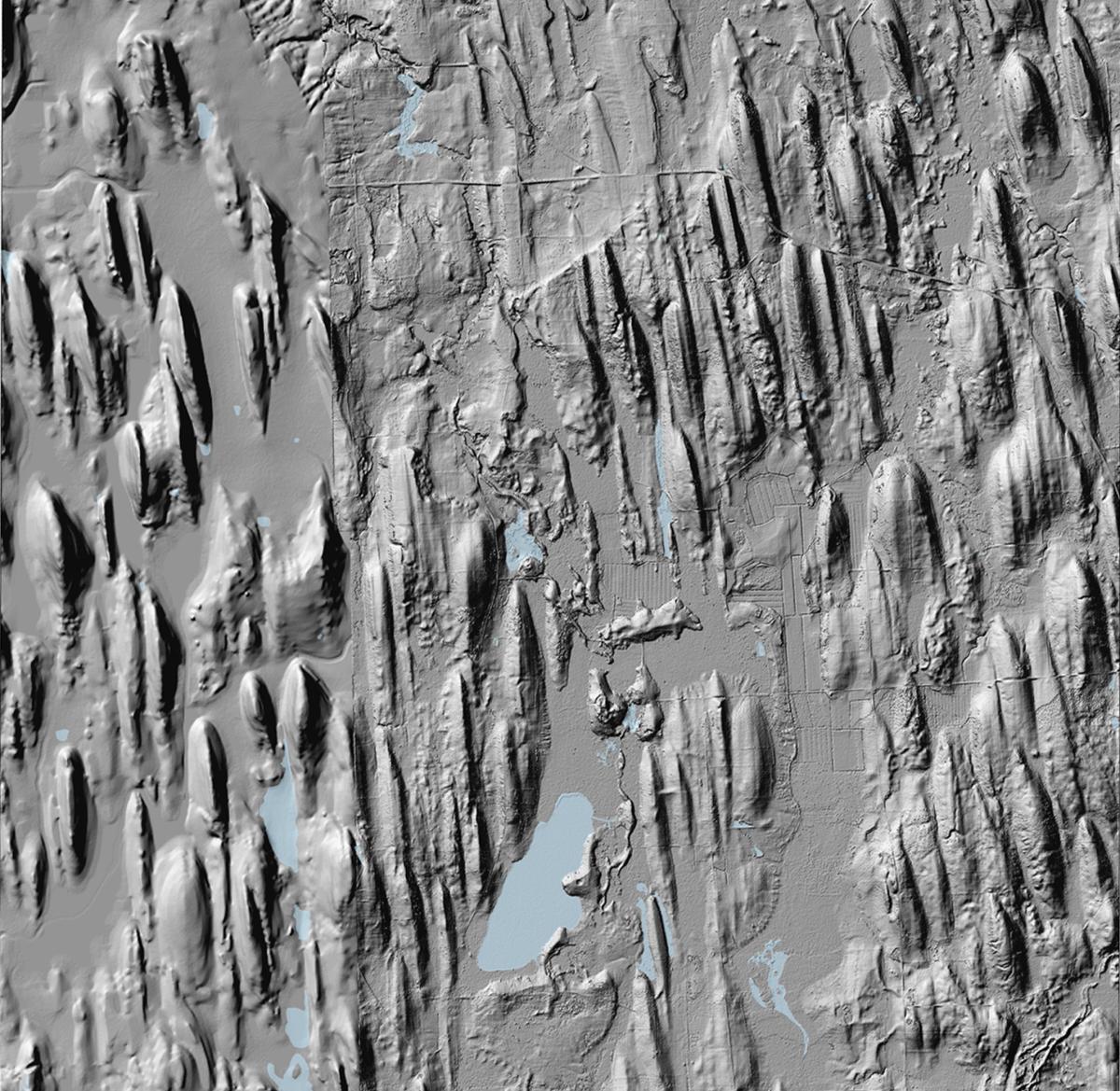
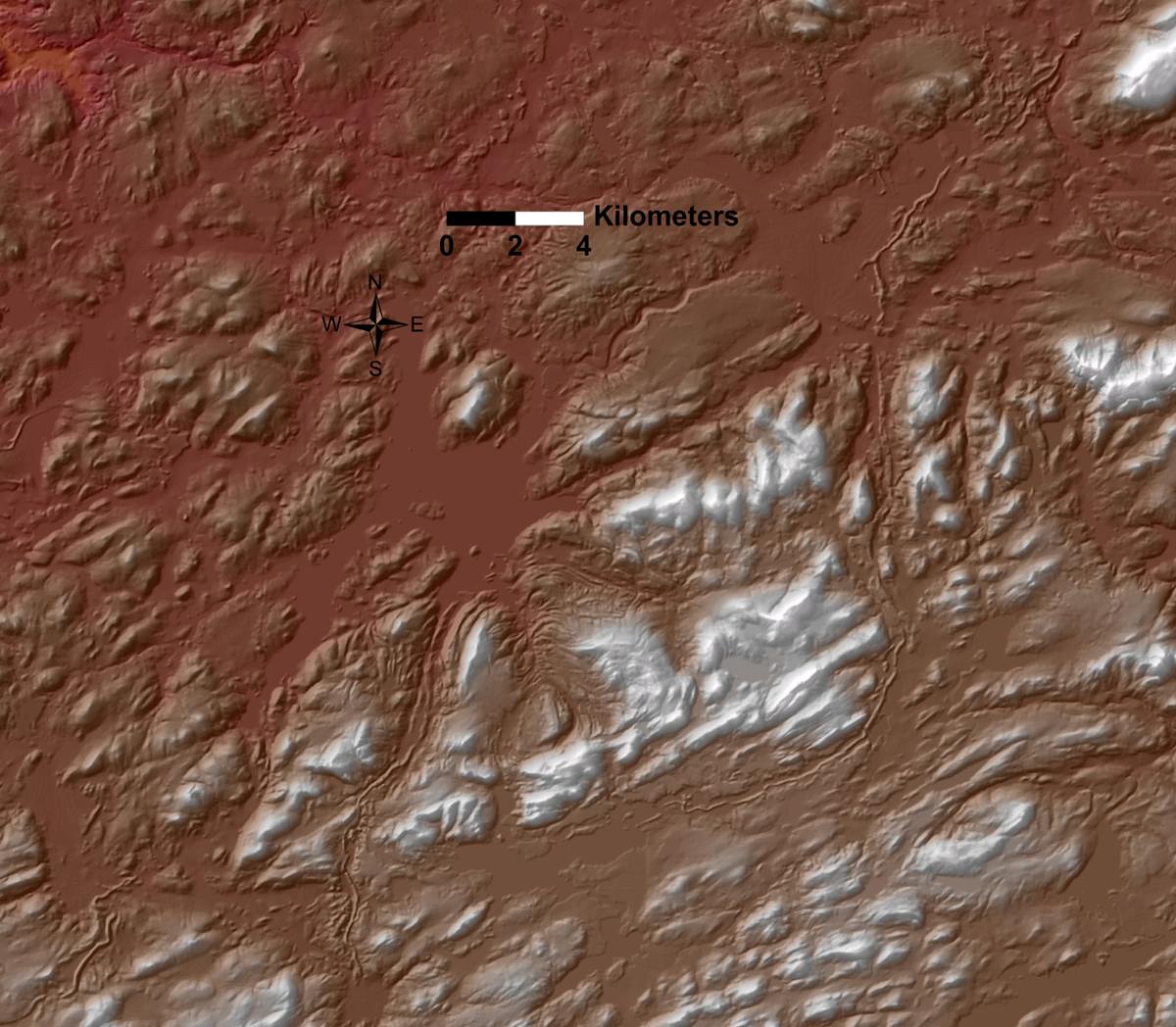
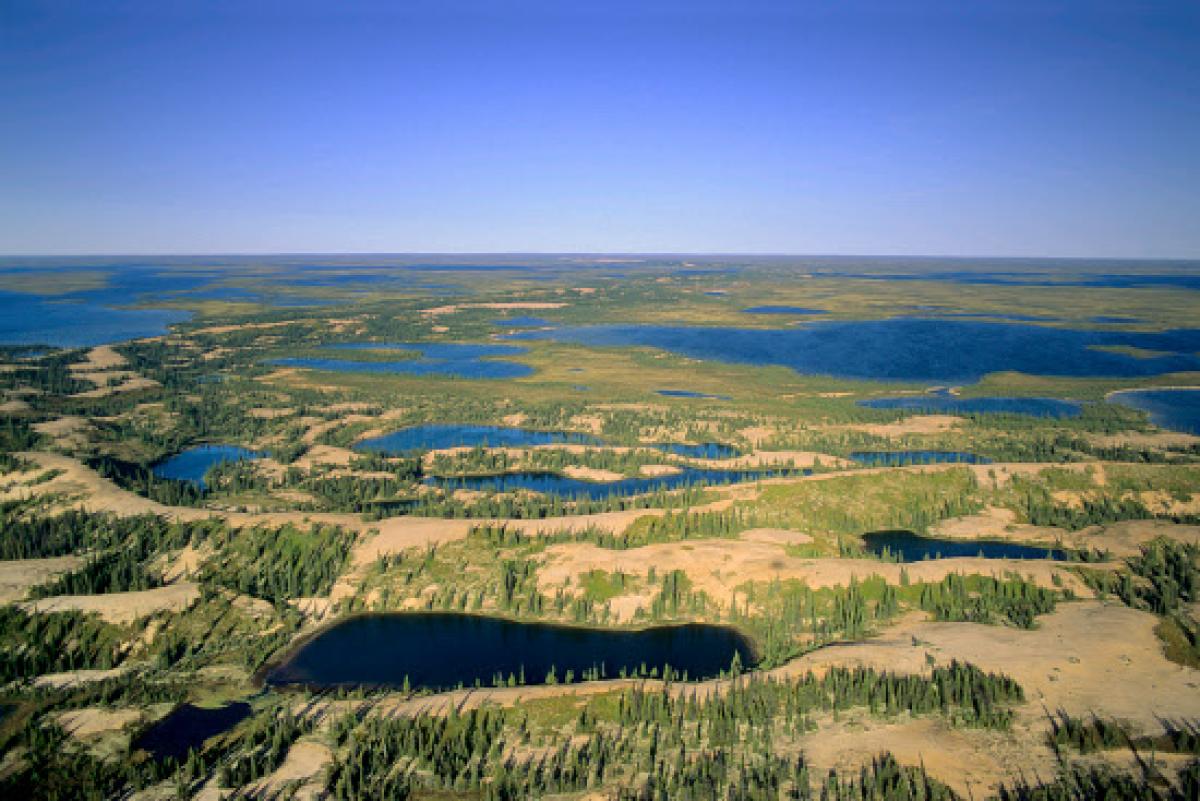
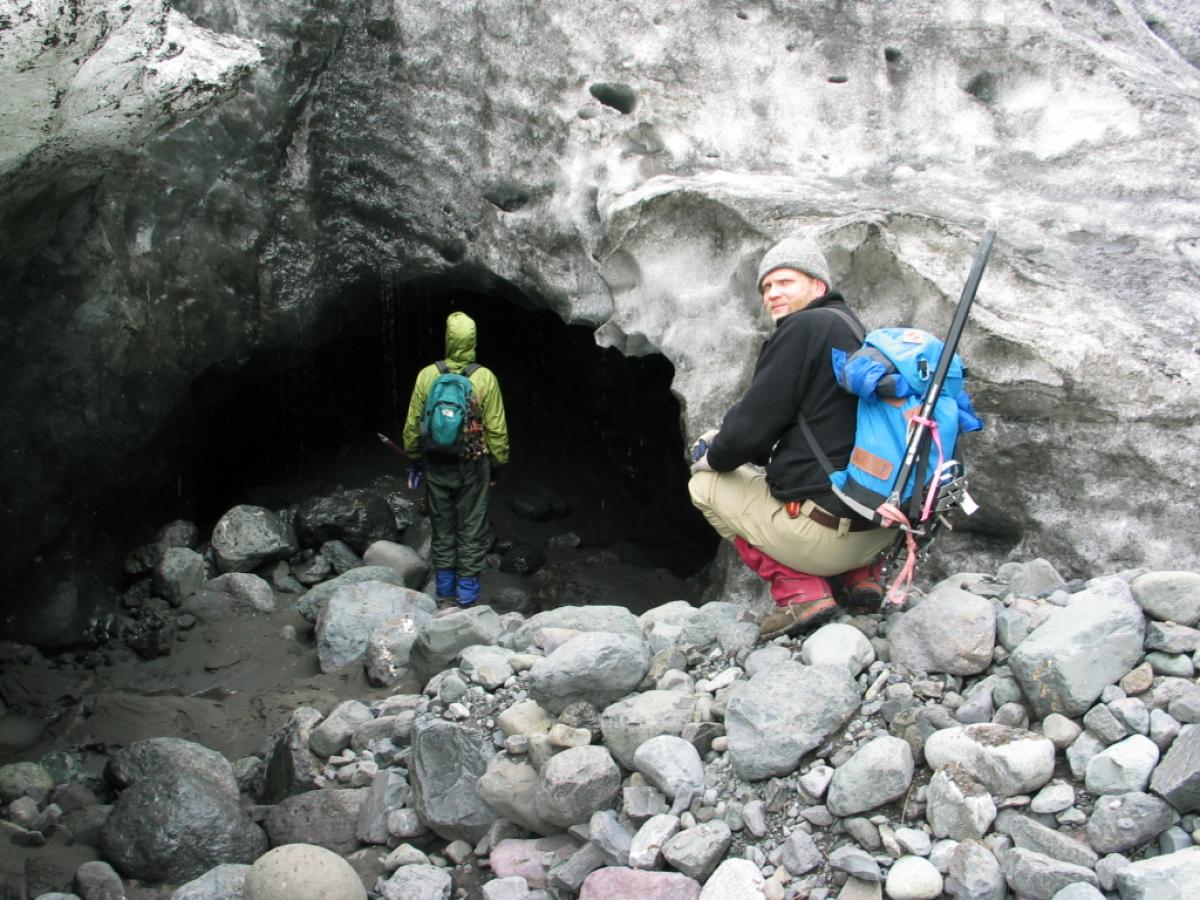
As the massive Ice Sheets more than 2,000 meters thick over road most of the Great Lakes region, the deforming ice and water underneath (subglacial) eroded and deposited sediment to create landforms. Some glacial landforms, such as drumlins and eskers, clearly indicate a landscape produced by subglacial processes. Other landforms, such as large channels known as tunnel channels or tunnel valleys, were produced subglacially by pressurized water flows directed toward the margin of the ice sheet. Because the water was pressurized by the weight and sloping profile of the glacier, these subglacial streams in many locations were flowing uphill. Some of the most interesting landscapes in New York, such as the Ontario Drumlin Field, are considered to be world-class examples of subglacial landscapes. Despite the fact that we can recognize many of these landforms, many questions remain about the glacial processes that formed them. My research here in New York and elsewhere in the Great Lakes region provides an opportunity to study and research these fascinating landforms in an attempt to better understand how they may have formed and the glacial conditions that created them.
Drumlins
Eskers
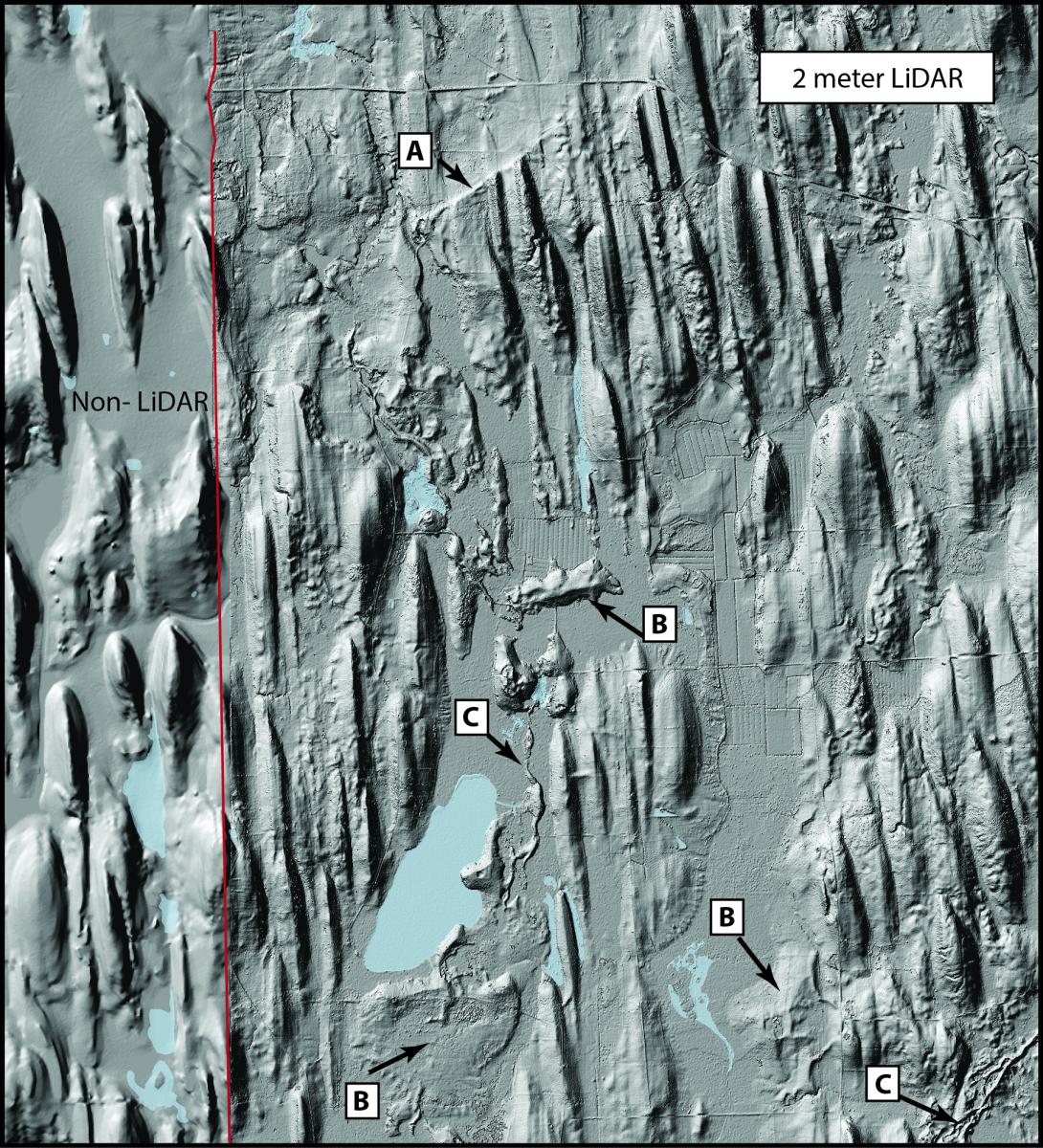
Related publications
Hopkins, Nathan R., Evenson, Edward B., Kodama, Kenneth P. and Andrew Kozlowski, September, 2015. An Anisotropy of magnetic susceptibility (AMS) investigation of the till fabric of drumlins: support for an accretionary origin. Boreas, DOI: 10.1111/bor.12138
Kehew, Alan. E.; Kozlowski, A.L.; Brian C. Bird; Esch, J. M., May 2013, Contrasting Terrains of the Lake Michigan and Saginaw Lobes of the Laurentide Ice Sheet in southern Michigan. In Gillespie, Robert (ed.) Insights into the Michigan Basin: Salt deposits, Impact structure, Youngest Basin Bedrock, Glacial Geomorphology, Dune Complexes, and Coastal Bluff Stability. Geological Society of America Field Trip Guide 31 pp15-36,
Gentoso, M.J.; Evenson, E.B.; Kodama, K.P.; Iverson, N.R.; Alley, R.B.; Berti, C.; Kozlowski A.L. January 2012, Exploring Till Bed Kinematics using AMS Magnetic Fabrics and Pebble Fabrics: North Central, New York. Boreas, vol 41, pp.31-41
Kehew, Alan. E., Esch, J. M., Kozlowski, A. L. and Ewald, S. K. 2011, Glacial landsystems and dynamics of the Saginaw Lobe of the Laurentide Ice Sheet, Michigan , USA, Quaternary International, Vol. 24, no. 22, pp.1-11
Kehew, A.E., Kozlowski, A L., 2007 Tunnel Channels of the Saginaw Lobe, Michigan, USA
Special paper 46 of the Finland Geologic Survey, p. 69-79
Kehew, A.E., Lord, M.L., and Kozlowski, A.L. 2007 Glacifluvial landforms of erosion. In: Elias, S.A. (Ed.), Encyclopedia of Quaternary Science. Elsevier, p.818-830.
Kehew, Alan. E., Beukema, S. P., Bird, B. C. and Kozlowski, A. L. 2005, Fast flow/surge dynamics of the Lake Michigan Lobe: evidence from sediment-landform assemblages in southwestern Michigan, USA Quaternary Science Reviews, Vol. 24, no. 22, 2335-2353
Capital Region History Day
The New York State Museum invites teachers and their students to participate in Capital Region History Day.
National History Day 2026
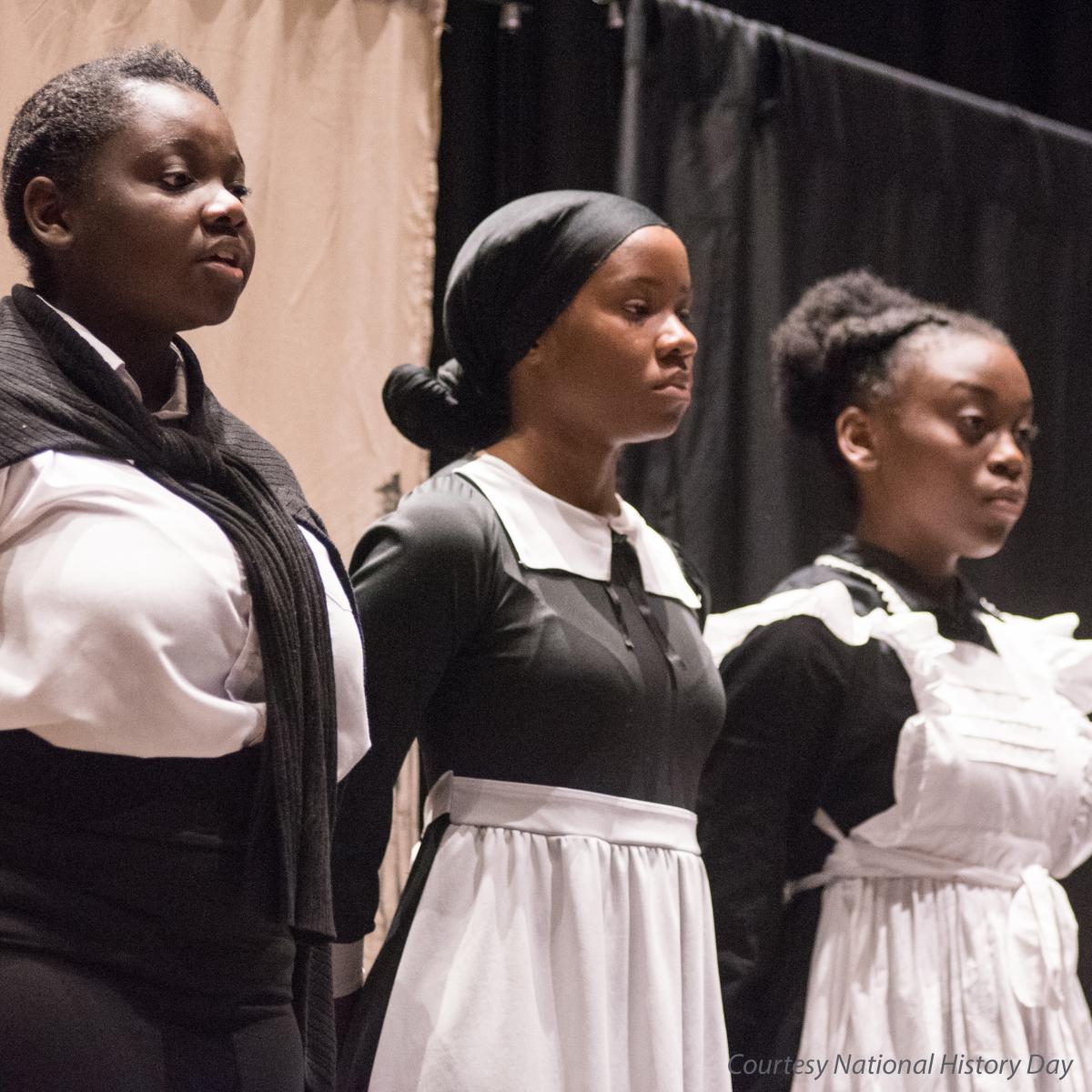
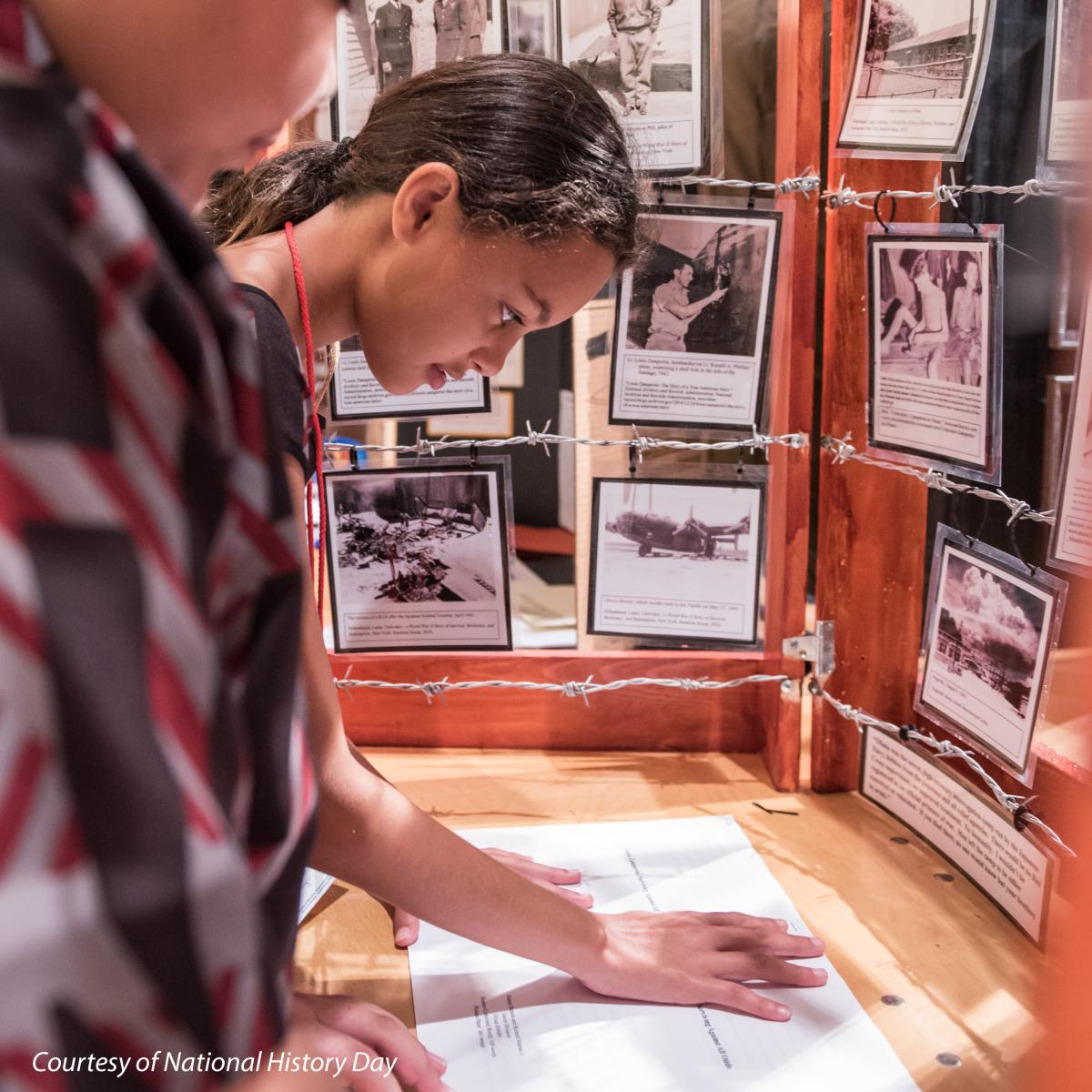
Students compete at the regional level where the top two winners in each category proceed to the state competition. From there, winning students have the opportunity to move on to the national level competition. National History Day (NHD) engages more than half a million students from around the world as they conduct research and interpret historical topics through the lens of an annual theme.
The History Day methodology supports teachers and schools by aligning curriculum and instructional priorities with State and National Learning Standards while preparing students for college and career readiness.
National History Day was awarded the prestigious 2011 National Humanities Medal by President Barack Obama.
Contact Information
If you would like to receive more information about Capital Region History Day, please contact HISTDAY@nysed.gov

Levels of Competition
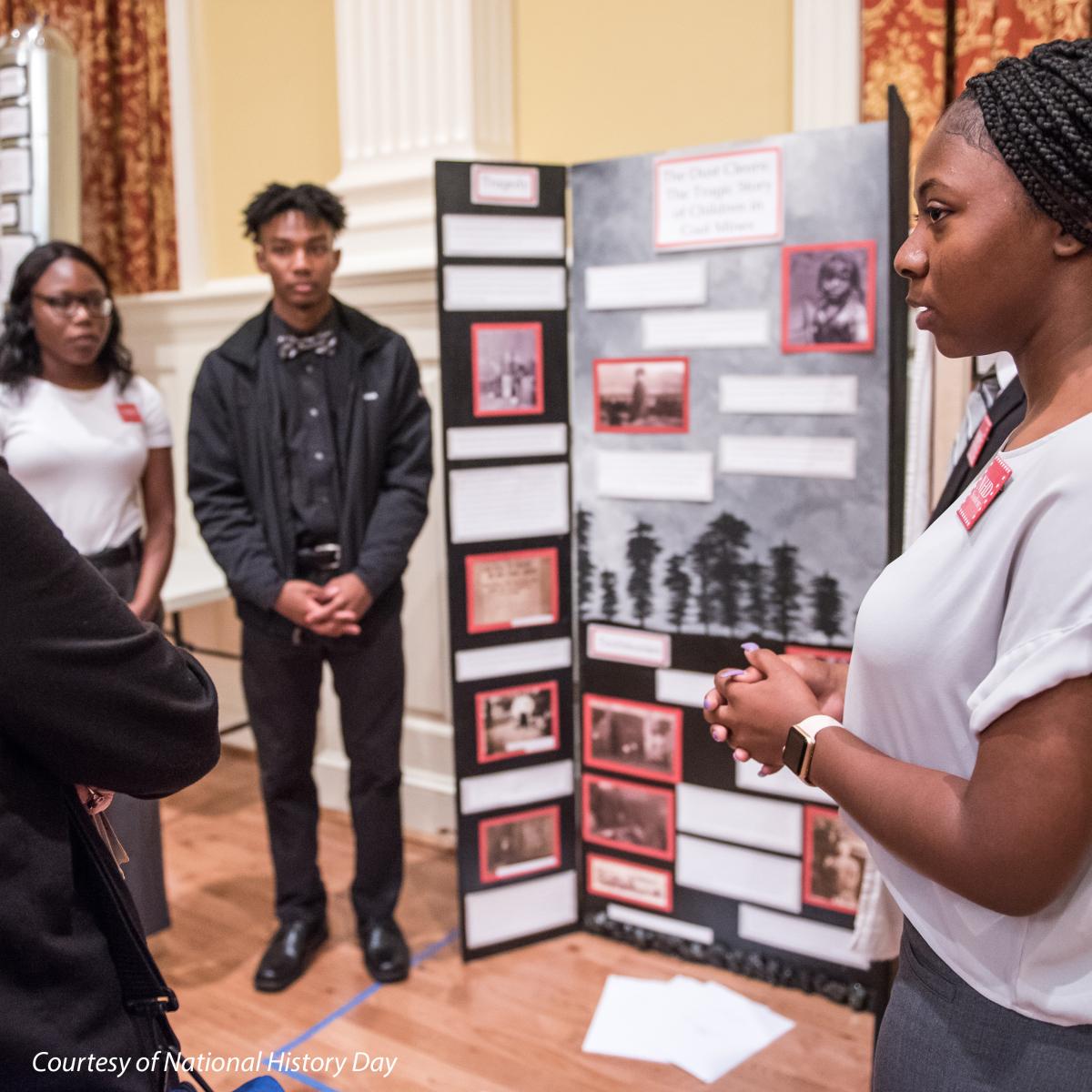
Students must first submit their research projects to a regional history day competition. Only projects that earn first and second place in each category in each division (individual and group) will advance to the next level of competition.
Divisions
Junior Division: 6-8th Grade
Senior Division: 9th- 12th Grade
Entries (Individual and Group Projects)
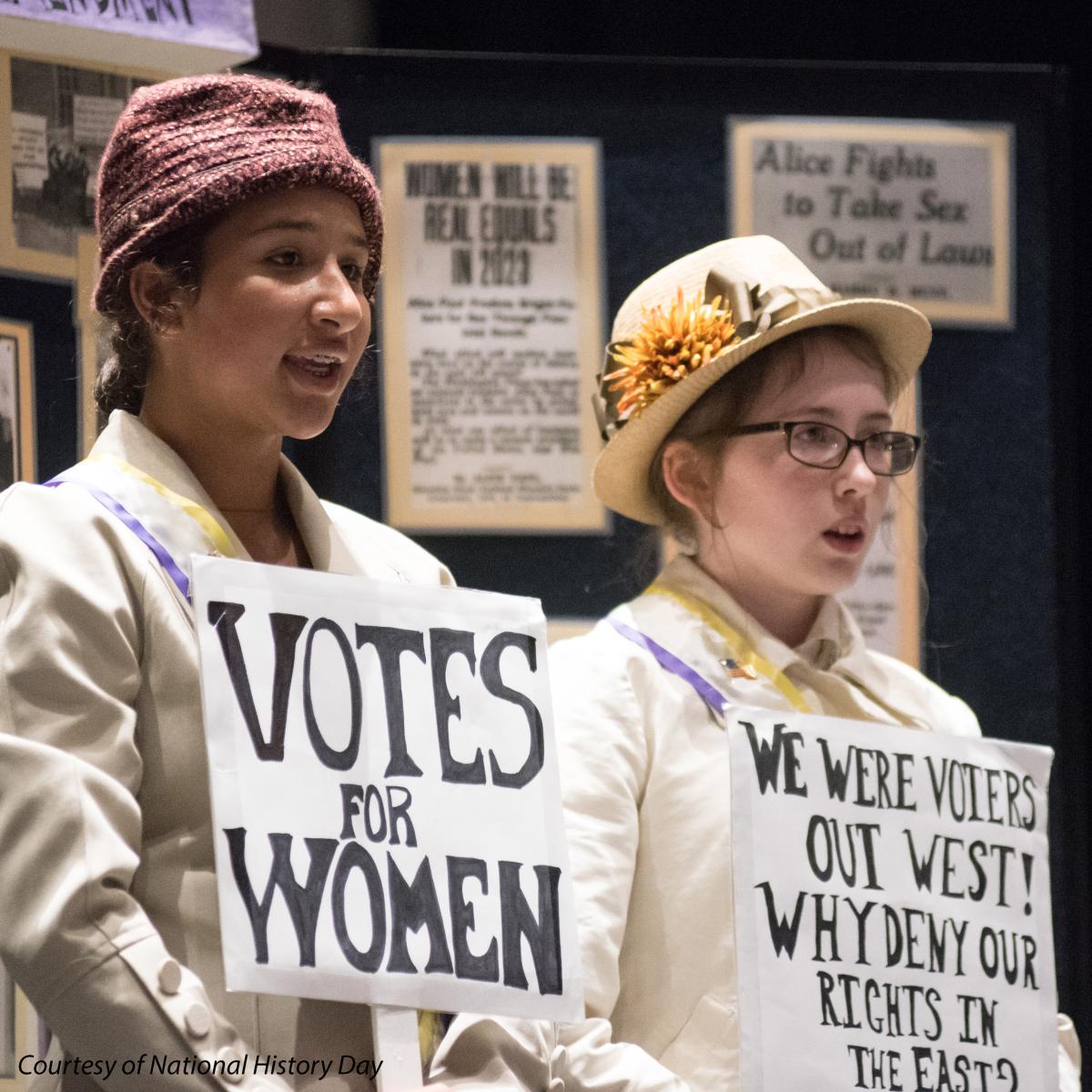
Individual: Historical Papers MUST be done individually. Students may elect to do an exhibit board, performance, website, or documentary on their own as well.
Group: 2-5 students. Students may work together in groups in all categories except Historical Papers.
Each Project Must Include: Process Paper and Annotated Bibliography
Judges
Judges will complete rubrics to evaluate students work, and select entries to win special prizes and advance to the next level of competition.
Collaborative field schools completed at Ten Broeck Mansion in Albany's Arbor Hill neighborhood
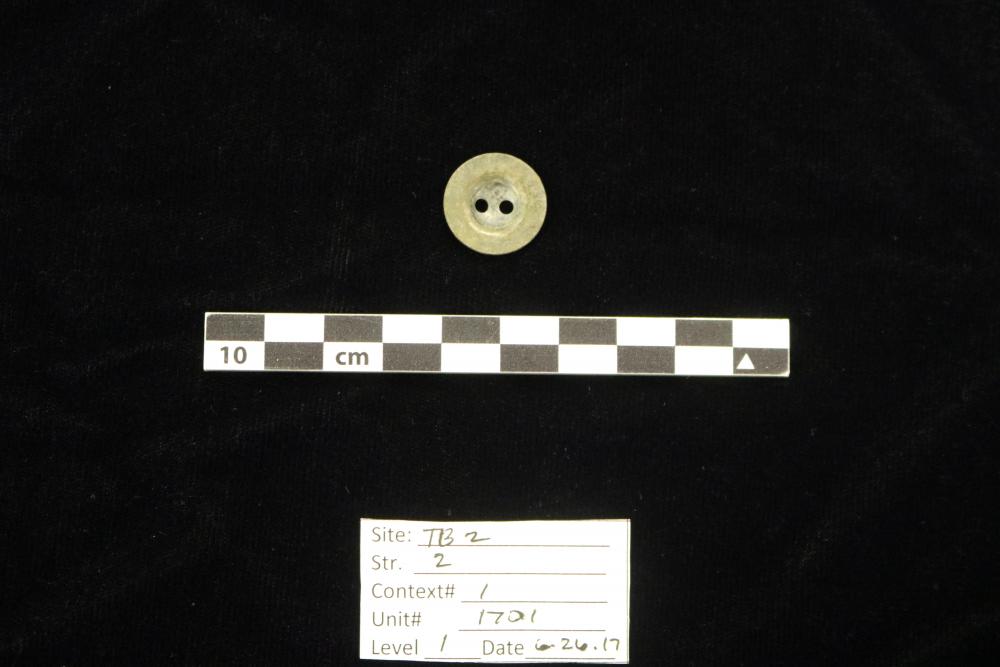
Archaeologists from the New York State Museum and the University of Albany completed two collaborative field schools in Historical Archaeology at the Ten Broeck Mansion, located in Albany, NY's Arbor Hill neighborhood during the summers of 2017 and 2018. These excavations concentrated on outbuildings associated with the estate resulting in the recovery of thousands of artifacts. Archaeologists were particularly interested in an outer kitchen that once stood just southwest of the 1798 brick house. Maps and previous excavations on the site indicated the approximate location of the outer kitchen, and excavations recovered the southern edge of the building.
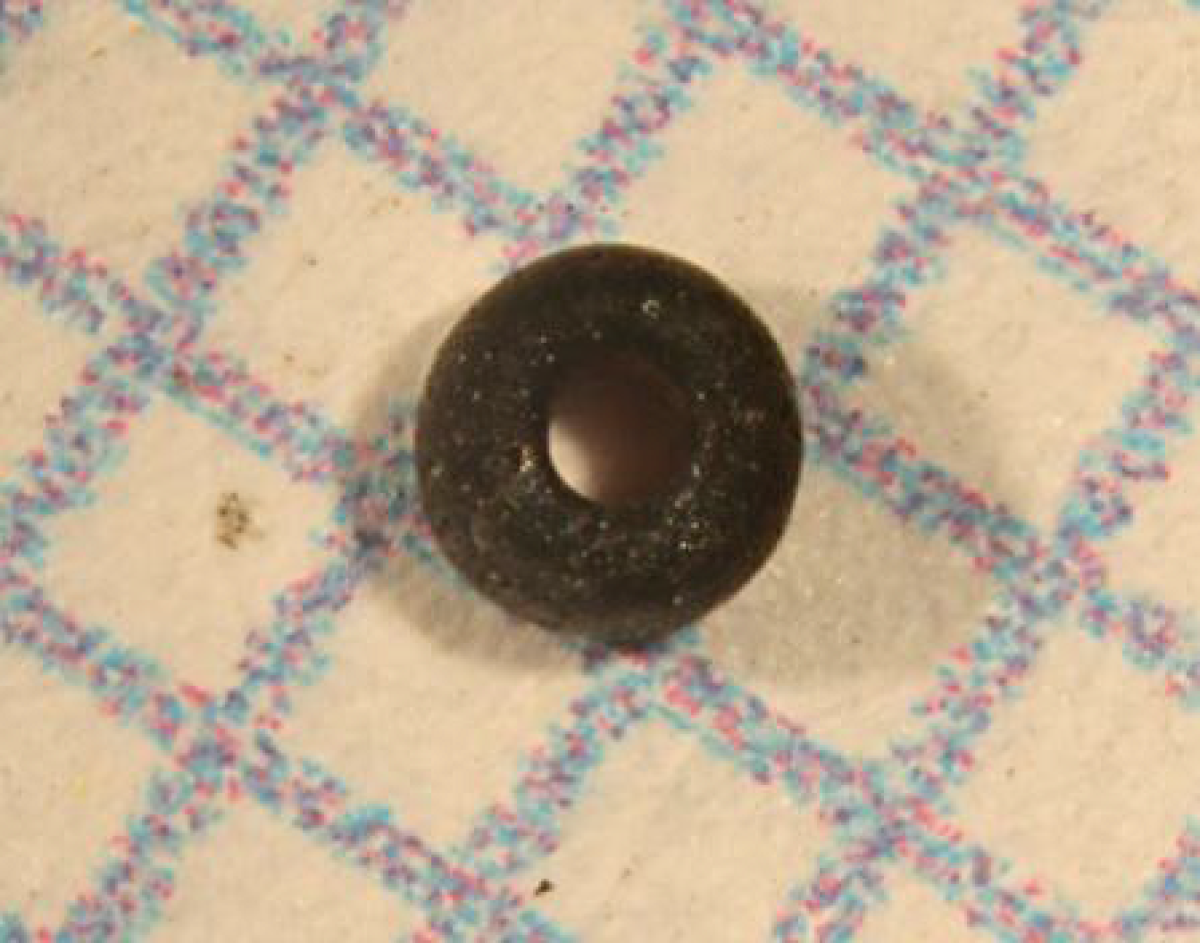
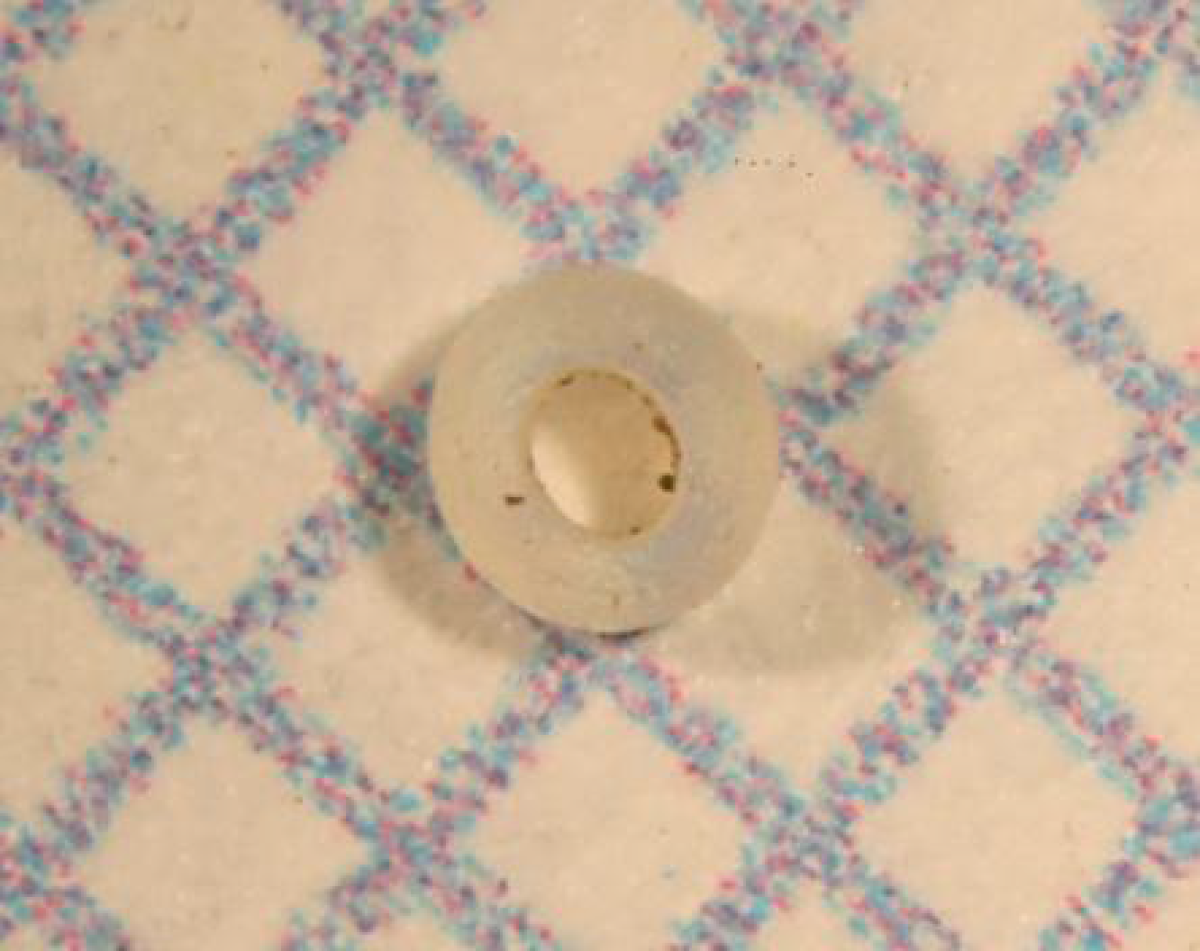
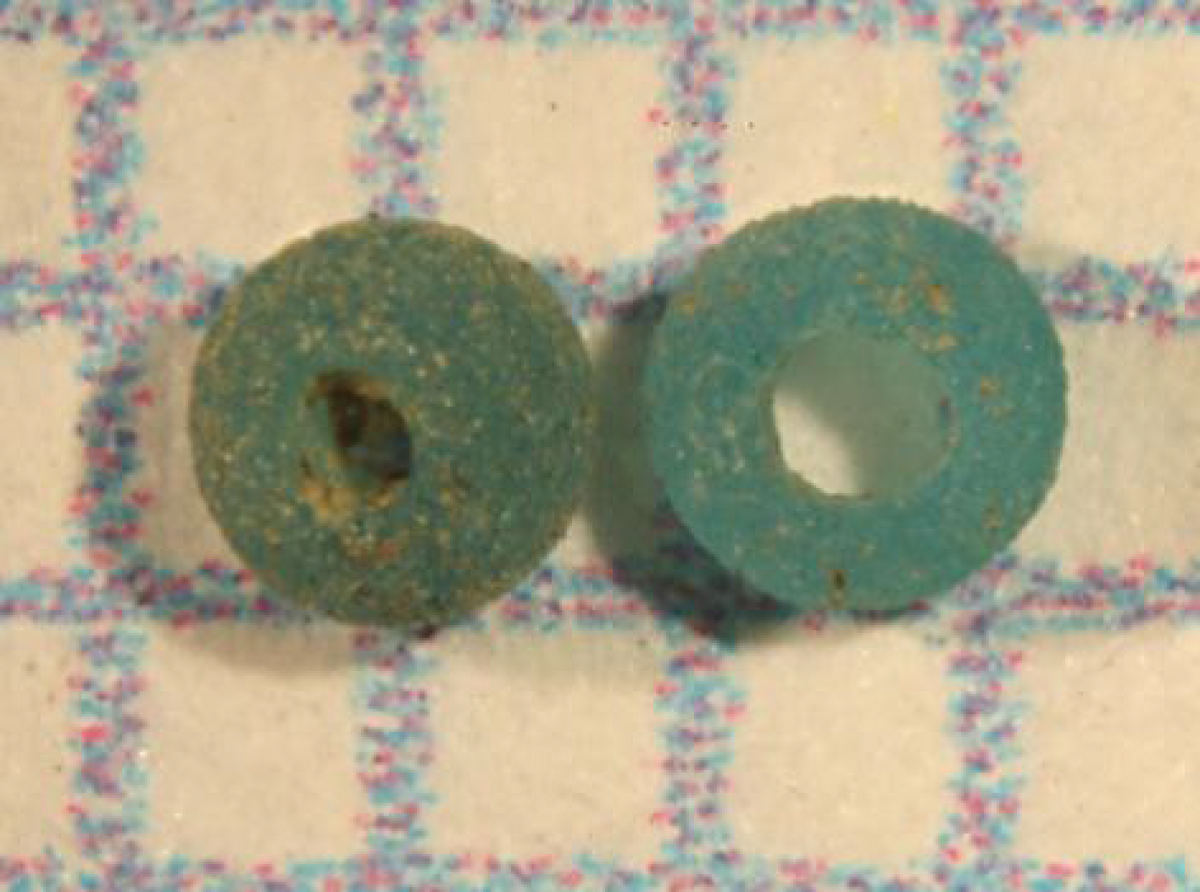
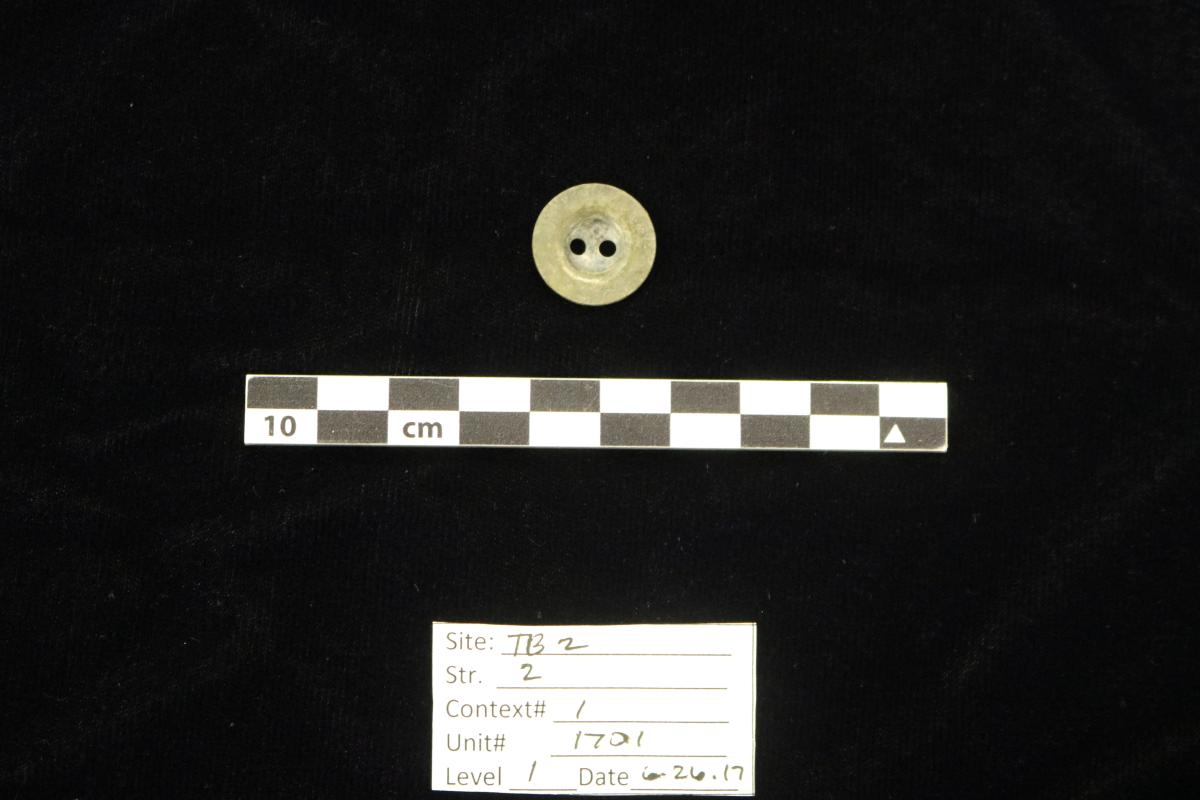
Outer kitchens were common on large estates in New York and were primary spaces where enslaved African-Americans prepared food before slavery was abolished in the state in 1827. Ten slaves were living on the Ten Broeck estate in 1800 tending the gardens, cooking food, and performing other tasks. A layer of trash discovered on the southern side of the kitchen contained ash and charcoal from the fireplace along with many personal objects possibly belonging to African-Americans who spent much of their time in and around this outbuilding. Among the ceramics, tobacco pipes, and food remains were buttons, beads, and other clothing items worn by the enslaved people living on the Ten Broeck estate. These artifacts are incredibly rare examples of the material possessions of African-Americans who lived in Albany prior to the abolition of slavery in New York in 1827. Comparative analysis of the collection is currently underway at the museum.
Bioarchaeology at the Courtland Street Burying Ground

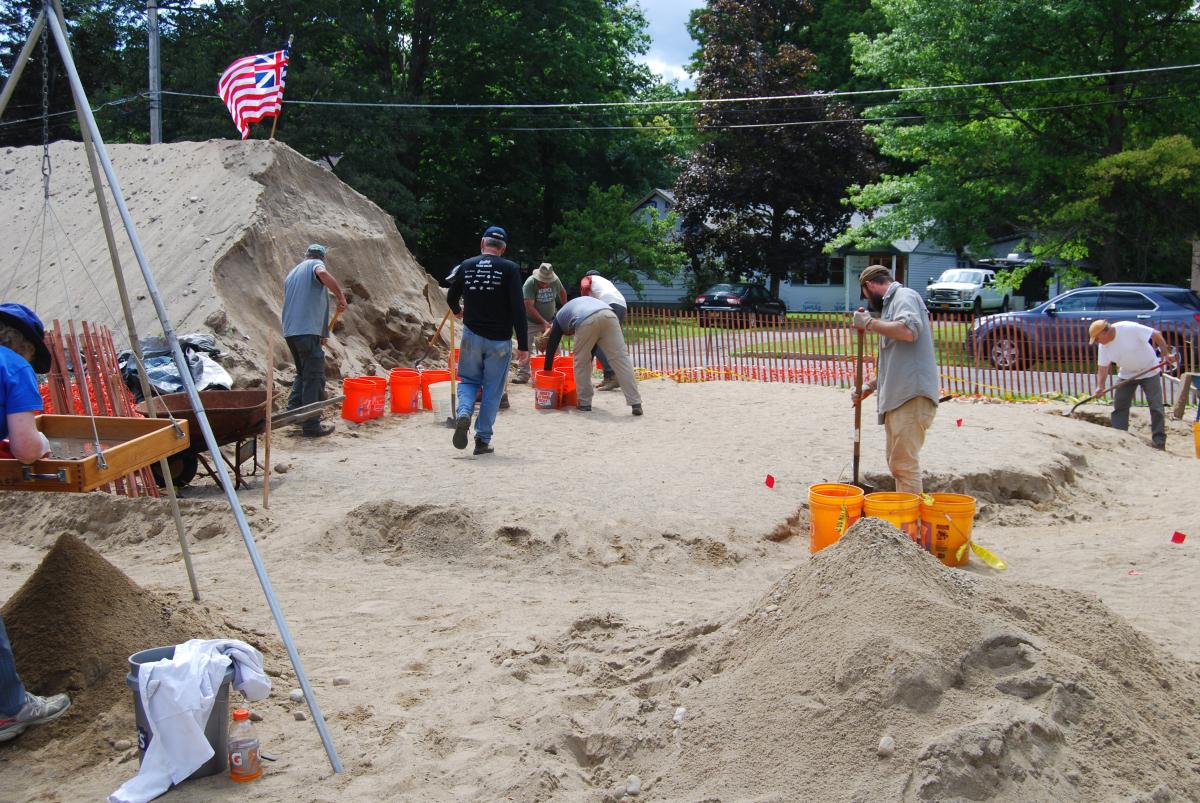
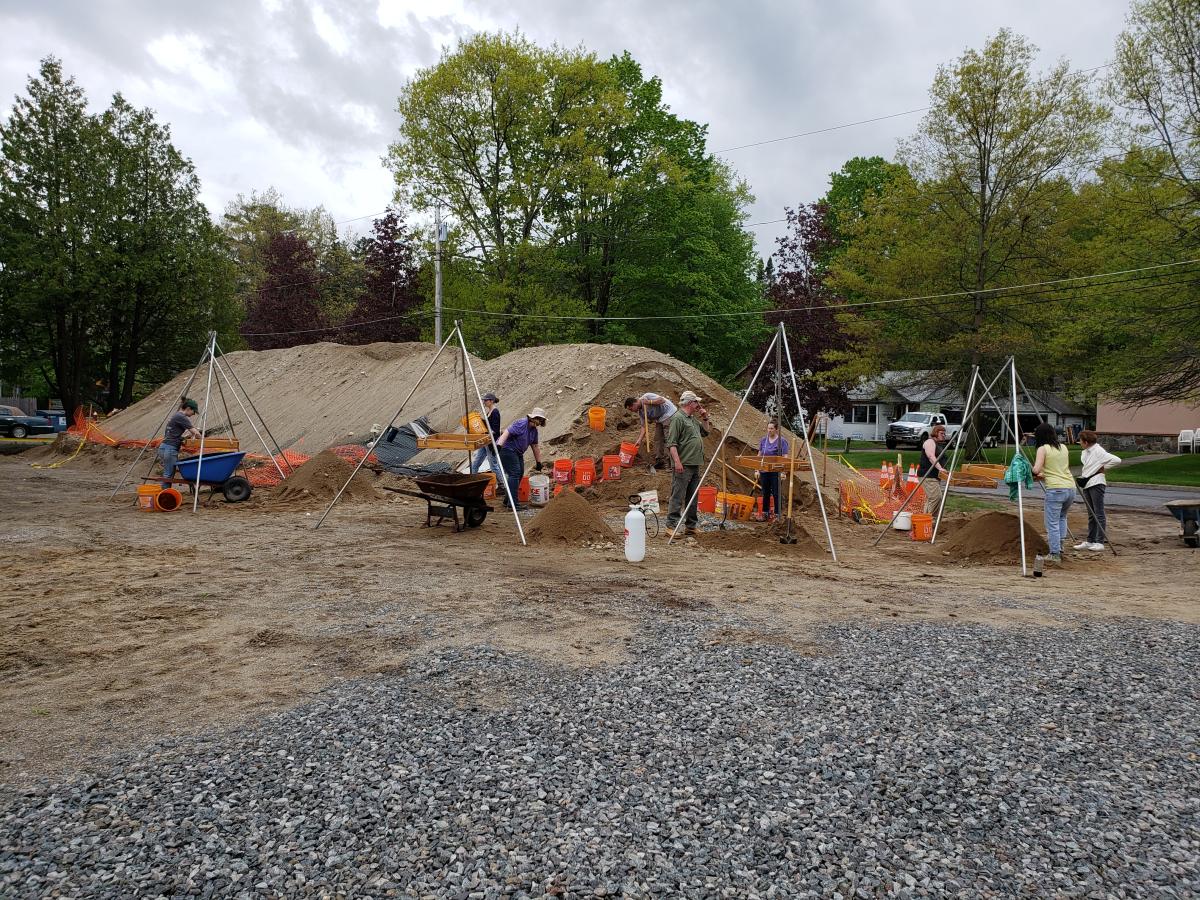
When a historic unmarked cemetery was found during construction in Lake George, New York last winter, it was presumed to date to the mid-18th century French and Indian War. The discovery of a regimental button from the First Pennsylvania Battalion however placed the cemetery at the time of the American Revolution. The cemetery is believed to be associated with a General Hospital established at Fort George in 1776 to treat the sick and wounded sent down from Crown Point and Ticonderoga. Unfortunately, many of the graves were destroyed while digging the foundation for a building, so archaeologists have been working with a team of dedicated volunteers to recover human remains from a large spoil heap of soil removed by construction. Museum bioarchaeologists hope to reconstruct as many individuals as possible to document the hardships of war before proper reburial.


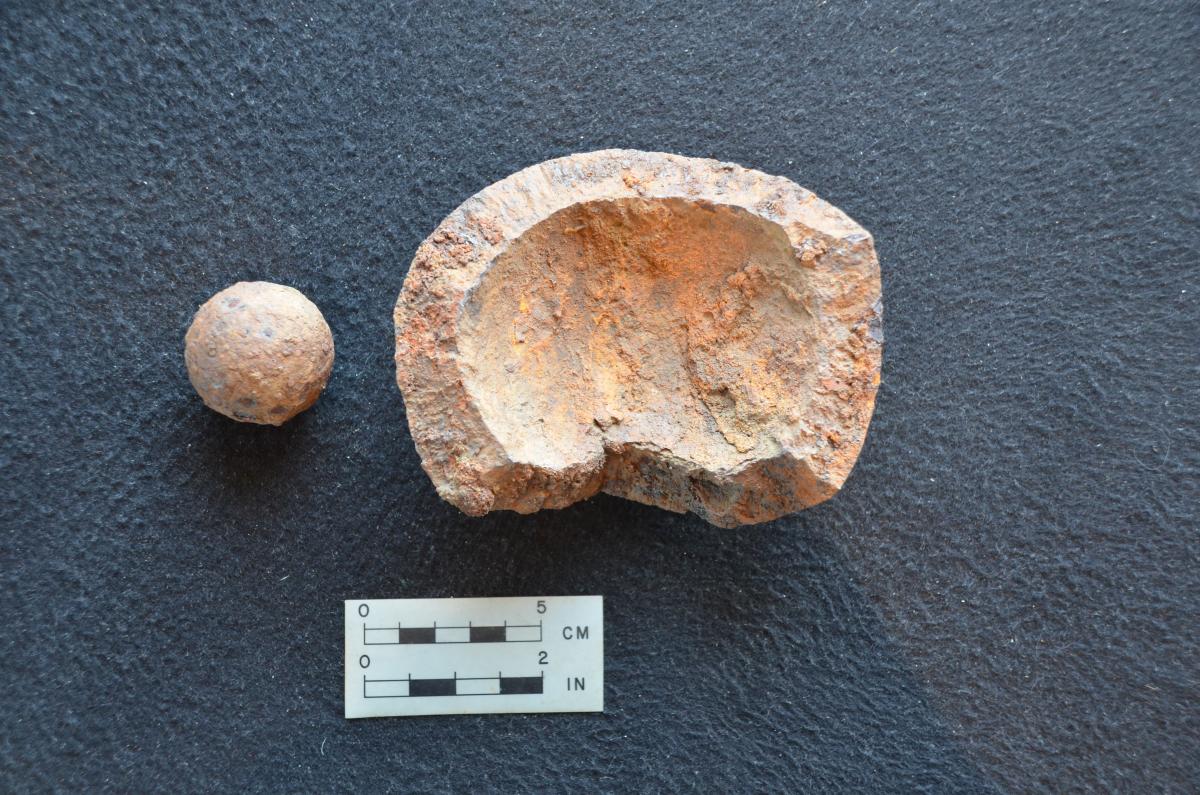
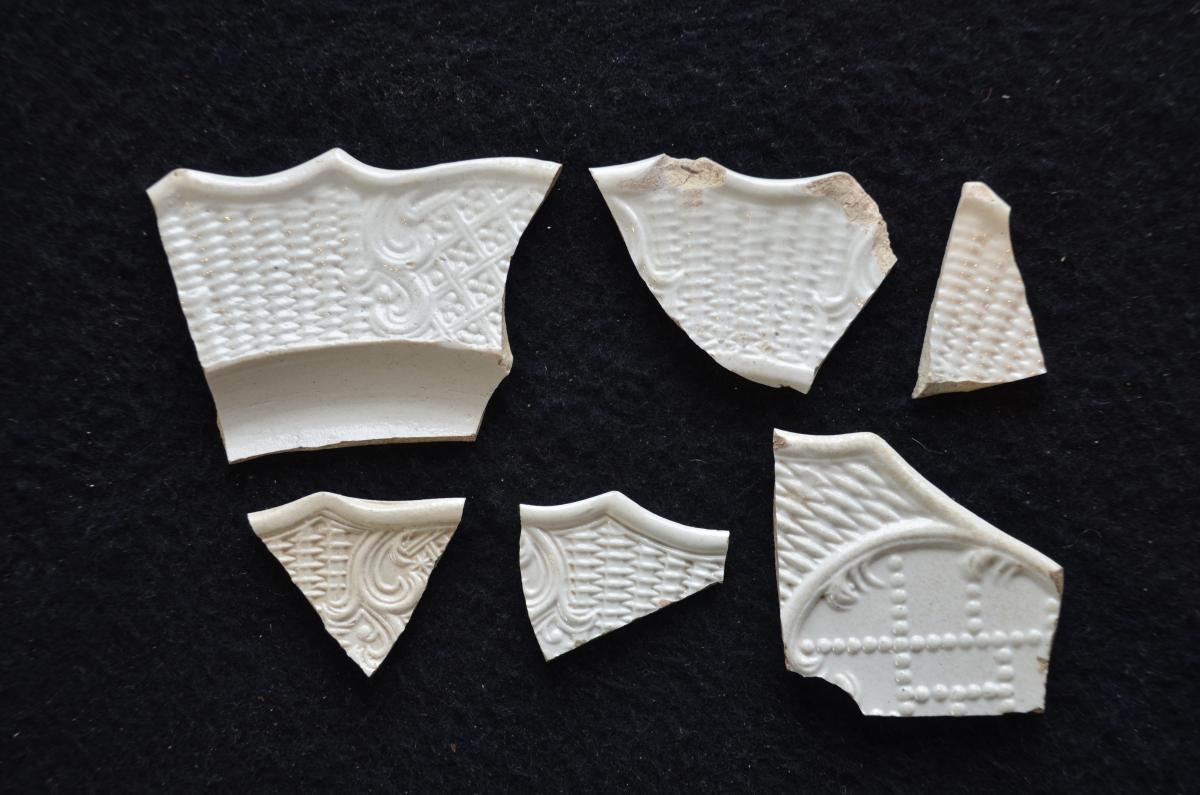
New acquisition: archaeological collection resulting from 3 field seasons at Lake George Battlefield Park
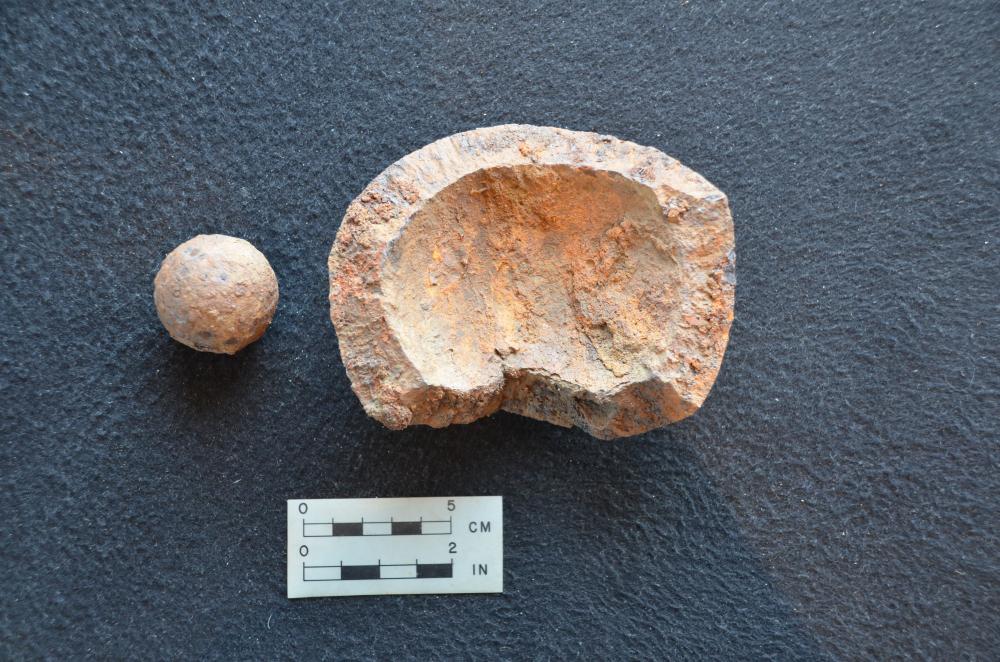
The NYSM Historical Archaeology Collections now includes artifacts from the 2014, 2015 and 2016 excavations at the Lake George Battlefield Park in Lake George, New York. David Starbuck, who conducted the first professional archaeology in the park in 2000 and 2001 (the artifacts recovered during these years are also curated at the NYSM), led this more recent fieldwork as well. Understanding the many French & Indian War and American Revolution battles and occupations at this site was the primary objective of the archaeological investigations. The ruins found within the park are perhaps among the last of the relatively-untouched sites situated along the historic 18th-century military corridor that runs from present-day New York City to the Canadian border.
The curation of these collections at the NYSM allows for greater access to the artifacts and associated material from these multi-year scientific excavations, facilating further study and knowledge of this important era in New York and pre-United States history.
World Trade Center Commuters - The Kristen Artz Collection
Photos from the Kristen Artz Collection at the New York State Museum
These photographs document morning commuters entering the World Trade Center Mall weeks prior to the attacks of September 11, 2001.
If the Twin Towers were still standing, these would be merely snapshots of everyday people on their way to work in 2001. Instead they are a historical record documenting space that no longer exists and possibly people that are no longer with us.
The images include several dozen people from every walk of life in the original Mall at the World Trade Center. Shot in the days before handheld devices people are seen rushing by with coffee, others reading the paper, and some are just gazing into space.
New York State Museum Collection, H-2020.25
Newly identified - and edible! Re-analyzed privy soil yields increases knowledge of New Netherland diet
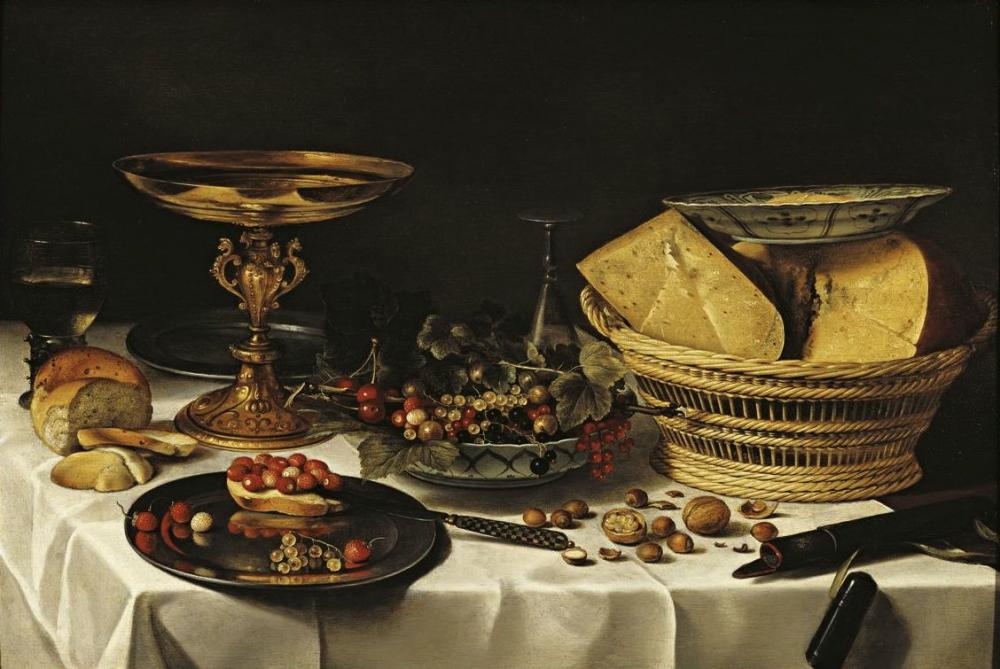
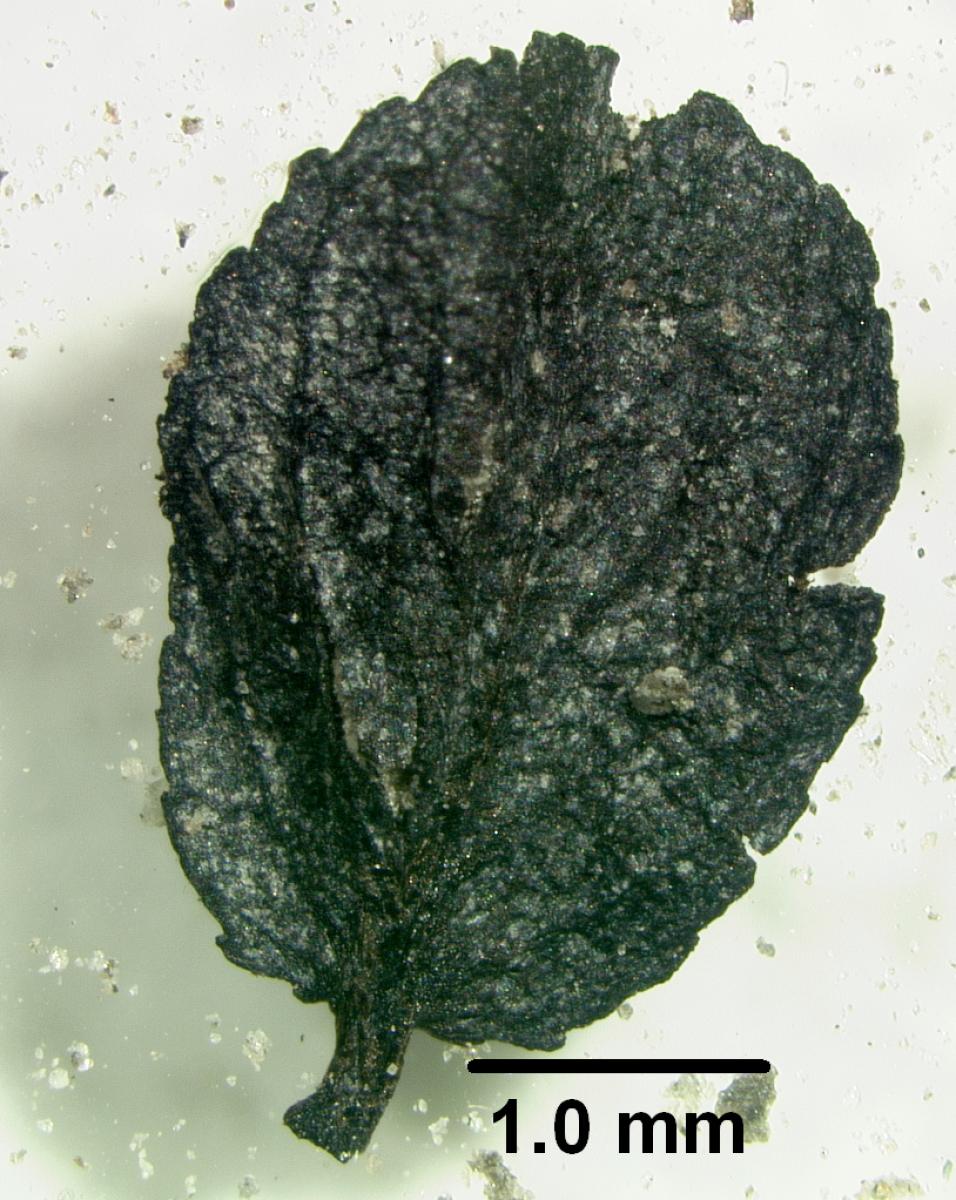
Archaeologists can glean a tremendous amount of information from soil sediments collected at archaeological sites. Pollen grains, phytoliths, seeds, and other remnant plant material can survive for thousands of years below ground under the right conditions. These data allow for the study and reconstruction of past environments and demonstrate what types of flora people relied on at different points in time.
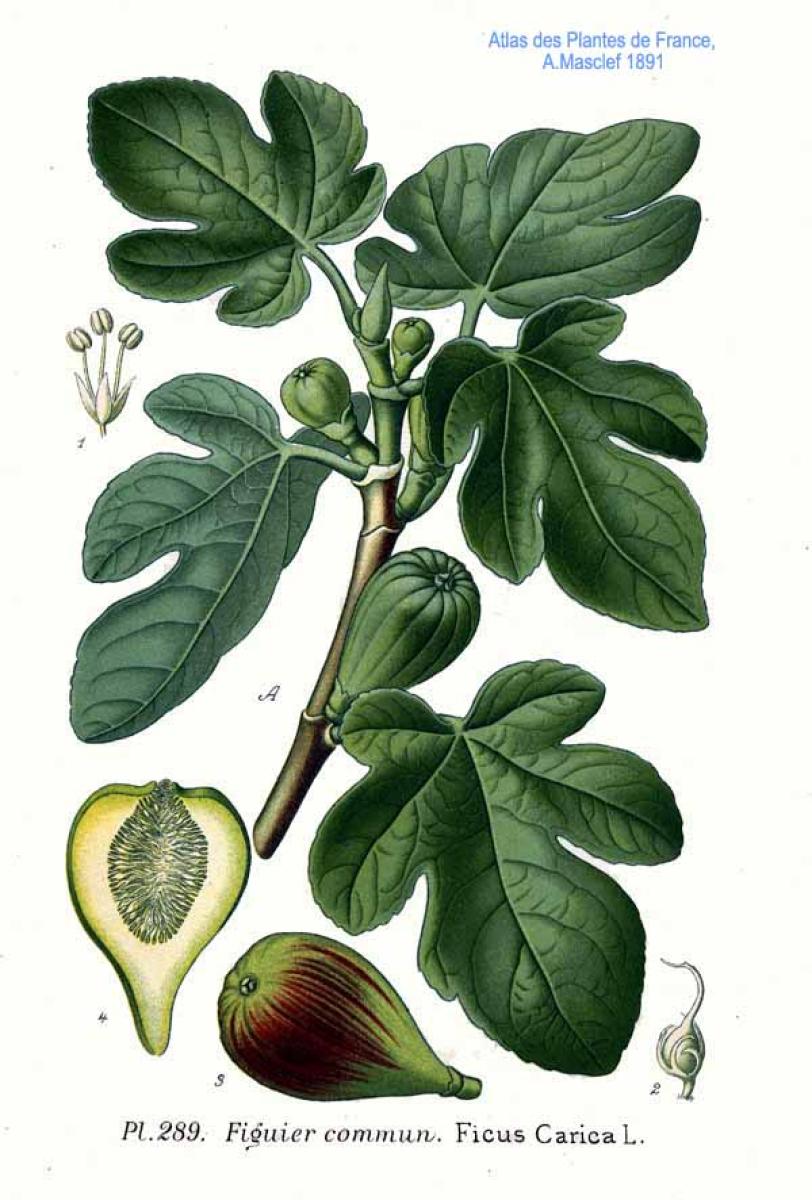
The historical archaeology collection at the New York State Museum contains many processed and unprocessed soil samples waiting for future research questions. For example, recently soils from a ca. 1653 privy excavated in Lower Manhattan during the early 1980s were processed to recover botanical remains that might add new information about life in New Netherland. This privy is thought to have been used by the family of the Secretary of New Netherland, Cornelis van Tienhoven. The results were compared to a previous botanical analysis based on a much smaller sample from the privy. Based on this new analysis we were able to identify nine previously unidentified edible species and nine new native plants present in the privy. We now know that the family was eating hazelnuts, walnuts, hickory nuts, mulberries, elderberries, butternut or crookneck squash, and imported figs. Mint was also used, perhaps for medicinal purposes.
These new data show a greater variety in the diet within the Van Tienhoven household than previously realized, and when compared with data from contemporary sites, provide a more accurate summary of life in New Netherland.


Science Tuesday: New York's First Ice Age Predator
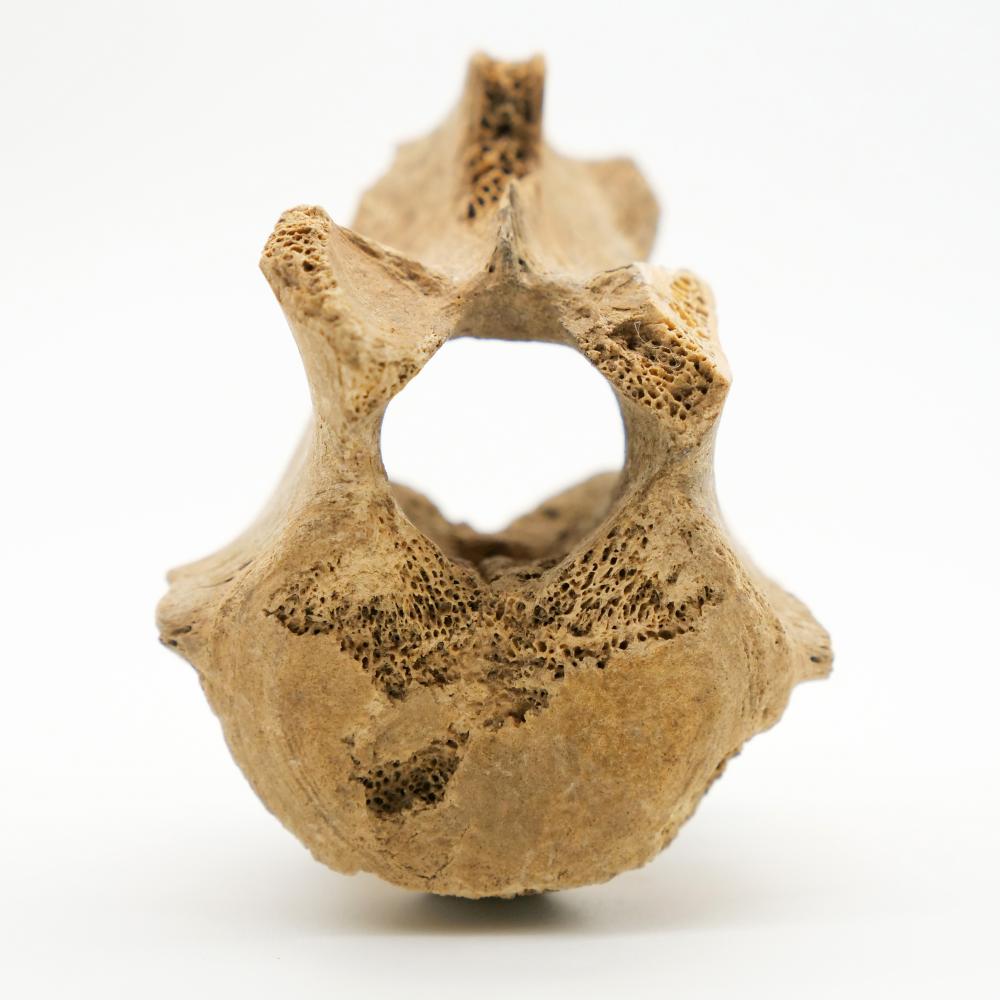
Predators are important parts of ecosystems, and while we know species like dire wolves and saber-toothed cats lived elsewhere, there are currently no published records of Ice Age predator fossils having been found in New York. One reason for this is that predators are represented by significantly fewer individuals in ecosystems than their prey, so there is less of a probability of their remains being both preserved and discovered.
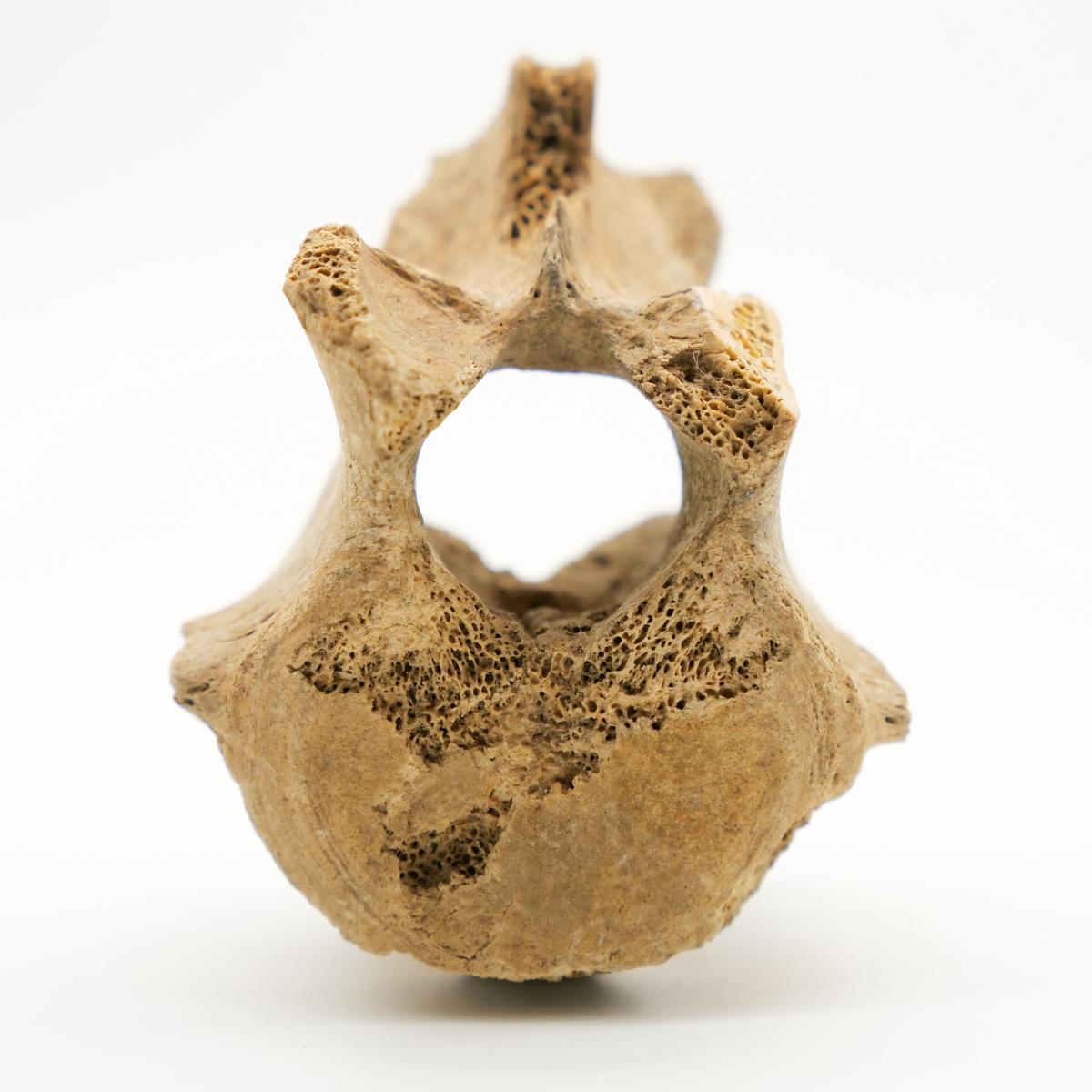
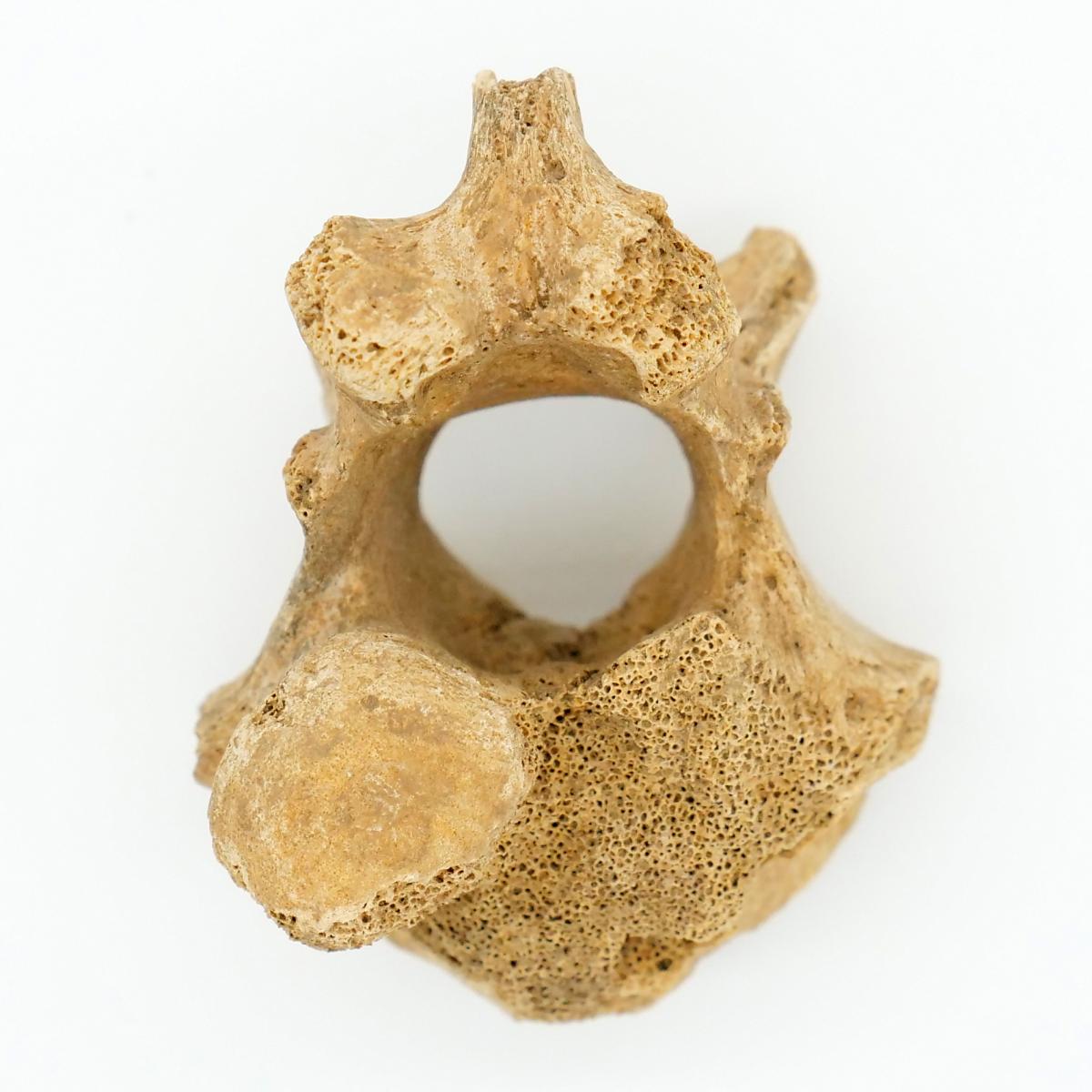
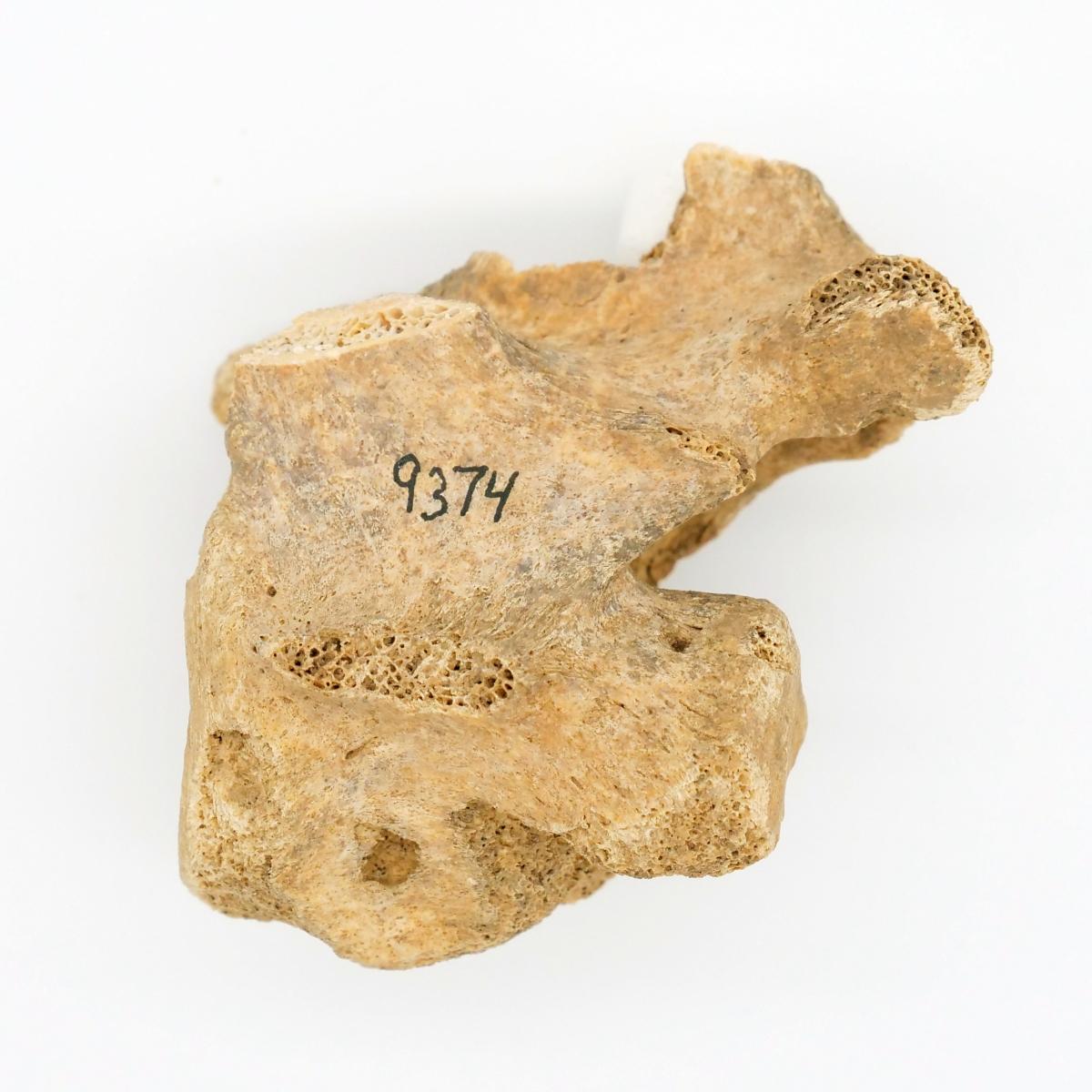
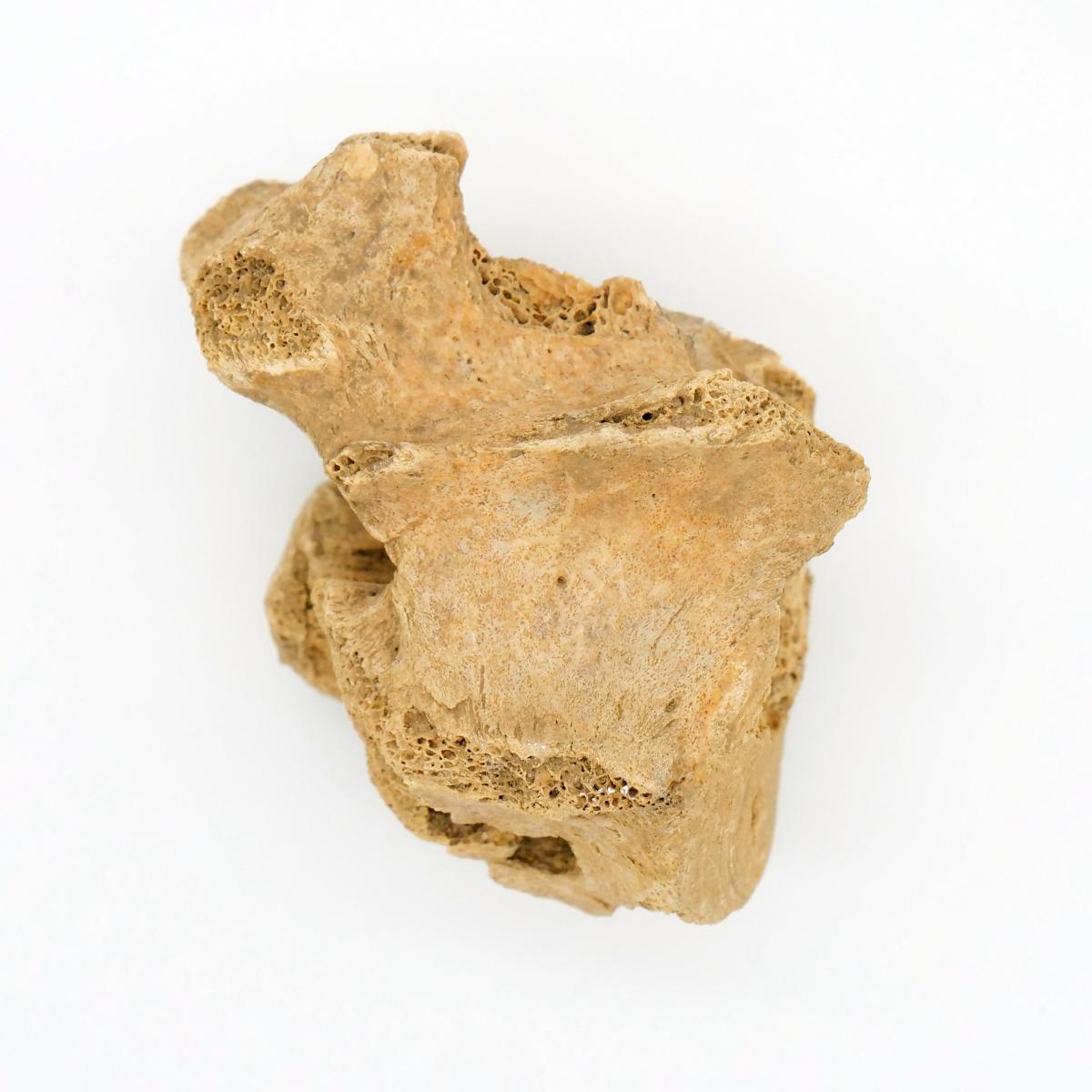
The NYSM’s curator of Ice Age animals recently had a piece of a bear vertebra from Orange County, NY, carbon dated and the results were both literally and figuratively “cool”, showing that this bear lived right at the end of the last Ice Age, about 13,000 years ago. This is the first definitively dated Ice Age predator known from the state. Fossils like this from the NYSM’s Vertebrate Paleontology Collection are being used to understand how New York's modern mammal communities developed over the last 20,000 years.
For more information about the NYSM's Vertebrate Paleontology Collection, visit: http://www.nysm.nysed.gov/research-collections/paleontology/vertebrate-paleontology/collections
New Acquisition: West Family Farm Shaker Archaeological Collection
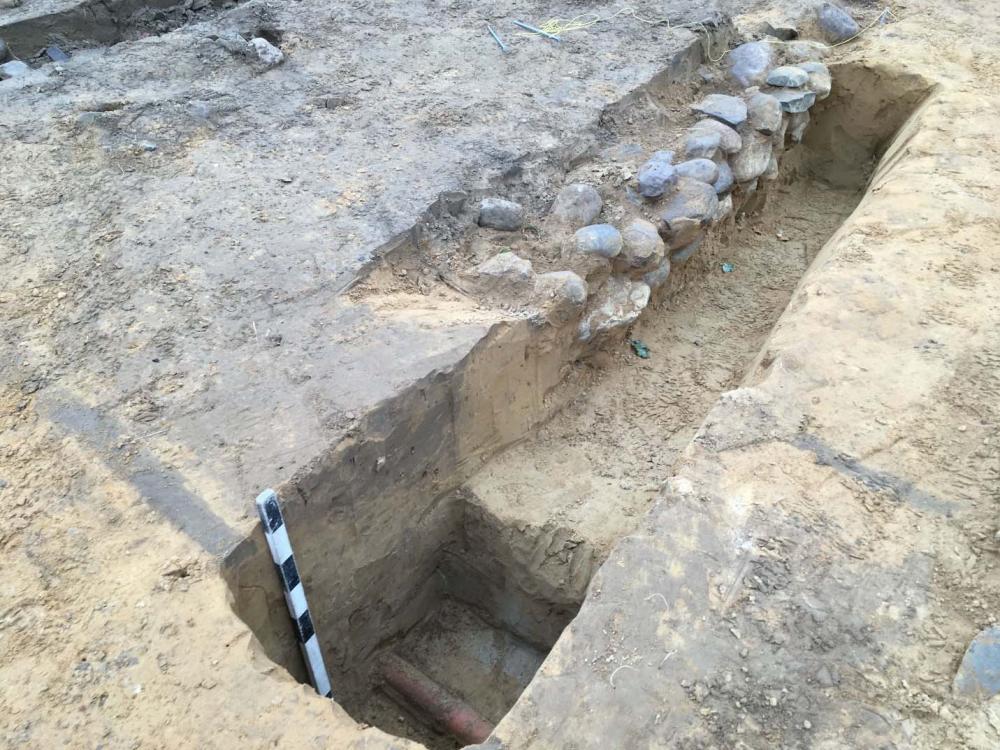
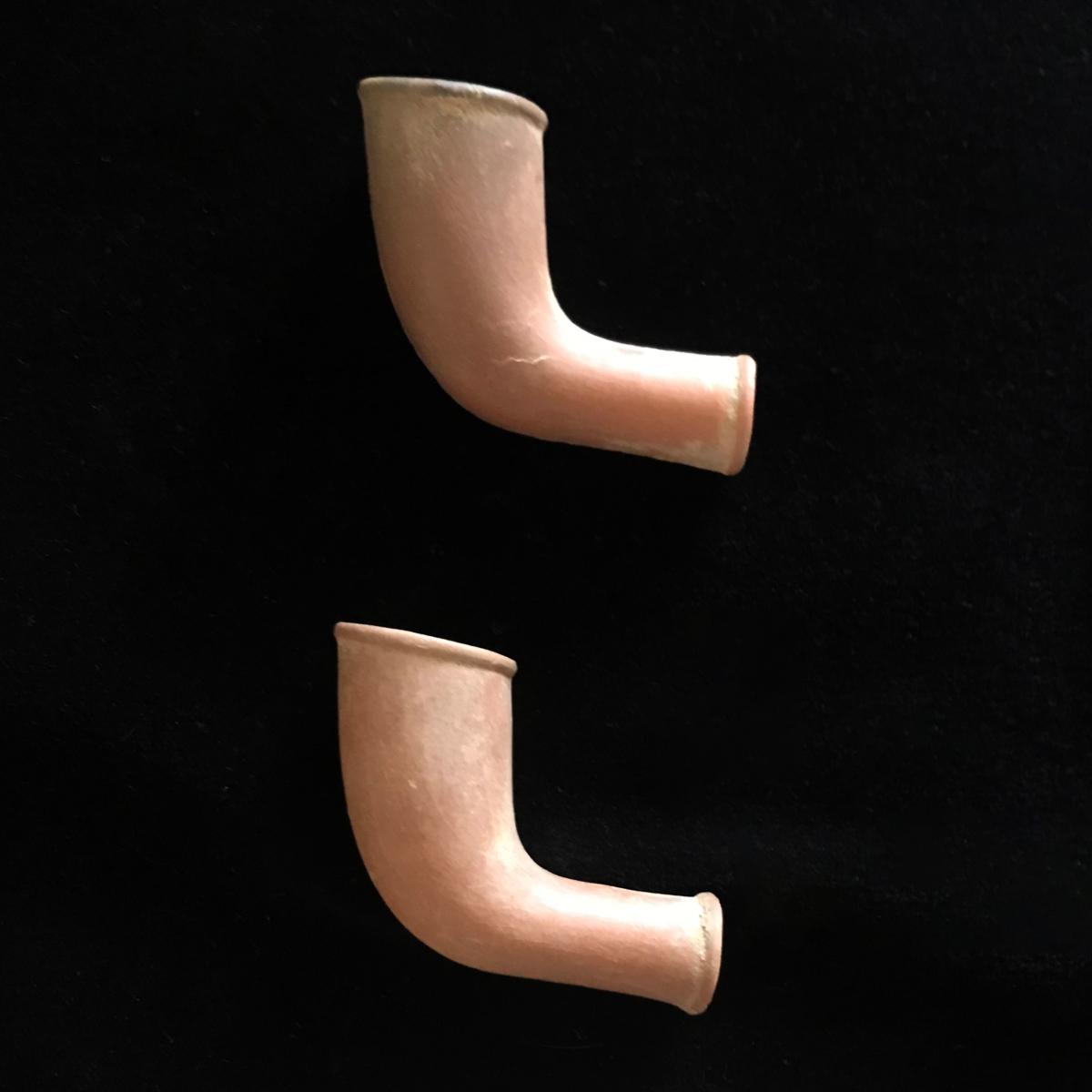
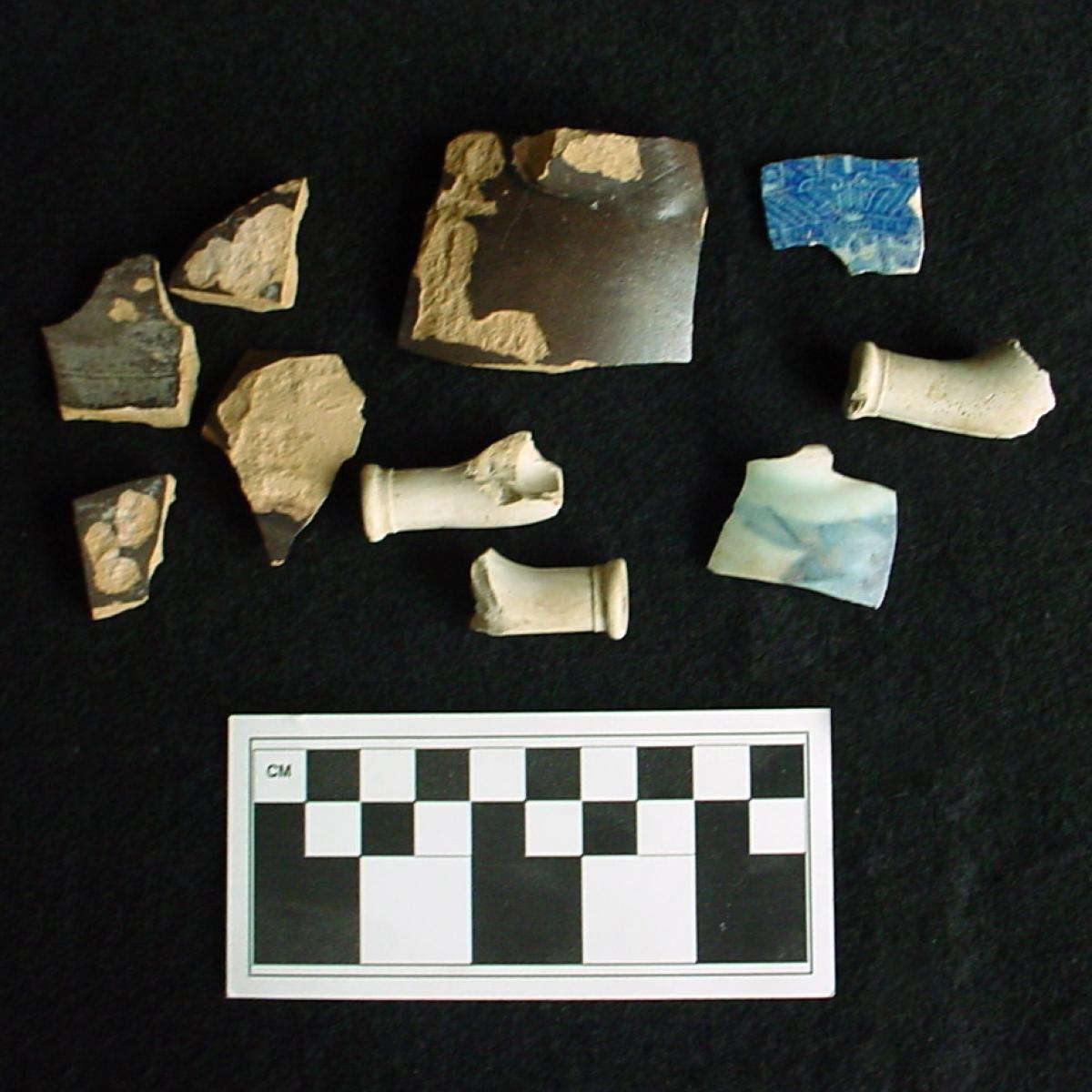
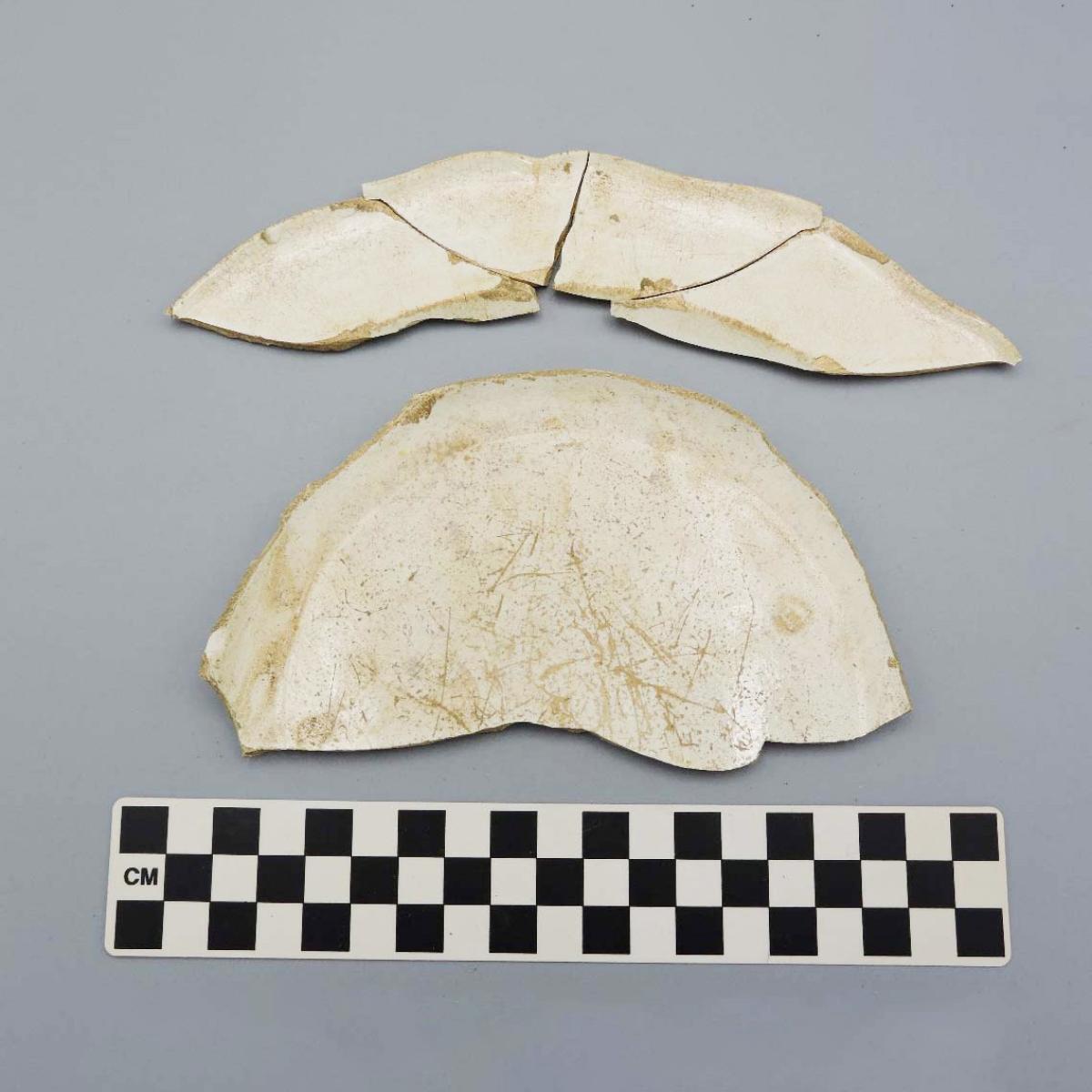
Ann Lee founded the first communal settlement of the United Society of Believers in Christ’s Second Appearing, commonly known as the Shakers, in Watervliet New York in 1776. Lee died in 1784, but the community she established continued until 1915. Archaeological excavations at the West family portion of the settlement by Hartgen Archeological Associates, Inc., recovered a rare collection of early 19th century household objects that is now part of the permanent Historical Archaeology collection at the New York State Museum. This is the first archaeological collection of Shaker material culture acquired by the New York State Museum and is a significant complement to the chairs and other pieces in the museum’s Shaker history collection.
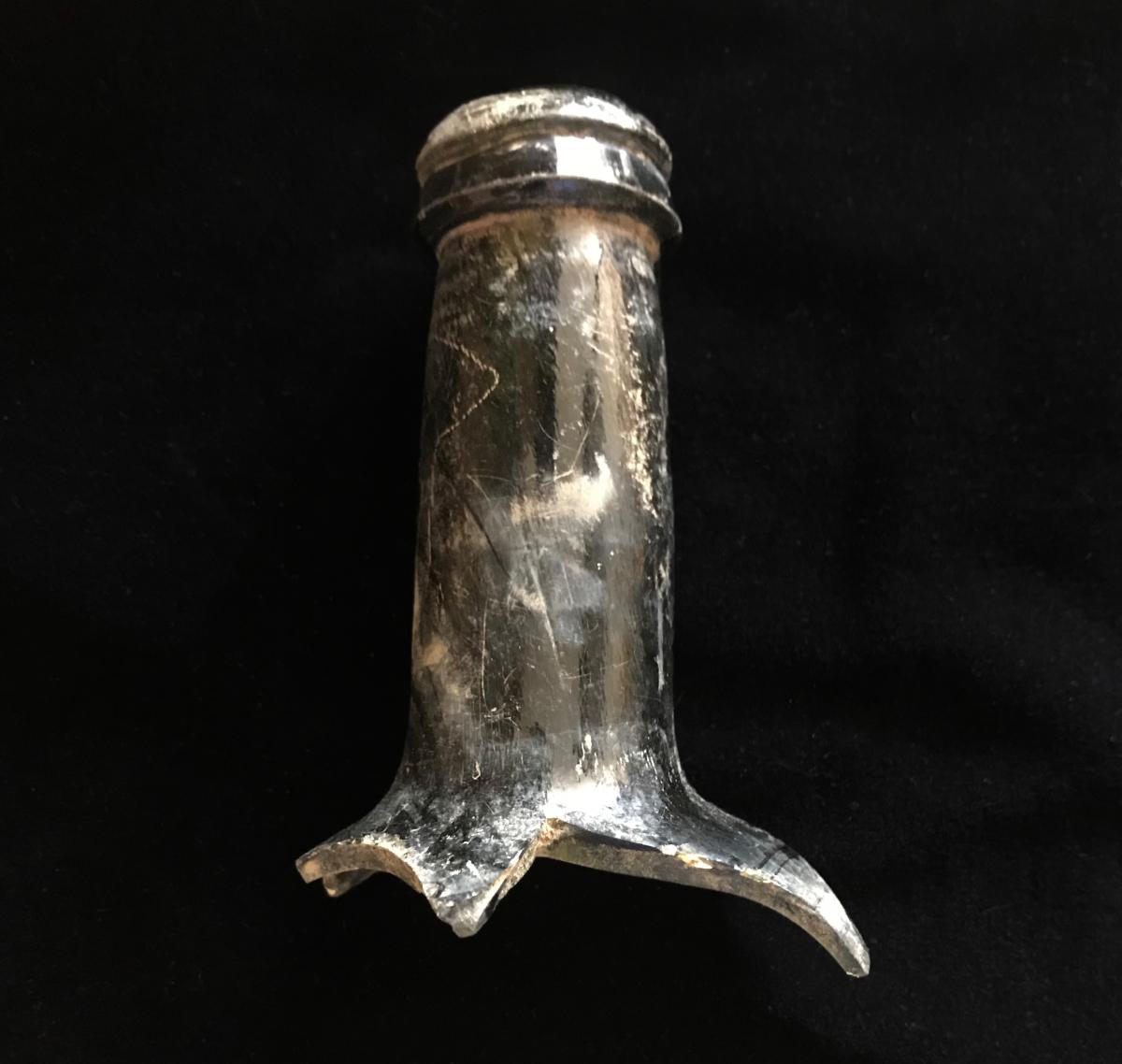
One important component of the archaeological collection are the many clay tobacco pipe fragments made by the Shakers in Watervliet. Most Shaker pipes were designed to be used with a wooden stem and are undecorated. Tobacco pipes were produced at most Shaker settlements and are one of the everyday homemade objects used by the community. Alcohol bottles were also recovered from the excavations. Alcohol consumption is not often associated with the Shakers, yet wine and spirits bottles in the collection suggest at least moderate consumption of liquid intoxicants. Together this collection of artifacts offers an opportunity to reexamine what we think we know about a supposedly pure and utopian 19th century community.
The Typewritten Speech
The discovery of the audio file sheds new light on another publicly owned document—the typewritten speech delivered by Dr. King that evening, now in the collection of the New York State Archives. It is now evident that the editing marks made on the speech were made by Enoch Squires, the audio engineer who made the recording. Presumably, he marked the document after listening to the recorded speech. The handwriting on the speech is identical to Squires’ labels and notes made on his audio tape collection, donated to the State Museum.
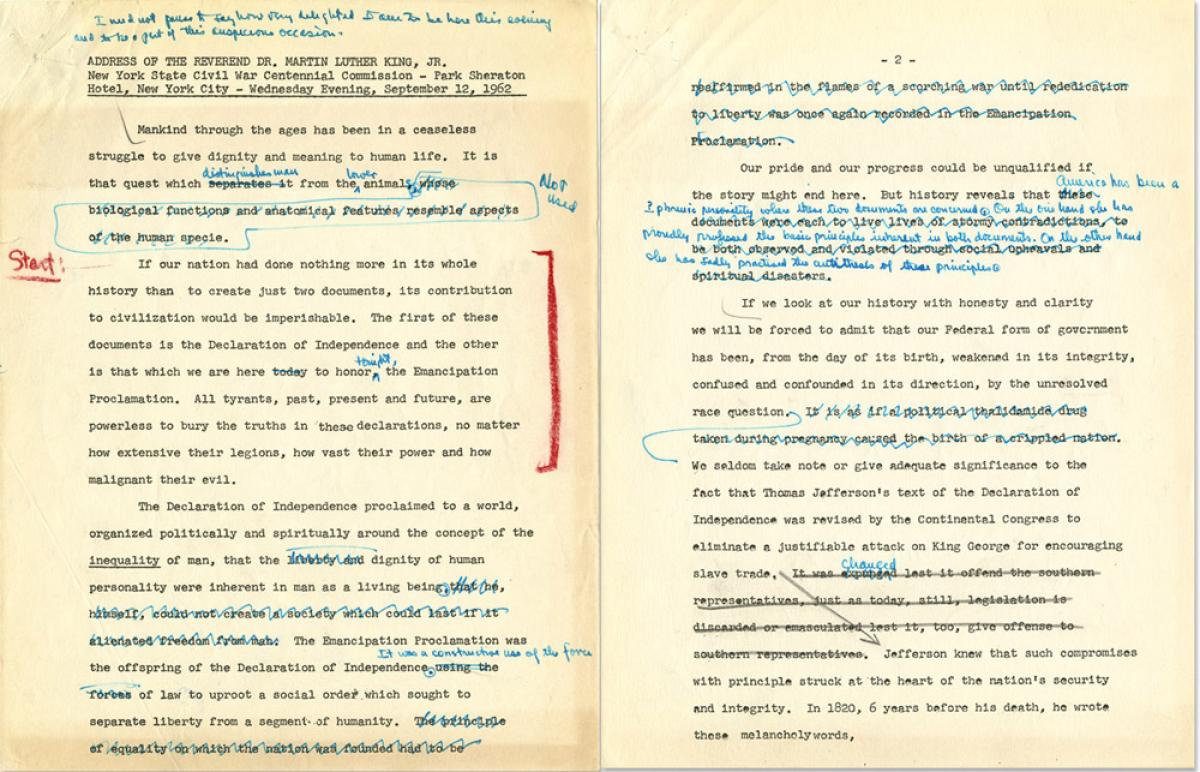
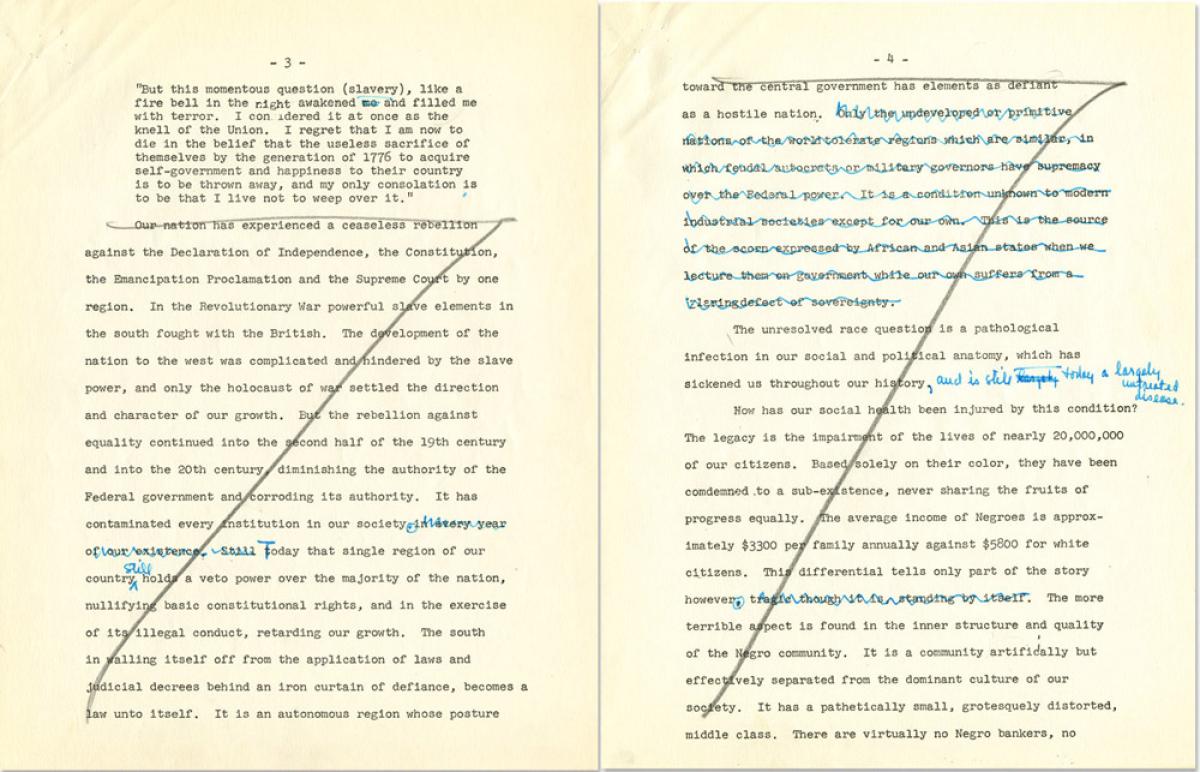
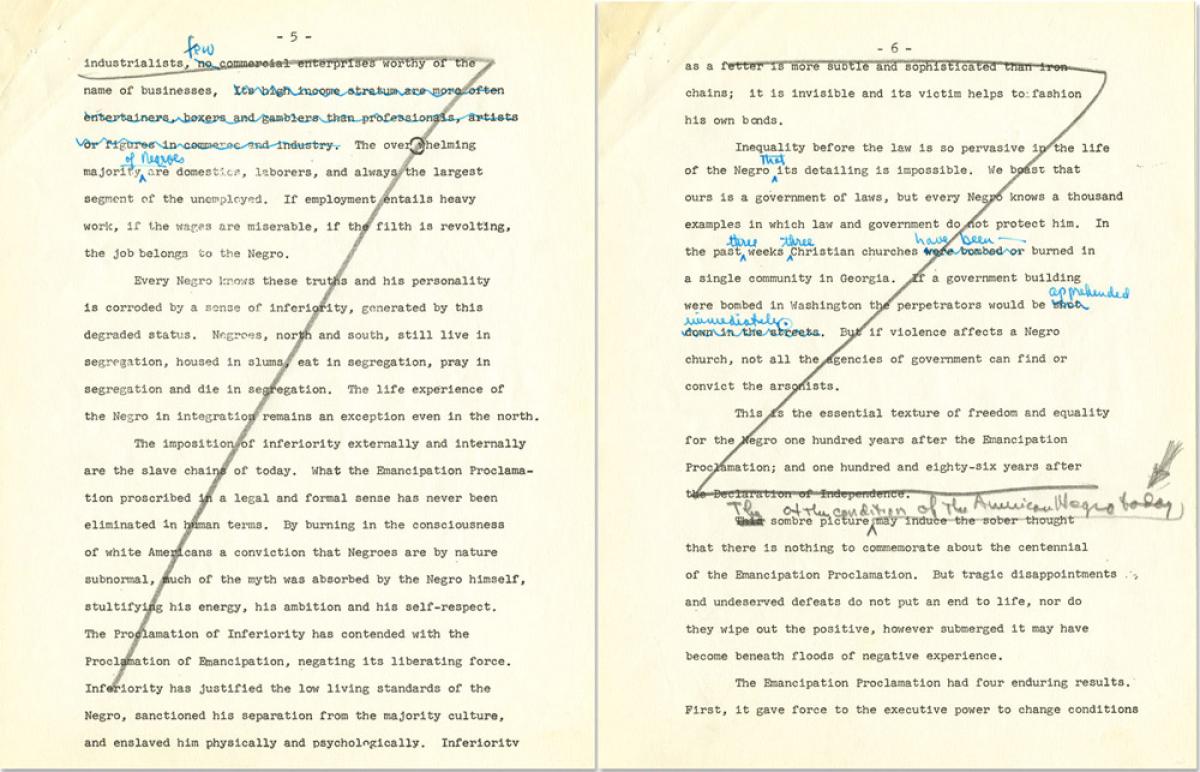
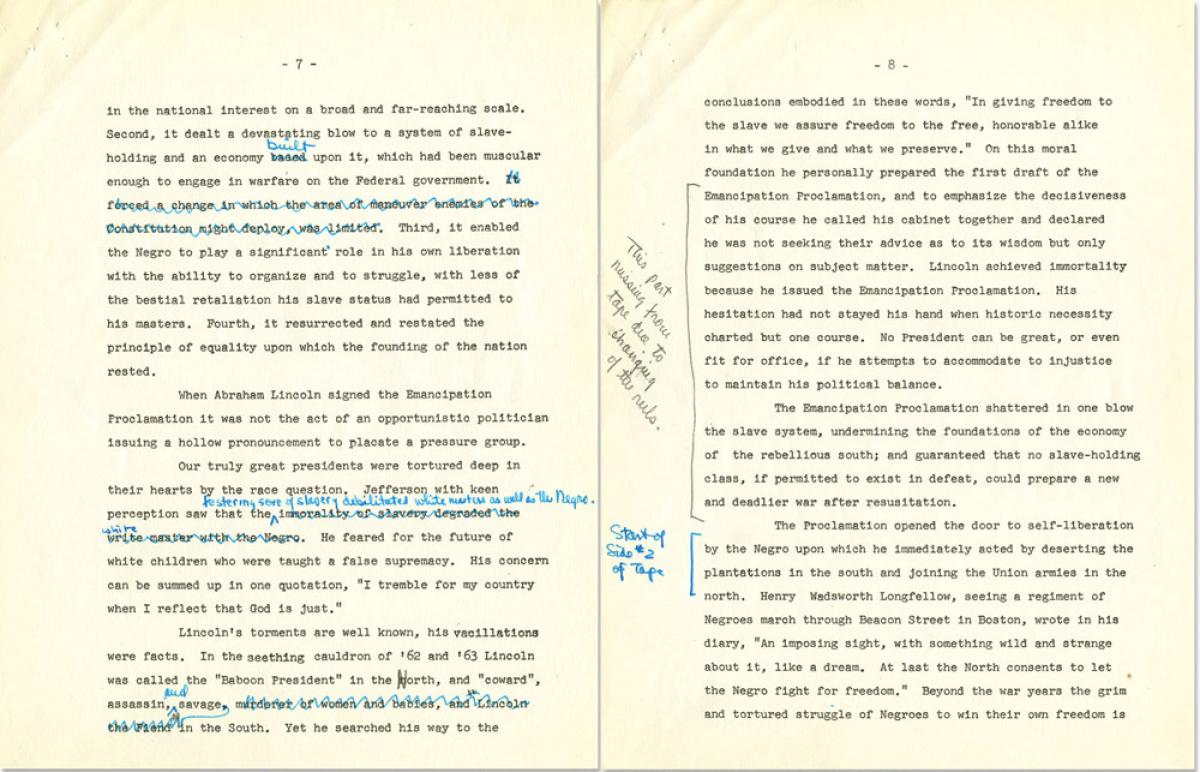
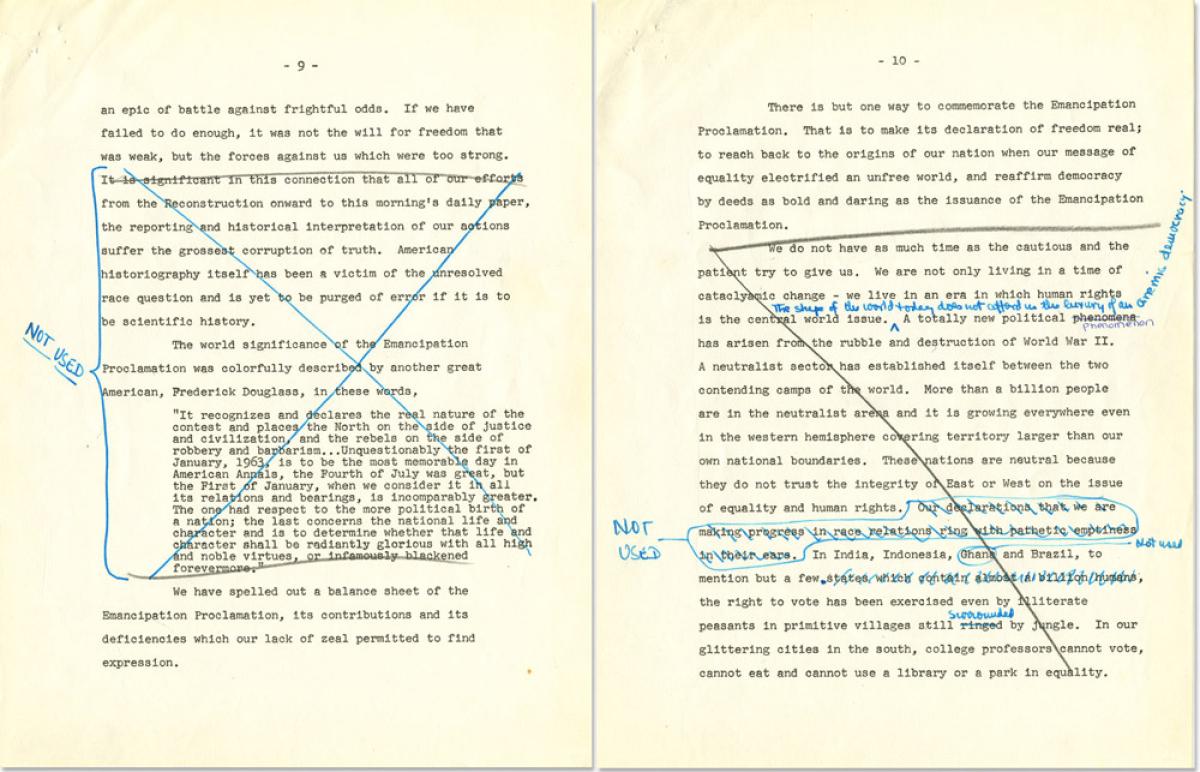
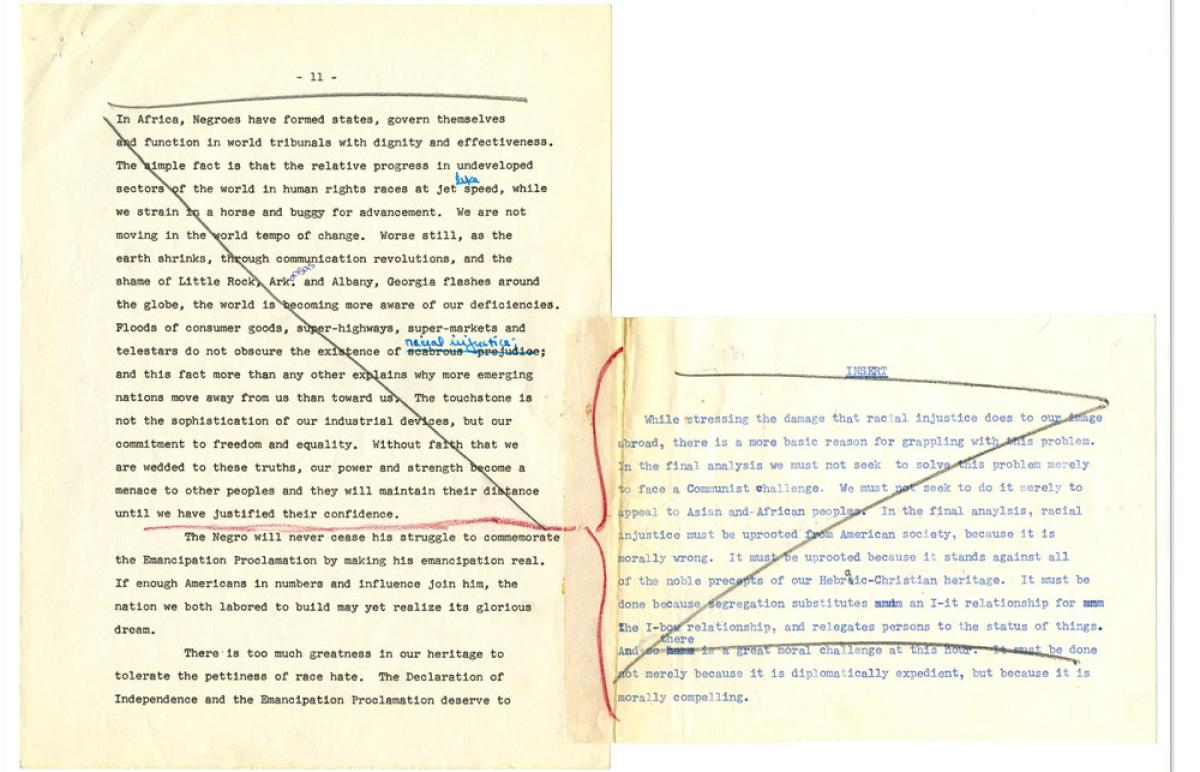
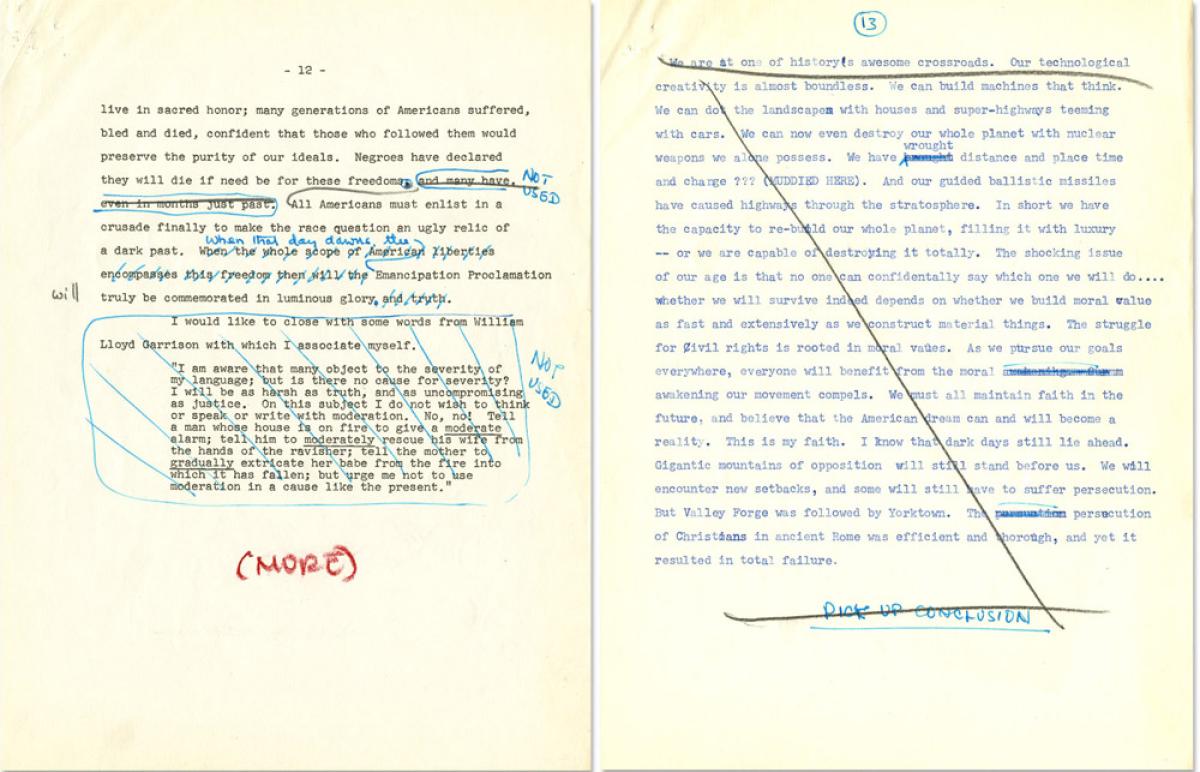
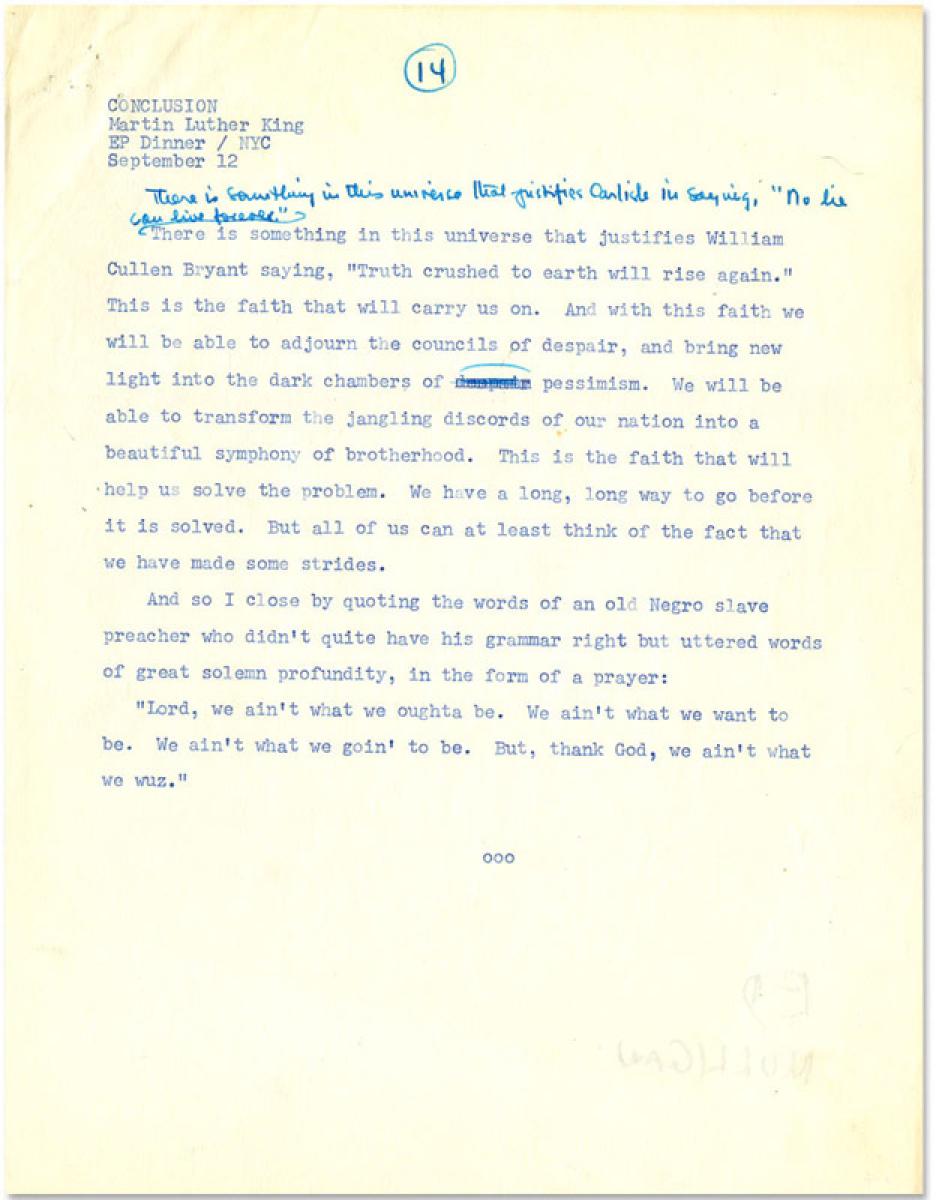
Download Transcript of Dr. King's 1962 Speech
This new transcription is based solely on the recording of Dr. King’s spoken words.
Science Tuesday: CRSP Excavation and Discovery
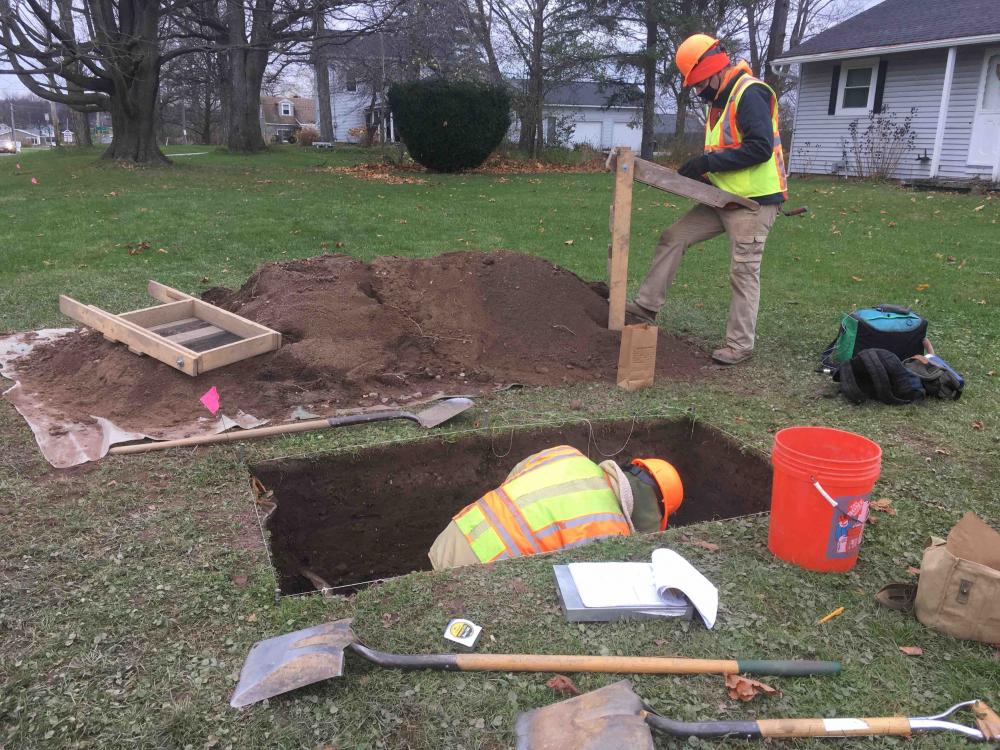
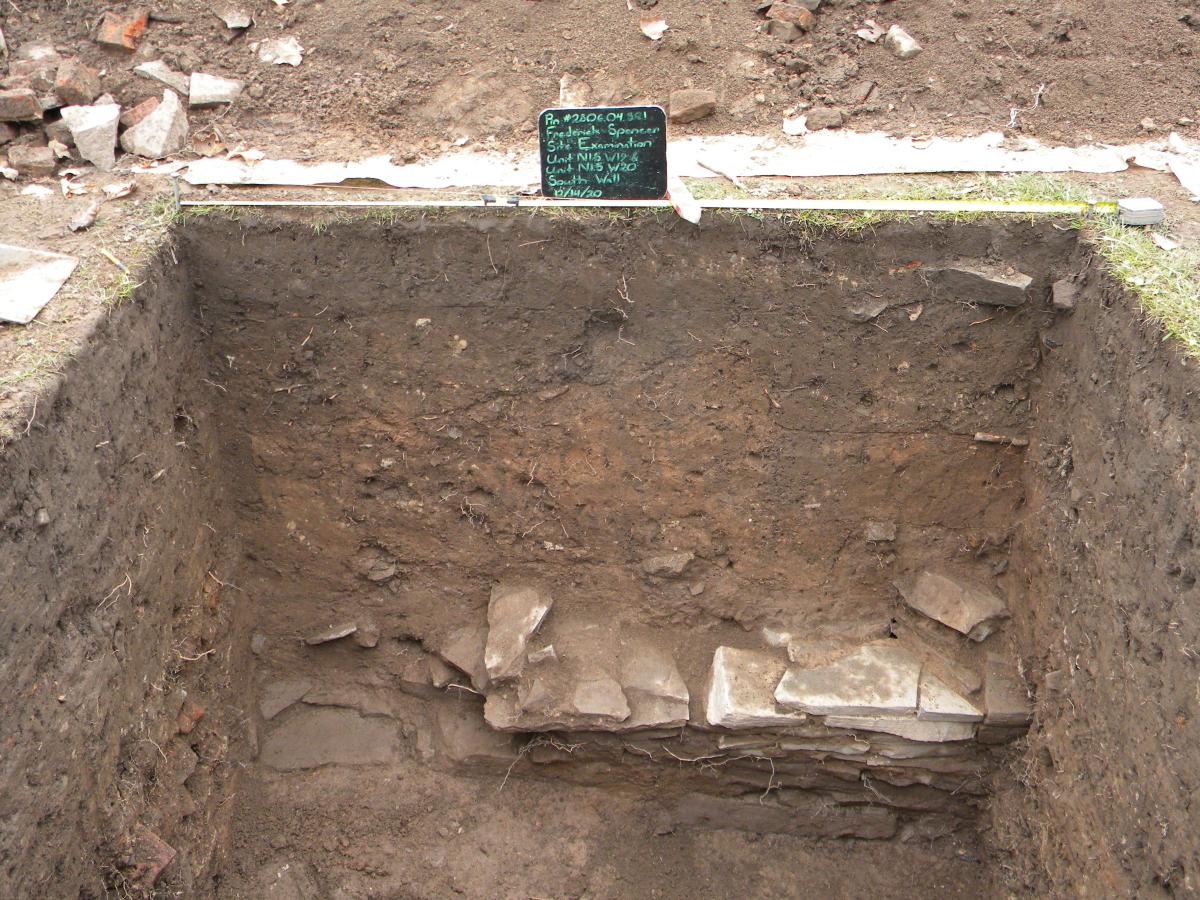
In late Fall 2020, the Museum’s Cultural Resource Survey Program (CRSP) conducted a Phase 2 site examination of a historic period archaeological site in Central New York (see the NYSM Science Tuesday post from 11/24/2020). Among the goals of the excavation were to delineate the site’s boundaries and to determine if it meets the significance and other requirements for listing on the State and National Registers of Historic Places. Underpinning these goals was the aim to simply learn more about the site- and in this case, digging deeper led to a discovery different than expected.
Based on the original survey done earlier in 2020, CRSP staff believed the archaeological site was associated with a nearby house built in the 1840s. However, thanks to new evidence from the field and archives, the revised interpretation is that the building foundation uncovered in November is likely the remains of a pre-1817 tavern or inn rather than a private residence. Early 19th century taverns in New York served many functions: accommodation for travelers (as well as for owners), a place to have a meal or get a drink, and a gathering place for both locals and visitors. While historic research and artifact analysis are both ongoing, it is believed the site will shed light on this important type of “third place” of community life during the 19th century.

Science Tuesday: Deepest Continuous Cores of Glacial Sediments Ever Collected from Cayuga Lake Basin
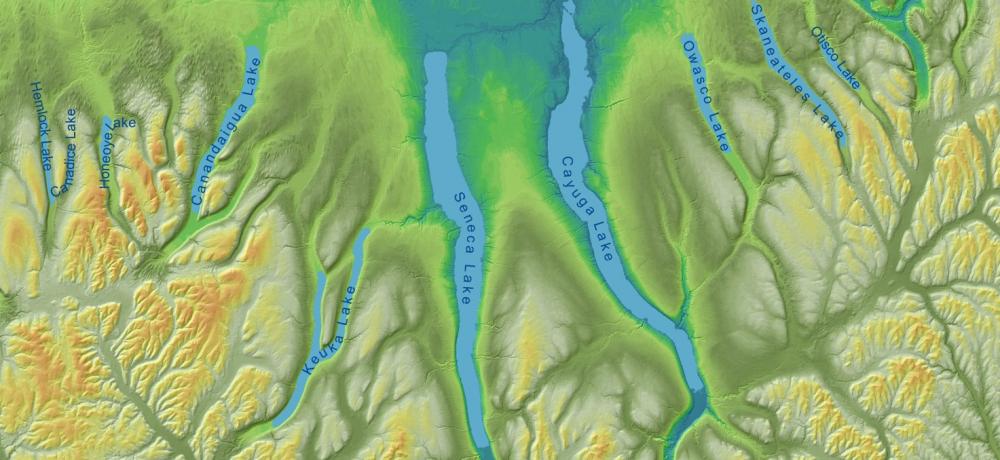
The layers of rock and sediment on the Earth's surface represent both a time capsule and vessel of stored resources. Geologist at the New York State Museum recently completed deep drilling exploration investigations near Ithaca, New York, to investigate Ice Age history. Over the last 2.8 Million years in the Pleistocene, locations like New York have experienced multiple glaciations as the Earth’s climate fluctuated. Yet, we do not have precise information on how many glaciations occurred, or exactly how far or when glaciers advanced.
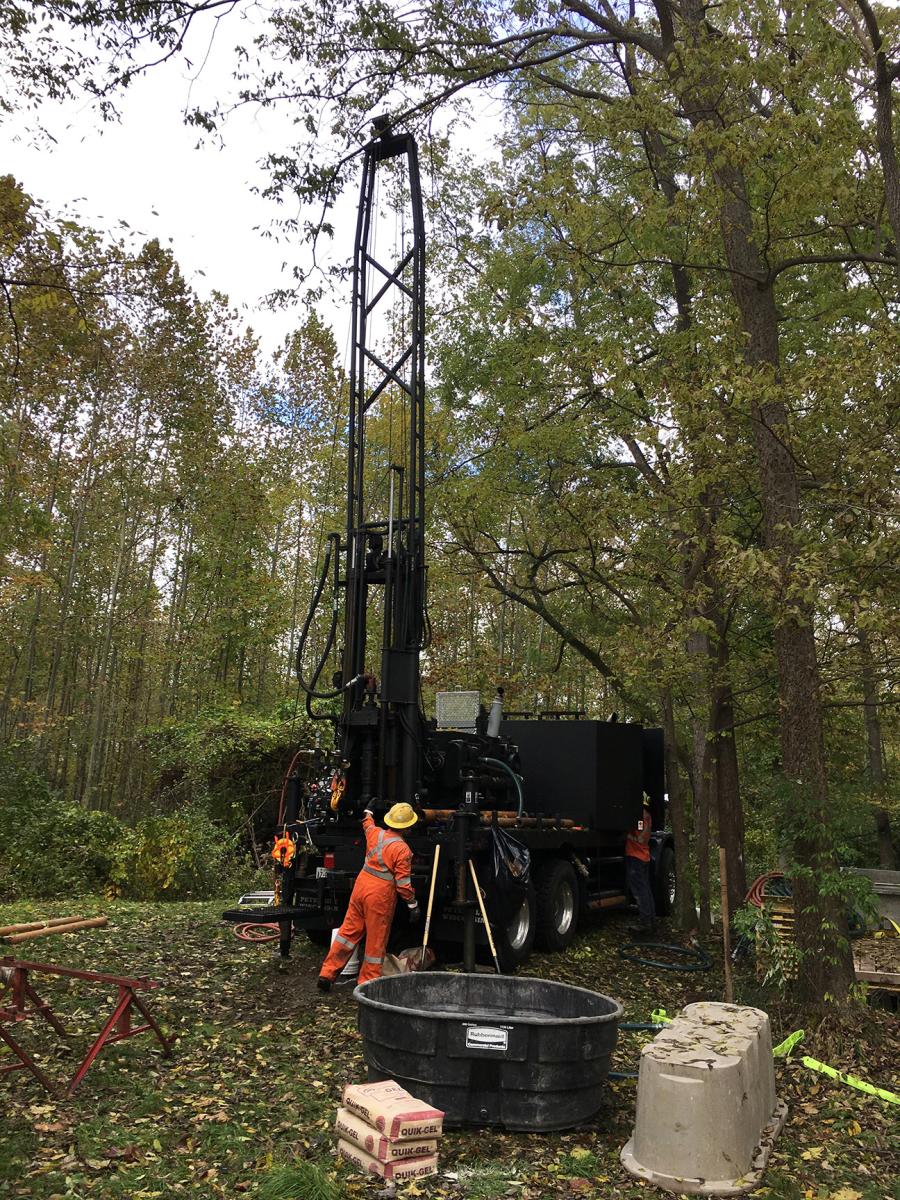
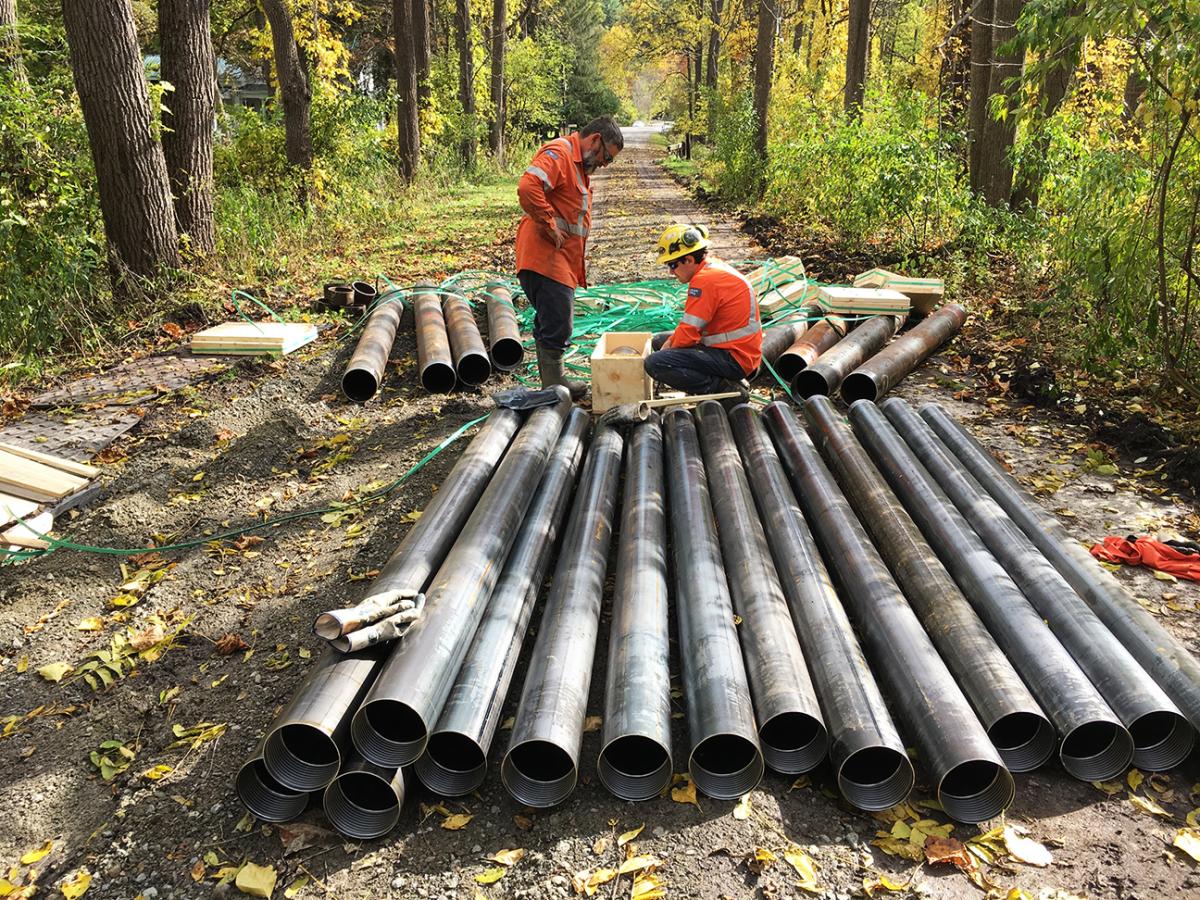
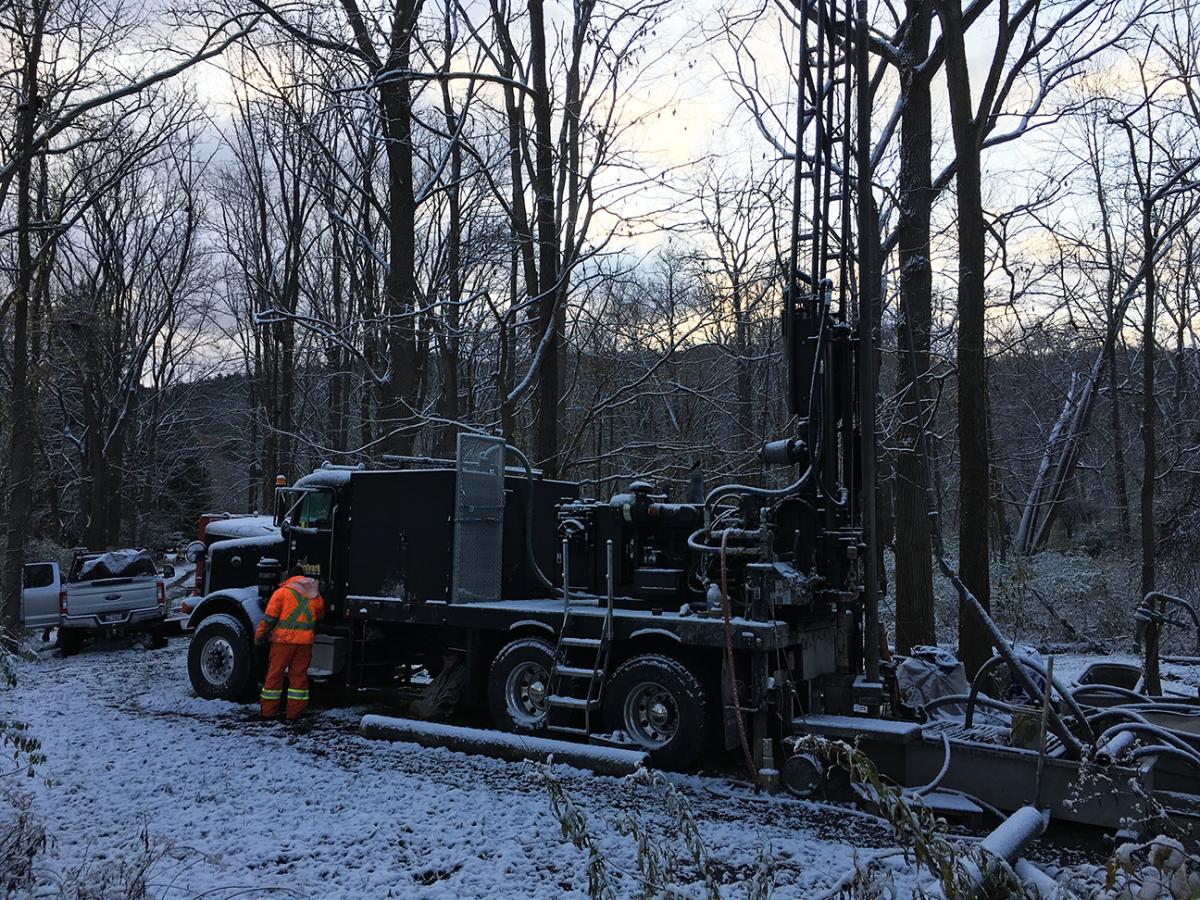
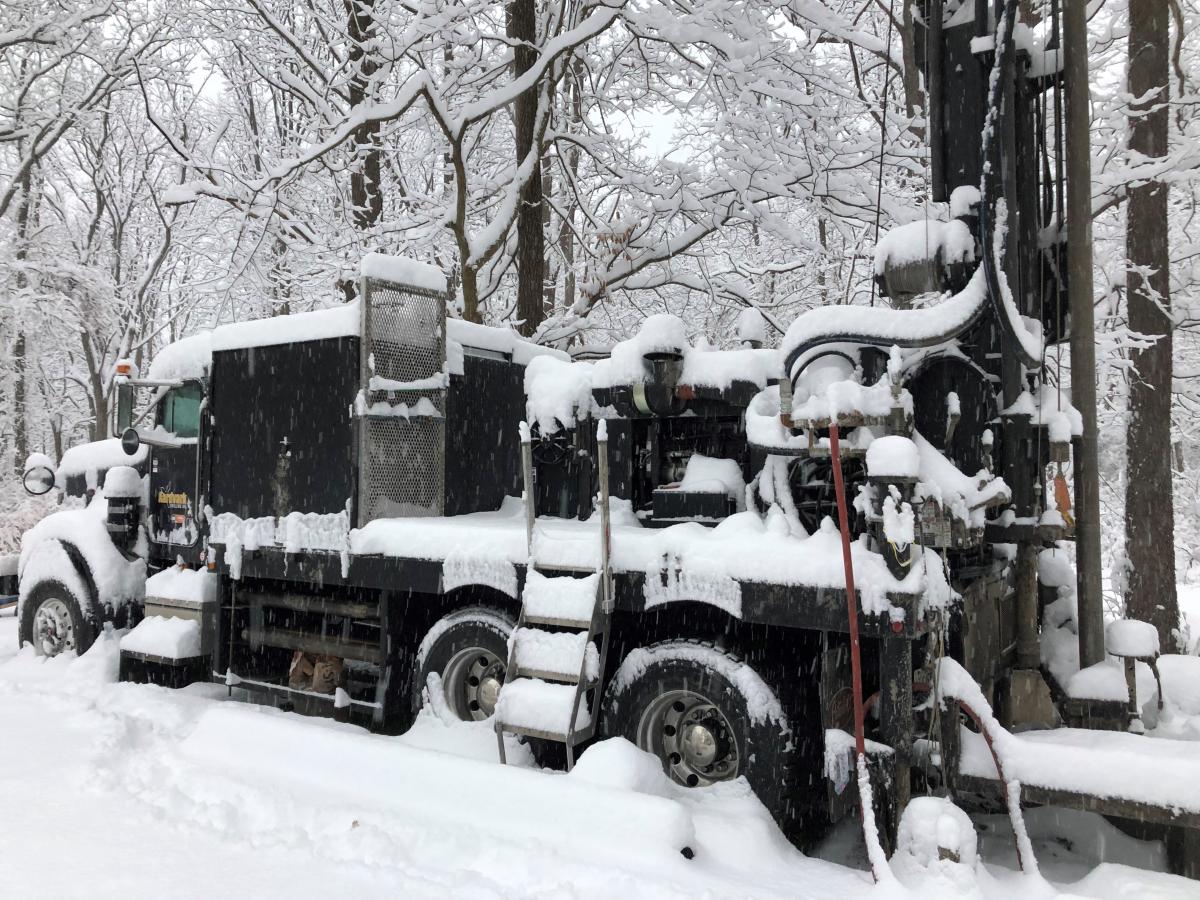
From October to late December 2019, Museum scientists collected the deepest continuous cores of glacial sediments ever collected in the Cayuga Lake Basin to try and decipher the glacial events in the Finger Lakes region. The sediments recovered and fossils contained within can tell scientists about the past geologic environment and more precisely when glaciers advanced and retreated across New York. By collecting multiple cores and aligning them, scientists can construct a cross section to view the layers of the Earth's surface.
In addition to the "cool" science of finding fossils to radiocarbon date, these cores also provide the best, most detailed information available to identify and characterize aquifers, particularly deep aquifers. Aquifers are sediments that act like a sponge to hold and transmit groundwater. In this study scientists identified and discovered several new aquifers that may provide drinking water to residents. Now mapped and identified in detail, the aquifers can be protected and utilized when needed.



Science Tuesday: Malacology Fieldwork
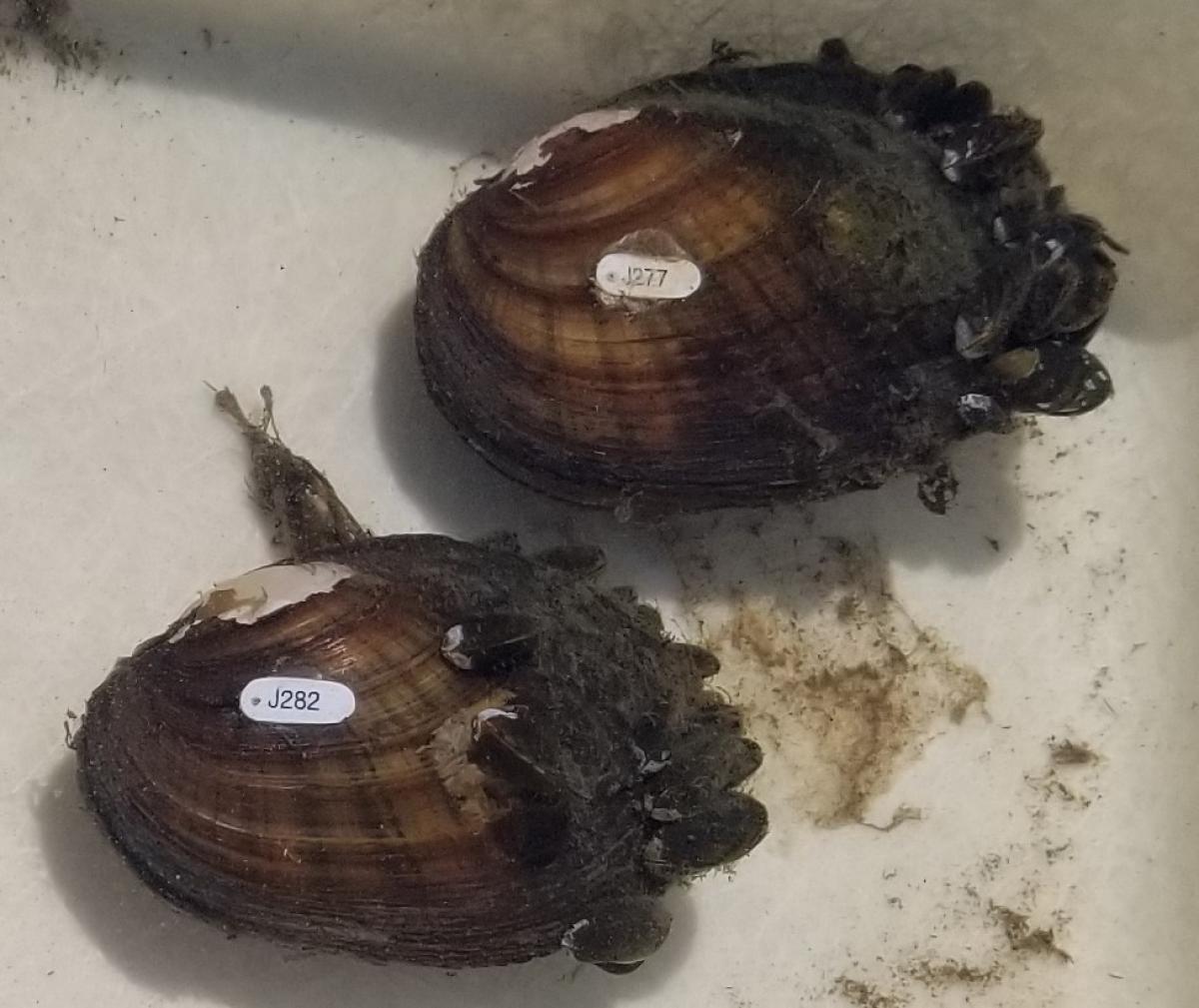
Zebra and quagga mussels can be aggressive invaders of waterbodies and, when they reach high densities, can be devastating to native mussel populations (among other impacts). Many lakes and rivers that once supported abundant and diverse communities of native mussels have seen declines after zebra mussel infestation. However, scientists have discovered that even in heavily invaded waterbodies, there can be areas where native mussels remain. We refer to these areas as native mussel refugia and they often have soft sediments that allow the native mussels to burrow deep into the sediments for a long enough period of time to suffocate and dislodge attached zebra mussels.
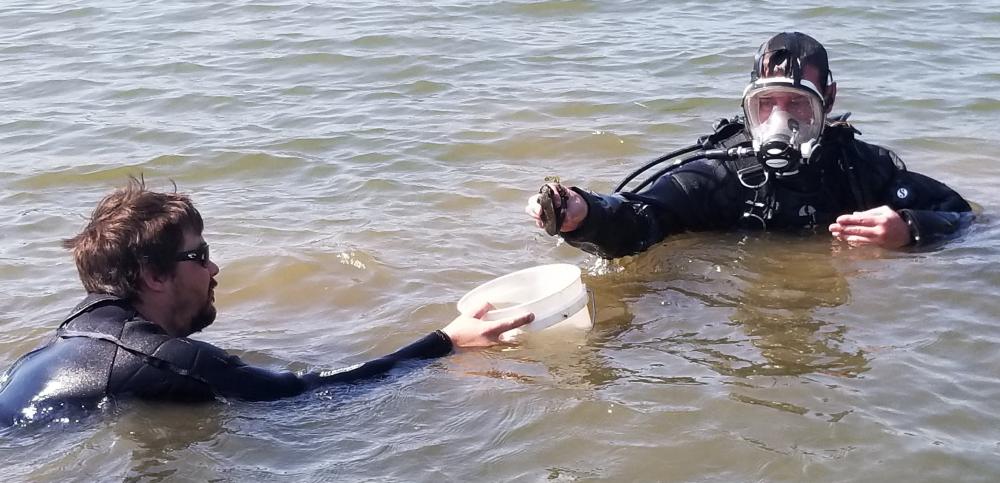
One native mussel refuge in New York is located in the Lower Grasse River where millions of native mussels of at least 16 species survive in the presence of zebra mussels. This section of the Grasse River is undergoing a massive cleanup of PCB (polychlorinated biphenyl) contamination which involves the removal (by dredging) and replacement of much of the river bottom with new, clean, sediment. To save native mussels from removal during dredging, SCUBA divers are collecting mussels ahead of the dredgers and moving them to safe areas. Once the sediments are replaced, the mussels will be returned to the clean areas as founder colonies.
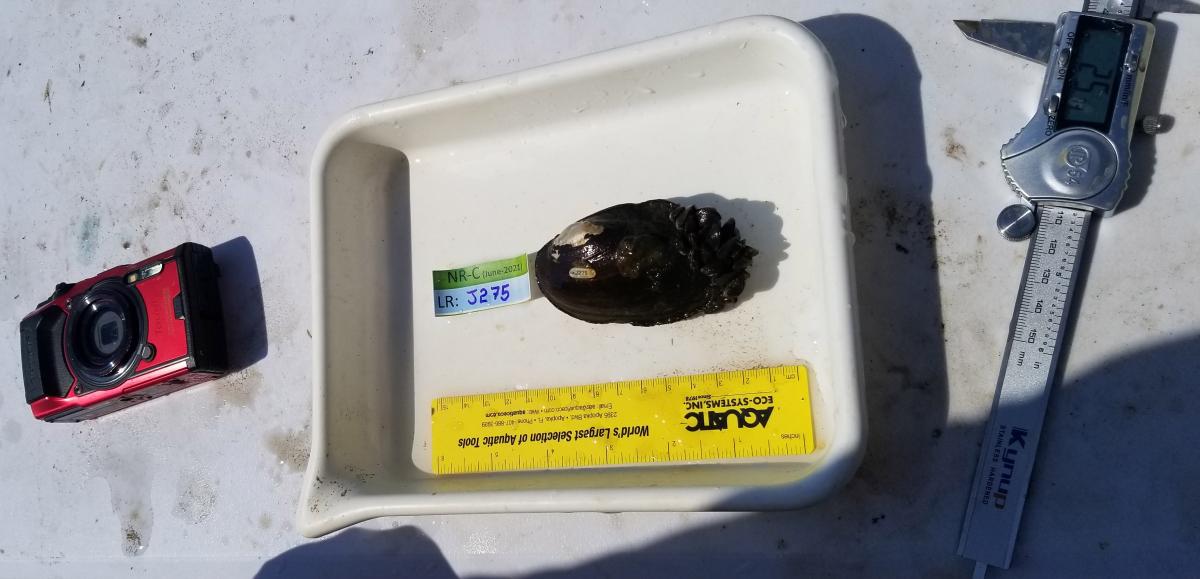
Will the new sediments be too hard for native mussels to burrow to remove zebra mussels? NYSM scientists, working with scientists from the St. Regis Mohawk Tribe (SRMT), are conducting experiments in the Grasse River to answer this question. Native mussels were collected and tagged (bee tags glued on) and released into non-remediated and remediated areas last August (2020) prior to zebra mussels attaching. Tagged mussels were recovered by diving in the spring (June 2021) and data were collected (mussel height and length), zebra mussels were scraped off and brought back to the laboratory for further assessment, and the native mussel was released.
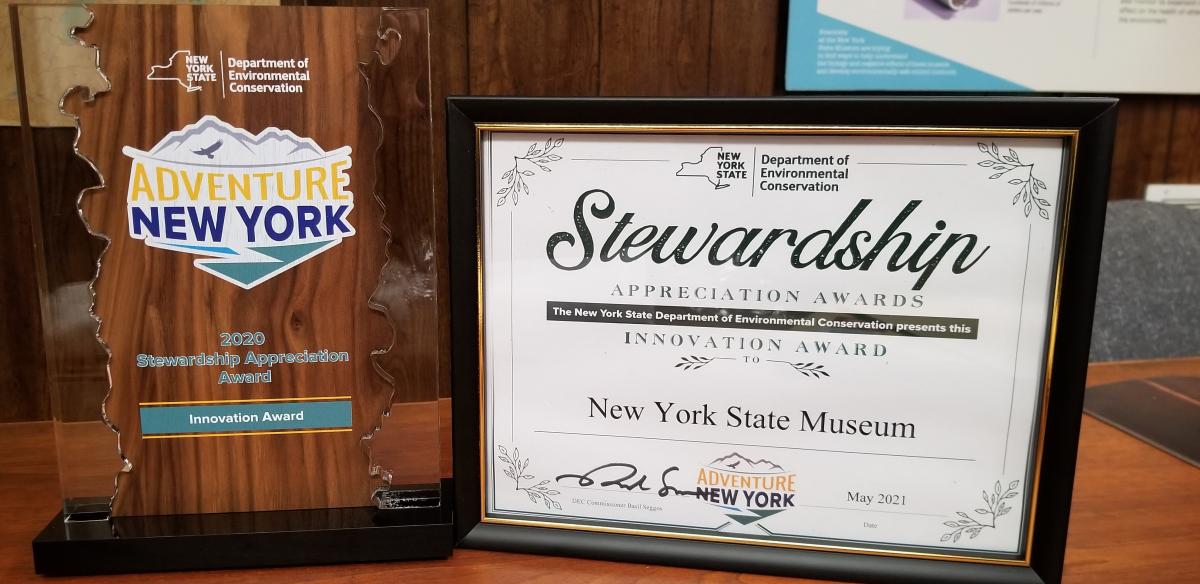
When data analysis is complete, the findings could assist in the design of future decontamination projects. NYSM and St. Regis Mohawk Tribe scientists were recently recognized with a 2020 Stewardship Award in Innovation (https://www.dec.ny.gov/press/122812.html) for their collaborative efforts to protect native mussels in the Grasse River.
Image 1: SCUBA diving SRMT scientists recovering tagged mussels.
Image 2: Tagged Eastern Lampmussels (Lampsilis radiata) with attached zebra mussels.
Image 3: Tools for collecting field data: caliper to measure mussel length and height, camera to document sample, ruler to assess accuracy of instruments, sample label, mussel tag, tray to contain sample during processing.
Image 4: 2020 Stewardship Award in Innovation awarded to the NYS Museum and St. Regis Mohawk Tribe in recognition for their conservation work on native mussels in the Grasse River.

Uncovering Historical Places
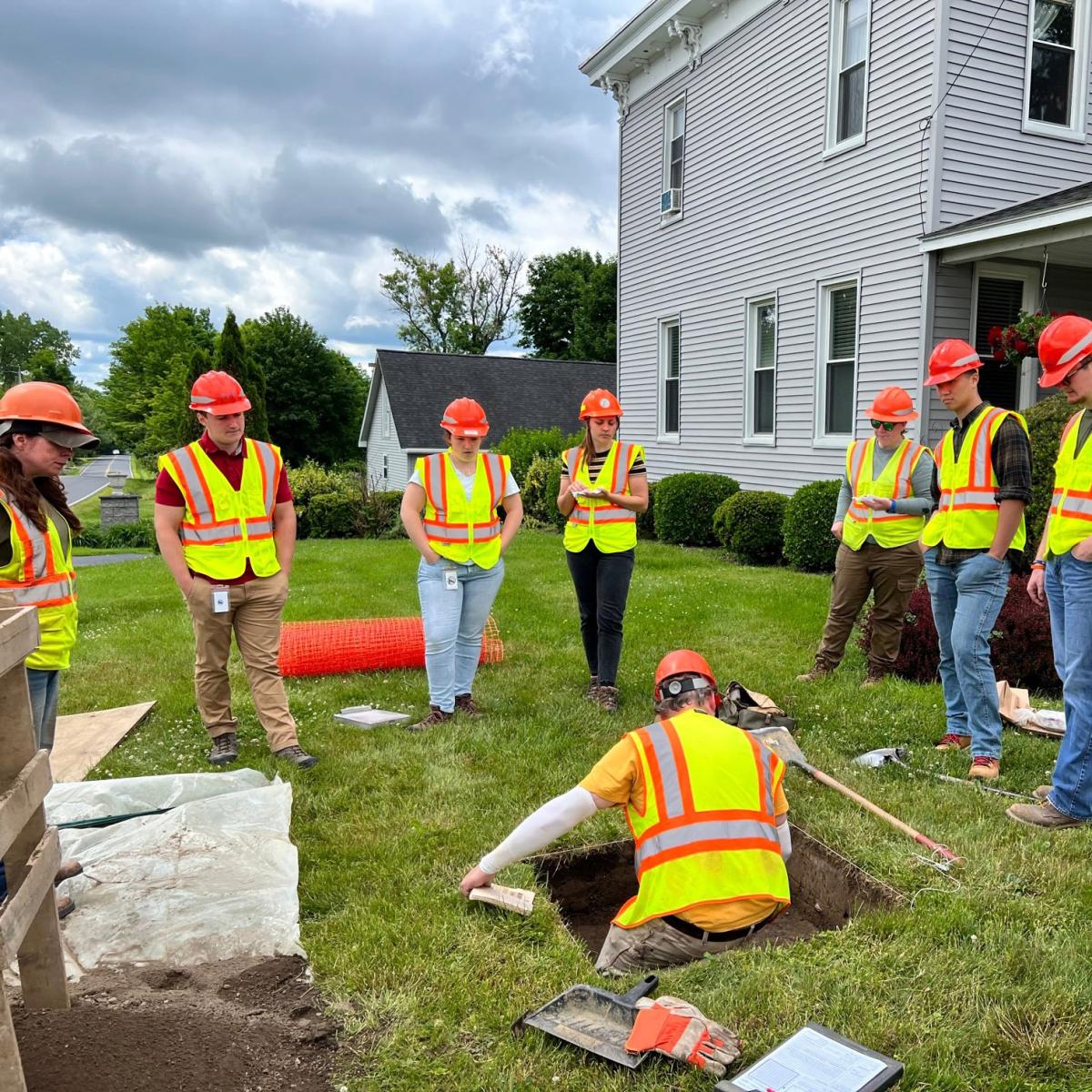
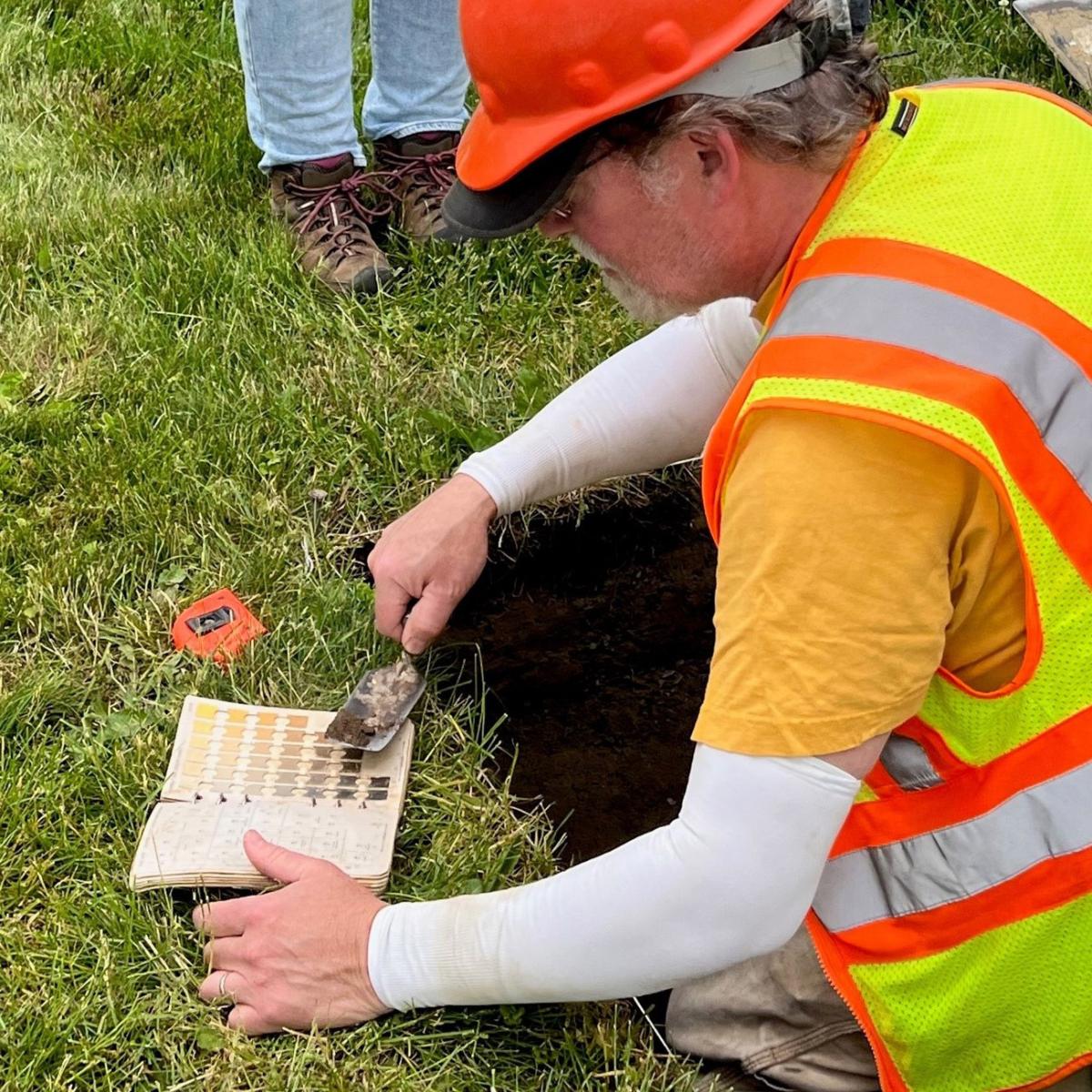
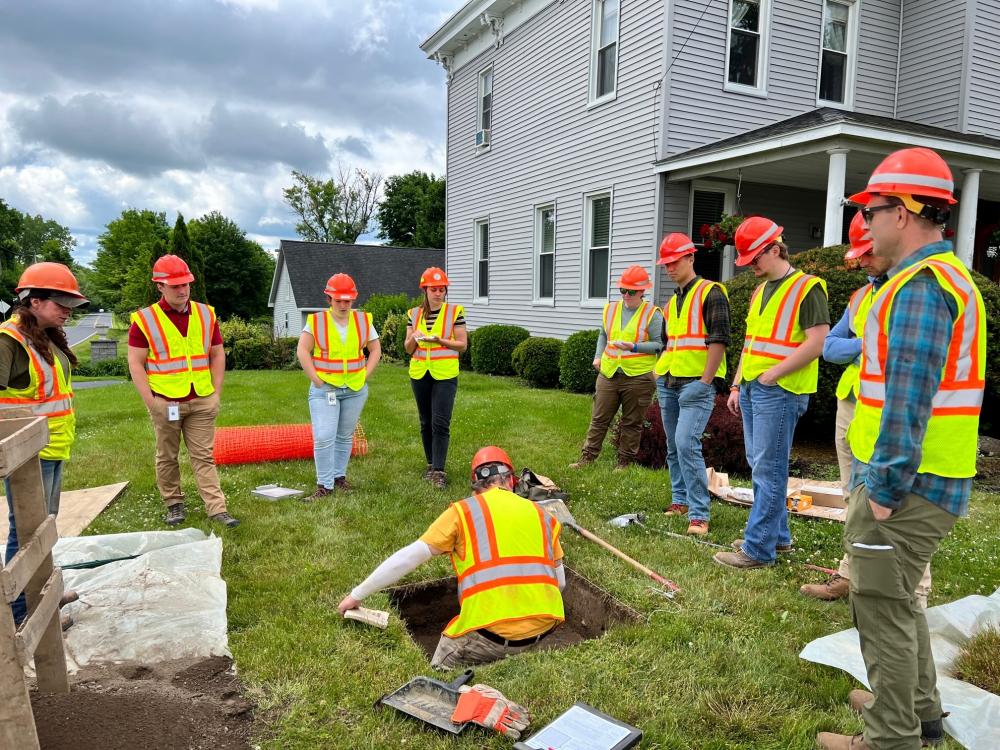
Staff from the Museum’s Cultural Resource Survey Program (CRSP) recently hosted staff and six student interns from the NYS Department of Transportation (NYSDOT) at the historic period DeGraff archaeological site in the Mohawk Valley of Central New York. The CRSP performs surveys and site investigations in advance of proposed road construction on behalf of NYSDOT, and the site visit provided the interns a first-hand look at archaeological field work.
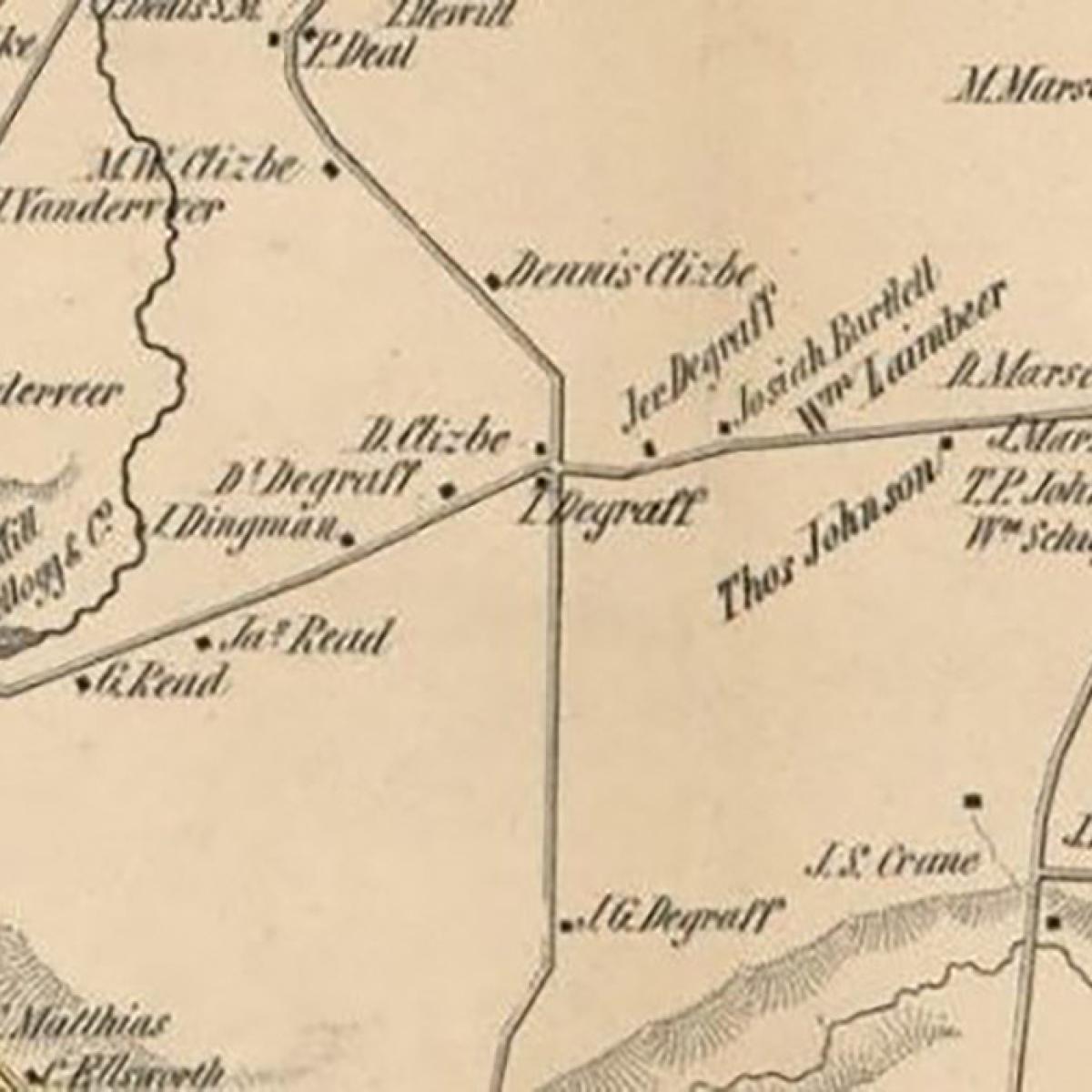
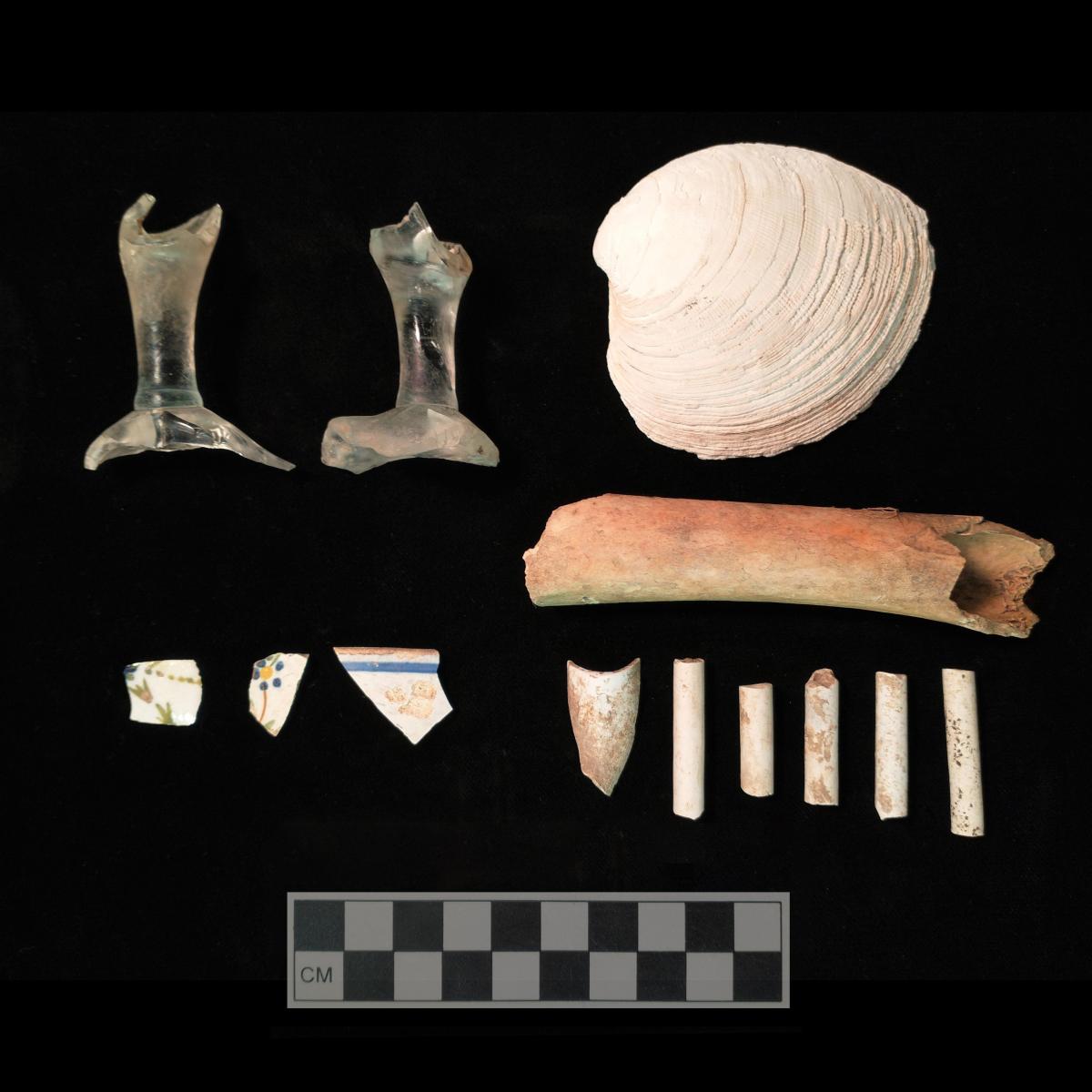
The goal of the work at the DeGraff site is to determine if it meets the eligibility criteria for the National Register of Historic Places. This is accomplished by examining the site’s contents, function, integrity (if it has intact deposits), and research potential. While the work is ongoing, more details about the site are coming to light. While historic maps indicate that the DeGraff house was standing by the 1850s, some of the domestic and architectural artifacts suggest a late eighteenth or early nineteenth century occupation. In addition, there is new evidence that an earlier building stood on the site.
Opening in Metropolis Hall on March 10, 2023
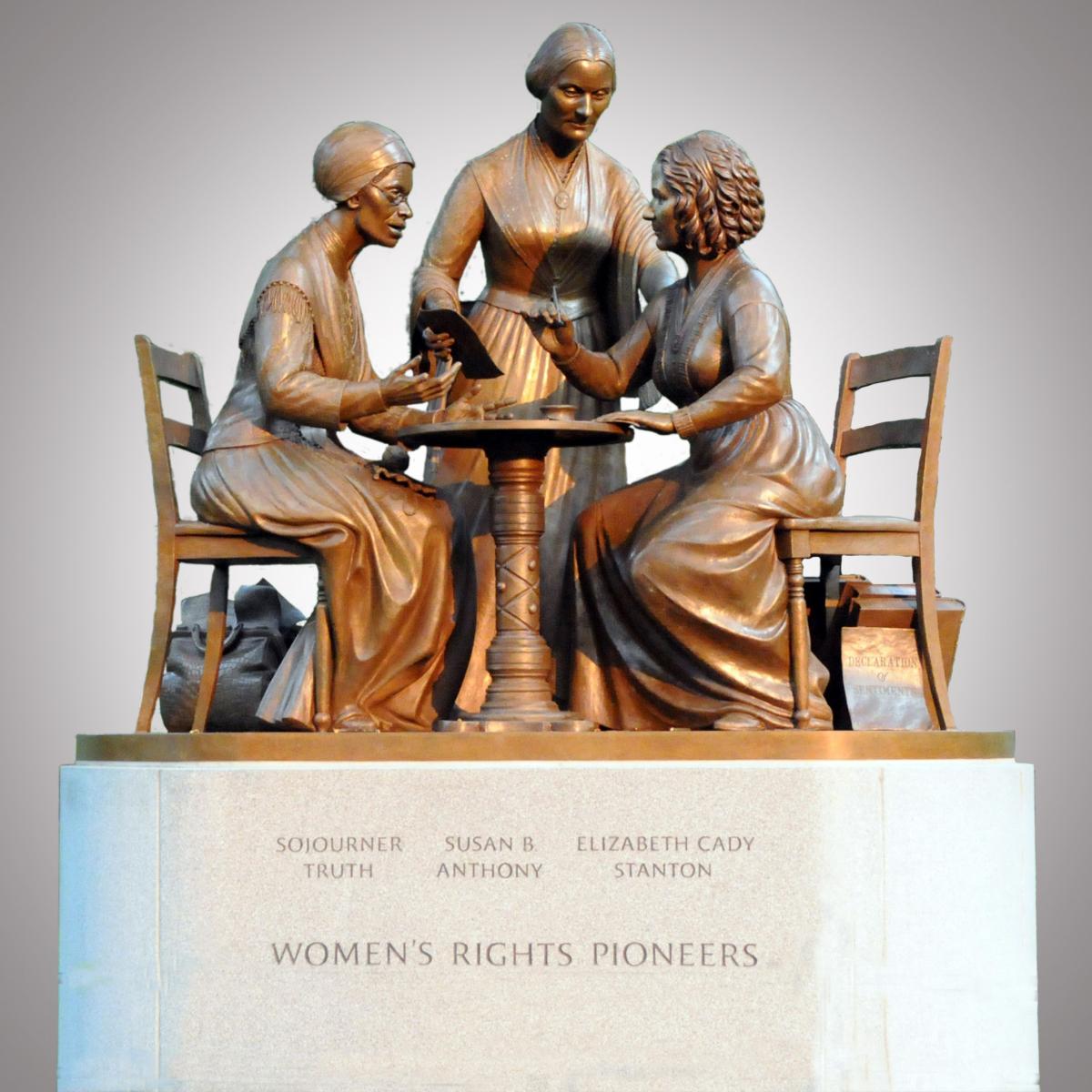
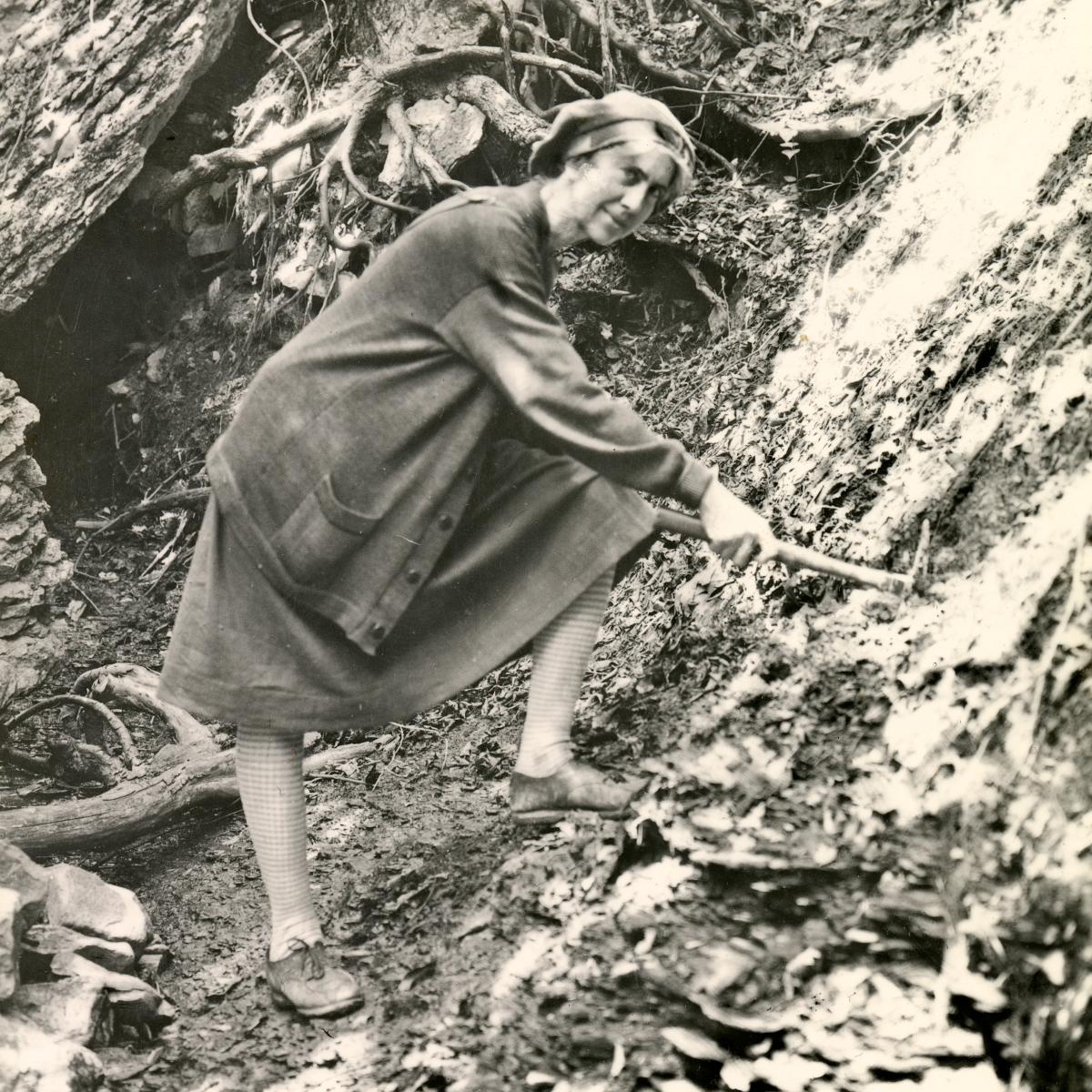
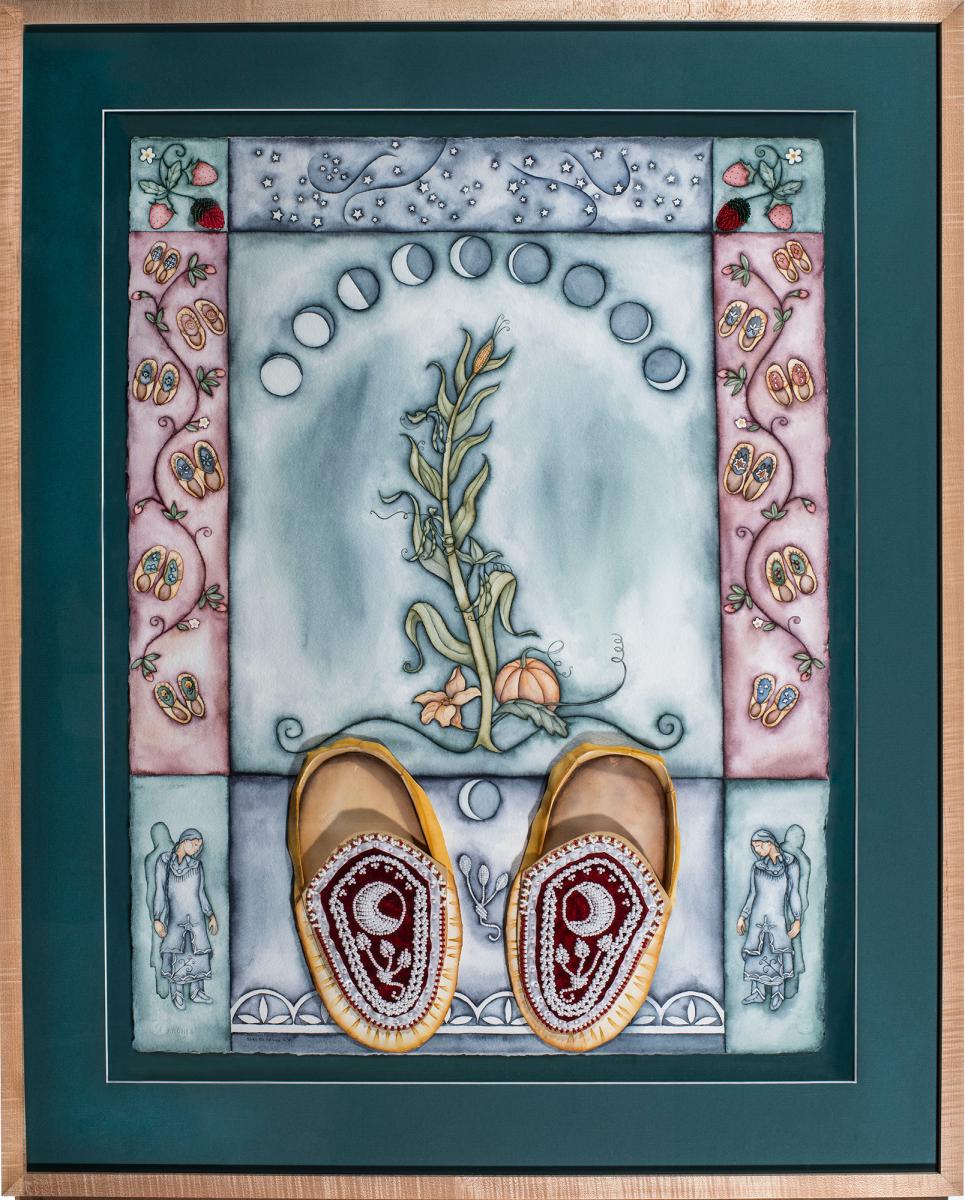
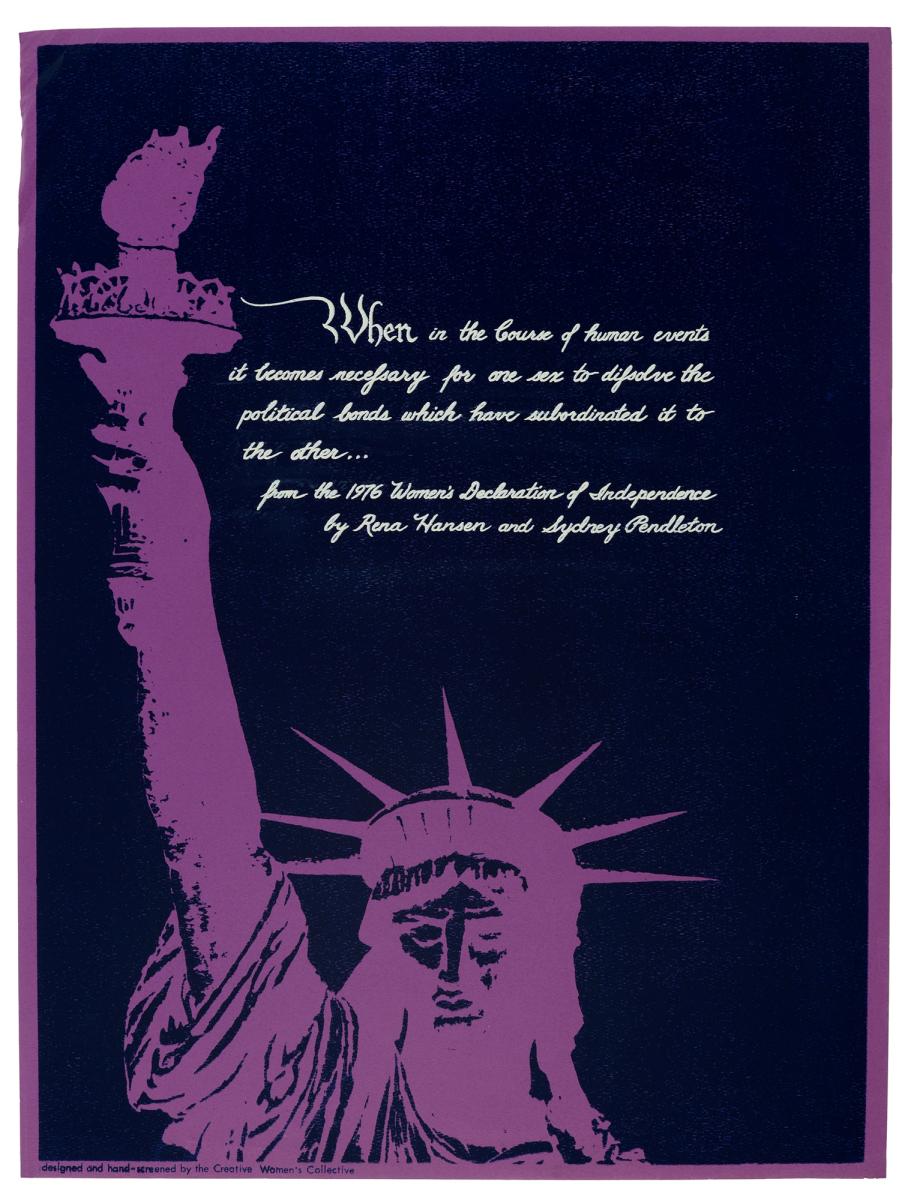
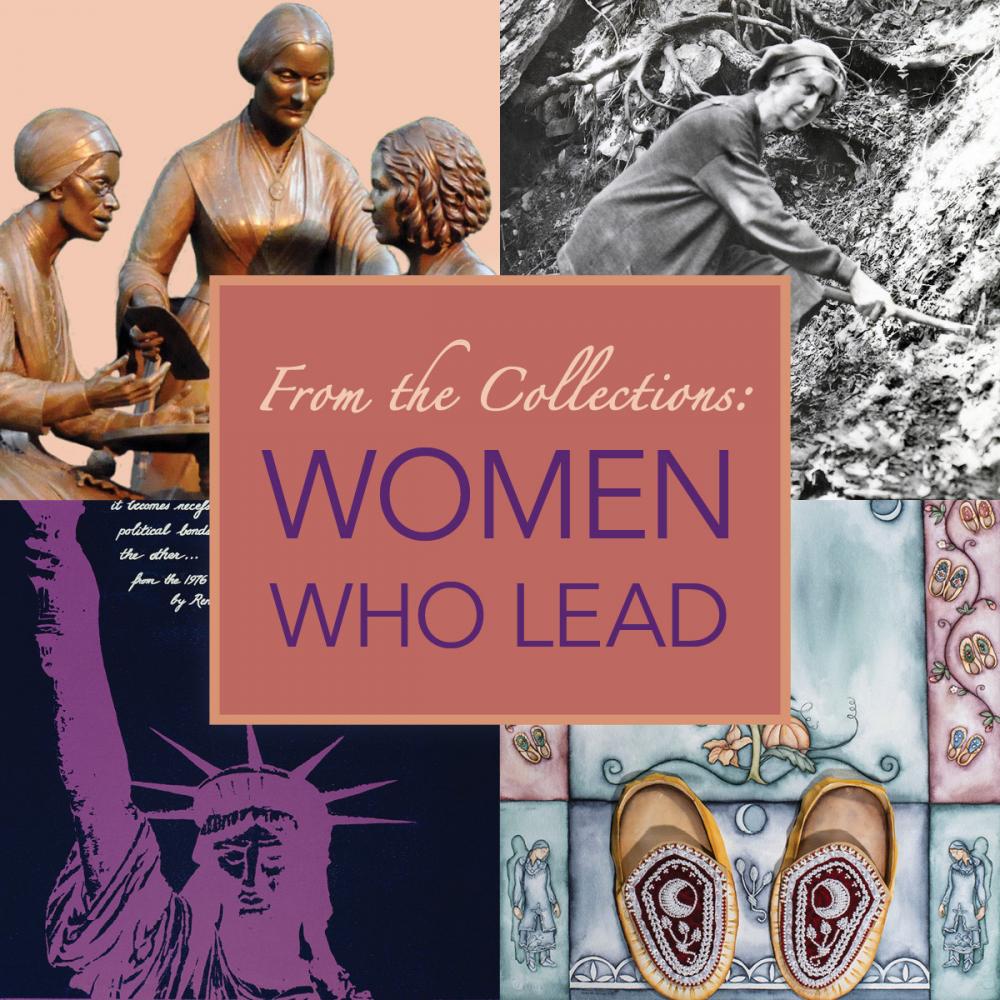
The State Museum’s collections represent the diverse achievements of women across New York. This new exhibit feature brings together objects and artworks that highlight the contributions of women. Audiences will see State Paleontologist Winifred Goldring’s tools, artwork from contemporary Oneida Nation artists Karen Ann Hoffman and Dawn Dark Mountain, and the newly acquisitioned Women’s Rights Pioneers Monument 1/3-scale model by Meredith Bergmann.
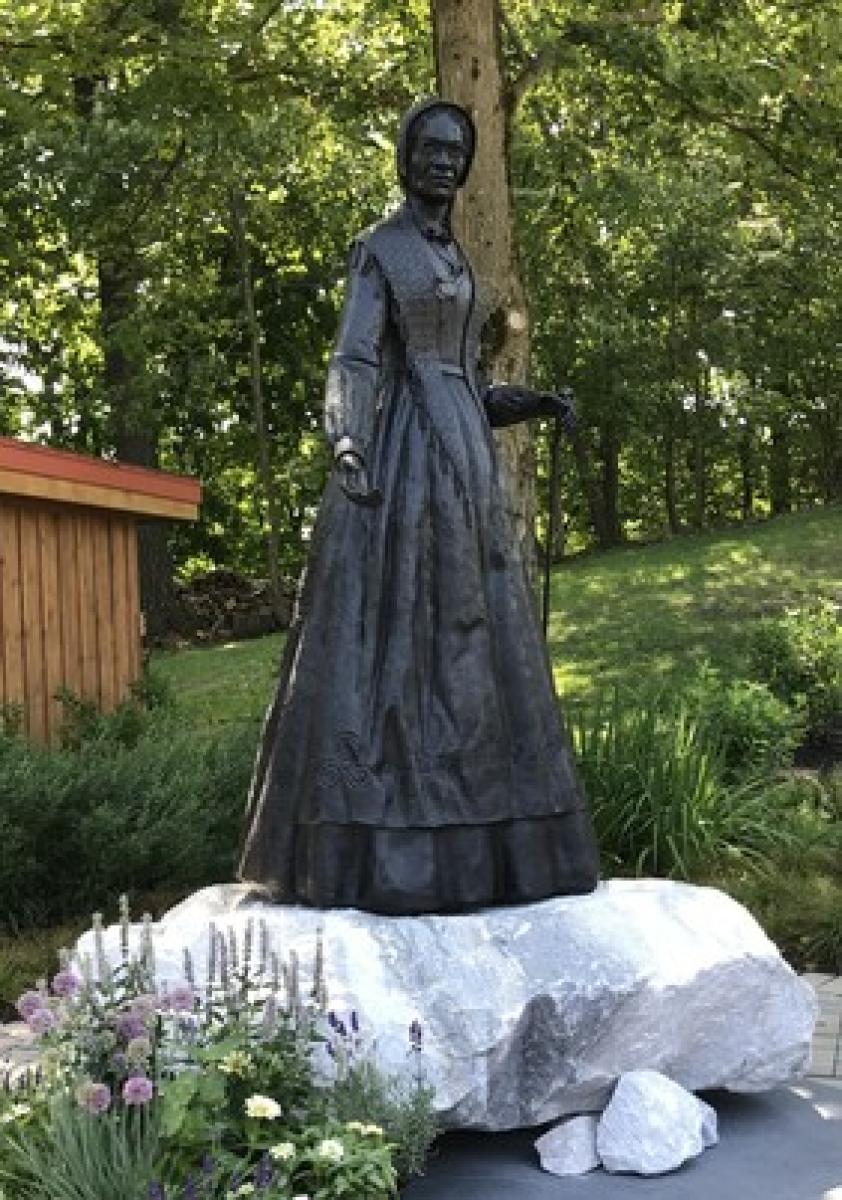
Prior to August 2020, there were no monuments that depicted real women in New York City's Central Park. The Women’s Rights Pioneers Monument was placed in Central Park following the tireless work of Monumental Women, a non-profit, all-volunteer organization. It features three nationally recognized leaders of the women's rights movement, all from New York State: Sojourner Truth, Susan B. Anthony, and Elizabeth Cady Stanton.
Since the 2020 unveiling, Monumental Women has worked to increase awareness and appreciation of women’s history through a nationwide education campaign. To help with this endeavor Monumental Women embarked on a fundraising campaign for the creation of a 1/3-size model of the Women’s Rights Pioneers Monument for the New York State Museum’s collections.
From the Collections: Women Who Lead
Past Exhibition 2023-2025
The State Museum’s collections represent the diverse achievements of women across New York. This exhibit featured objects and artworks highlighting the contributions of women. On view were the State Paleontologist Winifred Goldring’s tools, artwork from contemporary Oneida Nation artists Karen Ann Hoffman and Dawn Dark Mountain, and the Women’s Rights Pioneers Monument 1/3-scale model by Meredith Bergmann.
Prior to August 2020, there were no monuments that depicted real women in New York City's Central Park. The Women’s Rights Pioneers Monument was placed in Central Park following the tireless work of Monumental Women, a non-profit, all-volunteer organization. It features three nationally recognized leaders of the women's rights movement, all from New York State: Sojourner Truth, Susan B. Anthony, and Elizabeth Cady Stanton.
Since the 2020 unveiling, Monumental Women has worked to increase awareness and appreciation of women’s history through a nationwide education campaign. To help with this endeavor Monumental Women embarked on a fundraising campaign for the creation of a 1/3-size model of the Women’s Rights Pioneers Monument for the New York State Museum’s collections.
Educators can earn CTLE credit by watching the Donation Ceremony video and completing the survey linked below. Please allow up to two weeks to receive confirmation of completion.
CTLE Credit (1 hour): Link to Online Form for the Donation Ceremony of the Women’s Rights Pioneers Monument
Related Content

Talking Statues
What would it be like if the monument could talk? Listen to an imagined conversation with Sojourner Truth, Susan B. Anthony, and Elizabeth Cady Stanton to learn more about their lives and how they impacted their work for women’s rights.
Connect to the conversation here: http://www.nyts.de/mw/
(This feature is best viewed on a mobile platform).
Audio courtesy of Monumental Women, available in English and Spanish.
Recurso de Audio, cortesía de Monumental Women, disponible en inglés y español.
Women's History Resource Page
Join the NYSM in commemorating the important role women have in the history of our state. Access videos, educational activities, and more through this comprehension resource page.
Winifred Goldring (1888-1971): NYSM Scientist & Pioneering State Paleontologist
Discover more about the world's first woman State Paleontologist and the significant contributions she made to the fields of geology, paleontology, and paleobotany throughout her 40-year career at the New York State Museum.
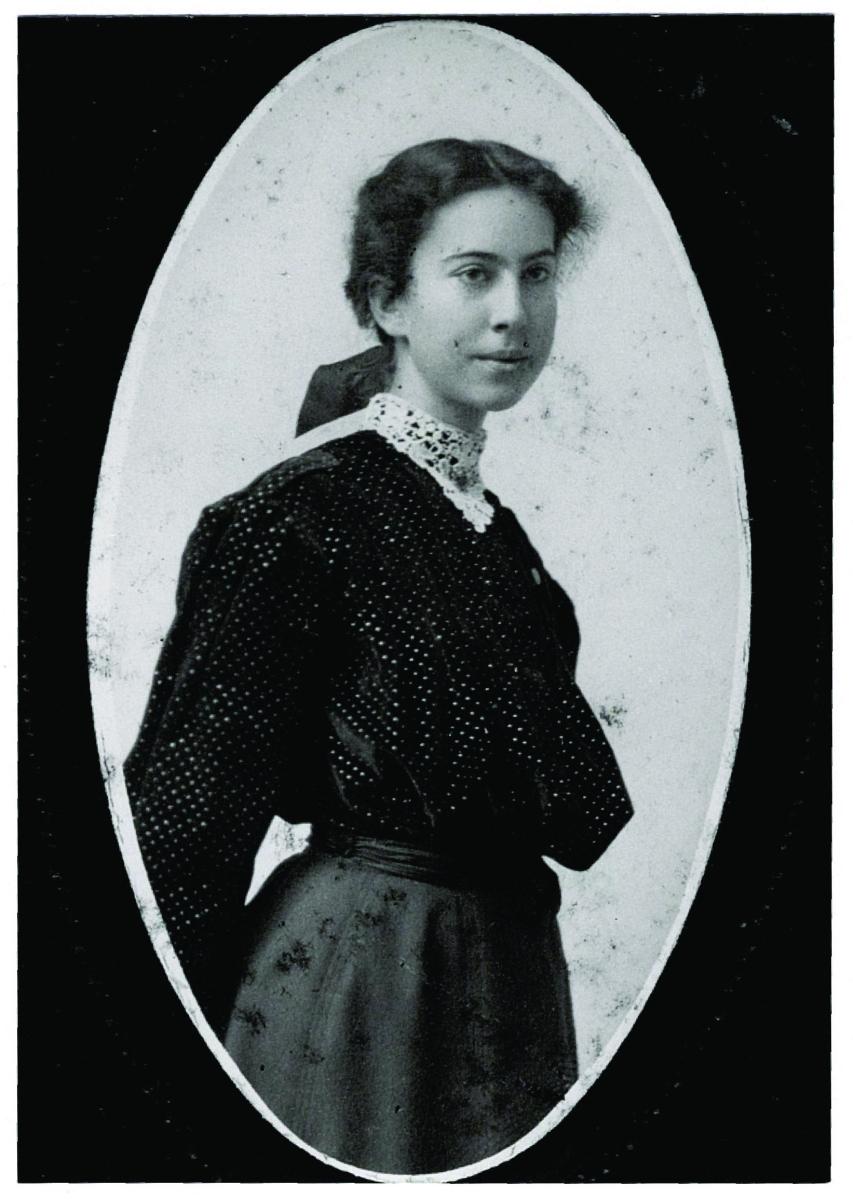
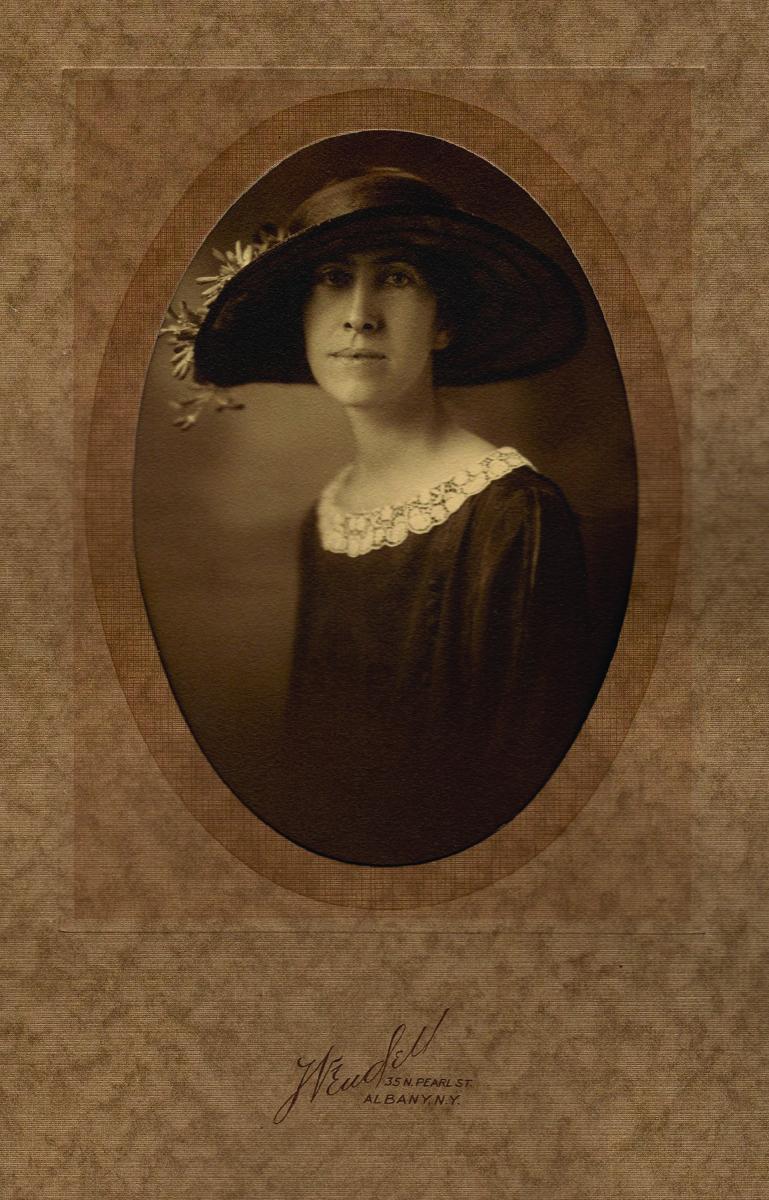
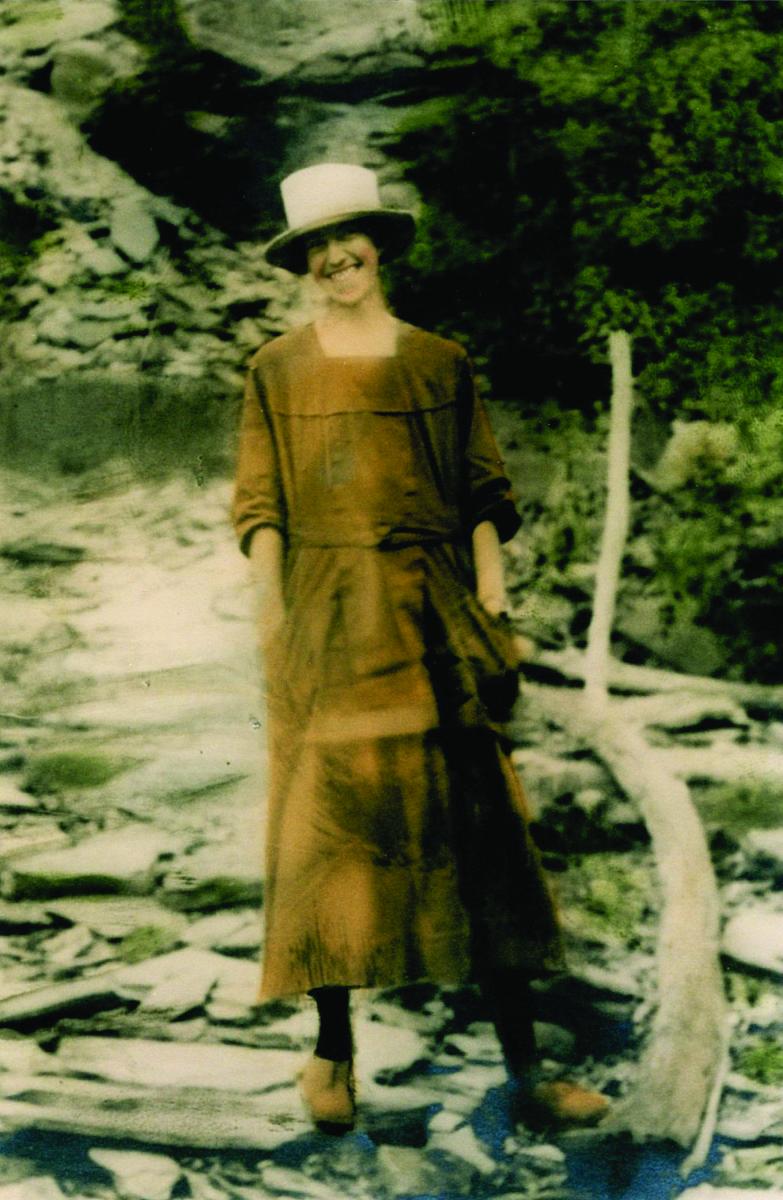
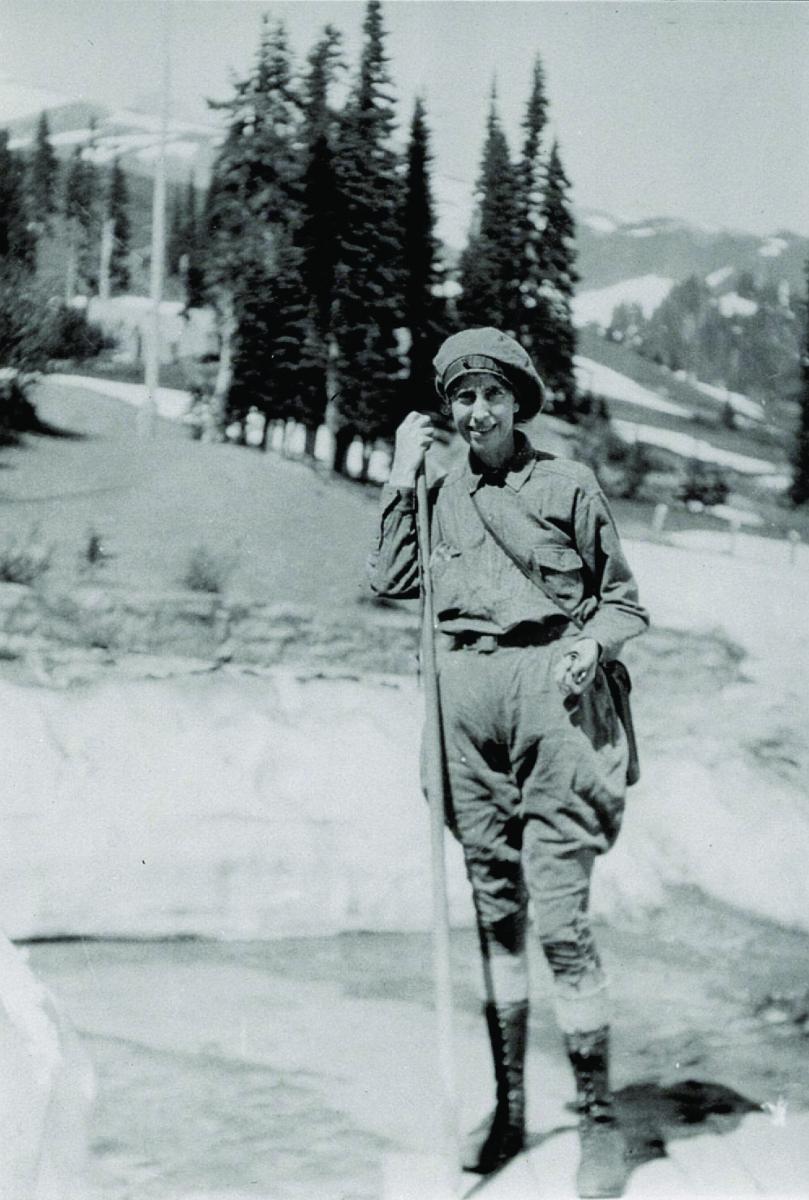
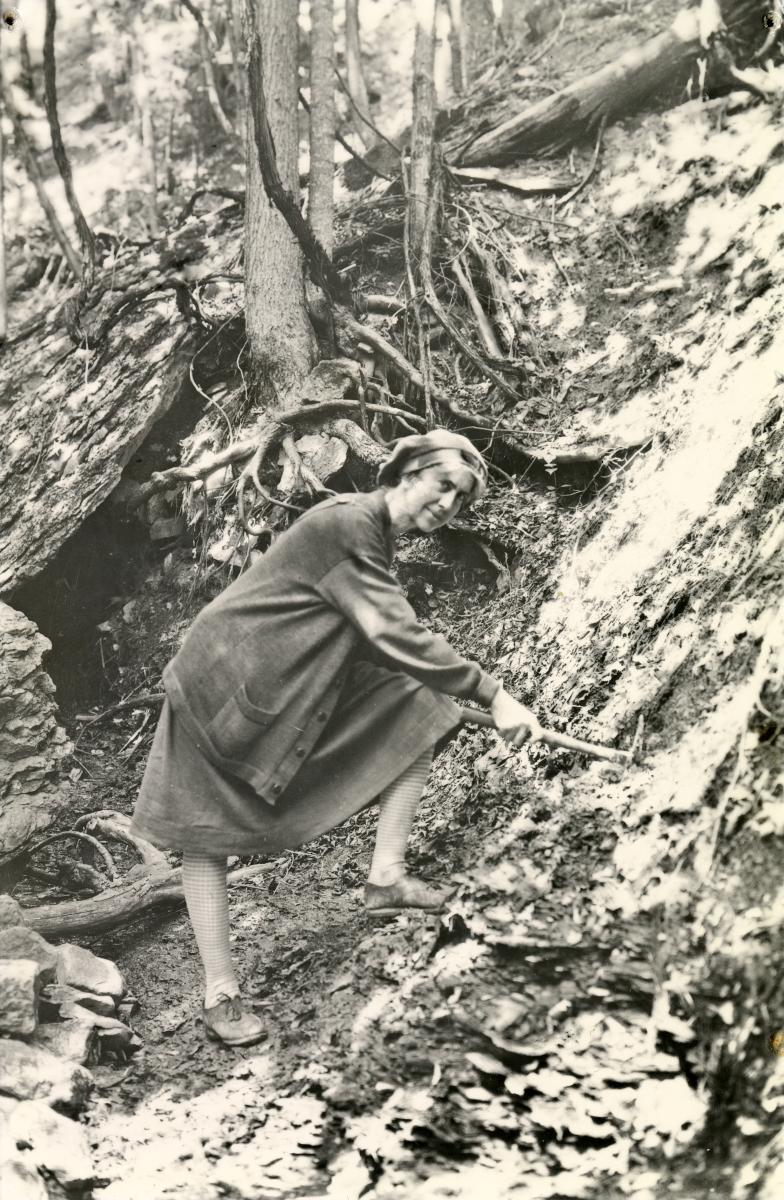
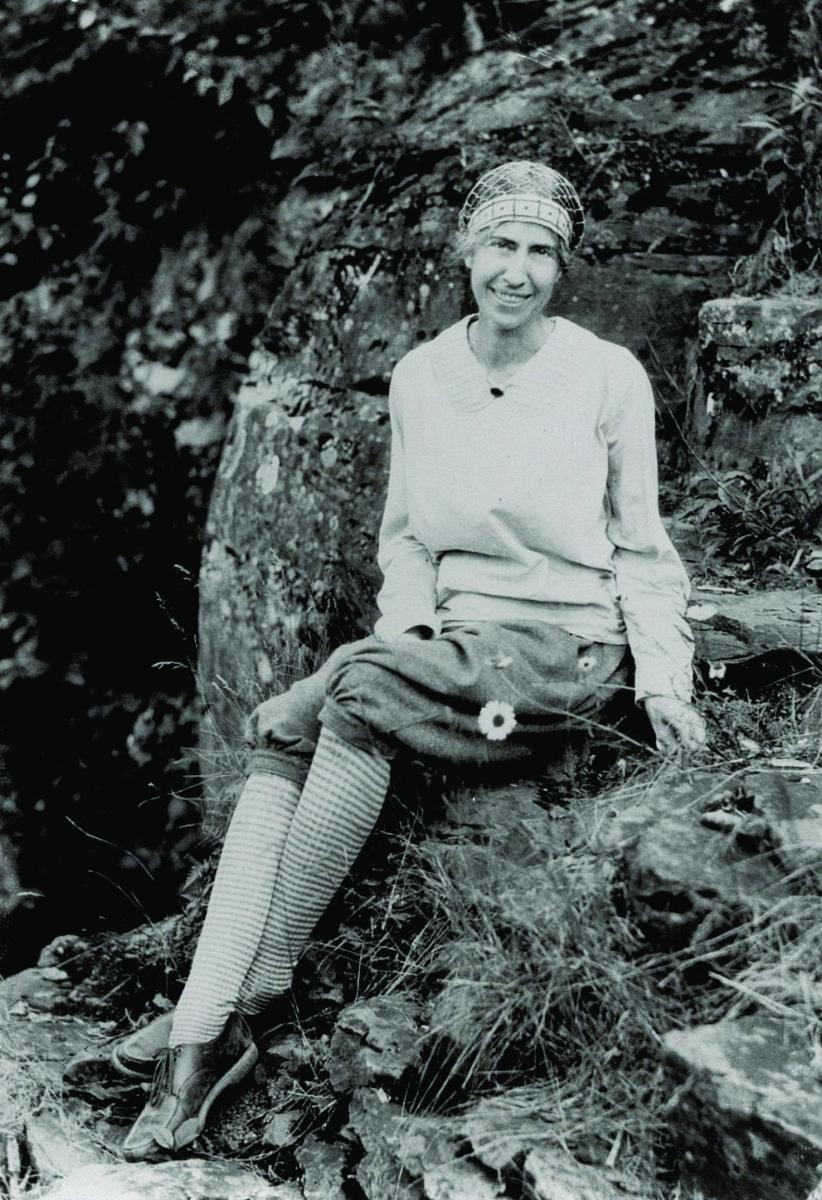
Winifred Goldring
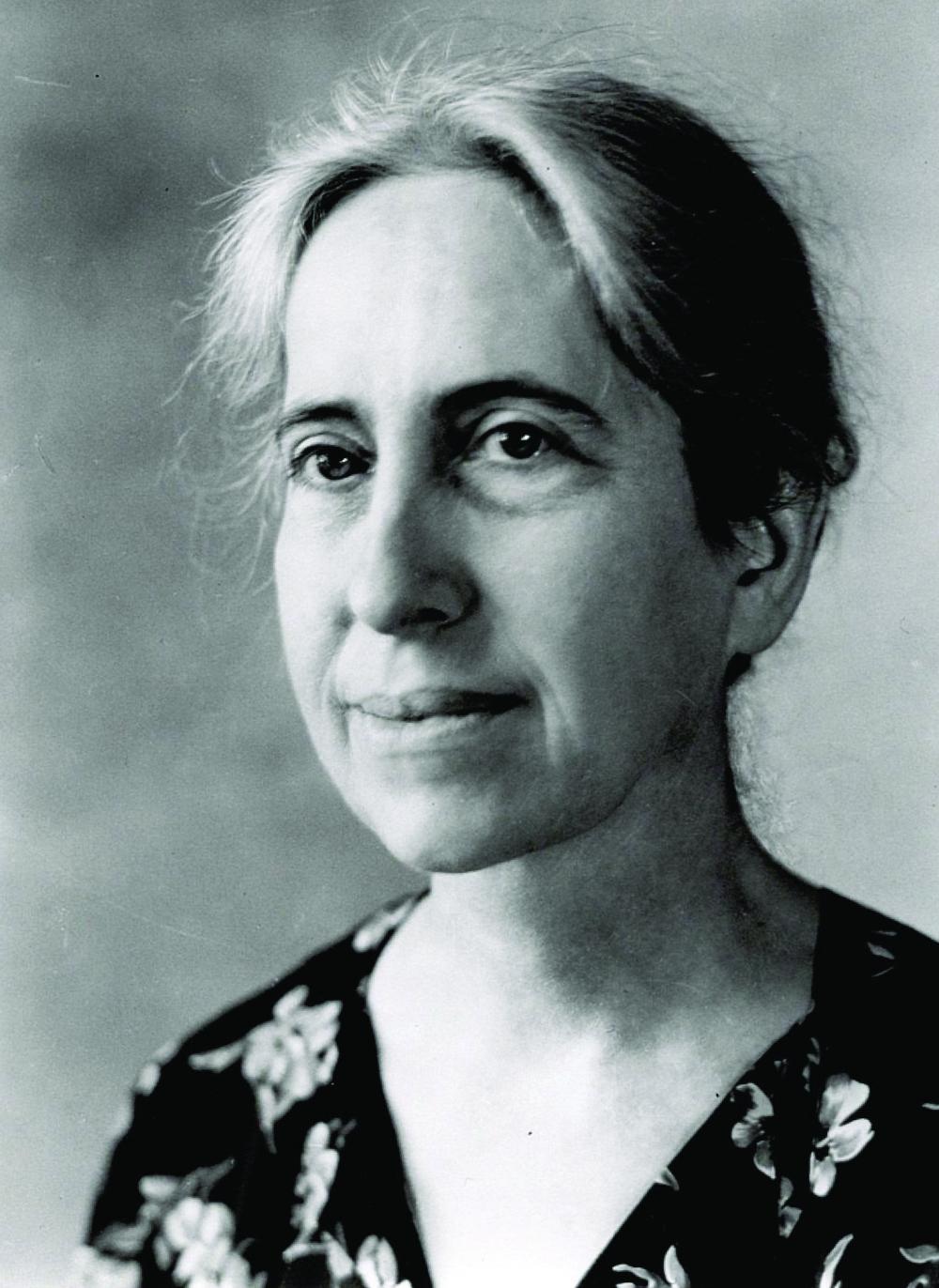
Winifred Goldring (1888-1971) was an American geologist and paleontologist who worked at the New York State Museum for over 30 years. She joined the museum in 1914 as a scientific expert in paleontology and continued to serve in diverse capacities until she retired in 1954, having earned the distinction of being the museum's first female curator and the first woman to serve as State Paleontologist of New York from 1939-1954.
Her contributions to the science of paleontology were profound and included an extensive work on the Devonian crinoids of New York (NYSM Memoir 16), a report on the Gilboa fossil forest in 1924 (NYSM Bulletin, no. 251), and the subsequent development of an innovative exhibit based on the Gilboa fossils that brought further distinction to both Goldring and the New York State Museum.
Her interest in educating the public inspired numerous innovative fossil exhibits and several publications, most notably her two-volume Handbook of Paleontology and Guide to the Geology of John Boyd Thacher Park. Goldring's 1939 appointment as State Paleontologist was a first for women in the nation and in the world. She also served as president of the Paleontological Society (1949) and vice president of the Geological Society of America (1950).
1914-1915: Scientific Expert in Paleontology
1915-1926: Assistant Paleontologist
1926-1928: Paleobotanist
1928-1932: Associate Paleontologist
1932-1938: Assistant State Paleontologist
1939-1954: State Paleontologist
Early Life
Born in Kenwood, near Albany, New York, Winifred was one of nine children of Frederick and Mary Goldring. Frederick, trained as a specialist in orchids at Kew Gardens, emigrated to the United States (Albany) in 1879 and took charge of orchid growing on the estate of Erastus Corning. It was here that he met Mary Grey, a teacher and daughter of the estate's head gardener; they married in 1881. The Goldrings left Kenwood in 1890 and established a thriving greenhouse business in the Albany suburb of Slingerlands, New York. For 81 years, Goldring resided in her childhood home where she was first introduced to the natural world surrounding the Helderbergs.
Education
Winifred was an excellent student. In 1905 she graduated as valedictorian from one of Albany's best high schools - the Milne School - and enrolled in Wellesley College with an intended major in classical languages. She became intensely interested in geology, zoology, botany, and geography at Wellesley and changed her major, attaining a B.A. (with honors) in 1909. After receiving an M.A. in 1912, she remained at Wellesley as a geology instructor and as a teaching assistant in Boston's Teacher's School of Science. Winifred took additional graduate coursework at Harvard and Columbia. Although she began working for the New York State Museum in 1914, she pursued additional graduate work in paleobotany in 1921 at Johns Hopkins University.
Retirement
After having worked in the field of paleontology for over 40 years, Goldring retired from the New York State Museum in 1954. Retirement allowed her to focus on other interests, including crocheting, reading, music, and long, walks. She passed away on January 30, 1971, just three days shy of her 83rd birthday in her beloved hometown of Slingerlands, NY.
Associations
- Paleontological Society: Elected first woman president in 1939.
- Fellow of the Geological Society of America: joined in 1921 and elected Vice-President in 1950.
- The Paleobotanical Society
- The Paleontological Research Institution
- American Association for the Advancement of Science
- American Geophysical Union
- New York Academy of Science
- Association of American Museums
- American Geophysical Union
- New York Academy of Sciences
- New York Historical Association
- Phi Beta Kappa
- Sigma Xi
Honorary Degrees
- 1937 - Russell Sage College
- 1957 - Smith College
Awards
- Mary Clark Thompson Medal from the National Academy of Sciences
- The Paleontological Society Medal
Fisher, D.W. (1974). Memorial to Winifred Goldring (1888-1971). Memorials of the Geological Society of America, 3, 96-107.
Albany Institute of History & Art Library (1996) Winifred Goldring Papers 1899-1971.
Aldrich, Michele & Leviton, Alan & Aldrich, Mark. (2005). Winifred Goldring (1888-1971): New York Paleontologist. Northeastern Geology & Environmental Sciences. 27. 229-238.
VanAller Hernick, L. (2012).Women's History in the Collections. From archived New York State Museum website.
VanAller Hernick, Linda. (2006) A Look Back: Remembering State Paleontologist Winifred Goldring. Legacy: The Magazine of the New York State Museum. 2(3), 5.


Publications
Winifred Goldring Publications – Chronological – APA Style | Link to Publication |
|---|---|
| Goldring, W. (1912). The Geographer and His Subject (Masters Thesis, Wellesley College.). | |
| Goldring, W. (1921). Annual rings of growth in Carboniferous wood. Botanical Gazette, 72(5), 326-330. | View online + PDF download: JSTOR (jstor.org) |
| Goldring, W. (1921). Decreasing salinity of the Pleistocene Champlain sea going southward, as shown by the character of the fauna, with a brief discussion of the Pleistocene fauna of the Hudson Valley and its significance. Bulletin of the Geological Society of America, 32(1), 132-133. | View abstract, subscription required for full text: GSA Bulletin (https://pubs.geoscienceworld.org/) |
| Goldring, W. (1922). The Champlain Sea: Evidence of Its Decreasing Salinity Southwward as Shown by the Character of the Fauna. New York State Museum Bulletin, (239-240), 153-194. | View online & PDF Download (25 MB): NYSM Bulletin 239-240, 153-194 |
| Goldring, W. (1923). The Devonian crinoids of the state of New York (Vol. 16). New York State Museum Memoir, 16. | View online + PDF Download: Biodiversity Heritage Library (biodiversitylibrary.org) |
| Clarke, J.M. (1924). "A Hemiaspidan Crustacean from the New York Silurian Waterlimes [with diagrams by W. Goldring]. New York State Museum Bulletin, 251, 119-120. | View online & PDF download (400 KB): NYSM Bulletin 251, 119-120 |
| Goldring, W. (1924). The Upper Devonian forest of seed ferns in eastern New York. New York State Museum Bulletin, 251, 50-92. | View online & PDF download (7 MB): NYSM Bulletin 251, 50-92 |
| Goldring, W. (1926). New museum exhibits. New York State Museum Bulletin, 267, 81-84. | View online & PDF download (2 MB) NYSM Bulletin 267, 81-84 |
| Goldring, W. (1926). New Upper Devonian plant material. New York State Museum Bulletin, 267, 85-87. | View online & PDF download (2 MB): NYSM Bulletin 267, 85-87 |
| Goldring, W. (1926). New species of Hamilton crinoids. New York State Museum Bulletin, 267, 89-92. | View online & PDF download (2 MB): NYSM Bulletin 267, 89-92 |
| Goldring, W. (1927). The oldest known petrified forest. Scientific Monthly, 24(6), 515-529. | View online + PDF download: JSTOR (jstor.org) |
| Goldring, W. (1929). Handbook of paleontology for beginners and amateurs: Part I, The fossils. New York State Museum Handbook, 9, 1-356. | View online & PDF download (112 MB): NYSM Handbook 9, 1-356 |
| Goldring, W. (1929). Honors to Doctor Ruedemann, New York State Museum Bulletin, 284, 20–21. | View online & PDF download (700 KB): NYSM Bulletin 284, 20-21 |
| Goldring, W. (1929). Nature, preservation and significance of fossils. New York State Museum Educational Leaflet, 2. | NYSM publication citation only |
| Goldring, W. (1929). An outdoor exhibit of the Gilboa fossil trees. New York State Museum Bulletin, 284, 33-35. | View online & PDF download (2MB): NYSM Bulletin 284, 33-35 |
| Ruedemann, R., Goldring, W. (1929). Making Fossils Popular in the New York State Museum. New York State Museum Bulletin, 279, 47-51. | View online & PDF download (3MB): NYSM Bulletin 279, 47-51 |
| Goldring, W. (1930). The oldest known petrified forest. American Forestry and Forest Life, 36, 491-493 & 546. | View online: Greene County Soil & Water District (gcswd.org) |
| Ruedemann, R., & Goldring, W. (1931). Some Museum Methods Developed in the New York State Museum. New York State Museum Bulletin, 288, 71-83. | View online & PDF download (1MB): NYSM Bulletin 288, 71-83 |
| Goldring, W. (1932). Albany to Binghamton. In The Paleozoic Stratigraphy of New York, 4: Excursion A-4 by D.H. Newland. Contains "Albany to Binghamton" by Winifred Goldring, 24- 38. | View online: GoogleBooks (books.google.com) |
| Goldring, W. (1933). Guide to the geology of John Boyd Thacher Park (Indian Ladder region) and vicinity. New York State Museum Handbook, 14, 112. | View online & PDF download (33 MB): NYSM Handbook 14 |
| Goldring, W. (1933). A new species of crinoid from the Devonian (Oriskany) of Maine. Proceedings of the Portland Society of Natural History, 4, 153-155. | NYSM publication citation only |
| Goldring, W. (1933). Handbook of paleontology for beginners and amateurs: Part 2, The Formations. New York State Museum Handbook, 10, 488. | View online + PDF download: Internet Archive (archive.org) |
| Goldring, W. (1934). Some Hamilton crinoids of New York and Canada. Buffalo Society of Natural Sciences, 15(3), 182-200. | |
| Goldring, W., & Cook, J.H. (1935). Geology of the Berne quadrangle; with a chapter on glacial geology by John H. Cook. New York State Museum Bulletin, 303, 238p. | View online & PDF download (19 MB) NYSM Bulletin 303 |
| Goldring, W. (1935). New and Previously Known Middle Devonian Crinoids of New York. Annals of the Carnegie Museum, 24, 349-368. | View online + PDF download: Biodiversity Heritage Library (biodiversitylibrary.org) |
| Goldring, W. (1935). Some Upper Devonian crinoids from New York. Annals of Carnegie Museum, 24, 337-348. | View online + PDF download: Biodiversity Heritage Library (biodiversitylibrary.org) |
| Goldring, W. (1935) Der aelteste versteinerte Wald aus der Devon-Zeit von New York, Natur und Volk, 65, 151–155. | |
| Goldring, W. (1936). Some Hamilton (Devonian) crinoids from New York. Journal of Paleontology, 10, 14-22. | View preview (full article + PDF download with library login): JSTOR (jstor.org) |
| Goldring, W. (1937). Cryptozoon: Plant nature and distribution. Science, 86(2241), 530-531. [Mistitled “On the origin of the Saratoga mineral waters,” which is the correct title for the next paper in the journal.] | View preview (full article + PDF download with library login): JSTOR (jstor.org) |
| Goldring, W. (1938). Algal barrier reefs in the Lower Ozarkian of New York: with a chapter on the importance of coralline Algae as reef builders through the ages. New York State Museum Bulletin, 315, 5-75. | View online & PDF download (6 MB) NYSM Bulletin 315, 5-75 |
| Goldring, W. (1938). Additional notes on previously described Devonian crinoids. New York State Museum Bulletin, 315, 77-83. | View online & PDF download (500 KB) NYSM Bulletin 315, 77-83 |
| Goldring, W. (1938). An Upper Devonian species of Aorocrinus. Carnegie Museum Annals, 27, 109-112. | View online + PDF download: Biodiversity Heritage Library (biodiversitylibrary.org) |
| Goldring, W. (1938). Devonian Crinoids from the Mackenzie River Basin, NWT, Canada. American Paleontology, 24(81), 23. | View online + PDF download: Biodiversity Heritage Library (biodiversitylibrary.org) |
| Goldring, W. (1939). Linobrachiocrinus, new name for Linocrinus Goldring, 1938, not Kirk. Journal of Paleontology, 13(3), 354. | View preview (full article + PDF download with library login): JSTOR (jstor.org) |
| Goldring, W. (1939). Report on geological mapping of sedimentary rocks (exclusive of Grenville) and glacial areas in New York State. New York State Museum Bulletin, 317, 119-131. | View online & PDF download (600KB): NYSM Bulletin 317, 119-131 |
| Goldring, W., & Flower, R.H. (1942). Restudy of the Schoharie and Esopus formations in New York State. American Journal of Science, 240(10), 673-694. | View abstract, subscription required for full text: American Journal of Science (ajsonline.org) |
| Goldring, W. (1942). Crown of Ancyrocrinus bulbosus Hall. Bulletin of the Buffalo Society of Natural Science, 17(3), 13-18. | |
| Goldring, W., & Cook, J.H. (1943). Geology of the Coxsackie Quadrangle, New York. New York State Museum Bulletin, 332, 374. | View online + PDF download: Biodiversity Heritage Library (biodiversitylibrary.org) |
| Goldring, W., & Flower, R.H. (1944). Carlisle Center Formation, a new name for the Sharon Springs Formation of Goldring and Flower. American Journal of Science, 242(6), 340. | View online, PDF download with subscription: American Journal of Science (ajsonline.org) |
| Goldring, W., & Ruedemann R. (1944) Memorial to David H. Newland [1872-1943]. Proceedings of the Geological Society of America, 209-216. | |
| Goldring, W. (1945). Notes on Thamnocrinus springeri Goldring and other Hamilton crinoids. American Journal of Science, 243(2), 57-65. | View abstract, subscription required for full text: American Journal of Science (ajsonline.org) |
| Goldring, W. (1946). A new Lower Chemung crinoid. Bulletin of American Paleontology, 31 (119), 1-8. | View online + PDF download: Biodiversity Heritage Library (biodiversitylibrary.org) |
| Goldring, W. (1948). Status of ‘Homocrinus’ cylindricus Hall. Bulletin of the Wagner Free Institute of Sciences of Philadelphia, 23(4), 25-32. | |
| Goldring, W. (1948). Occurrence of Gennaeocrinus kentuckiensis (Shumard) in Pennsylvania. Bulletin of the Wagner Free Institute of Sciences of Philadelphia, 23(1), 1-3. | |
| Goldring, W. (1950). Handbook of paleontology for beginners and amateurs: Part 1, the fossils, Second Edition. New York State Museum Handbook, 9, 394. | |
| Goldring, W. (1950). Devonian crinoids; new and old. Bulletin of the Wagner Free Institute of Sciences of Philadelphia, 25(4), 29-37. | |
| Goldring, W. (1951). A New Species of the Genus Craterocrinus Goldring. New York State Museum Circular, 27, 6. | |
| Goldring, W., Gazin, C.L., & Woodring, W. (1952). Distribution of evolutionary explosions in geologic time. Journal of Paleontology, 26, 297-394. | |
| Goldring, W. (1954). Memorial to George Halcott Chadwick (1876-1953). Proceedings of the Geological Society of America. 101-106. | |
| Goldring, W. (1954). Devonian crinoids, new and old, II. New York State Museum Circular, 37, 51. | |
| Goldring, W. (1958). Memorial to Rudolf Ruedemann, 1864-1956. Proceedings of the Geological Society of America, 1957, 153-161. | |
| Riggs, E.S. and Goldring, W. (1967). Age determination of faunas by E.O. Ulrich, Methods of creating popular interest in exhibits of fossils. Geological Society of America Bulletin, 32, 132. | View abstract, subscription required for full text: GSA Bulletin (https://pubs.geoscienceworld.org/) |
| Copper,Goldring, et al. (1942). Correlation of the Devonian sedimentary formations of North America. Geological Society of America Bulletin, 53. | |
Articles About Goldring | |
| Fisher, D.W. (1974). Memorial to Winifred Goldring (1888-1971). Memorials of the Geological Society of America, 3, 96-107. | View online + PDF download: Geological Society of America (geosociety.org) |
| Albany Institute of History & Art Library (1996) Winifred Goldring Papers 1899-1971. | View online & PDF download: Albany Institute of History & Art (albanyinstitute.org) |
| Aldrich, Michele & Leviton, Alan & Aldrich, Mark. (2005). Winifred Goldring (1888-1971): New York Paleontologist. Northeastern Geology & Environmental Sciences. 27. 229-238. | View online & PDF download: Research Gate (researchgate.net) |
The New York State Museum at the New York State Education Building
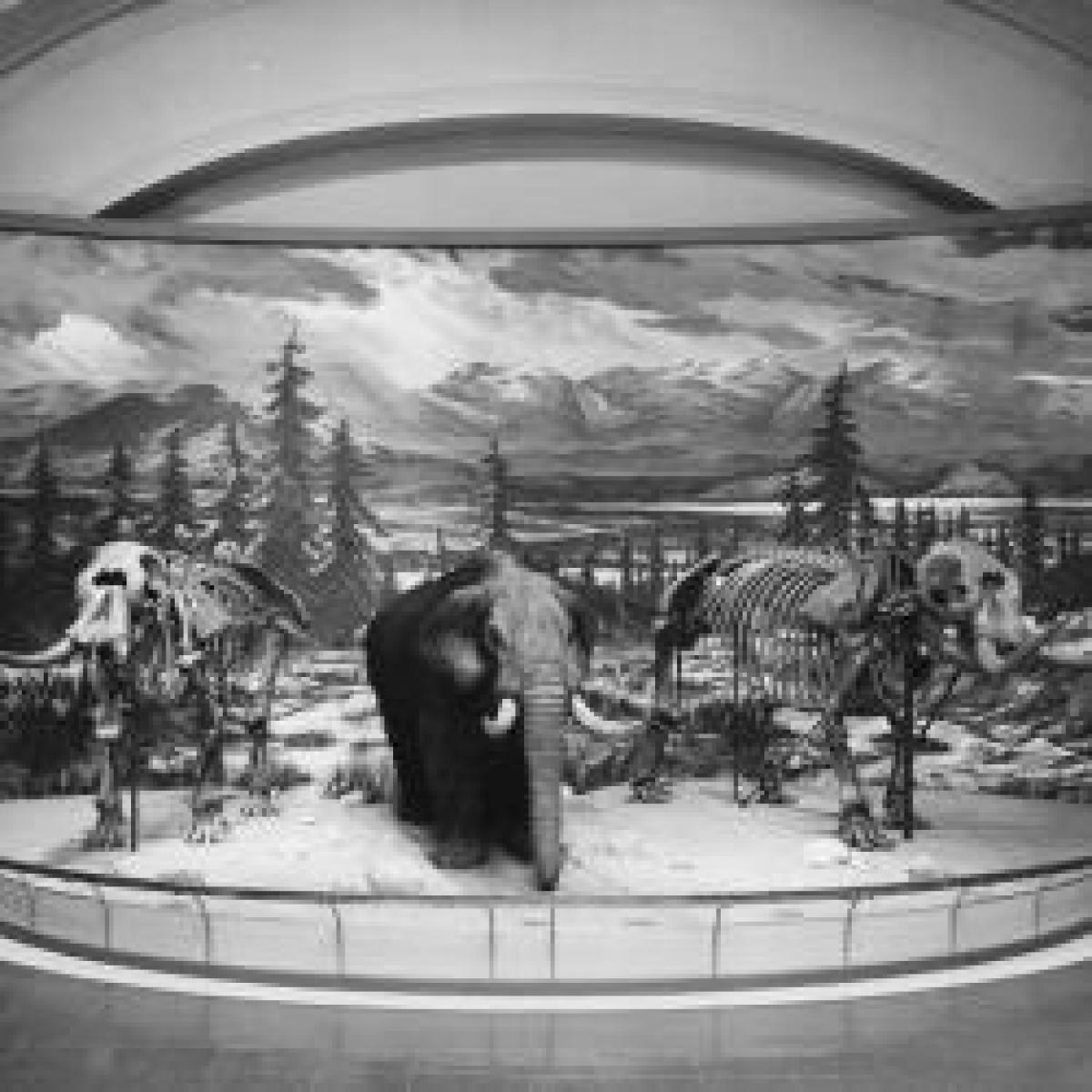
The New York State Museum occupied the New York State Education Building from 1912 to 1976. For almost seventy years, visitors could explore the rows of curiosities in collection cases and educational exhibitions that occupied the building's 4th and 5th floors. Popular exhibits included the Cohoes and Temple Hill Mastodons, the "Old Indian Life Groups", and a giant relief map of New York State. In 1976, the State Museum moved into its current home at the Cultural Education Center.

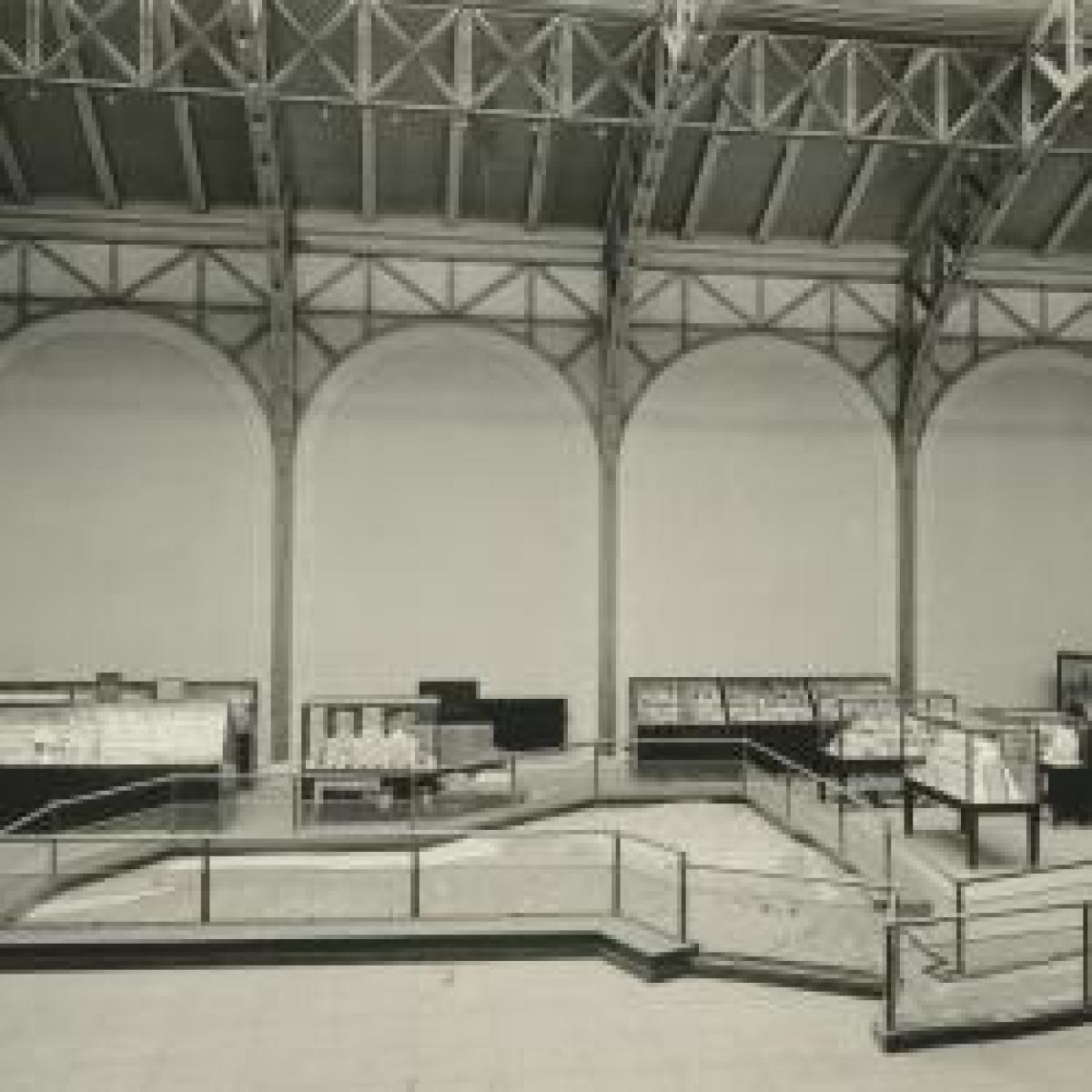
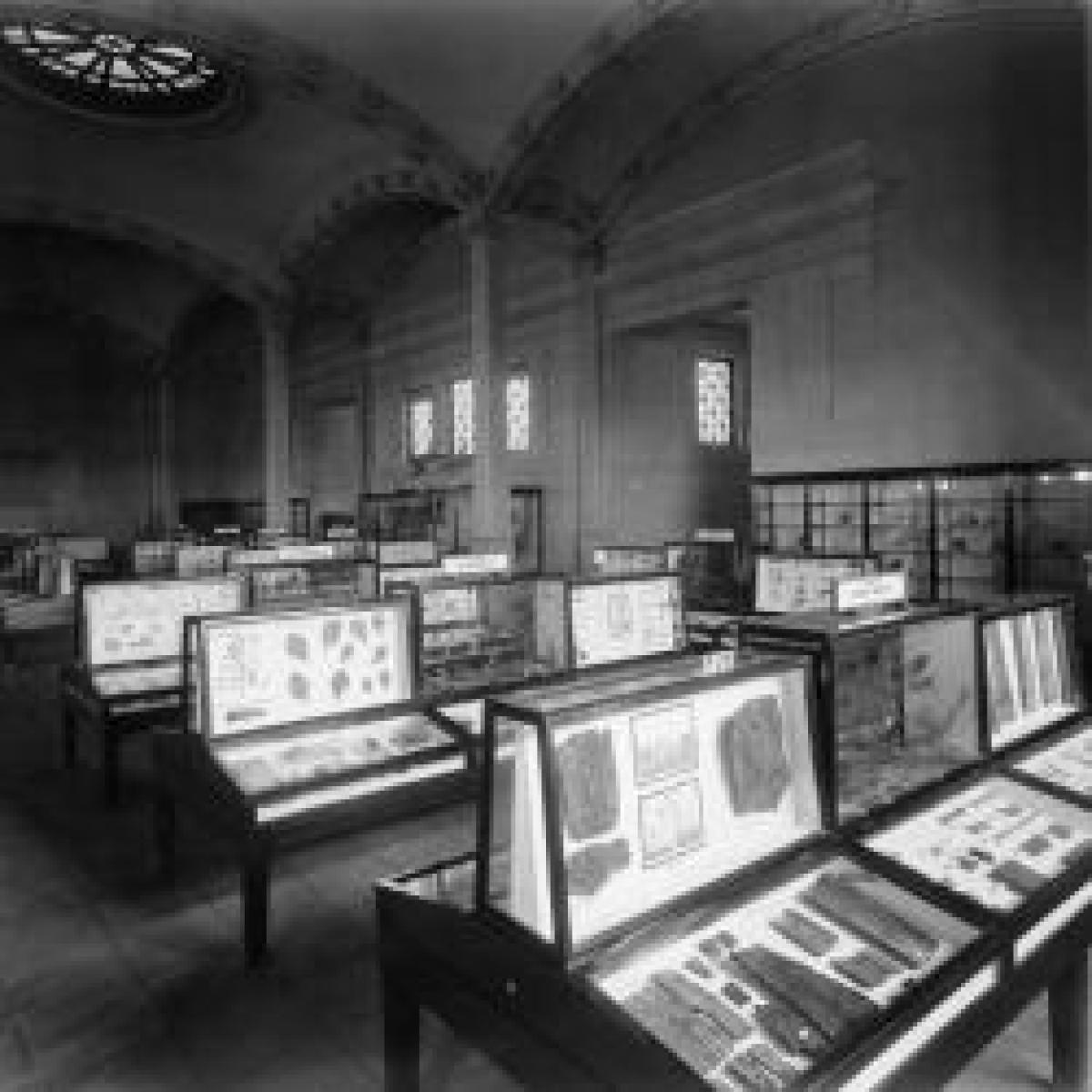
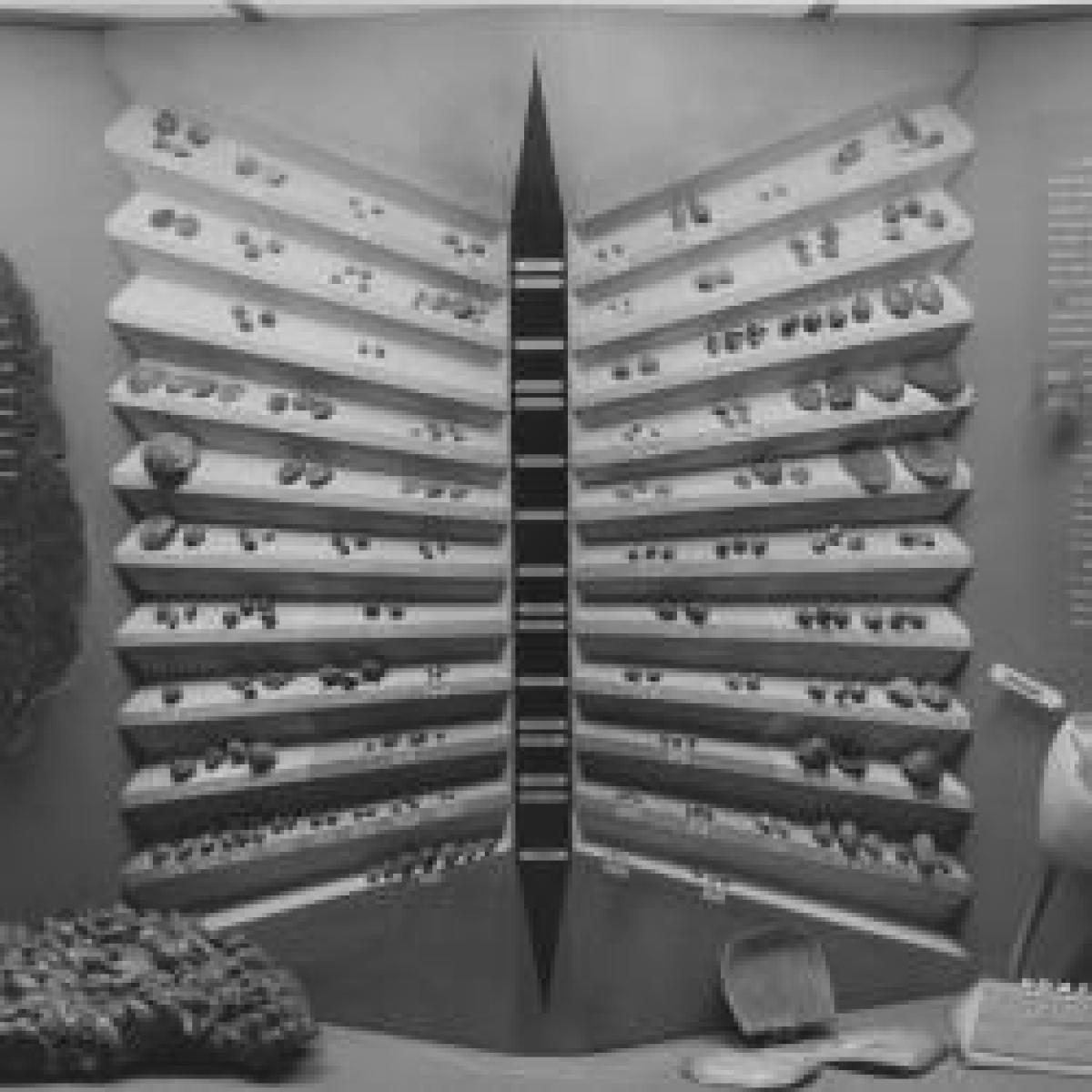
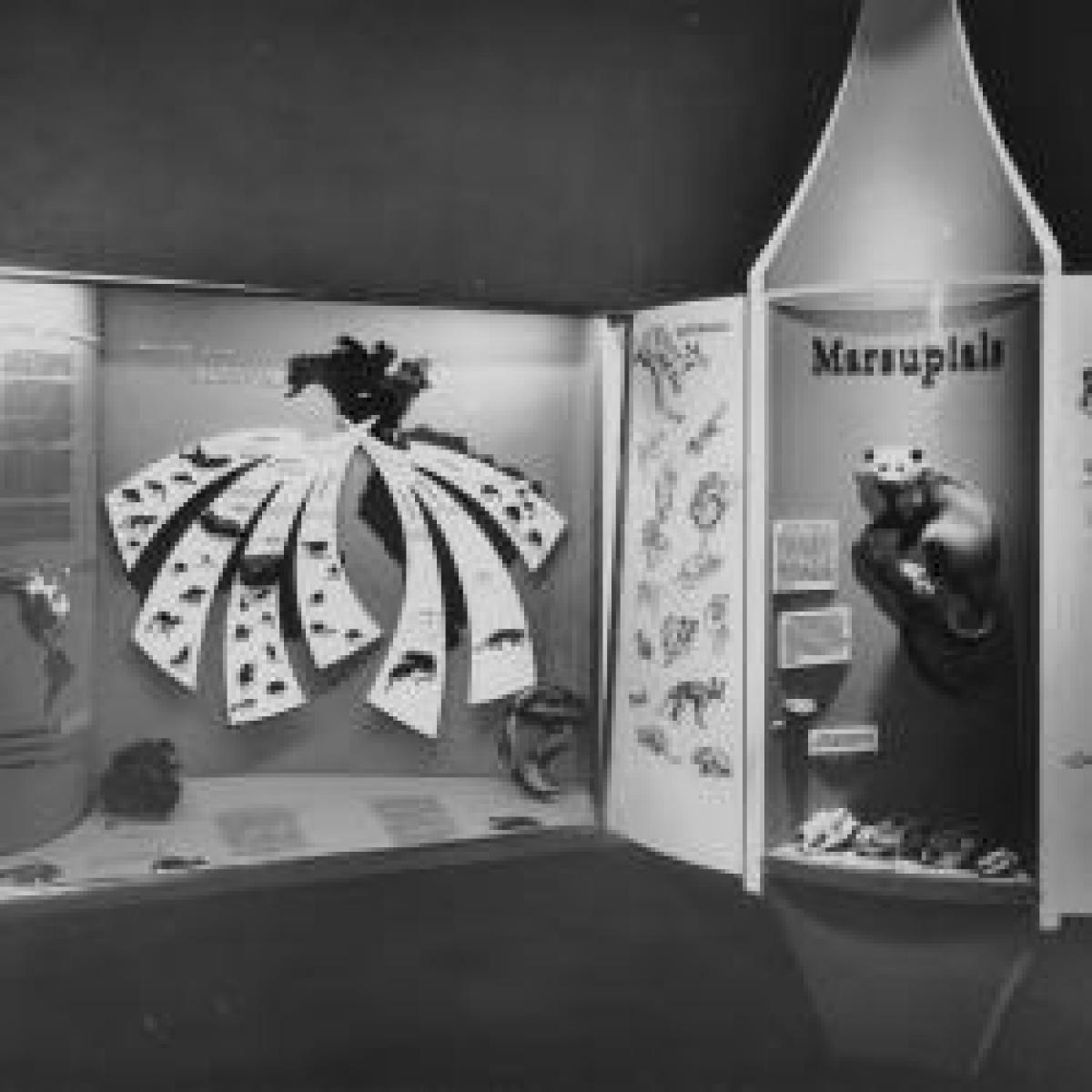

Explore the State Education Building in 360 Degrees!
Move your phone or mouse to explore and zoom in on each of the spaces below in 360 degrees while our expert guides describe their history, design, and significance.
The Rotunda at the NYSED Building
Regents Room of the NYSED Building
The Rotunda Murals of the NYSED Building
The Replica Liberty Bell
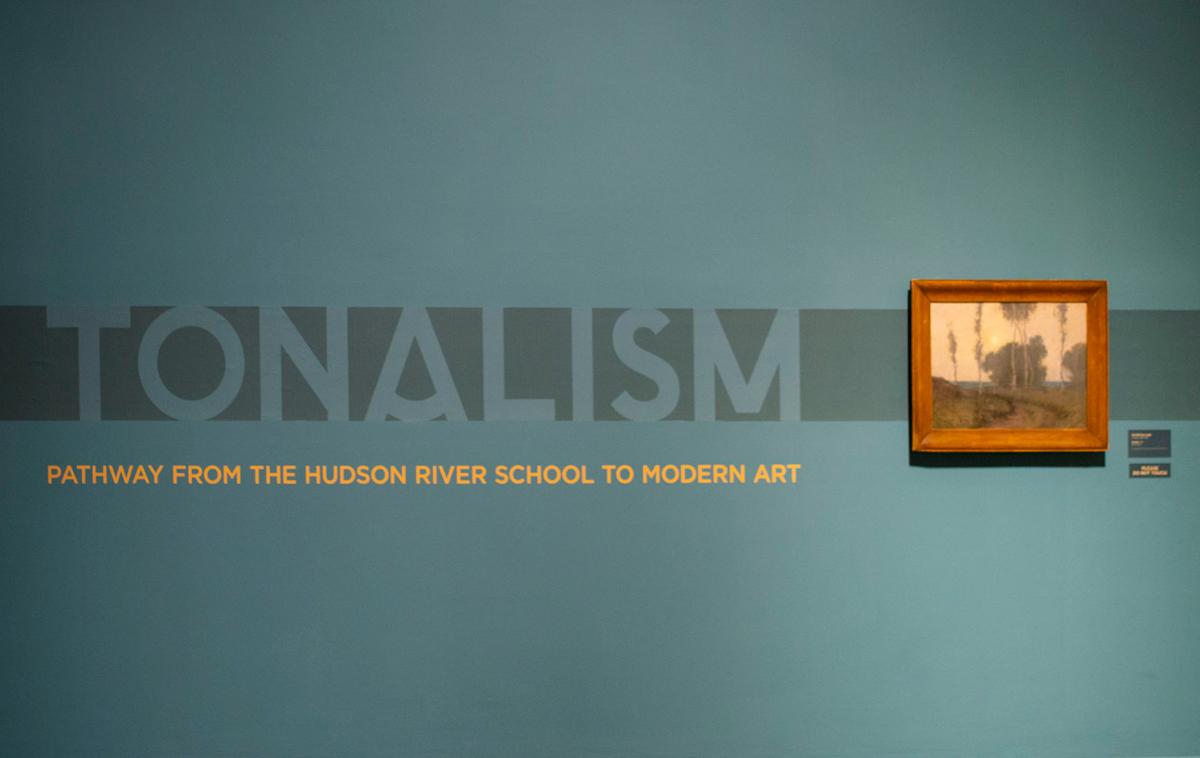
Tonalism: Pathway from the Hudson River School to Modern Art
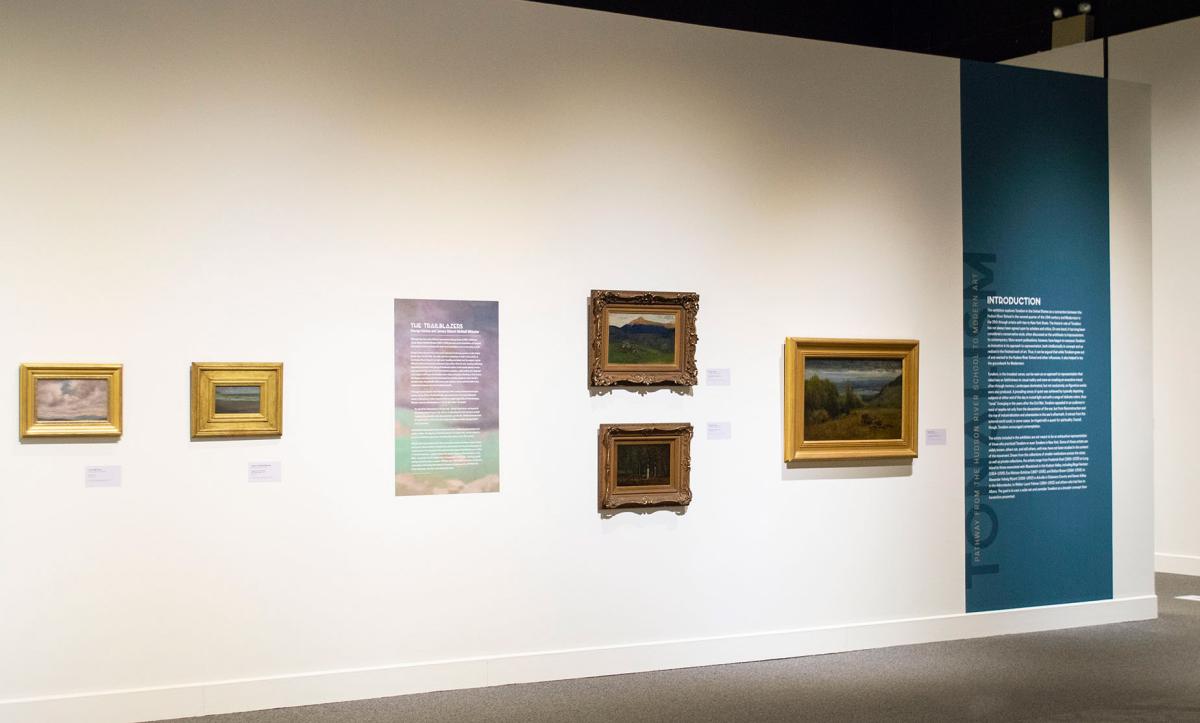
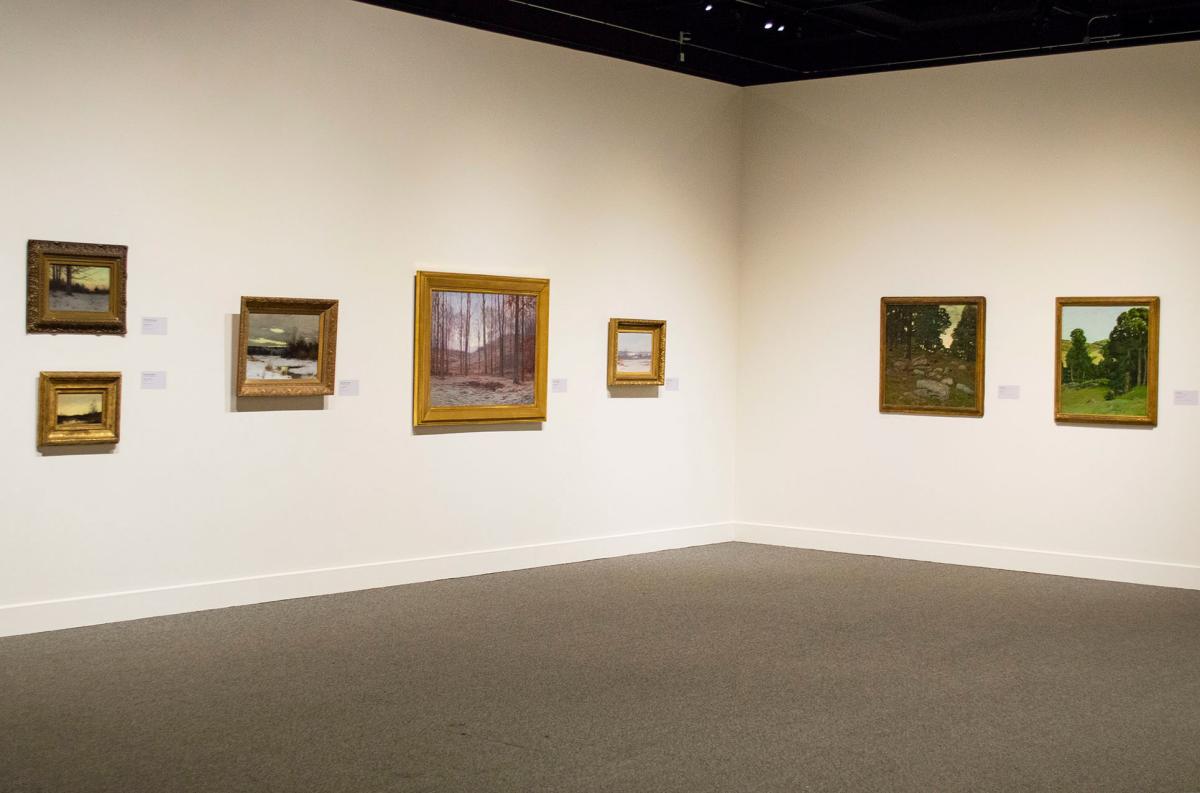
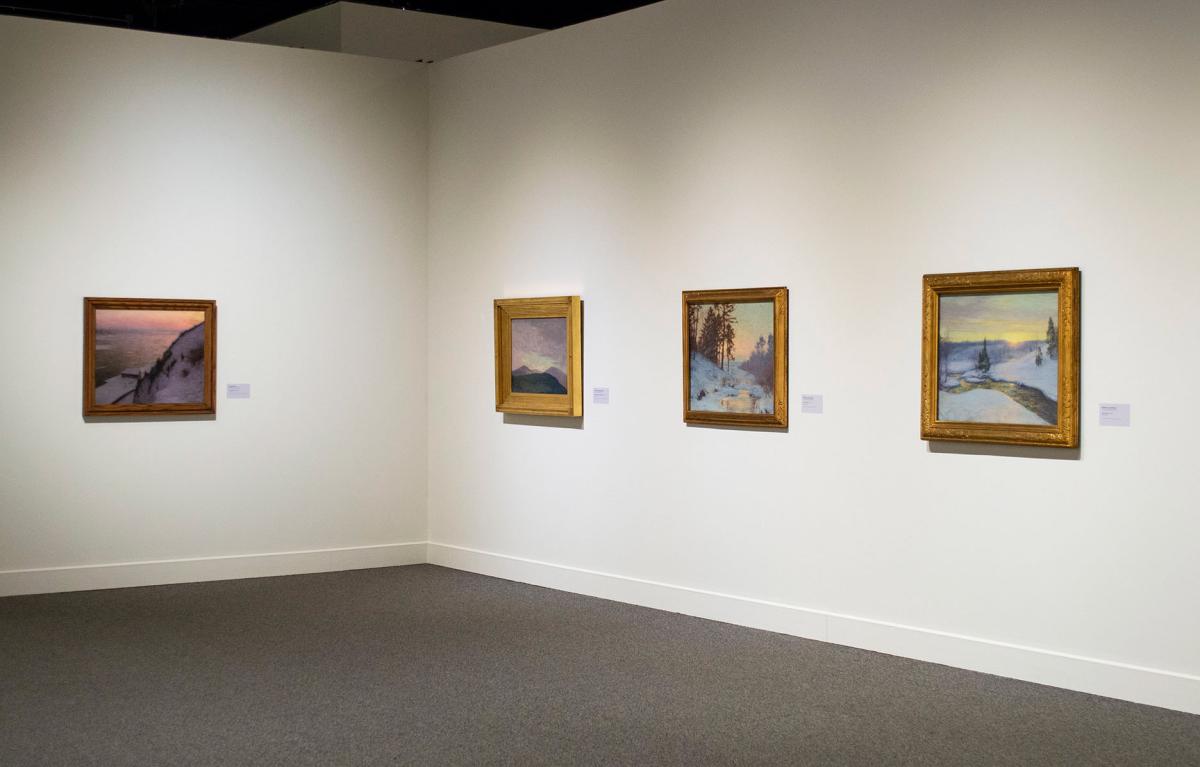
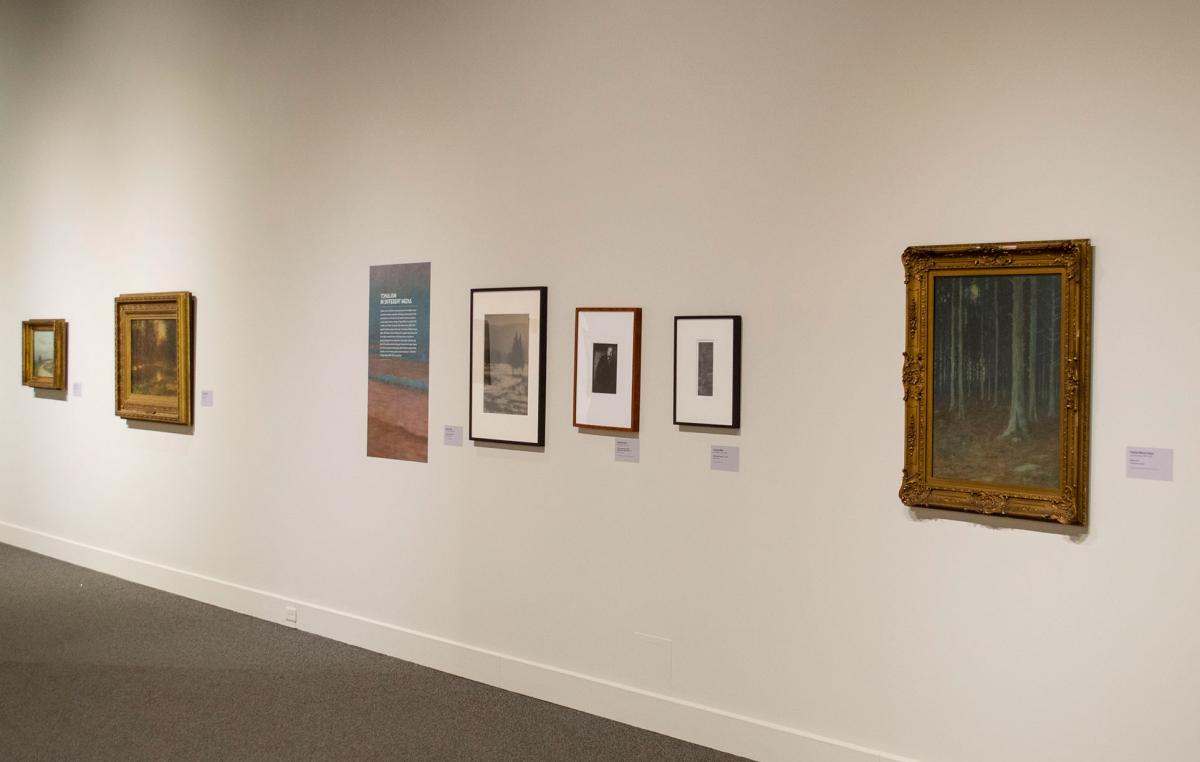
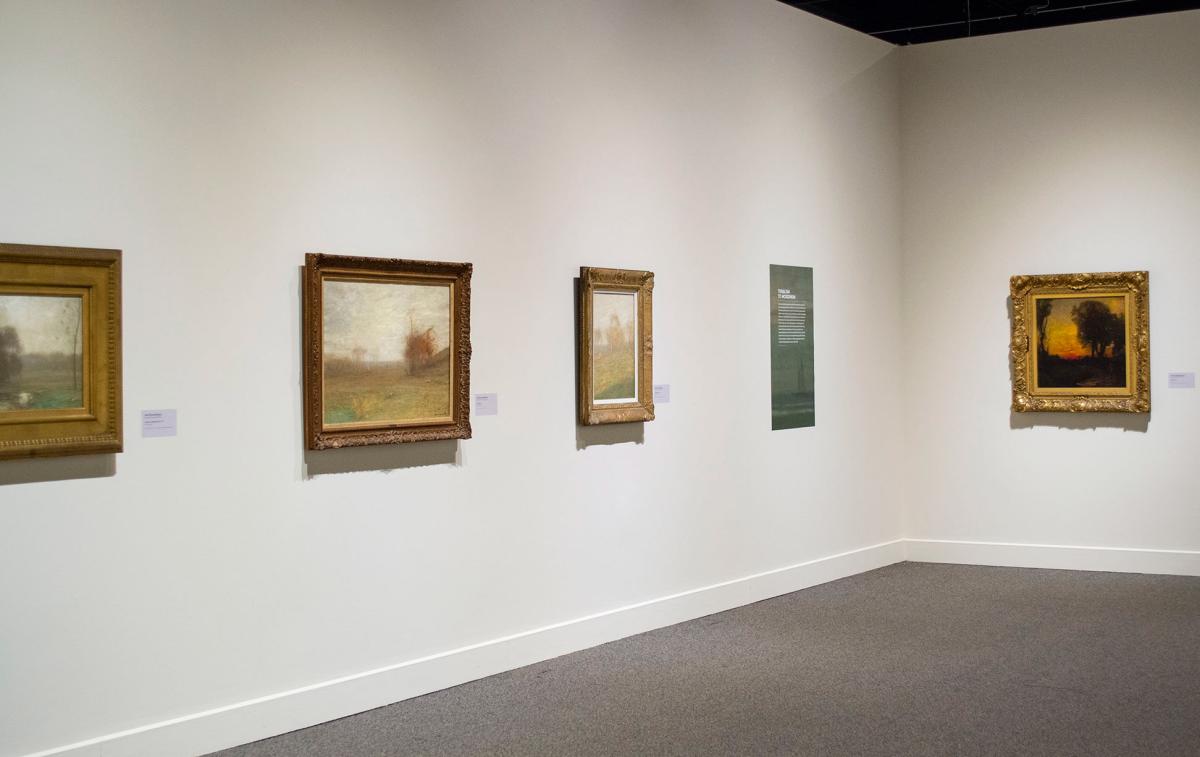
This exhibition explores Tonalism in the United States as a connection between the Hudson River School in the second quarter of the nineteenth century and Modernism in the twentieth through artists with ties to New York State. The historic role of Tonalism has not always been agreed upon by scholars and critics. On one hand, it has been long considered a conservative style, often discussed as the antithesis to Impressionism, its contemporary. More recent publications, however, have begun to reassess Tonalism as innovative in its approach to representation both intellectually in concept and as realized in the finished work of art. Thus, it can be argued that while Tonalism grew out of and reacted to the Hudson River School and other influences, it also helped lay the groundwork for Modernism.
Tonalism in the broadest sense can be seen as an approach to representation that relied less on faithfulness to visual reality and more on creating an evocative mood, often through memory. Landscapes dominated the movement, but not exclusively, as figurative works were also produced. A prevailing sense of quiet was achieved in Tonalist works by typically depicting subjects at either end of the day in muted light and with a range of delicate colors, thus “tonal.” Emerging in the years after the Civil War, Tonalism appealed to an audience in need of respite not only from the devastation of the war but from Reconstruction and the rise of industrialization and urbanization in the war’s aftermath. For many in the era, a retreat from the external world could be tinged with a quest for spirituality. Overall, though, Tonalism encouraged contemplation.
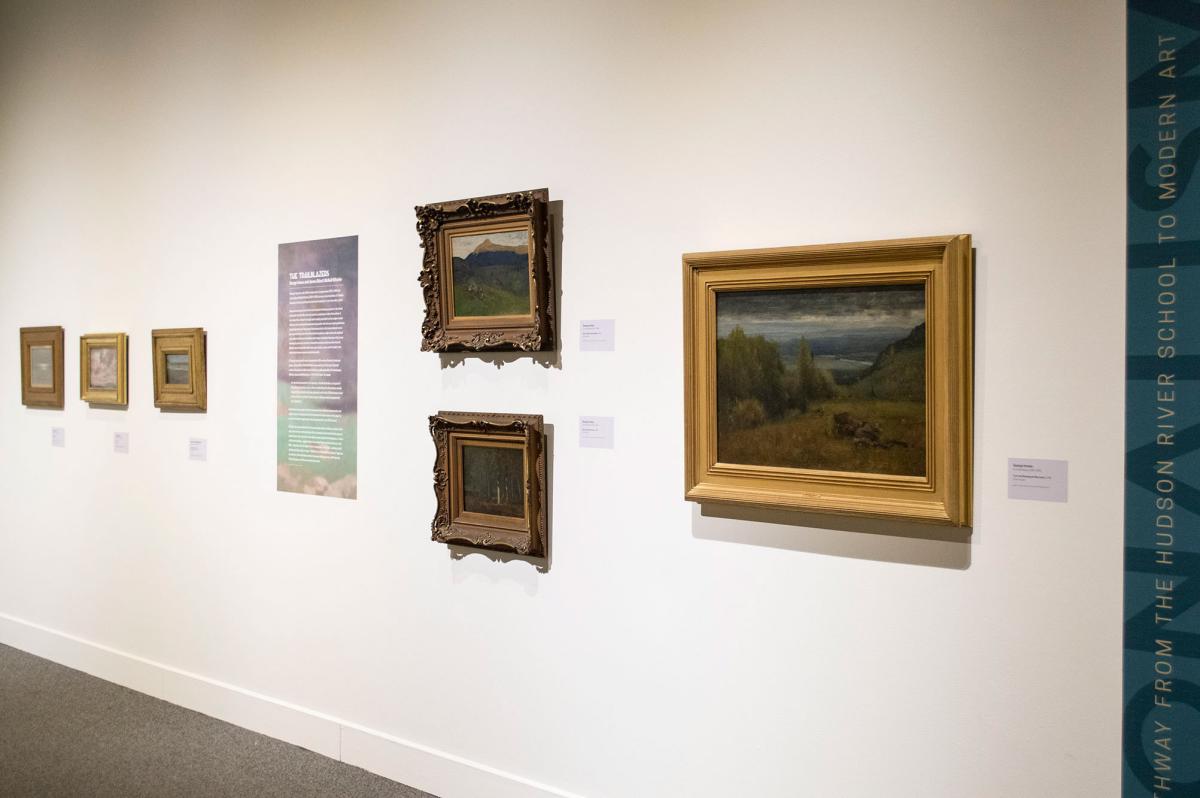
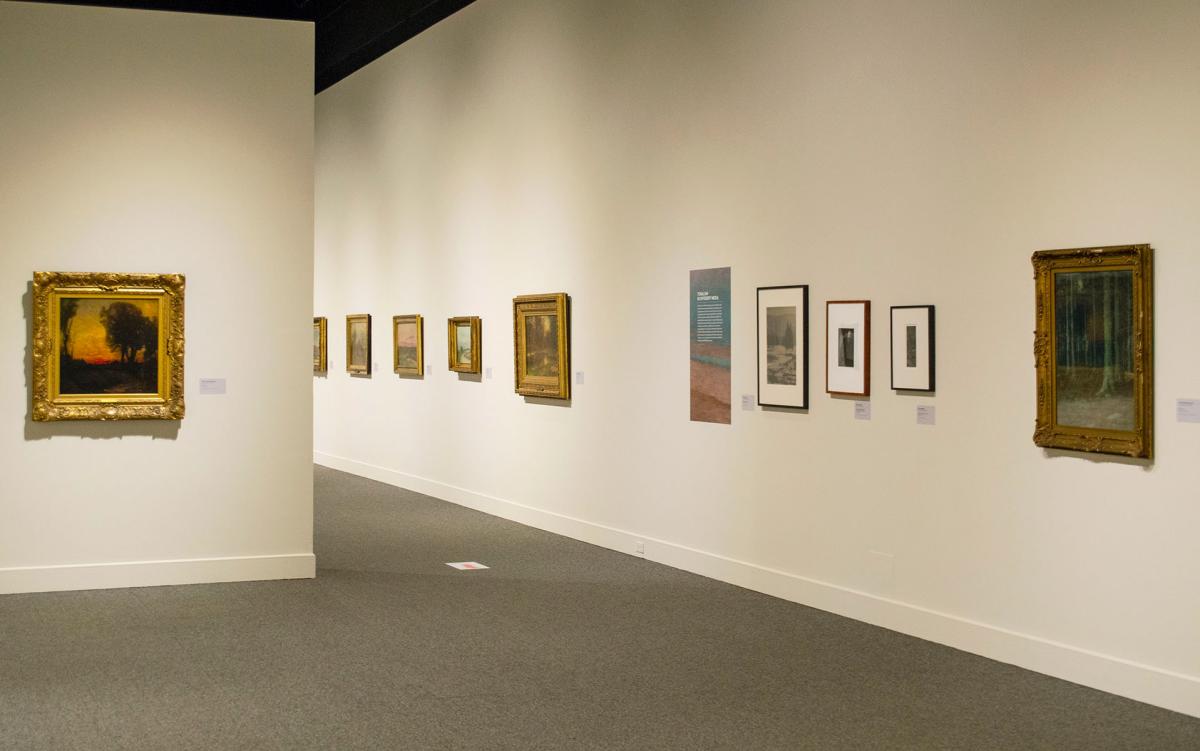
The group of artists included in the exhibition is not meant to be an exhaustive representation of those who practiced Tonalism or even Tonalism in New York. Some of these artists are widely known, others not, and still others, until now, have not been studied in the context of the movement. Drawn from the collections of smaller institutions across the state, as well as private collections, the artists range from Frederick Kost (1861–1923) on Long Island; to those associated with Woodstock in the Hudson Valley, including Birge Harrison (1854–1929), Eva Watson-Schütze (1867–1935), and Bolton Brown (1864–1936); to Alexander Helwig Wyant (1836–1892) in Arkville in Delaware County and Keene Valley in the Adirondacks; to Walter Launt Palmer (1854–1932) and others who had ties to Albany. The goal is to cast a wide net and consider Tonalism as a broader concept than heretofore presented.
Select Gallery Views
The exhibition, Tonalism: Pathway from the Hudson River School to Modern Art, was on view in the New York State Museum's West Gallery from February 15, 2020 to November 30, 2020.
Expanding Access through Digitization!
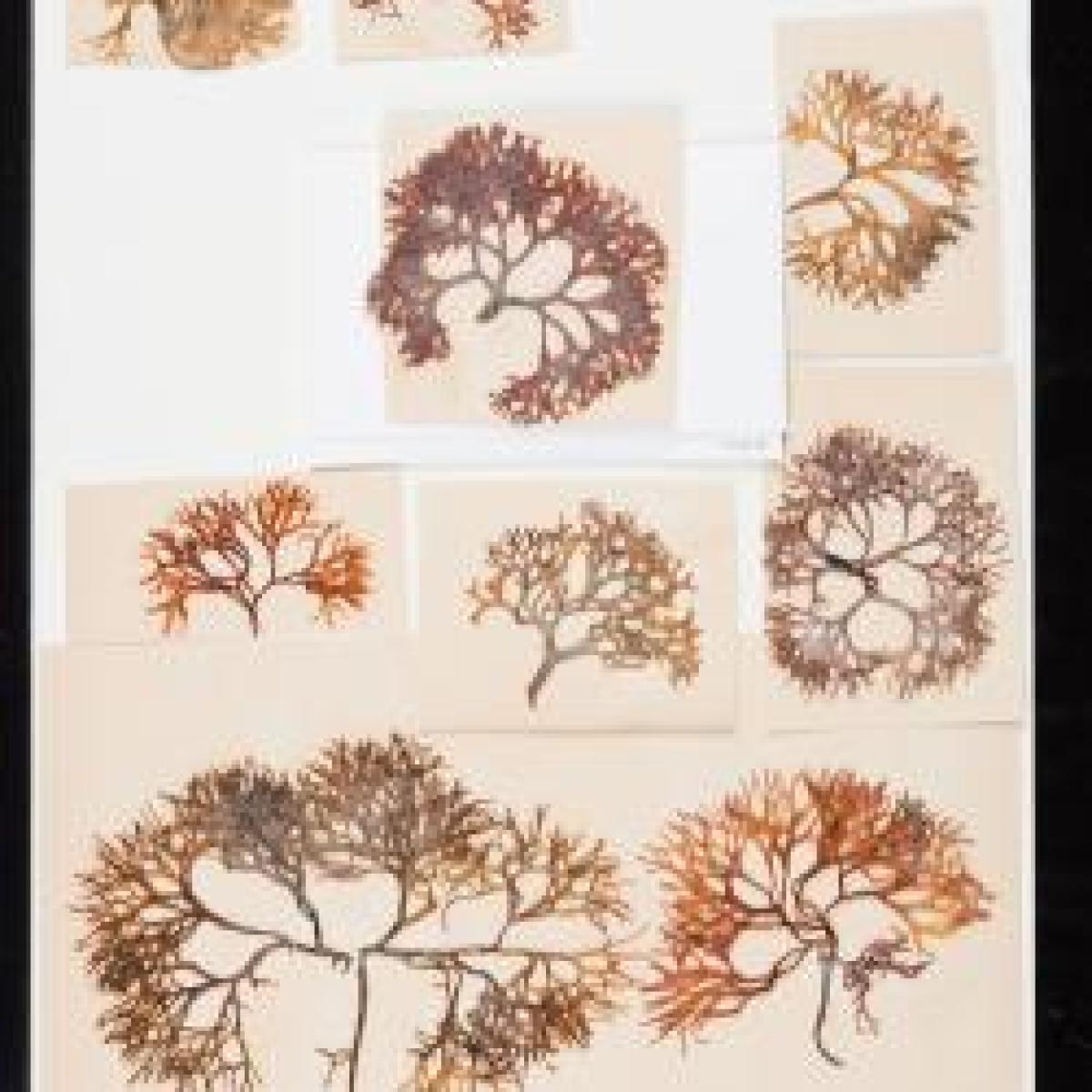
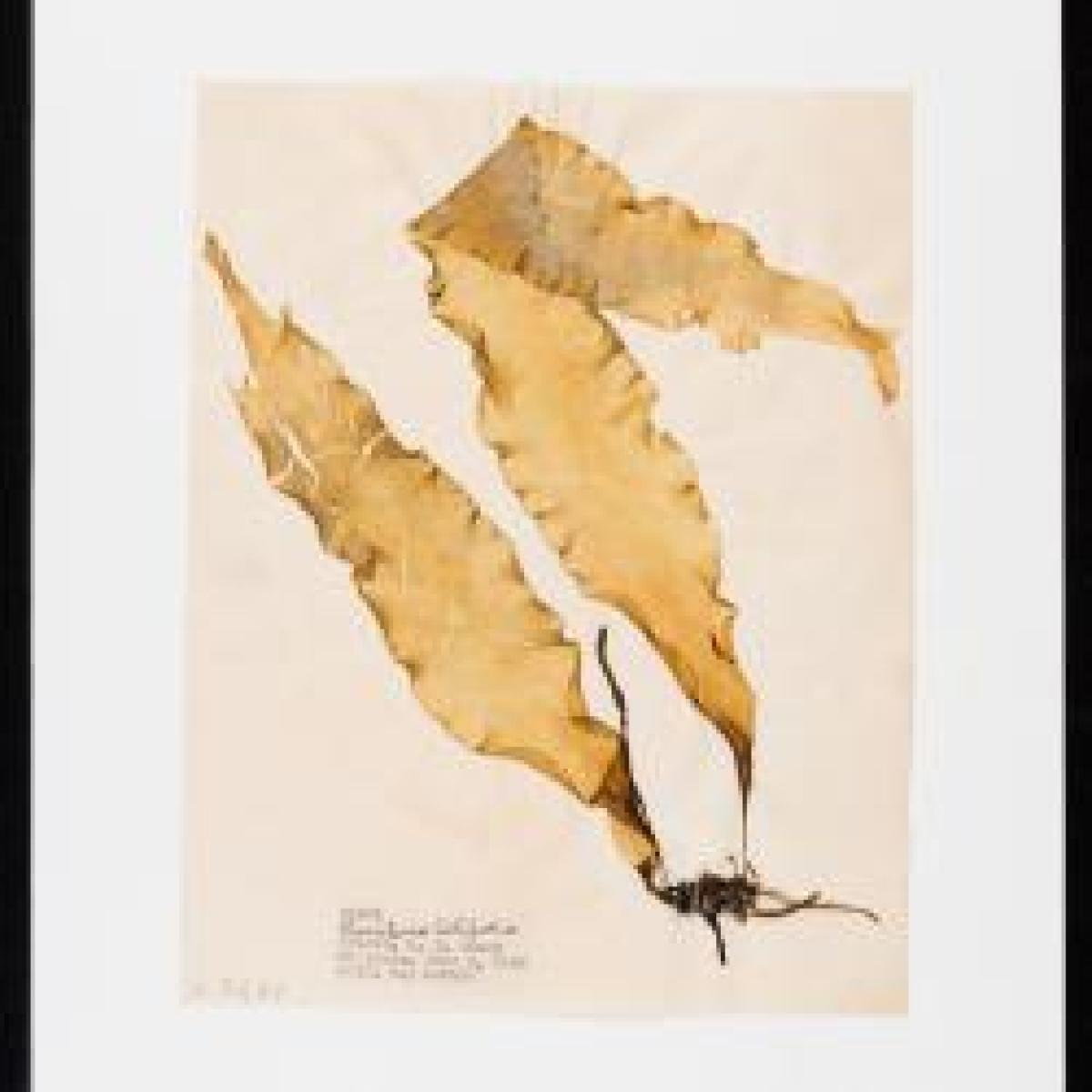
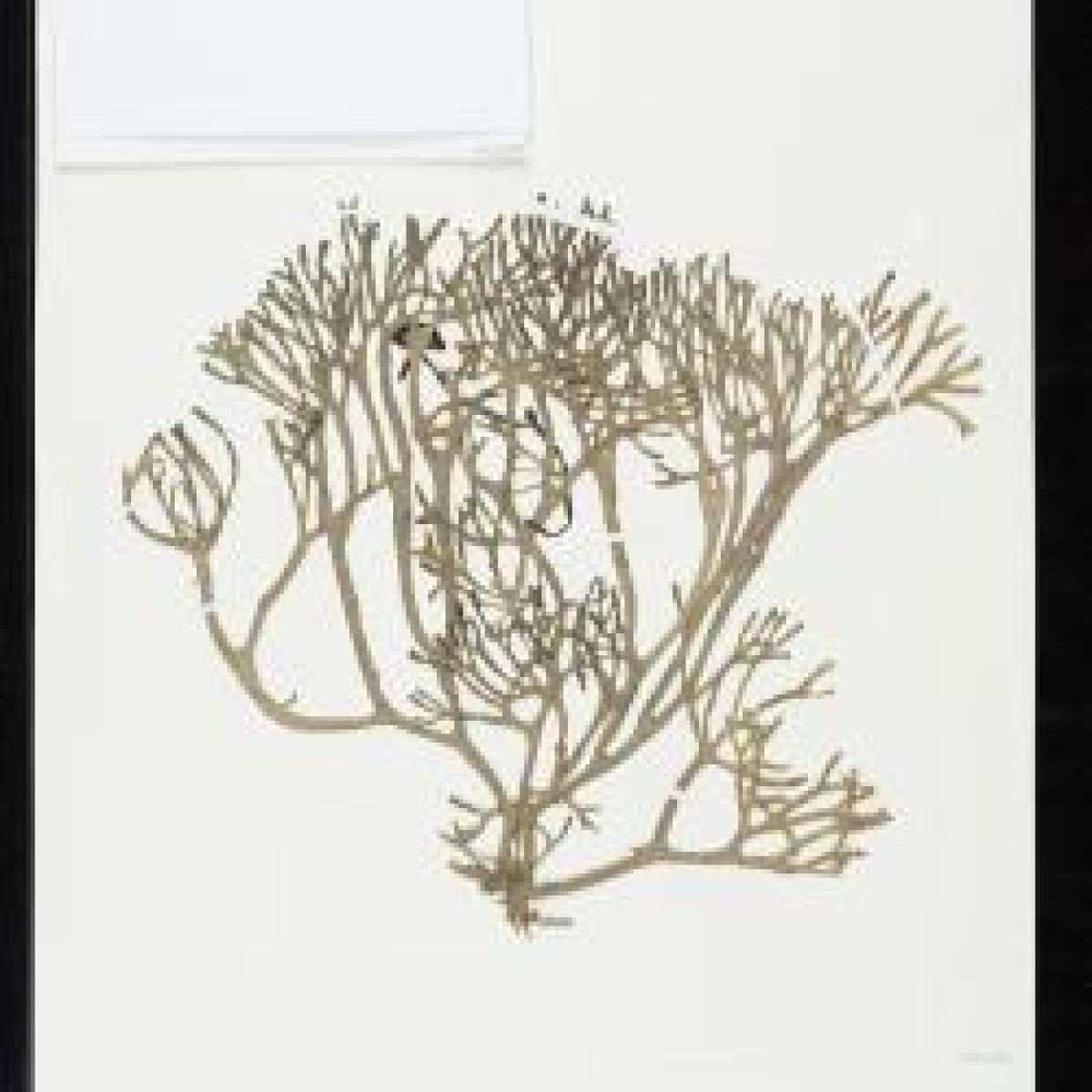
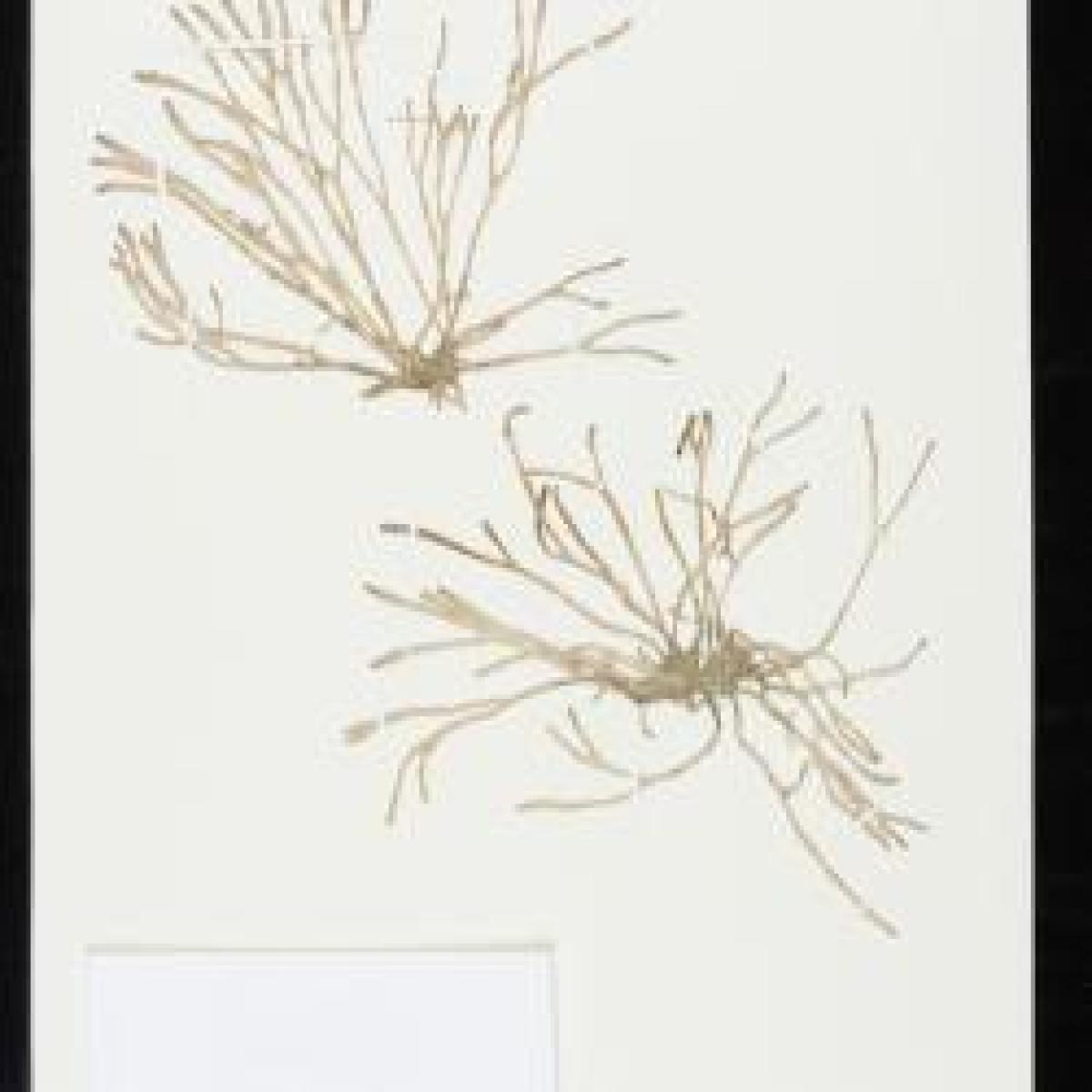
Museums worldwide are actively digitizing their collections to enhance accessibility and broaden public engagement. This initiative increases the visibility and appreciation of valuable artifacts among the diverse communities that institutions like the New York State Museum serve.
As part of a nationwide digitization effort, the NYSM recently made its collection of algae available online, further contributing to the preservation and sharing of scientific and cultural knowledge. Now anyone with an internet connection can explore the algae that lie beneath the waters of New York State!
The NYSM Algal Collection and its images can be accessed here: https://macroalgae.org/portal/collections/misc/collprofiles.php?collid=49
Women of Science Spotlight: Mary Banning
Beyond "Polite Botany": The Legacy of Mary Banning and Women in Early Mycological Research
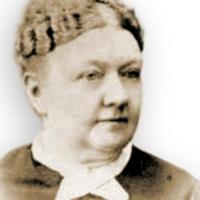
Mary Elizabeth Banning (1822–1903), a self-educated mycologist from rural America who spent decades studying fungi in Maryland, wrote, “Fungi are considered vegetable outcasts. Like beggars by the wayside dressed in gay attire, they ask for attention but claim none."
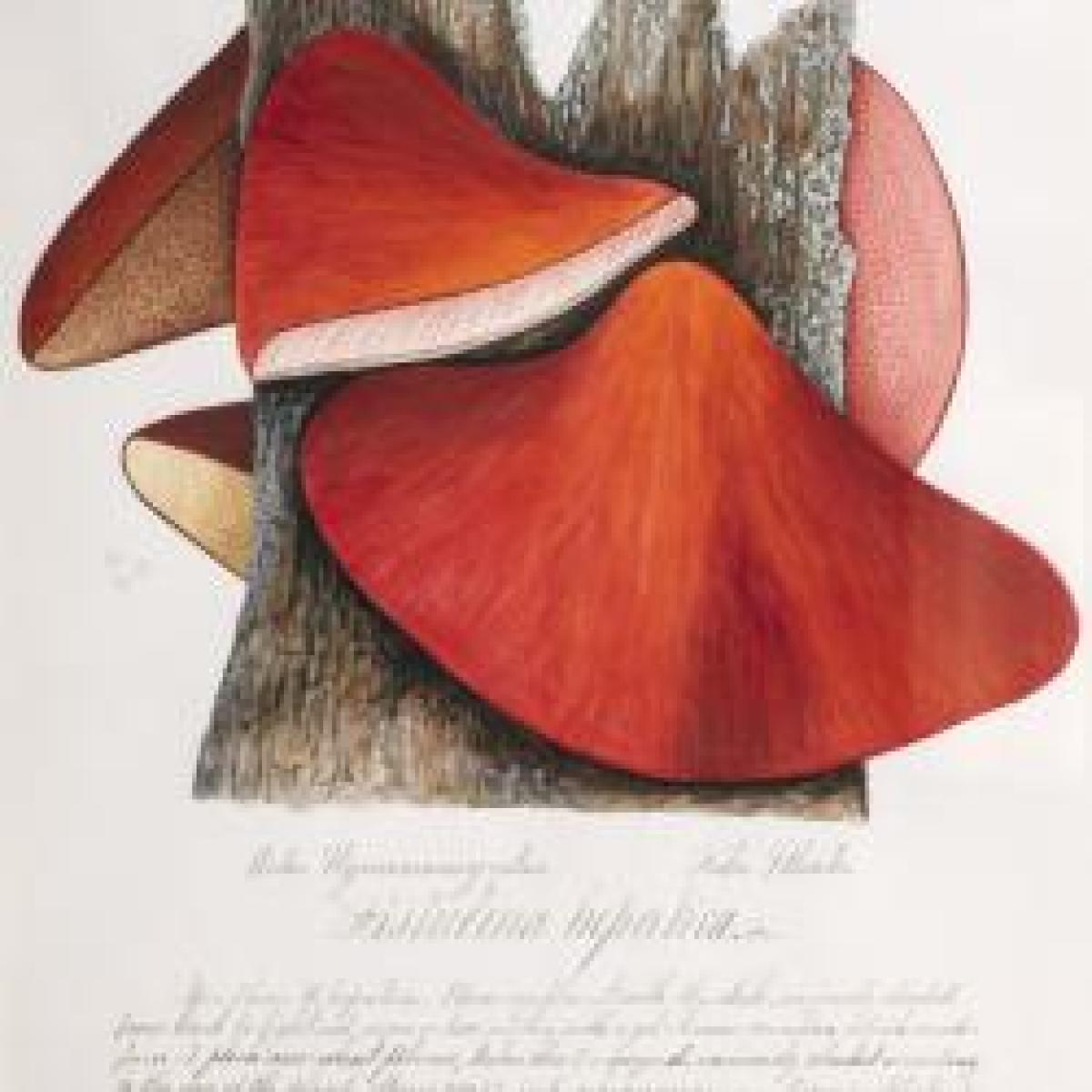
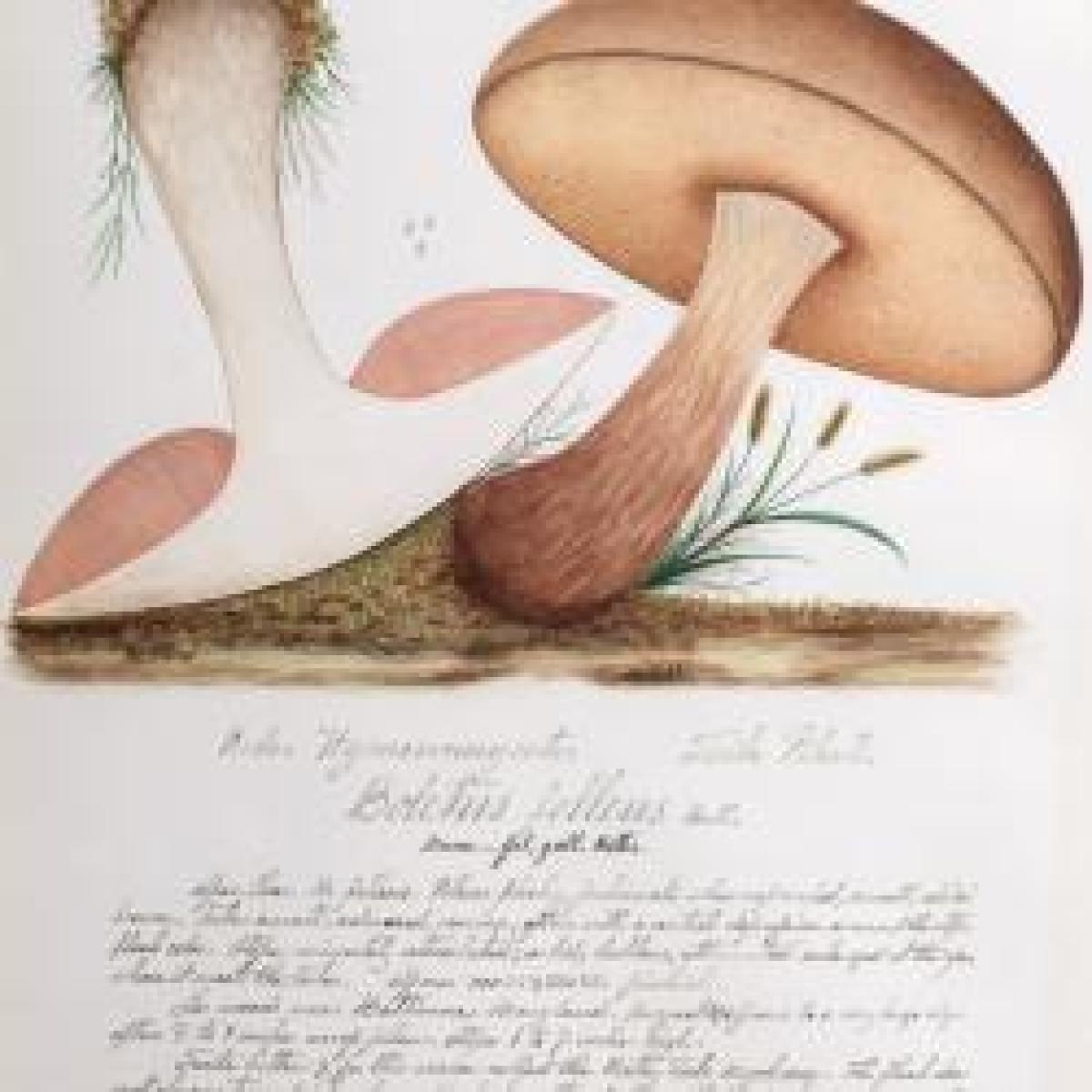
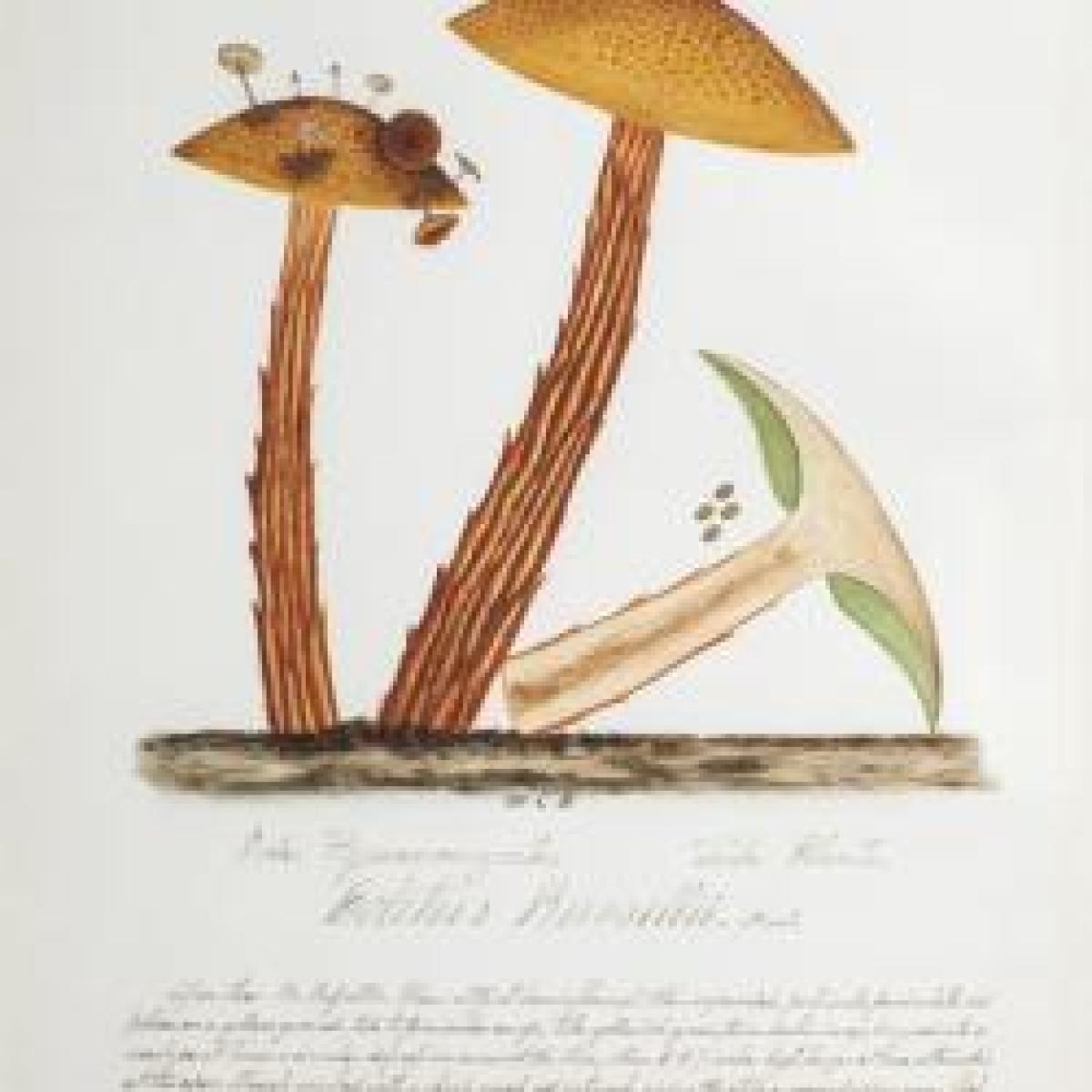
Banning was a diligent and talented mycologist who studied mushrooms growing in Maryland in the mid-1800s. She corresponded frequently with the renowned mycologist, Charles H. Peck, who founded the fungal collection at the New York State Museum. Over her life, she described 23 species that were new to science and produced fantastic illustrations, notes, and narratives about her fungal encounters.
In 1889, Banning completed the unpublished manuscript, "The Fungi of Maryland," containing 175 exquisite watercolors and descriptions of species of mushrooms. Unfortunately, despite her pioneering work, Banning was near poverty towards the end of her life and died in obscurity. Her manuscript, which she entrusted to Charles Peck, also remained hidden for almost 100 years until it was rediscovered in the 1980s. Today, it is one of the most prized objects in the New York State Museum's collections.
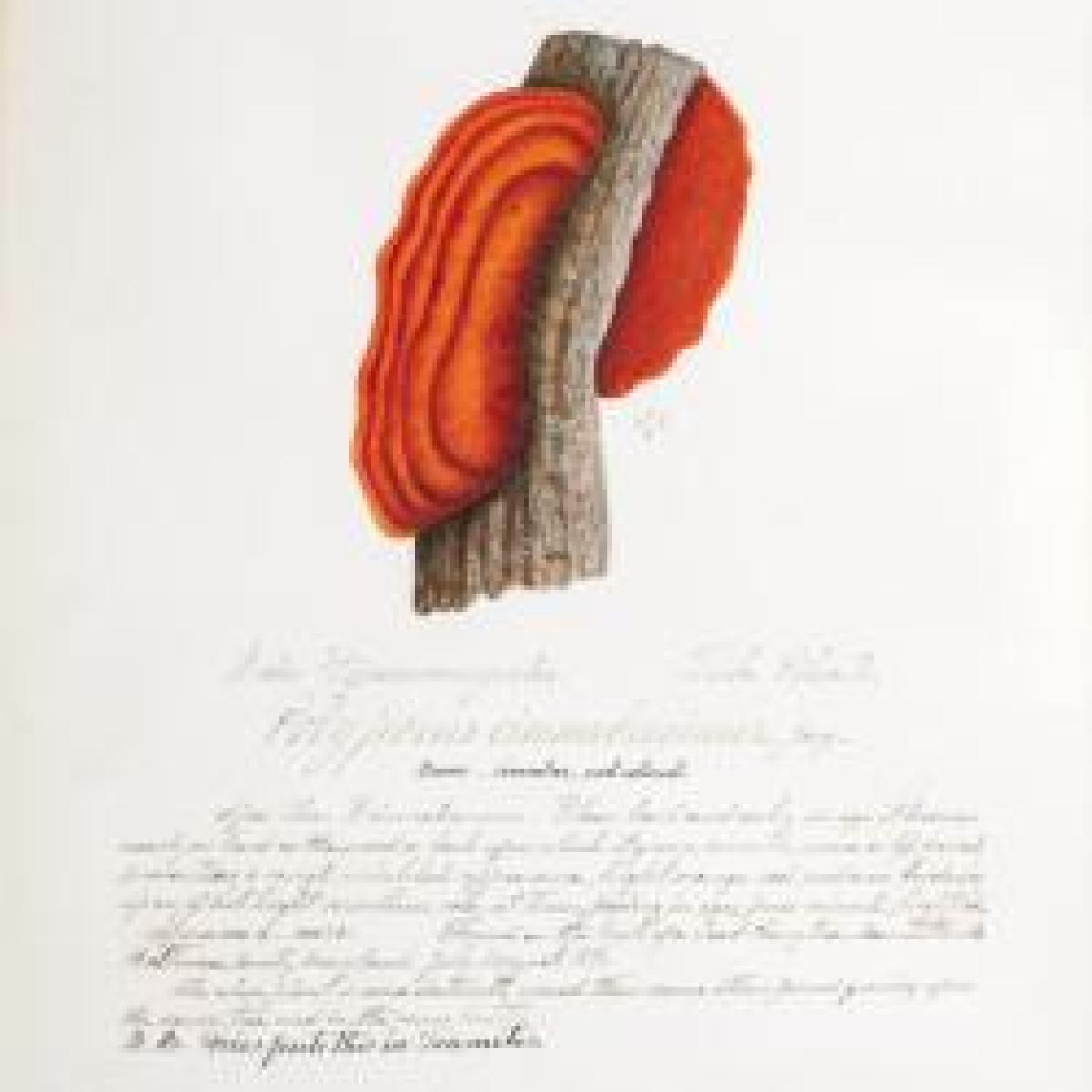
Beyond "Polite Botany": The Legacy of Mary Banning and Women in Early Mycological Research
Professionalization of natural history research greatly expanded in the 18th, 19th, and 20th centuries, a time in which women were systematically kept under-educated and excluded from formal participation. But fungi — commonly regarded by Western European “gentlemen” as inelegant, useless, gross, and deadly — were considered to be suitable study subjects for women. The lower taxa meant lower prestige and were therefore often relegated to the domain of women as the exploration of fungi and other lower taxa (such as lichens, algae, and mosses) was not considered a serious concern to the male institutions of higher learning. Some men, such as John Lindley (1799–1865), the first professor of botany at the University of London, distinguished between “polite botany,” which included fungi, was for the “amusement” of women, and “botanical science,” which was a serious discipline for men.
Historically, mycology was therefore unique among other organismal fields for having a greater number of notable women contributors, as well as women in positions of leadership in mycological societies. Some accomplished women in the field included Catharina Dörrien, Marie-Anne Libert, Élise-Caroline Bommer née Destrée, Mariette Rousseau née Hannon, Mary Elizabeth Banning, Beatrix Potter, and Annie Lorrain Smith — all self-taught mycologists who contributed substantially to research in the lead up to the 20th century. Barred from formal institutions of science, women in fungal taxonomy were often seen as “isolated eccentrics,” devoting the precious free time they had outside of domestic obligations to pursuing their true love: the science and natural history of misunderstood and maligned organisms.
The Lewis Henry Morgan Collection of Mid-Nineteenth Century Iroquois Objects
Native American Ethnography
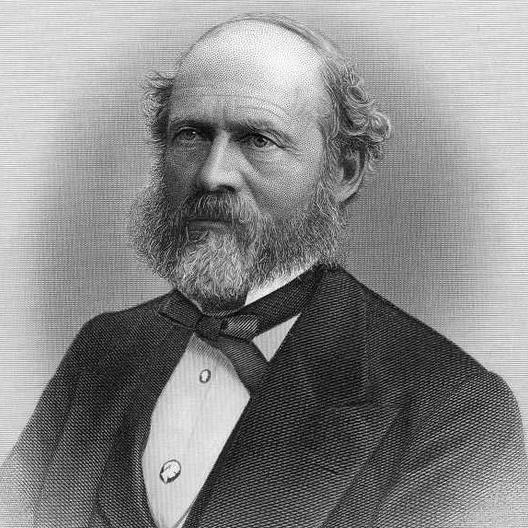
Lewis Henry Morgan
The Lewis Henry Morgan Collection of mid-nineteenth century Iroquois materials was made by Morgan between 1849 and 1850 for the Historical and Antiquarian Collection of the New York State Cabinet of Natural History, which was to become the New York State Museum (NYSM). Morgan, now often described as "The Father of American Anthropology," collected or had made approximately 500 objects, representing all aspects of Iroquois life. In this, he was aided by members of the Seneca Iroquois William Parker family, particularly son Ely S. Parker, who is best known as aide-de-camp to General Ulysses S. Grant during the Civil War. Morgan's 1848, 1849, and 1850 reports, detailing the traditional production and use of these objects, were pathbreaking ethnographic documents. Tragically, a 1911 fire in the State Capitol destroyed much of the collection, making the remaining pieces particularly rare and significant.
In 2000, the NYSM received a matching grant from the Institute of Museum and Library Services to provide conservation treatment for the eleven most fragile objects remaining in the Morgan Collection, to produce custom-made supports for the remainder, and to help acquire new storage cabinets for the collection. All objects were photographed, and the Museum's database was updated with complete descriptive and background information for each piece. Also in 2000, the Museum acquired, through the generous donation of Mr. William Guthman, a set of watercolors painted in 1849 that depict 35 of the objects collected in that year.
History of the Lewis Henry Morgan Collection
Lewis Henry Morgan was born in 1818 near Aurora, Cayuga County, New York, the ninth of 13 children. After graduating from Aurora Academy and Union College in Schenectady, and being admitted to the Bar, he moved to Rochester in 1844 to practice law.
As a young man, Morgan belonged to a fraternal society that came to be called the Grand Order of the Iroquois, leading its members in research on Iroquois history and culture. He interviewed Iroquois elders and visited the Seneca Iroquois Tonawanda reservation, located between Buffalo and Rochester, to witness a council held there. In 1845, the Order offered support to the Senecas in a fight to retain their Tonawanda reservation, an effort in which Morgan was involved. In 1846, Morgan published the fruits of his early research in The American Review as a series of "Letters on the Iroquois." That same year saw his adoption into the Seneca Hawk Clan as Ta-ya-da-o-kuh ("One Lying Across," or "Bridge"). Morgan's early work among the Iroquois, including excerpts from his journals, is detailed in Elisabeth Tooker's Lewis H. Morgan on Iroquois Material Culture (1994).
He married Mary Elizabeth Steele in 1851, started a family, and during the 1860s served in the New York State Assembly and Senate. Until his death in 1881, Morgan made Rochester his home. Throughout his life, Morgan maintained an intense interest in Native American lifeways and social organization. His research and theoretical contributions eventually earned him a prominent position in the emerging new field of anthropology. Between 1851 and 1881, he published a series of influential books and, in 1879, he was elected President of the American Association for the Advancement of Science.
The New York State Cabinet of Natural History was established in 1843 to house the collections gathered from the 1836-1841 geological and natural history survey. In 1847, it was expanded to include a historical and antiquarian collection, for which contributions and suggestions from the public were sought. In a circular, fellow citizens were asked for "their aid, in furnishing the relics of the ancient masters of the soil, and the monuments and remembrances of our colonial and revolutionary history."
One of the people who answered their call was Lewis H. Morgan, a young lawyer from Rochester. In 1848 and 1849, he donated archaeological and ethnographic specimens that he had collected, and maps of five archaeological sites. He strongly encouraged the project, suggesting names of other collectors who might be induced to donate their collections and offering his help in furthering the project.
Morgan proposed to acquire for the Cabinet a collection of the complete range of objects being made and used by members of Indian tribes within New York. The regents accepted his offer, and in 1849 placed $215 at his disposal for this purpose. In 1850, an additional $250 was allotted.
(By the mid-nineteenth century, most Native Americans remaining in upstate New York were members of Iroquois groups. Prehistorically, these tribes had occupied the central part of the state. Five groups -- west to east, the Seneca, Cayuga, Onondaga, Oneida, and Mohawk-- formed the League of the Iroquois probably during the early Contact Period. In the eighteenth century, the Tuscarora were admitted. By Morgan's day, their land holdings in the state had been cut to a scattering of small reserves.)
Morgan's research on the Iroquois and collecting of Iroquois objects for the State Cabinet of Natural History were carried out with the essential aid of members of the Parker family of Tonawanda. The collaboration and long-term friendship began in 1844, with a chance meeting between Morgan and 16-year-old Ely S. Parker at a bookstore in Albany.
William Parker and his family, while prominent in Tonawanda Seneca affairs, were unusual for their day in regard to the extent of their participation in the world outside the reservation. After serving in the War of 1812 in a large company of Iroquois allied with the Americans, William returned home to marry Elizabeth, a niece of the Seneca chief and religious leader, Jemmy Johnson (Sose-há-wä), grandson (in Seneca kinship terminology) of the prophet Handsome Lake.
All six of William and Elizabeth's children who survived to adulthood were educated at Baptist missionary schools, learning English at a time when most Senecas spoke only Iroquois languages. Because of his facility with English, young Ely was pressed into service as a translator, travelling with delegations of chiefs to Albany and to Washington, D. C., during their efforts to retain control of Tonawanda reservation lands. It was during one of these trips that he and Morgan first met. Through Ely, Morgan was able to interview Johnson and other prominent Seneca leaders, and to intensify his study of Iroquois life.
Morgan was instrumental in Ely's enrollment at Aurora Academy, Morgan's own alma mater. Ely went on to study first law and then engineering, overseeing a wide variety of construction projects and later becoming a U.S. Army Captain of engineers. In 1851, this remarkable young man was named Grand Sachem of the Six Nations. Among many notable accomplishments, he served in the Civil War as aide-de-camp to General Ulysses S. Grant. Afterward, under President Grant, he became the first Native American Commissioner of the Bureau of Indian Affairs (1869-1871).
Ely's younger sister and brother, Caroline and Newton, were among the first recipients of scholarships established by the New York State Legislature, at Morgan's behest, to allow Native Americans to attend the state normal school at Albany. Their older brother Nicholson also studied there.
Daguerreotypes (and images derived from them) of William, Elizabeth, and five of their children are included in Elisabeth Tooker's Lewis H. Morgan on Iroquois Material Culture (pp. 64-71). In some of them, Levi, Caroline, and Newton Parker are shown wearing garments and carry objects from Morgan's collections for the New York State Cabinet of Natural History, underscoring their involvement in gathering these materials.
The collection that Morgan and the Parkers brought together for the State contained approximately 500 items, including both utilitarian and ceremonial objects. Some were well-used, purchased from their owners. Others were specially commissioned for the collection.
The range of objects was developed through consultation with the Parkers, and many were produced by family members. For example, Caroline, a notable needlewoman, made many of the elaborately beaded garments and bags. (More information about her can be found at the NYSM Women's History web site; see Further Information.) The house model was William's work. Elizabeth, a basket maker, no doubt contributed significantly to the collection. Most items came from Senecas at Tonawanda, but Morgan also collected at the Six Nations reserve on the Grand River in southastern Ontario, where people from all six of the Iroquois nations (Mohawk, Oneida, Onondaga, Cayuga, Seneca, and Tuscarora) resided.
The Parkers also furnished Seneca names for the objects they made and obtained, as well as information about their production and use.
Items collected included traditional raw materials, foodstuffs, tools, containers, and some ceremonial objects. Garments and ornaments were those being worn at the time, and tools and containers were of types still in use. Included were both ordinary, everyday, utilitarian objects and more highly decorated items serving similar functions. Plain moccasins and quilled moccasins, carved wooden ladles and expediently made ladles of folded bark, decorated and undecorated burden straps all were there. Some items, such as beaded purses and pin cushions, were designed primarily for sale to non-Iroquois customers; fancy beadwork was an important source of income for many Iroquois women and their families.
The collections that Morgan made for the State in 1849 and 1850 were valuable in and of themselves, but their value was enhanced tremendously by the reports about them that he prepared for the Regents. In these, he provided carefully detailed illustrations of each type of object (see Illustrations from Morgan's Reports to the Regents) collected, and extensive information about how each one was made and used. These documents are among the earliest anthropologically-oriented comprehensive descriptions of material culture.
Morgan's 1851 book, League of the Ho-de'-no-sau-nee or Iroquois, which described Iroquois lifeways, material culture, and social organization, included much information gained during his collecting activities for the State. In fact, most of the illustrations from the Regents Reports were included in this larger publication.
Morgan's introductory sentences to Book III of the League speak eloquently to the key role of material culture in understanding a people's way of life, and thus to the importance of collections such as the ones he had made for the State:
"The fabrics of a people unlock their social history. They speak a language which is silent, but yet more eloquent than the written page. As memorials of former times they communicate directly with the beholder, opening the unwritten history of the period they represent, and clothing it with perpetual freshness."
Morgan acknowledged his debt to the Parkers, especially Ely, who served as translator, guide, and colleague over the course of this project. This was spelled out in his dedication to the League publication: "To HAU-SA-NO-AN'-DA (Ely S. Parker) A Seneca Indian, This Work, the materials of which are the fruit of our joint researches, Is Inscribed: in acknowledgment of the obligations, and in testimony of the friendhip of THE AUTHOR."
Over the years, the primary use of objects in the Morgan Collection has been for exhibit. They also have figured prominently in research, appeared in a variety of publications, and contributed to other educational endeavors. Because of their relative antiquity and the large range of activities they embodied, these items became the workhorses of the Museum's collections.
These uses are exemplified in the work of Arthur C. Parker, a great-grandson of William Parker. A. C. Parker served as Curator of Archaeology and Ethnology at the New York State Museum between 1905 and 1925. He came to the job after working as an archaeologist for the American Museum of Natural History and the Peabody Museum of Harvard University, and left it to become Director of the Rochester Municipal Museum (now the Rochester Museum and Science Center). One of his well-known works is a biography of his granduncle Ely.
In his ethnographic research, Parker followed in the footsteps of Morgan, collecting a wide range of Iroquois objects and documenting them extensively. Because he had used or observed many of them as a child and could learn more about them with no need for a Seneca interpreter, his understanding of their place in Iroquois life was comprehensive and detailed. According to Iroquois ethnographer and former NYSM Director William Fenton, in at least some of his work, Parker "out-Morganed Morgan." That is, Parker researched and produced monographs, most notably Iroquois Uses of Maize and Other Food Plants (1910), along the lines of Morgan's reports to the Regents, but far more comprensive. In them, he (like numerous other researchers before and since) utilized objects from the Morgan Collection in a variety of ways. Both photographs and engravings of them appear in his publications, as examples of object types. In addition, Parker took them out into the field, producing posed photographs of Seneca Iroquois people wearing and using items from the NYSM collections including many collected by Morgan.
Parker was understandably proud of the ethnographic and archaeological objects under his care. In 1910, he put a large proportion of them on display in a series of splendid cabinets along the forth floor corridor of the New York State Capitol building. Incorporating over 1000 items gathered by Morgan, by donors such as Harriet Maxwell Converse, and by Parker himself, the ethnographic materials in this exhibit embodied a priceless heritage of well over sixty years of Iroquois material culture.
For a few months, an unparalleled group of objects was available to the public. Then came disaster.
On March 29, 1911, fire broke out in the Capitol. From the Assembly Library, it spread to the State Library near the museum displays. Flame, water, and breakage due to collapse of the sandstone ceiling brought almost total destruction to the collections on exhibit. Of 10,000 archaeological artifacts and ethnographic objects, only about 1500 were recovered, most of which were damaged. A mere 512 retained identifiable catalog numbers.
Approximately 50 of the Morgan Collection items fortunately had been removed to the curator's office for study before the fire. Most of the remaining 450 were damaged or destroyed. Even if not completely consumed by fire, many objects lost their identifying labels.
For many decades after the disaster, curators struggled to determine which of the remaining items had been part of the original Morgan Collection. A few had Morgan's own paper labels still affixed. Others, of unique design, could be identified from their images in Morgan's reports to the Regents, or, in a few instances, from written descriptions.
Even now, uncertainty remains. Of over 100 ethnographic and archaeological items listed in the NYSM collections database in 1999 as collected by Morgan, no more than 57 have unimpeachable pedigrees. Conversely, objects from the Morgan Collection, but unidentified as such, may well still be present within the Museum's larger collections.
Many items in the collection, from a bark canoe to a burden frame to a unique grass shoulder ornament to a skirt described by Morgan as "the finest specimen of Indian beadwork ever exhibited" are now known only from illustrations in his reports. Many more, such as an "eye showerer," a "finger catcher," a bearskin bag, and a large number of special-function baskets, were not illustrated and were described only minimally, so are difficult or impossible to visualize today.
After the fire, remaining objects from the Morgan Collection continued to see heavy use for exhibition, education, and research. Because they were among the oldest and rarest items in the Museum, they were much in demand.
First and foremost, they were called upon to populate exhibits and displays in the "New Museum" located in the magnificent State Education Building on Washington Avenue. The initial exhibits, which opened in 1916, included six life-sized dioramas or "life groups" showing important aspects of traditional Iroquois life, as well as ethnographic objects and archaeological artifacts arranged in display cases. Sadly, in many instances the display conditions were not ideal for preservation of the objects.
Several Morgan Collection objects, including a cradleboard and at least one rattle, were utilized within the dioramas, which for almost 60 years were among the most popular displays at the Museum. For the most part, this provided a benign environment for these items, although it is possible that some of the exhibits may have been treated with toxic pesticides over the years.
Unfortunately, the gleaming new display cabinets for the majority of the ethnographic items, including those from the Morgan Collection, were located under a large skylight. A number of the textile items suffered extreme light damage -- fading and deterioration of fabric -- under these conditions. Later displays, while shielded from sunlight, were mounted under continuous artificial light that also held the potential for damage.
In 1973, when the New York State Museum again moved to new quarters in the Empire State Plaza Cultural Education Center, fewer objects from the Morgan Collection were part of the permanent exhibits. Nevertheless, Caroline Parker's beaded skirt was on display there for almost a decade, until it was removed for conservation treatment in 2000.
Over the past century, items from the Morgan Collection frequently have participated in short-term exhibitions at other institutions. For instance, a beaded and quilled hair ornament (NYSM 36780(link is external)) recently was included in an exhibit on Iroquois beadwork organized by the McCord Museum of Montreal, which is travelling to four other museums in Canada and the United States.
During the 1970s and 1980s, several large groups of Iroquois objects, including a number from the Morgan Collection, were provided on long-term loan to Native American museums that at the time lacked large collections of their own. These include the Akwesasne Museum (Hogansburg, New York), the North American Indian Travelling College (Cornwall Island, Ontario), the Seneca-Iroquois National Museum (Salamanca, New York), and the Woodland Cultural Centre (Brantford, Ontario). Thus, the heritage of ingenuity, craftsmanship, and style represented by these fine objects was made available to a much wider audience than visitors to the State Museum. The oldest items, including most of those collected by Morgan, now have been returned to Albany, to provide better conditions for their care and preservation.
Besides the informational value of the exhibits in which they have been displayed, Morgan Collection objects have participated in a wide variety of other education-oriented projects. A number of them were replicated for inclusion in educational kits about Iroquois life that were loaned to schools for classroom use. Their images are frequently used in slide talks by Museum staff and others, and have been included in countless textbooks and art history volumes over the years.
The collection is particularly valuable now for study and research, allowing people of the twenty-first century to learn how nineteenth-century Iroquois people made and used a wide variety of objects essential to their everyday life.
Year after year, the Morgan Collection continues to attract researchers and appreciators. Academic anthropologists and historians, artists, historical reenactors, contemporary craftspeople (particularly beadworkers), Native Americans, school children, and Regents of the University all have ventured into Museum storage to study, or simply to view, these tangible connections to an earlier way of life and to the people who lived it 150 years ago.
By the end of the twentieth century, it was apparent that a number of the remaining Morgan Collection objects were in need of conservation treatment. Textile items from the collection - subject to light damage, insect damage, and stress from hanging - were particularly fragile. Some of the bark and wood objects also had been damaged over the years.
The NYSM sought and received a matching grant from the Institute of Museum and Library Services to provide conservation treatment for eleven of the most at-risk objects, to construct special supports for all objects in the collection, and to purchase high-quality storage cabinets for the collection. The project also included black and white and color photography of all items in the collection to minimize the need for future handling.
During 2000, consulting conservator Gwen Spicer treated nine garments (or sets of garments), a basket, and a bark quail trap. She painstakingly removed dirt, stabilized loose parts, and provided custom-made padding, supports, and containers. Images of them before and after treatment show how urgent was the need for this work, and the details of what was done to stabilize their condition.
Museum technicians Robin Finch and Jim Walsh created new supports and containers for the remainder of the collection. These allow the objects to be moved from place to place and to be examined closely, without the need to handle them directly.
New high-quality storage cabinets were purchased to house the collection, constructed so as to buffer these important objects from deleterious environmental conditions. Included was a special-order cabinet large enough for garments to be laid flat rather than being folded to fit the much smaller drawers of standard cases.
The New York State Museum's Morgan Collection has two counterparts curated elsewhere.
In 1860, Morgan made a collection of Seneca Iroquois objects for the Royal Museum of Copenhagen (now Danish National Museum). A descriptive list of these items and related correspondence with the museum's representative, W. Raasloff, is included in the Morgan Papers at the University of Rochester Library.
Morgan's own collection of ethnographic objects, including many of Iroquois origin, is now curated at the Rochester Museum and Science Center. It has been described in two articles by Richard Rose, as well as on the Rochester Museum's web site.
Select Items from the Collection

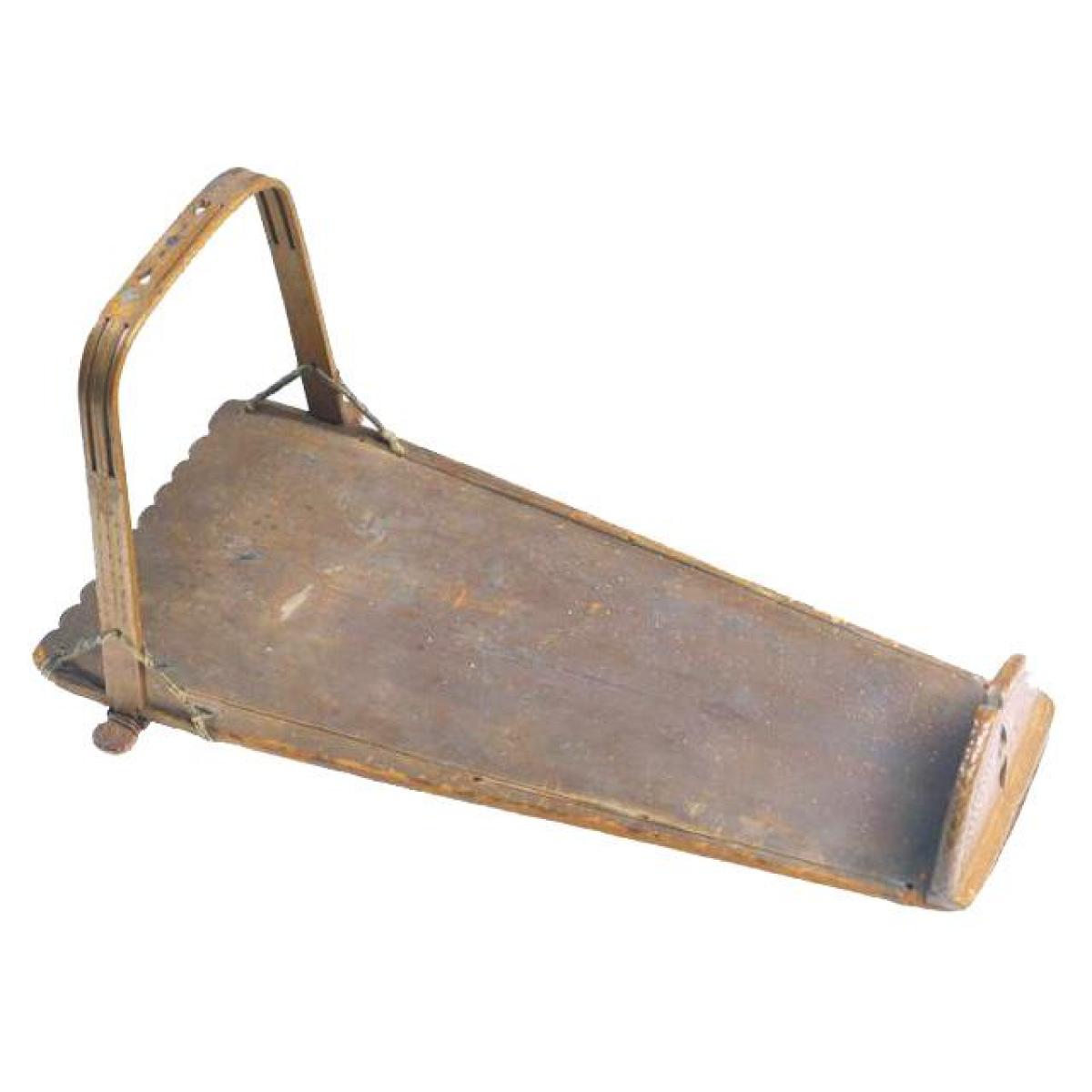
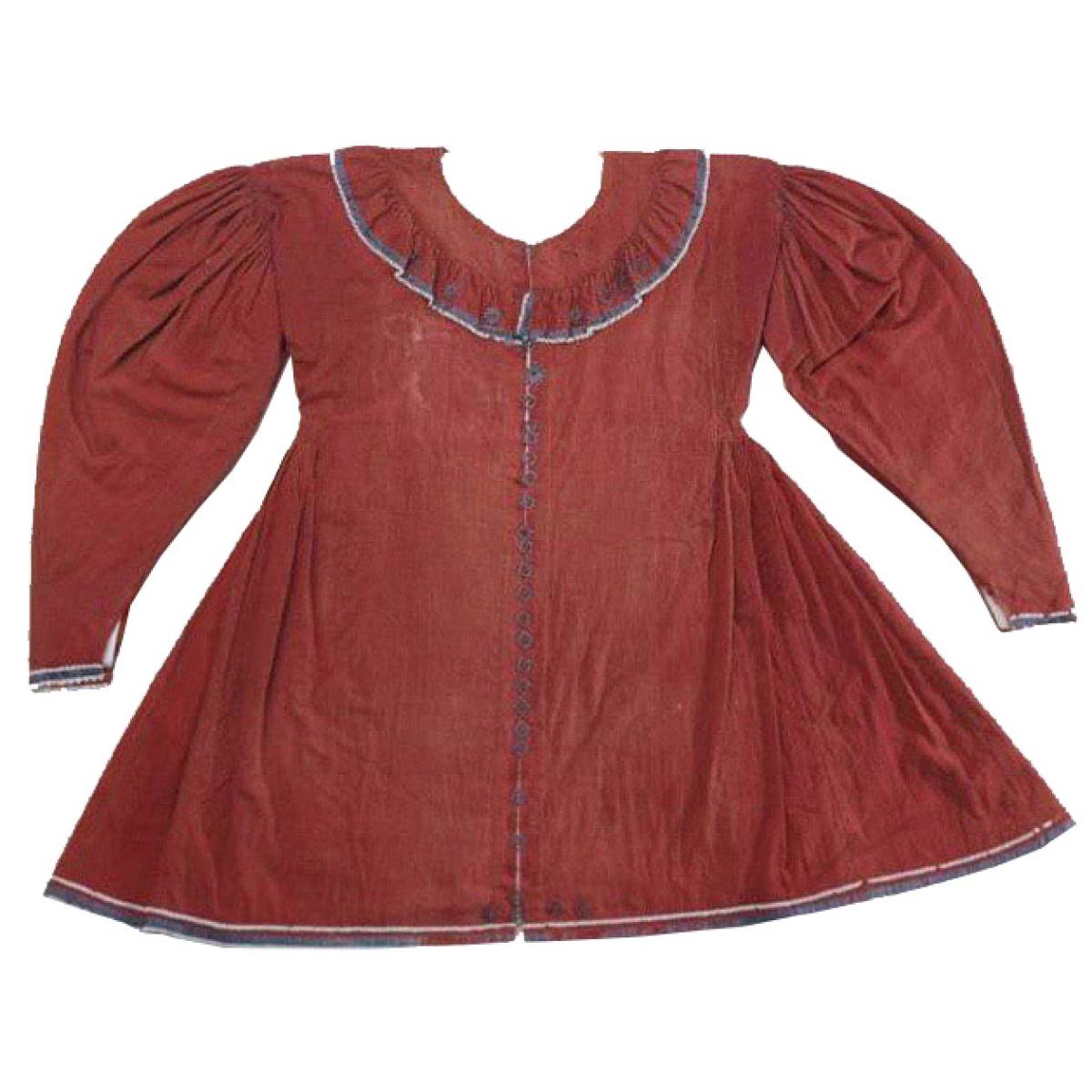
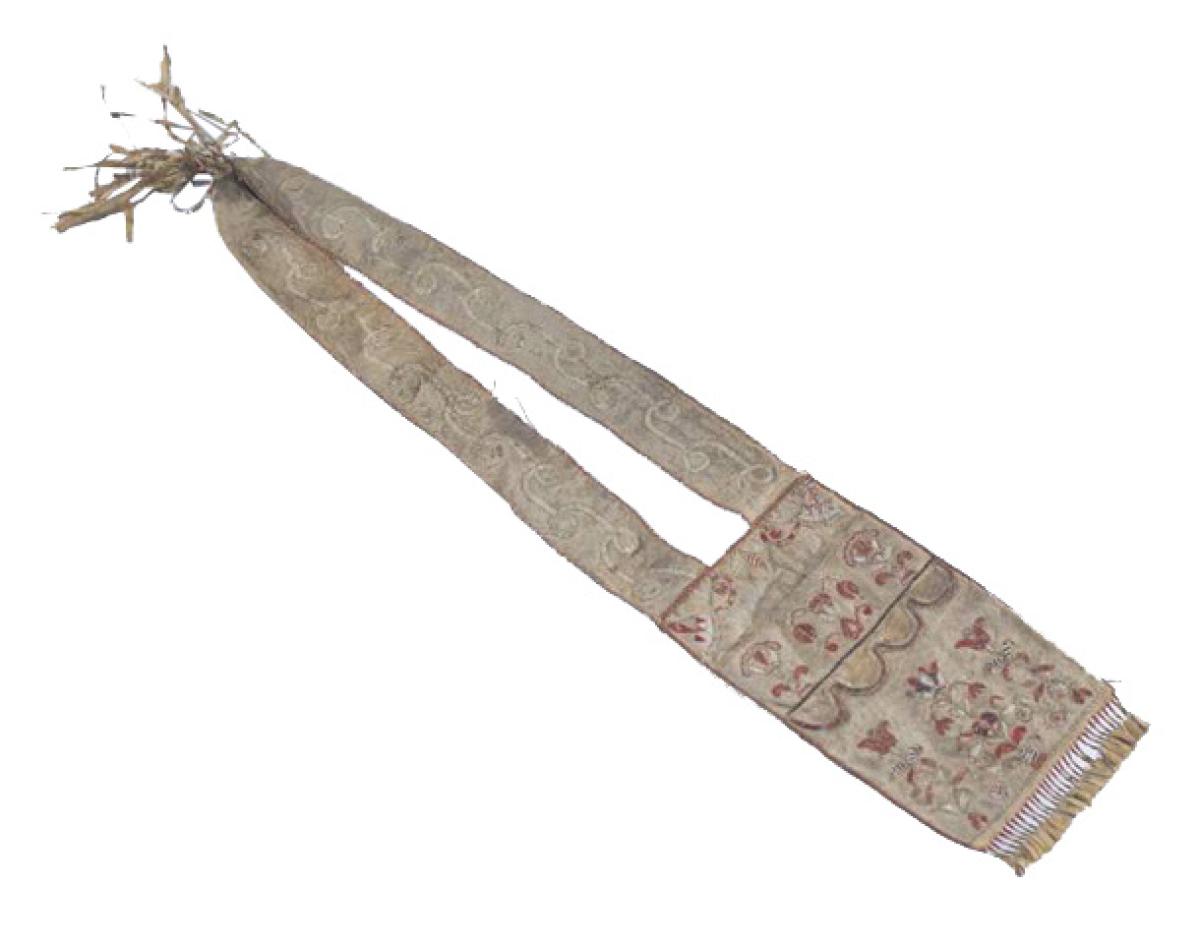
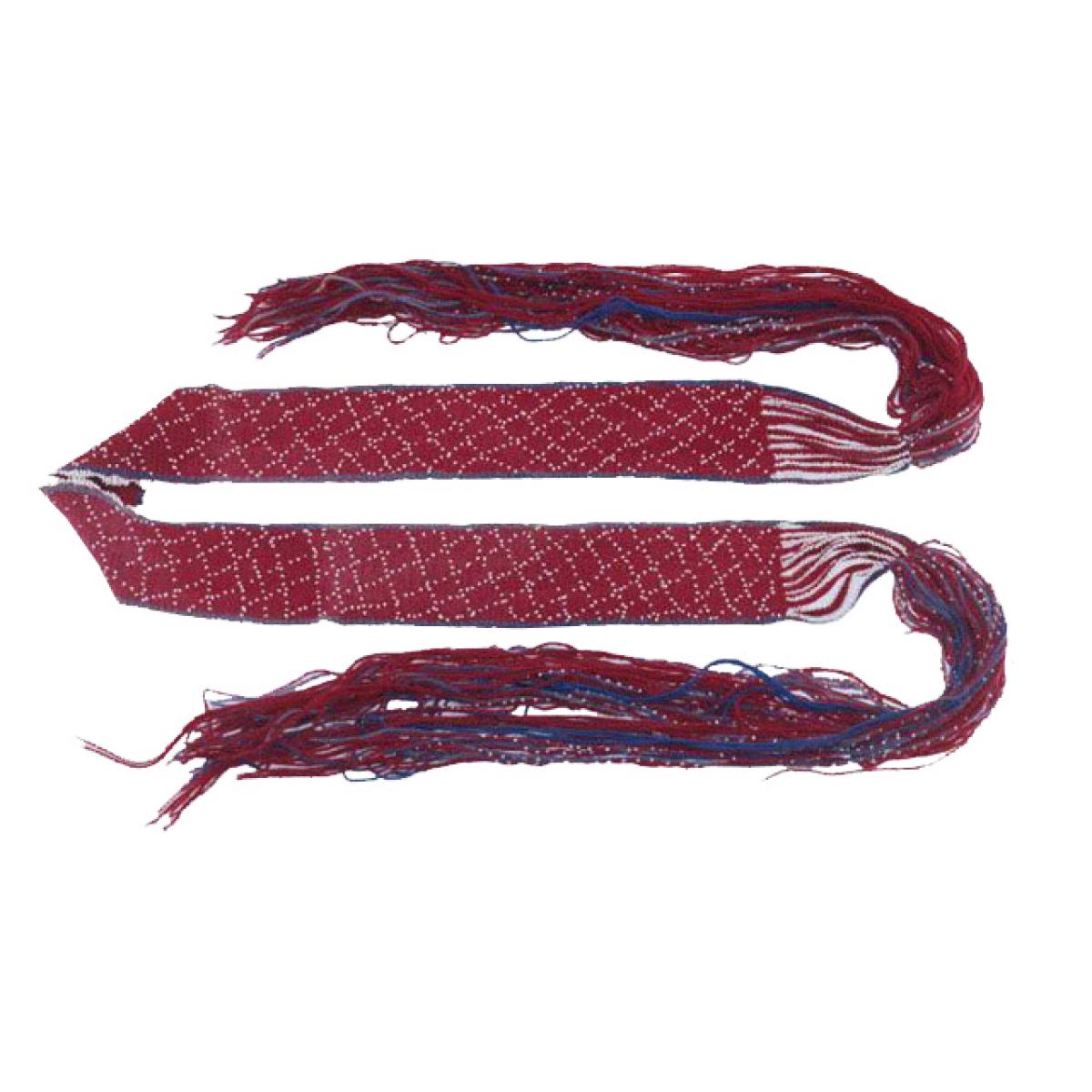
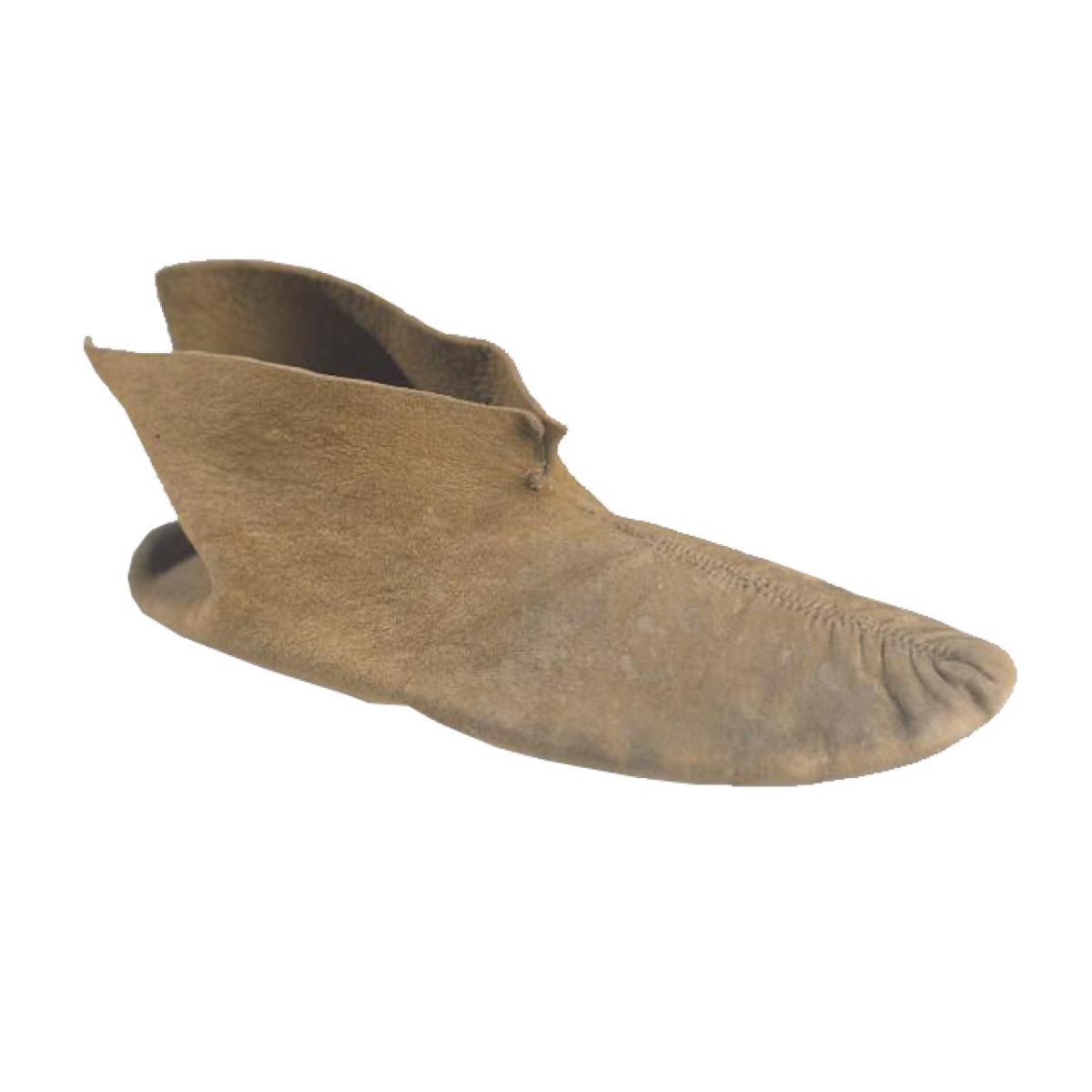
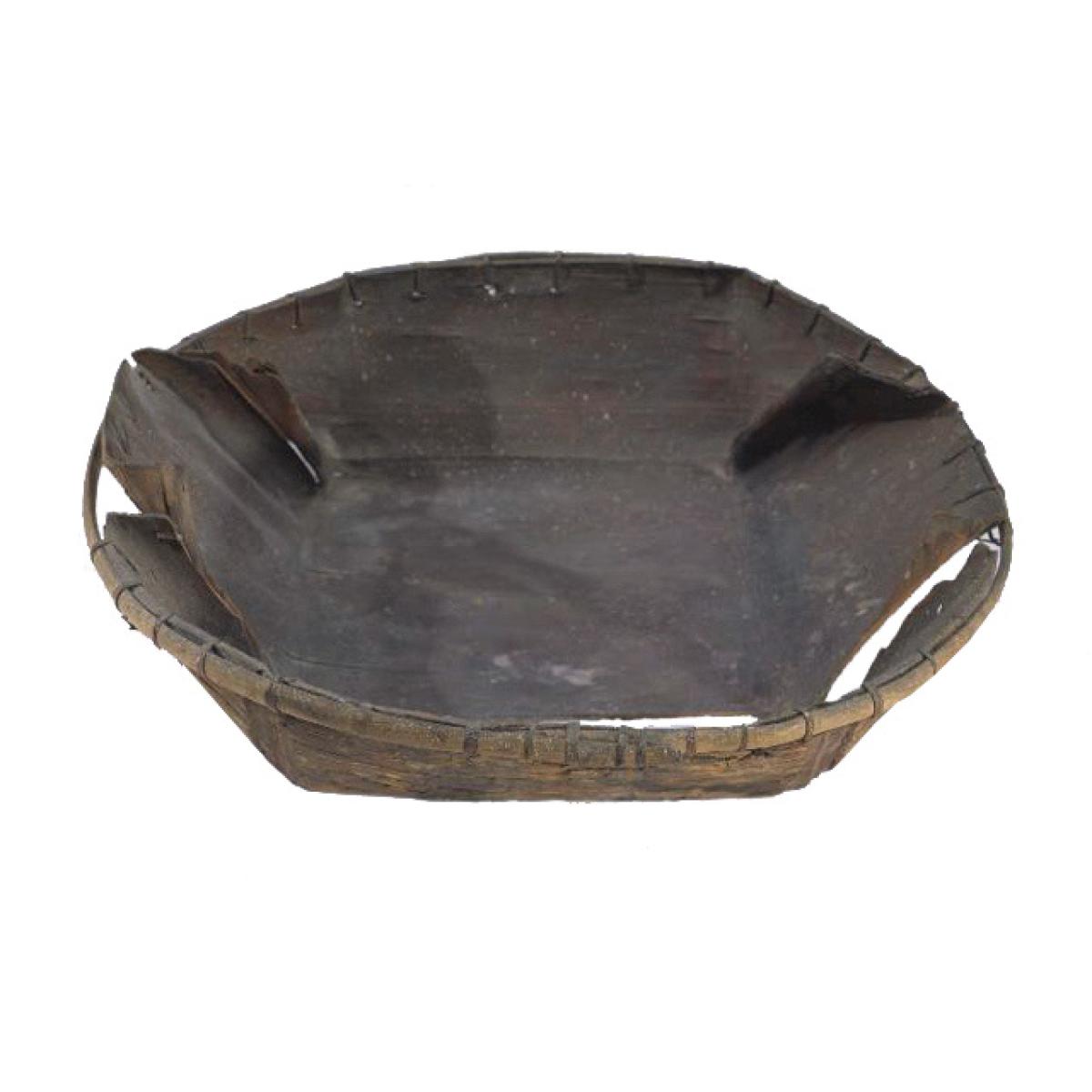
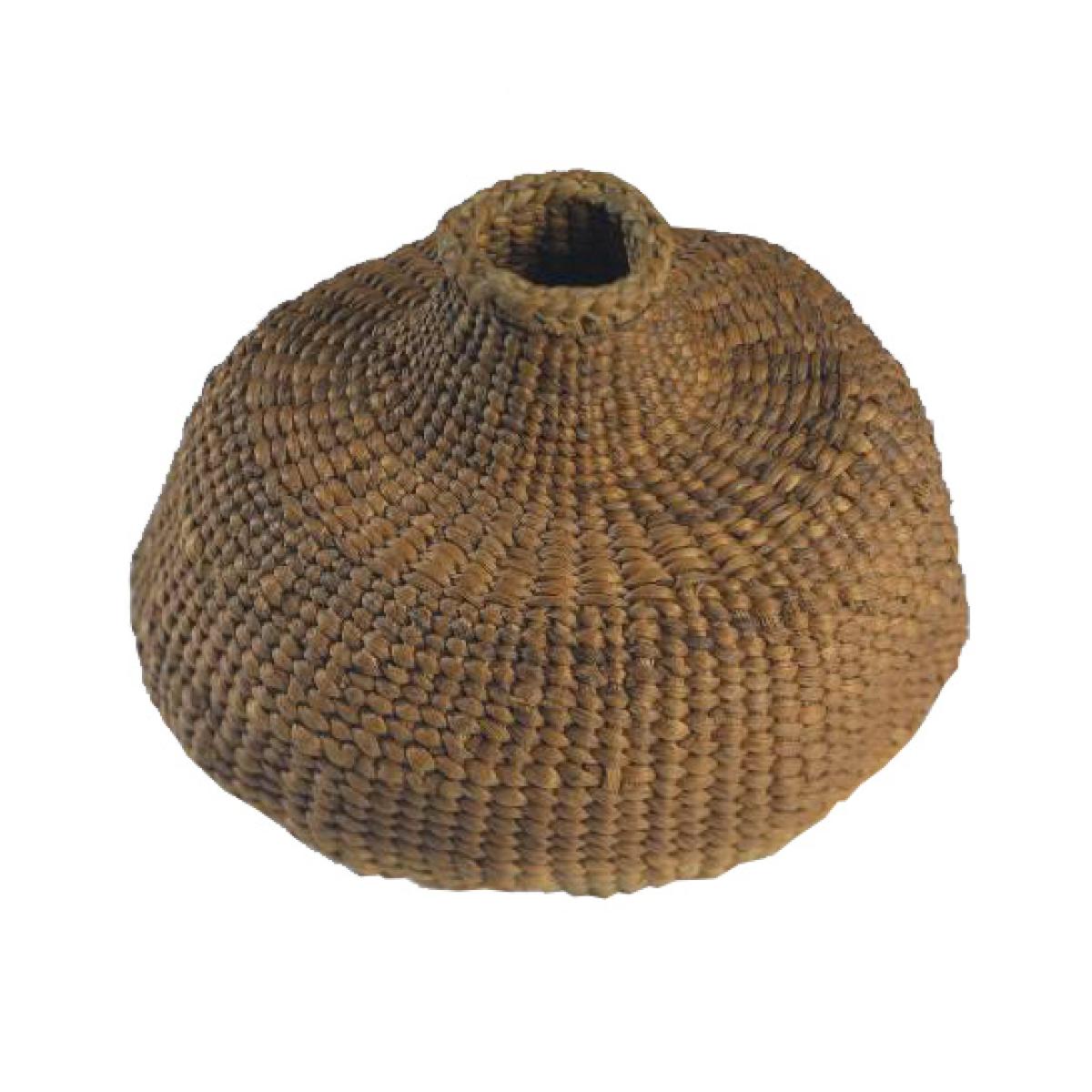
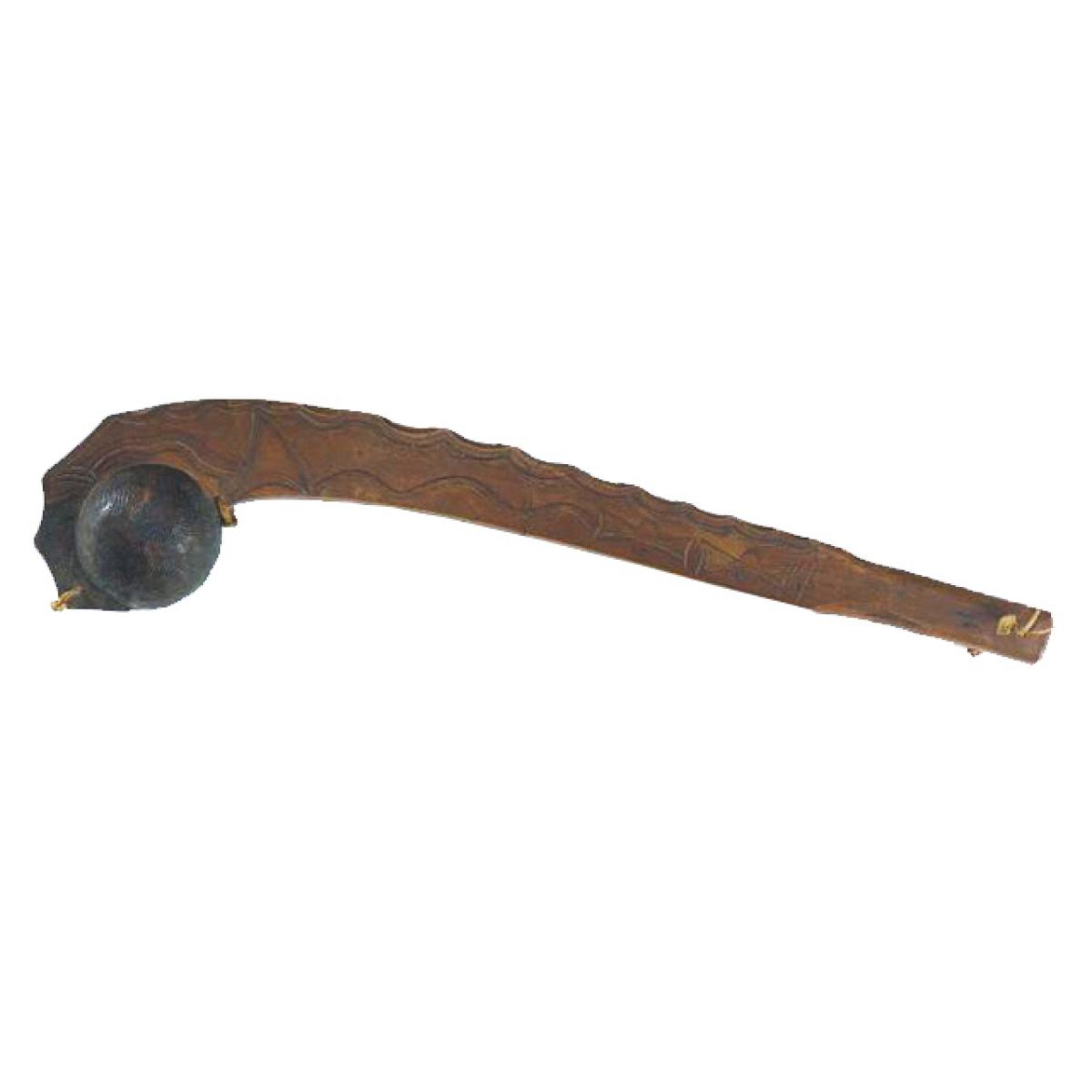
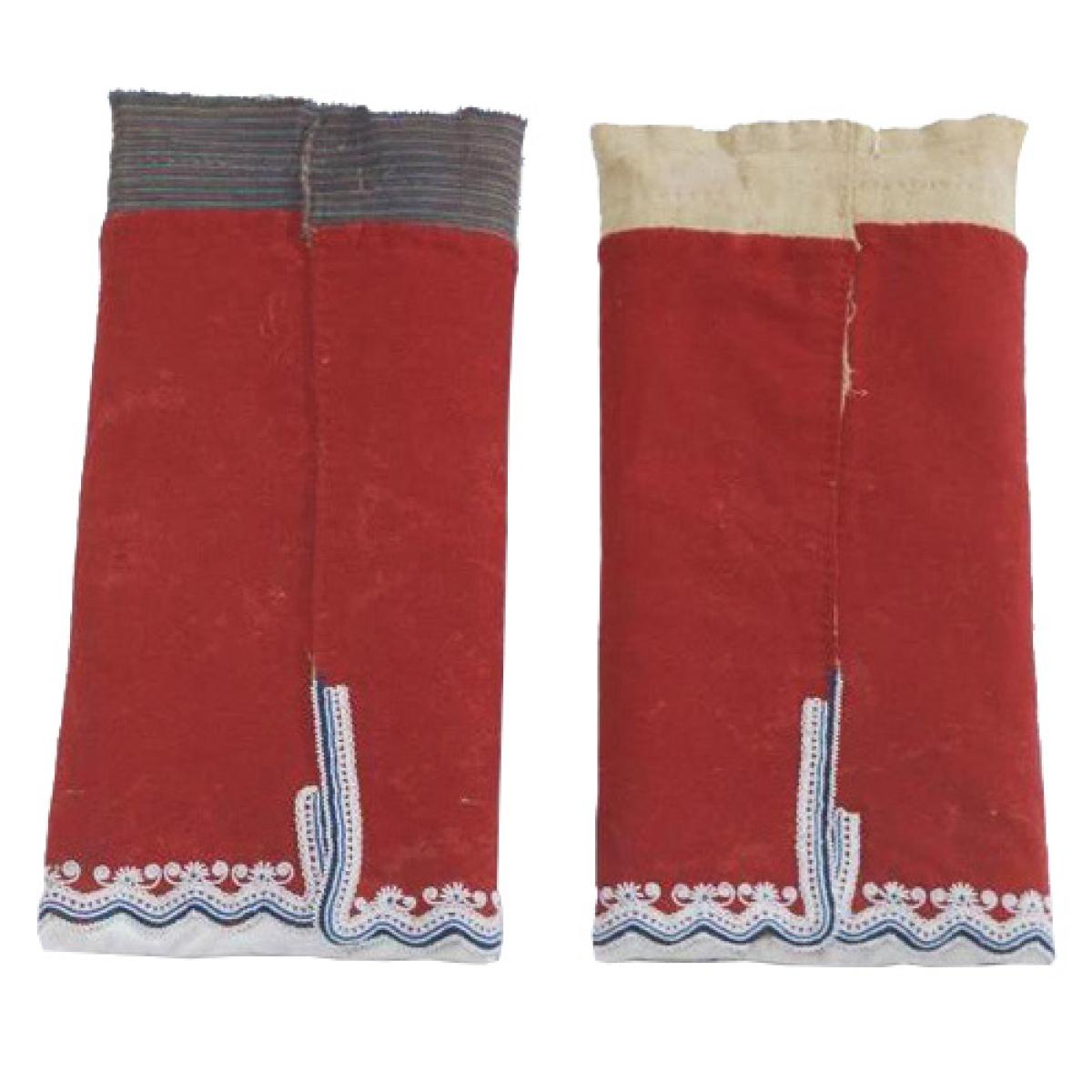
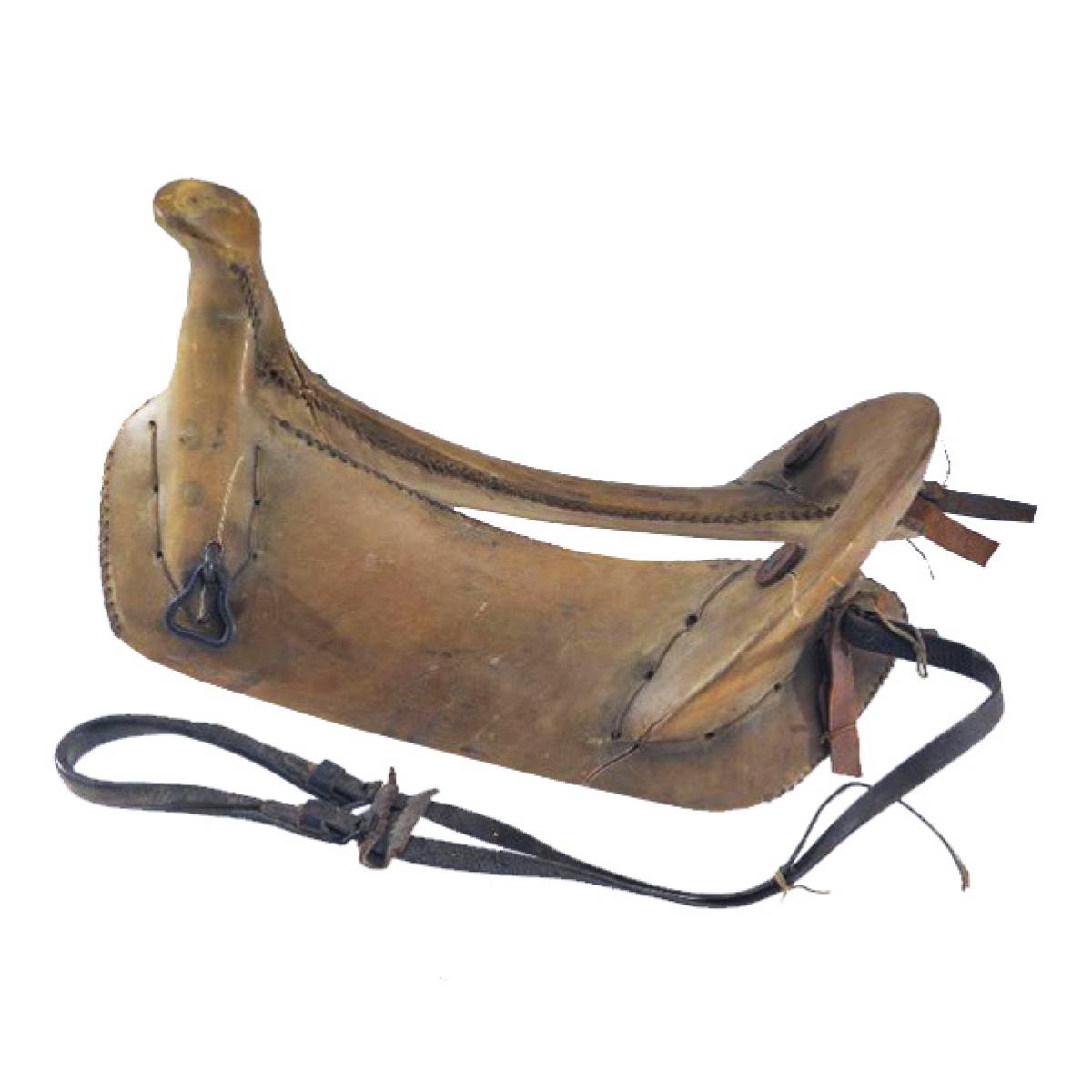
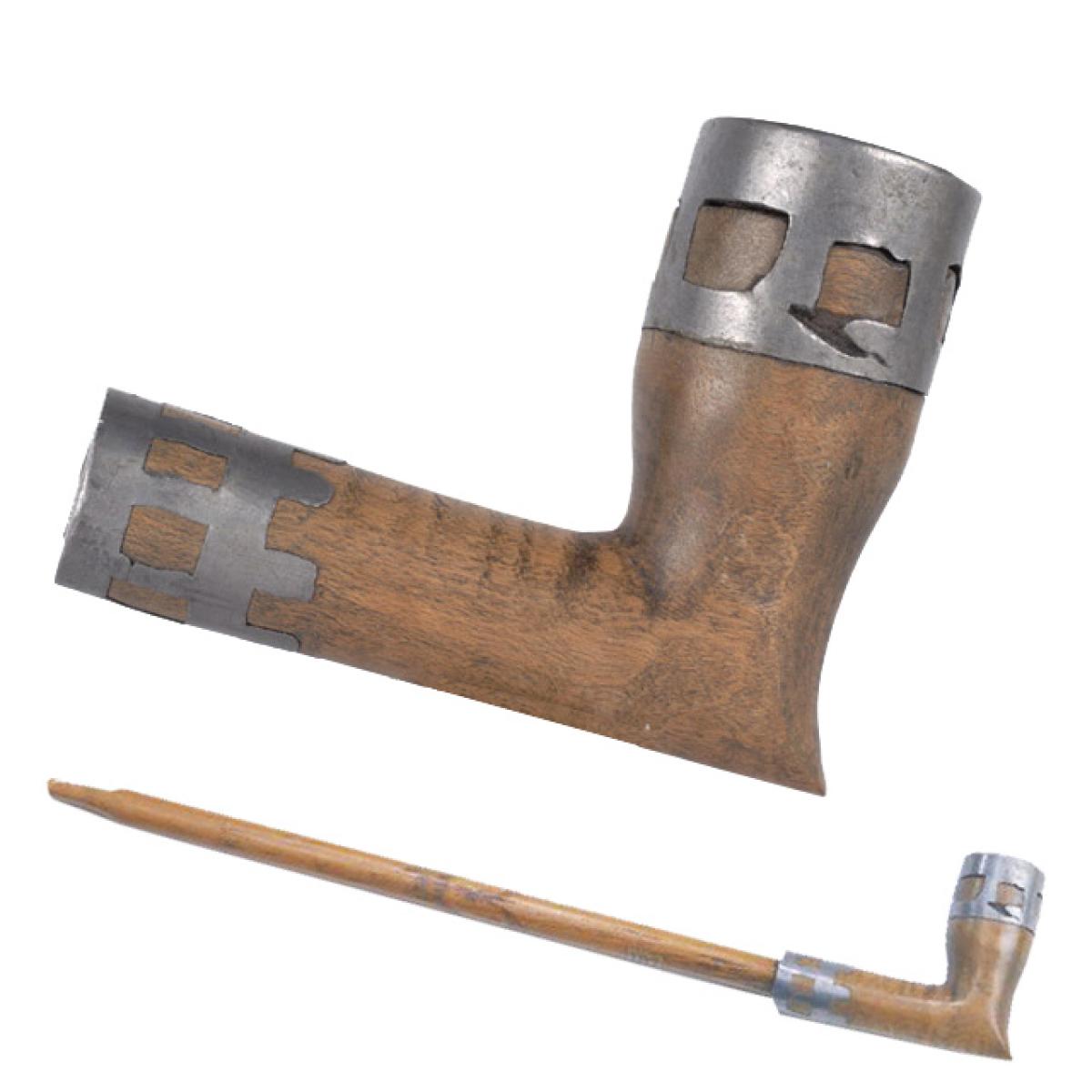
Replica Kanien’keha:ka (Mohawk) Haudenosaunee (Iroquois) Longhouse

Mohawk Haudenosaunee (Iroquois) Longhouse at the New York State Museum
The design of the kanonhsésne (longhouse) reflected the social organization of Haudenosaunee (Iroquois) culture, 300 - 500 years ago. Its architecture and construction are adapted to the raw materials available to the Haudenosaunee in their immediate surroundings, and to the tools and technology in their possession.
Longhouses are exactly that: long houses that have a long, narrow, rectangular shape. They have been built by many different cultures around the world. Long ago, Vikings lived in longhouses; today, some rice-farming people in Borneo live in them. All longhouses have the same general shape but were built with different kinds of materials and by different methods. Longhouses were the traditional homes for many of the farming tribes of American Indians that lived in southern New England, New York, Pennsylvania, and New Jersey. The Haudenosaunee people of upstate New York were among them.
The name Haudenosaunee means "People of the Longhouse." To the Haudenosaunee people, the longhouse meant much more than the building where they lived. The Longhouse was also a symbol for many of the traditions of their society. Five nations formed the original Haudenosaunee (Iroquois) Confederacy. These nations shared a territory they thought of as a large longhouse. The Senecas, who lived in the western end of this territory, were the "Keepers of the Western Door" of the Longhouse. The Mohawks, who lived in the eastern end of the territory, were the "Keepers of the Eastern Door." The Onondagas held the important role of "Keepers of the Central Council Fire and Wampum." To the modern Haudenosaunee people, including the Seneca, Mohawk, and Onondaga who continue to live on their ancestral territories, the Longhouse remains a powerful symbol of the ancient union and is important to many traditions.
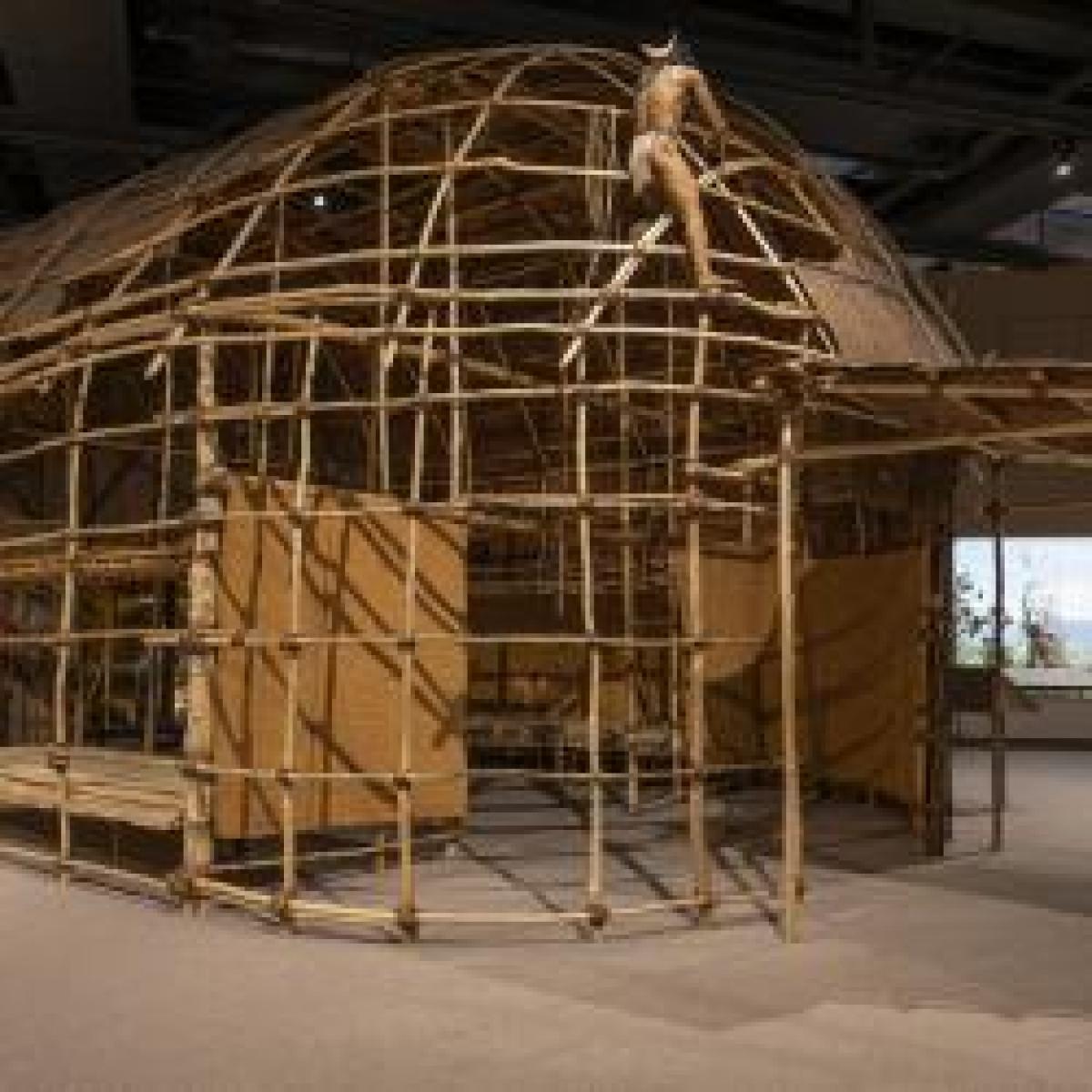
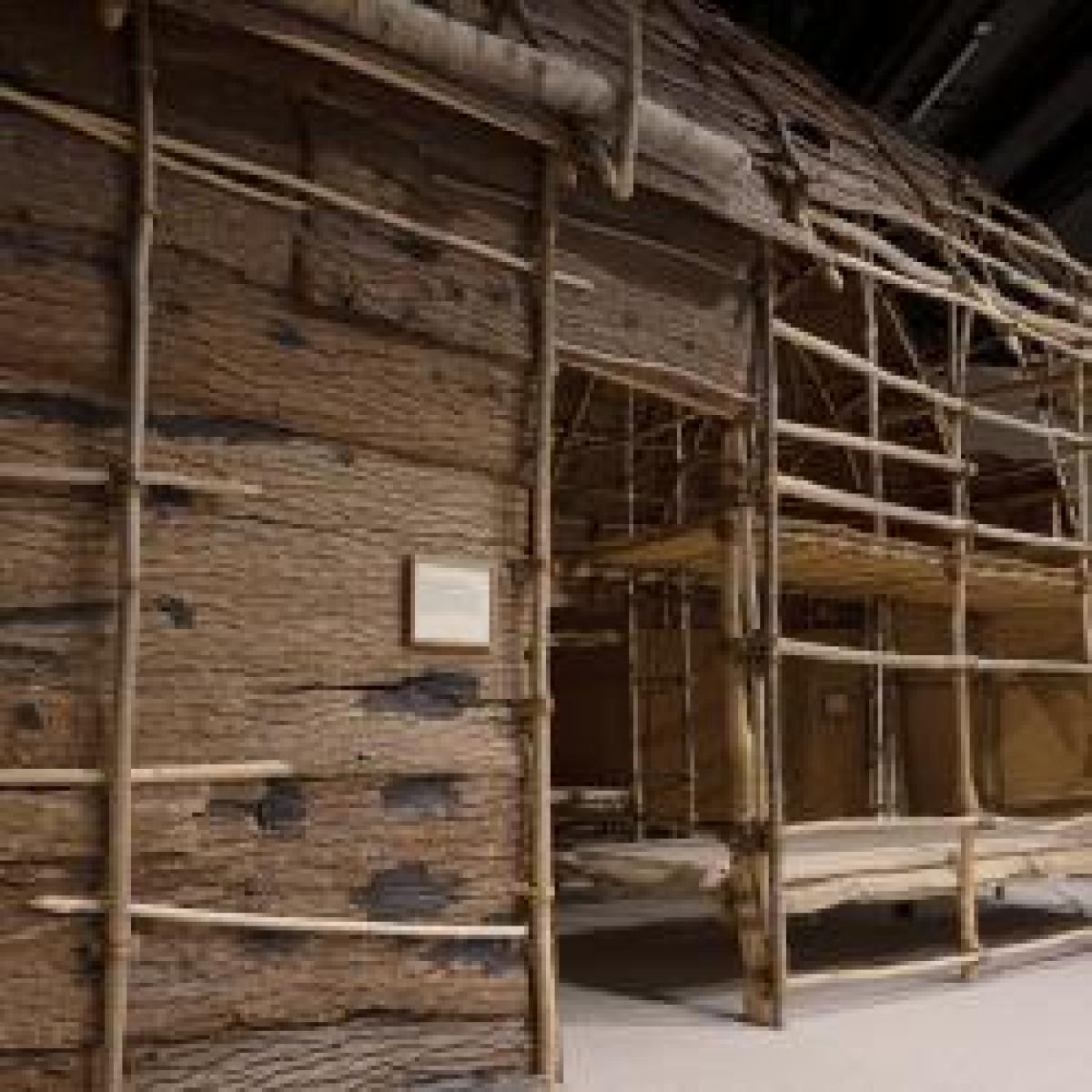
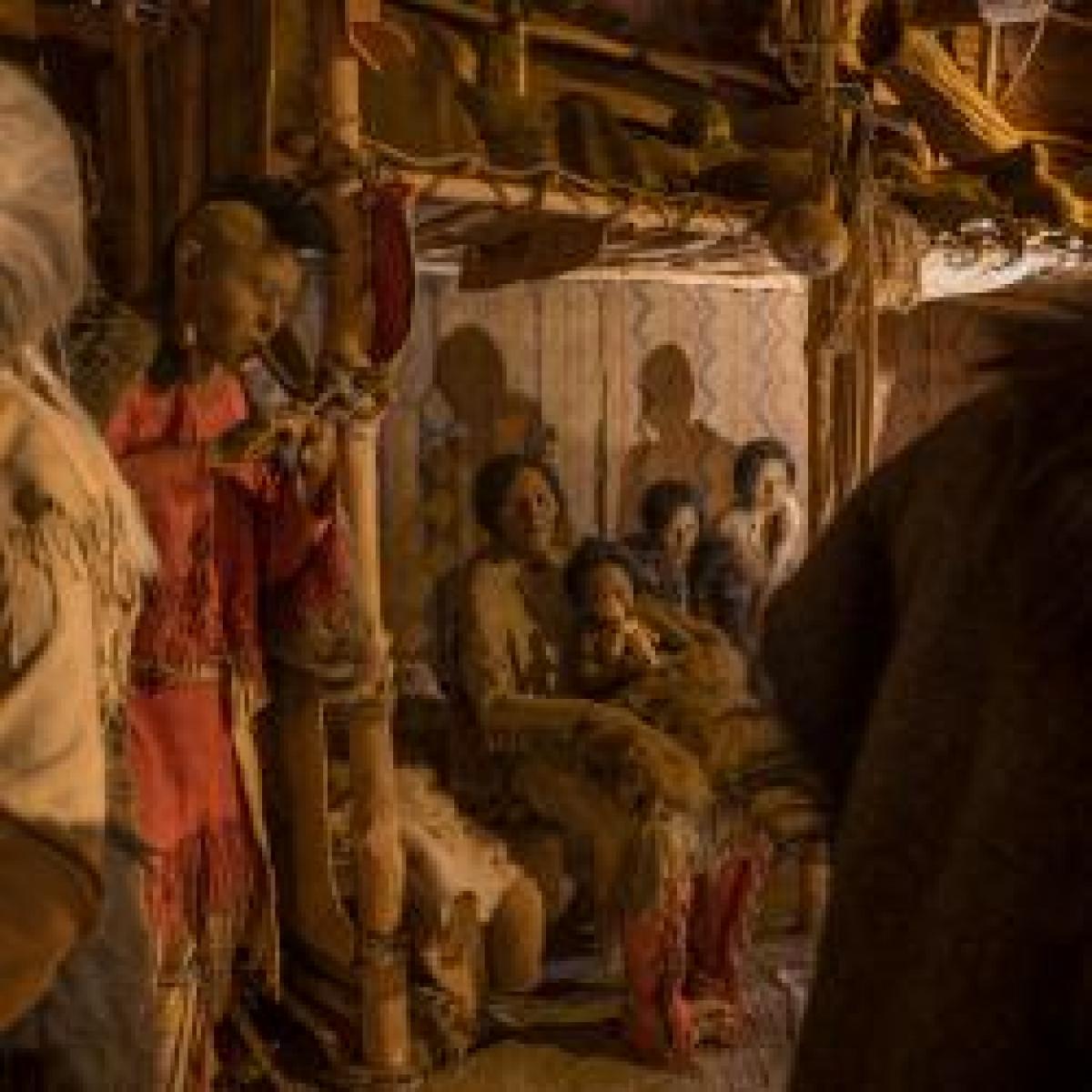
History and Description of Longhouses in Haudenosaunee Culture
Longhouses have another thing in common besides their shape: they were built to serve as a home for a large extended family. An extended family includes a number of family units consisting of parents and children, plus grandparents, aunts, uncles, cousins, etc. In an Haudenosaunee longhouse, there may have been 20 or more families which were all related through the mothers' side, along with the other relatives. All these families belonged to the same clan; each clan in a village had its own longhouse; the clans had branches in other villages. Clans were named for animals and birds; Turtle, Bear, and Hawk are examples. The symbol for the clan was used in decorations of household objects, in tattoos, and on the front of the longhouse.
Members of a clan are all descendants of the same person. In Haudenosaunee clans this person was a woman. All the people in the clan traced their heritage back to her through their female ancestors. Each Iroquois person was born into a clan and remained in that clan for life. Being related, people within a clan could not intermarry; one had to marry someone in a different clan. When a young woman married, her husband came to live in her longhouse, where they would make their new home. When a young man married, he moved away from the longhouse where he'd been raised into his bride's longhouse, but he continued to have close ties with his own clan.
The extended family not only shared the same building for their home, but they also worked together to make their living. The clan was the basic social and economic unit in Haudenosaunee society and the leadership in the clans was through the women, because the kinship followed the mother's bloodline. The women managed the affairs of their longhouse, the farming, and food distribution. They also selected the men who would represent their clan in the tribal council.
Our knowledge of longhouse life comes from three kinds of sources: archeology, Haudenosaunee oral traditions, and descriptions written by early European explorers.
Archeological record:
Our knowledge of longhouses is derived largely from archeological excavations on Iroquoian village sites dating from the 1400s through the 1600s. Excavations on longhouse sites in New York State and adjacent areas of Quebec and Ontario Provinces, and in Pennsylvania, have provided a wealth of information about longhouse lengths, widths, interior spatial organization, and the uses of these spaces.
Haudenosaunee oral language:
Other details about longhouses - from the floor up - are found in the Iroquoian languages themselves. Word lists collected as early as the 1600s preserve names for longhouse parts and uses. Similarly, oral traditions often describe longhouses and longhouse life of long ago.
Descriptions by Europeans:
Firsthand descriptions of longhouses made by European explorers, missionaries, and travelers provide information that adds to the archeological record and the languages and oral traditions of the Iroquoian peoples. Jacques Cartier described Iroquoian longhouse villages that he visited along the St. Lawrence River in the mid-1530s. His is the first written description of Iroquoian longhouses.
The French explorer, Samuel de Champlain, traveled and lived among the Huron Haudenosaunee of Ontario, Canada, in the early 1600s, and left descriptions of longhouses and longhouse life among these people. Other detailed descriptions of Huron Haudenosaunee longhouses were recorded by missionaries, such as Gabriel Sagard-Theodat in the 1620s, and many Jesuit missionaries who also worked among the Hurons and their Iroquoian neighbors in New France in the 1630s and 1640s, and later among the Iroquois of New Netherland/New York though the end of the 1600s.
Descriptions made by these explorers and missionaries record early changes to longhouse and longhouse village architecture introduced by the use of European metal tools, particularly, trade axes, and by Europeans themselves who at times remodeled longhouses for their own and special uses. The most detailed description available to us is that of another Jesuit missionary, Reverend Father Joseph-Francois Lafitau. It dates to the 1720s and was written at the Mohawk Haudenosaunee mission community of Kahnawake, near Montreal.
Later, travelers among the New York Haudenosaunee, like John Bartram and Conrad Weiser, described some of the last of the long-longhouses, built of post, poles, and saplings, and covered in bark. By this date (1740s) many Iroquois were living together in smaller extended families, requiring smaller, or at least shorter longhouse quarters. These were built on the traditional pattern and of traditional materials, while the homes of some neighbors were log cabins of hewn or peeled logs and with bark roofs.
A longhouse has a framework built of posts and poles and is covered with sheets of bark. The following description is based on many different sources of information.
Archeologists explore sites of old Haudenosaunee villages by digging carefully in the upper layers of the soil. At some of these sites, they found traces of many longhouses in the form of circular stains in the earth where wooden posts had once been set as a frame for a longhouse. When the posts rotted away long ago, they left these stains in the soil which are called post molds. The pattern of these post molds makes the outline of the missing longhouse.
Haudenosaunee longhouses ranged in length from 30 to several hundred feet. Archeologists have found the post hole patterns of two longhouses that were 364 feet and 400 feet long: longer than a football field, and even longer than a city block! However, a typical Iroquois longhouse was 180 to 220 feet long. The length of a longhouse was determined by the size of the extended family that would live in it. The larger the family, the longer the longhouse needed to be. As the size of the extended family grew, because of more marriages, the building was enlarged to make room for the expanding population.
Longhouses were almost always about 20 feet wide and 20 feet high despite differences in their length. Seen from one end, the roof line of a typical Haudenosaunee longhouse was rounded rather than peaked. There were two doors for the entire building, one at each end. There were no other doors in the building. We know of one exception to this rule of two doors; one longhouse had an extra door in the middle. Longhouses were symmetrical about a centerline along their length. Inside, the right and left sides were identical. The ends were usually rounded and were used as storage areas, shared by the families living in the longhouse. Some longhouses had flat ends. A flat-roofed shed or porch was built over the doorways at both ends of the longhouse.
The length and interior space of the longhouse was divided up into compartments or apartments, which were 20 feet long. Two families lived in each compartment, one on each side of an aisle that ran down the center. The aisle extended from one compartment to the next and ran the full length of the longhouse. The aisle was 10 feet wide and was a common space used by both families in the compartment.
A fire was placed in the middle of the aisle in the center of each compartment for heating, cooking, and light. Smoke escaped from a hole left in the roof above it. A sheet of bark could be adjusted to cover the smoke hole in bad weather. When the smoke hole was closed, the high ceiling in the building allowed some of the smoke to rise above the living space. The two families shared the fire and the central aisle.
Each family had its own space on one side of the aisle for sleeping and storage of personal items. In the family space, a platform was built a foot or so above the floor to form a bench where they sat, slept and worked. It extended for most of the compartment's length. The platform bench was closed at the ends by partitions. Storage closets filled the spaces along the wall that were not occupied by the benches. Another platform of the same size was built about five feet above the bench like a bunk bed. This shelf completed a cubicle, which was heated by the fire that was in the aisle. The inside of the wall was lined and insulated with woven mats or furs. The benches were also covered with mats and furs for comfort.
The space under the bench generally was used to store firewood. The shelf above it was used to store clothes and other items. Braids of corn and sacks of other foods were hung in the high ceiling space. Other household goods were hung on the walls and partitions.
The forests where the Haudenosaunee lived provided them with plenty of posts, poles and bark that were the basic components of longhouse structure. Because the trunks of the large trees of a virgin forest are much too large to handle without machinery, the Haudenosaunee harvested their materials from second growth forest. Such forests arise in clearings in the old growth forests where the trees were killed by fire or by girdling their trunks. Here small trees grow close together with tall straight trunks that can be fashioned into framework components by merely cutting them to length. The large trees in the adjacent old growth forest could provide bark in large sheets, to be used for covering the structure.
Framework:
The framework of the longhouse started with rows of posts that were set into holes dug into the ground. The posts were set vertically and formed the frames for the outside walls. There were interior posts as well that formed the center aisle. All posts had to be strong and stiff and set firmly in the ground because they were the foundation of the building. Horizontal poles lashed to the posts, both across and along the length of the longhouse, greatly strengthened the structure. The roof was supported by poles that were attached at the tops of the posts and were bent into an arch that reached from one wall across the building to the opposite wall. These roof supports are called rafters. They had to be strong and flexible. Other poles were fastened across the rafters along the length of the longhouse, to make the roof stable. When it was finished, the framework made a grid pattern. This framework was the skeleton of the building to which sheets of bark were attached to complete the roof and walls. The parts of the frame had to be close enough together to support the sheets of bark, which were peeled from large trees. The posts and poles came from small trees (saplings) that were tall and straight. These trees were cut to the proper length and the bark was removed from the posts and poles to reduce insect damage and decay. This bark was peeled off in narrow strips, and was saved for future use.
Different types of trees were used in various parts of the building. For example, a strong, stiff tree would be used for the outer posts. A strong but flexible tree would be used in the curved rafters. The Haudenosaunee probably bent their rafters from freshly cut trees, because green wood is much more flexible than dry.
Fasteners:
Holding the parts of a building together is an essential part of the construction. Modern wooden houses are held together with steel nails, but the Haudenosaunee had no nails. Instead, they tied or lashed their buildings together with long strips of bark, or with ropes made by braiding strips of bark. When the bark is fresh and wet, it is flexible and can be wound around poles and posts to tie them together. When it dries, it shrinks a little and becomes stiff, thereby tightening the joint. Useful strips of bark can be pulled off some trees for a brief period in the spring when the sap is flowing freely. Basswood and hickory trees are good. Because the sap did not flow all year, the Haudenosaunee probably harvested the bark when they could, then kept it under water until needed.
Covering:
The framework of the longhouse was covered with sheets of bark. Trees whose bark could be peeled into large sheets were preferred because big sheets made the job easier. The Haudenosaunee used elm bark if it was available. Bark must be harvested in the spring while the leaves are still small because that is when it is easily peeled off the tree. The sheets must be flattened out and held with weights while they dry to keep them from curling up. A sheet of elm bark that has been flattened and dried is quite strong, like a piece of plywood. The bark of an elm tree has deep grooves or furrows in it that run up and down along the trunk. However, the Haudenosaunee usually lashed the bark to the frame of the longhouse with these groves running horizontally. This probably was done because it was easier to keep the bark flat by pressing it against the vertical posts. There is an eyewitness report of the Haudenosaunee using an adz to smooth out these furrows so that they wouldn't catch the rainwater as it ran down the roof and sides of the longhouse. After the bark was hung on the frame it needed to be held down to keep it flat and to keep the wind from lifting it. The Haudenosaunee put another framework of small poles on the outside of the bark for these purposes.
Provided below are excerpts from historical documents describing the longhouses and villages as they appeared in the early 1600s through the middle 1700s. Archaeologist Dean R. Snow selected, and in some cases, translated the documents* and provided commentary as part of the background material for the Haudenosaunee Longhouse Exhibit at the New York State Museum.
*Notes about References:
Although firsthand descriptions of longhouses were published in the later 1500s and in the 1600s shortly after French, Dutch, and English explorers and missionaries returned home, most of these pamphlets and books are now very rare. Some personal and official accounts were not published at all. Fortunately, during the past century, interest in these descriptions led to their re-publication in English translation, with additional notes provided by their translator and editor. As you can see from the list of references above, Dr. Snow relied upon recent editions of these works, since these are more readily available. It does seem strange, however, to be reading a firsthand description dating to the 1600s of a Haudenosaunee longhouse, and then see that it was published in the 1900s.
It is also important to note that these descriptions use the term "Iroquois" when referring to the Haudenosaunee. "Iroquois" is a term coined by French settlers in the 1600s, as they interacted with Native American tribes in the Northeast.
CHAMPLAIN, 1616 (originally in French)
First translation:
"Their cabins [cabannes] are in the shape of tunnels [tonnelles] or arbors, and are covered with the bark of trees. They are from twenty-five to thirty fathoms long, more or less, and six wide, having a passage-way through the middle from ten to twelve feet wide, which extends from one end to the other. On the sides there is a kind of bench, four feet high, where they sleep in summer, in order to avoid the annoyance of the fleas, of which there are great numbers. In winter they sleep on the ground on mats near the fire, so as to be warmer than they would be on the platform. They lay up a stock of dry wood, with which they fill their cabins, to burn in winter. At the extremity of the cabins there is a space, where they preserve their Indian corn, which they put into great casks made of the bark of trees and placed in the middle of their encampment [au milieu de leur logement]. They have pieces of wood suspended, on which they put their clothes, provisions, and other things, for fear of the mice, of which there are great numbers. In one of these cabins there may be twelve fires, and twenty-four families. It smokes excessively, from which it follows that many receive serious injury to the eyes, so that they lose their sight towards the close of life. There is no window nor any opening, except that in the upper part of their cabins for the smoke to escape.
"This is all that I have been able to learn about their mode of life: and I have described to you fully the kind of dwelling of these people, as far as I have been able to learn it, which is the same as that of all the tribes living in these regions. They sometimes change their villages at intervals of ten, twenty, or thirty years, and transfer them to a distance of one, two, or three leagues from the preceding situation, except when compelled by their enemies to dislodge, in which case they retire to a greater distance, as the Antouhonorons, who went some forty to fifty leagues. This is the form of their dwellings, which are separated from each other some three or four paces, for fear of fire, of which they are in great dread." [Champlain 1907:313-314].
Second translation:
"Their lodges [cabannes] are fashioned like bowers [tonnelles] or arbors, covered with tree-bark, twenty-five to thirty fathoms long more or less, and six wide, leaving in the middle a passage from ten to twelve feet wide which runs from one end to the other. On both sides is a sort of platform, four feet in height, on which they sleep in summer to escape the annoyance of fleas of which they have many, and in winter they lie beneath on mats near the fire in order to be warmer than on top of the platform. They gather a supply of dry wood and fill their cabins with it, to burn in winter, and at the end of these cabins is a space where they keep their Indian corn, which they put in great casks, made of tree-bark, in the middle of their lodge [au milieu de leur logement]. Pieces of wood are suspended on which they put their clothes, provisions and other things for fear of mice which are in great numbers. In one such cabin there will be twelve fires, which make twenty-four households, and there is smoke in good earnest, causing many to have great eye troubles, to which they are subject, even towards the end of their lives losing their sight; for there is no window nor opening except in the roof of their cabins by which, the smoke can escape. This is all that can be said and known of their ways; for I have described to you completely, as far as they may be known, these dwellings of these people, which is also that of all the tribes that dwell in these parts of the country. They sometimes change their village site after ten, twenty, or thirty years, and move it one, two or three leagues from the former spot, if they are not forced by their enemies to decamp and move to a greater distance, as did the Onondagas, some forty to fifty leagues. This is the shape of their dwellings, which are separated from one another about three to four yards for fear of fire which they greatly dread" [Champlain 1929:122-125].
- - - Comment by D. R. Snow - - -
The two preceding translations differ in some important ways, I have compared both with the French transcription that accompanies one of them (Champlain 1929), and have found that the translations are accurate (or at least not misleading except at one crucial point. One translates cabanne as "lodge", the other as "cabin." One chooses "bowers" rather than"tunnels" as a translation for "tonnelles." Neither disagreement obscures meaning. However, the translation of "logement" is critical: one source translates it as "lodge" but the other translates it as "encampment," making the passage seem to mean that the Indians kept their casks of corn outside their houses in the middle of the village. Further, both translators err in translating "milieu" as "middle" rather than "midst." Champlain intended the reader to grasp that bark casks were used to store corn within the houses, but not necessarily in their middles.
SAGARD, 1632 (originally in French)
"As soon as I was seen from our town of Quieuindahian, otherwise called Tequeunonkiaye, a place quite well fortified in their fashion, and capable of containing two or three hundred households [mesnages] in the thirty or forty lodges [Cabannes] in it, there arose so great an uproar throughout the town that everybody left the lodges to come and see me, and so I was brought with great enthusiasm right into the lodge of my savage, and since the crowd was very great in it I was forced to get on top of the platform to escape the pressure of the crowd" [Sagard 1968:70].
"But because our hut had been built out of the proper season the covering consisted of very bad tree-bark that cracked and split all over, so that there was little or no shelter to us against the rain, which fell upon us everywhere, and from which we could get no protection either by day or by night, nor from the snow during the winter, sometime, finding ourselves covered with it when we rose in the morning" [Sagard 1968:81].
"Some of these [villages] are not enclosed or shut in, while the others are fortified by strong wooden palisades in three rows, interlaced into one another and reinforced within by large thick pieces of bark to a height of eight or nine feet, and at the bottom there are great trunks of trees placed lengthwise, resting on strong short forks made from tree-trunks. Then above these palisades there are galleries or watch-towers, which they call Ondaqua, and these they stock with stones in war-time to hurl upon the enemy, and water to put out the fire that might be laid against their palisades. The Hurons mount up to them by means of a ladder, very ill-made and difficult to climb, and defend their ramparts with great courage and skill.
"These twenty-five towns and villages may be inhabited by two or three thousand warriors at the most, without reckoning the ordinary people who may number about thirty or forty thousand souls in all. The chief town formerly contained two hundred large lodges, each filled with many households; but of late, on account of lack of wood and because the land began to be exhausted, it has been reduced in size, divided in two, and rebuilt in another more convenient locality. The towns on their frontiers and nearer to their enemies are always the best fortified, in respect both of their enclosing walls, two lances high or thereabouts, and of their gates and entrances, which are closed with bars and through which one is forced to pass turning sideways and not striding straight in, and also in regard to the site. This they know very well how to choose, taking care that it shall be adjoining some good stream, on a spot slightly elevated and surrounded by a natural moat if possible, and that the circuit of the walls shall be rounded and the town compact, yet with a good space left empty between the lodges and the walls so as to be able the better to fight and defend themselves against the enemies' attacks, without omitting to make sorties as opportunity offers. There are certain districts where they move their towns and villages every ten, fifteen, or thirty years, more or less, and they do so only when they find themselves too far away from wood, which they have to carry on their backs tied up and attached to a collar resting and supported on their forehead; but in winter their custom is to make a kind of sledge which they call Arocha, made of long boards of the wood of the white cedar, on which they put their burden, and with rackets [snowshoes] tied to their feet draw their load over the snow without any difficulty. They move their town or village [also] when in course of time the land is so exhausted that their corn can no longer be grown on it in the usual perfection for lack of manure; because they do not understand cultivating the ground nor putting the seed anywhere else than in the usual holes.
"Their lodges, which they call Ganonchia, are constructed, as I have said, like arcades or garden arbours covered with tree-bark, twenty-five to thirty fathoms long, more or less (for they are not all of equal length), and six in breadth, with a passage down the middle ten to twelve feet wide running from end to the other. At the two sides there is a kind of bench four or five feet high, extending from one end of the lodge to the other, on which they sleep in summer to escape the importunity of the fleas; of these they have a great many both because of their dogs, which supply them in good earnest, and because of the water made there by the children; and in winter they sleep below on mats near the fire for greater warmth, and lie close to one another, the children in the warmest and highest place as a rule and the parents next, and there is no space between them or separation either at the foot or at the pillow, no more above than below, and they make no other preparation for sleeping than to lie down in the same place where they were sitting and to muffle up their head in their robe, without other covering or bed.
"The whole space underneath these benches, which they call Garihagueu and Eindichaguet, they fill with dry wood to burn in winter; but as to the great trunks or logs called Aneincuny, which are used for keeping the fire in by being lifted a little at one end, they pile these in front of their lodges or store them in the porches, which they call Aque. Al1 the women help in collecting this store of wood; it is done in the month of March or April, and by means of this arrangement every household is supplied with what is needed in a few days. They use only very good wood, preferring to go far in search of it rather than to take green wood or what makes smoke; for this reason they always keep up a clear fire with a small quantity of fuel; and if they do not find trees that are quite dry they fell those which have dry branches, breaking these into splinters and cutting them to an equal length, like the faggots in Paris. They do not make up faggots of twigs, nor use the trunks of the biggest trees felled; they leave these to rot on the ground because they have no saw for sawing them up, nor the means of breaking them in pieces unless they are dry and rotten. We were not so particular, and were satisfied with what was nearest to our hut, so as not to spend our whole time in this occupation. In one lodge there are many fires, and at each fire are two families, one on one side, the other on the other; some lodges will have as many as eight, ten, or twelve fires, which means twenty-four families, others fewer, according as they are long or short. There is smoke in them in good earnest, which causes many to have very serious trouble with their eyes, as there is neither window nor opening, except the one in the roof of the lodge through which the smoke escapes. At each end there is a porch, and the principal use of these porches is to hold the large vats, or casks of tree-bark in which they store their Indian corn after it has been well dried and shelled. In the midst of the lodge are suspended two big poles which they call Ouaronta; on them they hang their pots, and put their clothing, provisions, and other things, for fear of mice and to keep the things dry. But the fish, of which they lay in a supply for winter after it is smoked, they store in casks of tree-bark which they cal1 Acha, except Leinchataon, which is a fish they do not clean and which they hang with cords in the roof of the lodge, because if it were packed in any cask it would smell too bad and become rotten at once.
"For fear of fire, to which they are very liable, they often put away in casks their most precious possessions and bury them in deep holes dug inside the lodges, then cover them up with the same earth, and this preserves them not only from fire but also from the hands of thieves, because they have no chest or cupboard in their whole establishment except these little casks. It is true that they rarely wrong one another, but still there are sometimes rascals who commit offences when they think they will not be found out. This happens chiefly in the matter of eatables" [Sagard 1968:91-95].
- - - Comment by D. R. Snow - - -
Sagard apparently copied and embellished Champlain's description, which Champlain published after his 1616 voyage. Sagard repeats Champlain's phrases in the original French word for word, inserting additional detail here and there. Where they agree, they should be treated as one source, not two.
Sagard's estimates of 200-300 households (by which he means family units consisting of a couple and their children) in 30-40 longhouses leads to a minimum of 5 and a maximum of 10 households per longhouse. We know that households came in pairs, each pair sharing a hearth and occupying facing longhouse compartments. Consequently the real range of family units per longhouse must be stated in even numbers, Saguaros figures thus lead to a range of 6-10 compartments and families, or 3-5 hearths per house. Later he says that some longhouses might have as many as 8, l0, or 12 hearths, but these are clearly being cited as unusually long examples. Besides, he appears again to have simply elaborated on a statement borrowed from Champlain.
BREBEUF, in Le Jeune in Jesuit Relations, 1634-1635 (originally in French)
"'Now, in order to testify to you my deep grief and my desire to share in the common misfortune, I have two bins of corn' (they held at least one hundred to one hundred and twenty bushels); I give one of them freely to the whole village"' [JR8:95].
"I cannot better express the fashion of the Huron dwellings than to compare them to bowers or garden arbors,-- some of which, in place of branches and vegetation, are covered with cedar bark, some others with large pieces of ash, elm, fir, or spruce bark; and although the cedar bark is best, according to common opinion and usage, there is, nevertheless, this inconvenience, that they are almost as susceptible to fire as matches" [JR8:105].
"There are cabins or arbors of various sizes, some two brasses [fathoms] in length, others of ten, others of twenty, of thirty, of forty; the usual width is about four brasses, their height is about the same. There are no different stories; there is no cellar, no chamber, no garret. It has neither window nor chimney, only a miserable hole in the top of the cabin, left to permit the smoke to escape" [JR8:107].
- - - Comment by D. R. Snow - - -
Brebeuf seems confused about longhouse lengths. He says that the longhouses are about four fathoms (brasses) in width, and archaeological evidence indicates that his fathom must be about 5.25 feet or 1.6m. It seems unlikely that a house having a width of 21 feet (6.4m) could have a length of only half that width. Perhaps Brebeuf intended to write "twelve" (douze) rather than "two" (deux). Whatever the case, his range of 10-40 fathoms is not problematic, for it suggests lengths ranging from l6m to 64m, lengths that correspond well with archaeologically known cases.
UNKNOWN AUTHORS, in Jesuit Relations (originally in French)
Jesuit Relations, l636
"The largest cabin of the village is set aside for the reception of the company. They do not hesitate to inconvenience themselves for each other on these occasions. The matter is esteemed of such importance that, when a village is built, they purposely put up one cabin much larger than the others, sometimes making it as much as twenty-five or thirty brasses [fathoms] in length" [JR10:181].
Jesuit Relations, 1637
"On this same day the sorcerer Tonneraouanont, who was beginning to play his pranks in this village, and had undertaken to cure the sick, came towards evening to have a sweat in our cabin, to get some knowledge of this disease. They crossed four or five poles in a ring, making a sort of little arbor, which they surrounded with the bark of a tree. They crowded within this, twelve or thirteen of them, almost upon one another. In the middle there were five or six large red-hot stones" [JR13:203].
Jesuit Relations, 1638-1639
"In each cabin there are five fireplaces, and two families at each. Their cabins are made of large sheets of bark in the shape of an arbor, long, wide, and high in proportion; some of them are 70 feet long" [JR15:153].
Jesuit Relations, 1639
"Some of us are charged with forty cabins, --in several of which there are four or five fires, that is, eight or ten families.... " [JR16:243]
Jesuit Relations, 1639-1640
"In the cabins of the Savages, which are in length and form like garden arbors, the fires are in the very middle of their breadth, and there are several fires along its length, according to the number of families and the size of the cabin, usually two or three paces apart" [JR17:175-177].
"They have no sooner arrived at the appointed place than the two parties take their places on opposite sides of the cabin and fill it from top to bottom, above and below the Andichons, --which are sheets of bark making a sort of canopy for a bed, or shelter, which corresponds to that below, which rests upon the ground, upon which they sleep at night. It is placed upon poles laid and suspended the whole length of the cabin" [JR17:203-205].
Jesuit Relations, 1640
"In these five missions there are thirty-two hamlets, and straggling villages, which comprise in all about seven hundred cabins, about two thousand fires, and about twelve thousand persons.
"These villages and cabins were much more populous formerly, but the extraordinary diseases and the wars within some years past, seem to have carried off the best portion: there remaining only very few old men, very few persons of skill and management." [JR19:127].
BRESSANI, Jesuit Relations 1652-1653 (originally in Italian)
"The latter [Huron] build enclosed towns, or fortified strongholds, with crossed stakes, traversed with trunks of trees, to protect themselves from attacks of enemies; and make their cabins 10, 15, 20, 30, or 40 cannes in length, of great pieces of bark supported by beams, which serve to hold up their corn, to dry it in winter. But neither of them [Algonquin or Huron] have any other bed than either some branches of trees, used by the former, or some bark or matting, used by the latter, --without tables, benches, or anything of the kind, the earth or some bark serving them for every purpose" [JR38:247].
LAFITAU, 1724 (originally in French)
"These lodges are also in the form of a vault or arbour. They are five or six fathoms wide, high in proportion and long according to the number of fires. Each fire has twenty or twenty-five more feet in length than those with only one [fire], none ever exceeding thirty or forty feet. Each of these lodges rests on four posts for each fire. These posts are the base and support of the entire structure. Poles are planted all around, that is to say all along the two sides and on the two gable ends, to hold the sheets of elm bark which form the walls and are bound to them with strips made of the inner bast or second bark of white wood [basswood (Tilia americana L.)]. The square frame being raised, the Iroquois make the roof framing with long poles bent in an arc which they cover also with bark sheets a fathom long and from one foot to fifteen inches wide. These bark sheets overlap like slates. They are secured outside with new poles like those which form the arch inside and strengthened again by long pieces of split saplings which run the entire length of the lodge from end to end and are fastened at the ends of the roof on the sides, or on the wings, by pieces of wood cut with crooked ends which are spaced at regular intervals for this purpose.
"The bark sheets are prepared a long time before use. The trees are stripped, after girdling, when the sap is running because that is the best time to peel them. After the outer surface which is too rough is taken off, the sheets are piled compactly on top of each other so that they; do not get badly warped and are allowed to dry in this way. The poles and wood necessary for the construction of the building are prepared in the same way. When the time has come to commence work, the youth of the village are invited and, to encourage them, a feast is given. In less than one or two days, all the work is under way and is being accomplished rather by the number of hands working at it than by the workers' diligence.
"After the body of the building is finished, those interested in it then work, at their leisure, to decorate it inside and make in it the necessary compartments suitable for their habitual uses and needs. The open space in the middle is always the fireplace from which the rising smoke escapes through an opening cut in the top of the lodge directly above, which serves also to admit daylight. These buildings, having no windows at all, are lighted only from above in the same way as the famous Temple of the Rotunda built by Agrippa which is still seen intact in Rome. This opening is closed by one or two movable bark sheets drawn together or back, as is judged suitable, at the times of the heavy rains or certain winds which would cause the smoke to back draught into the lodges and make them very uncomfortable. I am speaking here only of the lodges constructed in the Iroquois form, for those built round and like icehouses have not even openings in the top so that they are much darker and the people in them are always at the mercy of the smoke.
"Along the fires on each side a platform [cubicle] extends twelve to thirteen feet long by five or six feet deep and almost as high. These platforms [cubicles], shut in on all sides, except that of the fire, serve them as beds [to sleep on] and benches to sit on. Reed mats and fur pelts cover the bark which forms the floor of the berths. On this bed, scarcely suited to encourage softness or laziness, the Indians, wrapped in the same clothing which they wore during the day, stretch out without other preparation. For the most part they do not know what it is to use a pillow. Some of them, nevertheless, since they have seen the French way, make one of a piece of wood or a rolled up mat. The most delicate use those made of deer or moose skin but, in a short time, they are so greasy, dirty and disgusting to look at, that only people as dirty as the Indians can make themselves comfortable on them.
"The bottom of the platform [cubicle] on which they lie is at most one foot above the earth. They elevate it this much to avoid dampness. They do not make it any higher because they want to avoid the smoke which is unendurable in the houses when one is standing erect, or is raised a little too high.
"The sheets of bark which cover the platforms [cubicles] above and make the ceiling of the bed, take the place of wardrobe and larder. There, visible to all, they put their dishes and all their little household utensils. Between the berths are placed great bark casks in tun shape, five to six feet high, where they put their maize when it is shelled."
"The Iroquois lodges have exits at the two ends. At each end there is a kind of lobby or separate small apartment and an outer vestibule. "In these lobbies as well as in the free space between the platforms [cubicles], the Iroquois make little cabinets on the two sides where they stow the mats for the young people when the family is large or keep their own when they do not need to be near the fire. These cabinets are raised three to four feet high to keep them free of fleas. Underneath, they put their supply of kindling wood.
"Their outer vestibule is closed with sheets of bark in winter and serves as a woodshed for the heavy wood. In summer, however, they open it on all sides to get fresh air. During the hot season, they put their mats on the flat roof of these vestibules which is not raised as high as their lodges. They lie thus in the open air without minding the dew."
"The doors of the lodges are of moveable sheets of bark hung from above, with neither key nor lock. In the past, nothing was closed in Indian houses. When they were gone a long time on a campaign, they contented themselves with fastening their doors with wooden bars to protect them from the village dogs. During all the centuries before our arrival, they lived in great security and without much distrust of each other. The most suspicious took their most precious possessions to their friends' homes or buried them in holes made for the purpose under their beds or in some part of their lodge where no one knew they were hidden. Now some of them have trunks or little boxes. Others strengthen their lodges at the gables with grossly made planks and install in them wooden doors with bolts bought from the Europeans whose proximity has taught them, often at their own expense, that their property was not always safe.
"They double their doors to protect themselves from cold and smoke and make a sort of second door of blankets of skin or wool. In the usual spells of cold weather their lodges are warm enough, but, when the northeast wind blows and one of those rigorous spells of Canadian weather lasting from seven to eight days on end comes, cold enough to split stones, when the cold has penetrated the lodges, I do not know how they can survive there as little covered as they are, especially those who sleep far from the fires. During the summer, they [the lodges] are cool enough, but full of fleas and bedbugs, and stink very badly when they [the Indians] dry their fish in the smoke" [Lafitau 1977:19-22].
- - - Comment by D. R. Snow - - -
Lafitau depends upon earlier sources, but organizes and expands upon the information. It is unfortunate that the word "platform" is used in the translation quoted here, because it makes his description seem garbled. If the word "cubicle" is substituted where I have indicated in brackets, the confusion disappears. The cubicles are clearly elongated boxes walled on five sides, open only towards the fire. Each is 12-13 feet long, leaving space totaling 8 feet at one end or both ends within the compartment for cabinets and casks for storing corn. If main hearths were spaced an average of 21 feet or 6.4m apart, then compartments must have been similarly long. I am consequently distinguishing between cubicles that took up 2/3 of the lengths of the compartments and the compartments themselves. This makes all the documentary sources and archaeological cases I have seen entirely consistent with one another.
The cubicles were 12-13' long and 5-6' deep, with ceilings 5-6' high and bottoms raised 1' above the earthen floor of the compartment. Few of these dimensions make sense if a two-dimensional platform is envisaged. We know from various sources that the Indians kept firewood under the cubicles and household belongings on top of them. The cubicles did not abut one another end to end because they were shorter than the distances between the fires that warmed them. Thus there were open spaces between the cubicle ends and the partition walls separating compartments, and in these were located storage casks and perhaps other items. Highly detailed archaeological research on an undisturbed site is needed to determine where cubicles were located within compartments and what other uses and activities went on in the spaces between cubicles occupying the same side of a longhouse.
Lafitau and his translator distinguish very usefully between the "lobby", which is an extension of the longhouse beyond the end compartment [used] for storage, and the "vestibule," which is a flat-roofed porch extending beyond the lobby. The lobbies were apparently less heavily built than the main compartments, and served as storage areas, particularly in the winter. The vestibules were still more flimsy, and had light walls that could be removed in summer. The progressively less substantial nature of the structures at the ends of the longhouses explains why archaeologists typically have trouble defining them.
BARTRAM, 1743 (copied as originally written)
"We alighted at the council house, where the chiefs were already assembled to receive us, which they did with a grave chearful complaisance, according to their custom. They shew'd us where to lay our baggage and repose ourselves during our stay with them, which was in the two end apartments of this large house. The Indians that came with us were placed over against us. This cabin is about 80 feet long and 17 broad, the common passage 6 feet wide; and the apartments on each side 5 feet, raised a foot above the passage by a long sapling hewed square and fitted with joists that go from it to the back of the house. On these joists they lay large pieces of bark, and on extraordinary occasions spread matts made of rushes; this favour we had. On these floors they set or lye down every one as he will. The apartments are divided from each other by boards or bark, 6 or 7 foot long, from the lower floor to the upper, on which they put their lumber. When they have eaten their homony, as they set in each apartment before the fire, they can put the bowel over head, having not above 5 foot to reach. They set on the floor sometimes at each end, but mostly at one. They have a shed to put their wood into in the winter, or in the summer to get to converse or play, that has a door to the south. All the sides of the roof of the cabin is made of bark, bound fast to poles set in the ground and bent round on the top or set aflat for the roof, as we set our rafters. Over each fire place they leave a hole to let out the smoak, which in rainy weather they cover with a piece of bark, and this they can easily reach with a pole to push it on one side or quite over the hole. After this model are most of their cabins built.
"The fine vale of Onondago runs north and south, a little inclining to the west, and is near a mile wide, where the town is situated and excellent soil. The river that divides this charming vale is 2, 3 or 4 foot deep, very full of trees fallen across or drove on heaps by the torrents. The town in its present state is about 2 or 3 miles long, yet the scattered cabins on both sides the water are not above 40 in number; many of them hold 2 families, but all stand single and rarely above 4 or 5 near one another; so that the whole town is a strange mixture of cabins interspersed with great patches of high grass, bushes and shrubs, some of pease, corn and squashes, limestone bottom composed of fossils and sea shells" [Bartram 1973:58-59; cf. Bartram 1974:40-41].
WEISER, 1743 (originally in German)
"On the 21st we arrived at Cachiadachse, the first Town of the Onondagoes. About noon I heard that the Messenger I had sent from Oswego had missed his Way and did not arrive there. I therefore immediately sent a Messenger from this place to the Chief Town about five miles off to acquaint the Chiefs of that Nation of my coming with a Message from Onas [the Proprietor of Pennsylvania] on behalf of Assaryquoa [the Governor of Virginia]. They dispatched Messengers that Day to Summon the Council of the Six Nations. My Messenger came back & inform'd me that the House of Annwaraogon was appointed for our Lodging; we set out and arriv'd there at three o'Clock in the Afternoon" [Meiser 1973:115].
"Whilst we were drinking & smoking, news came that a Deputation of the Nanticoke Indians arrived at Cachiadachse from Maryland; the House of Canasetego was ordain'd for them, since the Town House was taken up by Onas & Assaryquoa" [Weiser 1973:119].
- - - Comment by D. R. Snow - - -
Weiser's comments clearly identify the house described and illustrated by Bartram as a special "Town House," presumably a structure built and maintained to house visitors. Its deviation from earlier standard longhouse plans is therefore understandable. It was narrower than traditional longhouses, and contained twice as many cubicles than would have been the case for traditional residential longhouses. The form was traditional in many important respects, but this was a guest house for visitors; Onondaga families now lived in dwellings of a much newer style.
Bartram's description is clear in telling us that the 1743 Onondaga were living in scattered two-family houses. Each was the structural equivalent of the traditional longhouse compartment, which had a central fire and two families sharing it from facing cubicles. Bartram says that some houses had traditional rounded roofs while others had flat gabled roofs in the European style. We can conjecture that the houses designed to hold two families also had gabled roofs. This would be consistent with the pan- Iroquoian trend toward small dispersed cabins built along European 1ines in the middle of the eighteenth century.
The more traditional longhouse used to lodge visitors was 80' long but only 17' wide. Both the 6' passage and the 5' (5.5'?) deep cubicles are less than traditional standards. The floor and ceiling heights of the cubicles were at about the traditional levels, and partitions were also traditional. Thus the traditional longhouse form was retained in somewhat modified form for public and/or ceremonial purposes in 1743, while newer residential structures were rapidly replacing it for most Iroquois families.
References Cited
Bartram, J.
- 1973. A Journey from Pennsylvania to Onondaga in 1743 by John Bartram, Lewis Evans, and Conrad Weiser, Edited by W.J. Bell, Jr., pp. 29-92. Imprint Society, Barre, Massachusetts.
- 1974. Observations on the Inhabitants, Climate, Soil, Rivers, Productions, Animals, and Other Matters Worthy of Notice Made by Mr.John Bartram, in his Travels from Pensilvania to Onondago, Oswego and the Lake Ontario, In Canada. In Selected Works by Eighteenth-Century Naturalists and Travellers, edited by K.B. Sterling, pp. 9-79. Arno Press, New York
Champlain, S. de
- 1907. Voyages of Samuel de Champlain, 1604-1618. Barnes and Noble. New York.
- 1922-1936. The Works of Samuel de Champlain in Six Volumes. Edited by H. P. Biggar. The Champlain Society, Toronto.
JR = Jesuit Relations (pamphlets published by the Jesuits in France to report activities of their members worldwide)
- 1959 The Jesuit Relations and Allied Documents 1610-1791. 73 volumes. Edited by R.G. Thwaites, Pageant, New York.
Lafiteau, J. F.
- 1977. Customs of the American Indians Compared with the Customs of Primitive Times, Vol. 2. Edited by W. N. Fenton and E. L. Moore. Publications of The Champlain Society 49, Toronto.
Sagard-Theodat, G.
- 1968. Sagard's Long Journey to the Country of the Hurons (1632). Edited by G.M. Wrong. Greenwood Press. New York.
Weiser, C.
- 1973. Conrad Weiser's Report of His Journey to Onondaga on the Affairs of Virginia. In A Journey from Pennsylvania to Onondaga in 1743 by John Bartram, Lewis Evans, and Conrad Weiser, Edited by W. J. Bell, Jr., pp. 113-132. Imprint Society, Barre, Massachusetts.
Note: Dr. Snow published an article titled, "The Architecture of Iroquois Longhouses," in which he also discusses the references above and many other firsthand descriptions and illustrations of longhouses. Snow, D. R., 1997, The Architecture of Iroquois Longhouses. Northeast Anthropology. Number 53, p. 61-84
Build Your Own Mohawk Haudenosaunee Longhouse
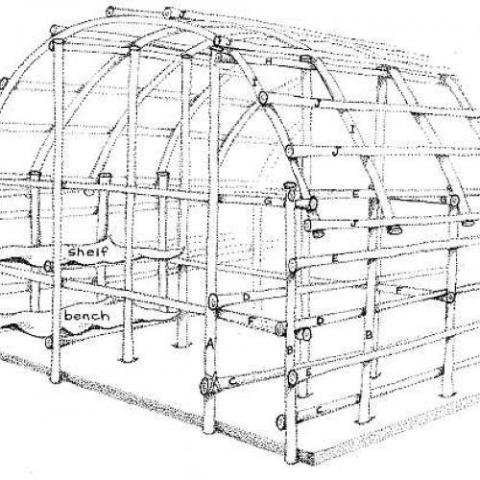
Follow these step-by-step instructions on how to build either a scaled or full-size model of a Haudenosaunee Longhouse. A complete list of materials and floor plans are provided, as well as suggestions on how to build a longhouse of your own design.
Featured Artifacts
Below are a small selection of exciting artifacts and images included in the Votes for Women: Celebrating New York’s Suffrage Centennial exhibition.
Area 1: Agitate! Agitate!, 1776-1890
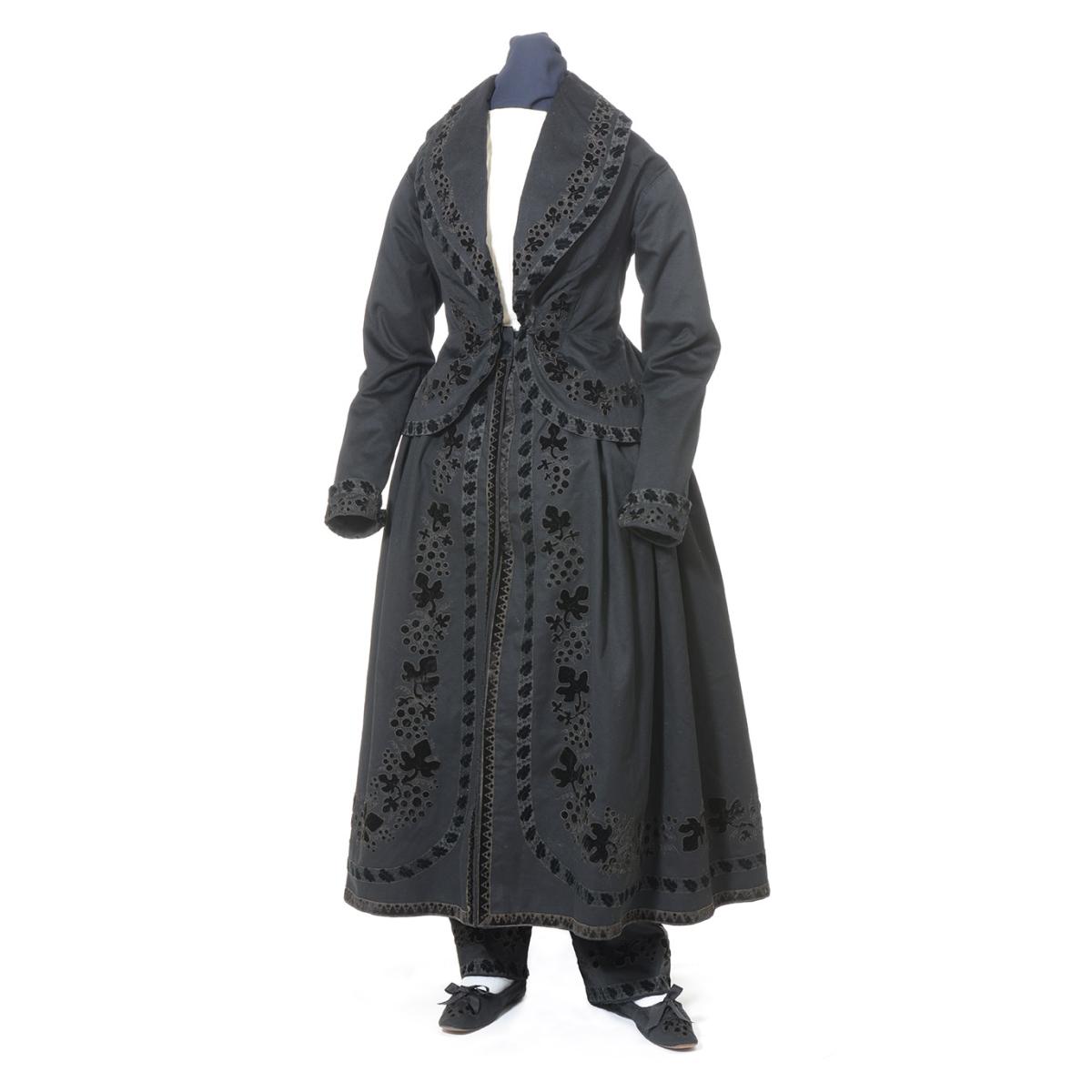
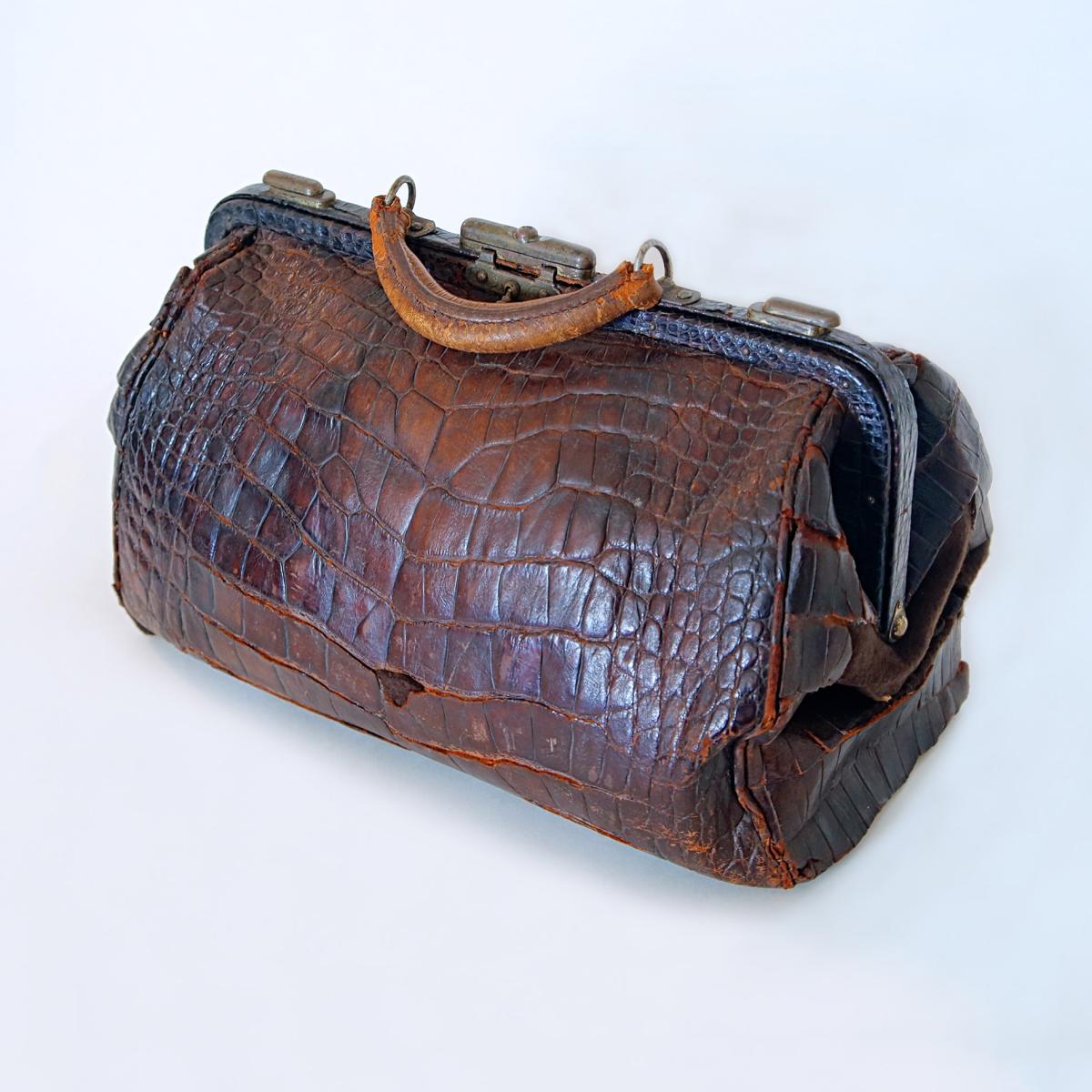
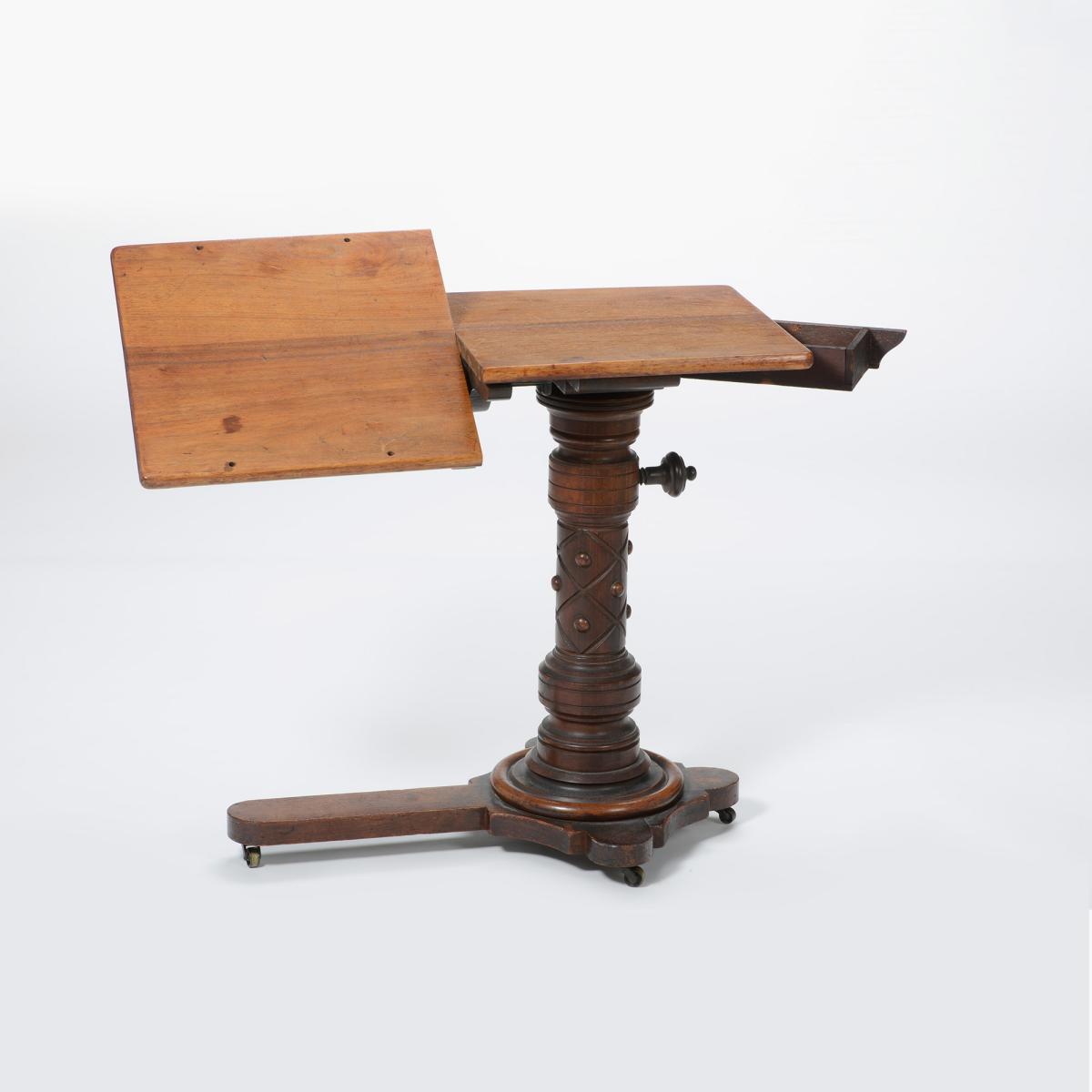
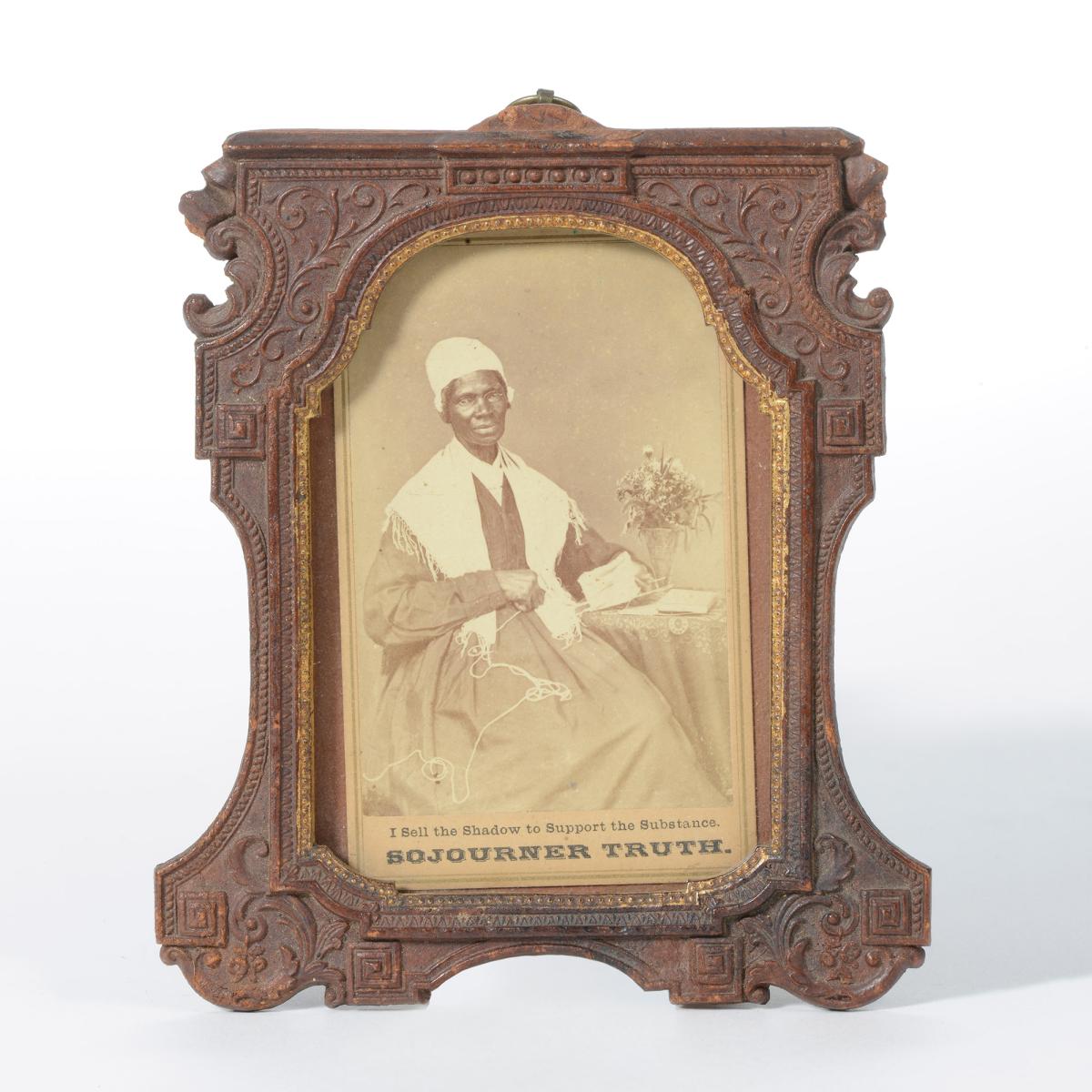
Area 2: Winning the Vote, 1890-1920
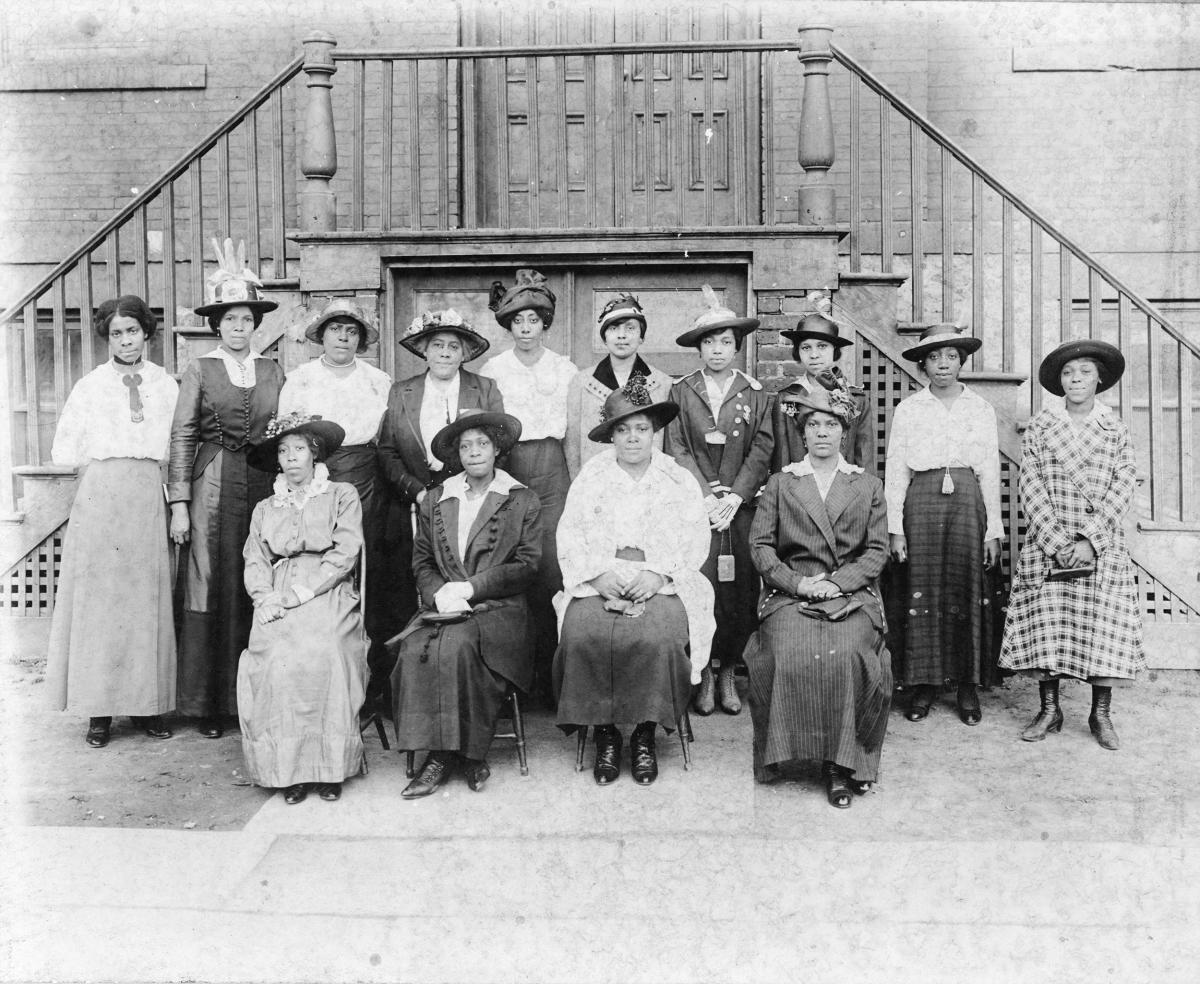
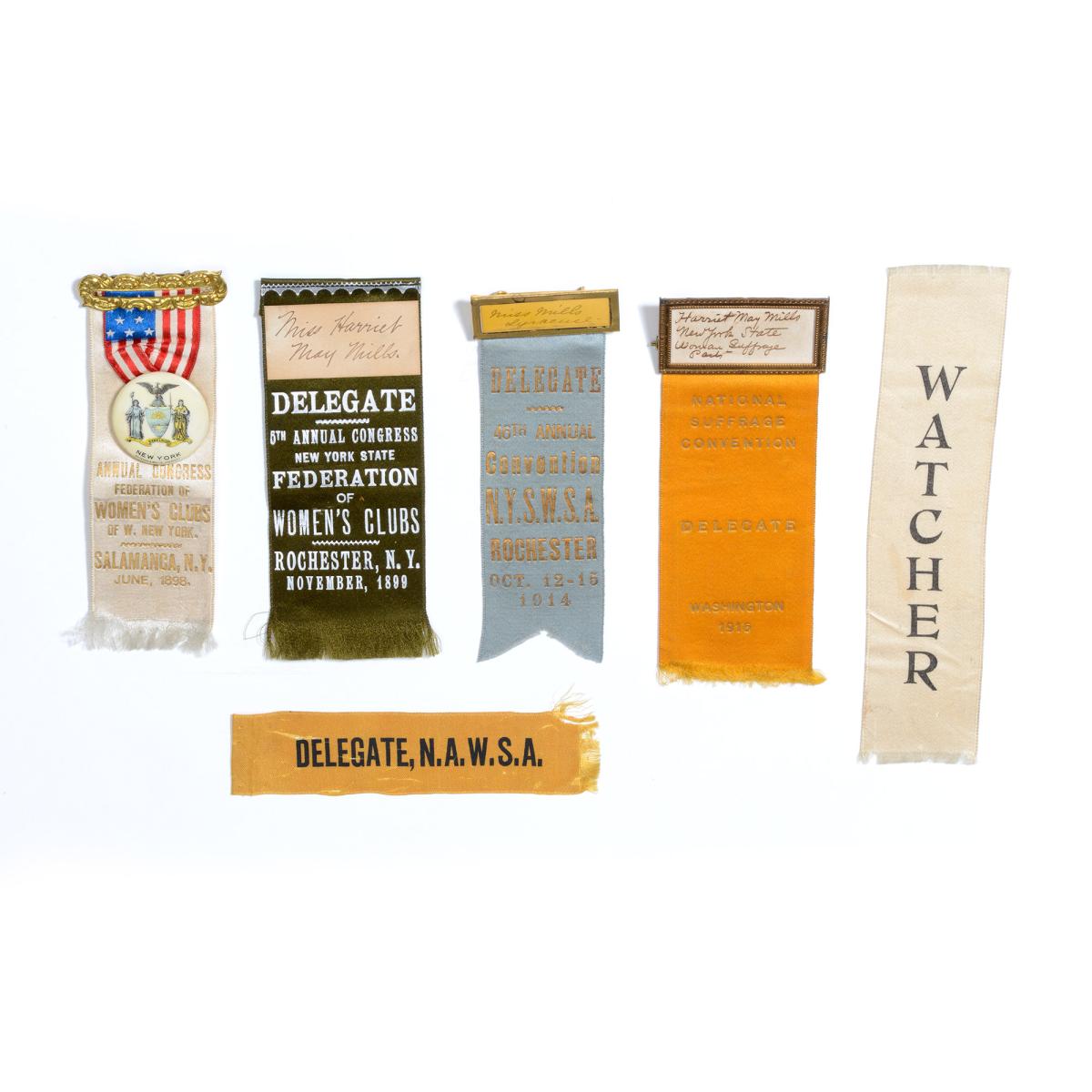
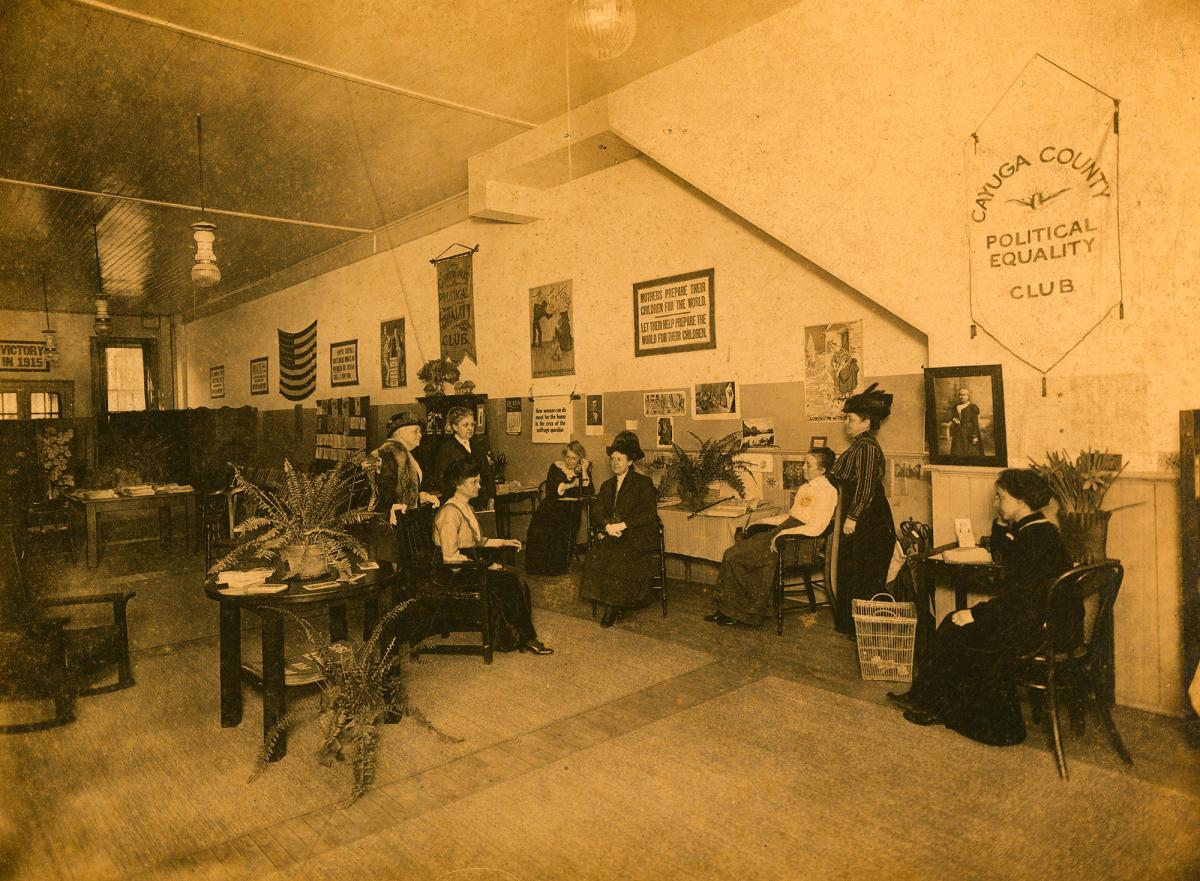
Area 3: The Continuing Fight for Equal Rights, 1920-Present
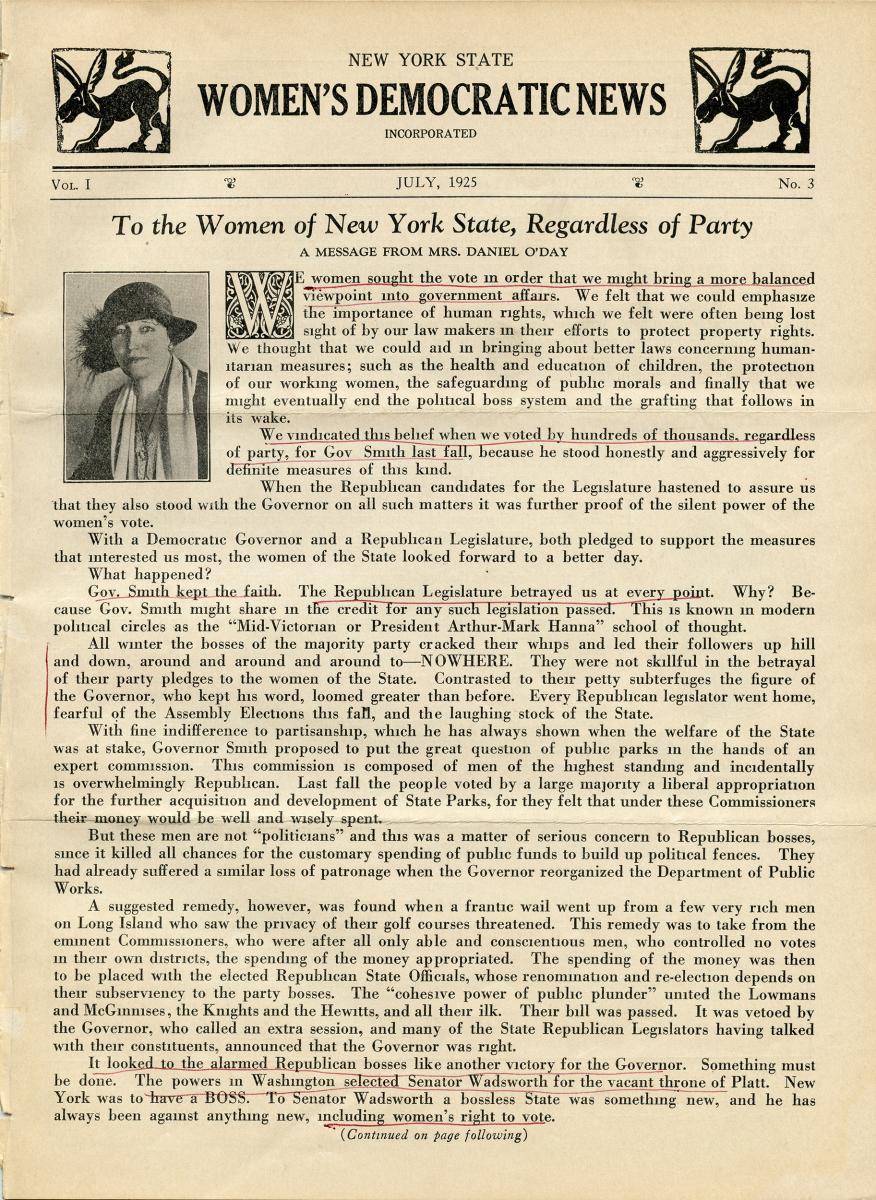

New Acquisition: The Private Fred Thomas Collection
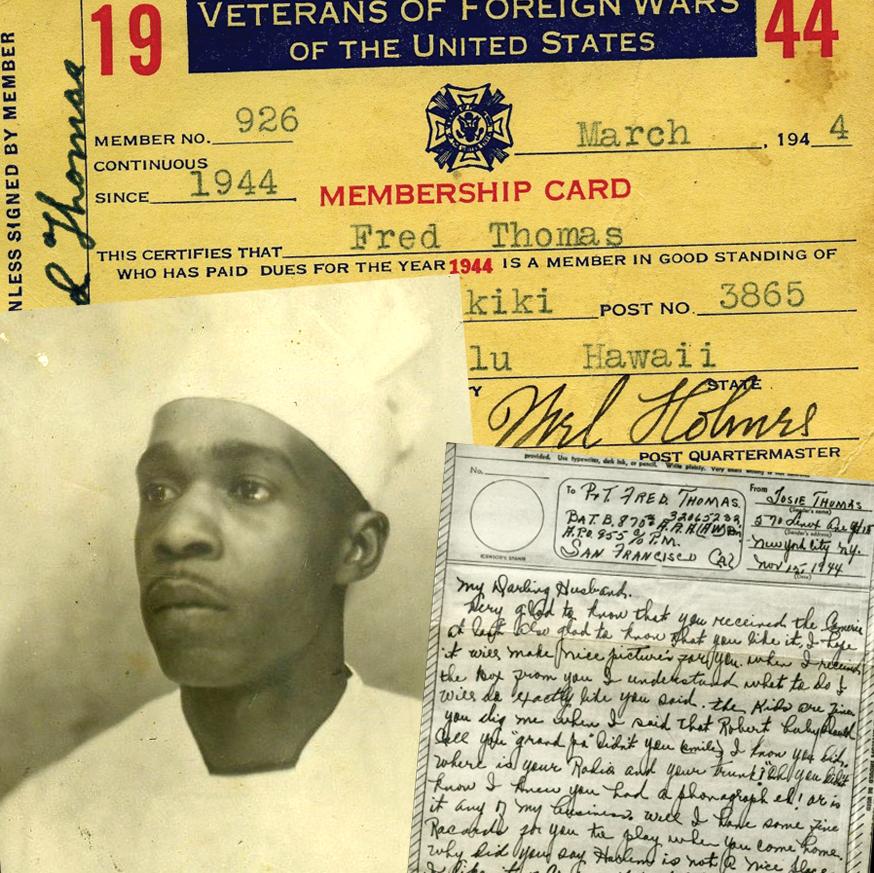
The New York State Museum presents this collection of documents, photographs, and ephemera relating to Private Fred Thomas, an African American Veteran of World War II. Thomas joined the All Black 369th Coast Artillery Regiment (Anti-Aircraft) of the New York National Guard. This regiment had garnered fame during World War I as the 369th Infantry Regiment, also known as the Harlem Hellfighters.
After initial training at Fort Ontario in Oswego, NY, the regiment was deployed with the rest of the New York 27th Division to Hawaii. While in Hawaii, the 369th provided air defense for airfields on Oahu and the United States Marine Corps Air Station Ewa.
In 1943, the 369th was reorganized into the 369th Anti-Aircraft Artillery Battalion and the 870th Anti-Aircraft Artillery Automatic Weapons Battalion. Private Fred Thomas was assigned to the newly created 870th. In February 1945, this battalion began amphibious operation training in preparation for the Invasion of Okinawa. From April through June 1945, the 870th saw more than 70 days of continuous combat and captured more than 700 Japanese prisoners.
This wonderful collection also contains nearly two dozen V-mail letters, or Victory Mail, written to Private Thomas by his wife, Josie, in New York City. V-mail was a mail service used by the US to deliver letters to soldiers overseas by using microfilm to reduce the size and weight of mail. The letters were imaged stateside and printed in the theater of operations for delivery to the troops. Josie’s letters afford a rare glimpse into life on the Home Front for an African American woman and her family during World War II.
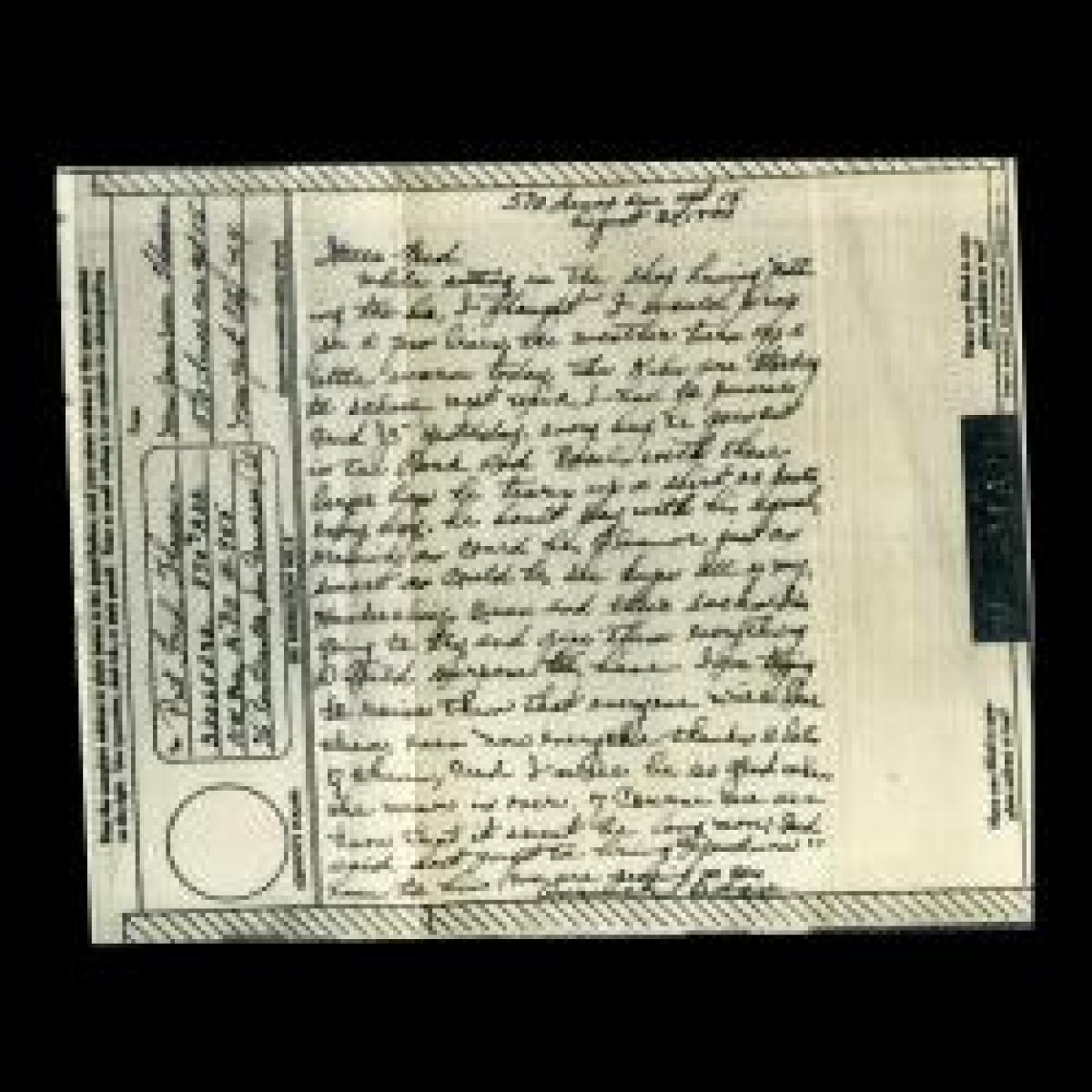
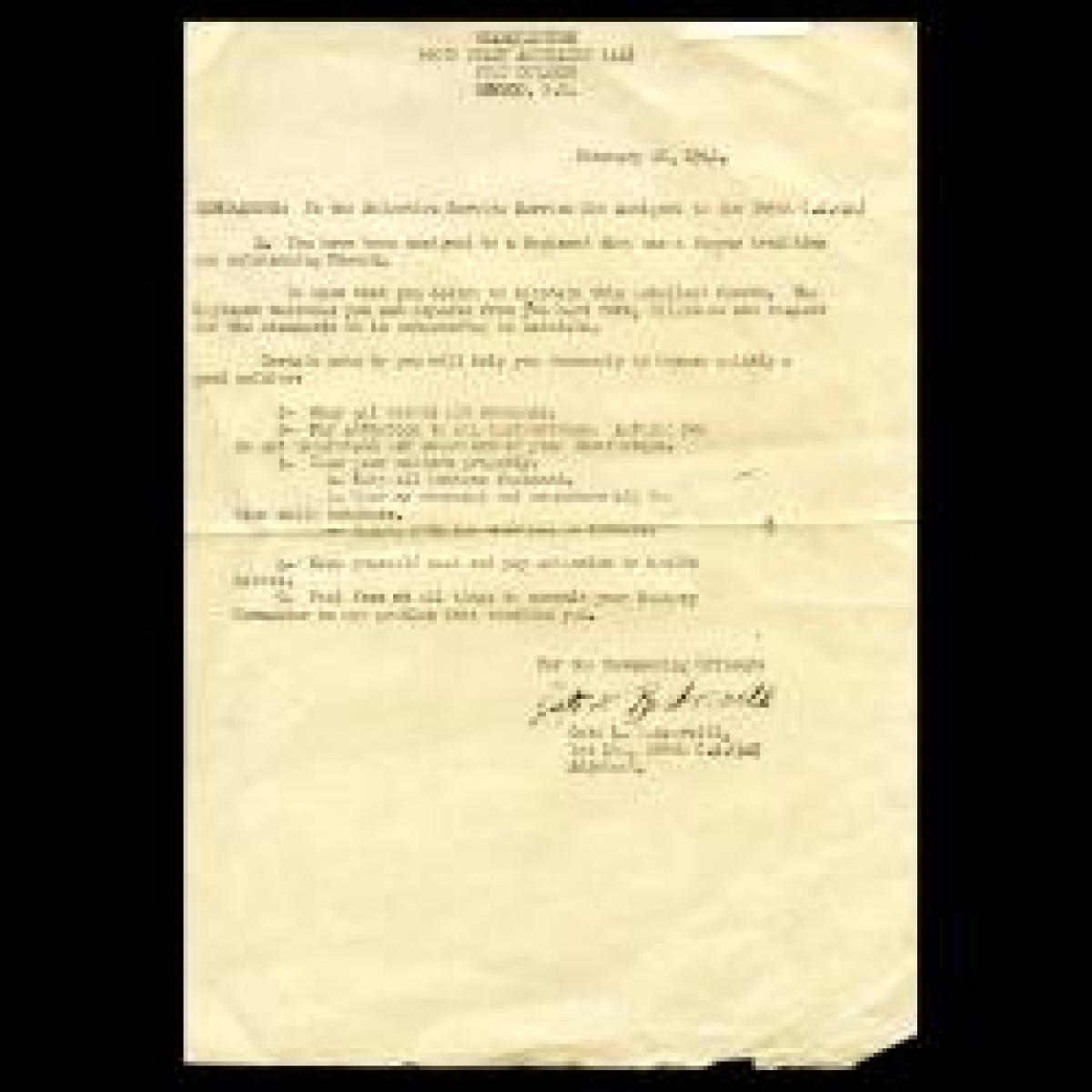
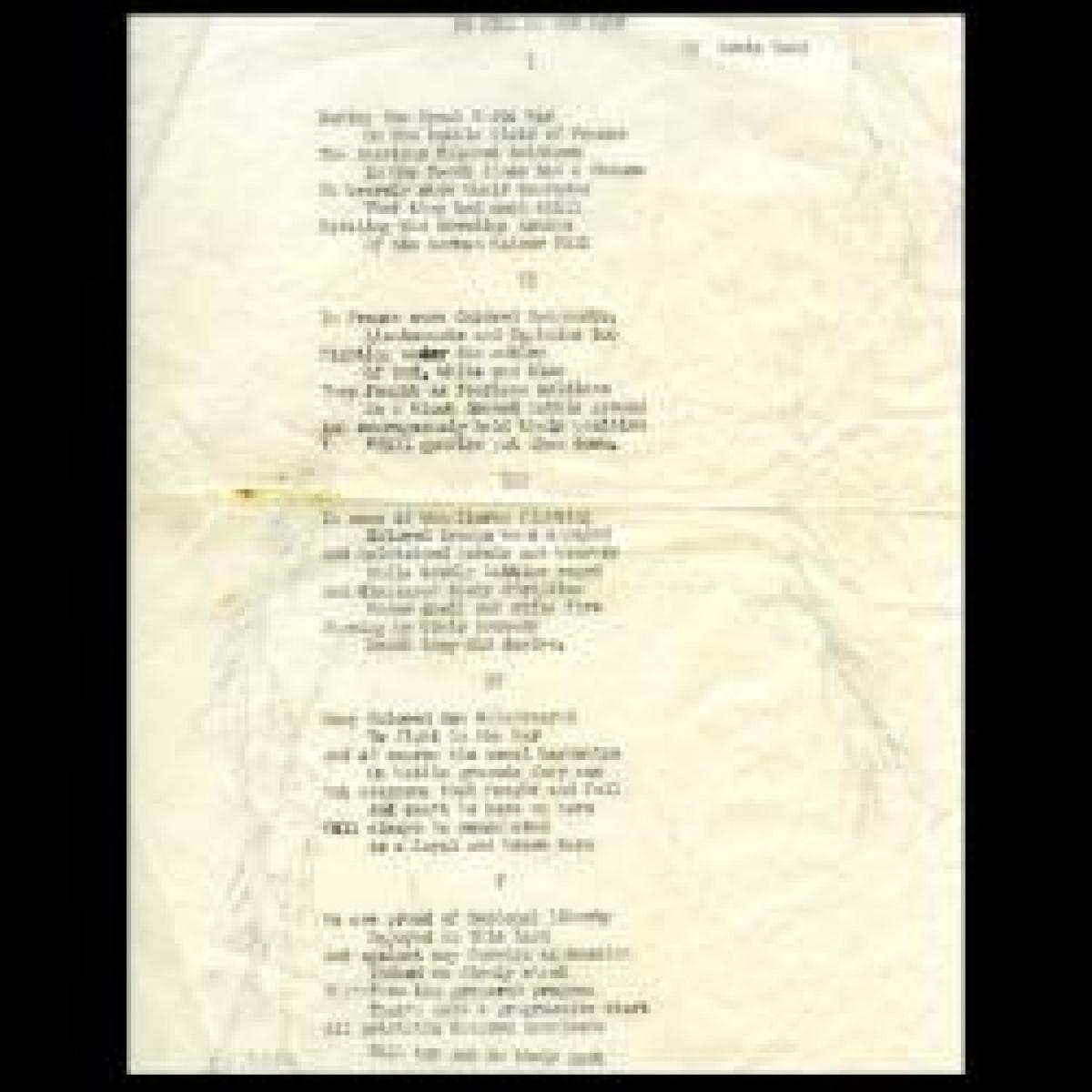
Related Information:

NYSM Black History Resources
Explore New York’s African American history through special programs and a variety of educational resources from the NYSM and beyond.
Pethick Site: Archaeological Excavations in Schoharie, NY
The Pethick site is located in the Town of Schoharie, Schoharie County, New York. The site has produced more than 350,000 artifacts associated with four major cultural occupations. The earliest occupation dates between 4,000-3,000 B.C. and consists of the remains of a small camp occupied by hunter-gatherers who used the site during forays into the valley. Artifacts recovered from this occupation include small projectile points, debris from the manufacture of stone tools, food remains (including nutshell, seeds, and white-tailed deer) as well as net weights used to catch fish from the Schoharie Creek.
The second occupation dates between 1000 B.C. and A.D. 300 and has produced evidence of a more lengthy occupation of the site for a season or two. Artifacts recovered from this occupation point to the use of the site as a long term camp with several post molds suggesting one or more temporary structures may have been present. Pottery decorated with cord marked designs, projectile points, and pieces of stone (or steatite) bowls have been recovered. Other stone tools include drills, bifaces, scrapers, and hammerstones. The recovery of non-local stone materials suggests that these groups interacted with other groups in southern and central New York, New England, and other parts of the Mid-Atlantic Region.
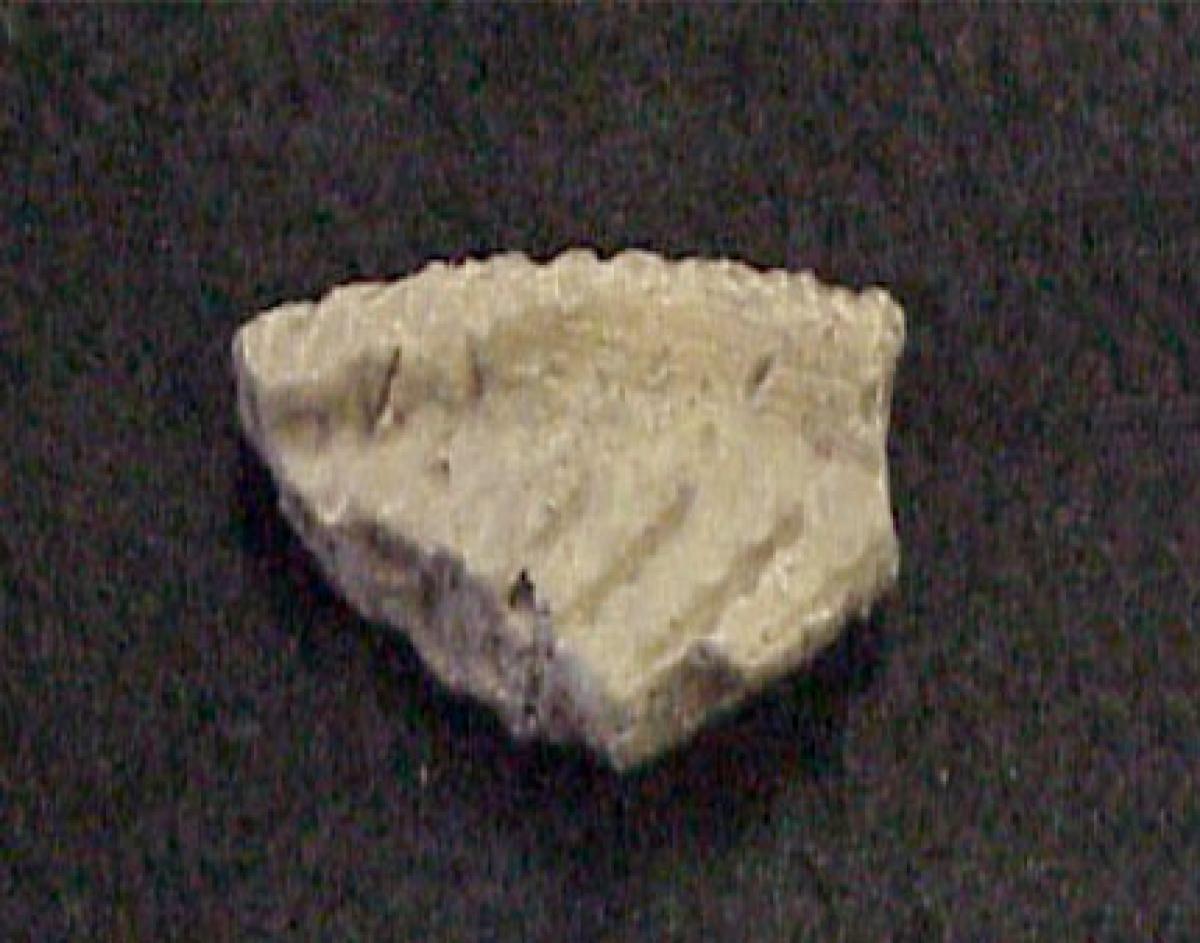
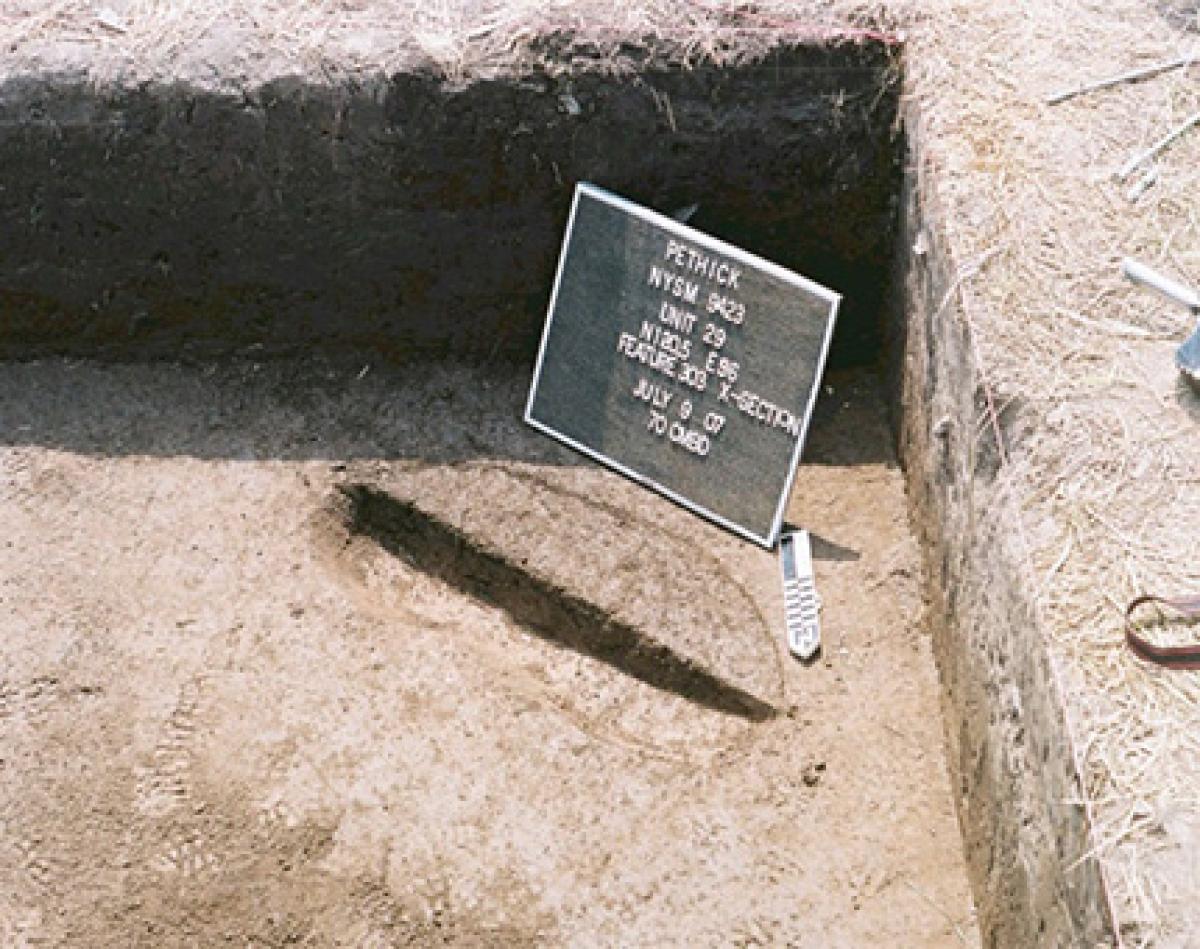
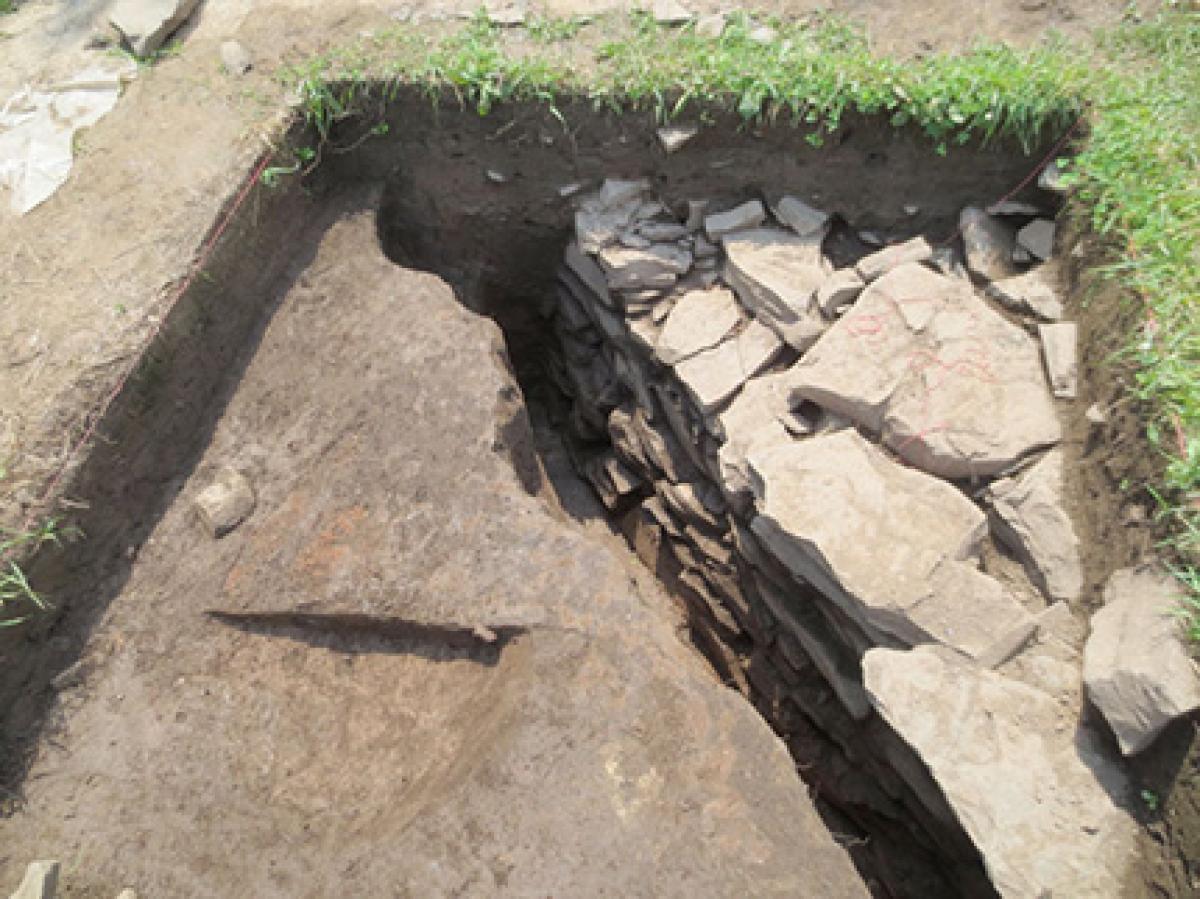
The final occupation dates to the mid-19th century and is associated with the occupation of the site by local farmers. Evidence of a small cabin has been identified and offers a view into the lives of farmers at the site. Historic pottery, kaolin smoking pipe fragments, architectural debris, and other farming tools have been recovered.
A number of publications have been produced documenting the excavations at the Pethick site. These include the following:
Rieth, C.B., Rafferty, S., and Saputo, D. 2007. A Trace Element Analysis of Ceramics from the Pethick Site, Schoharie County, New York. North American Archaeologist 28(1):59-80.
Rafferty, S., Wood, C., and Rieth, C.B. 2007. Archaeometric Analysis of Lithic outcrops from Eastern New York. North American Archaeologist 28(2):167-186.
Rafferty, S., Rieth, C.B., and Moragne, S. 2014. Prehistoric Occupations at the Pethick Site, Schoharie County, New York. Archaeology of Eastern North America 42:177-199.
New York State Education Department and Office of Cultural Education Present a Month of Engaging Black History Month Programming and Resources for Educators
(518) 474-1201
Press@nysed.gov
www.nysed.gov
Museum, Library, and Archives Events Highlight the Lasting Legacy of Black New Yorkers
The New York State Education Department and the Office of Cultural Education are commemorating Black History Month with a series of enlightening, community-focused programs that spotlight the influential history of Black New Yorkers. Throughout the month, special exhibitions, educational resources, and compelling in-person and online programs will be available, highlighting the significance of Black history in New York State. The New York State Museum, Library, and Archives will lead engaging conversations about the men and women who broke racial barriers in aviation and baseball, highlight the importance of community during the Great Migration with the unveiling of a new exhibit display, and celebrate cultural identity through rhythm and dance.
Board of Regents Chancellor Lester W. Young, Jr. said, “Black History Month is not only a time to honor the extraordinary contributions of people of African descent to our nation’s history and culture, it is a call to more fully acknowledge the stories, leadership, and lived experiences that have too often gone unrecognized. By lifting up both the struggles and the triumphs that have shaped our collective past, we deepen our understanding of who we are and strengthen our commitment to a more inclusive and equitable future. The Board of Regents and the New York State Education Department remain steadfast in our mission to advance teaching and learning and to help build a society grounded in access, opportunity, trust, and respect for all New Yorkers.
State Education Commissioner Betty A. Rosa said, “Black History Month honors generations who, in the face of injustice, courageously fought for freedom, dignity, and equality while paving the way for a more just and inclusive society. As we observe this month, we celebrate the excellence, resilience, and pride that define the Black experience, while reaffirming our responsibility to educate students with honesty, depth, and purpose. By teaching the full history of our nation and uplifting voices that have too often been marginalized, we help students better understand their world and their role in shaping a future where the values of liberty, inclusivity, and equity are fully realized for everyone.”
Archive Adventures: Discover New York’s Hidden Stories
Dates: Thursday, February 5, 12, 19, and 26
Time: 11:00 a.m.
Location: Discovery Place
Join experts from the New York State Archives to learn more about the remarkable history of Dorothy Franklin and Patricia Banks, two pioneering women who challenged racial barriers in aviation. Each Thursday, an archivist will be on hand to share stories, answer questions, and highlight carefully chosen original documents and photographs.
Opening the Airways: How Black Women Broke the Color Barrier in the Sky
Date: Saturday, February 7
Time: 2:00 p.m.
Location: Huxley Theater
The New York State Archives’ Jasmine Bumpers and Jamie Brinkman will lead an inspiring presentation on the lives of Dorothy Franklin and Patricia Banks. Learn how their courage and determination helped open the skies to Black women and reshaped the history of flight.
Screening: Black Barbie
Date: Tuesday, February 10
Time: 12:00 p.m.
Location: Huxley Theater
Discover how three pioneering women at Mattel transformed the toy industry by creating the first Black Barbie doll. This one-time screening provides an opportunity to explore representation, innovation, and cultural impact in toys and media.
Fashion and Faith: Hats of the Great Migration Gallery Talk with Dr. Jennifer Lemak
Date: Friday, February 13
Time: 12:00 p.m.
Location: West Corridor
Discover the Museum’s newest collection feature with Chief Curator of History Dr. Jennifer Lemak. Hats worn in Black churches during the Great Migration were more than fashion—they were symbols of faith, resilience, and personal identity. The exhibit highlights how they reflected the journeys, leadership, and creativity of women who navigated new lives in New York State while holding onto their heritage and hope for the future.
Rhythms of the Diaspora: Drumming and Dance with Jordan Taylor Hill
Date: Thursday, February 19
Time: 11:00 a.m.
Location: Adirondack Hall
Jordan Taylor Hill leads a dynamic exploration of rhythm, movement, and cultural memory across the African Diaspora. The program opens with a powerful performance featuring traditional and contemporary rhythms from West Africa, Cuba, and the Black American tradition. Guests are then invited into an interactive workshop where Jordan guides them through rhythms and movement vocabulary that illuminate how these practices carry history, identity, and community.
Negro Leagues Stats and MLB's Official Record (webinar)
Date: Thursday, February 26
Time: 12:00 pm
Location: Webinar
Speakers: Larry Lester and John Thorn
In 2024, Major League Baseball (MLB) officially incorporated records for more than 2,300 Negro Leagues players with its existing historical data. Join esteemed author, historian, and curator Larry Lester and official MLB historian John Thorn as they discuss how the data was collected and why it is so important to include statistics from the Negro Leagues. This public program is made possible by federal Library Service and Technology Act funds from the Institute of Museum and Library Services, which enable the New York State Library to champion lifelong learning.
Resources for Educators
Resources to support teaching and learning about Black history, not only during Black History Month but throughout the entire year, are available on the Office of Standards and Instruction’s Social Studies Guidance and Resources webpage. The curated list is not exhaustive but highlights key historic sites, museums, and cultural institutions that mark the African American experience in New York State. These resources also support the New York State K-12 Social Studies Framework for the development of instructional materials related to African American history and culture.
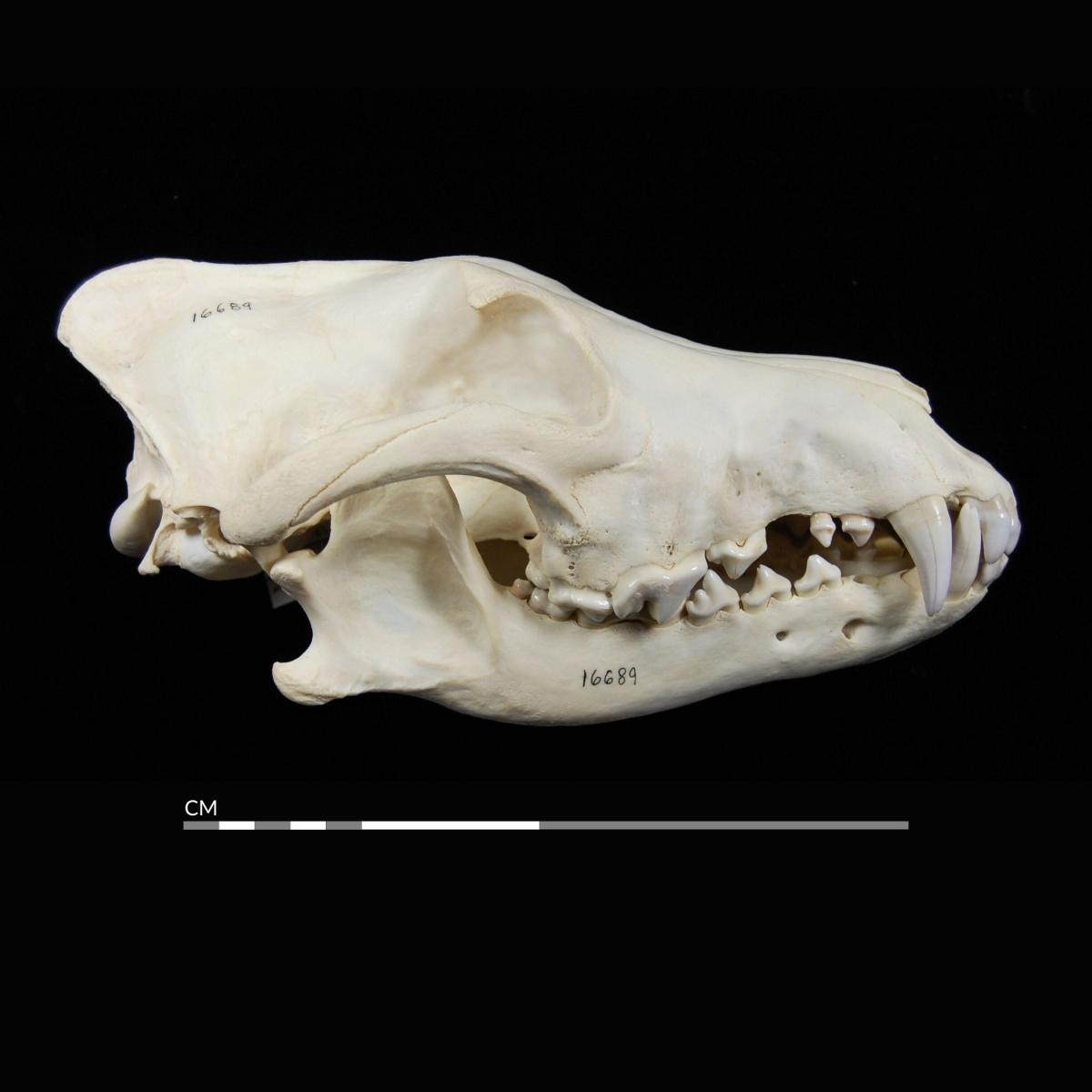
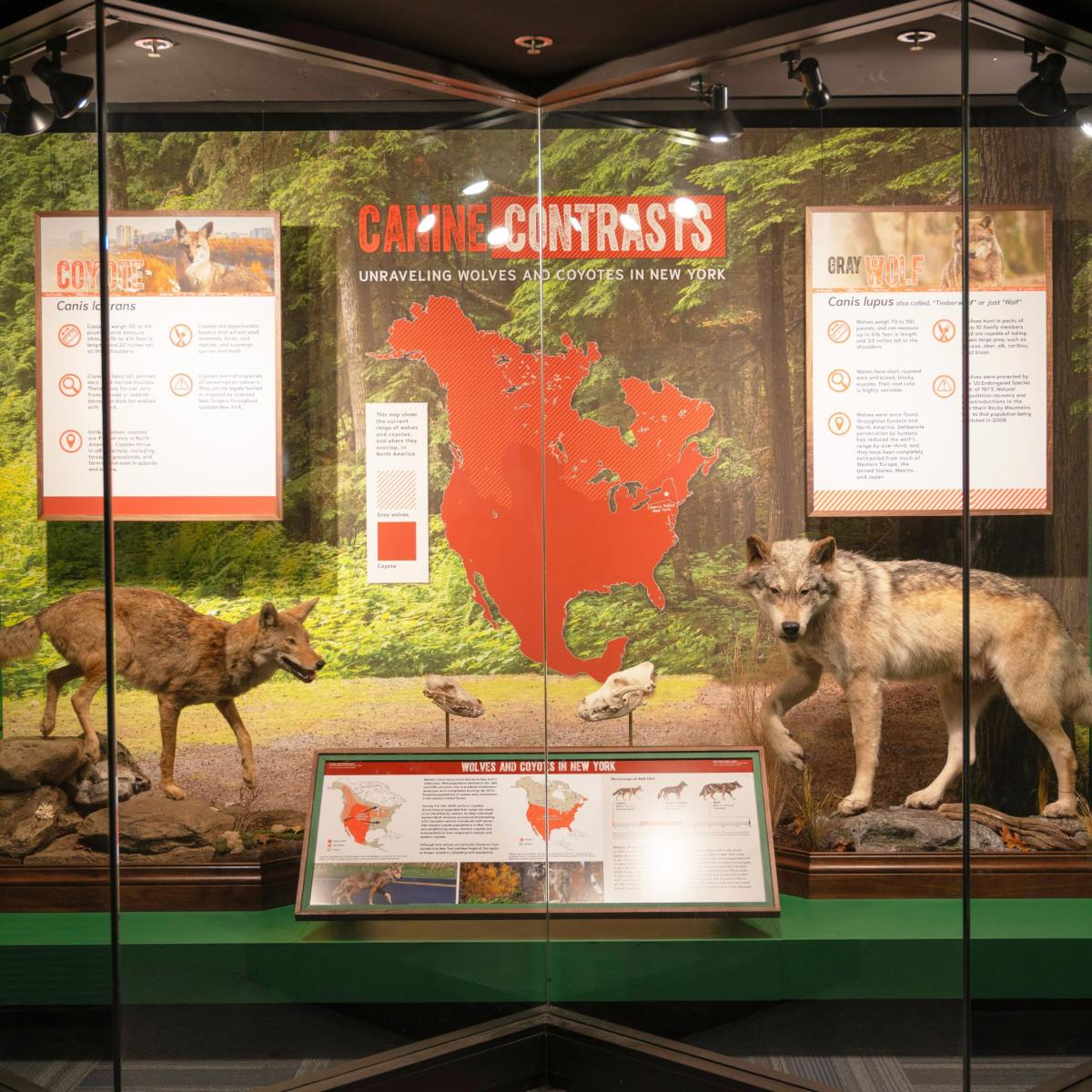
Coyote or Wolf? Science Solves the Mystery
A new study published by researchers at the New York State Museum has confirmed that a large “coyote” shot by a hunter in Cherry Valley, Otsego County, in December 2021 was actually a wild Gray Wolf. The research, led by NYSM Curator of Birds and Mammals Dr. Jeremy Kirchman and detailed in a peer-reviewed paper in Northeastern Naturalist (https://bit.ly/4nv0EDj), provides evidence of occasional long-distance dispersals by wolves into the northeastern United States, a region where the species was extirpated (became locally extinct) by the end of the 19th century.
The researchers examined the skull morphology and diet of the specimen and compared its genome with DNA sampled from 435 wolves, coyotes, and dogs. The analyses grouped the Cherry Valley specimen with Gray Wolves. When DNA results confirmed the animal was a wolf and not a coyote, the New York State Department of Environmental Conservation confiscated the taxidermy mount and skull and transferred them to the NYSM Mammalogy Collection. The hunter cooperated fully with officials and was not fined.
The Cherry Valley wolf is currently on display as part of the NYSM's Canine Contrasts exhibit, where visitors can learn about the complex history of wolves and coyotes and their hybrid descendants in eastern North America.
Learn more about the exhibit here: https://nysm.nysed.gov/research-collections/biology/mammalogy/news/cani…
Our history of inquiry, discovery, and education began in 1836 when we were established as the New York State Geological and Natural History Survey. Over the years, we have grown into a major research and educational institution dedicated to preserving New York's rich artistic, social, historical, and environmental legacies under the leadership of the New York State Education Department.
On April 15, 1836, Governor William Marcy appointed the staff of the state's first official Geological and Natural History Survey to conduct “a grand and comprehensive collection of the natural productions of the State of New York to exhibit under one roof its animal, mineral and vegetable wealth”. With that appointment, the story of the State Museum officially began.
Crates and barrels of fossils, rocks, and mineral specimens collected during the Survey eventually filled three rooms in Old State Hall. In an effort to end confusion over the status of the collections which sat unstudied and disorganized for seven years, the Legislature created the “State Cabinet of Natural History” in 1843. In 1845, the Legislature placed the Cabinet under the guidance of the Board of Regents. That year, the Cabinet opened its doors to the public.
The Old State House was the first official depository for the collections of the State Cabinet of Natural History from 1842 to 1855. Constructed from 1797-1799 at an estimated cost of $10,000, the brick building was four-stories high, situated between State Lodge Streets. Most notably, Old State Hall was the first public building erected by New York State Government in Albany after the Revolution. It originally housed the State departments—Secretary of State, Comptroller, State Treasurer, Attorney General and the Executive Chamber—until the newly constructed Capitol opened in 1808. Any remaining state offices moved to the New State Hall, built in 1842, and the State Cabinet was then placed in this building as recommended by Governor Seward. The Hall was demolished in 1855.
Within ten years, the Cabinet had amassed more collections than Old State Hall could accommodate. Upon completion in 1857, Geological and Agricultural Hall became the State Cabinet's headquarters and the focus shifted from housing a collection of objects to regarding the museum as “living organization”.
On May 2, 1870, the State Cabinet of Natural History was deemed by Legislature to be "a museum of scientific and practical geology and general natural history" and its name was officially changed to "The New York State Museum of Natural History." James Hall, who held the title of both State Geologist and State Paleontologist, was appointed as the Museum's first director.
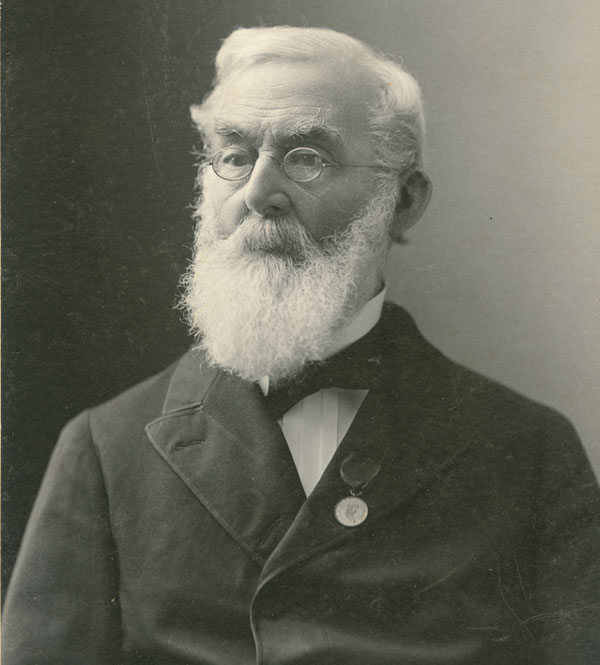
James Hall, first director of the New York State Museum.
On March 29, 1911, fire broke out in the Capitol. From the Assembly Library, it spread to the State Library near several museum displays on temporary exhibit. Of 10,000 archaeological artifacts and ethnographic objects, only about 1,500 were recovered, most of which were damaged.
In 1912, the Museum moves into the newly constructed State Education Building. Although open to the public in 1915, a dedication ceremony hosted by former President Theodore Roosevelt was held on December 29, 1916. "A museum of this character," he stated, "has more than one function to fulfill. It must present to the people as a whole in vivid and yet truthful form, knowledge of the natural objects of our countryside…in such a fashion as to be readily understood."
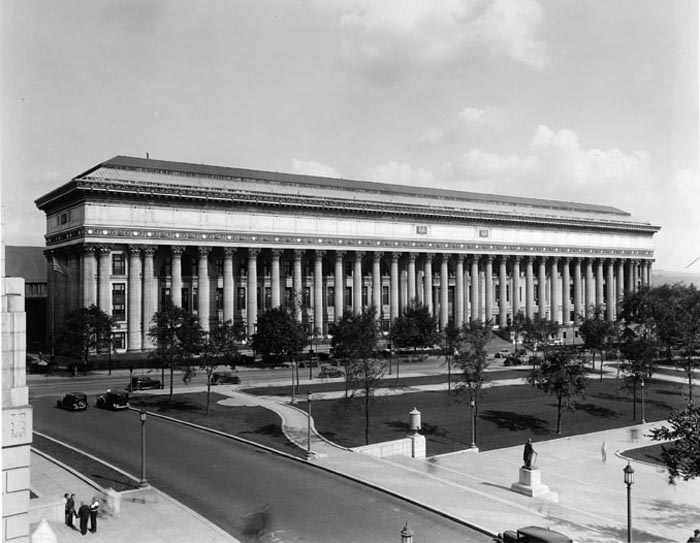
New York State Education Building.
Over the next several decades, the Museum continues to expand and outgrows its space in the State Education Building. In 1962, the Legislature approved the construction of a 98.5 acre governmental park proposed by Nelson Rockefeller in the heart of downtown Albany – The Empire State Plaza. Included in the proposal were plans for a new Museum building. The 11-story, 1.5 million square foot Cultural Education Center was completed in 1976 and today houses the State Museum, State Library, and State Archives.
Over the next several years, the Museum opens several important galleries and exhibitions including Native Peoples of New York Hall, Great Art Series, the Carousel, the World Trade Center exhibition, and South Street Seaport.
Today, the New York State Museum is one of the largest tourist attractions in the Capital Region welcoming approximately half a million visitors annually. The Museum’s collections include over 20 million specimens and artifacts that reflect over 170 years of research in the earth sciences, biology and human history. Over 100,000 square feet of exhibition space gives visitors an opportunity to learn more about New York State’s natural, cultural and human history. Free public programs – for children, families and adults – are offered throughout the year.
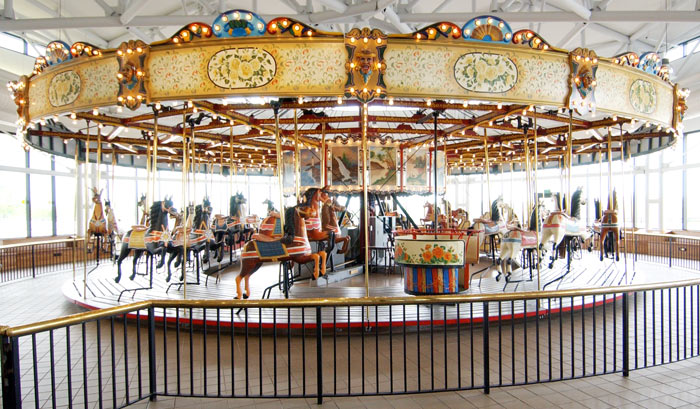
The Carousel on the Fourth Floor of the Museum.
School's Out / Museum's In
This winter break, February 21-24, explore the Museum and join us for a variety of fun educational adventures and hands-on activities! From raptors and big cats to animal adaptations and the Ice Age, there will be plenty of programs on hand to keep the entire family engaged and entertained!
Stop by the New York State Museum's Visitor Desk in the lobby to see what activities are going on each day.
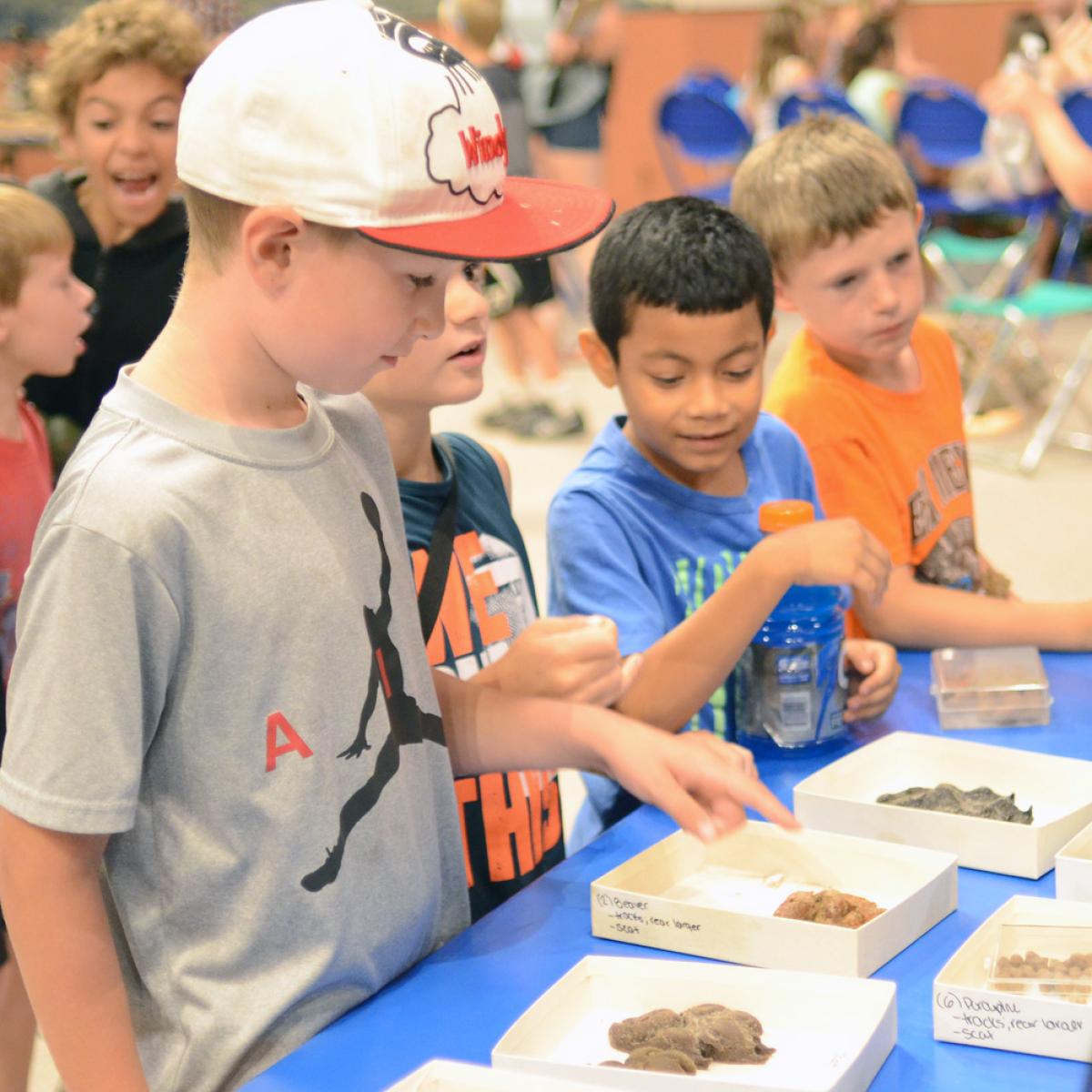
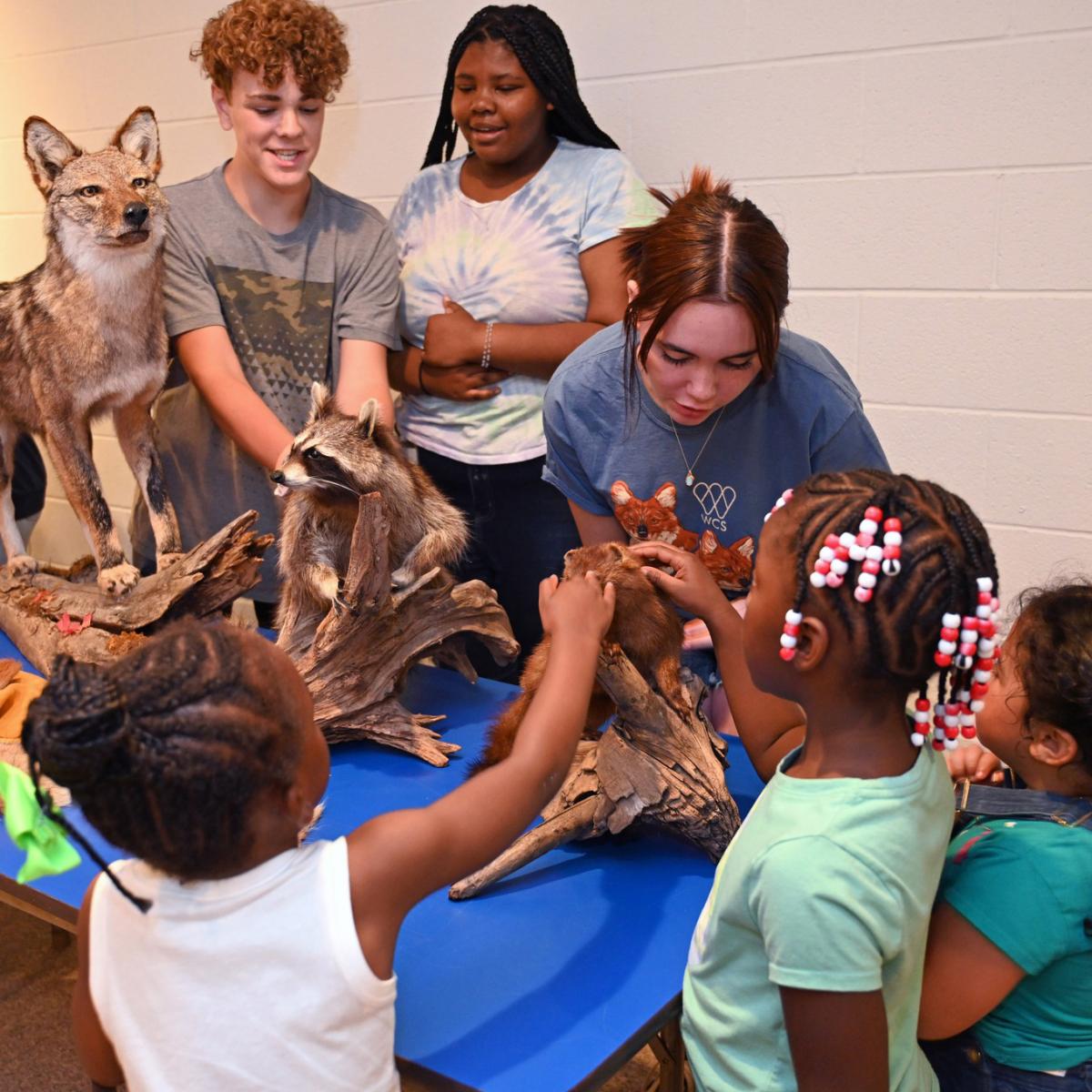
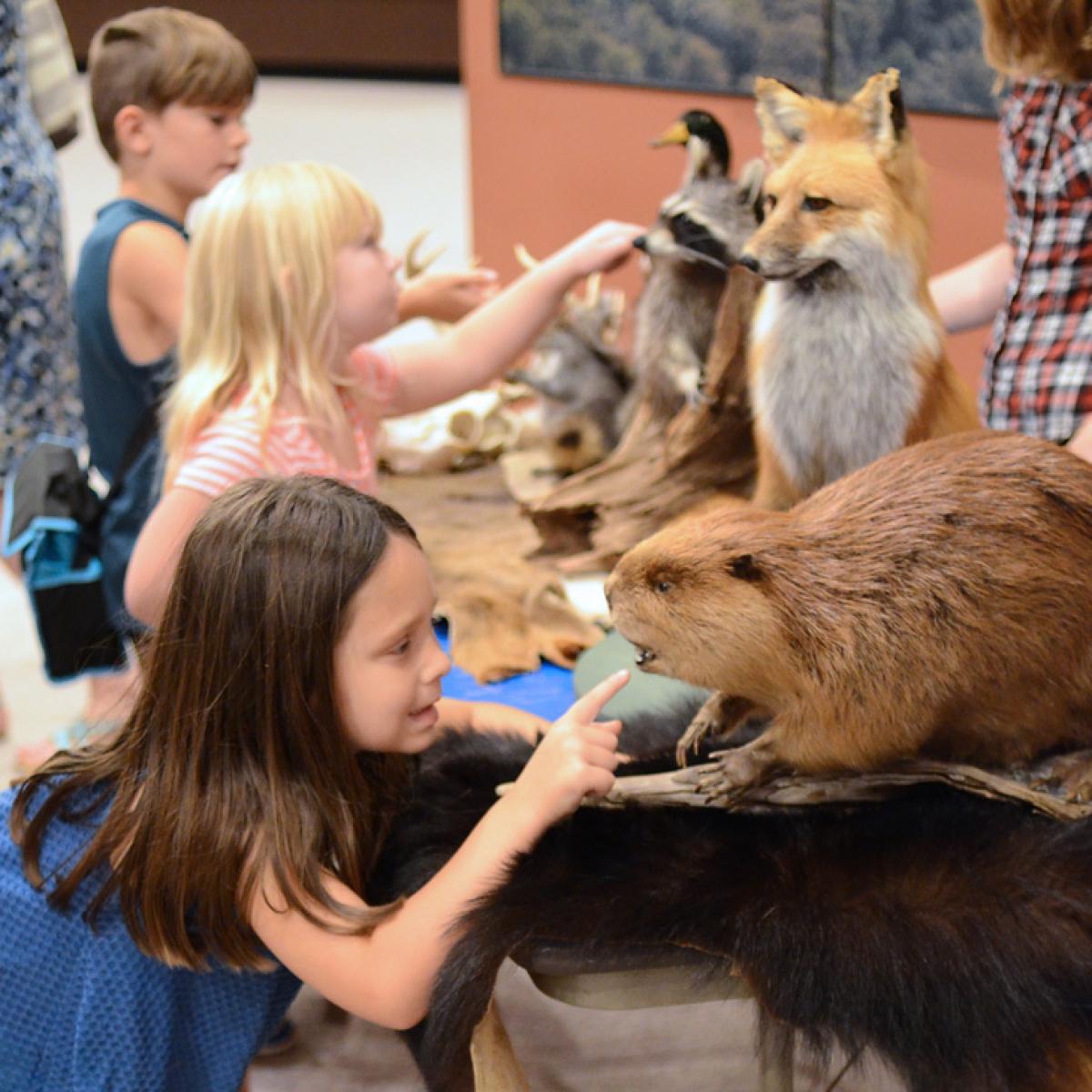
The Three Sisters Diorama
Collectively referred to as "The Three Sisters," corn, beans, and squash were the principal crops of the Haudenosaunee (Iroquois) and other Native American groups in the northeastern United States, at the time Europeans arrived here about 1600. By this time, the Haudenosaunee had been planting these three crops together for about 300 years. Corn and beans are not native to this area; they originated in tropical America where they were cultivated by early peoples, long before these crops were cultivated in the northeastern United States. Pumpkins and similar types of squash have a tropical origin, as well.
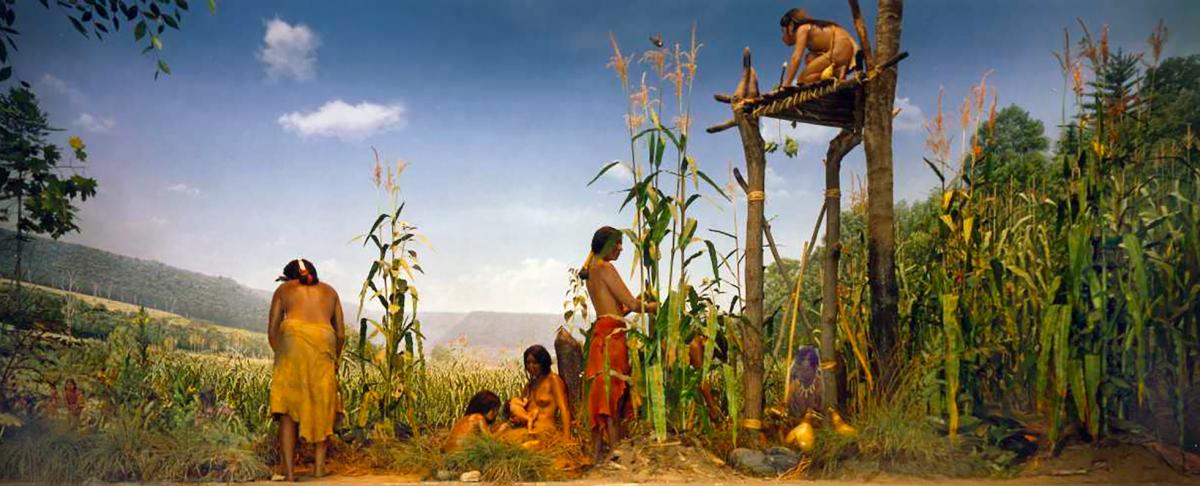
The Scene
The scene is in the Mohawk Valley about 30 miles west of the confluence of the Mohawk and Hudson rivers near Troy, N.Y. The view is to the southeast toward the Mohawk River where it flows through a narrows called the Noses, several miles west of Fonda, N.Y. The setting is a day in late August when the corn is beginning to mature. This is the time of the Green Corn Festival, one of the Iroquois' days of thanksgiving.
The earliest evidence of corn cultivation in New York is by 1200 years ago (A.D. 800) and beans, about 500 years later (A.D. 1300). The tropical varieties of squash did not enter the Northeast until about 1000 years ago (A.D. 1000). Some other types of squash originated in the eastern U.S.; they were cultivated in the Northeast by at least 2700 years ago (700 B.C.).
Cultivation of crops, gradually brought about a change in the Haudenosaunee way of life from hunting and gathering their sustenance in the woodlands, to cultivating crops in fields created by clearing patches of woodland. However, the Haudenosaunee had cultivated plants native to the Northeast long before 'The Three Sisters' became the basis of their economy. Native plants were not only sources of food but also provided medicines, beverages, dyes, etc. We know very little detail about these earlier agricultural practices.
The development of farming brought about the development of 'permanent' villages linked to the fields. Women, who did the farming, then lived year-round in the villages. This arrangement was established at least three hundred years before European arrival.
Highlighted Scenes within the Diorama
Haudenosaunee corn at this 'green corn' stage is similar to our sweet corn and is ready to eat. The Haudenosaunee used some of the crop at Green Corn Festival time, but most was left to ripen and was harvested in the fall. Ripe corn was dried and stored for winter use.
The silk on the ear of corn in the photo indicates that this ear is nearly ready to pick as green corn, but wait another day or two until the silk becomes a little drier and darker brown.
The tool with the long handle and curved blade is a replica of one described in the 1620s, as a wooden hoe used in cultivation. It was pictured in a French missionary's report in 1685. It's hard to imagine how it works. It is commonly believed that the Haudenosaunee used the shoulder blades of deer as hoes.
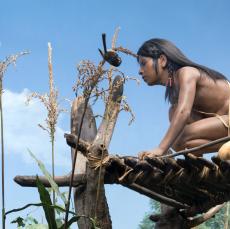
The young girl on the platform is ready to scare off the flock of blackbirds that are headed to the fields from the background of the exhibit. Protecting the crops from birds, raccoons and other pests was an important activity.
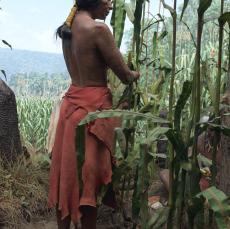
Corn, beans and squash were commonly planted together in the same 'hill'. After the corn plants are growing, soil is piled up around their stalks to help keep them upright in the wind. Women did the farming, assisted by children, and at harvest time, by old men. Weeding was important to help the crops thrive and to keep the forest from encroaching into the fields.
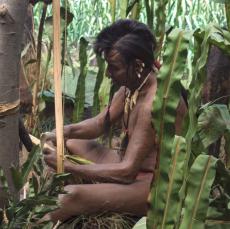
The old man is scraping the kernels from an ear of corn with the teeth and jawbone of a deer. The corn will drop into a vessel made from the bottom part of a large gourd. Gourds were used as vessels for various purposes. None are shown growing in the exhibit, but the Haudenosaunee did cultivate them.
Cultivated Plants and Fields
The Haudenosaunee crops required well-drained soil with a high lime content.
A good growing area could be recognized by the kind of forest growing there. In addition, the soil had to be easy to work because the tools of the time were made of stone, antler, bone, and wood.
In a virgin forest, the trees were huge and widely spaced. Such trees were killed by girdling, a process that allowed sunlight to reach the forest floor; then crops could flourish. The dead trees were left to rot or burn. Annual burning cleared the fields of weeds and stubble.
The soil became exhausted after a decade of farming, so the fields were abandoned. The forest reclaimed the land and rejuvenated the soil, which prepared it for another cycle of farming after 50 or 60 years. The people got a great bonanza of trees small enough for their construction projects when they cleared this second-growth forest for new fields. This time they felled the trees and burned the unwanted brush.

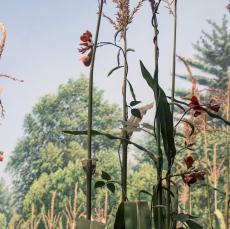
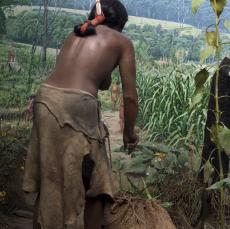
Forest Trees in the Background Painting of the Diorama

American beech
The background represents a beech-maple forest named for two of the more abundant kinds of trees found in it, American beech and sugar maple. White ash, American basswood, pignut hickory, shagbark hickory, white pine, yellow birch, hemlock, American elm and sweet birch are other trees commonly found in this type of forest. The Iroquois had learned that this type of forest grew on a fertile soil that would be good for their crops. Similar forests grow in the region today.

Sugar maple
When your are at the exhibit, notice that the trees in the background painting are not large, and that they are close together. This is a second growth forest about 50 years old. This new forest invaded an earlier field, which was abandoned because the soil had been depleted by farming. The new forest growth restores the fertility to the soil, and trees of this size are ideal for longhouse construction.
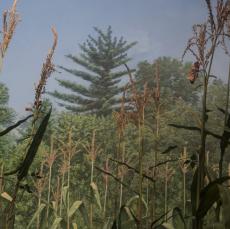
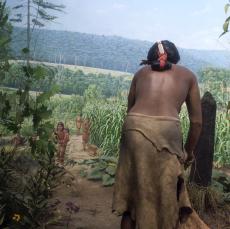
'Weed' Plants in Bloom
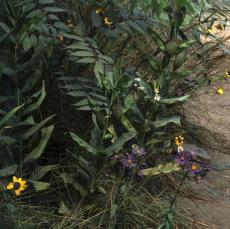
Sketches of Weed Plants in the Diorama
 purple aster (Aster novae-angliae)
mature plant is 2 - 4 feet in height
 black-eyed Susan or cone flower (Rudbeckia triloba)
mature plant is 2 - 4 feet in height
 evening primrose (Oenothera biennis)
mature plant is 1 - 5 feet in height
 white daisy or fleabane (Erigeron annuus)
mature plant is 1 - 3 feet in height
 goldenrod (Solidago canadensis)
mature plant is 2 - 4 feet in height
 common milkweed (Asclepias syriaca)
mature plant is 1 1/2 - 4 feet in height
 May apple (Podophyllum peltatum)
mature plant is 1 - 2 feet in height
 wild strawberry (Fragaria virginiana)
mature plant is 4 - 8 inches in height
 staghorn sumac (Rhus typhina): a twig with several compound leaves
mature shrub is up to 15 feet in height
 little blue stem grass (Schizachyrium scoparium)
mature plant is 1 - 2 1/2 feet in height
Not illustrated: crabgrass (Digitaria sanguinalis) -- badly trampled specimens in the foreground of the diorama.
(When you visit the Museum, you might take along a copy of these plant pictures to help identify the plants in the diorama)
The Three Sisters Diorama
Collectively referred to as "The Three Sisters," corn, beans, and squash were the principal crops of the Haudenosaunee (Iroquois) and other Native American groups in the northeastern United States, at the time Europeans arrived here about 1600. By this time, the Haudenosaunee had been planting these three crops together for about 300 years. Corn and beans are not native to this area; they originated in tropical America where they were cultivated by early peoples, long before these crops were cultivated in the northeastern United States. Pumpkins and similar types of squash have a tropical origin, as well.
The Scene
The scene is in the Mohawk Valley about 30 miles west of the confluence of the Mohawk and Hudson rivers near Troy, N.Y. The view is to the southeast toward the Mohawk River where it flows through a narrows called the Noses, several miles west of Fonda, N.Y. The setting is a day in late August when the corn is beginning to mature. This is the time of the Green Corn Festival, one of the Iroquois' days of thanksgiving.
The earliest evidence of corn cultivation in New York is by 1200 years ago (A.D. 800) and beans, about 500 years later (A.D. 1300). The tropical varieties of squash did not enter the Northeast until about 1000 years ago (A.D. 1000). Some other types of squash originated in the eastern U.S.; they were cultivated in the Northeast by at least 2700 years ago (700 B.C.).
Cultivation of crops, gradually brought about a change in the Haudenosaunee way of life from hunting and gathering their sustenance in the woodlands, to cultivating crops in fields created by clearing patches of woodland. However, the Haudenosaunee had cultivated plants native to the Northeast long before 'The Three Sisters' became the basis of their economy. Native plants were not only sources of food but also provided medicines, beverages, dyes, etc. We know very little detail about these earlier agricultural practices.
The development of farming brought about the development of 'permanent' villages linked to the fields. Women, who did the farming, then lived year-round in the villages. This arrangement was established at least three hundred years before European arrival.
Highlighted Scenes within the Diorama
Haudenosaunee corn at this 'green corn' stage is similar to our sweet corn and is ready to eat. The Haudenosaunee used some of the crop at Green Corn Festival time, but most was left to ripen and was harvested in the fall. Ripe corn was dried and stored for winter use.
The silk on the ear of corn in the photo indicates that this ear is nearly ready to pick as green corn, but wait another day or two until the silk becomes a little drier and darker brown.
The tool with the long handle and curved blade is a replica of one described in the 1620s, as a wooden hoe used in cultivation. It was pictured in a French missionary's report in 1685. It's hard to imagine how it works. It is commonly believed that the Haudenosaunee used the shoulder blades of deer as hoes.
Corn, beans and squash were commonly planted together in the same 'hill'. After the corn plants are growing, soil is piled up around their stalks to help keep them upright in the wind. Women did the farming, assisted by children, and at harvest time, by old men. Weeding was important to help the crops thrive and to keep the forest from encroaching into the fields.
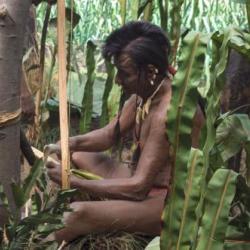
The old man is scraping the kernels from an ear of corn with the teeth and jawbone of a deer. The corn will drop into a vessel made from the bottom part of a large gourd. Gourds were used as vessels for various purposes. None are shown growing in the exhibit, but the Haudenosaunee did cultivate them.
Cultivated Plants and Fields
The Haudenosaunee crops required well-drained soil with a high lime content.
A good growing area could be recognized by the kind of forest growing there. In addition, the soil had to be easy to work because the tools of the time were made of stone, antler, bone, and wood.
In a virgin forest, the trees were huge and widely spaced. Such trees were killed by girdling, a process that allowed sunlight to reach the forest floor; then crops could flourish. The dead trees were left to rot or burn. Annual burning cleared the fields of weeds and stubble.
The soil became exhausted after a decade of farming, so the fields were abandoned. The forest reclaimed the land and rejuvenated the soil, which prepared it for another cycle of farming after 50 or 60 years. The people got a great bonanza of trees small enough for their construction projects when they cleared this second-growth forest for new fields. This time they felled the trees and burned the unwanted brush.
Growing corn and beans together is good practice: the corn stalk provides a trellis for the beans AND the roots of the bean plants nourish the corn by fixing nitrogen in the soil, which is depleted by the corn.
The corn and bean plants in the exhibit are plastic replicas of plants grown by modern-day Haudenosaunee. The seeds were passed down from the 1600s through many generations of crops.
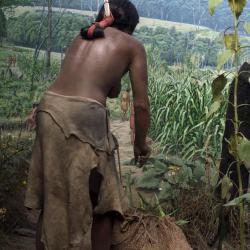
The plants that resemble small sunflowers are Jerusalem artichokes (Helianthus tuberosus), a plant native to the Mississippi Valley. The Haudenosaunee grew this plant for its tuberous 'roots', which somewhat resemble potatoes.
Early European visitors took this plant home where it became a popular food.
Fernald and Kinsey, in their book, Edible Wild Plants of Eastern North America, tell us that: "The name Jerusalem applied to this plant is likely to lead to misconception. The tubers, early introduced into Europe, were soon popular in the Mediterranean countries and in Spanish were called girasol, in Italian girasole. True to their genius in such matters the English promptly changed it to Jerusalem."
Girasole translates to 'turning to the sun'.
Forest Trees in the Background Painting of the Diorama
American beech
The background represents a beech-maple forest named for two of the more abundant kinds of trees found in it, American beech and sugar maple. White ash, American basswood, pignut hickory, shagbark hickory, white pine, yellow birch, hemlock, American elm and sweet birch are other trees commonly found in this type of forest. The Iroquois had learned that this type of forest grew on a fertile soil that would be good for their crops. Similar forests grow in the region today.
Sugar maple
When your are at the exhibit, notice that the trees in the background painting are not large, and that they are close together. This is a second growth forest about 50 years old. This new forest invaded an earlier field, which was abandoned because the soil had been depleted by farming. The new forest growth restores the fertility to the soil, and trees of this size are ideal for longhouse construction.
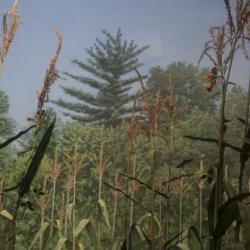
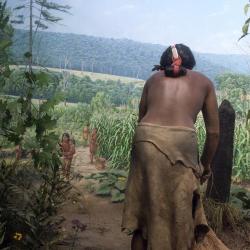
'Weed' Plants in Bloom
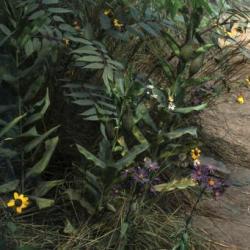
These 'weed' plants, which are in the left foreground of the diorama, include some of those found in the area today in late August. Several are shown in bloom for artistic effect; however, in nature, all of these might not be in bloom at the same time, but all bloom in the late summer. All are native plants, but today they would not be the dominant weeds at the edge of a field. Most of our present-day weed plants are immigrants from Europe and Asia.
Sketches of Weed Plants in the Diorama
Introduction to the Fort Orange Educational Guide
Created for teachers of the 4th and 7th grades, this educational guide provides five lessons that introduce students to Fort Orange and the world of New Netherland. Studying New Netherland—its foundation, purpose, and the complex dynamics of its diverse populations—is essential to students’ understanding of the history of New York. The wealth of archival resources, three-dimensional artifacts, and original research in the repositories of the Office of Cultural Education make teaching this history possible. Moreover, the richness of the resources pertaining to the Dutch development of New York makes this subject perfect for inquiry-based lessons that challenge students to investigate different types of evidence and explore life in New Netherland.
In these lessons students use digital images of archaeological collections, interviews with content specialists, and digital copies of archival material and artwork to answer Social Studies Framework-supporting questions and develop English Language Arts skills. Students will gain content knowledge about Fort Orange and the Dutch colony of New Netherland in the seventeenth century, as well as the skills for analyzing and interpreting primary sources.
The exhibition, “a small fort, which our people call Fort Orange,” at the New York State Museum and this educational guide were generously supported by the Dutch Culture USA program administered by the Consulate General of the Netherlands in New York. Additional essential support was provided by the Archives Partnership Trust.
Instructions for use of Fort Orange Online Educational Materials:
All of the slide presentations and student worksheets available below were created for optimal use with Google Drive and Google Classroom. If you do not have or do not want an account with Google (gmail), you can still view the slide presentations online OR easily download and save the documents as PDFs or Word Documents.

LESSON 1: Native American Daily Life Before Dutch Arrival
Learn about the Mohawks and Mohicans, Native American groups living in the area of Fort Orange.
- Historical Background: The Mohawks and the Mohicans
- Setting the Stage: Making Comparisons
- Activity #1: Where did the Mohawks and Mohicans live?
- Activity #2: Compare the Mohawk community to the Mohican community
- Activity #3: Analyze the artifacts left behind by the Mohawks and Mohicans
- Summative Assessment: Describing daily life
Lesson 1: Slide Presentation and Worksheet (Combined) via Google Slides | |
| Lesson 1: Slide Presentation | » Link to Google Slides |
| Lesson 1: Student Worksheet | » Link to Google Document » Download PDF (350 KB) |
| Lesson 1: Answer Key | » Link to Google Document |

Lesson 2: Trade with Fort Orange
What was the purpose of Fort Orange and how did Dutch settlers take advantage of their new settlement?
- Historical Background: Establishing Trade
- Setting the Stage: Analyzing Paintings
- Activity #1: What items did the Dutch offer to trade?
- Activity #2: How did the Mohicans and Mohawks use some of the items they received from the Dutch?
- Activity #3: What did the Dutch receive in exchange for their trade items?
- Summative Assessment: Writing a persuasive letter
Lesson 2: Slide Presentation and Worksheet (Combined) via Google Slides | |
| Lesson 2: Slide Presentation | » Link to Google Slides |
| Lesson 2: Student Worksheet | » Link to Google Document » Download PDF (350 KB) |
| Lesson 2: Answer Key | » Link to Google Document |

Lesson 3: Archaeology of Fort Orange
How does archaeology help us describe a place that no longer exists?
- Historical Background: Descriptions of Fort Orange
- Setting the Stage: Sourcing a Document, Catalina Trico’s Description of Fort Orange
- Activity #1: Where was Fort Orange located?
- Activity #2: How does archaeology help us describe a place that no longer exists?
- Activity #3: What did Fort Orange look like?
- Summative Assessment: Determining the reliability of information
Lesson 3: Slide Presentation and Worksheet (Combined) via Google Slides | |
| Lesson 3: Slide Presentation | » Link to Google Slides |
| Lesson 3: Student Worksheet | » Link to Google Document » Download PDF (400KB) |
| Lesson 3: Answer Key | » Link to Google Document |
| Lesson 3: VIDEO 1 | Len Tantillo: Painting History |
| Lesson 3: VIDEO 2 | Len Tantillo: Recreating Fort Orange |
| Lesson 3: VIDEO 3 | Paul Huey: Uncovering Fort Orange |
| Lesson 3: VIDEO 4 | Paul Huey & Joe McEvoy: Artifacts |
| Lesson 3: VIDEO 5 | Paul Huey: Locating Fort Orange |

Lesson 4: Economical & Political Tensions among the Dutch
What issues caused problems among the Dutch settlers living around Fort Orange?
- Historical Background: A Patroon, a Director, and a Village called Beverwijck
- Setting the Stage: Using Maps in Historical Thinking
- Activity #1: What complaints did Brant van Slichtenhorst have in 1648?
- Activity #2: How did the directors of the West India Company respond to Slichtenhorst?
- Summative Assessment: Understanding different perspectives
Lesson 4: Slide Presentation and Worksheet (Combined) via Google Slides | |
| Lesson 4: Slide Presentation | » Link to Google Slides |
| Lesson 4: Student Worksheet | » Link to Google Document » Download PDF |
| Lesson 4: Answer Key | » Link to Google Document |

Lesson 5: Riches of Global Commerce at Fort Orange
What kind of life did the Dutch build in New Netherland?
- Historical Background: The Dutch Golden Age
- Setting the Stage: What Was the Dutch Golden Age?
- Activity #1: Gallery Walk
- Activity #2: Analyzing Artifacts
- Summative Assessment: Putting it altogether
">Lesson 5: Slide Presentation and Worksheet (Combined) via Google Slides | |
| Lesson 5: Slide Presentation | » Link to Google Slides |
| Lesson 5: Student Worksheet | » Link to Google Document » Download PDF |
| Lesson 5: Answer Key | » Link to Google Document |
LIDAR
LIDAR is a technology derived from space missions used to map and calculate accurate distances. That early technology has been developed and redeployed for use in a variety of fields. Modern day LIDAR is collected on an aerial platform and utilizes downward shooting lasers in the form of a point cloud (high density of point data) that sends a primary reflection (or return) back from tops of trees and buildings, and then a secondary reflection back from the surface of the earth. The timber industry utilized this technology to calculate which locations have the tallest trees and thus the best locations for timber harvest. However, the added benefit is that by subtracting the primary return from the secondary return you can produce very high resolution elevation maps of the bare earth with vegetation removed. These bare earth models allow geologists to see the landscape in unprecedented resolution and provide the ability to identify previously unrecognized glacial landforms. Early elevation models were constructed from grids that used 30 meter by 30 meter cells. Other later models used 10 meter by 10 meter cells. In comparison state of the art LIDAR produces 0.5 meter by 0.5 meter cells. The analogy here is that LIDAR is similar to an MRI in the medical field. Once we have LIDAR we can recognize and surgically target certain glacial landforms for further investigation with other methods of geologic exploration. Presently there is LIDAR coverage for approximately 34 of 62 counties in NY. LIDAR cost average about $250/square mile to collect and process. Pennsylvania completed LIDAR coverage for the entire state with processing for nine million dollars in 2009. Since that time LIDAR has been used for mapping extensive flood damage from flooding associated with tropical storms and hurricanes, landslides and other geological related issues.
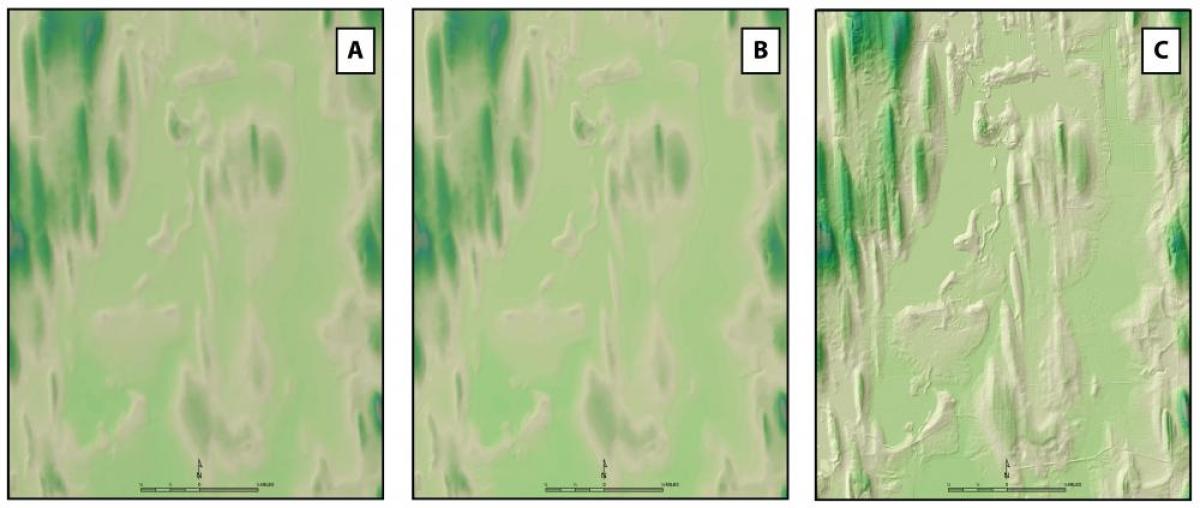

Related Publications
Kozlowski, A. 2015. Mapping and Materials. Material Matters Spring: 20-21. http://www.nxtbook.com/naylor/NCMB/NCMB0115/index.php#/20
Kozlowski, A.L.; Graham, B.L. (Eds), June 2014, Glacial Geology of Cayuga County of the Eastern Finger Lakes: Lakes, Lore and Landforms; Guidebook for the 77th annual Reunion of the Northeastern Friends of the Pleistocene Meeting, Auburn , NY 140 pp.
In New York State, education corporations are created by the Board of Regents of The University of the State of New York. As the senior educational authority in New York State, the Board of Regents oversees the State's educational system. Nonprofit organizations and institutions with educational purposes seeking to incorporate, must do so under Education Law § 216, subject to the authority of the Regents.
While every other state views cultural agencies as nonprofit businesses, New York treats them as educational organizations. This is a significant difference because the underlying assumption of Education Law, as implemented by the Rules of the Regents, is that the Board of Regents will evaluate the quality of an organization or institution that seeks to be incorporated.
Although the process of incorporating cultural agencies in New York State is a regulatory function, the posture of the Board of Regents and the staff of the State Education Department is developmental. Fostering the evolution of excellent cultural agencies in New York State is the primary objective of the policies governing incorporation. New York's wide range of excellent cultural agencies is recognized by the Board of Regents as one of our State's most important educational resources.
There are two different incorporation types within the New York State Education Department; charter and certificate of incorporation. For this instance, charters are only granted to museums and historical societies with collections, while certificate of incorporation are granted to cultural agencies that do not own collections.
All New York State Board of Regents incorporated organizations have to follow certain rules and regulations in order to be in good standing:
- Education Law §216 and §216-a
- Non-for-Profit Corporation Law
- Regents Rules (8NYCRR)
To understand what it means to be a trustee or board member
Property of museum/ historical society
To request copies of a charter or Regents certificate of incorporation please contact either of the two offices below and provide then with the name of the organization and the date the charter/certificate was issued.
New York State Archives
New York State Education Department
Cultural Education Center
Albany NY 12230
Phone: (518) 474-8955
archref@nysed.gov
New York State Board of Regents
New York State Education Department
89 Washington Avenue
Board of Regents, Room 110 EB
Albany NY 12234
Phone: (518) 474-5889
RegentsOffice@nysed.gov
The New York State Board of Regents (“the Regents”) charters museums in New York State as educational corporations and has governing authority over these incorporated organizations. In 2011, the Regents approved an amendment to its Rules regarding deaccession policies, including the practice of deaccessioning and the use of funds resulting from such practice.
Recently, there had been some confusion in the museum field regarding deaccessioning regulations. The Regents Rules are in alignment with the American Alliance of Museums (AAM) Code of Ethics for Museums that remain in place.
The relevant Regents Rules are listed below:
Title 8 of the Official Compilation of Codes, Rules and Regulations of the State of New York
§3.27
(a) Definitions.
(10) Deaccession means: (a) removing an object from an institution's collection or (b) the act of recording/processing a removal from an institution's collection.
(5) Facilities. The institution shall:
(e) Deaccession. The criteria and process (including levels of permission) used for determining what items are to be removed from the collections, and a statement limiting the use of any funds derived therefrom in accordance with subparagraph (vii) below;
(iv) ensure that collections or any individual part thereof and the proceeds derived therefrom shall not be used as collateral for a loan;
(v) ensure that collections shall not be capitalized; and
(vi) ensure that proceeds derived from the deaccessioning of any property from the institution's collection be restricted in a separate fund to be used only for the acquisition, preservation, protection or care of collections. In no event shall proceeds derived from the deaccessioning of any property from the collection be used for operating expenses or for any purposes other than the acquisition, preservation, protection or care of collections.
(7) Deaccessioning of collections. An institution may deaccession an item in its collection only in a manner consistent with its mission statement and collections management policy and where one or more of the following criteria have been met:
(i) the item is inconsistent with the mission of the institution as set forth in its mission statement;
(ii) the item has failed to retain its identity;
(iii) the item is redundant;
(iv) the item's preservation and conservation needs are beyond the capacity of the institution to provide;
(v) the item is deaccessioned to accomplish refinement of collections;
(vi) it has been established that the item is inauthentic;
(vii) the institution is repatriating the item or returning the item to its rightful owner;
(viii) the institution is returning the item to the donor, or the donor's heirs or assigns, to fulfill donor restrictions relating to the item which the institution is no longer able to meet;
(ix) the item presents a hazard to people or other collection items; and/or
(x) the item has been lost or stolen and has not been recovered.
Museum Reporting Requirements
§3.27 & §3.30
Each institution shall file with the commissioner an annual report, in a form prescribed by the commissioner, which records the educational and cultural activities of the institution and presents an accurate statement of all financial operations. Each institution shall include in its annual report a list of all items or item lots deaccessioned in the past year and all items or item lots disposed of in the past year.
More Information on Deaccessioning
NYSED
2011 Amendment of Regents Rule §3.27, Relating to Museum Collections Management Policies
https://www.regents.nysed.gov/meetings/2011/2011-02-12
American Alliance of Museums (Direct Care of Collections)
https://www.aam-us.org/programs/ethics-standards-and-professional-practices/direct-care-of-collections/
Association of Art Museum Directors 2020 Resolution regarding Deaccessions (AAMD)
https://aamd.org/for-the-media/press-release/aamd-board-of-trustees-approves-resolution-to-provide-additional
Annual Report
NY Ed. Law §215: "The regents, or the commissioner of education, or their representatives, may visit, examine into and inspect, any institution in the university and any school or institution under the educational supervision of the state, and may require, as often as desired, duly verified reports therefrom giving such information and in such form as the regents or the commissioner of education shall prescribe. For refusal or continued neglect on the part of any institution in the university to make any report required, or for violation of any law or any rule of the university, the regents may suspend the charter or any of the rights and privileges of such institution."
8 NYCRR 3.27 & 3.30: Each institution shall file with the commissioner an annual report, in a form prescribed by the commissioner, which records the educational and cultural activities of the institution and presents an accurate statement of all financial operations. Each institution shall include in its annual report a list of all items or item lots deaccessioned in the past year and all items or item lots disposed of in the past year.
Click here to submit an electronic Annual Report. Please have the 2025 annual report submitted by October 1, 2026.
Please refer to the document below to find your Charter Group ID Number for the Annual Report.
The most recent Regents charter agenda can be found here.
For copies of institutional policies please contact the New York State Chartering Office
Contact Chartering
Chartering Program
New York State Education Department
C/o Lauren Lyons
Room 3023, Cultural Education Center
Albany NY 12230
Phone: (518) 486-3843
charters@nysed.gov
The information listed here relates to the chartering of museums, historical societies, and similar cultural organizations. For inquires regarding other forms of chartering please contact one of the offices below or search the New York State Education Department Index.
Division of Library Development
Charter School Office
Office of Higher Education
Office of the Professions
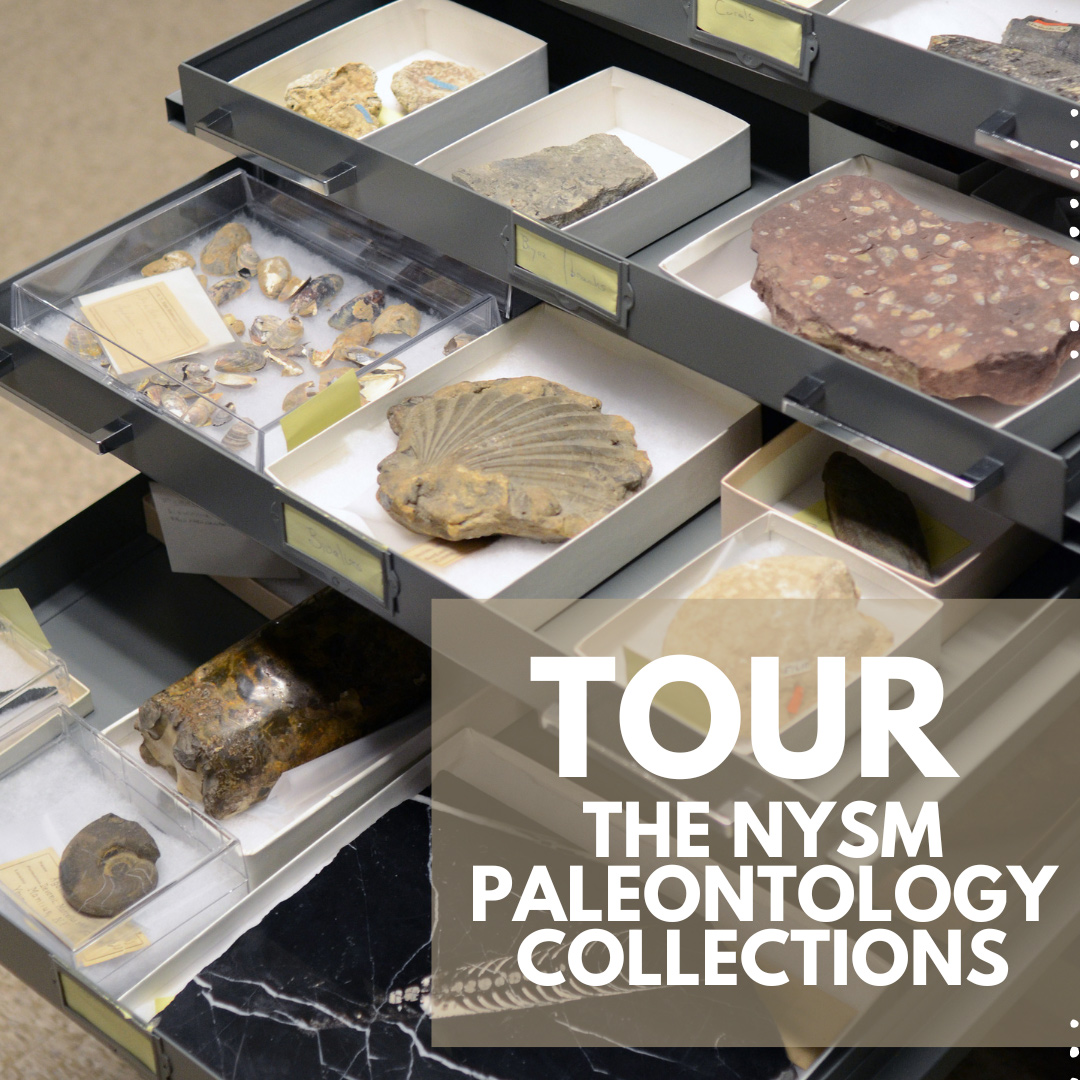
Step behind the scenes of the New York State Museum for an exclusive tour of the Paleontology Collection with Dr. Lisa Amati, State Paleontologist and Curator of Paleontology. Discover the fascinating world of ancient sea creatures like trilobites and crinoids and experience specimens of the unique fossil plants from the world's oldest fossil forests!
Explore fossilized evidence of life that predates the dinosaurs and learn how these specimens help scientists piece together Earth’s deep past. Perfect for curious minds ages 6 and up.
Tours are limited to 12 participants—registration is required to reserve your spot!
Register here: https://www.eventbrite.com/e/tour-of-the-new-york-state-museum-paleonto…
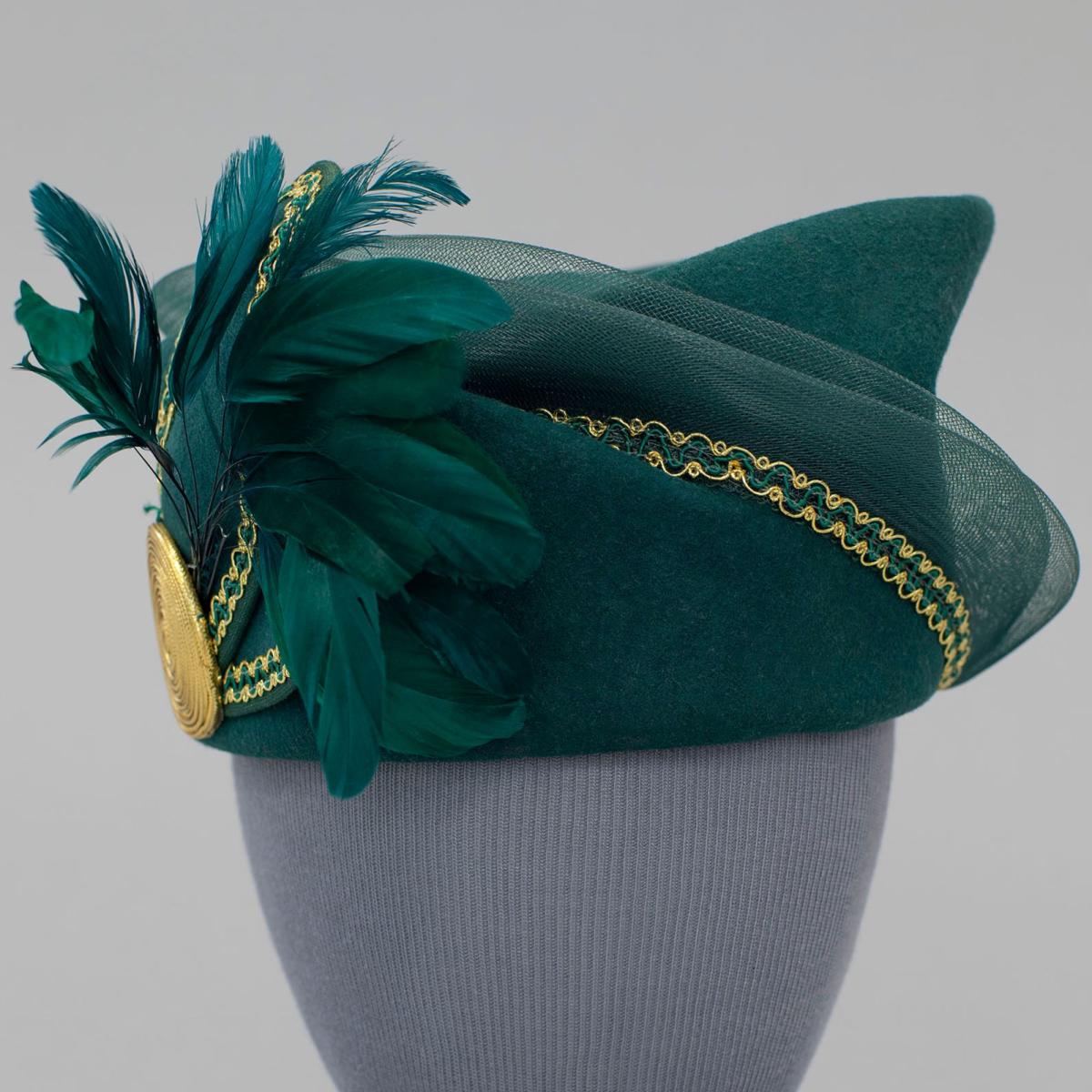
Worn by Ada Mae Kitchen (1927-2017).
NYS Museum Collection, H-2025.88.8
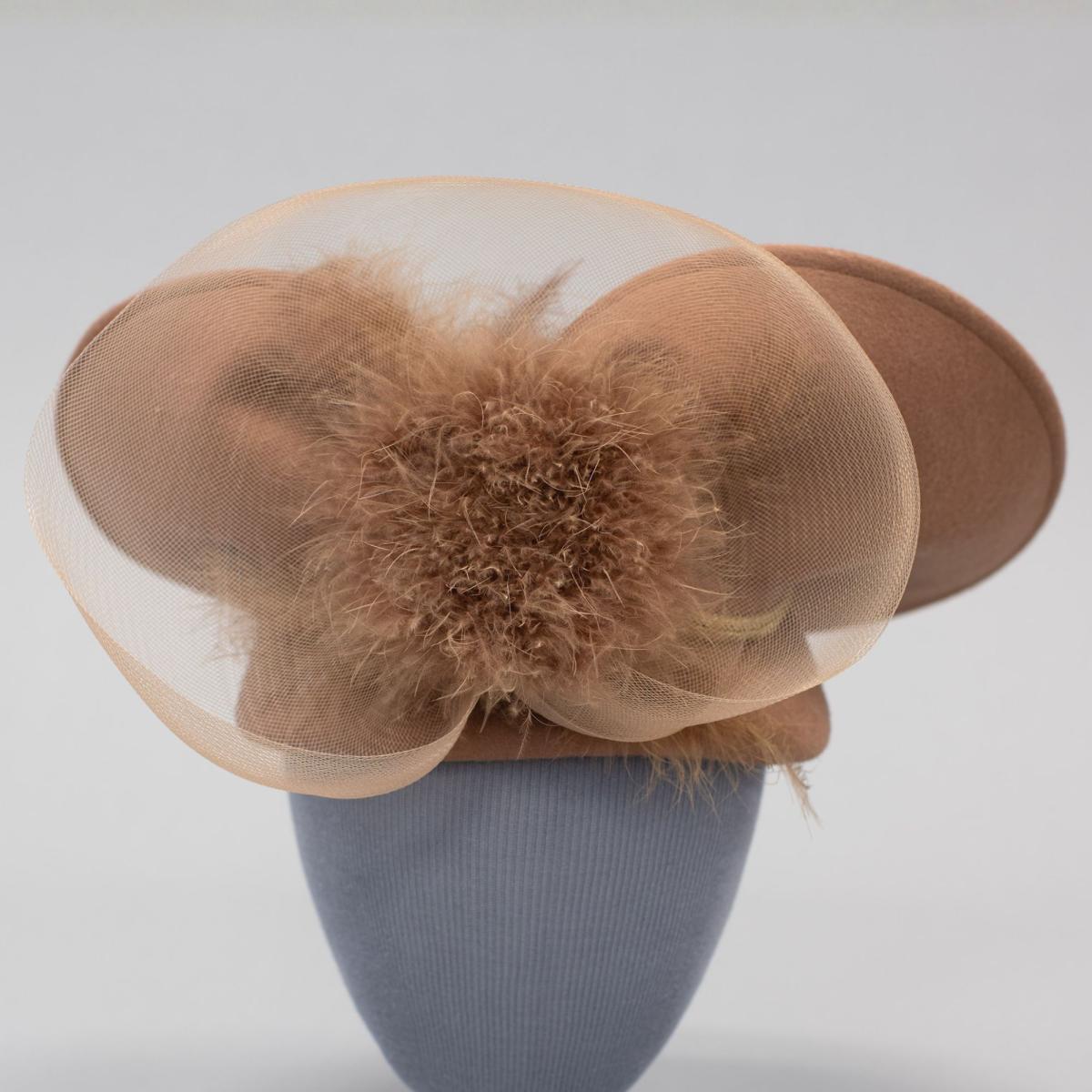
Worn by Sharon Stinchcomb (b.1955).
NYS Museum Collection, H-2025.68.1
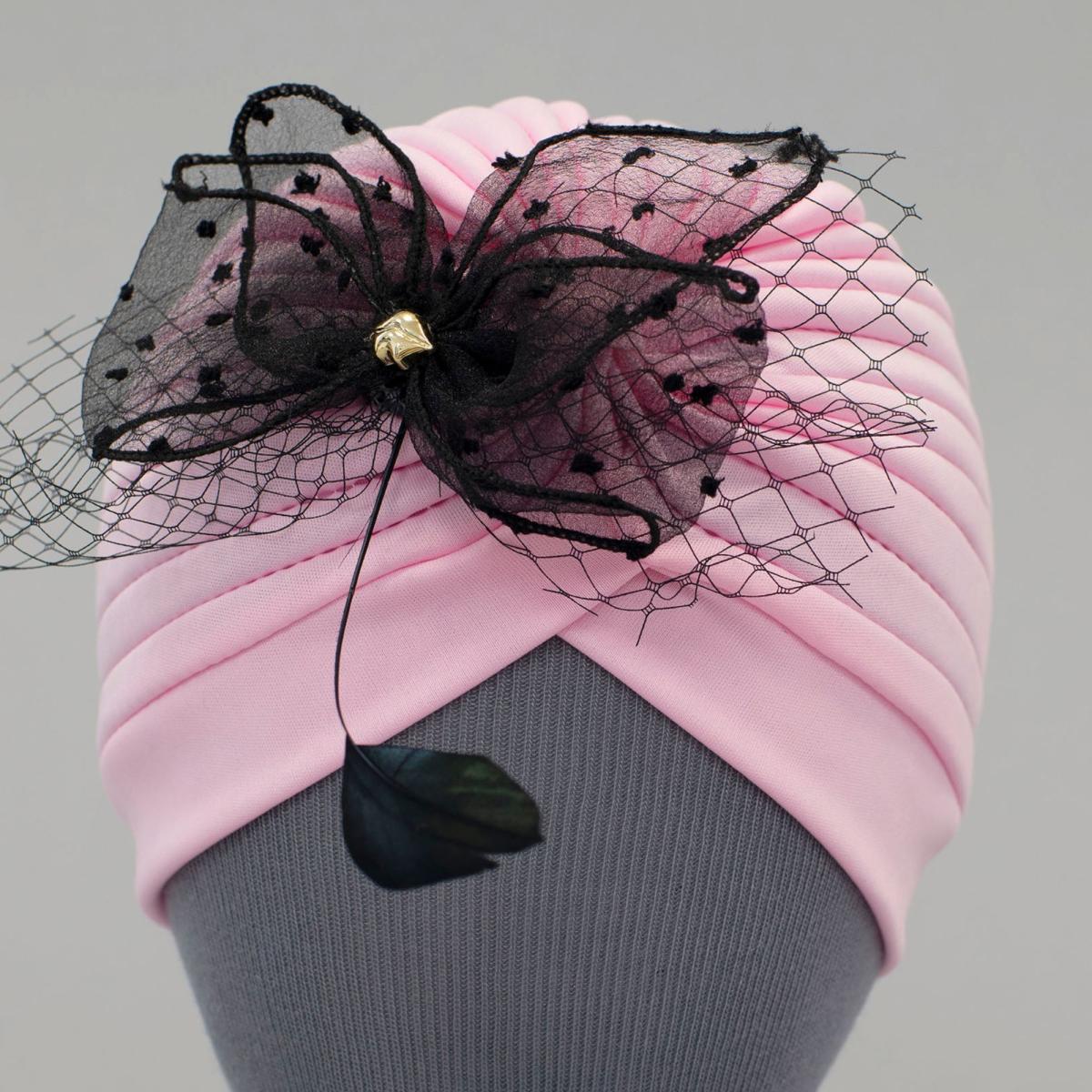
Worn by Henrietta Fantroy (1923-2020).
NYS Museum Collection, H-2025.90.1
New York State Museum Celebrates Black Women of the Great Migration with New Display Highlighting Community, Identity, and Faith
Fashion and Faith: Hats from the Great Migration Opens to the Public Saturday, February 14
The New York State Museum is honoring the Black women whose faith helped shape Albany’s communities with the opening of its newest collections feature, Fashion and Faith: Hats from the Great Migration. Between 1910 and 1970, more than seven million African Americans left the South, with New York State becoming a popular destination for those seeking higher wages, better housing, less discrimination, and improved educational opportunities for their children. The display explores the lived experiences of women during the Great Migration through their church hats, which became vibrant, impactful expressions of identity, connection, and possibilities.
Opening to the public on February 14, the display features 25 hats worn by women who primarily settled in Albany’s South End, Arbor Hill, and Rapp Road neighborhoods. Visitors will learn about the lives and legacies of influential community builders and leaders, including Lady Florine Delores “Sue” Johnson, First Lady of the Greater St. John’s Church of God in Christ; Anne M. Pope, former president of the Albany NAACP and Northeast regional director; and lifelong community advocate Abbie Lee Brace.
Jennifer Lemak, Chief Curator of History, said, “The extraordinary women represented in this exhibit helped found and sustain the local churches that became community centers for migrants settling in New York. These women helped create lasting institutions in Albany and beyond, and their hats serve as tangible, personal entry points to their stories. It has been a pleasure working alongside their families and the Rapp Road Historical Association to create a display honoring their legacy.”
Stephanie Woodard, president of the Rapp Road Historical Association, said, “The Rapp Road Historical Association views this exhibit as a vital component in preserving the legacy of the Rapp Road Historic District. The exhibit powerfully conveys the district’s cultural and spiritual significance by sharing the stories of the women who lived, worshiped, and built community there. The Association deeply appreciates the vision and dedication of Jennifer Lemak, along with Sheraqua Woodard and Mother Geneva Conway, who worked closely with families and congregations to thoughtfully gather the crowns that anchor the exhibit. Their efforts honored both the women and the histories connected to each hat. Most importantly, the Historical Association thanks the women and their families that have bestowed some of the most precious pieces of their being to be displayed as part of New York State’s history.”
Sheraqua Woodard-Olarinde, Rapp Road Historical Association member, said, “It was an honor to help collect the hats, while learning about these women and encouraging them to tell their stories and share their resilience. This project also gave me an opportunity to learn more about my own family, including descendants who settled in the Rapp Road neighborhood.”
The Museum will host an opening reception on Friday, March 6, beginning at 6:00 p.m. In addition to the display, guests will enjoy a viewing of the WMHT documentary North to New York: The Great Migration in NY’s Capital Region.
The hats will remain in the Museum’s collection, and Fashion and Faith: Hats from the Great Migration will be on display through July 19, 2026.
Additional resources and information about the display can be found on the New York State Museum’s website.
About the New York State Museum
Established in 1836, the New York State Museum is the oldest and largest public museum in the United States. Home to leading scientists, historians, archeologists, and anthropologists, its collections represent the State’s rich cultural and natural heritage from the past and present, including a staggering 20+ million artifacts spanning 1.1 billion years ago to today. Located at 222 Madison Avenue in Albany, the Museum is open Tuesday through Sunday from 9:30 a.m. to 5 p.m. It is closed on the Fourth of July, Thanksgiving, Christmas, and New Year's Day. Admission is free. For additional information, visit the New York State Museum website and subscribe to our newsletter.
###
(518) 474-1201
Press@nysed.gov
www.nysed.gov
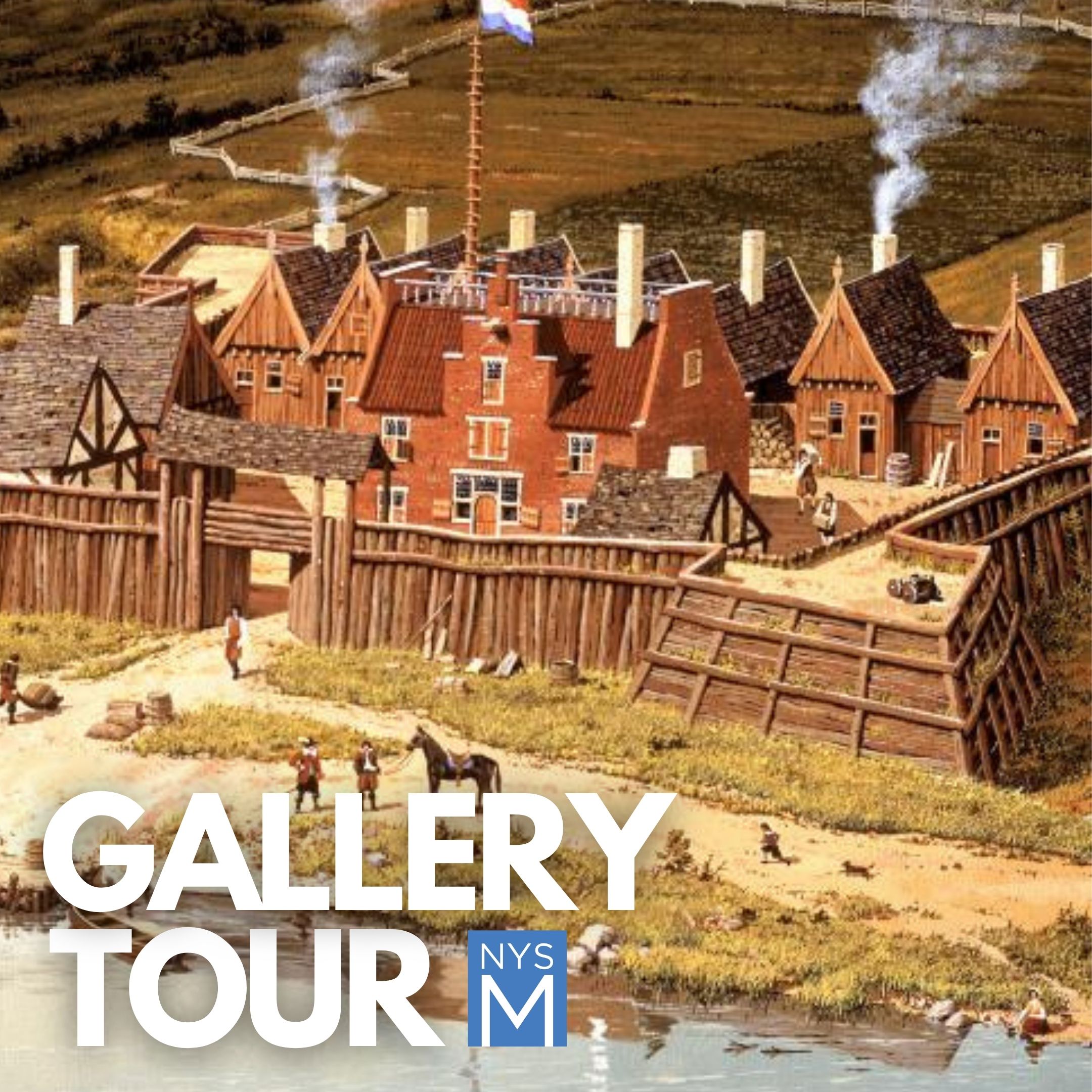
Join a museum educator for an engaging gallery tour of “A Small Fort, Which Our People Call Fort Orange,” and uncover the story of New Netherland’s first permanent Dutch settlement. Explore the fort’s evolution—from a bustling trading post in 1624 to a vanished landmark rediscovered through remarkable archaeological work in the 1970s. Examine artifacts, historical renderings, and film footage that reveal daily life at Fort Orange and its enduring impact on Albany, New York State, and the nation. This tour brings history to life, connecting 400-year-old discoveries to the vibrant story of the region today.
Mary Banning: Fungi of Maryland
Mycology
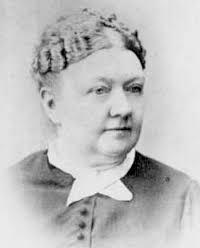
Mary Banning
Completed in 1889, The Fungi of Maryland by Mary Elizabeth Banning (1822-1903) is an unpublished manuscript featuring 175 detailed 13" by 15" watercolor illustrations, scientific descriptions, and mycological anecdotes. Among the fungi documented, 23 species were previously unknown to science and were later described in the Botanical Gazette and Charles H. Peck’s Annual Report of the New York State Botanist.
The manuscript was the culmination of over 20 years of field research and artistic study by Banning, a self-taught mycologist with a deep passion for Maryland’s fungal biodiversity. She corresponded extensively with Peck, who established the fungal collection at the New York State Museum.
Despite her pioneering contributions, Banning spent her later years in poverty, and her manuscript, entrusted to Peck, remained hidden for nearly a century. Rediscovered in the 1980s, The Fungi of Maryland is now one of the most prized artifacts in the New York State Museum’s collection.
The Watercolors
Select watercolors from The Fungi of Maryland are presented here, accompanied by transcriptions of Banning’s handwritten descriptions.
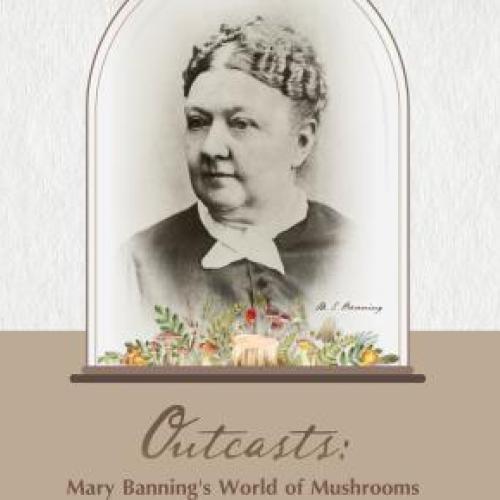
Immerse yourself in the stunning world of fungi at the NYSM's newest exhibit, Outcasts: Mary Banning's World of Mushrooms, where you can explore 28 of Mary Elizabeth Banning’s exquisite watercolor illustrations and uncover the remarkable story of one of America’s first female mycologists.
Stacks Espresso Bar's Carousel Cafe Now Open at the New York State Museum
New York State Office of General Services (OGS) Commissioner Jeanette Moy, New York State Education Commissioner (NYSED) Dr. Betty A. Rosa, and Empire State Development (ESD) President, CEO, and Commissioner Hope Knight today announced that Stacks Espresso, a cornerstone of Albany’s thriving coffee scene, has been selected as the New York State Museum’s new café vendor. The Carousel Café by Stacks is now open inside the Museum, offering visitors, staff, and the public a welcoming, family-friendly space to gather, refuel, and connect before, during, or after a museum visit.
New York State Office of General Services Commissioner Jeanette Moy said, “I am looking forward to Stacks Espresso Bar joining the Empire State Plaza’s vibrant local food scene. OGS is proud to partner with the State Education Department on creating spaces that invite community connection and offer a place for people to take in our great state’s heritage, like the New York State Museum. After brewing for a while now, I encourage everyone visiting the State Museum to stop by and enjoy this new addition to our eateries at the Plaza.”
New York State Education Commissioner Betty A. Rosa said, “Stacks Espresso Bar brings a vibrant energy that aligns perfectly with the Museum’s mission to inspire and engage. We’re excited to welcome a local partner that enhances our museum experience and supports our commitment to providing a welcoming, high-quality environment for every museumgoer. We’re incredibly grateful to the Office of General Services for their partnership as we turn the page toward this exciting new chapter for the café.”
Empire State Development President, CEO, and Commissioner Hope Knight said, "Under Governor Hochul's leadership, New York continues to support projects and investments that will further encourage the state's revitalization efforts in Downtown Albany. The New York State Museum is a landmark within the city's urban core, and Stacks locations have quickly become popular with residents and visitors alike. Today's announcement represents the union of two downtown institutions and complements our progress to date, and I'm excited to see a local business grow and thrive within the museum's café."
New York State Museum Director Jennifer Saunders said, “The Museum is at its best when it is a welcoming place for New Yorkers to gather, explore, and connect. We are grateful to the Office of General Services for its partnership in bringing Stacks Espresso Bar to the Museum, and we thank Empire State Development and the Governor’s Office for their ongoing collaboration and support. This new café enhances the Museum as a welcoming place for connection and community.”
CEO of Stacks Espresso, LLC Susan Dunckel, said, “We’re honored to bring 'The Carousel' by Stacks Espresso LLC to the Cultural Education Center and to be part of the Empire State Plaza community. Since 2014, our mission has been to serve great coffee and fresh, approachable food in a space that feels welcoming to everyone. We’re excited to offer visitors and staff a place to take a break, refuel, and enjoy something made with care while they explore everything this incredible building has to offer.”
State Senator Patricia Fahy said, “Today marks an exciting day for the New York State Museum — visitors will now be able to recharge and refuel at The Carousel, the Museum's new cafe and gathering place. Revitalizing and renovating the State Museum has long been a priority of mine, and the addition of The Carousel will help to ensure that it becomes a true destination location. I look forward to grabbing a coffee and bite with my neighbors and seeing how our community and visitors alike take advantage of this new space. Thank you to Stacks for stepping up to serve our community in a new and meaningful way at one of the jewels of the Capital Region."
Assemblymember John T. McDonald III, RPh, said, “The New York State Museum is a place where people of all ages come to learn and connect, and the addition of Stacks Espresso Bar will enhance that experience. Supporting a locally owned business while creating a welcoming space for visitors strengthens both the Museum and Downtown Albany. I’m pleased to see this new cafe open and look forward to it becoming a gathering place for the community.”
Assemblymember Gabriella A. Romero said, “The revitalization of the New York State Museum exemplifies the state’s commitment to boosting the vibrancy of Downtown Albany and creating a fun, welcoming space for all to enjoy. Stacks is an Albany favorite, and to incorporate that into one of Albany’s most visited attractions is a wonderful way of further honoring that commitment. The investments being made into the Museum and Downtown Albany will continue to bring positive transformation to our community, and I’m excited that Stacks will now be a part of that.”
Albany County Executive Daniel P. McCoy said, “The New York State Museum is one of our most treasured public spaces, and the reopening of The Carousel Café makes it an even more welcoming place to visit. I’m glad to see a local business like Stacks Espresso Bar partnering with the museum to enhance the experience for visitors and families alike.”
Albany Mayor Dorcey Applyrs said, "Stacks Espresso is part of the fabric of Downtown Albany, and the announcement of this iconic business opening at the New York State Museum is something to celebrate. The Carousel Cafe by Stacks Espresso will be a great space for visitors to gather as they visit our iconic State Museum, and its presence highlights what Albany's small business community has to offer. We are grateful to Commissioner Moy and Commissioner Rosa, as well as Governor Hochul, for their continued and deliberate investment in Albany's downtown presence."
Announced in Governor Kathy Hochul’s 2025 State of the State, the Championing Albany’s Potential (CAP) initiative is bringing $400 million in new investment to Downtown Albany through ESD’s Downtown Albany Strategy, Department of Transportation’s Reimagining I-787, various public safety initiatives, and OGS’s Reconnect the Empire State Plaza project. The reopening of the museum’s café with Stacks Espresso as its vendor complements the CAP initiative by giving visitors another reason to come to Downtown Albany.
In addition, OGS will serve on the recently announced New York State Museum’s Visioning Task Force alongside NYSED and ESD. The reopening of this café space is part of the first phase of the New York State Museum’s recently announced multi-phased transformation, made possible by Governor Hochul’s historic $150-million investment in the Museum’s future.
Founded in 2014, Stacks Espresso is known for its thoughtfully sourced coffee and vibrant community spirit. The café offers a selection of its most popular beverages alongside kid-friendly options, as well as teas, hot chocolate, fresh pastries, and a la carte food items such as bagels and made-to-order sandwiches — all served in the signature Stacks style: approachable, high-quality, and proudly local.
The Carousel by Stacks will be open from 8:00 a.m. to 2:30 p.m., Wednesday through Friday, and 9:30 a.m. to 2:30 p.m., Saturday and Sunday. To start, the cafe will be closed on Mondays and Tuesdays. The café is located on the second-floor mezzanine of the Cultural Education Center, home of the New York State Museum.
The Cultural Education Center houses the New York State Museum, Library, and Archives, supports approximately 250 building staff, and welcomes more than 500,000 visitors annually. As part of the Empire State Plaza’s building portfolio, Stacks Espresso Bar joins a growing number of Capital Region businesses operating at the Plaza.
A list of all dining options at the Empire State Plaza is available at https://empirestateplaza.ny.gov/dining-plaza.
About the New York State Office of General Services
Since 1960, the Office of General Services has provided essential support to keep New York State government operations running smoothly. OGS looks after the buildings where state government happens, delivers innovative solutions and provides shared services for New Yorkers, champions environmental sustainability, preserves world-class art collections, and creates meaningful opportunities for businesses and people.
OGS cares for real property across the state, including the Empire State Plaza, a 98-acre government complex that serves as the workplace for approximately 11,000 New York State employees.
About the New York State Museum
Established in 1836, the New York State Museum is the oldest and largest public museum in the United States. Home to leading scientists, historians, archeologists, and anthropologists, its collections represent the State’s rich cultural and natural heritage from the past and present, including a staggering 20+ million artifacts spanning 1.1 billion years ago to today. Located at 222 Madison Avenue in Albany, the Museum is open Tuesday through Sunday from 9:30 a.m. to 5 p.m. It is closed on the Fourth of July, Thanksgiving, Christmas, and New Year's Day. Admission is free. For additional information, visit the New York State Museum website and subscribe to our newsletter.


Gather your besties for a Galentine’s Celebration on February 13th—an unforgettable after-hours evening filled with friendship, creativity, and self-expression. This interactive experience is designed for you to create, customize, and take home a collection of handmade treats and keepsakes while enjoying a fun night out at the New York State Museum. Sip on festive mocktails as you craft, mingle, and celebrate with friends in a relaxed, joyful atmosphere.
Throughout the evening, guests are free to explore a variety of creative stations where you can decorate your own cupcakes, blend custom bath bombs and bath salts, paint a votive candle holder, design friendship bracelets to wear or share, and more! You’ll also enjoy exclusive access to our Barbie™: A Cultural Icon Exhibition.
Every activity is hands-on, and everything you make is yours to keep, making this a night that’s as rewarding as it is fun. Whether you’re crafting, laughing, or simply soaking in the atmosphere, this Galentine’s Celebration offers a memorable experience and a bundle of personalized creations—all included with your registration.
💖 Registration for this event is now closed.
New Acquisition: Iconic Wartime Labor Portrait of George Williams
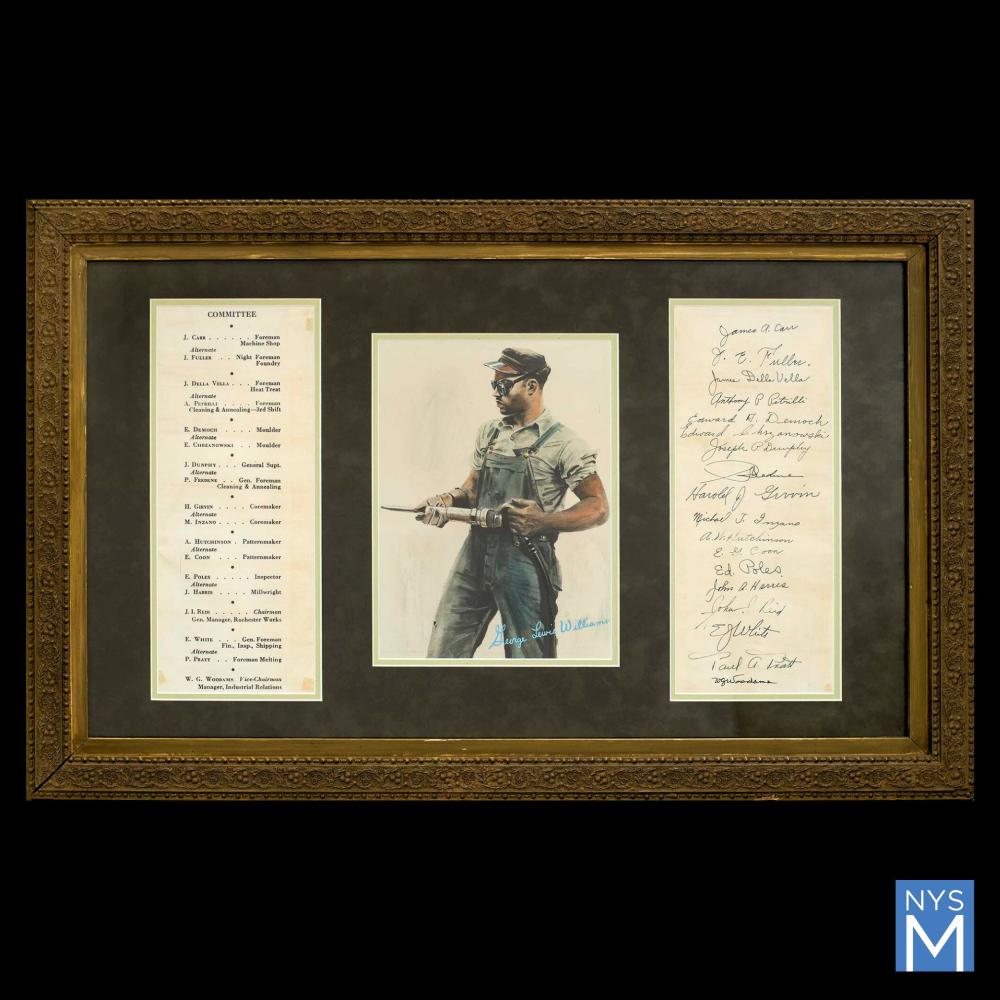
Colorized photograph of George Williams, Symington-Gould Corporation, Rochester, New York (ca. 1942). Presented to George Williams by Symington-Gould management to commemorate his selection for a War Department propaganda campaign.
New York State Museum Collection, H-2025.55.1
In the early 1940s, a War Department photographer visited the Symington-Gould foundry in Rochester, NY, a key supplier of munitions for the Allied war effort. This immediately drew the attention of many of the plant workers. However, George Williams reportedly remained at his station focused on his work. His unselfconscious dedication drew the photographer's attention, resulting in this iconic portrait.
The image captured the critical role of Western New York's industrial labor force in supplying munitions for the Allied war effort. At the Symington-Gould foundry, workers produced artillery shell casings and components for Sherman tanks. Notably, the portrait’s impact endured beyond the printed page: a metal statue modeled after Williams’s likeness was erected at the plant’s entrance, cementing his image as a lasting emblem of wartime industry.
Beyond its industrial significance, the photograph symbolized the simultaneous struggle within the United States to mobilize soldiers and civilians to fight for victory against the Axis powers of Germany and Japan while also combatting segregation, racism, and injustice in the United States.
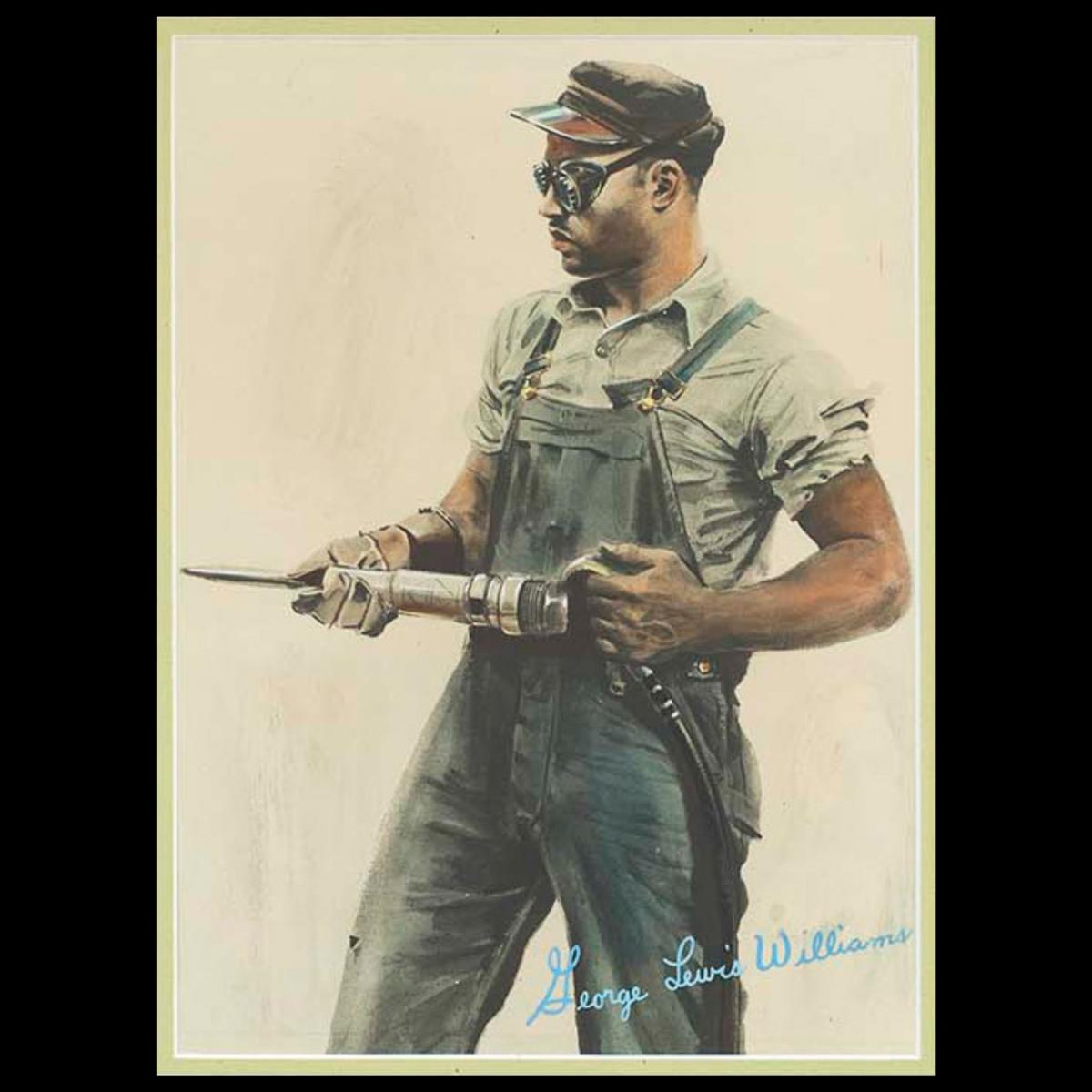
Portrait detail of George Willaims
Back of Portrait
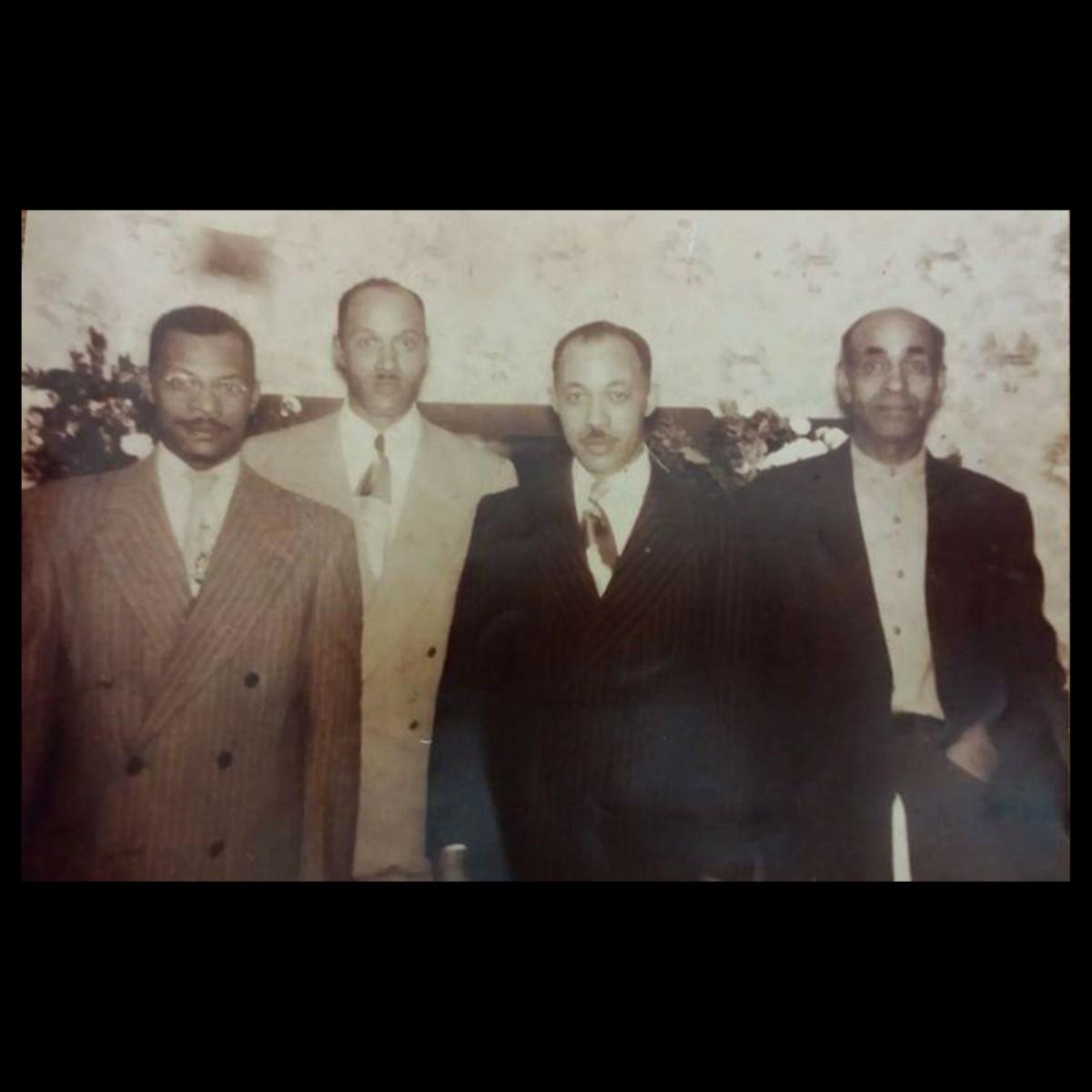
From left to right: Edward ("Buster") Williams, George Williams, Walter Williams Jr., and Walter Williams, Sr., circa 1940. Photo courtesy of Jeffrey Williams. George Williams (second from right) was the oldest son of Walter Williams Sr. and Charlotte (Johnson) Williams who migrated to Livingston County, New York in 1912 as part of the Great Migration. The couple had 7 daughters and three sons.
Spend School Break Digging for Fossils, Exploring Mastodons, and Ringing in the Lunar New Year at the New York State Museum
Week Culminates with Two-Day Rock and Fossil Fun Fair
During February break, families are invited to escape the cold weather and explore the New York State Museum’s lineup of free, educational, hands-on programs. Throughout the week, Museum educators, historians, and scientists will lead dynamic activities designed to entertain, engage, and inspire visitors of all ages. Events lead up to the Museum’s popular two-day Rock and Fossil Fun Fair, held this year on February 21 and 22.
Jennifer Saunders, Museum Director, said, “February break gives families the chance to learn together through hands-on experiences that are both educational and fun. It’s one of our busiest weeks of the year and a great time to explore the Museum. Having come into my role in September, I am particularly excited for my first Rock and Fossil Fun Fair! Our team has been hard at work creating opportunities that are sure to spark curiosity.”
Lunar New Year Celebration: Storytime, Tour, and Craft at the Museum
Dates: Sunday, February 15 and Tuesday, February 17
Time: 10:00 a.m.
Location: New York Metropolis Hall
Explore the historic Tuck High Co., learn about its rich history, and discover how three generations of the Lee family served their community. Plus, get creative with festive crafts as we welcome the Year of the Horse! Bring the whole family for a fun, hands-on experience of culture, history, and celebration.
Dinosaur Train Adventure: Ice Age Exploration!
Date: Wednesday, February 18
Time: 9:30 a.m.
Location: South Lobby
All aboard the Dinosaur Train for a frosty adventure! Join us for a fun-filled day with WMHT and the New York State Museum as we dive into the Ice Age, following Mr. Conductor’s journey to find a Mastodon in the Cenozoic. Explore our real Mastodon fossil, discover Ice Age animals, and get creative with a cool Mastodon craft!
Rhythms of the Diaspora: Drumming and Dance with Jordan Taylor Hill
Date: Thursday, February 19
Time: 11:00 a.m.
Location: Adirondack Hall
Jordan Taylor Hill leads a dynamic exploration of rhythm, movement, and cultural memory across the African Diaspora. The program opens with a powerful performance featuring traditional and contemporary rhythms from West Africa, Cuba, and the Black American tradition. Guests are then invited into an interactive workshop where Jordan guides them through rhythms and movement vocabulary that illuminate how these practices carry history, identity, and community.
Archive Adventures: Discover New York’s Hidden Stories
Date: Thursday, February 19
Time: 11:00 a.m.
Location: Discovery Place
Join experts from the New York State Archives to learn more about the remarkable history of Dorothy Franklin and Patricia Banks, two pioneering women who challenged racial barriers in aviation. Each Thursday, an archivist will be on hand to share stories, answer questions, and highlight carefully chosen original documents and photographs.
Rock and Fossil Fun Fair
Date: Saturday, February 21 and Sunday, February 22
Time: 10:00 a.m.
Location: All Museum Galleries
Mine for minerals, forage for fossils, experiment with a river replica, and more at the New York State Museum’s largest event of the year! With 15 hands-on activity stations created by Museum experts and prizes to take home, you won’t want to miss this opportunity to have fun with science. Be sure to bring your rocks and fossils from home for identification.
Download photos from the 2025 Rock and Fossil Fun Fair.
A full list of programs can be found on the New York State Museum’s website.
About the New York State Museum
Established in 1836, the New York State Museum is the oldest and largest public museum in the United States. Home to leading scientists, historians, archeologists, and anthropologists, its collections represent the State’s rich cultural and natural heritage from the past and present, including a staggering 20+ million artifacts spanning 1.1 billion years ago to today. Located at 222 Madison Avenue in Albany, the Museum is open Tuesday through Sunday from 9:30 a.m. to 5 p.m. It is closed on the Fourth of July, Thanksgiving, Christmas, and New Year's Day. Admission is free. For additional information, visit the New York State Museum website and subscribe to our newsletter.
(518) 474-1201
Press@nysed.gov
www.nysed.gov


Get creative at this special, limited-capacity cookie-decorating workshop hosted by Frosting Factory! In this hands-on experience, participants will learn step-by-step techniques for decorating a themed set of cookies inspired by the world of fashion dolls and timeless style. Designs may include iconic accessories and silhouettes such as a surfboard, purse, shoes, and more. Perfect for beginners and seasoned decorators alike, this guided workshop will cover icing techniques and decorative finishing touches. Each participant will leave with a beautifully decorated set of cookies and new skills to try at home. This program is presented in connection with the exhibition Barbie™: A Cultural Icon.
Space is limited and advanced registration is required.
Cost: $25 per participant.
Register here: https://71d99f88-a4d6-4d72-be29-2810b0affc0a.paylinks.godaddy.com/FashionDoll