

"I'm not missing a minute of this. It's the Revolution!"—Sylvia Rivera
As we mark the 250th anniversary of the American Revolution, we’re also reflecting on its unfinished promises and the people who were left out of its vision of liberty and equality. New Yorkers have long been at the center of the unfinished revolutions that followed.
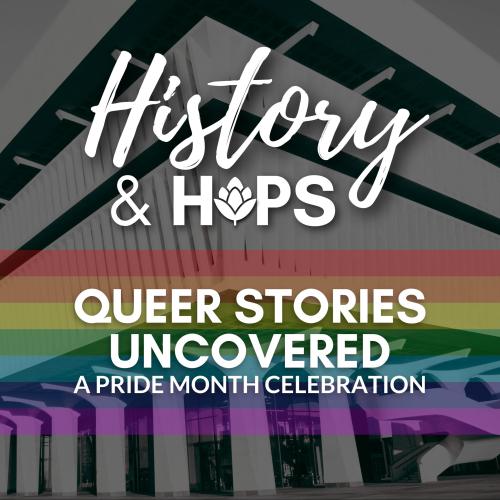
Join Ashley Hopkins-Benton, Senior Historian and Curator of Social History at the New York State Museum, at Common Roots Albany Outpost for a conversation about the events at the Stonewall Inn in June 1969, a defining moment that helped ignite the modern LGBTQ+ rights movement. We’ll look at how it began, why bars were essential spaces for queer community life, and how that uprising sparked decades of organizing that continues today.
This fun, interactive program is free to attend. Food and drink are not included, but are available for individual purchase at the venue.
Location:
Common Roots Albany Outpost
19 Quackenbush Square
Albany, NY 12207
https://commonrootsbrewing.com/
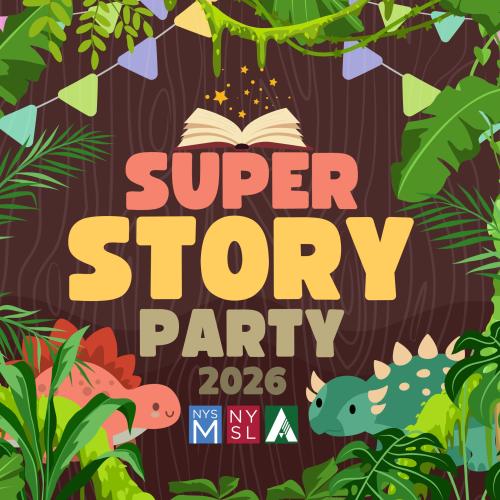
Get ready to roar! Calling all young readers and dinosaur-lovers: Join the New York State Library for the first-ever Super Story Party!
Celebrate the love of reading and explore this year’s Summer Reading theme of Unearth a Story. Enjoy a rollicking good time as kids can uncover hidden histories and explore the paleontological past. Each family will leave with information and materials to connect with this year’s Summer Reading Program and support literacy learning at home.
Special guests and community partners include children’s singer/songwriter Johnny Only, magician Ron Cain, The RED Bookshelf, New York State Archives, New York State Museum, and the Talking Book and Braille Library.
Registration for the 10:45 a.m. magic show is required: Super Story Party 2026!
Power of Place: The Thanksgiving Address
The Thanksgiving Address, Ohen:ton Karihwatehkwen: Words Before all Else
The Thanksgiving Address comes from the Haudenosaunee people, also known as the Iroquois and Six Nations. They are the Mohawk, Oneida, Cayuga, Onondaga, Seneca and Tuscarora people of Upstate New York and Canada.
The Address dates back more than 1,000 years, and today, these words – or a version of them – are still spoken at the opening and closing of all ceremonial and governmental gatherings held by the Six Nations.
The Address is based on the belief that the world cannot be taken for granted and that a spiritual communication of thankfulness and acknowledgment of all living things must be given to align the minds and the hearts of people with nature.
The above version of the Address was recorded by members of UAlbany’s Indigenous Students Association during the Spring 2024 semester.
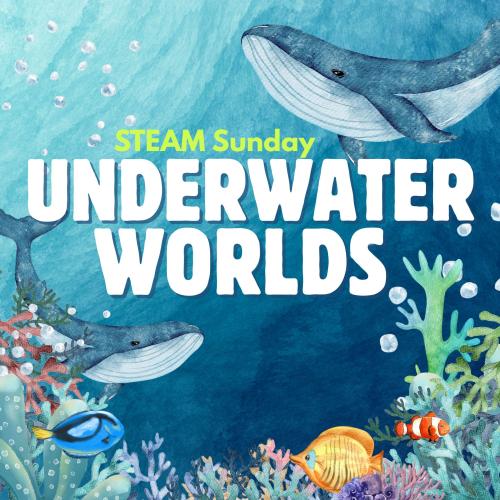
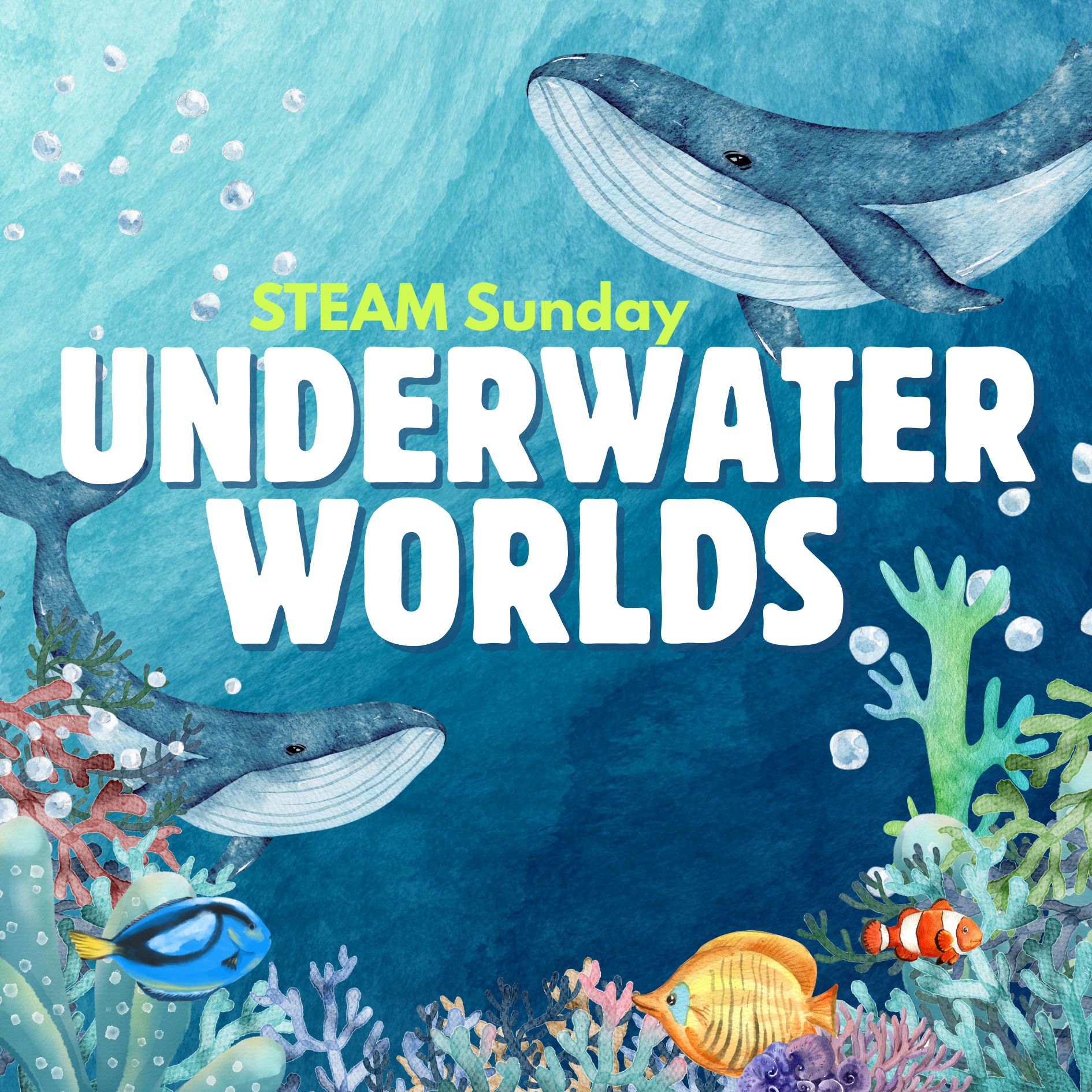
Celebrate World Ocean Month and National Week of Making with an immersive STEAM program exploring the wonders of Earth’s underwater ecosystems. Participants will begin with a short, engaging introduction to marine life highlighting the importance of ocean habitats, the evolution of marine animals, and how underwater species have adapted over time.
Following this exploration, participants will have the opportunity to view select marine specimens before diving into a hands-on creative workshop. Using diorama boxes, participants will design and build their own underwater world. Each diorama will reflect individual creativity while encouraging observation, storytelling, and an appreciation for ocean ecosystems.
*Our apologies. Registration for this program has reached capacity and is now closed.
News and Updates
Discover news and updates related to state and national 250th Commemoration planning.
"Governor Hochul Highlights America 250 Events Happening Across New York State" June 5, 2026
"New Poster Celebrates 250 Years of Peoples' Resistance" Syracuse Cultural Workers May 13, 2026
"The New York Public Library Expands its Celebration of the 250th Anniversary of the United States" The City Life Org April 1, 2026
"NYC prepares for historic events marking America's 250th" Spectrum News NY1 March 26, 2026
"Countdown to 250" NBC New York March 26, 2026
"New York prepares to celebrate country's 250th birthday" Capitol Press Room March 26, 2026
"World's largest steam locomotive to visit Buffalo as part of America's 250th birthday" WGRZ March 22, 2026
"New York State Museum building new exhibit for 250th U.S. anniversary" Times Union March 11, 2026
"America250 hosting events to celebrate the United States' semi-quincentennial" Spectrum News NY1 March 10, 2026
"New exhibit highlights pivotal Revolutionary War battle in Brooklyn" Spectrum News NY1 March 5, 2026
"Redcoats headed to Putnam County" Mid Hudson News March 2, 2026
"Major historical documents start journey across US as part of nation's 250th anniversary celebration" WTEN News 10 ABC March 2, 2026
"How we traced the Hudson valley region's Revolutionary War history" Lohud March 2, 2026
"Schenectady Historical marks America's 250th birthday with variety of programs" I Love NY March 2, 2026
"Ken Burns on revisiting America's founding at its 250th anniversary" Reuters February 28, 2026
"Augmented Reality Walking Tour of Revolutionary-Era New York Will Launch This Summer" Patch February 27, 2026
"Mohawk Valley 250 revisits Rome's Fort Bull Battlefield, Oneida Carry" Utica Observer-Dispatch February 27, 2026
"Tompkins Co. "I Voted" Sticker Contest celebrates America 250" WENY News February 27, 2026
"What Belongs in America's 250th Birthday Time Capsule?" The New York Times February 26, 2026
"Saratoga Springs Heritage Area Visitor Center Announces Spring Brown Bag Lunch Lecture Series" I Love NY February 25, 2026
"Tri-State 250: The Great Hudson Chain" CBS New York February 25, 2026
"Revolutionary War scavenger hunt coming to area libraries" Livingston County News February 24, 2026
"Historic Albany Foundation gives 297-year-old Dutch home a multi-million-dollar makeover" Spectrum News 1 February 23, 2026
"Town Historian shares objects telling Warwick's revolutionary story" Warwick Advertiser February 23, 2026
"America's 250th birthday calls for celebrations in Westchester" Lohud February 23, 2026
"The Long Island Museum kicks off America250 celebration with 'The Seat of Action' exhibit" TBR NewsMedia February 20, 2026
"Amazing America 250: The 'Great Central Depot' of the Underground Railroad" CNY Central February 19, 2026
"GVCA to celebrate America's 250 with public art project" Livingston County News February 19, 2026
"Southold preps America 250 celebrations" The Suffolk Times February 18, 2026
"Duty Calls: Painting of Revolutionary War hero-turned-traitor being restored" Times Union February 16, 2026
"Burning of Kingston to fire up in the fall" Mid Hudson News February 16, 2026
"NYC Revolutionary Trail: Echoes of Revolution to Launch June 2026" I Love NY February 12, 2026
"Nearly a dozen events lined up (so far) for 250th celebration in Genesee County" The Batavian February 12, 2026
"Orange County begins 250th anniversary celebration" Mid Hudson Times February 11, 2026
"Local USA@250 events planned" Warwick Advertiser February 11, 2026
"Center for Brooklyn History Launches Battle of Brooklyn Exhibition" BKReader February 10, 2026
"Celebrate George Washington's Birthday in the Hudson Valley" National Today February 6, 2026
"Steuben County turns 230 as America 250 takes centerstage. What's planned" The Evening Tribune February 6, 2026
"Foothills plans events to celebrate America 250 and North County heritage" The Malone Telegram February 3, 2026
"Field Guide to kick off county's celebration of U.S. 250th" The Photo News February 3, 2026
"Photos: Celebrating the spirit of 1776 in music" Times Union February 2, 2026
"The restoration of a Revolutionary War gunboat underway at the Smithsonian" NCPR January 28, 2026
"Going Places: New York State Celebrates America's 250th" Long Island Press January 28, 2026
"Binghamton University professor explores Declaration of Independence grievances in community program" WBNG News 12 January 28, 2026
"Full Bio: The Schuyler Sisters and Revolutionary New York" WNYC January 28, 2026
"New York City landmarks that helped the U.S. get to 250 years old" Times Herald-Record January 28, 2026
"Tri-State 250: Highlighting the hidden history in the New York, New Jersey area" CBS New York January 28, 2026
"America's oldest warship, sunk in 1776, is getting a 250th-birthday makeover" Washington Post January 27, 2026
"Revolutionary Schohary 250 prepares for 2026" NYVT Media January 27, 2026
"U.S. Mint releases coin commemorating famous Oneida heroine" Syracuse.com January 27, 2026
"Amazing America 250: Schenectady 'Liberty' flag carries centuries of history" CNY Central January 25, 2026
"Herricks students bring Long Island revolutionary history to life through districtwide collaboration" Long Island Press January 22, 2026
"Podcast Is American History Lesson" The East Hampton Star January 22, 2026
"Auction Marking the United States' 250th Birthday Features Some of Its Most Iconic Documents" U.S. News & World Report January 22, 2026
"America Turns 250: A Guide to the Coming Festivities" The New York Times January 22, 2026
"Firsthand Accounts of the American Revolution: The McDonald Interviews Collection - Now Available Online" Westchester County Historical Society January 21, 2026
"Sail4th 250 in NYC: Celebrate America 250 With Tall Ships, Fleet Week & Fireworks" New York Family January 21, 2026
"Runner's 5,500-mile journey brings his flag run through upstate NY" Democrat & Chronicle January 21, 2026
"Painting of Benedict Arnold as a hero of the Battle of Saratoga to be conserved for display in NY State Military Museum" DVIDS January 20, 2026
"Johnson Hall Revolutionary raid recreation in 4 photos" The Daily Gazette January 20, 2026
"Town of Eastchester Kicks Off Westchester 250 Celebrations in 2026" Yonkers Times January 17, 2026
"NYS Military Museum to unroll massive Battle of Saratoga painting" WTEN News 10 ABC January 15, 2026
"Hofstra University Marks the Nation's 250th Anniversary by Sharing "Untold Stories"" Hofstra News January 15, 2026
"The Revolutionary Village: From War and Peace to 250 Years of Remarkable Influence" Village Preservation January 14, 2026
"New York Harbor to Host Historic Armada for America's 250th: All the Details" Time Out New York January 14, 2026
"Orangetown Resolutions inked in Rockland a key step for independence" Lohud January 14, 2026
"Man's solo run across America stops in Finger Lakes region" 13WHAM ABC News January 13, 2026
"Sag Harbor Cinema Presents 'The American Revolution'" 27east January 13, 2026
"Events Celebrating Nation's 250th Anniversary Underway in Huntington" Huntington Now January 12, 2026
"East Hampton Historical Society Launches New Podcast 'Spirit of '76' To Celebrate America's 250th" James Lane Post January 13, 2026
"Hochul announces New York History Preservation and Resource Center on Peebles Island" The Saratogian January 13, 2026
"2026 at the Museum of the City of New York: Exhibitions Championing the City that Shapes the Nation" The City Life Org January 13, 2026
"Putnam kicks off 250th Anniversary of American Independence" Mid Hudson News January 12, 2026
"Highlighting Albany's role in the Revolutionary War" WNYT News Channel 13 January 9, 2026
"Old Fort Niagara to celebrate 300 years of history with 'epic' 2026 anniversary season" Niagara Frontier Publications January 9, 2026
"Ogdensburg celebrating Revolutionary War History" WWNYT News 7 January 9, 2026
"Schuylerville senior receives inaugural Saratoga 250 scholarship" Saratoga Today January 8, 2026
"Amazing America 250: The Significance of the Erie Canal" CNY Central January 8, 2026
"'Suffolk 250' book aims to boost tourism, highlight sites" Long Island Business News January 7, 2026
"Tri Hamlet 250 Committee Celebrates William Floyd Day in Suffolk County" William Floyd School District January 6, 2026
"On This Day: Adams advises Washington on the defense of New York" Washington Examiner January 6, 2026
"New York Stock Exchange Partners with America 250 to Mark America's 250th Anniversary" America 250 January 6, 2026
"Tall Ships, Galas, Innovative Theater Casting & Podcasts: A Modern Way To Celebrate the 250th" East End Beacon January 6, 2026
"What New York Looked Like in 1776" WNYC January 5, 2026
"Revolutionary War shipwrecks are caught in a preservation debate" Adirondack Explorer January 5, 2026
"1776-2026: Building a Nation" Times Union January 1, 2026
"'Nothing is Guaranteed': Keeping the Revolution Alive in Westchester as America Turns 250" The Examiner News December 31, 2025
"Vermont and New York schools engage in hands-on history with 'Henry Knox in the Classroom'" WRGB CBS 6 News December 30, 2025
"Hidden Gems in the Archives: How a Single Line Revealed the Adamses of Richmond Hill" Village Preservation December 30, 2025
"How Haitian ordnance wound up in the Adirondack Mountains" The World December 30, 2025
"LOOKING BACK: The nation makers: Yates County veterans of the American Revolution" Finger Lakes Times December 28, 2025
"Patriotic Times Square ball drop to launch U.S.'s 250th birthday" NBC 4 New York December 26, 2025
""Common Sense," by Thomas Paine, Turns 250" The New York Times December 17, 2025
"'Quite the story': Henry Knox celebrated on 250th anniversary of 'Noble' train march" Saratoga 250 December 16, 2025
"Photos: Noble Knox Train of Artillery arrives in Cohoes." Times Union December 15, 2025
"'The eyes of America are upon us': Knox's Noble Train of Artillery arrives at Fort George" The Lake George Examiner December 13, 2025
"Henry Knox's Noble Train of Artillery 250th anniversary" WTEN News 10 ABC December 11, 2025
"Events to commemorate Henry Knox's Noble Train of Artillery" WTEN News 10 ABC December 11, 2025
"Diver recovered 6,000 artifacts from Revolutionary War and War of 1812 battles in Lake Champlain" Adirondack Explorer December 10, 2025
"New 71,000 Square-Foot Tang Wing for American Democracy to Open at The New York Historical" City Life Org December 9, 2025
"Explore Huntington’s Revolutionary War history with Liberty 250 digital experience" TBR News Media December 5, 2025
"Revolutionary War Archaeology: Oriskany Battlefield Survey Underway" News Channel 2 Utica November 19, 2025
"America's Field Trip Student Contest" Office of State History April 18, 2025
"America&Spain250: An Initiative for the Celebration of Spain's Relationship with the United States, 1776-2026" America&Spain250 March 20, 2025
"Niagara USA 250 Committee Releases Logo for Local Events" Niagara County March 7, 2025
"Westchester County Executive Ken Jenkins Announces Tourism Grant to Support 'Rooted in Westchester'" Westchester County February 23, 2025
"The Lafayette Trail and William G. Pomeroy Foundation Partnership Spotlights 200th Anniversary of Gen. Lafayette's Visit to Starstruck Nation with Historical Markers Across Entirety of Original 'Farewell Tour'" Lafayette 2024 February 26, 2025
"Ken Burns' The American Revolution Coming November 16, 2025" PBS February 20, 2025
"The Queen Sofía Spanish Institute and the Gilder Lehrman Institute Release America & Spain 250 Educational Materials" Office of State History February 12, 2025
"The New York State 250th Commemoration Virtual Summit was a Success!" NYSTIA February 4, 2025
"No. Castle Committee Updates Town on 250th Anniversary Celebration Plans" The Examiner News November 1, 2024
"'Treason of the Blackest Dye' On Display at the Pocantico Center" The Hudson Independent September 26, 2024
"Original 'Boot Papers' on display in Tarrytown for the first time in nearly 250 years" News 12 Westchester September 25, 2024
"NYS Parks Unveil New Interactive Video Displays Interpreting New York's Revolutionary History" I Love NY September 20, 2024
"America250 Previews America Gives" America250 September 9, 2024
"CCHS and county historian's office to host 'An America250 Conversation'" I Love NY September 3, 2024
"SENAV Del Toro and Mayor Admas Announce International Naval Review 250" America's Navy August 29, 2024
"National Parks Service Awards $10 Million to Historic Sites and Structures in 9 States to Celebrate America's 250th Anniversary", National Parks Service August 22, 2024
"Obama and Bush join effort to mark America's 250th anniversary in a time of political polarization" Associated Press August 1, 2024
"Albany County swears in Revolutionary War commission" WAMC Midday Magazine July 14, 2024
"The John F. Kennedy Center for the Performing Arts Announces 2026 Programming Framework to Mark the 250th Anniversary of the Declaration of Independence" PR Newswire July 11, 2024
"What's a Semiquincentennial? You Have Two Years to Find Out" The New York Times July 10, 2024
"In July 4 speech, governor announces commission for US Declaration of Independence 250th anniversary celebration" San Juan Daily Star July 5, 2024
"Commission to promote New York's Revolutionary War history holds first meeting" WAMC Midday Magazine May 22, 2024
"The Hidden History of Tone's Pond Discovered: The Namesake of a Revolutionary War Hero" Brewster Bear Facts February 6, 2024
"America's War for Independence is Set to Return to Montgomery County" Montgomery County June 28, 2023
"Long Island prepares for 250th anniversary of the Revolutionary War" WSHU Public Radio June 15, 2023
"County legislators prepare for 250th anniversary of American Revolution" The Altamont Enterprise Regional June 6, 2023
"NYS Museum piecing together remains of Revolutionary War soldiers recovered in Lake George" CBS 6 News May 10, 2023
"Announcing NYC Revolutionary Trail" Gotham Center for New York City History May 8, 2023
"Unfinished Revolutions: Museums and America's 250th" We the Museum Podcast April 26, 2023
"Forming a Local 250th Commission" American Association for State and Local History March 23, 2023
"Annual Update on the Semiquincentennial" American Association for State and Local History July 1, 2022
"IMLS 250: All Stories. All People. All Places." Institute of Museum and Library Services June 16, 2022
"America250 Names Michael Frazier as Chief Communications Officer" America250 January 13, 2022
"America250 and the National Society Daughters of the American Revolution announce Historic Partnership to Commemorate the Nation's Birthday" America250 January 11, 2022
"A250 Launches the Civics & Civic Engagement Advisory Council" America250 January 5, 2022
"Grant to Support Internships on NYS's Revolutionary War History" SUNY Geneseo December 22, 2021
"General George Washington and the Crossing of the Delaware" America250 December 20, 2021
"For Kids: History of...The Postage Stamp" America250 December 10, 2021
"A Community Conversation with LGBTQ+ Communities" America250 December 2, 2021
"8 Indigenous Podcasts for Native American Heritage Month America250 November 19, 2021
"Sergeant Henry Johnson, WWI Hero" America250 November 11, 2021
"Theodore Roosevelt's Children" America250 November 1, 2021
"Hazel Ying Lee: The Chinese American Pilot Who Dared" America250 October 18, 2021
"Meet the Co-Chairs: Sports & Entertainment Advisory Council" America250 September 24, 2021
"Revolutionary Tarrytown” Bee Local July 26, 2021
“Westchester Takes a Long View of Historic and Cultural Heritage Tourism” New York State Association of Counties News July 16, 2021
"Vast Early America Teacher Institute" Omohundro Institute & National Endowment for the Humanities
Gallery
See the latest photos related to New York State's 250th Commemoration events
Welcome to the New York State 250th Commemoration Commission

COMMISSION MEETING:
PUBLIC NOTICE
NYS Office of Parks, Recreation and Historic Preservation, NYS Education Department
In accordance with § 104 of the Public Officers Law, notice is hereby given of the upcoming meeting of New York State 250th Commemoration Commission from 10:00 AM to 12:00 PM on Thursday, June 11, 2026.
Hancock Center, President's Boardroom
Marist University
3399 North Road
Poughkeepsie, NY 12601
The meeting agenda can be found below:
The meeting is open to the public and the public can attend the meeting directly at either location above. A live video stream will be available for the public via Zoom: https://us06web.zoom.us/j/86930713529?pwd=jlhAc6DG9F2qKky6bU4tb8Ia3lVFZC.1
Passcode: 8Ai9MM
For further information, contact: Daniel Mackay. NYS Office of Parks, Recreation and Historic Preservation, P.O. Box 189, Waterford, NY 12188-0189. Email: daniel.mackay@parks.ny.gov, and/or
Devin R. Lander, New York State Historian, Cultural Education Center, Room 3023, Albany, NY 12230. Email: Devin.Lander@nysed.gov

Past Commission Meeting recordings can be viewed here:
March 18, 2026 Virtual with Multiple In-Person Sites
December 10, 2025 Schomburg Center for Research in Black Culture, Harlem, NY
September 10, 2025 New York State Education Department, Albany, NY
August 12, 2025 Virtual with Multiple In-Person Sites
June 3, 2025 Queens Library at Flushing, Queens, NY
March 12, 2025 Philipse Manor Hall State Historic Site, Yonkers, NY
May 15, 2024 Huxley Theater, New York State Museum, Albany, NY
October 23, 2024 Ganondagan State Historic Site, Victor, NY
2026 will mark the 250th Anniversary of the Declaration of Independence, the foundational document of the revolution that occurred between 1775 and 1783 and resulted in the creation of the United States of America. What is now the State of New York played an immense and vital role in both the Revolutionary Era and the subsequent 250 years of American history. On February 24, 2022, Governor Kathy Hochul signed into law the “New York State 250th Commemoration Act” which establishes a state commission to facilitate the planning and development of the commemoration of the 250th in New York State. This bill was introduced in the State Assembly by Assemblymember Carrie Woerner and in the State Senate by Senator Shelly Mayer and passed both houses of the legislature unanimously. The 250th Commemoration Act draws particular notice to the potential of the 250th commemoration to consider both the complexity of the American Revolution itself and the continuing struggle to achieve the ideals of the Revolution that at the time excluded a large portion of the population.
New York State’s 250th commemoration will seek to highlight and commemorate not just the roles of New York’s citizens during the Revolutionary War, but also the subsequent 250 years of action toward the ideals of our nation’s founding principles. Through exhibitions, events, public programs, and publications, the 250th commemoration will focus on the revolutionary actions of New Yorkers and the ever-evolving process by which they have fought to bring the nation closer to its founding principles.
This website is dedicated to New York State's Commemoration of the 250th and contains information, events, news, and resources about both the commemoration itself and New York’s role in American history. It is a living document and will be added to regularly.
Let Us Know...
If your organization is planning any events or has any other relevant information related to New York's role in the Revolution or the subsequent struggle over the concepts of civil rights, liberty, and equality, please contact the Office of State History at NYS250@nysed.gov
Stand with us as we continue the work begun in 1776- because the story of the Revolution is the story of all New Yorkers, and its legacy is ours to carry forward.
Please consider making a tax deductible donation to help to ensure our past has a future. Invest in the journey: www.nysarchivestrust.org/ways-to-give/revolutionary-new-york-250
This website is dedicated to New York State's Commemoration of the 250th and contains information, events, news, and resources about both the commemoration itself and New York’s role in American history. It is a living document and will be added to regularly.

The New York State 250th Commemoration Commission
The New York State 250th Commemoration Commission was established under the New York State 250th Commemoration Act, Section 14.12 (Parks, Recreation and Historic Preservation (PAR) CHAPTER 36-B, TITLE C, Article 14).
CONTACT INFORMATION
Devin Lander, New York State Historian
New York State Education Department, Office of Cultural Education
Office of State History
Daniel Mackay, Deputy Commissioner for Historic Preservation & Deputy State Historic Preservation Officer
New York State Office of Parks, Recreation, and Historic Preservation, Division of Historic Preservation
Mailing address:
Office of State History, 222 Madison Avenue, Room 3023, Albany, NY 12230
Website: https://www.nysm.nysed.gov/revolutionary-ny-250/revolutionary-research
The powers, functions, and duties of the New York State 250th Commemoration Commission include:
- Develop plans to promote and coordinate activities to commemorate the two hundred fiftieth anniversary of the American Revolution
- Include heritage organizations as the focal points for the commemoration;
- Coordinate forums across the state to seek ideas from the public on the commemoration including how New Yorkers, American and those from other countries may celebrate the anniversary;
- Coordinate activities with civic, educational and heritage organizations to develop public interest and involvement in the planning and development of the commemoration;
- Promote and encourage educational outreach programs using media and technology including electronic communications to achieve national and international impact
- Coordinate the planning of commemorative events for all interest communities throughout the state;
- Invite other interested states and nations to participate in programs and events for the commemoration;
- Coordinate and promote the holdings of meetings, conference, seminars and conventions in interested communities using such anniversary as an attraction and theme;
- Coordinate and promote the holding of community engagement and educational events in interested communities using such anniversary as an attraction and theme;
- Seek funding from private individuals, foundations and corporations to support capital improvements, preservation and conservation needs associated with events and sites commemorating such anniversary;
- Coordinate and cooperate with state entities and tourist promotion agencies;
- Coordinate and cooperate with local, state and federal entities including those relating to heritage are promotion and any federal commission created to participate in planning and development of the anniversary;
- Set goals and benchmarks for the work of the commission.
MEMBERS AND PROCEEDINGS
The New York State 250th Commemoration Commission meets quarterly at designated locations posted in advance of the meeting at publicly accessible venues.
MEMBERSHIP INFORMATION
The Board consists of 21 members as listed below. Members consist of the Commissioner of Parks, Recreation and Historic Preservation, the Commissioner of Education, the President and Chief Executive Officer of Empire State Development, The Commissioner of the Office of General Services, the Secretary of State, the Chair of the Council for the Arts, and the Director of the Canal Corporation (or their designees) as well as four members appointed by the governor, three appointed by the temporary president of the Senate, three appointed by the Speaker of the Assemble, one appointed by the Minority Leader of the Senate, and one appointed by the Minority Leader of the Assembly, and the New York State Historian. The majority of the members that make up the commission shall have a professional background in the fields of local government historian, academic historian, museum professional, social studies teacher or professor, tourism professional, archeologist, anthropologist, or other field of New York State history or historic preservation, or volunteer fundraising experience.
The members serve without compensation but are allowed the necessary and actual expenses incurred in the performance of their duties. Estimated expenses below are based on travel expenses between the member's home and the meeting venue, which rotates between publicly accessible meeting places throughout the state.
NEW YORK STATE 250TH COMMEMORATION COMMISSION MEETINGS
2026
Upcoming
- June 11, 2026 | Marist University, Poughkeepsie, NY
Livestream: The meeting is open to the public and the public can attend the meeting directly at either location above. A live video stream will be available for the public via Zoom: https://us06web.zoom.us/j/86930713529?pwd=jlhAc6DG9F2qKky6bU4tb8Ia3lVFZC.1
Passcode: 8Ai9MM
Agenda:2026-06-11 NYS250 Agenda-Final.pdf (107.84 KB)
Past
2026
- March 18, 2026 | Multiple Locations:
- Nassau BOCES Barry CTE Center, Westbury, NY
- Monroe One Center, Pittsford, NY
- Cultural Education Center, 7th Floor, Albany, NY
- View the Livestream (March 18, 2026 Commission Meeting)
- NYS 250 Agenda 03_18_2026.pdf (87.97 KB)
Past
2025
- December 10, 2025 | Schomburg Center for Research in Black Culture, New York, NY
- September 10, 2025 | New York State Department of Education, Albany, NY
» Download Meeting Agenda (September 10, 2025 NY250 Commission Meeting) (PDF)
» View the Livestream (September 10, 2025 NY250 Commission Meeting)
August 12, 2025 | Virtually and In-Person at the following locations:
- New York State Department of Education: 89 Washington Ave, Room EB 5A/B, Albany, NY
- Erie 1 BOCES: 355 Harlem Road, Room A-3, West Seneca, NY
- The Gotham Center for New York City History: 365 5th Ave #6103, The Skylight Room, New York, NY
- Southern Westchester BOCES: 450 Mamaroneck Ace, Third Floor Windward Room, Harrison, NY
- Eastern Suffolk BOCES: 201 Sunrise Highway, Patchogue, NY
- » Download Meeting Agenda (August 12, 2025 NY250 Commission Meeting) (PDF)
» View the Livestream (August 12, 2025 NY250 Commission Meeting)
- June 3, 2025 | Queens Library at Flushing, Queens, NY
» Download Meeting Agenda (June 3, 2025 NY250 Commission Meeting) (PDF)
» View the Livestream (June 3, 2025 NY250 Commission Meeting)
- March 12, 2025 | Philipse Manor Hall State Historic Site, Yonkers, NY
» View the Livestream (March 12, 2025 NY250 Commission Meeting)
2024
- October 23, 2024 | Ganondagan State Historic Site, Victor, NY
» Download Meeting Agenda (October 23, 2024 NY250 Commission Meeting)
» View the Livestream (October 23, 2024 NY250 Commission Meeting) (Webex)
- May 15, 2024 | Huxley Theater, New York State Museum, Albany
» Download Minutes (May 15, 2024 NY250 Commission Meeting) (PDF)
» Download Meeting Agenda (May 15, 2024 NY250 Commission Meeting) (PDF)
» View the Livestream (May 15, 2024 NY250 Commission Meeting) (YouTube)
COMMISSION MEMBERS
Ex-Officio State Agency Members
-Dr. Betty Rosa, 250th Commission Co-Chair, Commissioner, State Education Department
-Kathy Moser, 250th Commission Co-Chair, Acting Commissioner, Office of Parks, Recreation and Historic Preservation
-Hope Knight, President and Chief Executive, Empire State Development
-Jeanette Moy, Commissioner, Office of General Services
-Walter Mosely, Secretary of State, Department of State
-Cristyne Nicholas, Chair, New York State Tourism Advisory Council
-Erika Mallin, Executive Director and Acting Chair, Council for the Arts
-Ben Walsh, Director, Canal Corporation
-Devin Lander, New York State Historian
Appointees of the Governor
-Dr. Louise Mirrer, President and CEO, New-York Historical Society
-Steve Israel, Director, Cornell University Institute of Politics and Global Affairs
-Marie Salerno, Founding President and CEO, National Parks of New York Harbor Conservancy
-Barbaralee Diamonstein-Spielvogel, Trustee, City University of New York
Appointees of the Temporary President of the Senate
-Joy Bivins, Director, Schomburg Center for Research in Black Culture, New York Public Library
-Constance M. Kehoe, President, Revolutionary Westchester 250
-Rich Pyszczek, President, Niagara Frontier Council for the Social Studies
Appointees of the Speaker of the Assembly
-Dr. Georgette Grier-Key, Executive Director and Chief Curator, Eastville Community Historical Society
-Lauren Roberts, Saratoga County Historian and Chair of the Saratoga County 250th Commission
-David Allen, Senior Lecturer, Department of Humanities, SUNY Maritime
Appointee of the Minority Leader of the Senate
-Barbara Russell, Town of Brookhaven Historian
Appointee of the Minority Leader of the Assembly
-Lisa Romano Moore, Executive Director, Onondaga Historical Association
The New York State America 250 logo is trademarked. It can be used for official commission business. The logo for New York State’s America 250 Commemoration can be used:
1) By the New York State 250th Commission for any official communication or activities;
2) By any New York State agency in connection with any 250th commemoration activity or event;
3) By any school, college, university or other not for profit educational organization in New York State for educational purposes with students; and
4) In connection with any event accepted for inclusion on New York State’s America 250 commemoration calendar on iloveny.com, nysed.gov or nysm.nysed.gov by either an official county historian, an officially designated New York Tourism Promotion Agency or the organization hosting the event. The logo may be used only for promotional activities in connection with the event itself and not to promote other events not on the commemoration calendar nor to promote an organization or attraction more generally.
The logo may not be used on items for sale, other than on items authorized by the New York State 250th Commission. Any other use by any entity outside of New York State government must be authorized in writing in advance by the New York State Education Department, New York State Office of Parks, Recreation and Historic Preservation or the New York State Division of Tourism at Empire State Development. Requests and questions may be directed to NYS250@nysed.gov.


PAST COMMISSION MEETINGS
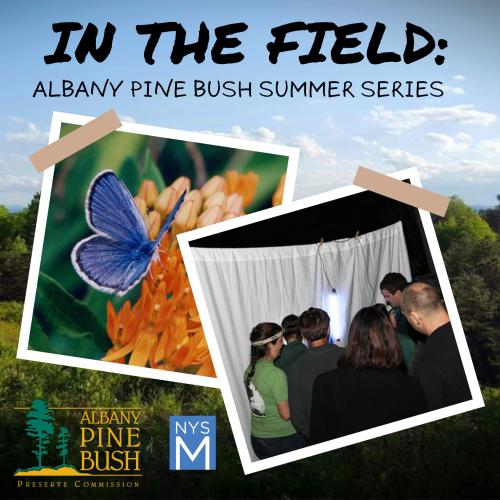
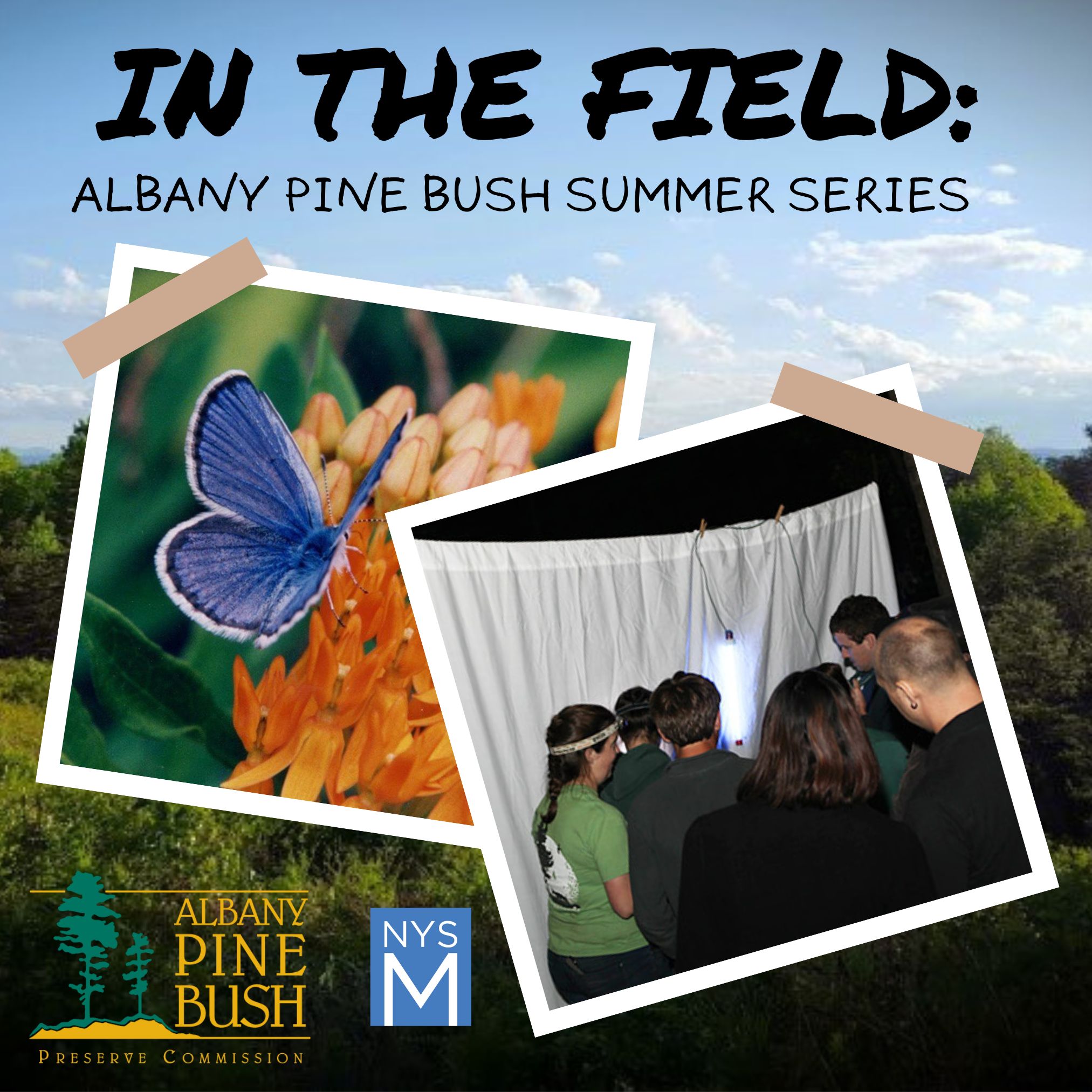
In the Field: Albany Pine Bush Summer Series brings New York State Museum scientists out of the building and into the globally rare pine barrens ecosystem for hands-on exploration. This offsite program series invites participants to experience field science in action through guided walks, demonstrations, and real-time research with Museum experts and Albany Pine Bush staff. Each program offers a unique opportunity to engage with the region’s dynamic ecosystems while learning directly from scientists working in the field.
Moth Mania
This evening program is focused on attracting, observing, and identifying moths in the Albany Pine Bush Preserve—home to one of the most diverse and fascinating moth communities in the Northeast, including many species that have adapted specifically to live in pine barrens. Join Albany Pine Bush staff and NYS Entomologist Dr. Timothy McCabe to spend an evening observing and documenting moths in the preserve. Participants should plan to do some light hiking.
Registration required.
Register for In the Field: Moth Mania
Location:
The Albany Pine Bush
195 New Karner Road
Albany, NY 12205
Events

For a comprehensive state-wide list of events related to NYS 250 commemorations and celebrations please visit iloveny.com/America-250
Submit your 250th Commemoration Event! If your historic or heritage organization has a 250th themed event planned submit it to I LOVE NY's Path Through History Program. Click the link below for submission details and criteria.
iloveny.com/America-250-Submit
Upcoming 250th Events
Benjamin Franklin Was Here, 1776 Exhibit
On Display 5/23-9/27/26 | Chapman Museum | Glens Falls, NY
Learn More: https://www.frontenacmuseum.org/programs
Putnam County Heroes Battle the Redcoats!: 2026 Putnam County Revolutionary War Day
6/6/26, 9:00am | Putnam County Veterans Memorial Park (Upper Park) | Carmel Hamlet, NY
Learn More: https://www.5thny.org/event-details/2026-putnam-county-rev-war-day
Freedom Festival: America's 250th Comes to the Bristol Hills
6/13/26-6/14/26, 9:00am | Levi Corser Park | Canandaigua, NY
Learn More: https://bristolhillshistory.org/freedomfestival2026
Declaring America: 1776 and Beyond
Exhibit Opens 6/13/26 | New York Public Library (Stephen A. Schwarzman Building) | New York, NY
Learn More: https://www.nypl.org/events/exhibitions/declaring-america-1776-beyond-preview
Martin Klotz, author, to Speak at Crown Point State Historic Site
6/14/26, 1:00pm | Crown Point State Historic Site | Crown Point, NY
Learn More: https://www.lakechamplainregion.com/node/88237
Schenectady County "4th on the Third" Independence Day Celebration
7/3/26, 6:00pm | Mabee Farm Historic Site | Rotterdam Junction, NY
Learn More: https://schenectadyhistorical.org/event/july326/
Sail the 4th 250
7/4/26, time varies by location | Locations vary
Learn More: https://sail4th.org/
America's Potluck
7/5/26, time varies by location | Locations vary
Learn More: https://america250.utah.gov/americaspotluck/
Town of Lodi Bicentennial Celebration
8/1/26, 10:00am | Lodi, NY
Learn More: http://www.lodihistoricalsociety.com/home.html
2026 Chautauqua County History Expo - America 250
8/2/26, 10:00am | Town of Chautauqua Community Municipal Building | Mayville, NY
716 Celebrates: Stars, Stripes, & Signers
8/2/26, 10:00am-9:30pm | Canalside Buffalo | Buffalo, NY
Learn More: https://visitbuffalo.com/event/716-celebrates-stars-stripes-signers/
The Suffolk County 250th Commemorative Fair
10/24/26, 10:00am | The Manor of St. George | Shirley, NY
Learn More: https://www.suffolk250.org/
The American Revolution in the Hudson Highlands
On Display Through 12/26 | Putnam History Museum | Cold Spring, NY
Learn More: https://www.putnamhistorymuseum.org/exhibitions-2/current/
The World Turned Upside Down - 250 Years After the American Revolution
On Display Through 12/26 | YCHC L. Caroline Underwood Museum | Penn Yan, NY
Learn More: http://www.yatespast.org/exhibit.html
USA 250: Celebrating the American Vision Exhibit
On Display 1/20/26-12/15/26 | Castellani Art Museum at Niagara University | Niagara University, NY
Learn More: https://castellaniartmuseum.org/
The Battle of Brooklyn: Fought and Remembered
On Display Through 12/31/26 | Brooklyn Public Library | Brooklyn, NY
Learn More: https://www.bklynlibrary.org/exhibitions/battle-brooklyn-fought
Educator Resources
Brooklyn Public Library: Lesson Plans for Teaching with Primary Sources
Brooklyn Public Library: Primary Source Packets
Erie Canalway National Heritage Area: Learning Hub
Gilder Lehrman Institute of American History Classroom Resources
Hudson River Valley Institute at Marist College Teacher Resources
Library of Congress: Education Resources
New York Public Library: Education
New York State Archives Partnership Trust: Consider the Source
New York State Museum Educational Resources
Museum of the City of New York
South Central Regional Library Council: History Unbound Educator Resources
American Battlefield Trust: The American Revolution Experience Online Exhibit
Project Look Sharp: Free Elementary through High School Lessons on the American Revolution
Project Look Sharp - Declaration of Independence: Sourcing, Credibility, & Bias
Genessee Valley BOCES Seal of Civic Readiness Independent Study Capstone (Including NY 250 Connection)
250th Anniversary of the American Revolution New York State Resource Guide
NYSED 250 Years - Using OurStoryBridge Resources
New York State Library - Personal History Initiative: Revolutionary New York
Daughters of the American Revolution Education Resources
Fort Stanwix National Monument: Virtual Tour
Fort Ticonderoga Educational Resources
New York Public Library: The Bill of (Twelve) Rights: Contingency and the Constitution
New-York Historical Society: Battle of Brooklyn
New-York Historical Society: Revolution: The Atlantic World Reborn
Brooklyn Public Library: In Pursuit of Freedom
Brooklyn Public Library: Mapping Freedom and Enslavement
Harriet Tubman National Historical Park Educator Resources
New-York Historical Society: Our Composite Nation: Frederick Douglass’ America
New-York Historical Society: New York Divided: Slavery and the Civil War
Niagara Falls Underground Railroad Heritage Center Teachers Resources
Northeast Slavery Records Index: Education
Underground Railroad Education Center: Related Sites and Resources
Albany Institute of History and Art: Hudson River School STEAM
Buffalo Niagara Waterkeeper: Learning about Love Canal
Hudson River Sloop Clearwater Inc.: Education
New-York Historical Society: Hudson Rising
New York State Department of Environmental Conservation: Environmental Education Lesson Plans
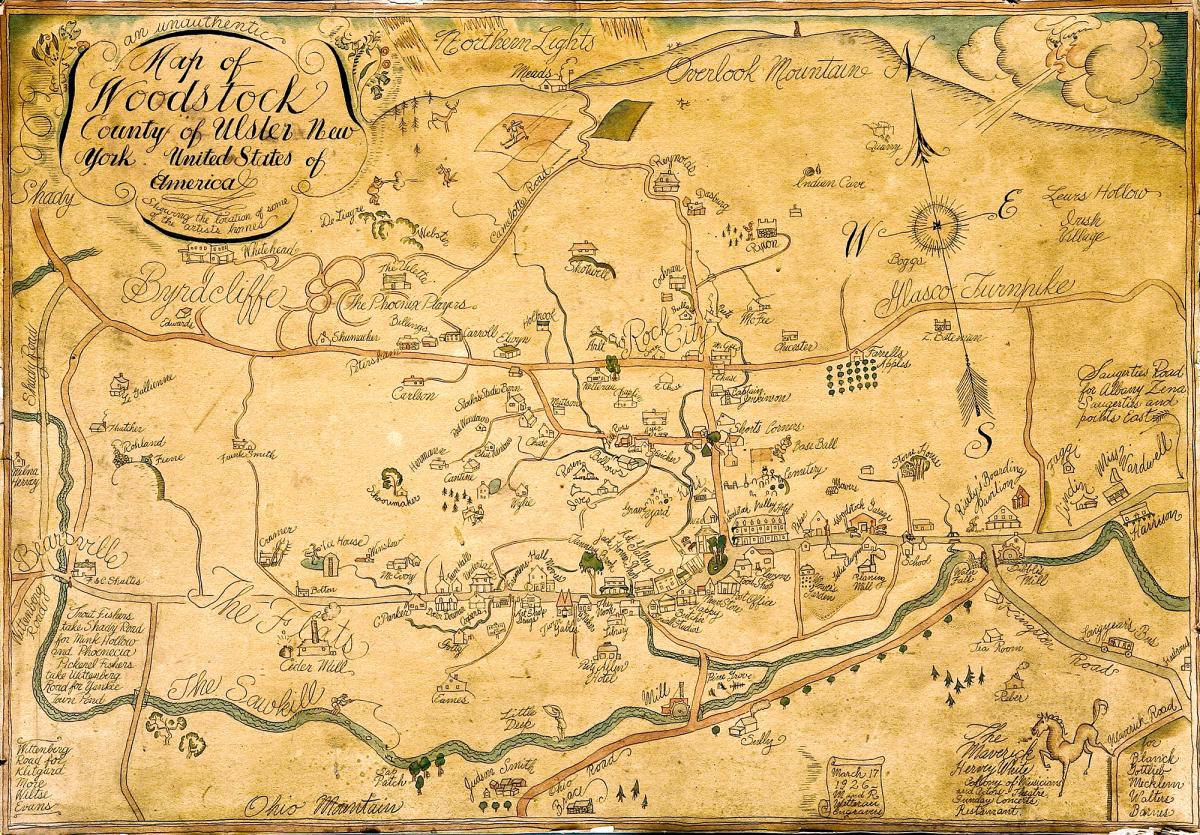
Long before the famous music festival in 1969, Woodstock, New York, was home to what is considered America’s first intentionally created, year-round arts colony—founded in 1902 and still thriving over 100 years later. Collecting the remarkable range of work produced there has been Arthur A. Anderson’s focus for three decades, resulting in the largest comprehensive assemblage of its type. The artists represented in it reflect the diversity of those who came to Woodstock, including Birge Harrison, Konrad Cramer, George Bellows, Eugene Speicher, Peggy Bacon, Rolph Scarlett, and Yasuo Kuniyoshi, among many others.
Anderson recently donated his entire collection—some 1,500 objects by almost 200 artists—to the New York State Museum. This exhibition introduces to the public for the first time just a sample of the highlights of this extraordinary collection, which represents a body of work that together shaped art and culture in New York and forms a history of national and international signifcance.
Collector's Statement

Growing up in western Michigan, I was a collector of minerals, reptiles, and stamps, the last from old albums that belonged to my grandfather. My frst interest in art can be traced to a small painting I discovered as a teenager in our cottage storeroom, and which my mother gave to me as a youngster. The painting is attributed to the 17th century Italian artist Salvator Rosa, whose works inspired Thomas Cole, father of the Hudson River School. Later, as a young adult I was captivated by a painting of a beautiful woman with red lips by the Woodstock artist Norbert Heermann, a friend of George Bellows. Together, these two works sparked in me a passion for art and eventually the artists and art of the historic Woodstock Art Colony. I always enjoyed lending pieces to museums for exhibition and having them used. The question eventually became: “Where can my collection reside in perpetuity and be best cared for, used, and appreciated?” In due course, it became clear to me that the best place for it was the New York State Museum in Albany. The collection s new home re introduces the historic Woodstock Art Colony into the American art canon. It also, I hope, will motivate others to donate their treasures for public appreciation and education. I am absolutely delighted to have my collection of the culture and art of the Woodstock Art Colony join the extraordinary New York State Museum.
Arthur A. Anderson
The Historic Woodstock Art Colony - The Arthur A. Anderson Collection
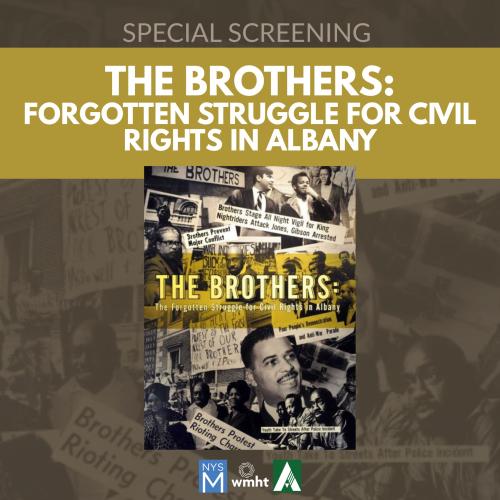
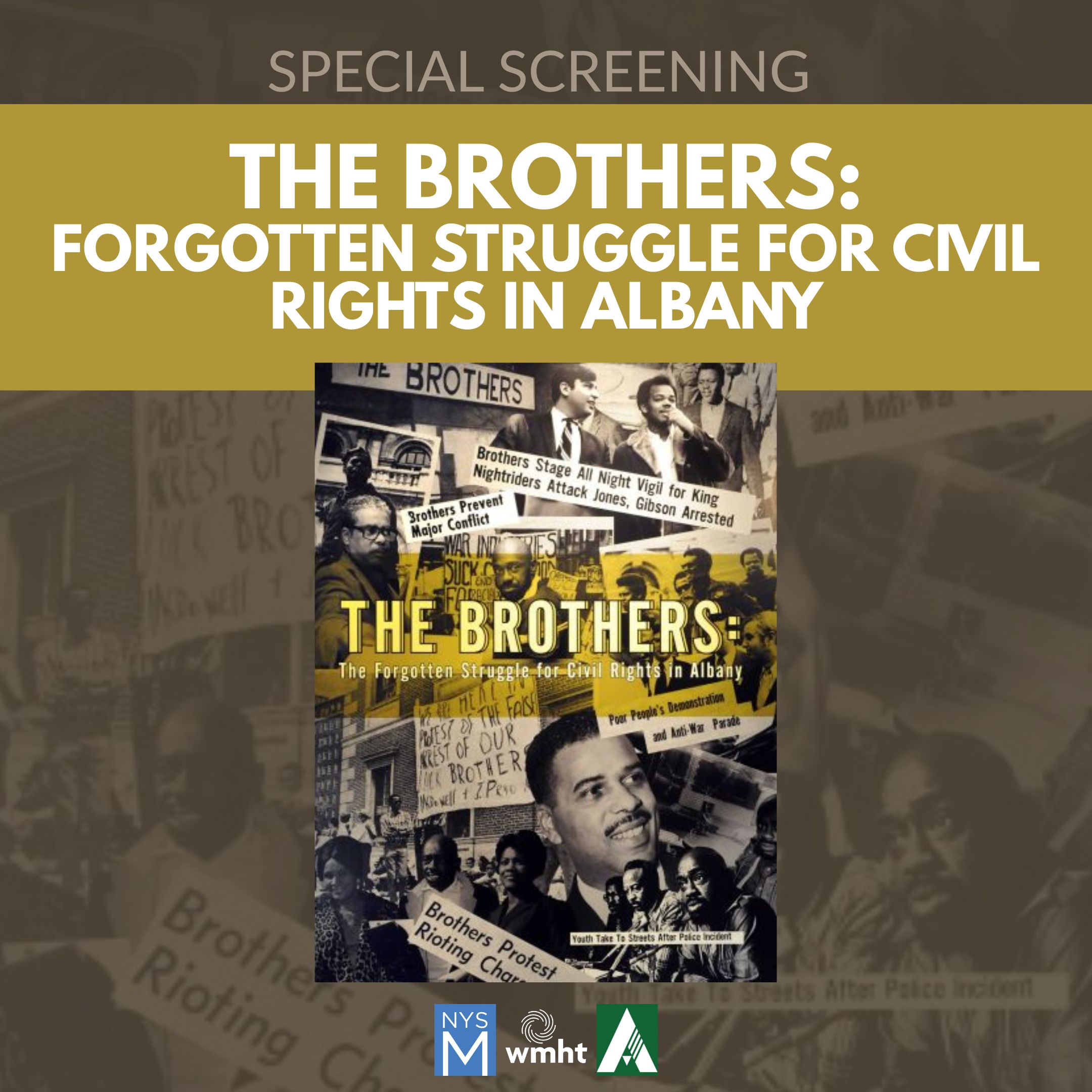
Join State Archivist Brian Keough for an introduction and special screening of the documentary The Brothers: Forgotten Struggle for Civil Rights in Albany (25 minutes).
The film explores The Brothers, a civil rights organization founded in 1966 by working-class African American men from Albany’s Arbor Hill and South End neighborhoods. Formed over a dispute with hiring by local unions, The Brothers was a group which personified the Black power movement in Albany during the mid- to late 1960s. This organization of working class African American men recognized how their community was disenfranchised and led a movement to expose vote buying and election fraud. They used direct action and picketing, and were at odds with not only the city, but frequently clashed with established social welfare and civil rights groups. Predating the Black Panther Party, The Brothers conveyed a militant and revolutionary spirit, but they professed non-violence. They personified a growing black consciousness in Albany, as the events in Albany during 1965–67 demonstrated an aging political machine being challenged by an emerging, grassroots social movement that was fueled by black power and consciousness.
This program was made possible by WMHT.
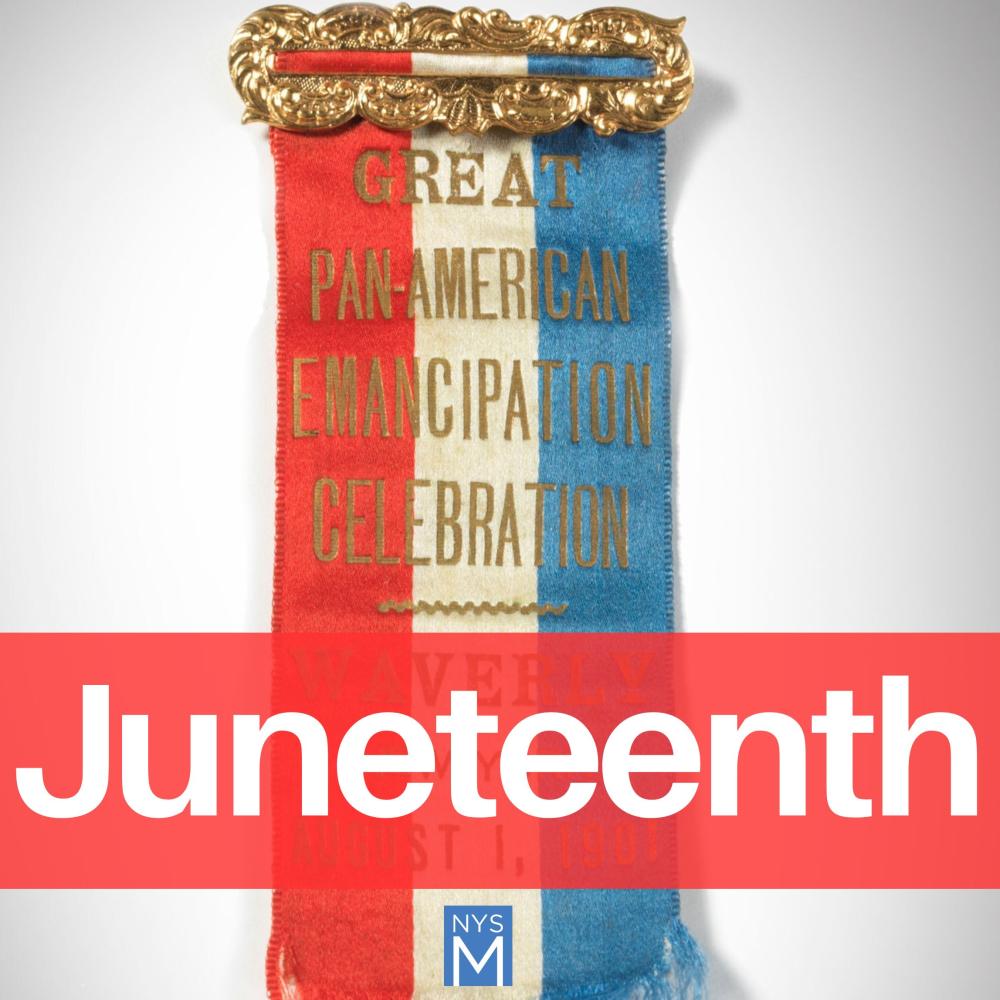
Celebrating Juneteenth in New York
Although slavery in New York State was abolished on July 4, 1827, the institution of slavery in the United States persisted for decades. President Abraham Lincoln issued the Emancipation Proclamation on January 1, 1863, declaring freedom for enslaved people in the Confederate states. However, emancipation was not immediate or universally enforced. On June 19, 1865, more than two years later and two months after the end of the Civil War, enslaved African Americans in Galveston, Texas, were finally informed of their freedom. This delay underscores how uneven and contested emancipation was—and how, even after a national declaration, many were forced to wait for the promise of freedom to become a lived reality.
Juneteenth, also known as Black Independence Day, Juneteenth Independence Day, and Emancipation Day, was first celebrated by African Americans across the Southern United States in 1866. Today, it is celebrated across the nation, often with parades, live music, performers, and speakers with the goal to educate, empower, and entertain celebrants. On June 17, 2020, Juneteenth was declared an official New York State holiday.
The Great Pan-American Emancipation Celebration
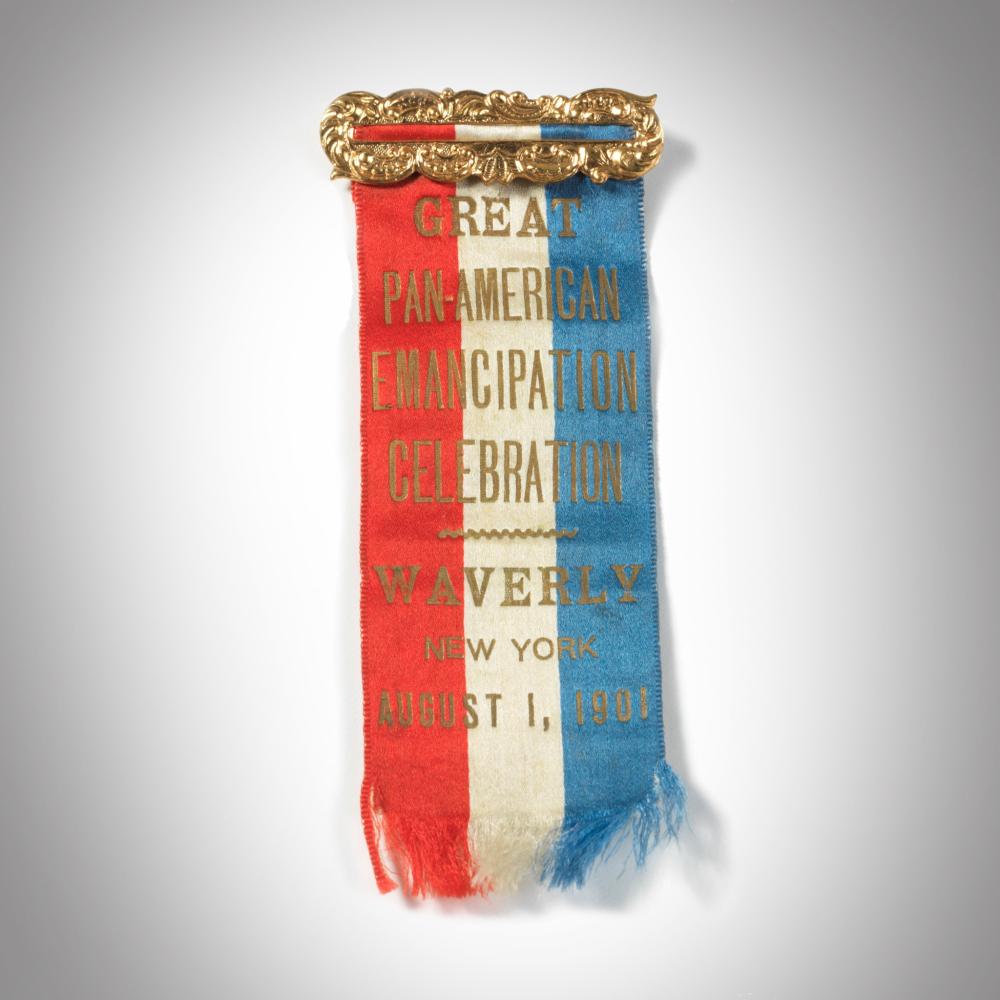
This medal with ribbon from the NYSM History Collection commemorates the Great Pan-American Emancipation Celebration, held in Buffalo, New York, between May and October 1901. Prior to emancipation, many Black New Yorkers observed Independence Day on July 5 to protest the injustice of celebrating freedom while slavery still existed in parts of the country. Additionally, August 1 also became a powerful day of remembrance and celebration. It marked the abolition of slavery in the British Empire in 1834 and was embraced by many New Yorkers as a time to also commemorate the end of slavery in New York State in 1827 and nationwide in 1865.
Although the connection to Waverly, New York, at the Exposition remains unclear, newspapers report that the African American community in Waverly continued to hold emancipation celebrations well into the 20th century with an annual summer picnic.
Black History Resources from the NYSM, NYS Library, and NYS Archives
This resource page features powerful objects from our collections, educational tools, exhibitions, videos, and more—essential materials that deepen understanding of the past, honor the stories of Black New Yorkers, and support meaningful learning for all ages.
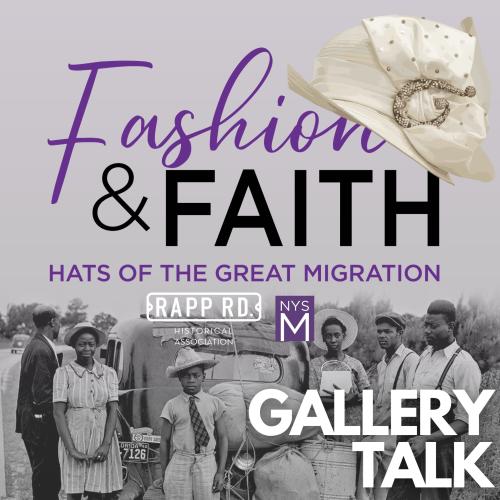
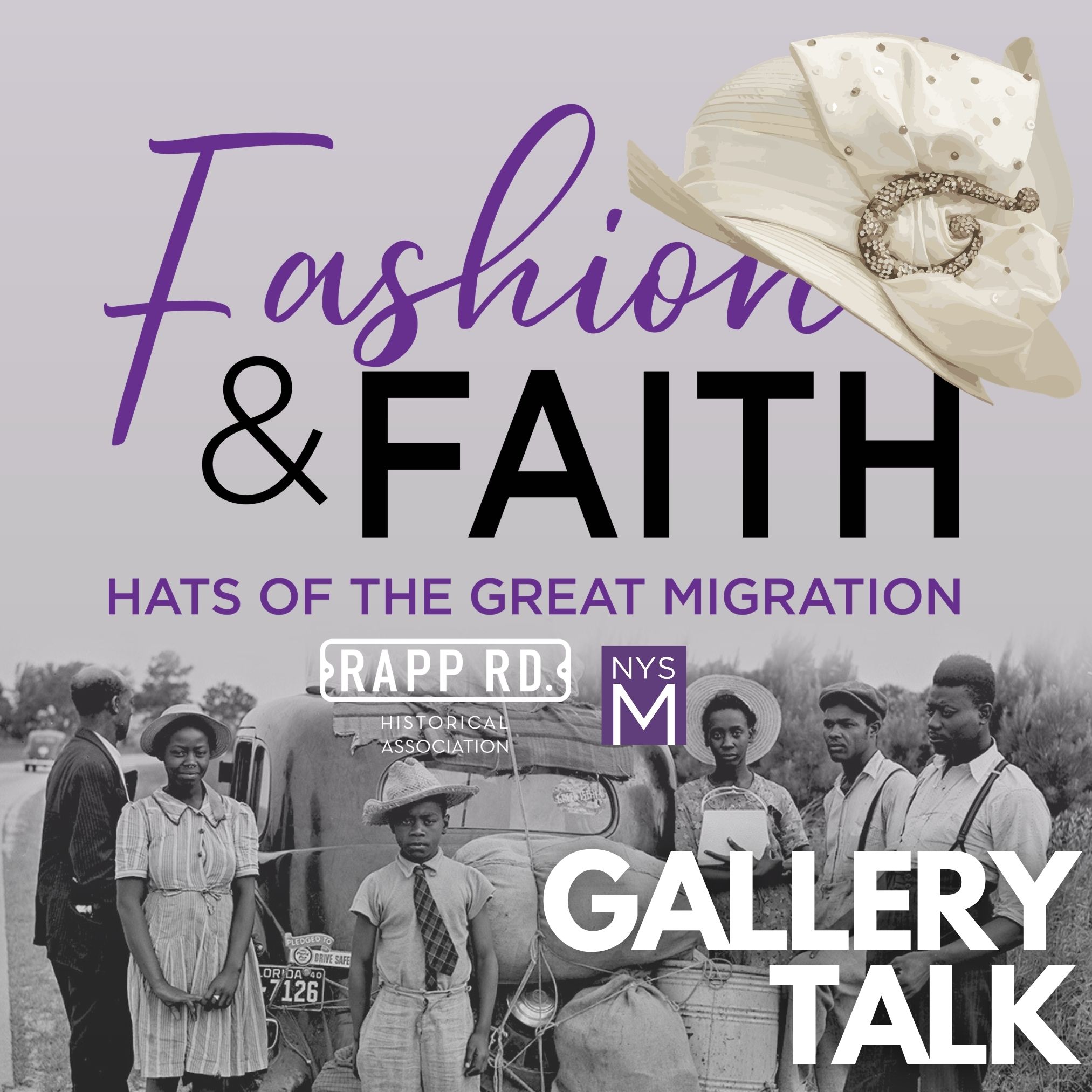
In celebration of Juneteenth, join Dr. Jennifer Lemak and Rapp Road Historical Association for an engaging gallery talk on Fashion and Faith: Hats of the Great Migration. Explore how the hats worn in Black churches during the Great Migration were more than fashion—they were symbols of faith, resilience, and personal identity. Dr. Lemak will share the stories behind these extraordinary “crowns,” highlighting how they reflected the journeys, leadership, and creativity of women who navigated new lives in New York State while holding onto their heritage and hope for the future.
Revolutionary New York: Resources
Explore highlights and core content from the Revolutionary New York exhibition. The page also features visual descriptions for enhanced accessibility, along with related resources and opportunities for engagement through programs and events.
A Note about Language and Content
In this exhibition, you will encounter multiple terms used to reference Native Americans in historical and contemporary contexts. For example, Six Nations, a term used during the colonial period to refer to Haudenosaunee people, today references the Six Nations of the Grand River, First Nations Reserve in what is now Canada. We use different terms in this exhibit for historical specificity and to respectfully acknowledge present-day Indigenous Nations.
This exhibition explores the American Revolution, which includes brutal and violent events. Revisiting this history can be painful. A few of the objects in the exhibit were involved in revolutionary battles. They were included in this exhibition so that we can learn from our past.
We the People: LGBTQ+ Rights
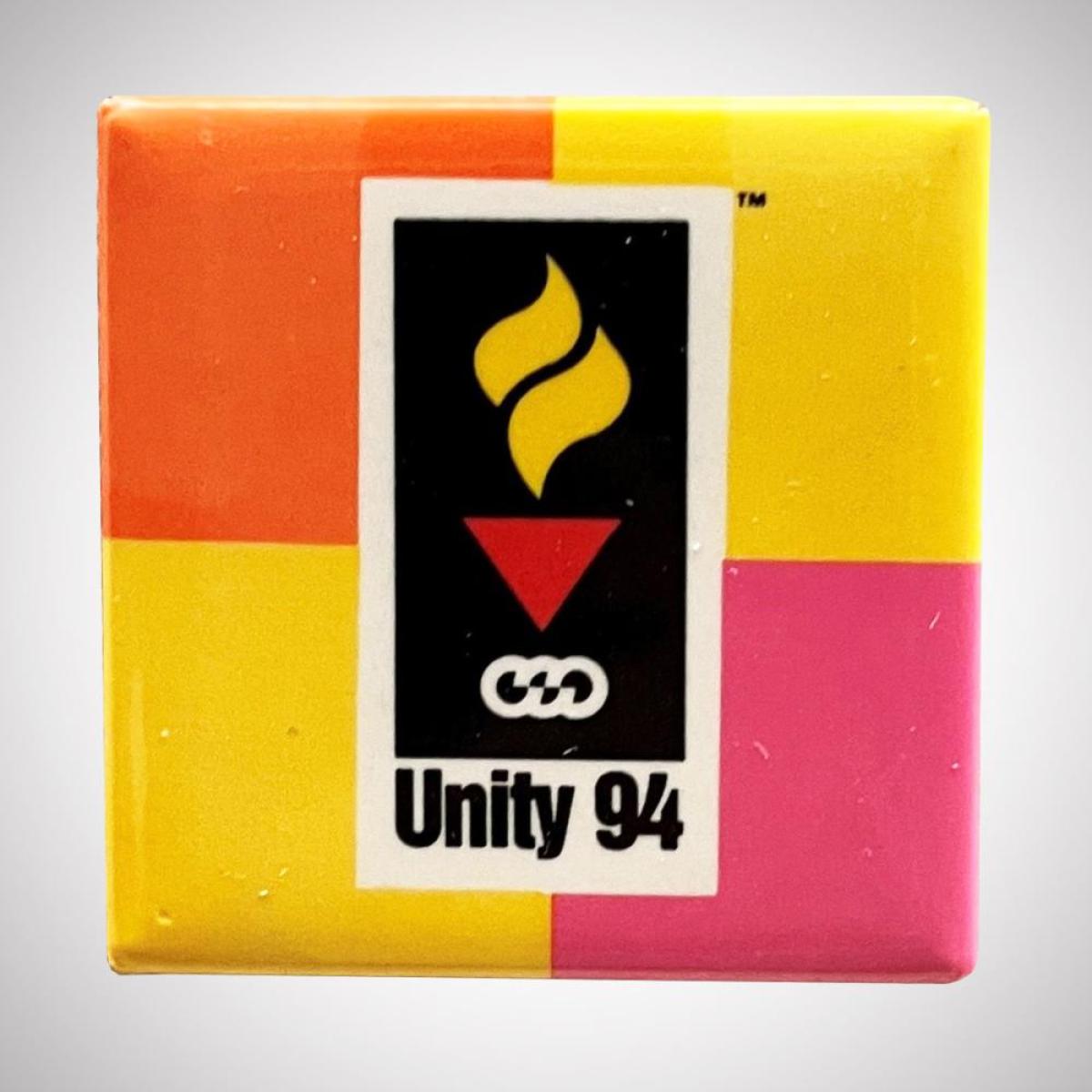
DRAFT LGBTQ+ rights have been fought for in the streets, courtrooms, and legislatures, as well as in more private settings, person to person. These rights include protection from discrimination on the basis of sexual orientation or gender expression, recognition of marriage and the rights that come with it, and access to gender-affirming care.
Each June, Pride serves as a commemoration of the anniversary of the Stonewall uprising. What began in New York City is now recognized all over the state and the world. It is both a protest and a celebration.
Featured Objects


Additional Resources
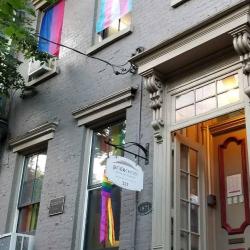
Pride Center Interviews
Explore the history of The Pride Center of the Capital Region, the nation’s oldest continuously operating LGBTQ+ community center, through oral histories and interviews created in partnership with the New York State Museum to commemorate the Center’s 50th anniversary.
Welcome to the New York State Museum
We are excited to welcome you to the Museum! Please review the information provided here to ensure an enjoyable and safe visit to the Museum for everyone.
Notice of Temporary Changes to Museum Hours
Friday, June 19, 2026
The New York State Museum will be closed on Friday, June 19, 2026, in observance of the Juneteenth federal holiday.
Saturday July 25 - Sunday 26, 2026
The Museum will be closed for plaza-wide systems testing on Saturday, July 25 and Sunday, July 26. As the Museum is closed to the public on Mondays, we will return to normal hours of operation on Tuesday, July 28. Thank you for your patience.
Museum Hours
Open Tuesday through Sunday, 9:30 am – 5:00 pm
Closed all state-observed holidays*
Thursday, January 1 - New Year's Day
Monday, January 19 - Dr. Martin Luther King, Jr. Day
Monday, February 16 - Washington's Birthday (Observed)
Monday, May 25 - Memorial Day
Friday, June 19 - Juneteenth
Saturday, July 4 - Independence Day
Monday, September 7 - Labor Day
Monday, October 12 - Columbus Day
Wednesday, November 11 – Veterans’ Day
Thursday, November 26 – Thanksgiving Day
Friday, December 25 - Christmas Day
Main Lobby Desk:
(518) 474-5877
Admission
Admission to the New York State Museum is free. However, your support plays a vital role in the success of the Museum’s mission. Suggested donation: $5 per individual or $10 per family.

The Museum Shop
The Museum Shop offers a wide variety of thoughtfully curated items inspired by our mission and current exhibitions, while proudly showcasing products from New York–based vendors.
Hours:
Tuesday through Friday: 11 am -3 pm
Saturday and Sunday: 10 am-4 pm
Carousel Café
2nd floor Mezzanine
Enjoy a selection of popular beverages alongside kid-friendly options. Items for sale include coffee, teas, hot chocolate, fresh pastries, bagels, made-to-order sandwiches, salads, and chicken nuggets — all served in the signature Stacks style: approachable, high-quality, and proudly local.
Hours:
Wednesday–Friday: 8:00 a.m. – 2:30 p.m.
Saturday & Sunday: 9:30 a.m. – 2:30 p.m.
Parking
Parking is available in the Madison Avenue Lot, located on the west side of the Museum and accessible from Madison Avenue. The weekday parking fee is $10, Monday through Friday. Parking is free after 2:00 p.m. on weekdays and all day on weekends.
Additional visitor parking is available in the Visitor Lot/P-3 beneath the Empire State Plaza Concourse and limited metered street parking may be available nearby.
On evenings (after 4:00 p.m.) and weekends, free parking is generally available in the Madison Avenue Lot, Madison East (Cathedral) Lot, East Parking Garage, the Visitor Lot/P-3, Grand Street Surface Lot, and Elk Street Surface Lot. Please see OGS’s Visitor Parking Information for additional details and current parking updates.
Parking availability is subject to change due to event usage, construction, or operational needs.
Amenities
- Public restrooms are available on the first floor of the Museum.
- Wheelchairs, strollers, and walkers are available for public use at no cost. Please check in with staff at the Main Lobby desk for more information.
- In addition to the Carousel Café, further food and amenities can be obtained on the Concourse Level of the Empire State Plaza. Please note, food and/or drinks are not allowed in the Museum galleries.
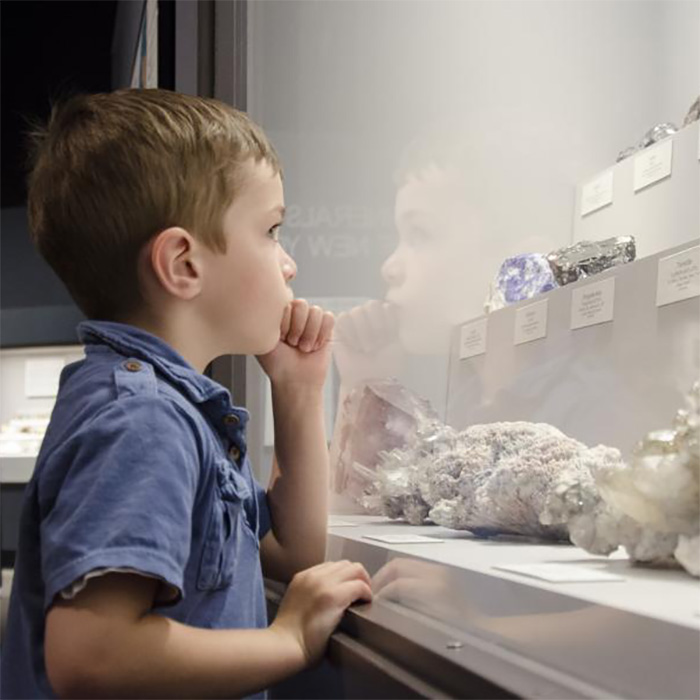
Museum Galleries and Facilities
Galleries Open for Visitors
- New York Metropolis Hall—The World Trade Center, Henry DiSpirito: Stonemason to Sculptor, Ice Ages, Black Capital: Harlem in the 1920s, Art for the People: Decorated Stoneware from the Weitsman Collection, and more!
- Adirondack Hall—Adirondack Wilderness, Beneath the City: An Archaeological Perspective of Albany, “a small fort, which our people call Fort Orange,” Artifacts for Activism, Minerals of New York, and more!
- Bird Hall
- Cohoes Mastodon
- Fire Engine Hall
- Ice Ages
- First Peoples Hall
- Fourth Terrace: NYSM Carousel
For Your Health & Safety
Please be reminded that simple steps can help stop the spread of the COVID-19 virus, including to:
- Stay home when you are sick.
- Wash hands often with soap and water for at least 20 seconds. If soap and water are not available, use an alcohol-based hand sanitizer containing at least 60% alcohol.
- Avoid touching your eyes, nose, and mouth with unwashed hands.
- Cover your cough or sneeze with a tissue, then throw the tissue in the trash.
- Avoid close contact with people who are sick.
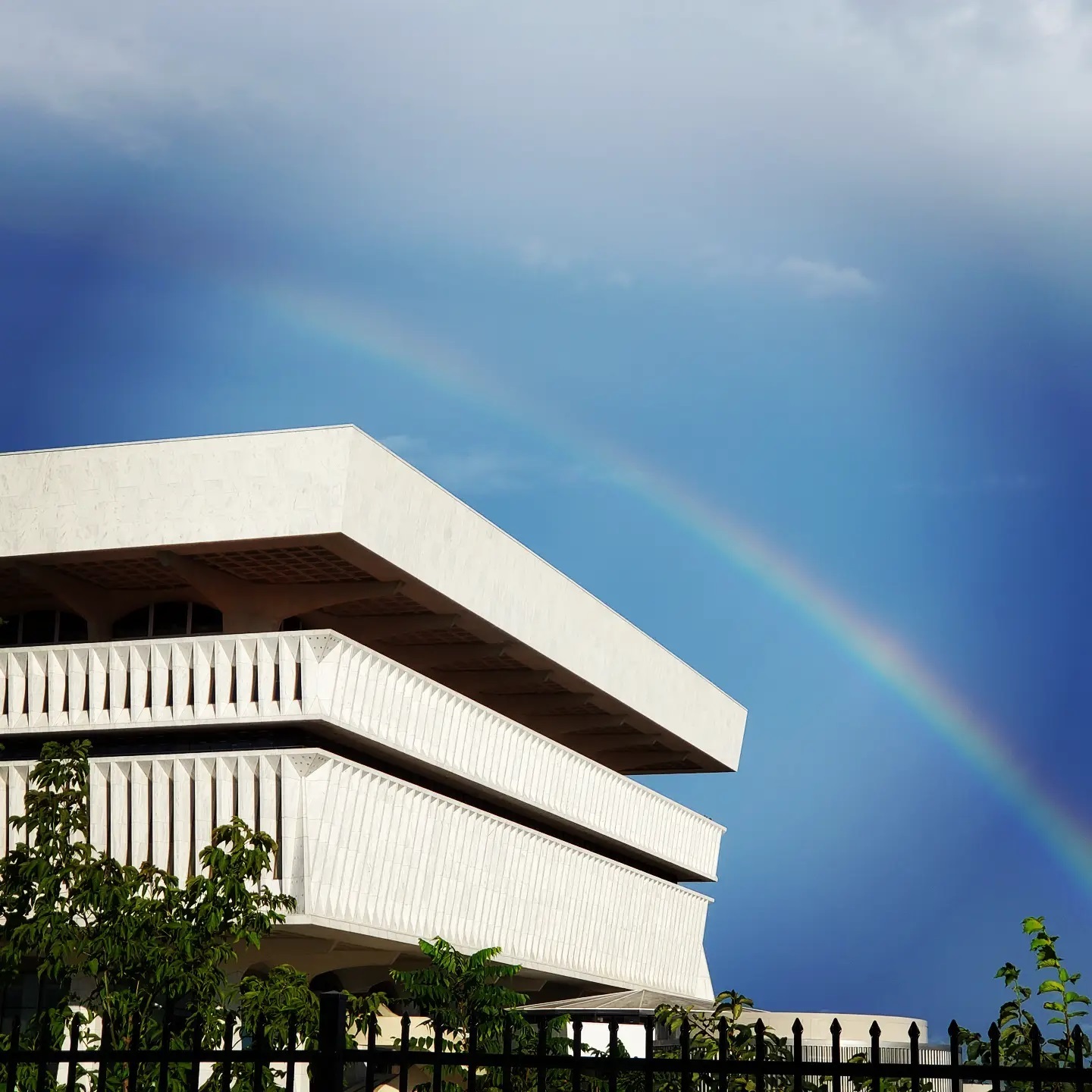
Location
New York State Museum
Cultural Education Center
222 Madison Avenue
Albany, NY 12230
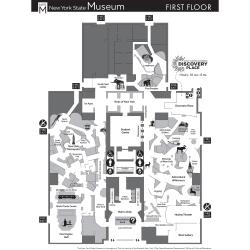
Wayfinder Map (PDF)
Download this wayfinder map for an overview of the NYSM galleries and exhibits open to visitors.
Pride Center of the Capital Region
The Pride Center of the Capital Region is the oldest continuously operating LGBTQ+ community center in the country. Located at 332 Hudson Ave. in Albany, NY, the center has offered its diverse community a variety of resources, programs, and services since 1970.
Partnership with the New York State Museum
To commemorate the Pride Center’s 50th anniversary in 2020, the New York State Museum partnered with the Center to collect oral histories from members of the community, ultimately resulting in the creation of a panel exhibition and recorded interviews which are available to view below.
Pride Center Panel Exhibition at the NYSM
On view at the NYSM from June 1, 2021, to September 1, 2021, the panel exhibition combined elements from the recorded oral histories of its community members with images and information from the Pride Center archives housed in the M. E. Grenander Department of Special Collections and Archives, University Libraries, University at Albany, State University of New York.
View/Download the Panel Exhibition (PDF):
GARY PAVLIC
Gary Pavlic was among the founding members of the Pride Center, and later served as Board President. He discusses the creation of the Pride Center, its early days, and the purchase of the building at 332 Hudson Avenue in Albany, NY. He also touches on the early bar scene in Albany and the lives affected by the AIDS crisis.
KEN SCREVEN
Ken Screven, who attended Pride Center events and meetings, and who later lived near the Pride Center, spoke about the double discrimination he faced as a Black gay man, and the impact of the AIDS epidemic on the LGBTQ+ community in Albany.
JOANNE MATTERA
Joanne Mattera, who attended events and meetings at the Pride Center, spoke on some of the early women’s centered meetings held in the Pride Center in the 1970s.
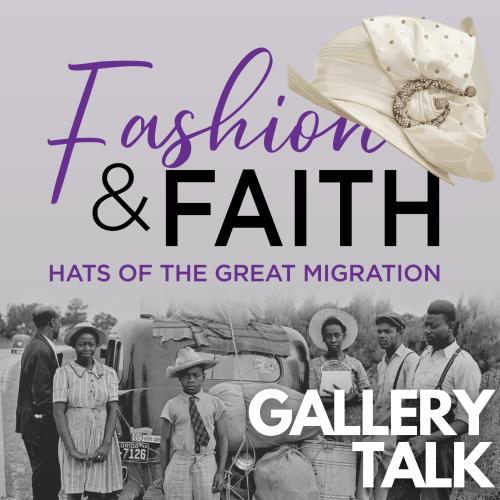
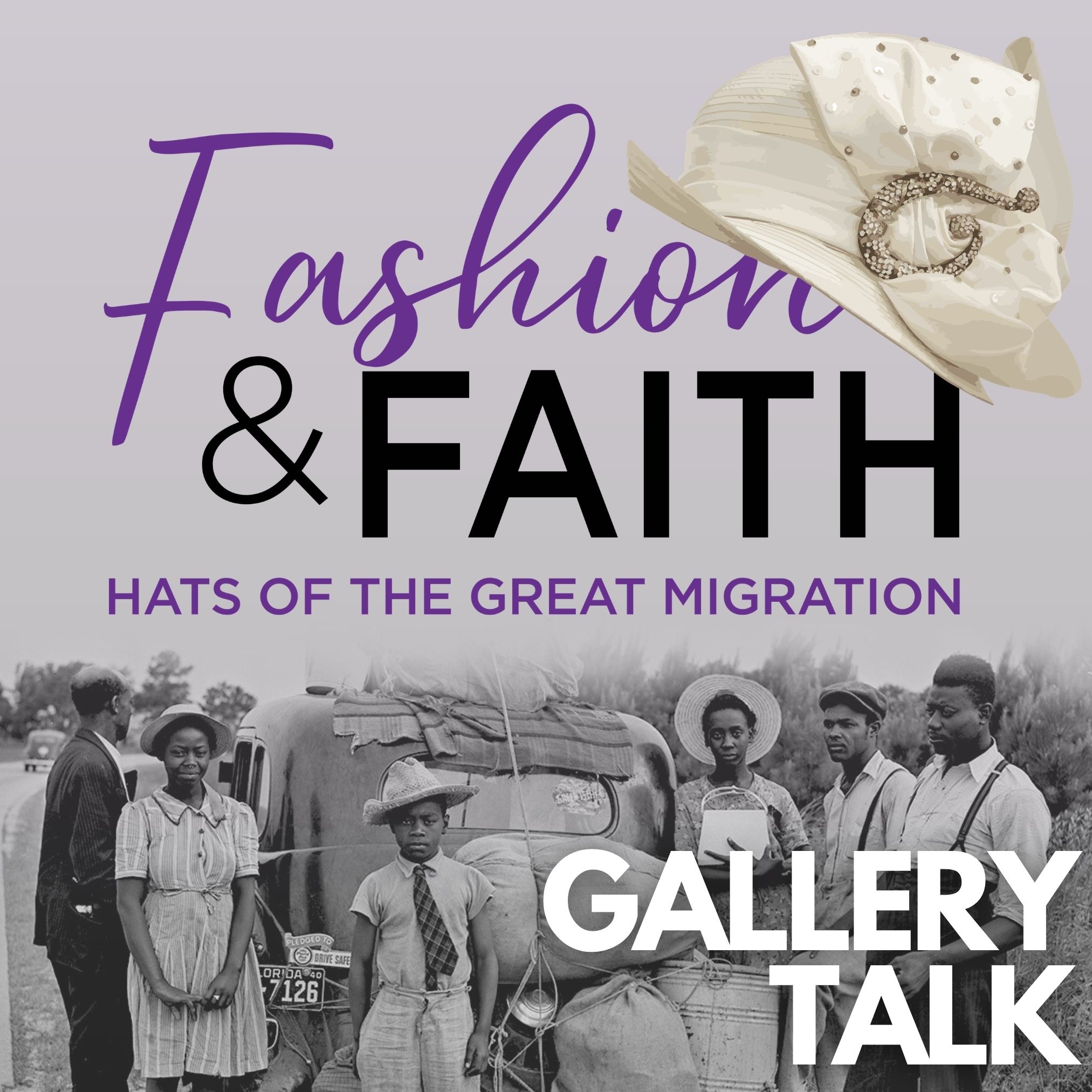
Join Dr. Jennifer Lemak, Chief Curator of History, for an engaging gallery talk on Fashion and Faith: Hats of the Great Migration. Explore how the hats worn in Black churches during the Great Migration were more than fashion—they were symbols of faith, resilience, and personal identity. Dr. Lemak will share the stories behind these extraordinary “crowns,” highlighting how they reflected the journeys, leadership, and creativity of women who navigated new lives in New York State while holding onto their heritage and hope for the future.
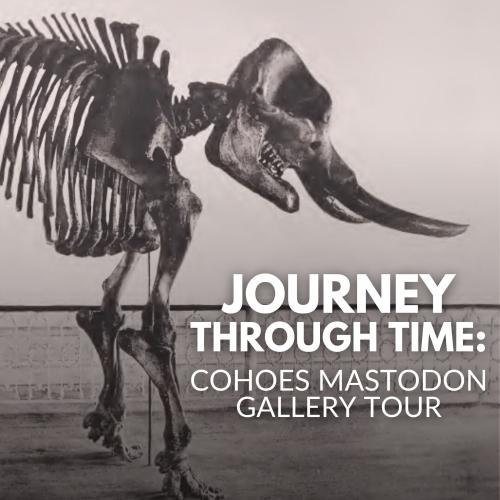
Step back in time and join us for a fascinating 30-minute gallery tour of the Cohoes Mastodon, one of the New York State Museum’s most treasured fossils, led by NYSM Director of Research and Collections and Curator of Vertebrate Paleontology, Dr. Robert Feranec. Discovered in 1866 during the construction of Harmony Mill No. 3 near Cohoes Falls, this impressive creature stood about eight-and-one-half feet high and weighed between 8,000 and 10,000 pounds.
During the tour, you'll learn about the mastodon’s life 13,000 years ago, uncover the research behind its unique skeletal features, and explore the distinguishing traits that set mastodons apart from mammoths. Discover the remarkable story of survival, injury, and the ancient world through this iconic relic of our planet’s history!
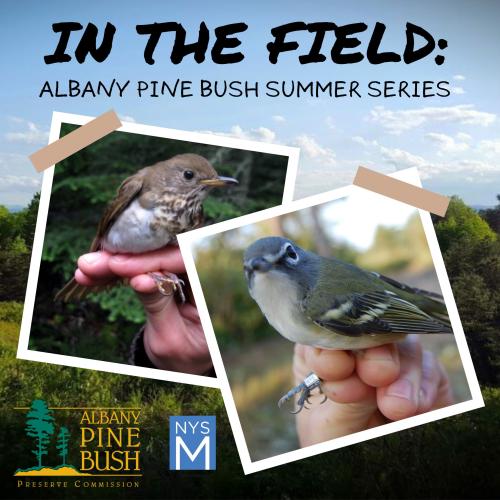
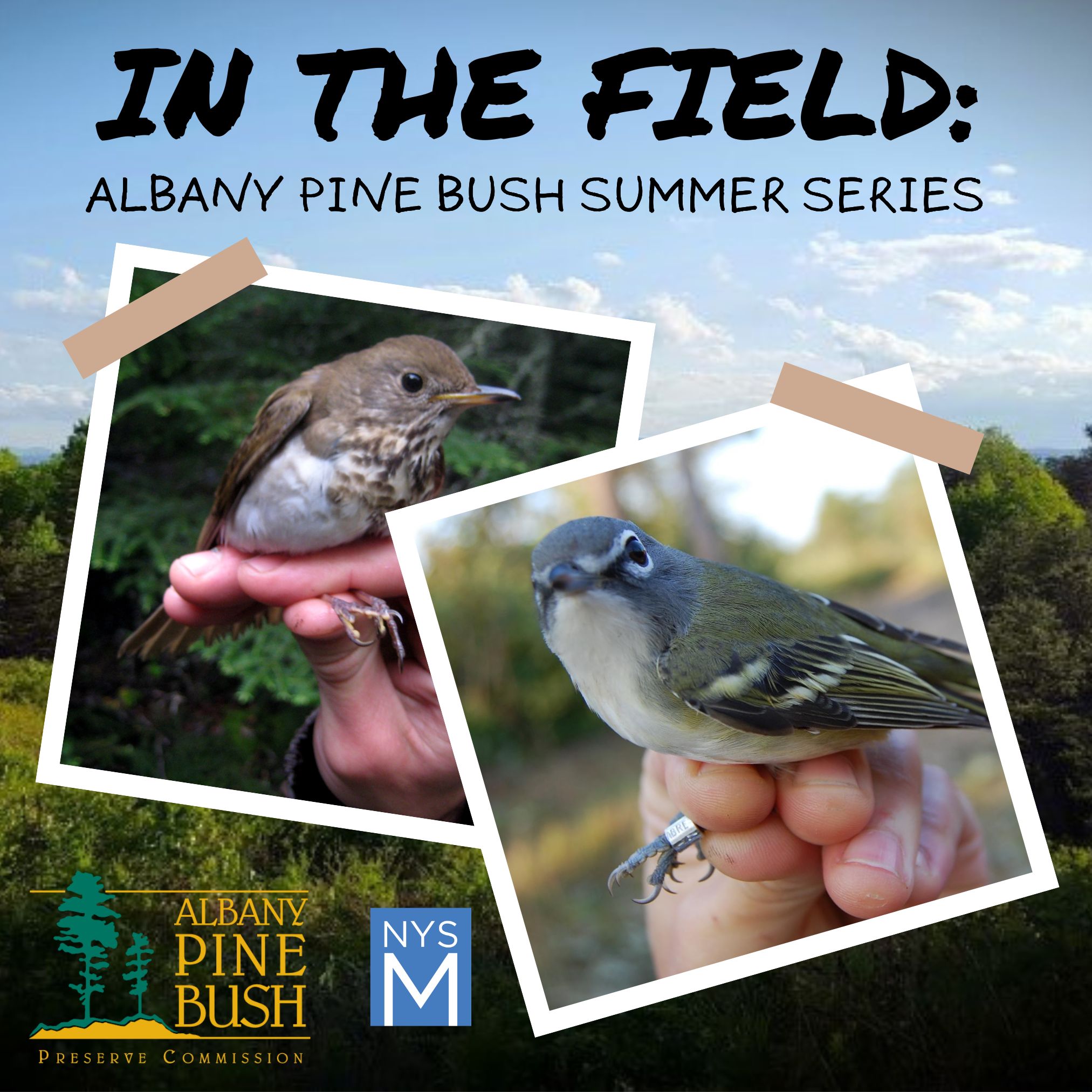
In the Field: Albany Pine Bush Summer Series brings New York State Museum scientists out of the building and into the globally rare pine barrens ecosystem for hands-on exploration. This offsite program series invites participants to experience field science in action through guided walks, demonstrations, and real-time research with Museum experts and Albany Pine Bush staff. Each program offers a unique opportunity to engage with the region’s dynamic ecosystems while learning directly from scientists working in the field.
M.A.P.S. Bird Banding
A look at bird-banding in action as part of the Monitoring Avian Productivity and Survivorship (MAPS) program, contributing to long-term bird population research. See wild birds up close and personal with NYS Museum Ornithologist and Curator of Birds and Mammals, Dr. Jeremy Kirchman and Albany Pine Bush Preserve Commission Conservation Director, Neil Gifford, as they capture and fit them with uniquely coded leg-bands. Bird bands are provided by the U.S. Geological Survey’s Bird Banding Laboratory (BBL) and banding is conducted under state and federal permits. These bands allow scientists to identify individuals; which helps us to study how long birds live, where they breed, and when and where they migrate. While in-hand, the banders carefully take measurements that can indicate a bird’s health, age, and breeding condition. Tracking the distribution and abundance of species that specialize on our fire-dependent inland pitch pine-scrub oak barrens during the breeding season can also help guide the management and restoration of this globally rare habitat.
Location:
The Albany Pine Bush
195 New Karner Road
Albany, NY 12205
Please visit the Albany Pine Bush event calendar to learn more.
Join the New York State Library for a fun and interactive storytime adventure at the New York State Museum! Enjoy engaging stories, interactive readings, and a chance to spark your child’s love for books and imagination.
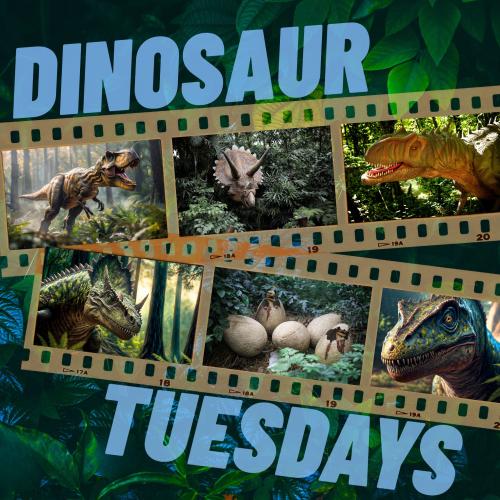

Join us every Tuesday in July for a special dinosaur documentary screening series. Travel back millions of years to explore the lives of extraordinary prehistoric creatures, learn about the latest paleontological discoveries, and uncover the dramatic events that shaped life on Earth. Featuring stunning visuals and engaging storytelling, these screenings are perfect for dinosaur enthusiasts. Don't miss Expedition Dinosaur: Rise of the Mammals, the Museum's newest exhibition, now on view!
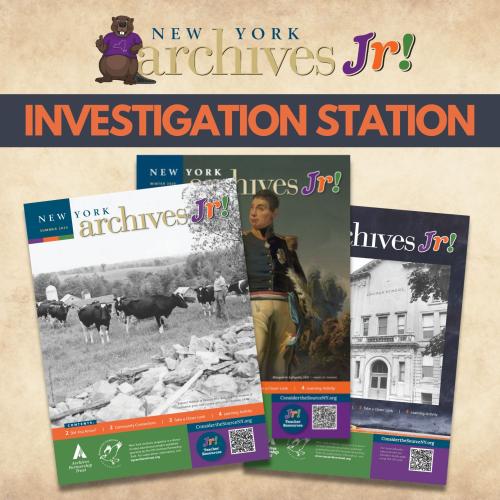
Dive into the world of archives with New York Archives Jr! magazine. Each week, we'll explore a fun learning activity inspired by an issue of New York Archives Jr!, where kids will discover fascinating history, analyze primary sources, and engage with interactive projects!


Celebrate National Ice Cream Day with a fun, hands-on craft designed especially for young children! Little makers will create their own colorful ice cream “scoops” and design imaginative frozen treats to take home. This simple, playful activity encourages creativity, color exploration, and fine motor skills in a relaxed, family-friendly setting. Perfect for our youngest visitors!
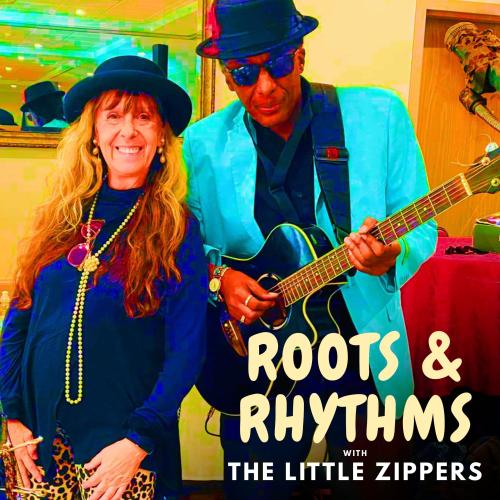
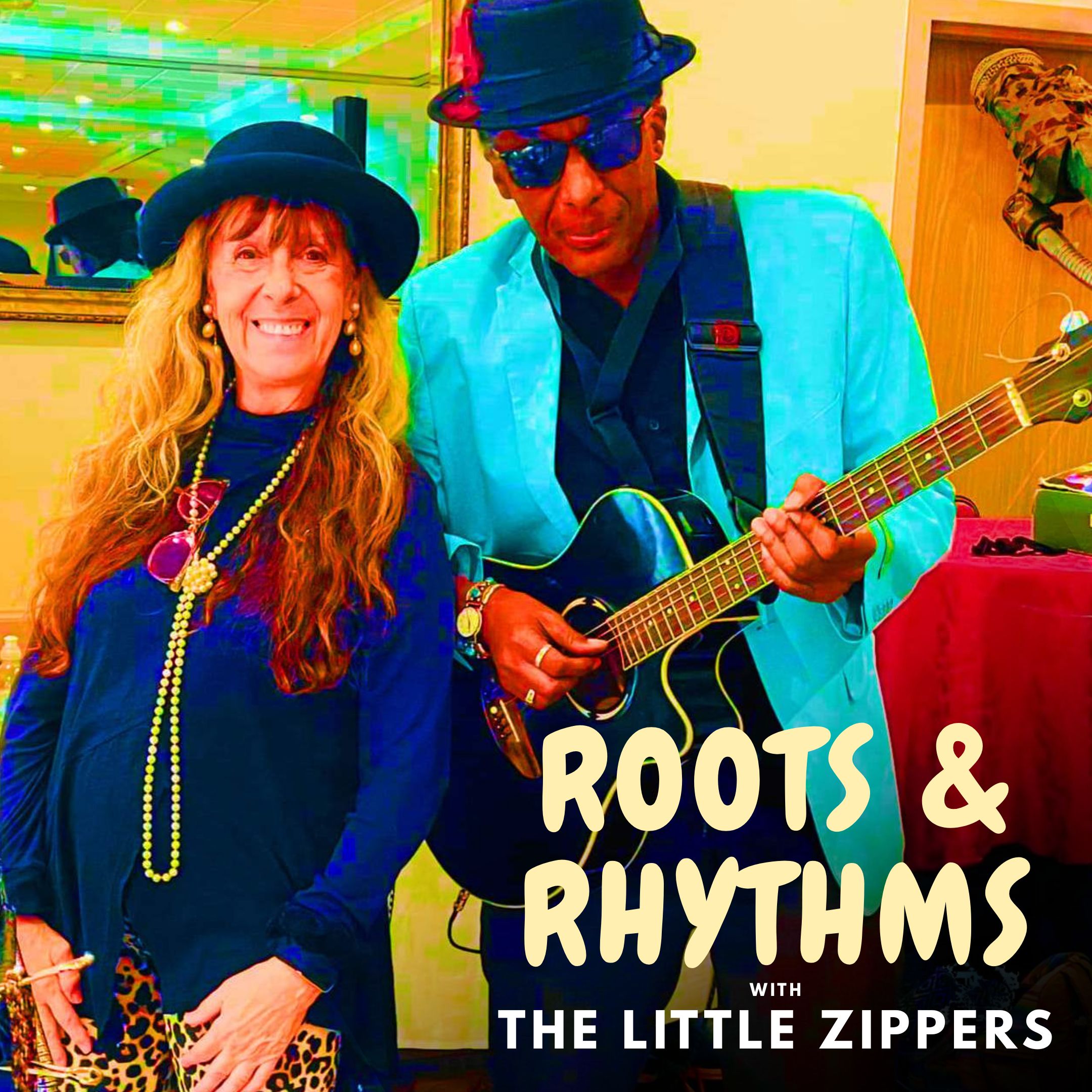
Enjoy an afternoon of blues, jazz, and Americana with The Little Zippers. Known for their rich harmonies and engaging performances, the duo brings together classic favorites and original songs inspired by America’s diverse musical traditions.
This performance is made possible through the generous support of the Musicians Performance Trust Fund.
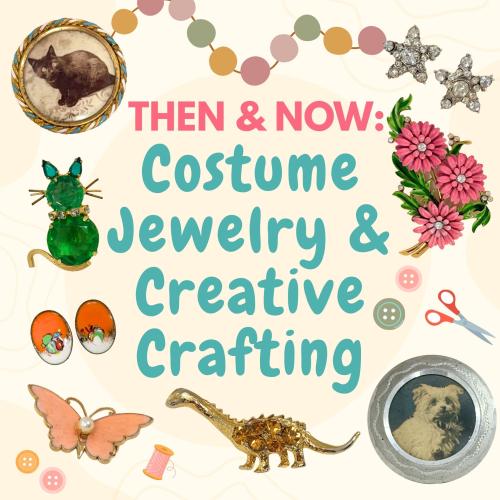
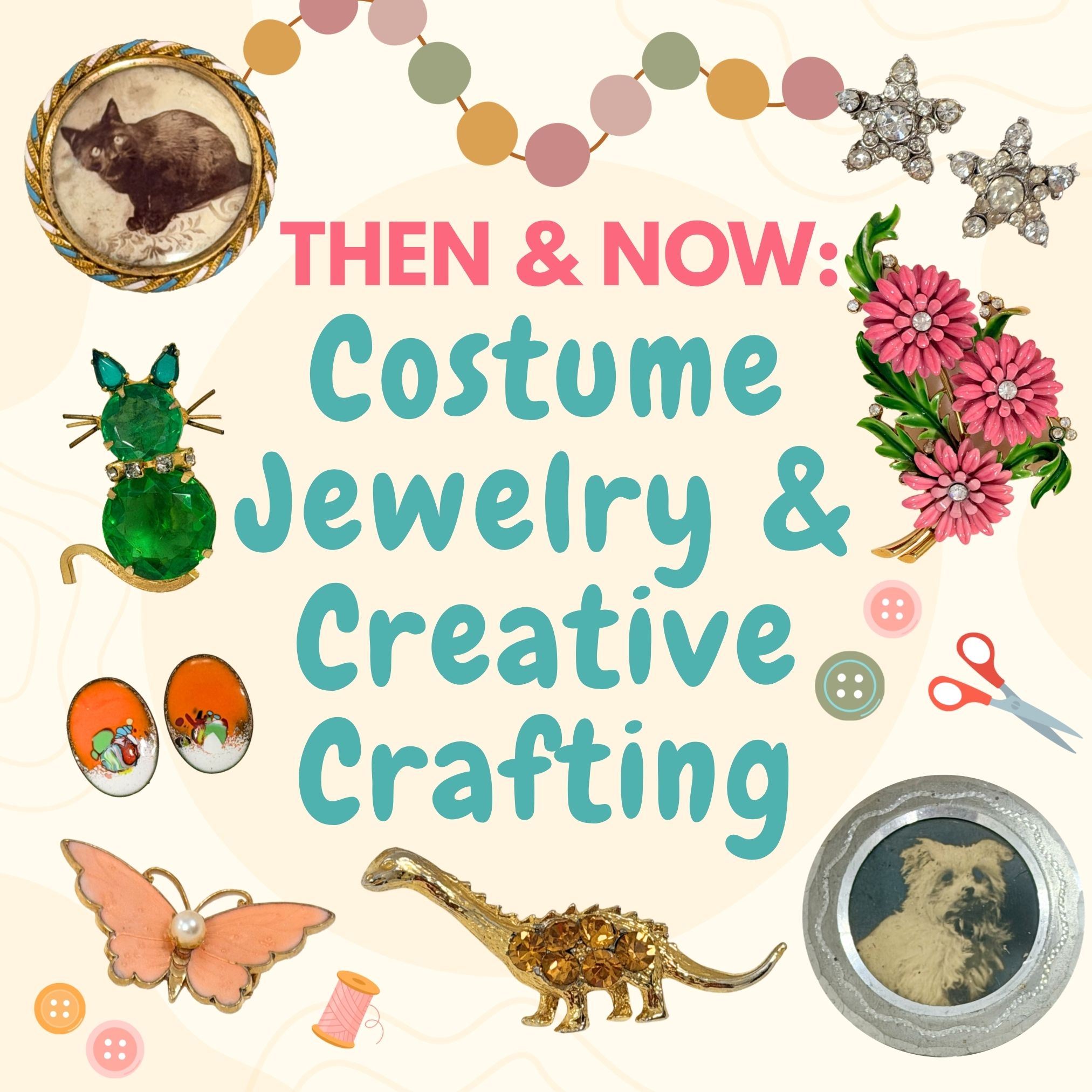
Join Robyn Gibson, Collections Manager, for a hands-on program exploring costume jewelry from the museum’s history collection. Participants will get a close look at select pieces from the collection, learn how fashion jewelry has changed over time, and then create their own wearable jewelry to take home. This family-friendly program invites kids to mix history and creativity while making something uniquely their own.
We the People: Labor Rights in New York State
Working people in New York State have built the physical state and economy and driven its political and social conversations. New York was the leading manufacturing state between 1830 and 1960, attracting a diverse labor force that included immigrants, women, and People of Color.
The struggle for labor rights has always been closely connected to the fight for civil rights, as both movements focus on improving the lives of workers and their communities. Through reform movements and activism, New York legislation was at the forefront of progressive change—leading the way in areas like workplace safety, fair wages, child labor laws, and protections against discrimination.
From the activists of the early 19th century who fought to end worker exploitation, to the garment worker strikes of the early 20th century, and the union-led civil rights coalitions of the 1960s and beyond, New York’s working people have continually redefined justice and equality in the workplace—and in society.
Highlights
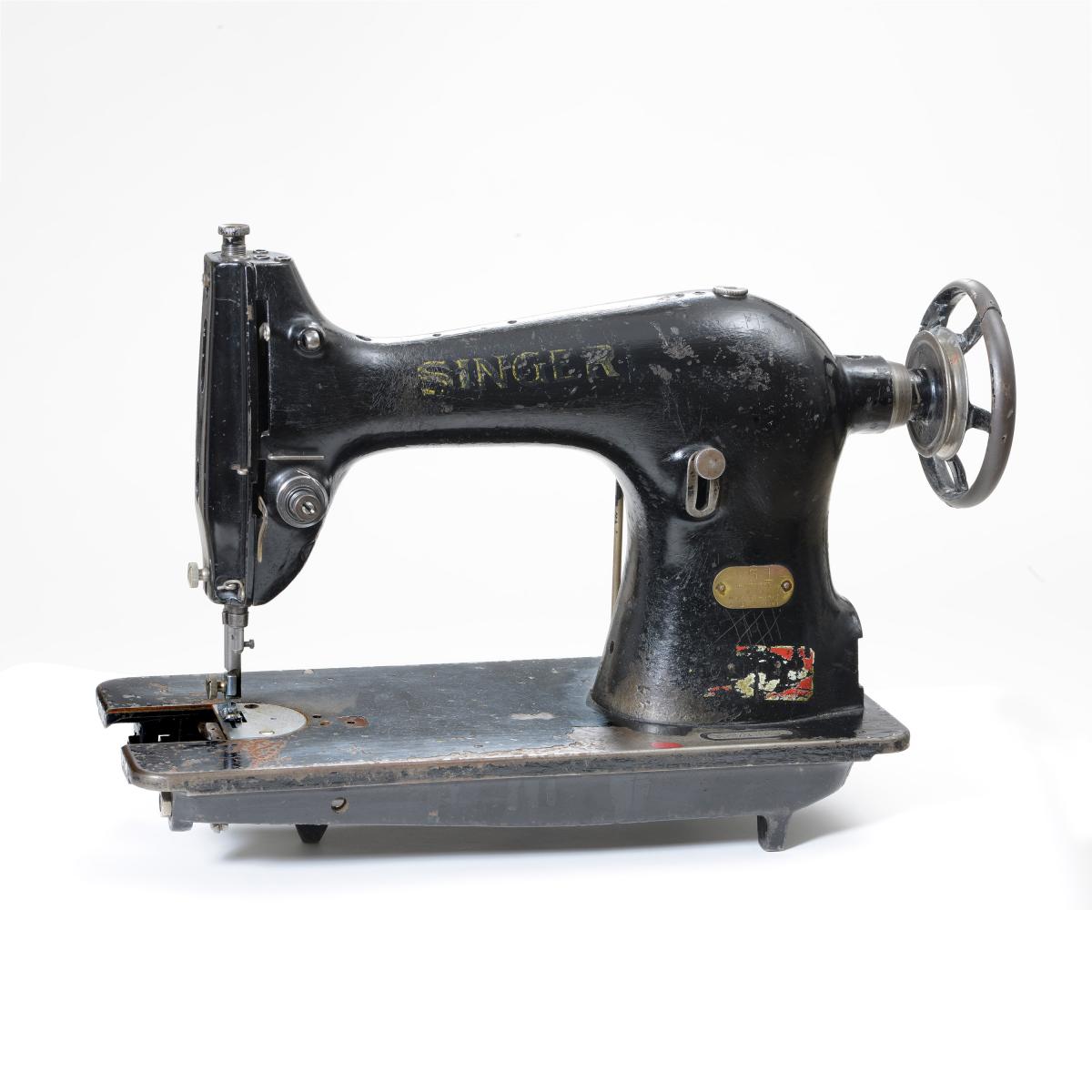
This sewing machine was collected as evidence in the Triangle Company fire.
New York State Museum H-2018.37.1
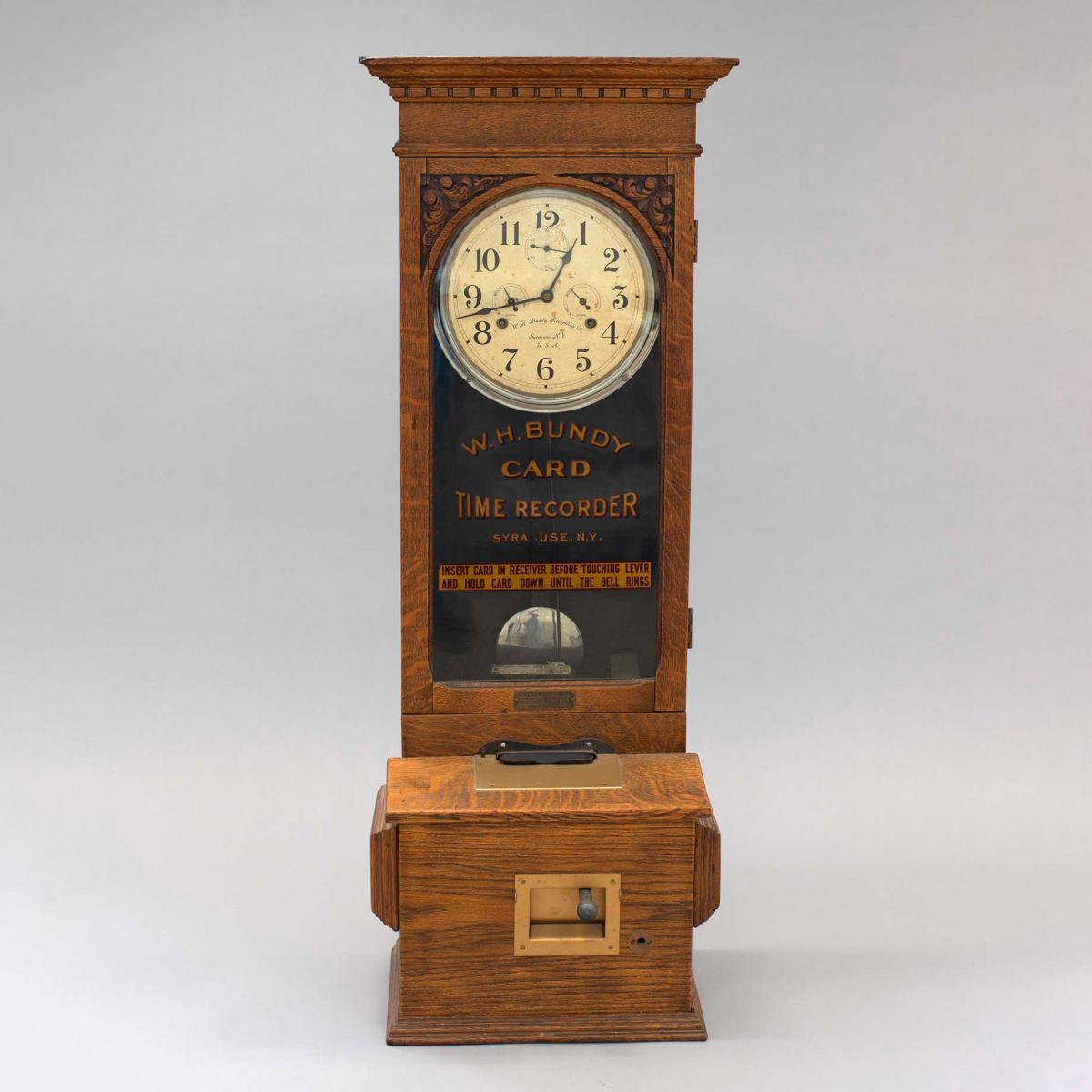
Syracuse, NY
The employee time clock was invented by Willard Le Grand Bundy in Auburn, New York in 1888. This invention timestamped a card to record employees' work hours. This invention protected both employers and workers from dishonesty.
The Oechsle Clock Collection, New York State Museum H-2024.43.2
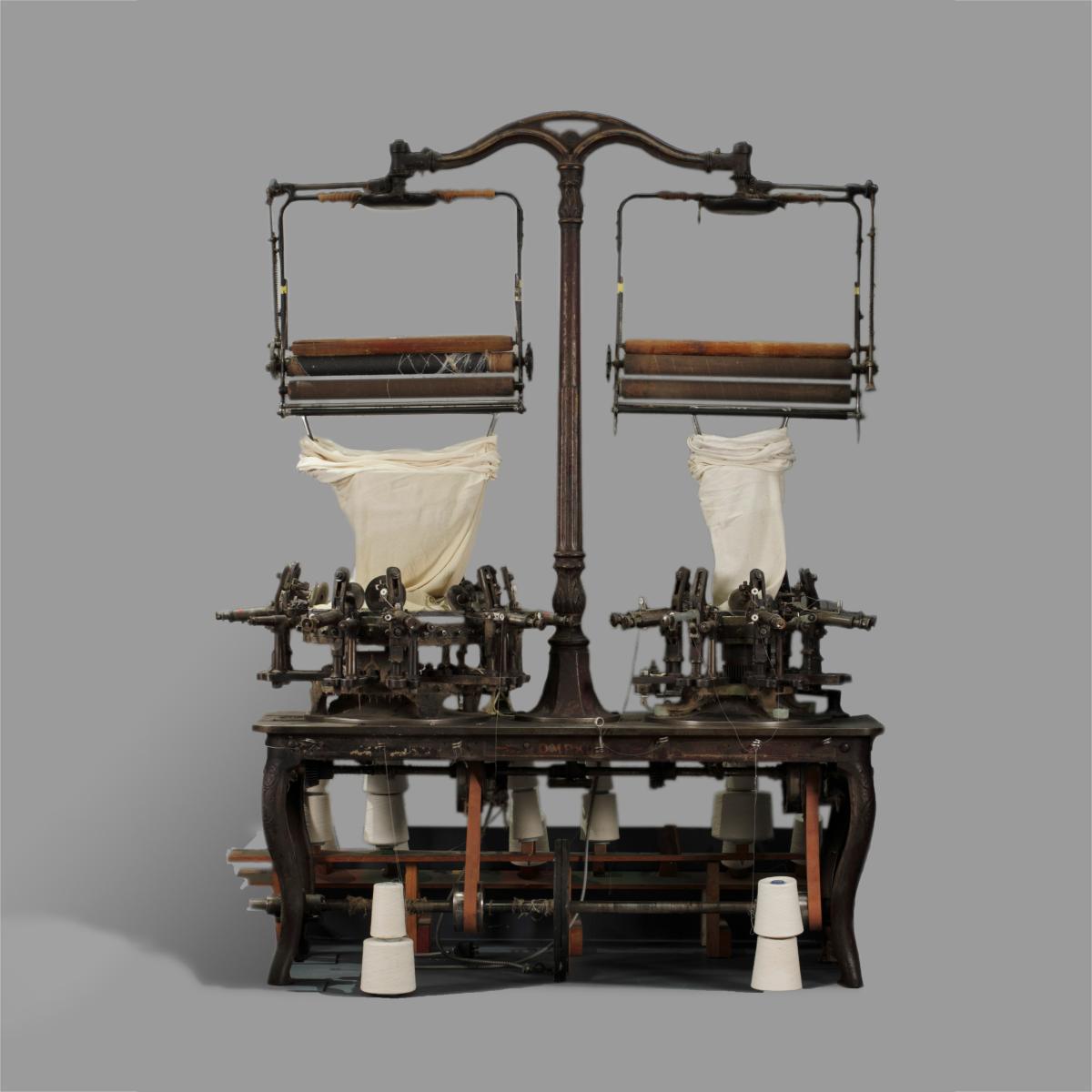
Tompkins Brothers
Troy, New York
This knitting machine was used by Johnstown Knitting Company in Johnstown, New York, for most of the 20th century, making cotton-based t-shirt and sweatshirt fleece. Textile factories were plentiful across the state due to an ever-expanding immigrant workforce and an established transportation network to move raw goods and finished products around the country and to Europe.
New York State Museum H-1996.27.1
Introduction
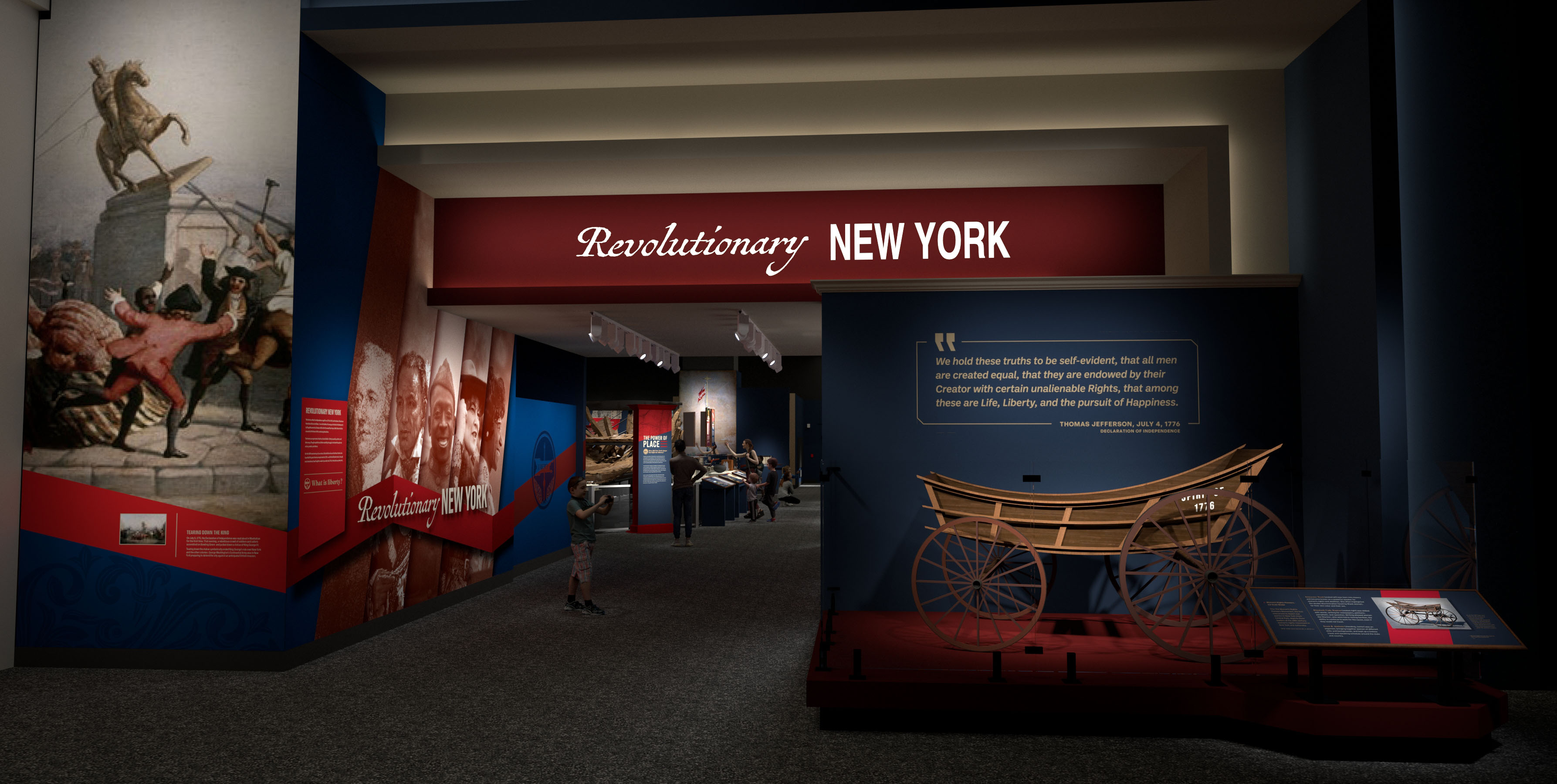
As you move down the corridor outside Exhibition Hall, next to the Cohoes Mastodon skeleton, you will encounter a wooden wagon displayed on a raised platform. This Suffrage Wagon served as a mobile platform for women advocating for voting rights. The wagon is about eight feet long and a little over four feet high. Constructed of wood and supported by four large, spoked wheels with iron rims, it bears the words “Spirit of 1776” painted in white lettering. Inside the wagon, there are two plank bench seats. Behind the wagon is a quote on the wall by Thomas Jefferson from the Declaration of Independence, July 4, 1776: “We hold these truths to be self-evident, that all men are created equal, that they are endowed by their Creator with certain unalienable Rights, that among these are Life, Liberty, and the pursuit of Happiness.”
To the left of the wagon and exhibition entrance is a large wall graphic illustration showing a crowd pulling down a statue of King George. Tearing down the statue symbolically ended his rule over New York and the other colonies.
Above this area, the entrance header has three recessed soffits painted deep blue, cream, and crimson—a color palette continued throughout the exhibit.
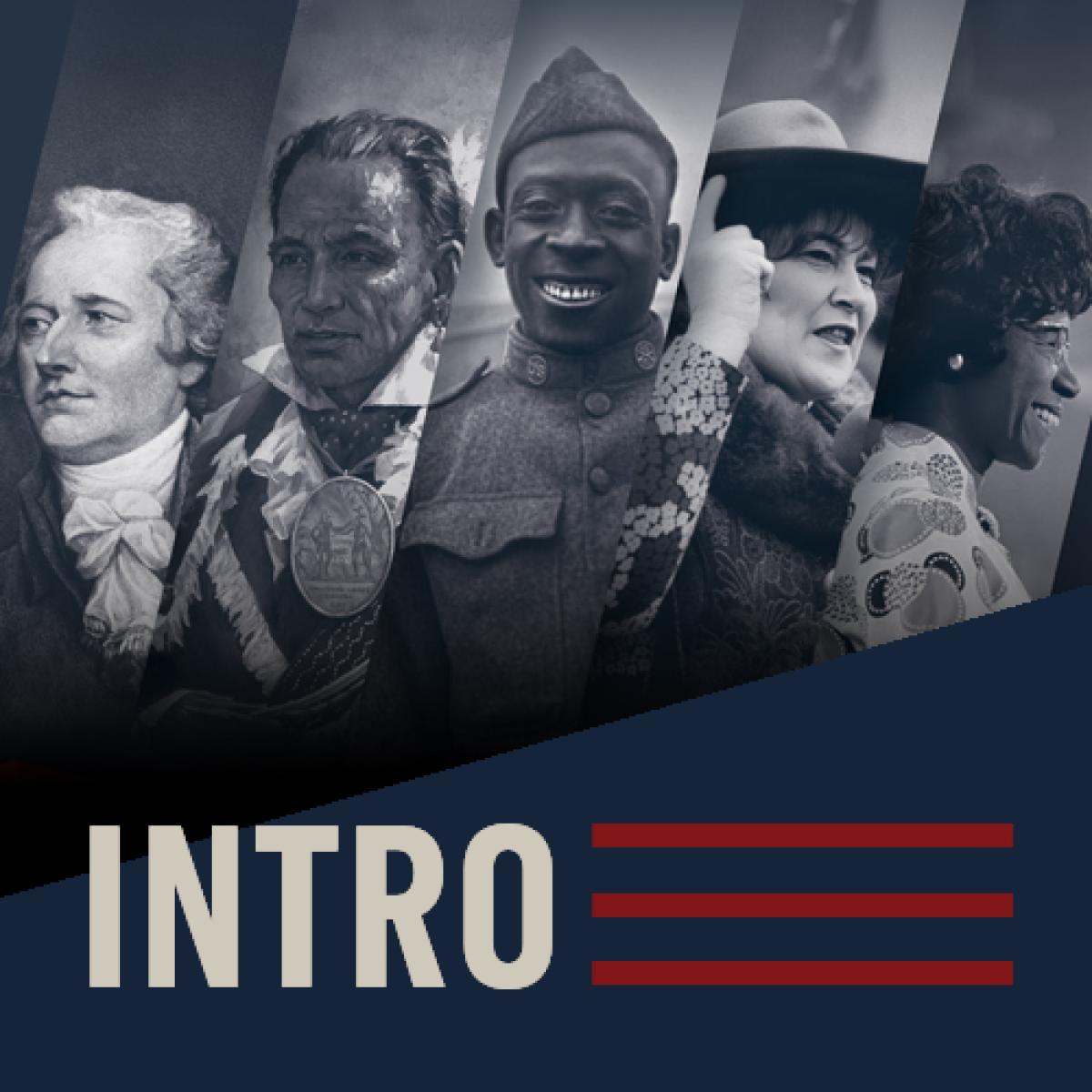
Just inside the entryway, on the left, introductory text presents Revolutionary New York as an exploration of how New Yorkers—from the Revolution through successive social movements to today—have carried forward and interpreted the nation’s founding ideals of liberty, equality, justice, and democracy. The first of a series of dialogic questions is introduced here: “What is liberty?” To the right of this, a large wall graphic presents close-up portraits of influential figures from New York’s revolutionary history—Alexander Hamilton, Red Jacket, Henry Johnson, Bella Abzug, and Shirley Chisholm. They gaze in different directions, engaging visitors as they enter. A red band—suggesting a timeline and repeated as a motif throughout the gallery—runs across the graphic and displays the exhibition title, Revolutionary New York. “Revolutionary” is rendered in an aged, script-style font, while “New York” appears in a bold, modern sans serif, establishing a design aesthetic blending historic character with clean, contemporary lines.
The overall gallery configuration guides visitors along a broad U-shaped path, subtly encouraging a leftward start that loops back along the far back wall of the space.
Revolutionary New York
The American War for Independence raged from 1775 to 1783, but the ideas of the American Revolution did not end there. From the Battles of Saratoga to the birth of the Women’s Suffrage Movement at Seneca Falls to the Stonewall Uprising in 1969, New York has remained at the heart of this continuing Revolution.
The American experiment is built on shared ideals—liberty, equality, justice, and democracy. Though imperfect and often marked by struggle, it endures through civic action, protest, and reform.
On the 250th anniversary of our nation, this exhibition honors the New Yorkers who launched the great American experiment in 1776—and the bold leaders who, through social revolutions, have fought to make its promises real. This is Revolutionary New York.
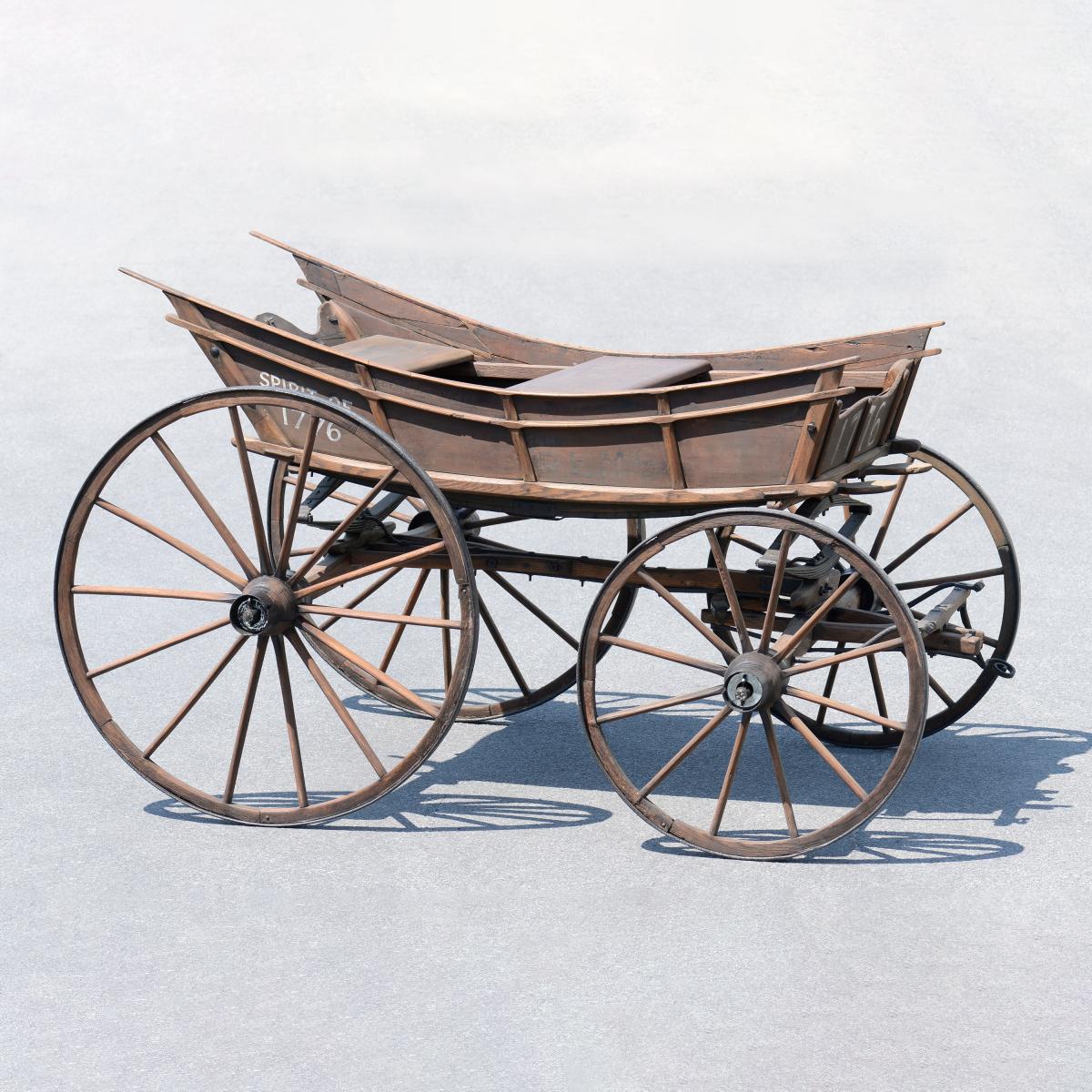
“If taxation without representation was tyranny in 1776, why not in 1913?”
Suffragists equated their cause with that of our nation’s founders. This horse-drawn wagon—used as a prop and speaker platform—was said by suffragists to date to 1776 and belong to Revolutionary Patriots, though the wagon style was not produced before 1820.
In 1913, Edna Kearns and Irene Davidson dressed as minutemen and drove the wagon from New York City to Long Island to deliver leaflets and speeches. Eight-year-old Serena Kearns accompanied them as “Little Liberty.”
New York State Museum H-2007.21.1
Acknowledgments:
As Revolutionary New York commemorates the 250th anniversary of our nation, we honor not only the history of our state and its people but also the partnerships that made this exhibition possible.
We extend our sincere thanks to the New York State Education Department, the New York State Board of Regents, and the New York State 250th Commemoration Commission for their support in bringing this project to life.
The New York State Museum worked closely with partner institutions within the Office of Cultural Education—the New York State Archives and the New York State Library—and collaborated with cultural organizations, historians, and Indigenous Nations to enrich the stories shared here.
This exhibition was developed in consultation with Indigenous Nations through a dedicated Indigenous Advisory Council, as well as staff at the Underground Railroad Education Center. We deeply appreciate the insight, expertise, and partnership these consultants provided.
We are also grateful for our lenders—private individuals, museums, and cultural institutions—for their contributions to this exhibition.
We extend our deepest gratitude to all who contributed their time, knowledge, and resources to make Revolutionary New York possible.
Funding provided by the New York State 250th Commemoration Commission
OCE Partners
Consultants
Indigenous Advisory Council
- Christine Abrams, Tonawanda Seneca
- Wayne Abrams, Tonawanda Seneca
- Darren Bonaparte, St. Regis Mohawk Tribe
- Jeremy Dennis, Shinnecock Indian Nation
- David George-Shongo, Seneca
- Richard Hill, Tuscarora, Six Nations of the Grand River
- Clarissa Jacobs, NYSED Office of Indigenous Education
- Jeremy Johnson, Delaware Tribe of Indians (Lenape)
- Dehowähda•dih - Bradley Powless, Onondaga Nation Eel Clan
- Robin Maxkii, Stockbridge-Munsee Band of Mohican Indians
- Vince Schiffert, Tuscarora Nation
- Stockbridge-Munsee Band of Mohican Indians (citizen)
Underground Railroad Education Center
- Paul Stewart
- Mary Liz Stewart
- Marcus Anderson
- Carmen Bivens
- Amelia Paul
- Lacey Wilson
American Gunboat Conservation and Reconstruction
- Peter Fix, Center for Maritime Archaeology and Conservation at Texas A&M University
- Funding provided through Lower Manhattan Development Corporation
Film Contributors:
- Darren Bonaparte
- Jennifer Burns
- Frederick Jones
- Pedro Regalado
- Hugh Ryan
- Judith Wellman
The New York State Museum is a program of The University of the State of New York | The State Education Department | Office of Cultural Education.
Power of Place
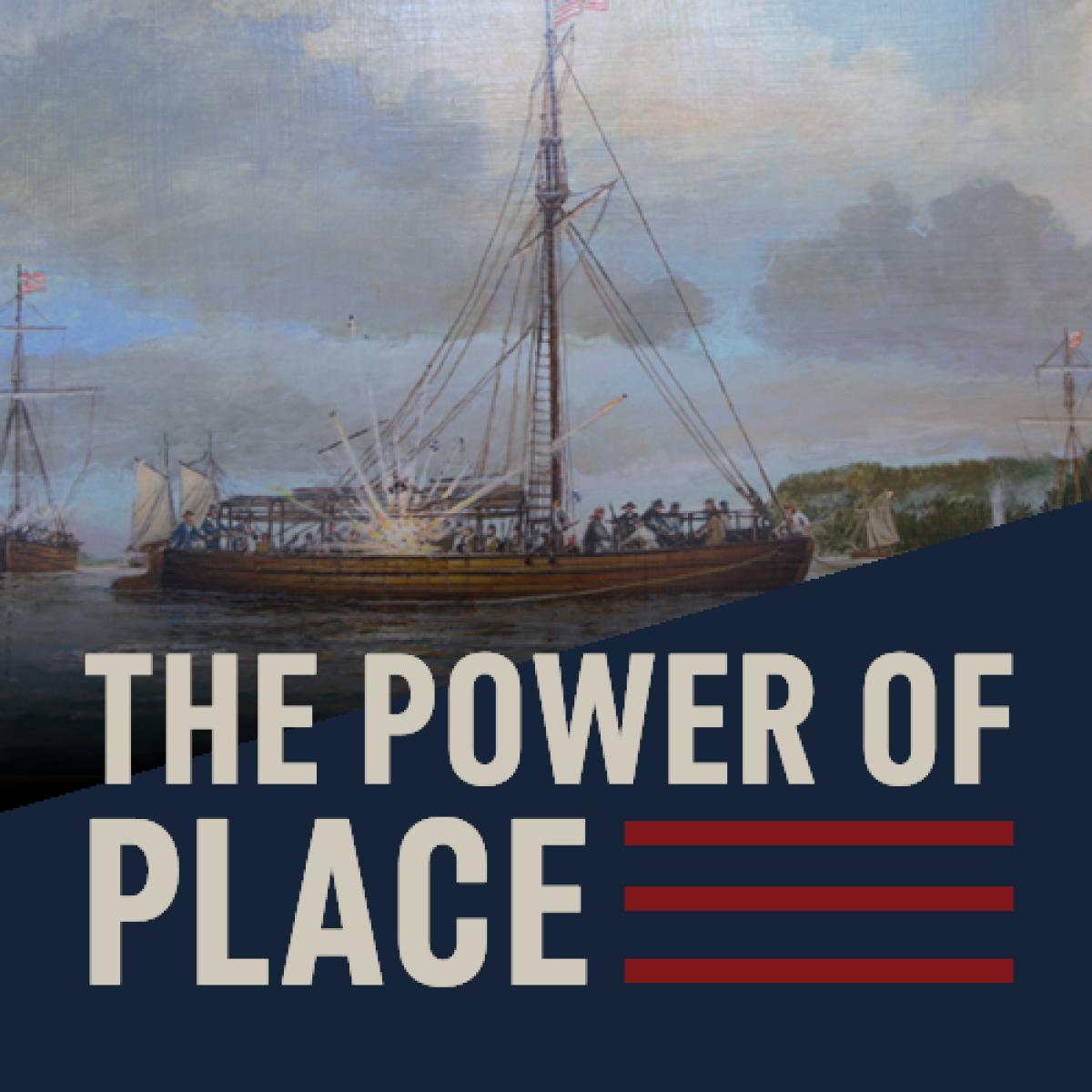
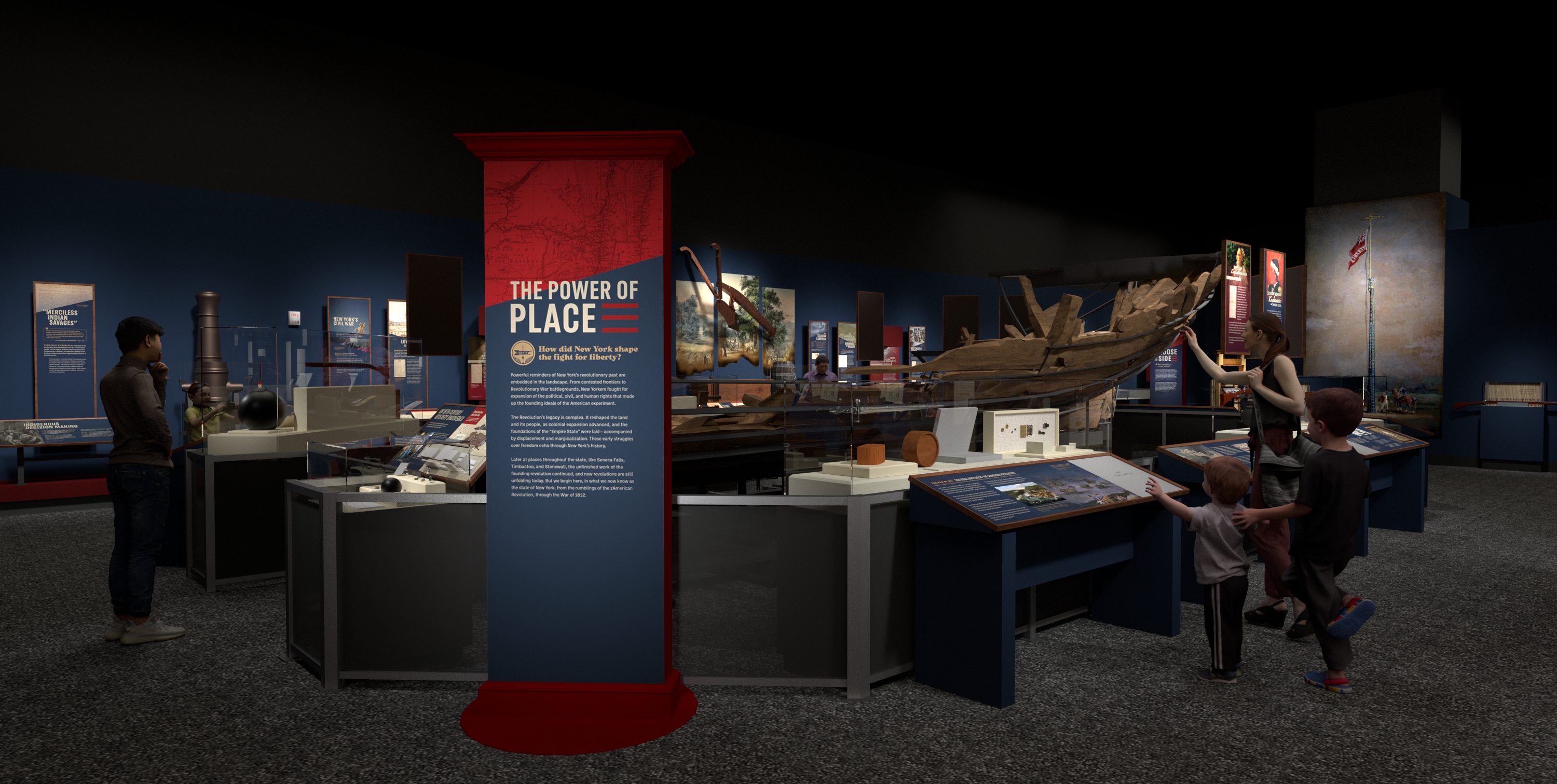
Upon entering the gallery, visitors may choose to go either left or right. However, the design encourages starting on the left, where the “Power of Place” introductory panel appears. The following descriptions follow that path.
An eight-foot-tall freestanding introductory panel stands on the left. Topped with decorative molding and set in a deep crimson circular base, this marks the beginning of a new section—this design feature is repeated throughout the exhibit. A historic map of New England before New York was founded crowns the panel, along with the title “Power of Place” and the question, “How did New York shape the fight for liberty?”
Moving ahead to your left, you’ll find a large wall-mounted monitor with a touchscreen kiosk positioned directly in front. The screen asks: “What was New York?” It displays maps and an accompanying narrative that explores how land was understood and contested before the American Revolution. To the right of the interactive map, a panel explains Indigenous kinship and diplomacy. Next to it are two pieces of featured artwork. Many Trails by Misti Moede (Stockbridge-Munsee Mohican) is an assemblage of cut and layered papers that create the official symbol of the Stockbridge-Munsee Community Band of Mohican Indians. The symbol features a vertical line intersected by two horizontal lines; in between these intersections are two concentric circles. Above the top intersection is an open half circle bisecting the vertical line. The second piece, Hiawatha Belt by Toni Cook (Oneida), is a framed rectangular woven belt, made of tiny cylindrical purple and white beads made out of dyed and undyed clam shell. The central form in the shape of a tree or a flame, as in a council fire, representing Onondaga Nation, the central fire of the Haudenosaunee Confederacy.
At the center of the gallery is the largest feature: a reconstruction of a Revolutionary War-era American gunboat, measuring about 16 by 30 feet. The wood is dark brown with a rough, visible grain and is cradled in a steel mount. It is surrounded by angled interpretive panels and object cases that take visitors on a circular path around the gunboat.
Content includes: a timeline from the 1763 Treaty of Paris to the start of the Revolution in 1775, panels highlighting major campaigns during the American Revolution with accompanying maps showing regions they took place, biographies of nine key figures that are hung on cabled panels, six display cases with related artifacts such as muskets, swords, powder horns, ammunition, and personal items including spoons and buckles.
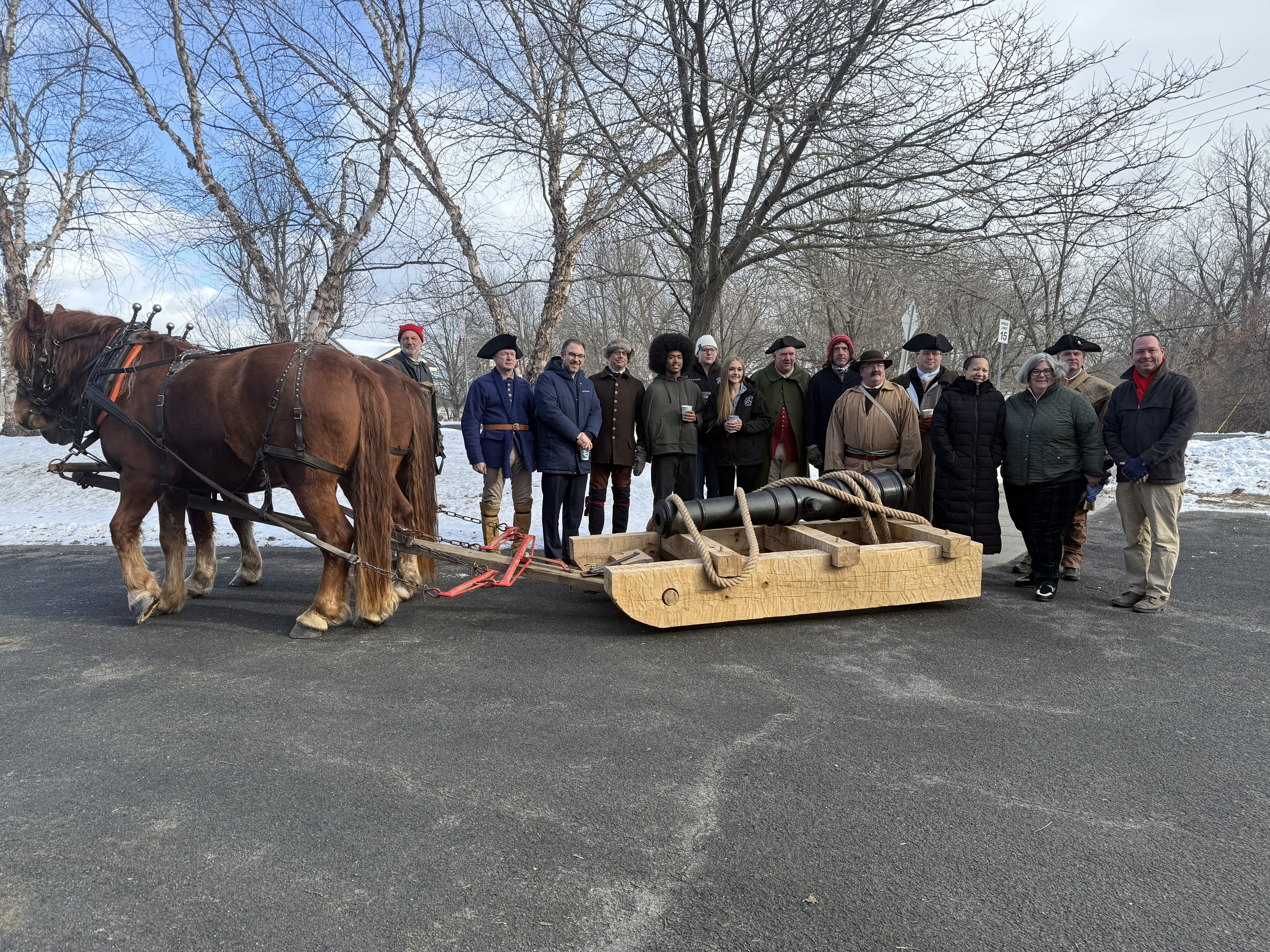
Beyond the gunboat display is a large, vertical wall graphic featuring a liberty pole and an area where visitors may participate in hands-on activities. There is a four-by-eight-foot wooden artillery sled fitted with a six-pounder cannon that visitors are invited to touch.
The “Power of Place” section concludes with the War of 1812 on the last slant panel that is located around the gunboat.
Powerful reminders of New York’s revolutionary past are embedded in the landscape. From contested frontiers to Revolutionary War battlegrounds, New Yorkers fought for expansion of the political, civil, and human rights that made up the founding ideals of the American experiment.
The Revolution’s legacy is complex. It reshaped the land and its people, as colonial expansion advanced, and the foundations of the “Empire State” were laid—accompanied by displacement and marginalization. These early struggles over freedom echo through New York’s history.
Later at places throughout the state, like Seneca Falls, Timbuctoo, and Stonewall, the unfinished work of the founding revolution continued, and new revolutions are still unfolding today. But we begin here, in what we now know as the state of New York, from the rumblings of the American Revolution, through the War of 1812.
Highlights
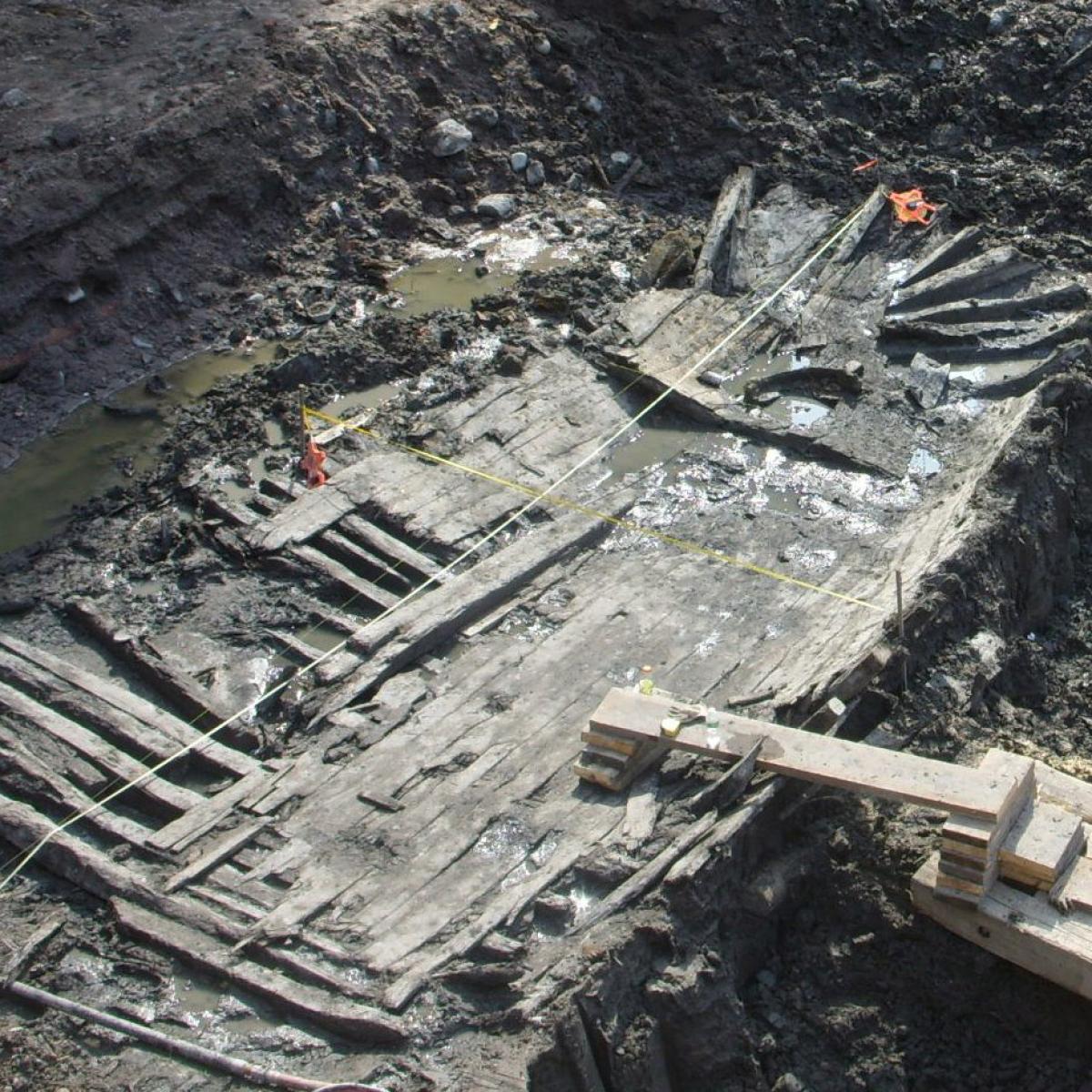
This gunboat is among the very few American-built Revolutionary War-era ships that are known to remain. Evidence suggests that it was built in 1775 and captured by the British when Philadelphia fell in 1777.
New York State Museum A2016.14
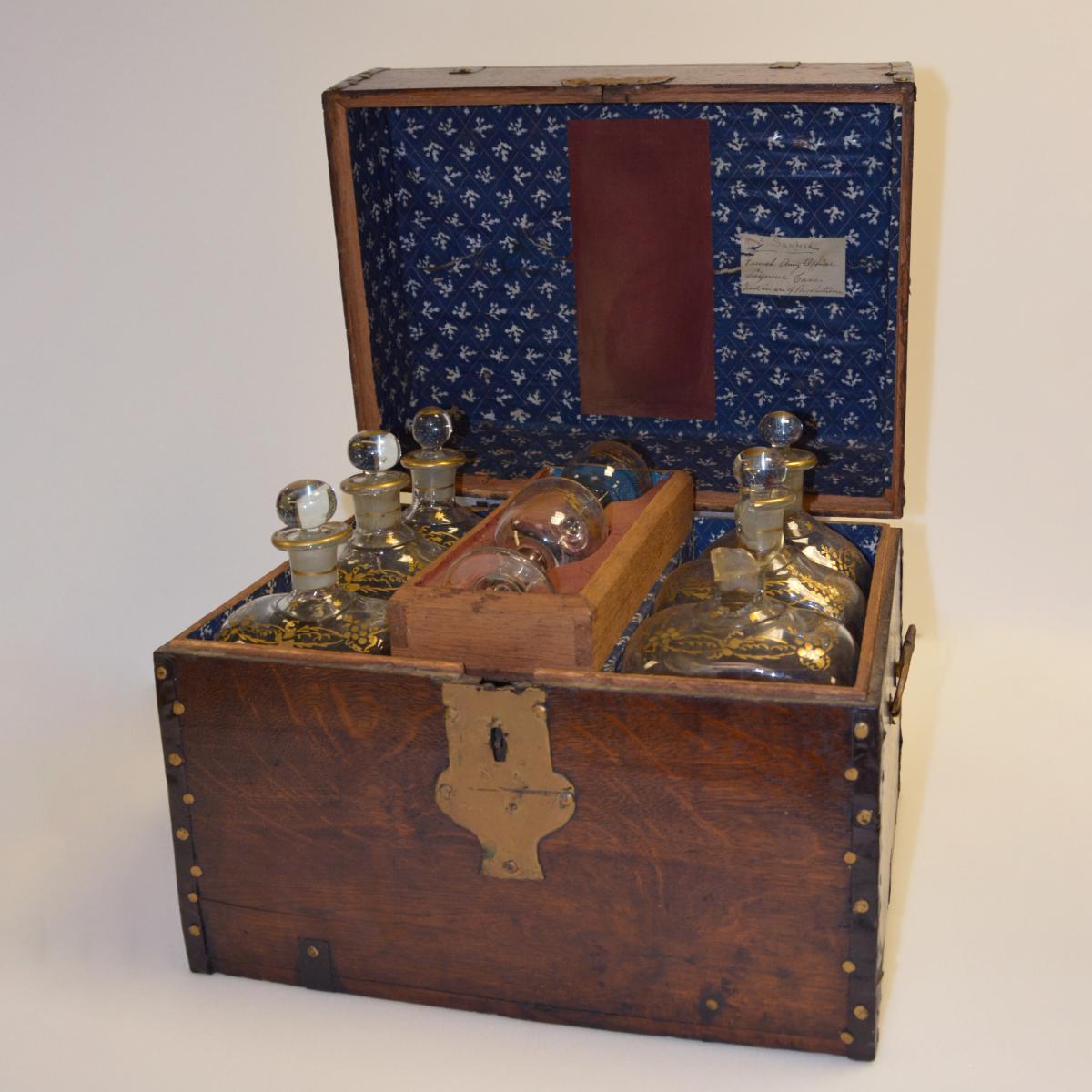
This campaign style liquor chest has a fitted interior for six bottles of liquor and accompanying glasses. It was presented to Captain Abraham Swartout, a New York officer on General George Washington’s staff, by an unidentified French Army officer.
New York State Museum H-2015.30.1 A-R
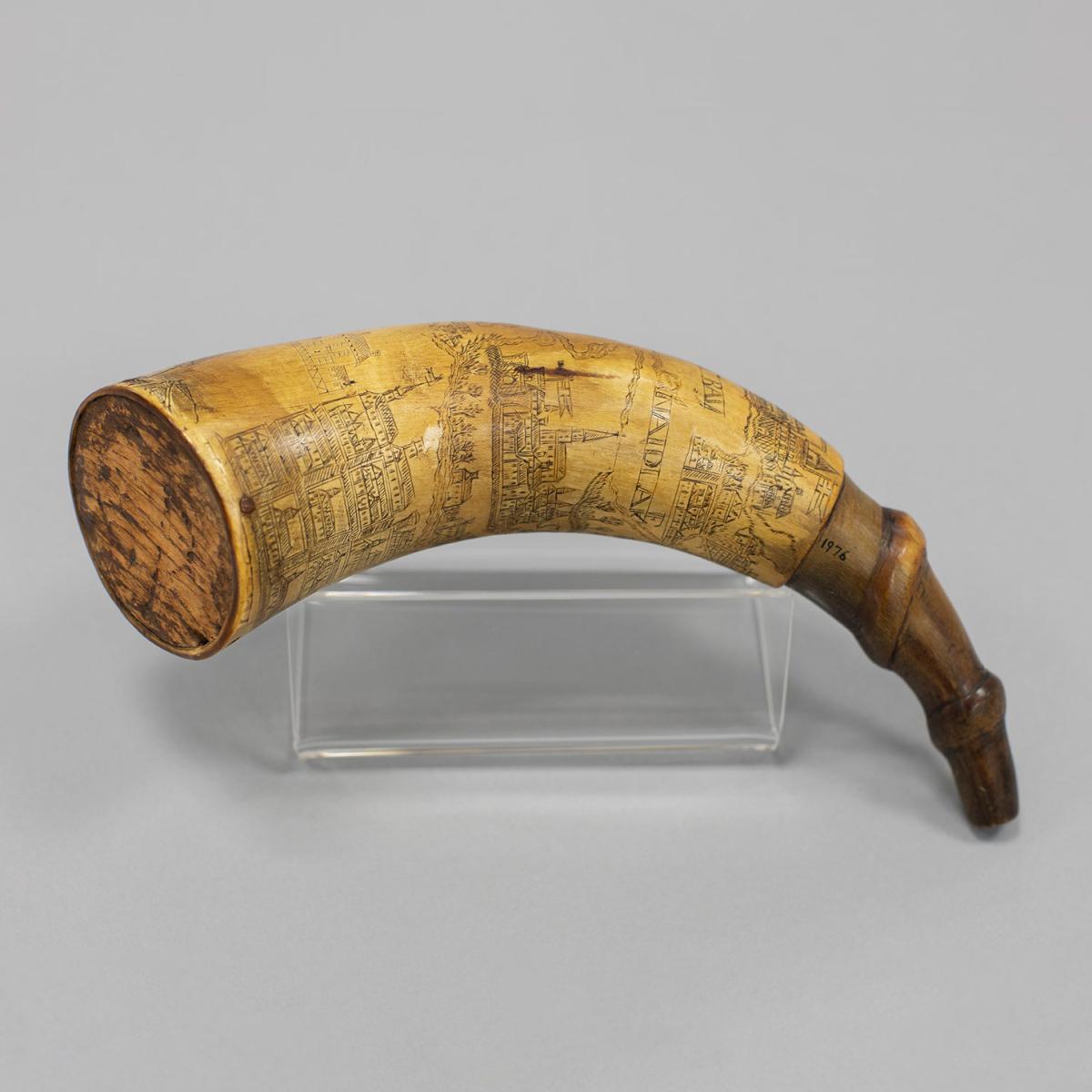
New York State Museum H-1936.12.1
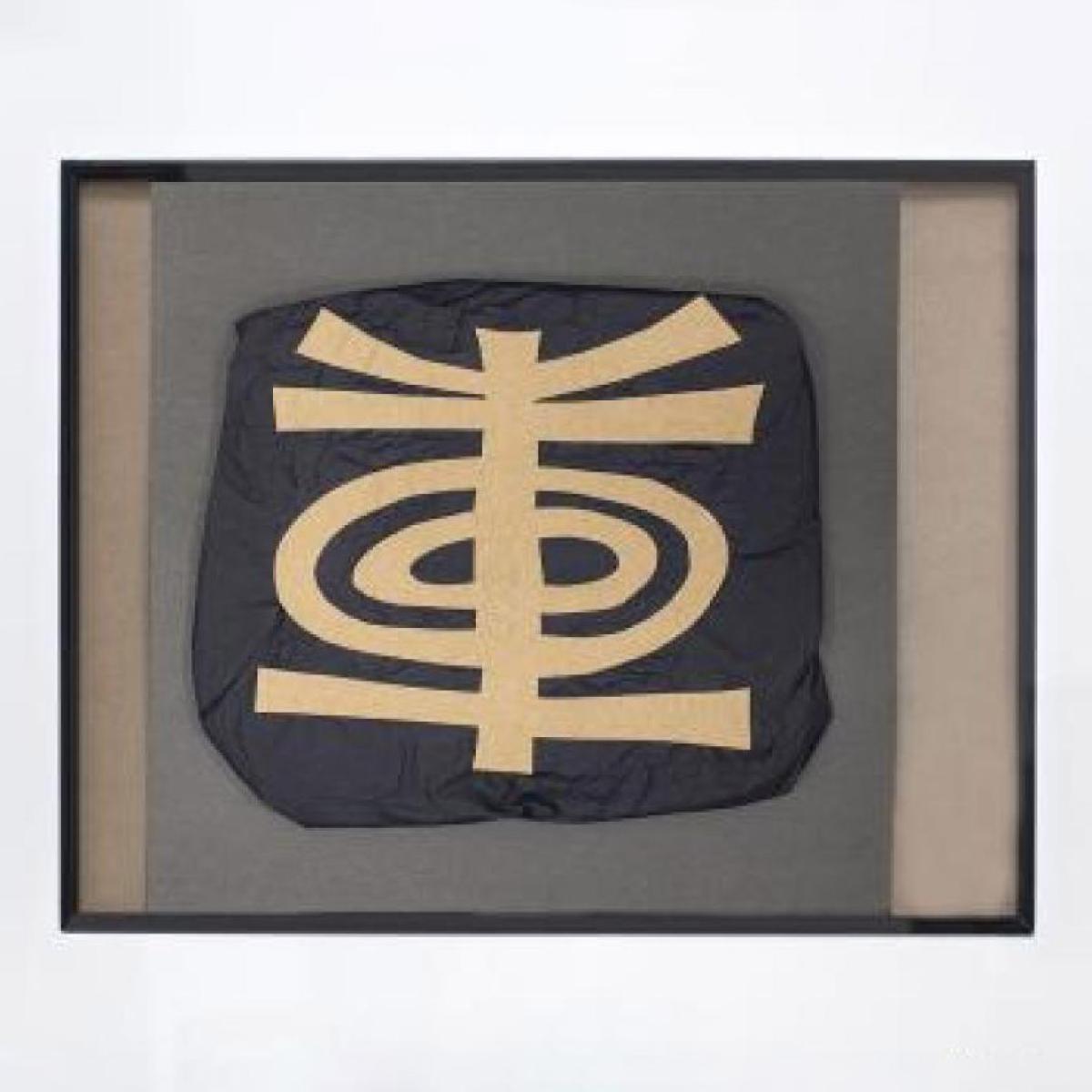
Many Trails, 2023
Misti Moede (Stockbridge-Munsee Mohican) created this cut paper image of “Many Trails,” the official symbol of the Stockbridge-Munsee Community Band of Mohican Indians. The symbol originated with tribal member Edwin Martin and represents the “endurance, strength, and hope” of the Munsee-Mohican people and their post-revolution from their homelands in NY to their current home in Wisconsin.
New York State Museum E-2024.09.1
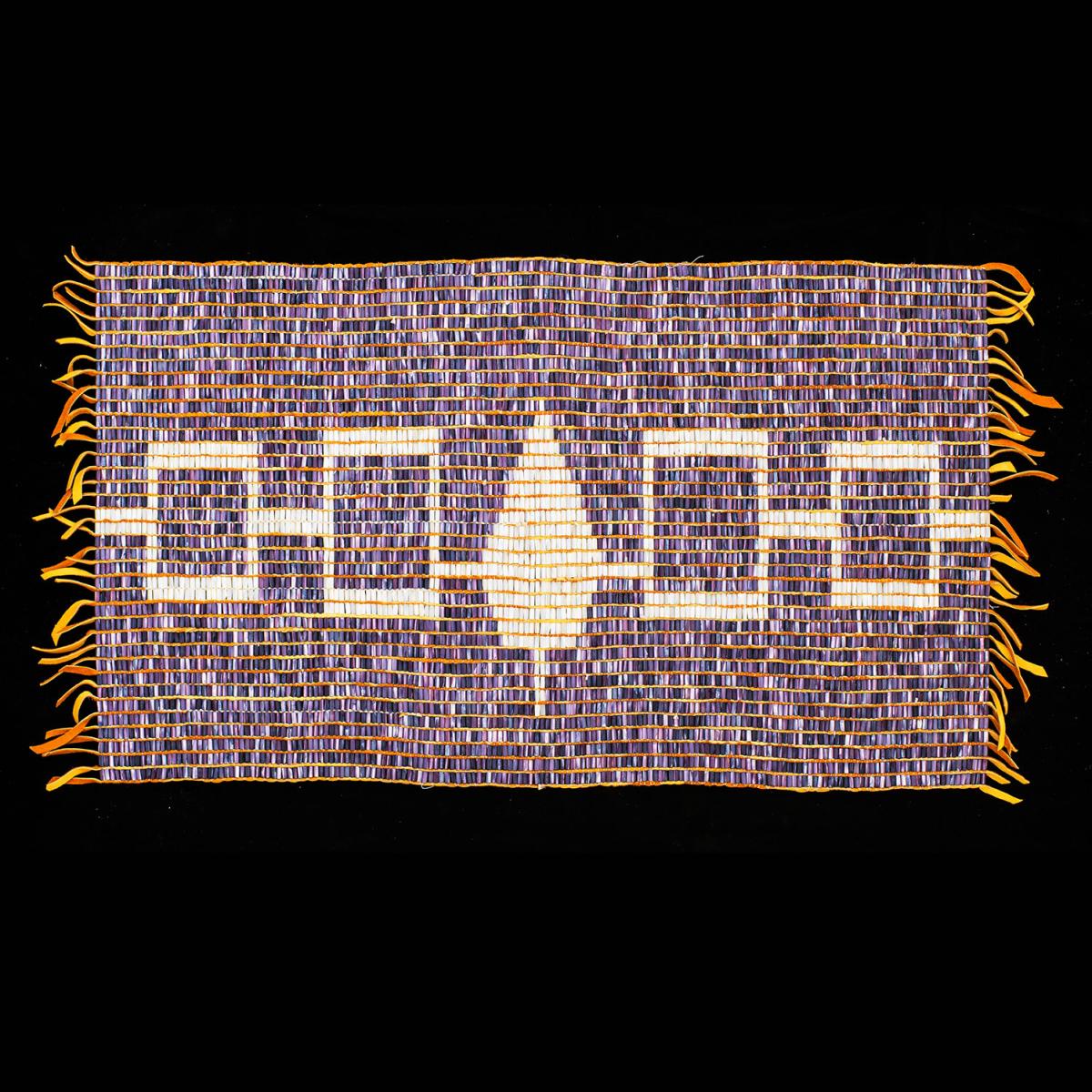
Hiawatha Belt, 2021
Toni Cook (Oneida)
This reproduction belt represents the Haudenosaunee Confederacy, stretching across what is now New York. Each shape represents one of the original five Haudenosaunee Nations, and the center represents the Council Fires at Onondaga Nation. The Tuscarora joined in 1720 and are considered part of the Confederacy today as well.
New York State Museum E-2001.10.01
Additional Resources

The Thanksgiving Address, Ohen:ton Karihwatehkwen: Words Before all Else
Members of the University at Albany’s Indigenous Students Association read the Haudenosaunee Thanksgiving Address.

Unlocking the Secrets of the Gunboat at Ground Zero
Explore two expert-led videos featuring Dr. Peter Fix and Dr. Warren Riess on the remarkable 18th-century Revolutionary War–era gunboat unearthed beneath the World Trade Center site in 2010, its historical significance, and the meticulous conservation process that preserved this window into early American maritime history.
Revolutionary Ideas Over Time
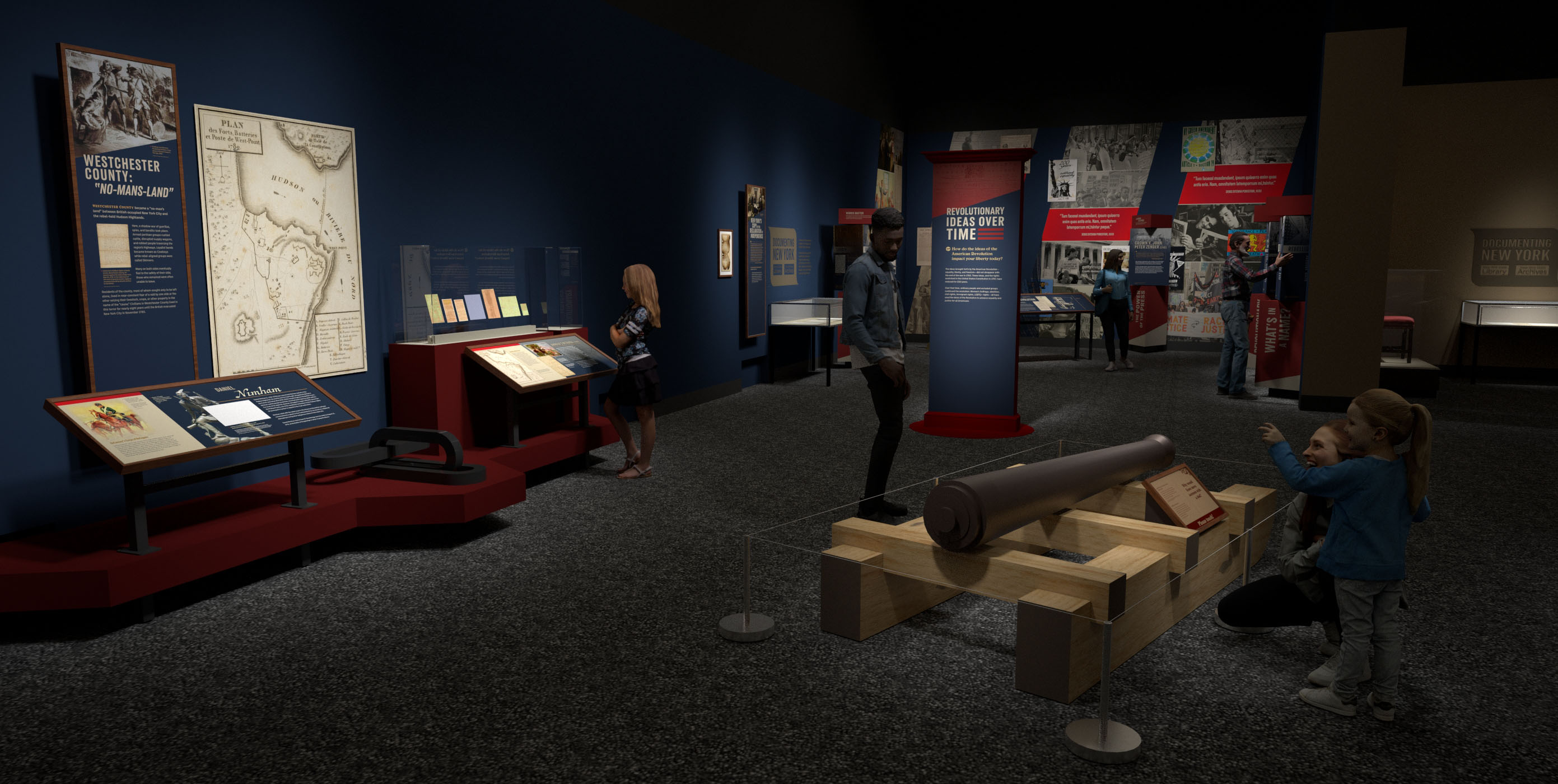
As you enter this section, you will encounter the next tall introductory panel titled “Revolutionary Ideas Over Time.” Below the title, a guiding question asks: “How do the ideas of the American Revolution impact your liberty today?" This section explores how the enduring Revolutionary ideals and the press that amplified them have driven ongoing movements for equality and justice.
Moving forward, the left wall holds a table-height glass display case titled “Documenting New York.” It presents original materials from the New York State Archives and Library. Because these documents are sensitive to light, the documents on display will be changed periodically. You continue through this area on a U-shaped path.
Distributed throughout the gallery are four rotating panel spinners that invite visitors to explore themes such as “Language and Revolutionary Ideals vs. Reality,” “The Power of the Press,” “Revolutionary Legacies,” and “What’s in a Name."
In the back left corner, set at an angle, a full-size‑ replica of an 18th-century printing press is displayed. Extending across the back wall and the adjoining right‑hand wall is a series of four large graphic collages illustrating nearly 250 years of printed communication—broadsides, banners, public notices, and protest graphics. The subjects range widely, including LGBTQ+ rights materials, the ACT UP “Silence = Death” AIDS campaign, anti-abolition‑ broadsides, a 1775 proclamation against rebellion, and women’s suffrage.
Each collage features a red horizontal band across its center containing a quotation. Together, the words of the United States Constitution, Amendment 1 (1791), Frederick Douglass (1860), Robert F. Kennedy (1962), James Baldwin (1955)—underscore themes of free speech, dissent, and civic duty.
The section concludes with a small, angled kiosk with a touchscreen. Visitors can select audio excerpts from three speeches: Martin Luther King Jr.’s 1962 remarks on the Emancipation Proclamation, Franklin D. Roosevelt’s 1941 State of the Union address, and Shirley Chisholm’s 1969 speech advocating for women’s equality. As each excerpt plays, a transcription appears on the screen.
The ideas brought forth by the American Revolution—equality, liberty, and freedom—did not disappear with the end of the war in 1783. These ideas, and the rights enshrined in the United States Constitution in 1787, have endured for 250 years.
Over that time, ordinary people and excluded groups continued the revolution. Women's Suffrage, Abolition, Civil Rights, Immigrant Rights, LGBTQ+ Rights—all have used the ideas of the Revolution to advance equality and justice for all Americans.
Highlights
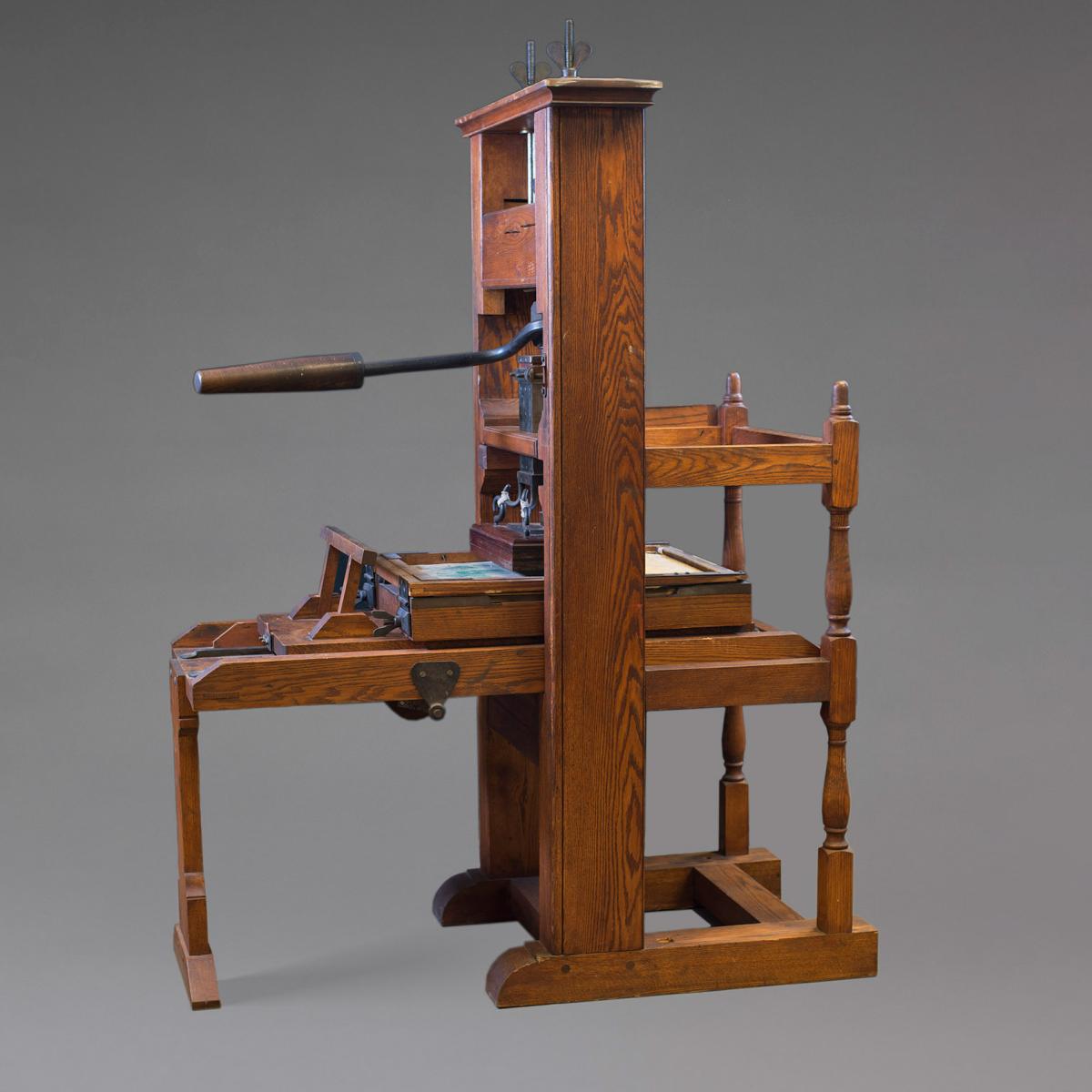
Printing presses were critical during the American Revolution and founding era. Newspapers, broadsides, and pamphlets helped to spread revolutionary ideas throughout the North American colonies, creating a sense of shared identity and common cause among colonists, raising awareness and galvanizing public opinion.
New York State Museum H-1978.10.1
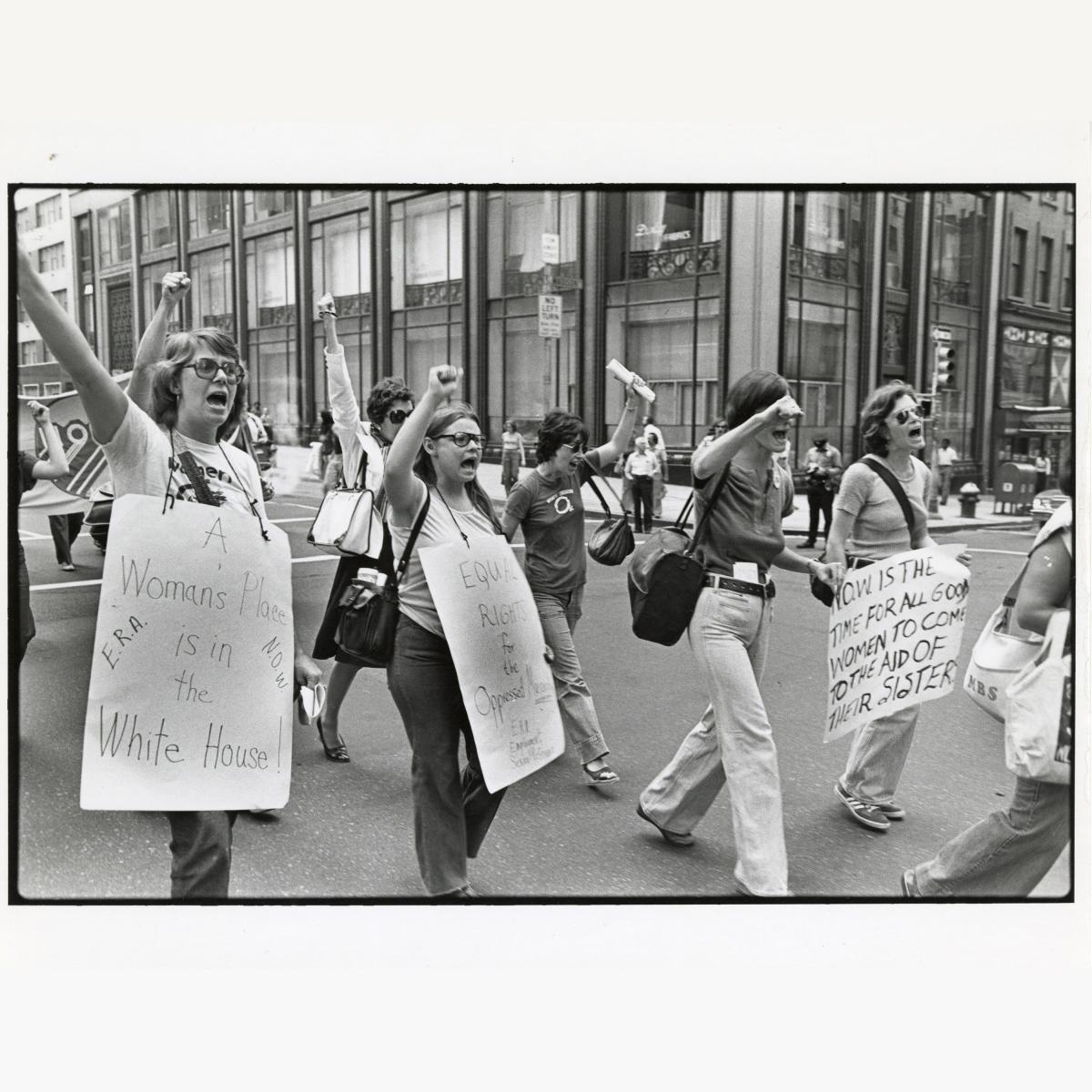
Photograph by Diana Mara Henry
Just as the leaders of the American Revolution took a stand against tyranny, Americans have continued the fight against oppression. The First Amendment to the United States Constitution protects freedom of speech, the press, and the right to peacefully assemble and petition the government, providing a means for working toward equal rights.
Copyright Diana Mara Henry, New York State Museum H-2021.78.177
We the People
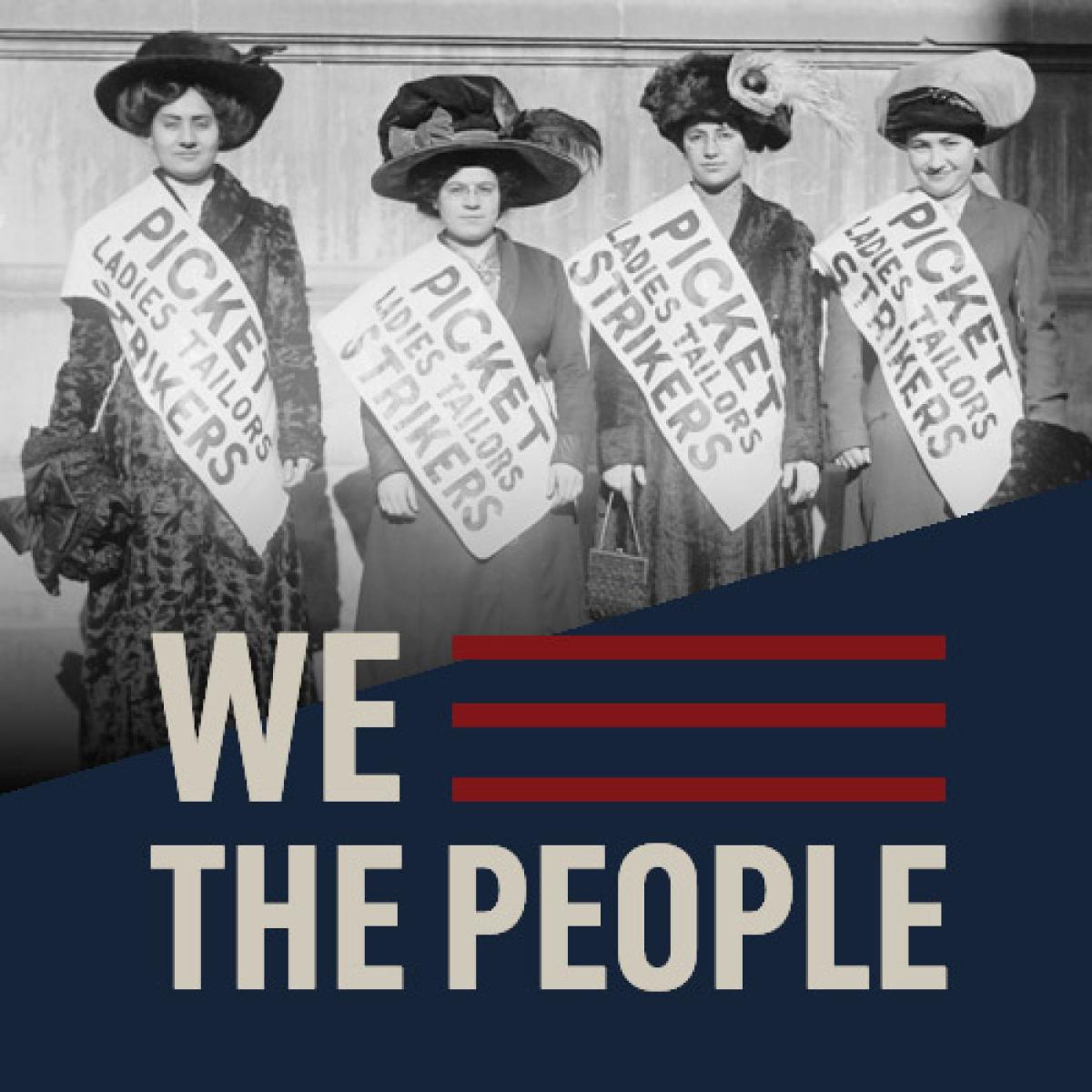
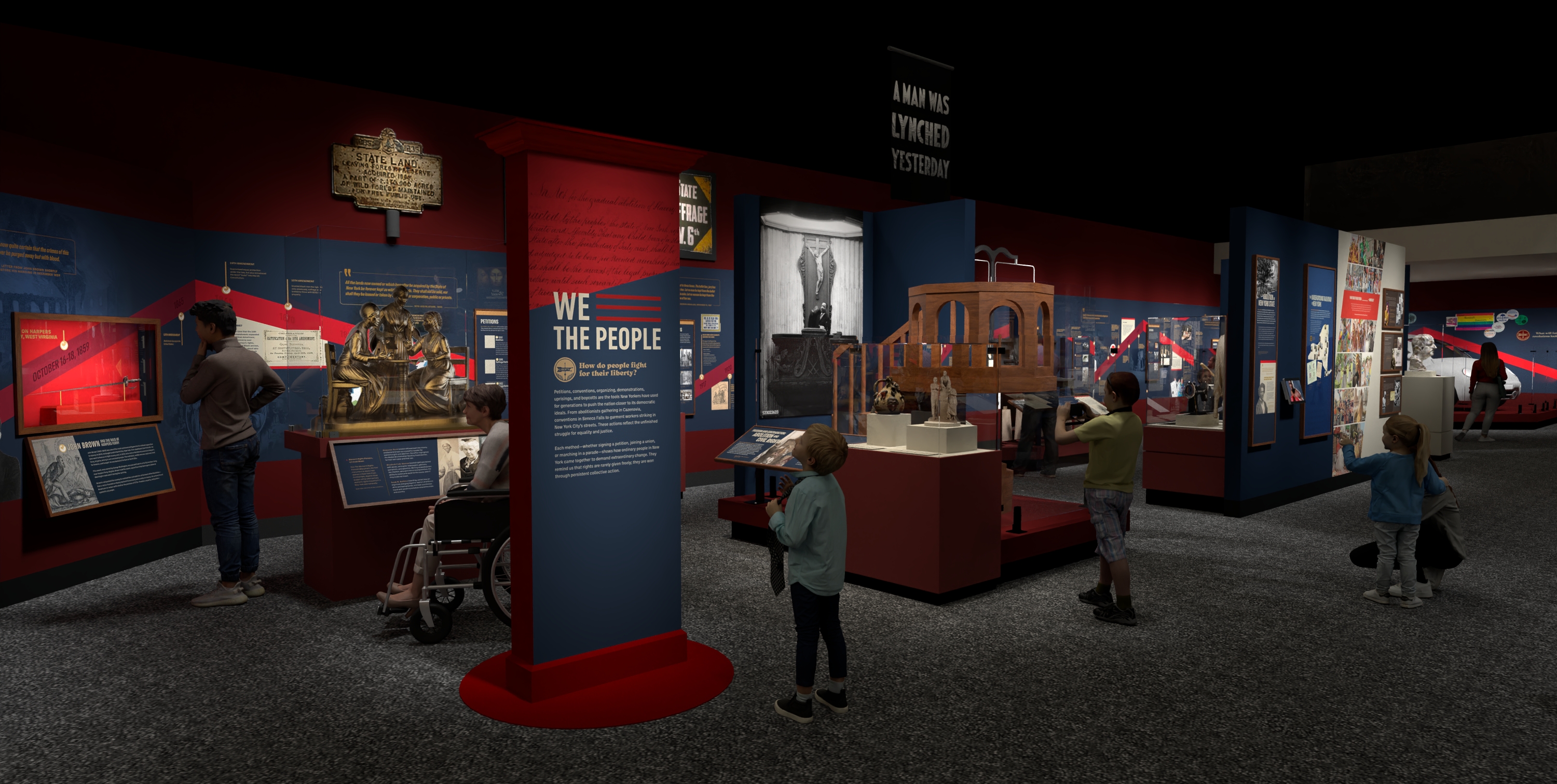
Following the video, visitors enter the final section of the exhibition, titled “We the People." A tall introductory panel poses the question, “How do people fight for their liberty?” This section explores six major movements for social change: Women’s Rights, Abolition and Civil Rights, Labor Rights, Immigration Rights, Environmental Activism, and LGBTQ+ Rights. Each thematic area is anchored by a prominent artifact and supported by additional objects and images, with key moments from each movement placed within a shared legislative timeline.
The timeline stretches nearly 80 feet long across the gallery. A thick red line winds over a dark blue background with imagery, forming a sweeping visual backdrop for the six themes. Beginning in 1799 with the Act for the Gradual Emancipation of Slavery, it traces more than two centuries of activism and social change. Key moments from each thematic area appear along its length, creating a layered approach that allows visitors to explore individual movements while also seeing how they intersect, influence one another, and evolve over time.
The “Women’s Rights” section features a one-third scale model of the Women’s Rights Pioneers Monument, showing Sojourner Truth, Elizabeth Cady Stanton, and Susan B. Anthony together in bronze-colored form that’s approximately three feet tall by four feet wide and is displayed on a pedestal.
Nearby is an area called “Freedom and Contradiction: Abolition and Civil Rights.” It features a dark wooden church pulpit, roughly six feet by six feet. A small media screen shows a reenactor delivering Frederick Douglass’s famous 1852 speech, What to the Slave Is the Fourth of July, written by Douglass and performed by Frederick Jones.
In the “Labor Rights” area, an industrial knitting machine serves as the central object. Measuring more than eight and a half feet tall and six and a half feet wide, the machine is cast and painted, with a four-legged table base and a rectangular top. Two rotary mechanisms extend from the structure, connecting to spools of yarn and emphasizing the machine’s industrial function.
The Immigration Rights section, titled “The American Dream,” includes a sculpted plaster head created by immigrant artist Henry DiSpirito. The sculpture features finely carved facial details and a prominent mustache, while the hair is rendered in a more stylized manner.
Within the “Environmental Activism” area, a highlighted grouping of objects featuring the Bald Eagle motif reflects the bird’s shifting significance—from a symbol of the young American republic to an emblem of conservation as the species itself faced near extinction. The grouping includes a large red coffee mill, nearly three feet tall and two feet wide, decorated with an eagle holding banners bearing the company name Enterprise Mffg. Co. Additional objects include a stoneware crock and pitcher, a wooden clock with painted details, a bronze painted eagle figurine with outstretched wings, and an engraved scrimshaw busk.
Finally, as you return toward the entryway, “LGBTQ+ Rights” is marked by a full-size Volkswagen Beetle painted in bright rainbow-colored stripes, with the word “fagbug” in bold white letters that span nearly the entire side of the car. It is paired with its original silver hood that bears graffiti in red spray paint that reads “U R Gay.”
The exhibition concludes at the end of the timeline, bringing you to the present day and inviting reflection with a final question: “What will future revolutions look like?” From there, the path leads back to the gallery entrance, completing the U-shaped route through the Exhibition Hall.
Petitions, conventions, organizing, demonstrations, uprisings, and boycotts are the tools New Yorkers have used for generations to push the nation closer to its democratic ideals. From abolitionists gathering in Cazenovia, conventions in Seneca Falls, to garment workers striking in New York City’s streets, these actions reflect the unfinished struggle for equality and justice.
Each method—whether signing a petition, joining a union, or marching in a parade—shows how ordinary people in New York came together to demand extraordinary change. They remind us that rights are rarely given freely; they are won through persistent collective action.
Women's Rights
From the American Revolution through the early 20th century, women who were denied political, educational, professional, and religious equality organized through reform movements to secure the right to vote and ultimately pursued constitutional equality through the Equal Rights Amendment.
Freedom and Contradiction: Abolition and Civil Rights
From the era of slavery through emancipation and beyond, enslaved people and their allies, many in New York, fought for freedom and civil rights, a struggle that led to the Thirteenth Amendment to the United States Constitution and continues today in the ongoing pursuit of liberty and equality for all.
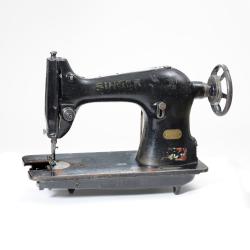
Labor Rights in NYS
From the early 19th century to the present, working people in New York, including immigrants, women, and people of color, have organized for labor rights and social justice, shaping laws and movements that advanced workplace protections, civil rights, and economic equality.
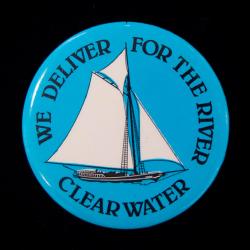
Environmental Activism
From the growth of industry to modern environmental activism, people in New York have worked to protect natural resources and public health, culminating in the 2021 adoption of the Green Amendment to the New York State Constitution guaranteeing the right to clean air, water, and a healthful environment.
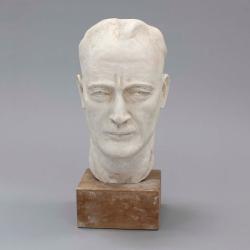
The American Dream
Immigrants to the United States have pursued opportunity, safety, and democracy despite discrimination and hardship, while playing key roles in movements for labor reform and equal rights.

LGBTQ+ Rights
Activists in New York and across the United States have fought for LGBTQ+ rights in courts, legislatures, and communities, a movement commemorated each year during Pride in honor of the Stonewall uprising.
We the People: Environmental Activism
New York’s landscape, rich in natural resources and beauty, has long attracted people and industry alike. However, population growth and industrial pollution have led to habitat and species loss, and at times, threats to human health. In response, citizens have responded through activism and progressive environmental legislation.
On November 2, 2021, voters in New York approved a new constitutional amendment, the “Green Amendment,” to enshrine environmental rights in the Bill of Rights of the New York State Constitution. It asserts that “each person shall have the right to clean air and water, and to a healthful environment.”
Highlights
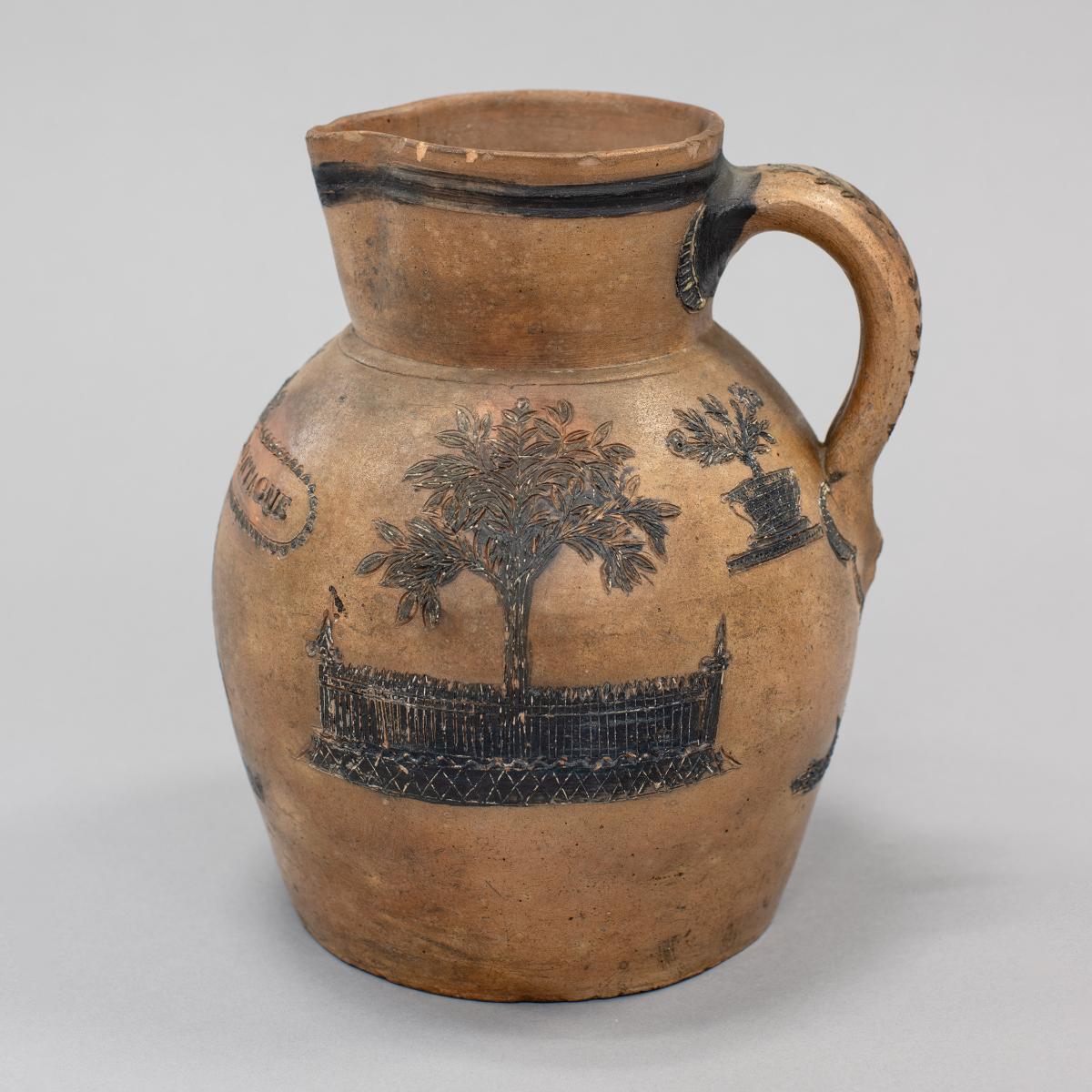
Daniel Goodale
Decorations on this pitcher include a Bald Eagle and a Sturgeon. The Bald Eagle became a symbol of the new republic when it was placed on the United States seal in 1782, but by the mid–20th century, it was in danger of disappearing altogether. Widespread use of the pesticide DDT thinned the eggshells of raptors and fish-eating birds, lowering their survival rates. Sturgeon were reported in the Hudson River during colonial times. These accounts were contrasted with the state of the fisheries in the mid-20th century as activists observed fish kills and declining populations and called for greater protections against pollution and development.
New York State Museum H-2015.35.13
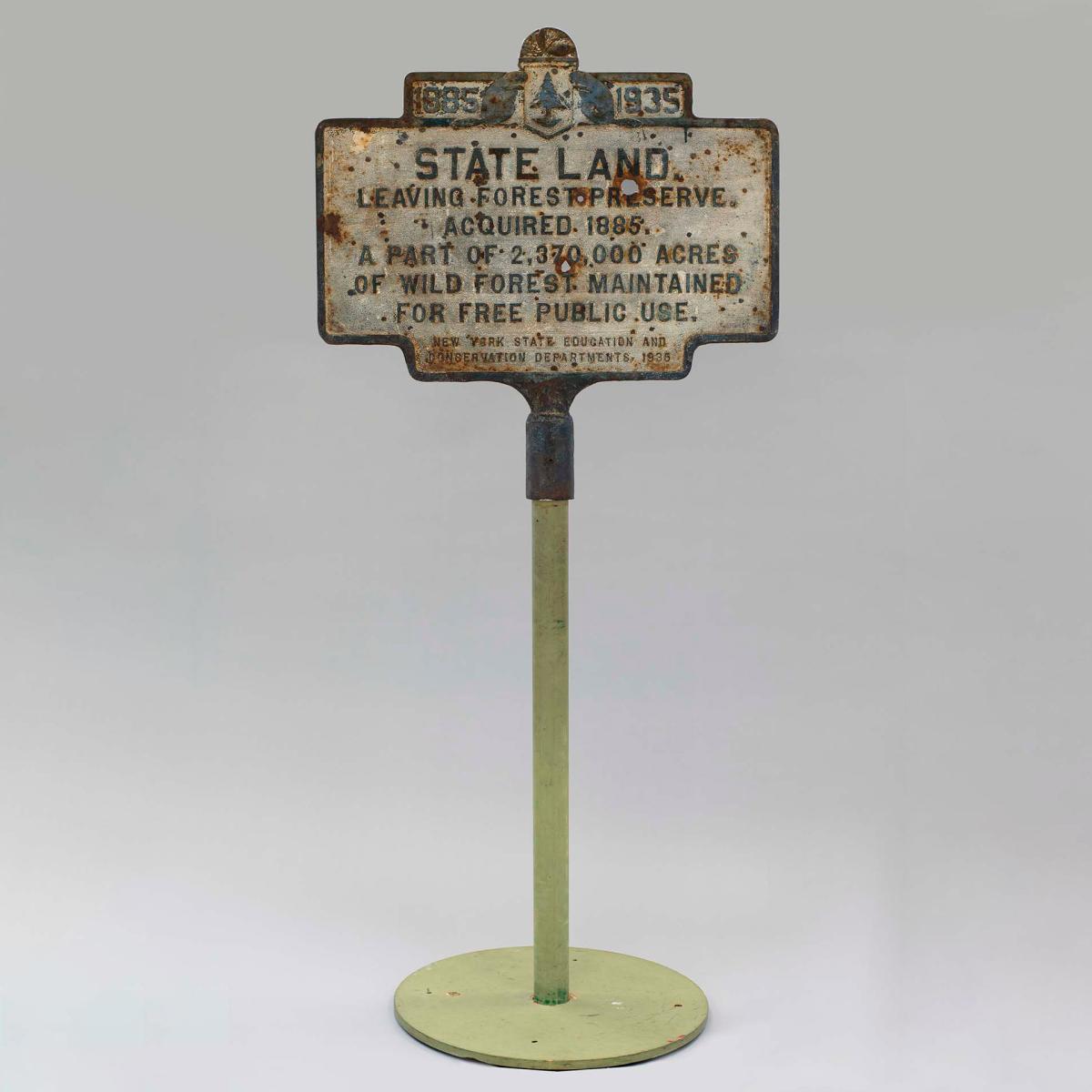
Adirondack Park was established in 1892 by the New York State Legislature. Measuring 2,800,000 acres when it was created, Adirondack Park is the largest parkland in the contiguous United States.
New York State Museum H-1988.8.1
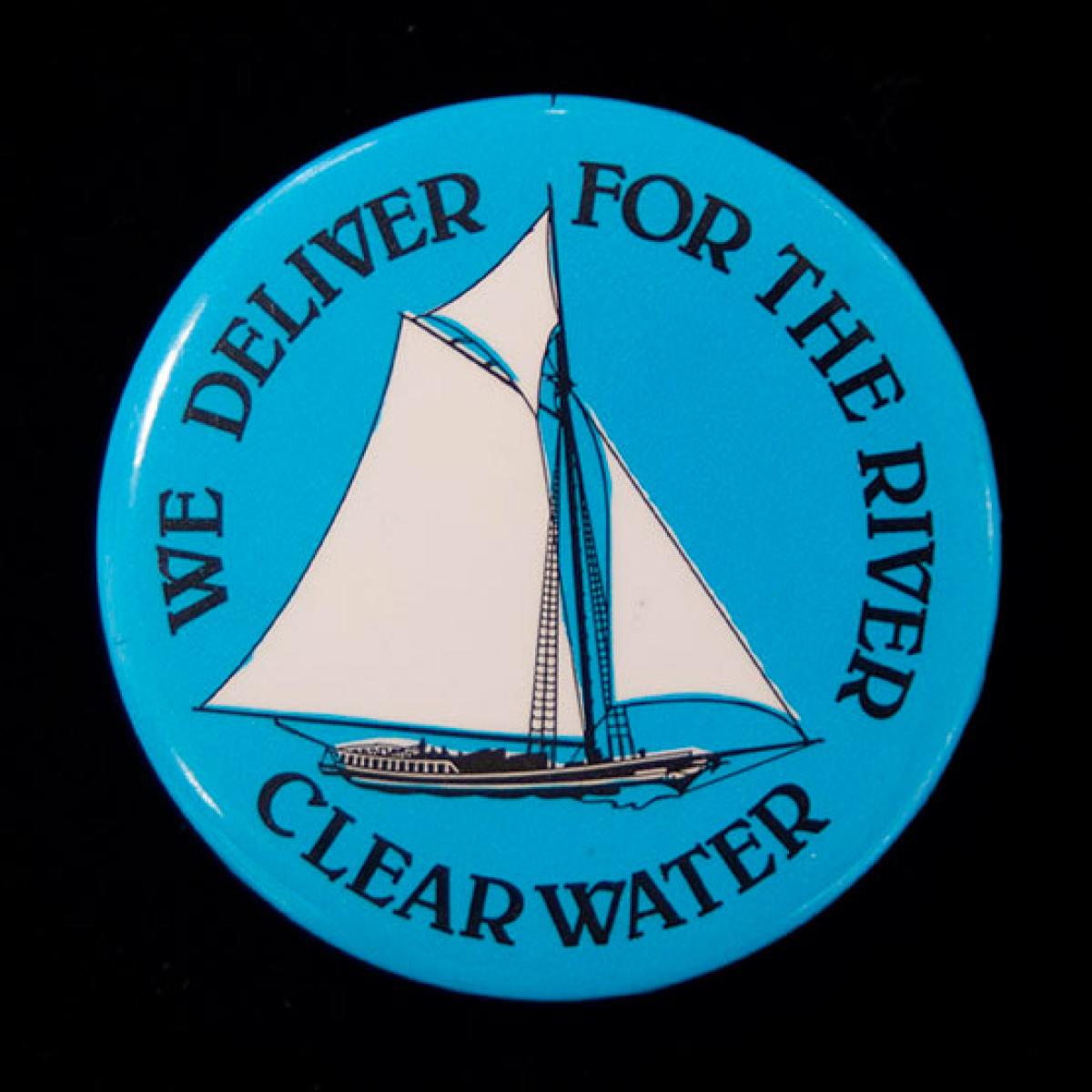
Pete Seeger sailed to Washington, D.C., on the Hudson River Sloop Clearwater in 1970 to deliver evidence on pollution to congress, dramatically increasing public support for the proposed Clean Water Act.
New York State Museum H-2025.43.2
We the People: Women's Rights
Women heard the calls of “no taxation without representation” during the American Revolution, but they were still denied the right to vote. During the abolition and temperance movements of the 19th century, women worked for social reforms while bearing injustices in their own lives. Women were not only denied a voice in government, but also the ability to pursue their education, to access most employment, and to have an active role in the church.
By the middle of the 19th century, women’s rights activists came together to work for the right to vote, with the idea that a voice in government would make other necessary reforms more achievable. When the vote was won in New York State in 1917, and federally in 1920, women immediately turned to the goal of enshrining women’s rights in the United States Constitution through the Equal Rights Amendment.
Highlights
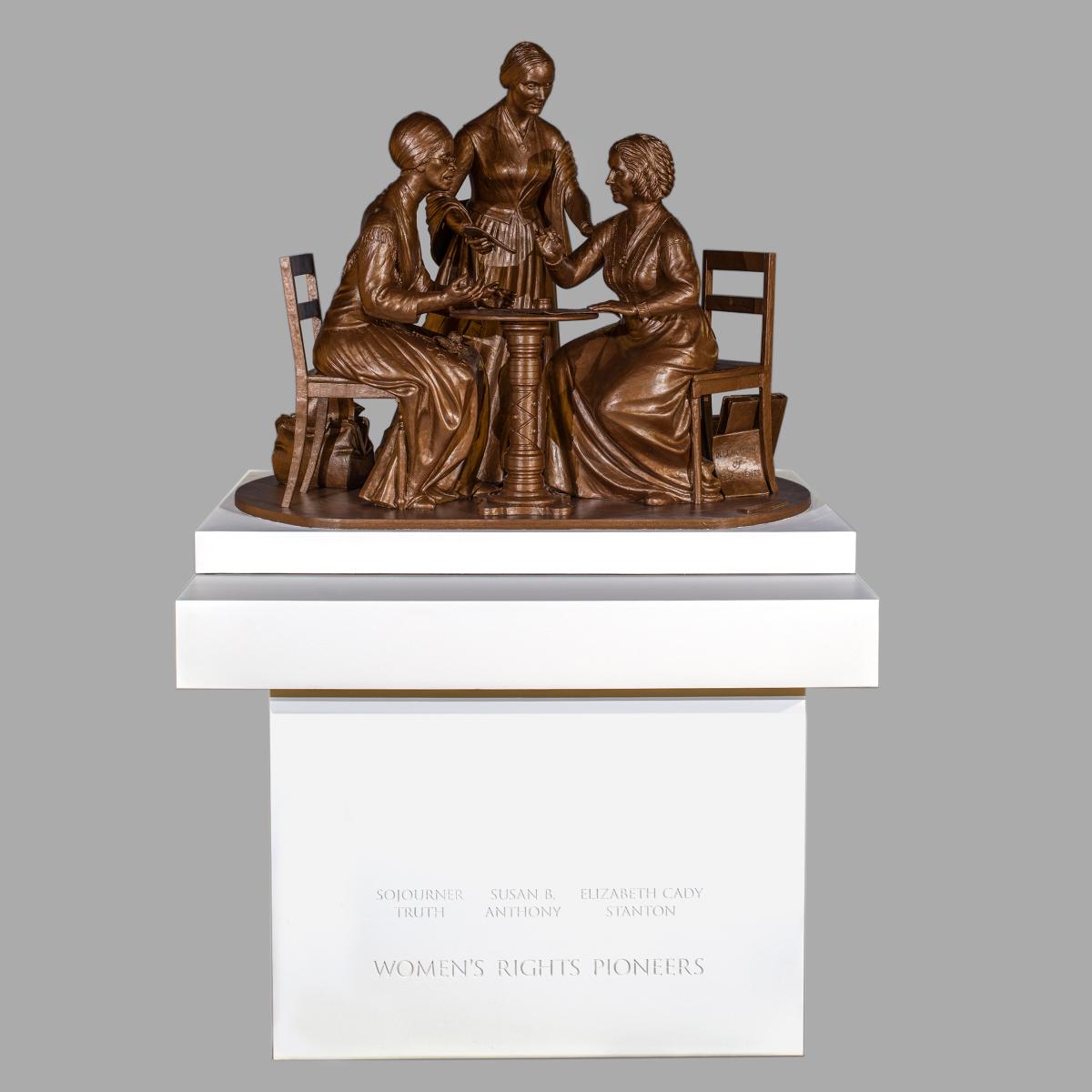
Meredith Bergmann
1/3 scale model
Women’s Rights Pioneers is the first monument to honor real women in New York City’s Central Park. It depicts three leaders of the 19th century women’s rights movement in New York and nationally: Sojourner Truth, Elizabeth Cady Stanton, and Susan B. Anthony.
New York State Museum, H-2023.3.1
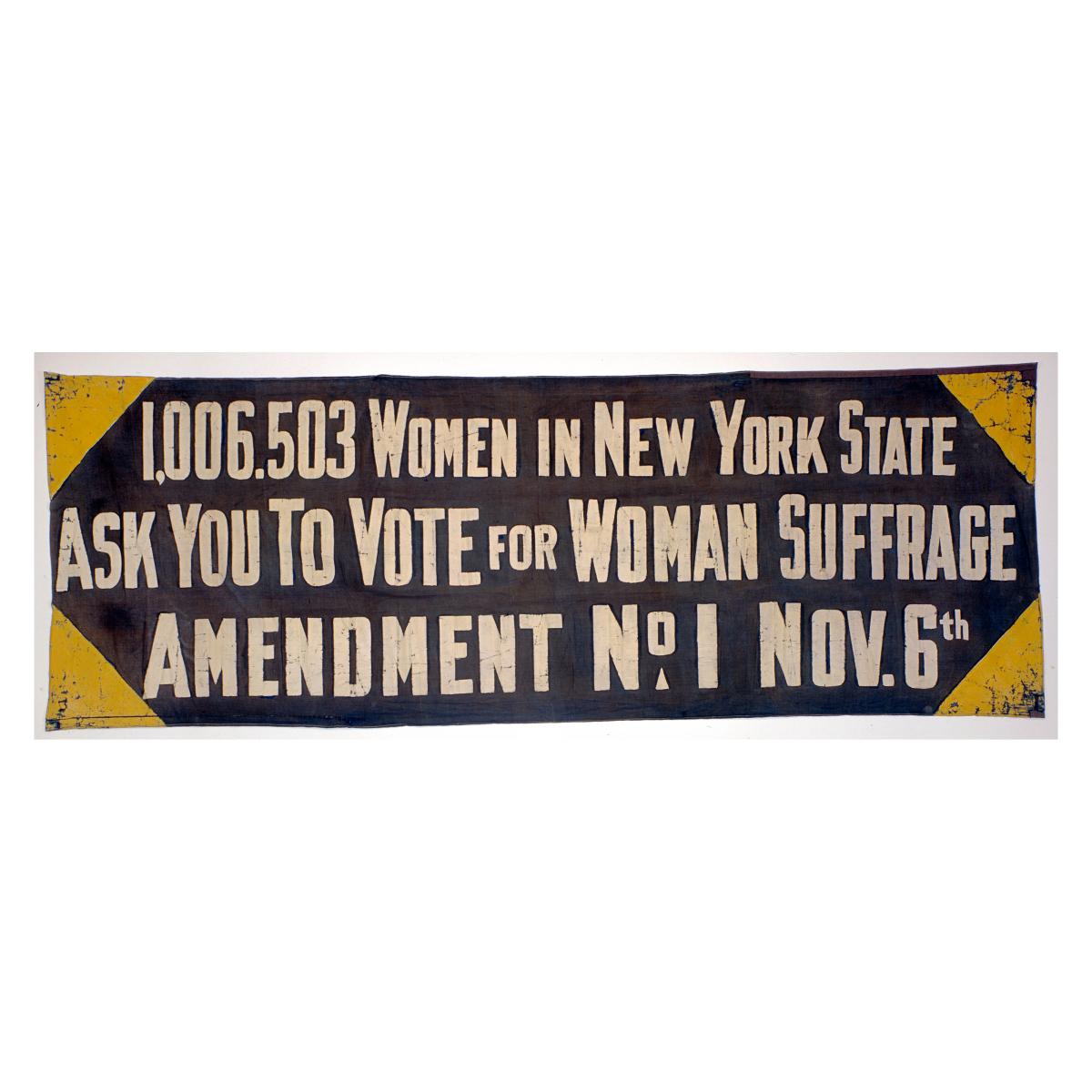
On October 27, 1917, ten days before Election Day, thousands of women marched for suffrage in New York City. This banner was carried by women from Orange County.
New York State Museum, H-1974.174.1
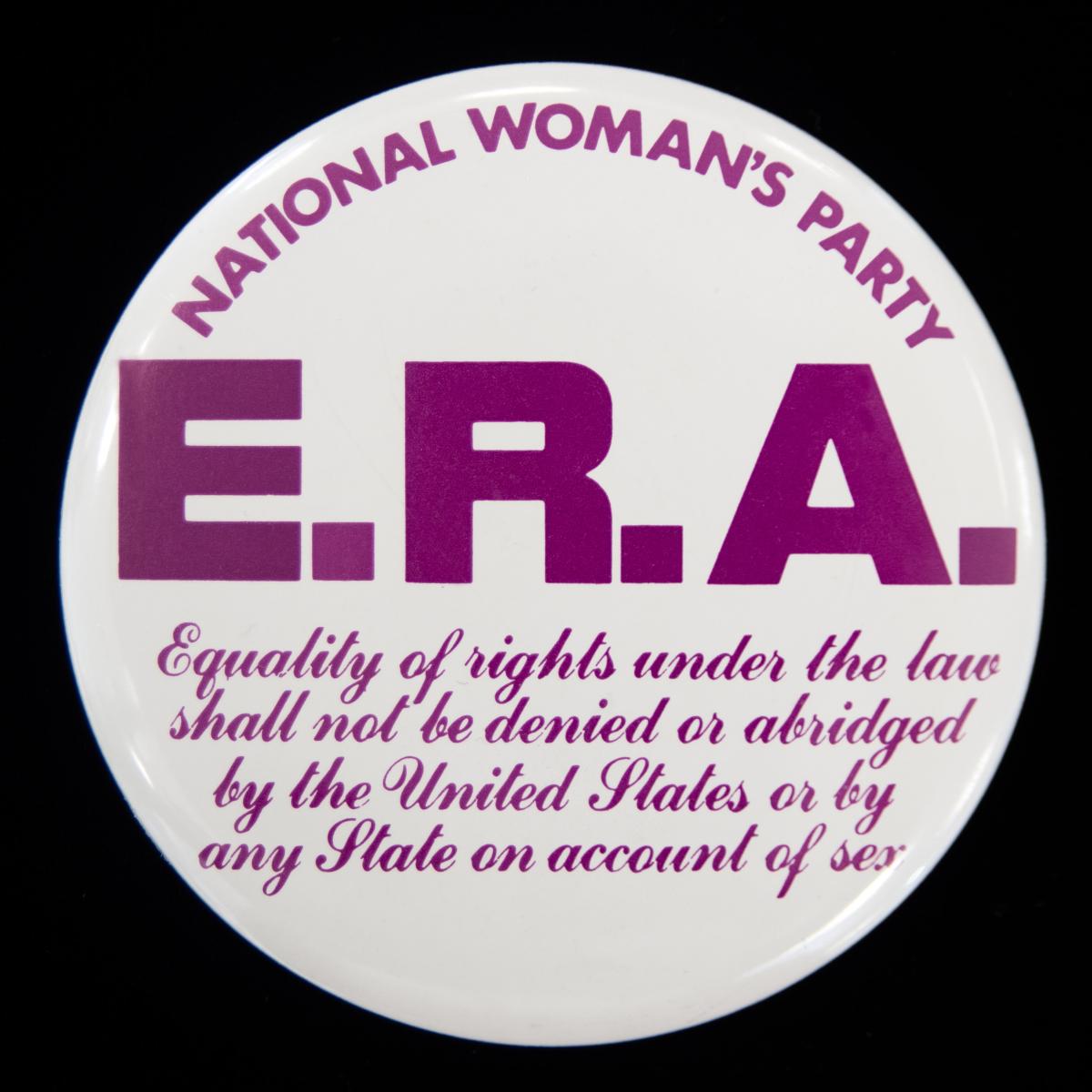
“National Woman’s Party, E.R.A., Equality of rights under the law shall not be denied or abridged by the United States or by any State on account of sex.”
New York State Museum, H-2016.32.28
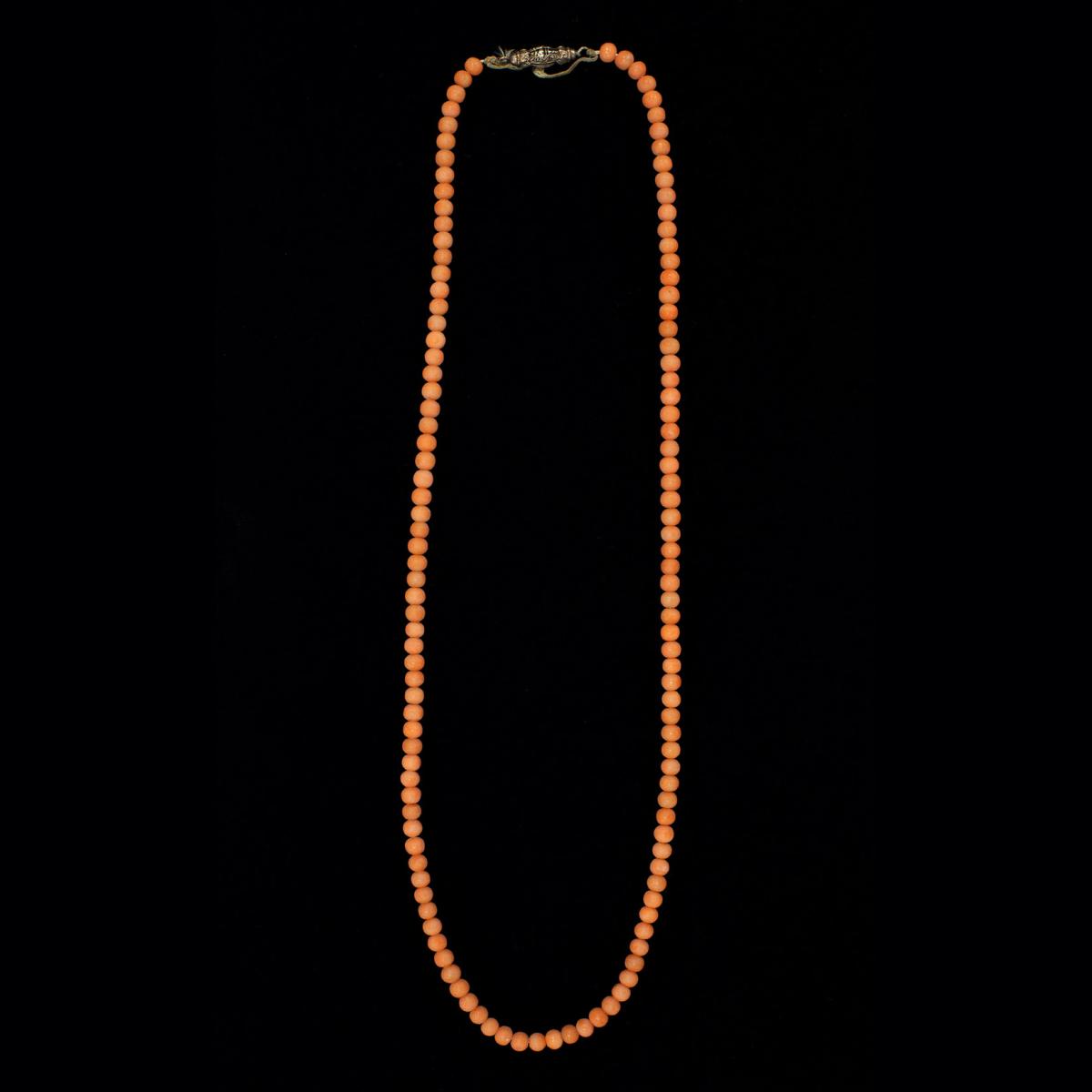
In her father’s law office, Elizabeth Cady Stanton (1815-1902) witnessed widows stripped of property they brought into marriage. Law clerks teased that her new coral necklace could be locked away or sold by her husband without her permission. Her outrage fueled her work for women’s rights.
New York State Museum, H-1972.115.150
Additional Resources
Talking Statues
Listen to an imagined conversation between Sojourner Truth, Susan B. Anthony, and Elizabeth Cady Stanton that brings their voices and their fight for women’s rights to life through this mobile-friendly audio experience, available in English and Spanish.
We the People: Freedom and Contradiction - Abolition and Civil Rights
The new nation was built on the labor of enslaved people, and slavery was protected by the US Constitution until 1865. The struggle for freedom was inseparable from the struggle for civil rights, as enslaved people and their allies fought for emancipation and equal recognition as citizens. From the beginning, there were also those who resisted this fight for justice.
Enslaved people fought for their own liberation, and early abolitionists challenged the system. While New York was once the largest slaveholding state in the North, it later became a center of antislavery activism and civil rights reform. After slavery was abolished locally in 1827, many New Yorkers helped lead the national abolition movement—culminating in the 13th Amendment of 1865.
After emancipation, activists shifted their focus to securing civil rights for African Americans. New Yorkers led efforts in their own communities and on the national stage. That work continues today, as generations strive to fulfill the founding ideals of liberty and equality for all.
Highlights
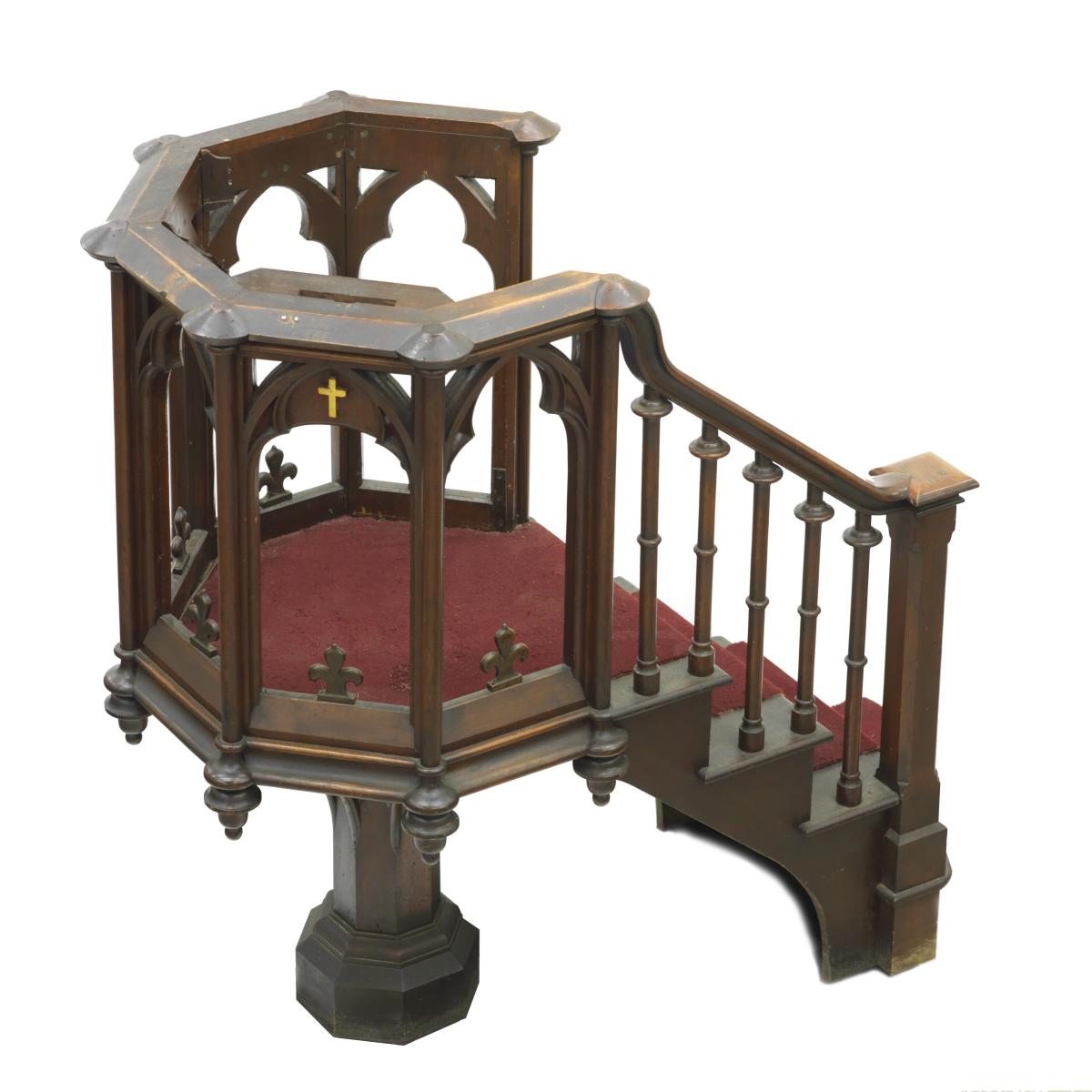
Troy, NY
Wood
This pulpit symbolizes the power and passion of the abolitionist and civil rights movements. Many African American communities organized for change through their churches.
New York State Museum H-2011.4.1
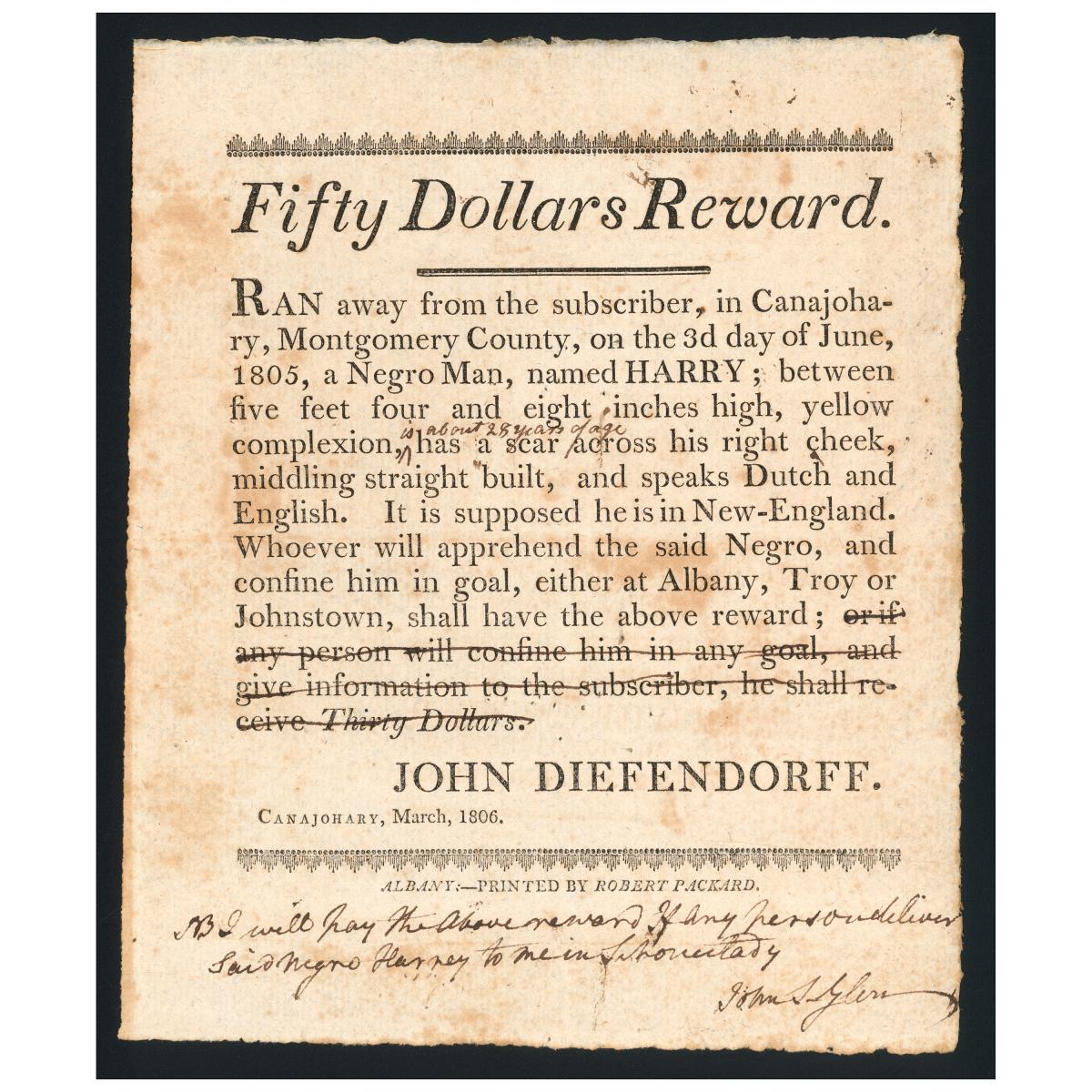
Canajoharie, NY
Cash rewards for the return of an enslaved person were common. Freedom seekers took huge risks when making a decision to flee.
New York State Museum H-2006.59.2
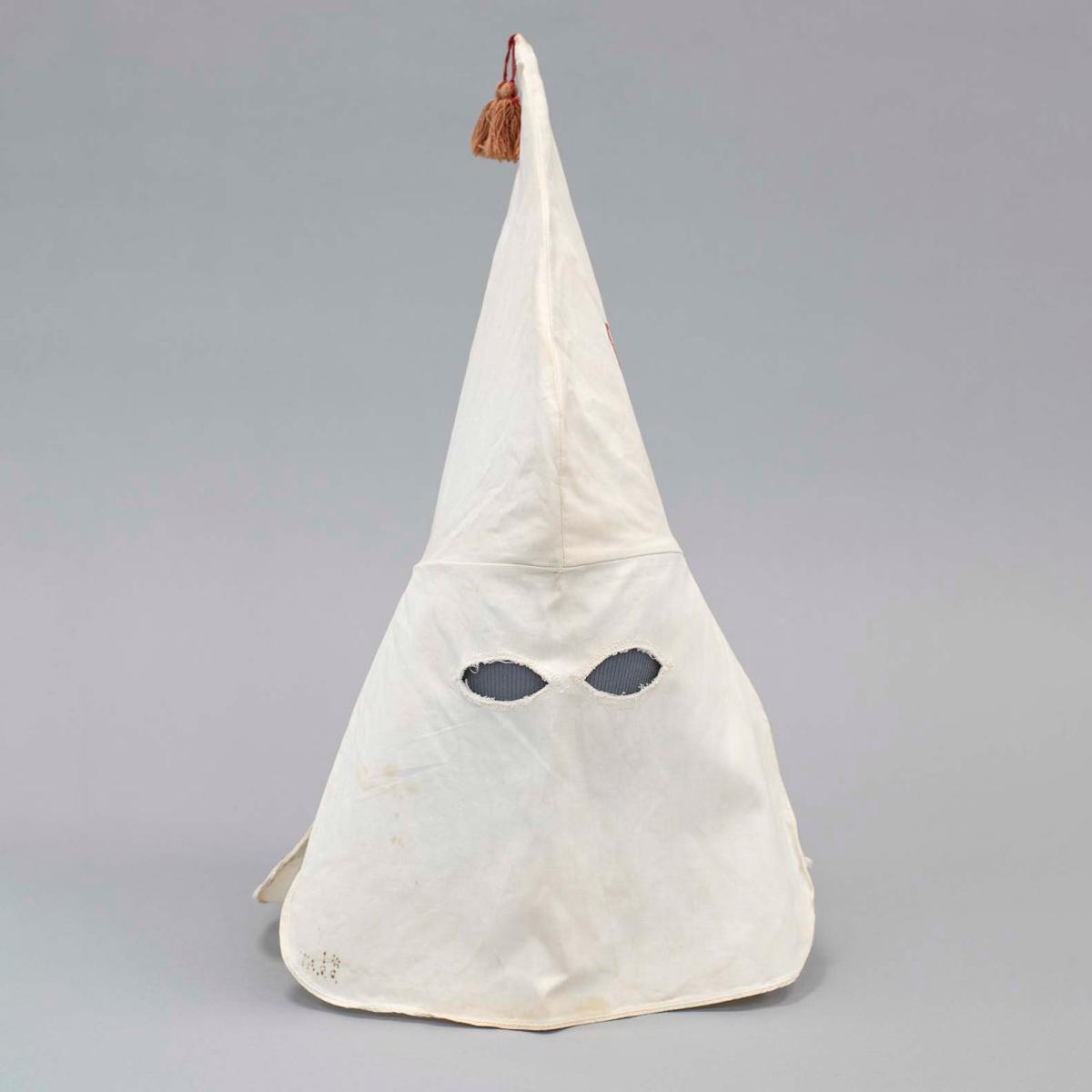
This hood is from Greene County where Klan activity was prevalent between 1920-1940s.
New York State Museum H-1983.136.18
Additional Resources
The Underground Railroad
Discover Underground Railroad sites across New York
We the People: The American Dream
Immigrants often face great danger in choosing to come to the United States. Despite this reality, the pull of a potentially better life—including economic opportunity, safety, and democracy itself—is enough for many to make this choice.
Immigrants have often led the charge for equal rights in the United States, while simultaneously facing discrimination and anti-immigrant laws. Many immigrants escaped poor conditions, poverty and tyranny in their home countries, only to experience difficult conditions in America as well. Some have labored in factories and given voice to the need for labor reform, while at the same time being dismissed as “part of the problem.” Led by the promise of the American Dream, immigrants have fought for equality in all aspects of American life.
Highlights
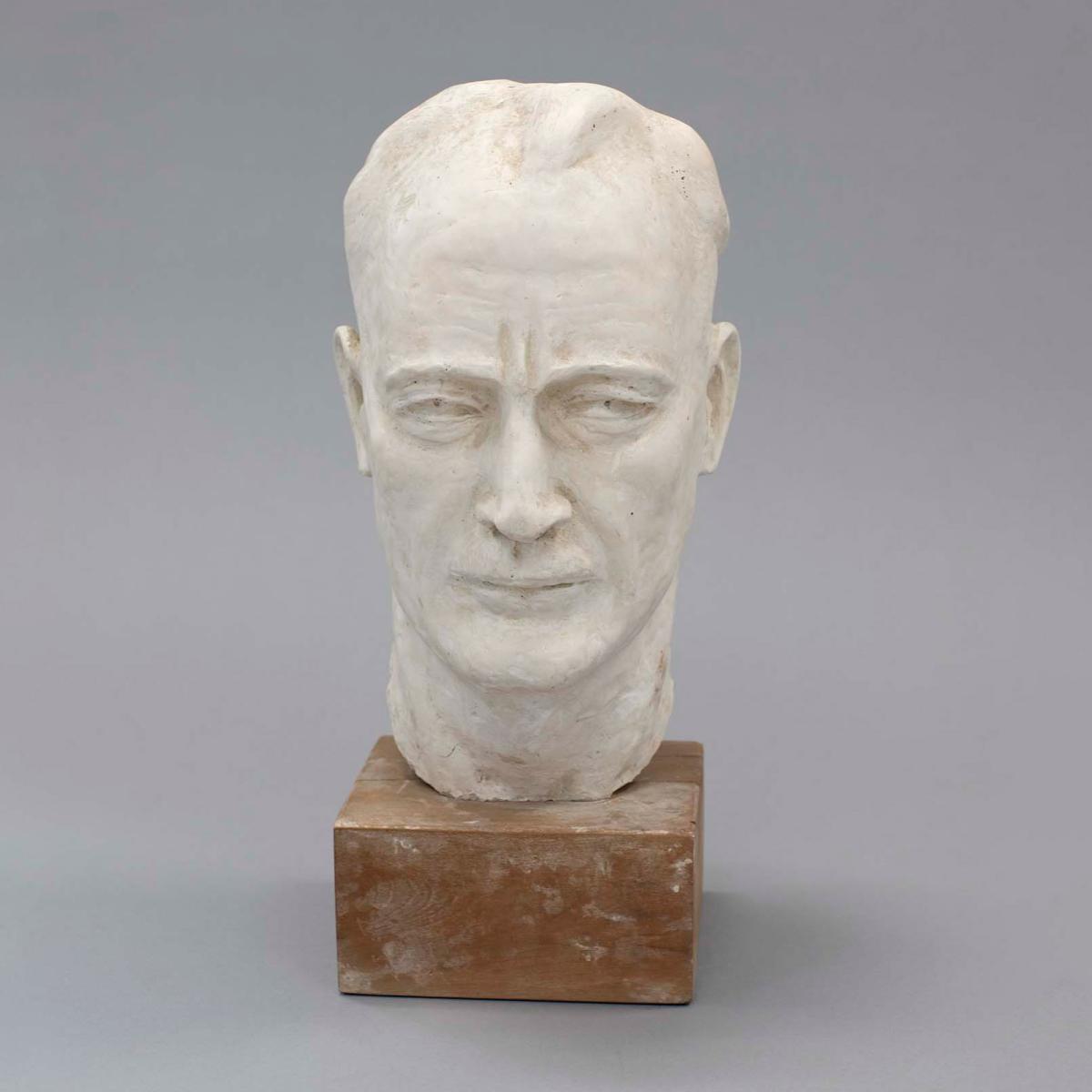
Henry DiSpirito
Plaster
DiSpirito was commissioned to create a large-scale work of the Utica College symbol, the Pioneer; himself an Italian immigrant who arrived in Utica in 1921 and built a life as a stonemason and sculptor, he chose to imagine the figure not as a man in buckskins in the American West, but as an immigrant, creating this study of a man from his own diverse East Utica neighborhood.
New York State Museum H-2016.30.1A-B
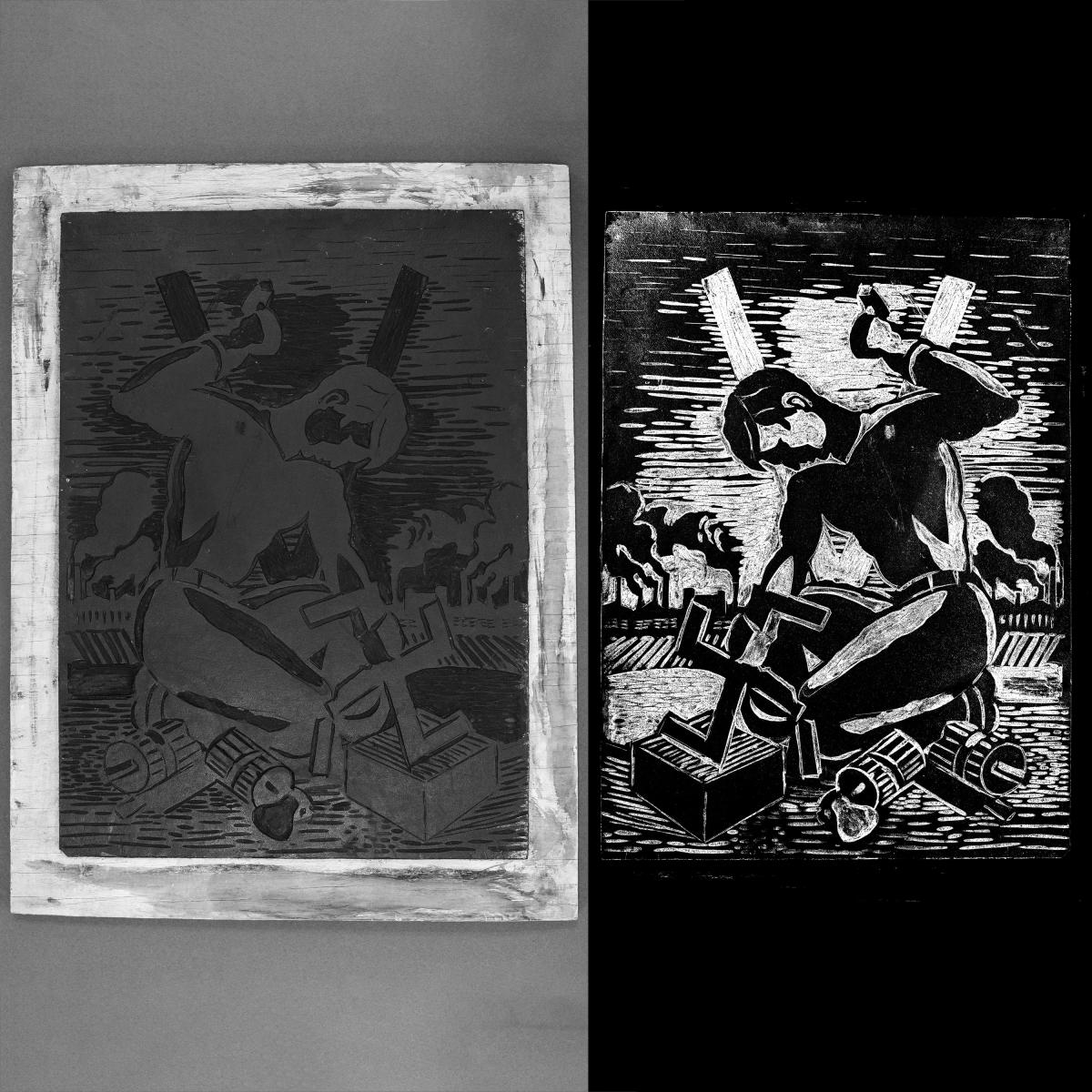
Henry DiSpirito
Digital rendering courtesy of the John D. Calandra Italian American Institute, Queens College, The City University of New York.
Before emigrating to America, Henry DiSpirito witnessed the horrors of World War I and the rise of fascism in Italy. He created this linocut at the close of World War II, expressing a desire for peace and freedom from oppression.
New York State Museum H-2022.4.1
We the People: LGBTQ+ Rights
LGBTQ+ rights have been fought for in the streets, courtrooms, and legislatures, as well as in more private settings, person to person. These rights include protection from discrimination on the basis of sexual orientation or gender expression, recognition of marriage and the rights that come with it, and access to gender-affirming care.
Each June, Pride serves as a commemoration of the anniversary of the Stonewall uprising. What began in New York City is now recognized all over the state and the world. It is both a protest and a celebration.
Highlights

In 2007, Erin Davies discovered that her Volkswagen Beetle, parked just down the street from the New York State Museum and sporting a small rainbow sticker, had been spray painted with the words “fag” and “urgay.” Rather than immediately removing the graffiti, Davies took the car on a 58-day trip through the United States and Canada, documenting other hate crimes, as well as her experience driving the vehicle and interacting with people. A year later, the car was given a rainbow wrap. Davies and the Fagbug ultimately toured all 50 states, produced two documentaries, and made numerous stops at colleges, universities, and community Pride events.
Gift of Erin Davies, New York State Museum H-2018.17.1
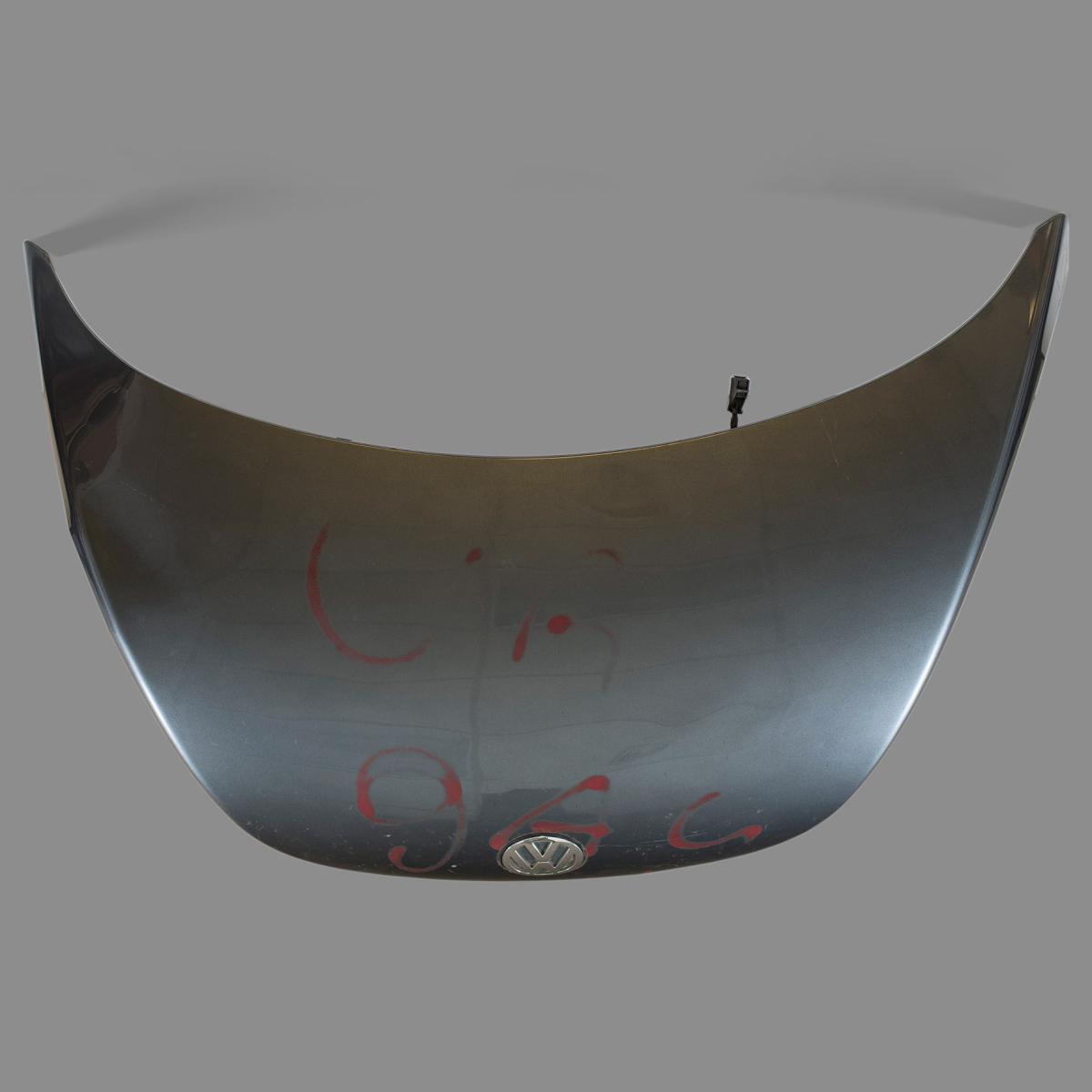
Gift of Erin Davies, New York State Museum H-2018.17.2
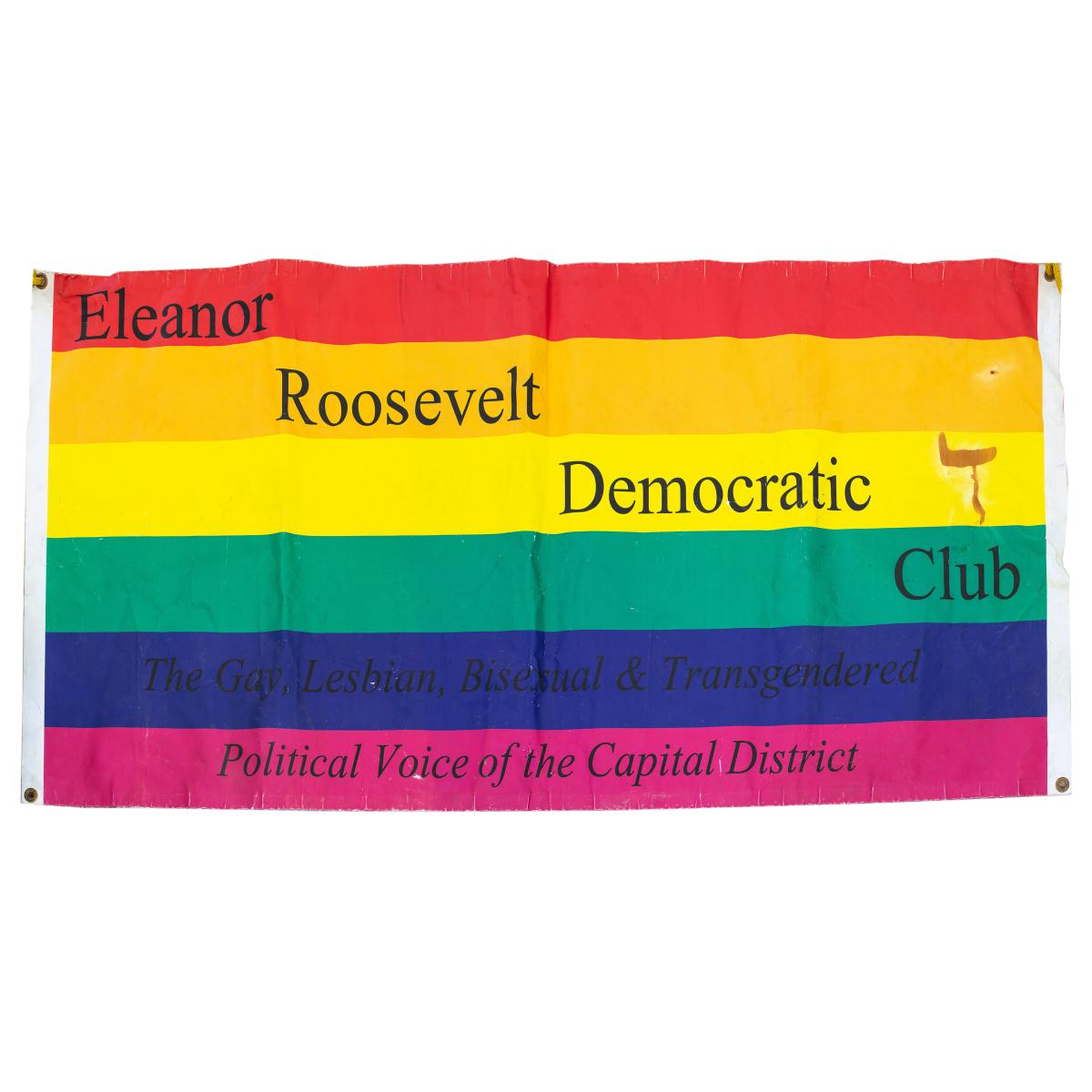
Organizations like the Eleanor Roosevelt Democratic Club in Albany, NY, worked to build representation in government that would support LGBTQ+ rights.
New York State Museum Collection
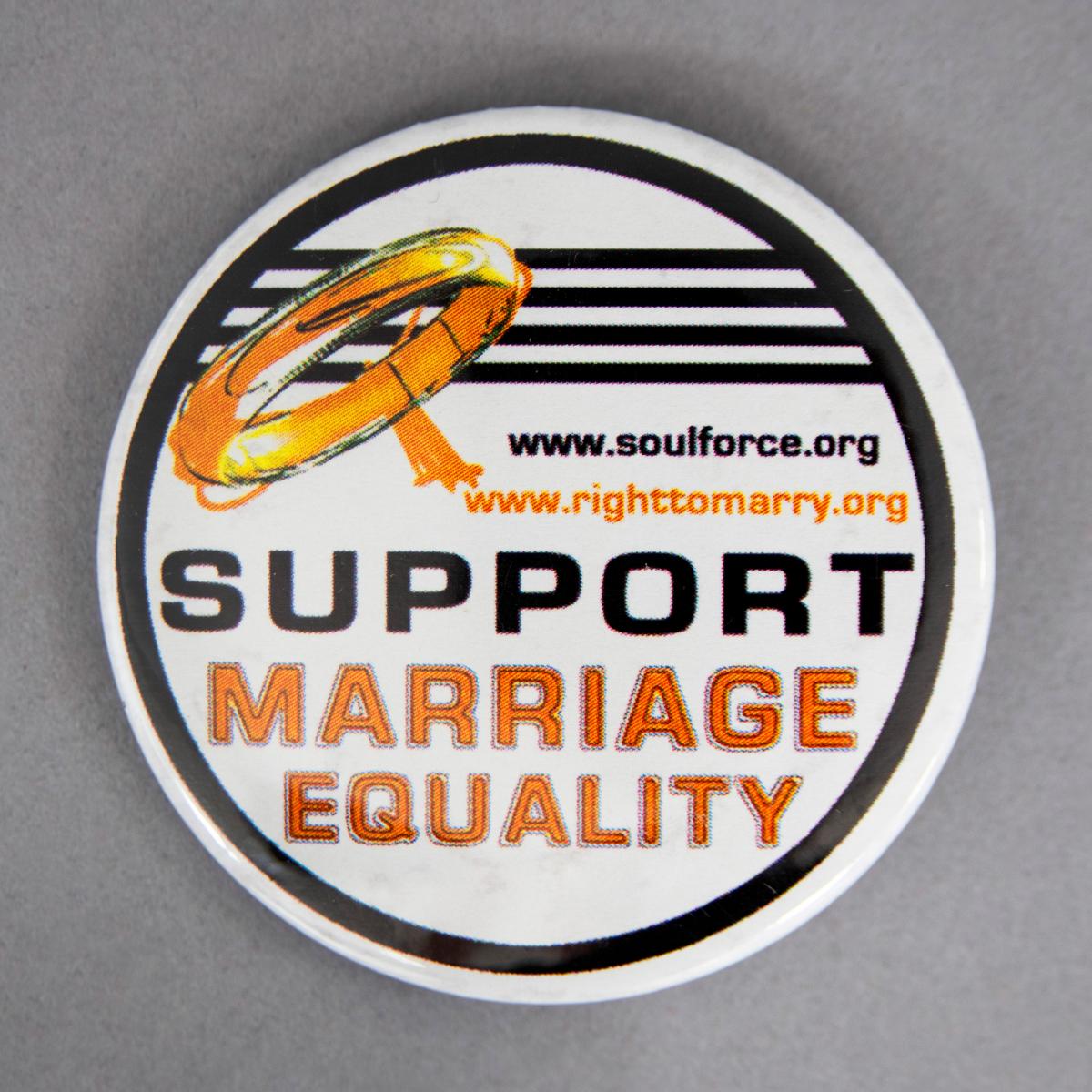
Passage of marriage equality in New York was considered key to the success of the measure on the federal level. Many national organizations supported efforts in New York.
New York State Museum H-2018.25.2
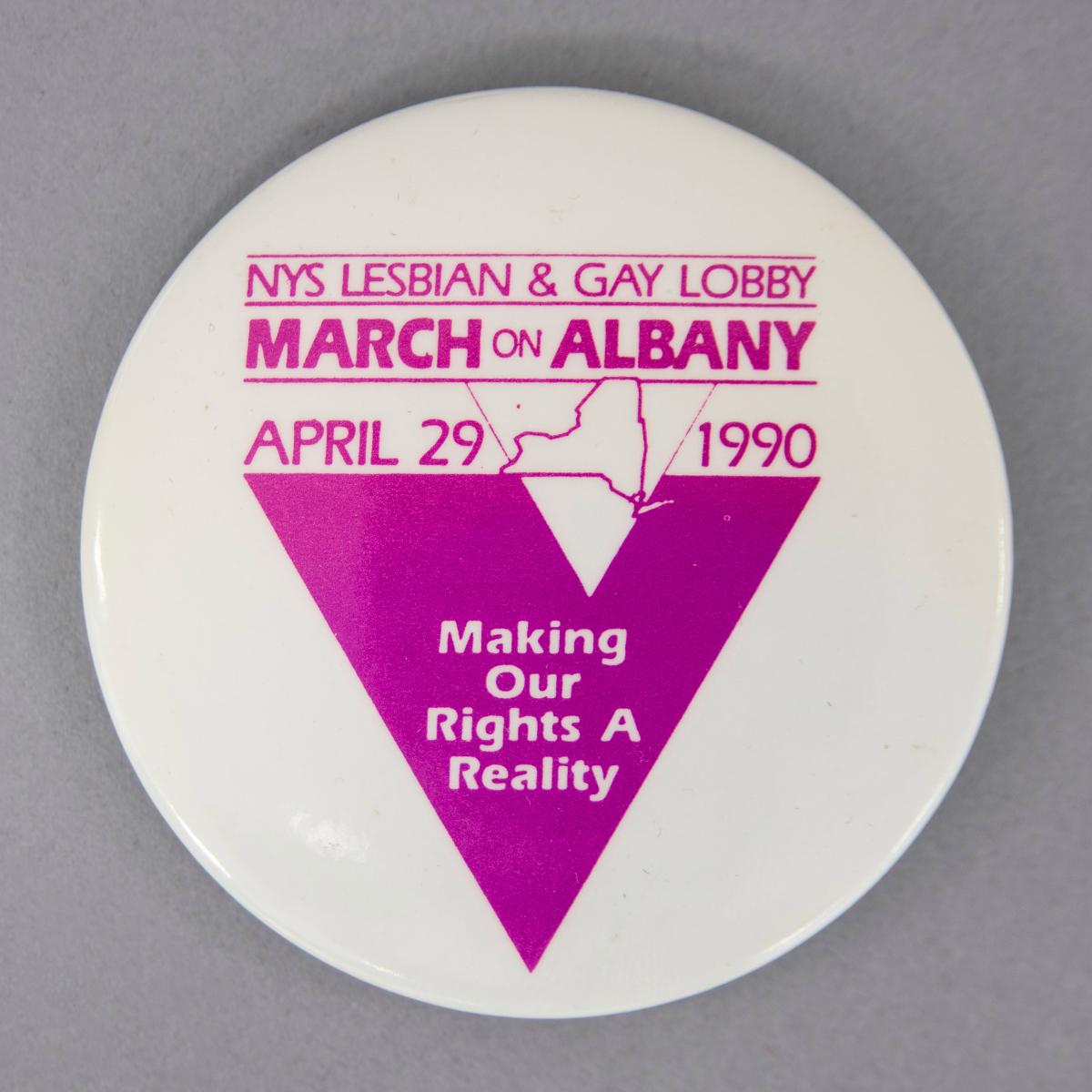
March on Albany, April 29, 1990
The New York State Lesbian and Gay Lobby was a lead advocacy organization working for passage of LGBTQ+ supportive legislation in New York State.
New York State Museum H-2024.4.18
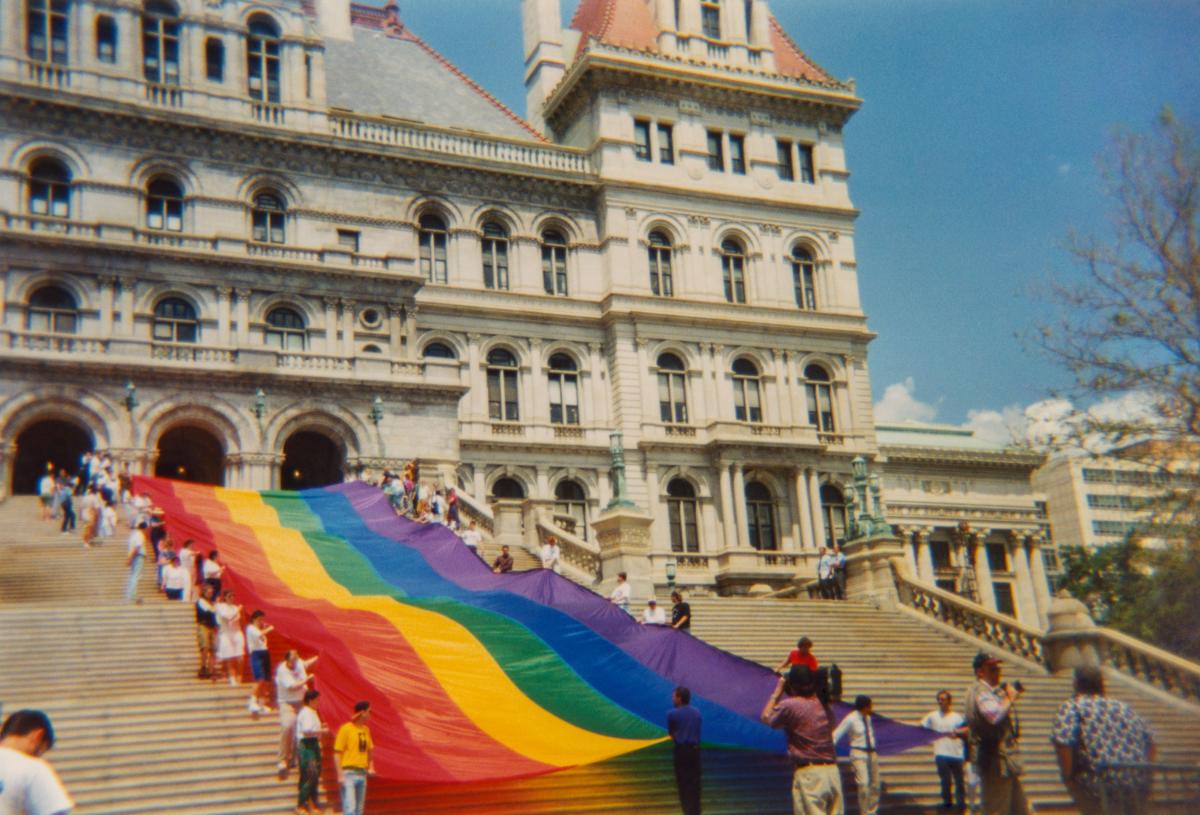
In 1994, the 25th anniversary of Stonewall, a portion of Gilbert Baker's mile-long rainbow flag was unfurled in front of the New York State Capital.
New York State Museum H-2024.45.76
Additional Resources
Oral Histories from the Pride Center of the Capital Region
To commemorate the Pride Center’s 50th anniversary in 2020, the New York State Museum partnered with the Center to collect oral histories from members of the community, ultimately resulting in the creation of a panel exhibition and recorded interviews.
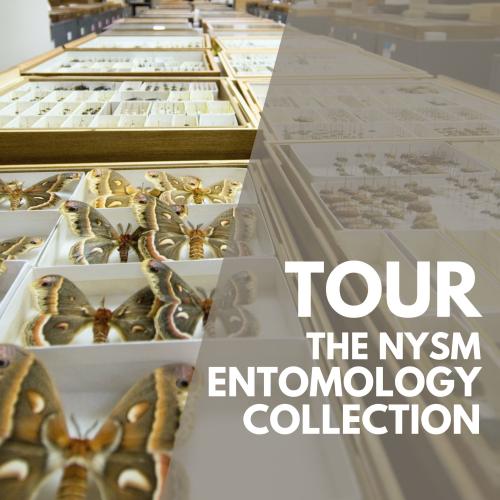
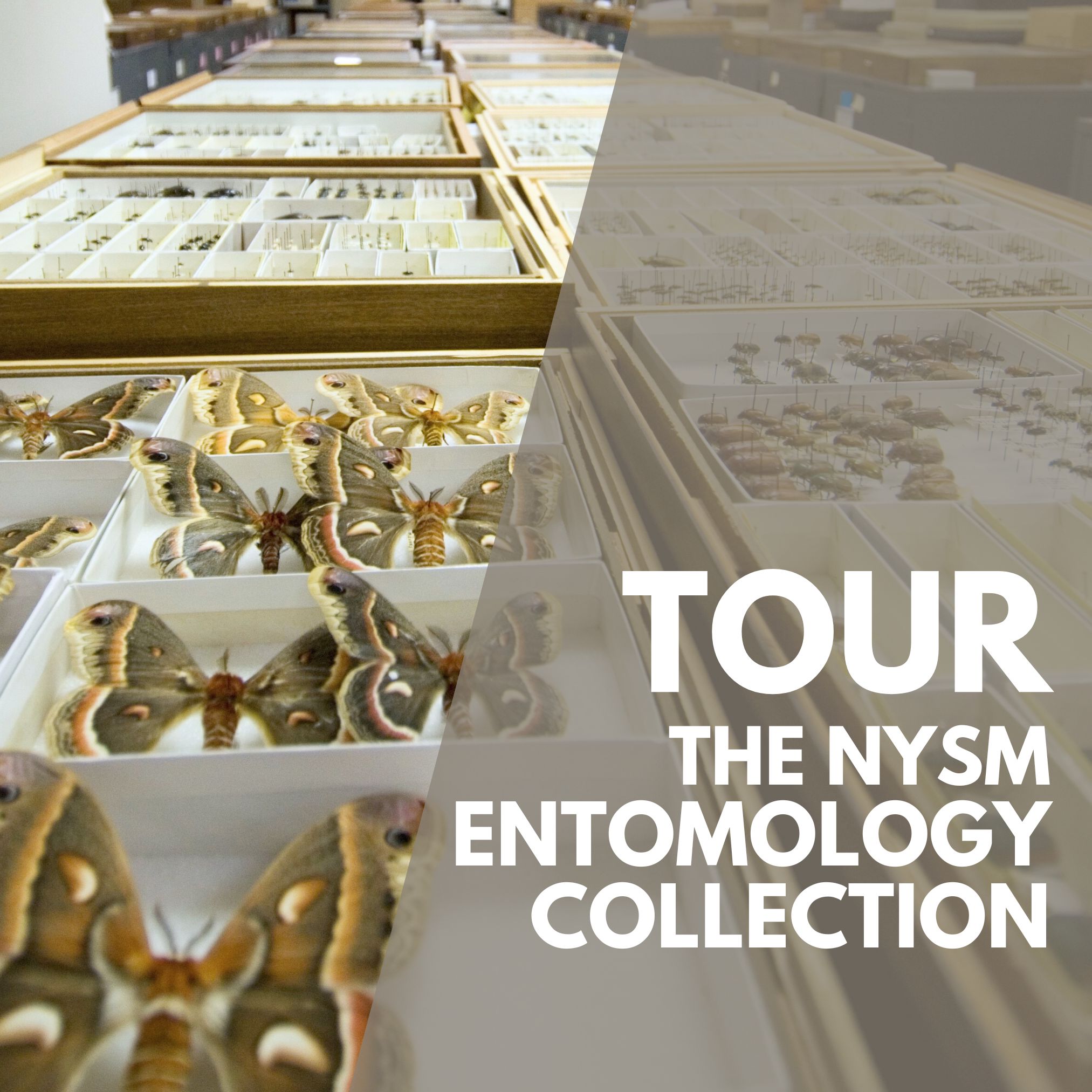
Have you ever seen a nearly two-foot-long walking stick? Or a beetle as large as the palm of your hand? Did you know that an adult insect's life span can be as short as twenty minutes or as long as 50 years? Join New York State Entomologist, Dr. Timothy McCabe, as he reveals more incredible insects and fun facts on a tour of the New York State Museum’s Entomology collection.
Visitors who have received registration confirmation should meet in the Museum Lobby prior to the start of the tour.
New York Pride: Resources
Explore the visual highlights and core content from the New York Pride: The Fight for Marriage Equality exhibition. To help preserve the textiles, this exhibition is currently dark. It will reopen with full lighting in June for Pride Month. Please check back for announcements about upcoming related programming.
Title Panel
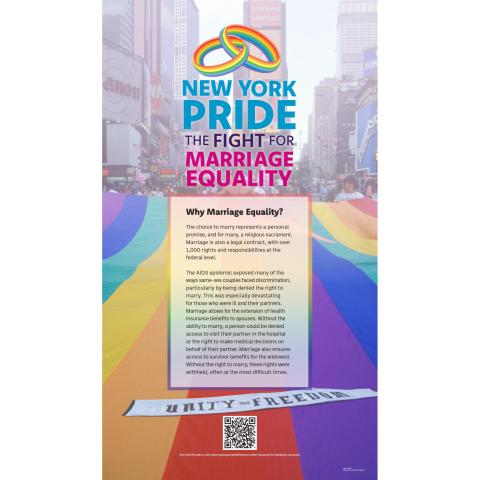
The exhibit begins with a large introductory panel that features the title, New York Pride: The Fight for Marriage Equality. Above the title is a graphic illustration of two intertwined wedding rings filled with colors from the Pride flag—red, orange, yellow, green, blue, and purple. The design of this panel sets the tone for the rest of the exhibit, incorporating a vibrant rainbow ribbon that flows from panel to panel.
Exhibit Case
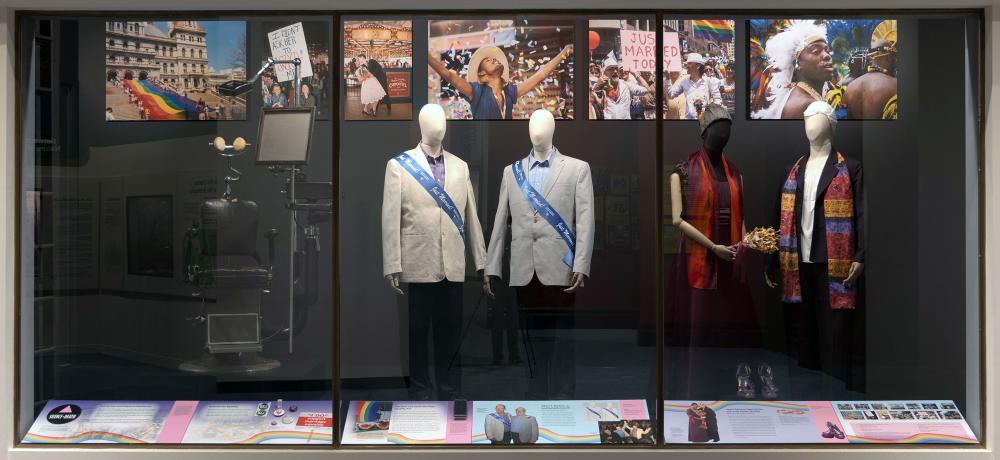
To the right of the introductory panel, is a large exhibition case that’s inset into the wall and has three continuous windows. In the first window an ophthalmic chair from the Whitney Young Health center is displayed. The middle window showcases the wedding ensembles of couple Albert T. Martino, Jr. and Harold Lohner III. A tan jacket with purple dress shirt and a gray jacket with a light blue dress shirt—both outfits have black slacks. In the third window wedding ensembles of couple Joyce Darlene (Jaye) Holly and Judy Elaine Yeckley are displayed. A sleeveless, long dark purple dress and a dark purple suit with a white blouse underneath. Both of these ensembles are accessorized with colorful scarves in shades of red, purple, and gold.
Photo Backdrop
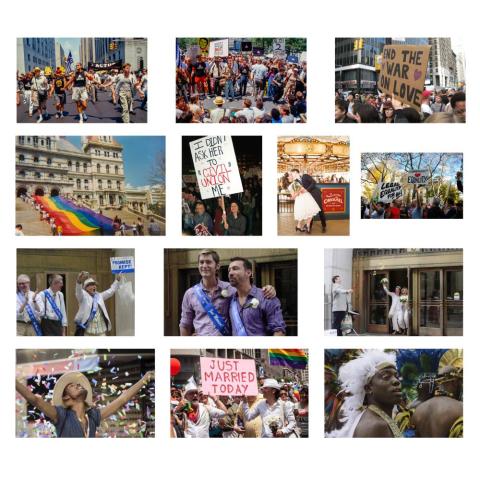
As a backdrop to the displayed artifacts, are 13 large photo blow-ups that are hung above the artifacts that are exhibited. These images highlight LGBTQ+ activism in New York—from ACT UP’s AIDS healthcare protests in the 1980s, to marriage equality rallies in the 2000s, and celebrations of its legalization in 2011, including early same-sex marriages and pride parades that followed. Among the images featured are photos by Margaret McCarthy (the last 6 thumbnails shown). These are recent acquisitions to our growing LGBTQ+ History collection and are a gift of the Margaret McCarthy Trust. NYSM H-2025.11.
Interpretive Text
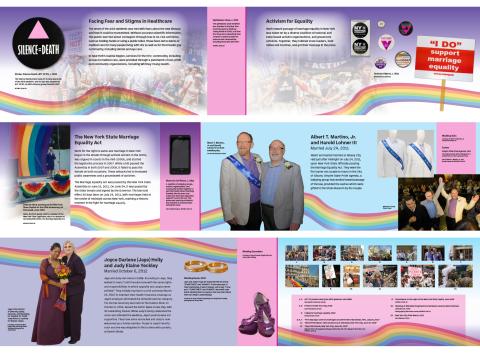
Inside the exhibit case, slanted interpretive text panels run along the bottom edge of the windows, approximately one and a half feet above the floor. These panels provide descriptions of the artifacts displayed, and context on early healthcare disparities, activism and advocacy, and finally the 2011 passage of the Marriage Equality Act in New York. A few small artifacts related to activism such as pins are mounted right on the text panel and a cellphone used by lobbyists are directly attached to the panels.
Conclusion Panel
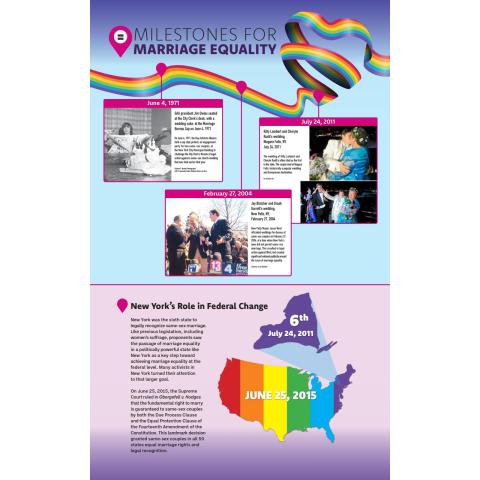
To the far right of the display, a final panel concludes the exhibit. It highlights a few key milestones in Marriage Equality and closes the exhibit with New York’s role in achieving federal marriage equality for LGBTQ+ people across the United States. A graphic highlights New York State by extracting it from a larger map of the United States, showing it as the sixth state to legalize same-sex marriage. It notes the date marriage equality took effect in New York—July 24, 2011—as well as the nationwide legalization on June 25, 2015.
Why Marriage Equality?
The choice to marry represents a personal promise, and for many, a religious sacrament. Marriage is also a legal contract, with over 1,000 rights and responsibilities at the federal level.
The AIDS epidemic exposed many of the ways same-sex couples faced discrimination, particularly by being denied the right to marry. This was especially devastating for those who were ill and their partners. Marriage allows for the extension of health insurance benefits to spouses. Without the ability to marry, a person could be denied access to visit their partner in the hospital or the right to make medical decisions on behalf of their partner. Marriage also ensures access to survivor benefits for the widowed. Without the right to marry, these rights were withheld, often at the most difficult times.
Sticker, Silence = Death, Act Up NY, c. 1990, NYSM H-2018.31.2
The Silence=Death project used art to raise awareness of the AIDS epidemic, and its logo was adopted by Act Up NY, an AIDS advocacy group formed in 1987.
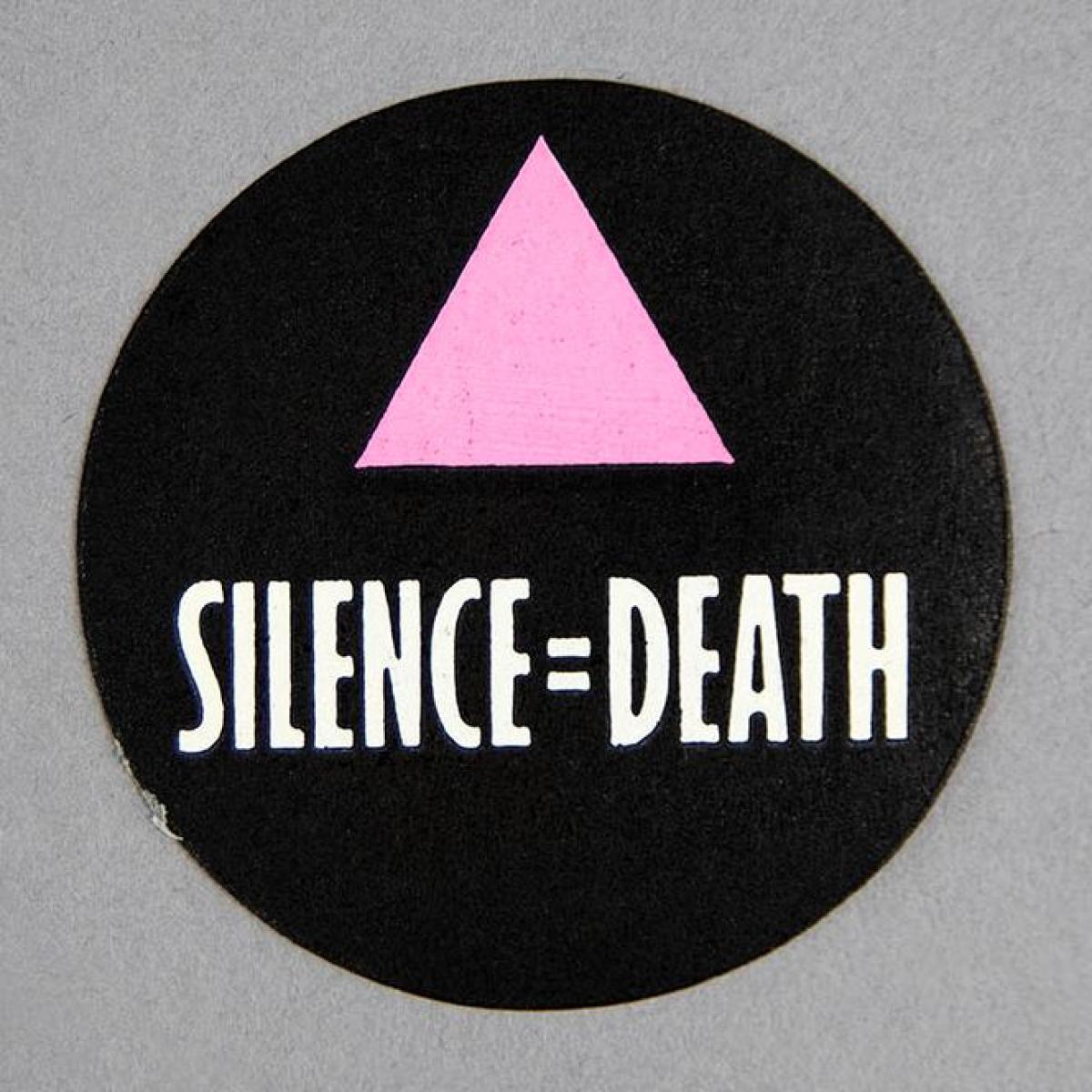
Facing Fear and Stigma in Healthcare
The onset of the AIDS epidemic was met with fears about the new disease, and how it could be transmitted. Without accurate scientific information, the public worried about contagion through low to no-risk activities, such as holding hands or using a public toilet. These fears led to denial of medical care for many people living with HIV as well as for the broader gay community, including dental and eye care.
In New York’s Capital Region, services for the HIV+ community, including access to medical care, were provided through a patchwork of non-profit and community organizations, including Whitney Young Health.
Ophthalmic chair, c. 1970, NYSM H-1989.18
This ophthalmic chair was donated to the New York State Museum by Whitney Young Health in 1989, at a time that they were expanding their services to better provide for underserved communities, including those who were HIV+.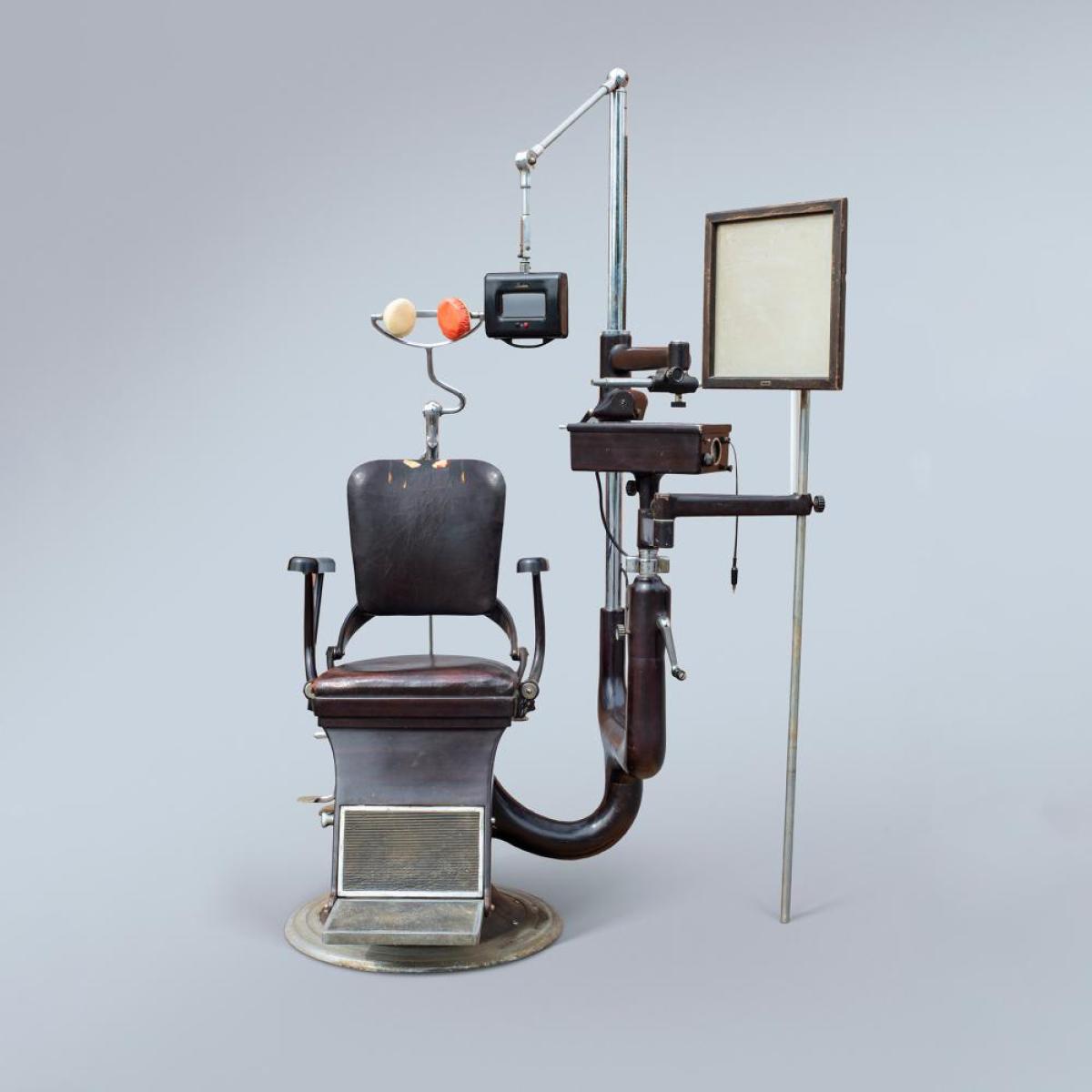
Activism for Equality
Work toward passage of marriage equality in New York was taken on by a diverse coalition of both national and state based activist organizations, and grassroots activists. Together, they lobbied state leaders, held rallies and marches, and got their message in the press.
Activism Artifacts from the NYSM History Collection
Buttons, stickers, a ring, and a sign supporting Marriage Equality.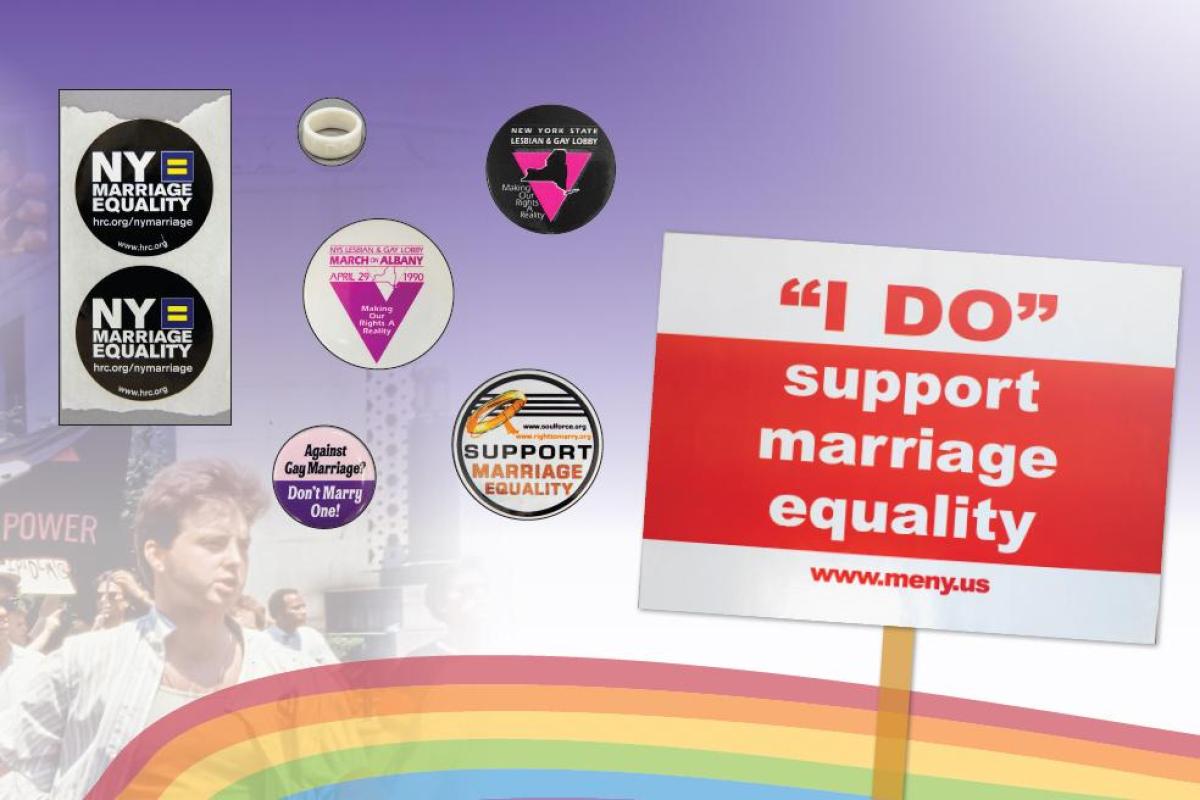
The New York State Marriage Equality Act
Work for the right to same-sex marriage in New York began in the streets through activist actions in the 1970s, was argued in courts in the mid-2000s, and started the legislative process in 2007. While a bill passed the Assembly in both 2007 and 2009, it failed to pass the Senate on both occasions. These setbacks led to increased public awareness and a groundswell of activism.
The Marriage Equality Act was passed by the New York State Assembly on June 15, 2011. On June 24, it was passed by the State Senate and signed by the Governor. The law took effect 30 days later, on July 24, 2011, with marriages held at the stroke of midnight across New York, marking a historic moment in the fight for marriage equality.
Motorola cell phone, c. 2011, gift of Robb Penders, NYSM H-2012.3
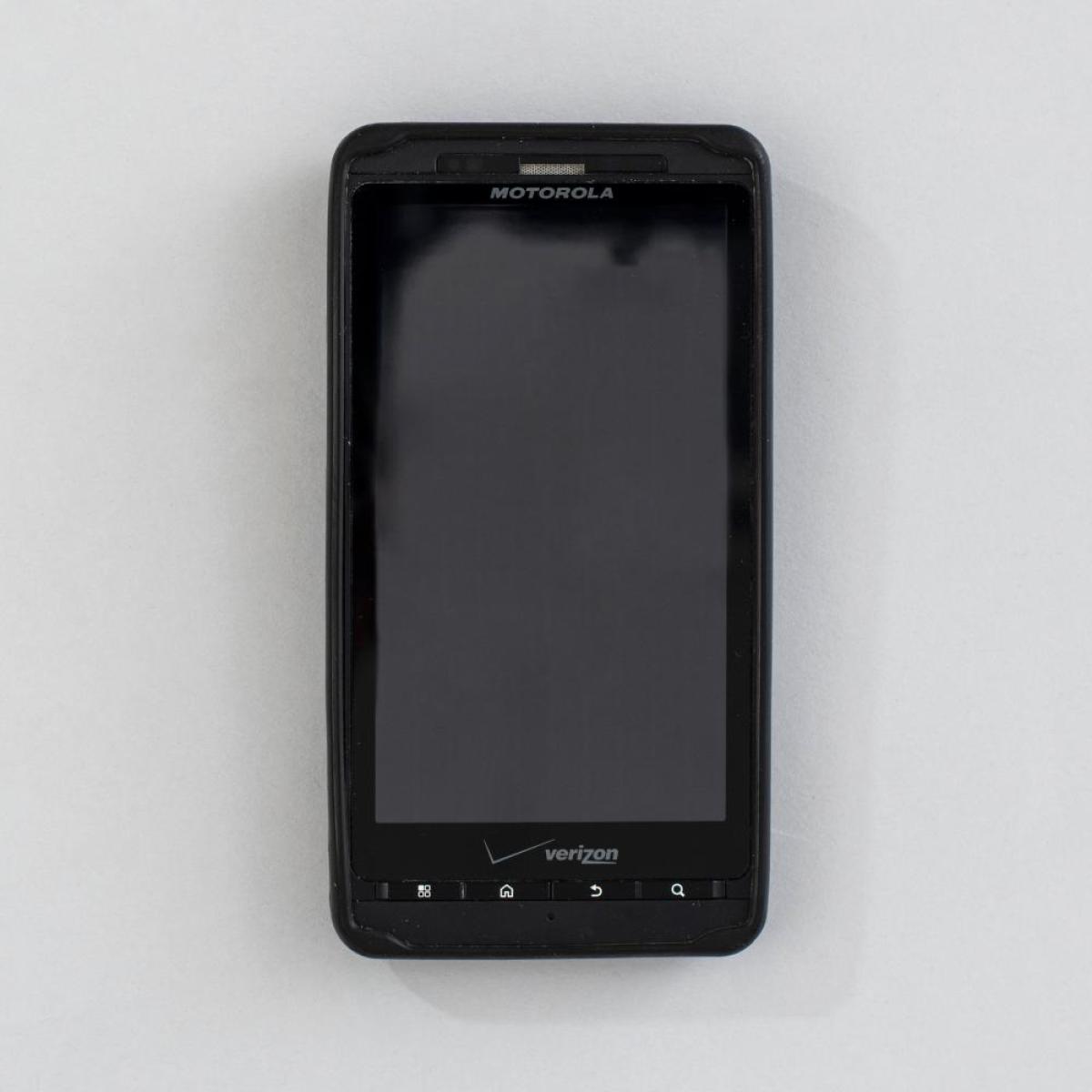
Deborah Glick speaking at the New York State Capitol for the 25th Anniversary of Stonewall, June 1994. NYSM H-2024.45
Glick, the first openly LGBTQ+ member of the New York State Legislature, was a co-sponsor of Assembly Bill A8354, the Marriage Equality Act.
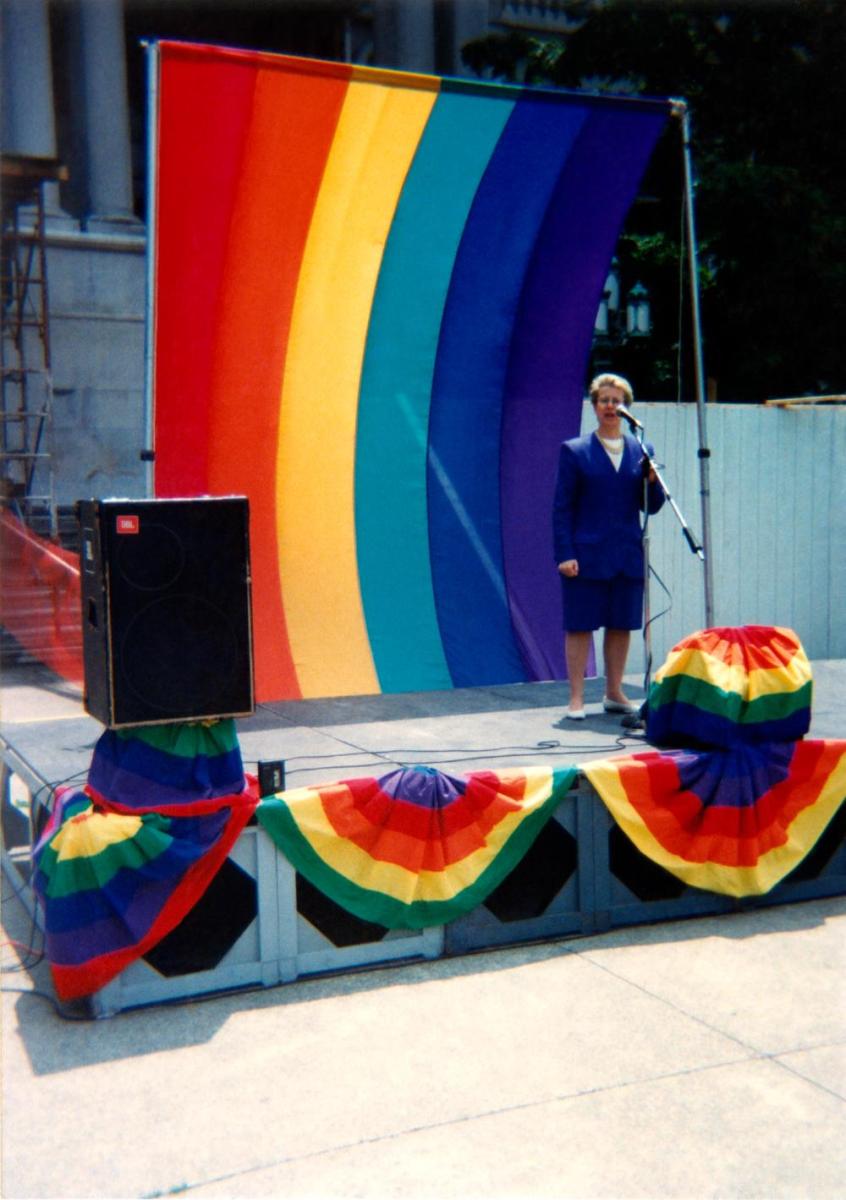
Albert T. Martino, Jr. and Harold Lohner III, married July 24, 2011
Albert and Harold married at Albany City Hall just after midnight on July 24, 2011, upon New York State officially passing the Marriage Equality Act. They were the first same-sex couple to marry in the City of Albany. Empire State Pride Agenda, a lobbying group that worked toward passage of the law, provided the sashes which were gifted to the State Museum by the couple.
Photographs from the 2011 Martino-Lohner Wedding (Courtesy of Michael P. Farrell, Lori Van Buren, Times Union) and items donated to the NYSM History Collection, including their suits and a "Just Married" sash.
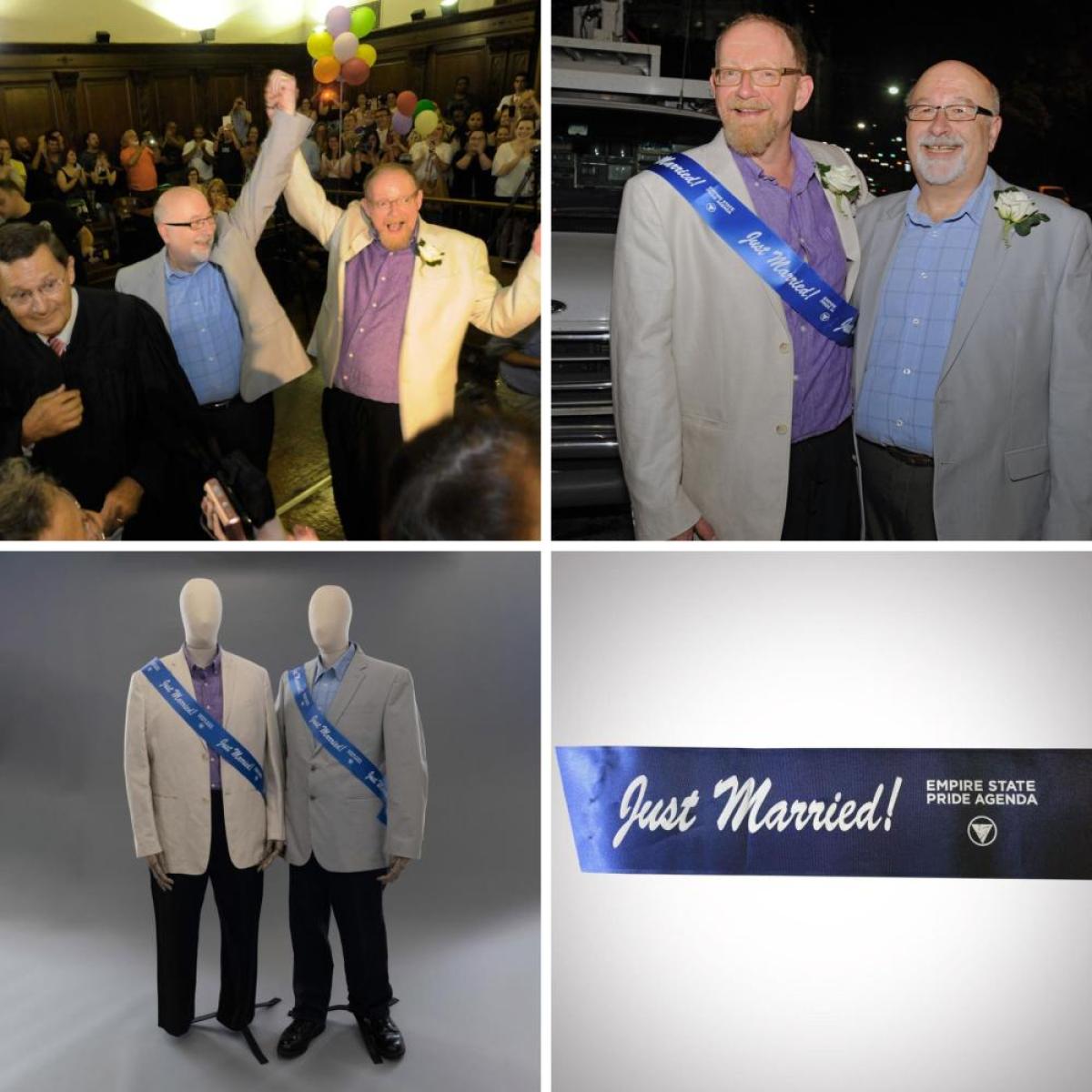
Joyce Darlene (Jaye) Holly and Judy Elaine Yeckley, married October 6, 2012
Jaye and Judy met online in 1998. According to Jaye, they waited to marry “until it would come with the same rights and responsibilities to which opposite sex couples were entitled.” They initially married in a civil ceremony March 24, 2012 to maintain their health insurance coverage as Jaye’s employer eliminated the domestic partner category. The formal ceremony was held on the Hudson River on October 6, 2012, aboard the Dutch Apple cruise ship, with 40 celebrating friends. While Judy’s family celebrated the union and attended the wedding, Jaye’s parents were not supportive. They have since reconciled and Judy is now welcomed as a family member. Purple is Jaye’s favorite color and she was delighted to find a dress with pockets, at David’s Bridal.
Jaye and Judy’s rings are engraved with the words “SOMETIMES” and “ALWAYS.” In the early days of their relationship, it wasn’t always safe to say, “I love you.” “SOMETIMES” and “ALWAYS” were their code words allowing them to express their love that others were not ready to acknowledge.
(Left) Wedding portrait, photograph by Jenny Yates; (Top Right) Wedding Ensembles donated to the NYSM History Collection; (Bottom right) Wedding bands, photograph by Jenny Yates.
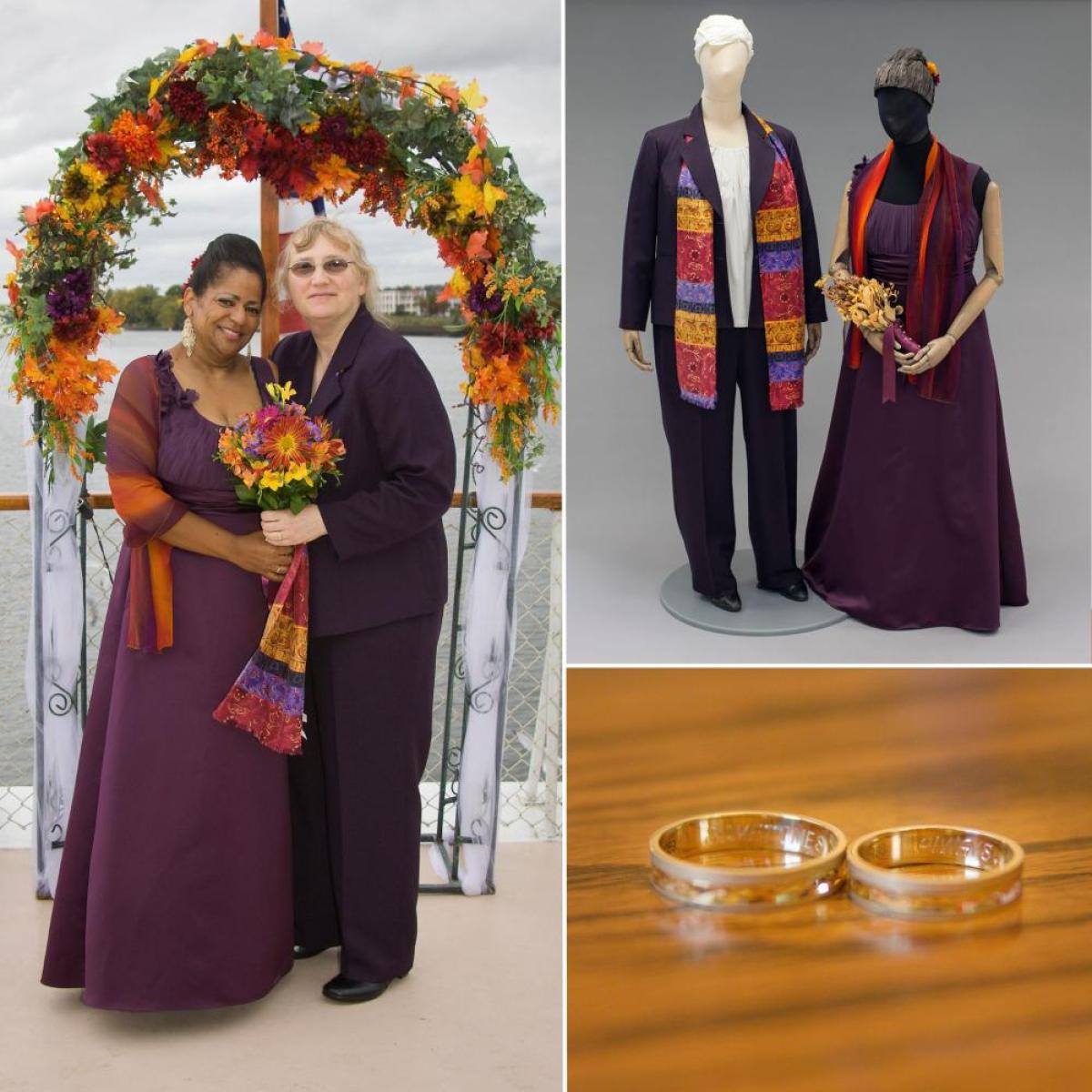
Milestones for Marriage Equality
GAA president Jim Owles seated at the City Clerk’s desk, with a wedding cake, at the Marriage Bureau Zap on June 4, 1971
On June 4, 1971, the Gay Activists Alliance held a zap style protest, an engagement party for two same-sex couples, at the New York City Municipal Building to challenge the City Clerk’s threats of legal action against a same-sex church wedding that was held earlier that year.
Credit: Richard C. Wandel Photographs/LGBT Community Center National History Archive
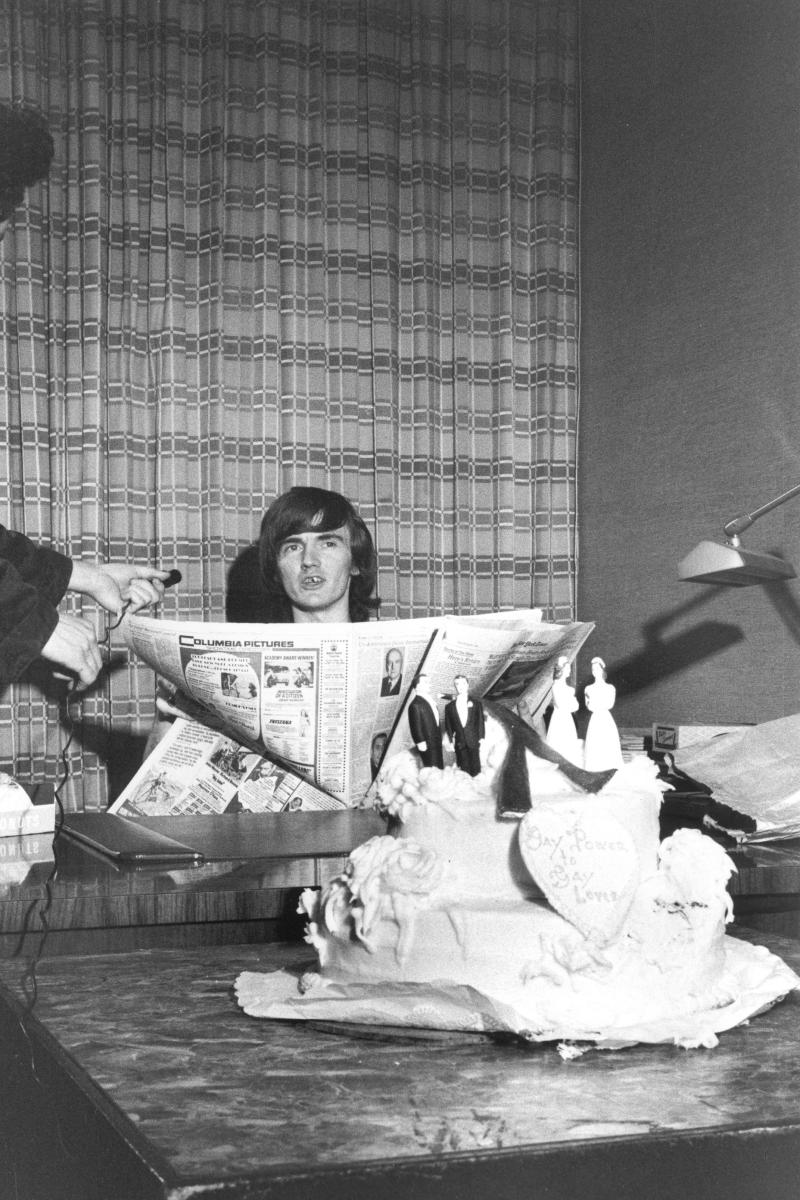
Jay Blotcher and Brook Garrett’s wedding, New Paltz, NY, February 27, 2004
New Paltz Mayor Jason West officiated weddings for dozens of same-sex couples on February 27, 2004, at a time when New York’s laws did not permit same-sex marriage. This resulted in legal action against West, but created significant national publicity around the issue of marriage equality.
Credit: Courtesy of Jay Blotcher
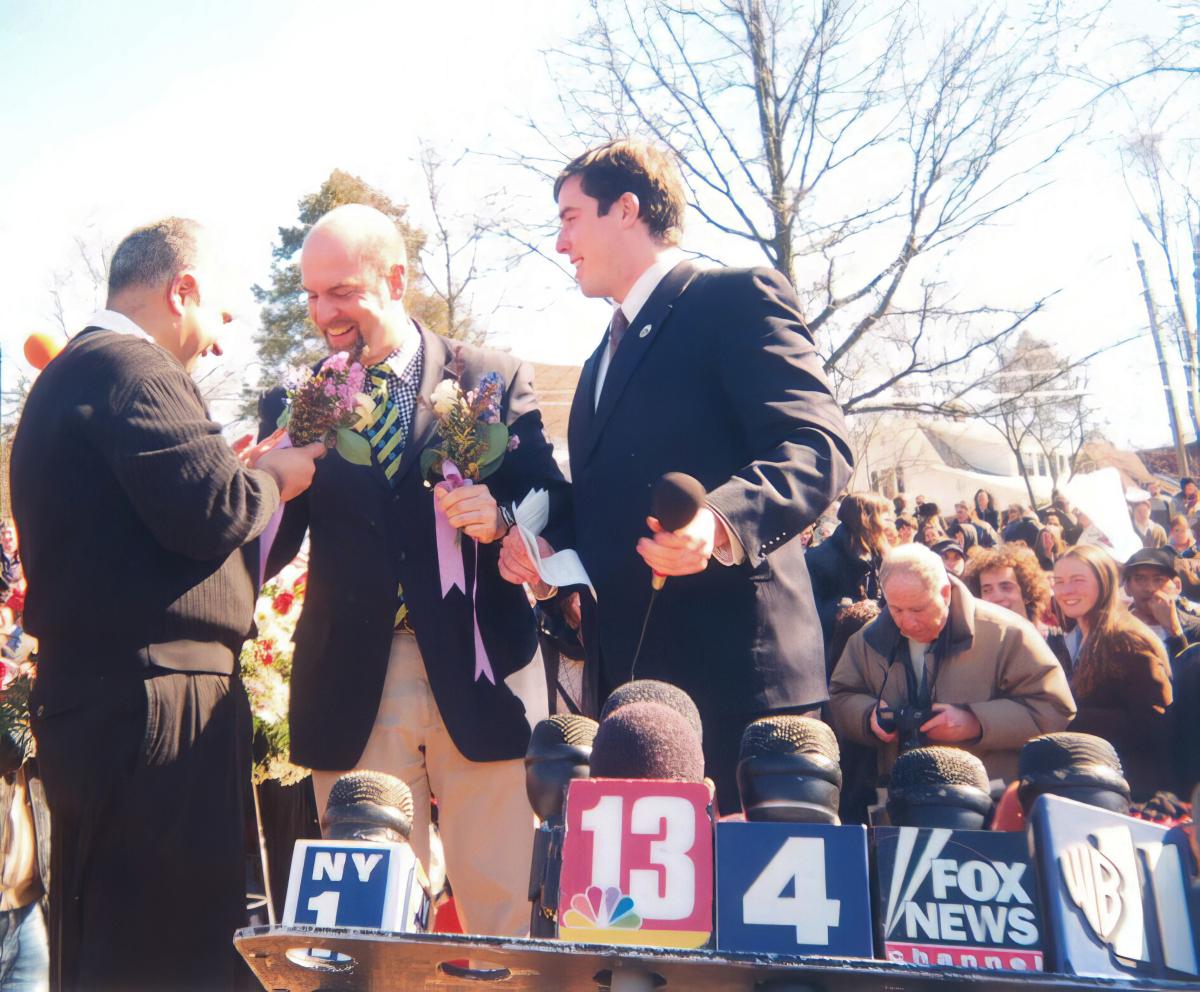
Kitty Lambert and Cheryle Rudd’s wedding, Niagara Falls, NY, July 24, 2011
The wedding of Kitty Lambert and Cheryle Rudd is often cited as the first in the state. The couple wed at Niagara Falls, historically a popular wedding and honeymoon destination.
Credit: Dr. Michael Yeh
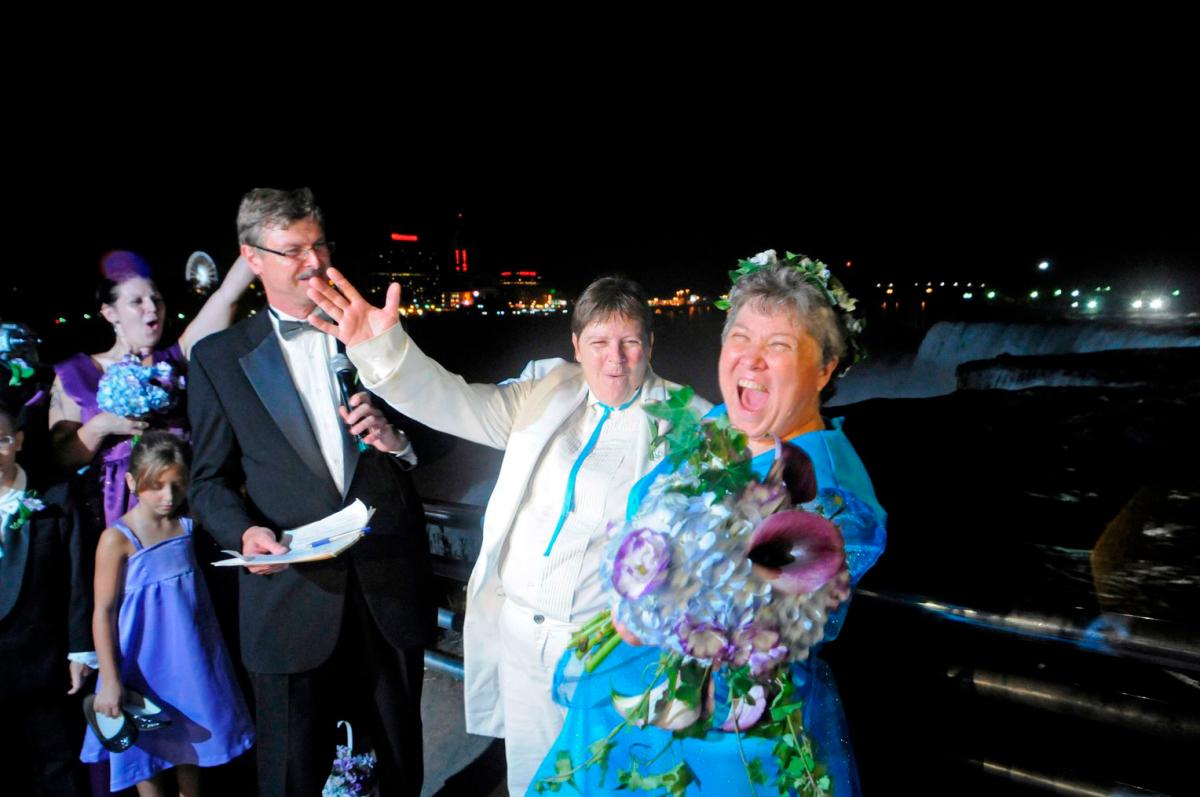
New York’s Role in Federal Change
New York was the sixth state to legally recognize same-sex marriage. Like previous legislation, including women’s suffrage, proponents saw the passage of marriage equality in a populous state like New York as an important step toward achieving marriage equality at the federal level. Many activists in New York turned their attention to that larger goal.
On June 25, 2015, the Supreme Court ruled in Obergefell v. Hodges that the fundamental right to marry is guaranteed to same-sex couples by both the Due Process Clause and the Equal Protection Clause of the Fourteenth Amendment of the Constitution. This landmark decision granted same-sex couples in all 50 states equal marriage rights and legal recognition.
Federal Change
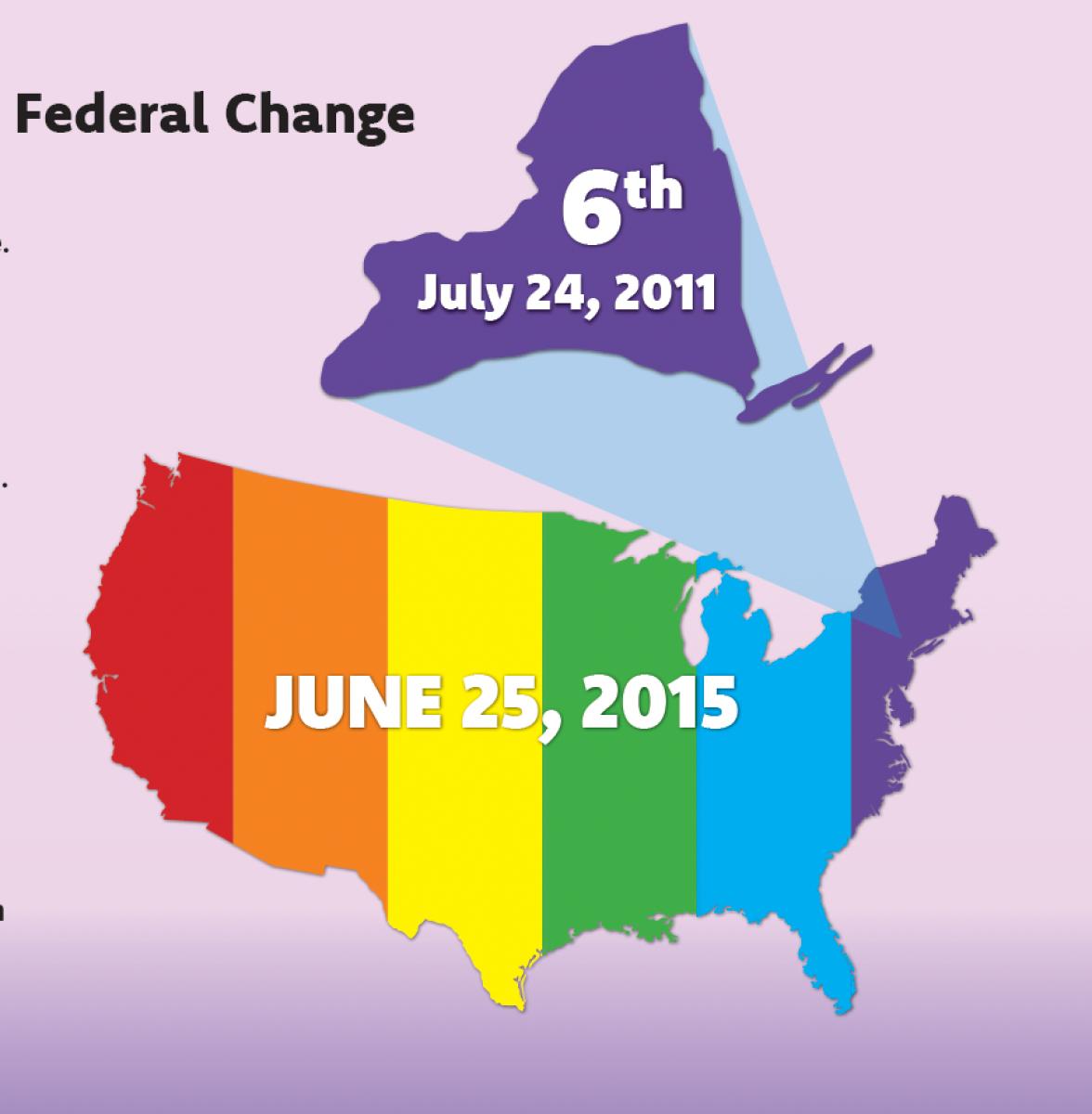
Choosing Sides
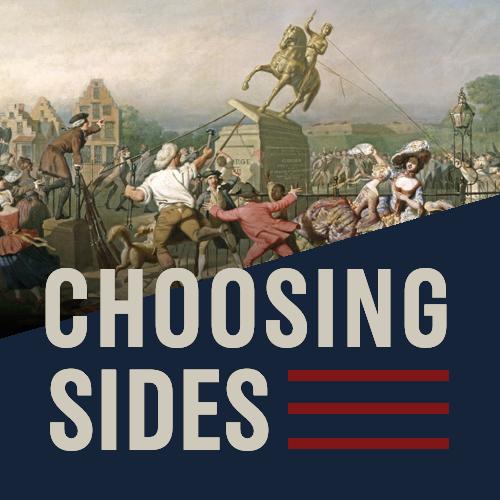
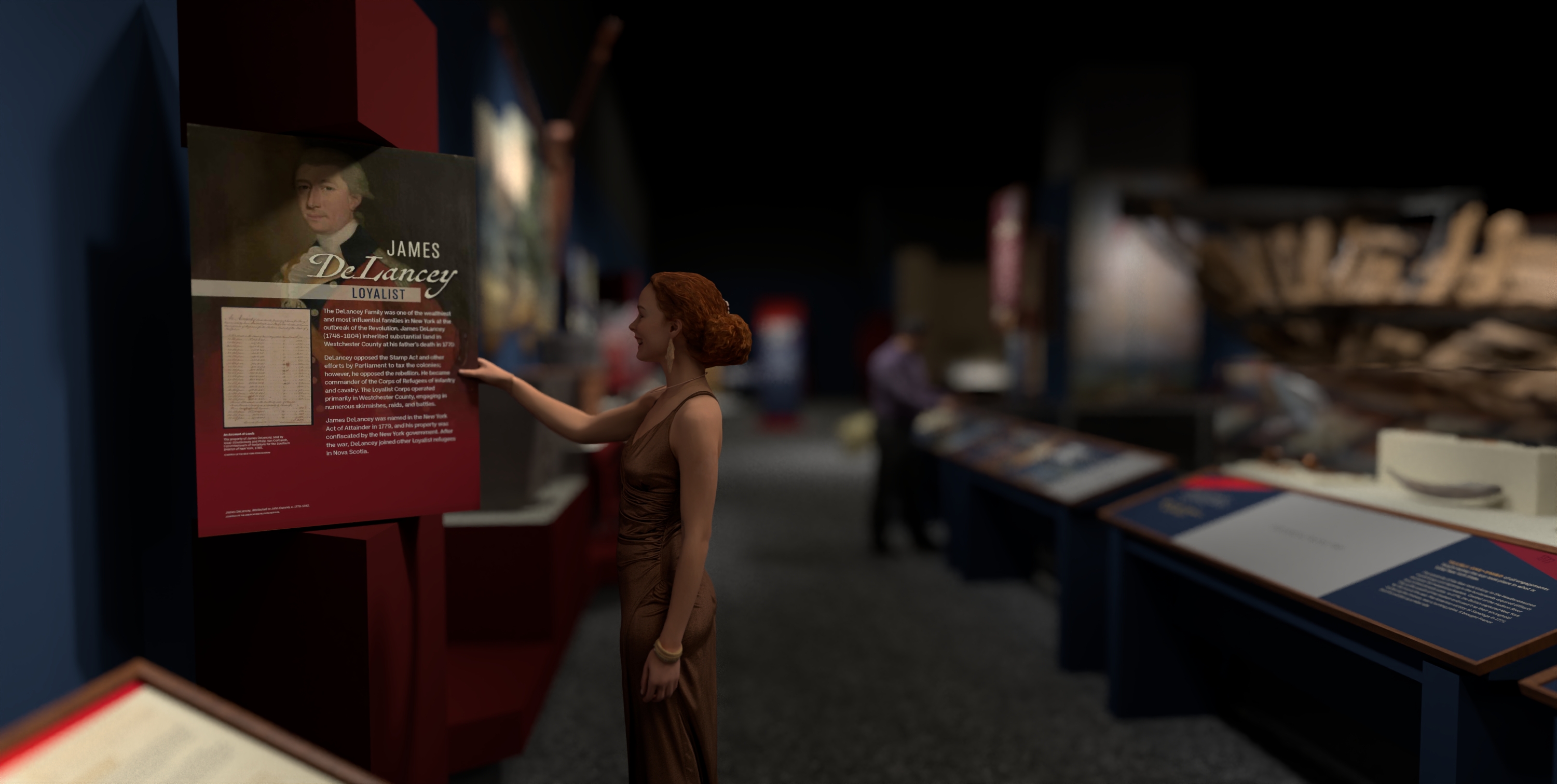
This next section of the exhibit runs along the gallery’s far left wall that runs parallel to the gunboat. It begins with another tall introductory panel. It is titled, “Choosing Sides,” then asks: “Liberty for whom?” Tall graphic text panels are mounted vertically along the wall in a straight row, with angled panels at table height in front.
The content explores how different groups and individuals—including Indigenous nations, Loyalists and Rebels, African Americans, women, farmers—navigated the Revolution’s challenges. Large newspaper graphics highlight the Loyalists vs. Rebels debate. A cannon from the USS Liberty is displayed vertically and is nearly seven feet tall. A large image of a wheat field is located above a blanket chest, a Palatine cradle, and a reproduction flour barrel are displayed. Interactive elements include two spinner panel towers: one features biographies; another discusses spying. Each spinner consists of a movable triangular component that displays a different text panel on each side. Visitors can rotate through these panels.
The section concludes with West Point, featuring a large map of fortifications, the Hudson River chain, facsimiles of the André Papers found on British Major John André upon his capture, and the Van Wart Fidelity Medallion. Together, these panels, objects, and images trace the complexity of choices faced by diverse people during the American Revolution.
On the eve of the revolution in 1775, diversity was the hallmark of the colony’s 165,000 people. Most were rural farmers, but Manhattan residents inhabited North America’s third-largest city. English, Dutch, French, German, Jewish, and other European colonists mingled with Indigenous people and freed Blacks, even as whites held some 20,000 Black people in bondage—the highest percentage of enslaved people in the North. Diverse religious and ethnic traditions shaped the choices people made in the coming war.
The American Revolution is considered by some to be the country’s first civil war. Choosing sides was often a complex series of decisions based on circumstances, geographic location, and many other factors. Men, women, soldiers, civilians, enslaved Africans, free African Americans, Indigenous peoples, and others were all affected by the Revolution and had to balance the social, economic, and political changes wrought by the war.
Highlights
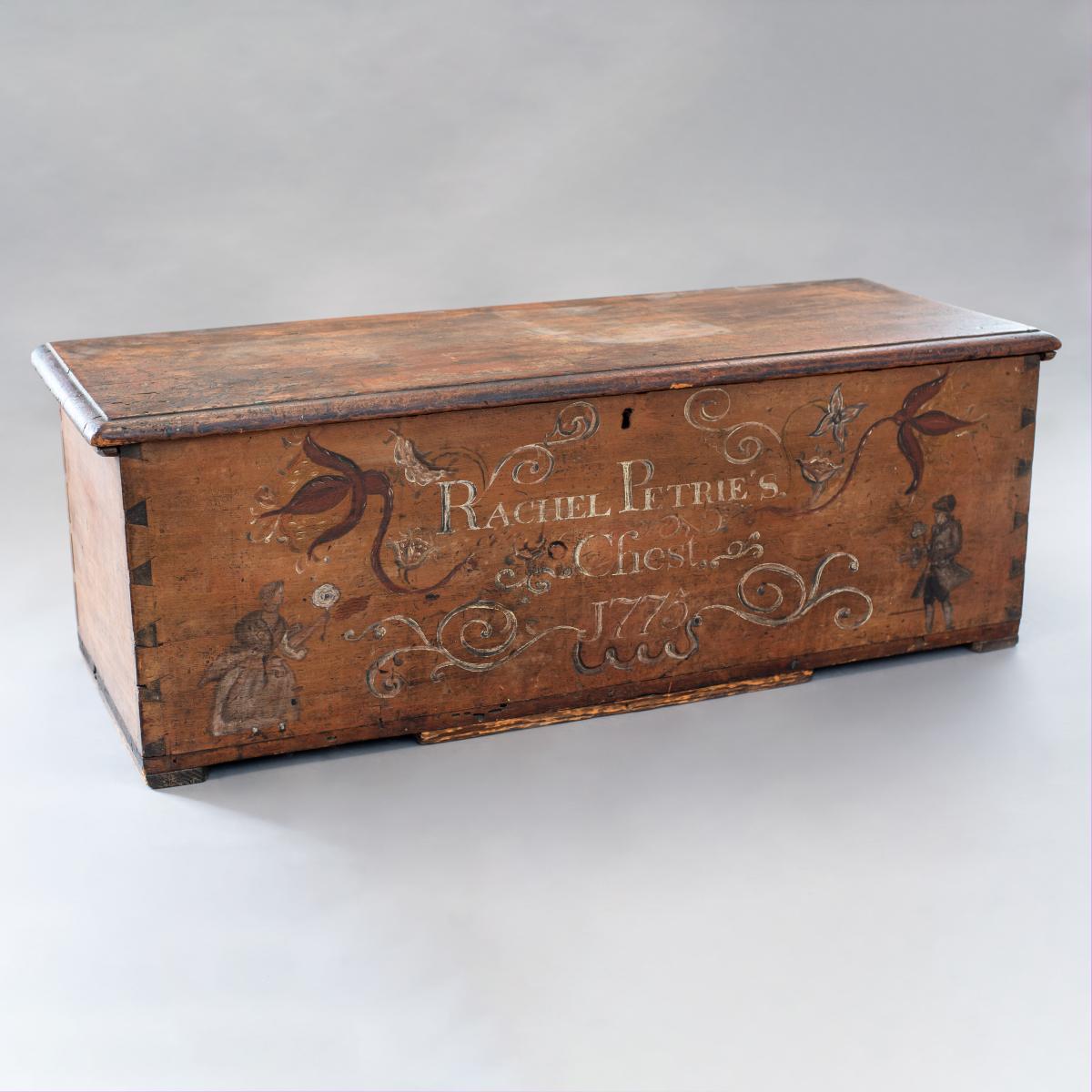
This blanket chest belonged to Rachel Petrie of Linlithgo, Columbia County. Family tradition states that this chest was made by Petrie’s fiancé before he joined New York’s militia at the outset of hostilities.
New York State Museum Collection H-1972.56.1
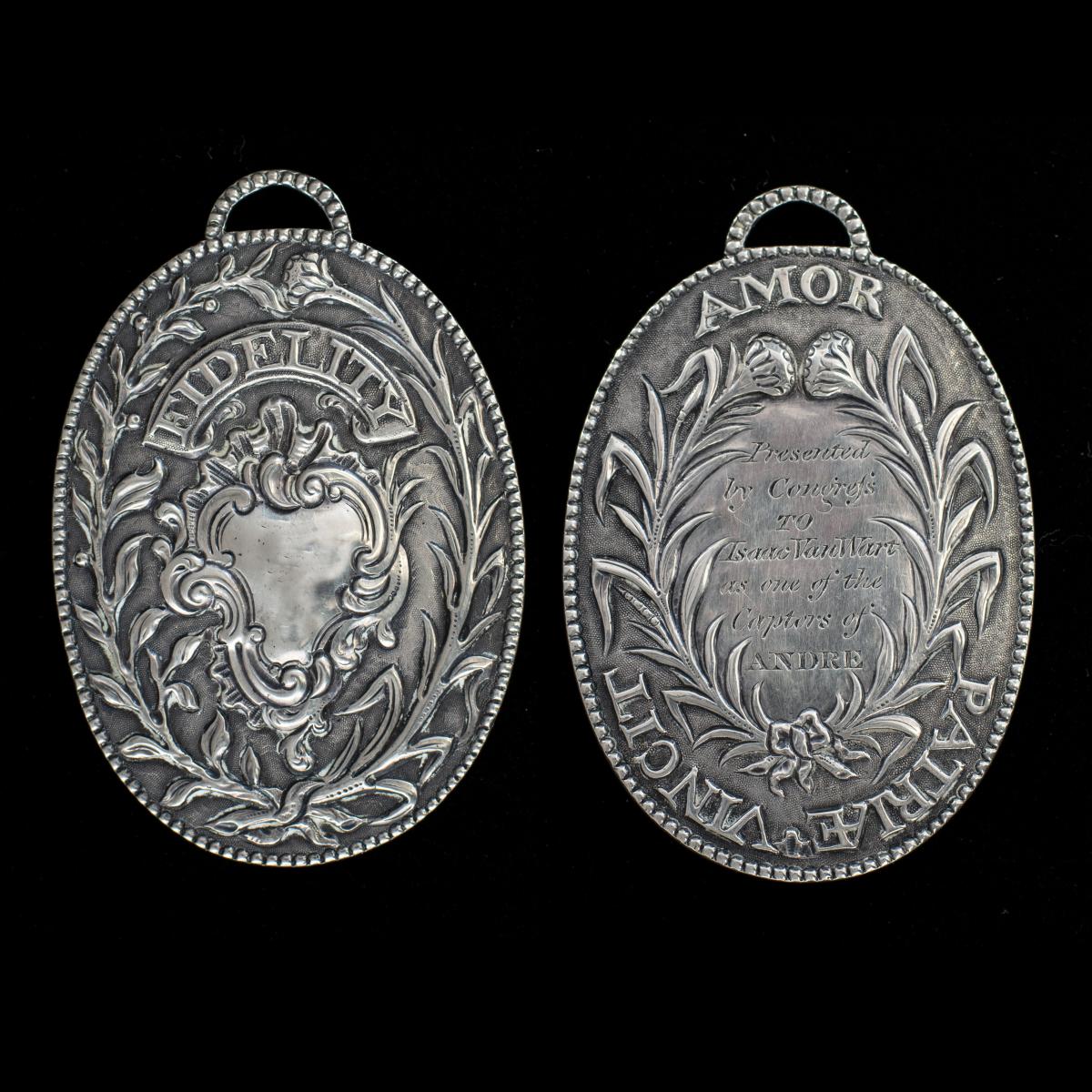
The Fidelity Medallion is the first military medal authorized and presented by the Continental Congress. The medal was created for the three enlisted militiamen who captured John André. The medal featured here was awarded to Isaac Van Wart. Van Wart was born in New York in 1750 and died in Westchester County on May 23, 1828.
Gift of the Estate of Rae Faith Van Wart Robinson, New York State Museum H-2023.4.1
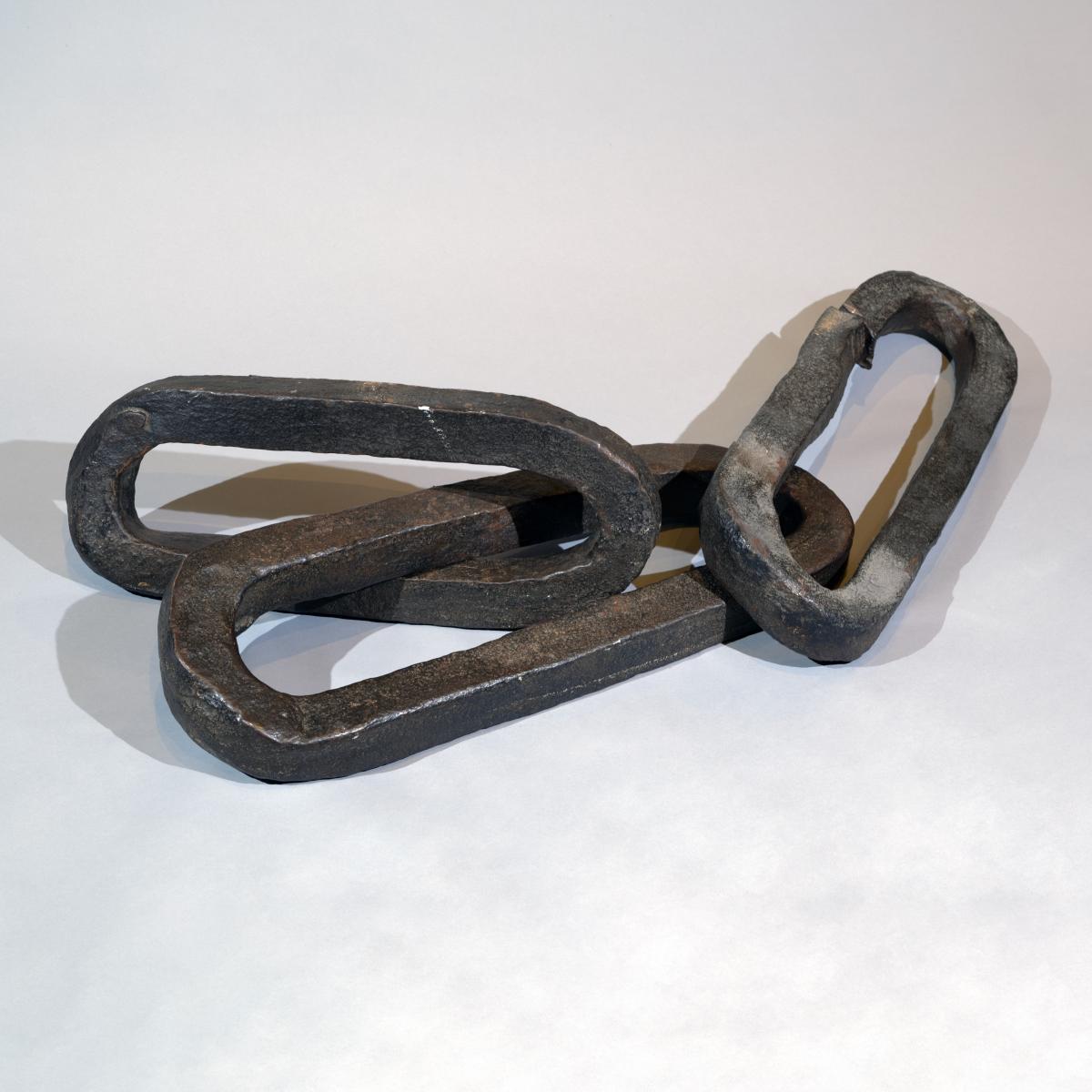
These iron chain links were once part of a chain boom constructed across the Hudson River at West Point to prevent British ships from sailing north from New York City. The chain was forged in 1778 at Sterling Iron Works in Warwick, Orange County, and remained in use until the end of the war in 1783. Each link measures approximately two feet in length and weighs between 140 and 180 pounds.
New York State Museum H-2019.39.3
The New York State Museum belongs to all New Yorkers, and we want to hear from you! As the Museum is planning for its renewal, community input will play an important role in shaping what comes next.
Join us for an opportunity to share your ideas, experiences, and aspirations for the Museum. What stories should we tell? What topics and communities should be highlighted? How can we create more engaging exhibitions, programs, public spaces, and visitor experiences for people across New York State? Your feedback will help inform future exhibitions, educational programs, accessibility improvements, visitor amenities, and other aspects of the Museum's next chapter. Whether you're a longtime visitor, a first-time guest, or someone who has never visited before, your perspective matters.
As a thank-you for participating, contributors will have an opportunity to spin our prize wheel for a chance to win Museum-themed giveaways. Come share your voice and help shape the future of the New York State Museum.
Unable to attend? Your voice still matters. Complete our online survey by July 10 and share your ideas for the future of the New York State Museum: https://www.surveymonkey.com/r/NYSMSurvey. Opportunities to provide feedback in person at Museum events will continue beyond the survey deadline.
During the American Revolution, both sides used spies to gather information on troop movements and military plans. Join Senior Historian Aaron Noble to learn about one of the war's most infamous spies and try your hand at Revolutionary War spy craft using secret codes, invisible inks, and other tools of the trade.
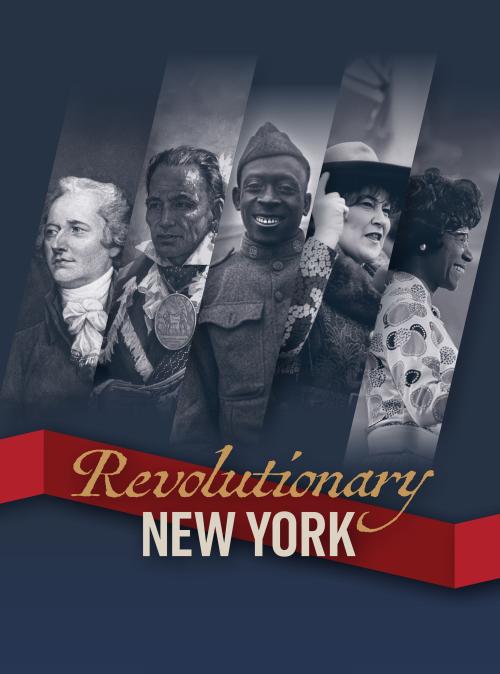
Revolutionary New York


Marking the 250th anniversary of the United States, this exhibition places New York at the center of our nation’s founding story and its continued evolution. The American War for Independence raged from 1775 to 1783, but the ideas of the American Revolution did not end there. From the Battles of Saratoga to the birth of the Women’s Suffrage Movement at Seneca Falls to the Stonewall Uprising in 1969, New York has remained at the heart of this continuing Revolution.
Through compelling artifacts, images, hands-on and multimedia components, and different perspectives, the exhibition explores New York’s pivotal role in the Revolution and the difficult choices many New Yorkers faced.
This exhibition honors the New Yorkers who launched the great American experiment in 1776—and the bold leaders who, through social revolutions, have fought to make its promises real.
Online Exhibition Resources
Continue your exploration of Revolutionary New York beyond the gallery walls. This companion website features exhibition highlights and key content, along with visual descriptions for enhanced accessibility and additional resources that provide deeper context and opportunities for further discovery.
As we approach the 250th anniversary of the United States, join museum educator Tyler Warman for an immersive exploration of the Port of New York and its pivotal role in the American Revolution. From the arrival of the massive British armada in 1776 to the final departure of the Redcoats on Evacuation Day in 1783, New York’s waters served as one of the war’s most contested and strategically important theaters, shaping the course of the conflict and the nation’s future.
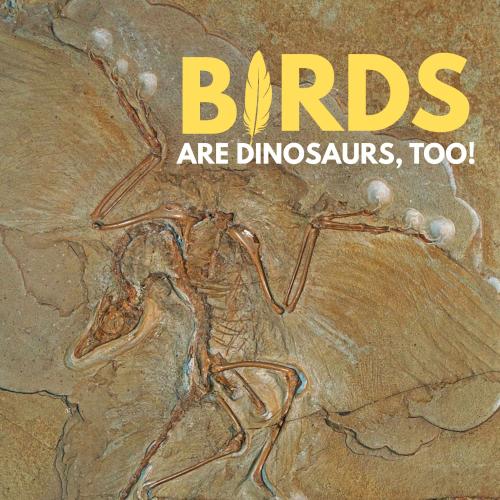
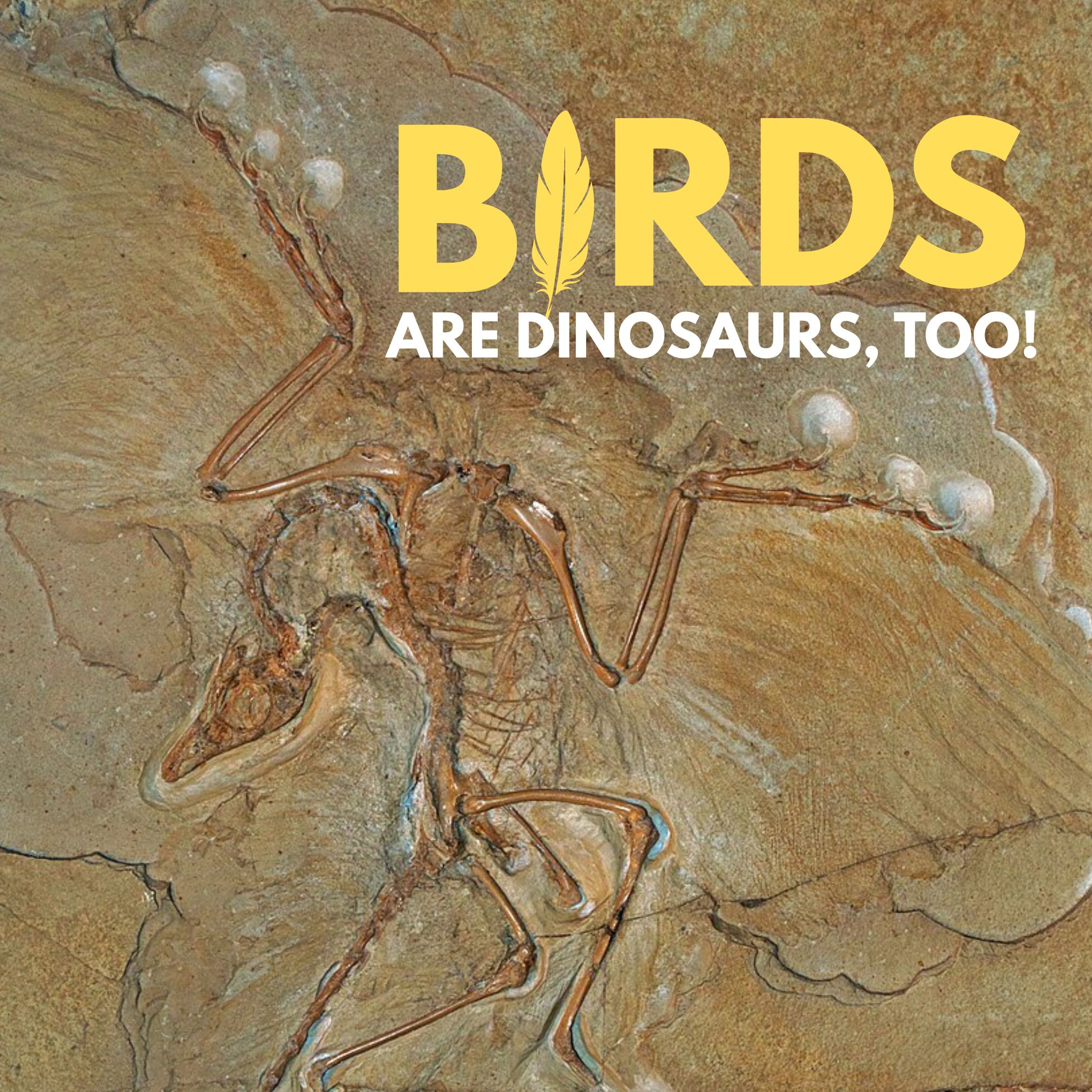
Join Dr. Jeremy J. Kirchman, Curator of Birds and Mammals at the New York State Museum, for a gallery talk exploring the remarkable evolutionary connection between birds and dinosaurs. Drawing on fossil discoveries, anatomical evidence, and modern scientific research, Dr. Kirchman will reveal how today's birds are the living descendants of theropod dinosaurs. Learn how feathers, flight, and other characteristics evolved over millions of years and discover why every sparrow, hawk, and robin offers a glimpse into the age of dinosaurs.
Continue your journey through prehistoric life by visiting Expedition Dinosaur: Rise of the Mammals on the Museum's 4th Floor Terrace.
Curious about New York's past? Come uncover the stories behind the state's history— one document at a time! Join us every Thursday at 11:00 a.m. for "Ask an Archivist" at the New York State Museum. Each session offers a peek into New York State’s rich and surprising history through carefully chosen original documents, photographs, and videos. An expert archivist will be on hand to share stories, answer your questions, and reveal how we uncover and preserve the past. You never know what fascinating piece of history you’ll discover!
Freedom Train
Discover a selection of documents from the Revolutionary War and beyond promoting New York's heritage of freedom.
The 2025 Evolution and Ecology Teacher Workshop is a one-day hybrid program held at the New York State Museum on Wednesday, January 29th, 2025. The workshop will focus on hidden stories from the collections and is a professional development opportunity for science teachers, especially those who teach biology and environmental science to middle and high school students. The workshop is presented by PhD-level State Museum scientists, including Director of Research and Collections Robert Feranec, Curator of Mycology Patricia Ononiwu Kaishian, Curator of Botany James Lendemer, Curator of Birds and Mammals Jeremy Kirchman, Curator of Malacology-Director of Museum’s Field Research Laboratory Denise Mayer, Curator of Entomology Timothy McCabe, State Paleontologist- Curator of Invertebrate Paleontology Lisa Amati, and Curator of Ichthyology Jeremy Wright.
Teachers will have the opportunity to earn eight CTLE clock hours by completing the workshop. They will gain valuable insight into the forefront of scientific research, highlighting hidden stories in ecology and evolution from within the museum collections. The workshop is aligned with specific NYS P-12 Science Learning Standards.
Registration and Contact Information
In-person participation is limited to the first 50 individuals.
Register:
https://forms.office.com/r/vEQcgctQc1
Contact:
nysmeducation@nysed.gov
Cost: Free


Join us for Women of Science, a free, family-friendly event celebrating female scientists and their contributions to a wide range of scientific fields. Visitors of all ages will have the opportunity to meet inspiring women scientists from the New York State Museum’s Division of Research and Collections and other local scientists, learning about their disciplines, current research projects, and collections.
The day’s schedule features hands-on educational activities, tabling activities with participating scientists, brief science talks, and several interactive “Ask a Scientist” panels for families with younger children, teens, and adults. Don't miss this chance to discover the exciting world of science and gain insight from the women shaping its future!
The 2025 DH Cadwell Teacher Workshop, will be a one-day hybrid program held at the New York State Museum on Saturday, March 1, 2025. The workshop is a professional development opportunity for science teachers, especially those who teach Earth Science/Physical Setting to middle and high school students. The workshop is presented by PhD-level Museum scientists—research experts in the fields of Geology, Earth Science, and Paleontology.
Participants are immersed in information and hands-on activities in geology and paleontology and will have the opportunity to earn eight CTLE clock hours. The workshop provides an informal setting for learning through interaction between earth science teachers and research experts, through which participants will have the opportunity to expand their knowledge of New York-specific topics; refine their observational and interpretive skills; and inquire, formulate, and test their scientific practices and applications.
The workshop is aligned with specific NYS P-12 Science Learning Standards and Regents Exams in Earth and Space Sciences.
Registration
In-person participation is limited to the first 50 individuals.
Register:
https://forms.office.com/r/VnZuSwev7m
Contact:
nysmeducation@nysed.gov
Cost: Free
Join New York State Archivist Brian Keough for an in-person viewing of WMHT’s short film, In Search of Timbuctoo, followed by a Q&A with filmmaker Paul Miller. On display for one day only, the 1846 Receipt Book of Land Grants from Gerrit Smith documents 3,000 deeds granted to African Americans and poor white people giving them the wealth needed to have the right to vote in New York. Before or after the program, be sure to visit the State Museum’s exhibit, Timbuctoo: Gerrit Smith’s Experiment, in Adirondack Hall.
Also featured are Treasures from the State Archives: Gerrit Smith 1846 Receipt Book display and the State Museum’s exhibit: Timbuctoo: Gerrit Smith’s Experiment.