

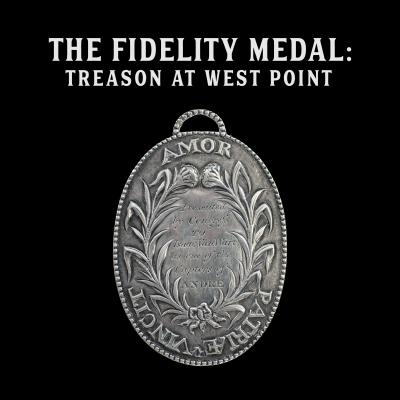
The Fidelity Medal: Treason at West Point


The Fidelity Medal: Treason at West Point delves into Major General Benedict Arnold’s betrayal of West Point during the American Revolution and British Major John André’s involvement in Arnold’s plot. Featured in the exhibit are important historical artifacts and information related to this aspect of the American Revolutionary War, including the rare Fidelity Medallion, the first military medal authorized and presented by the United States Congress, three links from the Great Chain constructed across the Hudson River to prevent British ships from sailing north from New York City, and images of the papers found on André when he was captured.
The Fidelity Medallion, also known as the "André Capture Medal," was created specifically for the three enlisted Westchester County militia men, Isaac Van Wart, John Paulding, and David Williams, who captured John André on September 23, 1780, and it was never presented again. It can be considered the oldest decoration in the U.S. military, preceding by nearly two years the Badge of Military Merit—the precursor to the modern Purple Heart Medal. The two-sided medal has a Latin inscription, which translates as “Love of Country Conquers” on one side, and “Fidelity” on the other. The medal featured here was awarded to Isaac Van Wart, who was born in New York in 1750 and died in Westchester County on May 23, 1828. After his death, the medallion remained in the custody of Van Wart’s family until 2023, when it was bequeathed to the collections at the New York State Museum.
Also on display, the three links from the Great Chain were forged in 1778 at Sterling Iron Works in Warwick, Orange County, and remained in use until the end of the war in 1783. Each link measures approximately two feet in length and weighs between 140 and 180 pounds.
State Museum, Library, and Archives Commemorate New York State History Month
Free Programming Available Throughout October Highlighting the Upcoming 250thAnniversary of the Declaration of Independence and American Revolution
The New York State Museum, State Library, and State Archives will commemorate New York State History Month in October by offering a variety of engaging programs and resources for children, families, and adults alike. These offerings, both online and in-person, will focus primarily on themes related to the approaching 250th Anniversary of the Declaration of Independence and American Revolution, explore the subsequent 250 years of continuing revolutions for all New Yorkers, and celebrate the rich and diverse history of the state. In addition, the New York State Library will host a new temporary exhibition, New York During the American Revolution which will open on Sunday, October 1 and be available until the end of the month. The exhibit will display documents from the collections of historical relevance to the American Revolution and New York State.
Board of Regents Chancellor Lester W. Young, Jr. said, “New York State History Month serves as an essential reminder of our rich, diverse heritage and the pivotal role our state played in shaping our nation during the American Revolution. As we approach the 250th Anniversary of this transformative conflict, it is important that we celebrate and educate the public about our State’s significant contribution to the birth of our nation through special programming and by sharing the collection of artifacts, documents, and photographs curated by public historians, librarians, curators, archivists, and countless others who work together to preserve New York's history for future generations.”
State Education Commissioner Betty A. Rosa said, “As a center of political activity and a place where critical decisions influenced the outcome of the Revolutionary War and the future of the United States, commemorating New York State History Month inspires a deeper appreciation of the sacrifices and triumphs that have helped to define our great State and country. I encourage New Yorkers of all ages to participate in the various statewide programs, events, and opportunities to learn about not only our State’s complex history, but the diverse peoples who helped make our state what it is today and our remarkable journey towards democracy, freedom, and independence.”
New York State Historian Devin Lander, “As we approach the commemoration of the 250th anniversary of the Declaration of Independence and American Revolution, it is important for us to remember that this was in many ways an unfinished revolution and that women, enslaved people, Indigenous peoples, and the poor were not included. However, over the past 250 years, New York has been the battleground for a variety of struggles to reach the ideals of freedom and equality outlined in the Declaration for all people. From the struggles for Indigenous sovereignty and gradual emancipation, to the birth of the U.S. women’s suffrage movement; from the underground railroad and abolition movement to the uprisings at the Stonewall Inn and Attica Prison, the ongoing fight for basic equality and human rights has taken center stage across New York State. New York State History Month allows us to reflect on this history and appreciate the work of the historians, curators, educators, archivists and librarians who work to uncover our shared past and preserve it for our shared future.”
In recognition of New York State History Month, the Office of Cultural Education, which includes the New York State Museum, the New York State Library, and the New York State Archives, has curated educational materials and organized the following programs, events, and resources. The following is a schedule of enriching programs, resources, and events that are open to the public. In-person programs will be held throughout October at the Cultural Education Center located at 222 Madison Avenue in Albany.
All programs listed below are free and open to the public.
New York State Museum:
Sunday, October 1 | 11 a.m. – 3:00 p.m. | 1st Floor NYS Museum
1st Annual Family History Day
This inaugural family event offers a unique opportunity to immerse yourself in New York's vibrant history, particularly the significant roles played by New Yorkers during the American Revolution. Experience a day filled with interactive engagements led by knowledgeable historians and a range of engaging activities tailored for both children and families. Additionally, you will be able to explore various vendor booths representing diverse cultural organizations from communities from across the state. Learn more about Family History Day here.
Sunday, October 1 | 2 p.m. – 3 p.m. | Huxley Theatre
Jack Kelly Presents: God Save Benedict Arnold: The True Story of America’s Most Hated Man
Explore the history behind Benedict Arnold’s treason and the events leading up to the capture of Major John André with historian Jack Kelly. Kelly goes beyond Benedict Arnold’s most famous act, treason, to explore his psychology and character, arguing that Arnold was essential to the patriots’ victories before he was a traitor. Stop by and see The Fidelity Medal: Treason at West Point Exhibition, featuring the rare Fidelity Medal, three links from the Great Chain, and images of the André Papers, which opens on Friday, September 29. Learn more about Jack Kelly’s presentation on Benedict Arnold's treason here.
Sunday, October 15 | 2 p.m. – 3 p.m. | Huxley Theatre
Dr. Christopher Minty Presents: Unfriendly to Liberty: Loyalist Networks and the Coming of the American Revolution in New York
Discover the complicated history of New Yorkers who remained loyal to Britain during the American Revolution with author Dr. Christopher Minty. Dr. Minty will explore the local politics, factions, institutions, and behaviors that governed Loyalists’ political activities in the buildup to the American Revolution. Minty analyzes these factors to show how New York Loyalists came together to form an organized, politically motivated, and diverse political group. Learn more about Dr. Minty’s presentation on Loyalist Networks here.
Sunday, October 22 | 2 p.m. – 3 p.m. | Huxley Theatre
Panel Discussion: The Continuing Revolution for All New Yorkers
Not all New Yorkers experienced the freedoms promised by the American Revolution. Join panelists Paul and Mary Liz Stewart of the Underground Railroad Education Center (UREC), New York State Museum Chief Curator Dr. Jennifer Lemak, and Senior Historian of Social History Ashley Hopkins-Benton as they discuss the ongoing work needed to bring equal rights to all communities. Learn more about the panel discussion here.
Sunday, October 29 | 2 p.m. – 3 p.m. | Huxley Theatre
Dr. Scott Manning Stevens Presents: Paths Forward: Native America and Museums
Rethink the complicated issues around Native American nations, their histories, and their relationships with museums with Dr. Scott Manning Stevens. Professor Stevens considers the many challenges for museums in overcoming the legacy of misappropriation and misrepresentation of Indigenous cultures. Learn more about Professor Stevens’s presentation on Native America and Museums here.
For more information about other history-related events happening this month in New York, visit the Office of State History website.
New York State Library
Sunday, October 1 – Tuesday, October 31 | Open: Tuesday – Sunday 9:30 a.m. – 5 p.m.
New York During the American Revolution Exhibition
As part of the New York During the American Revolution Exhibition, the New York State Library is featuring primary source documents from the collections during that era of New York State history. The premise of this exhibit is based upon the New York State Library Educator Guide for the American Revolution, 2022. Highlights of documents include Benedict Arnold's manuscript to the inhabitants of America for his reasons of committing treason, and John André's drawing on the eve of his death in Haverstraw on the Hudson River. Visit the New York State Library’s website to learn more.
Thursday, October 5 | 12 p.m. – 1 p.m. | New York State Library
Onsite Walking Tour of the Local History and Genealogy Resources
The New York State Library is a treasure chest of resources for those tracing their family histories. Join us for an onsite tour highlighting published genealogies, local histories, church records, Daughters of the American Revolution (DAR) records, United States and New York State Census records, newspapers on microfilm, city directories, and more. Cara Janowsky, an Associate Librarian at the New York State Library, will lead the tour. The tour is limited to 12 individuals and registration is required.
Thursday, October 12 | 12 p.m. – 1 p.m. | Webinar
Dr. Marisela Martinez-Cola Presents: The Bricks before Brown
In her book, The Bricks before Brown (University of Georgia Press, 2022), Dr. Martinez-Cola identifies over 100 cases filed before the famed Brown v. Board of Education and specifically examines the contributions of Chinese Americans, Native Americans, and Mexican Americans to the struggle for education equality. She will be sharing the stories of three history-making families who took a stand against inequality. Learn more and register for the The Bricks before Brown webinar here.
Tuesday, October 17 | 12 p.m. – 1 p.m. | Webinar
Professor Adam Benforado Presents: A Minor Revolution: How Prioritizing Kids Benefits Us All
Advances in psychology, neuroscience, sociology, and public health have provided us with an ability unparalleled in human history to understand and protect children. But we have not seized the moment. This is a moral problem, but it’s also an economic and social one: by failing our children today, we doom ourselves in the years ahead. The root cause of nearly every major challenge we face—from crime to poor health to poverty—can be found in our mistreatment of children. But in that sobering truth is also the key to changing our fate as a nation. We must reform our world—our institutions, our laws, our business practices, our parenting—to put children first. Learn more and register for the webinar, “A Minor Revolution: How Prioritizing Kids Benefits Us All,” here.
Wednesday, October 18 | 1 p.m. – 2 p.m. | Webinar
Professor Michael Witgen Presents: Unthinkable History: The American Settler State and the Political Economy of Plunder
The American Republic was founded as a nation of settlers struggling to colonize Native North America. This project began as an extension of the original European colonial project in the western hemisphere, imagined as the discovery of a New World. Both the original colonial scheme, and the one undertaken by the United States, imagined North America as unsettled wilderness, and imagined colonization as a civilizing mission. Framed in this way, the expansion of the republic beyond the original thirteen states into the western interior could be imagined as a benign conquest of nature, when in fact it was an audacious colonial project—a grandiose scheme to steal a continent. However, a theft this bold would require more than merely a plan for colonial subjugation, it would require a colonial power willing to organize itself around a political economy of plunder. It would require a totalizing colonial project that would make an Indigenous history of North America unthinkable. Learn more and register for the webinar, “Unthinkable History,” here.
Friday, October 20 | 12 p.m. – 1 p.m. | New York State Library
Onsite Walking Tour of the Local History and Genealogy Resources
The New York State Library is a treasure chest of resources for those tracing their family histories. Join us for an onsite tour highlighting published genealogies, local histories, church records, Daughters of the American Revolution (DAR) records, United States and New York State Census records, newspapers on microfilm, city directories, and more. Cara Janowsky, an Associate Librarian at the New York State Library, will lead the tour. The tour is limited to 12 individuals and registration is required.
Wednesday, October 25 | 12 p.m. – 1 p.m. | Webinar
Professor Carp Presents: The Great New York Fire of 1776: A Lost Story of the American Revolution
New York City, the strategic center of the Revolutionary War, was the most important place in North America in 1776. That summer, an unruly rebel army under George Washington repeatedly threatened to burn the city rather than let the British take it. Shortly after the Crown’s forces took New York City, much of it mysteriously burned to the ground. This is the first book to fully explore the Great Fire of 1776 and why its origins remained a mystery even after the British investigated it in 1776 and 1783. Uncovering stories of espionage, terror, and radicalism, Benjamin L. Carp paints a vivid picture of the chaos, passions, and unresolved tragedies that define a historical moment we usually associate with “life, liberty, and the pursuit of happiness.” Learn more and register for the webinar, “The Great New York Fire of 1776,” here.
New York State Archives:
During American Archives Month and New York State History Month, learn about our state’s role in the American Revolution.
Resources:
Tools for Teachers: American Revolution. John André Capture
Online Exhibit: Treason During the American Revolution
Wednesday, October 25 | 12:30 p.m. – 1:30 p.m.| Webinar
Retired New York State Archivist Presents: Fun Finds in the Archives
Join us for this “Archives Month” special as we peer into New York State government records and locate surprising, unexpected, and just-plain-fun finds. While many government records may appear dry or dull, some items transferred to the New York State Archives from other State Agencies might startle you as they have the archivists on staff. Learn more and register for the webinar, “Fun Finds in the Archives,” here.
The Museum’s Office of State History webpage offers information about historical research, news, grant opportunities, and events happening around New York State. It is a useful resource for historians throughout the state to learn about the work of fellow historians, identify opportunities for increased coordination and collaboration, and share and learn about public programs for the communities statewide throughout the year. Cultural institutions are encouraged to register and submit additional events and programs for listing on the Office of State History website. New York State has also designated the annual Path Through History Weekends to promote the state’s rich and fascinating history and to increase participation from other organizations. Share events here.
In 1997, the New York State Legislature established November as New York State History Month with the goal “to celebrate the history of New York state and recognize the contributions of state and local historians.” To better align with the Statewide initiative, Path Through History, in 2019 the month-long observance was changed to October by the New York State Legislature. New York State History Month provides historians, museums, and cultural institutions with a platform to share the significance of New York State's rich history through public programs, exhibitions, and various educational experiences.
The State Museum is a program of the New York State Education Department’s Office of Cultural Education. Located at 222 Madison Avenue in Albany, the Museum is open Tuesday through Sunday from 9:30 a.m. to 5 p.m. It is closed on the Fourth of July, Thanksgiving, Christmas, and New Year's Day. Admission is free. For additional information, visit the New York State Museum website.
The New York State Library is part of the Office of Cultural Education within the New York State Education Department. Visit the New York State Library website for a complete list of upcoming programs. To receive news, resources, and other updates, please subscribe to the quarterly newsletter.
The New York State Archives holds many of the oldest and most important archival treasures in the nation. The Archives preserves and makes accessible over 250 million records of New York’s State and colonial governments dating from 1630 to the present. The State Archives provides free access to photographs, artifacts, documents, manuscripts, and other materials that tell the story of New York’s history via its Digital Collections on the Archives website.
The Archives Partnership Trust was founded in 1992 to build an endowment and provide project support to enhance humanities programs, increase access to these outstanding treasures, and continue the preservation of New York's historical records. Since its founding, the Partnership Trust, a 501(c)(3) non-profit organization, has supported exceptional projects and programs. These include the Research Residency Program, the Student Research Awards Program, history conferences, special exhibitions, public education programs, book signings and lectures, publications, teacher training institutes, preservation projects, and more.
The State Museum, State Library, and State Archives are programs of the New York State Education Department’s Office of Cultural Education. Further information about programs and events can be obtained by calling (518) 474-5877 or by visiting the Office of Cultural Education website.
Phone: (518) 474-1201
New York State Museum Hosts First Family History Day
Interactive Activities for Children Including Crafts, Historical Scavenger Hunt, Opportunities to Play with Games and Toys from the Revolutionary Era
The New York State Museum is pleased to announce its first Family History Day on Sunday, October 1, 2023. In observance of New York State History and Archives Month, this free event will offer hands-on experiences for multi-generational visitors highlighting the upcoming 250th Anniversary of the American Revolution. Activities will include booths from various statewide cultural organizations; a family-friendly tour of the Museum’s newest exhibit, “Each One Inspired;” the chance to try on clothing and play with games and toys from the Revolutionary Era, and a historical scavenger hunt. The New York State Library will open a new temporary exhibition, New York During the American Revolution, until the end of the month to display documents from the collections of historical relevance to the American Revolution and New York State.
Board of Regents Chancellor Lester W. Young, Jr. said, “Museums help to preserve the history, culture and heritage of families, communities, and societies. Events like Family History Day are important in ensuring our shared history is not lost over time. By displaying artifacts and documents and sharing stories with generations of New Yorkers, we are creating a deeper appreciation of American history and how it correlates with our state’s role in the struggle for our national independence.”
As part of the inaugural Family History Day event, the New York State Museum will offer many interactive activities, providing New Yorkers of all ages the chance to learn about the Revolutionary War—a pivotal period in our state’s history. Family History Day events include:
- A tour of the newest exhibit, “Each One Inspired” with Dr. Gwen Saul, New York State Museum Curator of Ethnography. The exhibition examines the sources of inspiration for Indigenous artists across what is now New York.
- New York State Museum Senior Historians will provide highlights from various collections.
- Learn about historic medicine from the American Revolution with Interpretive Historian Paul Supley.
- Make and take crafts to bring home.
- Complete American Revolutionary themed coloring sheets
- Visit information tables from historically focused cultural institutions.
Additionally, the inaugural presenter of the monthlong speaker series, renowned historian and novelist Jack Kelly will present, “God Save Benedict Arnold: The True Story of America’s Most Hated Man,” at 2 p.m. in the Huxley Theater. During this time, the original papers which were found concealed in the boot of British Spy Major John André, will also be on display from the collection of the New York State Archives. The papers were created by General Benedict Arnold during the Revolutionary War to supply information to the British Army concerning the conditions, personnel, and ordnance of the American fortifications at West Point. The discovery of these original papers, on British Spy Major John André, led to his capture and hanging.
The presentation will focus on the history behind General Benedict Arnold’s treason and the events leading up to the capture of Major John André. Jack Kelly will also explore Arnold as a successful American military leader and offer new perspectives on his eventual treason.
The State Museum is a program of the New York State Education Department’s Office of Cultural Education. Located at 222 Madison Avenue in Albany, the Museum is open Tuesday through Sunday from 9:30 a.m. to 5 p.m. It is closed on the Fourth of July, Thanksgiving, Christmas, and New Year's Day. Admission is free. For additional information, visit the New York State Museum website.
The New York State Library is part of the Office of Cultural Education within the New York State Education Department. Visit the New York State Library website for a complete list of upcoming programs. To receive news, resources, and other updates, please subscribe to the quarterly newsletter.
The New York State Archives holds many of the oldest and most important archival treasures in the nation. The Archives preserves and makes accessible over 250 million records of New York’s State and colonial governments dating from 1630 to the present. The State Archives provides free access to photographs, artifacts, documents, manuscripts and other materials that tell the story of New York’s history via its Digital Collections on the Archives website.
The Archives Partnership Trust was founded in 1992 to build an endowment and provide project support to enhance humanities programs, increase access to these outstanding treasures, and continue the preservation of New York's historical records. Since its founding, the Partnership Trust, a 501(c)(3) non-profit organization, has supported exceptional projects and programs. These include the Research Residency Program, the Student Research Awards Program, history conferences, special exhibitions, public education programs, book signings and lectures, publications, teacher training institutes, preservation projects, and more.
The State Museum, State Library, and State Archives are programs of the New York State Education Department’s Office of Cultural Education. Further information about programs and events can be obtained by calling (518) 474-5877 or by visiting the Office of Cultural Education website.
Phone: (518) 474-1201
NYSM's State Survey Geologists join federal partners in collaborative Aerial Mapping Project in Northwestern, New York
Geologists within the New York State Museum have been conducting geological mapping in partnership with the United States Geological Survey (USGS) for 40 years. This long-standing collaboration has helped the State Museum study and map the distribution of rocks and sediments across New York’s landscape to understand the geologic processes that made the topography of the Empire State magnificent. Now, thanks to federal funding from the 2021 Bipartisan Infrastructure Law (BIL), state of the art aerial geological surveys will be flown over parts of Jefferson, St. Lawrence, and Lewis Counties to collect data. These geophysical surveys allow scientists to detect and map rocks and complex geologic structures below the ground surface that have previously been hidden by vegetation or covered by thick sediment layers deposited by ancient glaciers. This survey data is then stitched together to produce a map, which provides information that allows State Geological Survey scientists to make interpretations about ancient geologic events that occurred many millions of years ago. This data will also guide future geologic research in the State Museum for decades.
More information can be found through the United States Geological Survey:
https://www.usgs.gov/news/national-news-release/biden-harris-administra…
The Atlantic Cable Projectors (1895) returns to the New York State Museum
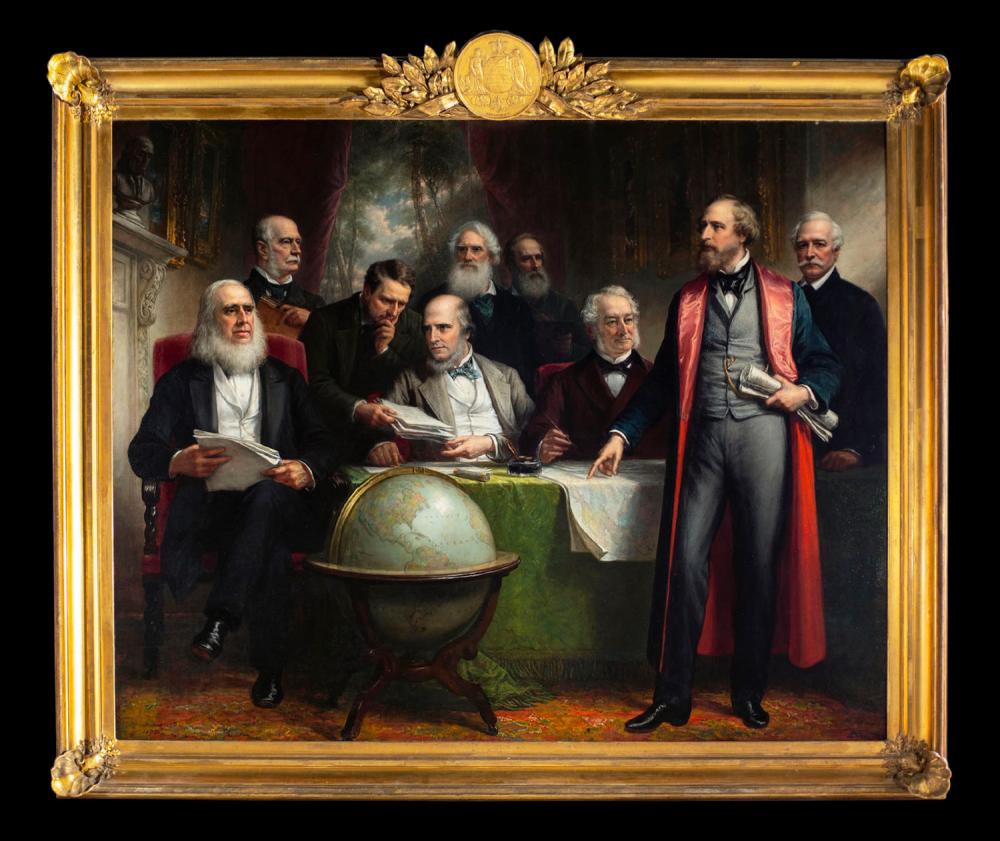
Daniel Huntington (1816–1906)
The Atlantic Cable Projectors, 1895
Oil on canvas
The State Museum is happy to welcome back The Atlantic Cable Projectors (1895) by New York artist Daniel Huntington (1816–1906). The life-size painting recently returned to the Museum from the Williamstown Art Conservation Center in Williamstown, MA, where it spent almost two years undergoing cleaning and repair.
In 2020, the painting was on loan to the Smithsonian American Art Museum in Washington, DC, where it was featured in the exhibition, Alexander von Humboldt and the United States: Art, Nature, and Culture.
The work, which measures nearly 7 feet by 9 feet, is now on view in New York Hall. Notably, its ornate Tiffany & Company frame incorporates a segment of the Atlantic Cable itself.
About the Artwork
The Atlantic Cable Projectors depicts the “Cable Cabinet,” the investors who funded the first transatlantic telegraph cable in the 1850s. In a process beset with challenges, the cable was laid, by steamboat, in sections on the ocean floor between the southwest coast of Ireland to Newfoundland.
The first successful transatlantic telegraph conducted by the cable was received in August 1858, revolutionizing long-distance communication.
The investors, all prominent New Yorkers, were assembled by financier Cyrus West Field (standing in right foreground). A short length of the cable is visible on the table, above the globe. The cable consisted of several strands of copper wire twisted together, wrapped in a natural latex from the gutta-percha tree, then covered in tarred hemp and wrapped with iron wire.
Pictured from left to right: Peter Cooper, David Dudley Field, Chandler White, Marshall O. Roberts, Samuel F. B. Morse, Daniel Huntington, Moses Taylor, Cyrus W. Field, and Wilson G. Hunt. Huntington, who was not part of the “Cable Cabinet,” took the liberty of painting himself into the scene.
New Publication on the Devonian Features Significant Contributions from NYSM Geologist
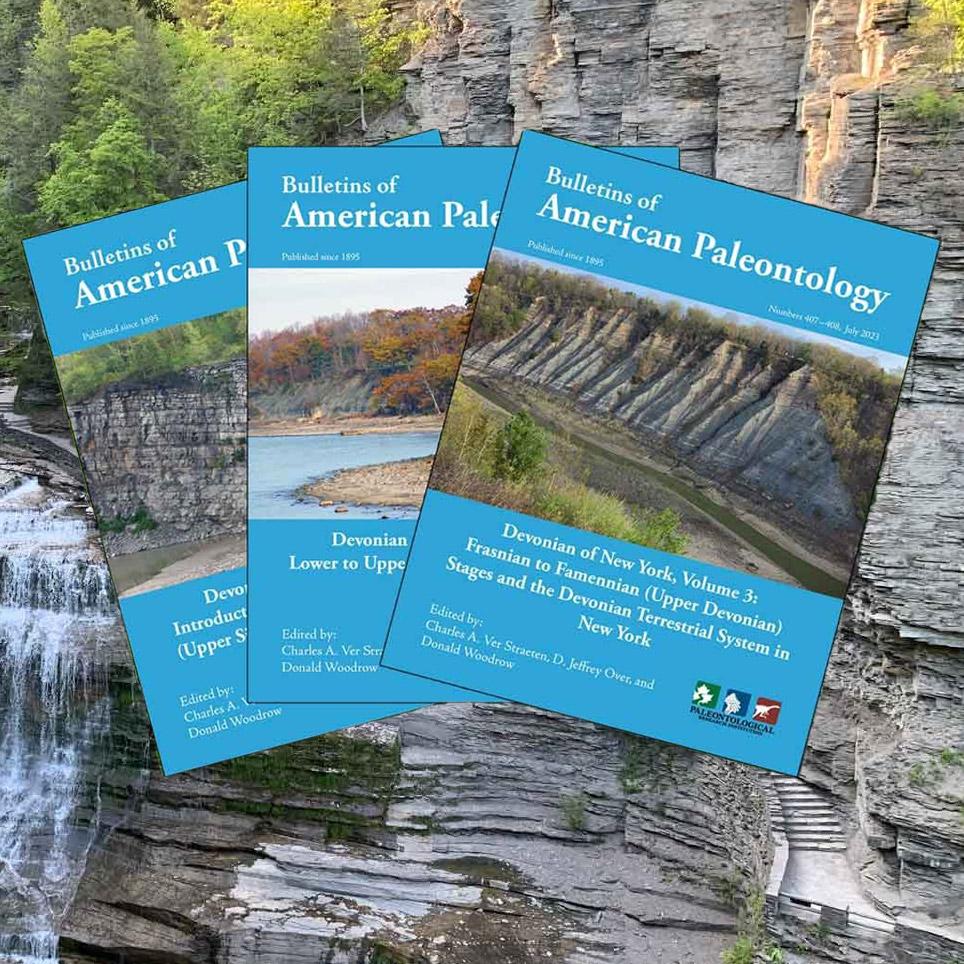
The Devonian Period occurred between 419.2 million and 358.9 million years ago. Devonian-age rocks in New York State have been utilized by geologists, paleontologists, and educators to study the development of life, understand geological processes, and teach about the history of the Earth. Covering 40 precent of the state, these rocks are considered the Devonian standard of North America and have been referred to and studied globally since the 1850s.
Recently, NYSM Geologist Chuck Ver Straeten made significant contributions to the extensive three-volume set Devonian of New York. Published in the Bulletins of American Paleontology, each volume examines current scientific knowledge of Devonian Period geology and paleobiology in New York. In addition to serving as chief editor, Ver Straeten also authored and co-authored five of the twelve chapters, each highlighting specific aspects of New York’s Devonian history.
The most detailed study of these rocks and faunas is presented in a chapter by authors Carlton E. Brett et al. (2023) in Volume 2 in which they document the correlation of many distinct individual layers at very high resolution. Many of these layers are timelines, deposited at the same time across most of the state. Some of these layers, recognized regionally to globally, include evidence of four major mass extinctions. These extinctions are in part tied to climate changes during the Devonian and to interchanges of marine life from around the globe.
Most New York Devonian rocks were deposited in shallow seas that once covered much of New York and North America. The final chapter summarizes the history of sedimentary rocks deposited on land and in rivers and flood plains. These rocks are found in the Catskill Mountains region. They include the oldest known fossil forest in the world, ~ 385 million years old, found by New York State Museum staff in 2009.
All three volumes of Devonian of New York are intended to guide the next generations of Devonian researchers in New York and globally.
Learn more about the publication Devonian of New York here:
https://www.priweb.org/devonian-ny
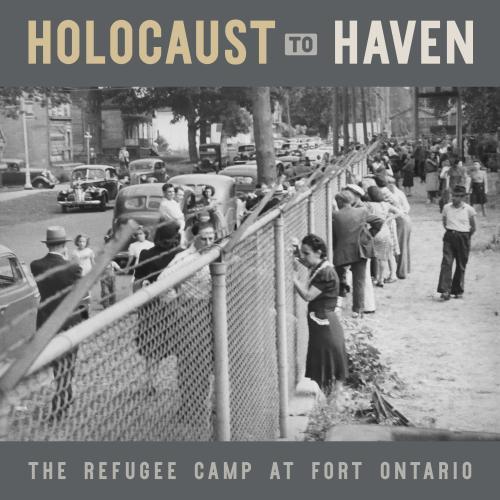
Holocaust to Haven
In August 1944, 982 refugees from war-torn Europe arrived at Fort Ontario in Oswego, New York. The vast majority of them were Jews. Even as the Nazis terrorized and murdered more than 11 million people, the men, women, and children received at Fort Ontario that summer would be the only refugees to whom the United States officially offered safe haven during the Holocaust.
Upon arrival at the fort, the refugees discovered that it was surrounded by tall chain-link fence topped with barbed wire—shockingly reminiscent of the horrors of the concentration camps they escaped. Featuring a section of the fence from Fort Ontario, the permanent exhibition Holocaust to Haven tells the story of those interned there for eighteen months at the end of World War II.
On View: Works by textile artist Estelle Kessler Yarinsky (1932–present)
As a companion to Holocaust to Haven, the State Museum is honored to present works by Brooklyn-born textile artist Estelle Kessler Yarinsky. Three of the artist’s works will be exhibited on rotation adjacent to Holocaust to Haven throughout the winter and spring of 2024.
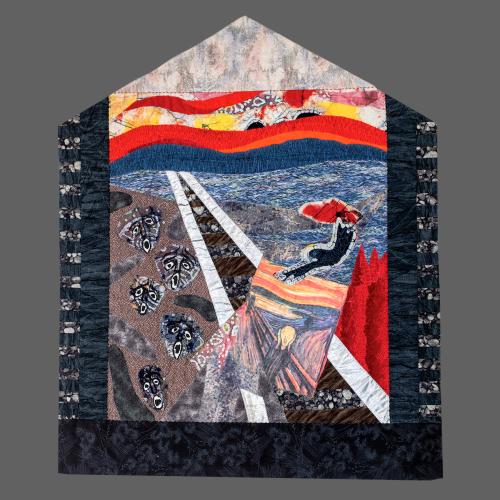
Estelle Kessler Yarinsky
I Love Paris When It Sizzles, 1995
Cotton, polyester, metallic
33" x 43.5"
Collections of the New York State Museum
Estelle Kessler Yarinsky
The A Train, 1995
Cotton, polyester, metallic
37.5" x 31"
Collections of the New York State Museum
Estelle Kessler Yarinsky
Not All Fabrics Are Created Equal, 1995
Cotton, polyester, metallic
27" x 32.5"
Collections of the New York State Museum
Join Historian Shawna Reilly for a Discussion About Two Women Coming of Age at Cherry Hill During the Gilded Age
See Recreated Dress from this Golden Era
The New York State Museum, in partnership with Historic Cherry Hill, is pleased to announce Historic Cherry Hill’s Shawna Reilly as she presents a lecture on “Agency & Identity: Cherry Hill’s Would-Be Sisters,” on Thursday, December 1, 2022, at the Huxley Theater.
Through the clothing, photographs, possessions, and accounts left behind, Shawna Reilly’s lecture will compare the experiences of two women who came of age at Cherry Hill during the Gilded Age. She will take an in-depth look at the lives of “Kitty” Putnam and “Minnie” Knapp in terms of their plights, identities, relative vulnerabilities, opportunities, and the choices they made within their prescribed social roles.
Attending this in-person event, hosted and co-sponsored by the New York State Museum, is free. Media are invited to attend.
WHAT:
Special Lecture on “Agency & Identity: Cherry Hill’s Would-Be Sisters"
WHO:
Shawna Reilly, Director of Education at Historic Cherry Hill
WHEN:
5:30 PM, Thursday, December 1, 2022
WHERE:
Huxley Theater, New York State Museum Cultural Education Center
222 Madison Avenue
Albany, New York, 12230
-30-
Phone: (518) 474-1201
Black History Month: Highlights from the Collections
The History and Historic Archaeology collections at the New York State Museum document New York’s diverse history from the 17th century through the present day. The images below are a few of the many archaeological and historical objects in the collection that illustrate the lives, struggles, and contributions of African Americans in New York.
History Collection
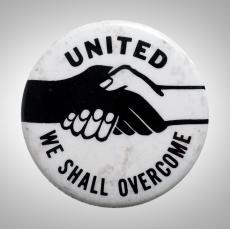
United We Shall Overcome, button, c. 1965
“United We Shall Overcome” was an anthem for the civil rights movement. The phrase was pulled from an African American spiritual hymn often sung at protests and demonstrations. The song continues to be used in the present day. NYSM Collection, H-2012.12
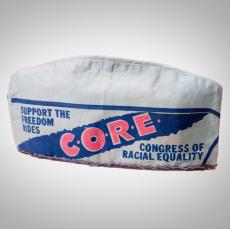
CORE hat, c. 1963
The Congress of Racial Equality (CORE) was founded in Chicago, Illinois, in 1942 and later headquartered in New York City. The foundation of CORE’s program was non-violent, direct-action protest to promote social justice and racial equality. CORE organized protests and demonstrations in both the South and the North.
NYSM Collection, H-2021.12.2
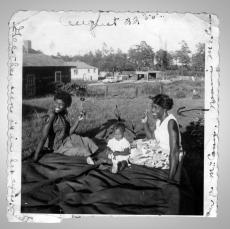
McCann Family on Rapp Road, Albany, New York, photograph, 1953
The Rapp Road community is the result of the Great Migration. The entire community migrated from Shubuta, Mississippi, to Albany, New York in the 1930s and 1940s.
NYSM Collection, L-2008.17
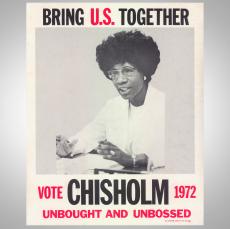
Shirley Chisholm campaign poster, 1972
Chisholm (1924–2005) began her political career as a New York State Assembly representative in 1964. Four years later, she became the first African American woman elected to the United States Congress, representing Brooklyn’s Bedford-Stuyvesant district. In 1972 she was the first woman to run for the Democratic nomination for the U.S. presidency. NYSM Collection, H-2010.41.1
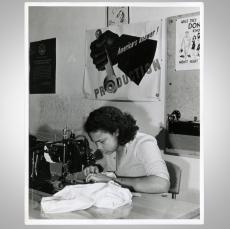
Photograph of woman sewing parachutes, United States Office of War Information, 1943
In 1942 the Roosevelt administration issued Executive Order 8802 banning racial discrimination in the war industries. The United States Office of War Information used this photo to help recruit more African Americans to the war effort. Blacks served in both the military and the home front. This photo shows a woman sewing a parachute in 1943. NYSM Collection, H-2010.45.24
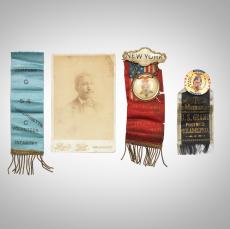
Photograph of Bromley Hoke and his G.A.R. ribbons, 1870–1890
Bromley Hoke (1847–1913) was a farm laborer in Canajoharie, New York, before enlisting with the Massachusetts 54th Infantry Regiment in April 1863 at age 16. The Massachusetts 54th was the first official African American unit in the Civil War. Hoke served with the 54th until June 1865, when he received a disability discharge. Upon returning to Canajoharie, Hoke joined the Grand Army of the Republic (G.A.R.), a fraternal organization for veterans, and found work at the Wagner Hotel as a waiter. NYSM Collection, H-2006.60.1
Historic Archaeology Collection
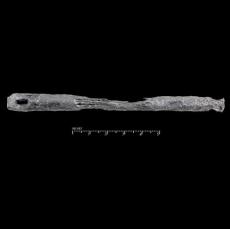
Iron bar from leg shackles called bilboes, recovered from cellar of the John Bogart house, Albany, late 1700s
John Bogart was a sloop captain who operated on the Hudson during the 18th century. Bogart was also an enslaver who held several people in bondage at his house in Albany during the last years of the 18th century. This iron bar, from leg shackles called bilboes, was recovered from the basement of the Bogart house. Iron bars identical to the Bogart example, but with the shackles still attached, were recovered from the slave ship Henrietta Marie that sank off the coast of Florida around 1700.
NYSM Collection, A2003.23E.308.24
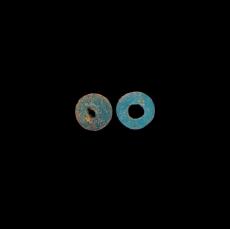
Blue glass beads, Ten Broeck Mansion, Albany, c. 1800
These beads were recovered from the outer kitchen at the Ten Broeck Mansion in Albany, New York. The outer kitchen was used by enslaved African Americans to prepare meals for the Ten Broeck family during the summer months. It is probable that some of the enslaved slept in this building as well. The beads were found in soil layers dating to the early 19th century and were most likely possessions of the enslaved people who lived in the building. NYSM Collection, A2018.24
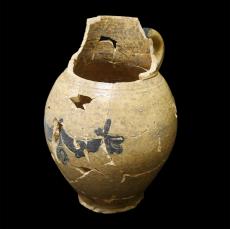
Stoneware pitcher made by African American potter Thomas Commeraw, Barclay’s Bank site, Manhattan, c. 1800–1815
Thomas Commeraw was a free Black potter and influential community leader in Manhattan during the first decades of the 19th century. Commeraw’s clientele for his stoneware was diverse, ranging from African American oystermen to New York’s wealthy White elites. The pitcher shown was found in the ruins of a building in Manhattan owned by merchant David Dunham. NYSM Collection, A2005.29A.1239.43
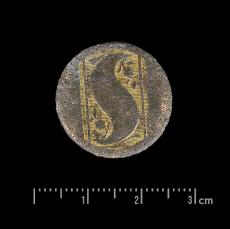
Copper alloy clothing button, Betsey Prince site, Suffolk County, 1800–1830
This button was recovered from the house of Betsey and Prince Jessup. The Jessups were an African American family who lived in the house between about 1800 and 1830. Many personal objects, ceramics, glass bottles, and other artifacts were recovered from the site. This collection of 8,000 artifacts is the only remaining material record of the family’s lives. NYSM Collection, A93.13.161.24
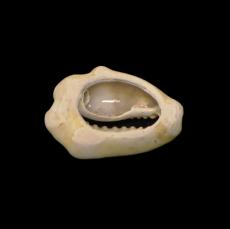
Carved Moneta cowrie shell, Barclay’s Bank site, Manhattan, 1700s
Moneta cowrie shells were mined by the billions in the Indian Ocean near the Maldives. These small cowries, sometimes called "money cowries," were used as currency, for adornment, and for spiritual practices in Africa for centuries. By the 17th century, the shells were widely traded by the Dutch and English for enslaved people along the west coast of Africa. The shell shown here was found at a late-18th-century site in Manhattan and was carved to be strung for counting or as a means of attaching to clothing or hair. NYSM Collection, A2005.29A.1437.9
Exploring African American Contexts in New York Archaeology
Although information about the lives of enslaved people in New York is too often missing from the written record, archaeology can provide important insight into the daily life, values, and traditions of enslaved people. Recent investigations show there are ways of “seeing” enslaved African Americans in diverse households, even when they did not live in separate quarters from their enslavers.
In partnership with the New York Archaeology Council and the New York State Museum, visiting archaeologists present new research based on their work within plural households and communities in New York.
The following presentations were recorded on October 1, 2022, at the New York Archaeology Council Fall Meeting
Cobbler’s Cellar Fireplace Cosmogram with Offerings Underneath Altar Hearthstones
Christoph Lindner, Ph.D.
Archaeologist in Residence, Bard College; Director of the Bard Archaeology Field School
It is probable that Henry Person was a farmer in bondage on a Dutch-American estate, and that his wife, born Mary Barber in 1805, was enslaved to a nearby minister’s family. The couple bought at mid-century a house now known as the Parsonage, built in the 1760s probably by their forebears. Emma Jane Persons, the last of their children, died there in 1911, ending a decades-long African American neighborhood of several families in Germantown, New York. The Parsonage was located in the religious epicenter of the community. Archaeology at the site is focused on the cellar and the buried foundation of an earlier dwelling, where people emplaced concealments in key positions relative to architectural elements.
Archaeology at River Lea
Ann Morton, Ph.D.
Owner, Morton Archaeological Research Services and Adjunct Lecturer, Finger Lakes Community College
What began as a one-day survey for a new septic system became a multi-year investigation at the Villa at River Lea, Beaver Island State Park, New York. The Villa, built about 1873 by Lewis Allen, is located at the southern tip of Grand Island, with beautiful views of the Niagara River. The location was important much earlier for the Seneca ancestors who were here from the late Archaic into the early Historic period. Excavations in 2019 discovered two possible Middle-Late Woodland structures, along with a quantity of lithics and ceramics. Mixed in was historic material, presumably from the Allen family. But recent analysis of the faunal assemblage suggests this location may have attracted others—enslaved or formerly enslaved persons.
The Point of Worked Bone from Historic Sites: Markers of Cultural Identity
Marie-Lorraine Pipes, Ph.D.
Zooarchaeologist and Adjunct Lecturer, SUNY Geneseo
Faunal remains are typically considered in terms of subsistence practices, animal husbandry, or resource exploitation. Pre-18th century Indigenous faunal assemblages commonly yield worked faunal specimens, far fewer in later times. When worked specimens are recovered from historic contexts, they present an enigma which to date has resulted in their relegation to invisibility. Without a conceptual frame for their interpretation, their cultural association and significance remains unknown. The analyses of faunal assemblages from multi-component and Euro-American sites present an opportunity for framing these types of objects as having been made and used by African Americans.
What I Learned from the Hemphill Site in Malta, New York
Ed Curtin, Ph.D.
Owner, Curtin Archaeological Consulting
Preconceptions regarding African American sites archaeology such as “enslaved Africans quickly lost African culture as a consequence of slavery,” “there is little distinctive early African American material culture in the Northeast,” and “the enslaved lived in peripheral spaces in the enslaver’s house,” need to be recognized and challenged. As excavation was underway at the Hemphill site, I became aware that there was a ca. 1816–1827 earth fast house behind the White Hemphill house, and the material record of this unexpected residence included several elements such as knapped glass tools, collected Native American chert bifaces, chicken burials, and iron-rich sand concretions that are almost unprecedented in the Northeastern literature. More information is needed to learn in order to interpret African American life at the Hemphill site.
The Powell Family Farmstead and the Importance of Place
Michael Lucas, Ph.D.
Curator of Historical Archaeology at the New York State Museum
The story of Thomas and Betty Powell is one filled with triumph, pain, joy, and loss. Like most African Americans living in New York during late 18th century, they were enslaved at birth. The couple was able to purchase a 5-acre farm in Colonie, New York, just north of Albany in 1818, eventually expanding their holdings to 40 acres by 1850. Three generations of the Powell family farmed this land that provided a gathering point for African Americans in the area. The ruins of the Powell family farmstead remain today as a scarce extant reminder of rural African American heritage. Limited archaeological excavations to document its significance and ongoing efforts to preserve the farmstead in perpetuity as a tangible African American heritage place on the land for future New Yorkers are important steps toward acknowledging what we have already lost and what we might still recover.
Dr. Thomas Elkins: Material Expressions of a 19th-Century Medical Provider
Matt Kirk, M.A.
Principal Investigator, Hartgen Archeological Associates
This presentation explores the documentary sources and artifact assemblages of a renowned Black abolitionist from Albany, New York. Public archaeology has brought to light a unique and varied collection from the 1850s and 1860s, when Dr. Elkins was caring for the community, as well as travelers along the underground railroad. How do archaeologists interpret and present these materials so deeply intwined in notions of race, class, personal identity, and freedom? What new research questions emerge as we (as scholars) wrestle with the data and such highly charged conceptual constructs?
Seeing, but Also Listening: Archaeologies of BIPOC sites on Long Island
Allison McGovern, Ph.D.
Director of Undergraduate Studies (Interdisciplinary Archaeology Major), Columbia University Center for Archaeology
Archaeological research at nineteenth-century sites on Long Island has revealed the complexities of investigating the contexts of people of color, the limits to archaeological methodologies (particularly in phased approaches), and the challenges of developing inter-site comparisons. Through data from the Crippen and Fowler sites, this presentation highlights the complexity of BIPOC site types on Long Island and makes an appeal for consideration of alternative approaches to archaeological research designs.
Archaeology and Public Engagement
Douglas J. Perrelli, Ph.D.
Clinical Assistant Professor, Department of Anthropology and Director, Archaeological Survey at the University at Buffalo
This presentation focuses on the archaeological work of the Archaeological Survey, University at Buffalo, at the Cataract House Hotel and its importance with the Underground Railroad, and the public archaeology program involved with the African American community and collaboration with the Niagara Falls Underground Railroad Heritage Center, Niagara Falls, New York.

Continuing Teacher and Leader Education (CTLE)
The New York State Museum is an approved provider of Continuing Teacher and Leader Education (CTLE). Educators can earn CTLE credit by watching the webinar and completing the survey linked below. Please allow up to two weeks to receive confirmation of completion.
CTLE Credit (1.5 hours): Link to Exploring African American Contexts in New York Archaeology
Black History Month: Agency & Identity: Cherry Hill’s Would-Be Sisters
Agency & Identity: Cherry Hill’s Would-Be Sisters
Through the clothing, photographs, possessions, and accounts left behind by two Gilded Age women, Historic Cherry Hill’s director of education, Shawna Reilly, explores the lives of Kitty Putnam and Minnie Knapp in terms of their plights, identities, relative vulnerabilities, opportunities, and the choices they made within their prescribed social roles. Each came to Cherry Hill after her mother’s death to be raised by Van Rensselaer descendant Harriet Maria Elmendorf. Both wards, but not quite sisters, Kitty was herself a Van Rensselaer descendant while Minnie was likely descended from an enslaved woman named Dinah Jackson. Each called Harriet Maria “Ma,” but Minnie was raised as a servant, while Kitty would one day become the mistress of Cherry Hill.
(Recording of December 1, 2022, presentation at the NYSM.)
Presented in partnership with Historic Cherry Hill.
Thomas Powell Farmstead: A Virtual Tour of an African American Heritage Site
This presentation by Dr. Mike Lucas, divided into five segments, provides an overview of the Thomas Powell Homestead site located in Colonie, New York. Dr. Lucas describes the history, layout, and archaeology of the Powell family farmstead through an on-site tour.
Thomas Powell and his wife Betty were married in the Dutch Reformed church at Boght Corners in 1808. At the time, they were both still enslaved by the Fonda and Lansing families of Watervliet. Between 1808 and 1818 the couple worked to gain their freedom and amass the capital to purchase the farmstead outright from the Fonda family in 1818. It was here that three generations of the Powell family lived at the homestead and built a successful farm against steep odds. A virtual tour of the excavations around the house foundations will describe how Thomas and Betty started with a small 16 by 16-foot house and continually expanded the building through the 19th century as their family and fortunes grew. Various stakeholders are currently working toward preserving the ruins of the house and farmstead and in the process also preserving an important American story.
Documentation of the Site
Original Buildings and Additions
Continuation of Original Buildings and Additions
The Cellar
The Yard
Continuing Teacher and Leader Education (CTLE)
The New York State Museum is an approved provider of Continuing Teacher and Leader Education (CTLE). Educators can earn CTLE credit by watching the webinar and completing the survey linked below. Please allow up to four weeks to receive confirmation of completion.
CTLE Credit (.5 hour): Link to Onine Form for Thomas Powell Farmstea

The New York State Education Department Recognizes Black History Month
Resources, Online, and In-Person Programming and Public Broadcasting Events Available Throughout February Across the State
The New York State Education Department (NYSED) is proud to recognize Black History Month, held during February each year, to celebrate the rich history, culture, and contributions of African Americans. As part of this observance, the State Education Department has created social media campaigns and educational resources, including online and in-person programs through the New York State Museum and the New York State Library, as well as providing programming recommendations from the Office of New York State Public Broadcasting.
Board of Regents Chancellor Lester W. Young, Jr. said, “As we celebrate Black History Month, the Board of Regents and the New York State Education Department remain steadfast in our commitment to incorporating the principles of equity and inclusion in everything that we do. By doing so, we are supporting the notion that education acts as a powerful change agent not only for our individual students, but also for our society at large. Recognizing and expanding the value of our diverse history helps to facilitate a greater appreciation for the diversity of our shared American culture and experiences.”
State Education Commissioner Betty A. Rosa said, “Black History is American history, and each year at this time, it is important not only to celebrate the achievements, contributions, and culture of Black Americans, but it is also important to remember to reflect upon the pervasive impacts of racial inequality and systematic racism we strive to overcome as a society. These events and programs provide an opportunity for personal growth and increased awareness. Learning about others encourages acceptance and support of diversity, equity, and inclusion, thus enabling a more expansive and honest view of the world.”
New York State Museum:
- Here is a comprehensive list of in-person and virtual Black History Month programs happening across the state.
- Thomas Powell Farmstead: A virtual tour of an African American Heritage site.
- Watch and learn about Dr. Martin Luther King Jr.’s Address to the New York State Civil War Centennial Commission.
- For more information and Black History-related programming provided by the New York State Museum on how artifacts, either archaeological or historical, help document the history of Black New Yorkers from the colonial period to the modern age, visit the Museum’s website.
New York State Library:
- A Webinar entitled, “Liberty or Death”: Enslaved People Fighting for Freedom and Nation in the Antebellum United States will be held on Thursday, February 16, 2023. To learn more about the program and how to register, visit the New York State Library website.
- The New York State Library also recently partnered with the Eric Carle Museum of Picture Book Art to offer an online workshop for librarians: “Exploring Race and Representation in Picture Books,” which helps librarians during Black History Month. View the recording of the Webinar.
- For more information about Black History Month and related information, please visit the New York State Library website.
New York State Public Broadcasting:
- The 2023 National PBS programming line-up for Black History Month: PBS Honors the Black Experience with New Science, History, Civics and Arts Programming will air on public television stations across New York throughout February. Broadcast times are determined by location. Specifically, below are a few programs that have been scheduled to observe Black History Month.
- WMHT public television (Albany region) will air the following programming: Mohawk Giants will air on February 2nd at 7:30 p.m. and February 10th at 5:00 p.m. Henry Johnson will air on February 9th at 7:30 p.m. and February 10th at 5:30 p.m. Bridging the Divide will air on February 16th at 7:30 p.m.
- WXXI public television (Rochester, NY) will air Prelude: The Legacy of Garth Fagan Danceon February 6th at 9 p.m.
- WCNY (Syracuse, NY)is hosting the event 'Becoming Frederick Douglass' Screening and Discussion in Auburn, NY, at the Auburn Public Theatre on February 18th, at 1 p.m.
New York State Archives Partnership Trust:
- As part of the Online Speaker Series, the New York State Archives Partnership Trust presents Authors Enid Gort and John Caher to discuss their new book, A Bridge to Justice: The Life of Franklin H. Williams. This online event is scheduled for Tuesday, February 7th, at 12:30 p.m.
Social Media:
- #BlackHistoryMonth: Throughout the month, NYSED will feature historical figures in Black History on the Department’s Twitter, Facebook, and LinkedIn accounts. These figures include civil rights pioneers, the first African American woman to travel in space, and trailblazers in business and industry.
- #MyHistoryMyFuture: The State Education Department, together with Education Trust—New York, is highlighting New York State My Brother’s Keeper (MBK) students throughout the month on social media, including Twitter and Facebook. The #MyHistoryMyFuture campaign features inspiring quotes from outstanding students who are sharing how MBK has changed their lives and what their hopes and dreams are for the future.
- #StudentsExhibitingMLK: Together with the New York State Office of General Services, the New York State Education Department is highlighting artwork by students from across New York that honors Dr. Martin Luther King, Jr.’s messages of equality, love, and peace. This campaign may be viewed on the Department’s Twitter, Facebook, and LinkedIn accounts. View the #NYSMLK Student Art and Essay Exhibit, or in person on the Empire State Plaza North Concourse in Albany.
-30-
Phone: (518) 474-1201
Women's History Month: Notable Women in New York History
Each of these women are notable in their contributions to women's suffrage and to securing the dignity and humanity of women who have struggled in a world of prejudice and inequality. Their relentless determination and perseverance in elevating the status of women continue to make an impact in New York and throughout the world.
Susan B. Anthony (1820-1906)
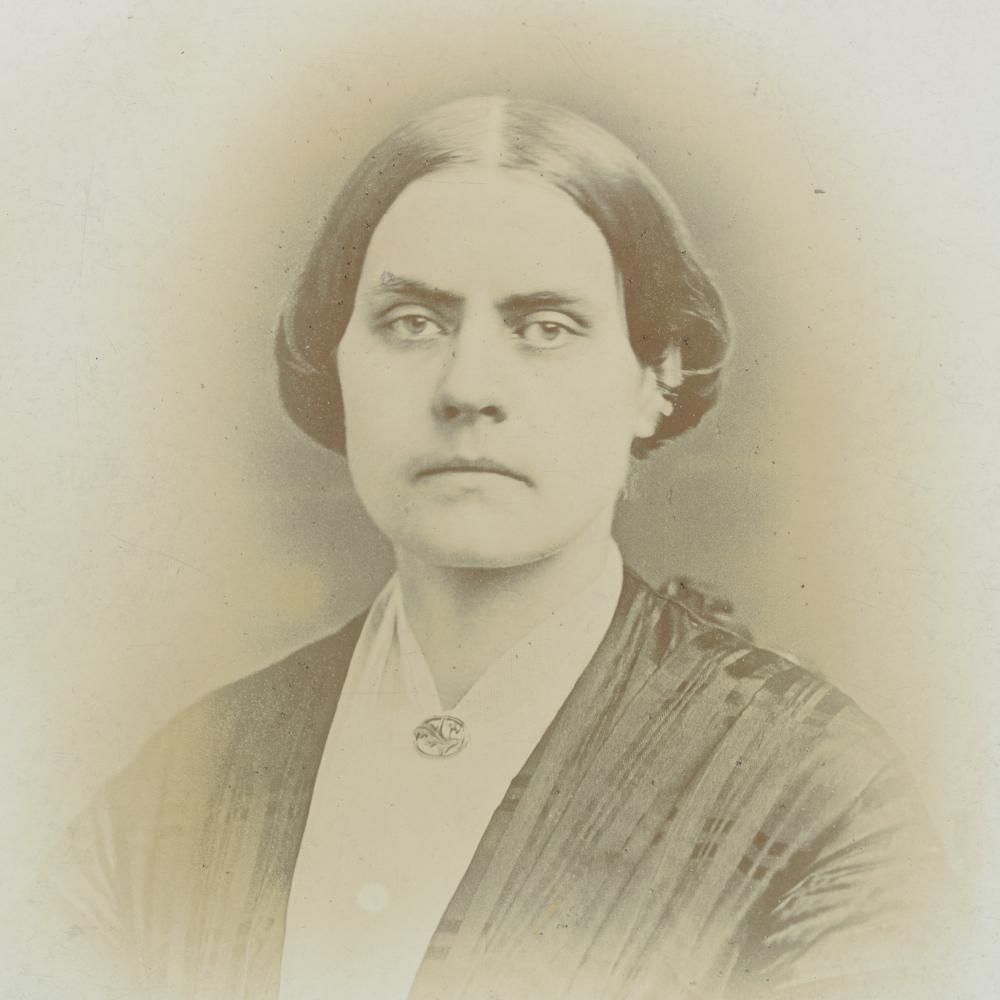
Activist Speaker
Susan B. Anthony was born in 1820 in Adams, Massachusetts, to a Hicksite Quaker family. They resettled twice, first to Battenville, New York, and then to Rochester, the city Anthony called home for most of her life. The Anthony’s were involved in anti-slavery reform, hosting meetings at their farmhouse and attending conventions. Anthony also worked in the temperance movement, giving speeches on the temperance circuit.
Through her work as a teacher, Anthony quickly became aware of the wage gap between men and women in the profession. Susan’s mother, Lucy Anthony, and sister, Mary Anthony, attended the Rochester women’s right’s convention in 1848, but Susan did not attend. She became involved in women’s rights soon after meeting Elizabeth Cady Stanton in 1851, and eventually put her other reform work to the side to devote her life to the fight for women’s suffrage.
Sojourner Truth (c. 1797–1893)
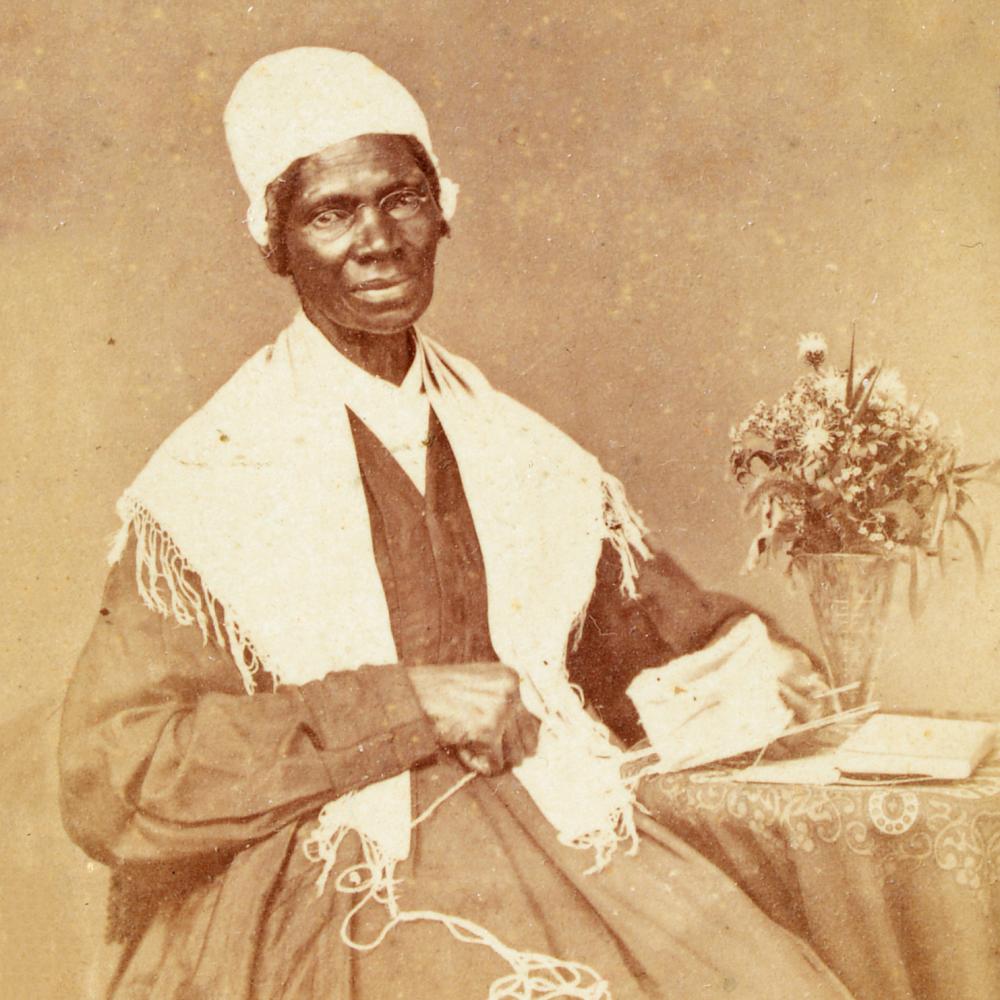
Sojourner Truth
Suffrage Advocate
Sojourner Truth was born into slavery as Isabella Baumfree in Ulster County, New York. In 1827, when her master failed to uphold a promise to free her, she escaped, or as she later declared, “I did not run away, I walked away by daylight.” Truth became a preacher, and choose the name by which she is known today.
Truth became active in the abolition movement, and in the 1850s, in the women’s rights movement as well. She is perhaps best known for her speech delivered to the Ohio Women’s Rights Convention of 1851, which carried the message that African American women’s rights should not be ignored.
Elizabeth Cady Stanton (1815–1902)
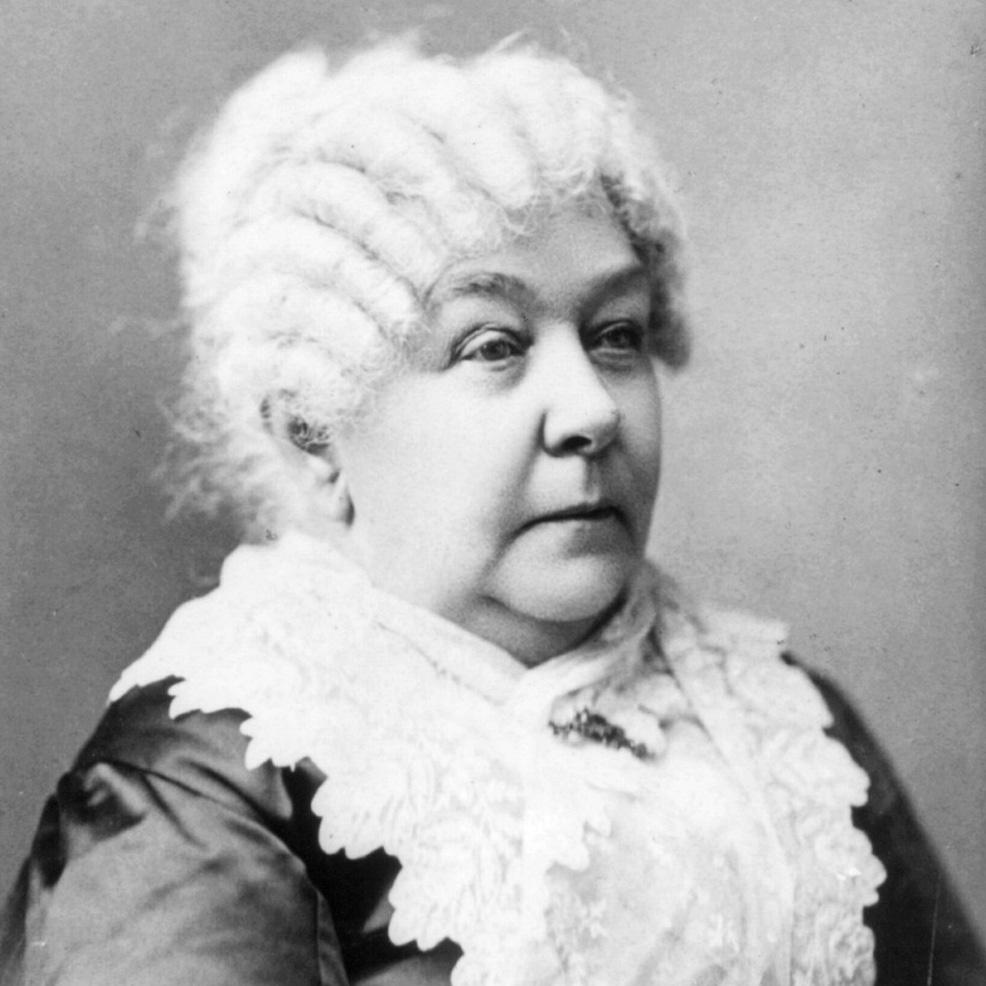
Women’s Rights Activist & Reformer
Elizabeth Cady Stanton first became aware of gender inequities while spending time in her father’s law office where she studied law books, debated with law clerks, and heard the plight of widows who faced losing all their property (including what they brought into the marriage). Her eyes were further opened to the world of reform in the home of her cousin, Gerrit Smith, an antislavery reformer.
In 1848, Stanton was a lead planner of the Women’s Rights Convention in Seneca Falls. She drafted the Declaration of Sentiments for the convention, which listed all the areas in which women were discriminated against—education, employment, the Church, and the law. She believed that gaining the vote was key to changing women’s status, and despite opposition from others, added the right to suffrage as one of the demands of the convention. For the rest of her life, in spite of the challenges of raising her seven children, Stanton devoted herself to writing, speaking, and organizing for women’s rights.
Matilda Joslyn Gage (1826–1898)
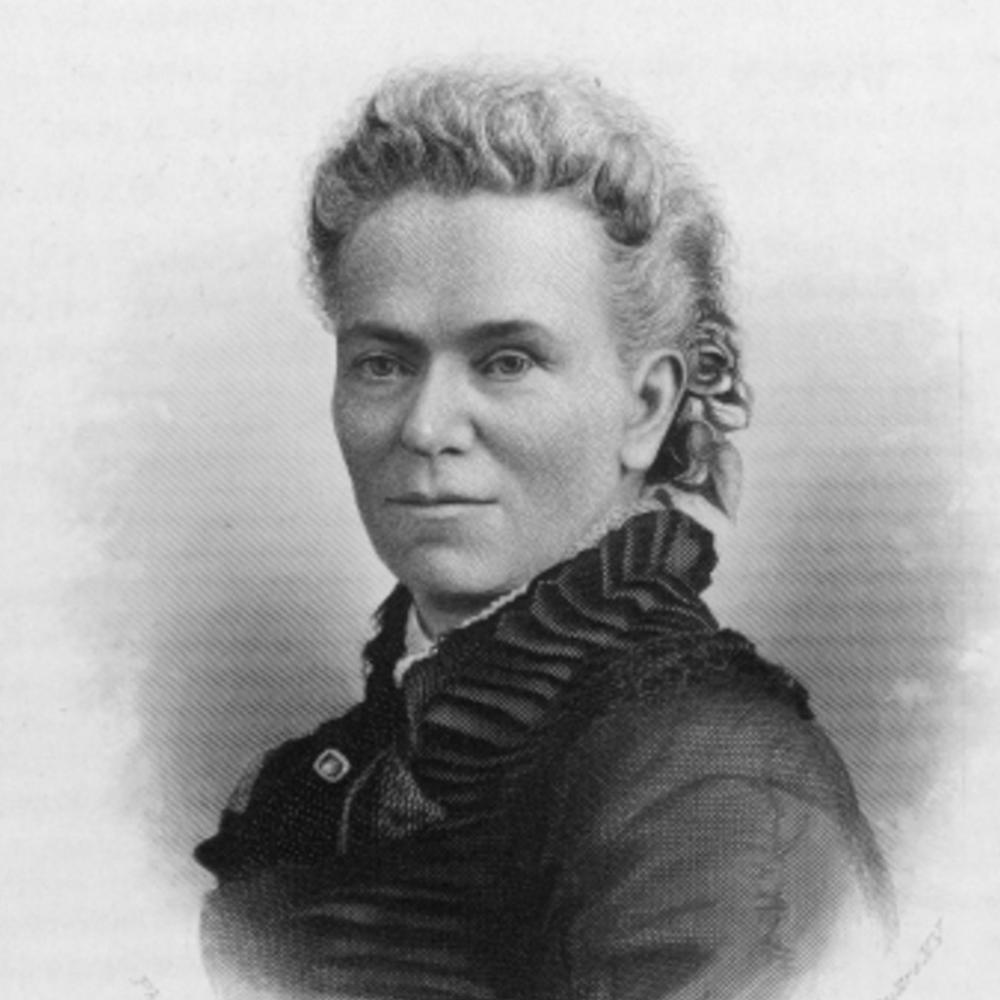
Editor of National Citizen and Ballot Box
Matilda Joslyn Gage entered the women’s rights movement with a speech at the 1852 National Women’s Rights Convention. Though not anticipated on the program, hers was the only speech of the convention to be reprinted in the paper, with her call to “Let Syracuse sustain her name for radicalism.”
Gage was close with her Native American neighbors, and was adopted by the Haudenosaunee into the Wolf Clan: “I received the name of Ka-ron-ien-ha-wi, or ‘Sky Carrier,’ or She who holds the sky.” While working with the Haudenosaunee, she observed a culture with a vastly different view toward women than her own. Gage and Stanton both wrote of a more equal division of power and labor in Haudenosaunee society, of women’s roles in choosing clan leaders, and of the matrilineal organization of Haudenosaunee families.
Shirley Chisholm (1924–2005)

U.S. Congresswoman
In 1968, Shirley Chisholm became the first African American woman elected to the United States Congress. Prior to this, she served as the New York State assemblywoman from Brooklyn. Her major focus was improving conditions in her community. In Congress Chisolm represented two of the poorest urban communities in the country—Bedford Stuyvesant and Crown Heights, Brooklyn, where the population was predominately black and Puerto Rican.
Chisholm publicly supported the ERA and brought the idea of women’s equality to the House floor and along with other prominent women founded the National Women’s Political Caucus in 1971. A year later, Chisholm ran for president of the United States. She campaigned across the country and succeeded in getting her name on twelve primary ballots. At the Democratic National Convention, she received 152 delegate votes, or 10 percent of the total. While she did not win any primaries, Chisholm believed that her campaign for president was a “catalyst for change.”
Gloria Steinem (1934– )
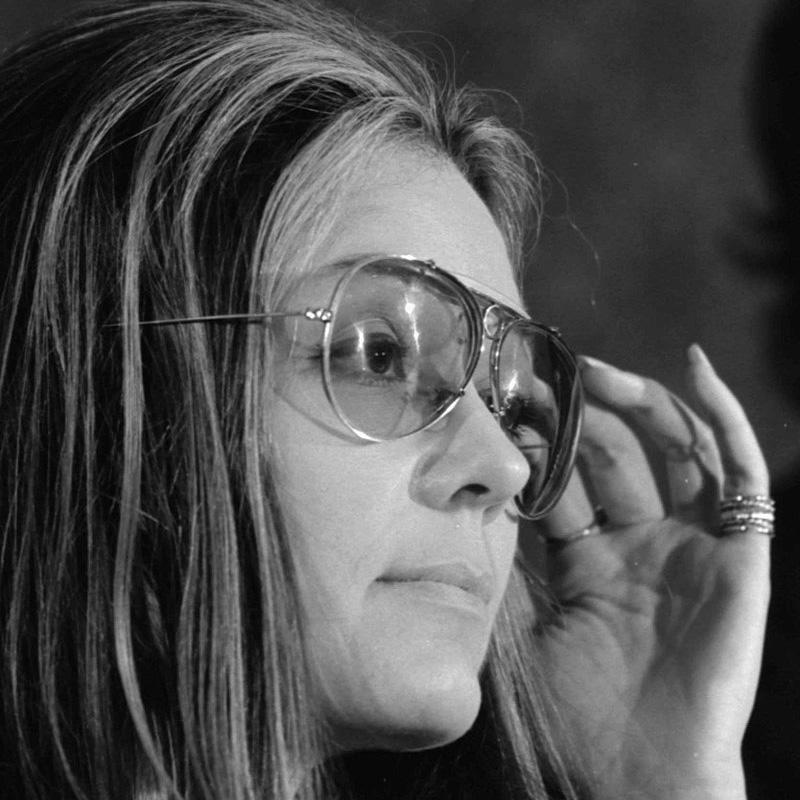
Feminist Organizer
Following study at Smith College, Gloria Steinem traveled in India, where her eyes were opened to political organizing and the importance of listening. Upon her return, she settled in New York City and began her journalism career with her “first serious assignment”: documenting the impact of the birth control pill on the social and professional lives of young women in “The Moral Disarmament of Betty Coed.”
As an activist, Steinem has dedicated her life to travel in order to give talks, to promote feminist causes, including the ERA, and to facilitate discussions amongst diverse groups. In the 1960s and 70s, she travelled to colleges, community centers, and other venues with speaking partners Dorothy Pitman Hughes, Margaret Sloan, and Florynce Kennedy.
Lucretia Mott (1793–1880)
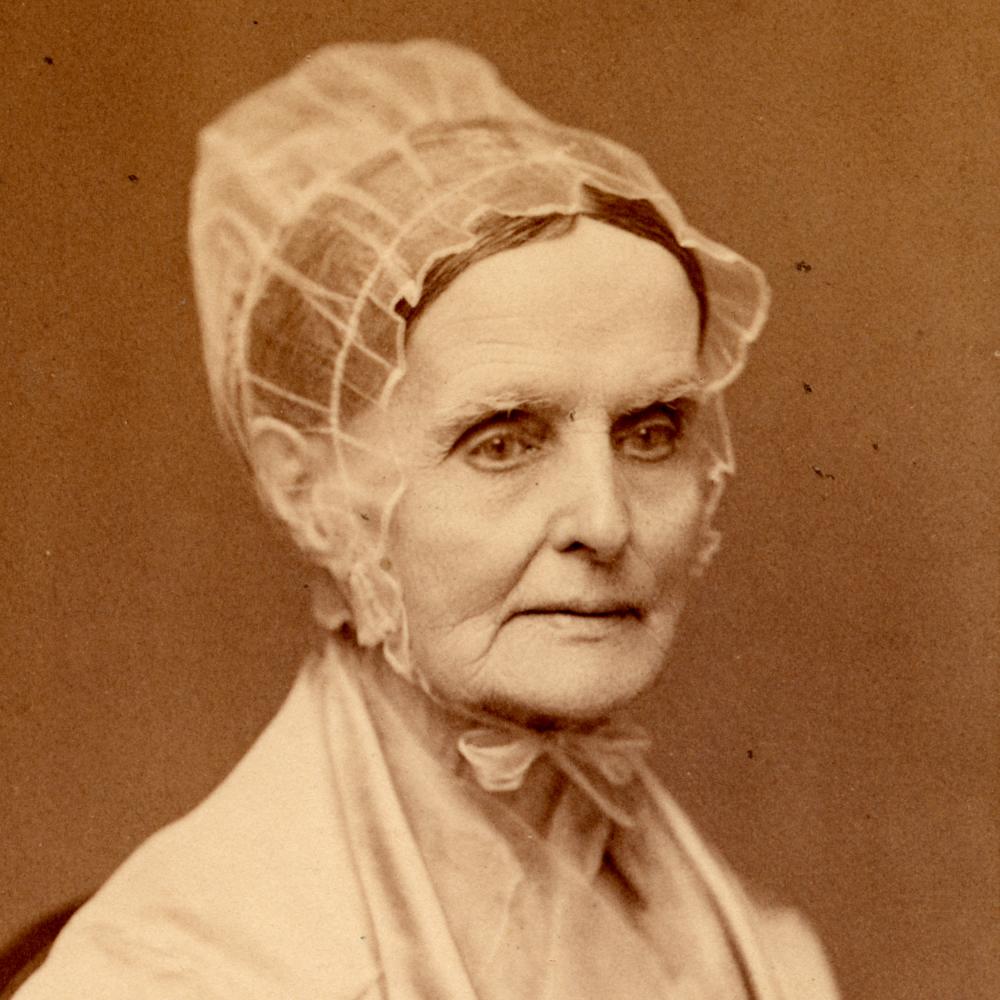
Lucretia Mott
Anti-slavery and Women’s Rights Advocate
At the 1840 World Anti-Slavery Convention in London, Lucretia Mott and other female delegates were denied the right to speak. Following this experience, Mott focused on both anti-slavery and women’s rights work for the rest of her life.
Mott, a Quaker minister, was already a respected reformer and speaker at the time of the 1848 Seneca Falls Convention—dates for the meeting were chosen to correspond with her visit to central New York, her presence lending weight to the gathering.
Although Mott lived in Philadelphia, she remained deeply involved in the movement in New York through her correspondence with her sister, Martha Coffin Wright, and friends. Mott was chosen to preside over numerous conventions, both local and national.
Harriot Stanton Blatch (1856–1940)
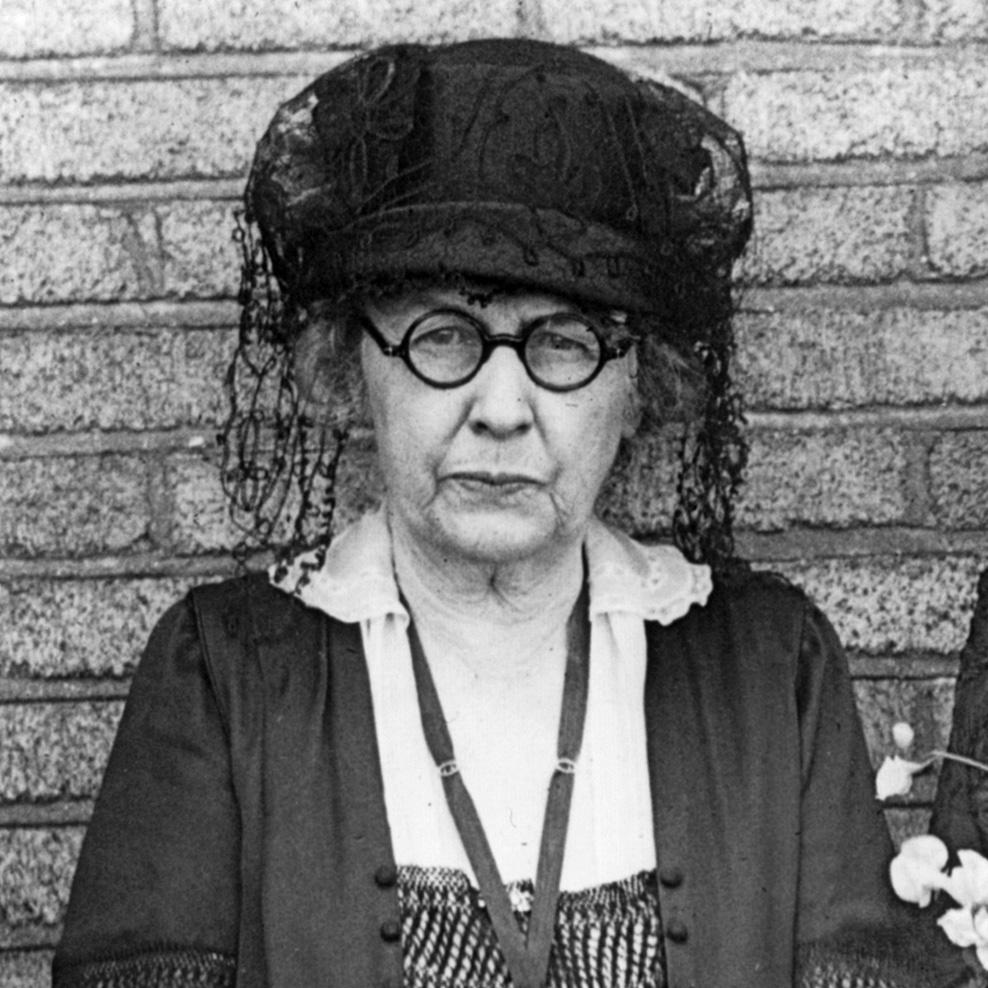
Founder of the Women’s Political Union (WPU)
Harriot Stanton Blatch (1856-1940) helped to revolutionize and shape New York State’s suffrage movement from a 19th century movement of upper class, white women to a modern 20th century reform movement involving women from all classes and ethnic backgrounds, except African American women.
Blatch was the second daughter and sixth child of Elizabeth Cady Stanton. Upon graduation from Vassar College in 1878, she travelled the suffrage lecture circuit with her mother and then moved to England where she met and married William Henry Blatch, Jr. While in England, she worked with women-focused reform groups and was heavily influenced by the power of the organized working classes and the militant tactics of the British suffragists.
Blatch returned to the United States in 1902 with her family and settled in New York City. She expected to jump into the suffrage movement, but was shocked to find it clinging to 19th century tactics. Blatch and a small group of women wanted to modernize the movement and soon realized that they had to abandon the traditional NYSWSA and create their own group. The result was the formation of the Equality League of Self-Supporting Women which would later become the Women’s Political Union (WPU).
Margaret Sanger (1879–1966)

Margaret Sanger
Women’s Health Advocate
Working as a visiting nurse in New York City, Margaret Sanger saw the tragic circumstances of women who sought illegal and unsafe abortions, and those who remained in poverty due to rapidly growing families. She felt a call to action and “resolved that women should have knowledge of contraception. They have every right to know about their own bodies.”
In 1916, Sanger and her sister, Ethel Byrne, opened a birth control clinic in Brooklyn. Ten days later the clinic was raided, and both Sanger and Byrne served jail time. Byrne brought attention to the cause through a hunger strike in prison.
Bella Abzug (1920–1998)
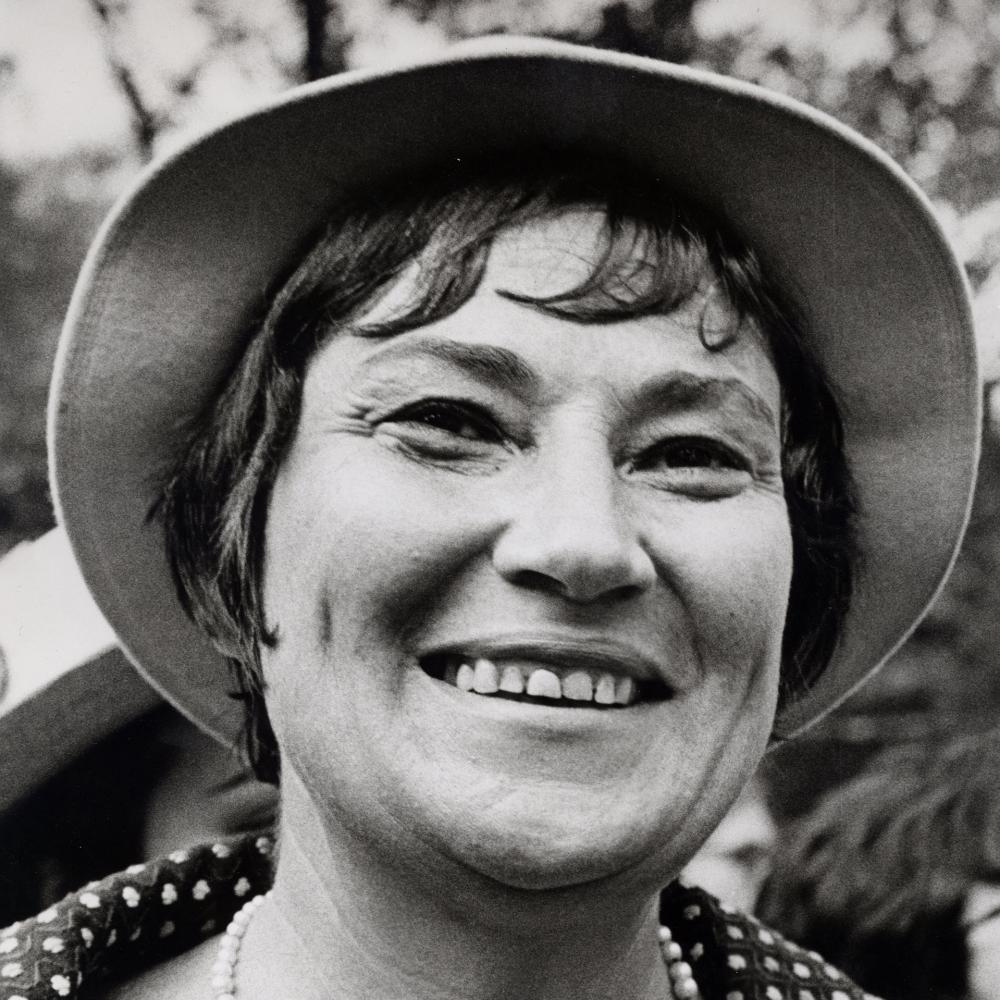
Congresswoman and Activist
Bella Abzug was a longtime activist and proponent of equal rights for women. She grew up in New York City and became an attorney in the 1940s when few women entered this profession. In the 1960s, she became an anti-war activist, which led to a run for political office in New York City. In 1971, she made her first run and win for Congress on the Democratic ticket. Abzug was a huge supporter of the ERA, gay rights, and a founder of the National Women’s Political Caucus.
Reticulated Cowrie Helmet Shells: A Small Reminder of the Link between New York and the Caribbean
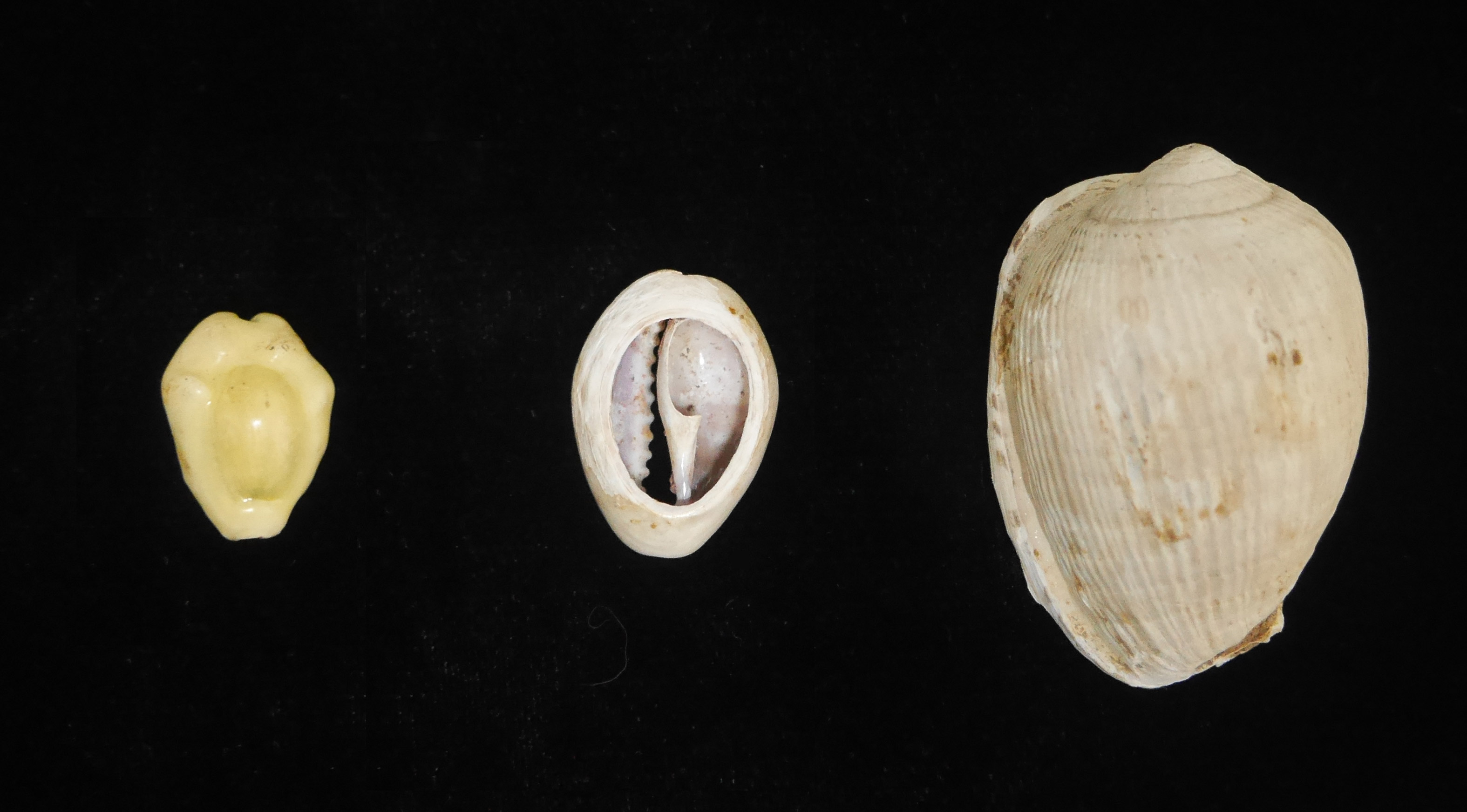
Billions of Moneta and Annulus cowries from the Indian Ocean were traded for enslaved people along the west coast of Africa from the 15th through 19th centuries. Much larger reticulated cowrie helmets, native to the warm waters of the Caribbean, were not traded for enslaved labor but have been found on sites of enslavement in New York.
Dutch merchant Augustine Hermann traded in both tobacco and enslaved people out of his 1640s warehouse in New Amsterdam (Manhattan). A reticulated cowrie helmet recovered from the warehouse was certainly a remnant of his voyages to the Caribbean, and was possibly the possession of an enslaved person.
A second example was recovered from the ruins of the late 18th century Albany home of John Bogart. New York merchants owned and provisioned plantations in the Caribbean throughout the 18th century, and by the 1720s, large numbers of enslaved people were being transported from the Caribbean to the colony. The Bogart house cowrie was likely a personal possession kept by an enslaved person at the house, perhaps as a reminder of the Caribbean.
The photograph above displays Cowrie Shells Moneta (left), Annulus (center), and a Reticulated Cowrie Helmet (right) from the NYSM Historical Archaeology Collection
Volunteer-Intern
Research and Collections - Placement as Needed
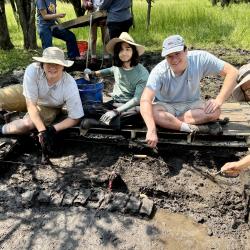
Volunteers support many different teams across Research and Collections. Tasks may include cataloging, inventory, specimen care, database entry, lab or field support, photography or 3D scanning, and rehousing collections. Some activities require specific skills or training, and staff will provide guidance as appropriate.
Volunteer Eligibility & Placement:
- Volunteer must be 18 years of age or older.
- Placement depends on departmental needs and may vary each quarter. A resume may be requested depending on the department.
- As part of the application process, all Volunteers will complete a reference check.
For more information, please contact nysmvolunteer@nysed.gov.
Research & Collections Internships
Research and Collections interns engage in term-based placements with learning objectives and professional development. Depending on placement, interns may assist with lab or research support, storage and conservation projects, photography or 3D scanning, or work directly with objects, specimens, and archival materials.
For questions, please contact nysmvolunteer@nysed.gov.
Apply Now
Contact Volunteer Services
Call the Office of Volunteer Services at (518) 402-5869 for further information today.
Volunteer-Intern
Research and Collections - Placement as Needed
Volunteers support many different teams across Research and Collections. Tasks may include cataloging, inventory, specimen care, database entry, lab or field support, photography or 3D scanning, and rehousing collections. Some activities require specific skills or training, and staff will provide guidance as appropriate.
Volunteer Eligibility & Placement:
- Volunteer must be 18 years of age or older.
- Placement depends on departmental needs and may vary each quarter. A resume may be requested depending on the department.
- As part of the application process, all Volunteers will complete a reference check.
For more information, please contact nysmvolunteer@nysed.gov.
Research & Collections Internships
Research and Collections interns engage in term-based placements with learning objectives and professional development. Depending on placement, interns may assist with lab or research support, storage and conservation projects, photography or 3D scanning, or work directly with objects, specimens, and archival materials.
For questions, please contact nysmvolunteer@nysed.gov.
Apply Now
Contact Volunteer Services
Call the Office of Volunteer Services at (518) 402-5869 for further information today.
Volunteer-Intern
Research and Collections - Placement as Needed
Volunteers support many different teams across Research and Collections. Tasks may include cataloging, inventory, specimen care, database entry, lab or field support, photography or 3D scanning, and rehousing collections. Some activities require specific skills or training, and staff will provide guidance as appropriate.
Volunteer Eligibility & Placement:
- Volunteer must be 18 years of age or older.
- Placement depends on departmental needs and may vary each quarter. A resume may be requested depending on the department.
- As part of the application process, all Volunteers will complete a reference check.
For more information, please contact nysmvolunteer@nysed.gov.
Research & Collections Internships
Research and Collections interns engage in term-based placements with learning objectives and professional development. Depending on placement, interns may assist with lab or research support, storage and conservation projects, photography or 3D scanning, or work directly with objects, specimens, and archival materials.
For questions, please contact nysmvolunteer@nysed.gov.
Apply Now
Contact Volunteer Services
Call the Office of Volunteer Services at (518) 402-5869 for further information today.
Volunteer-Intern
Research and Collections - Placement as Needed
Volunteers support many different teams across Research and Collections. Tasks may include cataloging, inventory, specimen care, database entry, lab or field support, photography or 3D scanning, and rehousing collections. Some activities require specific skills or training, and staff will provide guidance as appropriate.
Volunteer Eligibility & Placement:
- Volunteer must be 18 years of age or older.
- Placement depends on departmental needs and may vary each quarter. A resume may be requested depending on the department.
- As part of the application process, all Volunteers will complete a reference check.
For more information, please contact nysmvolunteer@nysed.gov.
Research & Collections Internships
Research and Collections interns engage in term-based placements with learning objectives and professional development. Depending on placement, interns may assist with lab or research support, storage and conservation projects, photography or 3D scanning, or work directly with objects, specimens, and archival materials.
For questions, please contact nysmvolunteer@nysed.gov.
Apply Now
Contact Volunteer Services
Call the Office of Volunteer Services at (518) 402-5869 for further information today.
Volunteer-Intern
Research and Collections - Placement as Needed
Volunteers support many different teams across Research and Collections. Tasks may include cataloging, inventory, specimen care, database entry, lab or field support, photography or 3D scanning, and rehousing collections. Some activities require specific skills or training, and staff will provide guidance as appropriate.
Volunteer Eligibility & Placement:
- Volunteer must be 18 years of age or older.
- Placement depends on departmental needs and may vary each quarter. A resume may be requested depending on the department.
- As part of the application process, all Volunteers will complete a reference check.
For more information, please contact nysmvolunteer@nysed.gov.
Research & Collections Internships
Research and Collections interns engage in term-based placements with learning objectives and professional development. Depending on placement, interns may assist with lab or research support, storage and conservation projects, photography or 3D scanning, or work directly with objects, specimens, and archival materials.
For questions, please contact nysmvolunteer@nysed.gov.
Apply Now
Contact Volunteer Services
Call the Office of Volunteer Services at (518) 402-5869 for further information today.
Volunteer-Intern
Research and Collections - Placement as Needed
Volunteers support many different teams across Research and Collections. Tasks may include cataloging, inventory, specimen care, database entry, lab or field support, photography or 3D scanning, and rehousing collections. Some activities require specific skills or training, and staff will provide guidance as appropriate.
Volunteer Eligibility & Placement:
- Volunteer must be 18 years of age or older.
- Placement depends on departmental needs and may vary each quarter. A resume may be requested depending on the department.
- As part of the application process, all Volunteers will complete a reference check.
For more information, please contact nysmvolunteer@nysed.gov.
Research & Collections Internships
Research and Collections interns engage in term-based placements with learning objectives and professional development. Depending on placement, interns may assist with lab or research support, storage and conservation projects, photography or 3D scanning, or work directly with objects, specimens, and archival materials.
For questions, please contact nysmvolunteer@nysed.gov.
Apply Now
Contact Volunteer Services
Call the Office of Volunteer Services at (518) 402-5869 for further information today.
Volunteer-Intern
Research and Collections - Placement as Needed
Volunteers support many different teams across Research and Collections. Tasks may include cataloging, inventory, specimen care, database entry, lab or field support, photography or 3D scanning, and rehousing collections. Some activities require specific skills or training, and staff will provide guidance as appropriate.
Volunteer Eligibility & Placement:
- Volunteer must be 18 years of age or older.
- Placement depends on departmental needs and may vary each quarter. A resume may be requested depending on the department.
- As part of the application process, all Volunteers will complete a reference check.
For more information, please contact nysmvolunteer@nysed.gov.
Research & Collections Internships
Research and Collections interns engage in term-based placements with learning objectives and professional development. Depending on placement, interns may assist with lab or research support, storage and conservation projects, photography or 3D scanning, or work directly with objects, specimens, and archival materials.
For questions, please contact nysmvolunteer@nysed.gov.
Apply Now
Contact Volunteer Services
Call the Office of Volunteer Services at (518) 402-5869 for further information today.
Volunteer-Intern
Research and Collections - Placement as Needed
Volunteers support many different teams across Research and Collections. Tasks may include cataloging, inventory, specimen care, database entry, lab or field support, photography or 3D scanning, and rehousing collections. Some activities require specific skills or training, and staff will provide guidance as appropriate.
Volunteer Eligibility & Placement:
- Volunteer must be 18 years of age or older.
- Placement depends on departmental needs and may vary each quarter. A resume may be requested depending on the department.
- As part of the application process, all Volunteers will complete a reference check.
For more information, please contact nysmvolunteer@nysed.gov.
Research & Collections Internships
Research and Collections interns engage in term-based placements with learning objectives and professional development. Depending on placement, interns may assist with lab or research support, storage and conservation projects, photography or 3D scanning, or work directly with objects, specimens, and archival materials.
For questions, please contact nysmvolunteer@nysed.gov.
Apply Now
Contact Volunteer Services
Call the Office of Volunteer Services at (518) 402-5869 for further information today.
Volunteer-Intern
Research and Collections - Placement as Needed
Volunteers support many different teams across Research and Collections. Tasks may include cataloging, inventory, specimen care, database entry, lab or field support, photography or 3D scanning, and rehousing collections. Some activities require specific skills or training, and staff will provide guidance as appropriate.
Volunteer Eligibility & Placement:
- Volunteer must be 18 years of age or older.
- Placement depends on departmental needs and may vary each quarter. A resume may be requested depending on the department.
- As part of the application process, all Volunteers will complete a reference check.
For more information, please contact nysmvolunteer@nysed.gov.
Research & Collections Internships
Research and Collections interns engage in term-based placements with learning objectives and professional development. Depending on placement, interns may assist with lab or research support, storage and conservation projects, photography or 3D scanning, or work directly with objects, specimens, and archival materials.
For questions, please contact nysmvolunteer@nysed.gov.
Apply Now
Contact Volunteer Services
Call the Office of Volunteer Services at (518) 402-5869 for further information today.
Volunteer-Intern
Research and Collections - Placement as Needed
Volunteers support many different teams across Research and Collections. Tasks may include cataloging, inventory, specimen care, database entry, lab or field support, photography or 3D scanning, and rehousing collections. Some activities require specific skills or training, and staff will provide guidance as appropriate.
Volunteer Eligibility & Placement:
- Volunteer must be 18 years of age or older.
- Placement depends on departmental needs and may vary each quarter. A resume may be requested depending on the department.
- As part of the application process, all Volunteers will complete a reference check.
For more information, please contact nysmvolunteer@nysed.gov.
Research & Collections Internships
Research and Collections interns engage in term-based placements with learning objectives and professional development. Depending on placement, interns may assist with lab or research support, storage and conservation projects, photography or 3D scanning, or work directly with objects, specimens, and archival materials.
For questions, please contact nysmvolunteer@nysed.gov.
Apply Now
Contact Volunteer Services
Call the Office of Volunteer Services at (518) 402-5869 for further information today.
Volunteer-Intern
Research and Collections - Placement as Needed
Volunteers support many different teams across Research and Collections. Tasks may include cataloging, inventory, specimen care, database entry, lab or field support, photography or 3D scanning, and rehousing collections. Some activities require specific skills or training, and staff will provide guidance as appropriate.
Volunteer Eligibility & Placement:
- Volunteer must be 18 years of age or older.
- Placement depends on departmental needs and may vary each quarter. A resume may be requested depending on the department.
- As part of the application process, all Volunteers will complete a reference check.
For more information, please contact nysmvolunteer@nysed.gov.
Research & Collections Internships
Research and Collections interns engage in term-based placements with learning objectives and professional development. Depending on placement, interns may assist with lab or research support, storage and conservation projects, photography or 3D scanning, or work directly with objects, specimens, and archival materials.
For questions, please contact nysmvolunteer@nysed.gov.
Apply Now
Contact Volunteer Services
Call the Office of Volunteer Services at (518) 402-5869 for further information today.
Volunteer-Intern
Research and Collections - Placement as Needed
Volunteers support many different teams across Research and Collections. Tasks may include cataloging, inventory, specimen care, database entry, lab or field support, photography or 3D scanning, and rehousing collections. Some activities require specific skills or training, and staff will provide guidance as appropriate.
Volunteer Eligibility & Placement:
- Volunteer must be 18 years of age or older.
- Placement depends on departmental needs and may vary each quarter. A resume may be requested depending on the department.
- As part of the application process, all Volunteers will complete a reference check.
For more information, please contact nysmvolunteer@nysed.gov.
Research & Collections Internships
Research and Collections interns engage in term-based placements with learning objectives and professional development. Depending on placement, interns may assist with lab or research support, storage and conservation projects, photography or 3D scanning, or work directly with objects, specimens, and archival materials.
For questions, please contact nysmvolunteer@nysed.gov.
Apply Now
Contact Volunteer Services
Call the Office of Volunteer Services at (518) 402-5869 for further information today.
Volunteer-Intern
Research and Collections - Placement as Needed
Volunteers support many different teams across Research and Collections. Tasks may include cataloging, inventory, specimen care, database entry, lab or field support, photography or 3D scanning, and rehousing collections. Some activities require specific skills or training, and staff will provide guidance as appropriate.
Volunteer Eligibility & Placement:
- Volunteer must be 18 years of age or older.
- Placement depends on departmental needs and may vary each quarter. A resume may be requested depending on the department.
- As part of the application process, all Volunteers will complete a reference check.
For more information, please contact nysmvolunteer@nysed.gov.
Research & Collections Internships
Research and Collections interns engage in term-based placements with learning objectives and professional development. Depending on placement, interns may assist with lab or research support, storage and conservation projects, photography or 3D scanning, or work directly with objects, specimens, and archival materials.
For questions, please contact nysmvolunteer@nysed.gov.
Apply Now
Contact Volunteer Services
Call the Office of Volunteer Services at (518) 402-5869 for further information today.
Volunteer-Intern
Research and Collections - Placement as Needed
Volunteers support many different teams across Research and Collections. Tasks may include cataloging, inventory, specimen care, database entry, lab or field support, photography or 3D scanning, and rehousing collections. Some activities require specific skills or training, and staff will provide guidance as appropriate.
Volunteer Eligibility & Placement:
- Volunteer must be 18 years of age or older.
- Placement depends on departmental needs and may vary each quarter. A resume may be requested depending on the department.
- As part of the application process, all Volunteers will complete a reference check.
For more information, please contact nysmvolunteer@nysed.gov.
Research & Collections Internships
Research and Collections interns engage in term-based placements with learning objectives and professional development. Depending on placement, interns may assist with lab or research support, storage and conservation projects, photography or 3D scanning, or work directly with objects, specimens, and archival materials.
For questions, please contact nysmvolunteer@nysed.gov.
Apply Now
Contact Volunteer Services
Call the Office of Volunteer Services at (518) 402-5869 for further information today.
Volunteer-Intern
Research and Collections - Placement as Needed
Volunteers support many different teams across Research and Collections. Tasks may include cataloging, inventory, specimen care, database entry, lab or field support, photography or 3D scanning, and rehousing collections. Some activities require specific skills or training, and staff will provide guidance as appropriate.
Volunteer Eligibility & Placement:
- Volunteer must be 18 years of age or older.
- Placement depends on departmental needs and may vary each quarter. A resume may be requested depending on the department.
- As part of the application process, all Volunteers will complete a reference check.
For more information, please contact nysmvolunteer@nysed.gov.
Research & Collections Internships
Research and Collections interns engage in term-based placements with learning objectives and professional development. Depending on placement, interns may assist with lab or research support, storage and conservation projects, photography or 3D scanning, or work directly with objects, specimens, and archival materials.
For questions, please contact nysmvolunteer@nysed.gov.
Apply Now
Contact Volunteer Services
Call the Office of Volunteer Services at (518) 402-5869 for further information today.
Thank You!
We appreciate your interest in becoming a vital member of our team. Someone from the Intern/Volunteer department will be in contact with you once we have reviewed your information.
News Article
Historic Canal Marker Grants
Published April 18, 2018 | State History
This article originally appeared on the Pomeroy Foundation website in April, 2018. The William G. Pomeroy Foundation has launched our newest grant program to promote cultural tourism and commemorate the history of transportation canals in the U...
Malone Students Need Help Finding Long-lost History
Published April 18, 2018 | State History
This article originally appeared on the NBC website on April 11, 2018. Teacher Tracy Edwards and her Capital Region Board of Cooperative Educational Services, or BOCES, New Vision: Law and Government class are working on an unexpected project t...
Oneida County Historical Center Telethon Raises Over $24,000
Published April 11, 2018 | State History
This article originally appeared on the Oneida County History Center website in April, 2018. The Oneida County History Center raised over $24,000 during our 13th annual telethon held on Tuesday, April 3, 2018 from 6:30-8:00pm. The thelethon was...
Village of Ames Museum Open House Dates Announced
Published April 11, 2018 | State History
The Village of Ames Museum will be hosting a series of Open Houses in 2018 on the following dates: April 14 9:00am – 3:00pm May 5 9:00am – 3:...
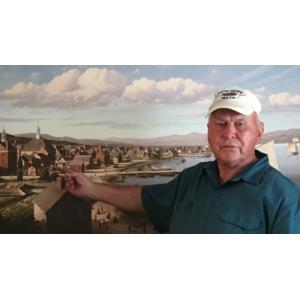
The People of Colonial Albany Online Since 1999
Published April 5, 2018 | State History
Community Historian Stefan Bielinski pointing out the Albany waterfront in 1787 as depicted in a painting by historical artist Leonard F. Tantillo. Providing comprehensive historical services for almost two decades now The People of Colon...
80 Museums Selected to Receive Customized Collections Assessments
Published April 4, 2018 | State History
This article originally appeared on the Institute of Museum and Library Services Website on March 29, 2018. The Foundation of the American Institute for Conservation of Historic and Artistic Works (FAIC) and the Institute of Museum and Library ...
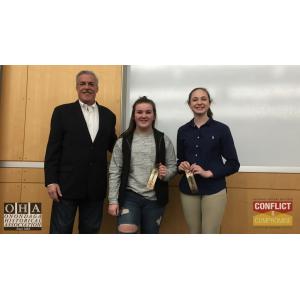
Central New York Students Advance to New York History Day in Cooperstown April 23rd
Published April 4, 2018 | State History
This article first appeared on syracuse.com in April, 2018. On Saturday, March 24th at Onondaga Community College, students from across Central New York competed in CNY Region History Day, facilitated by...read more
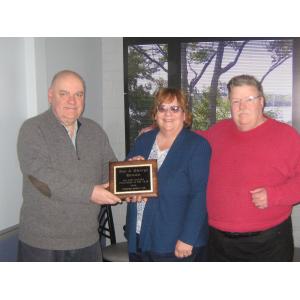
Old Fort Niagara Recognizes Volunteers and Recruits New Ones
Published April 4, 2018 | State History
This article first appeared on the Old Fort Niagara website in April, 2018 Old Fort Niagara recently hosted its annual Volunteer Appreciation Breakfast and recognized James and Cheryl Brown of Lockport, NY, as the "2017 Volunteers of the Year." T...
Call for Proposals: The Conference on Black History in the Hudson Valley
Published April 3, 2018 | State History
The Hudson River Maritime Museum and the Library at the A.J. Williams-Myers African Roots Center are seeking proposals for the Conference on Black History in the Hudson Valley, Saturday, July 14, 2018. The conference will be held at the ...
History Center Awarded Grant
Published March 28, 2018 | State History
This article first appeared on the Rome Sentinel website in March, 2018 The Oneida County History Center has been awarded a $2,450 facility improvement grant from the Community Foundation of Herkimer and Oneida Counties. The funding will be used ...
Erie Canalway 2018 Grant Recipients Announced
Published March 28, 2018 | State History
This article first appeared on the website on the Erie Canalway website in March, 2018. Seven education and recreation projects will get off the ground this year with funding support from the Erie Canalway National Heritage Corridor. The gr...
Historical Society Gets $2,000 Grant
Published March 28, 2018 | State History
This article first appeared on The Daily Gazette website on March 22, 2018. The Erie Canalway National Heritage Corridor announced Thursday it has awarded a $2,200 grant to the historical society to promote historic boat ride...
Upper New York United Methodist Historical Society
Published March 27, 2018 | State History
This article first appeared on the Upper New York United Methodist Historical Society website on the March, 2018. The Upper New York United Methodist Historical Society (UNY-UMHS) announces a new publication UNY Historical News &a...
Celebrate Women's History Month with GVSHP
Published March 21, 2018 | State History
Greenwich Village Society for Historic Preservation will be offering a number of events celebrating Women's History Month. Events will celebrate notable women from Greenwich Village, as well as East Village and Noho. For more information...
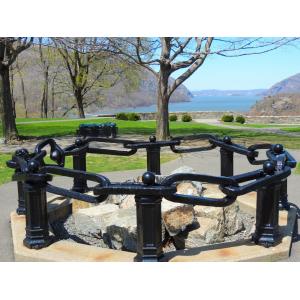
Happy 240th Great Chain: A Great Achievement and its Rediscovery
Published March 14, 2018 | State History
By: Sue Gardner Town of Warwick Deputy Historian Hidden Forge It was a complete secret. So of course most people in Warwick would have known about it. The community kept that secret and a key turning point in the Revolutionary W...
Historian Robert Chiles to Speak on the Revolution of '28: Al Smith, American Progressivism, and the Coming of the New Deal
Published March 13, 2018 | State History
Historian Robert Chiles' new book The Revoluton of '28: Al Smith, American Progressivism, and the Coming of the New Deal explores the career of New York governor and 1928 Democratic presidential nominee Alfred E. Smith. Chiles uncovers a...
Remembering Clay: The Clay Log Cabin Digs: Part Two
Published March 1, 2018 | State History
By: Dorothy Heller, Town of Clay Historian Dorothy's Remebering Clay Articles regularly appear on the Town of Clay website HERE Donald Thompson, History Teacher, organized and instructed the digs and acquired funding to excavate the su...
Remembering Clay: The Clay Log Cabin Digs*: Part One
Published March 1, 2018 | State History
By: Dorothy Heller, Town of Clay Historian Dorothy's Remebering Clay Articles regularly appear on the Town of Clay website HERE It doesn’t seem possible it has been 20 years since we were digging up artifacts from the original site on Henry ...
Broome County Historian Awarded 2018 Herbert H. Lehman Prize for Distinguished Service
Published February 27, 2018 | State History
Broome County Historian Gerald Smith was chosen by the New York Academy of History to receive the 2018 Herbert H. Lehman Prize for Distinguished Service in New York History. The award is named in honor of Governor Herbert H. Lehman and is pa...
Town of Wilton Celebrating 200th Birthday
Published February 26, 2018 | State History
The Town of Wilton (Saratoga County) is celebrating its bicentennial in 2018 with a series of celebratory events and the creation of a film. The film was produced by Tim Welch and is the story of how this small upstate community en...
Lobby Screen Admin
Current Lobby Slides
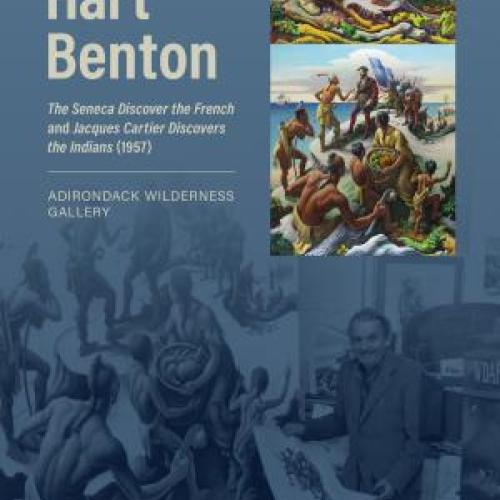
This slide will not expire
Edit Slide
Delete this Slide
Created By: Chris Havens
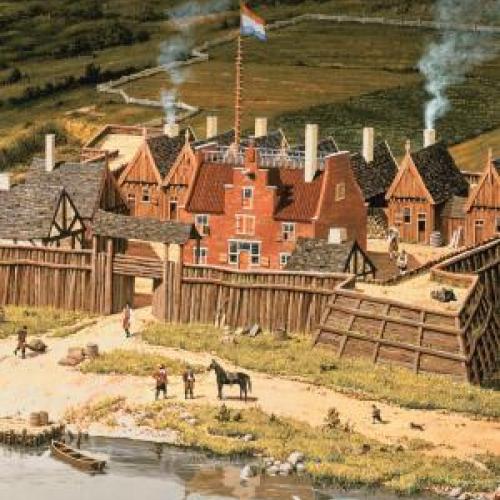
This slide will not expire
Edit Slide
Delete this Slide
Created By: Ben Karis-Nix
This slide will not expire
Edit Slide
Delete this Slide
Created By: Chris Havens
This slide will not expire
Edit Slide
Delete this Slide
Created By: Chris Havens
This slide will not expire
Edit Slide
Delete this Slide
Created By: Ben Karis-Nix
Thank you for requesting a group visit
Someone from our education team will be in contact with you shortly. Remember this is only a request for a group visit. You will only be registered after we have confirmed your information directly will you.
Directions and Arrival Procedures
Location
The New York State Museum is housed in the Cultural Education Center in Albany, New York. The Cultural Education Center (CEC) is at the south end of the Empire State Plaza, across Madison Avenue (Route 20) from the Plaza (at the opposite end from the Capitol).
Group Entrance
The Group Entrance to the New York State Museum is at the rear of the Museum on Park Avenue between South Swan and Eagle Streets, directly across from Lincoln Park. All School bus and/or group carpool loading/unloading takes place through the group entrance.
 05-visitprep-groupentrance.pdf (link is external)
Parking: Buses (School Buses and/or Coaches)
After dropping groups off at the Museum's Group Entrance on Park Avenue, buses are required to park at a free, off-site lot. Please review the off-site directions and map prior to your departure.
05-visitprep-busparking.pdf (link is external)Free Shuttle Service from the off-site lot to the State Museum/Empire State Plaza is available through the Office of General Services (OGS). For Bus Drivers and/or staff who wish to join their group at the Museum after parking, please review the shuttle schedule and be sure to return to your vehicle with enough time to promptly pick up students from the Group Entrance at the conclusion of their visit.
Parking: General Public (includes groups arriving with cars or vans)
Parking for the general public is available in the two lots adjacent to the Museum, both located off of Madison Avenue. Prior to 10:00 a.m., the parking fee is $10. After 10:00 a.m., the parking fee is $5. Parking is free after 2:00 p.m. A visitor lot is available in the Empire State Plaza.

Each One Inspired: Indigenous Art Across the Homelands
Each One Inspired: Indigenous Art Across the Homelands examines the sources of inspiration for Indigenous artists across what is now New York. Featuring over 60 original artworks from the NYSM Contemporary Indigenous Art Collection, this thematic exhibit focuses on the connections to lands, community, the natural world, ancestors, and histories that continue to inspire Indigenous artists whose ancestral lands lie within what is now New York.
Online Feature
Discover more about select works from the exhibtion, including images and informaton about the artwork and artists.
Additional Resources

Coupling Indigenous Artwork and Ancient Artifacts
Mohawk artist Natasha Smoke-Santiago recently visited the NYSM with Garth Johnson, curator of ceramics at the Everson Museum, to examine Haudenosaunee pottery from New York archaeological sites. Learn more about an upcoming exhibit at the Everson featuring the artist's work and archaeology artificacts from the NYSM.
New York State Museum Opens Exhibition: Each One Inspired: Indigenous Art Across the Homelands
A new exhibition, Each One Inspired: Indigenous Art Across the Homelands, is now open for the public to view at the New York State Museum, State Education Commissioner Betty A. Rosa announced today. The new exhibition which features more than 60 original creations of Indigenous artwork by artists whose homelands lie within what is now New York will be open through March 2024. This collection of contemporary art focuses on Indigenous histories, teachings, and communities and how they relate to and inspire our relationships and connections to our environment.
Board of Regents Chancellor Lester W. Young, Jr. said, “Indigenous art is significant because it captures the culture, traditions, and expressions of native communities. This new exhibition will help to foster a deeper understanding of their perspectives and help to promote cultural diversity and appreciation of the identities and contributions of Indigenous people to the history of our State.”
State Education Commissioner Betty A. Rosa said, “When experiencing this new exhibition, Museum guests will have the opportunity to make strong connections with Indigenous art, heritage, and traditions and how they relate to the profound history of New York State. Furthermore, the display of this exceptional collection helps to promote cross-cultural understanding while also sharing unique artistic expressions and the resilience of Indigenous people.”
The exhibition is organized in interrelated themes which are central to Indigenous art and culture: Lands; Ancestors and Histories; Community, Nation, and Family; and Plants and Animals.
High resolution photos of select art and artifacts in the exhibition are available here: https://nysm.nysed.gov/about/press/kits/each-one-inspired
The State Museum is a program of the New York State Education Department’s Office of Cultural Education. Located at 222 Madison Avenue in Albany, the Museum is open Tuesday through Sunday from 9:30 a.m. to 5:00 p.m. It is closed on the Fourth of July, Thanksgiving, Christmas, and New Year's Day. Admission is free. For additional information, visit the New York State Museum website.
-30-
Phone: (518) 474-1201
From the Collections: Madam C.J. Walker’s Glossine Hair Paste and Advertisement
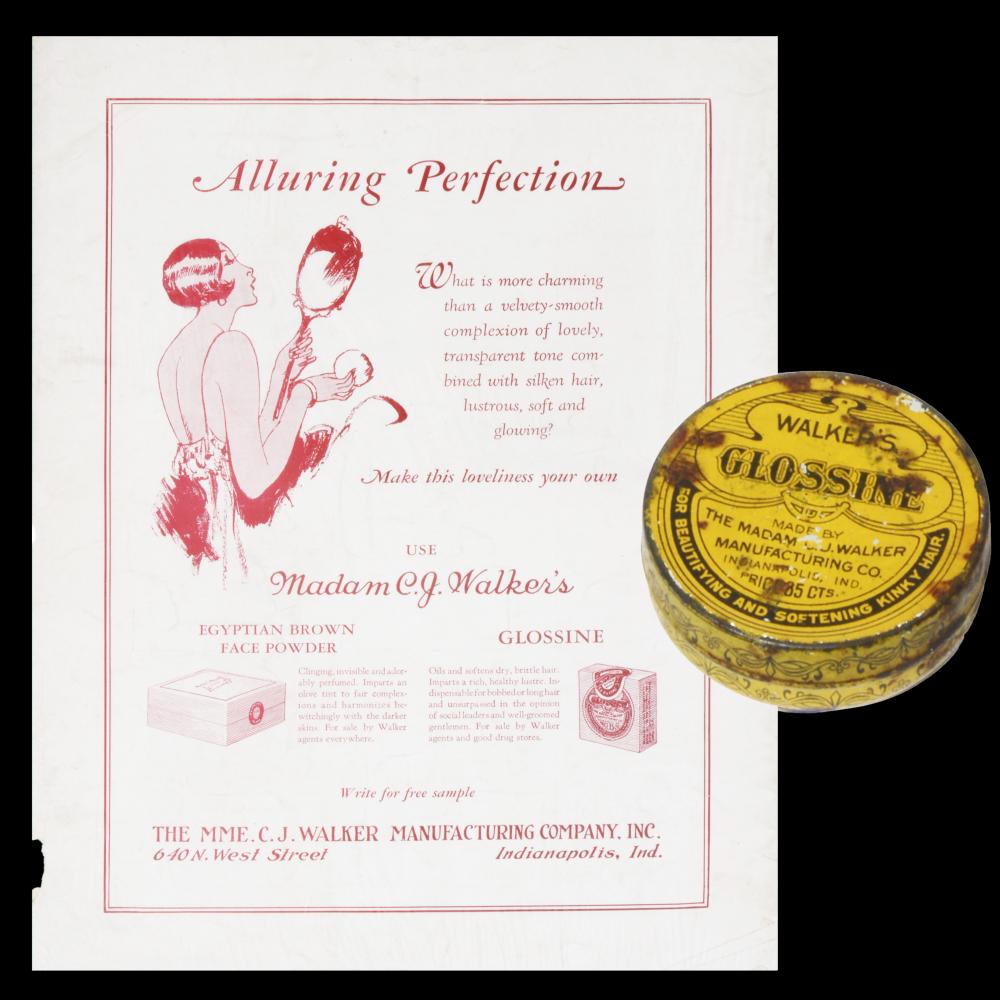
Madam C. J. Walker (1867–1919) was a successful entrepreneur, businesswoman, philanthropist, and social and political activist during a time when both African Americans and women were not common in the world of business. In 1906, she started her own hair product business specifically for African American women, and over the next ten years, the company expanded rapidly, moving its headquarters to Harlem in 1916. Walker was the first self-made African American female millionaire and used her wealth to fund the NAACP and anti-lynching legislation. Her company remained in business until 1981.
Featured above are Madam C.J. Walker’s Glossine hair paste and an advertisement for her products that are now part of the NYSM History Collection (H-2010.45.30-31).
New York State Museum Hosts Capital Region History Day Competition and Awards Ceremony
National History Day is Saturday, March 18, 2023
The New York State Museum is pleased to announce that the Capital Region History Day competition and awards ceremony will be held on Saturday, March 18, 2023. As part of National History Day, this event brings together teachers and their students in grades 6 to 12, to compete in five categories including historical papers, exhibit boards, documentaries, performances, and websites. Two winners will be chosen from each category to compete at the statewide event in Cooperstown, New York on April 24, 2023, for a chance to represent New York at the national competition on June 11-13, 2023, at the University of Maryland at College Park.
Projects will be judged based on criteria including historical accuracy, use of primary sources, and relation to this year’s theme, Frontiers in History: People, Places, Ideas. National History Day engages more than half a million students from around the world, and the History Day methodology supports teachers and schools by aligning curriculum and instructional priorities with State and National Learning Standards while preparing students for college and career readiness.
TIME:
9:30 AM
WHERE:
New York State Museum
Cultural Education Center
222 Madison Avenue
Albany, New York, 12230
Phone: (518) 474-1201
NEH Announces $35.63 Million for 258 Humanities Projects Nationwide

This article originally appeared on the National Endowment for the Humanities website.
The National Endowment for the Humanities (NEH) today announced $35.63 million in grants for 258 humanities projects across the country. Grants awarded today will underwrite a documentary on the life and legacy of African American intellectual W.E.B. DuBois; enable the digitization of the personal papers of former members of Congress for the American Congress Digital Archives Portal; and support restoration of the sick bay, post office, barber shop, and torpedo-handling spaces aboard the historic aircraft carrier the USS Intrepid to allow these areas to be reopened for public access.
“These 258 newly funded projects demonstrate the vitality of the humanities across our nation,” said NEH Chair Shelly C. Lowe (Navajo). “NEH is proud to support exemplary education, preservation, media, research, and infrastructure projects that expand resources for Americans, support humanities programs and opportunities for underserved students and communities, and deepen our understanding of our history, culture, and society.”
Congratulations to the New York organizations!
NEW YORK (27) $4,859,096
Albany
Historic Albany Foundation, Inc. Match: $500,000
[Infrastructure and Capacity Building Challenge Grants]
Project Director: Cara Macri
Project Title: Van Ostrande-Radliff House Reuse
Project Description: Restoration of the oldest building in Albany, New York, the Van Ostrande-Radliff House from 1728, and its later additions, to serve as the seat of the Historic Albany Foundation.
Amherst
Christian DiCanio Outright: $30,000
[Dynamic Language Infrastructure-Documenting Endangered
Languages–F ellowships]
SUNY Research Foundation, University at Buffalo
Project Title: A reference grammar of Itunyoso Triqui
Project Description: Research and writing of a comprehensive reference grammar of Itunyoso Triqui [ISO 639-3 trq], an endangered Southern Mexican language.
Bayside
CUNY Research Foundation, Queensborough Community
College
Outright: $24,500
[Spotlight on Humanities in Higher Education: Exploration]
Project Director: Ilse Schrynemakers; Sybil White (co-project director)
Project Title: Reimagining the First-Semester College Experience: Building the Welcome Read Program
Project Description: A one-year project that would expand a first-semester common read program to reach students in two precollege programs.
Binghamton
Birgit Brander Rasmussen Outright: $6,000
[Summer Stipends]
SUNY Research Foundation, Binghamton
Project Title: Signs of Resistance, Signs of Resurgence: Indigenous Literacies and New Media in Native American Literatures, 901 CE to the Digital Age
Project Description: Research and writing for a book tracing the origins and resurgence of pictographic literacy in American Indigenous cultures.
Bronx
Laura Specker Sullivan Outright: $6,000
[Summer Stipends]
Fordham University
Project Title: Climates of Distrust
Project Description: Research and writing two chapters of a philosophical book on social theories of trust.
Marisa Lerer Outright: $6,000
[Summer Stipends]
Manhattan College
Project Title: Latinx Public Memorials
Project Description: Research and writing leading to a book about Latinx monuments and memorialization in the United States.
Bronxville
Maria Fajardo Outright: $6,000
[Summer Stipends]
Sarah Lawrence College
Project Title: Development as Vocation: Latin America in the Neoliberal Era
Project Description: Research leading to an intellectual history of economic development in Latin America between the 1960s and 1990s.
Ithaca
Chloe Kessler Outright: $6,000
[Summer Stipends]
Cornell University
Project Title: After Apocalypse: American Ecofascism and the Violent Work of Earthly Restoration
Project Description: Archival research leading to a book on the intersection of hate groups and environmental movements and how such groups have historically come from both sides of the political spectrum.
New York
American Academy in Rome Outright: $255,000
[Fellowship Programs at Independent Research Institutions]
Project Director: Mark Robbins
Project Title: Rome Prize Fellowships at the American Academy in Rome
Project Description: Sixteen months of stipend support (two fellowships) per year for three years and a contribution to defray costs associated with the selection of fellows.
American Academy in Rome Match: $472,850
[Infrastructure and Capacity Building Challenge Grants]
Project Director: Mark Robbins
Project Title: Building a New Library Annex: The Villa Chiaraviglio
Project Description: Renovation of the lower level of the Villa Chiaraviglio building for an expansion of the Arthur and Janet C. Ross Library at the American Academy in Rome.
American Council of Learned Societies Outright: $207,000
[Fellowship Programs at Independent Research Institutions] Match: $105,000
Project Director: Deena Ragavan
Project Title: ACLS China Studies Research Fellowships 2024–2027
Project Description: Twenty-seven months of stipend support (three fellowships) per year for three years and a contribution to defray costs associated with the selection of fellows.
Center for Jewish History Outright: $213,238
[Fellowship Programs at Independent Research Institutions]
Project Director: Miriam Mora
Project Title: Long-Term Research Fellowships at the Center for Jewish History in New York
Project Description: Twelve months of stipend support (one fellowship) per year for three years and a contribution to defray costs associated with the selection of fellows.
Charlotte Walker-Said Outright: $6,000
[Summer Stipends]
CUNY Research Foundation, John Jay College
Project Title: A History of Martial and Spiritual Entrepreneurship in Central Africa
Project Description: Research and writing of a book about the religiously inspired insurgencies in Central Africa in the modern period.
Clemente Course in the Humanities, Inc. Outright: $99,000
[Dialogues on the Experience of War]
Project Director: Mark Santow
Project Title: Providence Clemente Veterans Initiative: Extending the Reach
Project Description: A two-year project to hold four 12-week Dialogues on the Experience of War seminars for ten military veterans and interested civilians per seminar, preceded by a preparatory program for six seminar discussion leaders.
Gilder Lehrman Institute of American History Outright: $75,000
[Exhibitions: Planning]
Project Director: Denver Brunsman
Project Title: The Long Struggle for Equality: The Declaration of Independence at 250
Project Description: Planning of a traveling exhibition, community conversations, and online resources exploring the origins and legacy of the Declaration of Independence.
Intrepid Sea-Air-Space Museum Match: $337,050
[Infrastructure and Capacity Building Challenge Grants]
Project Director: Matthew Woods
Project Title: Restoring & Opening Intrepid’s Sick Bay
Project Description: Infrastructure upgrades to allow public access to the sick bay, post office, barber shop and berthing/torpedo handling spaces on the historic aircraft carrier Intrepid, located in New York, New York.
La MaMa Experimental Theatre Club, Inc. Match: $51,480
[Infrastructure and Capacity Building Challenge Grants]
Project Director: Sophie Glidden-Lyon
Project Title: Preserving Off Off-Broadway: Designing Improved Climate Control for the La MaMa Archive
Project Description: Installation of climate-control equipment and planning of long-term storage solutions for archives from the La MaMa Experimental Theatre Club in New York, New York.
Metropolitan Museum of Art Outright: $400,000
[Exhibitions: Implementation]
Project Director: Andrea Achi
Project Title: Public Humanities: Africa & Byzantium
Project Description: Implementation of a traveling exhibition exploring the global impact of the art and culture of Byzantine-era North and East Africa, including public programs, online media, and a scholarly catalog.
Modern Language Association of America, Inc. Outright: $60,000
[Spotlight on Humanities in Higher Education: Development]
Project Director: Jason Rhody
Project Title: Reimagining Humanities Coursework for Career Readiness: A Virtual
Workshop for Teachers of Languages and Literature
Project Description: A two-year development workshop series for faculty at small or midsized colleges to integrate humanities study, career readiness, and applied humanities in their teaching and mentoring of underserved students
Museum of the City of New York, Inc. Outright: $100,000
[Exhibitions: Implementation]
Project Director: Sarah Henry
Project Title: The New York Century: 100 Years of Imagining the City, 1923–2023
Project Description: Implementation of a short-term exhibition examining how New York City has been depicted in arts, media, and culture from 1923 to 2023.
New York Public Library Outright: $309,996
[Fellowship Programs at Independent Research Institutions]
Project Director: Matt Knutzen
Project Title: Long-term Research Fellowships at The New York Public Library’s Stephen A. Schwarzman Building
Project Description: Eighteen months of stipend support (two–three fellowships) per year for three years and a contribution to defray costs associated with the selection of fellows.
Rubin Museum of Art Outright: $400,000
[Exhibitions: Implementation]
Project Director: Michelle Bennett Simorella
Project Title: Gateway to Himalayan Art
Project Description: Implementation of a traveling exhibition geared to university galleries that would introduce essential concepts of Himalayan art and culture and a digital educational platform.
YIVO Institute for Jewish Research Outright: $349,524
[Humanities Collections and Reference Resources]
Project Director: Stefanie Halpern
Project Title: Jewish Labor and Political Archives Project
Project Description: The arrangement and description of 122 linear feet of archival materials from four collections documenting Jewish immigrant involvement in the U.S. labor movement, as well as the digitization of 293,000 pages from those collections.
Niagara
Niagara University Outright: $148,500
[Humanities Connections Implementation]
Project Director: Paula Kot; James McCutcheon (co-project director); Donna Thompson (co-project director); Lisa Williams (co-project director)
Project Title: Implementing the Vincentian Social Justice General Education Minor
Project Description: A three-year project to launch a minor in Vincentian social justice.
Oswego
SUNY Research Foundation, College at Oswego Outright: $35,000
[Humanities Connections Planning]
Project Director: Tiffany Deater
Project Title: New Minor in Environmental Humanities and Visual Media
Project Description: A one-year faculty and curricular development project to build an environmental humanities and visual media minor.
Rochester
University of Rochester Outright: $129,970
[Archaeological and Ethnographic Field Research] Match: $20,000
Project Director: Michael Jarvis
Project Title: The Archaeology of Earliest Bermuda, 1610–c.1630
Project Description: Archeological excavation investigating the English settlement of Bermuda by the Virginia Company in the seventeenth century.
Troy
Museum Association of New York Outright: $499,988
[Humanities Discussions]
Project Director: Megan Eves
Project Title: A New Agora for New York: Museums as Spaces for Democracy
Project Description: Implementation of a discussion and public program series exploring democracy in America to be conducted at twelve museums across New York.
Pride Month
Pride Month is a celebration of LGBTQ+ culture and accomplishments and is also a time for activism and commemoration. The New York State Museum is celebrating LGBTQ+ history as we highlight some of our collections that tell the stories of LGBTQ+ New Yorkers and share additional educational resources.
The celebration and commemoration of Pride Month in June originated in the Stonewall Uprising. When police raided the Stonewall Inn, a popular gay bar in New York City’s Greenwich Village, on the night of June 28, 1969, the LGBTQ+ community fought back—for six days. At the time, there were numerous laws that criminalized homosexuality, and raids, as well as resistance to them, were not uncommon. However, the events at the Stonewall Inn lit a spark that led to new organizing and calls for equal rights.
On June 28, 1970, the Christopher Street Liberation Day Parade was held in New York City to commemorate the first anniversary of the Stonewall Uprising, and other marches took place in San Francisco, Los Angeles, and Chicago. Since then, Pride observances have grown to a whole month, celebrated in more and more communities across New York State, the country, and the world.
Related Programs
2023 Pride Month Statewide Events
The Office of the State Historian presents this comprehensive list of Pride Month events taking place in person and virtually at museums and historical societies across New York State!
Kids Cabaret and Story Hour
On Saturday, June 24 at 1 pm, join the Queens of PRIDE, Carmie Hope and Frieda Munchon, for a fun-for-the-whole-family children’s concert.
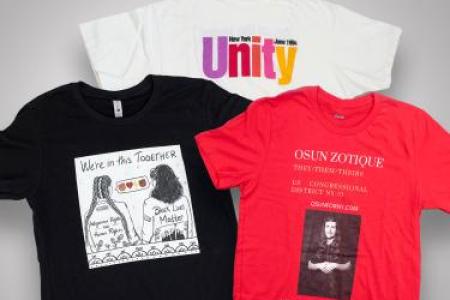
Highlights from the Collection
Discover some of the LGBTQ+ stories present in the NYSM Collections and featured in the banner above.
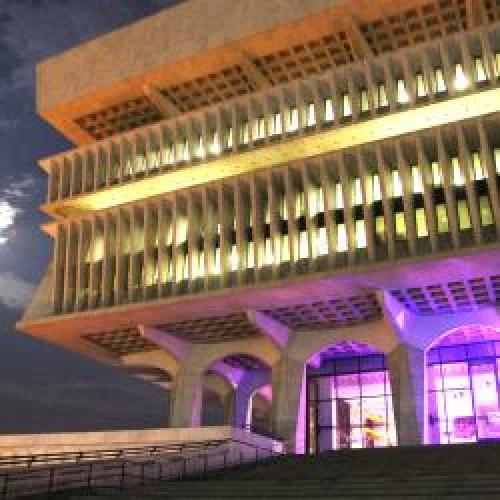
Throughout its history, New Yorkers have led the charge for equality, including fighting for the rights of lesbian, gay, bisexual, transgender, and queer (LGBTQ+) individuals. Discover several objects currently on display throughout the NYSM that are a reflection of some of these important and unique stories.
Related Resources
Pride Center of the Capital Region
The Pride Center of the Capital Region is the oldest continuously operating LGBTQ+ community center in the country.
To commemorate the Pride Center’s 50th anniversary in 2020, the New York State Museum partnered with the Center to collect oral histories from members of the community, ultimately resulting in the creation of a panel exhibition and recorded interviews.
View the Panel Exhibition and Community Member Oral Histories here:
https://www.nysm.nysed.gov/pride/pride-center
New York Minute in History Podcast, The Persistence of Dr. Mary Walker
Dr. Mary Edwards Walker was a women’s rights activist, suffragist, and medical doctor who served as a surgeon during the Civil War. Walker advocated for the reform of traditional dress for women, which in the middle of the 19th century included heavy, floor-length skirts that dragged on the ground picking up dirt and restricted women’s movements. For much of her life, Walker wore either a shorter skirt with trousers underneath (known by various names, including the Bloomer costume, the reform dress, and the Turkish trousers), or later, just a jacket and trousers—and often, her signature top hat. For dressing outside of gender norms, she was arrested multiple times and faced widespread discrimination, to which she replied, “I don’t wear men’s clothes, I wear my own clothes.”
NYSM Collection Spotlight: FAGBUG
On Tuesday, May 29, 2018, the NYSM acquired the FAGBUG from owner Erin Davies. Watch this short video to discover how Davies turned a single ugly and damaging event into a positive personal journey and public outreach project that touched the lives of many.
Art Resources
The New York State Museum’s collections include works by artists who today might identify as part of the LGBTQ+ community, including photographer Berenice Abbott and member of the Byrdcliffe Arts Colony, Zulma Steele. Arts communities in New York, from enclaves of artists in New York City to upstate communities like the Byrdcliffe and Maverick Colonies in Woodstock, were often welcoming places for people of a variety of identities.
Berenice Abbott: Photographer
From 1935-1940, Berenice Abbott (1898–1991) worked on a photographic project documenting the unprecedented growth and changes taking place in a burgeoning New York City. The project, "Changing New York," became one of the monumental achievements in 20th-century photography.
Historic Woodstock Art Colony
Long before the famous music festival in 1969, Woodstock, New York, was home to what is considered America’s first intentionally created, year-round arts colony—founded in 1902 and still thriving over 100 years later.
Community Resources
Understanding LGBTQ+ Identity: A Toolkit for Educators | PBS LearningMedia
Understanding LGBTQ+ Identity: A Toolkit for Educators offers a series of digital media resources to help teachers, administrators, guidance counselors, and other educators understand and effectively address the complex and difficult issues faced by LGBTQ students.
Every 15 Minutes an Elephant is Killed for the Illegal Ivory Trade
On view in New York Metropolis Hall
It is estimated that within the United States, the sale of black-market ivory is a $23 billion industry. New York City is the center of this disturbing business.
Between 2015 and 2018 the New York State Department of Environmental Conservation’s Division of Law Enforcement (DEL) launched an undercover operation in New York City known as Operation White Gold to eradicate the domestic black-market elephant ivory trade. High-end antique dealers and wholesale distributors were investigated. It was the largest crackdown on the illegal ivory trade in New York State’s history.
Seized ivory was donated to museums and universities for DNA research and radio-carbon dating.
LGBTQ+ history has always been a part of New York State history, but the collections at the New York State Museum have not always reflected this. Through work with communities to bring in new artifacts, and by digging into artifacts already in the collections to find hidden LGBTQ+ stories, we are working to better represent all New Yorkers. This online exhibition features some of the LGBTQ+ stories in our collections.
NYSM Bioarchaeology Staff Study Remains of Revolutionary War Soldiers
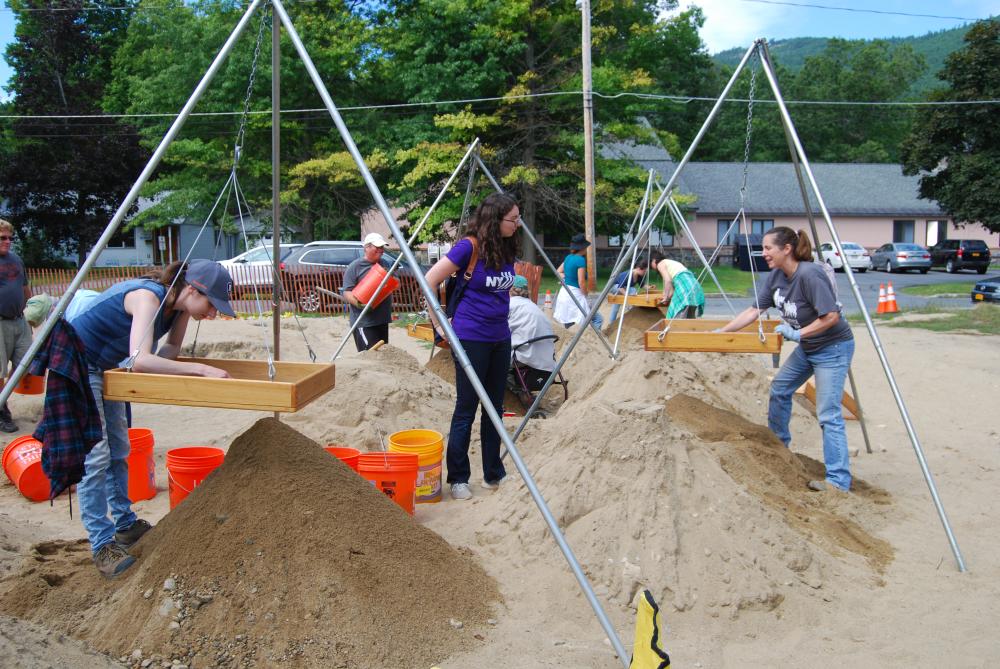
In 2019, bones dating back to the late 18th century were uncovered at a Lake George Village construction site. For the past four years, NYSM bioarchaeology staff Lisa Anderson, Julie Weatherwax, and Alexandra DeCarlo have been working together with the DEC to learn more about the remains to help reveal information about the individuals' lives as well as possible causes of death.
Recently, their work was highlighted on WRGB Albany News Channel 6:
https://cbs6albany.com/community/positively-upstate/nys-museum-piecing-together-remains-of-revolutionary-war-soldiers-recovered-in-lake-george-excavation-2019-townhome
For more information about NYSM research at the site, view:
/research-collections/archaeology/bioarchaeology/news/bioarchaeology-courtland-street-burying-ground
Pride Center of the Capital Region
The Pride Center of the Capital Region is the oldest continuously operating LGBTQ+ community center in the country.
To commemorate the Pride Center’s 50th anniversary in 2020, the New York State Museum partnered with the Center to collect oral histories from members of the community. These oral histories....
Donate Your Eclipse Glasses!

Donate your eclipse glasses to help others safely enjoy eclipses in the future! Bring your gently used eclipse glasses to the New York State Museum until the end of April.
The nonprofit group Astronomers Without Borders (AWB) has partnered with libraries, schools, museums, businesses and other organizations across the U.S. and Canada to collect and recycle gently used eclipse-viewing glasses. The glasses will be sent to underserved communities and schools around the world to use during future solar eclipses, according to a statement from the organization.
Learn more about Astronomers Without Borders:
https://astronomerswithoutborders.org/programs/solar-glasses-distributi…
Eclipse Resources for Librarians & Educators:
https://nyslibrary.libguides.com/c.php?g=1284706&p=9987829