

Ever wonder how early sailors knew where they were going? Try your hand at this quick and interactive game! Match each historical navigation tool with its description and discover the everyday ingenuity aboard Revolutionary War gunboats.
Join us for a special screening of Bloom: The Toxic Threat to the Finger Lakes by WCNY PBS. This powerful documentary delves into the recent outbreaks of cyanobacteria, also known as toxic algae or harmful algal blooms, across the eleven Finger Lakes. Through a compelling exploration, Bloom examines the causes, impacts, and potential solutions to this growing environmental issue, which threatens drinking water, native wildlife, and the multi-billion-dollar tourism economy of Central New York. As research into this problem continues, Bloom takes you beneath the waves to uncover the environmental factors contributing to the disruption of this beloved region. Don’t miss this eye-opening documentary that brings vital awareness to the future of the Finger Lakes!
Join us for a special screening of Lafayette: A Hero’s Return, a new documentary from WCNY that explores the Marquis de Lafayette’s enduring legacy in both New York and American history. It traces his deep-rooted commitments to freedom, self-governance, and commerce, and examines the significance of his 1824–25 tour through the lens of a divided post-war nation, drawing powerful parallels to the present day.
At the heart of the story is Lafayette’s grand farewell tour of 1824–1825, when—at Congress’s invitation—he traveled through all 24 states of the young republic. His journey culminated with poignant visits to Buffalo, Rochester, Auburn, Albany, and Syracuse, before heading to Boston to lay the cornerstone of the Bunker Hill Monument.
Don't miss this opportunity to explore a defining chapter in our shared history—and the enduring power of one man's vision for liberty and unity.
George Washington: An American Paradox


For nearly 250 years, George Washington has stood as a symbol of American independence and democratic ideals. Revered as the commander who led the Continental Army to victory and as the nation’s first president, his leadership helped shape the foundation of the United States. Yet a fuller view of his legacy reveals profound contradictions. Washington enslaved hundreds of people at Mount Vernon, authorized the devastating Sullivan Campaign against Indigenous nations, signed laws that reinforced slavery, like the Fugitive Slave Act, and never publicly condemned the institution of slavery, even as some contemporaries, like Benjamin Franklin, eventually did. Confronting these truths does not erase his accomplishments but invites a more honest and inclusive understanding of the past.
A complete perspective on George Washington must include both his monumental contributions to the founding of the United States and the grave harms committed under his command. Washington played a pivotal role in establishing the nation, yet his story also reflects the deep tensions between the ideals of liberty and the entrenched systems of white supremacy, wealth, and power in early America.
As the United States approaches the 250th anniversary of its independence in 2026, the New York State Museum invites the public to critically engage with the complexities of the nation’s founding through its upcoming exhibition Revolutionary New York. The exhibition will feature stories and artifacts that illuminate New York’s pivotal role in the American Revolution, and explore how African Americans, Indigenous groups, women, and other marginalized groups experienced, influenced, and were affected by the Revolutionary struggle. It will also examine how the era’s promises of liberty and freedom fueled later movements for equality in the 19th, 20th, and 21st centuries.
Exhibition Resources
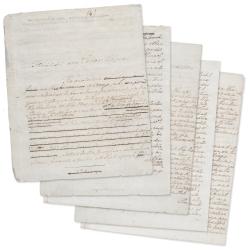
View accessible transcriptions of the original 18th-century documents on display in this exhibit, including Washington's Farewell Address and an anti-slavery petition drafted by Benjamin Franklin.
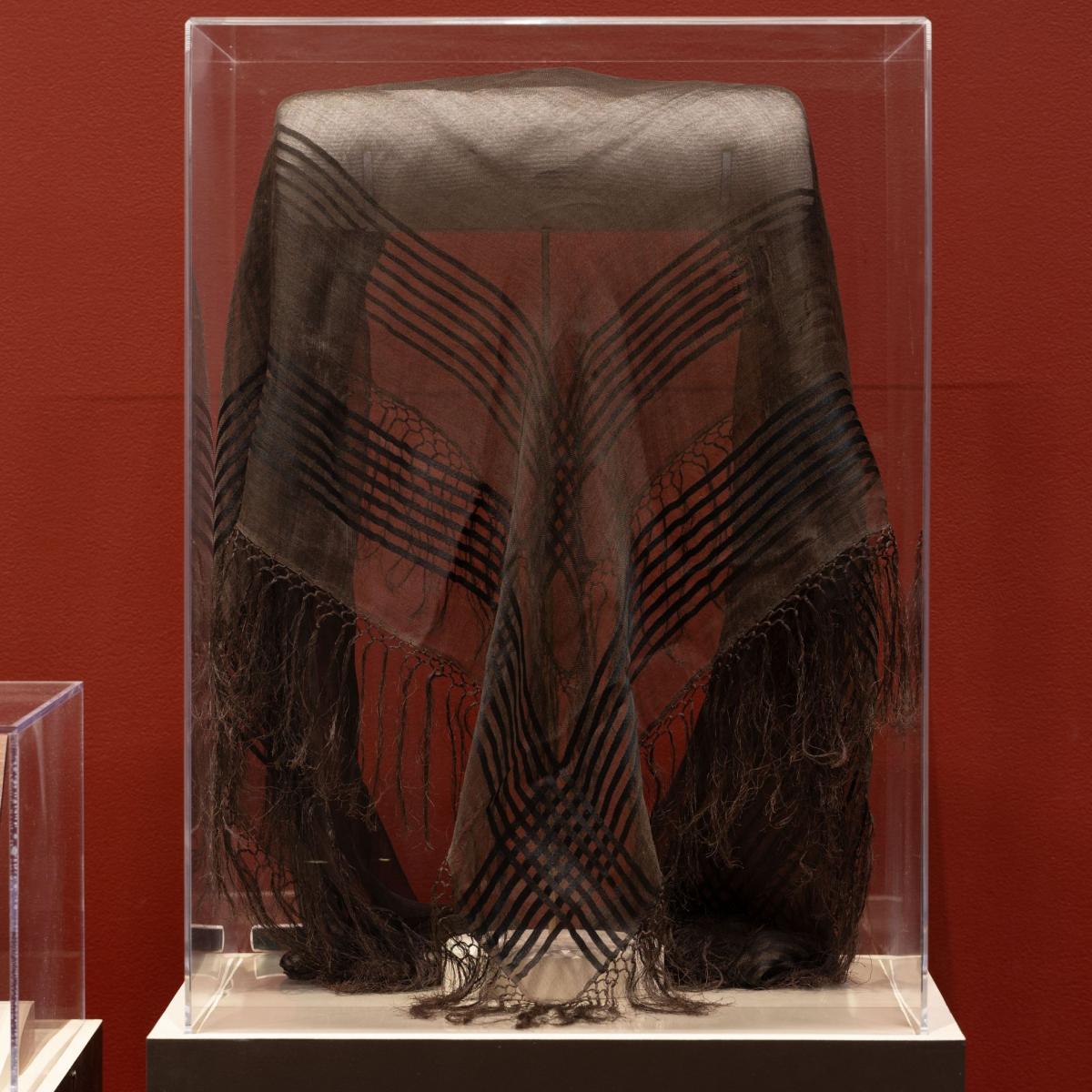
Polly Cooper Shawl
This elegant shawl is understood to be a gift from Martha Washington to Polly Cooper according to Oneida oral tradition. On loan from the descendants and family of Chapman Scanandoah, and on display in a museum for the first time in years, the shawl honors Polly Cooper’s vital contributions to the American cause during the Revolutionary War, when she aided George Washington’s troops at Valley Forge with food, medicine, and care.
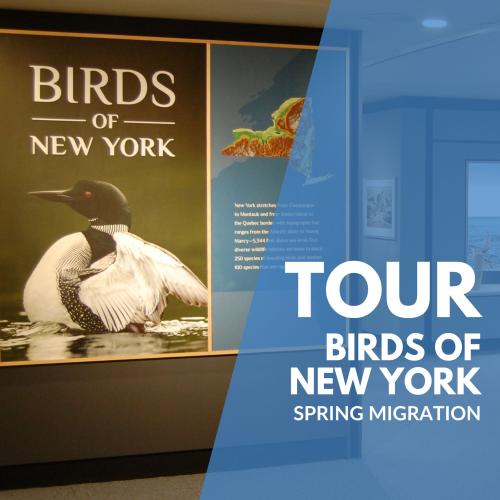
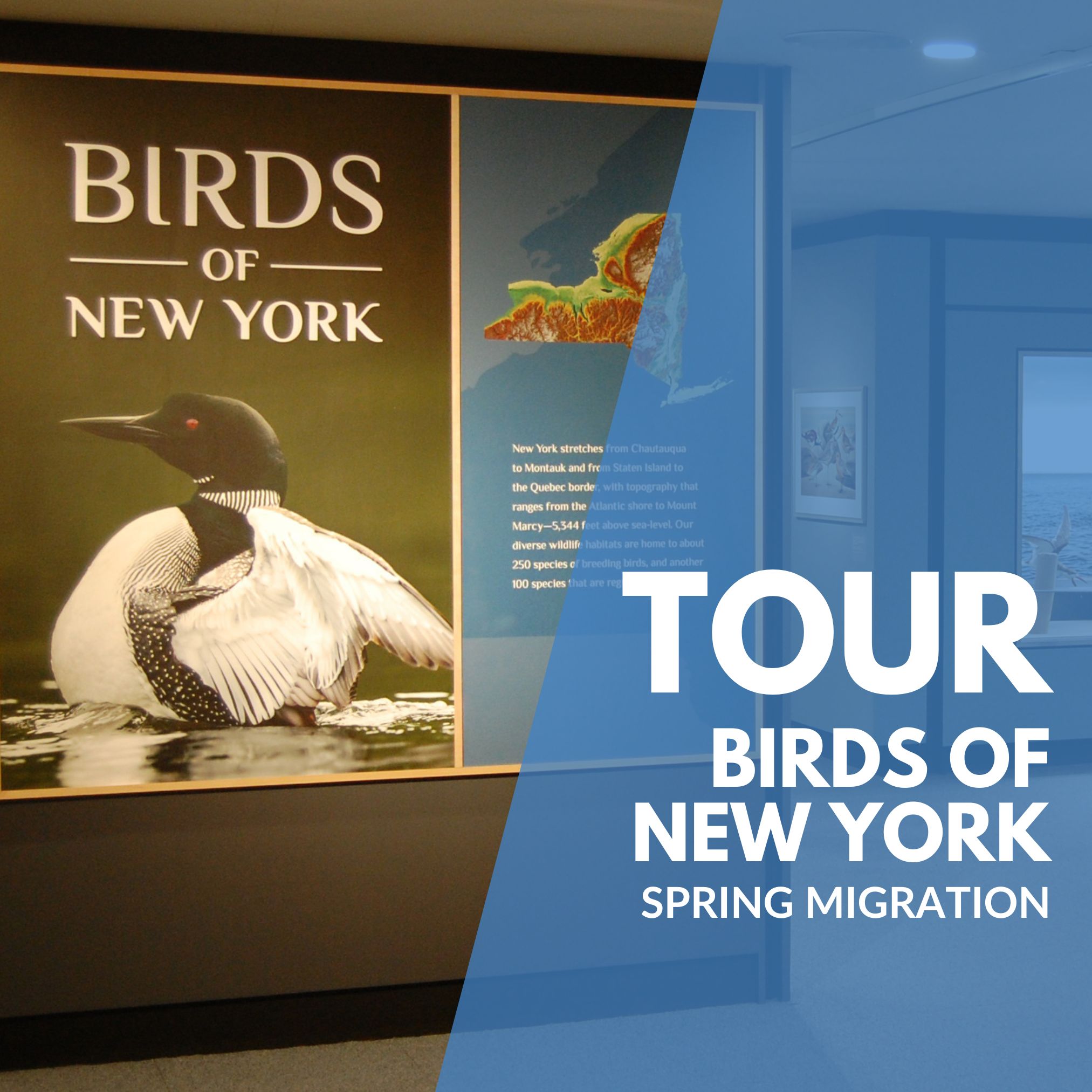
Join Dr. Jeremy Kirchman, NYSM Curator of Birds and Mammals, for a gallery tour of Birds of New York with a special focus on spring migration. Discover how and why birds navigate to and through New York. Dr. Kirchman will guide you through the exhibit’s habitat groups, highlighting the remarkable journeys and diverse ecologies of migratory bird species. The tour concludes with time for Q&A, so come with your birding questions!
The Office of Cultural Education Launches New Video Series: Look at This!
The New York State Office of Cultural Education is excited to announce the launch of a new video series, “Look at This!”—a lively, behind-the-scenes journey that pulls back the curtain to show viewers the often unseen quirky, captivating, and surprising collections housed in the state’s cultural institutions.
Created to engage audiences of all ages, “Look at This!” spotlights the unexpected and conversation-starting objects from the extensive holdings of the New York State Museum, Library, and Archives. Season one kicks off with eleven episodes featuring the Museum’s most curious artifacts—from oddball inventions such as dog treadmills and egg vending machines to endearing relics like the Beech-Nut Circus Bus. Each video is roughly two minutes long and presented with nostalgia, historical insight, and a sense of wonder.
Interim Deputy Commissioner for Cultural Education Michael Mastroianni said, “This series is all about sharing the joy and wonder of discovery. We have millions of artifacts, specimens, and items in our possession and these collections belong to all New Yorkers. ‘Look at This!’ offers a fun, accessible way for everyone to explore some of the State’s greatest treasures. We understand that not everyone can visit the Museum in person, so this allows us to bring the Museum to them in a fresh and engaging new way through the power of social media.”
Featured in the first season is Senior Historian Steve Loughman, who brings his wit, passion, and deep knowledge to all eleven episodes. Loughman said, “I always tell our guests that history is full of surprises — and this series proves it. These artifacts are not just informative; they’re downright fun and it’s a privilege to be able to share them with a new audience. I think people will see history and the New York State Museum in a whole new way.”
The first three episodes can be found on the New York State Museum’s YouTube channel and social media accounts. New episodes will premiere every other Wednesday.
This is just the beginning — future seasons and spin-off series will expand beyond the Museum to showcase the expertise and behind-the-scenes stories of the New York State Library and Archives. From rare books and hidden documents to the dedicated professionals who preserve and interpret them, viewers will gain a unique and engaging glimpse into the heart of New York’s cultural heritage.
Don’t miss out — subscribe to the State Museum’s YouTube channel today and get ready to Look at This!
About the Cultural Education Center
Established in 1836, the New York State Museum is the oldest and largest public museum in the United States. Home to leading scientists, historians, archeologists, and anthropologists, its collections represent the State’s rich cultural and natural heritage from the past and present, including a staggering 20+ million artifacts spanning 1.1 billion years ago to today. Located at 222 Madison Avenue in Albany, the Museum is open Tuesday through Sunday from 9:30 a.m. to 5 p.m. It is closed on the Fourth of July, Thanksgiving, Christmas, and New Year's Day. Admission is free. For additional information, visit the New York State Museum website.
The New York State Library is part of the Office of Cultural Education within the New York State Education Department. Visit the New York State Library website for a complete list of upcoming programs. To receive news, resources, and other updates, please subscribe to the quarterly newsletter.
The New York State Archives holds many of the oldest and most important archival treasures in the nation. The Archives preserves and makes accessible over 250 million records of New York’s State and colonial governments dating from 1630 to the present. The State Archives provides free access to photographs, artifacts, documents, manuscripts, and other materials that tell the story of New York’s history via its Digital Collections on the Archives website.
The Archives Partnership Trust was founded in 1992 to build an endowment and provide project support to enhance humanities programs, increase access to these outstanding treasures, and continue the preservation of New York's historical records. Since its founding, the Partnership Trust, a 501(c)(3) non-profit organization, has supported exceptional projects and programs. These include the Research Residency Program, the Student Research Awards Program, history conferences, special exhibitions, public education programs, book signings and lectures, publications, teacher training institutes, preservation projects, and more.
The State Museum, State Library, and State Archives are programs of the New York State Education Department’s Office of Cultural Education. Further information about programs and events can be obtained by calling (518) 474-5877 or by visiting the Office of Cultural Education website.
(518) 474-1201
Press@nysed.gov
www.nysed.gov
Jennifer Saunders Appointed Director of New York State Museum
Saunders Becomes First Woman to Lead New York State Museum
The New York State Board of Regents and State Education Department Commissioner Dr. Betty A. Rosa today announced the appointment of Jennifer Saunders as Director of the New York State Museum, following a highly competitive national search. Ms. Saunders makes history as the first woman to lead the Museum in its nearly 200-year existence. A nationally respected museum leader, she brings more than two decades of experience guiding cultural institutions through transformational change to best serve a modern audience, with a distinguished record of institutional transformation, enhancing public engagement, promoting inclusive historical narratives, and advancing institutional sustainability.
Board of Regents Chancellor Lester W. Young Jr. said, “Jennifer Saunders brings not only an impressive record of organizational leadership and public service, but also a deep understanding of how museums can foster civic dialogue, identity, and lifelong learning. We look forward to working with her to advance the Museum's role as a vital contributor to New York’s educational landscape."
Commissioner Dr. Betty A. Rosa said, "Jennifer Saunders is a visionary leader whose commitment to inclusive storytelling, educational innovation, and community engagement aligns powerfully with the mission of the New York State Museum. Her experience leading state agencies and collaborating with Indigenous nations and educators will ensure the Museum continues to serve as a dynamic cultural and educational resource for all New Yorkers."
Since 2011, Saunders has served as Director of the Washington State Historical Society and the Washington State History Museum, overseeing statewide programs and leading major capital, educational, and curatorial initiatives. Under her leadership, the Museum underwent a sweeping reimagining of its core exhibitions, including transformation of the Great Hall of Washington History and the creation of multiple award-winning special exhibitions. Most notably, she spearheaded This is Native Land, a new permanent exhibition developed in partnership with Indigenous curators that centers Native sovereignty and lived experience, opening this fall.
During her tenure, Saunders doubled the organization’s operating budget, expanded statewide services, and launched impactful public programs such as Black History in Washington—a multi-platform initiative resulting in curriculum-aligned resources, a digital app, and a permanent monument to early Black Pacific Northwest settler George Bush on the Washington State Capitol Campus.
Saunders also led a $10 million statewide capital grant program and enhanced infrastructure for local museums and heritage organizations, establishing new funding pathways and awards that elevated excellence in community-based history. Her leadership and expertise have also positioned her as a key voice within the American Association for State and Local History (AASLH), where she has served on the Governing Council and will co-chair the 2026 national conference. In addition, she serves as an active accreditation peer reviewer for the American Alliance of Museums (AAM), underscoring her commitment to advancing best practices and professional standards across the museum field.
Earlier in her career, Saunders served as Executive Director of the Harbor History Museum in Gig Harbor, Washington, where she successfully led an $11.7 million capital campaign and oversaw the construction of a new museum facility. Under her leadership, the museum’s operating budget more than tripled, enabling expanded public access, enhanced programming, and a strengthened community presence. She began her professional journey at the Paul G. Allen Family Foundation, where she developed a strong foundation in nonprofit strategy, grantmaking, and philanthropic leadership.
Saunders holds an M.Phil in Politics from the University of Oxford, where she studied as a British Marshall Scholar, and a B.A. in Political Science and Economics from Wellesley College.
Dr. Brent D. Glass, Director Emeritus of the Smithsonian’s National Museum of American History and Search Committee Chair said, "Jennifer Saunders emerged as the clear choice to lead the New York State Museum into its next chapter. She combines strategic vision with hands-on experience in collections, education, and public engagement. Her leadership will help to further position the Museum as a national model of relevance, inclusivity, and innovation."
Sarah Van Anden, Executive Director of the Museum Association of New York said, “Jennifer Saunders brings a powerful blend of experience, vision, and collaboration to this critical role. Her commitment to elevating regional heritage, investing in museum infrastructure, and centering historically excluded voices reflects the values shared by museums across New York State. We are excited to welcome her into this leadership position and look forward to working with her to advance the museum field statewide.”
Incoming Museum Director, Jennifer Saunders said, "It is an extraordinary honor to serve as the next Director of the New York State Museum. I am inspired by its rich collections, dedicated staff, and powerful mission to interpret the state's incredible history. I look forward to deepening connections with New Yorkers from all regions and backgrounds, and working together to ensure the Museum is a welcoming, vibrant place of learning, dialogue, and discovery."
Saunders will begin her tenure as Director in the fall. Dr. Glass, who chaired the national search, will remain engaged with the Museum in an advisory capacity to support a smooth leadership transition.
About the New York State Museum
Established in 1836, the New York State Museum is the oldest and largest public museum in the United States. Home to leading scientists, historians, archeologists, and anthropologists, its collections represent the State’s rich cultural and natural heritage from the past and present, including a staggering 20+ million artifacts spanning 1.1 billion years ago to today. Located at 222 Madison Avenue in Albany, the Museum is open Tuesday through Sunday from 9:30 a.m. to 5 p.m. It is closed on the Fourth of July, Thanksgiving, Christmas, and New Year's Day. Admission is free. For additional information, visit the New York State Museum website and subscribe to our newsletter.
###
(518) 474-1201
Press@nysed.gov
www.nysed.gov
Join Dr. Michael Lucas, Curator of Historical Archaeology at the New York State Museum, for a gallery tour of The Gunboat at Ground Zero: A Revolutionary War Mystery, presented in the South Lobby where the vessel is currently being reconstructed before your eyes.
Discovered beneath the World Trade Center site in 2010, this 18th-century wooden gunboat lay hidden for over two centuries, preserved beneath layers of Manhattan’s historic landfill. Believed to have been built near Philadelphia in the early 1770s, possibly captured by the British, and eventually abandoned along the Hudson River, the ship’s journey remains a captivating enigma.
Dr. Lucas will guide visitors through the ship’s remarkable excavation, the historical clues uncovered during research, and the ongoing conservation efforts that are breathing new life into this rare maritime relic. Don’t miss this chance to witness archaeology in action and learn how a forgotten gunboat helps illuminate the Revolutionary era and its enduring legacy.
Join Archivist Monica Gray for a fun and fascinating look at the history of New York State Regents Exams. Discover how student assessments have evolved over the decades—and try your hand at real exam questions from the past.
Are you smarter than a 9th grader? Whether you're a history buff, trivia fan, or just curious, this interactive experience will have you seeing school exams in a whole new light!
Hispanic Heritage Resources
Join us as we celebrate Hispanic heritage and honor the diverse histories, cultures, achievements, and contributions of Hispanic and Latino communities and individuals. This page offers a variety of resources, including materials for educators, recorded lectures, and program opportunities at the New York State Museum and throughout the state.
National Hispanic Heritage Month is observed from September 15 to October 15. Its origin dates back to 1968 when it was initially established as Hispanic Heritage Week by President Lyndon B. Johnson. Later, in 1988, President Ronald Reagan expanded it to a monthlong celebration. This month of special recognition coincides with the independence days of several Latin American countries. September 15 marks the anniversary of independence for Costa Rica, El Salvador, Guatemala, Honduras, and Nicaragua. Mexico and Chile celebrate their independence days on September 16 and September 18, respectively.
Statewide Hispanic Heritage Month Events
New York State Hispanic Heritage Month Events
Discover Hispanic Heritage History Events taking place at museums and historical societies across New York State.
Arts, Culture, and Ongoing Exhibits
In the Spotlight: Louis Agassiz Fuertes
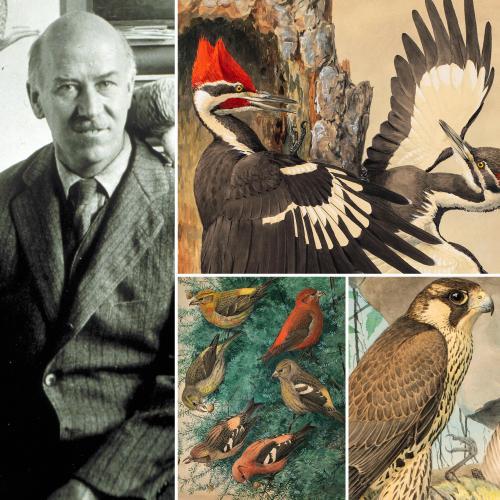
Louis Agassiz Fuertes (1874–1927) was an ornithologist, artist, and illustrator of Puerto Rican heritage who, in 1904, was commissioned by then New York State Museum Director, John Mason Clarke, to provide illustrations for an extensive research study on the state's bird species. Fuertes's collaboration with Elon Howard Eaton, who conducted the extensive research and wrote the text, resulted in the two-volume publication, Birds of New York.
Discover more about how Fuertes's illustrative work not only contributed to the scientific community but also helped inspire a wider interest in bird and nature conservation throughout New York.
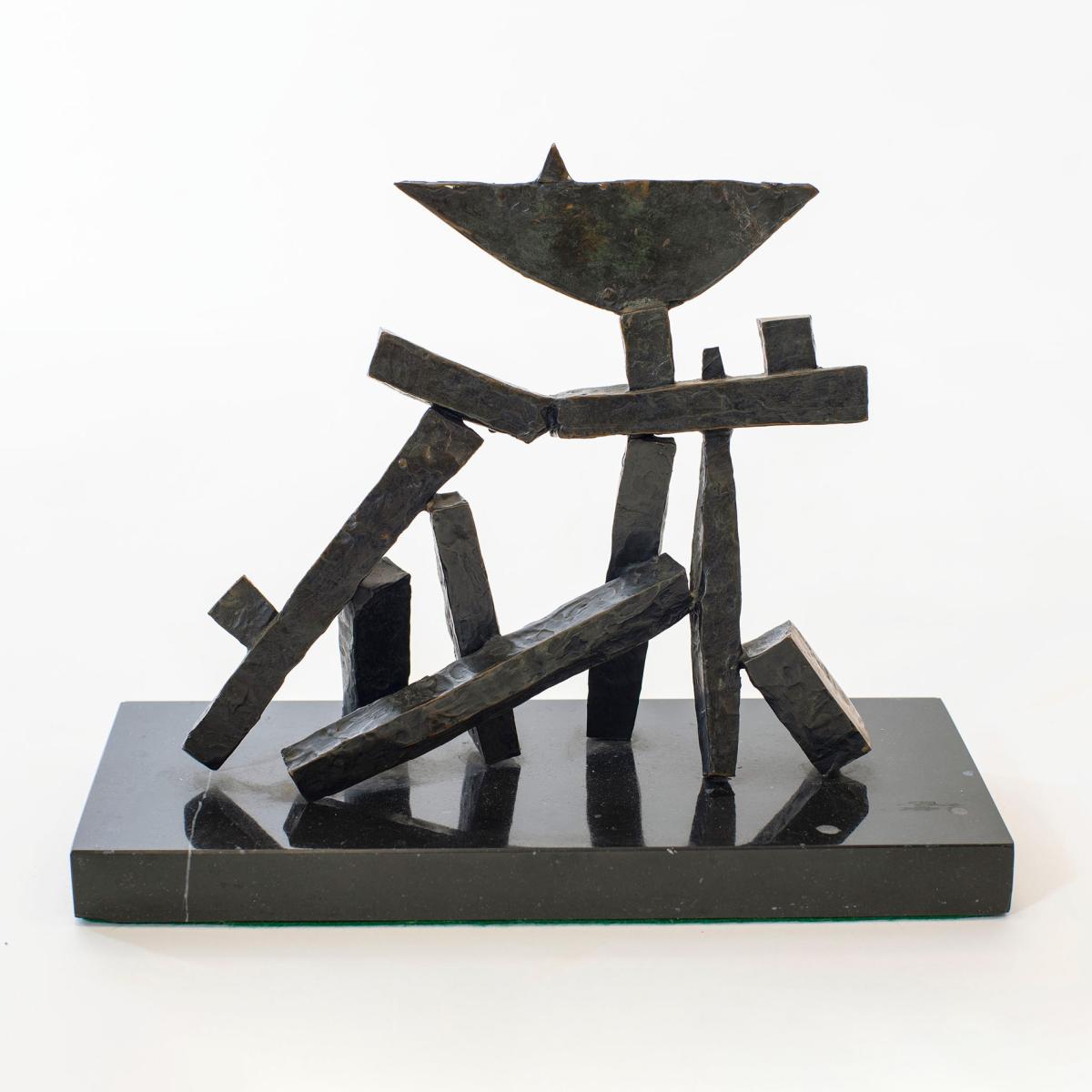
Edward Chavez (1917–1995)
Abstraction, n.d.
Bronze
NYSM, Historic Woodstock Art Colony: Arthur A. Anderson Collection
Edward Chavez
Born in New Mexico and descended from Spanish settlers, Edward Chavez spent most of his career based in Woodstock, New York. His upbringing in the West informed his art, however, and he returned often over the course of his life. He produced murals, easel paintings, prints, sculpture, and jewelry, much of which was inspired by his travels. During the Depression he painted murals for federal programs in Nebraska, Colorado, and Texas in his own twist on a social realist style. After WWII, he embraced a more abstract approach and also began to work in sculpture. Abstraction is one of his subtly textured non-representational bronzes based on precariously balanced geometric forms.
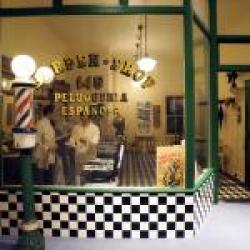
Ongoing Exhibition: The Gutierrez Barber Shop
In 2005, the NYSM acquired the fixtures and contents of the Gutierrez Barbershop to create this ongoing exhibition in New York Metropolis Hall. Established in New York City in 1929 by Antonio Gutierrez who emigrated from Spain, the barbershop served a vital role as a place where where people of diverse backgrounds could feel a sense of belonging.

Highlights from the Collection
The History and Historic Archaeology collections at the New York State Museum document New York’s diverse history from the 17th century through the present day. The objects below are a few examples that help tell the histories of those with Hispanic and/or Latino ancestry in New York. View all »
Celebrate in Color!
Download and decorate two special coloring sheets—one in English and one in Spanish—designed to honor this vibrant cultural celebration.


Video Presentations & CTLE
Pedro A. Regalado is Assistant Professor of History at Stanford University where he researches and teaches the history of race, immigration, planning, and capitalism in urban America. His first book, Nueva York: Making the Modern City, is a history of New York City’s Latinx community during the 20th century, from the “pioneers” who arrived after World War I to the panoply of Latinx people who rebuilt the city in the wake of the 1975 fiscal crisis. Across a range of topics, from urban renewal to the rise of Latinx bankers, US military operations in Central America to drug workers who repurposed tenement buildings, Nueva York demonstrates how the democratic ideals of the city hinged, in large part, on the experiences of Latinx New Yorkers.
CTLE Credit (1.5 hour): Link to Online Form for All That Has Disappeared
New York City’s Latinx small-business owners were frequent victims of urban renewal “slum clearance” during the 1950s. By the next decade, they wielded the federal War on Poverty to reimagine the relationship between government and Latinx New Yorkers, brokering between them to address hunger, public health, and the plight of credit-starved entrepreneurs. This lecture explores the history of Gotham’s Latinx storefronts—especially bodegas—during this transition. It reveals what their overlooked experiences teach us about the power of place in shaping community. It also offers new insights into how Latinx business owners helped to transform the trajectory of postwar New York.
CTLE Credit (1 hour): Link to Online Form for The Bodega, with Historian Pedro A. Regalado
Additional Resources from the Office of Cultural Education
A New York Minute in History Podcast: Las Villas
Learn about an enclave of restaurants, bars, and resorts that catered to predominately Latin American clientele near the Catskill Mountains. As more and more Latinos immigrated to New York City for work, they began to look to places outside the city for recreation and to connect with other Spanish-speaking tourists. By the mid-1950s there were 50 resorts in the Plattekill area that focused on Spanish-speaking visitors.
New York State Archives
Hispanic history and culture is present throughout the year in the thousands of documents available through ConsidertheSourceNY.org. However, we invite you to visit the Archive's Hispanic Heritage page for direct access to highlighted resources centering the history of Hispanic Americans in New York State.
Additionally, this September the New York State Archives’ presents, Lights, Camera, Action.
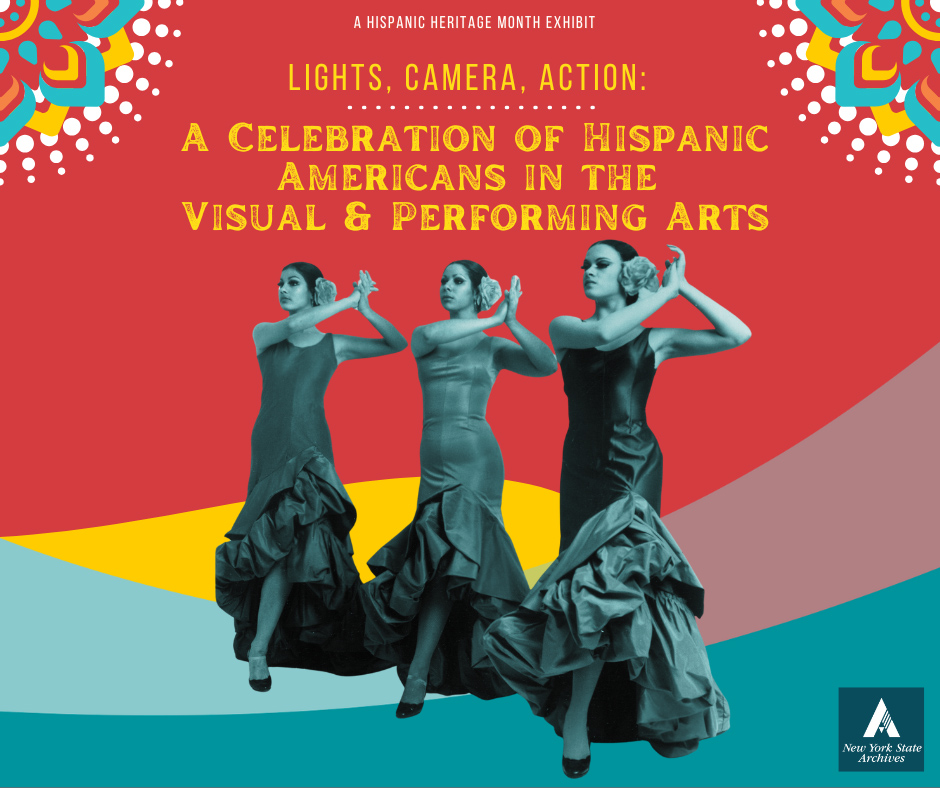
The display focuses on the work and achievements of Hispanic American dancers, actors, filmmakers and photographers. Featured records include images from New York City based companies Ballet Hispánico and Soul and Latin Theater; New York State Motion Picture Division filmscripts; and reproductions of photographs featured in the 1986 New York State Museum exhibition, New Traditions: Thirteen Hispanic Photographers. Material will be on display in the 11th floor lobby of the Cultural Education Center through the end of the month.
New York State Library: Talking Book and Braille Library
In celebration of Hispanic Heritage Month, we have curated a selection of braille and audiobooks. Our materials are available to anyone who has a print-reading impairment due to a visual, physical, or reading disability. With BARD, Braille and Audio Reading Download, readers may instantly download books in audio or digital braille to any compatible phone or device. Our large collection includes the latest bestsellers and award winners, along with books and magazines for all ages in over 50 languages. There is never a cost for our personalized service and there are no waitlists or late fees. Help us spread the word to all who are eligible. So that all may read!
PBS Learning Media
Access the Hispanic Culture & History folder featuring curated classroom resources from PBS LearningMedia. These multimedia support materials teacher-created, standards aligned, and free for use with K-12 learning environments.
New Exhibition Feature: Sadako’s Crane
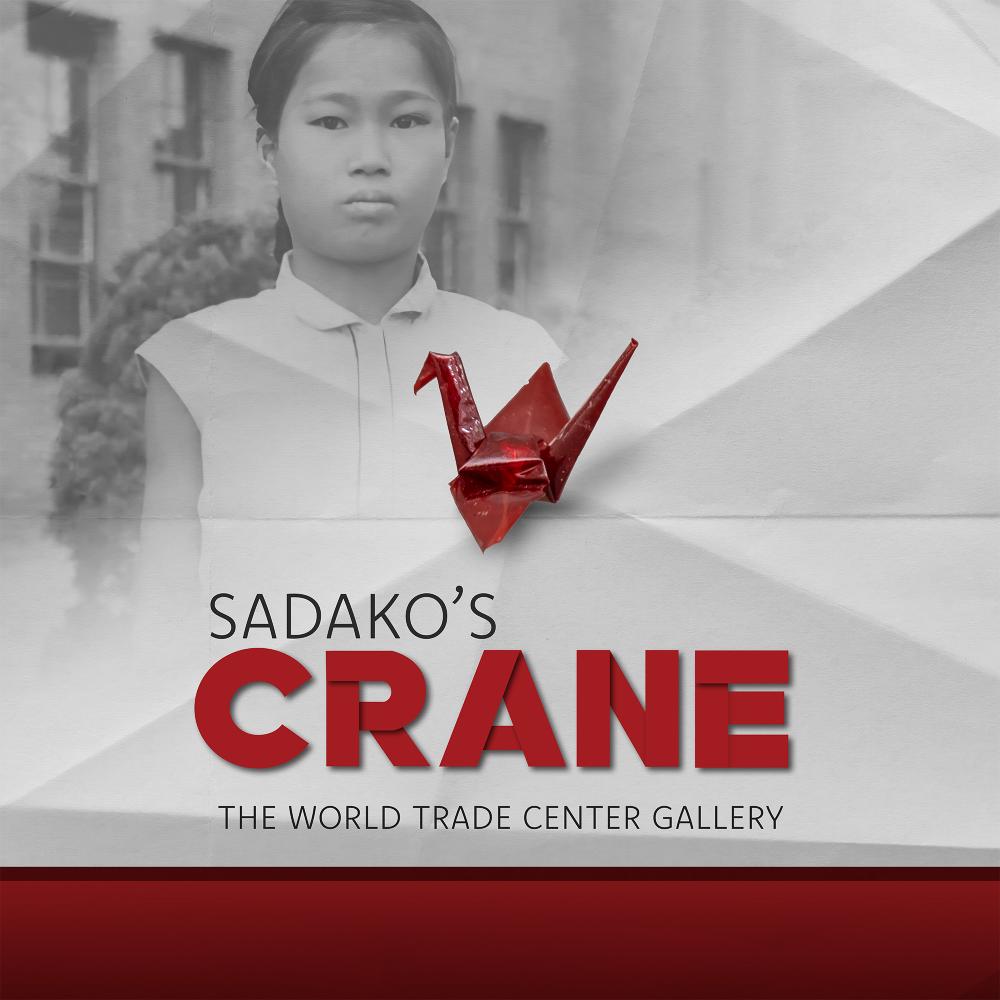
On view in the World Trade Center: Rescue, Recovery, Response Gallery
Two-year old Sadako Sasaki lived with her mother and grandmother in Hiroshima, Japan. On August 6, 1945, the family was approximately one mile from ground zero when the United States dropped the first atomic bomb. Sadako and her mother survived the bombing, but by 1955, Sadako was diagnosed with leukemia. She was hospitalized at a Red Cross hospital in Hiroshima on February 21, 1955.
In August, Sadako learned of a Japanese legend that if a person folded 1,000 origami cranes, the folder would be granted one wish. She set about folding the intricate paper birds, completing more than 1,300 before her death at the age of 12 on October 25, 1955. This tiny origami crane was created by Sadako Sasaki using the red wrapper of a methotrexate medicine container donated from the United States in March 1955.
In 2007, the crane was donated by the Sasaki family to the families of victims of the September 11, 2001, attacks and the 9/11 Tribute Museum, where it was on display until the museum’s closure in 2022 during the COVID 19 pandemic. The crane was among the many items transferred to the collections of the New York State Museum for safekeeping after Tribute’s closure.
Crane Conservation
Although the exhibition "Sadako's Crane" will remain open indefinitely, in an effort to limit light exposure, the original 1955 crane created by Sadako will only be on view from September 10 to October 6, 2024, after which the exhibit will feature a reproduction crane. Each September, the original crane will be placed back on view for a limited time in honor of the 9/11 anniversary.
Related Information:

The World Trade Center: Rescue, Recovery, Response
This exhibition details the history of the World Trade Center, the September 11 attacks, the rescue efforts, the evidence recovery operation at the Fresh Kills facility, and the public response to the September 11th events. The exhibition includes many objects, images, videos, and interactive stations documenting this tragic chapter in New York and America's history.
State Museum Hosts Students From the City of Albany’s Light Summer Youth Employment Program and Girls Inc. Eureka!
Local Youth to Participate in Staff-Led Opportunities, Intensive Learning, and Paid Work Experiences Through Hands-On State Museum Program
The New York State Museum (NYSM) is pleased to celebrate the success of its collaboration with the City of Albany’s LIGHT Summer Youth Employment Program (SYEP) and Girls Inc. Eureka! in a landmark year for its summer programming. The Museum proudly expanded its initiative to include Girls Inc. Eureka!, which provided young women with immersive STEM experiences. Over the course of the four-week program, students from each organization made a significant impact by engaging with nearly 2,000 Museum patrons through their public programming initiatives.
Eight local students, ages 14 to 18, participated in the program, gaining invaluable work experience across various fields, including science, history, and the arts. This enriching experience not only fostered career exploration but also offered compensated employment at the New York State Museum, ensuring a rewarding and educational journey for all involved.
Throughout the summer, students had the unique opportunity to work directly with Museum professionals—scientists, historians, educators, archivists, librarians, and exhibit planners. Guided by these experts, the students utilized the Museum’s collections and research materials from the New York State Library and Archives to craft their own public programming experiences, greatly enhancing the visitor experience.
The program concluded on August 9th, featuring seven students from the City of Albany’s LIGHT Summer Youth Employment Program and one from the Girls Inc. Eureka! Program. Funded by the City of Albany, SYEP students earned $15.00 per hour for 20 hours a week, adding an element of financial support to their educational experience.
New York State Museum Director of Education Kathryn Weller said, “We are thrilled to support the City of Albany’s LIGHT Summer Youth Employment Program and the Girls Inc. Eureka! Programs. The Summer Youth Employment Program offers a unique opportunity to introduce local students to the many professional opportunities and career paths within the New York State Museum, Library, and Archives. We love the enthusiasm and creativity our SYEP students bring to developing public programs for our visitors. We’re excited to see what the future holds for these talented students and are happy to provide a meaningful workplace experience that we hope inspires them in their future careers.”
City of Albany Department of Recreation Youth & Workforce Services Commissioner Jonathan Jones said, “The City of Albany's SYEP is incredibly fortunate to have a partnering worksite like the NYS Museum. The exposure to STEM and the Arts through the work at the Museum allows our youth employees to grow their knowledge in a variety of areas while developing their communication and problem-solving skills."
Summer Youth Employment Student Vanelia Anguilet said, “What I really enjoy here at the museum are the New York minerals; they are so majestic to see. I also participate in the Summer Youth Employment Program to possess and develop more skills like public speaking or helping people in difficulty and more. I always do this, even at school, when I have the chance. I hope to be someone in the future, a good person, to find the career that fits my personality and that will help me be myself so that I can give people the best of me.”
Vanelia graduated this year from the City School District of Albany. She made the Principal’s List for Innovation Academy and plans to attend Hudson Valley Community College in the Fall.
Throughout the summer, Museum visitors enjoyed various educational and hands-on programming created by the dedicated students from the City of Albany’s LIGHT Summer Youth Employment and Girls Inc. Eureka! Programs. These engaging, pop-up-style activities sparked creativity and curiosity, offering fresh experiences with every visit.
The City of Albany’s LIGHT Summer Youth Employment Program(link is external) is a 30+ year-old program that provides summer employment for youth between the ages of 14-18. LIGHT stands for Learning Initiatives and Gaining Headway Together, which symbolizes the program curriculum used in Albany for five weeks each summer. The City of Albany’s LIGHT program introduces youth to the labor market by helping them acquire skills and insight with work experience that can be used to improve school performance and become responsible adults.
Girls Inc. Eureka! is a free and unique five-year program that introduces girls to STEM, personal development, sports, mentorship, and career exploration.
About the Cultural Education Center
The State Museum is a program of the New York State Education Department’s Office of Cultural Education. Located at 222 Madison Avenue in Albany, the Museum is open Tuesday through Sunday from 9:30 a.m. to 5 p.m. It is closed on the Fourth of July, Thanksgiving, Christmas, and New Year's Day. Admission is free. For additional information, visit the New York State Museum website.
The New York State Library is part of the Office of Cultural Education within the New York State Education Department. Visit the New York State Library website for a complete list of upcoming programs. To receive news, resources, and other updates, please subscribe to the quarterly newsletter.
The New York State Archives holds many of the oldest and most important archival treasures in the nation. The Archives preserves and makes accessible over 250 million records of New York’s State and colonial governments dating from 1630 to the present. The State Archives provides free access to photographs, artifacts, documents, manuscripts, and other materials that tell the story of New York’s history via its Digital Collections on the Archives website.
The Archives Partnership Trust was founded in 1992 to build an endowment and provide project support to enhance humanities programs, increase access to these outstanding treasures, and continue the preservation of New York's historical records. Since its founding, the Partnership Trust, a 501(c)(3) non-profit organization, has supported exceptional projects and programs. These include the Research Residency Program, the Student Research Awards Program, history conferences, special exhibitions, public education programs, book signings and lectures, publications, teacher training institutes, preservation projects, and more.
The State Museum, State Library, and State Archives are programs of the New York State Education Department’s Office of Cultural Education. Further information about programs and events can be obtained by calling (518) 474-5877 or by visiting the Office of Cultural Education website.
Phone: (518) 474-1201
For More Information Contact:
Dora Ricci
Press@nysed.gov
www.nysed.gov
State Education Department Commemorates Black History Month With Inspiring Exhibitions, Events, and Educational Programs
Resources, Online and In-Person Programming, and Public Broadcasting Events Available Throughout February Across the State
The Moral Arc Toward Freedom: Lincoln, King, and the Emancipation Proclamation Special Exhibition Opens February 13
In honor of Black History Month, the New York State Education Department (NYSED) proudly recognizes the profound history, culture, and invaluable contributions of African Americans to the State and nation. Through February, special exhibitions, educational resources, and compelling in-person and online programs will be available, highlighting the significance of Black history in New York State. The monthlong celebration underscores the value of fostering unity and solidarity among diverse cultural identities and highlights the role of education as a unifying force that bridges these varied experiences.
Board of Regents Chancellor Lester W. Young, Jr. said, “The celebration of Black History Month is more than just about commemorating the significant contributions of people of African descent to American history and culture. It provides an opportunity to recognize and honor the achievements of a people who have made a tremendous impact on our society and have often been overlooked or undervalued. By learning about their struggles and triumphs, we can better understand our shared history and work towards a more inclusive and equitable future. The Board of Regents and the New York State Education Department remain committed to igniting and inspiring teaching and learning to build a culture and society based on a foundation of access, opportunity, trust, and respect for all New Yorkers.”
State Education Commissioner Betty A. Rosa said, “Black History Month is a tribute to those who came before us in the relentless pursuit of freedom, justice, and equality while advocating for a better future and more inclusive society. As we participate in this month’s events and programs, let us not only celebrate the accomplishments, pride, courage, and resilience that define the Black experience but also strive for a future where the principles of liberty, inclusivity, and equity are universally embraced.”
New York State Museum:
- A comprehensive list of in-person and virtual Black History Month programs happening across the state is available on the Museum’s website.
- The Museum, in partnership with the State Library and State Archives, will feature the centerpiece of this year’s Black History Month observance with a special exhibition, The Moral Arc Toward Freedom: Lincoln, King, and the Emancipation Proclamation. This exhibition opens Tuesday, February 13, goes through Sunday, March 3, and focuses on the historical connections between President Abraham Lincoln, Dr. Martin Luther King Jr., and the Emancipation Proclamation. It includes two historic documents: President Abraham Lincoln’s 1862 Preliminary Emancipation Proclamation and select pages from a speech Dr. Martin Luther King Jr. delivered in New York City in September 1962 to commemorate the 100th anniversary of the Preliminary Emancipation Proclamation. This draft of the Preliminary Emancipation Proclamation is the only surviving version of the document in Lincoln’s handwriting.
- To mark the opening of The Moral Arc Toward Freedom: Lincoln, King, and the Emancipation Proclamation Exhibition, a special program, A Conversation with New York State Poet Patricia Spears Jones, Historian Dr. Jennifer Burns, and New York State Museum Curator Dr. Jennifer Lemak, will be held at 7 p.m. on Thursday, February 15, 2024, in the Huxley Theater.
- The spirit and music of the Jazz Era will be celebrated with Jazz in the Galleries featuring live performances from Project H Jazz Quartet and the musical duo Lucia and Levi from 1 p.m. to 3 p.m. on Thursday, February 22, in the Museum’s Metropolis Hall. This program is sponsored by The Albany Musicians Association and can be enjoyed by visitors of all ages.
- For more information on Black History-related programming provided by the New York State Museum on how artifacts, either archaeological or historical, help document the history of Black New Yorkers from the colonial period to the modern age, visit the Museum’s website.
New York State Library:
- During February, on the 7th floor of the New York State Library, a special exhibit, Understanding Lincoln through Primary Source Documents, will feature cases with selected books and primary source documents from the Library’s collections on President Abraham Lincoln and the Preliminary Emancipation Proclamation. Topics of the exhibit will include Lincoln’s life, the writing of the proclamation, how the State Library came to have the Preliminary Emancipation Proclamation, and Lincoln’s death.
- A webinar entitled “Lincoln, the Founding, and an America Worth Saving,” with Dr. Lucas Morel of Washington and Lee University, will be held from 12 p.m. to 1 p.m. on Thursday, February 15, 2024. To learn more about the program and how to register, visit the New York State Library website.
- A webinar entitled “A Dreamer with A Tiny Spark”: E. J. Josey Transforms the Modern Library Profession, with Dr. Renate, Chancellor of Syracuse University, will be held from 1 p.m. to 2 p.m. on Wednesday, February 21, 2024. To learn more about the program and how to register, visit the New York State Library website.
New York State Archives Partnership Trust/New York State Archives:
- ConsidertheSourceNY.org Teaching with Historical Records(link is external) is available for use during Black History Month and beyond. The continuously expanding collection of document-based activities is developed by the New York State Archives Partnership Trust and teachers around the state. This resource is available to New York State educators with ready-to-use archival resources and learning activities aligned with the New York State Learning Standards. It contains original New York State Archives primary sources and learning activities along with many educational materials.
- During February, on the 11th floor lobby of the Cultural Education Center, a special exhibit, Before Brown: Desegregating New York’s Public Schools, will highlight the early mid-20th century school segregation battles in Hempstead and Hillburn that were taken on by the NAACP Legal Defense Fund, a civil rights firm founded by Thurgood Marshall. Education resources are available on ConsidertheSourceNY.org.
New York State Public Broadcasting:
- Learn more about Black culture and history in New York State and beyond with PBS Learning Media. A variety of multimedia support materials are available for the classroom suited for grades PK–12. To learn more about these resources, visit the PBS website.
Offices of P12 and Cultural Education:
- Educators are invited to utilize the Preliminary Emancipation Proclamation and the 1962 Dr. Martin Luther King, Jr. Civil War Centennial speech within classroom studies. Use these remarkable primary sources to engage students and uplift their voice through project-based learning. Then, share student work with us via social media using the hashtags #BlackHistoryNY and #MyHistoryMyFuture. A full suite of classroom materials is available on the New York State Library website..
Social Media:
- #BlackHistoryNY: Throughout the month, the State Education Department will feature information on Black History on the Department’s Twitter, Facebook, Instagram, and LinkedIn accounts.
- #MyHistoryMyFuture: The State Education Department and Education Trust—New York are highlighting students’ work and reflections on the impacts of history and its relevance to their generation. Through the #MyHistoryMyFuture social media campaign, the Department intends to amplify the voices of young people. We encourage students to not only reflect on the past but to be proud of where they come from and take action to make their schools, communities, and the world a better place for future generations.
- #StudentsExhibitingMLK and #NYSMLK: Together with the New York State Office of General Services, the New York State Education Department is highlighting artwork by students from across New York that honors Dr. Martin Luther King, Jr.’s messages of equality, love, and peace. This campaign may be viewed on the Department’s social media accounts. View the NYS Dr. Martin Luther King, Jr. Student Art & Essay Exhibit online or in person on the Empire State Plaza North Concourse in Albany.
Phone: (518) 474-1201
For More Information Contact:
Dora Ricci
Press@nysed.gov
www.nysed.gov
New York State Museum Celebrates Women’s History Month by Honoring Women’s Contributions to State History With Special Programs, Events, and Exhibits
Family History Day to be Held on Sunday, March 10
To commemorate Women’s History Month, the New York State Museum (NYSM) will honor the significant roles of women in New York State history. Throughout March, there will be numerous special programs, events, educational resources, and exhibits to honor and celebrate the diverse achievements of women, both past and present. From engaging in-person experiences to helpful online resources, visitors of all ages are invited to learn about the pivotal role women have played in shaping our State heritage.
Board of Regents Chancellor Lester W. Young, Jr. said, "Throughout the history of the United States, women and girls have made significant contributions despite facing discrimination and adversity. During Women's History Month, we recognize the brave women who fought for and earned the right to vote, advocated against injustice, broke numerous barriers, and expanded opportunities for all women and girls. Our history is also filled with inspiring examples of women who have paved the way in the recent and distant past, working tirelessly to open doors of opportunity for everyone."
State Education Commissioner Betty A. Rosa said, “Women's History Month is an opportunity to celebrate the insurmountable spirit, resilience, and invaluable contributions of women throughout history, while also serving as an inspiration to the women of today to script their own narrative in the ongoing story of women’s history. This rich selection of important programs and events serve as a platform to foster a society that celebrates the achievements of women, highlights their diverse stories, and paves the way for a future where every woman’s potential is realized and celebrated.”
In recognition of Women’s History Month, learn more about these significant contributions by exploring the following educational resources and programs for classroom teachers, educators, and the public from the State Education Department’s Office of Cultural Education’s collections, exhibits, and research.
New York State Museum:
- A comprehensive list of in-person and virtual Women's History Month programs happening across the state is available on the Museum’s website.
- The Museum will host Women’s History Month Family History Day on Sunday, March 10, 2024, from 12 p.m. until 3 p.m. This event, for all ages, is an opportunity to celebrate the dynamic role women play in New York’s history. There will be hands-on history activities, curator-led exhibit tours, and a short-film series, Change-Makers Along the Women’s Rights Corridor, Virtual Video Visits, presented by 1st Amendment-1st Vote, Incorporated at 2 p.m. in the Huxley Theater.
- The New York State Museum presents its annual Women of Science program. Learn more about these talented current and past scientists and their research through online presentations.
- As an approved provider of Continuing Teacher and Leader Education (CTLE), the New York State Museum is offering Women's History Month Online CTLE Credits for educators this month. Explore the 360 Gallery Tour of the NYSM's exhibition, Votes for Women: Celebrating New York’s Suffrage Centennial, and earn one CTLE credit hour.
New York State Library:
- A webinar entitled, “Fearless Women: Feminist Patriots from Abigail Adams to Beyoncé,” with Dr. Elizabeth Cobbs, historian, novelist, and documentary filmmaker, will be held from 12 p.m. to 1 p.m. on Tuesday, March 5, 2024. To learn more about the program and how to register, visit the New York State Library’s calendar of events.
- A webinar entitled, “Eleanor Roosevelt After 1945,” with Dr. Sandra Opdycke, historian, and author, will be held from 11 a.m. to 12 p.m. on Wednesday, March 20, 2024. To learn more about the program and how to register, visit the New York State Library’s calendar of events.
- A webinar entitled, “Celebrating the 19th Amendment: Women's Suffrage and Anti-Suffrage Documents for Educators,” with Marisa Gitto, New York State Library Senior Reference Librarian, will be held from 3:30 p.m. to 4:30 p.m. on Monday, March 25, 2024. To learn more about the program and how to register, visit the New York State Library’s calendar of events.
New York State Archives/ New York State Archives Partnership Trust:
- Tune in on Tuesday, March 12, at 12:30 p.m. for A Woman’s Place: The History of the New York State Women’s Division, A New York Archives Magazine Online Speaker Series Program. Register for the free Zoom program on the Archives Partnership Trust website. The New York State Archives presents, “A Woman’s Place: The History of the New York State Women’s Division.” This display highlights records created by the Women’s Division, a unit within the Executive Chamber that promoted equal status for women and worked with state government agencies on issues affecting women. The material highlighted during the Zoom program will be on display in the 11th floor lobby of the Cultural Education Center throughout March.
- During Women’s History Month, hundreds of ready-to-use primary sources and standards-aligned, teacher-created learning activities can be accessed on ConsidertheSourceNY.org. Historical records spanning from the Dutch colonial period through the preset day offer students an opportunity to practice their document-analysis skills and discover the role of women in New York State history.
New York State Public Broadcasting:
- Toolkits for the classroom. Learn more about Women’s History Month with these free, ready-to-use multimedia resources for the classroom. This folder features videos, lesson plans, media galleries, and more, all focused on Women’s History and culture. All of these resources are educator-created and standards-aligned from PBS stations.
The State Museum is a program of the New York State Education Department’s Office of Cultural Education. Located at 222 Madison Avenue in Albany, the Museum is open Tuesday through Sunday from 9:30 a.m. to 5 p.m. It is closed on the Fourth of July, Thanksgiving, Christmas, and New Year's Day. Admission is free. For additional information, visit the New York State Museum website.
The New York State Library is part of the Office of Cultural Education within the New York State Education Department. Visit the New York State Library website for a complete list of upcoming programs. To receive news, resources, and other updates, please subscribe to the quarterly newsletter.
The New York State Archives holds many of the oldest and most important archival treasures in the nation. The Archives preserves and makes accessible over 250 million records of New York’s State and colonial governments dating from 1630 to the present. The State Archives provides free access to photographs, artifacts, documents, manuscripts, and other materials that tell the story of New York’s history via its Digital Collections on the Archives website.
The Archives Partnership Trust was founded in 1992 to build an endowment and provide project support to enhance humanities programs, increase access to these outstanding treasures, and continue the preservation of New York's historical records. Since its founding, the Partnership Trust, a 501(c)(3) non-profit organization, has supported exceptional projects and programs. These include the Research Residency Program, the Student Research Awards Program, history conferences, special exhibitions, public education programs, book signings and lectures, publications, teacher training institutes, preservation projects, and more.
The State Museum, State Library, and State Archives are programs of the New York State Education Department’s Office of Cultural Education. Further information about programs and events can be obtained by calling (518) 474-5877 or by visiting the Office of Cultural Education website.
Phone: (518) 474-1201
For More Information Contact:
Dora Ricci
Press@nysed.gov
www.nysed.gov
New York State Museum Announces June Public Programs
June is LGBTQ+ Pride Month
The New York State Museum announces its upcoming programming for June, offering educational opportunities for New Yorkers of all ages. Through special programs, including events, lectures, exhibits, and a host of online resources, children, families, educators, and students can experience art, science, and history in a fun and engaging way. As indicated in each listing, the following upcoming free programming is available in person or online.
LGBTQ+ Stories in Our Galleries
Thursday, June 6, 2024 | 12 PM | Museum Lobby | Free
Sunday, June 30, 2024 | 2 PM | Museum Lobby | Free
Throughout our history, New Yorkers have led the charge for equality, including fighting for the rights of lesbian, gay, bisexual, transgender, and queer (LGBTQ+) individuals. In 1969, a spark was lit in the already growing gay rights movement at the Stonewall Uprising in Greenwich Village, New York City. As the movement grew nationally over the next few decades, New Yorkers participated in activism across the state, from the struggles of Gay Liberation through the AIDS crisis to the successful fight for marriage equality in 2011. Join Senior Historian Ashley Hopkins-Benton as she highlights a few LGBTQ+ stories in the New York State Museum’s galleries.
Learn more about June 6, 2024, LGBTQ+ Stories in Our Galleries
Learn more about June 30, 2024, LGBTQ+ Stories in Our Galleries
Searching for Timbuctoo, a film by Paul Miller
Saturday, June 15, 2024 |10 AM – 4 PM | Huxley Theater | Free
In 1846, New York State enacted a law requiring African American men to own $250 worth of property to vote. To circumvent this unjust law, radical abolitionist Gerrit Smith gave away 120,000 acres of land in Essex and Franklin Counties to 3,000 free Black men, thereby qualifying them to vote. Searching for Timbuctoo tells the history of this forgotten settlement and New York State on the brink of the Civil War. It follows an archaeology team looking to unearth evidence of the community. (The 55-minute film will run on a loop throughout the day.) Join us for a showing of Searching for Timbuctoo (2021), a film by writer and photographer Paul Miller.
Learn more about Searching for Timbuctoo, a film by Paul Miller
Gallery Tour Unveiled: Wedding Wear in New York, 1910s–1940s
Sunday, June 16, 2024 | 2 PM | New York Metropolis Hall | Free
Thursday, June 27, 2024 | 12 PM | New York Metropolis Hall | Free
In choosing their wedding clothes, brides and grooms are influenced by fashion, economics, technology, religion, geography, celebrity, personal taste, and their role in society. This was as true in the past as it is today. Wedding clothing holds memories; pieces—dresses, shoes, suits, and headwear—are often preserved and passed on to later generations. A couple’s choices reveal information about both the individuals who wore them and those who made them. Some garments, like those exhibited here from the 1910s to 1940s, find their way to museum collections. Unveil these stories with Exhibit Curator Connie Frisbee Houde as she highlights pieces from the exhibit Unveiled: Wedding Wear in New York, 1910s–1940s.
Learn more about June 16, 2024, Gallery Tour Unveiled: Wedding Wear in New York, 1910s–1940s
Learn more about June 27, 2024, Gallery Tour Unveiled: Wedding Wear in New York, 1910s–1940s
All That Has Disappeared: Latinxs and Urban Redevelopment, 1937-1962 A Lecture with Dr. Pedro A. Regalado, Stanford University
Thursday, June 20, 2024 |7 PM | Huxley Theater | Free
Pedro A. Regalado is an Assistant Professor of History at Stanford University, where he researches and teaches the history of race, immigration, planning, and capitalism in urban America. His first book, Nueva York: Making the Modern City, is a history of New York City’s Latinx community during the twentieth century, from the “pioneers” who arrived after World War I to the panoply of Latinx people who rebuilt the city in the wake of the 1975 fiscal crisis. Across a range of topics, from urban renewal to the rise of Latinx bankers, US military operations in Central America to drug workers who repurposed tenement buildings, Nueva York demonstrates how the democratic ideals of the city hinged, in large part, on the experiences of Latinx New Yorkers. Regalado’s work has been featured in the Journal of Urban History, Boston Review, The Washington Post, Platform, The Chronicle of Higher Education, and Public Books. Before coming to Stanford, Regalado was a junior fellow of the Society of Fellows at Harvard University. He was born in the Dominican Republic and raised in New York City’s Washington Heights.
Learn more about All That Has Disappeared: Latinxs and Urban Redevelopment, 1937-1962 - A Lecture with Dr. Pedro A. Regalado
Cabaret for Kids Presented by The Pride Center of the Capital Region
June 22, 2024 |12 PM - 2 PM| Huxley Theater | Free
Frieda and Carmie will host a fun-filled show and event with songs, games, prizes, and sing-alongs for kids of all ages.
Learn more about Cabaret for Kids, Presented by The Pride Center of the Capital Region
The State Museum is a program of the New York State Education Department’s Office of Cultural Education. Located at 222 Madison Avenue in Albany, the Museum is open Tuesday through Sunday from 9:30 a.m. to 5 p.m. It is closed on the Fourth of July, Thanksgiving, Christmas, and New Year's Day. Admission is free. For additional information, visit the New York State Museum website.
Phone: (518) 474-1201
For More Information Contact:
Dora Ricci
Press@nysed.gov
www.nysed.gov
New York State Museum Announces July Public Programs
New York State Museum Announces July Public Programs
The New York State Museum (NYSM) announces its upcoming programming for July, offering educational opportunities for New Yorkers of all ages. Special programs include events, lectures, exhibits, and a host of online resources. These offerings allow children, families, educators, and students to enjoy art, science, and history in an engaging way. The following upcoming free programs are free and are available in person or online, as indicated in each listing.
Summer at the Museum
Tuesday, July 16, 2024 | 11 AM - 1 PM | All Museum Galleries | Free
Thursday, July 18, 2024 | 11 AM - 1 PM | All Museum Galleries | Free
Tuesday, July 23, 2024 | 11 AM - 1 PM | All Museum Galleries | Free
Thursday, July 25, 2024 | 11 AM - 1 PM | All Museum Galleries | Free
Tuesday, July 30, 2024 | 11 AM - 1 PM | All Museum Galleries | Free
Throughout the summer, programs designed to spark creativity and curiosity will take place around the Museum. These family-friendly programs will change regularly, so make sure to come back!
Learn more about July 16, 2024, Summer at the Museum
Learn more about July 18, 2024, Summer at the Museum
Learn more about July 23, 2024, Summer at the Museum
Learn more about July 25, 2024, Summer at the Museum
Learn more about July 30, 2024, Summer at the Museum
BrainFood for the Curious: Canine Contrasts with Dr. Jeremy Kirchman
Wednesday, July 17, 2024 | 12 PM – 12:30 PM | Huxley Theater | Free
Explore the genetic and physical differences between wolves and coyotes by joining Dr. Jeremy Kirchman as he sheds light on the historical decline of wolves and the colonization of coyotes in New York. Learn how the history of coyote-wolf hybridization has made it difficult for hunters and wildlife management agencies to distinguish our ubiquitous eastern coyote from the occasional wolf that wanders outside of its core breeding range in neighboring Canada. This program includes a 20-minute talk and a brief Q&A.
Learn more about BrainFood for the Curious: Canine Contrasts with Dr. Jeremy Kirchman
Celebrate National Carousel Day at the NYSM
Thursday, July 25, 2024 | 11 AM – 1 PM | 4th Floor Terrace | Free
Celebrate National Carousel Day on July 25th with a day of fun activities at the New York State Museum. Enjoy carousel-themed stories, crafts, and a ride on the Museum's 110-year-old carousel. This free, family-friendly event will have everyone spinning with joy! National Carousel Day commemorates the registration of the first patent for a carousel design by William Schneider on July 25, 1871.
Learn more about Celebrate National Carousel Day at the NYSM!
Tour of the State Education Building
Saturday, July 27 | 2 PM – 2:45 PM | State Education Building
Tour the historic New York State Education Department Building! New York State Museum staff lead the 45-minute Education Building tour, and visitors can explore the building adorned with murals by Albany native Will H. Low. The tour starts outdoors on the front steps of the State Education Building, located at 89 Washington Avenue, Albany. Tours of the Education Building will be offered at 2 p.m. Each tour can accommodate 35 people, and reservations are required.
Learn more about Tour of the State Education Building
The State Museum is a program of the New York State Education Department’s Office of Cultural Education. Located at 222 Madison Avenue in Albany, the Museum is open Tuesday through Sunday from 9:30 a.m. to 5 p.m. It is closed on the Fourth of July, Thanksgiving, Christmas, and New Year's Day. Admission is free. For additional information, visit the New York State Museum website.
Phone: (518) 474-1201
For More Information Contact:
Dora Ricci
Press@nysed.gov
www.nysed.gov
State Museum Opens Exhibition: “Canine Contrasts: Unraveling Wolves And Coyotes In New York”
Join Dr. Jeremy Kirchman for Related Educational Lunchtime Lecture Series "BrainFood for the Curious: Canine Contrasts” in July and August
The New York State Museum (NYSM) announced today the debut of its latest exhibition, Canine Contrasts: Unraveling Wolves and Coyotes in New York. The exhibit will feature Taxidermy mounts and skulls of wolves and coyotes, both species from the Museum’s mammalogy collection. It will also tell the story of a wolf that was recently mistaken for a coyote and killed by a licensed hunter near Cherry Valley, New York.
NYSM Curator of Birds and Mammals Dr. Jeremy Kirchman said, “We are excited to display the Cherry Valley wolf specimen and use it to anchor an exhibit about the complex interactions between coyotes and wolves in eastern North America. The colonization of New York by coyotes that have hybridized with wolves and the occasional dispersal of individual wolves back into our area is a fascinating story that we are happy to share with the public. Specimen collections like ours are the basis of ongoing DNA research on wild canids here at NYSM and other museums and universities.”
The Canine Contrasts exhibit offers a unique opportunity to explore the differences between wolves and coyotes, including their physical and genetic characteristics and habitats. It also shows how the history of coyote-wolf hybridization has made it difficult for both hunters and wildlife management agencies to distinguish our ubiquitous eastern coyote from the occasional wolf that wanders outside of its core breeding range in neighboring Canada.
The New York State Museum will host two events related to the exhibit.
On Wednesday, July 17, starting at noon in the Huxley Theater, NYSM Curator of Birds and Mammals, Dr. Jeremy Kirchman, will host the "BrainFood for the Curious: Canine Contrasts with Dr. Jeremy Kirchman,"which is a short talk held during lunchtime in which he will discuss the natural history of wolves and coyotes. Following the talk, Dr. Kirchman will lead visitors to the new exhibit to continue the discussion. This program, "BrainFood for the Curious: Canine Contrasts with Dr. Jeremy Kirchman," will be held again on Wednesday, August 14th at 12 PM in the Huxley Theater.
The State Museum is a program of the New York State Education Department’s Office of Cultural Education. Located at 222 Madison Avenue in Albany, the Museum is open Tuesday through Sunday from 9:30 a.m. to 5 p.m. It is closed on the Fourth of July, Thanksgiving, Christmas, and New Year's Day. Admission is free. For additional information, visit the New York State Museum website.
The New York State Library is part of the Office of Cultural Education within the New York State Education Department. Visit the New York State Library website for a complete list of upcoming programs. To receive news, resources, and other updates, please subscribe to the quarterly newsletter.
The New York State Archives holds many of the oldest and most important archival treasures in the nation. The Archives preserves and makes accessible over 250 million records of New York’s State and colonial governments dating from 1630 to the present. The State Archives provides free access to photographs, artifacts, documents, manuscripts, and other materials that tell the story of New York’s history via its Digital Collections on the Archives website.
The Archives Partnership Trust was founded in 1992 to build an endowment and provide project support to enhance humanities programs, increase access to these outstanding treasures, and continue the preservation of New York's historical records. Since its founding, the Partnership Trust, a 501(c)(3) non-profit organization, has supported exceptional projects and programs. These include the Research Residency Program, the Student Research Awards Program, history conferences, special exhibitions, public education programs, book signings and lectures, publications, teacher training institutes, preservation projects, and more.
The State Museum, State Library, and State Archives are programs of the New York State Education Department’s Office of Cultural Education. Further information about programs and events can be obtained by calling (518) 474-5877 or by visiting the Office of Cultural Education website.
Phone: (518) 474-1201
For More Information Contact:
Dora Ricci
Press@nysed.gov
www.nysed.gov
New York State Museum Announces August Public Programs
The New York State Museum announces its upcoming programming for August, offering educational opportunities for New Yorkers of all ages. Through special programs, including events, lectures, exhibits, and a host of online resources, children, families, educators, and students can experience art, science, and history in a fun and engaging way. The following upcoming free programs are available in person or online, as indicated in each listing.
Summer at the Museum
Thursday, August 1, 2024 | 11 AM - 1 PM | All Museum Galleries | Free
Tuesday, August 6, 2024 | 11 AM - 1 PM | All Museum Galleries | Free
Thursday, August 8, 2024 | 11 AM - 1 PM | All Museum Galleries | Free
Throughout the summer, programs designed to spark creativity and curiosity will take place around the Museum. These family-friendly programs will change regularly, so make sure to come back!
Learn more about August 1, 2024, Summer at the Museum
Learn more about August 6, 2024, Summer at the Museum
Learn more about August 8, 2024, Summer at the Museum
Tours of the State Education Building
Saturday, August 10 | 2 PM – 2:45 PM | State Education Building
Saturday, August 17 | 2 PM – 2:45 PM | State Education Building
Tour the historic New York State Education Department Building! New York State Museum staff lead the 45-minute Education Building tour, and visitors can explore the building adorned with murals by Albany native Will H. Low. The tour starts outdoors on the front steps of the State Education Building, located at 89 Washington Avenue, Albany. Tours of the Education Building will be offered at 2 p.m. Each tour can accommodate 35 people, and reservations are required.
Learn more about the August 10 State Education Building Tour(link is external)
Learn more about the August 17 State Education Building Tour(link is external)
Gallery Tour Unveiled: Wedding Wear in New York, 1910s–1940s
Sunday, August 11 | 2 PM | New York Metropolis Hall | Free
Thursday, August 15 | 12 PM | New York Metropolis Hall | Free
In choosing their wedding clothes, brides and grooms are influenced by fashion, economics, technology, religion, geography, celebrity, personal taste, and their role in society. This was as much the case in the past as it is today. Wedding clothing holds memories, and pieces—dresses, shoes, suits, and head wear—are often preserved and passed to subsequent generations. A couple’s choices reveal information about both the individuals who wore them and those who made them. Some garments, like those exhibited here from the 1910s to 1940s, find their way to museum collections. Unveil these stories with clothing expert, Connie Frisbee Houde, as she highlights pieces from the exhibit, Unveiled: Wedding Wear in New York, 1910s–1940s.
Learn more about the August 11 Gallery Tour Unveiled: Wedding Wear in New York, 1910s–1940s
Learn more about the August 15 Gallery Tour Unveiled: Wedding Wear in New York, 1910s–1940s
BrainFood for the Curious: Canine Contrasts with Dr. Jeremy Kirchman
Wednesday, August 14 | 12 PM – 12:30 PM | Huxley Theater | Free
Explore the genetic and physical differences between wolves and coyotes by joining Dr. Jeremy Kirchman as he sheds light on the historical decline of wolves and the colonization of coyotes in New York. Learn how the history of coyote-wolf hybridization has made it difficult for hunters and wildlife management agencies to distinguish our ubiquitous eastern coyote from the occasional wolf that wanders outside of its core breeding range in neighboring Canada. This program includes a 20-minute talk and a brief Q&A.
Learn more about BrainFood for the Curious: Canine Contrasts with Dr. Jeremy Kirchman
The New York State Library is part of the Office of Cultural Education within the New York State Education Department. Visit the New York State Library website for a complete list of upcoming programs. To receive news, resources, and other updates, please subscribe to the quarterly newsletter.
The New York State Archives holds many of the oldest and most important archival treasures in the nation. The Archives preserves and makes accessible over 250 million records of New York’s State and colonial governments dating from 1630 to the present. The State Archives provides free access to photographs, artifacts, documents, manuscripts, and other materials that tell the story of New York’s history via its Digital Collections on the Archives website.
The Archives Partnership Trust was founded in 1992 to build an endowment and provide project support to enhance humanities programs, increase access to these outstanding treasures, and continue the preservation of New York's historical records. Since its founding, the Partnership Trust, a 501(c)(3) non-profit organization, has supported exceptional projects and programs. These include the Research Residency Program, the Student Research Awards Program, history conferences, special exhibitions, public education programs, book signings and lectures, publications, teacher training institutes, preservation projects, and more.
The State Museum, State Library, and State Archives are programs of the New York State Education Department’s Office of Cultural Education. Further information about programs and events can be obtained by calling (518) 474-5877 or by visiting the Office of Cultural Education website.
Phone: (518) 474-1201
For More Information Contact:
Dora Ricci
Press@nysed.gov
www.nysed.gov
State Museum Announces Sadako’s Crane Exhibit on Display in World Trade Center Gallery
New Exhibit Highlights the Connection between Hiroshima and 9/11 Historical Events Through the Story of a Young Japanese Girl
Origami Crane on Display September 10 through October 6, 2024
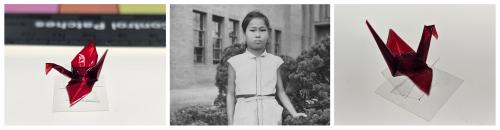
The New York State Museum (NYSM) announced today the opening of a new exhibit, Sadako’s Crane, in The World Trade Center: Rescue, Recovery, Response Gallery on Tuesday, September 10th. On display until October 6, 2024, the new exhibit will showcase an important artifact that connects the tragedies of the 1945 Hiroshima, Japan atomic bombing and the September 11, 2001, attacks through the story of a young Japanese girl named Sadako Sasaki. In 1955, she created the tiny origami crane using the red wrapper of a methotrexate medicine container, a treatment for her illness. In 2010, Sadako’s brother, Mashiro Sasaki, donated the crane, one of only seven remaining worldwide, to the 9/11 Tribute Museum in New York City. This significant artifact was transferred to the State Museum from the 9/11 Tribute Museum in 2022.
“This exhibit commemorates a young girl’s wish for peace and understanding and reminds us of our shared connections across time, geographical boundaries, and cultural differences. This important artifact serves as a bridge between two profound tragedies—Hiroshima and September 11th—and offers a universal message of hope and resilience. We are honored to share Sadako’s legacy with our visitors through this meaningful exhibit,” said NYSM Chief Curator of History Dr. Jennifer Lemak.
Sadako Sasaki, born on January 7, 1943, in Hiroshima, Japan, was just two years old when the United States dropped the first atomic bomb on her city on August 6, 1945. Although she and her mother survived the bombing, Sadako developed leukemia by 1955 due to radiation exposure. She was hospitalized at a Red Cross hospital in Hiroshima on February 21, 1955.
In August, Sadako learned of a Japanese legend that the folder would be granted one wish if a person folded 1,000 origami cranes. Inspired by this, she began folding the intricate paper birds, completing more than 1,300 before her death at the age of 12 on October 25, 1955.
The delicate crane was previously displayed at the 9/11 Tribute Museum until its closure in 2022 during the COVID-19 pandemic. It was among the many items transferred to the New York State Museum collections for safekeeping after the Tribute’s closure, where it now stands as a testament to the enduring human spirit. It will be on display at the State Museum each September annually.
The State Museum is a program of the New York State Education Department’s Office of Cultural Education. Located at 222 Madison Avenue in Albany, the Museum is open Tuesday through Sunday from 9:30 a.m. to 5 p.m. It is closed on the Fourth of July, Thanksgiving, Christmas, and New Year's Day. Admission is free. For additional information, visit the New York State Museum website.
###
(518) 474-1201
www.nysed.gov
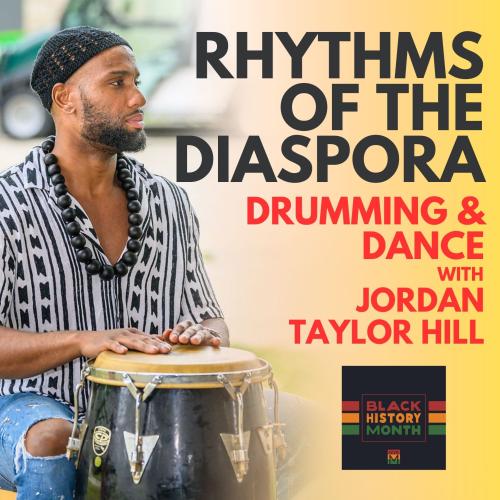
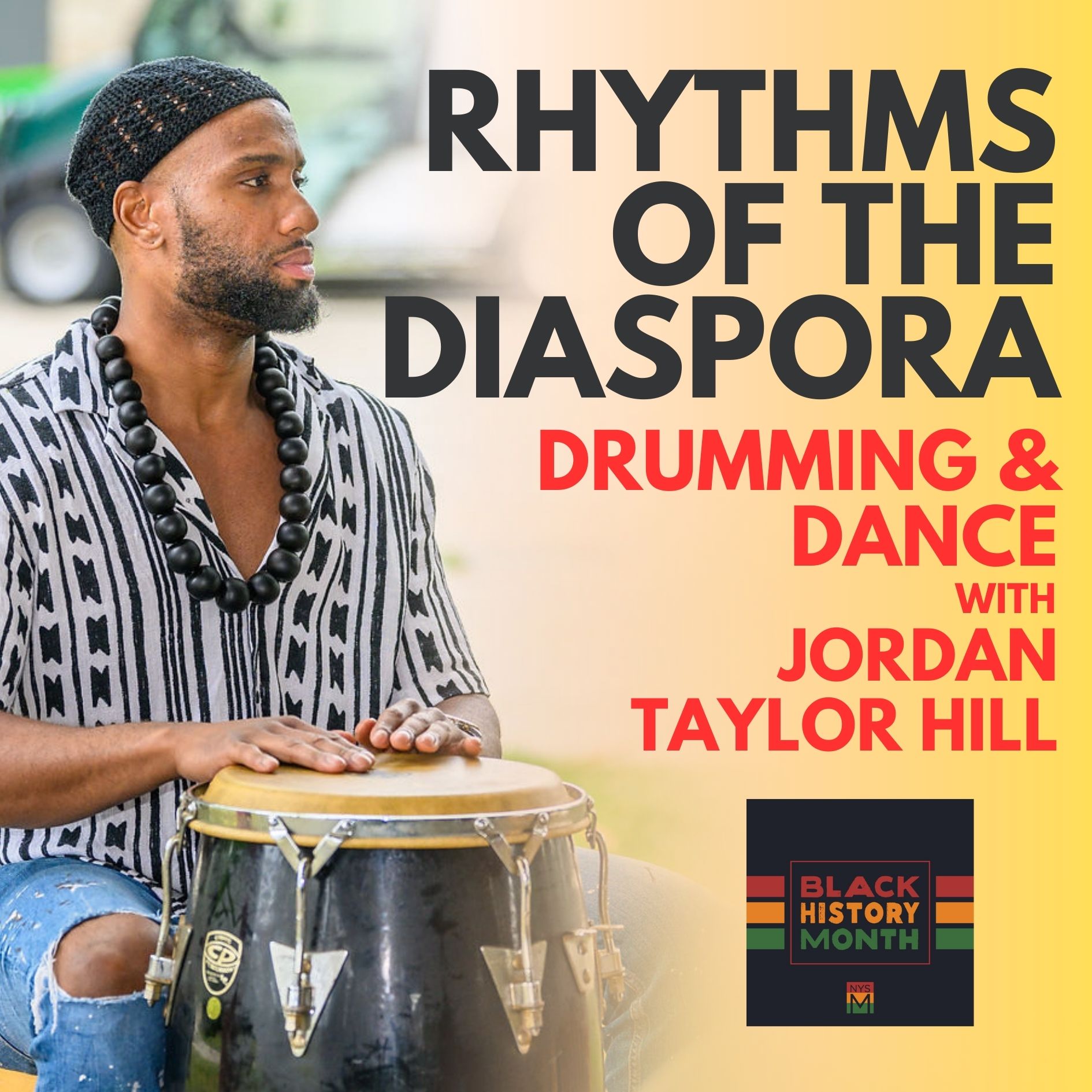
Join Jordan Taylor Hill for a dynamic exploration of rhythm, movement, and cultural memory across the African Diaspora. The program opens with a powerful performance featuring traditional and contemporary rhythms from West Africa, Cuba, and the Black American tradition. Participants are then invited into an interactive workshop where Jordan guides them through rhythms and movement vocabulary that illuminate how these practices carry history, identity, and community.
Jordan is a 2026 NYSCA Support for Artists grant recipient through New York Folklore, developing his new work, Songs Born of Tradition. Drawing from years of study in Guinea, Senegal, and Cuba, he brings forward the lineage, technique, and spirit behind these musical traditions. Whether you’re a musician, dancer, educator, or simply curious, this experience offers a deeper understanding of how rhythm shapes culture and creativity.
All percussion instruments will be provided by Troy Savings Bank Music Hall, making the workshop accessible for all participants.
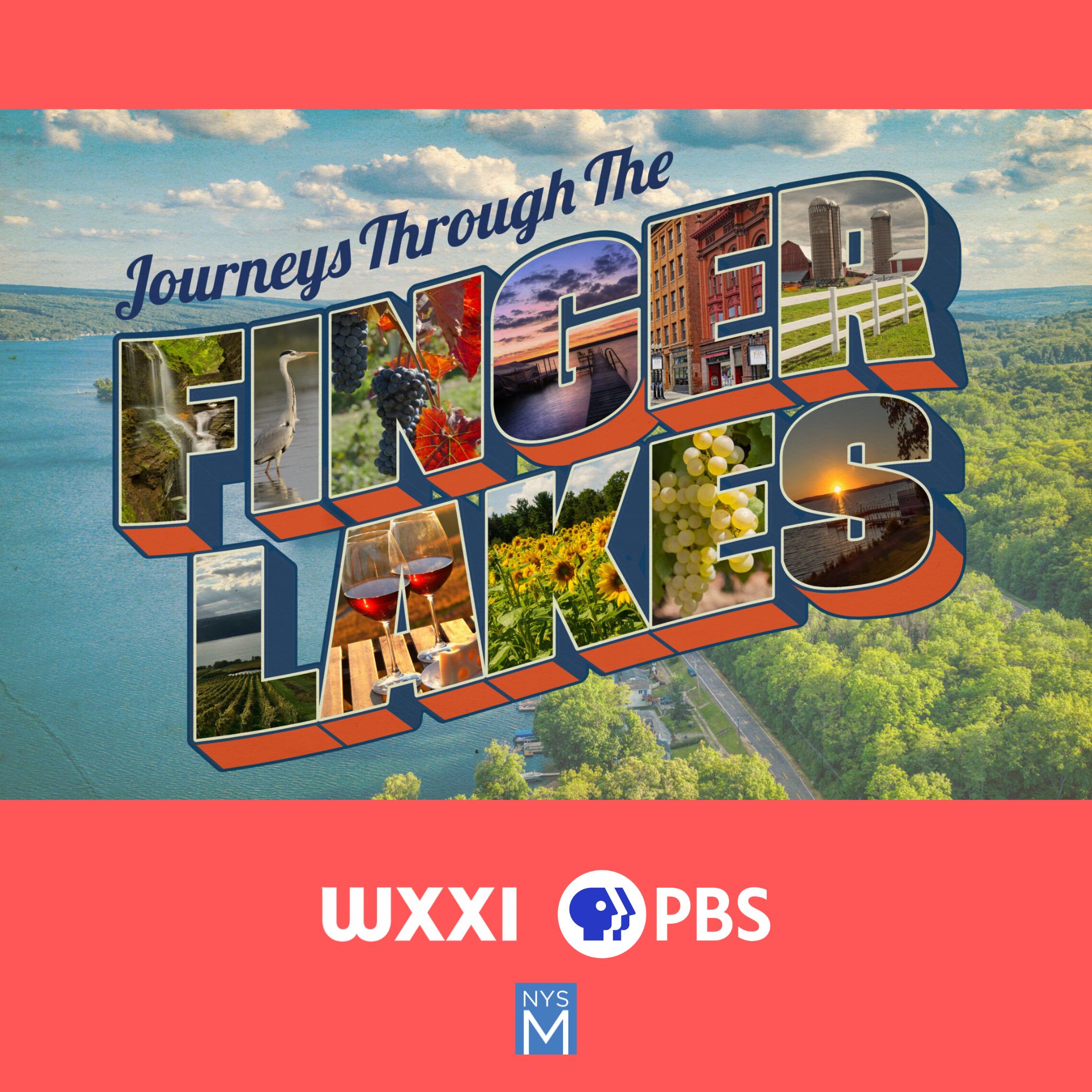
Join us for a special screening of Journeys Through the Finger Lakes, an insightful exploration of the past and present of this iconic New York State region. Through captivating storytelling, this documentary delves into how the Finger Lakes were created and defined, examining the effects of its unique landscape and climate on local industry, agriculture, and community development. Discover the historical figures who shaped national issues in significant ways and learn about the individuals today who continue to cultivate the region's innovative and diverse cultural landscape. This film offers a deep dive into the heart of the Finger Lakes, celebrating its rich history and vibrant future.
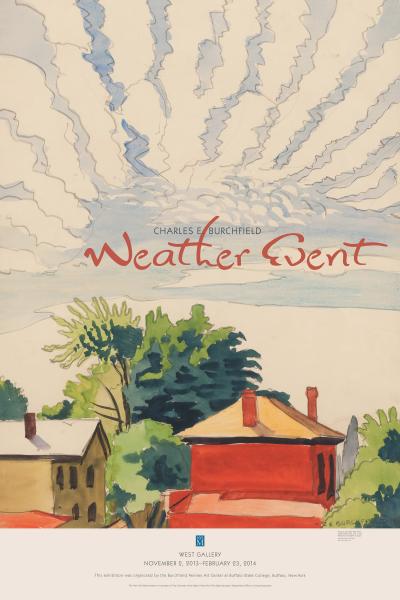
Weather Event
Weather Event focuses on Charles E. Burchfield’s depictions of the weather south of Lake Erie, where the artist lived for most of his life. Individual weather events are examined through both an artistic and scientific lens.
Burchfield's representations of weather, wind, skies and sounds are unique historical records of the environment near Lake Erie. In 1915, Burchfield made a series of sketches that show the changing weather and position of the sun over the course of several hours, which he called all-day sketches. Decades later, a 1950 journal entry recounts "The Day the Sun Disappeared over Western New York." In these unique instances and others the visitor experiences the landscape through Burchfield's eyes. This exhibition presents the dramatic and complex natural phenomenon chronicled in more than 50 years of Burchfield's writings, drawings and paintings.
"To me, the artist, interested chiefly in weather – all weather is beautiful, and full of power and emotion."
--Charles E. Burchfield, January 21, 1943
This Exhibition was organized by The Burchfield Penney Art Center at Buffalo State College, Buffalo, NY
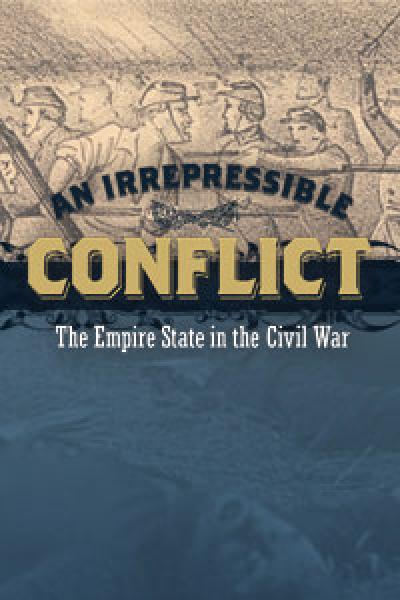
An Irrepressible Conflict: The Empire State in the Civil War
The pivotal role New York State played in the war is the focus of this 7,000-square-foot exhibition. As the wealthiest and most populous state, the Empire State led all others in supplying men, money, and materiel to the causes of unity and freedom. New York’s experience provides significant insight into the reasons why the war was fought and the meaning that the Civil War holds today. An Irrepressible Conflict will be open through September 22, 2013 in Exhibition Hall.
The exhibition includes objects from the collections of the State Museum, Library and Archives, as well as others from institutions across the state. Among the many significant objects are a Lincoln life mask from 1860, the earliest photograph of Frederick Douglass (a rare 8-by-10-inch daguerreotype image, courtesy of the Onondaga Historical Association) and the only known portrait of Dred Scott. Additional support for this exhibition is provided by RBC Wealth Management.
The exhibition’s title was inspired by an 1858 quote from then U.S. Senator William H. Seward, who also served as governor of New York (1839-42) and secretary of state (1861-69). Seward disagreed with those who believed that the prospect of war between the North and South was the work of “fanatical agitators.” He understood that the roots of conflict went far deeper, writing, “It is an irrepressible conflict, between opposing and enduring forces.”
Online Feature
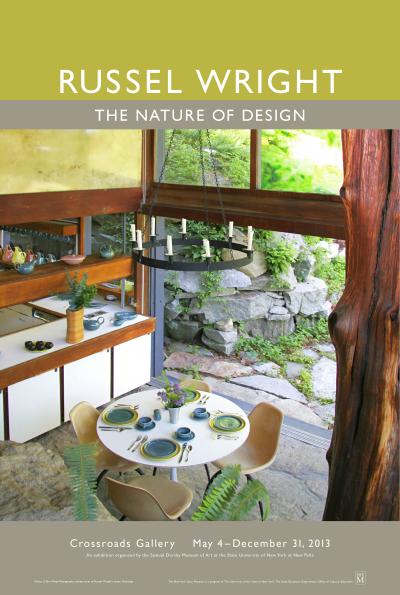
Russel Wright: The Nature of Design
Russel Wright: The Nature of Design explores the work and philosophy of renowned industrial designer Russel Wright, whose former home in the Hudson Valley—Manitoga—is now a national historic landmark. The exhibition focuses on one of Wright's most pervasive preoccupations, which also has much relevance today: the relationship of humankind with the natural world. While examining Wright's entire career from the 1920s through the 1970s, this exhibition will focus on his work between 1945 and 1968, when Wright increasingly designed in experimental and innovative ways. This exhibition is organized by the Samuel Dorsky Museum of Art, SUNY New Paltz.
Unearthing Ceramic Technology and Pottery Traditions at the Mohawk Garoga Site
The Haudenosaunee (meaning “People of the Longhouse” or Iroquois) are famous for their pottery. In the 16th century, they produced thin walled, finely tempered pots of various sizes with well-defined collars decorated with incised geometric patterns. In every village, the Haudenosaunee used pots for cooking and storage, and skilled potters routinely produced pots of exceptional quality. Archaeological excavations at these ancient villages have recovered thousands of pottery sherd fragments.
One such example of a Haudenosaunee village is Garoga, a Kanien’keha:ka (meaning “People of the Flint” or Mohawk) village site situated on a steep-sided hilltop in Fulton County, and radiocarbon dated to circa 1550-1582 A.D. Excavations by the New York State Museum (NYSM) in the 1960s revealed a palisaded village with 13 longhouses and recovered thousands of pottery sherds and unexpectedly, 43 raw, unfired clay nodules that were likely intended for use in creating pottery. While pottery from the Garoga site has been described, these clay nodules have received little attention. In a recent re-examination of the Garoga site collection, we realized that complementary study of both the pottery sherds and clay nodules could lead to new insights into ancient pottery manufacture at Garoga and its roles in the lives of the Kanien’keha:ka (Mohawk) inhabitants.
This collaborative study will include geological and spatial analysis of the pottery and clay nodules from the site, coupled with replication of Garoga site pottery by award-winning Kanien’keha:ka (Mohawk) potter Natasha Smoke Santiago using clays harvested from the banks of Caroga Creek below the site (clay deposits that were likely used by the 16th-century site inhabitants).
For this research, we greatly appreciate the support of (1) the Archaeological Conservancy (www.thearchcons.org), owner of the Garoga site and its representative Ms. Kelley Berliner, and (2) the Charles Touhey Foundation. We look forward to sharing future insights stemming from this exciting collaboration!
Permission for this research has been granted by the Saint Regis Mohawk Tribal Preservation Office and Mr. Darren Bonaparte, Tribal Historic Preservation Officer (www.srmt-nsn.gov).
Repatriation
The Native American Graves Protection and Repatriation Act (NAGPRA) is a federal law that provides a process for the return of Native American cultural items to federally recognized tribes. It applies to any institution that receives or has received federal funds such as museums, historical societies, and universities. The types of cultural items include Native American human remains, funerary objects, sacred objects, and objects of cultural patrimony. The law establishes a process for consultation to determine cultural affiliation, and notification prior to repatriation.
New regulations passed in December 2023 simplify the repatriation process to expedite the return of cultural items. The new rules also require institutions to consult with tribes on the care, use, and interpretation of cultural items in their possession. Known as “duty of care”, this provision has broad implications for the ways in which Nations are represented in museums and other institutions, requiring the incorporation of Indigenous perspectives in all aspects of our work.
At the NYSM, NAGPRA compliance has proceeded steadily since the law was passed as we work with Indigenous Nations to identify ancestral remains and cultural items for return. A major repatriation concluded this year with the Stockbridge-Munsee Community, Delaware Tribe of Indians, and Delaware Nation with the return of Lenape ancestors and burial items from their homeland in eastern New York. A joint reburial held on June 20th was the culmination of several years of work by each Nation’s Tribal Historic Preservation Office and institutions across the state, including the NYSM.
In a statement issued by the Stockbridge-Munsee Community, on behalf of the Delaware Tribe of Indians and the Delaware Nation, they shared the following:
We offer many heartfelt thanks to community members, museum staff, and the many unseen hands of all of those who participated or facilitated this most deeply significant occasion. As always, we offer profound respect and love to our ancestors for all they have taught us and will continue to in our life’s journeys. Anushiik.
For more information:
Native American Graves Protection and Repatriation Act (U.S. National Park Service) (nps.gov)
Legislation: https://www.federalregister.gov/documents/2023/12/13/2023-27040/native-…;
Regulations: https://www.federalregister.gov/documents/2023/12/13/2023-27040/native-…;
Definitions
Human remains means any physical part of the body of a Native American individual. This term does not include human remains to which a museum or Federal agency can prove it has a right of possession.
- Human remains reasonably believed to be comingled with other materials (such as soil or faunal remains) may be treated as human remains.
- Human remains incorporated into a funerary object, sacred object, or object of cultural patrimony are considered part of the cultural items rather than human remains.
- Human remains incorporated into an object or item that is not a funerary object, sacred object, or object of cultural patrimony are considered human remains.
Funerary object means any object reasonably believed to have been placed intentionally with or near human remains. A funerary object is any object connected, either at the time of death or later, to a death rite or ceremony of a Native American culture according to the Native American traditional knowledge of a lineal descendant, Indian Tribe, or Native Hawaiian organization. This term does not include any object returned or distributed to living persons according to traditional custom after a death rite or ceremony. Funerary objects are either associated funerary objects or unassociated funerary objects.
- Associated funerary object means any funerary object related to human remains that were removed and the location of the human remains is known. Any object made exclusively for burial purposes or to contain human remains is always an associated funerary object regardless of the physical location or existence of any related human remains.
- Unassociated funerary object means any funerary object that is not an associated funerary object and is identified by a preponderance of the evidence as one or more of the following:
(i) Related to human remains but the human remains were not removed, or the location of the human remains is unknown,
(ii) Related to specific individuals or families,
(iii) Removed from a specific burial site of an individual or individuals with cultural affiliation to an Indian Tribe or Native Hawaiian organization, or
(iv) Removed from a specific area where a burial site of an individual or individuals with cultural affiliation to an Indian Tribe or Native Hawaiian organization is known to have existed, but the burial site is no longer extant.
Sacred object means a specific ceremonial object needed by a traditional religious leader for present-day adherents to practice traditional Native American religion, according to the Native American traditional knowledge of a lineal descendant, Indian Tribe, or Native Hawaiian organization. While many items might be imbued with sacredness in a culture, this term is specifically limited to an object needed for the observance or renewal of a Native American religious ceremony.
Object of cultural patrimony means an object that has ongoing historical, traditional, or cultural importance central to a Native American group, including any constituent sub-group (such as a band, clan, lineage, ceremonial society, or other subdivision), according to the Native American traditional knowledge of an Indian Tribe or Native Hawaiian organization. An object of cultural patrimony may have been entrusted to a caretaker, along with the authority to confer that responsibility to another caretaker. The object must be reasonably identified as being of such importance central to the group that it:
- Cannot or could not be alienated, appropriated, or conveyed by any person, including its caretaker, regardless of whether the person is a member of the group, and
- Must have been considered inalienable by the group at the time the object was separated from the group.
Duty of care. These regulations require a museum, Federal agency, or DHHL to care for, safeguard, and preserve any human remains or cultural items in its custody or in its possession or control. A museum, Federal agency, or DHHL must:
- Consult with lineal descendants, Indian Tribes, or Native Hawaiian organizations on the appropriate storage, treatment, or handling of human remains or cultural items;
- Make a reasonable and good-faith effort to incorporate and accommodate the Native American traditional knowledge of lineal descendants, Indian Tribes, or Native Hawaiian organizations in the storage, treatment, or handling of human remains or cultural items; and
- Obtain free, prior, and informed consent from lineal descendants, Indian Tribes, or Native Hawaiian organizations prior to allowing any exhibition of, access to, or research on human remains or cultural items. Research includes, but is not limited to, any study, analysis, examination, or other means of acquiring or preserving information about human remains or cultural items. Research of any kind on human remains or cultural items is not required by the Act or these regulations.
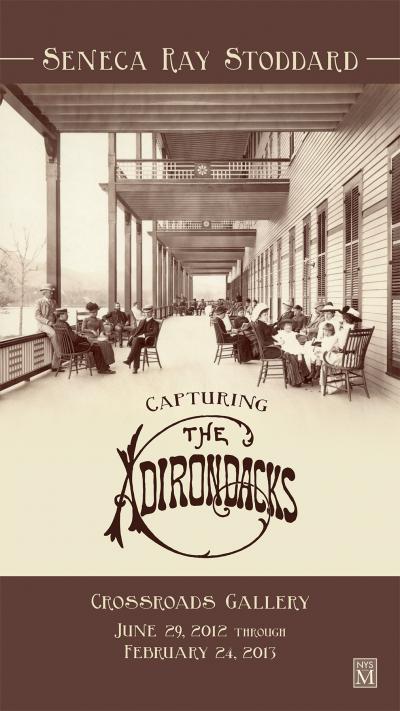
Seneca Ray Stoddard: Capturing the Adirondacks
Our 21st-century appreciation of the Adirondacks is certainly derived from this area’s obvious natural beauty. That perception has also been influenced by the descriptions and practices of the many 19th-century tourists who came to visit the landscape. Seneca Ray Stoddard was a leading figure in inspiring people, through his photographs and writings, to visit the Adirondacks in the post-Civil War era. His work captured how people came and what they did to make the Adirondacks a sought-after destination.
The exhibition will feature over 100 of Stoddard’s Adirondack scenes, and will also include his images of the Statue of Liberty.
Online Feature
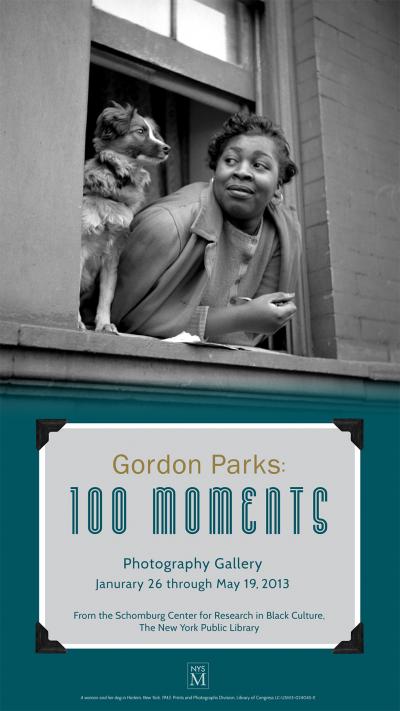
Gordon Parks: 100 Moments
Gordon Parks: 100 Moments celebrates a photographer who transformed the visual story of America with his ever-questioning lens, highlighting—in particular—the significance of Parks’s photographs from the early 1940s. 100 Momentsfocuses on Parks’s photographic practice of documenting African Americans in Harlem and Washington, D.C., during a pivotal time in U.S. history. These photographs were taken when both cities were going through significant changes—arising from post-WW II urban migration, the expansion of the black press, concern for children’s education, and entrenched segregation and economic discrimination.
This exhibition is on loan from The New York Public Library's Schomburg Center for Research in Black Culture and showcases several works from its Photographs and Prints Division. Guest curator Deborah Willis is a Professor of Photography and Imaging and Africana Studies at New York University’s Tisch School of the Arts.
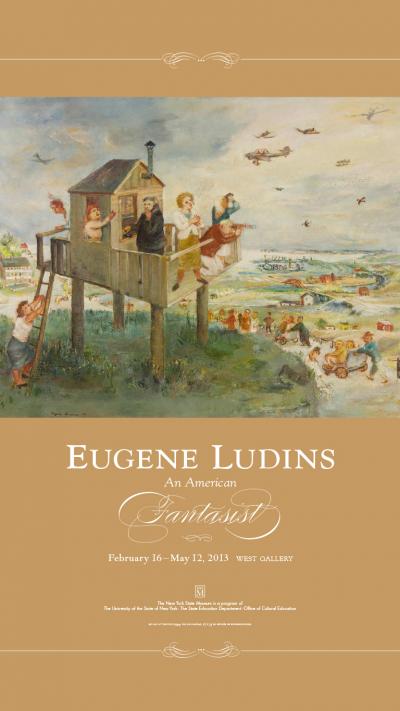
Eugene Ludins: An American Fantasist
This retrospective exhibition spans the 70-year career of artist Eugene Ludins, beginning with his residency at the Maverick colony in Woodstock in 1929. Ludins was a leading member of the Hudson Valley arts community, Ulster County Director of the Federal Arts Program of the WPA, and an avid baseball player. Dozens of paintings, drawings, sketch books, photographs and memorabilia illuminate the life of an artist who was both unique and emblematic of his time.
Eugene Ludins: An American Fantasist is organized by the New York State Museum and the Estate of Eugene Ludins. It is based upon an exhibition of the same name curated by Susan Torruella Leval for the Samuel Dorsky Museum of Art, SUNY New Paltz, on display there from February 11 – July 15, 2012.
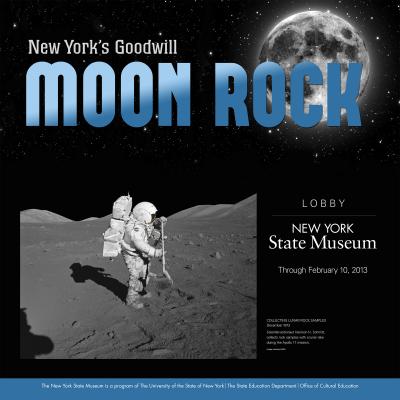
New York's Goodwill Moon Rock!
This exhibition features fragments of moon rock brought back to Earth by Apollo 17. When Apollo 17 returned from the moon on December 19, 1972 it made the record books for several reasons. It was the last and longest manned lunar mission and brought back the largest amount of moon samples. The mission was manned by Eugene A. Cernan, Ronald E. Evans, and Harrison H. Schmitt, the only geologist ever to become an astronaut.
While retrieving samples from the Taurus-Littrow valley, Schmitt and Cernan picked up a rock that became sample 70017. They dedicated it to all of the young people of the planet Earth. In 1973, President Richard Nixon had fragments of the moon rock sent to all 50 U.S. states and provinces, as well as 135 foreign heads of state. These became known as the Goodwill moon rocks. New York's moon rock will be on view with pertinent information and fun facts.
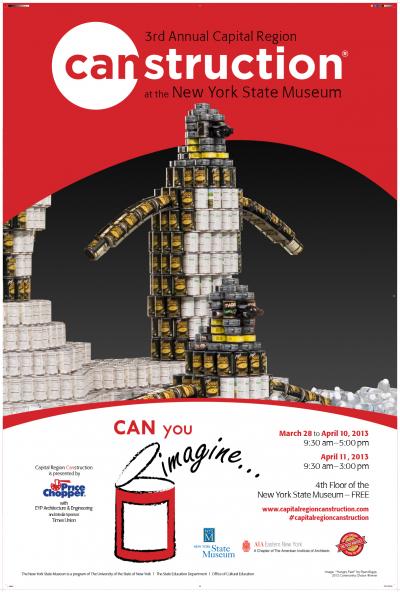
CANstruction, "Can You Imagine"
Envision a world where design feeds much more than your imagination.
In March of 2013, this vision will come to life with the 3rd Annual Capital Region Canstruction event as teams of architects, engineers, contractors and students come together to create whimsical and innovative structures using only canned goods.
Visitors are invited to bring canned goods to the exhibition and use them as ballots to vote for their favorite "can" structure!
At the close of the exhibition, every can is donated to the Food Pantries for the Capital District to help feed families in the Capital Region.
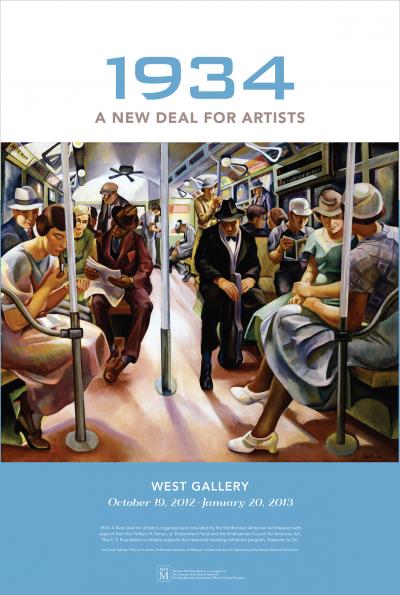
1934: A New Deal for Artists
During the Great Depression, President Franklin Delano Roosevelt promised a "new deal for the American people," initiating government programs to foster economic recovery. Roosevelt's pledge to help "the forgotten man" also embraced America's artists. The Public Works of Art Project (PWAP) enlisted artists to capture "the American Scene" in works of art that would embellish public buildings across the country. They painted regional, recognizable subjects — ranging from portraits, to cityscapes and images of city life, to landscapes and depictions of rural life — that reminded the public of quintessential American values such as hard work, community and optimism.
1934: A New Deal for Artists examines more than 50 paintings from the collection of the Smithsonian American Art Museum created under the auspices of the Public Works of Art. The paintings in this exhibition are a lasting visual record of America at a specific moment in time.
1934: A New Deal for Artists is organized and circulated by the Smithsonian American Art Museum with support from the William R. Kenan, Jr. Endowment Fund and the Smithsonian Council for American Art. The C.F. Foundation in Atlanta supports the museum's traveling exhibition program, Treasures to Go.
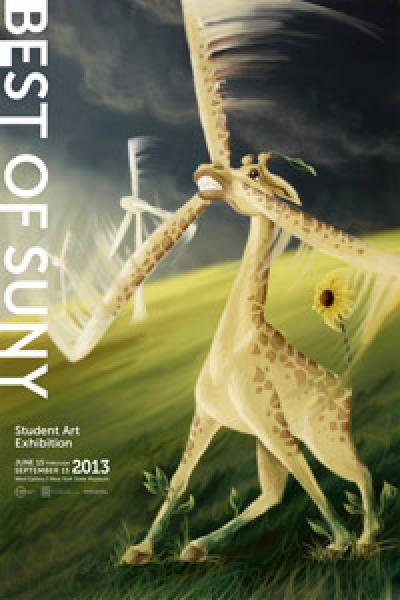
Best of SUNY 2013
The 2013 Best of SUNY Student Art Exhibitionpresents artwork selected by a panel of jurors from the fall 2012 and the spring 2013 student art exhibitions. The Museum exhibition features a wide range of media used by the students. The traditional areas of drawing, painting, photography, printmaking, ceramics, and sculpture are enhanced by the addition of digital imaging and mixed media installations. The SUNY student art shows were inaugurated in 2002 to bring the work of SUNY’s many talented student artists to a wider audience.
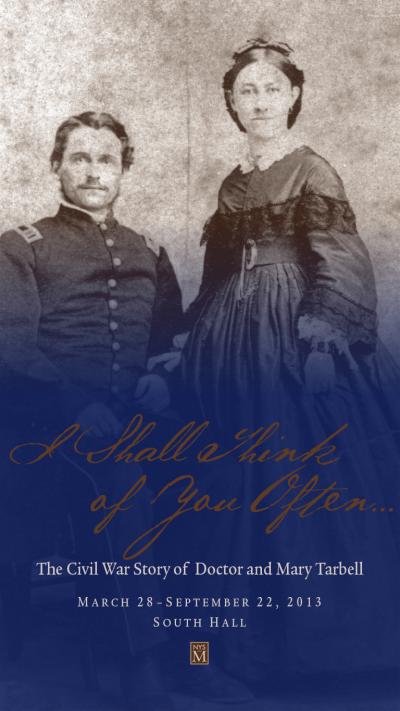
I Shall Think of You Often: The Civil War Story of Doctor and Mary Tarbell
Childhood sweethearts Doctor Tarbell and Mary Lucy Conant met one another at a very young age while attending school in Groton, Tompkins County. Their courtship, interrupted by the outbreak of the Civil War, endured the hardships of separation familiar to many New Yorkers during the conflict. Following his release from a Confederate prison, Doctor returned to Tompkins County to wed Mary. The honeymoon was short lived, however, as Tarbell returned to his unit where he served the remainder of the war.
This exhibit, from the Tompkins County History Center, features the wedding dress worn by Mary Conant along with images and personal effects of the couple.
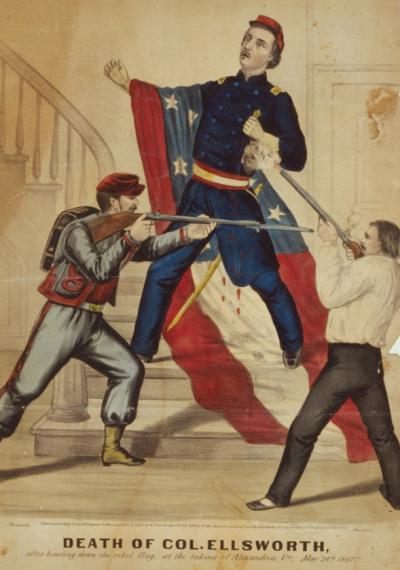
The Marshall House Flag
Shortly after the Confederates bombarded Fort Sumter, South Carolina, in April 1861, James Jackson hoisted an extremely large Confederate national flag onto a 40-foot-tall flagpole atop his hotel, the Marshall House, in Alexandria, Virginia. On May 24, 1861, Federal forces, including Colonel Elmer Ellsworth and the 11th New York Volunteers, entered Alexandria.
Ellsworth decided to remove Jackson’s flag from the Marshall House hotel. With a small party, including Corporal Francis Brownell of Troy, New York, Ellsworth climbed to the roof and cut down the flag. During their descent Ellsworth and his party encountered Jackson, who was armed with a shotgun. Gunfire ensued, leaving both the hotel owner Jackson and the charismatic Ellsworth dead. The Marshall House incident became national news and plunged the entire country into mourning – the North for Ellsworth, the South for Jackson. The Marshall House flag accompanied Ellsworth's body home to New York State. Relics connected to Ellsworth’s death became prized possessions, including pieces cut, or “souvenired,” from the flag.
The Marshall House flag, in the collection of the New York State Military Museum, has been conserved at the New York State Office of Parks, Recreation and Historic Preservation’s textile laboratory at Peebles Island in Waterford, New York. As part of the New York State Battle Flag Preservation Project, the preservation and display of the Marshall House Flag has made possible with generous support from the Coby Foundation.
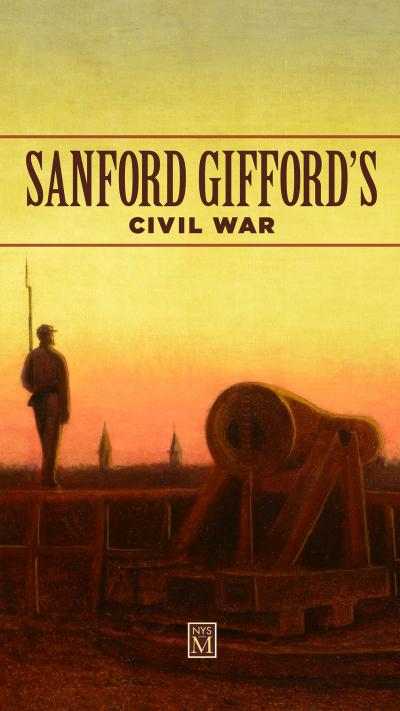
Sanford Gifford's Civil War
Sanford Gifford's Civil War chronicles the wartime experience of New York State native and renowned Hudson River School painter, Sanford Robinson Gifford, who served during the war with the 7th Regiment, New York State Militia. The exhibit will feature three of Gifford’s paintings from the collection of the New York State Military Museum in Saratoga Springs, as well as artifacts and images from the New York State Museum and New York State Library.
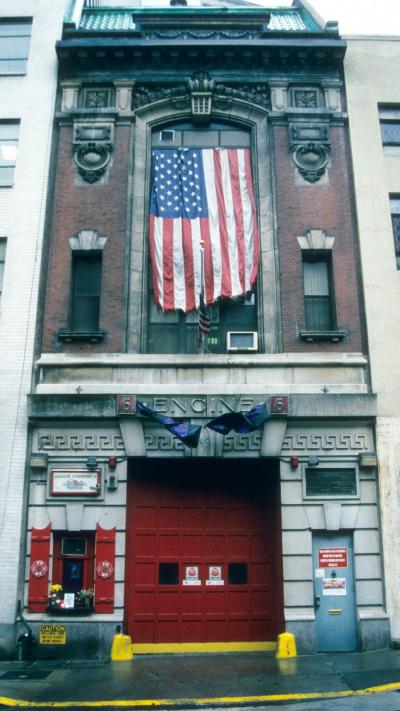
9/11 Flag from FDNY Engine 6 Pumper
On September 11, 2001, six firefighters from the FDNY Engine 6 Company were dispatched to the World Trade Center where they hooked the Engine 6 Pumper into a Trade Center standpipe on West Street. Four men from the Company—
Lieutenant Thomas O’Hagan, Firefighter Paul Beyer, Firefighter William Johnston, and Firefighter Thomas Holohan—were killed in the tower's collapse. Firefighters Billy Green and Jack Butler survived.
This American flag was draped over the crushed remains of the Engine Company 6 pumper as it was removed from Ground Zero. The flag's origins, as well as the identity of the individual who placed it over the rig, are unknown. The flag was later retrieved and given to the Engine 6 house, where it hung in honor of the four men killed on September 11, 2001.
For the first time this iconic flag is on display in the Museum along with the FDNY Engine 6 pumper, an artifact central to the State Museum's 9/11 collection. These objects from the World Trade Center site speak to the loss, heroism and global impact that the exhibition evokes for visitors.
Mission
The New York State Museum serves the lifelong educational needs of New Yorkers and visitors through its collections, exhibitions, scholarship, programs, media and publications in science, history, anthropology, and art. The Museum explores and expresses New York State’s significant natural and cultural diversity, past and present.
About Us
The New York State Museum is a center of art, science, and history dedicated to exploring the human and natural history of the state. Established in 1836, it is the oldest and largest state museum in the country. From its beginning, the Museum has been home to some of the nation’s leading scientists, including the founders of American paleontology, ethnology, botany and mycology. Its collections rank among the finest in many fields and total more than 16 million scientific specimens and one million cultural objects.
Located at the southern end of the architecturally stunning Governor Nelson A. Rockefeller Empire State Plaza in Albany, the New York State Museum welcomes visitors from across the globe and thousands of students each year. Its 100,000 square feet of exhibition space features several new exhibitions per year in addition to long term exhibitions. The Museum also offers a variety of educational public programs for learners of all ages.
The New York State Museum is a program of The University of the State of New York / The State Education Department / Office of Cultural Education.
A Fish Returns? Investigating the Possible Reappearance of the Silver Chub
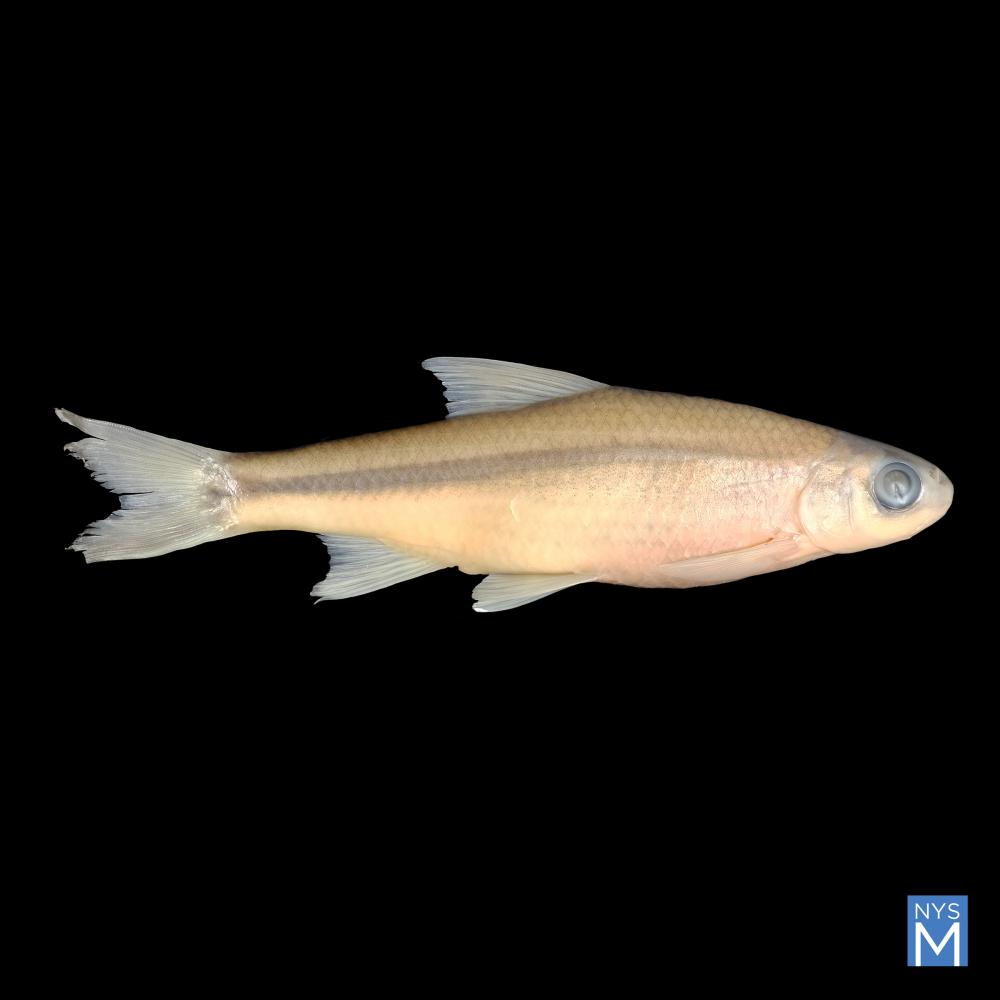
Amidst the various harmful changes to aquatic communities that have been observed due to human activities, we sometimes find reasons to hope that some components of these communities can be restored. The Silver Chub (Macrhybopsis storeriana) is a medium-sized, relatively nondescript minnow that, in New York, has only been collected from the watersheds of lakes Erie and Ontario. This species was last seen during surveys of the Lake Erie watershed in 1929 and has long been thought to be extirpated from the state, largely due to extensive pollution in the lake and its tributaries.
There have been indications, however, that the species is beginning to expand its range to areas where it was historically found. In 2022, a New York angler caught an individual in Cattaraugus Creek that was possibly a Silver Chub. Unfortunately, the specimen was not retained, and photographs were not 100% conclusive. In 2024, the NYSM fish collection received a specimen collected by NYSDEC personnel, also from Cattaraugus Creek, that resembles a Silver Chub in many respects. This specimen, however, appears to be atypical in some ways, again leading to some uncertainty in its identification.
NYSM fish collection scientists are planning fieldwork in western New York for the summer of 2025 in the hopes that additional specimens can be located and genetic samples taken for more conclusive identifications.
The Archaeology of Slavery in the Hudson River Valley
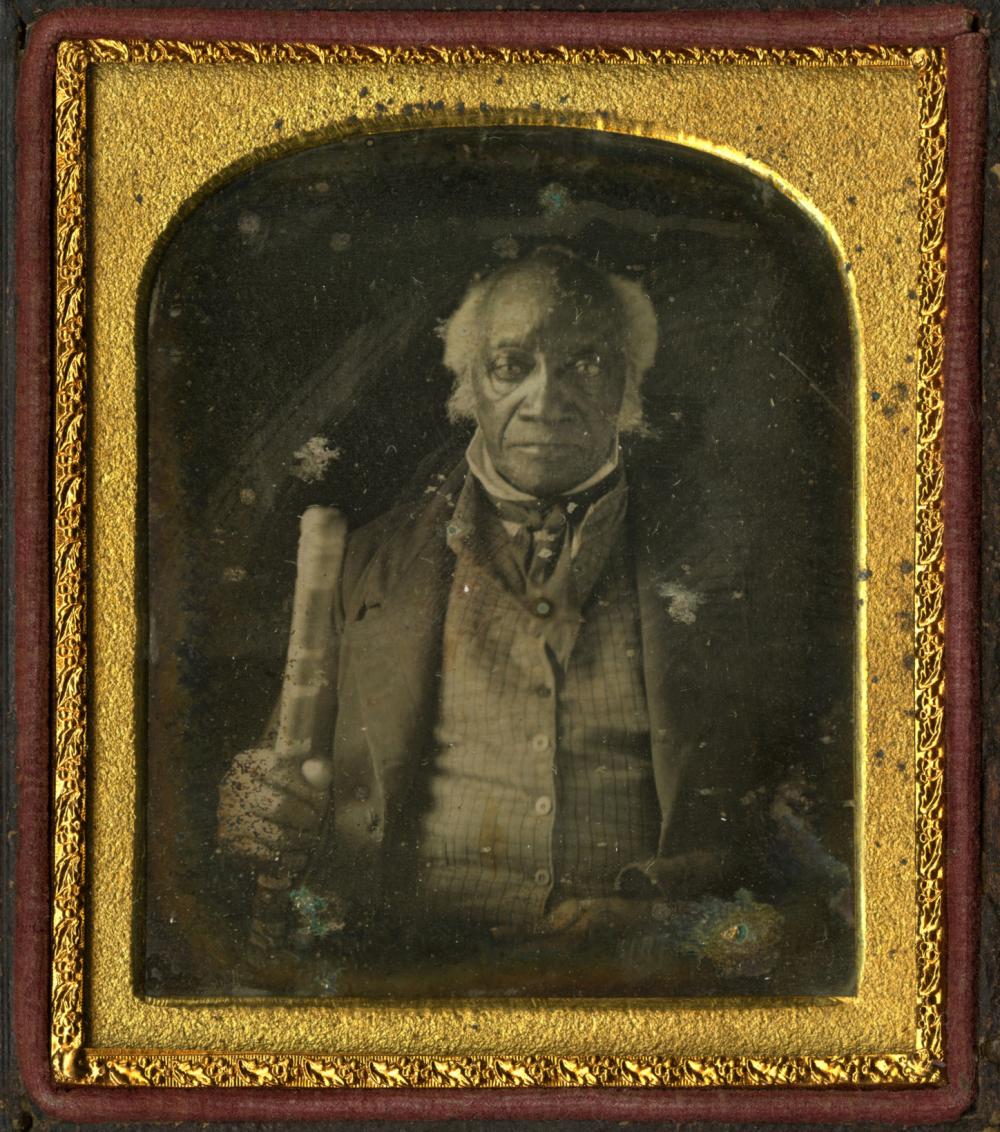
The archaeology of slavery in the Hudson River Valley project has the broad goal of exploring the material evidence of slavery as it existed in Hudson River Valley from the seventeenth through the early nineteenth centuries. Slavery has often been portrayed in the media as a southern phenomenon ending with the civil war. Yet, a rich historical scholarship has been produced on the institution of slavery and how it functioned in the Northeast. Far less has been written on the material lives of enslaved people or how the use of enslaved labor structured the acquisition and use of material culture by those who engaged in slavery. This is especially true of the middle and upper Hudson Valley regions. This project aims to address this void by using archaeological data recovered from sites along the Hudson River to demonstrate the impact of slavery on the lives of both free and enslaved people of New York State.
1019 Sunset Avenue Historic Site
This site consists of the remains of two long term family occupations at 1019 Sunset Avenue in Utica, NY, spanning from the mid-1800s to the early twentieth century. Though the site was primarily a domestic residence, both families incorporated personal businesses into their space. My focus is on the division of space and how the residents used the landscape for domestic versus business purposes.
State Museum Announces Gallery Renovation Project
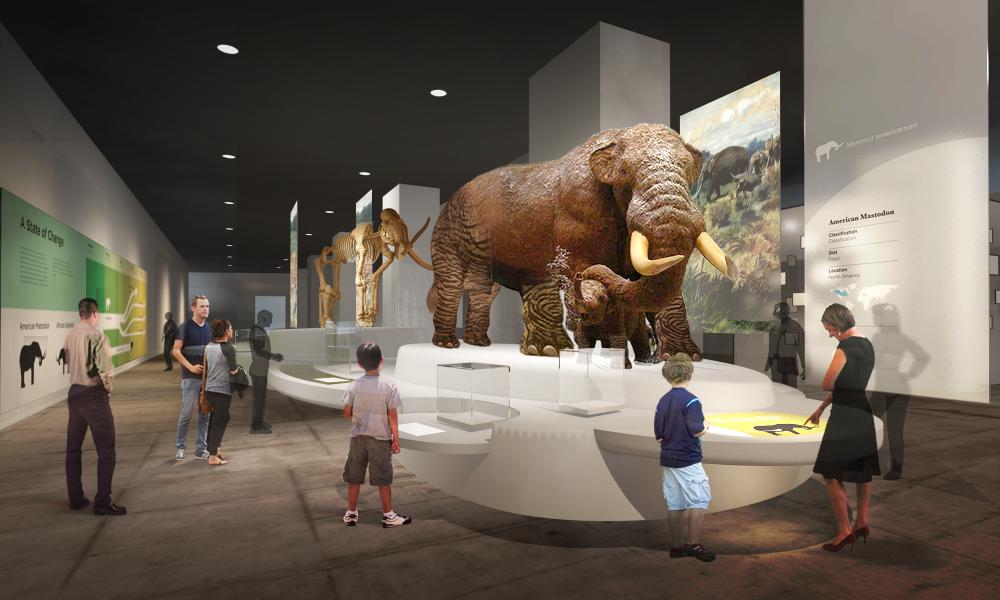
On June 15, 2015, State Museum Director Mark Schaming presented a renovation master plan for the Museum's galleries to the New York State Board of Regents. The master plan calls for 35,000 square feet of new exhibitions, a changeable wall system and new interactive technology and media. Click here to read the master plan, which includes artist renderings and floor plans.
There has not been a major renovation of the galleries since the Museum moved to its current space in the Cultural Education Center in 1976. The renovation project presents the Museum with an opportunity to better explain the state's natural and human history. A chief goal of the Museum's mission is to serve the educational needs of New Yorkers - the renovated galleries and new exhibitions will offer a more integrated, updated and memorable educational experience for all visitors.
We are excited to create new galleries and exhibitions for visitors to experience. However, while we are bringing in new exhibitions, we are keeping the best of our current exhibitions, including the World Trade Center exhibition, the A-Train, Sesame Street, the Cohoes Mastodon, Native Peoples of New York Hall, and Discovery Place.
The renovation is funded through a $14 million New York State capital bond item. With the master plan complete, the next stage is the exhibition design process. The renovation is expected to occur over a four-year timeline and will be completed in multiple phases. The Museum will remain open throughout the project, although certain gallery spaces will be closed temporarily while undergoing renovation.
The Museum encourages the public to participate in the renovation project by submitting their suggestions and feedback to museuminfo@nysed.gov. In addition, the Museum will provide regular project updates through the Museum's website, social media accounts, and email newsletter.
Recent Acquisition: Long Island Archaeology Collection
The State Museum recently acquired an archaeological collection from the former Institute for Long Island Archaeology at Stony Brook University. This collection consists of artifacts from 47 significant archaeological sites, including both prehistoric Native American and historic Euro-American sites.
An interesting group of artifacts from the Hick-Seaman House site (Oyster Bay, NY) is included in the collection. Intact stone and brick foundations were uncovered along with a variety of household artifacts and food remains dating from the late 18th through the 19th century. The Hicks-Seaman House collection provides an excellent example of rural household economy on Long Island prior to the 20th century.
This new collection has important research potential for better understanding the historic and prehistoric human past on Long Island.
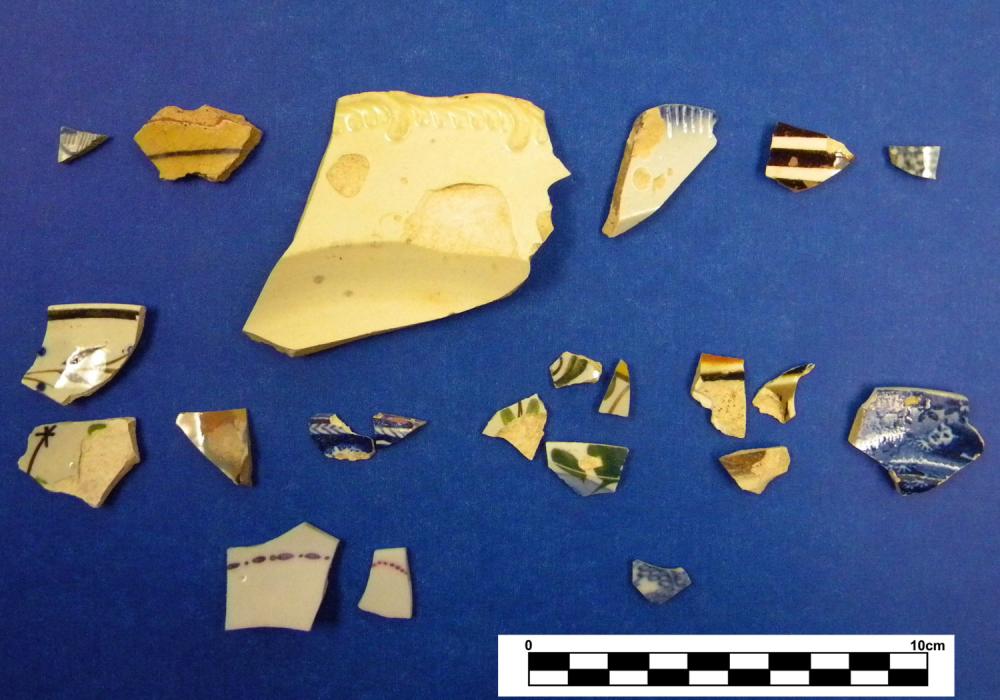
State Museum Acquires Unique Collection of Abenaki Native American Materials
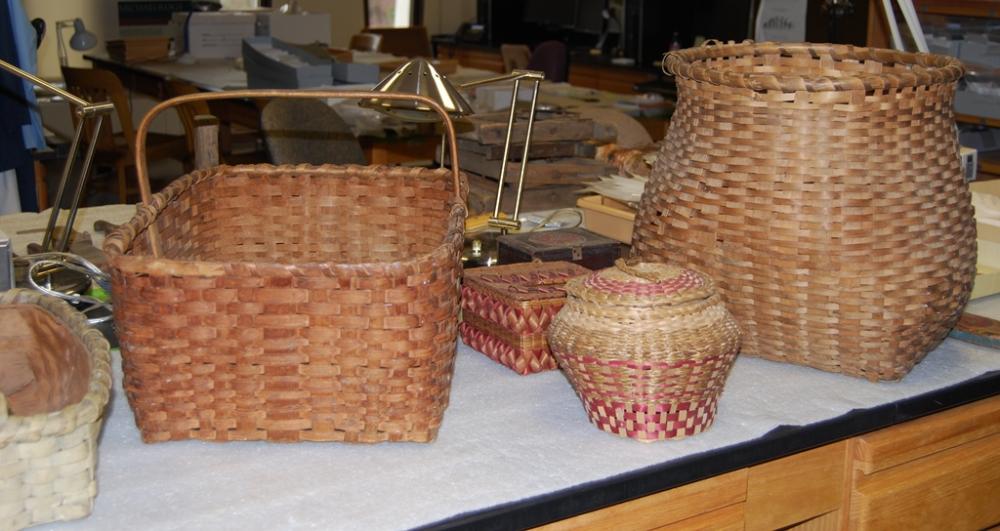
The Museum recently acquired a unique collection of 20th century Abenaki Native American materials. The collection was donated by Rodney Johnson of Rochester, NY. Rodney wanted to find a permanent home for the collection that had been handed down through four generations of his family - he chose the State Museum as a place where he can share his family's legacy.
The collection - which includes baskets, basket-making tools, birch bark and other wooden items - represents the objects once made by Rodney's great-grandparents, Norman and Angeline Sarah (Totoson) Johnson, and his great-uncle George Johnson during the early to mid-1900s.
As early as the mid-19th century, it was common for Native American families to sell baskets and other hand-made items as souvenirs to tourists at well-known vacation destinations. The Johnson family was among a group of Native American artisans who settled in Lake George, NY where they operated a small store selling baskets, canoes, and other items.
The Johnson family collection, which also includes a cradleboard donated by Rodney's great-grandmother in 1909, is the largest and best-documented collection of Abenaki material culture ever acquired by the State Museum.
Museum Adds 1917 Women's Suffrage Petitions to Collection
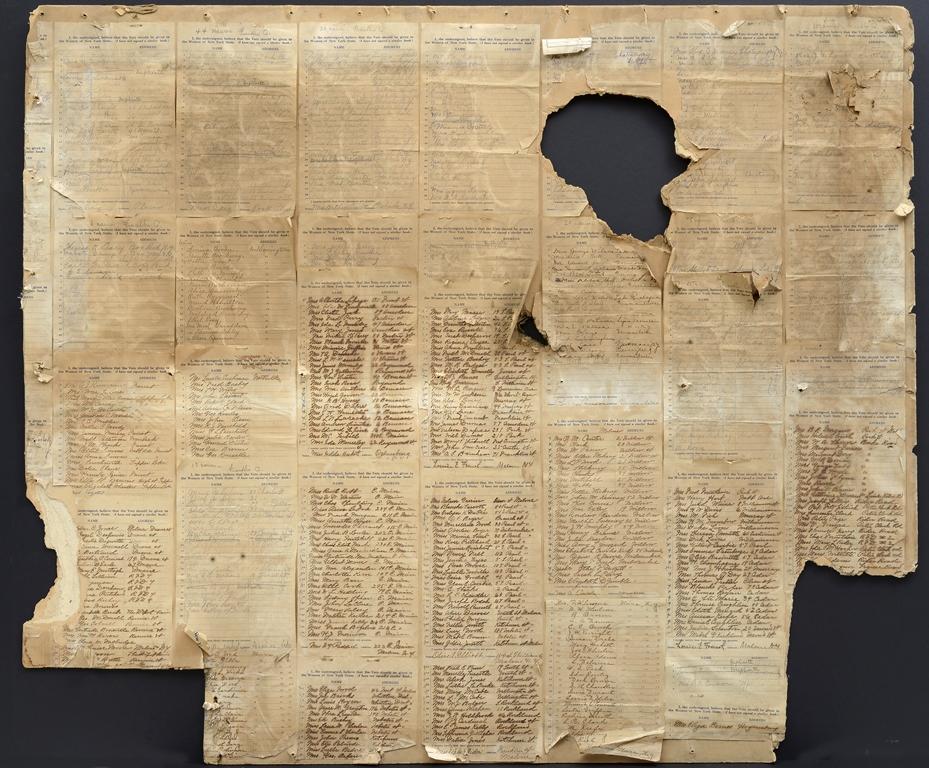
The Museum recently acquired a series of 1917 Franklin County women's suffrage petitions from Jean Kubaryk, a teacher at North Warren Central School District. Ms. Kubaryk had been displaying the petitions in her classroom for years, but decided to donate the petitions to the Museum so they can be preserved for future generations.
After the petitions were officially acquired by the Museum, staff sent copies of the petitions to Ms. Kubaryk so her students can assist in researching the women who signed the petitions.
In 2017, New York State will celebrate the 100th anniversary of the passage of women's suffrage. The petitions will be displayed in an upcoming State Museum exhibition titled, Votes for Women: Celebrating New York's Suffrage Centennial, scheduled to open in fall 2017.
Archaeology Work in Utica
Since 2012, archaeologists from the State Museum have been working alongside a highway construction project in Utica, uncovering artifacts from the early 19th century.
Why? The archaeologists are members of the Cultural Resources Survey Program (CRSP)at the State Museum. CRSP helps agencies meet state and federal historic preservation mandates during construction projects. If any archaeological or cultural resources are found at a site, CRSP ensures that the objects are preserved for future research.
The CRSP work in Utica centers around the location of the former Chenango Canal. The archaeologists have uncovered evidence of what life was like in the Utica area in the early to mid-1800s, from pieces of pottery to household goods to children's toys.
"This is a unique opportunity to look at a snapshot in time and study what life was like for an average working class citizen in the Utica area in the early 19th century," says State Archaeologist Christina Rieth.
The project is expected to be completed in the next few years, after which the artifacts will be added to the Museum's collections and made available to researchers. A selection of artifacts will be on display at the Museum in May.
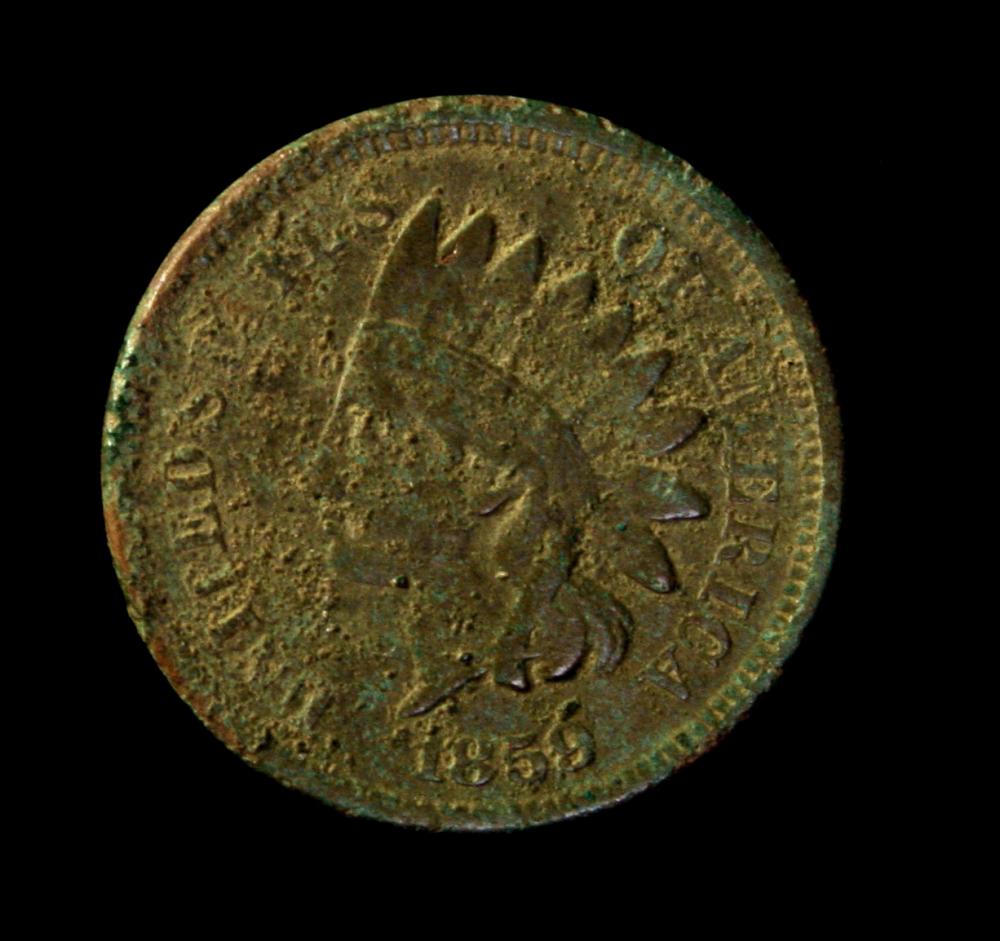
State Museum Opens Exhibition on Franklin Roosevelt’s “First New Deal” in New York
An exhibition on President Franklin D. Roosevelt and the "First New Deal" in New York will open at the New York State Museum on Roosevelt's birthday, January 30. On display through May 4, "New York and the First New Deal" will feature bronze bust sculptures of Roosevelt and his wife, Eleanor Roosevelt, as well as other images and artifacts from Roosevelt's economic revitalization efforts in New York.
"Franklin Roosevelt's legacy in the White House and New York's State Capitol is well-remembered today," said State Museum Director Mark Schaming. "This exhibition tells the story of how Roosevelt helped alleviate the significant economic effects of the Great Depression on New Yorkers in his role as governor, which later helped him secure his seat in the White House."
The Board of Regents and the State Museum are dedicated to educating New Yorkers and visitors to the State Museum about the State's history. In addition to Franklin Roosevelt, five other United States Presidents were from New York State, including Martin Van Buren, Millard Fillmore, Chester Arthur, Grover Cleveland and Theodore Roosevelt.
The exhibition features two bronze busts of Franklin and Eleanor Roosevelt by sculptor Carolyn Palmer of Montgomery, New York. Palmer originally created a set of Roosevelt busts for the Franklin D. Roosevelt Presidential Library and Museum in Hyde Park, NY. She created another set which is currently on loan to the State Museum.
On October 29, 1929—less than a year after Franklin Roosevelt was elected governor of New York —the stock market crashed and the United States plunged into the Great Depression. Almost overnight New Yorkers found themselves amidst severe economic crisis and mass unemployment. As governor, Roosevelt implemented a series of measures designed to help alleviate the crisis for average citizens.
Funds were poured into projects around the state in an effort to put New Yorkers back to work. New York State would become a proving ground of sorts for Roosevelt's extraordinary response to the Great Depression, which made him an attractive presidential candidate. He won the 1932 presidential election and served as President from 1933 through 1945.
The exhibition features artifacts from the State Museum, State Library, and State Archives. A photo of the bronze busts of Franklin and Eleanor Roosevelt is available at: http://www.nysm.nysed.gov/PRkit/2014/FDR/.
The State Museum is a program of the New York State Education Department's Office of Cultural Education. Located on Madison Avenue in Albany, the Museum is open Tuesday through Sunday from 9:30 a.m. to 5 p.m. It is closed on Thanksgiving, Christmas and New Year's Day. Admission is free. Further information about programs and events can be obtained by calling (518) 474-5877 or visiting the Museum website.
Phone: (518) 474-1201
State Museum Announces Acquisition of 21 New Artworks From Native American Artists in New York
The New York State Museum today announced the acquisition of twenty-one new works of art by eighteen artists from Native American Nations in New York State. From baskets and beadwork to modern art, the newest additions celebrate the traditional roots of Native American artistry through modern expression. An exhibition featuring the artwork is scheduled for fall 2014.
"The Board of Regents and the State Museum are pleased to add twenty-one works of art by talented Native American artists from across the State to our collection," said State Museum Director Mark Schaming. "We have collected Native American cultural items since the 1840s. The collection was developed to work with Native American communities in the acquisition of artwork that best represents their cultures and history."
The artists and their work include:
David Fadden, Mohawk
At the Social, acrylic on canvas painting
Ronni-Leigh Goeman, Onondaga, and Stonehorse Goeman, Tonawanda Seneca
Blue Heron with Baby basket, made with black ash, sweet grass and moose hair with moose antler and buffalo horn carvings
Tony Gonyea, Onondaga
Two-Row Wampum Belt, made with ceramic beads, deerskin, and sinew
Brenda Hill, Tuscarora
Pot with Wampum Bead Rim, earthenware with wampum bead inlay
Bear Comb lid and dish, earthenware
Tom Huff, Seneca-Cayuga
Ancestors/Tree of Life, Brazilian soapstone with walnut base
Mary Jacobs, Seneca
New Age Hat, velvet with raised beadwork and satin ribbon
David Martine, Shinnecock
Mandush, Shinnecock Sachem of the 17th century, acrylic on canvas painting
Towanna Miller, Mohawk
Residential School, acrylic on canvas painting
Penny Minner, Seneca
Corn Wash, Market, and Tote/Purse baskets made of black ash
Roger Perkins, Mohawk
Bear Clan, digital, archival ink on canvas
I Pop Arted Tonto, digital, archival ink on canvas
Bryan Printup, Tuscarora
Ring Bearer Cushion, velvet with raised beadwork
Sheila Ransom, Mohawk
Bird’s Beak, black ash and sweet grass fancy basket
Natasha Smoke Santiago, Mohawk
Emerging Corn (Belly series), densite, acrylic & raffia sculpture
Alyssa Schmidt, Seneca
Beaded hair ornament and earrings
Antoinette Scott, Seneca
Three Sisters: Corn, Beans, and Squash, cornhusk dolls with traditional beaded clothing
Samuel Thomas, Cayuga
Bandolier Bag, wool and cotton with glass seed beads, 14 karat gold beads, and satin ribbon
Carson Waterman, Seneca
Man with Gustowets, acrylic on canvas painting
Photos of some of the artwork from the collection are available at: http://www.nysm.nysed.gov/PRkit/2014/NativeAmerican/.
The State Museum is a program of the New York State Education Department’s Office of Cultural Education. Located on Madison Avenue in Albany, the Museum is open Tuesday through Sunday from 9:30 a.m. to 5 p.m. It is closed on Thanksgiving, Christmas and New Year's Day. Admission is free. Further information about programs and events can be obtained by calling (518) 474-5877 or visiting the Museum website.
Phone: (518) 474-1201
State Museum To Host “New York in Bloom” February 21–23
Spring will arrive early at the New York State Museum where visitors will find more than 100 floral displays throughout the Museum February 21-23 for the 23rd Annual "New York in Bloom" fundraiser benefiting the Museum’s educational programs for children. Admission is $5 (cash only); children ages 12 and under will receive free admission when accompanied by an adult.
Garden club members, professional designers, interior designers and floral enthusiasts from the Capital District and beyond will create unique floral arrangements that complement and interpret the Museum’s exhibitions. David Michael Schmidt of Renaissance Floral Design will transform the front window area of the Museum lobby with a floral display incorporating rustic furniture by Clarence O. Nichols from the Museum’s collections.
Visitors can view several demonstrations on Saturday and Sunday about gardening, design and creating floral arrangements. There will also be children’s arts and crafts activities throughout the weekend. A flower market will be open in the lobby area on Friday, Saturday and Sunday from 11 a.m. to 4:30 p.m., while supplies last. Mazzone Hospitality and Losee’s Homestyle Deli will offer a selection of light luncheon fare on the 4th floor of the Museum.
Supporters of "New York in Bloom" are Renaissance Floral Design, Ambiance Florals and Events, Spotlight Newspapers, Quality Retail Systems, and Price Chopper.
For more information, please visit the Museum’s website at: http://www.nysm.nysed.gov/programs/nybloom/.
The State Museum is a program of the New York State Education Department’s Office of Cultural Education. Located at 222 Madison Avenue in Albany, the Museum is open Tuesday through Sunday from 9:30 a.m. to 5 p.m. It is closed on Thanksgiving, Christmas and New Year's Day. Admission is free. Further information about programs and events can be obtained by calling (518) 474-5877 or visiting the Museum website.
Phone: (518) 474-1201
Fourth Annual Canstruction at the State Museum: “Storytown” Display April 9–April 24
The fourth annual Capital Region Canstruction, a design competition benefiting The Food Pantries for the Capital District, will be held at the New York State Museum April 9 through April 24, 2014. Canstruction participants design and build giant-sized unique structures made entirely out of canned goods. This year’s participants have been challenged to collect 50,000 cans and $50,000 to support local food pantries.
Nine teams comprised of local architecture, engineering and construction firms, as well as design students, will transform tens of thousands of cans of food into larger than life pop art masterpieces inspired by this year’s theme, "Storytown", at the 4th floor of the State Museum. Participants include CSArch, Creighton Manning, EYP, MJ Engineering, Mosaic, Price Chopper, RPI, SMRT, and Spring Line Design.
Sculpture designs include James and the Giant Peach, Toy Story, Green Eggs and Ham, Winnie the Pooh, The Little Engine That Could, Horton Hears a Who, Willy Wonka and the Chocolate Factory, Alice in Wonderland, The Rainbow Fish, The Wizard of Oz and Humpty Dumpty. All cans used in the displays were purchased from Price Chopper, the major event sponsor, and will be donated to The Food Pantries for the Capital District at the end of Canstruction.
Visitors are encouraged to bring canned goods to the State Museum and participate in the Canstruction competition. Visitors can use their canned goods as ballots to help determine the winner of the Community Choice award. Other awards, including "Best Use of Labels" and "Structural Ingenuity", will be chosen by a panel of local judges.
"We are pleased to once again host Canstruction at the State Museum," said Mark Schaming, State Museum Director. "Canstruction showcases the talent and creativity of the designers, but most importantly, it provides support for vital community services. We invite the Capital Region to visit the State Museum during Canstruction, experience these amazing creations and help our local community."
"Our nine talented teams have spent months planning their entries and are allowed one adrenaline filled night to meticulously stack and color-coordinate their cans into ingenious feats of design. This event showcases the deep talent of local design firms and students, and ultimately donating tens of thousands of cans of food to feed the hungry in our region," said Sara Stein, AIA, LEED AP, President of Capital Region Canstruction and Architect at EYP Architecture and Engineering.
Natasha Pernicka, Executive Director of The Food Pantries for the Capital District said, "The Food Pantries is proud to share its fourth year with Canstruction, as we continue working together to stock the shelves of the Capital Region's Food Pantries. This magnificent event heightens the awareness of the need in our community and has played an important role in helping to feed the hungry in the Capital District. The impact is more powerful than ever as we respond to the sustained high demand for food in our region."
Capital Region Canstruction is supported by The American Institute of Architects' Eastern New York Chapter. This year's Canstruction is presented by Price Chopper with EYP Architecture & Engineering, Ryan-Biggs Associates and media sponsor the Times Union. Gold sponsors include Key Bank, Camelot, A.W. Hastings & Co., Harbrook, CMC-Kuhnke, CSArch, CHA, and Mazzone Hospitality. Silver sponsors include Gilbane, Centria, Eastern Contractors Association and Greco Construction.
Last year's event resulted in a donation of approximately 51,000 cans of food to The Food Pantries for the Capital District. Since its inception in 2011, the Capital Region event has donated approximately 140,000 cans of food and raised more than $34,000 to help fight hunger.
Canstruction events are held annually in over 150 cities around the world including North America, Australia, South America, Europe and Asia. Capital Region Canstruction is currently ranked #10 in the world for most food raised and meals donated.
The New York State Museum is a program of the State Education Department's Office of Cultural Education. Located on Madison Avenue in Albany, the Museum is open Tuesday through Sunday from 9:30 a.m. to 5 p.m. except on Thanksgiving, Christmas and New Year's Day. Further information can be obtained by calling (518) 474-5877 or visiting the Museum website.
Phone: (518) 474-1201